Jan. 16, 2026
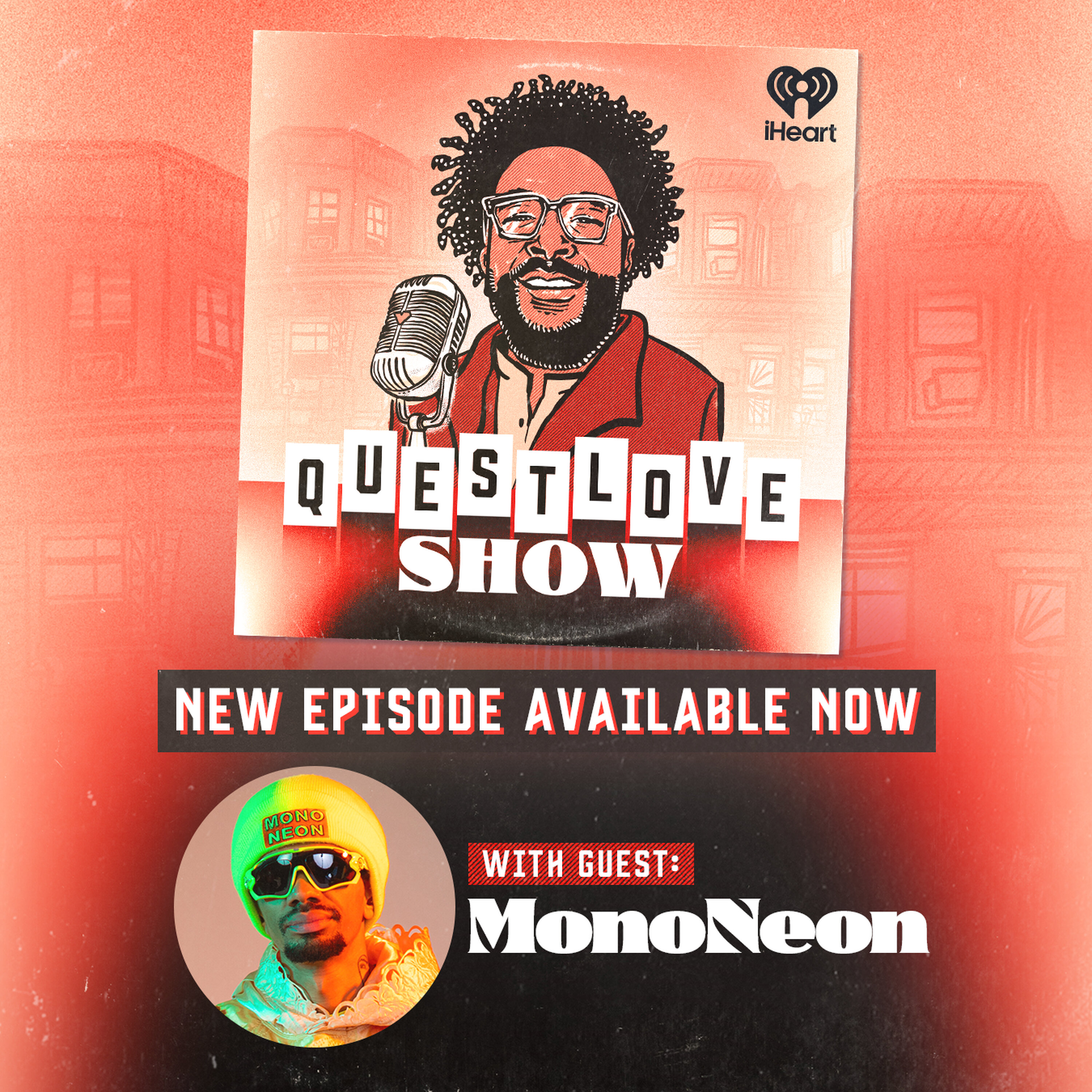
Questlove Reaches Into The Mail Bag & Answers - January 16


In this special mini episode, Questlove answers questions pulled from the QLS DMs, Facebook inbox, and comments across YouTube and other DSPs. Along the way, he shares the origin story of The Questlove Showtheme—touching on J Dilla, D’Angelo, James Poyser, and Questo. He also revisits The Roots’ Game Theory, offering lesser-known history behind the 2006 album. Questlove also responds to a Jazz collaboration suggestion that hits close to home, and more. Enjoy.
See omnystudio.com/listener for privacy information.
00:00:00
Speaker 1: The Quest Loft Show is a production of iHeartRadio. What's Up, good people? This is quest Love.
00:00:10
Speaker 2: In addition to our weekly interviews of The Quest Loft Show, I'm going to be doing some things periodically where I'll tell you a little bit more about a guest or what's going on in my life.
00:00:21
Speaker 1: I think they call this musings. You know.
00:00:23
Speaker 2: Another thing we want to do is take your feedback, take your questions, and I will answer.
00:00:29
Speaker 1: Them to the best of my abilities.
00:00:31
Speaker 2: So I'm giving you the listeners a chance to engage with me. You could DM me to either the QLs account. Matter of fact, only dm the QLs account. Don't DM my account because I barely check my own account. Okay, follow QLs on ig or go through Questlove Supreme dot com. And you know, we'll be recording these a few times a month where I'll basically, you know, answer letters.
00:01:00
Speaker 1: Okay, people, this is a first for me.
00:01:05
Speaker 2: I am going to go through I guess it's like letters to the editor or letters to the podcaster. And we get a lot of email, and the last configuration of the show, we have not answered fan mail or fan email.
00:01:23
Speaker 1: But we're going to change that and do a little bit you know, one rule in life I have is to never read the comments.
00:01:32
Speaker 2: And I know y'all are never going to let me live down the Open Mic Eagle episode.
00:01:37
Speaker 1: Yes, people, I know you have to understand.
00:01:42
Speaker 2: The taping of that episode happened at a very, very kind of emotional time for me, so I kind of went rogue that episode. But I promise you that open Mic Egle is going to return to the Quest Left show for a proper interview, and I I have read the comments. I will I promise to improve. It's a little new for me even though it's old, but it's still new for me anyway. Probably the most asked question is about the theme music. So as a Soul Aquarian unit, people often ask have the four of us ever worked together? I'm happy to say, well, I don't want to spoiler alert it, but when the Dila dot comes out, even I was shocked. Shout out to Waiji for just always having the camera on, especially when I didn't know there was a camera rolling so wellaied actually ask proof that all four Soul Aquarians played together.
00:02:46
Speaker 1: We've done.
00:02:47
Speaker 2: I guess you can say maybe three to four songs together, most notably time traveling on commons like Water for Chocolate album. But I mean that was the one time where the four of us are playing together at the same time. I mean, just to put in perspective, the Roots haven't played in a studio together as a band since Do You Want More. Actually, the newest Roots album, which is Do You Want More? Live at Blue Note. Mostly just for engineering reasons, I record separately, like I'll do my drums first or whatever. So in the case of the theme song, people are like, yeah, it sounds like Jones and my bones. DiAngelo's playing what he calls the Flying j patch. Probably the most genius thing about di'angelo is him being one of the very few people I know that doesn't adhere to the rule of using patches. So when I say patch, when you buy a keyboard and you want sounds like hey, let me get some bells or offenders, or I want a piano sound or some strings, you call those patches.
00:04:05
Speaker 1: So d'An angelo is.
00:04:06
Speaker 2: The only person I know that have the ingenuity to not want to just use the factory settings. Actually, D'Angelo and Prints are the only people I know that will quote unquote hook up their patch settings. So in other words, most of us will just take the machine out the box, plug it in and start working with what the manufacturer gives us.
00:04:34
Speaker 1: But there are options to change sounds.
00:04:37
Speaker 2: So that particular Jones and my Bones patch is the D'Angelo what he calls the Flying I don't know why he calls it the Flying j but it's essentially a filtered colimba that also has phase on it. Phase is kind of the sound when you play two records at the same time and they sound like they're squeezing together in and out.
00:05:02
Speaker 1: That's called phasing. So these playing.
00:05:07
Speaker 2: Flying j on that Dyla actually made that beat. He's flipped Jones of My Bones a few times. If you listen to You for You on Fantastic volume two, that little noise is from Jones of my Bones. So what I do know is that the night that we made tell Me for some Village.
00:05:34
Speaker 1: Is fantastic with D'Angelo on it.
00:05:36
Speaker 2: The night that Me d Dyla made that joint, we also just jammed for like two hours, and a lot of that was on tape. So Dyla actually took the di'angelo Flying j patches and hooked up a beat. Initially, Common was going to rhyme to that on like water for chocolate didn't happen, and so that was kept in my pocket. James Poyser added his keyboards probably last, and I wanted it to be a full soul Querian affair. So anyway, that's the long sort of history of the.
00:06:17
Speaker 1: Theme song I'm using.
00:06:18
Speaker 2: I wanted the soul Quarians to represent, So that's what it is, all right.
00:06:23
Speaker 1: What else we got we got.
00:06:25
Speaker 2: James Bradley, a tenth grade student at wild Lake High School in Maryland. Shout out to wild Lake High School in Maryland. He asked me to sort of share my thoughts and wax poetic on the subject of drumming. You know, we know that two of the most universal forms of communication and language. Numbers are one thing, and music is the other. The sound of the drum is sort of how Africans communicated. That was the original cell phone, That was the original Social media to me, are really important. There was a point in the early aughts where I was a little concerned because there was a period in hip hop the kind of a rival of snap music. Some of DJ Premier's Premiere actually confessed to me that it was my very own platform of OK player that was ragging him about his high hats and so thus premiered for the last twenty five years, decided no more high hats, which is kind of weird. I didn't know that OK player had that much power. But one of the things that I celebrated with the new Premier NAS album was Premier bringing the high hats back for the first time.
00:07:50
Speaker 1: In a long time. But yeah, you know, drumming is.
00:07:56
Speaker 2: A communal kind of exercise and communication and rhythm speaks to your chakra. It's a metronome, it's a traffic cop. I highly recommend it. Shout out to Wild Lake High School in Maryland. All right, Scott Steinhardt wrote, I mentioned in passing interviews on the podcast and in other places another person from a younger generation is doing what you are doing, but different and you mire their approach and who is this person and what are they doing differently? I would probably say minus the scarcity marketing, which kind of frustrates me a little bit. But you know, what's good for the goose might be good for the gander, and that person to me, I think inflow just what he's doing now with community, I mean, I love the idea of community. Of course, one of the first examples of community that I saw was the Juice Crew and hip hop. The Juice Crew consistent of Big Daddy Kane, Bismarquis mc shan, Roxy and Chante g Rap collectives you know, like the Native Tongues, a tripe called Quest Dal La Soul, Jungle Brothers.
00:09:07
Speaker 1: Salt one of my favorite groups right now.
00:09:11
Speaker 2: I mean, this is their tenth year and they're using scarcity marketing to the hilt. All their album covers look the same. We barely know who's in the group, you know. Imagine my shock. I was at dinner one night with a friend and I was trying to put her on the sault and imagine my shock when she's like a mirror.
00:09:34
Speaker 1: That's my group.
00:09:36
Speaker 2: Shout out to Melissa aka Kid's sister who you know back then swore me to secrecy. But I think it's pretty much known that Salt is a collective featuring an Inflo, Cleo Soul, Kid's sister, Chronics, few other members that I don't know. You know. Again, I think as a as an initial marketing plan, it's genius based on no video, no visuals whatsoever. Like Cleo Soul sold out Radio City Music Hall like three nights in a row just on the buzz alone.
00:10:10
Speaker 1: So that shows me the power of music and that you don't need.
00:10:14
Speaker 2: To subject yourself to silly marketing schemes or whatever like. Sometimes the music can speak for itself. So it encourages me. But right now, you know, the world needs Salt more than ever, So I wish that Inflo had my mojo in terms of wanting to tour and get out there. Oftentimes studio geniuses want to stay just in the studio and only in the studio. I mean it just that way with Dilla, was that way with Brian Wilson of the Beach Boys, is that way? We're prints like you know, but sometimes you need to go out and preach the gospel. And I consider Salt really a gospel group, and gospel doesn't mean religion, just more spiritual and based on how healing the Cleo Show was, this is one of the cases in which I think more salt actually means healing for people. People need a soundtrack of healing right now.
00:11:12
Speaker 1: So there you go.
00:11:14
Speaker 2: Also, Scott says, PS, sorry I rushed you at thirty Where I can ask you for a selfie thirteen years ago? I don't remember, but okay, you're forgiven. I mean everything I said about Game Theory fantastic record and simply underrated.
00:11:29
Speaker 1: Thank you, Scott.
00:11:29
Speaker 2: I appreciate that Game Theory is kind of a sad period initially. I mean I've told the story before. We were just about to purchase two houses in New Orleans and we were going to relocate to Louisiana because like there was a vibe down there. Lenny Kravitz was living down there and telling me, like, yo, I need to come. So Lons was down there. It was like, yo, you need to come. My friends had and I love New Orleans, like I think if I were to live down south, that would be the city. I mean, Austin is my favorite city of all, but I think New Orleans is in second place. And so we wanted to go to New Orleans basically just to explore the music scene down there. They're big on jazz but also bounce music and also like you know, zidago and marching bands and line bands and whatnot. And there was a brass band that we saw down there called the to Be Continued Brass Band, and they reminded us of us when we were first busking. They were slightly different than your average line band, you know what I mean. And so we thought, Okay, we're going to get this band on the next record. So we had it all planned out from two thousand and five. January two thousand and five to August, we just toured and then in August we had our house and we were going to fly to New Orleans and record this Game Theory record.
00:13:03
Speaker 1: It started to rain and it didn't stop.
00:13:05
Speaker 2: Raining, and it destroyed the two cribs that we were going to move to, and so we just decided to stay in Filly and record. And this is actually how Tuba got in the group, Tuba Gooding Junior. We had so much lined up for like a brass band to play that we didn't want to throw the idea out. So we went to our comrade, Sir Jeff Bradshaw of Brass Heaven of Philadelphia, and told him to put something together. And we toured with that unit, that brass unit, and like this so much. We stole Tuba. We kept him in the group and he's been a spark of energy ever since having him in there. So yeah, not to mention like Game Theory was also made at the time when Dyla was really sick and dying, and his kind of took me out the game.
00:14:02
Speaker 1: That's kind of when.
00:14:05
Speaker 2: Besides, you know, I would do like maybe an occasional Al Green, an occasional Elvis Costello, like I would do like a legacy artist, just one, but this whole like me living in the studio and working, and I don't know, I just lost my fire for it. So, you know, game theory is kind of a mournful record. But there's no record that the Roots released that I don't put my heart into, even if it's a sad thing.
00:14:29
Speaker 1: But I'm glad you like it, Scott, thank you. Okay.
00:14:32
Speaker 2: So an anonymous commenter listen to my appearance with Christian McBride on Norah Jones is Playing lawng podcast and said to me, I said that me, Christian and Kurt Rosenmrinkle need.
00:14:43
Speaker 1: A project together. Any chance, I would love nothing better.
00:14:47
Speaker 2: There was actually a moment when Joey de Francesco was alive in which the four of us Joey de Frincesco master organist, Christian McBride, bass player, Kurt Rosenwinkle guitarist, and myself on drums, we were going to do a gig at the Blue Note shout out to Little John Roberts were filling in for me. However, I wasn't able to make that gig. Wish I would have made it, because, of course, our dear friend Joey di Francisco passed away shortly thereafter, and I should have been there, but I was on the road. I would love to do more jazz projects. I kind of shy away from those types of projects because I just have so much on my plate already, and I feel like any album that really has to show me in a sharpened musical skill set, I tend to overthink it. But overthinking is very twenty twenty five to me, so now that we're in twenty twenty six, I'm open to any idea
Speaker 1: The Quest Loft Show is a production of iHeartRadio. What's Up, good people? This is quest Love.
00:00:10
Speaker 2: In addition to our weekly interviews of The Quest Loft Show, I'm going to be doing some things periodically where I'll tell you a little bit more about a guest or what's going on in my life.
00:00:21
Speaker 1: I think they call this musings. You know.
00:00:23
Speaker 2: Another thing we want to do is take your feedback, take your questions, and I will answer.
00:00:29
Speaker 1: Them to the best of my abilities.
00:00:31
Speaker 2: So I'm giving you the listeners a chance to engage with me. You could DM me to either the QLs account. Matter of fact, only dm the QLs account. Don't DM my account because I barely check my own account. Okay, follow QLs on ig or go through Questlove Supreme dot com. And you know, we'll be recording these a few times a month where I'll basically, you know, answer letters.
00:01:00
Speaker 1: Okay, people, this is a first for me.
00:01:05
Speaker 2: I am going to go through I guess it's like letters to the editor or letters to the podcaster. And we get a lot of email, and the last configuration of the show, we have not answered fan mail or fan email.
00:01:23
Speaker 1: But we're going to change that and do a little bit you know, one rule in life I have is to never read the comments.
00:01:32
Speaker 2: And I know y'all are never going to let me live down the Open Mic Eagle episode.
00:01:37
Speaker 1: Yes, people, I know you have to understand.
00:01:42
Speaker 2: The taping of that episode happened at a very, very kind of emotional time for me, so I kind of went rogue that episode. But I promise you that open Mic Egle is going to return to the Quest Left show for a proper interview, and I I have read the comments. I will I promise to improve. It's a little new for me even though it's old, but it's still new for me anyway. Probably the most asked question is about the theme music. So as a Soul Aquarian unit, people often ask have the four of us ever worked together? I'm happy to say, well, I don't want to spoiler alert it, but when the Dila dot comes out, even I was shocked. Shout out to Waiji for just always having the camera on, especially when I didn't know there was a camera rolling so wellaied actually ask proof that all four Soul Aquarians played together.
00:02:46
Speaker 1: We've done.
00:02:47
Speaker 2: I guess you can say maybe three to four songs together, most notably time traveling on commons like Water for Chocolate album. But I mean that was the one time where the four of us are playing together at the same time. I mean, just to put in perspective, the Roots haven't played in a studio together as a band since Do You Want More. Actually, the newest Roots album, which is Do You Want More? Live at Blue Note. Mostly just for engineering reasons, I record separately, like I'll do my drums first or whatever. So in the case of the theme song, people are like, yeah, it sounds like Jones and my bones. DiAngelo's playing what he calls the Flying j patch. Probably the most genius thing about di'angelo is him being one of the very few people I know that doesn't adhere to the rule of using patches. So when I say patch, when you buy a keyboard and you want sounds like hey, let me get some bells or offenders, or I want a piano sound or some strings, you call those patches.
00:04:05
Speaker 1: So d'An angelo is.
00:04:06
Speaker 2: The only person I know that have the ingenuity to not want to just use the factory settings. Actually, D'Angelo and Prints are the only people I know that will quote unquote hook up their patch settings. So in other words, most of us will just take the machine out the box, plug it in and start working with what the manufacturer gives us.
00:04:34
Speaker 1: But there are options to change sounds.
00:04:37
Speaker 2: So that particular Jones and my Bones patch is the D'Angelo what he calls the Flying I don't know why he calls it the Flying j but it's essentially a filtered colimba that also has phase on it. Phase is kind of the sound when you play two records at the same time and they sound like they're squeezing together in and out.
00:05:02
Speaker 1: That's called phasing. So these playing.
00:05:07
Speaker 2: Flying j on that Dyla actually made that beat. He's flipped Jones of My Bones a few times. If you listen to You for You on Fantastic volume two, that little noise is from Jones of my Bones. So what I do know is that the night that we made tell Me for some Village.
00:05:34
Speaker 1: Is fantastic with D'Angelo on it.
00:05:36
Speaker 2: The night that Me d Dyla made that joint, we also just jammed for like two hours, and a lot of that was on tape. So Dyla actually took the di'angelo Flying j patches and hooked up a beat. Initially, Common was going to rhyme to that on like water for chocolate didn't happen, and so that was kept in my pocket. James Poyser added his keyboards probably last, and I wanted it to be a full soul Querian affair. So anyway, that's the long sort of history of the.
00:06:17
Speaker 1: Theme song I'm using.
00:06:18
Speaker 2: I wanted the soul Quarians to represent, So that's what it is, all right.
00:06:23
Speaker 1: What else we got we got.
00:06:25
Speaker 2: James Bradley, a tenth grade student at wild Lake High School in Maryland. Shout out to wild Lake High School in Maryland. He asked me to sort of share my thoughts and wax poetic on the subject of drumming. You know, we know that two of the most universal forms of communication and language. Numbers are one thing, and music is the other. The sound of the drum is sort of how Africans communicated. That was the original cell phone, That was the original Social media to me, are really important. There was a point in the early aughts where I was a little concerned because there was a period in hip hop the kind of a rival of snap music. Some of DJ Premier's Premiere actually confessed to me that it was my very own platform of OK player that was ragging him about his high hats and so thus premiered for the last twenty five years, decided no more high hats, which is kind of weird. I didn't know that OK player had that much power. But one of the things that I celebrated with the new Premier NAS album was Premier bringing the high hats back for the first time.
00:07:50
Speaker 1: In a long time. But yeah, you know, drumming is.
00:07:56
Speaker 2: A communal kind of exercise and communication and rhythm speaks to your chakra. It's a metronome, it's a traffic cop. I highly recommend it. Shout out to Wild Lake High School in Maryland. All right, Scott Steinhardt wrote, I mentioned in passing interviews on the podcast and in other places another person from a younger generation is doing what you are doing, but different and you mire their approach and who is this person and what are they doing differently? I would probably say minus the scarcity marketing, which kind of frustrates me a little bit. But you know, what's good for the goose might be good for the gander, and that person to me, I think inflow just what he's doing now with community, I mean, I love the idea of community. Of course, one of the first examples of community that I saw was the Juice Crew and hip hop. The Juice Crew consistent of Big Daddy Kane, Bismarquis mc shan, Roxy and Chante g Rap collectives you know, like the Native Tongues, a tripe called Quest Dal La Soul, Jungle Brothers.
00:09:07
Speaker 1: Salt one of my favorite groups right now.
00:09:11
Speaker 2: I mean, this is their tenth year and they're using scarcity marketing to the hilt. All their album covers look the same. We barely know who's in the group, you know. Imagine my shock. I was at dinner one night with a friend and I was trying to put her on the sault and imagine my shock when she's like a mirror.
00:09:34
Speaker 1: That's my group.
00:09:36
Speaker 2: Shout out to Melissa aka Kid's sister who you know back then swore me to secrecy. But I think it's pretty much known that Salt is a collective featuring an Inflo, Cleo Soul, Kid's sister, Chronics, few other members that I don't know. You know. Again, I think as a as an initial marketing plan, it's genius based on no video, no visuals whatsoever. Like Cleo Soul sold out Radio City Music Hall like three nights in a row just on the buzz alone.
00:10:10
Speaker 1: So that shows me the power of music and that you don't need.
00:10:14
Speaker 2: To subject yourself to silly marketing schemes or whatever like. Sometimes the music can speak for itself. So it encourages me. But right now, you know, the world needs Salt more than ever, So I wish that Inflo had my mojo in terms of wanting to tour and get out there. Oftentimes studio geniuses want to stay just in the studio and only in the studio. I mean it just that way with Dilla, was that way with Brian Wilson of the Beach Boys, is that way? We're prints like you know, but sometimes you need to go out and preach the gospel. And I consider Salt really a gospel group, and gospel doesn't mean religion, just more spiritual and based on how healing the Cleo Show was, this is one of the cases in which I think more salt actually means healing for people. People need a soundtrack of healing right now.
00:11:12
Speaker 1: So there you go.
00:11:14
Speaker 2: Also, Scott says, PS, sorry I rushed you at thirty Where I can ask you for a selfie thirteen years ago? I don't remember, but okay, you're forgiven. I mean everything I said about Game Theory fantastic record and simply underrated.
00:11:29
Speaker 1: Thank you, Scott.
00:11:29
Speaker 2: I appreciate that Game Theory is kind of a sad period initially. I mean I've told the story before. We were just about to purchase two houses in New Orleans and we were going to relocate to Louisiana because like there was a vibe down there. Lenny Kravitz was living down there and telling me, like, yo, I need to come. So Lons was down there. It was like, yo, you need to come. My friends had and I love New Orleans, like I think if I were to live down south, that would be the city. I mean, Austin is my favorite city of all, but I think New Orleans is in second place. And so we wanted to go to New Orleans basically just to explore the music scene down there. They're big on jazz but also bounce music and also like you know, zidago and marching bands and line bands and whatnot. And there was a brass band that we saw down there called the to Be Continued Brass Band, and they reminded us of us when we were first busking. They were slightly different than your average line band, you know what I mean. And so we thought, Okay, we're going to get this band on the next record. So we had it all planned out from two thousand and five. January two thousand and five to August, we just toured and then in August we had our house and we were going to fly to New Orleans and record this Game Theory record.
00:13:03
Speaker 1: It started to rain and it didn't stop.
00:13:05
Speaker 2: Raining, and it destroyed the two cribs that we were going to move to, and so we just decided to stay in Filly and record. And this is actually how Tuba got in the group, Tuba Gooding Junior. We had so much lined up for like a brass band to play that we didn't want to throw the idea out. So we went to our comrade, Sir Jeff Bradshaw of Brass Heaven of Philadelphia, and told him to put something together. And we toured with that unit, that brass unit, and like this so much. We stole Tuba. We kept him in the group and he's been a spark of energy ever since having him in there. So yeah, not to mention like Game Theory was also made at the time when Dyla was really sick and dying, and his kind of took me out the game.
00:14:02
Speaker 1: That's kind of when.
00:14:05
Speaker 2: Besides, you know, I would do like maybe an occasional Al Green, an occasional Elvis Costello, like I would do like a legacy artist, just one, but this whole like me living in the studio and working, and I don't know, I just lost my fire for it. So, you know, game theory is kind of a mournful record. But there's no record that the Roots released that I don't put my heart into, even if it's a sad thing.
00:14:29
Speaker 1: But I'm glad you like it, Scott, thank you. Okay.
00:14:32
Speaker 2: So an anonymous commenter listen to my appearance with Christian McBride on Norah Jones is Playing lawng podcast and said to me, I said that me, Christian and Kurt Rosenmrinkle need.
00:14:43
Speaker 1: A project together. Any chance, I would love nothing better.
00:14:47
Speaker 2: There was actually a moment when Joey de Francesco was alive in which the four of us Joey de Frincesco master organist, Christian McBride, bass player, Kurt Rosenwinkle guitarist, and myself on drums, we were going to do a gig at the Blue Note shout out to Little John Roberts were filling in for me. However, I wasn't able to make that gig. Wish I would have made it, because, of course, our dear friend Joey di Francisco passed away shortly thereafter, and I should have been there, but I was on the road. I would love to do more jazz projects. I kind of shy away from those types of projects because I just have so much on my plate already, and I feel like any album that really has to show me in a sharpened musical skill set, I tend to overthink it. But overthinking is very twenty twenty five to me, so now that we're in twenty twenty six, I'm open to any idea