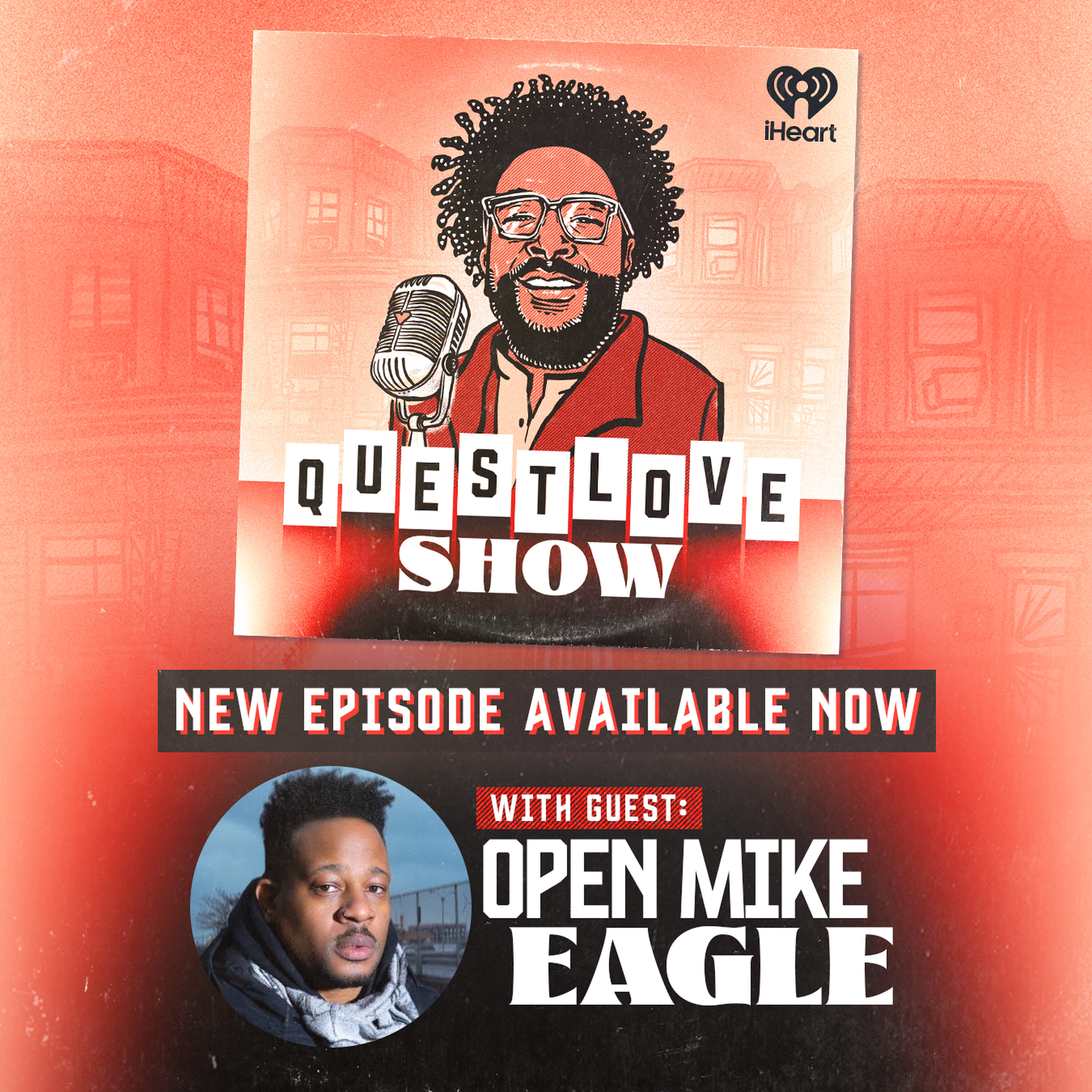
Open Mike Eagle
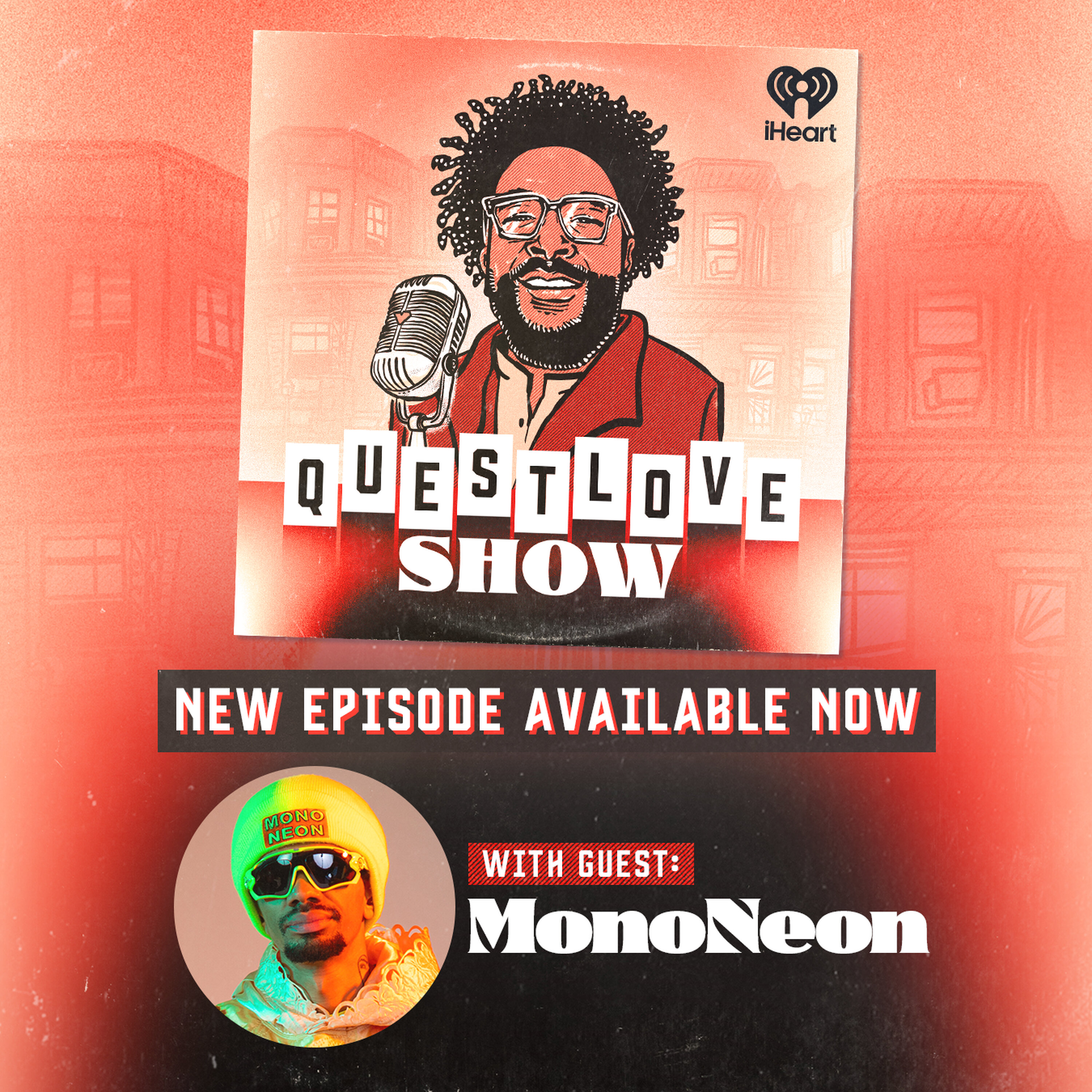
During the pandemic, Questlove joined Open Mike Eagle for a season of his What Had Happened Was podcast to discuss the Roots' earliest days and first four albums. Years later, the two creatives reunite (and learn how alike they really are) to talk about Mike's career and latest album, Neighborhood Gods Unlimited. The discussion takes a turn, kind of morphing into Mike's podcast, and kind of evolving into an organic discussion on life, art, trauma, and a real-time friendship-building between two like minded creatives with a strong love of nostalgia, pop culture, and diversifying talent,


00:00:00
Speaker 1: Quest Love Show is a production of iHeart Radio.
00:00:09
Speaker 2: Good People, How you doing? What's up?
00:00:11
Speaker 3: On this week's Quest Love Show, I talked to the one and only Open Mike Eagle. I did a whole season one of the best interviews I think I've ever given in life. Look up what it happened was if I Open Mike Eagle. It's one of my favorite podcasts. I'm so jealous that I don't do that podcast, that's how much I love it. It's basically an artist gets an entire cannon for a season. There's the Prince Paul season, not even episode seasons. Dante Ross season LP is also part of it, and of course mine is there. I covered the first four albums of the Roots career. Very insightful, but you know, for this particular episode, I will say that it's more like a conversation between friends. Mike was my facto therapist for this episode. He's a calm, present, very thoughtful guy. And this also marks the first time where I kind of publicly spoke about the struggle in processing and dealing with our dearly departed Michael D'Angelo Archer. Anyway, I was supposed to be interviewing Mike, but instead, I used Mike as a soundboard to talk about my problems. But that's the kind of guy he is. So I hope you enjoy this. Open Mike Eagle on the Quest Love Show. I could start off just on your boombox collection in the back.
00:01:41
Speaker 2: Oh yeah, okay, I mean this is this is a small portion of the overall boomboxes scattered throughout. Well, what you're looking at these couple right here. I probably got like eight or nine of them in the house or something like that total.
00:01:55
Speaker 1: So are you just sentimental like that?
00:01:58
Speaker 2: Yeah? Man, it was funny during COVID that ended up being part of my therapy journey, you know what I'm saying, going back and trying to get stuff that I could touch right from childhood to ground me. You know what I'm saying. It was all of that. So yeah, So even the stereo piece that I have that I got converted into a helmet. I bought all of these pieces off of eBay like the same year. I spent way too much money on it now that I think about it, But you know it was good for me.
00:02:27
Speaker 1: As I suspected.
00:02:29
Speaker 3: Well, I mean, besides, you're am seeing but really in your conversations on what had happened was I was like, I think Mike and I are the same person.
00:02:43
Speaker 2: Definitely part of the same tribe. Yeah, I'm saying, definitely part of the same tribe, fruit from the same tree.
00:02:49
Speaker 1: If anything. I feel like this is my chance to get to know you as a human.
00:02:52
Speaker 2: All right.
00:02:53
Speaker 3: So see I'm already messing up because I should have did an intro first. But see that we just went right into the conversation time an illusion anyway, we are the same person. Yeah, you know what I'm saying. Don't matter, all right.
00:03:05
Speaker 1: So, ladies and gentlemen.
00:03:06
Speaker 3: In past episodes, I've mentioned how transformative the pandemic of twenty twenty changed me for the better in terms of my life, my mental health, my physical health, and my creative endeavors and also my relationships. And of course I spoke of all the books that I read that you know, changed me. You know, if you're a long time listener of this podcast, you've heard me mention like Nevill Goddard and Jodaspenza and Breonna Wist and Richard Rudd and Kay Hendrix, David Hawkins, like the list is endless, but.
00:03:41
Speaker 1: It wasn't all you know, wo wu seriousness.
00:03:45
Speaker 3: Podcast diving also became my gountu pastime as I did morning walks or just like you know it was isolated on a farm in upstate New York. One particular podcast that was, I would say, a godsend. And I know, again those who know me well know this this podcast format that I'm on, you know my tendency to sort of go over the top in terms of enthusiasm hyperbole. However, I will say that one particular podcast that really truly became my go to safe place in dystopian times was What had Happened was And I often find out that you know, my people, and yeah, black people are kind of slow to dive into history portal, which you know is understandable for a lot of us living day to day and fight a flight. And you know, for a lot of us, looking anything north of yesterday might not be rose colored glasses, schip.
00:04:48
Speaker 2: My yesterday wasn't necessarily my favorite.
00:04:51
Speaker 3: So that said, like this whole fight to the finished hustle attitude that we have really, I guess stems we're looking for better tomorrow then, you know, and if you look in that mood, you might not want to look back in.
00:05:07
Speaker 1: The rear view mirror.
00:05:08
Speaker 3: So you know, I will say, enter our guest's genius creation, which kind of in a backwards way, I got drawn into the stratosphere of open mic Eagle, even though I've heard of him too, Ganders and whatnot. It wasn't until that podcast that I decided that, you know what, I want to be a champion of this guy and just look at his.
00:05:32
Speaker 1: Whole entire history.
00:05:33
Speaker 3: The thing is, I wouldn't exactly call our guest a podcaster, even though he's awesome at it, first and foremost much appreciating he is. Oh, I mean, dude, this is why I think we're the same person, because we're all things, are all people.
00:05:47
Speaker 1: You know, he's also an excellent MC.
00:05:51
Speaker 3: He's also comedian, even a singer sometimes who balances music, television, podcasting his personal life.
00:05:57
Speaker 2: Balance is a strong word, but I try, yes, exactly, I mean, but we're both trying to do this.
00:06:04
Speaker 3: So earlier this year he dropped an amazing, amazing album called Neighborhood God's Unlimited and this is on his Auto Reverse label. And I gotta say, one of the adjustments I made in my life was not to put so much weight on critical acclaim. I stuck to critical claim because I felt that that was the surviving grace for my life. But I have to say that was a mighty damn impressed with seeing his eight point five rating and pitchfork, yo dog. I felt like de Niro felt when what's his name is getting made and goodfellas like like ah man, like one of us got through the other side, which is also sad state of affairs, because again, I'm not looking for the the critical gaze to make us legit or not legit.
00:06:57
Speaker 1: But anyway, all this.
00:07:00
Speaker 3: Long ass intros to say, even though we spoken a few times, I wanted to reverse the roles here and speak to him about his life because I kind of get the feeling that we are the same person and we should be friends.
00:07:17
Speaker 1: So hopefully this is that. So that's what's up. Open, Mike Eagle, Welcome to the Quest Love Show to Q.
00:07:26
Speaker 2: How are you today, man, I'm good, I'm good. Thanks for having me. Do you remember the airplane story that's when we first met. I don't know if you remember that.
00:07:33
Speaker 3: Okay, So here's we first met at we were sitting together in the airplane.
00:07:41
Speaker 2: And let me let me do it. Let me run it. Let's do your thing. I think it's funnier from my side anyway. Right is, So I'm in the I'm in one of those airport bars in Lax and it's me and my partner, Video Dave, sitting there Video Day and we look over and like, wait a minute, that look likes love over there. You know you have the thing. Internally, We're like, damn to be as aware of you as I am. I'm like, damn, should I go say what up? O don't know? But then I thought about it, like, nah, I've wrapped over one of his beats before. That at least is a conversational open. Because one of the joints that you slid MC Paul Barman, yeah, one of his albums, I got on that. So I'm like, well, that should at least give me a conversation. So I gave my self license to come say what up? So me and him we came and said what up? And it turned out we was both flying to Austin. I think it was south by Southwest weekend, yes, and I was being flown out there by Comedy Central because we were doing a premiere event for our show New Negroes. So this is one of the few times in my life I happened to be flying first class, and so we end up near each other on the plane. You're in the road next to each other. Well, but let me tell you how that happened, because that's funny too. I'm sitting actually behind you, to the left, and then there's a person to me, and then a lady comes who's about to sit down in first class, and she's like, oh, do you mind if me and you switch seats? And her seat was in front of me, next to you, and this woman was Jody Foster.
00:09:15
Speaker 3: Wait a minute, you're right, you are absolutely right. Jody Foster was on this flight.
00:09:20
Speaker 2: Yes, uh huh uh. So I'm like, you're damn right, I'll switch seats with you, Jody Foster. And so I'm like yeah, and I'm like, man, I'm sitting next to quest Love. Ooh, I'm about to talk his ear off. And I think I even said that. I'm like, oh, if I come up there, so on exactly, because we must have exchanged six words, and at ten minutes in, you was out like a light. I'm talking about deep sleep. But I'm like, god, damn it. But the story would have been funny if it just ended there. But then the plane lands right, and you know, I think I got your number in because I'm like, at least I'm gonna do that. At least I'm gonna do that right. And then we get off the plane and I'm waiting on video day because Comedy Central didn't fly in first class, so I'm waiting on him. And then you walk out of the plane and you're like, oh, you forgot this, and you hand me my laptop, which I had left in the seat back pocket and completely forgot about. Like you saved my entire weekend and didn't even know it. Like I was there to do shows I wouldn't have been able to do because my laptop would have been in Montana somewhere and I would have been up Ship's Creek. So that's the story of how we actually met. Man.
00:10:43
Speaker 3: You can now verify probably the question that I'm asking the most people always ask, when do you sleep?
00:10:51
Speaker 1: Ye?
00:10:52
Speaker 2: Okay, I sent it. You're right because I seen it.
00:10:55
Speaker 1: Yeah.
00:10:55
Speaker 3: So the thing is is that if I sit fel for good ten minutes, there's.
00:11:04
Speaker 1: Likely, ugh that's likely to happen.
00:11:09
Speaker 3: I'm glad that the story ended that way because you know, there are also some people that will say that, wow, you're very stand offis Shamir and whatnot? You know, And I don't know if that's my work. I don't know if that's I'm trying to get better at being a people person.
00:11:29
Speaker 2: Aren't you not? Are you not already the ultimate people person? Like? What that's the thing from you?
00:11:34
Speaker 3: I think if there's a shield, like this is kind of a shield, you know, even though we're one on one in each other in conversation, if I'm writing something, people might think I'm chatty because of the you know, the same amount of paragraphs that I'll type in an Instagram post. One of my goals for twenty twenty six is to really go outside of my comfort zone like right now, you know, because I live in such an expansive world of me as a producer, me as the Tonight Show person, me as a root, me as a DJ, me.
00:12:13
Speaker 2: As an filmmaker.
00:12:15
Speaker 3: Yeah, all these things for each job I have, there's about eight to twelve people in that stratosphere. So yeah, I would say maybe the first twe hundred and twelve people in my life are friends, but you know, they're also on payroll, right and I really I say this, one of the hardest things for me to do is to step outside of that comfort zone.
00:12:39
Speaker 2: What do you think is outside of that comfort zone that you're wanting to experience?
00:12:43
Speaker 3: Sometimes it's just see the convenience of this model right now is also it gives you probably the most convenient out ever because if we're not working together and it's not again, it's not personal. If we're not working together, I'm kind of a I'm trying to figure out the idiom that this fits. Like, if you're in my face, then we have interaction, right, but if you're not there, then, oh god, I sound like the worst person in the world right now.
00:13:18
Speaker 2: Well, I know, I think I know what you're trying to say. It's like when people aren't in your face, it's probably like they don't exist. And that's that's probably cold, Like you know, the words are cold, but I think it speaks to your focus on all of the things that you have to do. Right.
00:13:31
Speaker 3: The thing that people don't understand about this life I've lived for thirty five years. Like I think, on the average a person knows about you might could recall two hundred people. If you thing about it, it's probably you could probably recall maybe a good thirty people between elementary and junior high. You could probably name maybe twelve to fourteen people in your high school. Whatever jobs you've had, you might remember like three or four names. I'm sure if it's family members, you can add another forty to it. So for me, I think the average person by the time they reach thirty, knows at least about two hundred people. But when you're me, you know, like I know fifteen people in Miami. I know seventy people in Manhattan. I know one hundred people in Brooklyn. I know one hundred people in Los Angeles. I know twelve people in Paris. So if you take just the total number, when you're juggling six hundred people and names and faces and whatnot, and don't let someone change their hairstyle or whatnot.
00:14:48
Speaker 2: Oh jeez.
00:14:50
Speaker 3: And everyone's favorite question is do you remember me? Spike Lee fish out Yo Dog? For real? It's like, well, in my world everything is closer to scrubs or if you're old enough, Parker Lewis can't lose.
00:15:07
Speaker 2: Parker Lewis can't what a pull with.
00:15:10
Speaker 3: This sound effect, you know, So, because that to me is the most I used to that used to embarrass me, and that then it used to make me angry because it's like, really that's your intro. Okay, so what if the answers no, then we're both or I'm embarrassed.
00:15:30
Speaker 2: That means you've definitely answered no at some point. So what happens?
00:15:33
Speaker 3: Then my go to jokey but serious answer, which is the truth, is like, dog, I don't even remember what I had for breakfast this.
00:15:41
Speaker 2: Morning, right right right right right.
00:15:44
Speaker 3: I hope and I put it in perspective, but it's hard to spring clean and start all over again. But I know the one thing that I really want is I would like to have ten friends that aren't on payroll and really maintain because there's also a.
00:16:01
Speaker 1: Trust factor, a trust issue.
00:16:02
Speaker 3: I've done this before and then usually like seven months into it.
00:16:09
Speaker 1: An entitlement thing happens.
00:16:12
Speaker 2: When people feel entitled to your time or you feel entitled to theirs.
00:16:16
Speaker 3: Where people feel entitled to my accessibility, my resources. I don't know what the perception of me is outside of what I think the perception of me is, but I promise you that the world only knows twenty percent of the daily activities. Like there's some things that happen to me that are just so mind blowing. That and again, this is a separation anxiety thing, Like you don't want to be the guy that's like ostracized because you get a certain privilege that your friends don't get to have. You know, I want to be likable and relatable, but I also want to grow and relatable.
00:17:02
Speaker 2: It's gonna be tough, bro relatables going tough, right exactly? I mean, who do you who do you even have to compare experiences with? You know what I'm saying, Like, I imagine a lot of people can relate to parts of your life, but the whole of it's gonna be hard for him to put together.
00:17:17
Speaker 3: I'm in a weird zone, yo, because it's like there is a period where I really thought, like Hoove and I were going to be tight, but he has a whole different set of reality and life matters that I can't relate to. He did it probably the most ideal way, which is that the people that are with him are the people that came in the door with him, right. I wound up doing a business with those people. I'll say that Tarik is probably the most consistent, and I've said this before, like we're going on thirty eight years where you know, he and I wait a minute, am I on your podcast again?
00:18:03
Speaker 2: I don't even start. Hey, man, how this is how friendship's happen? Man, you know what I'm saying.
00:18:23
Speaker 3: So basically our audience is just easdropping in on this conversation. You know, I started a business with Treiq, but then the danger of that is like I'm under the impression that you can't have a successful business, and I don't know. I see business and friendship as church and state.
00:18:46
Speaker 2: It's hard to do both, it really is.
00:18:49
Speaker 3: Yeah, because when you have a conflict, like we had one conflict, one conflict back in ninety four, which it's in the asked, But I'm also once bitten twice shy person. So my only teachable lesson of that one fight we had back in ninety four was like, you know, I should keep a professional distance so that the business doesn't get ruined.
00:19:16
Speaker 2: And that will I mean, that can't help but affect a friendship. It can't help it, you know.
00:19:20
Speaker 3: Yeah, Because the thing is is like the thing that I really miss about our friendship, you know those first and I mean, but this also applies to like the soul aquarians. This applies to even with the departure of di'angelo. The way I'm happy is the most is that he and I ended it the way that we started it. You know, in the beginning, we had to get to know each other and it was like, Hey, what music do you like?
00:19:46
Speaker 1: Hey? I like that music too. Hey, what artists you know? You know about this artist? You know about that? Artists you know about this? Oh, man, I listen to that record too. What you know about Fishbone?
00:19:55
Speaker 3: And once we found out that we had so much in common then and you know, that's how the musical marriage part of it happened, and so kind of the last three months we didn't have any instruments, and so it was weird at first, like sitting there, you know, by his bedside and us talking and kind of in the beginning, in the first like month or so, there was a point where I thought like, Okay, he's going to get through. This will be cool. Like we were like talking about normal. But I had such a fear in not having a protective shield of a drum set or.
00:20:35
Speaker 2: Just something else to focus on except yeah, because he happened this moment.
00:20:40
Speaker 3: Yeah, for that first hour, man for that first hour, I just sat there wondering, what does he think of the person in front of him now that's clearly wasn't the person whom he met thirty years ago. And I was in my head about I was like, I wondered if he's judging me. I wonder if he's did he think I was a sellout?
00:21:05
Speaker 2: Did he?
00:21:05
Speaker 3: You know we we once said mid mid Black Messiah. He really wasn't. He didn't know how he felt about us taking a day job.
00:21:16
Speaker 2: Interesting, did you see that a conversation that thought in Red Man?
00:21:20
Speaker 3: Had I seen the clip on ig? I didn't have time to watch the entire thing, but what we.
00:21:25
Speaker 2: Saying Red Man literally like they had a great conversation. And I don't mean this to steer away from the moment. The Red Man literally in the middle of the conversation asked him like what kind of reactions did y'all hear from people when y'all got a day job? Like and for me, it was mind blowing to even think that, especially on like the Indian side of this rap shit, like it's always so precarious financially, It's like, Wow, what how awesome would it be to have a gig, right, like a gig where you're you're not like, you know, stuff in boxes at Amazon. You're doing what you do musically, You're just getting paid to show up and do it. You know. To me, it's like it's it's that's pities from heaven, Like that's something anybody would want. But when he asked the question was like, oh shit, right, like from peers, from fans, like there are people who could have seen it as a sort of like selling out and that that thought. It never occurred to me until I heard him sit there and ask that question. And so it's interesting to hear that D'Angelo had some of those similar concerns.
00:22:30
Speaker 3: So the thing is, I always felt that the roots magic power was always being underestimated. And you know, the first the first time I felt that power of lowering your expectations only for your your expectations to fly, was when we did our first hood gig kind of out of the comfort zone of the utopian South Street, you know, where it's black white girls, boys d.
00:23:02
Speaker 2: Or not, you know, like it's off of shops and hair wraps and exactly home base, right.
00:23:07
Speaker 3: And the thing is is that I didn't know what the Prince's Lounge was. The Prince's Lounge was like this club in North Philly that I think was like part strip club, part bar or whatever. But they would have like some hip hop event or something. And you know the way that the Roots got our gigs was that people will just come up and be like, yo, play my poetry slam.
00:23:32
Speaker 1: You know, Philly had like five colleges.
00:23:34
Speaker 3: So someone from Temple comes up, someone from Saint Joe's comes up, someone from Drexel comes up. And that's basically how we got the word out about the Roots. And someone said like, yo, come to the Prince's Lounge whatever. We were like, just green, anybody willing to have us as an audience, We'll show up. And we co up to North Philly and we walk inside and I look and I was like, oh no, and they looking at us like you know the moment in the old Western where like the bad guy walks in and the piano stops playing and he closed piano and sets up shop like leaves, and you know, we're walking through and dog like I'm wearing exactly what I had on in the Motown Philly video, Like I got on Oshkosh Bagosh Jumpers this is the year I discovered where birken stocks were.
00:24:29
Speaker 2: Okay, Okay, he was doing it.
00:24:31
Speaker 3: Yeah, and you know my hair was braided and now that's normal. But like it took no, oh, this is ninety two, okay, so this is three years after three feet high and rising. So it took that period of even having like it's like, why have him snakes in your head?
00:24:54
Speaker 1: Like people look at Dreadline, right, and I'm from Philly.
00:24:58
Speaker 3: So the way that they villainized as the Africa family from Osge Avenue, I lived on O s Ja Avenue, so Ramona, Africa.
00:25:06
Speaker 2: Airty, like all that family.
00:25:08
Speaker 3: The move family, you know, conservative Christian black people always being judgmental and that sort of thing. So they even looked at Dreadlock people as like demons and those are stakes in their heads. So they're just looking at us, like what planet did y'all land in? But they were also hip hop hits. So the second we started doing Dwick, all of a sudden, that abyss sub zero judgmental thing went the opposite direction, and you know, they did their version.
00:25:43
Speaker 1: Of He's a jolly goodfellow.
00:25:44
Speaker 3: Like but that would happen also because seventy percent of all the gigs that we did between ninety three and ninety six were mainly Wu Tang cancelation shows at colleges, so you know, the audience this thing on, Hey guys, how you doing Brown University? It was hey, as you know, welcome to Spring fleeen nineteen ninety five. Ray Kwan and Ghost couldn't make it, but you know, but not to be out done, we have a really awesome group from Philadelphia. They're a live banded No No, no, No, The Roots, and it's like, m So the reason why we had to put so much emphasis on a live show, we knew we had ten minutes to make an impression. So all that's to say is like the lowered expectation part of it is something that I'm used to. And so I went into this job knowing. And sure enough, someone on I forgot what the reddit of, Like the Reddit of two thousand and.
00:26:49
Speaker 2: Nine was a message board or something.
00:26:51
Speaker 1: Yeah, it was.
00:26:52
Speaker 3: It was a message board of like a really popular and this journalist said, man, like, this is a sad day in history. Watching The Roots take a day job as a comedy show Sidekicks is the equivalent of watching Miles Davis become a Subway buster.
00:27:11
Speaker 2: Okay, okay, so that's a whole different paradigm than I never even would have but never would have answered my mind.
00:27:17
Speaker 1: But the thing was, I knew, I knew the amount of inside winking I was going to do taking advantage of the show, Like wait a minute, they're doing Jay Dillon interludes, they're doing what walk on song for.
00:27:32
Speaker 3: It, Like suddenly we were so underestimated that, Like I'm just used to that. I'm used to people kind of prejudging us. And you know, so in the case of DiAngelo, the fourteen year Journey of Black Messiah was ones with highs and lows in it. So the moment where like, Okay, now I live in New York and I'll come to the studio and start drumming and whatnot, he still didn't know he felt about it. And I was like, well, that's a weird unsolicited SoundBite you're giving.
00:28:07
Speaker 2: Me, so not even in a conversation. He's just offering this opinion of what you.
00:28:12
Speaker 3: Well, you know, just the first month, everyone was like, so late night television, huh. You know, there's some people that brought up bamboozle, the irony and bamboozles and you know, all this all this stuff, and I knew what he was hinting towards, like you're going to become the establishment.
00:28:29
Speaker 1: Now, huh, Like I see you, I see you, And I'm like, no.
00:28:34
Speaker 3: Like just because I'm wearing a suit on television doesn't mean that I'm burning cigars with one hundred dollar bills. And you know, we kind of had a heated it was like a heated two days of what I would call like if you if you remember Spy versus Spy and Man magazine, like kind of, uh.
00:28:56
Speaker 2: What you thinking?
00:28:57
Speaker 1: Oh what you think?
00:28:58
Speaker 3: Like I don't know if we're going to fight, argue. I don't know if I'm about to walk out in five minutes or we make a classic or whatever.
00:29:07
Speaker 1: You know.
00:29:08
Speaker 3: I kind of had to push back on him. It's sort of a passive aggressive way. I was like, well, you know, man, like I said, I couldn't sit in the passenger see forever and look to my left and no one's behind the wheel.
00:29:23
Speaker 1: And He's like, what was that supposed to me?
00:29:25
Speaker 3: And you know I had to remind him, like we kind of in this weird I don't know if you ever read the epic of Gilga Mission or I haven't. Yeah, like, okay, I went to a school in which you had to read like all this Greek ideology, like.
00:29:40
Speaker 2: I supposed to read it. I just didn't.
00:29:43
Speaker 3: We went deep on like you know, the Odyssey and like all the Greek mythology stuff. When you know you're listening to hip hop back then, you want to know more about Africa, not Greek.
00:29:52
Speaker 1: Started starting a modern culture.
00:29:55
Speaker 3: But I thought we were supposed to be like this whole brothers in arms thing, like Okay, we're going to start a movement and take one step at a time together and do this movement. And I held up my end of the deal, you know, like no one takes a year off from their momentum to go and help someone else. Like the year that I took off was the year that we won the Grammy, we finally broke through the other side. Like that should have been the year we cashed in and kept the momentum going of the success that we got, and instead, you know, much of the band Cigrine, they were not happy with me and taken off an entire year. But I did it because I knew that was history and I wanted to be a part of history, and so he got offended that. I was like, well, you can't say that I'm selling out when you abandoned our movement. And so that was a hard kind of first few days where even when we were jamming with each other, it wasn't the same, like we changed those words. And then we start playing a groove and he's just like going through the motions and I'm not really dead, and I'm like, man, something better happened. I was all right, three am, I'm gonna leave. That's three am. All right, three fifteen. It don't happen. I'm gonna leave. And the craziest thing happened. I said, all right, let me just take a break and then we'll come back and just one more time.
00:31:31
Speaker 2: We're gonna try.
00:31:32
Speaker 3: This thing, and if it doesn't work this time, then it's an end of an era. And so I happened to go into the break room and The Fresh Prince of bel Air was on Nicked night.
00:31:46
Speaker 1: It was an episode where Carlton was doing the Carlton right.
00:31:52
Speaker 3: And earlier Dad played me sugar Daddy, and that made me mad because damn funkiest shit on this record, and I'm not on this record. I'm not on Sugar Daddy, And so that was fucking with me because he's like playing it.
00:32:08
Speaker 2: And like stank facing, like he's the.
00:32:13
Speaker 1: Only mother icker I know that gets high on his own supply.
00:32:17
Speaker 3: Like his level of funk moves him, like when he hears his ship, he feels that shit, and I have to act like I like it.
00:32:27
Speaker 1: Whoo, that's dope.
00:32:29
Speaker 2: You have to you have to not feel the self denial part of it.
00:32:33
Speaker 3: Yeah, because I'm like, wait a minute, are you playing this for me because you want me to drum on this thing or.
00:32:38
Speaker 1: You just showing me that you moved on without me?
00:32:43
Speaker 3: And so you know, once he told me the story that Bill Withers drummer James Gapson, who is I mean, my idol. He is, like just his entire resume is just mind blowing. He tells the story that James and heard the groove for Sugar Daddy on Black Messiah, and he says, all right, play the song back for me, and he goes to the booth, puts the headphones on. He's just trying to figure out what he would do. So he starts doing this like then he picks up to six. He's like, all right, I'm ready to go and they're like, no, that was it, thank you. He's like no, no, no, I was just hit my lap. Like oh, They're like that was perfect.
00:33:30
Speaker 1: James Gadson never played the drums because just the.
00:33:33
Speaker 3: Whole hand boon sound though the collapse in Sugar Daddy was enough for D'Angelo and I was like, well, damn, that's an incredible story.
00:33:43
Speaker 1: So I definitely know I'm not drumming on this song.
00:33:46
Speaker 3: And so the whole time, like I feel like an outcast, Like not only am I getting judged for a career move I did, but now you're just flawning in me that you got someone else that's my idol from my childhood and you know I got someone better than like that sort of thing. And so in my mind, I'm like, well, this is probably gonna be the funky song on the record. So I immediately went back to Prince Language and I said, if this is Sheila E's album, this song is a love Bizarre. And for if you're a Prince fan and you listen to Sheila EA's record, love Bizarre is third on that album. But for me, the way that my mind thinks in terms of sequencing, Love Bizarre really starts with the second song, which is Dear Michael Angelo, which is a song that people ignore. But if you are an album person, you know what's happening next. I mean, it's almost like knowing that Billy Jean's gonna come right after beat It, or that human nature is gonna come at like you can't separate the positioning of other songs and how you judge an album.
00:34:55
Speaker 2: Skypager into scenario.
00:34:59
Speaker 1: Exactly, we don't treat what as its own song?
00:35:04
Speaker 2: Right?
00:35:04
Speaker 1: What is just a movie trailer?
00:35:06
Speaker 2: Oh? What in? Instead of just right?
00:35:08
Speaker 1: Right?
00:35:08
Speaker 2: Right?
00:35:09
Speaker 3: So basically what is an incredible song? But in your mind, you know you got three minutes to do what you gotta do so that when that Areo comes on, you're all in. And I've never listened to what on its own without expecting what chicka what?
00:35:33
Speaker 1: Right? In my mind?
00:35:35
Speaker 3: This is this is how calculating I am, and how petty I am. I said, okay, okay, I need to get in front of this train. Whatever song comes before Sugar Daddy, I need to be on that song. I got to create the Dear Michael Angelo that comes right before Love Bizarre. And so I'm back on the drum set and I'm thinking of Carolton doing this dance. So I said, okay, I'm gonna take you out your comfort zone. D I'm not gonna do no head nodding dell of shit. And I started playing this thing on the time time. I'm not even looking at dal on the piano. I'm just in my mind. I'm trying to imagine people in the audience, black people doing the Carlton or like, like, I want this shit to sound like Fleetwood Mac shit with some ump to it. And I don't know how I forced the will, but this is out the song charade got made, which I was like, I gotta be the song that's right before Sugar Daddy.
00:36:42
Speaker 1: So that I can territorial piss.
00:36:46
Speaker 3: And then when I'm done, okay, James Gatson, come in with your little hands lap so you know all that have to say?
00:36:52
Speaker 1: Is that back to his hospital bed?
00:36:55
Speaker 3: Yeah, Like I just wondered, was he going to to judge what became of my life, you know, because I became so professional To them, I was a professional, you know.
00:37:08
Speaker 2: But look at what you use your profession to do. Though some are a soul and slid stone, like you know what I'm saying, it's it's using your profession to advance the same shit that everybody knows was fly though, you know what I'm saying, Like, I don't know. I feel like that's a different way to go about it. It is sellout shit, you know, I know.
00:37:28
Speaker 3: But you know, I think there's this mind state that when we're in this rock and roll lifestyle or whatever it is, that it's supposed to be debaucherius. It's supposed to be hedonistic. It's supposed to be Watch the Lenny Kravits Where Are We Running video? That's a great example. Look at where are We Running from? Lenny Kravitz. And for most people, that's what the rock star's supposed to be, like like a bottle jack in your hands. You know, it's supposed to be irresponsible, and if you're responsible.
00:38:04
Speaker 1: Then you're seen as a suit or whatever.
00:38:07
Speaker 3: So you know that said, I'm in a position in which I don't think of myself as like the privilege one percent or whatever, like people think the monopoly whateverver, the monocule monopoly guy is like the feed up on the desk. I'm not that person. But I'm also not the guy who's count up change. So that Treaka and I can split a bag of Famous Amos cookies and a half gallon of orange juice while we watched Do the Right Thing for the twentieth time in the living room. So but you know, I will say that the conversation was, you know, he was proud of what my life had become. And so, you know, anyway, I've realized that maybe for the first fifty.
00:38:54
Speaker 1: Minutes of this podcast it won't up being your podcast.
00:39:13
Speaker 3: So I want to know from you, new friend, what is your general warning routine.
00:39:19
Speaker 2: I make my little healthy breakfast. It's strawberries, blackberries, yogurt and pecans and a bowl, and I have coffee and I do wordle.
00:39:31
Speaker 3: And then speaking of Barnman, is he also sending you his custom word awards?
00:39:36
Speaker 2: Now no, I don't think so. I don't think I've gotten a custom wordal he sends me a lot of wraps.
00:39:42
Speaker 3: Okay, so now that wordle is almost at the bottom of the barrel with five letter words, they probably, I believe, at the top of two thousand and twenty seven, they will have going through every five letter word that's not a proper down. I mean, you know, Frank is a proper down and Trump is a proper you know. So now they're figuring out new ways to deliver words. So now you can make up your own wordal clue and hand it to your people's right.
00:40:20
Speaker 2: I did see that functionality, but I haven't used it.
00:40:23
Speaker 3: Yeah, Varmin's already on it. So you are conscious of your health in terms had.
00:40:30
Speaker 2: To be man because in the pandemic so right at the beginning of it, I also got divorced. So suddenly, as an adult, I'm really living on my own for the first time too, other than when I have my son. Right, I looked up one day and stepped on a scale and saw a number I couldn't even believe, Like I couldn't even like, I couldn't believe that my body could do that much bread, I mean that much everything. At that time, what I was eating for breakfast was like a fried chicken sausage sandwich in an English muffin and an egg and a you know what I'm saying. And I had a little fruit bias. I thought I was doing something, but like I just wasn't paying attention to how I was eating. I didn't know how to cook. I was eating a bunch of frozen shit. I was eating take out all the time, and I wasn't really being active. So you know, I look at what it happened was that I did with with like Lpe or that I did with Dante Ross, and yeah, I'm like, my neck is like two times wider than it's supposed to be, right, and you know, and I remember what my body looked like then too. But you know, I started being more health conscious when I saw that that number, and so it drastically changed how I eat because I actually started to learn about food and shit. You know.
00:41:38
Speaker 3: See you're round about being forty five on the new album You're forty five right now.
00:41:43
Speaker 2: I turned forty five tomorrow, God damn tomorrow.
00:41:47
Speaker 3: Okay, all right, well happy, Uh by the time it's theres you will have been.
00:41:52
Speaker 2: Forty five, of course, of course, thank you.
00:41:55
Speaker 3: Do you feel like there's an unspoken pandemic happening with anyone that's in the rap game and their inability to get past the age of fifty?
00:42:07
Speaker 2: I think I need you to say a little bit more about that, because my mind interpret that a few different ways.
00:42:11
Speaker 3: Okay, So my girl once kind of joked that, you know, there was a point where follow me on Instagram was very depressing because she said that your Instagram is basically a digital morgue.
00:42:25
Speaker 2: Yeah, okay, and you.
00:42:29
Speaker 1: Know, I was kind of in denial and I was like, let me look, and then when I.
00:42:34
Speaker 3: Looked, I was like, wow, okay, Well what I stopped doing was, you know, in normal times, you know, two thousand and fourteen, fifteen sixties, whatever, you know, like the early first five years in Instagram.
00:42:48
Speaker 1: Of course I'm gonna like, hey, my favorite bowl of cereal, or I got.
00:42:53
Speaker 2: This new drum set mundane sort of.
00:42:55
Speaker 3: Yeah, And somehow my finger just became more concentrated about things that I'm obligated to post and things that, you know, but most importantly because I didn't want history to be lost. Yeah, I will talk about this MC passing away and that MC passingway, and this drummer passed away, and this musician passing away. And there was one point where there was more death posts than there were just regular life posts. I wonder, just in general, because of a lot of your subject matters of just like like when you rhyme, I feel like I'm listening to the inside thoughts of your head. Of course, you know, it's not exterior rhymes. It's not about I'm the best at my craft, and I'll take all.
00:43:43
Speaker 2: Used to be it used to be right.
00:43:45
Speaker 1: But I'm saying that as far as your evolution is concerned, I clearly feel that all your rhymes are coming from what your inner voice is saying.
00:43:53
Speaker 2: It's some part of my mind talking to the other part or what part of aizations.
00:44:00
Speaker 3: Yeah, five parts of our brain alpha, beta, faded, data, and gamma, And I feel like those four kind of like inside out right, like they're Pixar.
00:44:09
Speaker 2: Is inside out.
00:44:10
Speaker 3: And so in general, I'll ask you, like, during this time period, is this a thought or concern of you.
00:44:17
Speaker 1: Have you ever said when I'm sixty, when I'm seventy, I don't know.
00:44:21
Speaker 3: I don't have kids, So I think maybe when you have a kid, you have a purpose.
00:44:27
Speaker 2: There is a sort of force of will to me that feels like it shifts into automatic once you do have a child. I don't know if that serves true for everybody, because certainly there's many people who have kids who you also feel like that will to exists not necessarily continued on, but I did feel that shift personally, that there was a certain offloading of desire to exist just for myself, but to also make sure that this being that I care about more than anything in the world is also provided for and that I'm here for him, you know.
00:45:01
Speaker 1: So for you, it's just the second he came on earth and you just felt.
00:45:05
Speaker 2: Like it changed everything. It really did. It really did change. It put everything that I did in a different context. But the hard part about that is that it puts my mistakes in a different context too. Like I had a couple like a couple of years ago, maybe even just over a year ago. I was like the brokest I've ever been in my life, and it had me questioning my life choices existentially because it's like, yeah, I have lived so many of my dreams, but what does it matter if I have nothing to provide for my child? You know what I'm saying, Like, what how is he? He's sixteen? Okay? You know, Like, what is the value of having lived one's dream if that only adds up to seventeen dollars and you have a mouth to feed? You know what I'm saying. It's like those it's a different way of looking at everything I've been able to accomplish, not that you know, of course, success and money aren't always hand in hand, but specifically in the context of how having a child makes you examine the things you've done and the choices you make.
00:46:10
Speaker 3: You know, all right, I almost feel like this would be a private conversation, but I want you to no, I want you to stay here because for me, one of the biggest fears I have in life is becoming a father fear and I'm not a father, and I have kicked that can down the road, all right, when I'm thirty three, I'm ready. All right, I'm thirty six. And all it takes is just like a day with one of the Root's kids for me to be like, Nope, I'm good, I'm good.
00:46:42
Speaker 1: I wait till I'm forty one.
00:46:43
Speaker 3: All right, forty five, I'll wait till that, and it's time to shit it. Get off the pot. This is the first time I'm asking these questions. I can't believe I'm using my own platform to ask these questions.
00:46:57
Speaker 1: So what was the feeling sixteen years ago?
00:47:00
Speaker 2: I mean, I was in a very stable partnership with a very stable person. The only instability was really me and my artistic endeavors and the risks involved in that. And I certainly thought with all of my cells right that in that year, like when I was living that year of two thousand and eight, two thousand and nine, that this is I'm committing to this future, like this is this is the partnership I'm going to be in for the rest of my life. So this is the perfect time to bring a child into the world.
00:47:36
Speaker 3: Am I allowed to ask did you plan or just plank plan?
00:47:41
Speaker 1: Did you feel like you were ready?
00:47:42
Speaker 3: Because in my mind, I always felt like, Okay, I got to make this amount of money and I got to have these projects done and everything, and then then I'm ready Or is it just a thing where you just jump in the water.
00:47:52
Speaker 2: And I mean there was a little jump in the water, like I said, Like my partner at the time was in a very stable, like rock solid place, and I still had a lot to figure out career wise, Like at that point, I honestly didn't know if I was going to be able to successfully make a career out of music or not. But I was like, if not, then I'll just get another day job, because I had always had day jobs up until that point. And when confronted with those thoughts of I don't know if I could do this. What I will always do is just look around and and remember that like almost every adult in my purview, and this is just people in my circles, people at the grocery store or whatever, like a very small number of these people were planned, Like every all of these people were babies once, and very very few of them were planned. And it just reminds you that just like as a species, we've just been doing this. We've been doing this for thousands of years, Like we know how to do it. We know how to take care of kids, we know how to put our lives in a position where if we give a shit enough to do this, we'll figure it out, you know. Like I that was a thought that comforted me a lot, Like, yeah, I'm looking on I'm looking at NBA on T and T. I'm like, damn Shaquille O'Neil with somebody's baby ones Like that's crazy, you know what I'm saying. But like literally all of us were in that position, and very few of us were in that position in the most ideal circumstances, Like that's not how it goes. Like we all have sex and then people have kids, and then people figure it out. I was a child of the eighties crack era. My mom got in a lot of trouble when I was young. My grandparents raised me. You know, shit happened to me, Shit happen to all the kids that I know. And I've had to check myself a lot and making sure that I wasn't being overprotective of my son. In ways it didn't even make any sense, Like, you know, he's in a different circumstance than I would in so many ways, Like not only is.
00:50:02
Speaker 1: He in LA with you now? Like where, Yeah, he's in LA.
00:50:05
Speaker 2: He's in LA. Like he goes to school in Culver City, Like it's not the South Side of Chicago in the late eighties. You know what I'm saying, Like it's a different environment. There's threats, but there's they're very different, and I'm not necessarily like my fears aren't going to prepare him for the environment that he's in right now. You know what I'm saying. It doesn't translate like so I'm always monitoring for dangers that I am aware of.
00:50:29
Speaker 1: What does his father look out for or worry about?
00:50:32
Speaker 2: In twenty twenty five, the internet or a sixteen year old kid the Internet?
00:50:36
Speaker 1: Oh damn, I don't even think about that.
00:50:38
Speaker 2: The Internet, like the Internet, who he's playing, I mean, it all goes back to the Internet, because it can be social media, it can be who he's playing online games with, you know what I'm saying, Like you got to look out for people on roadblocks, and you know, like what's robots roadblocks is a it's a game engine, but it's a closed sort of economy where you like a bunch of people make difference types of games in roadblocks. But predators go crazy in there grooming kids on roadblocks. Like it's a very serious thing, like like you know, you can you can enact protections to make sure that you know, things are as safe as possible, but it's just such a wild West part of gaming that like, predators have really taken a hold of that spot.
00:51:22
Speaker 3: And Doug, I literally thought, the only thing I have to worry about is sending them to the story to get toilet paper or by flower or I didn't even fathom or think about that part of life.
00:51:37
Speaker 2: Yeah, that's that's the that's the part and like all of my fears, you know what I'm saying, all of the ghetto myths we used to make up like that that's always so interesting to me to think about. Like we used to make up villains in the hood, you know what I'm saying, and they were reflective of real things. But we used to like tell like it's almost like ghost stories about shit that would happen to you, like, and that was the way we sort of knew how to stay safe for whatever. But like, yeah, like it don't translate to now. And I think being very mindful of you know, your kids not having accounts on things, you know, trying to control the screen time and all of that shit is really important. Like it's really important.
00:52:16
Speaker 3: So a new fifteen year old just entered my life right now in terms of mentorship, and you know, their parents sort of expressed a concern or fear of like explaining like this is the most dangerous times of the life. For me, that dangerous time was seven to nine, like you know, the whole don't take candy from a stranger, don't you know.
00:52:40
Speaker 2: But but you know what that's reflective of too, is that when we were younger, we used to go out outside by ourselves, right right, And that's not really a thing that happens now. So society has sort of changed on that level too, Like I'm not. I never sent my son to the store when he was nine or ten by himself to do anything like this is like, and if he had been seen walking around my neighborhood or his mom's neighborhood at that age, it would have looked crazy. Really yeah, really, I think so, Like I think kids walking around with other kids, that's one thing. But I'm just saying, like a third fourth grader walking around solo, I don't see that much out here.
00:53:22
Speaker 3: Then I'm the most blessed even being on earth, because like, starting in third grade by myself, I would take the trolley, the subway and another train to go to school circle back by myself, and.
00:53:36
Speaker 2: Did a lot of that too when I was younger. But I think that if I sent my kid out into the world now the way I was sent out into the world, it would look crazy.
00:53:45
Speaker 3: So this is one of the adjustment things that I thought was normal in the seventies and eighties, like a like a carporal punishment, like we are like I think I think it's similar to that, Like that sort of all thought that was normal.
00:53:58
Speaker 4: Yeah, okay, got it.
00:54:12
Speaker 1: To our listeners out there. I really apologized. I was trying to sneak in Mike's profession.
00:54:19
Speaker 3: But I told you guys at the beginning that the format of the show is gonna be way different than just like your first musical memory, what was your first memory in life?
00:54:30
Speaker 2: I want to say it was walking into my grandmother's apartment when I was like I had to be three or four or something like that. But the reason I would remember it is because it became where I lived, you know, So I feel like it was my first time walking into what would become my childhood home.
00:54:47
Speaker 3: And for the record, and this blew my mind when I did your podcast, could you share with the audience the first rap song you ever heard in your life?
00:54:57
Speaker 2: Oh? My mom, I got in a car. Remember I told you my I got in some trouble because she was she was an eighties kind of party girl some so oh is she when she has you? Oh? I don't. I don't even know how if I know how to do that math, but I would say it had to be early twenties. I had to be early twenties, Okay. I got in her car because this is one of the days I wasn't living with her, but she picked me up from school that day. We was staying at her house for the weekend. R This was first grade. I get in her car and she's playing Easy. I distinctly remember hearing we Want Easy, and I remember hearing is it Nobody Moved, Nobody get hurt? Yes, those are Those are the two songs that I remember because I just couldn't wrap my head around like the bang process. Yes, the process by which this was happening, Like I didn't know how to deal with it, Like I'm in my mother's car, I'm hearing music with curse words in it that doesn't like it made me feel like if I was in a movie and it would have been a part where she would have covered my eyes, but like she's just playing it. And this guy's voice sounds funny, like I can't even tell if he's like a serious person or not.
00:56:04
Speaker 1: Sounds like a cartoon.
00:56:05
Speaker 2: Yeah, it was incredibly entertaining to me. And I'm just sitting here like wide eyed and slack jaw, like not even knowing how to engage with this. And that was the first rap music I ever heard in my life.
00:56:16
Speaker 1: At ten years old. What do you remember about Chicago?
00:56:20
Speaker 2: So that's when I'm going to Drake elementary school, which doesn't exist anymore, but it was a school in the middle of the projects. One of my craziest memories from that school is that we had a kid who transferred in seemed like a generally cool kid, got along with everybody. He was leaning back in his chair one day in the back of the class and we all heard a crash and everybody started laughing because he fell. But then he like didn't get up, and then they took him to the hospital. And I still don't understand these words, but the teacher told us that they were told that this little boy, because he went he was living in the projects immediately surrounding the school. This little boy had a s them full of cocaine when he went to the hospital, and they were saying they don't know if he had an older sibling or something, or a parent who was dealing, but like it like h shit, just completely like an overdose basically for a child. And so that week all of our curriculum was thrown out of the window and we just had like Dare Like it was like Dare programming like all week long.
00:57:25
Speaker 3: When I first visited Chicago, I mean, we were taught to fear Chicago and really a lot of these one stop shops, you know, when you're first promoting your record and all that stuff, you gotta go to Georgia's record shops and all this stuff.
00:57:41
Speaker 1: And we were just told, like Chicago has more projects.
00:57:45
Speaker 3: Per capita, like you know, Cabrina Green's right there, and Oprah's Pinhounce is right there, like it was amongst each other. So in general, are you walking around like it's normal or are you consumed with any second you could be out of here.
00:58:03
Speaker 2: So it felt very normal to me, but I could tell that to the adults in my life, it wasn't very normal. Like I could tell that to my grandparents, it wasn't very normal. Like we would hear gunshots outside of our building and they would tell us to get low, but like you could you could see that it was like very frustrating to them, you know what I'm saying. Like we didn't live in the projects. We lived in a you know, a set of high rises that were very close to us, another set of projects. So for us, it was normal, like hearing gunshots, like crime, like you know, crackheads, crackheads. We had, you know, like drug addicts in our family and seeing your auntie turn into something else that was very normal. But when I look back on it, it seems crazy and like I feel like even now it would be nuts to see some of the stuff that we saw. But at the time it did feel normal. It didn't feel like and I used to come to call the four yar a lot too. My dad always lived out here, okay, but it never felt like super crazier than La to me.
00:59:08
Speaker 3: If I think of my childhood, I miss it and reminisce it often I go back. I'll rent a car just to drive in Philly, Yeah, and just sit on the corner, no specific destination. I'll just sit in front of my grandmother's house. Never get out the car. But just like that in Chicago, wonder like just see if old ghilst pass by for for you, like, do you have fond memories of what I would assume is one of the most dangerous times in Chicago.
00:59:36
Speaker 2: Absolutely, because it was my childhood, you know what I'm saying, Like it was my childhood now, you know, because of all of that. And it's funny because it reminds me of the pandemic in a way, because of all of the hurricane, the bullshit I grew up in. I was in a house a lot, so you know, the boom boxes and all of that shit, the stereos, like that's all Like I'm trying. I'm trying to, like Rea plain memories of shit that was in my house that I grew up in and I felt very safe, and you know, like my fond memories are around like playing Nintendo, you know what I'm saying, Or like certain parts of episodes of The Cosby Show, you know, like like you know, it was earlier we were talking about you said the Epica gilgame action. In my head, I'm like Cleveland notes, you know what I'm saying, Yeah, yeah, version a cliff note, like that ype of stuff.
01:00:29
Speaker 1: That episode, or you end up on the street or on the street when they did that, like.
01:00:35
Speaker 2: That that type of shit MTV at that time, Nickelodeon at that time, Like that's a lot of shit. Like when I live stream sometimes I just find like our long blocks of time people have uploaded from you know, MTV nineteen ninety one, and well I'll just play that and react to it just because it takes me back to that place, Like a lot of that media is so important to me.
01:00:57
Speaker 1: Did you ever dream of escaping it.
01:01:00
Speaker 2: I think I did escape it. But that's how I escaped it was through the media, through music, you know what I'm saying, Like through through the music in my headphones. Like that's I know it's fucked up when I say this, but it's the truth for me. It's why I never really got excited or could fuck with gangster rap because it always sounded like the shit going on outside my window. And I had enough of that shit, like trying to go to school, you know what I'm saying. I had enough of that shit. Lily wasn't funny to me. It wasn't cute to me, like like and we were talking about easy E but that felt like more of an abstracted, sort of cartoonist version of it. But like real serious gangster rap. I had zero appetite for that shit. Zero.
01:01:39
Speaker 3: I think that music was created for those that vicariously wanted to know what we were like without having to physically come in.
01:01:50
Speaker 2: And experience the voy your experience, you know. But I've known a lot of people even you know, in those environments that really connected to that because that's what felt authentic and really and they wanted the music that reflected outside. I just never wanted that. But that's why I think that's the answer to your question, because to me, the escapism was always like what sounds different than this? What looks different than this? You know?
01:02:12
Speaker 3: So I have a theory that you know, once nineteen ninety seven came nineteen ninety seven, really ninety two, but it came to fruition in ninety seven in which I felt that there was these lines drawn in the sand where suddenly now there are successful rappers, a list rappers, privileged a list successful rappers, and then to my left, you know, they're the underground, backpack rappers, you know, the subculture, the abyss, the below underground, and then there's the middle ground, right kind of a person that has their foot in both of these things?
01:02:54
Speaker 1: You know, in general, do you still feel the.
01:02:58
Speaker 3: Apartheid effect of you know, like if you were to meet a playboy PARTI right now, even though look I did understand the age difference and all those things right right right, Like, is it still the three way civil war apartheid that I felt it was back in ninety.
01:03:19
Speaker 1: Ninety seven.
01:03:20
Speaker 2: I mean, you saying you felt it was, I'm telling you, on the ground it definitely was that. Now, part of it was marketing that we bought into, but it was serious for us. Like I was part of the kids that were ciphering on the corner. Like so when something like soundbombing or lyricist lounge came out, I was like, Oh, this is for me, this is for us, this is our shit, right like so that and then how the roots of that sin not intended, but the rulers of that sprang up and you know, you get you get most deaf and quality, and then they're messing with y'all and common. So like there's there's a sort of line to be drawn, you know, like back to but did you.
01:03:55
Speaker 3: Know that you were choosing the duebs? Did you know that you were choosing the Yeah, because the losers? Yo, I was in high school. Like I was in high school.
01:04:05
Speaker 2: I was in high school in Chicago, where like there were enormous philosophical, sometimes heated debates about Biggie versus pop, and I was part of the crew that was like, fuck both of them. We don't listen to none of that shit. We was listening to like early MF. Doom and Cool Keith and you know Doctor Octagon like like and really we were rapping, we were underground. Of course we were the dwebs. Like that was us, you know what I'm saying, And if you fast forward to now, I think what I often have to be careful of is not bringing those old dichotomies that I have learned. I had to undo the marketing part of it. Like I had to undo the fact that like a lot of these were artists signed to different offices within the same building, and you know, they were pointing back at us saying that this is the real shit and then this is the popular shit. But they was making the same money either way, you know what I'm saying, Like, I have to like investigate a lot of that and make sure that I'm not bringing a lot of that with me, because one thing that I've learned is very clear is that the audience doesn't separate them. The audience like listeners hip hop fans these days, they fuck with everything. They don't mean that they like every artist, but they're not going to not listen to somebody because they're underground. They're not going to not listen to somebody because they're mainstream or because they're popular.
01:05:34
Speaker 1: This is where we might differ.
01:05:35
Speaker 3: I'm under the impression based on just their early Internet reaction or just you know, it could be just the seven people that would catch me at the diner after show in Denver, or me putting my crates back in the car after a gig and you know, Houston or something. I was under the impression that a big part of our success was it's one thing to be chosen, like I choose you, like I choose to listen.
01:06:10
Speaker 1: It's open mic eagle.
01:06:12
Speaker 3: But I was finding out that a big part of our fan base or the attendees was more like, nah, man, I hate.
01:06:21
Speaker 2: That, blah blah blah.
01:06:23
Speaker 3: Which kind of makes me feel like, oh, well, you're the only one left. It would be like, you know, when I was a kid, there's nothing worse than being the last person chosen for.
01:06:33
Speaker 2: Anything A sported, a dodgeball team or whatever. The fuck.
01:06:38
Speaker 1: All right, all right, I'm here, you know, And sometimes I felt like that, Like I.
01:06:45
Speaker 2: Do, think it was different, but I'm but this is what I'm saying. The marketing was in effect then. But right if you look at let's look at doctor MC. Would anybody be surprised to see him on a song? Which or J Cole or you know, Drake and people still like them or Kendrick or anybody like is there like maybe thoughting Carti is a little too far right, But that's more of a stylistic thing than like a popularity thing, you know what I'm saying, Like like literally, you know, Carti literally mumbles, you know what I'm saying, thought literally elocutes better than anyone. So you know, So I think that, of course is a bridge, maybe too far. But I think in terms of the there used to be a stratifying based on popularity, you know, like you know, you look at the what they do video y'all going at the images of rappers who were popular, you know what I'm saying. When now I feel like popularity doesn't play that much of a part in what listeners are choosing these days, not as much anyway. I think there's a lot less separation these days. I think there's a lot less separation these days than there used to be.
01:07:58
Speaker 1: So you're saying that you have hope.
01:08:01
Speaker 2: I'm saying that I'm seeing out there in the trenches that it ain't like it used to be. That don't necessarily mean it's better, but it ain't like it used to be. Okay, that'll help.
01:08:14
Speaker 3: Look, I promise that we're gonna have a professional conversation one day.
01:08:20
Speaker 2: Sure, well, let's have three to five unprofessional ones in between.
01:08:26
Speaker 3: Then that half of the audience that stayed for this conversation, Oh no, I think that's locked in. This conversation is almost close to what a therapy session is like for me. I believe that my general belief in and I hate just pitcheonholing the term hip hop because it sounds so limiting, but okay, I'll take it out of hip hop. I believe that the voice is the most important element of anyone worth their grain AsSalt.
01:08:59
Speaker 1: The voice is the thing that pulls you in. And you have.
01:09:07
Speaker 3: A voice that is like and I don't know how to explain it, but it's almost like a safe space of that of like a therapist or a psychologist.
01:09:20
Speaker 2: Well, I'll tell you this. I do have a bachelor's degree in psychology now. And at one point that was gonna be my life path.
01:09:28
Speaker 1: Well why did't you just do the extra four years and become a doctor.
01:09:32
Speaker 2: Because I moved to LA and got married and had a kid and started making rap music instead, it was that's a whole that's a whole nother side story. But I hesitate to even say that because it's not something that I do on purpose. But I genuinely like talking and like listening to people, you know what I'm saying, Like I genuinely enjoy it, like I can tell yeah, you know, in.
01:10:01
Speaker 3: The podcast, I wound up like this is a confessional. I think I said.
01:10:06
Speaker 2: That.
01:10:06
Speaker 3: My producers are like, wait a minute, he never said that before, Like you know, so damn you got me. Connecting is important, man. I just think it's important, and I think it's important. I think it's also important for people to hear people connecting that I do believe, which is this new format that we're on. It's going to take people to get used to this. But you know, I did this episode with Willow Smith once. I didn't realize how catharic that felt. I've never I rarely have done like one on one episodes, and you know, kind of the impetus of the old Quest Love Supreme was sort of like my ongoing hiding and plain sight things interesting. Well, I got Fonte here and I got like, I got the cat characters. You know, it's like D'Angelo in the background, you know, voices. I always told him, like you do all these intricate back things so that you don't have to face the people, like you're somewhere back here, but all the music and all this other stuff and you know art. Yeah, and having that high, that first high of the cathartic healing that it felt to have a conversation because these are things that I I don't do that often, Like this will probably be the first two hour conversation I've had with someone this month, which is more of a.
01:11:32
Speaker 2: I mean probably stame here now that I think of it, I mean, who has two hours these days? So, Mike, before I let you go, I definitely want to talk about neighborhood gods unlimited. First of all, can you just talk to me about the process of your creativity, Like when you are at the beginning of a project, are you one of these artists who just sort of does things by the daily and then act throughout time. There maybe twenty five songs sitting around, and then you have to figure out which of the bats can fit this or do you have a concept in mind before you release it out? No, to me, it's it's a little bit of a hybrid situation where Typically what I'll do is I'll start making songs. I'll get like five or six songs in, and then I'll start to understand what I'm trying to say with this music, and then I'm like, oh, this is what I'm trying to talk about. And then I sort of like finished the project, you know what I'm saying, And I say finished, But I might only be like a third in when I sort of when the theme or the narrative or whatever I'm trying to do really emerges for me, and then I sort of take that through the rest of it, you.
01:12:45
Speaker 3: Know, Okay, so what is what is your theory with Neighborhood Gods Unlimited?
01:12:50
Speaker 1: Then like, what's what's your.
01:12:52
Speaker 2: I mean, this is this is a story, Like it's a trauma story about what trauma does in a lot of cases, and shadow shadow a per into a bunch of little pieces, right. This is a story of somebody trying to put themselves back together but going about it the wrong way. And then that's that sort of sets the table for everything that happens in this album one way or another.
01:13:14
Speaker 3: How do you deal with trauma in twenty twenty five?
01:13:18
Speaker 2: I mean, I have to give all praise due to my therapists. Man, I really do. And I went through a lot of therapists in my life, but I had to find one that was specifically trauma focused because nobody else is going to be able to get around all of my verbal bullshit that I do to make everything make sense in my mind. You know what I'm saying, Like, somebody has to be trained in trauma therapy for me to like get outside of myself and actually see you know what I'm saying, what I'm doing, the choices that I'm making, and be able to actually like start to reintegrate.
01:13:52
Speaker 3: Kind of under the impression that all therapists should be prepared for trauma in other words.
01:13:58
Speaker 2: I think preparation, but like, there are specific avenues of therapy that are built around dealing with trauma. And it's not just like cognitive behavioral therapy or this or that. It's like, this is trauma therapy. People do like EMDR like that sort of stuff, Like these are particular trauma centered approaches to dealing with there.
01:14:21
Speaker 3: And so in terms of connecting, is this more of just a cathartic exercise for you?
01:14:27
Speaker 1: Do you? Like, what's your general fan base?
01:14:31
Speaker 3: Because again, as as I stated, I feel like you are rhyming from the inside of your head, right the thoughts in your head, and you know, your courses sound like affirmations, so it's almost like I hear you actively working it out in general when you are performing or just getting general feedback of it, Like what's the reaction as far as like the connection, and.
01:15:00
Speaker 2: It's interesting, I feel like people that enjoy it, because there's obviously it's people who aren't who don't, but the people that do, they can enjoy it on a bunch of levels or different levels. Like some people just like like you say, some people just like how my voice sounds, some people like the ways the choruses are, some people like the sort of beat choices that I make, and some people get really really deep into trying to unpack the story of the album and dig really deep into it. Now that's you know, that's what I'm always most pleased by. But I understand that that's asking a lot of a rap listener to like try to put a puzzle together. But to me, like that's like the work that most interests me from other people from like film directors, authors, whatever, like it does that like it doesn't necessarily handhold you through the entire process, you know, like it asks you to like jump in here, make an impression, make an interpretation, and see where you land.
01:15:56
Speaker 3: I want to know, like, are you a night person creating this? Are you you a morning person? If we weren't podcasting right now, would you be?
01:16:06
Speaker 2: I have another podcast that I usually tape during this time. I'm sorry, no, no, no, don't apologize. I mean actually we don't even we don't even podcast here. We have like a planning meeting we usually do during this time. But like, typically this part of my morning is just about every day is me sitting in this room talking on this microphone for one reason or another. And so I tend to work on my creative works after this into the afternoon, and then when I have my son, I'm going to pick him up from school and we have an evening, and when I don't have him, I might be working all night.
01:16:38
Speaker 1: Speaking of podcasting, can we expect anything? Well? Wait, how many do you have so far?
01:16:44
Speaker 2: Besides how many podcasts? Yes? Uh, okay, what had Happened was in past Due? Those are the only two active ones right now. Past Do is a podcast I do with Anna Marie Cox where we talk to creators about like their financial realities. So that's like a whole different beast. And then you know, I'm cooking something else. I'm cooking something else that you know, Uh y'all might hear about association with the with the family over here?
01:17:10
Speaker 1: Can we talk about it?
01:17:11
Speaker 2: So you know, I'm working on this podcast called uh well, the working title is called The Album that Changed My Life h where I interview people from all walks of life about the music that changed them, the music that sticks with them, their their favorite music ever. And the way that the show is constructed will have somebody involved in that project there in the conversation too, and we think it'll give it an interesting insight into the person that we're talking to and that music. And I'm really excited to start digging into that.
01:17:45
Speaker 3: All right there, I ask you, can you give us a what is the album that changed your life? In see but is it the album that changed your life? Or is it your favorite album?
01:17:55
Speaker 2: I think for different guests it'll be a different answer, like what I would go with, like if I was if I was a guest and not the host, I would to say Midnight Marauders. And you know, what I'm saying, and I would talk to anybody for midnight marauders, you know, whether it be a Q tip or by Power or you know, Ali or whoever we could talk to it. It'd be that sort of configuration. I'm not I'm not saying we got nothing like that in the can. I don't want people getting too excited. But that's where we aim it.
01:18:22
Speaker 3: Okay, we got to aim high if we're doing this, behind it one hundred percent. Well, thank you, brother, I really appreciate you. Uh, probably the most unusual episode of QLs, and you know, I will let our audience know that. Selfishly, I decided to use Mike's episode as my own therapy session because.
01:18:47
Speaker 2: I think we're all the better for it. It's always a pleasure to talk to you, and I feel I feel privileged to peel some of the layers back in either direction. You know what I'm saying, and actually, you know, forge a relationship, you know what I'm saying, because I think that's really important. It asked that.
01:19:06
Speaker 1: Well, thank you, brother, I appreciate it.
01:19:08
Speaker 3: Plead go open, Mike Eagle, this is QLs and I will see you on the next go round. The Quest Love Show is hosted by me Mere Quest Love Thompson. The executive producers are Sean g Brian Calhoun, and Me Produced Dude by Brittany Benjamin and Jake Paine. Produced for iHeart by Noel Brown.
01:19:37
Speaker 1: Edited by Alex Convoyman.
01:19:39
Speaker 3: iHeart Video support by Mark Canton, Logo's graphics and animation by Nick Aloe. Additional support by Lance Copan. Special thanks to Kathy Brown. Special thanks to Sugar Steve Mandel. Please subscribe, break review, and share Love Show wherever stream your podcast. Make sure you follow us on socials That's at QLs. Check out hundreds and hundreds of QLs episodes, including the Quest Love Supreme Shows and our podcast archives.
01:20:18
Speaker 1: Quest Love Show is the production of iHeartRadio.