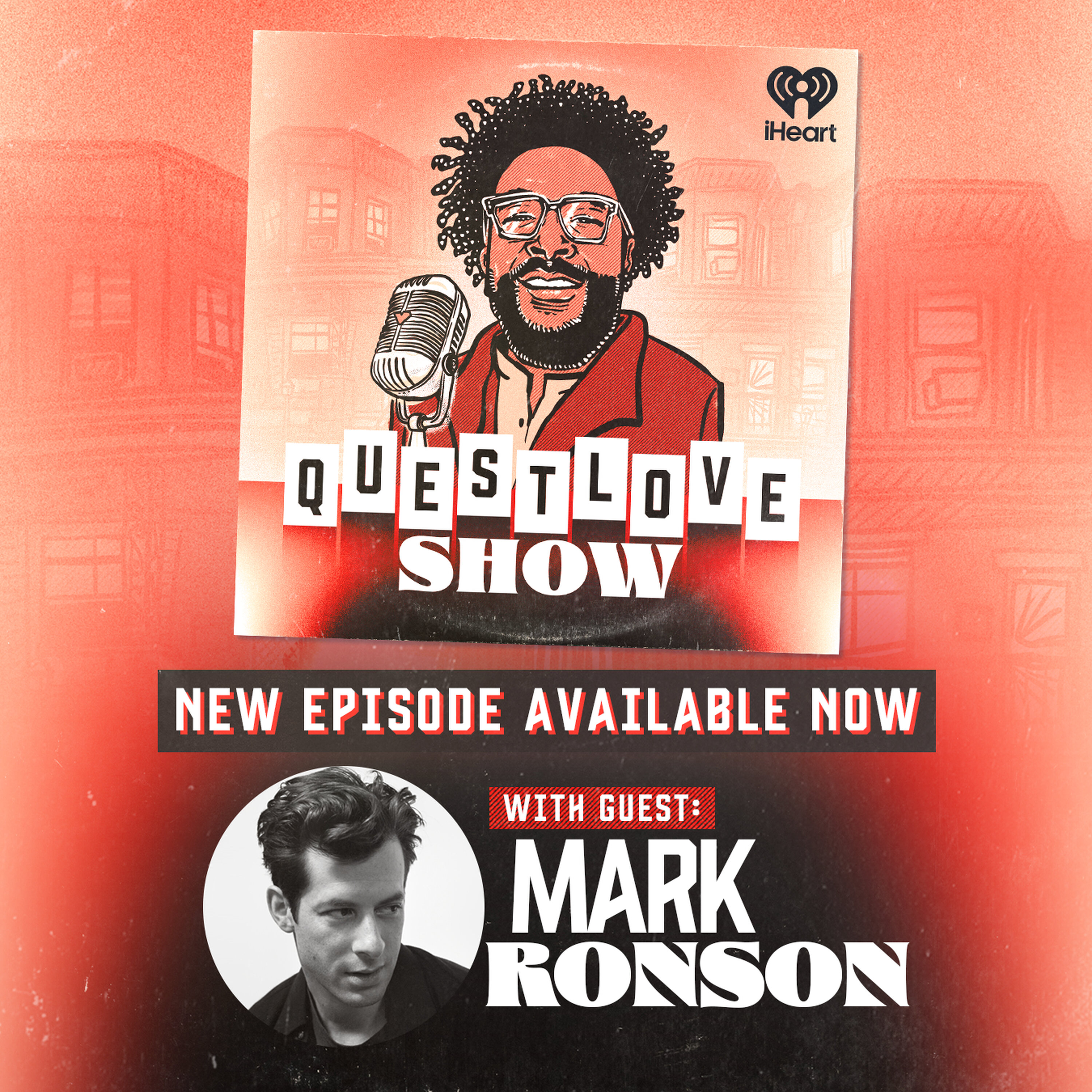
Mark Ronson
Nine-time Grammy-winning producer and DJ Mark Ronson sits down with Questlove to discuss the many elements of his life and love of music, particularly as they intersect with the era explored in his New York Times best-selling book, Night People. Ronson reflects on a formative period in New York City nightlife, his awkward beginnings as a club DJ, and the experiences that sparked his passion for Hip-Hop and playing music for others. Drawing from the book—originally conceived as a companion piece to an album—he opens up about balancing family life with a demanding career. Along the way, Ronson and Questlove compare notes on the evolving rules of DJ’ing today, making this conversation a perfect groove for music lovers.


00:00:00
Speaker 1: Request. Loft Show is a production of iHeart Radio. As if nabbing Producer of the Year for Amy Winehouse's groundbreaking Back to Black wasn't enough not to mention to Record of the Year nods for rehab from said Back to Black and his own uptown funk with Bruno Mars, not to be outdone by the Oscar he won for Lady Got Got a Shallow for a stars Born And you can also add in the executive producer of the phenomenon known as the Barbie Soundtrack. Our guests can now add New York Times best selling author there you go. This is his love letter to a music era that's also near and deer close to my heart of the late nineties early arts New York nightlife. It's called night People. I highly recommend this essential reading. Our guest today, of course, goes without an introduction for his accolades and his roster. It will be all day saying it. Miles Cyrus, du Alipa A Dell, Paul McCartney, Wile Ronfest, Luli Allen, Christina Aguilera goes face killing most steph cute tip yea yea yeava, YadA, YadA, YadA. Ladies, and gentlemen once again, Mark Ronson, what's up? Hell, how are you? Thank you for doing this for me?
00:01:27
Speaker 2: Thank you?
00:01:27
Speaker 1: You know.
00:01:28
Speaker 2: The great thing about the New York Times bestseller thing is what you only need one week on there. You can say for the rest of you.
00:01:34
Speaker 1: As long as you get that first week and they're like they weren't put the sticker on there, New York Times.
00:01:40
Speaker 2: Best to put the sticker on my grave anyway, No, I mean, you've kind of blazed the path of like that, I guess, pivoting the music writing that comes from a musician. There's plenty of great music writers that we love, and we know Nelson, George, Dan charnis all this. But but I definitely look up to you very much. Thin You've read such great books and they just cast a white net without pandering. And yeah, so anyway, I know you're congratchating me now I'm gone throwing it back at you.
00:02:09
Speaker 1: I mean, I love books like these, and no matter how much I try to encourage our peer group to take note of things, especially now that I'm in the dock space, and it's really hard trying to extract information from a seventy year old, you know, in a way that's not revisionist history. Yeah, or just wrapped in a bowl. Well yeah, one day we you know, when the studio did this hit single and then went home and I'm like, yeah, you know, so I love seeing how the sausage just made and kind of is a very fascinating read. So I thank you for giving me the pleasure to nerd out on you.
00:02:47
Speaker 2: I was really inspired by Anthony Bourday in Kitchen Confidential, was a book that I never caught when it came out. I read it much later on, maybe around the time that that doc came out about him, and I just thought it was listen, He's an incredible, like like hundred Thompson level writer. But what I really took more inspiration from was that writing about a high octane sort of occupation profession and all the crazy highs and lows of it. But also like, I'm actually not really into cooking and I'm not a great cook, and I don't know anything about kitchens. But like his second chapter was all about knives, and then I'm like, oh, now I give a shit about knives. Like I just was thinking about this, like he localizes yeah, and I was like, you can write about cartridges slip mats and the inner workings of a technique's twelve hundred, like in a book like this, because if you're going to write a tribute to DJ and as long as like, you'll get so bogged down. But I really wanted to make it. Yeah, part of that like when you're a kid and you see two turntables together for the first time and you have that like lifelong infatuation with it, and what some of those things are, as well as just what New York.
00:03:59
Speaker 1: Was like in the clubs. Do you remember the first time that you saw a DJ perform? I do? Who was it? I do?
00:04:06
Speaker 2: And it's amazing that I remember because I was on acid or ecstasy or maybe both because there was this all ages kids rave like in pre Giuliani New York and like ninety two ninety three, God bless David Dinkins that he was dealing with the housing crisis. He wasn't worried about like fifteen year old kids maybe like at a rave on ecstasy. I was at this club called The Shelter, which before that was Area Shelter. Yeah, the Shelter was but on Friday nights. For about a year and a half, they had this all ages rave called NASA, and they didn't serve alcohol, so there was a reason that kids could get in and be up all ages, but they that certainly turned a blind eye to you know whatever else.
00:04:46
Speaker 1: I mean when you say all ages, you could be how old.
00:04:50
Speaker 2: I think that there were definitely, like we were fifteen sixteen. There were definitely kids that looked like thirteen. It had like a definite like Lord of the Flies vibe to it. Like but at least before they started bashing each other in the head with the shells.
00:05:04
Speaker 1: Would they raise an eyebrow if say a forty year old.
00:05:08
Speaker 2: Yeah, That's what was so cool about it. It was like there was It wasn't like there was this other scene going on that was a little adjacent, which was disco two thousand and Limelight, which became the party Monster. You know that that was much more debauch, and that was like older people going through the rooms trying to apply young kids with row hipno or whatever. But this really was just like schools out for summer, Like this was something about it, and that's why it was just so incredible. Was the first thing that like I lied, beg you know, borrow like whatever to get into this place because it was like Disneyland for kids. So what Disneyland is for kids, Disneyland for serotonin.
00:05:50
Speaker 1: Trade kids, I don't think so good. Yeah so yeah.
00:05:55
Speaker 2: So they had the big main room and they had big techno DJs playing, and I would alway, I go into those rooms of my friends and then after like five minutes be like, I know I'm supposed to like this, but I just really don't, and I would drift to this other room down the hall, this small room that was called the chill out Room. And the first time that I was in that room and we were on ecstasy or mushrooms or you know, depending on the night, and it did have this really fun vibe like at PG thirteen Caligular with glow sticks, like just kids making out everywhere. But I saw DJ Dimitri from d Light was playing in the corner and he was playing the song and I was like, it was like this girl singing about like Jamaica funk with these like beautiful lush chords and unlike anything I had ever heard. And I went up to her, I was like, what.
00:06:42
Speaker 1: Is this song?
00:06:42
Speaker 2: And he just like points to a twelve inch like he's kind of smiling bobbing around, and I see Tom Brown funking for Jamaica. But at that point, like I knew Jamerica and brand New Heavies. That was the extent of my knowledge of anything like this, So that was really exposing me a lot of music. And then I remember this other kid getting on right after him, and where Dmitri had been like kind of smiling, bobby bouncy, like kippie energy, this kid looked like had this furious look of concentration in his eyes and just threw on his first record. I think it was main Source faking the phone, and he then he puts on a second copy, and then he starts bringing back the ba ba ba ba ba ba ba bah bah bah. And I'd listened to Stretch, Armstrong and DJ's on the radio, but I'd never seen somebody in person what he was doing. And the room started to fill up. He played this incredible set, and I was so like he was like slamming records in mixing others doubles. It was like this ballet of like the fucking brutish movements and and I just remember being like, holy shit like that, and it was just after the time i'd really fallen in love with like Pete Rock and Tribe and that was like I was like, this is what I want.
00:07:52
Speaker 1: To do, Like this is yeah, got it? So Dimitri who subsequently, I guess for our listeners if line of notes are correct, Dmitry also played a very instrumental role and the first Tribe album he gets credited, Wow, he gets a major shout out MB liner no idea, what was his I believe. I think I asked Tip about this once, like what was the delight connection? Because also with.
00:08:21
Speaker 2: Tip on.
00:08:23
Speaker 1: But yeah, I believe that Dmitri was key in a lot of those obscure samples that they might have not known about, you know, because the thing is is that the quick version for our listeners out there, of course, is that you know, when hip hop starts, especially in the Africa Bambada era, DJ's will wipe off the label so you had no clue what they were playing. And of course, the proprietor of what we now know is the cliff Notes or the Wikipedia of Breakbeat Collections, Ultimate Beats and Breaks. It's like a twenty five volume set record of which they will put seven of those hard defined records that you couldn't you know, Shizam or people of the shoulder of whoever's DJing during the initial era. Now all these records are available at your helmet. You know. Of course, as we're listening to hip hop between eighty six and kind of nineteen ninety, you will hear a combination of all those things that are on those break beats, substitution, funky drummer, long red, just the breaks of the day.
00:09:35
Speaker 2: Yeah, right, and even in a clever way like you take it personal like gangsters, like you know, they had definitely people doing these very clever starting to you know, manipulate and take these.
00:09:45
Speaker 1: Flipping yeah, exactly. So the thing is is that occasionally, I'll say, your first for araate outside of the confines of ultimate beats and breaks is your parents' collection, depending on how expansive they are, and then once you get addicted, then you start rummaging through your relatives collections. I had two uncles that were major collectors, So every Sunday dinner there or occasional barbecue, I'd go through the record collection and see deep stuff that my dad wasn't into. And then the last place is of course the library. But the level of digging that when I say the Renaissance era gave us. When I say the Renaissance, I'm talking about the Pete Rocks, the Q Tips, the ARS professors. Yeah, like kind of the sons of Paul Cy, if you will, Paul C being the what I say is the person that read and studied the SB twelve hundred manual and then taught it to Paul, who then taught it to everyone else. Yeah, it's like that era of hip hop is going outside the color lines of what was initially spun back in the Bronx. And so as a result, you know, cats like Dimitri Ta also from Delight being as though there their quest were funk was a little bit different, but they would.
00:11:07
Speaker 2: Yeah, and they were bringing in like exotica. I think of that, and I'm still obsessed with and I tried to do something. Initially, I only wrote this book because I was making an album where I was going to like do some nineties covers and flip some nineties things that I loved and feeling a little nostalgic musically, and I was like, I'll write a book to go along with it, and I'll give context to like a friendship with the Leah and my relationship to these records, and then I wrote the book and forgot to make the album. That's a very flip and silly thing to say, but I got bogged down.
00:11:37
Speaker 1: I was home man, that this was a part of it, like a secret.
00:11:40
Speaker 2: Yeah, I hopefully it will be, but I you know, so I've been flipping all these things and versions that hopefully will come out some day of stuff mentioned in the book, and even that beginning of dntingly and ding ding ding thing we are going to dance like all that French exotica, that that silly spirit, which was also what you know, dale us so we're doing on three V Highlight. It was obviously very like you could listen to d Light and now having you see this like I can hear right, oh yeah, the thread between DJ Dimitri and some of.
00:12:10
Speaker 1: The tribes and stuff. Yeah exactly, yeah.
00:12:13
Speaker 2: No, that's super cool. I wrote a bit about in the book as well, like I wanted to at least cover in the book all the touchstone things of being in New York at that time, and one of them, of course, is the Roosevelt Record Convention. And I remember this is a little bit later than when we're talking about maybe ninety four ninety five. But going there and seeing these amazing records on. You know, they would have all these record vendors around this room in this hotel, the Roosevelt Hotel, and everybody would go there, right. It was just where Q Tip and Large Professor and Diamond D and they would find their breaks and the more high end dealers would set up their crates and then that they'd make a makeshift cardboard wall behind them with like the top top records pinned up, and I would see like Roy Ayre's musical project Ramp like up on the wall, like one hundred dollars, you know, like kind of dream and then drooling as a kid looking at these records. But I remember, and I told C Tip. I don't think I even told him til I was writing the book. I was like, I remember seeing him one time at one of those record conventions and I was holding under my arm the Rotary Connection album that has the Memory band, the sample from the beginning of Anita apple Ball. Yeah, and I went up to him thinking like because I was so starstruck and geeked out of everyone does this. Yeah, right, I was like, I'm gonna go up to him and like say something cool.
00:13:37
Speaker 1: And pretend and then he'll bring you the Yeah. Yeah, totally, you and I are the same. All right, go ahead, finish your story.
00:13:43
Speaker 2: I went up to him and I was like, oh, just like on the way out, he was wearing something like bright Tommy Hill figure jacket or Helly Hanson.
00:13:50
Speaker 1: I remember.
00:13:51
Speaker 2: I was like, this is the uh, this is the record you guys sample for Benita, right, like trying to be cool, and he just looked at him.
00:13:58
Speaker 1: I was like know and just walked down. I thought you were the FEDS and he was.
00:14:04
Speaker 2: Like he was like he said to me, when I tell this story, it's like, yeah, it was mercenary out there, like we weren't even giving away the stuff that we had already do sampled.
00:14:13
Speaker 1: Yeah, when we were first working with Bob Power at Battery Studio, when we were mixing do You Want More? Tribe was in Studio C trying to remix Oh my God for the live show. So I would make these excuses to go to the bathroom to figure out right, and literally it's it's Ali and Tip and a turntable and a twelve hundred and fife is there too? Two other guys are there who I didn't know, and I know that they were trying to mix. What is it's the it's the second song on Manny Riperton's Adventures in Paradise after the check the rhyme saying, uh, the second song on that record, the dude, dude do doude do A feeling. I think the feeling is there's something that there was an issue, not an issue with sampling it, like even I tried to sample it, and I know what the problem that they were having with it. It speeds up, you know you hear the perfect loop.
00:15:17
Speaker 2: Yeah, but it's not when you take it apart, it's.
00:15:20
Speaker 1: Right and it's not like now where you could just like manipulate it so it fits four perfect bars. So they actually I went to see them that show. It was New Year's Eve. It was day Last, Soul Tribe and Souls. I went to that.
00:15:35
Speaker 2: I went to that show ninety two New Year's e Yes. I remember watching Souls do ninety three till Infinity and thinking, is this gonna sound weird, like because it's ninety four now or something now thirty years later, still listening to it, but anyway, Yeah, I was at that show. That's crazy.
00:15:49
Speaker 1: Yeah, So I think that was the last night that Tarik and I were like fans, right, We had a good four year streak of into like all of our favorite shows and beat in the front row like there's no.
00:16:05
Speaker 2: There was no like aware artists too. We better not like no no no.
00:16:08
Speaker 1: We were fans like the era of yelling go go go and jumping and jumping like I was off with. We were there for a caras One doing that Many a Day, last show, Many a Tribe show, whatever. But we were there that night and the first time I had notes, I was like, ah, man, they should have filtered the midsmore so we could hear the baseline better. You know, they tried, it didn't work. And also remember Raphael Sadik coming out to do Electric Relaxations and midnight to play bass on it and his base wasn't up at all. Yeah, I was like I was in the front row. But then it was also like should I go to the sound? Yeah. So the first time I ever had notes was that. Have you ever had a DJ gig where it's sort of like everyone like, wow, look at him, go like you're really killing that Mark Ronson.
00:17:09
Speaker 2: I think I've definitely, I know I have. They all blur together a little bit. After thirty years of this, you know some of the highlight. There's nights that I remember something very special and transformative happening, like the night that like I decided to drop back in black by ACDC at Cheat on a Monday night, like like like something that had never been done and said like could have gone either way. I remember DJing in Japan at that hip hop club Harlem, and I remember I had never ever got on the mic because like at that point and in New York, like just white DJs like did not get on.
00:17:45
Speaker 1: The mic, like how's everyone doing?
00:17:47
Speaker 2: Yeah, yeah, with the owner of a blue super has been parked at Double Park, Like that was the only time you got on the mic. And I don't even want to make it like a race thing. There was something just about we knew that we were sort of privileged to be in hip hop'space.
00:18:01
Speaker 1: But there's there's a voice. I don't think it's black and white, because I to this day, as much as I wanna.
00:18:07
Speaker 2: You don't get aius, Like I don't have the voice that's like what's that motherfucker? Like right?
00:18:13
Speaker 1: Right? So I just do sound bites.
00:18:15
Speaker 2: You could and you definitely have a lot of a much better voice for it than a lot of people who are presently doing it, but you observe that it's not something that you should be.
00:18:23
Speaker 1: Yeah, it was a busy concentrating the records and yeah.
00:18:27
Speaker 2: Yeah, but but I remember one night there was something I was playing in Tokyo and it was right as two thousand and three, right as my record UI with ghost Face and Nate Doggie came out, and it was a big record, and there's something you know what it's like when you go into the booth, like or you step on stage. Japanese crowds are so grateful, enthusiastic. There was this thing, but I could just tell I was ripping it doing all this stuff, and I could just tell the crowd was like in this weird nervous like purgatory between having a good time and and I just was. I just looked down at the mic by the booth and I was like, I know what it is. I know until I say something to this crowd, I haven't given them permission to let loose, like this is not New York White Go. Every week I'm going to see them. They need me to say something. And I remember getting on that mic and then the place just like fucking exploded. You know, listen, I've had some of my favorite ever performance experiences djaying like, That's why I keep coming back to it. That's why after thirty three years and I've beat up ears and back and all that stuff, because on any given night, you can just go into a into a room like I went into Gabriella's a couple months ago and Williamsburg, Brooklyn. I hadn't played, I hadn't played a while, I hadn't played Vinyl and just like to play it again to remember, like, oh, not like in some way like, oh, thank god I still got it, but yes, in a little way, thank god I still got it playing for kids half my age or kids who weren't even around when Cares's Step into a World First came out, weren't even alive, Like, so I can't remember like the one gig where it was like the Peewee Tour de France experience. You talk, but there's just moments and snatches of these things that just kind of beat everything that It's why I keep doing it.
00:20:07
Speaker 1: Okay, So then the other side of that coin is can you tell me the story of the worst gig of established Mark Watson's life. Yeah, I mean devastating. When you do a bad gig, you feel devastated or yeah.
00:20:24
Speaker 2: Oh it's terrible, and I go home and I'm like, I'm gonna quit now, I'm gonna save face, Like why am I still doing this? I think there's a lot of it, you know. Sometimes it's what happened to me, And I talk about this about in the book. You know, in the nineties and the early two thousands, before I was quote unquote Mark Ronson, I was just a gigging DJ. Eighty five ninety percent of my gigs were club gigs where I'm playing to a crowd, a crowd that I know, a crowd that I love, that has great taste, and maybe ten percent were corporate gigs or these kind of things. And then the shift starts to happen and you spend your time in the studio, you're not djaying out as much, you're not in the mix, and suddenly it starts to creep towards like, oh now it's like seventy five percent weird corporate gigs on one offs and twenty five percent actual gigs where you're playing for the love and whatever. And sometimes those, yeah, those corporate ones you'll end up at, like playing something for like I don't know, some luxury brand in Singapore, or just staring out into the sea of like mild disinterests like and then but somehow there's this thing because I come from the clubs in that mindset where you're like, I know, whatever costs, I'm gonna call my way through this scene till I play that one record that then gets you, and then for the next few hours we're all laughing and parting. But yeah, there's there's so many of those. I do know that, maybe more often recently, like that terrible feeling of like that mixture of like that nightmare you have as a kid when you get up on staging you're naked. I never specifically had that dream as a kid, but I know the feeling, like you go to school and you stand up naked at the assembly.
00:21:59
Speaker 1: See now I'll say that probably okay, I called the robin Hood theory, which is basically and you know the deal, like corper gigs good money. Now, usually those carper gigs are older people my age, So I take advantage of whatever was popping when you were sixteen to twenty six, that's memory. So for corporate people, forty and forty five year old people, Jesus to listen to Duran Duran if that was their thing. Well, if you're sixty, it's Duran Duran. If you're forty, might be the spice girl. So that's almost become too much of a comfort zone. And then when I'll do an occasional hole in the wall where it's just like I'm not doing it for the money, I'm just doing it just to sharpen up. Ah, that was a rude awakening me not knowing and the methods that I'm using now just to see what I should be spinning. Like I'm doing everything I promise i'd never do. I'm on every YouTube page of every DJ set seeing what they play, like, oh, that's it.
00:23:04
Speaker 2: And who are you watching when you go to those YouTube page? Are you watching like the Black Coffees? Are you watching like the open format guys, or like I'm just curious.
00:23:13
Speaker 1: I mean, it's now to the point where like a lot of the established like Black Coffee is now playing Madison Square Guard and he's playing a lot of his stuff. Yeah, and so unless the one thing I'm not doing, which I probably should be doing. Lord knows what all the masters I have and everything is my own remixes and putting on my own show. But just like to spin records to spin records, it's kind of hard. Like I'm at the beginning. I'm the most nervous I've ever been djaying like I just did Heidi Klum's Halloween.
00:23:50
Speaker 2: I saw you did that, And of course, because because we have such a shared things are a musical taste and where we are and like the kind of parties we play, I'm like, I wonder what he played at that, Like what is that? Is that Halloween?
00:24:03
Speaker 1: So there's thriller, I swear to god, you know what, there's the one year I didn't get the thriller. Okay, So based on your wedding, who's old boy that played your after party the wedding dj.
00:24:16
Speaker 2: Oh at my sister's. Yes, it was Charlie, that kid who was playing like all the fifty right.
00:24:23
Speaker 1: So I realized that it's been a while. I was like, do I know a good thirty records that have that shuffle jazzy right? And so I decided normally when I was DJ, sometimes I have to be my own opening act. So for me naturally, and I think you feel the same because we come from hip hop. The magic spot used to be ninety three bpms to like one hundred and three bpms, Right, that's where you can get all the classic hip hop stuff.
00:24:56
Speaker 2: Out of your neap tins and tribe and everything.
00:24:59
Speaker 1: Right, So normally I would start off, I'd let like ten records, go slow until the place starts to fill up, and then my first records really the tenth record or whatever. Yeah, So normally I'm a slow starter and then faster and faster and faster, and the end of the night you end up in house and disco. Lie, this is the first time where I decided I'm gonna go backwards and start at one hundred and seventy one bpm. So I'm like starting with you know, you got to start at least three Teflon records.
00:25:29
Speaker 2: So for me, like, hey, I will never die no matter what. So like, hey, y'ah, I don't worry. I'm not taking notes or anything. Hey you are, Hey still is still working?
00:25:41
Speaker 1: Okay, Hey ya is a Teflon song? Okay, Okay, someone took chapel runs hot to go and shop the song in half. So set a ding. It's like did so, which kind of feels like Pressen is bigger than hip hop dolls. Yeah, like I started that fast and slowed down. I'll say that half the stuff where I'm really ignorant is I should be really knowledgeable. I shouldn't know twenty awesome reggae tone song, especially now with the way that is willing. You know, I'm doing the worst things. I'm going on chat GBT, I'm gone on right, I'm calling people in a way it's exciting that I have to start all over again. How was that party?
00:26:30
Speaker 2: Actually?
00:26:30
Speaker 1: Like?
00:26:31
Speaker 2: Did you have a good time teaching at? I was relieved, I survived, Okay, what was the biggest record?
00:26:36
Speaker 1: Like the biggest record of the night?
00:26:37
Speaker 2: Surprised?
00:26:38
Speaker 1: You see, I cheated because there are tefline memory records that will never die. I wouldn't necessarily play want to be by the Spice Girl in a normal setting, So it's almost like I'm a dude totally to take notes. I need a confirmation that I'm right, Like Lady Mama a lot works. Want to be by the Spicy.
00:27:03
Speaker 2: Original LaBelle or Lady Marmalade, like.
00:27:06
Speaker 1: Oh the original, Little the original. Many of my Latino brothers and sisters used to tell me that Suave Mine was like a joke to them, which it's almost like the irony records, the records that you would never play in this lifetime, like even twenty years ago. Like Ice ice Baby works now, whereas we would never play that bad.
00:27:32
Speaker 2: Play Ice ice Baby sentimes. If it's the right crowd, I.
00:27:35
Speaker 1: Will play under pressure. Yeah, and under Pressure now gets the same response that Troy used to get for Peple Rockets. You remember when you yeah, it plays me like, oh my god, he's playing Oh my god. And one time I was like, oh wait a minute. I know they think I'm playing Ice ice Baby and I play Underpressure and then it dies down a little bit because it's like, oh, he's playing the original.
00:27:58
Speaker 2: And then you hit and I was like, all right, let me just see what happened, collaborate and listen.
00:28:02
Speaker 1: And it works. So we we are in a very weird upside down where the wackest thing. Yeah, I almost feel now.
00:28:12
Speaker 2: Would you know, Mama number five, I'm not I would go to lie. That's the line you're not willing to cross.
00:28:19
Speaker 1: Also, but it works.
00:28:21
Speaker 2: I can see that it's no offense, Bega, No, it was I'm in the no worse than Vanilla. I say, promise, I'm in the.
00:28:27
Speaker 1: Game of what works. And the thing is, I'm about balance. I've never been like anti commercial. The reason why people are like I men, I want to spend that commercial stuff or is because it's almost like that's all that spun. Got a balance.
00:28:45
Speaker 2: What was Hayi Klum wearing. Isn't her outfit always like this? She wore in a jab of the hot one year.
00:28:50
Speaker 1: She was Meduca this year and she did she put like hair jail or dippity dew on her body suit. I was dressed up as Randy watching first of all to be on the red carpet, and everyone's like, so you're right. I'm like, look at me. They're like Rick James and I was like, oh god, so you've never seen Coming to America. They were like yeah, And then I realized I'm the old guy at the club. So I was dressed up as Randy Watson from Coming to America. She was Medusa and she had all this slimy stuff and she gave me a big giant hug. So I had like, yeah, I've been in your head. What's the theme song that is played in your biopic when you walk into a room. Okay, let me take the biopic out.
00:29:42
Speaker 2: It just in general and I can hear right now, which is the curve your enthusiastic Okay, got excited to let you finish.
00:29:55
Speaker 1: What's the song in your head that plays when you walk into the room people are looking.
00:30:00
Speaker 2: Why I'm about to DJ or just like when I'm going into in general? Well, now I can't really, I think whatever the answer that question is, it's a good psychological exercise because it's like what you think the world thinks of you, or what you like to project, or maybe it's just like the music you need to hear it.
00:30:17
Speaker 1: Like, all right, make it a too. What's the actual song in your head versus what's the song that you think people hear in my head? Earth Wind Fire is running? Okay, is the song that I walk to that's in my inner walk man, when I like walk into a room, and it's not notable at all, right, but that's the running by earth Wind and Fire. Maybe it's because I'm doing the movie, But for you, what is it?
00:30:42
Speaker 2: I think in my head it's I'm just gonna the first songs that kount of my mind are just songs that I've made, because I guess it's like that is sort of your theme music.
00:30:50
Speaker 1: In a way.
00:30:51
Speaker 2: In my head, I hear like probably like ghost Faces in Nate dog OUI like la la la la la la la, like big break beat, like fanfare strengths, and in reality people probably hear do Dude do dude or dot shot. So yeah, but that's our whole line that we walk, you know, sort of credibility versus commerciality. It's it's the entire conversation that we're having the reason that it gives me some solace to hear you talking about DJing because you're synonymous with like impeccable tastes. And the fact is, I think of myself as like a serious hip hop DJ in downtown New York who was playing parties for everybody from Q Tip to to Puff to jay Z to whatever. Who the same kid who was like, you know what, fuck it, I'm gonna play ac DC because no one's playing that and it'll be fun. And maybe there was a tiny bit of like not troll mentality, but like let me just see how close I can get to the fire. And now, because I don't DJ as much, my own credibility is so much in question, like do I still have it? I still in touch that I'm afraid to play those, which maybe it's just in my So.
00:32:01
Speaker 1: See, I thought, now that you are Mark Ronson, you're allowed to, Oh, I take advantage of this.
00:32:05
Speaker 2: Well that's what I That's what I mean. So now I'm like, and yeah, side means that's what I mean. And so I'm like, oh, yeah, that's what I used to do when I was a kid. I loved seeing what the line was and all this stuff. And you know, it's fair to say both of us have earned our right to play Happy Frog or whatever. But and I love playing those kinds of records because some of them I actually do love. I can completely appreciate what spice girls want to be able to do to a dance form, looking at them and seeing the joy. And I always tell you the story. I remember walking into one of the naughtiest Thanksgiving parties that you used to always play on Thanksgiving?
00:32:45
Speaker 1: Still do it?
00:32:46
Speaker 2: Still do Nadia? And I remember you playing rhannav and Calvin Harris and even that just being like, oh, you can play fun records that people want to hear and not they're not guilty pleasure. I don't believe in that term because I think if you like something, you like something. But oh yeah, so's it's even comforting, Like I have to play some eighties party on Saturday night. Like as we're having this conversation, I'm like, oh yeah, like I can lean and i can play Betty Davis Eyes and I'll be fucking worried about any of this shit.
00:33:17
Speaker 1: Wow, you were worried about that.
00:33:18
Speaker 2: I still think about those things. It's so weird. Maybe it's just my own pow.
00:33:22
Speaker 1: No, I'm about tabooing to death. Yeah, I'm about tabooing. What is the first things that you do in the twenty minutes of your day, the first twenty minutes, what's the first twenty minutes of your day?
00:33:47
Speaker 2: Like, well, now that we have an eight month old and a three year old, so like the it's definitely waking up with one of them, Like it's probably the youngest one is screaming. So the first thing is like going down to get her out of the crab quickly giving her the bottle, or sometimes my wife will do it. I'll walk the dog, come up, and then the older one is getting up. So I also squeeze at an entire lemon into a glass of hot water, and I have coffee, and that's pretty much like that's the first twenty minutes a day. It's like a walk in the dog, waking a baby and drinking hot water and lemon.
00:34:23
Speaker 1: All right, I'm only asking this based on Tarik's answer. In your household the way it is now, when is your alone time zone? Tarik now lives life where he will go to bed at eight thirty pm just to have the alone time first, just so that he wakes up. For him, he needs to be completely alone to write. So Tarik will go to bed at eight pm and he'll wake up at three am. So from three am to five thirty before the kids wake up, that's all his time. That's how he knocks out projects and everything.
00:35:00
Speaker 2: So but for you, what's lucky for me is that I have much more time during the day to do that. Like once I dropped my daughter at school nine and go to jam. Maybe I'm done at noon, and then I'll go to the studio straight to like whatever Ben and bath time is, go home, do that and then if there's if I need to, I'll go back to the studio after but I am fortunate that I have I can carve that like you guys are constantly obviously because shows foul and everything. I can see why his his day he doesn't have that in the middle.
00:35:33
Speaker 1: Of the day.
00:35:34
Speaker 2: But when I was writing this, because one of the books that I read when I started to write was the Stephen King Book on Writing, and it's just you know, it just gives you all the rules you need for like the stoic carving out That book I literally went into, like McNally Jackson, I was just like, oh, where are the books about writing?
00:35:54
Speaker 1: Books?
00:35:54
Speaker 2: Like I was so green? Picked up that and then Mary Carr's The Art and more on a few other things. But it was like, He's very much like knock yourself in the basement, no windows whatever, five hours a day, And you know, I realistically I could find three or four hours a day, but I had to have that. So like the number of times that I've been at thirty Rock and been walking down the hallways and seeing you like just like on the floor like on a laptop, knowing that you're writing your like ninth novel and being like, I don't even know how you are able to do that, And cram that in between what I only knowing half of your life, and it's one of the craziest schedules. I had to find that, Like, yeah, I had to find that, carve out that alone time.
00:36:39
Speaker 1: Yeah, I just getn't wear fit in now. Yeah. So what was your first creative project in your life? Your first thing?
00:36:48
Speaker 2: I would go in my stepdad's studio a bunch when I was a kid and he had like this eight track tape recorder that I sort of learned how to use when I was like thirteen fourteen, and I would record little demos. I remember he had a sinclavier, the crazy programming sampling, giant keyboards in that era. Yeah, No, it was insane. I mean he was like a successful garner when it's a barn, the money.
00:37:16
Speaker 1: That owns. Yeah.
00:37:17
Speaker 2: I remember that I fucking around with it and hearing the calliope sound from wishing Well that does the boooo yeah, and I remember, oh fuck that that. I don't know if that's where they got the sound, but whatever it was. And then he taught me a little bit how to program and sequence on it. And I was like twelve or thirteen and I recreated Urnce Jurnt Darby's wishing Well by doing like the drums first and then the bass and listening to it to hear like what the base going doom doom doom doom, doom doom doom doom doom do, like starting to understand what arrangement was. So that wasn't that's not so much creative because I was almost just making like a crappy karaoke version of wishing Well. But the times that I spent in my stepdad's studium making demos and then recording my band's demo, that would be the thing that comes to mind.
00:38:06
Speaker 1: Okay, So I'm gonn apply this also to djaying and beat making. So when you first get your turntables, and this is the thing, like most people don't know that when you first get your equipment of choice, whatever it is that you do, probably the best thing to do is mirror and sort of shadow whoever inspired you to do in the first pet. You know, I got a drum machine by the time, like the bomb squad was really hidden with the public enemy productions and all those things. So of course I'm trying to recreate revel without a pause and base heads like as practice. Yeah, but for you like when you're djaying, what's the amount of hours that you're practicing in spending like yeah, before you're actually testing in this autum.
00:38:56
Speaker 2: Well, the thing was that, and I talk about this a bit in the books. So I didn't know anybody who dj' There was this one older kid in my school, this cool kid who graduated by the time I got my turntables, and I somehow I think I stole the alumni list from this. The alumni office got his number and called him and he was like, this cool kid named Manny Eames is sadly I think passed like a couple of years ago in COVID and he used to work up at the stretch and Barbido show was like an intern and he DJ'ed and I called him up and I was like, Hey, would you come over and give me lessons? And he was like amazingly disinterested, like who are you again? I was like, I was like, oh, I'm Mark Ronson and he was like like, did you have that weird blonde streak in your hair? Because my mom made me get diet blonde streak per oxide scheeking my hair like right before my bar mitzvah, because she said like so you won't look boring like all the other boys. And I remembered that and I was like, I chose to take it as an identifier, not an insult. So I was like, yeah, that's me right. So he was like, well, what do you know about DJing And I was like, well, I listened to Stretch arms and he's like, you know, Stretch went to our school, right. I was like what, I was like, Stretch went to collegiate. I had listened to Stretch of Armstrong. I just discovered it, listened to it on the radio and he had that cool, deep baritone voice and I was like, there's no way that I would have ever put that together with our weird, buttoned up school in two and I was like, no, no way us and he was like, yes, Stretch of Armstrong is Adrian Bartow's like class of whatever eighty seven. I was like, and then I was like, Stretch Armstrong is white, Like it was so stupid.
00:40:30
Speaker 1: Yeah.
00:40:31
Speaker 2: This kid finally decided to come over and teach me, and he was like, just do me a favorite before I come over, and make sure you have two copies of the same record. And I was like, oh right, because I just got my turntables for graduation. I had four records, but they were four different records. I didn't understand that you needed. He got me to the same records. He came over showed me the basic thing how to mark up the records with tape to know where you know, how to play doubles, and I started to practice all the time. I spent every waking hour practice. But the thing was instead of maybe spending my first six months or a year in the bedroom practicing, Peter Geishin, who owned all the big important nightclubs in New York at the time, he was literally called the King of clubs, lived in my building and his daughter and I were good friends, and she got me a gig opening for the opener of the opener of what like a one night at a club USA on a Thursday. So I was already getting pretty insane gigs really early. So I always kind of regret that I didn't have that extra year of like just only practicing in the bedroom, because my skills would be so much higher. But at the same time, I was just like I wanted to be in the party. I wanted to be rocking it. So probably what I lost a little bit in like that bedroom skill thing I gained in crowd reading because it was just like I was just straight from the frying pan into the fire as a seventeen year old kid. And then a year later I was, you know, opening for stretching some of these guys downtown.
00:41:56
Speaker 1: So yeah, you mentioned Club USA. So a lot of my for the first four Roots records, we would always stay you know, like midtown any Ian Schrager Hotel, so we would like live in the Paramount Hotel. I believe Club USA might have been around the corner.
00:42:13
Speaker 2: It was, yeah, forty seven between Eighth and Broway.
00:42:16
Speaker 1: Okay, So I never went to Club USA, but I remember one night coming home. I remember this so well. We we just we just finished mixing Da Scat And normally Bob Power is a daytime person. He is starts at eight am and we might be done at six pm. Because this thing is like I want a life. I want to leave here at seven and have a life. And you know, but I remember we had to recall like two songs or whatever. But whatever the case was, like it was like eleven o'clock and I'm getting back to the Paramount. There used to be an arcade, like I don't know New York as I should. I'm doing things like getting a Turkey's sandwich at the Howard Johnson's on the court, going to be arcade like I didn't. And one time I decided to rnch around the corner and I saw Tupac and all this Tupacnis leaving.
00:43:14
Speaker 2: That's a famous night. There's pictures of that. So you saw the night that Tupac was at Club USA.
00:43:19
Speaker 1: Wait? Was that the one time he was? Like?
00:43:21
Speaker 2: Well, I mean I know that there's this one night that it's like one of the most famous pictures of the club. So I don't know if he was there many times. He certainly wasn't there many times. He might have been there two or three times.
00:43:30
Speaker 1: Yeah, well this was his ninety four ninety three, ninety four. I just remember seeing I was on the corner of a bodega and it just felt like you know when you see a tornado coming or whatever. Yeah, and there's a clip of Tupac walking out of court where he's like strutting like this or whatever. Like Tupac was walking out of what I later found out was Club USA, because I was like, what's going on here? They're like, oh, Club USA's down there. Tupac had just left the club and it was just like how you imagine what the life would have been in ninety four? Yeah, like a bevy of women. I think Trench might have been with him or whatever. And I never went in the Club USA. I did the tunnel once, like I don't know why. Yeah, to me, the tunnel was almost like what I imagine general population being club in as what was Club USA? Like?
00:44:30
Speaker 2: Like?
00:44:30
Speaker 3: Was it?
00:44:31
Speaker 2: Club USA? Was much more so like all the Petergations clubs had this like specific like they had, like the Limelight was this sort of gothy, debauched thing played in was a little bit more high end and had the Keith Harringham baskeat Murals. Club USA because it was in Times Square like really lent into the camp and Broadway sleeves and there was a three story slide that went down the middle and people would ride down it and come out there naked, and they had these money drops, like they would drop ten thousand dollars from the from the ceilings and they'd be like people clawing at it like you know, dressed say what yeah, Like it had this very camp, decadent silly There were photo booths that like definitely doubled as like you know, blowjob havens, and and they had all these crazy it was like that adult fun house vibe that was very much like doesn't really exist. It was like it was very silly. And and then also you know, there would be nights where they'd have Leonardo DiCaprio or Tupac and stuff like that. Jessica Rosenbloom had a hip hop night, so that was probably the night that Tupac was there. Yeah, it was debauched, but it wasn't dark. And then all those clubs when Giuliani started his warn club Land and he really went after petere Gation was like public enemy number one, really and he went after him, and they closed down Club USA first, and it was you know, because of the way that these clubs are run, it was pretty easy to get them all on technicalities and stuff they would do. Giuliani would do this thing over at Limelight where he'd send his dance police or whatever to make them close the door so they weren't allowed to let anywhere, and they make up some bullshit reason we got to look around the place. So the line would grow and grow and grow and grow longer to for after two hours, so there were a thousand people on it, and then they would slap the club with the summons for unruly behavior on the sidewalk like they were just doing whatever they could. They finally got him on some tax evasion shit. But this was that's also in the book. You know, I wanted to Like, I had this really brilliant editor named Hannah Wilentz who works at The New Yorker, and she kind of put me to task to really put stuff not just my own experience, but like, oh yeah, and then these clubs closed and then bottle service came in. She's like, no, put this against the climate of like what Giuliani and what policies in New York and gentrification, how that affected what was going through. So it was interesting, like I did a deeper dive to put that stuff.
00:46:55
Speaker 1: In the book. Okay, this is a weird question. One. Have you ever been in a car crash? Yes? What song was playing when you were in your first car crash?
00:47:06
Speaker 2: I actually can't remember the song, but I remember driving back from visiting a girlfriend at the time who was working at MassMOCA and the Taconic State Parkway that goes Upstate is quite famous, I think for the way it has these windy turns and at night. It's like when it was first built, I think quite a lot of people, like there were quite a lot of deaths and accidents, and I think this could be like urban myth that whoever designed the Taconic committed suicide out of like guilt or something, but it's true. There's something about the turns and the thing that will lull you into a sleep if you're if you're tired. So I just remember like drifting. I don't remember, but I remember waking up and there were tree branches slapping the fucking thing. I'd driven up the divide into like where the trees were, and I look back at my dog. My poor dog's being thrown around in the back, and I came to just quick enough to like straighten out the car. But luckily, if I if my arm had like slipped going this way as I was sleeping, as opposed to going to the left instead of going up the divide, I would have gone off the fucking ravine. So I don't remember, and there wasn't a song playing. I don't remember if there was a song playing, but that would be crazy actually, because have you been in a car crash of the songplane.
00:48:19
Speaker 1: To this day, I can't listen to Atlantis marsis ironic without thinking of my first car Cress. Oh whoa.
00:48:25
Speaker 2: She's in a car in that video, which is also ironic.
00:48:27
Speaker 1: She's literally driving on the black My farm is now Yeah, I just found out she shot up steps but weird enough, the same conditions. I think I've told the story before about driving thirty miles per hour to It took me three hours to get to New York in the icy conditions, so I can do hand collaps on Valerie.
00:48:48
Speaker 2: Yeah, oh my god, I remember that. I didn't realize that you like risked your life to like come cy.
00:48:55
Speaker 1: I was not the second you said yes, I was like, no, this will never happened again in this lifetime.
00:49:00
Speaker 2: The greatest hand claps of all time. Like I still sometimes like get psyched out and clap the wrong rhythm on it when it's when we're playing it live because I break down the to just to the vocal and the clap stem sometimes when I DJ it.
00:49:13
Speaker 1: Yeah yeah, like You're a Amy was the first time where like a phenomenon to me was happening and I had nothing to do with it. One I was glad, like, oh, okay, there's something out there that moves me that I didn't have to yeah you know, yeah exactly, but also like I wanted to be a part of that magic. Can you tell me what are the challenges of coaching Old Dirty bastard? Wow? In doing vocals, he.
00:49:51
Speaker 2: Was just, to be completely honest, he was pretty like medicated at that time, So you'd come to the studio, wasn't a lot of erratic behave. It was also sad to see he was a little bit you know, yeah, but he and you know who he really loved. He loved Rhyme Fest. Rhyme Fest. There was a little bit of like crazy recognized crazy in the most sweet artistic way thing. And then Ryan Fest was such a fan of Old Dirty and Ryan Fest was writing the rhymes. I'd done the beats and I was like, oh, you got to say this, like you know, And he really channeled classic ODB like a great writer would Ryan Fest when he's coming up with it. So we had fun. And I remember watching that weird Old Dirty Basket documentary that came out after he got out of jail, where he's singing blue Moon in the car, And that's what gave me the idea. I was like, you know, obviously for better or for worse, I was like, we should get him to sing build me Up, butter Cup. I bet he loves that song. Yes, So so that was something I wish the track was a little better. Maybe what I should do is just take that a cappella and actually do it properly with band, right, and and it just take him singing build me U about it?
00:50:57
Speaker 1: Hell ya, you just solved your yeah right? Theah? Okay, what the hell is a glass mountain? Trust? Yeah? And just give me the genesis of that D'Angelo collaboration. Yeah.
00:51:11
Speaker 2: That was while I was working on my record collection album and I'd written that song with a friend of mine, Anthony Russelmondo, who like played in the Libertines and Dirty Pretty Things. He was like an indie guy, but he had this chord sequence that I really loved. And in that era before I met Bruno and Jeff Basker and kind of got like a little bit of like realigne or I thing like you can't just jam with your friends all day and necessarily think that like HiT's all they're gonna come out of it. But at that time I was just bringing all my friends down to work on music, and there was also something beautiful about it, that spirit of jamming. And so we had this working title, you know, like in the back in the era of like you would make an instrumental and you would burn it on a CD and you'd write some silly working title on the CD, and it was just it was just said Glass Mountain Trust. And at the time, I hadn't seen our friend Dominic Chreneer in a while, and he drifted back into my life and I was really grateful. And he actually came in while I was working on that record collection and gave me really good like just help steer the ship. I was I little lost what I was doing, and he said, he's like, this instrumental is kind of oh, like you want me to play it for D? And I was like, of course, but like would he ever do anything? And this was at the time in between you know, Voodoo and Black Messiah, you know, I was he's working on his own record, this's long white the fuck makes me think that he's going to work on something for me. So he played it for D and then do you really. He said, he loves the track, he's working on it, and then he was working at that time with that lyricist that he worked with a lot, the girl who wrote a lot of stuff with George. Yeah, so you know, he was like, yeah, you'll get back something back pretty soon. And then you know, we turns to a month, and a month turns to two months. I've started to maybe let go of the probability of this happening, and then three months later he sends this songback with this incredible vocal. That's that's way.
00:53:14
Speaker 1: That's three months, so that's like five I know, I know, I know, and it's so.
00:53:18
Speaker 2: Much it's it's the vocal is so amazing that it's it's sort of the track is sort of now like unworthy of this vocal, which is another reason that might be nice to revisit that vocal and give it something that it deserves. But he said, he left me this voice message that said, like, yo, man, I'm sorry it took so long. I was really just trying to get to like the heart of like what Glass Mountain Trust meant. And I was like, oh my god, it's like that was just like this silly working title. But yet also so touched that, like he felt the honor the thing of this like made up working title that that's what it was. And it was just like and it's actually kind of cool, like what he found in and it is amazing. I'm going to break out to take all, like all the things in it. It was just cool.
00:54:05
Speaker 1: It's weird to me. So when a person does pass away, and this happened with Prince, this happened with Like this happened was that everyone, like I go back and listen to their work again and it's a it's almost like hearing it for the first time, Like I'm listening to Brown Sugar for the first time in my life, and same with Voodoo And despite me being there, I'm actually outside myself listening to it. And I didn't realize how great of a lyricist he is because this time I'm listening to it, I'm not distracted, I'm reading the lyrics lyrics, and I didn't realize like what a mark, like what an awesome lyricism he was. And so on the other side of that coin, I was talking to him, and what's weird is that he had a little bit of doubt of his ability and Selo made him very nervous, like three thousand made him nervous, but Celo really made him nervous, like oh no, like I'm not someone else is in the house with us or whatever. And for him, I know, the motivation to get through that it was almost like a person that had to Okay, I gotta be in fighting shape in six months for this event, so I got to get to the gym and work out. So I don't know what he did to get but I know the beginning of that process when you know, when I was talking to him, it was like I'm about to do this thing for ronson and but we were just always talking. There was a point where he just thought like, oh well, people now have a new soul leader and I'm not needed anymore. So a lot of that fourteen years was also just you know, the obstacles we put in our heads, our own heads that are not a factor at all. But for him, like when he said he finished it, yeah, I was like, great, Okay, now we can get to your record and get that, you know, get it out.
00:56:08
Speaker 2: But god, I can't even believe that, like that record was like that. Now I feel even more guilty that like him working on that. I thought like maybe he was working out it alongside working on Black my side. But I'm like, oh my god, my thing was like a.
00:56:21
Speaker 1: But like you could delay, you got to get out of your own way, right.
00:56:27
Speaker 2: I still think about lyrics that Dominic Chaneer like, and you would probably know this song because you played on it. There was a song that I know that was probably left off of Voodoo that still lives in my head, just dom singing me like what the hook was that? There was something like I used to get high and I only get a buzz. I wish things could go back.
00:56:49
Speaker 1: To the way way it was.
00:56:50
Speaker 3: Now it's on Uh it's on a blacks go back back, so it is it is a refrain, right, okay, But that well, it's he changed part two the malady a little bit or from what.
00:57:02
Speaker 2: It was on.
00:57:03
Speaker 1: He disguised it. And that's the thing when you now listen to it, like in Voodoo, I had no idea he was singing this is my testimony on player player, like at the very end, right before Devil Pile comes on, Yeah, you're this rules, And I just thought that was him making a stupid voice. And then I was listening he was like, this is my test deimony, but like seventh part harmony, like who does you'll hear? There's a lot of subliminal things that I didn't catch the first time around that now I pay attention to. But uh yeah, okay, so real quick and this is sort of a rapid fire. What are your three teflon will Never Die songs? As a DJ? No matter what, these will work?
00:57:47
Speaker 2: Did Dimitri in Paris want you back? Rework?
00:57:50
Speaker 1: Okay?
00:57:51
Speaker 2: Valerie and music Sounds Better with You by Stardust?
00:57:56
Speaker 1: Okay? What one song are you a little dismayed that might not make it to the next generation? Like for me the moment where I did that Troy intro and it didn't work right. Oh that broke my heart so much. Yeah, I wanted to cry you what was that song?
00:58:14
Speaker 2: There have been some songs that I've played recently and like been like, oh, like I think Sound of the Police, like still Rings off by Carros. But I remember playing Step into a World and I'm like.
00:58:27
Speaker 1: Oh this and the scream didn't happen in the beginning.
00:58:30
Speaker 2: The scream like that does that could have just been the crowd? But then I'm listening. Caros has so many bangers, Like, I'm not worried for him, but yeah, that was one that happened recently.
00:58:40
Speaker 1: And finally, will you do an adaptation of this as a series.
00:58:48
Speaker 2: Or well, it's been an option. The book was optioned by Plan B and Warner Brothers have picked it up for to be a film.
00:58:57
Speaker 1: OK.
00:58:58
Speaker 2: So it's exciting, Like, listen, there's part of me. They'd be so happy if there wasn't didn't need to be a protagonist called Mark Ronson. It's this film about the era, it's the DJ film. We all know that there hasn't been the you know, the definitive DJ story, and we're an entire culture of DJs now.
00:59:17
Speaker 1: So it'd Beef last Night.
00:59:20
Speaker 2: Yeah, yeah, So it would be wonderful if it that all facilitated that I plan be you know my friend Jeremy Kleiner who I grew up with, Like, they make such incredible films as Warner Brothers. You know, obviously I've worked on Barbieing Stars Born with them. It could be the thing to make the nineties Saturday Night Fever. It would be very exciting and we'll see how it turns out.
00:59:40
Speaker 1: But yeah, the music man, you know, that's all it counts I know, Mark, thank you very much for doing this for me.
00:59:47
Speaker 2: Thank you, I appreciate having me and of course always Mark Ronson.
00:59:50
Speaker 1: Thank you, sir. Quest of shows hosted to by me a mere quest Loove Thompson. Executive producers are Sean g Brian Calhoun and Me. Produced by Britney Benjamin and Jake Payne. Produced for iHeart by Noel Brown, Edited by Alex Conwoyan iHeart Video support by Mark Canton, Logos Graphics and animation by Nick Lowe. Additional support by Lance Coleman. Special thanks to Kathy Wrong Special thanks to Sugar Steve Mandel. Please subscribe, rate, review, and a share the Questlum Show wherever you stream your podcast, and make sure you follow us on socials That's at q LS. Check out hundreds and hundreds of QLs episodes, including The Quest Love Supreme Shows and our podcast archives. The Qustlam Show is a production of iHeartRadio.