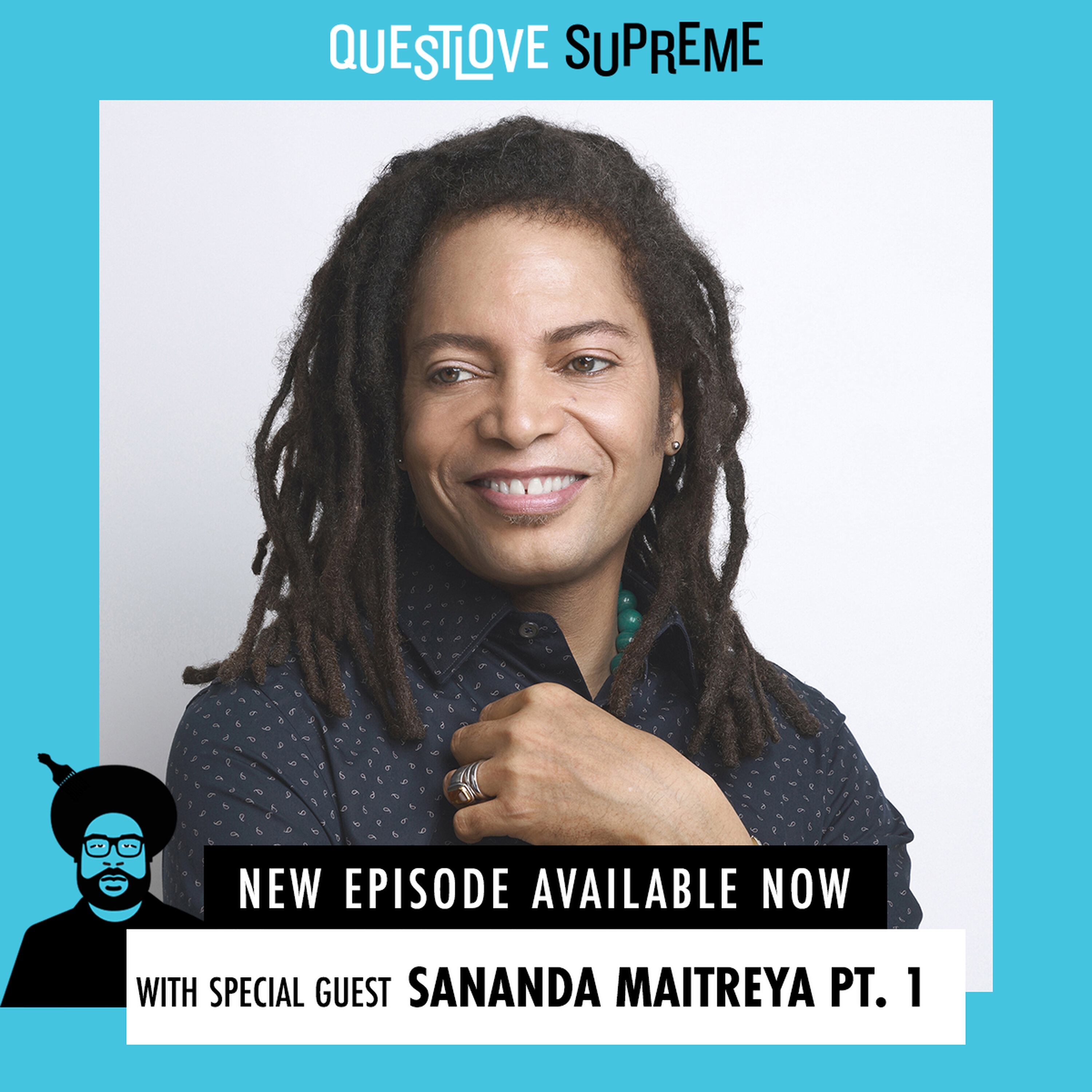
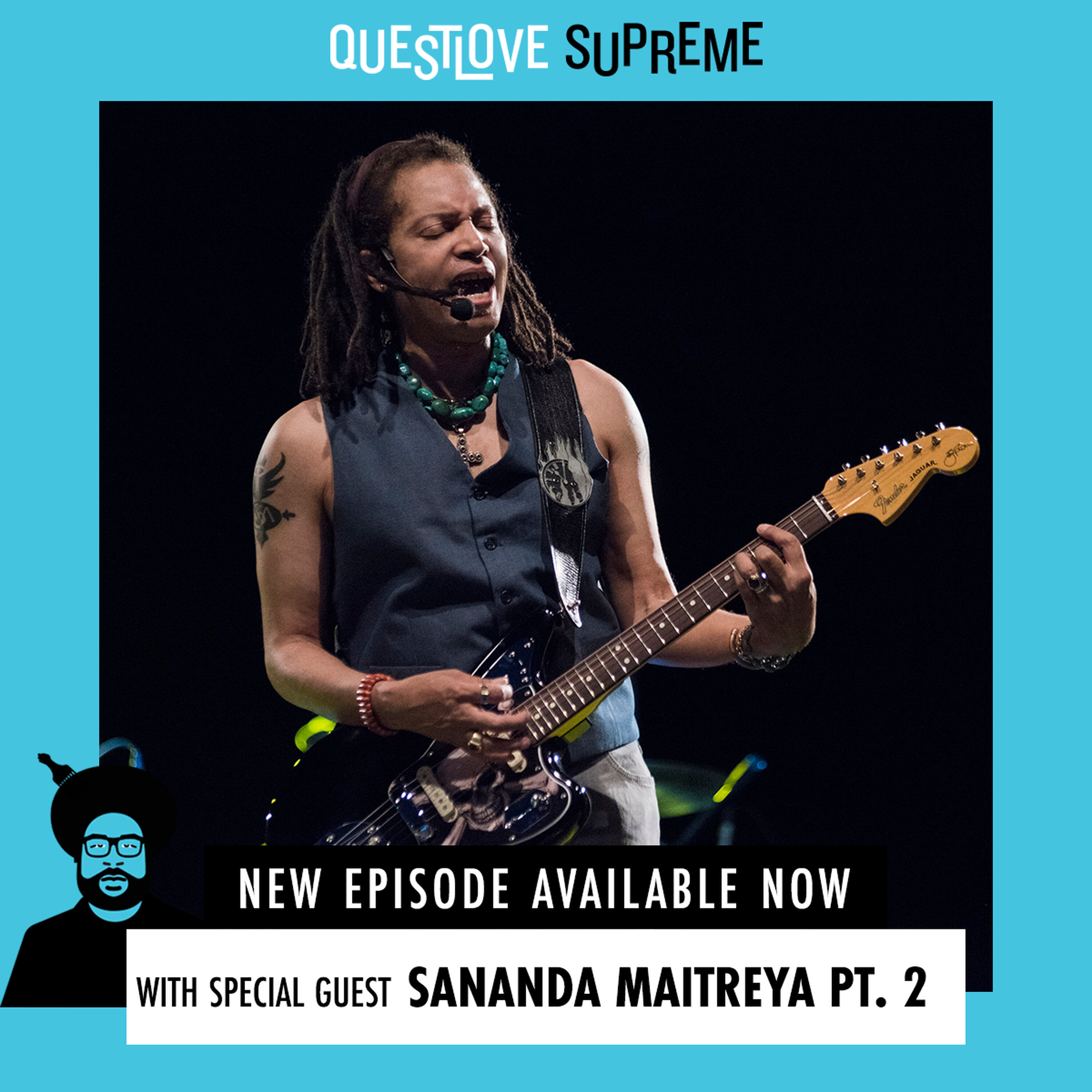
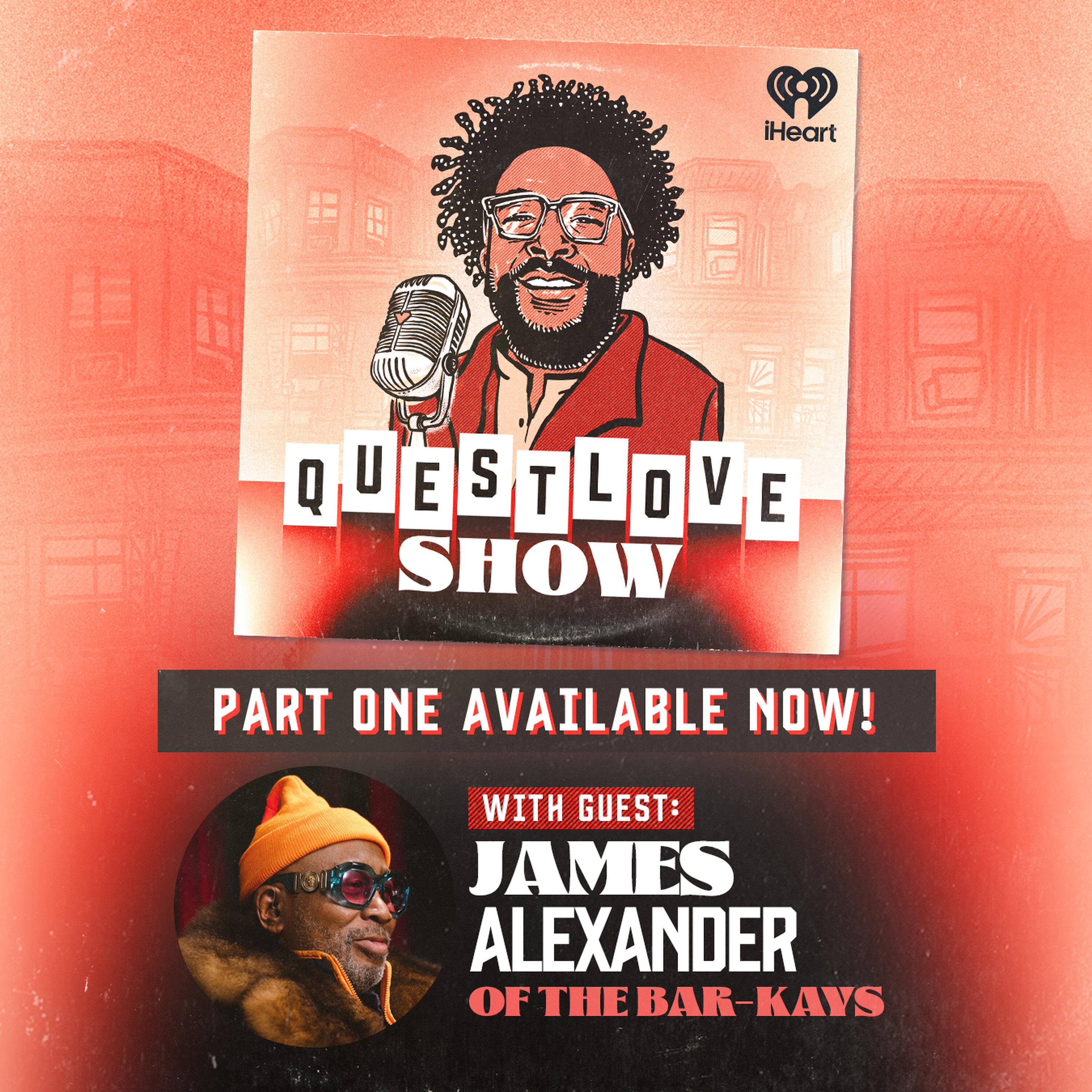
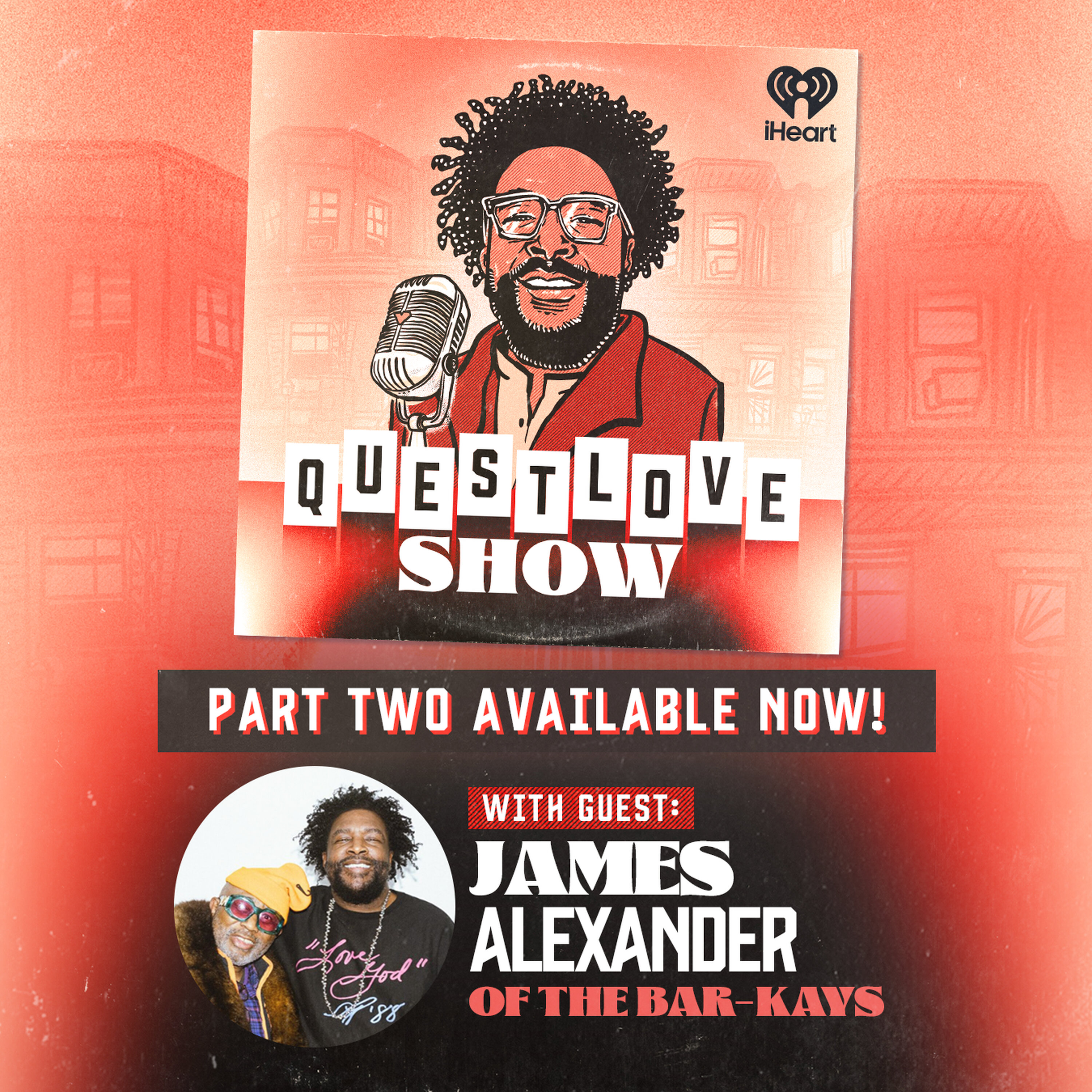
James Alexander of The Bar-Kays Part 1


Bar-Kays legend James Alexander joins the Questlove Show for a deeply personal conversation, tracing his journey from a teenage musician playing segregated clubs in Memphis to becoming a cornerstone of Stax Records and a young artist mentored by Otis Redding. James reflects on the spontaneous birth and enduring impact of “Soul Finger,” the hard truths of touring in the 1960s, and the business wisdom Otis shared with him about publishing and ownership. He also speaks with profound honesty about the 1967 plane crash that claimed Redding and most of the Bar-Kays—a tragedy he narrowly escaped—and the long, painful process of grieving, resilience, and ultimately rebuilding the band in its wake.
See omnystudio.com/listener for privacy information.
00:00:00
Speaker 1: Quest Left Show is a production of iHeart Radio.
00:00:21
Speaker 2: All Right, y'all, this is a big one. All right.
00:00:24
Speaker 1: So every year doing Black History Month, we honor the innovators and the cultural architects, and today is no different. For the past six decades, I will say that our guests has been an amazing, powerful force in music. Definitely an influence in my life and how I hear things. Basically, our guest is one of the musical delegates, the musical forces from Memphis that we don't talk about enough.
00:00:56
Speaker 2: We do not talk about.
00:00:57
Speaker 1: Memphis is such a force of music that it rarely gets the.
00:01:03
Speaker 2: Light that it deserves.
00:01:05
Speaker 1: And as a member of the legendary band the bar Kas, you know, you know these songs from soul Finger to Son of Shaft to Holy Ghosts, especially Holy Ghosts, which incidentally, I think Holy ghost is one of the best examples of giving the drummer some that excited an eight year old questlove when he first heard that song. He's both a member of the R and B, the Memphis Rock and Roll Hall of Fame blending in and even then that's reductive because if you listen to the early work of their out like their level of rock excitement. It was pretty much like no other band that you would come across in that period of course, collaborating with legends like the Great Otis Redding, with Isaac Hayes, touring the world, spreading the funk. He's been mentioned in many aqls. So shout out to Jimmy jam Hello, I want to welcome the leader of the Barcads, James Alexander, to the Quest Love Show.
00:02:08
Speaker 2: Welcome, sir, how are you? What's going on? Man? How are you? I had to stay up all night to get here? Man?
00:02:14
Speaker 1: Yeah, I was gonna say I appreciate you. Right now as we tape, New York is being threatened with as I here describe something deeper than a Nor'easter, as they're telling me. But yet you made it here on your own. I know that we've been talking for the last couple of years about you coming on the show, right again, You've been mentioned a lot, and now the time has come, and I thank you for coming here.
00:02:40
Speaker 2: I sure, man. All right, So we're going to try to get through your life from soup to nuts.
00:02:46
Speaker 1: I do want what I call or derv So I will start with this question of all of your barca.
00:02:54
Speaker 2: Songs, which is your most favorite. That's a good one, now, dude, I don't know. I mean, you know, well, your favorite to play bass on, my favorite to play bass. So would probably still be soul Fingers, believe it or not. Soul Finger really yeah, I mean maybe you would understand this. Soul Finger is just it's a song that's very near and dear to me because in the process, you know, groups sent tapes in to record comports and stuff or whatever. But see, back in the day, we had to audition live. So what happened is still be that way right now. Yeah, so we were playing at a nightclub illegally of course, because we were like, were underage. Yeah, how old were you? Sixteen years old? Were they charting back then? For real? For real? Yeah, of course they were charting like you had to be over, Yeah, you had to be over. And see, Memphis had the vice squad. The vice squad is like it's like ice. Okay, of that. Musicians now they come in Now they come in to a nightclub and they check everybody in the nightclub. Check that out. These if you're on the age, they didn't, they didn't take you. The only thing now they need to take you to jail. They just call your parents and tell them to come pick your manners up and bring them home. But anyway, okay, we're playing in this nightclub and we're playing behind this guy by the name of Norman West who's one of the members of the Soldierldren and we planned a song by JJ Jackson call but it's all right. So every night, now, mind you, you have to say that we some youngsters. Every night we get to a certain portion of the song and we do for a lack of world or breakdown. But you know, sixteen years old, we didn't know what he was doing, but we did know this. We started looking around at each other and say, oh damn, this is something here. So we remember that. So we had to go on an audition that Stacks Records and we auditioned Steve Crauffer was the A and R guy. Okay, so we auditioned for him, and he said, em I appreciate y'all coming up in an audition, but you know, y'a just y'all don't quite have it. And so you know, bust out a little bubble. Wait, I tell you what, well, let you come back and do it again. So we came back the second time. He said no. But as we were leaving the second time, a little short guy, little white guy by the name of Jim Stewart. So he said, hey, man, what what's going on here? I said, we just was up here auditions. Who are y'all? We're just a little bad, he said, I tell you what I saw everything that's been happening. So with y'all come back up in audition for me. Come on a Sunday. The studio is closed. Nobody be here with me and y'all. So we came. So we got to the studio and we started playing something. He said, what is that? We don't I mean, well, man, we don't know, we don't know what. We don't know what the hell we're doing. We're just doing some shit. Okay, you didn't name the songs or anything. We didn't.
00:05:53
Speaker 1: Now, when you're auditioning, what's the repertoire? How long do you have to make an impression? Is it one song, two songs? Or for us, we.
00:06:01
Speaker 2: Just played a little vibe. And because we had planned this little vibe and the club every night, we said, shit, we just started off with that little vibe. So he said, what the hell is that? We don't know. But anyway, he ran up in the control room. You know, it wasn't no SSL, no leaves, nothing, a little boyed about like this. You know. In fact, he had one of the first four track scully tape machines, you know, thing that the Beatles called Roger Peppers. Anyway, Yeah, he didn't even have a talkback button, so he just gave us a signal. She played from the top. Our trumpet player came up with this little nursery rhyme horn line. But yeah, and the drummer hit a break and it was on. Then he said come up and listen to it. So thirty minutes later we had soul finger. So that is the definitive version of soul finger. That's it. Where did the kids come from? A person that's been on your show? It was his idea, David Porter. Really that was a convenience store across the street from from Stacks. He went over to the convenience store and got a case of Coca colas, you know, the wooden case, twenty four balls on the case. Oh god, don't tell me about to pay off of Solda. We didn't even have a ball open them. So what he told to do the guy at the store just take the ball over it and open it. So got the kids from the neighborhood, put them around one mic and said I'm going to direct you. So when I direct you, you say Soul Figure, right, And that's how it came out. That's how it came about.
00:07:43
Speaker 1: And you paid those kids in soda a soda ten house Coca Cola. Okay, So I have a follow up question for Soul Figure because I've had two other guests on the show give their version of a song that sort of sparked a controversial sit you and I'm speaking of Ray Parker Jr.
00:08:03
Speaker 2: And Huey Lewis. Now, this is all I'm saying. I believe that the.
00:08:09
Speaker 1: Story was when they were making Ghostbusters, they wanted Huey Lewis's I Want a new drug in the movie somehow, I guess whoever got the message to hue about this movie whatever his Ghostbusters that sounds like dumb No. Rejected, and then they came back again. You know, for real, can you clear the song? He's like a ghost film that sounds dumb.
00:08:33
Speaker 2: No.
00:08:34
Speaker 1: So they asked him, I think three or four times, and he was like, adamantly, no, so then they gave up went.
00:08:41
Speaker 2: To Ray Parker Jr.
00:08:42
Speaker 1: Now you know, and we're gonna get into this later. I'm no stranger to derivative ideas. In other words, they play a song, you listen to the song, then you flip the song, and then it's a new song.
00:08:56
Speaker 2: So I'm assuming that's what.
00:08:59
Speaker 1: Ray Parker did, which was okay, well I'll make something that's in the area close to it. And of course Uey Lewis sued Ray Parker Jr. I think successfully, and they never I think part of the clause was that they were not allowed to talk about the case. But obviously hue Lewis felt some sort of way that you know, this song is my song. But when my dad and I first heard Ghostbusters, my dad goes to the record fleet says, that's nothing but an updated version of this, and he plays me, Oh, she.
00:09:36
Speaker 2: Should have told me that. You wait, my dear friend, I didn't. I would do that.
00:09:43
Speaker 1: So I'm just saying that when you heard Ghostbusters at any time, did you say, hey, wait a minute, No, okay, sorry, I wasn't trying to put you in That's all I wanted to I would you know, I would do that.
00:09:58
Speaker 2: The write no way, all right.
00:10:00
Speaker 1: I want to know how music entered your life. What was your first musical memory.
00:10:03
Speaker 2: Well, in Memphis, there's a place called Handy Park downtown on Bill Street. Unbeknowns to me, my mom took me down on Bill Street to Handy Park. I had to be I don't know, six or seven years old, I can't remember exactly, but she took me downtown to Handy Park to see bb King and Bobby Blue Bland and they had taken two flatbed trucks, backed them together and made a stage out of it. That was my first recollection of the music. Well, what happened that particular day, unbeknowns to me, it kind of got into my DNA. I didn't know it at the time, but you know, I took a liking too, the whole scene, the whole thing, the whole music thing. It didn't hurt that my brother was a big jazz buff, not a musician or anything like that, but just collecting definitely, you know, Cold Trane, Miles Davis, they lonely just monk all of that stuff. Paul Chambers, which, yeah, all of that stuff.
00:11:09
Speaker 1: So you're growing up in a city that also has given us Aretha Franklin, Marie White, Carl Perkins, Jerry Lee Lewis, Johnny Cash, Elvis.
00:11:20
Speaker 2: Presley, Al Green.
00:11:23
Speaker 1: Even in the musical ecosystem, are you running into an unknown David Porter and unknown Isaac Hayes, like talk about just the ecosystem of Memphis, Like how small is the city in terms of it's musical community, And who were you sort of socially interacting with before you became an artist, Like, oh yeah, I knew that when we were twelve years old in the same school.
00:11:51
Speaker 2: Well, I was in the marching band. I was in the you start in junior high school, I was in the marching band. You're not gonna believe this. I always wanted to play drums. But what happened is I went to the band room and the band director said, you know, I want you to stand up state your navy James Alexander. What do you want to play? I want to play drums. I have my drum sticks and everything right. He said, well, I'm sorry, we don't need any more drummers, but we have over there for tuba players. And I said, oh shit, tuba players because back then they didn't have the fiberglass tubers. All the tubes were metal. Okay, okay, but I wanted to be in the band so bad, so I said, shit, I mean, you know, this looks like this is my only shot. So started out with the tuba. So with the tuba, you know, he suggested that I take the tuber home, you know, so I could learn how to play it. So, but the bell was so big. You know, the bus that I used to ride home, the bell couldn't fit inside the bus. So I had to walk home with the tuba heavy ones. It took me about maybe thirty minutes to walk home. But all walking home, you know this big tuba. You know, kids and stuff throwing paper all up in the barrel of the Tubuh you got that big ass yeah tuba and all of that.
00:13:15
Speaker 1: You didn't have a case. There were no tu ks, No, it was no tube case. You just had to carry it.
00:13:21
Speaker 2: Yeah. Like I'm at a parade and I'm just walking by myself, so you know, with some friends they throwing paper. Anyway, That's how I had to get the tuber home. And then when I get it home, you know, my brother, which was like seventeen years older than me, I'm trying to learn how to play the tube to him. It sounded horrible. Cut that cut that rag, it out, cut all that noise out. But you know, I just I kept at it when I was playing football too, I mean, and I kept at the tuba, and I started getting, you know, pretty good at it. And then they had a thing in West Tennessee called if if you do good in West Tennessee, you get invited to bail my School of Music, which or people are the School of Music which now is part of Vanderbilt, to study, you know, with some other kids. So there were only two black kids from West Tennessee to go to Nashville and study, you know with all of the kids from all over Tennessee. Me and another guy. He played two also, we were the only black kids in the whole state for the music summer camp. And by then I had master the tuba and all of that, and some kind of way I got interested in base. So I started out on upright. Okay, one of my teachers that bought her son an upright and she came to me one day and she said, you know, how about this upright for my son. He's not going to get into it. Do you want it? I said, sure, So she just gave it to me. Now, mind you that particular upright right now, it's worth about eight grand. She probably paid maybe four or five hundred dollars for it. But it's a blonde German made upright day, you know with the lfo's, I mean beautiful. This This is a backstory to that. Y'all don't know who you want to be telling you. The backstory is I stayed at home with my parents, and by this time, you know, I was going in and out of town. It was set up in the dining room on the you know what's on the stand. So I come home one day, where's my base? I mean asking my brother, right, I don't know? I said, Man, where's my base? I said, you just sits in that corner right there, and he kep saying I don't know. So I had to go south of Memphis on him. Where's my email base? Okay, where's my base? Oh? Man? Oh man? You know I forgot to tell you? Man. Uh I took it to the pawn shop, man, and uh, I said, man, what let's call the pawn shop right now? Of course, cause you know with pawn shop, if you don't pay on your instrument, you know, in a certain time they'll sell it. So we called they had sold my base, like seven hundred dollars or some shit like that. Man, I was ready to I was actually was ready to kill my own brother. Why did he do that? Unbeitniced to me he had a gambling problem. You know, I don't know if you know anything about Memphs. You know across the bridge or in West Wemster they have the dog track back then the dog track, you know, so you know they had this big book you play the dogs every night. He was going to the dog track every day, you know, trying to hit and you know, got into a jam part of my base. So I was rather kill him, but I was. I was hurt more than anything. So just you know, I started crying and shit, and you know I was hurt. You know, I said, wait, manute, you know we got to do this. So before he passed away, you know, we kind of like kissed the maid up. I said, you know this is a lifelong beef, this is yeah. That was yeah, oh man. Yeah, my dad went to a pawnshop. My dad worked at a place called Firestone. If you don't anythink about Memphis, if you work at Firestone International Harvester, all those places. You know, that's a good job. So, unbeknownst to me, my dad went to this pawn shop and put a harmony base and amplify in the Layoway. So I didn't know that he was doing that, and he didn't tell me about it until he went to get it out. So he said, come on, want you to rat somewhere with me, And he took me down there and he got it out. I think the whole base and the app I think was about it wasn't even two hundred dollars. I still got the base, but the amp called foul one night got you got what Jimmy Hendracy.
00:18:07
Speaker 1: Okay, So me starting elementary school in the seventies, I grew up in a time period where if you were a specialty student, then your parents sent you to like music school whatever.
00:18:24
Speaker 2: But you know, later I.
00:18:25
Speaker 1: Found out that in the late sixties, especially with like the Nixon administration, they started taking like music programs out of school. But basically, to hear you say it is it almost as common as lunch period. If you're in school, whether you have natural music talent or not, you're gonna learn an instrument and you will eventually catch it on to it.
00:18:53
Speaker 2: That was mostly the case, But it's all about the interest. What happened is back in those days, believe it or not, we had, for lack of a better word, we had mentors. So if, like our band director, if he saw you had a interest, a lot of times didn't have to show that much interest, but if he thought you, you know, wanted to do something, they would kind of help you facilitate get you on track to doing it. And so fortunately my band director, my first band director, he kind of like took an interest in it, and you know, we'd have a regular band practice, you know where you learned your scales and all of that stuff like that, and then we would have after the band practice practice, you know where you just learned some other stuff. So that was just the whole big thing. And I'm grateful to grow up around a lot of talented folks. You was Bill Street for a tourist or was that? Was it for real? Well? When I came up, Bill Street was more like you know, prostitution, you know, drugs and music. There was a club in the Bill Street area called Club Handy. It was run by Sunbeam Mitchell. Sunbeam Mitchell had a club and then he had in his club, he had like five or six rooms. So when musicians come through, there was not I mean, you know, people have to understand the Memphis. Memphis were very segregated back in those days. I mean, you know, you couldn't even stay in certain hotels. You couldn't drink at certain water fountains. I mean you got white water fountains, the colored water fountains. But Sunbeam provided when musicians come through, you know, some of the some of the greats, he would provide them a room and uh, you know, in a bowl of chili. Okay. Yeah, So with people coming through and all that stuff like that, you know, and you aspiring to be in the music business, or you go and try to meet some of these people, you know what I mean.
00:20:57
Speaker 1: I want to know where you enter the Barcads. So they started in sixty two, did they not?
00:21:04
Speaker 2: The Barcas started around sixty sixty, Yeah, around that time, sixty two sixty three, somewhere in there. Okay.
00:21:13
Speaker 1: Now, I was always under the impression because I would also see credits on Stax records for the Marquis. So for some reason I always thought that you guys started off that first, and men sort of morphed into the bar case. But were the Marquees a whole the whole other group. Okay, so it had nothing to do They had nothing to do with the Barcas, Okay, got it.
00:21:35
Speaker 2: The Barcas was a group that some guys from several different high schools that started emerging. Actually, the drummer that played in the band with me it started the group. It wasn't called the Barcades at that point. They used to rehearse every Saturday. What happened was the bass player for them at that particular point, he could play bass, but he didn't own a bass. Oh so James Alexander owned the base cause my dad had bought me a base. Remember, so I used to ride my bike to their rehearsal every Saturday so he could use my bass so that they could rehearse. This one particular said that I rode to their rehearsal okay, and he wasn't there. So they said, hey, man, were ready to start this rehearsal. Basically us not here. So who's gonna play bass? They said, you? I said, but there's one problem. They said, what's the problem? I can't play and so the guitar player said, well, you know what, I'll show you enough to, you know, to get through rehearsals. You know what I mean to be quite unrest I was fucking up bad, but he said, we're gonna get you through this.
00:22:49
Speaker 1: Stylistically, how jarringly different was adjusting to electric bass as opposed to the upright base.
00:22:56
Speaker 2: A lot of adjustment for me because my instruction always would tell me, you know, he had this thing you hit hit me on my knuckles because I didn't. I wasn't. I wasn't doing my technique correctly. The fingering, the finger I wasn't doing none of that right. But you know, I just had to do it however I could do it. It was a big difference.
00:23:16
Speaker 1: Now that you are getting an interest in the base, who are you listening to? Who you trying to pattern yourself after?
00:23:24
Speaker 2: I was basically listening to the radio, and at an early age up nonst with my parents, I started slipping in clubs, slipping in clubs, and there was a guy by the name of a Cleave Shields, better known as Frog. He played with a band called Jean Bowlex Miller. I was listening to him. I was listening to another guy by the name of Robert McGee who played upright, and I ended up taking some bass lessons from him. Those are the two guys I was listening to and when I started to learn how to play a little bit. Robert McGee. They had a thing in Memphis called Blue Monday. Okay, and Robert McGee is I mean it was a great bass player. But he would go to sleep on stage while playing. I mean he's still playing. He goes to sleep so heavy moonshine or something. So, so what happened is he said, I got I got an ideal. Man. You know, it was a four hour gig, right, So he would play the first part of it, and then he said, man, once you come and then you know, I'm gonna work you in. And you played the second part. So the band was Ben Branch, Ben Branch, Yes, Ben Branch, the Ben Branch off versing push, yes, Jack, all of that. The last person that spoke to you before. He So they had a Monday night thing every Monday night, and he was playing the base and then he played the first half that I come in and play the second half. The band was fine with like no, no, no, no, not really, but he said, he said, hey, I'm leaving. I got to go to.
00:25:06
Speaker 1: Sleep, because he go to sleep on stage messing up. Was it because he was working all day or.
00:25:12
Speaker 2: Yes, because he was a band director in the daytime and then you know, playing gigs at night and stuff in a school teacher too, so on top of all of them, so he was tired. So what happened is one of my first experiences being Brunch called out a song. He said, start us five flats one two, five flats five, five flats. I know it's D flat, but I said what man, You know, I didn't know what the hell to do, you know what I'm saying. But one thing that I learned early on in my teachings, especially the bass player. He said, man, look, if you don't know a song, stand close to the keyboard player and watch his left hand, and you were probably you know, you would learn the changes and all that stuff like that. And I did it. So I fumbled through it, but I got through it. And then he right after that, he called sat the doll. I said, oh my god, I mean, you know, all right, you got the one song. Now I got to do this. I mean, you know, I thought there's a go play some twelve bar blues and stuff like that. I could get through that, right, but they playing standards, you know what I mean.
00:26:24
Speaker 1: So you jump right into the lake of jazz, not blue all of that. Yeah, all of that.
00:26:28
Speaker 2: So I mean, you know, and I'm happy to say that gradually I started getting a little better at it. Well, I was gonna say, you stood in a Bark's rehearsal because the other bass player wasn't there, but right, you are still a Bark. So what happened to that other bass player? Like he just he just know. What happened is the last time I went to the rehearsal and brought my bass because because I'm used to bringing my bass to the rehearsal, opened the case up, tuning it up and giving it to him so they could start the rehearsal so you could tune it. So you were a tech.
00:27:08
Speaker 1: You were a bass tech technical what we would call it bass tech now, Like yeah, I mean, but I mean, let's be, let's be I went.
00:27:16
Speaker 2: Tuning it up that good because it was it was still not all the way into him. But anyway, so what happened is I'm gonna give the bass player of my bass right, and they the guys, man, what are you doing? I said, I'm giving so y'all can start rehearsal. They said, well, guess what. I said, what he's not the bass player anymore? Well, who is the bass player? They said, you? I said, but there's one thing that y'all should know, and they said what is that? I got it. And so the guitar player, I mean the guitar player. Would you know, on some songs he played guitar. Other songs he would play bass. So he really wanted to play guitar, so he taught me a lot of stuff on base. So how many months did it take you to adjust? And really I would say fair about six months? Okay, okay, about six months. I mean, you know, I wasn't great, but I was good enough to get through a three or four hour set, you know what.
00:28:15
Speaker 1: So one of the pioneering things about the original iteration of the Barcas, which also like another Memphis group, the MG's, is that this is an interracial band. I didn't know that the original keyboard player for the Barks was a white guy. So just that alone, how radical was that idea during that time period?
00:28:47
Speaker 2: Well, the first thing we tried to do is everybody was at different high schools, so we tried to get everybody to the same high school. So you got five black guys and this one white guy. He went to a dominantly white school. So what about he goes to his parents and say, look, I want to change and go to Booker T. Washington High School because my guys are there. His parents hit the freaking ceiling. Okay, okay, but I have to say he was a radical white boy. He said, I'm going anyway, you know, you know, you know, probably be in reform school or something, you know, but he said, and so they wasn't with it. But he changed from a predominantly white school to a predominantly black school. He was the only white kid in a predominantly black school, and the black people accepted him. I mean, he didn't have no issues. They didn't try to jump him, you know, after school or nothing like that. He had a black girlfriend the whole nine. He walking in, you know, walking into the projects. Hey Ronnie, what's going on, man? How you doing? You know? No problem in Memphis? In Memphis, Tennessee. In clubs, are you guys playing in?
00:30:01
Speaker 1: Are these segregated clubs are these like, what's the.
00:30:06
Speaker 2: The layout of what your gigs are like? We played predominantly black clubs, and then we also played predominantly white clubs. Now the white clubs. I remember a club that we played. Papa Willie was the house band. Willie Mitchell was the house band. And this club had a guardrail around the stage, so there was no way you could go out in the in the audience behind the drummer. There was a door that led to the parking lot.
00:30:37
Speaker 1: So on break in order to get on stage, you were just you're basically in a cell or a prison.
00:30:44
Speaker 2: Yeah, you come out on stage, so I mean, you know, people come up and wanted to talk to you, so they had to talk to you over the guardrail, you know, just a rode An fence around the stage.
00:30:54
Speaker 1: And that was purposely designed so that if black acts were hired, they weren't allowed.
00:31:00
Speaker 2: What you're recognizing with the patriots, you know, the people in the club man.
00:31:04
Speaker 1: The odd thing is that I kind of wish I have that system now, not for racial reasons, just yeah, I just I want to get up going stage, yeah and get out without any you know selfieh yeah, all right, No, I love my fan base.
00:31:22
Speaker 2: But but hey, but I tell you, I'll tell you what. I'll tell you what happened one night at that particular club. Espresially had a private party at this club called the Manhattan Club. Right. I know, I'm skipping around, but by this time I was playing with a band called Isaac Hayes and the Do Dads, and I was a do Dad. Okay. We played this club for one year called the Plantation in in West Memphis. Unfortunate name. Yeah. We played from nine to three, okay, six nights a week while I was in high school. Okay for six hours.
00:32:01
Speaker 1: So when you're doing a residency like that, you're not playing six hours in a row, correct, Like what's the what's fifteen forty five minutes?
00:32:11
Speaker 2: Yeah?
00:32:12
Speaker 1: Doing that fifteen minute break? Is music in the air? Like do they have a juke box or something?
00:32:17
Speaker 2: A juke box? Okay? So yeah, Music's a constant, yeah, constantly going.
00:32:22
Speaker 1: Is it the same set six times at night or you're learning different so doing different songs, I mean it goes.
00:32:29
Speaker 2: You know, by this time, you know, you end up learning a lot of songs. Okay, I mean you know every now and then, uh, maybe in the hour one and hours five you might repeat a song or two, okay, but we had different songs. I mean, you know, I learned a lot of songs like the New Units of You and My Funny Valid I mean, you know, just all those songs then plus whatever songs were out then.
00:32:52
Speaker 1: You know, was this primarily well you said my Funny Valentine. So I'm like, those are ballots? Yeah, like during this period kids want to dance, do they not?
00:33:02
Speaker 2: Or yeah? Well these weren't kids, he was were grown people in the club there you go, Yeah, okay here grown. I mean you have to be twenty one to get in the club, got it. But we were under age, you know, getting in the club. We was in the club. I mean, I think Isaac may have at doing those times. He might have been in his early twenties. Got you all right? Sin finish? I interrupted your story. You went to an Elvis press league. Yeah, we went to Elvis. No, Elvis presst hired us to play a party. You know. Elvis was always big on like, for instance, if he go to amusement park or something like that, he would shut the whole amusement park down and just only somebody would be there with him and his cronies. Same thing with the club. If he if he did something at the club, shut the club down, Nobody deal with him and his cronies.
00:33:47
Speaker 1: Now when I watch footage of Elvis elsewhere, you know, girlsy chasing them, and it's like, yeah, chaos. Right, is he able to move in and out of Memphis like it's nothing because everyone knows him?
00:33:59
Speaker 2: Or no? I mean he's still he's still Evers person. He still got security all twenty four seven with him, got But we played this club. This is Isaac Cages and to do dads. I think Isaac charged them I want to say five hundred dollars and I think Isaac paid us like about forty dollars a piece or something like that. But after the thing, that man, you you still got this roll down fence. Right, So we walked out of the on the parking lot and come into the front interest of the club because he wanted to be up close and personal with us. And you know, Evers was tall, right, you know, very handsome guy. I mean very polite. I mean, yes, ma'am, no, ma'am. Type of guy I've got you, very contrary to what people say about him, anyway, he said, man, I really enjoyed myself. I had a good time. And then you know, he went in his park. He put out a big water money and it was like six of us. No, maagine, I'll just made forty bucks for the gig. Right. He gave each one of us one hundred dollar bill and I said, shit, it's got like one one than I had right at the time. Well, I get it immediately when I got home, I gave it one hundred to my mom. Don't we always do that?
00:35:20
Speaker 1: Yeah, all my money goes to my mom. During this time period, is it possible for you to be a local musician and make a living?
00:35:44
Speaker 2: Is it possible?
00:35:46
Speaker 1: Meaning okay, cats, I know, especially like if I talk to someone from Detroit or you know, in the Iron in the rust belt like or in Ohio, Indiana whatever. Most of the stories is now we work in the factories from eight am to four or five pm, and then we go home, and then we go to the bar that night, and then we'll play till one am and do the same thing over and over again because they need to make more money. Was it possible during this time period to be a full time musician? What is a good musician rate to survive and only be a musician, not doing anything else but to do music.
00:36:27
Speaker 2: Like what would you need to answer your question? It really kind of like what like that you Mostly everybody in the in the music community did something else besides music. For me, I basically owned the did music because you know, I was staying at home with my parents. Okay, so you know, as my dad used always say, you know, starting to get a little beside myself. You think you a man now bills? Yeah, so you know I got my first apartment. I was like seven. Thing. Okay, you were the man in the house then. Yeah.
00:37:01
Speaker 1: So like if I'm hiring you for a gig for Saturday night, in which I guess you're expected to play five to six hours, right, fair pay to you is forty fifty bucks or is that just the entire band?
00:37:17
Speaker 2: Like no, average was more like twenty five fifteen to twenty five.
00:37:22
Speaker 1: So for the whole band, they would just pay you one hundred and fifty two hundred bucks for the night.
00:37:27
Speaker 2: I mean, if you got a gig and you had a band, like we had five or six piece bandy, if we got three hundred dollars, that was a big deal, got you? Okay? That was that was huge.
00:37:37
Speaker 1: I guess what I'm trying to find out is, are you by this point having any dreams of, hey, we could take this higher, like maybe we can get a record deal, maybe we can tour the world, maybe we can.
00:37:50
Speaker 2: I wouldn't. We weren't even thinking about that. We were just trying to see if we could get up to like one hundred and fifty two hundred dollars a week, we would be doing great. And back in those days because of the club scene. In those days, if you were pretty good, not for everybody, but that was kind of like possible to get up to that because you had them had a lot of clubs. I mean we had the Flamingo Room, which was downtown. You had Club Handy Gotcha. You had the Hippodrome, which you know that's where you know we played there. You had another club called the te Hee Club, you had the Man Had, I mean, you know, there were clubs. It was like a situation. Any club you go in, you're gonna hear some you're gonna have some good ship, You're gonna hear some good stuff, you know.
00:38:41
Speaker 1: With their rival bands, Like who was your rival band at that moment.
00:38:45
Speaker 2: We didn't have a rival band at first, but we were kind of like, for lack of a better world, we were kind of like we ended up becoming the second string band at Stacks. Now, man, you this was after the plane crash, right, but we we didn't have a rival band, and we were fortunate enough for Booker T and the MG's, those guys man of Steve Cropper by the way, to kind of like take us under their wing, take us, take us under their wing.
00:39:22
Speaker 1: Steve never opened up even after he became established, Like, oh no, he won't even admit that.
00:39:28
Speaker 2: No, Steve, Steve was I mean, you know, I mean, I hope you don't come out of the gravy. But man, you know, you know you couldn't get his respect. You know, he couldn't get his respect. But I will tell you this when Jim Steward, because you know, back in those days when uh, every Monday they have a and R meeting and Jim Steward, I mean, Steve Cropper would be there, l Jackson, Booker T if he was not, if he was in town, not in college, Isaac Ca, David Porter, all those people were there and they would uh they would give the schedule for that week and this particular Monday after we recorded Soul Fingered the weekend, Jim said, before we get into this meeting, I got somebody I want to play for you. Steve Crupper was there. When he played it, Steve Crupper's face turned red because they said, damn, these were these little guys I was working with. Y'all were a threat.
00:40:27
Speaker 1: Yeah, then that means you're good if you're a threat to him.
00:40:31
Speaker 2: So yeah, okay, yeah.
00:40:33
Speaker 1: As far as labels are concerned, you know, I know of the legend of Sun Records, I know Stacks.
00:40:40
Speaker 2: Were there any other labels in the.
00:40:43
Speaker 1: Area or surrounding areas, I don't know how far Nashville is or whatever.
00:40:49
Speaker 2: In Memphis there was a label called gold Wax. Gotcha, h James Carr, you're there before, I know, James Carr, Yes, at the Dark end of the Street. Yeah, I know, James Carr. You know, Chip Smallman was in Memphis. He didn't have a label, but he was you know, he had a he had a rhythm section. Got you then you had then later on High Records came into play, okay, you know with with you know, with Willie Mitchell and all those guys. So Memphis was like fledging. You know, you had Stacks. I mean I can remember I remember Albel and Willie Mitchell standing on the parking lot and Willie Mitchell says, so, man, you know have you heard that? I mean, I just cut this new Al Green record. You know, I want to play it for you to see what you think about it. And then Albill might say, you know, yeah, I'm gonna play you this new Isaac CAE's record.
00:41:45
Speaker 1: See what you think about Yeah? Are they recording on the same mixing board or the same equipment? Because the sound of Willie Mitchell and the sound of Stacks, I don't know how to how to accurately describe the sonic texture of it. Like when I compare Motown to Memphis, I will say that Motown takes advantage of compression, and they take advantage of reverb, so it sounds bigger, like they're in the hall whatever. When you hear them collapse, it sounds like it's in a big ass church, whereas like all the Memphis songs sound very dry, like I never you know. In black music, snare drums are usually tuned very tight, but everything's like low, like super low and more bottom heavy?
00:42:35
Speaker 2: Was that by design?
00:42:37
Speaker 1: Like, Okay, this is the Memphis sound where you guys trying to be anti motown were even aware.
00:42:43
Speaker 2: That there was You want the real answer?
00:42:46
Speaker 1: Yeah, I do want the real answer, Like, do you know that you're actively part of a movement without knowing it?
00:42:54
Speaker 2: Probably though? Yeah, okay, yeah, we didn't know no about it. Okay, No, that's that's a genuine answer. Yeah, we didn't know nobod I mean we just I mean, I mean because most of the time, I mean, man, you I mean, I mean, uh, what are you at high or stacks or whatever? They didn't really I mean, stack's really more than how we didn't really have that much to work with, so you know, just push push a few you push a few buttons up and stuff like that, and then you know it's it's all and popping. You know. That's the way it was. I remember the incident I played on a song called Cheap of the Keeper Johnny Tailorny Taylor. Yes, Don Davis came. You know Don Davis used to come down to Memphis and record a lot. Yes, and uh it cut Cheap of the Keeper. Johnny Taylor was drunk, of course, you know, he had a battle of wild Turkey in his hand, and Don Davis had to go over there and grab him in the coll and said, I do want you to sing this goddamn song. I'm gonna kick you the fucking ass. But anyway, so we went up in the control room to listen to the playback or cheap of the Keeper, and they kept playing it back, no base on the song, right, So they said, uh, I mean, they already knew what had happened, but they didn't tell me. So they're gonna do this thing with me. James, did you play on this track? Now? Man? You the bass is bleeding because I'm standing. I'm standing close to the drum track, so the bass is bleeding on the drum track. So you do hear a little you hear a smidge of the bass bleeding off the drum track. The engineer pushed the bass module no bass because when he recorded, he had the bass in preview or solo, but it wasn't going on tape. Ah okay, And I'm getting the lerious that this man I was man I was playing, man called gaslighting you. Yeah, yeah, I was man I was playing. And but they already knew what was happening. By this time, the producer listened to the song several times, said it was a rap. Go out there and put the bass on the song.
00:44:59
Speaker 1: Sure, okay, because I'm about to say, my memory of it is you're the first thing I hear because it's a jazzy dude. Dude you okay, So you overdubbed it.
00:45:09
Speaker 2: Yeah, they just I mean they just stayed up in the control everybody else stayed up in the control room. What happened was the engineer was one of these little one of these little engineers that you know, just starting out, and he got excited. He got excited because Johnny Taylor was in the building and all of that stuff like that, and uh, and just forgot to put the base and records.
00:45:31
Speaker 1: So you overdubb it because in my mind, I'm like, I know there's based on that.
00:45:34
Speaker 2: Okay, I see.
00:45:36
Speaker 1: So the entire barcades of the rhythm section for Cheap of the Keeper, no just or just you Okay.
00:45:41
Speaker 2: Yeah. I ended up playing on a lot of sessions. Uh, Duck was supposed to be playing, okay, but Duck liked to play golf. Okay, okay, So my very first session as Stacks was on the Soul Children. Now, man you. I had another encounter Steve Cropper, because Steve Cropper was the session leader. So we ready to start the session, right, Steve Cropper said, we read to start the session. Who's gonna play bass? Where's Duck? Duck is not here, So Duck is not there, so I guess we got to use nuck. Duck was Duck, I am, and we both don't give a fuck. So my first session was Isaac Cage and David Porter recording by the Soldier and called the sweeter of he is okay, the longer the pain. So I said, you know what, if I fuck this song up here, I need to quit because all the song was, I mean the basis of the song that was the whole song basically had a couple of changes in it. But if I missed this up, I mean, Duck is probably never gonna go let me, you know, sit in and again. But fortunately I didn't mess it up. Now this is after the plane crash, so they start bringing our whole rhythm section there because a lot of the producers wanted to use our rhythm section because when you're a young musician, you don't really think about what you're doing. You just do some shit. But as you get older, you know, you start second guessing yourself. You said, I wonder what this work. But when you're young, just man, just do it. You don't even think it. So the producers like the fact that a lot of times we just always do some spontaneous type shit. And then they liked that, gotcha, So we started more and more. We started instead of them using you know, Booker t and the MG's and the MG's at the rhythm section. It usually when Booker was in college, it would Isaac Cages would would play the keyboards, gotcha, and then sometimes it be both of them.
00:47:55
Speaker 1: So when you're called in procession, are you getting a tape of the song beforehand? A week beforehand? Are they sending you charge or you're getting there?
00:48:05
Speaker 2: None of that, dude, we don't do it.
00:48:07
Speaker 1: Okay, name a non Barka's non otis Redding hit that you were on. Just just something from Hot Buttery sol or whatever a King which which song.
00:48:19
Speaker 2: Not going on the bed side, But like I'll play the blues for you, all of that, that's all of that. That's your album.
00:48:26
Speaker 1: Yeah, your level of getting sampled, Yeah, I got, I got questions for Jazzy after you. Yeah, okay, so you're getting called for a session. Well, see what Albert King. It's also the.
00:48:39
Speaker 2: Blues, so you know it's gonna be a one four five. Yeah, but but he did some uh he did some stuff with some changes in it too. Well you know, not that a change. It's just one four five, you know, just like you said, one four five, we called it sealson Roebuck. Why do you call it seius and robutause there's one four five, So sealson roebucks another name for it, you know what I mean.
00:49:01
Speaker 1: So that's the basic ground level of knowledge that you should have when you are playing a session is.
00:49:09
Speaker 2: Series and robots. You should do that. But then you know, fast forwarding, Uh, what I did a couple of Nashville sessions, and Nashville is a numbers uh city. They do the numbers, okay. And the first time I did the session up there, they put this chart in from me with the numbers, and then many almost laughed me out of the studio because this man, I said, Man, I don't know how to do this ship like that. I said, man, would y'all just play the demo and let me learn the song and they said, no, we don't do it like that, homeboy.
00:49:41
Speaker 1: So far are people listening when they do numbers? You saw Okay play one for five, so you're supposed to know that.
00:49:47
Speaker 2: Yeah, I was. I wasn't with it, so he has a trial by fire life.
00:49:52
Speaker 1: As far as learning, yeah, okay, going back to what you asked, we were just set around.
00:49:57
Speaker 2: Sometimes the song wasn't even created all the way, you know what I mean. They had the idea for the song and they said, man, you know, just come up with something of something. Okay, think of something. Yeah, I like that, got you got this lovely? I mean we set around in a circle and the writer might be in there and they might have the demo and we come up with something like that. It was there was a lot of it was just I mean off the cuff.
00:50:30
Speaker 1: So I'll say that the one when people do Stax versus Motown comparisons is Stax is also famous for instrumentals. Now I'm talking about pre Larry Barcays. But at no point in the Foundational years were you guys ever thinking about adding a lead vocalist to the group so that you can expand your repertoire and do other things.
00:50:57
Speaker 2: Well, we had some believe vocals, but the way we used to do that, we used to bring them on and let them do two or three songs sittings. Yeah, gotcha, and then we do our set. Gotcha. But we had a unique way of doing instrumentals. So even though a single was not there, it felt like a single was there because we played the melody so beautifully. Gotcha. If you ever listened to with a child's heart, yeah, I know. So we got away with it. But after a while, you know, as time went on, it's you know, I must tell you, it did start getting a little redundant, you know what I mean.
00:51:35
Speaker 1: But with instrumentals, though, how were the soloing chops? Because I mean, besides playing like the main melody and the course and all that, I'm serting at some point, like is being a virtuoso soloists also a requirement?
00:51:53
Speaker 2: Or was just keeping a tight rhythm section? Basically keep it tight rhythm section because in the original ball case, the only really there was only one per well, wasn't all those two people that could really do you know, decent solos? And that was a guitar player and being calling to the trumpet player everybody else was just like, you know, hey, we go. Google stays close to the script, you know, just they acomplishment. So right now on.
00:52:25
Speaker 1: Social media, the big thing is that both Tupac and Otis Redding passed away at the same age. And for a lot of us, we included When you first hear Otis Redding sing, I naturally thought, oh, yeah, he's like forty two, maybe maybe fifty three. And I know, generationally speaking, we get younger by the generation. I just turned fifty five. I still feel like I'm in my thirties. You look young as hell. I don't even you know what I mean.
00:52:58
Speaker 2: Like seventy six, dude, your birthday was Tuesday, related, My birthday was Monday. There you go, Capricorn, still quering power. There you go. Tell me how Otis Redding enters the picture. And was he always an old soul like that? Always an old soul like even to you guys, was he an old soul? Or was he like a big brother to us? Like a big brother. But you know, the age difference, it wasn't drastic. It was like when I was seventeen, he was twenty five. He's like that, you know what I mean, We're all twenty five year olders like that. No, No, he was he man the oldest. He was a different type of cat. Okay, this guy, he was the first guy that told us about publishing. I didn't. I mean, okay, first of all, when I signed my first record contract, I didn't even read the contract. I just signed. Oh no, But you have to understand, I signed my first contract when I was sixteen years old. I was so happy that, you know, give the deal and just signed the contract. You know you're supposed to get You know, we really weren't supposed to sign the contract sand it.
00:54:07
Speaker 1: You were also underage. Yeah, was that contract legal technically speaking?
00:54:13
Speaker 2: Contract was full of shit? Okay, it was. It was bad got you, but you know we signed it anyway because we wanted to got a record. Yeah on the record. Yeah? Did you guys have a record contract with Stacks pre or post of this writing before? It was before? Okay, And in fact, that's how it heard of us. Got you? He was in town. Back then, they used to do package shows where you would be eight or nine people on the show, and most of the time you would only do whatever your hit was and maybe one other song got you. So the whole show uses the last for like an hour and fifteen minutes and be nine people on the show, a bunch of hits and cover yeah it hits. Yeah, but if you did three songs on the show, you was a star. Got you? Okay? And then you know Otis Redding his ship was like thirty minutes, so you know he was superstar. Right, so Otis was in town. I think the show was Oldis reading the Manhattan's Arthur Connolly, m Betty Swan. I can't remember who else was. Maybe Colin Thomas may have been on the show. But as you well know, in speaking to you earlier, it seemed like, you know, you know one of those guys that like to go out after the show. Yeah you don't, do you?
00:55:31
Speaker 1: No?
00:55:31
Speaker 2: Well we did, gotcha. You know, the show, then the after party, and then the after party, after the after party. What happened all night, all night long. But anyway, we were playing at this club called the Hippodrome, got you, five hundred Bill Street. That's the address. That's a parking lot, now, yeah, I'm familiar with it. Anyway, we were playing at this club illegally of course. Okay, so Otis wanted to go out after he do a short at the coliseum. So he comes down to the Hippi draw he see this band and this particular night he was in rare Form and so he asked Al Bell and Al Jackson, which Al Bell and Al Jackson were kind of like part owners of the club, who is this band? And they told him. He said, do you think they know any of my songs? And he said, asked them, So he called out a couple of songs. I think one of us k turned you Loose and we really didn't know it, but we kind of like knew of it, but we were one of those we could fake it till we make it. So he came up on stage, we did the song with him, and he said, man, I got to have these guys for my band. Now, man, you otis had He had a twelve maybe a fourteen piece band, you know, horns, all of that, and so what really dripped him out was he kept looking up on the stage and he kept looking around trying to see what the rest of the people was. It was just six people. Don't stay got you, but the sound was big. So he said, I got to have these dudes from my band. So he stayed in town extra day because he wanted to talk to our parents. Gotcha, he wanted us to go on the road with him. Right, we were getting all hyped up and excited, and our parents said, hell no to the no, no, no to the Really they said, I mean, come, man, were still in high school, all of the parents were, and they were all in the agreement. In agreement, they said, Look, everybody was in the twelfth grade except me. I was in the elevel because I'm you know, like I was kind of like the youngest. Got you, So he said, I don't know, but I got to have these guys by band. So graduation was like at the end of May, first of June. So when they graduated, you know, I still had another year. The day we graduated, you know, most people have graduation parties. The same day we graduated, we left and went on the road. Or we flew from Memphis to New York to play with the Otis Redding where.
00:58:10
Speaker 1: In New York the Apollo Theater. Oh my god, our first gig. What did you know about the Apollo before you got there?
00:58:17
Speaker 2: Nothing? You didn't hear.
00:58:19
Speaker 1: You didn't hear the legend of the Apollo theaters. That's good that's actually good. That's good for you.
00:58:25
Speaker 2: Look, you have to here's what you have to understand. You're talking about some country bunkins. Up to this point in our lives Memphis, we never we had gone no more than thirty or forty mile raiders all the way around from Memphis Tennessee. Got you, you know, maybe black Ville, Lockis, West Memphis across the bridge.
00:58:46
Speaker 1: We hadn't gone anywhere. I was taught to be afraid of the Apollo. You know, my dad would always tells me stories. My dad was like an oldiesdu op singer back in the field. We were fearless.
00:58:55
Speaker 2: So we didn't know what what what got me though, because you know I was kind of like the hype man or something like that. Yeah. So, uh before we played with Otis, which mind you, we never had a rehearsal with Otis. Ready, can we just call out the songs? No? Because we kept asking, man, when don't we go rehearse? Oh man, y'all know my shit, man, we ain't get to rehearsal. So the only rehearsal we had with Otis down in the basement at the Apollo Theater. We had a talk rehearsal. No instruments. We just talked it through. He said, Man, y'all got it.
00:59:32
Speaker 1: Okay, So when you're doing these gigs the way in my life is now, it's definitely like three hour sound checks you get there twelve one, two, three. Oh, No, it was a sound check a thing or monitor is a thing? Was the sound guy a thing?
00:59:49
Speaker 2: If you had two mics on stage, you were doing great.
00:59:52
Speaker 1: So it's the sound just naturally coming from your amp and the drums. There's no mics, two mics, monitors, no.
01:00:01
Speaker 2: None of that. If you was on stage and you had two oh, if you had three bikes on stage, you was swat shit.
01:00:09
Speaker 1: Someone told me Ray Charles having five microphones for his sole stage show was like a major thing. Like he insisted on the raylets him his piano, and then the band, the rhythm section. And okay, so if I'm in the Apollo Theater and the newsbleed third row, the.
01:00:29
Speaker 2: Top row up, you still gonna hear it everything.
01:00:32
Speaker 1: I gotta imagine that, because you know, I'm used to a life where there's I mean, you've seen modern concerts now with speakers and speakers and speakers.
01:00:40
Speaker 2: Yeah, well you know you know these guys man I can't hear my monitor.
01:00:45
Speaker 1: Is this why I see a lot of sixties cats hold their ear when they sing? Yeah, Ronald Eisley, every clip I've ever seen of the Eisley Brothers, like pre nineteen seventy five, he's always hold right so you can hear that's so he can hear him.
01:00:58
Speaker 2: That's his monitor. This is your monitor. Yeah, And then I came up with an era that you're supposed to know this show. So if you don't have any monitors, you're supposed to know what you're supposed to be doing, when and where you're supposed to be doing it at. So these younger guys they over play monitors. Man, you know, I mean, you know, if you know, if you know what you're doing, you know, you don't really need all of that. Man, I can't hear the monitsor then you know you came up with now you got in the ears and all of that. Yeah, man, I didn't, so I'm spoiled. Sorry, I know, I don't even use none of that. I don't use no in ears. If I have monitors, fine, if I don't, it's still fine. Got you you know, I mean, but now you know you got side fields you got all this, you're gonna you know, what is that first or this reading show? Like and again no one's telling you guys, y'all better be good because the New York crowds is tough. Well, first of all, our first thing with otis Redding. Well, we played the Apollo for ten days, four shows. We played on the average at least three shows a day. I think over that ten day period we played Priorday about maybe I stand to be corrected. We played about thirty shows over that ten days. Thirty shows. Yeah, because okay, like on Wednesday, give me that tenerary Wednesday with you know, Matt Dee. First of all, they didn't turn the house. So if you came to show at one o'clock and the last show maybe started nine to forty five, or somebody stay there all day. Oh yeah, some parents made the Apollo their daycare center because they come drop the kids off at the Apollo because you know, after the show, they're gonna show a movie. Then they gonna show a show, movie show, movie show. Really yeah, same thing at the Uptown and you're in your hometown. Okay, so I'm paying what five bucks to get in? Yeah, maybe three to five bucks, maybe three bucks, and you can stay.
01:02:54
Speaker 1: There all and I could stay there all day, all day, watch a movie.
01:02:58
Speaker 2: They show a film and come out. Your parents might give you five bucks so you can get your hot dog or some popcorn or something you know you got, you know, so day care. I would do anything to witness that. Yeah, so imagine now we some country bunkers then came all the way up from Memphis Tendency to New York City. We only had one uniform. We planned Apollo for ten days. You're answering the question I always wanted to know.
01:03:25
Speaker 1: Now again, James Brown's whole thing is you get fined if there's a spot or wrinkle, Your shoes better be shining and all that stuff.
01:03:34
Speaker 2: I've heard these records, I've seen these shows.
01:03:36
Speaker 1: I've seen like footage, you're sweating, So how are you caring for him? Assuming that you're wearing white shirts?
01:03:46
Speaker 2: The uniforms it was, I don't know, do you know anything? Have you ever heard of a slack soup before? Wear a shirt in the past match? Okay? Yeah, just like an outfit. Okay, So we had some outfits like that. So what we did between shows we would take the outfits off and hang them up, you know in the balcons rooms, we hang them up on the pipes. Yeah, let them drove because yeah, the sweating a that iron, Yes, sweat smell. Yeah, we couldn't do no better. I always wanted to know that. Okay, So what happened in Apollo? You know you got hecklers and all that stuff like that. So I'm the hip man, So I go out there stor how y'all doing? Didn't nobody say shit, no, there is nothing, he said looking at me, I said, I said, how y'all doing? What's going on? So I said nothing? So a guy that's been there all day says, man, we're gonna be doing great when y'all changed clothes, because they saw us at one o'clock, we had the same outfit on. At four o'clock, we still had the same outfit on. At seven o'clock, we still had the same outfit on. But we didn't have nothing to change in too. We just had that one outfit.
01:05:04
Speaker 1: Uh no, okay, when did you finally get a second outfit?
01:05:09
Speaker 2: Were you? Least not? While we were at the Apollo Oldest. I guess Oldis probably felt sorry for us. So because after we played the Apollo. We took a little break and then we went on tour with Oldest. We did like a package show where we went all over the you know, all over the country. You know, a bus too was on the not a customized bus. So I got you everybody on the bus, got all the artists on the bus. Oh this wasn't on the bus with all the rest of us. What was it like for you to.
01:05:40
Speaker 1: See America at that time period and the regionalism of it all?
01:05:46
Speaker 2: I can remember fast forwarding we were playing doing something with Isaac Cay's in Birmingham, Alabama. Uh, the only hotel that you could stay at in Birmingham was a hotel called a g Gaston Hotel. Okay, it was black owned. It was like a motel, so you know, everybody it was like in Memphis, like the Lorraine that was one of the few hotels that blacks could stay at. I mean, he couldn't stand the peabody of nowhere like that, you know. So it just traveling around, I mean, you know, just we just saw how racist things were, especially in the South. It wasn't it wasn't as bad as we came up north. As she came like DC Philly all up thrown down the East coast, you know, it wasn't as bad, but down south it was. It was horrible.
01:06:36
Speaker 1: As far as Otis Is concerned, are you his stage band only or were you also going to be his studio band as well?
01:06:43
Speaker 2: No, we didn't. We didn't play on anything in the studio with Otis. We probably would have later on because Otis we played a After we did this tour with Otis, he took another stand in San Francisco at a club the Basin Street West, gotcha on Broadway in down in downtown San Francisco. And it was a ten day stint and we were standing in downtown San Francisco, and he was stayed. He stayed out in Marine County out of uh somebody had rented him a houseboat, so he stayed on the houseboat. So oldest, I don't know, even though I was younger, you know, we connected. So he calls me at the hotel and said, man, I want you to get out here now, man, you I'm in downtown San Francisco. He wanted me to come to Salcolito, which is you know you have to go across the Golden gate Bridge. Right. This is about forty five minute drive familiar with him in those days. A fifty five dollar cab ride gotcha even back then. So I said, man, Man, I ain't got no money to come out there. He said, look, get in a cab and when the cav get here, I come out and pay for it. So I go out to the house boat. He's sitting in the houseboat. It was his guitar, got a kpo on it. You just played it with the cape on it, so you know, straw of the guitar. And he's looking over into San Francisco. He's working on sitting on the doct La Bay, and he said, what you think. I said, Man, I don't know, shit, I don't know. He said, man, come on, man, just tell me. Even I said, I don't know what it is. But that's what ended up being sitting on the Doctor La Bay.
01:08:50
Speaker 1: Can you talk about one of the most pivotal shows, one of the most important shows for him, probably historically speaking, one of the most pivotal shows and post modern rock history is doing the Monterey Pop Festival show. I believe this is the same show in which Who and Hendrix is where Hendrick says his guitarfire and all that, But I know that he made such an impression on that audience. And am I to assume that was like really the first time in which hippies or non black audiences got their taste of like Otis Redding live.
01:09:34
Speaker 2: It was a little before then. They had before they did the Moneray thing, they had gone to Europe. I got you and you guys travel with him to Europe? No, No, this was this was them. Okay, got you Monterey. We didn't do any of that. They still was using got You. But you know, that was one of those guys that was always around. So I ended up being kind of like a gopher. Okay, go get this, go get that, you know. So I traveled around you. So I got chests. I didn't go to Mona Ray, but I went. He did something at the whiskey of Go Go down in La so I watched it. I went there with him. I believe he recorded that show live. Yeah, he recorded that show live and live album and all that. You know, he kind of kind of like took me under his wing, I mean, because you know, he was always confided me and I didn't. I who am I to confide in? I mean, you know, he just wanted to talk to somebody, I mean, very just brilliant, up beyond his years. His thing was, why the hell would you create a song and give it, give the ownership of that song to a record company. They didn't have shit to do with the song. Why would you give a song to them? We didn't know no better. The first song that we recorded, which was soul Finger, we didn't have none of the we didn't know none of the publishers, so we just got writers on that song. Unbeknownst to us, that song was recorded in nineteen sixty seven. That song is fifty eight years old. Our catalog is three hundred and fifty songs. There's been no song in our catalog to beat soul Finger out of the three hundred and fifth I'm talking about hitting notice, hitting all of that. Soul Finger is the crown jewels, just the money making it to make more money than any song at one song, just publishing, writers, everything. It makes on an average of about even now, about sixty grand a year. So if we ain't on the publishing, we would be getting you know, we'd be splitting up sixty grand. But since we didn't, we're getting thirty grand and splitting thirty grand five ways, got you, got you?
01:11:44
Speaker 1: You know, we didn't know even to this day when December tenth comes up, do you feel the events of that day at all?
01:11:53
Speaker 2: No question. I don't know if you saw what I did this December tenth, No, I think I didn't. I've sent it to you, okay, And I mean I always pay homage to those guys because we had so much fun and you know, learned a lot.
01:12:09
Speaker 1: The whole land he walked me through, like December ninth, like the day before, just whatever that time period was.
01:12:15
Speaker 2: Like December the ninth, we had a show in Nashville, Tennessee, at Vanderbilt University. No, this was December the eighth. Vanderbilt was like the Harbor of the South. We had to show barcades and oldis reading at Vanderbilt University. So we were supposed to We played Nashville. Then we supposed to play Cleveland, Ohio December the ninth. So rather than spend the night in Nashville, because he had his own plane, Hey man, the o Jays and the Temptations in Cleveland. When we get through it our show, let's take the plane and fly to Cleveland and catch their last show because they was doing two shows or early show in the late show. So we left and went to the place which we were going to be playing there Deceb of the ninth. The Temptations of Ojas were there ow de some of the eighth OJ's were opening act, and I mean the Temptations were on fire at that point and the Ojs, this was back when they had five members. The Ojays turned it out. They had one song. They had a song called I'll be Sweeter Tomorrow than I Was yesterday. When they got through doing that song, I mean, people just stood up. I mean kind of like about a ten minute standing ovation. The Temps didn't want to come out. Now the Temps, man, you they had all these hits, and you know the Temps, they were there, tall, well dressed. They were the shit.
01:13:44
Speaker 1: Addie live hert don't play fair. Yeah, I've seen him many times in concert. He does not play fair.
01:13:49
Speaker 2: They came out there and they ripped it right. So, you know, being around a lot of that kind of stuff like that, you know, we came to an era where we're gonna I don't know if you know an think about it. You ever heard of people said we're gonna We're gonna cut your head. Yeah, ah, you know our head cutting. I mean, I'm in a band, you're the ban I'm in the band. So we had we know it's time to We did some battles with Cameo. That was one of our main battle groups. But anyway, I'm gonna get to that. They kicked and you said the OJ's kicked the Thames Ass. The same one kicked the ass smoked them and they only had one hit. Tims had multiple hits. That's all it takes. This is when David Ruffin was in the group. Got you David Ruffin, Eddie Kendricks, Paul Williams, Otis Williams, and who am I missing? Melvin Melvin Melvin Frankly, Yes, oh I cannot forget.
01:14:42
Speaker 1: Yeah, you were saying that Otis in the Barcades went to Ohio to go see the Temps and the OJ's. But how does that lead to December tenth of sixty seven when the crash happens.
01:14:55
Speaker 2: Well, it was okay. They played on December the eighth, We played on the ninth the Barcades and Otis we played at the same club. That was the last That was the last time that. Man, it was one hell of a show because in the daytime, we did a TV show called Upbeat. Okay, you you probably may have seen that. Class said, yeah, I mean that was live. I mean it wasn't about two mics at that thing. Got you. We recorded that got you. That was the last time we did it. And normally the morning of the tenth normally I would be on the private plane with them, but the plane could only carry a certain amount of people, and two people always had to fly commercial. This particular day I happened to just be one of the people to fly commercial. How is that decision made? Man? Because what I said, I said, you know, we always would have you know, we didn't have you know, they promoted and you know rich you know, car service and no limos like that. We just got two vans, uh two station wide whatever they had at the rental car place, and so somebody had to turn the rental vehicles in. So me and the other guy we opted to turn the renal vehicle. A guy by the name of Carl Sims. Okay, he was kind of like the singer. He was like this guy, we come on to do one number before we come on. He come on to do one number? Did we come on to do maybe three numbers? Then we bring o this song got you. So we turned the rental vehicles in and we dropped them off at the at the hangar what a private plane was. Then we turned the rental vehicle and the then we catch take a commercial flight to the next show. Where is the next show? It's supposed to be in Madison, Wisconsin, at the University of Wisconsin Stubblefield. So the pilot said, hey, man, rether Than, y'all flying all the way to Madison. Why don't y'all fly from Cleveland to Milwaukee. I dropped them off in Madison and then come back across Lake Michigan to pick y'all up and then bring y'all back to Madison. So we flew to Milwaukee. So we sat and waiting on them to come, and so it started getting late. It started getting around four or five o'clock. No plane. And then you know, back in those days, you know, you didn't have technology, like, yeah, you need those cell phones, a payphone. You had to go then you call home, you know, you call and collect or something like something like that. So we start just calling and then we called around where's the plane? Nobody could tell us any information, and so finally we were at we were already at the airport in Milwaukee, so we called.
01:17:42
Speaker 1: Can I is the private air hangar aware that they're supposed to receive a plane to come in?
01:17:49
Speaker 2: Like are they in the Madison Yes? Yeah, okay, And so even for all the hours that are going by, they're unaware. They're unaware. I mean, you know, the communications system was not what it is now. You know, everything is right now, got you, yeah, in real time right, But it wasn't like that then. So ours went to so we kept calling, kept calling, and they said, well, we lost the plane on the radars. Whereas they still didn't know anything. So maybe an hour so late, they said, well we lost the plane on the radar. We think the plane went down. And that's all they could tell us. They couldn't tell us nothing else was any all of a way to tell you, like just all casual, just like that. So we in Milwaukee. So later on about another hour passed by, and so we called and they said, well, the authorities coming from Madison back to Milwaukee to pick y'all up. So they came to Milwaukee, picked us up and drove us back to Madison.
01:18:52
Speaker 1: By then they had known what what are you thinking in that drive?
01:18:56
Speaker 2: I'm known, I'm not thinking. I don't I don't know what the thing no matter, I'm seventeen years old, so I don't know what to think. Oh God, okay. So we get to Madison. They put us up in the hotel. They said, well, the plane did go down. There were no survivors. The only survivor was a guy they didn't even know, they didn't know what was being called. But he was in the hospital. So I said, well, can you can you take me to the hospital. So I went to the hospital to see him, and he just laying up in the bed. He was like in shock. If you ever seen a person in shock. I mean he was just there with his eyes open, laying back in the bed that Ben put my hand in front of. He couldn't say anything, he couldn't move, couldn't say anything. So it took us back to the hotel and they said, well, since you and the other gentleman y'all lay on the two people here, y'all will have to as we find people, y'all would have to identify the bodies.
01:20:06
Speaker 1: I always wanted to ask you how you felt about Jet Magazine's treatment of this moment. But because that's how I learned this story and who you were via my aunt had that Jet magazine.
01:20:18
Speaker 2: The Jet Magazine was notorious. I mean, you know they did the mantel and yeah, that much. I do know all that stuff. Yeah. So by this time later on, this was like on a Sunday. Of course, they had notified Zelma, Otis's wife, and she had flown to Madison. They put us all in the same hotel. So when Zelma got to the hotel, I went down to her room, and you know, we consoled each other a little bit. I mean, and it's weird because with much crime, I mean, at that point we all still was in shock. We weren't crying or anything like that. But I remember Zelma telling me, she said, James, whenever they found my husband, would you be willing to identify him? And I said, and I'm seventeen years old, right, so I had to identified the rest of the people too, So I said, of course. It was like the second or third day before they found Otis, And when they found him, it had him on a dolly. He still was strapped into his step because he was in the co palot seat, sitting in the co pola seat because his aircraft didn't require you to have a pallet and a copalot, just a palette. So we would all take turns of sitting in the co palot seat when we flying, because you know, you're thinking you the copalat of it, all right, you know, so ODIs was sitting in the co poala seat, and so when they found him, he was still in the co pala seat.
01:21:51
Speaker 1: For our people listening right now, as I mentioned before, kind of what brought you know, if you go to any beauty shop, for barbershop or whatever, you know, an older parents' house, like there's jet and ebony or like staples in any household, any barbershop, any black gathering, non church. Of course, they really made their mark because I Matil's mother gave them permission to show what his face looked like after they murdered him, and that you know, of course started the civil rights period.
01:22:24
Speaker 2: My aunt, who loved.
01:22:28
Speaker 1: Otis Redding, kept the Jet magazine, and of course I guess photographers were on the scene and they showed his body, and I guess the because it was December and the water was freezing.
01:22:47
Speaker 2: He was frozen. Yeah, he was frozen, but it.
01:22:49
Speaker 1: Was like the look on his face was almost like it was frozen in time of That horned me like no other photo ever, and I always wanted to know, like not did you guys think that was in poor taste or whatever, like or even considering what his widow would think or that sort of thing. But like I remember that photo first, and then going through my father's records to learn about Otis Redding, and then you know again, I give up in three thousand album Household. So when I guess my father purchased to How to Stop.
01:23:29
Speaker 2: Then my mom.
01:23:30
Speaker 1: Explained to me that this is the new version of the band from Aunt Barber's. Like she had to explain to me sort of backwards to the story of the barcades and all those things.
01:23:40
Speaker 2: Are you all about that? Yeah? Man, wow, I'm a I was just five at the time.
01:23:48
Speaker 1: Yes, at five six seven, I probably had the knowledge of a twenty year old, Like that's just who my my family was. Okay, So you know, of course, today, trauma experiences are nothing new for black creatives, especially like music is usually our therapy o, our cathartic release. Did you allow yourself to mentally deal with that sort of trauma or that loss, like is it over?
01:24:16
Speaker 2: Is it? What do you do? No, everything happened so fast. That thing didn't really hit me the way it it hit being called it hit me one way, it hit him a whole nother way. How did it hit you? I mean I was just numb the whole time about it. And what happened is I mean before all of the films, Jim stood and Alball called me to Stacks and said, James, I mean, I know this is a difficult time, but they said these words. They said, we want to know if you want to if you want to continue. I didn't even think about it. I said yes, being called he didn't want to do anything he did. He said, Jame, you got it. I did.
01:25:01
Speaker 1: Can you tell me what his version of being in that plane and how he escaped.
01:25:06
Speaker 2: Ben told me that before the plane took off from Cleveland, O how it didn't feel right because she said and said, I don't know this to be true or notough, but he said the battery was lower, the battery they controlled the plane was loading and they had to get a boost off or something like that. I can't measine a plane getting a boost off. But I guess you know, it runs by. You know, I was kind of like if your car breaks down and you do that. Oh okay, he said from him, something was not right up from the beginning. So when the plane started having you know, just you know, he woke up and the plane was having problems. Then the next thing he know, the plane was in a spiral. By this time, people were waking up because everybody was sleep and the plane when the plane impacted when it hit the lake. The plane hit the lake and then it broke in half. So Ben call it happened to be the only person on the plane. They couldn't swim, and he survived. I just only imagine just recollecting everything. Okay, everybody was asleep. You wake up, you still kind of like groggy. You don't know what's happening. But whatever's happening, and it ain't right. Then the next thing you know, the plane is you know, it's happened so massive and it threw everybody out in the water. The people that because you know, probably some people didn't have the seatbelt songs, so the.
01:26:36
Speaker 1: Weight of the seats, yeah, took them into the box. So Ben was able to dismantle his seatbelt and free himself.
01:26:45
Speaker 2: He may not even have a seatbelt on. He was just thrown out into the water. And from what I understand, there was a guy out in the lake just I mean, he wouldn't because you know, Madison Westcombe was cold. Is this a nighttime or daytime? Afternoon? Okay? Okay? So the guy that boat at winter so he he got over there with his boat. But Ben was the only person that he saw, because according to Bend, he had seen several people come up out of the lake, you know, trying to say help, you know, and he was already in shock, but he couldn't do anything anyway because he couldn't swell. All he can remember is somebody pulled him and put him in the boat and covered them up with because he was shaking and stuff. Gotcha. It was like it was below freezing that day. Yeah, December.
01:27:42
Speaker 1: Yeah, when did you even start with the idea of okay, let's rebuild a new band, Like how long did you take off before you was like okay, let's get to it.
01:27:54
Speaker 2: Okay. This happened in December nineteen sixty seven. By rule of sixty eight, had already reformed a new band. All right, y'all, that's going to do it.
01:28:09
Speaker 1: For part one of our conversation with James Alexander of the legendary Barcades, Please come back next week or check out podcast feed for part two, and that we're probably getting into the evolution of the Bark sound in the seventies and the eighties, and the making of classics like Holy Ghosts and Too Hot to Stop, the Battle, Stories from the Road, and how James helped bridge the gap into modern hip hop and Memphis. Oh, here's a nugget. Holy Ghosts, my all time favorite Bark song, was recorded years before we got to hear it. He also reveals some credits behind the Barcades, including some of the nineteen seventies classics. As we celebrate Black History Month, this is music history, and yes, black history, and that is American history. Always keep that in mind. We're just getting started, so make sure you're subscribe, rate and review the show, and we'll be back with part two of James Alexander on The Quest Love Show.
01:29:09
Speaker 2: All right.
01:29:11
Speaker 1: The Quest Love Show is hosted by me Amir quest Love Thompson. The executive producers are Sean G. Brian Calhoun and Me. Produced by Brittany Benjamin and Jake Pain. Produced for iHeart by Noel Brown, Edited by Alex Convoy. iHeart Video support by Mark Canton, Logos Graphics and animation by Nick Lowe. Additional support by Lance Coleman.
01:29:42
Speaker 2: Special thanks to Kathy Brown.
01:29:45
Speaker 1: Special thanks to Sugar Steve Mandel. Please subscribe, rate, review, and share The Quest Love Show.
01:29:52
Speaker 2: Wherever you stream your podcast, make sure.
01:29:55
Speaker 1: You follow us on socials that's at q LS. Check out hundreds and hundreds of QLs episodes, including the Quest of Supreme shows and our podcast archives.
01:30:09
Speaker 2: The Quest Love Show is the production of iHeartRadio.