Lynda Steele: Change My Mind
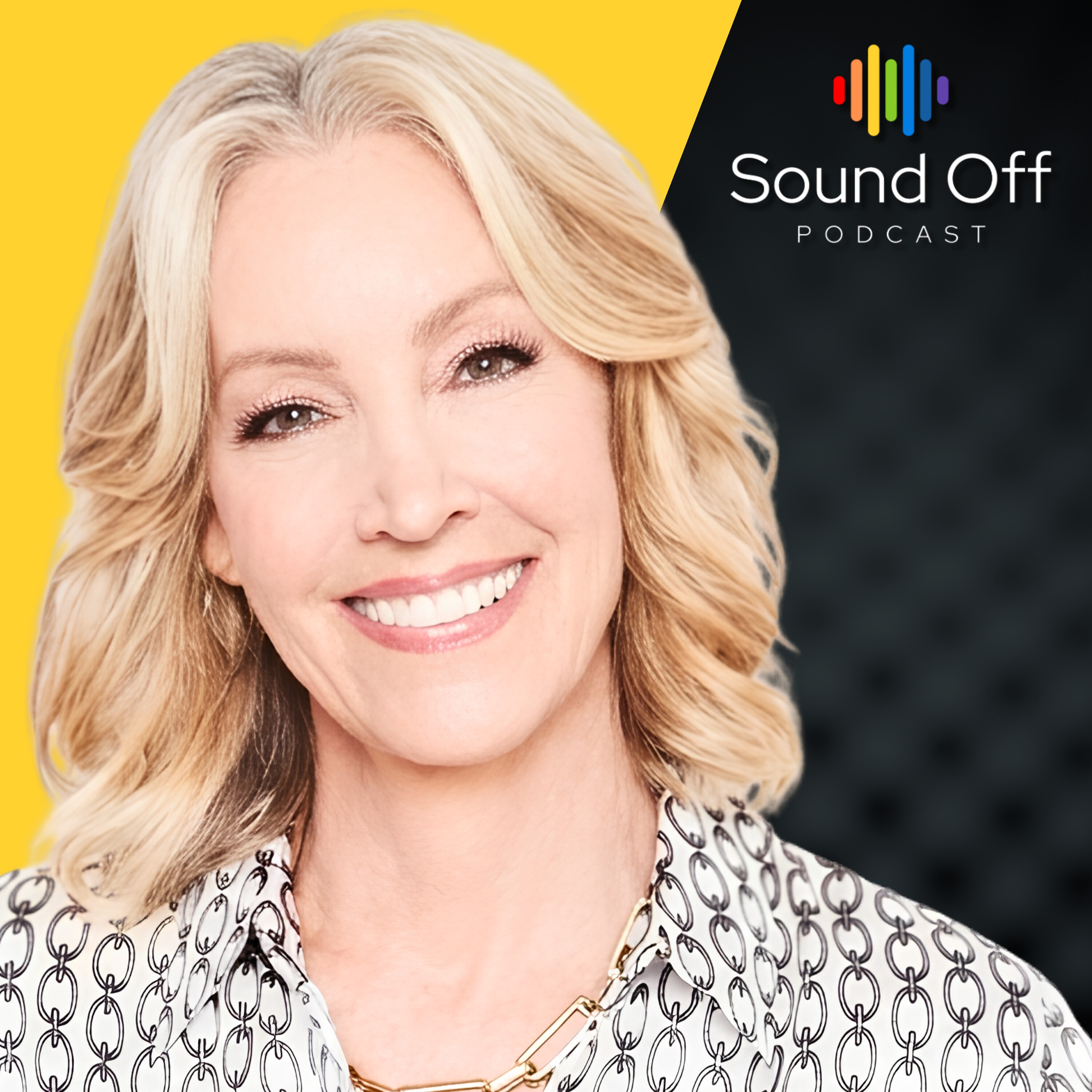
I am joined by veteran Canadian broadcaster Lynda Steele to trace her four-decade journey across TV, radio, and now podcasting. Lynda recalls growing up in Hinton, Alberta, having no clear career path, and how government-funded aptitude testing unexpectedly pointed her to broadcast journalism. She shares early newsroom stories from CKVU in Vancouver and ITV/Global Edmonton, including covering major events like the 1987 Edmonton tornado and the day Wayne Gretzky was traded, and reflects on how technology—or the lack of it—shaped coverage.

 Apple Podcasts
 Spotify
 iHeartRadio
 Amazon Music
 Lynda contrasts the cultures of Edmonton and Vancouver, talks candidly about transitioning to talk radio at CKNW, and the intense pressure of hosting a four-hour daily show while dealing with listener backlash, especially as a woman in a male-skewing talk format. She also unpacks declining trust in media, political polarization, and how Trump-era “fake news” rhetoric bled into Canada. Finally, Lynda discusses her current podcast Change My Mind, co-hosted with Melanie Nagy, where she leans into curiosity, vulnerability, and open-minded conversations that can genuinely shift perspectives.
You can find Lynda’s podcast by searching for Change My Mind here....
Please sign up for the SOUNDING OFF Newsletter. All the things that went unsaid on the show.
Also we added the Sound Off Podcast to the The Open Podcast Prefix Project (OP3) A free and open-source podcast prefix analytics service committed to open data and listener privacy. You can be a nosey parker by checking out our downloads here.
Tara Sands (Voiceover) 0:02
The Sound Off podcast, the show about podcast and broadcast starts now.
Matt Cundill 0:13
Today it's one of Canada's most respected broadcasters. For more than four decades, Linda Steele has built a remarkable career across television, radio, and now digital media. A graduate of BCIT's broadcast journalism program, she became a familiar and trusted voice in Edmonton before moving to Vancouver, where her listeners know her from CAN W, CTV, and most recently Czech TV Steele and Vance. Along the way, she's earned countless awards for journalism, community service, and storytelling, while proving that great broadcasters can thrive across every platform. Linda has seen the media business evolve from appointment television to podcasts, streaming, social media, and she is one of those few people who have navigated those changes successfully. And now, Linda Steele joins me from Vancouver. Linda, why did you want to become a broadcaster?
Lynda Steele 1:09
Why did I want to become a broadcaster? That's a weird long story, because I didn't really know what I was going to do. I grew up in a small town, Hinton, Alberta, the foothills of the Rockies. I thought you could be a teacher, or you could work in a bank, or you could get married and have kids, and that was kind of my option list. So, it didn't occur to me that I could be in broadcasting, coming from a small town, and it's too long of a story, but I'll just tell you that when I was laid off in BC, I found that the BUC government was offering aptitude testing for people to sort of steer them back in the right direction, and this was three days, eight hours a day, talking with psychologists, writing all kinds of tests, and at the end they said we're going to analyze it, give you five career options that we guarantee success in, and I go, okay, I'm like 18 years old, and they came back and said broadcast journalism, and I was like, what is that? What? And they explained why it made sense for me. Love writing, love storytelling, don't like having a boss, like doing something different all the time, like meeting people, super curious, and it all just sort of came together in a package. I sat down at BCIT in my broadcast journalism class, the very first day, and had a eureka moment where I thought, this is exactly what I'm supposed to be doing with my life. Thank God.
Matt Cundill 2:31
Was it the storytelling? Was it the writing? Was it advocacy? It
Lynda Steele 2:35
was all of it, really. I mean, I was so young at the time that it wasn't even really a super deep interest in current affairs, because I was just a kid, and I was stupid, but it was more the idea of being creative, doing something different, being able to help people learning something new all the time, having a front row seat to history, just all those pieces of the life puzzle kind of came together in this one glorious mosaic, where I was like, yes, and I have loved literally almost every single day I would have done it for free. Is
Matt Cundill 3:10
the first job after BCIT? Is it is it reporter, and where is it?
Lynda Steele 3:15
Yes, so the first job actually we had the news director at CK View Television in Vancouver was teaching us in the beginning of our second year, and he, I went to him later and said, "Can I come work? I'll work for free. Can I go to the newsroom? I'll do anything. And they had a really strong staff association. He said, "You can't touch anything, but you can come in and you can just sit and observe. So, I thought I just wanted to be in the ecosystem around people who were doing this for a living, so I was there, and I would sit there all day, and my job was to watch the person who was doing research, like watching paint dry, but I was still so thrilled to be there, and one day the assignment editor was in a pickle, and he looked around, he said, "Steel, get out, you're going out to do some streeters with the camera guy, and it was like me, you know, and I thought, as we were driving to location, that people were looking in the car to see if it was somebody famous. I thought, oh my god, I have my first real assignment, and while I was gone, the head of the staff association came in and said, Where's Steele? And they said, Oh, you set her on an assignment, and before I got back, I was on the payroll, otherwise they were going to have a big labor dispute on their hands. So I ended up reporting for the 6o'clock news with one year of college under my belt, and they called me in every day, and I ended up just finishing by correspondence, which is crazy. Now
Matt Cundill 4:37
isn't it amazing what happens?
Lynda Steele 4:39
Yeah, because I had no idea what I was doing, and they would send me to, you know, a political thing, and I would think, okay, and have no idea what it meant, or what I was supposed to do, and just fake it till you make it, you know,
Matt Cundill 4:54
but you'll figure it out as a perfectly acceptable manual for going out and learning. Back then, it was,
Lynda Steele 5:02
it still is for me. I'm the idiot who gets a piece of technology or a new car, and I don't read the manual, I just start touching things and moving them around, and that's how I learn and figure it out. So, it kind of was a natural way for me to do it anyway, but it was pretty terrifying and exhilarating at the same time.
Matt Cundill 5:22
How is it that every news director has the same voice and talks to everybody the same way, which is you last name, get out there,
Lynda Steele 5:30
get out, because you're all faceless minions at one point, right? I mean, it was so hilarious. We had one desk in the newsroom that was elevated for people who were doing live hits, which was very rare in the day, and I sat below it, and we had the city hall reporter would sit above me, lording over me, yelling at me if I was picking up the phone the wrong way, and you didn't answer this, you didn't say it the right way, and he would bark and yell at me, and I was just like, yes, I'll do whatever I have to do, but honestly, it was just the thrill of a lifetime to be in a newsroom and actually doing the job for real, even if you didn't know what you were doing, was so exciting.
Matt Cundill 6:11
And by the middle of the 80s, you get to Edmonton. I'm sure you'd been to Edmonton before, but this time working at ITV, and ITV in the mid 80s was on a number of cable systems across Canada, so if you were in the Maritimes, a lot of cable systems carried ITV in Ontario as well. I mean, this was, I think, Canada's first true super station that was seen in more than just Edmonton.
Lynda Steele 6:35
Well, in fact, it was the first one up on The Bird, they used to say, so we had fans, you know, in far-flung places on islands, you know, in the Caribbean, and what have you. I remember Bill Matheson, who was the iconic weather guy at the time, and everybody loved Bill Matheson. He was actually voted the honorary mayor of some place that was like 1000s of miles away, because that was one of the few stations they could get via satellite, so the reach was intense, and that was such a fun, cool startup that was in the days of independent television, where a surgeon, an actual doctor, owned our station, and he was very intimidating, and sometimes he would walk in to the shop unannounced, you know, it'd be on the weekend, you'd have your feet up on the desk talking to somebody, they'd be like, "Oh my god, Dr. Allard is here, and you'd just be like, so afraid. But I'm actually from Edmonton, I was born there, so it was a coming back for me. But my girlfriend and I were both hired to come to ITV, and Dr. Allard was so worried about us because we were coming from the West Coast, and it was never been to winter, and he insisted on buying us fur coats to wear on the air. We're like, okay, and I had a little sheer beaver jacket that I would wear at ITV. This was obviously back in the day when people weren't going to throw red paint in your face for wearing animal fur, but it was a whole different era. I
Matt Cundill 8:02
mean, if you wore Animal Fur, you either played for the Oilers or worked at ITV,
Lynda Steele 8:06
exactly right, or the Eskimos
Matt Cundill 8:10
in those late 80s. By the way, how did the station do against CFRN and any other news that was on TV?
Lynda Steele 8:17
Well, this was back in the day where there were three TV stations, and that was it. So, CFRM was the news leader at the time, partially because they went right across the province, they had transmitters and ITV did not, so we had a satellite audience, they had the rural audience, so it got to the point where we were gaining on them, gaining, gaining, gaining, until we were winning the Edmonton market, so we were definitely number one in Edmonton, but they were number one across the province, and then we finally pushed them off their pedestal, but that's the way it goes, you know? Someone's number one forever, and the young upstart kind of crawls up the ladder and finally shoves them off, and I believe ITV, well, global now, global Edmonton is still number one with a bullet, so we were all just a little part of history, but when we switched, I remember when the news director of the day told us, guess what, ITV is turning into global, and everybody was like, no, it's a terrible idea, because the brand was so strong, ITV was iconic, it was a little cartoony in its branding, the kids loved it. It was very, very local, and we were told you by Monday morning everyone come in, and with anything that had the branding of ITV on it, any jacket, any anything you had to bring to the office and leave in a heap, and you were never allowed to ever wear it again. And then that Monday we flipped, and we were global, and we weren't allowed to tell the audience, it was all a big secret, and so on the Monday, the audience was like, "What the hell is global? What, who are what's going on? Where's the music? I don't like the graphics. And that first year, we took a bubble, and the ratings dropped down until people just got used to it, because audiences hate change. Oh. Oh, I've seen this before with so many radio stations, where you know we're cool, we're cool. Oh, wait, we're not cool anymore, we're now Bob. But we gave you the T-shirt last week, and you thought it was cool, and now here's Bob. And apparently, yeah, we were just joking last week. But here's the thing, radio, and I always say this: radio is one of the broadcast mediums where you can flip a switch, bang, it's over. We're going from pop to jazz to all sports to whatever, and if you made the right choice and dropped in the right people, you could get some pretty quick success. TV news is not like that. There would be the new eight channel upstart, and they'd be like, we're going to be number one, because we're hipper and cooler, and, and more talented than you guys. I'm like, yeah. Well, maybe in 40 years. And sadly, TV - the way it works is it takes a minimum of a quarter century to get anywhere near like the top two or three. Radio, you can do it more quickly.
Matt Cundill 10:58
Yeah, TV habits are harder to break. I did notice, though, in radio they tried Global News Radio in Winnipeg and Vancouver, and I'm not sure if they stuck, because there's some iconic call letters like CJ OB and CK and W, which people, they're not gonna part with that either.
Lynda Steele 11:12
No, but they did move off the dial, being CK and W is 980 am, and I did the afternoon show there for about five and a half years, but they've switched recently and took over a stronger signal, bounced out the traffic station. Now it's, I think, 770 I don't know, I don't even know what it is. I still, in my head, think it's 980 you know. Give us a call at 604 blah blah blah, 9898 you know. But you're right, people get used to something, and they do not like it when you change anything. They don't even like it when you change the opening graphics.
Matt Cundill 11:45
Two late 80s things I want to ask you, where you were on those days. The first one was the Edmonton tornado, which is, I think, the last day of July 87
Lynda Steele 11:56
Yes, I remember it well. So it was a very junior cub reporter who was filling in on the assignment desk that day, and keep in mind this was an era where we didn't have cell phones, we didn't have computers, we had a ticker tape kind of running news chug chug chug going away in the background on one continuous roll of paper, and it was a long weekend, our 6o'clock news was being bounced by a football game, which we co-prod or co-aired with CBC, so we had half of the staff. They were only filing for one show, and by like 2o'clock in the afternoon, when it was getting stormy and dark out, people said, "Okay, I'm done my piece, you know, as long weekend, do you need any help? I'm like, "No, no, go, you're good. So I'm sitting in the newsroom almost by myself when the phones start to ring, and someone's saying, "Yeah, there's something's going on over on the north side, and oh, something's happening over here, and "Oh, there's a big storm, and this storm moved in with hail, like as big as golf balls, almost, which battered the crap out of my car, which was in the parking lot at ITV, and we didn't know what was going on, because it just wasn't an era where you could get any kind of quick eyes on anything. So, our camera guys had CB radios, and we sent our senior guy out to one location, another guy out to another, and a half hour, 45 minutes later, they were like radio back in, saying, I haven't even moved, I'm stuck at the light, and finally had to go up and over, following ambulances and driving behind them to get to the scene. We still didn't know what had happened until our senior camera guy came in, Hank Iames, and he was the kind of person who wasn't prone to hyperbole, and he just said something really big is going on, and he hands us a tape, and we're all standing in the edit bay, and they shove in this old giant three quarter inch tape, and we're all going like, what the hell is going on? We still didn't even know what had caused it, because the tornado had touched down and just ripped a swath through Edmonton, and when we finally realized what was going on, we were trying to call back in reporters and cameramen, and you can't reach people on a long weekend, I didn't get out of there until after midnight, and I remember walking out the back door, and we had a little pub in the parking lot next to us at ITV, and everybody was drinking and having fun, and I was thinking, you people don't realize that a whole bunch of people died in this horrific event that a lot of people weren't even aware had happened, so I remember that day well, because people criticized as you should have done this, you should have done that, and was like, hey, you know what, we didn't have control of our own airwaves, CBC did, I didn't know what I was doing, I was a kid working the assignment desk, and we had no staff, so it was an instructive moment in my media career, but holy crap, that was that was something.
Matt Cundill 14:44
Did anything change after that in the way was reporting or emergencies or news gathering? Did anything change?
Lynda Steele 14:52
You know, I think that there were a million discussions and pointing fingers, and whose fault was it? We should have done this and could have done something better and. And yeah, I mean, we had more discussions about who would you call and what would you do, but it had never happened before at the station. I don't know necessarily that it happened. It kind of happened again. I had left to another station to CBC, and then came back and was anchoring at Global when Miss Deja Vu, there was the Pine Lake tornado, which was devastating. A bunch of people killed near a red deer, and I'm like, okay, I've seen this movie before, we need to do this, we need to do that. And our 6o'clock producer was like, no, no, it's not a big deal, let's just leave it, we'll wait, and was like, we're not waiting, we know there's a tornado, there's dead, well, let's get someone on the road right now, and he was kind of pissed off at me for taking over, but I'm thinking I've seen this before, and I learned a big lesson about how we should have handled it, and so, yeah, it should have been, but a lot of it was the lack of technology, you know, I remember the day we got the first cell phones, it was those gigantic bricks that were super heavy and would take up your entire purse, you know, but we didn't even have that.
Matt Cundill 16:04
You feel like you should be calling in Charlie for napalming,
Lynda Steele 16:08
right? Yeah, I mean, we just had nothing. So, when people think, oh, working in the news is so hard today, and was like, yeah, it was really hard back in the day too, when we didn't have access to computerized files or no background on complicated trials and the court person's sick and you've got to take it over. It was just a completely different era that was super fun and in some ways better, but is certainly the interest of efficiency and being quick and disseminating information and going live. We just didn't have the capability to do it then.
Matt Cundill 16:41
What about the day Gretzky was traded?
Lynda Steele 16:44
I did that story. Yeah, I mean, I'm a massive Oilers fan to this day. I've got my Oilers jersey, and was so excited watching them almost get to the cop in the last couple of years, but the day he was traded was devastating. I mean, it was like a day that Edmonton, it was bleak and black, and I remember him in his little frost-tipped blonde hair, dabbing his eyes. He was saying, "Mess, old mess, they wouldn't do this, and as he's crying, and we didn't find out until later that he knew, and I think he participated in the decision, but when he got married in Edmonton, and it was like the royal wedding, I mean, Gretzky was everything, it was iconic and a massive star, and to have him leave was absolutely a gut punch to everyone in Edmonton.
Matt Cundill 17:36
Yeah, and I mentioned those stories because those are the stories that people told me before I got, you know, to Edmonton in 1994 and I couldn't believe when you go up and down the dial, you already mentioned Bill Matheson, you know, who did an afternoon radio show on Chet, and then would go to work, and I said, these people are icons, this whole market is full of legends,
Lynda Steele 17:59
you know, the thing with Bill Matheson, anyone who knew of him, it frustrates me now, because I think news directors are too afraid to make the wrong choice when they're hiring an on-air person, because the stakes are too high, and there's a lot of money at stake in terms of getting good ratings, and then returning money to stakeholders, shareholders is what I'm looking for, so with Bill Matheson, I don't think he would have been hired in this era because he had funny dyed hair and badly fitting cheap suits, and and he had an interesting way about him, and he would bang his stick, and that's the weather for today, and he just was an individual, authentic, one of a kind sort of a guy, and people loved him, he was colorful and creative, and he knew his stuff, but these days nobody looked like Barbie and Ken on the air, you know, and he was, he was so amazing that he ended up having to come off the air because he was diagnosed with Alzheimer's, which was incredibly sad and stressful for everyone, but I remember he went to a home in Lethbridge, which is where he was from, and he didn't have money. The reason he didn't want to quit was even though he'd been diagnosed, was because he hadn't saved enough money. Typical media person blew all their money, and so they gave him ITV, gave him a vehicle that he had been driving, gave him a big buyout, just to sort of help him ease through into his care, and the nursing home said, "Well, you know, we can't. They said, "Well, Bill can only afford a shared room or just a very super tiny room, and they said, "Nope, this is Bill Matheson, we give him a one-bedroom suite, and we're going to eat the cost for it. So he was just the kind of guy that everybody loved.
Matt Cundill 19:44
I remember watching you anchor, and you had a particular style, and it was so direct, you would speak so directly to me, the viewer, that I was like, I'm getting it, it's at me, and you had a tone, and your tone would always match the urgency of. The story, am I right? And how did you learn all that?
Lynda Steele 20:04
Well, first of all, I absolutely was completely fascinated with everything we were doing, whether it was politics or a disaster or a health breakthrough or a movie star was in town. Everything we did was really, really interesting to me, and I was super curious, and I felt the weight of being invited into someone's living room or in their bedroom, you know. At night time, people watch the late news, and they're in their pajamas, and it's an intimate sort of a thing, where you've been invited in. And I remember many times in Edmonton, you really had to be on your best behavior, which was a good thing, and you could be at Safeway, just standing in the lineup, waiting, and someone would turn around, and they felt like they knew you, so they would bypass all of the, you know, awkward small talk, and go right to having an intense conversation, where people would reveal to me that their husband was dying of cancer and was in palliative care, and they didn't know what to do, and we would be standing there having this really amazing conversation, and then they would be gone, and I realized what a privilege it was that people felt that they knew you and understood you, and over time people would say, "Do you guys really like each other, meaning Gord and Claire and whoever the co-hosts were at the time? It was like, "Yeah, because I'm not Meryl Streep, and if you're watching every night, you'd be able to tell that we were faking it. We're not faking it, we're like a super tight team that has a lot of love and respect for each other. So, the fact that people picked that up and got it and trusted you, you had to hold that in your hand and go, man, that's pretty special. So, I actually took it really seriously, except for the times that I was not, and Gord was making me laugh like a buffoon on the air, being a complete idiot.
Matt Cundill 21:46
So, I didn't know that Gord played guitar until he had a CD, and I interviewed him, and we played the CD on the radio with the Bear, and he also had a motorcycle and loves to ride, has a beautiful leather jacket. What do I not know about you?
Lynda Steele 22:04
Oh my god. Well, I don't know. You see, it was funny because with Gord it was easy. It was almost cartoonish. He rides a motorcycle, and you know, he plays in a band. That's all I need to know. And it was like, okay, well, I don't have a motorcycle, I don't play in a band. So for me, what would you think about me? I don't know. I'm trying to think of all of a sudden I seem like the most boring person in the world, massive sports fan, absolute news junkie, love travel. Tried to get around to see as much of the world as I could, and have a bucket list of places to go now. Really into the sports, had a ton of friends, did lots of girls weekends, terrible cook. I mean, I don't know, you'd have to, you'd have to probe around to see what you think would be interesting about me.
Matt Cundill 22:50
Well, I know you like to try stuff,
Lynda Steele 22:52
a risk taker.
Matt Cundill 22:54
Well, you'd like to try stuff, and we're talking. This is why we're talking about this today, because I don't know what I'm going to do. I'm going to do journalism, you're going to do it on television, and I really want to ask you about working at CK and W and being on the radio, and what did you learn from that experience after so many years of doing the television?
Lynda Steele 23:12
I learned everything, and here was my mistake, I thought I've got the chops to do it, the broadcasting chops, the work ethic, the curiosity, I can do this job, so I sold them. Oh, I can absolutely do it. But I had only been in the Vancouver market for about four years, and when I went there, I was the consumer investigative reporter at CTV Vancouver with the franchise Steel on Your Side, and so that was fun, but it wasn't really what I wanted to do, and I was really a news junkie, so when the C can't W thing came up, I thought that's my job, I'm gonna do this. When I got it, what I didn't realize about it was that radio, the show at the time, was four hours live. I had one producer who was in her 20s, and she was worked her butt off, but that was it. That was our entire cast of characters was me and her, so I was doing a four hour live unscripted show without a safety net, and things are changing, and oh, now we're talking China, and how this has happened over here, and you had to have global knowledge of what was going on in the world, and I realized that when I was talking about BC stuff, my little kind of rolodex of knowledge was very thin. If I had done talk radio in Edmonton, it would have been way easier. So I found I had to deep dive everything because I didn't know the nuances. There's 23 mayors in this region, I didn't know all of their names, and so you couldn't fall back on that. And I found, honestly, the first couple of years I had cortisol just squirting out of my ears during the show as I was trying to not be exposed as a fraud for not knowing everything that I could possibly know about every subject. It wasn't until I kind of got through some of that that I realized, okay, I mean, the key. Was just to be curious, the radio, the demo for CKNW. Our main audience was white guys in their mid 50s, and they also tended to be more right wing, and they didn't think a woman should have her own show, and they were pretty critical at first, as you know, talking about people don't like change, you'd be on the air, flying a rocket ship, playing your audio, working the phone lines, talking to your, you know, watching the clock, doing 400 things at once, and all of a sudden you'd see on your laptop a message would float in, "You suck, you're going to be fired, I hate your gut, shut up, you don't know what you're talking about, and you're just trying to shake it off and keep going, you know. So there was a lot of criticism, and then you crest that hill eventually. So the people who thought I hated you, you were stupid, I didn't like you, you know, two years in, we're going like, oh my god, you're amazing, you're so good. So it was trying to sort of win the favor of people, but my hardest, my biggest obstacle was just not having the depth of knowledge about all things BC, and I didn't. I just, for some reason, didn't think that was going to hold me back. And it was challenging.
Tara Sands (Voiceover) 26:10
Sound design of the Sound Off podcast is inspired by Mega Tracks, the sound of entertainment, providing music and sound effects for radio podcasts and media professionals, Mega Tracks is your one-stop shop for library and custom tracks. Start your music search now at Mega tracks.com The Sounding Off newsletter, delivered free to your inbox, featuring mass media hacks, hot takes, and retakes. Sign up now at Sounding Off dot News.
Matt Cundill 26:44
I'm not sure what it is about those talk stations, but it does take about three years for you to be in the chair doing the job before they start to really love you. And then I think I know Leslie Primo put up with this a lot, and Dahlia Kurtz did too in Winnipeg, and I'm sure just about any female who's hosted on a talk radio show with, with a male skew, just it's like the comment section in YouTube, it's brutal.
Lynda Steele 27:10
Well, and the thing too is that you just, you finally realize I'm just not reading everything, you know, because you became, you had rhinoceros in by the end of it, but there was one guy, when I first started, when I was really stressed out, and just thinking, oh my god, why did I take this job? And he would email the station every morning at like 530 in the morning, this big long email about why Linda Steele sucks, and why she's terrible, and why you have to fire her. She sounds like a 95 year old woman, she's terrible. I just, I hate her guts, and then not only would send that to my boss and to me, we would cc every one of the talk show hosts at the station, so all my colleagues are getting to read this, and it got to the point where they had to actually go to it and block the guy from being able to send stuff in, so I'm not sure what it is about that little sliver of people who feel like their opinion is, you know, paramount, and that if they don't like you, surely to God, everyone else in the world hates your guts, but you know, whatever, I pushed through it, I endured, and I, I learned so much. Boy, was that ever like a crash course in BC politics, and who's who in the zoo, and what's interesting, and what do people want to talk about? It was every day learning and learning and learning, and meeting people, and having that, you know, access to the newsmakers was pretty exciting. Once I finally got over the terror of being on live radio,
Matt Cundill 28:37
so I understand what makes BC Radio hard. It is hard, and it is because of those reasons that you cited, but inversely on the other side of the coin. What makes Edmonton so special?
Lynda Steele 28:46
Oh, Edmonton and Vancouver, if we're going to compare the two cities, are very different. And I had a brief period of time where I had a co-host, and he thought it was really hilarious to insult and slag Edmonton at every opportunity. Oh, it's Dedmonton, and I would look at him like, dude, and we'd hit a commercial break, and I said, Why are you doing that? Oh, you just don't think it's funny. I was like, Okay, first of all, there's a ton of Edmontonians who live within our, you know, range and are catching our show, and in fact, a lot of Edmontonians who were listening online from Edmonton, so it's not funny, it's stupid. Have you ever been to Edmonton? No, I just think it's funny. Well, at one point he went to Edmonton, and he came back and said, "Oh my god, I didn't know how cool Edmonton was, and a lot of it is the people, and even now when I go back, I'm kind of mildly surprised you're standing by an elevator, whatever, and whoever you're standing next to, hey, oh, it's pretty nice though today, and you're having a conversation with them, and they don't know who I am anymore. I've been gone long enough that most people don't make the connection, but I think Edmonton has a lot of really down-to-earth people who are just hardworking, get her done kind of people who are just open, willing to have confidence. Stations with other people, I mean, I know that's a broad statement to make, but Vancouver is much more of a city where most people are not from here. Most people didn't grow up in Vancouver, most people came from all over the world, and so they're all kind of operating in silos. And I was at my first week in Vancouver, feeling nervous when I was working at CTV, stopped at a Starbucks on Robson Street in very busy downtown Vancouver, and a young woman looked at me, and she went, "Oh, Linda Steele, and I was like, "Hi. And she said, "Oh my god. She said, "I just moved here from Edmonton. She says, "I am so lonely, and I felt so scared being here. Suzanne, I saw you, and I thought, "Oh my god, this Linda Steele from Edmonton. She said, "What would you be okay if I hugged you? And I was like, "Oh man, give me a hug. I feel the same way I feel at sea here too. I feel like I don't know anyone. I feel lost and lonely. So the two of us hugged in the Starbucks, and off she went. I don't know, I just.. I love Edmonton. I will defend Edmonton. It's an affordable city. It's a beautiful city, and yeah, winter can be crappy, but rain can be crappy in Vancouver for four months too.
Matt Cundill 31:04
Tell me about the project you did with Jody Dance on Czech, because I didn't get a chance to catch it very often, for whatever reason, reception online, whatever.
Lynda Steele 31:16
Well, what that was was Czech television in Victoria had decided it wanted to expand its footprint, and it was looking to create some shows or host some shows out of Edmonton, and so we just got lucky enough to become one of those shows, and did like a once weekly one hour current affairs talk show that was a mix of, you know, playing the hits of things both locally, provincially, nationally, internationally, and also just some guests and a little bit of lighter stuff. It was kind of whatever we wanted it to be. We were producing our own show, which was both the blessing and the curse, because they didn't have a ton of money, so, oh, we don't need a producer, was like, "Oh, God, now we gotta produce the show, so it was a little bit of a shoestring budget, so to speak, but it didn't look like it, and we had a fabulous studio crew of people who were so talented that we were just really lucky to pull this off and ended up getting a really robust audience, so it was pretty, it was pretty fun. I enjoyed it.
Matt Cundill 32:19
What about journalism? When did it start to take on water, and when I say that, I mean lose trust with the mainstream, with the regular viewers. Like, what happened?
Lynda Steele 32:31
Well, my opinion is that around the era where Trump came on the scene and came down the golden escalator, and what have you, and his whole mantra has been if you say a lie often enough people will believe it. So he started in with the media, fake media, fake news, you know, you're the enemy of the people. And he said he did it. He actually told Lesley Stahl from 60 minutes. She said, Why do you always say to the media it's fake news and don't trust them, and you guys are terrible, and he said, Why say it? Because when you catch me doing something wrong, I can just say it's all bs. Didn't happen. It's all fake news. It's those shitty media people, and they believe it. And I think that that is to some degree largely true. That became an era where people started to get more politically polarized, ergo they were going down their own rabbit holes, and if you were telling them a story, a legitimate news story that didn't happen to be what they believed or what they wanted to believe, then it was fake news and it was bs. So I think that Trump helped launch a new era, and then the polarization of politics, which sort of crept over into Canada with the maple maggots a bit as well. It just became that people started to lose their ability to tell the difference between a news reporter, whose job is wham bam, thank you ma'am, just the facts and that's it, no bias, no opinion, and the talk show hosts and the op ed writers in the paper, they couldn't tell the difference anymore, so they would say, "Well, Linda Steele said that on C Can W, and she's biased, and therefore everyone who works in the newsroom is C Can W is also biased, and they're all fake news. You're like, "You realize that the talk show and the editorialists are paid for their opinion, and it used to be, because this is the way it always was in media. Nobody was confused by that. Nobody was angry about that. Nobody thought it was fake news, and you were biased. They accepted it. It got to the point when people were ramped up, and then you throw in sort of the Covid. Covid also really accelerated the fake news media stuff, because they didn't want to be told that you know you couldn't go to a restaurant or you couldn't fly or you had to get a vaccination or whatever, because we're relaying what the health officials are saying, so we ended up in an era where people started to not believe the media, not believe science, didn't believe in the justice system, didn't believe police thought politicians. All liars, and they like didn't believe anything, and that's a really dangerous place to be. And I think to myself, in the next pandemic, and there will be one in our lifetime, we're going to be in trouble, because nobody's going to believe anybody, nobody's going to say, but I don't want to do it, not going to do it, and we're going to be in a jackpot. I think
Matt Cundill 35:21
I think people who think this way don't understand how hard it is to be in media to begin with, because it would be a lot harder to get broadcasters to learn an agenda, an alleged agenda, than it would be to just have broadcasters broadcast and write the news path of least resistance. It's, it's not going to happen. You're not taking orders from anyone.
Lynda Steele 35:43
No, and the thing is that people think you are. So, here's the reality. The one and only time in my media career that I was told to manipulate or make a story lean a certain way was at ITV in Edmonton, when it was independently owned by the surgeon, Dr. Allard, and he was a big conservative supporter. And there was an election where I was the backup ledge reporter, and there was an election where the NDP performed in a very strong way, and we were all like, "Whoa, you know, I think the NDP had maybe had two seats, two or four, or whatever, and in this election ended up winning, I'm making this up, 1618 seats, so it was, it was pretty astonishing, and so that was telling you that people were sending a message to the Conservative government of the day that we're going to hold your feet to the fire and we're not happy with the way things are going. So my job was to do the opposition. How did they do? My story was how the NDP performed, and I was called into a meeting with the news director, who said Dr. Ellard just got off the phone with Dr. Ellard, and he wants to remind you that they still, the Conservatives, still have a majority, and this is not a big deal, and you are not to make a big deal of it, and I'm like 25 and I'm, you know, new into the thing, and I'm thinking this doesn't seem right, but what I didn't feel like I had any power to push back. But after that, when people thought that the Asper family had at the time owned global, so it turned into Global. Oh, the Aspers are liberals, so you're all liberals. Everyone in the newsroom is liberal. It was like that is just not the way it works, but people like to simplify things, and they think in my little cartoon world everything is black and white, right, wrong, up and down, and so they just assume that what they've heard is true, and therefore you're all liberals. In my experience, newsrooms are an ecosystem, just like if you pulled 50 people off the street, they'd probably have x number of them are liberals, x number of them are conservatives, and the rest are wherever else. It just isn't true that we're all group think walking lock step, you know, the same direction. But it has become an era where people just don't trust anything
Matt Cundill 37:58
coming from the world of I'm going to try anything. Let's see what happens when we do this. Tell me about your experience in podcasting. What do you think of it? Are you having fun?
Lynda Steele 38:07
Oh goodness, I am having fun. It was a learning curve, though, because when you're in media for decades, you have the luxury of having really talented technicians who can do all the crappy technical stuff that you don't know how to do, so if something's not working at editing, it's not my problem, someone else is going to fix it, and I have my specific job. So that was the main thing, was trying to figure out. Okay, how do you do a podcast? We need a platform. Oh, I know someone who's doing a podcast, what are they doing? And just meeting a bunch of people, and trying to sort it out. So, we are our own tech people, and my partner in this podcast venture is Melanie Nagy, and she was the BC bureau chief for the CTV National, and we worked in the same newsroom. She now lives on island and is in working for a university, but last summer we were sitting there having a glass of wine in Vancouver, and both of us going, yeah, you know, we're needing to scratch the media itch again, and feeling like, oh, I miss it. Why don't we do a podcast? So it took us almost a year to sort of make that happen, and we're learning it's a big learning curve, and in the beginning it was challenging. We had a couple of very challenging edits that we thought, okay, we're doing everything right. No, this is not right. This edit that should have taken an hour and a half is now taking three days, but really loving it. Podcasting is fun because you can be really authentic. My kind of four words from my mantra are authenticity, personality, vulnerability, and storytelling, and I kind of try to bring that and just be me in every podcast, like it or not, you know. There, I'm sure there's tons of people who think I don't like her, and there's other people like, okay, this is interesting. So we're just trying to kind of tell stories and. A way that we feel are not being told by other people.
Matt Cundill 40:03
How did you find telling the news in an on-demand format versus doing it live? Because that is a very wide chasm, it's very, very different.
Lynda Steele 40:12
Yeah, well, what we're doing with our podcast is I was saying that my experience at C-CNW, coming from Alberta, where I grew up with, I remember Joe Clark, the former Prime Minister, standing on our doorstep in Hinton, you know, campaigning, and so my family were conservatives. I grew up, you know, in a conservative household, voted conservative a lot, not always. And so I brought that sensibility to Vancouver, which is very not conservative, and so in the kind of interest of just being as authentic as possible on the air, you're not trying to self-censor, you're just talking about how you feel, and a couple times people are like, email me, why don't you just move back to Alberta, then you know you're like a right-wing freak, and I'm thinking, really, I never thought I was, maybe to their ears they felt that I didn't understand them or something, but I think that what I learned was that over time I was exposed to different ideas, different politics, different people, different issues, and I learned by every guest I had at CK and W, and my yardsticks would move, and I would think, okay, I went into this conversation thinking this, feeling pretty confident that I thought this, and by the end of it, I thought, oh, okay, I didn't consider that, I didn't know that, that's interesting. It didn't always change my mind, but I did sometimes, and at the end of my experience in talk radio, I felt like I was a much more rounded person who wasn't so ideologically narrow. I thought I could change my mind about things I was proud of, that so that's what our podcast name is, Change My Mind, and the idea is that we're trying to go in and we're trying to model active healthy listening that's about curiosity and about being willing to change my opinion if you can bring it there, but it's not about I'm going to punch you in the face and we're gonna yell at each other and debate, and somebody has to win. It's not that it's about having an interesting guest who knows what they're talking about. I lay down my biases right off the bat. This is how I, what I think we have the guest, and then I debrief with my producer, Melanie, at the end, and she asked, like, what resonated, in what way did you change your mind? So I am trying to do that, is just really be open-minded with some pretty controversial subjects, and learn from every person that we invite on the podcast.
Matt Cundill 42:33
So you mentioned you're a longtime conservative, you mentioned Joe Clark. I'm in that same boat as well. I kind of enjoyed my time in Alberta under Ralph Klein, but that's not the same type of conservatism that's out there today. So, how do you survive in this world now?
Lynda Steele 42:50
Well, see, this is my thing, and I'm doing a podcast about conservatism and the changing face of it, because I'm looking at my home province of Alberta and going, what the hell is going on over there, folks? Like, what? What is happening? When did you get so dissatisfied with life? And I appreciate the fact that there's people who are feeling, you know, financially strapped or feeling like the liberals have been in power too long, and that their guy or gal would do things differently. And I just sense that there's an enormous amount of frustration, and that to my ears is manifesting itself in nastiness and attacks, and people I don't know is a little too Trumpian for me, and so I would be completely open to voting conservative in the future, but not if it's going to be this mean-spirited, because they have some good ideas, and you could argue that Carney has taken some of them. Good for him, he's moved not just more to the center, but more center right, which is gathering, you know, he's accessing a bigger pool of potential voters. So, yeah, I'm dismayed at what's happening with the Conservative Party, and I don't recognize it anymore, and I would like to see it, and hope that it will start, you know, moving back more to the center, or more to where Kearney is, and, and you know what, their turn is coming for sure. I would imagine, just based on the law of averages, that conservatives are going to be running Canada in the next federal cycle, I just.. I imagine that would happen regardless of what Kearney does, but it's weird.
Matt Cundill 44:28
I don't know. I mean, it's over. They're over four, and you know, if you did it again today, there'll be oh for the last five. You can't start the night, you know, counting your seats somewhere around Quebec City with eight, and then getting to Ontario, and thinking, okay, let it roll in. It just doesn't work that way. And you know, when you looked at one of those silly happiness charts that came out, and you look at the chart, and it ranked well, Quebecers are the happiest, followed by these four provinces that all happened to be out east, followed by these unhappy provinces. Six through 10 are all out west, and so the happiness is right in the Ottawa River. You can cut the country into two. This side is happy, the other side is unhappy. And where do the, where do the Conservatives today get all their votes on the unhappy side of the fence? I don't know.
Lynda Steele 45:18
I mean, the other problem too is that I think the unhappiness comes from not having power, and so feeling like decisions are made in the East all the time, often not so much now, necessarily. BC, in particular, and Alberta are starting to, you know, get more powerful. I'm encouraged to see some recent polls coming out that apparently even a third, a third of conservative voters think that Mark Carney is a better prime minister than Pierre Poilievre would be, and I don't know if that's true. If Poilievre would drop the apple-munching disrespectful, what station are you with? Yeah, you're all terrible fake news. I mean, he's.. he's.. I don't even know if that's actually the way he is, or if he's putting on an act, I'm not sure, but I don't like it.
Matt Cundill 46:06
Well, just the fact that we're not sure, you can't be not sure about somebody you're voting for, and Mark Carney is trucking 50 plus percent approval in Alberta, and I'm like, okay, well, that's interesting.
Lynda Steele 46:17
And you know what, the other thing too is that you know Kearney has been on a honeymoon, in my opinion. I think he's the right guy for this time, and by this time I mean we're in a global pickle with our biggest allies suddenly wanting to take us over and trying to economically crush us with tariffs and what have you, and Kearney is a guy who's got respect around the globe, maybe not fully, but he's able to make allies and make deals, and he's doing it. People say, "Oh, but he hasn't been in the House of Commons, he's missed question period the last 100 times, or he's missed it 100 times. I was like, "Yeah, that's because he is making deals around the world as quickly as he can, as strategically as he can, so that Canada can stand on its own feet and be able to get through this period of time where we can't trust and rely on America anymore, so he's the right person right now. I don't know, I think the conservatives, they've had some good people. I honestly, personally, I like Darren O'Toole. I thought the guy was decent, I thought he was mainstream enough for me. He had some ideas, he was even trying to talk about climate change, and he looked like he was going to win that election. And then when it looked like he wasn't, the party turned on him, and they flung him out the door, and off we got Andrew Scheer, I think. But I think that they need to have a bit of a post mortem if they can do it without being so in their heads and so inside their own little echo chamber to know how to broaden their appeal, and probably there will be millions of people contacting me saying screw off, Linda Steele, I don't believe in what you're saying, and you're an idiot, but that's just what I think.
Matt Cundill 48:00
Do you remember those days when the Conservatives used to be the party of climate change and the environment? There was a time, there was a time.
Lynda Steele 48:08
Well, you know, there was a time when Alberta was, you know, absolutely swimming in the dough. I was around when Ralph Klein created the, I can't remember what it's called him, the fund that he created to put all their billions of dollars from oil revenue, and I think a couple of different premiers have done that, and then they've gone in and tapped it and raped and pillaged it, and then you know Danielle Smith is going, "We don't have any money, and I was like, "Okay, come on, we taxpayers bought you a pipeline, and I'm not opposed to another pipeline personally, if it makes sense, and if they can get First Nations agreement, and I'm not sure they can, but you know, we'll see.
Matt Cundill 48:47
What's your favorite part about doing the podcast? Because it's not the editing,
Lynda Steele 48:52
no, it certainly is not the editing. I think it's just about being able to tap into that. The interview part of it is the most fun. I really try to just fully zone in on the person, and even though I've done my homework and I have an idea of where I want to go and things I want to talk about, I try to sort of put that away and go, okay, where are you going? Okay, we're and that's where it leads you to the money sometimes, and if you're trying to carefully follow your blueprint, you can not listen and not go and miss those sort of gem moments, so yeah, I try to, I think I could do a podcast a day until I was 100 and I would still think I need to learn more about this, I need to be a better interviewer, I need to find a better way to do this. I honestly feel like that's what's exciting about it, is always learning always broadening the mind.
Matt Cundill 49:43
Linda, thanks so much for doing this. Appreciate it. Thanks for coming on the show.
Lynda Steele 49:47
Super fun. Really enjoyed it.
Tara Sands (Voiceover) 49:54
Another Sound Off Media Company podcast,
Unknown Speaker 49:57
you. You know.