Dami Dawson: Has Radio in Nigeria Lost Its Soul?
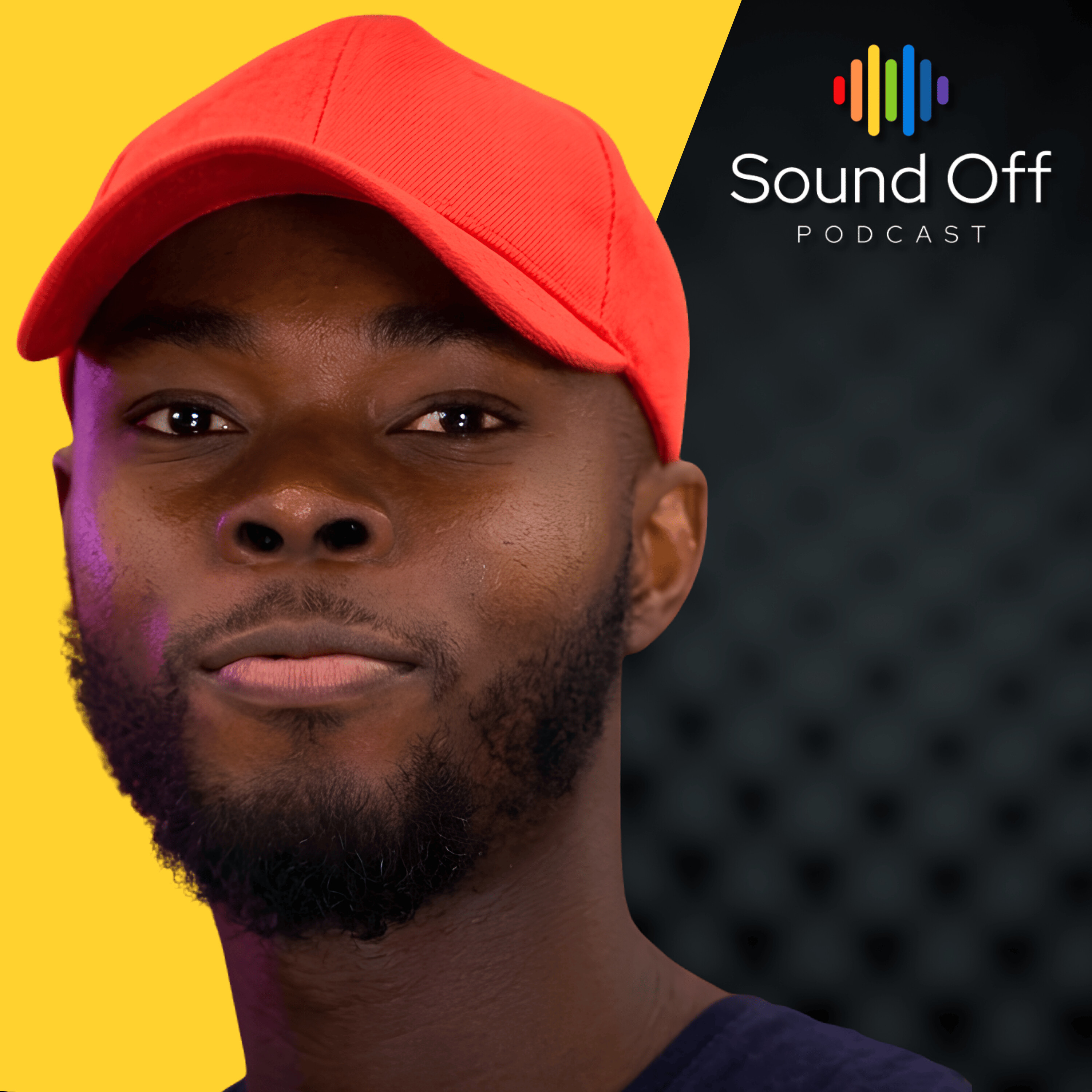
Nigeria has consistently been one of the top five countries listening to this podcast. With so much great English-language radio being made there, I wanted to hear more about what’s working—and what’s changing.

 Apple Podcasts

 Spotify

 iHeartRadio

 Amazon Music
Dami Dawson is an award-winning writer and new media executive based in Lagos. Dami’s career has taken him from radio into television and digital media, including his work at Pulse and now TVC Communications. He also manages Rewind 107.9 FM, “where nostalgia lives.”
We explore what it’s like to make radio in Nigeria in 2026, and I hear plenty of parallels with North America: questions about audience measurement, pressure to hire personalities based on social media followers, and the challenge of keeping experienced broadcasters behind the microphone.
Dami explains why conversation connects with Lagos listeners, how broadcasters can build a social audience without sacrificing substance, and what holds back emerging Nigerian creators. He also shares why he believes radio hasn’t died—it has lost its soul—and what it will take to bring that connection back.
Please sign up for the SOUNDING OFF Newsletter. All the things that went unsaid on the show.
Also we added the Sound Off Podcast to the The Open Podcast Prefix Project (OP3) A free and open-source podcast prefix analytics service committed to open data and listener privacy. You can be a nosey parker by checking out our downloads here. You can see how well this episode does in Nigeria.
Tara Sands (Voiceover) 0:02
The Sound Off podcast starts now.
Matt Cundill 0:09
Fun fact about this podcast: Nigeria has constantly been a top five country for the show. Makes sense. A lot of great English radio is made there, and we've had a few personalities on the show over the years. Today, though, Dammy Dawson joins us. He's an award-winning writer and new media exec in Lagos, Nigeria, and he's got a passion for content and films. And currently works at TBC Communications, home to a couple of radio stations, including Rewind 107.9, where nostalgia lives.
Audio Clip 0:42
We are rewind 107.9 FM.
Matt Cundill 0:48
Damn it in radio and branched out to other parts of the media landscape, including television, streaming, and social. Today, he shares with us what it's like to do radio in Nigeria in 2026. And as you'll hear, the stories of success and struggles are very similar to the ones experienced in North America. And now Demi Dawson joins us from Lagos, Nigeria. Why did you want to get into broadcasting?
Dami Dawson 1:15
First was, I mean, I thought I had a good voice for radio. I mean, I remember a lecturer of mine told me that you have a good voice for radio and you speak wild, so you should try at broadcasting. That was the first thing for me. Then I had to, you know, understand how it works and if it was something I wanted to do. But first was the voice, you know, and then had to take interest in gathering information and you know being the guy who disseminates information. So first, was a voice.
Matt Cundill 1:43
What was your first job in radio?
Dami Dawson 1:45
I was an intern. Yeah, I was an intern. Then I started doing research first. Did a lot of research for the radio presenters on AI at the time. You know, then I went on to going on the road to get like more information, so I was doing more video stuff like Vox Book, so I was recording stuff and you know getting them playback on video before I eventually was given you know a belt on radio to handle. It took quite a while, but yeah, eventually I got on air. So,
Matt Cundill 2:17
what's the latter look like? Like the star system for people on the radio in Nigeria. Do you have to go off to a smaller market and then move your way back to, like, for instance, you're in Lagos, which is a pretty big, you know, radio market in Nigeria. But do people start in smaller markets?
Dami Dawson 2:33
Not necessarily. Not necessarily. It depends on where you're stationed, where you live. If you happen to stay in another state. It's not Lego. Then you can walk your way up, you know. But I've been in Lagos all my life, so yeah, it was sort of easy for me. And I had a relationship with the station at the time, Cool FM. I had entered into a competition, you know, and I won. I got a another express pay trip to Lebanon, so I already had a relationship with them while I was in uni. So when I was doing uni, I did my youth corps. There's something called NYSE in Nigeria. It's something you do when you had a uni. You know, you sort of serve the country. You know, so I got a chance to work at the station. You know, for my youth corps, and everything just went on from there. So yeah, I was sort of privileged because I had a relationship with the station. For some other persons, it probably would take them a while to even get big to intern at the radio station because of the number of people that wanted to do radio at times. No, it's no longer you know a lot of people now. Back then, a lot of people wanted to work in radio. So now it's the the numbers pretty shrunk. Yeah.
Matt Cundill 3:45
How many stations are you competing against in Lagos?
Dami Dawson 3:48
Man, Lagos we have almost 80 stations. It's crazy, almost 80.
Matt Cundill 3:54
Yeah, I mean, you think there'd be a job for everyone with 80 stations?
Dami Dawson 3:58
I mean, well, this is not so easy because the people were on radio at the moment. You're not trying to leave, you know. I mean, you're not trying to retire, and they want to keep on doing radio. And it's a good thing for us because we had a chance to learn a lot from them. And when I juxtapose the radio stations outside Nigeria, I see people doing radio for 2030, years, and they're still on strong. So the universe is not so big or wide for a lot of people to come in. You only come in if you sort of know someone, or if some luck or chance, you know, falls in you. So it's not so open to everybody. Yeah. What constitutes success for a radio brand in Nigeria? I could tell you, Nigeria, it is it is your position on the ratings. If you fall in the top five, then you probably be regarded as you know successful. So, how are ratings compiled? Yeah, so that is what I'm not exactly a fan of, especially in this part of the world in Nigeria. There's an agency called NPS. Media planning services in in Nigeria. They're the ones responsible for compiling the ratings for radio stations and TV stations in Nigeria. From what I understand, they get samples from people around to know you know which station they're listening to. That is what they use. I'm not privy to what the process is or what the science or technique is outside Nigeria, but yeah, as far as NPS is concerned in Nigeria, that is what they do: sample a small size of people, and they sort of just figure out from that small size which station should be number one or two or three or four.
Matt Cundill 5:34
Yeah, so you'll be happy to know that that's not terribly different than other parts of North America.
Dami Dawson 5:39
Ah, fair enough, fair enough.
Matt Cundill 5:41
I mean, you know, many different ways to count, and and I know you worked at Pulse.
Dami Dawson 5:46
Yes, I did.
Matt Cundill 5:48
Yeah, and and so I think this is a good example of a radio group, but also there's so much more that goes on inside, you know, Pulse. You know, you get your YouTubes and your TikToks, and you know, I think you were also talking about sort of building the audience through a funnel. So, walk me through that example or the current one that you're in now about building audience and going beyond radio. How is
Dami Dawson 6:12
it done? So, first is I've come to understand that audience in Nigeria are quite interesting set of people. Like, they're the choice or what they love could change, you know, in a minute. So what I try to do as much as possible is to keep up with them, and to know what they're, you know, reacting to at the moment. I currently work with TVC. TVC is one of the biggest TV stations in Nigeria. You know, it's Television Confermental, and I head the digital for the entertainment part of TVC, and I also manage the new media team. Now, what I I was brought there to do was to sort of piggyback off my success at Pulse, because Pulse is primarily digital, and what we did was to you know understand what people were messing with on the internet, and we sort of started creating stuff for them, so we tried two things at Pulse. We tried to create for the audience, and we tried to create what the audience wants. And what we realized is there's a chance for us to create stuff that audience could mess with or could you know consume, and there's a chance for us to also listen to the audience. But what we did for the most part was not try to be like an aggregator, like a number of blogs in Nigeria where you just pull up content that is not yours, where you just you know take content from different content creators and put it up on your page. We realized at some point that Instagram was cutting down on people who aggregate content and don't create content. So it was important for us to stack creating stuff that people want to you know consume. So there's there's a bit of the balance there, but you keep on testing. That's the thing about content. You're not. I mean, it could work today, and tomorrow is not working anymore. So you need to keep testing and to see what is working, and you enjoy the moment he walks for it. Money is no longer working. You have to, you know, listen to the audience and see what they are interested in. So for me, it is. You know, we keep testing stuff. We're not 100% sure that this is the direction to go, but at the moment, at certain moments, you know, in the chain, these certain directions that work, and we stick to it till it's no longer working.
Matt Cundill 8:12
So I'm going to ask you a couple of pain points when it comes to let's start with creators. What are some of the difficulties for creators in Nigeria? Is it internet? Is it access? Is it data? What is something that could really sort of affect the performance of a creator?
Dami Dawson 8:28
I mean, first would be internet is an issue. I think probably back to saying this part of Africa, it's either too expensive or it's not just efficient. You know, so that would be a major factor, a major problem. Another factor, another challenge would be the devices that they use. You know, a lot of them don't have like devices that can shoot stuff quite clearly. You know, and give good quality. So I've seen a number of good content. I mean, one of the things I did a post at the time was to help a lot of up and coming creators. You know, get some level of amplification on social media, because we had like a good following. At the time when I left Pulse, we had about almost 6 million followers on Instagram alone. So, what I also also introduced at the time was to see how I could help a number of up and coming creators who don't have the platform, who don't have the numbers, you know, get some projection on social media. What I noticed while checking through a number of the content is they have good stuff, but the quality is not good. Um, the sound is not good, you know. The direction, you know, the idea is great, but the put together, the execution sometimes don't land well, which is why why Apple's we sort of just create a space to help them, you know, put their content together well. So yeah, internet, good phones or you know devices that could shoot good stuff, and access could also be a challenge, which is why you know Paul's came in to help with that. But yeah, I think for for now, those ones are the major channel. Yeah, besides from the fact that everyone is doing factually everything, and it's no one focusing on a particular niche, so everyone sees something that. Working and want to jump in it.
Matt Cundill 10:02
What about? I mean, same question. And this time for a radio station. I mean, it's a radio station. All you need is a radio to listen to it. But inside the radio station, what are people saying about reaching an audience? What are some of the struggles to get there?
Dami Dawson 10:18
Well, number one would be when you have a bad signal, when your radio station can reach everywhere, it's a thing here in Lagos. You know, some of the things that we still struggle with: certain station push farther than they're supposed to push. You know, because they're trying to reach you know a fatter audience, and there's a deal with the Nigerian Broadcasting Commission here in Nigeria that says you cannot push a certain. There's a limit to what you can push, you know, as a radio station. But that would be number one because even if you have good stuff you're saying or you're pushing as a radio station, I can get you because of my location. So that is a major factor. Challenge rather. Another challenge would be the fact that the radio presenters or radio stations are just-they're working to keep alive. They're not working because they want to keep substance. You know, there's this thing to just keep on going. You know, I just want to keep you know broadcasting, regardless of what I'm broadcasting. So there's no proper checks on what is being said or what's being communicated. That's why we have a lot of stations playing a lot of music and playing more music and talking less. While I understand that that could be a format for a station where you have less talk and more music, but like I said in the video I put out recently, we need to understand the tough we're in. You know, we we are in Lagos, and a lot of Lagosians they love to talk. You know, which is why you'd see that the top stations in Lagos are talk stations, most of them.
Matt Cundill 11:40
So, who's making the decision to play more music instead of you know having more personalities connect with audience?
Dami Dawson 11:46
So, I mean, that is solely the mostly the general manager who, in most cases, don't have an idea of how radio works. They're mostly entertainment people. You know, they're not like radio people, also because they want to make money and they believe that when you play more music, there's a chance that you could get up in the ratings, which is just a misconception that a lot of people have, you know, because they don't understand properly how radio approaches, especially in Lagos. I could talk for Lagos. I can't exactly say for other states. I could talk for Lagos and Abuja because I worked in those two spaces. So there's a bit of Lagos that loves to listen to music, but in the age where a lot of cars are coming with Bluetooth and they can just play plays from their Spotify or Apple music, I'm not so sure that people want to except you're playing music that they cannot get on Spotify and Apple Music. Except that you know, but if you're doing the regular stuff, I've met with people with the audience. I've asked questions, and they would rather just play stuff from their Apple Music or Spotify than you know tune into a radio station playing music.
Matt Cundill 12:47
Yeah, and so you mentioned, oh well, general manager or management would make this decision, but those general managers, it doesn't sound like it's radio first environment. They come from different forms of broadcasting. We have that problem too in North America, and by the way, I I think that's a blown opportunity because you need to serve communities. I always thought you know Nigeria has many different communities. Like for instance, how many languages do you need to connect with in Lagos?
Dami Dawson 13:12
In Lagos, mostly English, Pigeon, you know, and maybe some Yoruba, some indigenous languages, you know, but mostly Lagos and mostly English and pidgin.
Matt Cundill 13:22
And you mentioned Apple. Do you know what percentage of people in Nigeria have Apple versus an Android? And
Dami Dawson 13:30
I mean, a lot of people in Nigeria do they use they use iPhones? So sort of maybe maybe like a class level, but iPhones are becoming the more you used you know mobile mobile phones in Nigeria, illegals, for instance. You know, a lot of people have iPhones. A lot of them, not a lot of people use the Samsungs and the likes. Maybe the lower class and maybe you know the very up class, like the ones who use the Z Fold or the Ultra series. You know, but yes, Android is pretty much more affordable. You know, for the low class people, so you see a lot of them using either Samsung or Techno or Infinex or Relax. You know, the middle class, a lot of them use iPhones.
Tara Sands (Voiceover) 14:10
Sound design of the Sound Off podcast is inspired by Megatrax, the sound of entertainment, providing music and sound effects for radio, podcasts, and media professionals. Megatracks is your one-stop shop for library and custom tracks. Start your music search now at Megatracks.com. The Sounding Off newsletter delivered free to your inbox, featuring Matt's media hacks, hot takes, and retakes. Sign up now at SoundingOff news.
Matt Cundill 14:43
What's your advice to personalities and social media? How can they best use social media to promote their radio brand, their personality, and the station?
Dami Dawson 14:53
I think the best way is to introduce what you do as a radio station to social media, and not to allow social media crowdwatch. Do on radio social media. I don't think should influence what you do on video. I think you should influence social media with what you do on video. I'll give you an example. If you are a talk station, now if you talk about politics, for instance, a station called Nigeria Info, one of the top four stations in Lagos, you know they talk a lot about politics and sports, and you know and all, what they could do is to help social media understand how people can get more information as far as politics is concerned. Not try to, you know, this is what social media, this is what is popular on social media. Let us talk about it, you know, because what we do on video is we give information, and as a level of facts and as a level of you know research that we've done. Social media don't do a lot of research. Just a lot of people just giving opinions. And when you come in as a radio station, you come in with some level of authority. You know, because people would assume that you know you know what you're saying. You're not just talking because you want to get the numbers. You know, so there's a chance for us to introduce conversations on social media, how it should be had, but then you can now your style of presentation, or not necessarily the design in terms of the video, in terms of how the video is being caught, how the video is being put together, can now appeal to the social media audiences. You know, you want to do like portrait shots, you want to have like text captions come up, you want to have like pictures, comments as you're talking. So, so for me, it's just ways where you could integrate social media into your programming. You know, but don't be too lost in the social media world that you lose substance because you're trying to compete with the guys on social media.
Matt Cundill 16:35
TVC Communications. You've got news outlets. You have to deliver news. We've got a lot of people who follow you. So tell me about the level of trust that your audience has with your news department and the news that you deliver, and how important it is. How it can be compromised, perhaps, because there's many places where you can lose trust very fast. So tell me about maintaining that trust.
Dami Dawson 16:58
So, so I think one CBC is a legacy company. It's been around for years. You know, just like you have in the U.S. you have the CNN, you have the Fox, and you have stations that are some are you know sort of I mean lack of a better word in bed with the president. Some are not. They don't really care about the president, so they call out the president on everything that he does wrong. You know, so we have we have similar situations in Nigeria. There's TEC. There's a rise, arises calling out the government, the current government every now and then. You know, TVC is sort of very familiar with the current government, so there's a limit to how much can be called out. You know, as far as the current government is concerned, and there is the channels, you know, who also sort of stands in between and tries to be as political as possible, you know. But for us, there's a level of trust that we have, you know, as a TV station first. But then people know that they might sort of not get some level of balance when it comes to conversation because of where we stand as far as the current government is concerned. But I mean, it is how it is in other parts of the world. You know, like I said before, the stations that are sort of built-not exactly built-but they sort of push certain agendas more than the other. You know, so what we try to do is to ensure that whatever we are reporting is facts. We might choose not to report everything, but we're reporting facts whenever we're reporting stuff. You know, and that for me is quite important, you know. But on social media, how that translates is we're particular about you know certain information we're giving out. Now we probably would not have answers to every question. Other stations might, but we stick to what we know, and we let you know that this is what we know. We're not trying to you know gather everything, but if we know, if we put out something on social media, we're telling you stuff that is actually in fact because we can get we can confirm it.
Matt Cundill 18:47
Why is there perception that radio is dead in Nigeria?
Dami Dawson 18:51
Well, I mean, radio is not dead in Nigeria. What I think is dead, like I said in my video, is radio has lost the soul. You know, radio's lost the spirit. When I got on radio some years ago, I wanted to go on radio because I loved the chance to communicate to a number of people from a particular space. And you sort of stood as a god. You know, I use the word god because people listen to you and they feel like you could help them in the situations they feel like if they have certain problems or challenges that could come to you. If you're not sure about a particular question or a particular fact, it could come to you. So you you had so much responsibility as a radio presenter back then. I saw them. I was just like, wow! Like the job you do is so important because whatever you say can make or mar someone, you know. But now it's a bit different, and people say that's changed with the era, but it's a bit different. A lot of people that we have on radio now don't understand the job, you know. They on radio because they have the voice. Now back then, I wanted to do broadcasting because I had the voice, but I also had to learn. I had to go to. School. I had to study mass communication. I had to major in broadcasting. I had to go to radio school. I had to go to journalism school. I had to do all these things, you know. But them now these days we have people that just have the accents. They can talk well. They have like very deep variable voices, and the radio stations are quick to put them on because then they can afford them now because these guys who've been on radio for years, who've done so well, are becoming too expensive. Now they can't afford them anymore, but they got to keep the station running. So I'm not just get someone that could talk like you. Maybe not so much substance, but I'll pay him less. You know, it's going to take. I mean, it's going to be a lot cheaper to run the station with you gone because you're charging a lot, you know. So that is the kind of radio we have now. A lot of them, when they talk, you know that they don't probably know what they're talking about, and you could tell when someone don't know what you're talking about, you know, as an audience. And that is the situation we have now in in Nigeria. So radio is not dead. I feel radio is still quite important, even though you know the likes of Spotify and streaming has calm, so it's made radio be redundant, especially as it comes to music or breaking of music. Back then, we're like gatekeepers, but now people don't really send radio anymore, so they could you know go to Spotify, they go to streaming platforms, and you know break their songs. Radio's not dead. I just feel like we need quite more intentional people, people who love the craft, because like I said before on my video, radio is not like a job where you just do to get paid at a 30 at the 31st or wherever, whenever you get your money. But back then, radio was a passion. It was it was a hobby. We loved to do it. You know, we went on air because we wanted to talk to people. You know, so now it's like I just do my talk, you know, for four hours every day, and I get paid on a 28. Yeah.
Matt Cundill 21:46
Do you think that there's too much focus then on getting the numbers for the social media platforms and not enough going into the craft of radio? Oh
Dami Dawson 21:55
yeah, absolutely, absolutely. Because a lot of brands would say now that they want to. They will check your social media platforms. How many followers do you have? Unfortunately, that's where we are now. So they check if you have more followers. There's a big chance they will work with you. So they're not. They're not exactly bothered with your substance on radio because they feel like your social media followings can push whatever product they put in on your platform. You know, and it's quite unfortunate because it was never this way, you know. Even radio radio stations now are employing people that have the numbers on social media. So now, to get on radio, you need to have a certain number of followers on social media, and it is crazy because a lot of us did radio back back then. We did radio when there was no social media. We made radio popular without social media. Now, a lot of us are not in tune with social media. You know, I sort of got to you know got into the space because I I was advancing myself. You know, I I got tired. You know, because I couldn't talk about stuff I want to talk about. You know, you you can't mention selling people's names. You can't call out people's BS. You know, you have to fantasize or fangirl everybody, and really got boring for me because the kind of way I grew up on was sort of different. So yeah, it's it's quite unfortunate, but it is what it is, I guess. Yeah, this is
Matt Cundill 23:12
the fun question at the very end where you get to. I'm going to give you two wishes, and you're going to get to change something about the regulators of Nigerian radio, and you're going to get to change your way that the ratings are compiled. How would you change the regulation, and how would you change the ratings?
Dami Dawson 23:28
So I think first for regulation would be let's get someone who understands radio lead the body or lead the agency. Someone who has leads radio over the years who understands radio of then and radio of now? Who understands the business of radio? Get someone like that to lead the commission. That way, I'm so sure that I mean, I'll give you an example. CBC at the time they have a radio station called Max FM. Now, Max FM used to be called Radio Continental. Now, a certain man from I think the U.S. His name is Andrew Hanlon. He's a white man. He came to Nigeria and he rebranded from Radio Continental to Mat FN. He was then the CEO of TVC Communications, and you could tell that he had some background or major background in radio with the sort of you know processes and the stuff he was doing. You know, with the rebrand, you know, with the with the programming, with everything, you could tell that he he would put creative over you know the business, because he understands that once the creative is good, the business would make sense, right? Now that happened at Max FM. My Max FM experienced some turnaround, some huge turnaround. Now, when you get someone like that who understands the business from the inside and the outside to lead the commercial, you'll see a major change because they will start to make like laws or start to make like lines that would ensure that radio is progressing and not regressing. But now most of the people you have, they are just you know friends or politicians, you know, who they just want to give like. A position, so you just stay there. You don't have to know anything about it, and it's it's a big problem, you know. And to answer your second question for the ratings, I honestly wish there was a way to know how many persons is listening to a radio station at a time. I wish there's a technology that can make that happen. I don't know if it's available anywhere in the world, but if it is, then we in Nigeria probably need to adopt it because I think it's quite unfair to judge the success of a radio station by just sampling 1015, people. The reason I say that is, if you sample 15 people in a particular place in Lagos, they would probably talk about the station that they could get clearly. You know, at that particular place in Lagos. You know, so it's kind of unfair to the over 70 stations that we have in Lagos. My station that I manage is called Rewind 107.9 FM. It's a it's an old school radio station because I grew up listening to old school songs, so I got a chance to manage the station. And since we started, a lot of persons have called in to ask, you know, where did you guys get your music from? You know, we haven't heard this song in a long time. You know, it's interesting for me, but it probably would not reflect on the ratings, to be honest, because we're a new station, and as a new station, you start from the very bottom before you start to climb up, and it might take a while to probably get in the top 20 or the top 30. I'm not even bothered with that because we, the way we sort of make money here, is the relationships we have with the brands, and not exactly what the number says on the ratings. But I'm more particular about ensuring that the programming works, you know the music works, the talk works. You know that's the most important thing for me. So a lot of people would not know rewind, you know, because we're new, we're just barely six months or so thereabout. But I can tell you that a lot of people don't listen to radio as much as they used to. But when you go on the MPH ratings, you see the same numbers month in month out, same numbers, nothing is reducing, even for the top stations, you know. So I think it's pretty unfair to use that to you know judge.
But if at all there's a technology that could ensure that, or I could see in real time how many persons are listening to a particular radio station, just like you can see or tell how many persons are on a particular website at a particular time, I don't know if there's a technology like that, but if there's one, then you know that would be my wish that it's get it gets adopted in Nigeria, and then we can actually see real real numbers. Yeah,
Matt Cundill 27:33
well, you may want to look at Canada. They just started a hybrid system, and I think they know it's not going to be perfect right away. It's a hybrid between streaming and you know the callout and the sampling that that you have, it may be that you might have to aggregate from a few different places in order to get the right answer. But that's called Radio Local Plus and
Dami Dawson 27:51
Radio Local Plus. Okay,
Matt Cundill 27:53
actually, you know what? If you go back two episodes, you can hear all about it in this podcast.
Dami Dawson 27:57
Ah, okay, okay, I will.
Matt Cundill 28:00
Dammy, thank you very much for being on the podcast. I really appreciate it. Thank you so much.
Tara Sands (Voiceover) 28:10
Another Sound Off Media Company podcast.