Chris Brunt: Radio's Digital Evolution
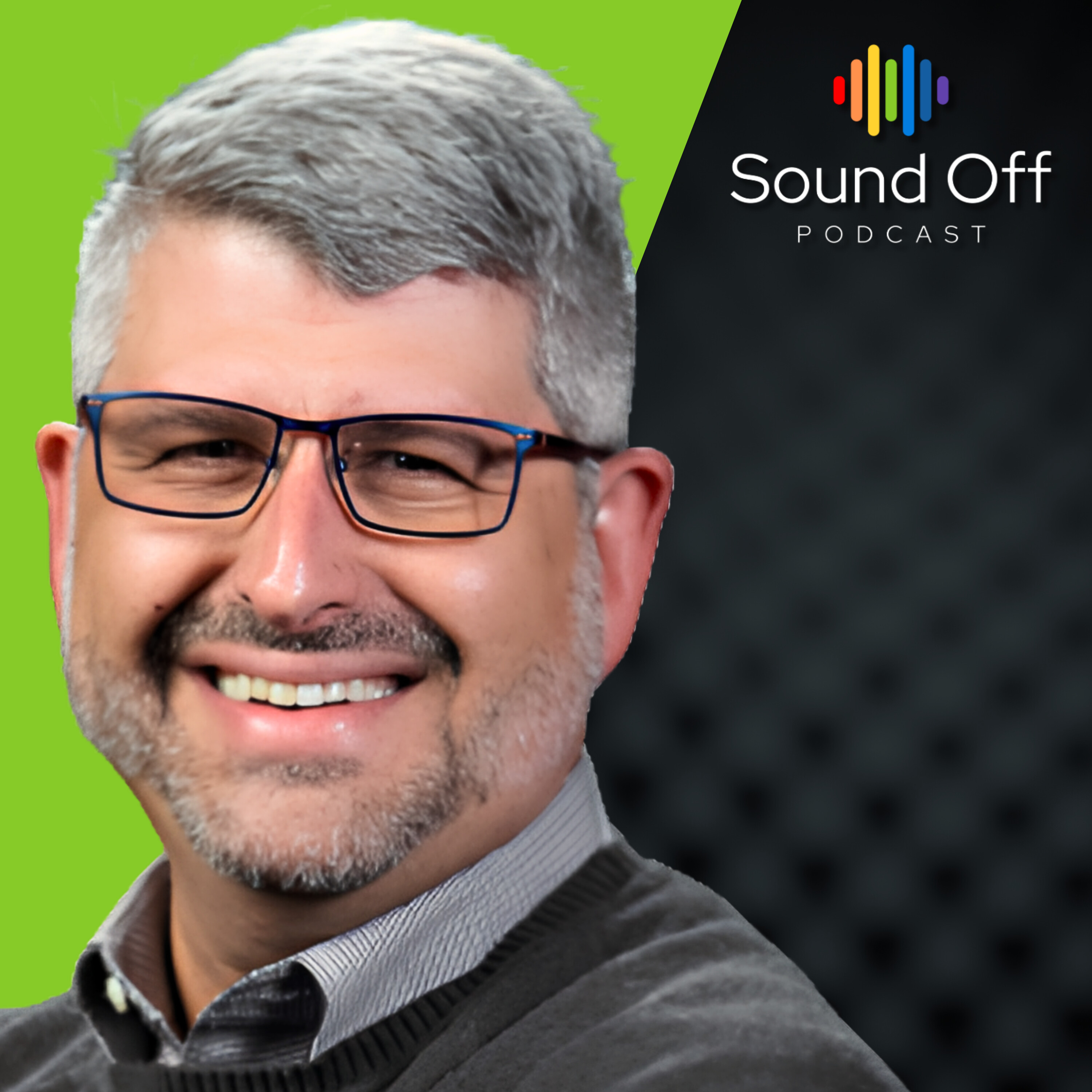
Chris Brunt of Jacobs Media joins me to talk about radio’s 30‑year struggle with digital—from those first clunky station websites and primitive email blasts to today’s sophisticated streaming, social, and video ecosystems.

 Apple Podcasts
 Spotify
 iHeartRadio
 Amazon Music
 Chris explains how programmatic audio has become a major revenue driver, even for public and non‑commercial stations, by fitting into the broader “digital audio” story agencies are eager to buy. We dig into Facebook and social media, stressing the importance of FTC-compliant monetization and using tools like Ads Manager to serve clients without letting algorithms choke off our own messaging.
And there's my favourite - the need to “be everywhere”: on apps, smart TVs, YouTube, and short‑form video, especially to reach under‑40 listeners who may not even own a radio. We talk about YouTube shorts, influencer-style content from talent, and why hyper‑local, community-focused video and podcasts can win even with modest follower counts. Chris also makes the case for stations building their own apps, embracing simple video setups, and prioritizing authentic, original digital content over perfection.
Did you know that Jacobs Media creates apps for radio stations?
This is another excellent resource if you are looking for some ideas for your station(s). Paul Jacobs and Chris Brunt with 10 Things We Learned Helping Radio Stations Generating Digital Revenue
Please sign up for the SOUNDING OFF Newsletter. All the things that went unsaid on the show.
Also we added the Sound Off Podcast to the The Open Podcast Prefix Project (OP3) A free and open-source podcast prefix analytics service committed to open data and listener privacy. You can be a nosey parker by checking out our downloads here.
Tara Sands (Voiceover) 00:02
The Sound Off podcast, the show about podcast and broadcast, starts now.
Matt Cundill 00:13
Today, we'll be talking about radio's digital evolution with someone who's been living it since the very beginning. The beginning, by the way, was like well over 30 years ago, but so often when we discuss radio and digital, there's a new strategy every month. Chris Brunt from Jacobs Media has seen it all-from the first clunky station websites and early streaming experiments to the rise of programmatic audio, social media, and now short-form video. We'll dig into what really works for radio in 2026 online. How stations can think strategically about apps, YouTube, and social. What being everywhere really looks like, and how to monetize digital without losing your station's identity. And now, Chris Brunt joins me from Detroit. How far back for you does it go with with digital? I'm trying to think. You know, radio station I was at. It was 30 years ago that we got our first web page, and so this conversation we're having it sounds all new and stuff. But radio has been wrestling with digital for 30 years now.
Chris Brunt 01:14
It really has. And I remember. I think. I think I was a program director at a alternative station in Lansing, Michigan, this must have been around 97 or so. You know, making about a cup of coffee and some trade pizza certificates as a salary. And I walk around the corner where the racket, the the racks are, to go to the transmitter, and I notice our engineer has these shiny new servers. I'm like, what? What are all these for? He says, oh, this weird company called Broadcast.com wants to put our radio streams on Yahoo, on their website. It wasn't Yahoo at that time. And I said, oh, well, that's interesting. And you know, obviously, that's what ended up, you know, making Mark Cuban a billionaire. It goes back that far, and I remember when we had our we had trade to get a website. And when I became a program director, the first thing I did was I shut off the website because I didn't think it had a whole value.
Matt Cundill 02:15
It's funny. That's generally our first reaction to to anything that's new is that we just don't see the value right away. I heard similar stories, by the way, by the way, about Facebook. But was it somebody in sales who maybe came along to you and said, "Hey, you know, we can sell some banner ads on the website. It
Chris Brunt 02:32
was actually a couple years later, and I had spent more time online. I had been online, and I got my first email address in the fall of '91 at the university I was at, and the only thing you could really do was go on using it message boards. And I remember like reading through the Simpsons message boards and seeing how the writers for the show were on that too, and interacting with people. But really, as far as like utility for a website and a radio station. I didn't really see it till probably about 99, maybe, and that's when Front Page had come out, and I could spend you know an hour a day updating the station's website, and you know you get 30 or 40 people on it. I'm like, yeah, that's a success, hooray! And then it wasn't really until I got into Detroit, which I I was at in 2000, where really we got to see the utility and really the functionality of having a robust website for radio stations.
Matt Cundill 03:30
Do you remember your email address in 91?
Chris Brunt 03:33
Yeah, it was. I do, as a matter of fact. It was the last five letters of my name and the first three letters, and then the university name.
Matt Cundill 03:41
Yeah, I had the same setup. I was 8806 90 1c at ace dot acadia u.ca.
Chris Brunt 03:50
Yeah, and as a matter of fact, the university they set these things up. Obviously, they were dynamically generated, and they were using that same cadence into the 2000s, and then they realized that there were all of these alumni that were still using their email addresses from 10 years ago, but they didn't know which email addresses they could shut off or not. So we had access to our university email for probably 15 years.
Matt Cundill 04:14
Outstanding.
Chris Brunt 04:16
Of course, 1991 email you had no you had no HTML email. You couldn't attach images. It was pretty much like you could send text messages, and that was about it.
Matt Cundill 04:27
I think the two most powerful things throughout the early parts of the 2000s was the the email blast or the newsletter, if you could capture those email addresses, and the web page. Those were really the two big selling points of what was digital back then, and maybe you could add a few things from from the staff, such as blogs.
Chris Brunt 04:46
Yeah, I mean, I remember when we were trying to set up DJs with blogs, and every DJ would have a blog, and I was running like 10 different instances of WordPress, and some DJs could do it, and some couldn't do it. Yeah. It was email blast, website, and blogs essentially. I mean, I was fortunate enough to work at a station where we had been streaming our stations, but like we had to do we had to do commercial insertion because of the SAG, the Screen Actors Guild, and the union rights on using voices on commercials, so we actually had a CD player that played, you know, guitar vamps, and the engineer rigged it so that when an electric pulse hit the stream, it would switch over to the CD that was running 24 hours a day during the commercial break. We'll be back and right after these these messages,
Matt Cundill 05:43
we didn't have that in Canada, but I found that B stream was pretty interesting. So, did anybody, or maybe even it's happening today, is anybody effectively using that space in the streaming side?
Chris Brunt 05:56
Yeah, they are now as programmatic ads have expanded into video and audio. I mean, the audio advertising space is very robust programatically, and most of the major markets are using it and making a good chunk of money at it. And we're starting to see even stations in the public space and the non-commercial space start to to utilize this inventory because there is so much of it, and because it's a nice adjunct to podcasting. And as everyone and the agencies love the bright, shiny glow of podcast advertising, it's an easy way to say this is digital audio too, and it can be sold programatically, so it ends up on the agency's dashboards, and it has that same glitter that podcasting has.
Matt Cundill 06:53
So, as somebody who does programmatic all day for his company, I probably should have known that answer.
Chris Brunt 07:00
No, well, I mean, you're on the podcasting side, so I mean, you see that, you know, when you see when when we listen to your podcast and we hear those pre rolls, the same it's essentially the same inventory, but it may come in different buckets when buyers are going into the programmatic dashboards at the trade desk or basis or any of the other ones.
Matt Cundill 07:20
I think the next era for for radio and digital was Facebook and social media. And again, I think we're talking about a rocky start. We're really not sure we want people to use this or be on it, or what are we doing here, and can we make money from
Chris Brunt 07:38
it? Yeah, and and that was a long way before we could make money at it, kind of at scale, and do it in a way where we were following in the United States. Stations need to follow the Federal Trade Commission guidelines on that, so they don't run into rules kind of akin to Pagola, and I mean that's the same thing that bloggers got and you know had to follow those rules too. When you saw mommy bloggers getting free baby carriages, and then oh, why are you getting this $10,000, you know, $1,500 baby carriage just for talking about it? But as far as Facebook goes on the radio side of things, I mean, remember it first started out only university students could get it, and then it was rolled out to the general public, and there really weren't brand pages at first. So really, once there were brand pages, you know, we kind of jumped on that right away, even before we could really monetize it. And then once we got into monetizing it and putting the the slash the hashtag ads behind those monetized messages realized that the algorithms that were in place could get in the way of the station messaging, and that if we were to actually run things through our account via Ad Manager, we could actually target on behalf of our clients more effectively, and it wouldn't get in the way of the morning show, who wanted to promote, you know, their great bit and post some audio or video of
Matt Cundill 09:08
it. I've been a proponent for 10 years of making sure that your podcast is everywhere, right down to you know wherever you get your podcast, which is the craziest tagline ever created ever. That really doesn't mean anything to anyone, but here we are. But by the same extension, I've noticed a lot of radio stations are really picking and choosing where the station is going to to be. We're going to be on this app. We're going to be on that app. Shouldn't radio stations adopt the we we're going to be everywhere? Well, it's just like
Chris Brunt 09:35
what Netflix and Pandora did at their beginnings. I mean, you could get you know those platforms on the strangest places at the beginning, and now you know when you first saw the iHeart app on your Roku TV, you're like, "Well, why is this here? But now you realize that there is a a double digit percentage of people that listen to radio or listen to podcasts on their television set. I'm a proponent, and everyone at Jacobs Media is a proponent. A being everywhere, because particularly with people under the age of 40 who don't have a radio in their house, where else are they going to experience your content? So seeing podcasts zoom through YouTube, I mean that's I would assume that's a a larger percentage for your audience as well, right?
Matt Cundill 10:21
No, no.
Chris Brunt 10:22
Okay, okay,
Matt Cundill 10:23
not yet. Yeah, we'll get about 25 views off this episode, but we're going to get you know 200 downloads or 300 downloads after a while. But I think one of the things is people see it on YouTube and then we'll go find it elsewhere. But to your point about iHeart, I mean, I in terms of being everywhere, like just like within the last three weeks, this podcast is now consumable on video on iHeart on the app.
Chris Brunt 10:52
I mean, and that's the way it needs to be, particularly for virality. I mean, I have you know, I'm I'm fortunate in that I have two teenagers at home, so you know I have this like this lab that I can observe how they're hearing and consuming pop culture, and it's always about it's always about the feed. It's never about well, I went to this website to learn about this. It's like oh, this was in my feed.
Matt Cundill 11:16
Yeah, that's going to bring me to like how should radio stations really handle YouTube? Because you know, I started doing YouTube. I didn't like it. I can't imagine anybody wanting to like watch the two of us have this conversation right now. I've always thought this would be an audio thing, but people do like it. They like the ease and the accessibility of just you know quick search, finding what they want, or having it served up to them. But there's Facebook and X and all these choices that radio stations can make for which ones they want to put their eggs into for the you know in the digital basket. But YouTube, you got to have YouTube in some capacity. So what what's the role for YouTube at a radio station? If I'm doing programming or or digital sales, how do I look at YouTube? Well,
Chris Brunt 12:00
there's a there's a couple couple ways that we're thinking about it. One is from just promoting the show itself and doing shorts that get into users' feeds, and then of course those same shorts can populate Instagram and TikTok and other places as well, and that's independent of the revenue that they generate from being a content creator. The other thing we're thinking of is the revenue that they generate on their own, or being able to go out to clients, either as influencers and being able to use that morning show as an influencer, and with we'll call that the fifth hour of the morning show, you know, independent content that doesn't go on air, being able to go with influencers or just money that you get from those platforms for creating content that gets 10s of 1000s of views. But as you've talked about before, it takes a long time to develop revenue from these pieces of content. This isn't something that you turn on tomorrow and then oh, I'm getting $100 check every day from YouTube for you know the 50 people that are watching you know me crack an egg on on YouTube. It doesn't work that way. It takes time to build up, and you know it takes a lot of skills and finesse and editing to try to make something compelling for your audience.
Matt Cundill 13:26
So that's interesting because how are we going to measure that? And let's use Lansing as as an example. That if you know I'm going to create content and I want to be hyper local and just do Lansing things, I'm not going to get a lot of use necessarily from that, but I do think that that there's a ton of value in presenting, you know, local shorts because someone's going to type in Lansing. Stuff will be served locally to local people, but it may not get a lot of hits and and a lot of you know necessary feedback. So, how can we measure success by creating local content on YouTube or Instagram Reels.
Chris Brunt 14:05
It's it's a couple of different ways, and you know if you're trying to be the person with a million followers, you know the local influencer in Lansing may not be the way to do it. And there's nothing wrong with not having the million followers for that. That doesn't mean that you can't make an impact within your community with the followers that you have and the views that you have. But I mean, I've seen situations where people with 8000 or 9000 followers are able to get influencer marketing for local businesses because businesses need to get their message out to local communities. If you are a hardware store with three locations within the metro, you don't need people in Kansas City saying your your message. I mean, that's what it is. So I think the metric is. This is going to sound like a. Out, but it's not necessarily quantitative. There's qualitative involved with it as well. And back on the sales side of things, you know, when you talk about influencer marketing, it's what what's what drives sales. You know, what puts butts in seats, what creates door swings for the clients.
Matt Cundill 15:17
Yeah, I've I've got some local influencers, I guess, that I will follow, and they're just talking about some of the most mundane stuff. And it's, but it's the stuff I like. I know,
Chris Brunt 15:26
isn't it? Isn't it interesting?
Matt Cundill 15:29
Yeah, yeah. I mean, local politics. You know, who's running for dog catcher? I find I find that stuff you know rather fascinating, just because it's happening in my local neighborhood and it's being served to me now.
Chris Brunt 15:39
And it's really interesting too, because we're starting to see that in television in Michigan, where some of the chains are saying this person is the is on the beat of the suburbs on the west side of town. This person's only responsible for this suburb, which has like 50,000 people in it in Detroit. So you know, even though we're a market of four and a half million people, Joe Smith is your reporter for people in Dearborn, Michigan, and we're starting to see kind of that localism and that hyper localism because those reporters then are then going out and posting those on Insta and posting those things on YouTube and TikTok to get those hyper local audiences. So they're kind of, you know, taking take trying to take back where the influencers are.
Matt Cundill 16:23
Yeah, and the word influencers is really kind of messy. And I have I have an example, and that's a veteran broadcaster of you know 40 years on the radio was going off in my ear the other day about influencer culture and what's going on. And come follow me as we try the best pizza in this particular city, and I said, "You mean like you when you were 40 years ago, and you were reading and you were doing mattress ads on the radio and selling us mattress because it's the same thing. It is the exact same thing. Radio original influencers,
Chris Brunt 16:56
absolutely. I mean, live reads made a lot of DJs a lot of money for many years. The
Matt Cundill 17:02
term, though, is we have personalities on the air, and I don't want anyone to lose their personality. I just want you to go and do what you do and put it on video and make it a TikTok or make it a reel or make it a you know an Instagram live or something like that. It's okay to be a radio personality who does this, and I feel like when we say influencer, we have to make everybody into an influencer.
Chris Brunt 17:24
Yeah, and I think that's kind of the challenge of the of the younger generation being media buyers, and you know that bright shiny object syndrome, because you know there's a lot there are challenges when translating you know a scoped on air radio podcast into a into an online podcast as far as downloads go, and as far as getting agencies and advertisers to buy into it, they're like, "Oh, well, that's just the radio show you've put it online. And you know, sometimes the stuff doesn't translate as well. Does a second date update translate online as well as it does on air? I'm not sure that it does. So maybe it's a matter of finding an aspect of your personality that's original to to online that you can make digitally native.
Matt Cundill 18:10
What about the ascension of video? Because we've been talking a lot about this for last few minutes. But what was the moment for you when you realized that the shorts and the vertical video was really going to be important. I have it sort of around 2023 when we began to see it go up.
Chris Brunt 18:27
Yeah, it was definitely post COVID, and I think really when I started to see, you know, we had a couple DJs at the station I worked at who went viral a couple times, and then just started to. I mean, every video they got got 50,000 views, and he was, I mean, he's a great, he's a phenomenal personality. He's still on the air right now, and and I have all the respect for him in the world. But when I started to see the amount of traction he had on TikTok, and this was at the point in time when TikTok was still kind of a 12 to 24 year old thing. I'm like, this thing's got legs. I mean, the speed at which it moves is really going to be a problem for radio if we don't adjust how we do things.
Matt Cundill 19:14
How do we monetize all this? You listen. I'm only asking it, and I know it's a big question, but I know you get asked this all the time.
Chris Brunt 19:21
I do, and for small to medium market stations where they may not have the reach of, say, a New York City station or you know a Toronto station, it may be by having them sponsored locally by a small to medium sized business, and maybe if you can find a tack that is compatible with those businesses, you you know maybe it's a morning show host who's getting married and she's doing a whole series on her wedding, and you can get it sponsored by a bridal studio, or or one of those many people that cater. To people that are getting married, you know things like that. But also remember this too: that the advertising community has changed in 15 years, and this is even from your local store on Main Street to Procter and Gamble. That we've gone from saying, "Oh, your customers are 25 to 54 year olds, our audience is 25 to 54 year olds. We're going to put you on on air and online on everything, and it's just going to be a match to saying, "Well, we're going to right now. What the way it is is like we're going to find people with the intention of purchasing your product, and we're going to find the subsets of audiences, and we're going to place those ads only to the people in those subsets. So, if you're a top 40 station, yeah, we target 18 to 34 year old women, but we're only going to target to women who aren't married or who are engaged. And so, that's a major shift for for people who have been selling radio or selling any sort of traditional media over the last 15 years, that there needs to be additional parameters on that. Unless you're talking about the top of the funnel or a McDonald's or a Tim Hortons, so to speak, where 95% of the population needs to know about these about these businesses.
Tara Sands (Voiceover) 21:18
Sound design of the Sound Off podcast is inspired by Megatrax, the sound of entertainment, providing music and sound effects for radio, podcasts, and media professionals. Megatracks is your one-stop shop for library and custom tracks. Start your music search now at Megatracks.com. The Sounding Off newsletter delivered free to your inbox, featuring Matt's media hacks, hot takes, and retakes. Sign up now at SoundingOff.news.
Chris Brunt 21:51
What about the role of the radio station app? Should a station have an app? Absolutely, they should have an app to be able to own real estate on users' phones is essential, and there are aggregator apps. I mean, there are aggregator apps that I use all the time, and I use the iHeart app in the United States, and the Odyssey app, and the TuneIn app. But still, to control the user experience, and from a monetizable standpoint, the station app is the way to be because you don't have to worry about your station being buried amongst 15 other classic rock stations, or you don't have to worry about another another platform putting two pre rolls in front of your pre roll. So you can control the user experience more, and you don't have to worry about other things that are beyond your control, you can control the audience, and you can have that real estate so that it's one tap away instead of three.
Matt Cundill 22:48
If I own 10 radio stations, we'll call them medium market or small market stations, should the app be named after my particular company and all the stations live on there, or should I just get 10 different apps?
Chris Brunt 23:02
I think it depends on the situation. We have, you know, our sister company is Jake Apps, so we we host a you know hundreds of radio station apps, and the price for those apps. And I'm not trying to sell them right now, but I'm saying it's not like 10 years ago when you had to pay 1500 bucks a month for an app. The price has dropped considerably, and with the ability to sponsor that to the local business, you could be net positive on it pretty easily. And it's an easier it's an easier thing to have call to action on your on air product. So you know, just download our app at z93.com and go to the App Store and search for Z 93 instead of you know the Acme Radio Company, and then find us once you download
Matt Cundill 23:50
it. Yeah, and that's a great point for somebody who sits around all day and talks about the importance of RSS feeds and owning your website. Having your own app is is definitely something as well.
Chris Brunt 24:00
Yeah, and and think of it this way: to be able to have your sellers and the account executives at your company be able to easily explain something, you know, when they're going out and explaining programmatic sales, the first question that their clients say is, "Well, where will I be heard? And then that's a myriad of places, and the the answer is complicated. To be able to go to the client and say you're going to appear on the Z 93 app and you're going to be on the screen when the app loads and you need to get a pre roll 100% of the time or 25% of the time or 100,000 impressions a month is really easy to comprehend and easy to easier to sell. I
Matt Cundill 24:40
always like looking over the fence at success stories, and I know one of the big success stories out there is Buffalo Toronto Public Media, and some of the work that you've done with them and that they've come up with. What makes their digital strategy so successful?
Chris Brunt 24:55
Yeah, the you know we work really closely with Buffalo Toronto Public Media. And you know they own a commercial signal in Buffalo that reaches well into Ontario. They own a non-commercial station, which you know is still substantial, but I don't think it quite has the reach. It doesn't get across the Toronto Metro, like the other one does, and they have a PBS station, and the PBS station has like a million viewers in Toronto, so they straddle, you know, the river and Lake Ontario. So what they've been doing as radio stations and television stations and the public landscape in the United States, they've lost all of their their government U.S. government funding as of last year, so they're looking for new ways to bring money in while still being true to their mission. And it kind of reminds me of like how remember when CBC Radio was was adding commercials in about was it 10 or 15 years ago? Yeah, and so like you know these public stations and BBC is going to encounter this within a couple years too when voters have to determine what's going to happen with the TV tax. You know where do these stations go as you know there's there's more choices for users and Buffalo Toronto Public Media has taken the tact that we are going to stay true to our mission, but we're going to serve our underwriting clients in new ways that embraces digital, and then we're also going to put more content on digital platforms like YouTube. So what they've done is they've just completed a custom content series where they have a a person who bikes all the way across New York State, and they've posted that only on YouTube, and it's a it's a short form series. It's very engaging. You know, they stop along at all the different stops along the way, and it's it's like a PBS documentary for 2026. But then they've also got local sponsors in on that as well, so they've been able to monetize that, and then plus they get the YouTube money on that. So they're doing that on the content side. Also, they're taking their commercial frequency, which previously ran did not run commercials, and they're going to start running. I forgot what their term for it is. It's like commercial light. They're not going to sound like you know Crazy Eddie with you know screaming used car advertisements, but they are going to have calls to action on on the air, and they're going to have more descriptive advertising than they previously had, and they're going to make it hyper local with Friday night high school sports on it and local talk shows on it, so trying to be that source for that 30 to 50 year old FM listener that's looking for community in the Buffalo Toronto landscape.
Matt Cundill 27:54
There's that word community.
Chris Brunt 27:55
I know it's so strong and it's it's what people are looking for, and we see it particularly among Gen Z research, is that I mean that I read last week that Gen Zers are love to stand in line because they feel like they have community, and that's why the movies are going so strongly this year is because of community. But also Buffalo Toronto Public Media, I guess, in a longer answer to your to your question, is that they've really embraced an open mindset towards what they can do within their mission, and their underwriting department is starting to sell programmatic advertising to their underwriting clients. So, if they previously had someone who ran underwriting messages on their classical station for a retirement community, and was previously only targeting 55 plus people that were looking to move out of their homes and move into a retirement community. When that retirement community is looking to hire RNs, they are now servicing that client by selling Spotify ads to nurses in their 20s, and so expanding the reach of their underwriting, the way that advertisers are currently buying advertising, and of course that Spotify advertising doesn't say anything about Buffalo Toronto Public Media. It just says, "Hey, RNs, this retirement community is looking for for jobs, and they offer great benefits. And just go to retirementcommunity.com to apply today.
Matt Cundill 29:25
What can we learn from Christian Radio?
Chris Brunt 29:27
Christian Radio is in a very strong position right now because of their different ways they're they're able to you monetize their programming from user donations and I'll say memberships. That's more from a from a public radio world, but then they're also doing underwriting. If those underwriters, if they're on a commercial stick, they may run regular commercials, and being able to take that full spectrum. And what Christian radio does so well is community. You know they have they have researched their audience really well, and if you listen to one of those stations, and if you're not familiar with Christian radio, and I'm not sure of of how prominent it is in Canada, but in the United States, you know most markets have one or two Christian music radio stations. If you listen to them, it's an inspiring message, and many times you don't even realize that it's a Christian radio station. It's like we're helping you get through your day with positive messages, and I think that's the biggest thing that radio can take from that. That is like we're bringing you in and inviting you to be part of our community, and that's what leads to you know having those those high audience scores and getting listener donations, and then having those people go to the clients and say, "Oh yeah, I heard about you on you know this radio station.
Matt Cundill 30:57
You know, I was listening to CHVN; it was in Winnipeg and a Christian station, but it was an online news article about a regular news story that sort of brought me into the ecosystem. So when you say community, that could be news. You know that could be the things that are happening. You know in our community, and I think there is. And I've been saying this for years about podcasting. If you do a geo local podcasting podcast. This is an opportunity for you to own a piece of space in podcast that is that is yours. But it does go the same. I don't know that there's enough people doing you know local shorts. I don't know that there's enough people doing local news. We know that that there are news deserts out there everywhere, and I know we have been saying for years, radio, local, local, local, and I think that really does need to bleed into the digital stuff that we that we do now. I think that's that's a real opportunity that's out there.
Chris Brunt 31:53
I I think so too. You know, one of the top podcasts in Detroit is the former morning show guy from the radio station I used to work at in Detroit at the it's a Drew Lane show, I mean, and he and he has car dealerships as sponsors and has other major sponsors because he gets the downloads that he needs to get, but also because he has the following, and he's talking about local stuff. He's talking about stuff in the Detroit area, and I see a little bit of that in other places, but I don't necessarily see that in the short space. I'm starting to see a little bit of in the in the politics area, and like there's a lot of there's a lot of food bloggers that are you know saying, oh yeah, I ate here, and you know they had a great hamburger and the fries. Oh my gosh, these fries were great, but I'm not sure that that gets you an audience as as much as being truthful, because you can kind of see through the lines, and you see, oh, they're just doing this to get a free meal or a free massage at the spa.
Matt Cundill 32:55
Yeah, I think influencer culture in that sense is in decline because there can't possibly be the best pizza in Detroit done by five different people, and I think we probably would have heard about it as well because Detroit they like their pizza.
Chris Brunt 33:09
We like our pizza, and it shows if you if you walk around Detroit and see us.
Matt Cundill 33:15
You know, it's a little complicated for radio stations to just sort of jump right into the podcast space because you've got options. You could do catch up radio, which is where you can repurpose your morning show less your traffic and weather together and all that stuff, and maybe put that online. There's some success sometimes in there, depending on on the show. But when somebody comes to you and says, "What should we do podcasting wise? What are some of the opportunities that might be just in in plain sight.
Chris Brunt 33:43
You know, there's a lot of times with all digital content that where we say, you know, what's the specialty of the show, and how can we, you know, how can we capitalize on that? Is you know, can we, if you're doing a a dog bit or a you know, if you're doing something with Humane Society every week. Can you turn that into a Humane Society or an animal podcast, and then get user generated content into that? You know, and bring in like you know the local vet to talk about things. You that's one way to do it. Does that get you the the full audience that everyone that of your entire audience probably not. I mean, and for that, you know, it it really takes you know what does your station mean and why do people tune into it on the air and finding out how you can extend that to online, and and and that's a that's a tough thing to do, and it's a it's a tough thing to do, particularly when a lot of times radio station, you know, the morning show on the radio station is voice tracking afternoon drive at other radio stations around the around the town or around the country, and just to be able to have that free brain space to how am I going to make a successful digital pot, you know, a. Digital extension of what the morning show is, but more often than not, it needs to be original content for it to resonate.
Matt Cundill 35:06
Yeah, and the shelf life, of course. I mean, especially in in live radio, that cycle just goes through very very quickly. That by the time you get your podcast out, it's already partially dated. So I think to your point at the very end there, where you said you know make sure that it's original and separate and conducive to something that is a little bit more niche or in particular. I really love that. Where should a radio station start? What should they be looking at? If let's say they fell behind in digitally, let's say they weren't producing video, and they're probably somewhere back at 2023, and just really have a live stream. What should they be looking at, you know, to jump in to to get on the digital train?
Chris Brunt 35:46
I wouldn't let perfect get in the way of good. 10 years ago, if you wanted to put video video up, you know, you needed to spend five figures or maybe six figures on a video setup for your morning show, and you needed to get a tricaster, and you know you needed to have the important setup. Now you can get an owl, you know, one of those things that that automatically switches cameras on you for a few 100 bucks, and you can go live. You can edit, and not only that, but the quality expectations of the user are incredibly diminished, and I don't mean to say put out something that looks like crap, but I am saying that it doesn't need to look like, you know, it doesn't need to look like Scorsese for it to resonate. And in some instances, it provides more credibility when you're holding the phone in front of your face and talking to your audience like this than when you have three point lighting. Is
Matt Cundill 36:45
there credibility if I'm just holding like one of those little lav mics?
Chris Brunt 36:48
I don't understand that.
Matt Cundill 36:52
Well, you and I would not.
Chris Brunt 36:54
I mean, it
Matt Cundill 36:55
was actually a former program director actually put that on their on his Facebook and asked. It was Eric Samuels, by the way, who I worked with at the Bear in Edmonton. But he he wondered about this trend, and I said, I think it has to do with hands, and I think people are just not sure what to do with their hands when they're on a camera, and so holding the mic just feels like it they've got something to do.
Chris Brunt 37:20
I think so, and I also wonder: like, are their levels bad on their headphones, so they feel that they need to be talking more?
Matt Cundill 37:26
I mean, microphones really say a lot. If I we take away these microphones and and and our headphones, we're no longer doing a podcast. It's now just bad television on the iHeart app.
Chris Brunt 37:38
Yeah, I mean, I'm noticing you with that sure microphone, and I'm like, wow, that that's a great set.
Matt Cundill 37:43
Listen, if anybody wants to continue the conversation with you or connect with you, what are some of the things that you have that we can stay in touch with you with?
Chris Brunt 37:50
You know what? I do a newsletter that comes out every you know every week, sometimes every two weeks, depending on it, at JacobsMedia.com. Also, happy to talk with anyone and on LinkedIn or at chris@jacobsmedia.com.
Matt Cundill 38:05
Also, notice you have a Calendly too. We can schedule an appointment with you.
Chris Brunt 38:08
We do. I do have a Calendly. Yes, that's that's essential, and I love it. And it saved it saved me many many moments of grief every week.
Matt Cundill 38:17
Chris, thanks so much for taking the time. Good to get to know you, and and love your work.
Chris Brunt 38:21
Great to get to know you too. Thank you so much. Love your work too. Have a great weekend, and we'll talk soon.
Tara Sands (Voiceover) 38:30
Another Sound Off Media Company podcast.