
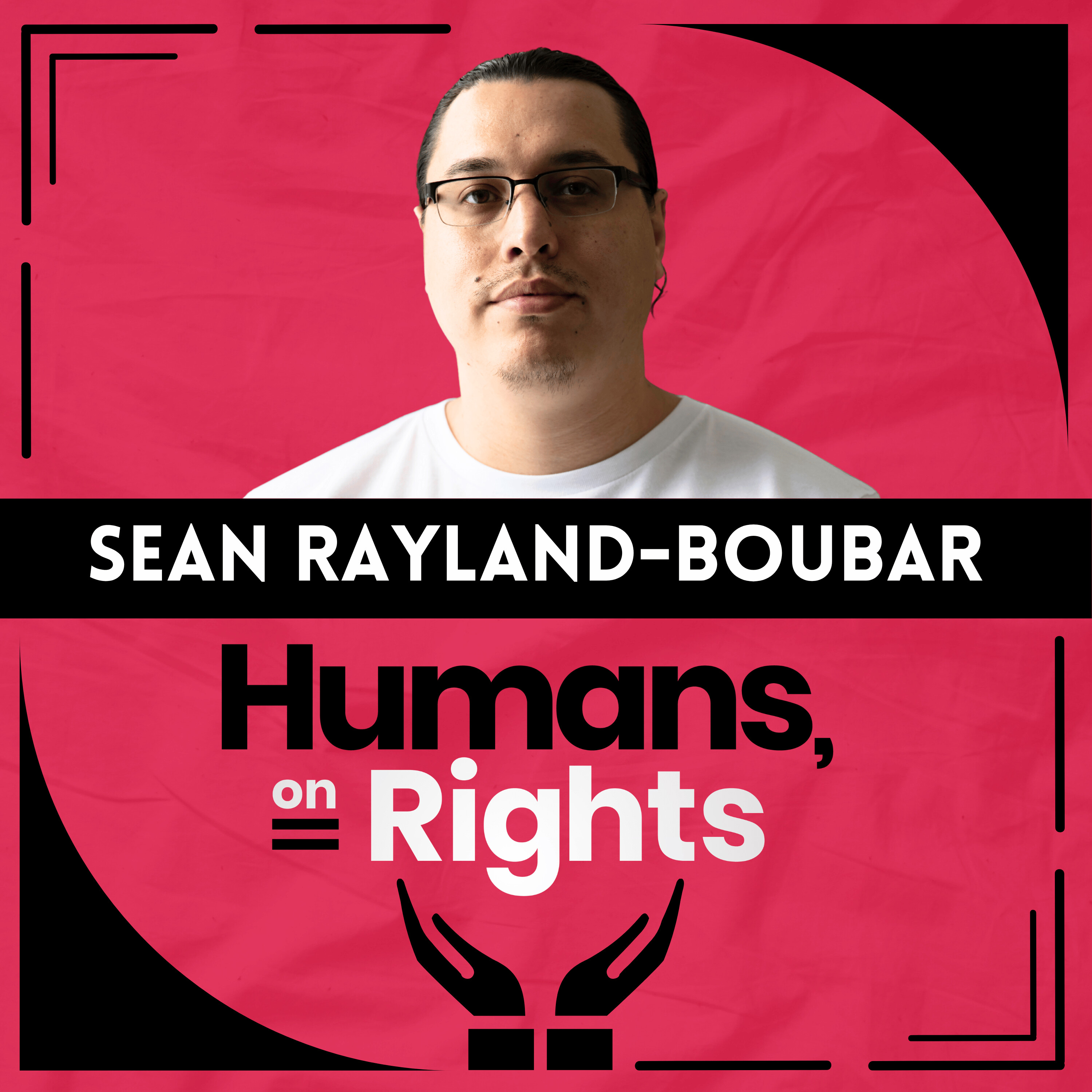
Sean Rayland-Boubar: From Incarceration to Red Rebel Armour

 Apple Podcasts

 Spotify

 Amazon Music

 iHeartRadio
After years in a gang, addiction and 17 months in custody, Sean Rayland-Boubar, an Anishinaabe entrepreneur from Sagkeeng First Nation, built Red Rebel Armour, a Winnipeg streetwear company that hires people leaving the justice system. He's giving others the second chance he had to fight for, while still facing many of the same barriers they do.
Sean tells Stuart why the gangs have always had one advantage over every employment program: they'll put you to work the day you get out. Red Rebel Armour is his attempt to match that low barrier to entry with work that leads somewhere better.
We're talking:
- Why transportation, not a criminal record, is often the biggest barrier to employment
- How flexibility and accountability work together in second-chance hiring
- How jail can feed gang recruitment instead of ending it
- Reconciliation, from treaty obligations to residential school denialism online
- The personal costs of being a cycle breaker
Sean also shares the story behind Red Rebel Armour's Every Child Matters design, which creates seasonal jobs each September and funds donations to local organizations.
He closes by reflecting on the documentary about his work with Elder Lionel Houston, with a message for anyone in prison who believes their life is over: "Whatever you're going through is just a season."
Stuart Murray 0:00
This podcast was recorded on the ancestral lands on Treaty One territory, the traditional territory of the Anishinaabe, Cree, Oji, Cree, Dakota, and the Dene peoples, and on the homeland of the Métis Nation.
Matt Cundill 0:20
This is Humans on Rights, a podcast advocating for the education of human rights. Here's your host, Stuart Murray.
Stuart Murray 0:30
Today on Humans on Rights, we're talking about second chances, indigenous identity, reconciliation, and the power of turning personal struggle into social change. My guest is Sean Rayland Bubar, an Anishinabe entrepreneur from Sagin First Nation and the founder of Winnipeg's Red Rebel Armor. Sean's own journey has taken him from incarceration, gangs, and addiction to becoming a social entrepreneur who uses his business to create employment and new opportunities for people returning from the criminal justice system. His story raises some profound human rights questions about dignity, discrimination, belonging, rehabilitation, and whether our society is prepared to give people a genuine second-and I mean a genuine second chance, Sean. Welcome to Humans on Rapes.
Sean Rayland-Boubar 1:24
Miguel, for having me. Boujou nebuli sabe in Disney cosmic gaze in Dodem. I said my name is Danny Sasquatch Man, and I'm from the Eagle Clan. And thanks, yeah, thanks again for having me. Glad to come and share.
Stuart Murray 1:36
Thanks so much, Sean. So, Sean, we're going to get into some a lot about your history, your background, currently what you're doing today, and the social entrepreneurship that you're doing, which is so important. But right now, just for people that are just sort of tuning in and sort of getting a sense, and who Sean's all about, what are you working on right now, Sean?
Sean Rayland-Boubar 1:53
I'm working on Red Ribbon Armor. We're trying to, you know, create those employment opportunities and things like that. You would think that that would be the hard work, right? You would think that finding people that are looking for a second chance is the hard piece, right? Because of all these stigmas in society, but in reality, it's finding the funding, it's creating the cash flow, it's creating the resources in order to carry out that work, and so that's a big part of what I do is just always either trying to find different grants, focusing on sales because we sell our own products online, you know, our own designs, and we also partner with other artists, things like that. And then also, I you know took a lot of personal risk in building red air bomb or taking out personal loans, and when I think of it from where I am now, is like if I could start over, if I had one chance to start over, I'd find a better way to fund it because I took so much personal risk. But I think at the same time that was needed in order to put the model out and bring that forth, right? And just like you touched on that space there, right? Is society even ready for people with second chances? So always coming to the community after after I finish school, and you know, learning more about the mechanics of social enterprise and bringing that out. It was. It's. I still face a lot of that. You know, I've been turned down for a lot of things because of my criminal history, because of that, and it's it's still there. You know what I mean. So it's like even though I'm helping people overcome some of those employment barriers on the entrepreneurship side, I'm still facing it and trying to find the the resources to do the work in a big way. But as it is right now, it's it works. Like the model works, you know. And I just want to build upon that? Just adding different things, different elements to it.
Stuart Murray 3:44
Yeah, no, and and I mean we're going to talk about your clothing line and and the entrepreneurship, but you know let's talk a little bit on the human rights perspective, Sean, if you don't mind. So because you've experienced the criminal justice system from the inside, I guess I'd ask the question: Is what do you believe society gets wrong about people who have been incarcerated, and what does a genuine human rights-based approach to that rehabilitation that you've gone through? What does that look like from your perspective?
Sean Rayland-Boubar 4:10
It's it's easy because jails are one one size fits all type of solution right now. But there's a lot of people coming into contact with the law for various reasons, right? Some of it's poverty, some of it's mental health. You know what I mean. So there's different, there's these different pieces, and I think I don't want to be that person that always says there needs to be this and there needs to be that. But we could find a different way of dealing with those things. You know what I mean. And when I'm thinking about it, especially when it comes to like indigenous issues with you know all the different barriers that someone's facing, you know it's more of like when you're born into poverty, you don't have too many choices, you know. And I always say this: like in the inner city, the industries that we have, there's the gangs, there's the drug trafficking, there's the sex trade. Those. Are there, and that's what you see growing up, and that's what you think is that-that's kind of the way to live. You see your family living like that, but having you know, like something like thinking about the good side and social enterprises. If people can see the good stuff, they could aspire to be that. You know what I mean? But if all you're seeing is the negative stuff, you're just you're just gonna go down there, you know, down that down that alley of it. And so, in terms of you know administering justice and things like that, yeah, there definitely needs to be a different approach. And I think the justice system and its inception, and even with police, like the Northwest Mounted Police, those institutions were created to keep us either on reserve, and if we left reserve, we would go to the institutions, right? Stony Mountain. So it's like we kind of need to rethink this whole thing of justice, right? It needs to be it needs to be just uprooted, and you know, I got I got some support from the Correctional Investigator of Canada at the time it was one of the books that I mentioned there in the form that I that I sent you.
Stuart Murray 6:06
Is this a book that had a profound impact on you, or is it the author, or both?
Sean Rayland-Boubar 6:10
Yeah, no, definitely the author. You know, reaching out to him, showing him the same painted to purpose video. You know, he wrote us a letter of recommendation. Like everything that you guys are everything that you guys are doing is what's needed. The book talks about advancing Section 81, so that's just you know reforming the the criminal justice system by prioritizing some of those community run healing lodges. And I think when we talk about those healing lodges and things like that too, it's the spiritual side, of course, is very important. That's always going to be the huge piece, and understanding and developing the two-eyed seeing, right? Understanding where we are now as indigenous people, and also recognizing, you know, seeing things from a European way of view too. You know what I mean? And so, like when I talk with some of my staff, it's like we used to do this, right? We used to we came from a self self sufficient economy. We used to do hunting. We used to be hunter gatherers, things like that. So now we're moving into this new economy where either need to be an employee or have entrepreneurship, right? But there's still some similarities there. But what I try to do is tie in our history with the way things are now. You know, when I when I work with staff too, so it's not like we're not trying to come out of what we've been through in an angry way and just being mad at the world. That's not a good way.
Stuart Murray 7:40
You talk about you know being angry-it's not the real way. That's a hard-that's a hard emotion to put away when you've been incarcerated. I would think
Sean Rayland-Boubar 7:50
it is, especially when you faced a lot of injustices. And what really helped me get to that way of thinking is switching from the me mentality to the we mentality too, right? Going from me to we and thinking more about my responsibility in the community and just how a lot of people are just misinformed. You know, there's it's a part of one of the TRCs, right? The call to action, and I heard it. You know, from out of the horse's mouth people will say but people I attended college with that were international students, and they're like, hey Sean, you know like why what are you doing here? You know I had an opportunity to sit with somebody that was from Jamaica. I was like, what do you mean? What am I doing here? She's like oh because as soon as I got to Canada, the border agents told me to stay away from Indigenous people. When I got in the cab, the cab told me to stay away from you guys. And I'm wondering why you're at school. Like, why are you here if you're all these bad things? And she's like, "What? So what I'm trying to do for myself? She said, "Is just kind of like, why is Canada saying things in my country, but then I come here and I'm kind of seeing some of the same stuff go on, right? So she's kind of just putting the pieces together.
Stuart Murray 9:06
Yeah, interesting. Are you finding that book, Sean? Are you getting close?
Sean Rayland-Boubar 9:10
Yeah, no, I have it. I'm just-he's the former correctional investigator of Canada, and the book is 1010 years since Spirit Matters. 10 years since Spirit
Stuart Murray 9:18
Matters. Okay.
Sean Rayland-Boubar 9:19
Yeah, the first edition. That's when they made the recommendations. 10 years. It's the same recommendations, like, and that's the kind of you know. That's I could see that from his perspective, right? And he's the non-indigenous person, and he's working towards trying to you know revamp the justice system. And that's what it sounds like going through that book and looking at all the different numbers. And there's just a lot of roadblocks there. You know what I mean. There's a lot of like gatekeeping or something going on where people don't want to have that. And you know, talking with Lionel Houston, he's the elder that I met at the Winnipeg Remand Center, and he's like, you know, I've worked here 1516, years, and it's definitely human trafficking. Like if. Feels like a hint of human trafficking that we just keep getting caught up with all these crimes and people are coming in and going and you know what I mean. Like it just doesn't end, and that's why I wanted to create something because that's all I seen too, right? And I'm like, well, if the gangs, the gangs could give someone a job right away when they get out, right? It's like, oh, you could go make money, and that's the thing when I when I was talking about those industries that we have in the inner city, the barrier to entry is really low. You know what I mean? Like anybody could get involved, and that's why that happens. And so, with building Red Rebel armor and doing some of that, I tried to make it as barrier free as possible too. You know what I mean? So that people can just come in, start learning, make cash right away, so that you could cover some of those basic needs.
Stuart Murray 10:45
How'd you come up with the name Red River Armor?
Sean Rayland-Boubar 10:48
Ah, well, Red Rebel Armor. Red Rebel. I'm sorry, yeah. Red River though. Yeah, yeah. Sorry, I was thinking of possibly changing it, but no, because it's you know it's the location. But how I came up with it, as you know, I was just it's one of the first things I came up with, and it was mainly just like rebelling against an old system, old beliefs, like the old version of Sean, the angry guy, the guy that's using the doesn't you know mad at the world because the world doesn't understand me type thing. You know what I mean? Like I needed to rebel against that drugs and alcohol rebelling against that, and as I continued that journey, I just ended up trying like using all these different names, and I just you know Red Rebels armor is good because it's the red man rebelling against that old lifestyle, and the armor is kind of that protection in it, the clothing.
Stuart Murray 11:37
Yeah, good. I mean, so Red Rebel armor. Let's make sure to get the name right because when they want to go to your website, they want to make sure they're going to the right place. When you talk about reconnecting with your Anishinaabe identity, you know, and using that as a turning point in your life, you met an elder when you were in the remand center. You know what was missing from your life before that connection? You know, and I'm just trying to get a sense of, you know, culture is so important to people's life, and and why was culture so important to healing and breaking cycles of trauma for you personally?
Sean Rayland-Boubar 12:08
It's the it's the identity piece, you know. It's that sense of belonging, you know, that word you mentioned in the beginning, and that's kind of how that whole process started. Because, especially after you know leaving gangs, doing all that like you're you're alone you know what I mean so but it it's not an entirely bad thing because it gives you time to reflect it gives you time to build up this new version or whatever it may be to really ask yourself what's ticking you know and with culture and tending ceremonies and going to sharing circles and doing that, that really helped me kind of figure out why are you acting the way you are, Sean? You know, I'll share something with you-an exercise that I did with Lionel. But he gave me-he gave me tasks to do. He's like, Sean, I want you to practice the teaching of honesty and just be honest with yourself and write down whatever comes, I was like, sure, you know, I'll do that, and so I went back to my cell that night because this is while I was still, you know, spending at the remant center. So I went to that cell last to the cell, and I just started looking at the paper, and things started coming out that I hid from myself for a long time. You know, stuff that I buried just in order to just keep moving on, and it was it was kind of weird in a way because you know it's like wow you did go through that it was like by writing down some of my traumas I was able to actually acknowledge I went through that do you know what I mean because it's like I've been hiding it for myself or you know what I mean, and so by doing that, I was like, oh, and allow yourself to feel that too. You know what I mean? Like while you're writing that, allow yourself to feel that. That's what, that's what I was saying to myself. Like it was, it was weird. It was kind of like a higher power thing too. You know, you know how people say like there's us, the conscious self, but then there's the person behind that's actually driving the whole thing, and you can analyze your ideas. That voice was saying that, and I kind of just went through that process and just started writing and writing. Felt such a sense sense of relief after, like, wow, a lot of weight was taken off. But I was also very afraid because I'm still in jail. Like, no one can't see this book. You know what I mean. So I was always paranoid, and when I would go to the gym and stuff, because I just left it in there. But no one, no one came in there. And so when I got out, you know, I shared that with Lionel, and we just ended up. He just ended up throwing it in the fire, and he's like, Sean, you know what? Where that that side is done now. Now you're moving on into you know your next phase in life, and that at that same time it was a naming ceremony, and that's how I got my name standing, Sasquatch Man, from that yeah, from that whole exercise. But it didn't just happen like within a few weeks. I wrote that while I was in jail, and then I was in jail for like 17 months, then got out. Started that relationship up with Lionel and went and found him, and then you know went for a naming ceremony and started doing these different things and really just committing myself to right committing myself to believing that there are good men out there. I think Lionel was one of the first people, like first men that I could say he is a good man, you know, because I always thought negative about us. You know what I mean? I just always, and I think that a large part of that too was just kind of my upbringing and not growing up with my dad and things like that. Like it kind of just created this whole view towards men. So if I had that view, how could I think of myself in a healthy way, right?
Sean Rayland-Boubar 15:40
So I had to challenge that and and move through that, but through ceremony and things like that, naming ceremony, attending sweats, and doing all that, and just really taking the time to learn the songs, you know, trying to learn the language as much as I could, and that was that belonging piece because you're right when you're leaving the gang and stuff like that, like you're leaving that community, even though you know it's negative. You know what I mean. Even though you know it's negative, but now I found a new community. So it's the Eagle Wolf Sundance. So I'm a part of that, and I tried to, like, I just met a recent employee at the Eagle Wolf Sundance too. Right, guy's been out for six months, having a hard time finding a job everywhere. He's kind of just in limbo. He doesn't want to go back. Like he's like, well, I still need to make money. He's like, I'm thinking of you know just going back to the old lifestyle because I need to make money and I can't find anything. So it's like, hey, well, let's just try it out. And so far, things have been going good. You know, he's showing up for work. He's eager. Phones me at six a.m. Hey, you need me today because we're just working on call, right? So when you see somebody doing that, you're like, okay, he's ready. You know, he's ready to work.
Stuart Murray 16:45
You know, one of the challenges I was thinking when you when you're having a conversation with somebody like you, you realize, you know, your your background, the challenges you had in your in your your past life, and where you are today, and you know where you are today is is fantastic, and you're being creative. You're an entrepreneur, but you know some. Sometimes we kind of you know jump from kind of the challenges to where you are today without really recognizing and giving you and paying you a compliment. Because I'm you know so many people who are going through challenges in life, it's human nature. You want to do better. You know you have every intention to do better, but you get a setback, and and so you know at that setback you got a very difficult decision to make. Do I keep working towards a goal that I want to get to, or do you go back to the as you say the ways that are easy for you that you're familiar with that you know that even though you don't want to do it, it's just an easier thing to do. How many of those internal battles would you have had inside you to get to where you are today?
Sean Rayland-Boubar 17:50
Many of like many, and some of the hugest ones have been. And I was actually just thinking about this today: is relationships like that's almost one of the hugest things, right? And just thinking about what I just shared with meeting Lionel and spending time with him, and then meeting the other Sundance family and building those relationships-you know-that was crucial there. And plus, everybody's like-minded, and so when I see some staff, because not everything's successful. There's hard. There's it's a hard road. A lot of people I worked with are you know anywhere from six months to two years. Like I rarely ever work with somebody just for a couple weeks or a few months. Like it's long term, and that's where I always see the biggest struggles is when we're either we heal. Like I'm in a stage of where I wouldn't say I'm healed, but I'm on this healing journey, and there's a lot of crabs in the bucket within my family. You know what I mean. And so the family that I created with my partner now, like we just kind of stick to our own and do our own. It's you know it. But in the beginning, I had a lot of help, right? Like, oh, that's good. You're doing that, Sean. This and that. And but after you stay on it for a while, then it's like, oh well, you think you're better than us now, or you think this, and it's just like, no, I just want to make healthy decisions for myself. I don't want to bring my kids around any BS. You know what I mean? I don't want it like this. Is cycle breaker, guys. Like that part is really hard to set those boundaries, and also, you know, it's almost like being on the beach, right? And then you see your friend out there, and he's swimming, and you're like, hey, you better come back. And if you need help, here's a life jacket. But I'm staying on the beach because you know you've already been warned. And so that's kind of just yeah, things I've been experiencing there. And anytime I do have a challenge with like you know, say it's knowledge, like say it's something that I don't have an expertise in right. I'll I'll reach out to mentors. I'll reach out to. I'll do as much YouTube research as I could. You know, I do a lot of that for myself, and because building the business side of it, right? It's like there's there's wanting to do something, so we do we print shirts, we do that designing whatever. I just feel like. A lifelong learner. I'm just. I'll learn whatever I need. And in terms of like alcohol or drugs or anything like that, I just always I just separated from it, and that's kind of like what led me more onto Red Rebel Armor, right? Because it's like now I'm learning all these new things, and they're becoming the addiction: learning meta ads, learning streetwear, learning social enterprise. You know, I was like, yeah, felt good.
Stuart Murray 20:24
How did you decide, Sean? To I mean, you you talked about how you created Red Rebel Armor. Why did you decide to go into that? I mean, of all the things of you could have been an entrepreneur, what did you decide to do streetwear?
Sean Rayland-Boubar 20:39
Why first wanted to create something like that is because I wanted to repair some harm that I did to the community. Sure, there's a lot of different challenges and barriers that we face as Indigenous people that we're up against, and they're not personal too. It's not like oh, I own all these barriers. There's just things that are out there, right, that are impeding our ability to move, but that doesn't mean that I'm not responsible for things that I've done. You know what I mean? And so, with Red Rebel Armor, is like okay, my old life I was misleading people, misleading youth. How could I do this in a good way now? You know, how could I help people? And that was just like it was before it was help people. It was more like how could I give back to the community? And how that first started was I was doing volunteering. I did some volunteering for the the cancer care run. I thought I was one of the runners because I signed up on Kijiji. I thought I was one of the runners. I was training for like three weeks. I was taking one of my daughters with me in the morning on the run, and then when I went there, they're like, "Oh no, you're just helping with setup, right? I'm like, "Hey, you know what? That's all good too. I was prepared for whatever was going to happen today, and so that's how I then you know I messaged Lionel and I started volunteering for them because they always needed help too. With like ceremony isn't just ceremony. There's so many resources that go into it, people, materials, everything else, right? And so, for sometimes, you know, an elder might not have the helpers they need in order to put that together. So, spent a lot of time doing that, and it just made me. That was a part of that giving back, and then I just looked back at my own skills, like, okay, what was I doing to survive? How could I translate that into something like this? You know, and that kind of went down the rabbit hole with e-commerce and all that.
Stuart Murray 22:31
Your life journey is as you talk about becoming an entrepreneur. I mean, people throw that word around like it's you know you you kind of go to to ChatGDP and say, "What's an entrepreneur? and spins out and says, "Well, I guess that's me. I mean, hardly the truth, right? I mean, you've got to create that, you've got to cut that, and make that your your life journey, and look at and see what that's all about. But to become an entrepreneur, as you said, you know, you've got to understand business. You've got to understand how do you get a loan, how do you repay a loan, you've got you know operating expenses. You got to hire. I mean, the the notion of building a business, whether it's online or in a warehouse, doesn't matter. You know, all of the skill sets are the same. How did you find yourself? You know, I mean, I know you're curious and you're a lifelong learner, and I love that. But how did you find yourself sort of saying, you know, okay, waking up one morning and saying, I need more money. Like I, for me to sort of continue, I need to find a loan, or I need to do this. Like, how did you get yourself squared up to become like a like a financial business entrepreneur?
Sean Rayland-Boubar 23:30
Yeah, no, for sure. And it started off with like my first investment that I made because now I'm out like three or four months. I'm working telemarketing and putting away all this stuff from a tree and trying to build this side hustle here, and then when I went to Canadian Tire, they're like, "Oh, hey, you want to sign up for a credit card? And I was like, "Yeah, right. My credit's probably shitty. You know what I mean? I'm just rebuilding here. And they're like, "Oh no, you're proof for 800. I was like, "Really, 800? And I'm like, "So when I went back home, I'm like, "Hey, what could I buy? Because I was already doing all the research. I'm like, hey, I'll start off. So I started off with screen printing with like a forehead press in my basement, and I kind of got all the little stuff that you needed for it-a washout sink and all that. And so I kind of went through that process, and I made mistakes. You know, I that was one of my first big learning was like I printed 100 shirts that didn't sell anywhere, and when I went back to school, I just brought those 100 shirts to school because I need to pay back this credit card. You know, like even though no one's buying it, I needed like do deals or something to get the money, and that's what I did. I walked around the school like for a couple hours and just talked to every single person and told them, "Hey, I'm Sean Rayland from Red River Barber. This is what I'm doing and selling T-shirts for 20 bucks. And some of the like, so students were buying, of course, and some of the teachers started buying. They're like, "Oh, I'll buy a T-shirt for my all my students in the class right now. I'm like, "Oh, really? How many students are in there? Like, I think there was like 12 students. Yeah, yeah, that went there. So. That boosted my confidence when I was able to recoup that money. I was like, "Okay, now we'll do things different. We'll just put a digital mockup out there, and if somebody likes that, then we'll do the other side of it. So that was kind of like the first little piece with the financing. Now, when I started working, like because I was building Shopify, Shopify introduced Shopify Capital. It's called. So they're like, here's a couple 100 bucks. We see in your stores making some money. And what was good about Shopify Capital? They just changed it this year, but they would give you a merchant cash advance, and they wouldn't look at any of your like finance, personal financial history. They're just looking at your business history, right? So a couple 100 bucks, pay that back. Gave you 400, and they kept doubling that. Over, like I'm still working with Shopify. I'm on my 16th merchant cash advance. Well, good for you. They went all the way up to 100 grand they gave me.
Stuart Murray 25:54
Wow, congratulations!
Sean Rayland-Boubar 25:55
Yeah, you know, and we paid that back. In the past few, have been the past few have been like 50 or 60 grand or whatever, paying those back. But that that was like one of the huge moment, like like I guess one of the huge pushes for me because I wasn't able to get capital anywhere. It was hard, you know, with the banks. Of course, they want all these different things, and eventually, like Shopify was the first one, but eventually I was able to get a loan from you know the local credit union here, and then a you know an LOC a credit card, and then I kind of just just focus on sales to pay things back. Focus on sales, then build whatever you need underneath, right? Because it's like as long as sales are coming in, we could build the infrastructure underneath, like what comes first, the chicken or the egg. And because I've always been bootstrapped so much, it's like, okay, let's make sure. I don't know which one is the chicken or the egg, but I know sales, whatever we want to classify as sales, has to come first, and we can build underneath that. And you know, it's a double-edged sword thinking like that too, because there's some orders you might try take on that are too big. Like I've had, you know, $160,000 order for this organization, 50,000 there, and how does that work when we got all these Shopify orders coming in too? So that's you know, like you could have too much sales, and that's what was happening to us too, right? There's too much demand, and so what I did was I started reaching out to like Raven Capital and trying to actually get like real capital. You know what I mean? There was so much demand, and during that time, it wasn't good timing because this the market. This was like two years ago. There was a lot of capital being put into the market now-it's-it's not, you know what I mean-and you could kind of feel it. But they were going around and you know talking to other businesses that were kind of like ours in the clothing space, right? And so we ended up didn't get selected for one of those pieces, and that was hard. It was like, oh, you know what I mean? Like I really need this to just go to the next level and get the infrastructure that we need, and so I ended up just yeah, we ended up we're we're still where we are right now. We're still in we're so close to actually getting some funding that we need to take care of some legacy debt and also catch up on some tax payments and some working capital, and so like to get this type of loan right here, it took all this work to do that. Though you know, we have all the year-end financials, the corporate financials. So, they want to see three years of that plus the three-year forward projection and all that stuff. And that's the part where I've like the past two and a half years is where my big learnings have been coming. I've just been sitting there with the numbers, figuring all this stuff out, how to do projections and everything. And I hired people to do it too, and it didn't work in my favor for some reason. It just didn't work out. People I was hiring to help me out with financials, they just wanted to do the financials and categorize everything. However, right, but it wasn't telling the story that, like I speak about, right? Like your books are not matching what you're saying, right? So this past year, that's what I did. I rebuilt the books so that everything could line up to exactly like not the numbers, but just the way the information is being displayed. Like, what are you paying for financing? Like one year, we paid $80,000 in financing fees, right? And so that's all this interest from loans, right? It's like, so when I was saying, you know, I would change something in the beginning is how I'm funding it. It's because of that, and that's largely part because of having bad credit and stuff too. I couldn't just go and get a better rate. Essentially, it'd be like here, I borrow 10 grand. I got to pay back 15.
Sean Rayland-Boubar 29:42
Like I'm working with those B lenders, but at this, and you need cash flow though sometimes, right? It's just like ah, I feel like such a sucker. I'm going to lose out on 5k, but I need this money to cover all these vendors or rent and payroll, you know. And so that's the kind of game that I'm playing. I'm just. Juggling that right now, trying to get out of this phase. By last year, we did do a million in revenue. This year, we're 42% less, right? And that's largely due to just the tariffs coming in and U.S. customers going down, and because they remove that de minimis, right? And just also like changing up the sales strategy because I've always been like ad heavy, paid ads, paid ads, paid ads. But like in previous years, we were always around like 35 to 45% like spending our ad spend of total revenue. But now we brought that down to I think we were around like 20 or 22% only, so we're way more profitable because we ain't putting all that money into ads to keep everything busy. But so this year has been about cleaning up all of that operational stuff, you know, and just leaning out. Yes,
Stuart Murray 30:54
I mean Shopify is a international company; it's Canadian started, of course. But how did you? What sort of said, "Hey, I'm going to try Shopify.
Sean Rayland-Boubar 31:02
Well, I was telling you about going down the, you know, those rabbit holes on YouTube, right? There's like, "Hey, make $1,000 really fast, or whatever it was. And so this is when I got out, and I'm trying to figure out, okay, because the job that I had, I was only making 300 bucks every two weeks, so I was trying to find money to come in between that, and so that by going on YouTube and just kind of going down these different things, there's this guy named Alex Becker, and he's always like digital marketing, right? And I went down all his rabbit holes, and all I found out with all these digital marketing rabbit holes is they sell you a course at the end, right? I'm like, okay, I get the hustle now.
Stuart Murray 31:38
Yeah, no, they they get you to they get you committed, and then all of a sudden, there's a there's an ask, right?
Sean Rayland-Boubar 31:43
Yeah,
Stuart Murray 31:44
yeah, yeah. But but it's worked out well for you, right? It's worked out well for you.
Sean Rayland-Boubar 31:47
Yeah, it did. It did. There was a few different platforms. I you know, there's one called Founder, where went and learned different things about digital marketing and things like that.
Stuart Murray 31:56
I want to get back, of course, to talking about human rights and you're hiring people out of the justice system, and want to talk about that because this is about second chances. But let me just kind of do a little bit of a pivot because you're into streetwear, because that's what you do. Do you have any sort of sense of, or are you doing anything special as Orange Day or Orange Shirt Day is coming up? Do you do anything around that, or does that have? We do
Sean Rayland-Boubar 32:19
like early on when I was still in the basement, an indigenous agency-they're called Vincent Design-they bought. They were like one of my first customers. They bought some products right through Shopify, and then they asked me that, right? What are you doing for Every Child Matters? Like we have a design, and we want to give it to you, and you could use that design however you want, right? And I still use that design, and that design has been one of our like it drives a lot of revenue that creates more employment opportunities through September, and sometimes it trickles over to October, you know. And so, previous years we raised and donated cash for Every Child Matters, the Eagle Wolf Sundance, Native clan, like different organizations in the city. So I just thought that was really cool. Like here, we could already take something that's already has you know nationwide coverage. You know what I mean? That's already talking about truth and reconciliation. And then we can also create employment opportunities for people exiting the criminal justice system, right? And then donate the money, so like they get to like just be a part of that whole process just by them working, earning a wage. They're still giving back, you know. So trying to create these little opportunities for givebacks,
Stuart Murray 33:32
totally. And it kind of kind of dovetails into the sort of next sort of thought. I was going to ask you about your your thoughts about you know the notion that you deliberately hire people who are coming out of the criminal justice system, and that's kind of your focus, right?
Sean Rayland-Boubar 33:44
Yes.
Stuart Murray 33:44
So I just wonder, you know, share with what what have you learned about sort of that that connection, you know, between we talked about employment, we talked about dignity and the ability to rebuild your life, you know, just so I mean, you've had it personally. It's why you obviously want to give it to those coming out. But what are barriers to employers? What what are barriers are kind of put in place? I guess just when you think about people coming out of the justice system who have a criminal record,
Sean Rayland-Boubar 34:10
you would think that the criminal record would be the biggest the biggest barrier, but it's actually transportation, people getting to and from work. That's the biggest thing, and you could also see that when sometimes we Uber, you know, employees to work, or when they have rides, say they're connected to other community resources, those employees they always do really well. They're coming to work fresh, you know what I mean? They they're not, they didn't have to go through the transit system, you know what I mean. You kind of get tired before you even get to work. Like it just becomes this whole-that's a whole job is getting to work, you know. Well, you know, and people are pulling up all fresh. They're ready to work, and that's the like and the flexibility piece. So I call it running on red man's time. That's what I call it. Like we work the business when there's business. So. We're not standard nine to five because the inventory tracking might say the stuff ain't till the afternoon, so I might schedule someone to come in for 11 or whatever. You know what I mean? And so we ain't standard nine to five or the customer deadlines. Hey, Sean, we need 1000 pieces. Can you? We need it rush. So okay, we're working through the night now. You know what I mean. So we're kind of that flexible piece, but also how that translates to the employees is like, hey, Sean, you know I got to go to probation. Like yesterday, Sean, I needed to go pay my IDs so I can get my IDs. I'm like, yes, go there. Of course, you can miss work to go do that. You know, and like so, anytime there's probation, anything like justice they have to do for sure. Go take care of that, and also feedback from probation officers I'm hearing too is they respect that too. They like that. They like that. They're able to still meet with their clients, and their client ain't gonna lose their job opportunity because they need to go attend an appointment. You know what I mean? So having that flexibility, and I think like the way that I the way that I set it up, and I think because of my background too, it's kind of like we're in it. We're in this together. Here's my business. I'm trying to grow it. I I started it so I could hire you know relatives exiting the system. Now that's you guys. I need you guys to hold up on your part. You say you want to change, then let's do this. Then you know what I mean. Let's not start working, and you're missing all the time, and you're numb. Like you know, like f that. You know what I mean. Like this is real. We need. What would I be doing? I'd be doing a disservice to myself by just saying, "Hey, we're gonna hire people, and then just let people walk all over the business. That's not training anybody. You know what I mean? That's not setting up accountability, right? And that's what we're trying to teach. And more often than not, you see like people are coming ready to work. Of course, there's a few outliers, but the ones that are outliers, I feel like they didn't hit their rock bottom yet, right? There's still right. There's still some elements of like, hey, I could beat the system or whatever. Like, trust me, it doesn't work. I've seen staff that you know. I've had a staff that worked with me. Think 18 months, got his own place, got his kids back. He did that. You know, hey, you know what, Sean? I think I could have a few drinks. Like, hey, you know what? Maybe you can't. You know what I mean? Like, it's and you start inviting people there that are taking advantage of you because you got a house, then you don't have the the balls to say no. Get the hell out of my house. You know what I mean? Like because that's that relationship part I was telling you, right? Like whatever relationship you have with that person, like you don't you don't want to hurt their feelings or whatever. But you have to set those boundaries and say no, this is for me.
Sean Rayland-Boubar 37:40
Because remember when you were in jail, where were all they? Were they sending you money? Were they answering your calls? No, they weren't. So why work so hard to just lose it all again? And so I still talk with that individual on the phone too, and he's like, "Well, I know what I need to do now. And I'm like, "Yeah, so just do it already. Like, stop playing around. You know, that's on you. Yeah,
Stuart Murray 38:00
I just sort of pulled off a couple of myths that I I was interested to get your thoughts about kind of common myths about incarceration, right? Because you've been kind of there. I mean, the one of them that says you know prison keeps society safe simply by keeping people locked up. You know, when you hear that, what do you what do you what's your response to that?
Sean Rayland-Boubar 38:19
My response: I'm thinking like a father. Of course, if I want people committing crimes out here, like of course I want them to go somewhere because I wrestle with this too. Like so, prison is good to an extent, you know what I mean. But it's not like I said, it's not the one size fits all, because sometimes you might have a younger guy going in, he's getting recruited by the gangs, and sometimes it is just a meeting place. Like when I was a gang member, and I would go to jail. That's what we were doing. We were going there. Like I was, I was even like a fitness manager at one point. So imagine a gang has like a fitness manager. But I would wake everybody up first thing in the morning. Okay, it's nine a.m. Let's go there, do our push-ups, and we would kind of run it like a militant a little bit, right? It almost adds to the problem, and you know, like even with CSC, like if I'm pretty sure that's acronym for you know the correctionals officers outside of the gang unit. When I was already an ex gang member and moving through General Pop, going to Brandon and you know, getting a job in the kitchen, like I found there is a pathway out, and that was a part of that that journey that I'm on now. You know, getting my mature grade 12 and going getting a kitchen job and things like that. But to do that, you have to have your blinders on, and so what that means is like, if you see somebody that you heard something about, just it's not in your business. You know what I mean. Just have your blinders on, focus on your work, and just get do your time and get out. You know what I mean. And it's hard to do that too because jail politics sometimes, you know, you're supposed to do the other thing. And so that. So what I would say to answer that question, I know I. On tangents because there's so many different connections, but there's it works to an extent, you know. But we also need something else because sometimes people come out worse than they are, and we're not really addressing any root cause issues. We're just slapping people on the wrist, and sometimes people are getting out to nothing. And what else is there to do? You know, you just go back. But the gangs could provide a job. You know what I mean. Like that's the thing. Like you're just in this cycle, and so sometimes, like I call it Indigenous Joe. So when I built Red Rib Armor, you know, I had to build a user journey map the way different people find us, and so Indigenous Joe gets out. You know, he's got no IDs, got no transportation. He might be in the halfway house, right? He's not connected to his family or anything, and so he's out in the community and he's trying. Maybe just like that fellow that I I met at the at Sundance that's working now, but this indigenous Joe ends up just you know getting himself caught up in shit. Maybe he goes to the shack and he starts working trying to make some cash, and boom. Anyways, he made the wrong decision. Now he's back. So when we're talking to Indigenous Joe, like say a family member, like, "Oh, hey, bro, you're you're back. What happened this time? Right? Like that's kind of it's so normalized in our community. That's how it is. It's like, "Oh, Joe's back. Oh, what did he do this time? But then no one's really understanding all the different barriers that he was facing when he got out, and he might not even be able to be like, "Well, it's because I didn't have transportation; I couldn't get to this one job. They said they would do it, but I couldn't find this. You know what I mean?
Sean Rayland-Boubar 41:31
Like, there could be different things that are happening. I know that's that's a smaller explanation, but they all these different pieces. So, when I when I started looking at it like that, I'm like, okay, where could employment start coming in and reducing some of these things, so that for the people that are saying they want to change and they they are willing and they're trying, they'll they'll make their way out.
Stuart Murray 41:54
I wanted to just kind of ask a few questions about your feeling with reconciliation. You know where we are with reconciliation, and you know we hear that constantly used a lot in Canada after the the TRC put out the recommendations. And I just wondered, from your your perspective, what you've seen. I mean, you've you've been inside, if I can use that term. You now become a social entrepreneur. You're employing people. How do you how do you feel about where we are with reconciliation today, and where do you think Canada still might have learning to do around reconciliation?
Sean Rayland-Boubar 42:31
Well, okay, let's just let's break it down from upstream, like with government, right? Upstream right now, I would say it's there's a lot of smoke screens going on. You know what I mean. It's there's talk about impact, but are we really feeling it? You know, and I think upstream, getting back to the original intent of the treaty relationship, that would probably be the first thing because we never even implemented those since we started. You know what I mean? It's always been it's always been the other way. So upstream, if we could get back to that, and that's just like over oversimplifying it.
Stuart Murray 43:08
Sorry, Sean. Let me just interrupt you because that's really a little bit what Idle No More was around, right? I mean, that whole movement about understanding what treaties were really about. There's two signatories on the treaty. You know, one signatory seems to be doing quite well. The other signatory seems to be getting ignored.
Sean Rayland-Boubar 43:24
Yeah, and that's it. Like it's a business deal gone, Brad. Like it literally is. You know what I mean? And there's a lot of different ways. Like I know there's all these different talks of like the Indigenous Trust Fund being these billions and trillions or whatever it is, and the Indigenous Trust Fund is it's funded through the sales of like the natural resources. It's the percentages, the sales of land, like everything that Canada is generating. A portion goes in there because that's what the treaties were about. You know what I mean? And that money was to be used for our infrastructure and everything like that. So, but you always hear talk about like where that money is, or are the chiefs corrupt? Like there's so much different angles. ISC is ISC spending all the money before it even gets to us. Like I just seen a post too where Indigenous Services Canada, because they're they're the ones issuing all of that, right? And I just seen something too where they're giving all these contracts to all these non-indigenous agencies, right? Consultants and stuff, right? So there's all these, like that's what I said with the smoke screens, right? Because if you really want to look at it from the top, is like how are we spending the money then? If if we want to make relationships right, but these people from consulting agencies are getting all this money. All this money is coming out here. Then, what are we really getting to for us to be able to function as a society? Because especially with like the whole municipality project that they're trying to do, right? Turn indigenous reserves into like municipalities. Like, there's talk of that. I'm not. Too well versed on it, but I know that's what. And you know, I was thinking about that and be like, well, if we for sure, if we do that, we're giving up our sovereignty. I know it's a complicated relationship for Canada to be dealing with 600 plus First Nations, but there's got to be a frame. There has to be a framework, and I'm sure there's been many leaders that put things forward. Actually, I was just reading. I'm reading this book that his name is Manudge. He was one of the instructors, like one of the head instructors at Red River College. But he gave me this book when I first started going there, and it's called The Comeback by John Ralston. And he's kind of just talking about of all all of these different things, right? And so that'd be a good book for your readers. But so reconciliation, upper level. Let's get back to the reenter. You know, get back to the original intent of treaty. That would probably be like the the simplest answer. But what I'm seeing with grassroots, because of this misinformation, like you see, like my life as an indigenous person, as soon as I hop on online, residential school denialism, especially if I'm on my Red Rebel Armor pages on Facebook, some of my posts, like I could spend all day there just arguing with people and trying to point them in the right direction. And you know what I mean. You hear the same stuff all. You just hear all the same stuff all the time. And a lot of it, you know, is they are myths. You know what I mean, and different things, and it's like, yeah. Sometimes, sometimes it gets stressful, but I understand too. Like, that's it is misinformation because when, like, I spoke earlier talking with that student that was from Jamaica, right there, we were able to dispel the misinformation. My thing is like, okay, who benefits from all of this? Let's look there. Who's benefiting from all of us fighting? You know what I mean. That's the, I think that's where we get to the, you know, get to the center of it all. Like who's benefiting from this? Because at the end of the day, I know I want to raise my family in a good way. I know the next person does, whether they're indigenous or they're not indigenous. You know, I live in a community where it's predominantly Southeast Asian.
Sean Rayland-Boubar 47:06
They're out here all day fixing their yards, building, doing things, starting businesses, and I'm like, this is yes, this is what we want to be doing too, right? And this is what we are like, you know, personally, that's what I'm doing on my own journey, but this is what we also want to be doing on a bigger scale. So how do we how do we make that happen? But there's also you know different things going on indigenous community too. That
Stuart Murray 47:30
yeah no fair enough. So so Sean two two last questions before the the hourglass sand is run through. One is you know what would you say to a person they're listening to this podcast, but they're sitting in prison today, and they really believe that their life is over? What would you say to that person
Sean Rayland-Boubar 47:52
if somebody felt was going through that? It would be what I always say, you know. And what I always say is just don't give up, you know. I know that sounds so cliche or whatever it is, but it's true. Like it, it, it just it's true. I know for a fact whatever you're going through is just a season. You know, you're gonna you're gonna get to another season where you're winning, you know, and then you might have another season where you're losing again. But because you got through that other tough season, you'll be able to get through this one. You know what I mean, and just kind of keep going with it. Learn whatever it is that you need to do. And I know there's like that's a hard question because someone might be doing life, right? I can't speak for someone that might be doing life in it. But what I know, and from what I heard on the street from people that new lifers and things like that, for sure. They they just always keep your head up. You know that's always like a big thing in jail. You know keep your head up and just push through and whatever it is. That's pretty much it. You know I wish I had something more profound to say, but keep your head up.
Stuart Murray 48:56
No, no, listen. It's not. It's not. I appreciate that. And I I guess the question coming from you, like however you want to answer it, is the right answer, Sean, because you've got lived experience. It's not like you know you've read a book or you've gone to university or you've had some academic education. You've lived this and you've been able to sort of create this life journey that you're on now for you to be able to sort of share that with somebody. That's powerful for them to look at you and say, "Hey, you know, you're you're not talking down to me. You're talking beside me. Like you you have lived this, and so you know, I just think that I hope you get a lot of chance to share your journey with people who are not sure what the next step is because you can help them with that step, right? Because you've taken it.
Sean Rayland-Boubar 49:43
Just thinking about even before a conversation today, because I watch a lot of different podcasts, like on business, like Alex Hermosy, all these different people. I noticed all these guys got frameworks for everything. I was like, okay, so that you know, I'm gonna look at my life and I'm gonna start developing some of these things for myself. To whether I'm talking to youth or whatever it was, and you know, to tie it back into you know that email you sent me when you said you watched the Paint the Purpose documentary, that whole documentary, it's it's beautiful. I just watched it before we even spoke. Like just to have Lionel come and share what he did and how we worked together and some of the rawness and openness that was shared in the teachings, but when he spoke with the students there that were putting together that documentary, they structured it in the circle of courage. So talking about that belonging from when someone feels like they could belong, they could move into mastery. Now you could develop new skills. Now you you know what I mean. You there's some foundation there. You feel good. You're safe. You know, yeah, that security. When you have that, and you become a master of something, or even just you know apprenticing something that's still earning you cash, you move into independence. Now you're able to you know take care of yourself. You be a functional member of society. From there, you move into generosity. That's where you want to give back, and that's kind of the cycle, you know, that I went through. But that's how he made that documentary. You know what I mean? And that comes from the right. So it's beautiful, like how that all came together, and it's true. That's how I see it working, you know. Especially when I, you know, onboarding new staff, just this the way that we operate, you know, it's like, hey, I feel comfortable here. You know what I mean? I could come here and be myself. Of course, we're still professional, but you know, we're being ourselves, and it's it just makes things a lot smoother when you're entering the workforce.
Stuart Murray 51:33
Sean, thanks for that, and thanks for bringing up the documentary because you know that was very powerful, and certainly we'll make sure that that's in the show notes so that people can go and reference it, because I think it's so so powerful. Sean Rayland Boubar, the entrepreneurial social entrepreneur of Red Rebel Armor, great life journey to date. I'll follow you and see how things go. And I I wish you well. I hope to get a chance to meet you in person at some point. But congratulations on on what you've done, and thank you for taking time to to share your thoughts on this Humans on Rights podcast.
Sean Rayland-Boubar 52:06
Oh yes, me glitch for having me. It's an honor to come and share.
Matt Cundill 52:10
Thanks for listening to Humans on Rights. A transcript of this episode is available by clicking the link in the show notes of this episode. Humans on Rights is recorded and hosted by Stuart Murray, social media marketing by Buffy Davy, music by Doug Edmond. For more, go to humanrightsub.ca.
Tara Sands (Voiceover) 52:30
Produced and distributed by the Sound Off Media Company.