Digital History Episodes
216
Dec. 23, 2021
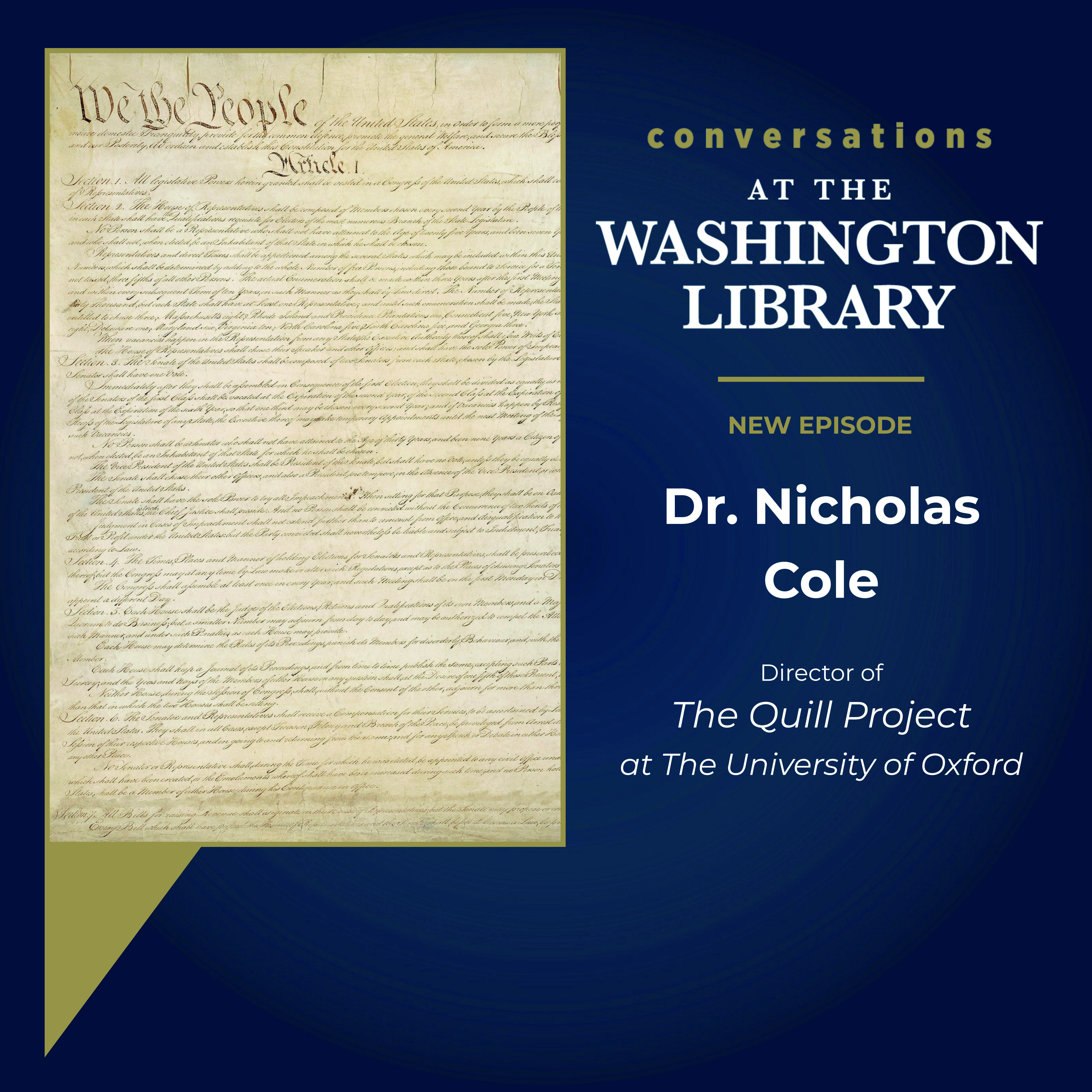
216. Digitally Deconstructing the Constitution with Dr. Nicholas Cole
When delegates assembled in Philadelphia in the Summer of 1787 to write a new Constitution, they spent months in secret writing a document they hoped would form a more perfect Union. When we talk about the convention, we often talk of the Virginia Plan, the Connecticut Compromise, the 3/5ths clause, and other major decisions that shaped the final document. What’s harder to see are the long days the delegates spent haggling over numerous proposed amendments, precise words, phrases, and ideas that...
Guest: Nicholas Cole

210
Sept. 15, 2021
210. Winning a Consolation Prize with Dr. Abby Mullen (Summer Repeat)
Consuls are essential to American foreign relations. Although they may not be as flashy or as powerful as an Ambassador like Thomas Jefferson or John Quincy Adams, they’re often the go-to people when an American gets in trouble abroad or when a trade deal needs to get done. Consuls operate in cities and towns throughout the world, helping to advance American interests and maintain good relations with their host countries, all while helping you replace your lost passport. Much has changed about t...
Guest: Abby Mullen

202
May 27, 2021
202. Digitizing the Maryland Loyalist Experience with Dr. Kyle Roberts and Dr. Benjamin Bankhurst
Maryland wasn’t so merry for some Americans during the Revolutionary War, especially if you happened to side with the king. Professing fealty to the Crown, for whatever reason or motivation, cost many Maryland colonists their property, and sometimes their lives. But for other Maryland Loyalists, like enslaved people, loyalism was an opportunity to achieve a different kind of American independence, or to turn ideas about class and patriarchy on their heads. Last week we, began our two-part look...
5
May 13, 2021
201. Uncovering the Virginia Loyalists with Drs. Stephanie Seal Walters and Alexi Garrett
Virginia was home to many of the most famous rebels like George Washington during the American Revolution, but it was also a den of Tories who remained loyal to the British king. Loyalists in all the colonies rejected what they called “the unnatural rebellion” and resisted Patriot forces as they tried to restore the king’s peace to British America. In Virginia, a civil war raged between white colonists, enslaved people who sought their freedom, and many more who just tried to stay out of the w...
200
April 29, 2021
200. Transcribing From The Page with Sara and Ben Brumfield
When the COVID pandemic stuck last spring, thousands of cultural heritage sites, including the Washington Library and Mount Vernon, had to find ways to help team members do work from home. That wasn’t always easy, especially as so much of our normal work requires a physical presence. One of our solutions at the Library was to use this time to transcribe the voluminous correspondence of Harrison Dodge, Mount Vernon’s superintendent in the late 19th century. And to do that, we turned to a di...
194
Feb. 4, 2021
194. Building Digital History Projects at the Washington Library with the ITPS Interns
One of the most important things we’re able to do at the Center for Digital History is offer internships to college students. Working with students allows us to move our projects forward while giving them real world opportunities to do the kind of work that historians do, and development skills that will hopefully serve them well later in life. Now, we’ve talked about our internship program on the show before – you might recall our chat with Jamie Morris of Washington College – and today you’l...
Guest: Dr. Michael Crowder
187
Dec. 10, 2020
187. Winning a Consolation Prize with Dr. Abby Mullen
Consuls are essential to American foreign relations. Although they may not be as flashy or as powerful as an Ambassador like Thomas Jefferson or John Quincy Adams, they’re often the goto people when an American gets in trouble abroad or when a trade deal needs to get done. Consuls operate in cities and towns throughout the world, helping to advance American interests and maintain good relations with their host countries, all while helping you replace your lost passport. Much has changed ab...
Guest: Abby Mullen
180
Oct. 15, 2020
180. Reading Letters by Early American Women with Kathryn Gehred
If you pull any decent history book off your shelf right now, odds are that it’s filled with quotes from letters, diaries, or account books that help the author tell her story and provide the evidence for her interpretation of the past. It’s almost always the case that the quotation you read in a book is just one snippet of a much longer document. Perhaps, for example, Catharine Greene’s letters to her husband Nathanael offer the reader insight into some aspect of the family business she was ru...
178
Oct. 1, 2020
178. Digitally Interning at the Washington Library with Jamie Morris
The Washington Library's Center for Digital History often collaborates with students to advance its research and public history projects. That can take many forms. We work regularly with faculty to integrate our digital projects into their course assignments, on other occasions we deliver lectures to students about digital history or some aspect of eighteenth-century history, and we’re also fortunate to work with student interns throughout the year who assist with our projects while they gain pr...
168
July 23, 2020
168. Mining King George III's Papers with Zara Anishanslin and Arthur Burns
While work continues on the podcast's upcoming Season 5, we’re pleased to offer you another summer interlude. For today’s show, we bring you the audio version of Jim Ambuske's recent live stream chat with Professors Zara Anishanslin and Arthur Burns about the Georgian Papers Programme. Now, most of you probably know that some Americans had a little - shall we say – disagreement with King George III two centuries ago. Something about taxation, tea, and tyranny. But did you know that researcher...
150
March 19, 2020
150. Teaching Online in a Time of Covid-19 with Sadie Troy
It's mid-March 2020 and chances are you're listening to this episode from the comfort of your home as you practice social distancing. Over the past few weeks many schools and businesses has suspended public operations and transitioned to an online environment in an effort to help limit the spread of the coronavirus, known as Covid-19. While the Washington Library and Mount Vernon may temporarily be closed to the public as well, that doesn't mean we're not hard at work doing what we can to help ...
146
Feb. 20, 2020
146. Doing Public History at Mount Vernon with Jeanette Patrick
Like many folks around the country, you might have spent the last three evenings watching Doris Kearns Goodwin’s Washington documentary series on the History Channel. Documentaries are a form of public history, which we might define loosely as making historical knowledge available and accessible for the public’s benefit. At Mount Vernon, we think about how to do this work a great deal. How can we create frameworks for public understanding of the past that balances expertise with accessibility?...
145
Feb. 13, 2020
145. Creating the New Map of Empire with Max Edelson
When the British defeated the French and their allies in the Seven Years’ War, they acquired vast new territories that expanded British America. Britain’s North America Empire grew to include New Brunswick in Canada, Florida on the southern mainland, and Caribbean Islands like Dominica, among many other places. How would the British meld these spaces – spaces that were religiously and ethnically diverse, characterized by both free and enslaved labor, and fraught with tension between indigenous ...
131
Nov. 7, 2019
131. Let's Get Digital With Loren Moulds
How has technology changed the way that historians and educators tell stories about the past? What does it mean to do "digital history" and how can one get started? On today's episode, Dr. Loren Moulds of the University of Virginia Law Library sits down with Jim Ambuske to explore how technology is enhancing our ability to interpret the past. A historian of 20th century America, Moulds's work on backyard barbecues and federal housing policy shapes the way he thinks about the role technology can...
128
Oct. 17, 2019
128. Digitizing the Constitution with Julie Silverbrook
The word “impeachment” is in the air these days. Wouldn’t it be nice if we had a website to find information about what the Constitution’s framers thought about impeachment or any other Constitutional issue. Well, The Constitutional Sources Project is the place for you. The project, called ConSource for short, is a Washington, D.C.-based initiative to digitize and transcribe the documents that shaped the Federal Constitution, and increase our historical literacy. On today’s episode, you...
125
Sept. 26, 2019
125. Simulating 1793 and the Fate of the Republic with Trey Alsup and Sadie Troy
Imagine you lived in the year 1793. The United States has recently suffered its worst military defeat in its history at the hands of the Miami-Shawnee Confederacy. The French Revolution has turned horrifically violent and France is now at war with most of Europe. And both the British and the French are pressuring the United States to choose a side. Now imagine that you are one of the American, European, or indigenous leaders whose voices will shape how the U.S. responds to these events. Well, no...
112
June 20, 2019
112. Welcome Jim Ambuske!
In this episode, Dr. Kevin Butterfield sits down with Dr. Jim Ambuske the Washington Library's new Digital Historian and future podcast host. About Our Guest: Jim Ambuske, Ph.D. leads the Center for Digital History at the Washington Library. A historian of the American Revolution, Scotland, and the British Atlantic World, Ambuske graduated from the University of Virginia in 2016. He is a former Farmer Postdoctoral Fellow in Digital Humanities at the University of Virginia Law Library. At UVA ...
Guest: Dr. Jim Ambuske