April 1, 2026

'Hey, Let's Go to the Moon' — Artemis II Launch Day
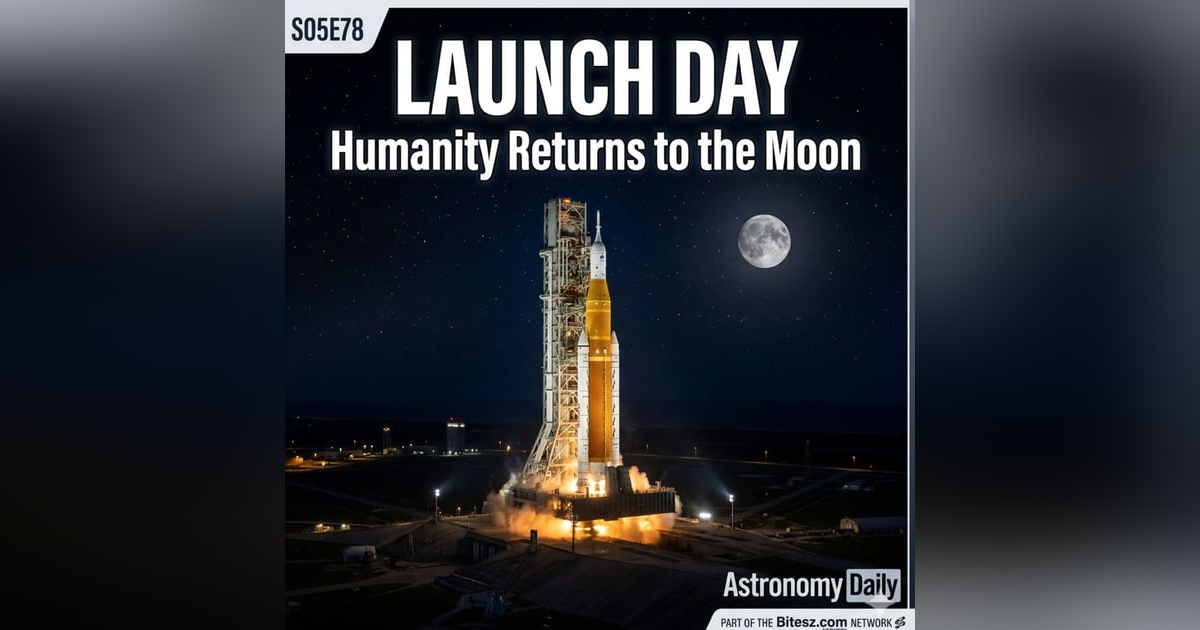
'Hey, Let's Go to the Moon' — Artemis II Launch Day
Apple Podcasts podcast player iconSpotify podcast player iconiHeartRadio podcast player iconYoutube Music podcast player iconSpreaker podcast player iconPocketCasts podcast player iconDeezer podcast player iconJioSaavn podcast player iconRSS Feed podcast player icon

Launch day has arrived. In this episode of Astronomy Daily, Anna and Avery countdown to tonight's historic Artemis II launch — humanity's first crewed lunar mission since 1972 — and explore the dramatic stories unfolding alongside it: a sungrazing comet faces its moment of truth just three days from perihelion; astronomers raise urgent alarms over plans for one million new satellites; the interstellar comet 3I/ATLAS leaves its open-data legacy; and fascinating new science unpacks the hellish reality of Venus and a creative low-tech solution for mapping the Moon's interior. Story References Story 1: Artemis II Launch • NASA Artemis II Mission Hub: nasa.gov/mission/artemis-ii • NASA Live Coverage (NASA+, YouTube, Amazon Prime) — begins 7:45 AM EDT April 1 • Launch window: 6:24–8:24 PM EDT Wednesday April 1 (09:24–11:24 AEDT Thursday April 2) • Crew: Reid Wiseman (Commander), Victor Glover (Pilot), Christina Koch, Jeremy Hansen (CSA) • Mission duration: 10 days, splashdown April 10 off San Diego Story 2: Comet MAPS • C/2026 A1 (MAPS) perihelion: April 4, 2026 at ~14:23 UTC • Perihelion distance: ~160,000 km above Sun's surface (solar corona passage) • Kreutz sungrazer family — related to Great Comet of 1106 • Nucleus estimated ~400m diameter (JWST MIRI observation, Feb 7 2026) • Best-case post-perihelion brightness: magnitude -5 to -10 • Source: Sky & Telescope, EarthSky, Universe Today, Wikipedia Story 3: Satellite Megaconstellations • SpaceX proposal: 1,000,000 satellites (AI orbital data centres) — FCC filing Jan 30, 2026 • Reflect Orbital proposal: 50,000 mirror satellites — FCC filing July 31, 2025 • IAU, RAS, and ESO have all filed formal FCC objections • Nature study (Dec 2025): 96%+ of future space telescope exposures affected if constellations completed • Hubble: up to 1/3 of images contaminated • Source: Universe Today, Astronomy Magazine, Nature Story 4: 3I/ATLAS Open Data • NASA open data archive now available: science.nasa.gov/solar-system/comets/3i-atlas • Key finding: 3I/ATLAS unusually rich in methanol vs hydrogen cyanide • Observed by 12+ NASA missions including Hubble, JWST, TESS, SPHEREx, MAVEN, Perseverance • Jupiter flyby: March 16, 2026 at 0.358 AU • Source: NASA Science, Space.com, NRAO Story 5: Venus • Surface temperature: 464°C average • Atmospheric pressure: 92× Earth (equivalent to ~1km ocean depth) • Longest spacecraft survival: ~2 hours (Soviet Venera probes) • Source: Universe Today, April 1 2026 Story 6: Lunar Optical Fibre • Two new journal papers propose telecom-grade optical fibre for lunar seismic mapping • Could map deep interior and identify lava tube locations • Lava tubes: potential natural shelters for future astronauts • Source: Universe Today, April 1 2026

Become a supporter of this podcast: https://www.spreaker.com/podcast/astronomy-daily-space-news-updates--5648921/support.

Sponsor Details:
Ensure your online privacy by using NordVPN. To get our special listener deal and save a lot of money, visit www.bitesz.com/nordvpn. You'll be glad you did!

Become a supporter of Astronomy Daily by joining our Supporters Club. Commercial free episodes daily are only a click way... Click Here

This episode includes AI-generated content.

WEBVTT

1
00:00:00.160 --> 00:00:03.240
Wherever you are in the world right now, whether you're

2
00:00:03.279 --> 00:00:06.559
waking up to launch day in North America, into the

3
00:00:06.599 --> 00:00:09.400
thick of it in Europe, or winding down your evening

4
00:00:09.519 --> 00:00:15.039
in Australia. Today is the day. After years of delays, setbacks,

5
00:00:15.199 --> 00:00:19.760
hydrogen leaks and hard won fixes, four astronauts are counting

6
00:00:19.800 --> 00:00:25.800
down to humanity's most ambitious journey in over half a century. Tonight, Florida,

7
00:00:25.920 --> 00:00:27.640
time they go to the Moon.

8
00:00:28.399 --> 00:00:32.159
Welcome to Astronomy Daily, your daily guide to everything happening

9
00:00:32.240 --> 00:00:34.880
in space, from our cosmic backyard to the edge of

10
00:00:34.920 --> 00:00:37.880
the universe. I'm Avery and I'm Anna.

11
00:00:38.280 --> 00:00:41.280
On today's episode, we count down to the Artemis two

12
00:00:41.359 --> 00:00:45.479
launch with everything you need to know before tonight's historic liftoff,

13
00:00:46.119 --> 00:00:49.759
a sunngrazing commet faces its moment of truth just days

14
00:00:49.759 --> 00:00:53.840
from now. Astronomers raise the alarm as plans for one

15
00:00:53.960 --> 00:00:58.399
million new satellites threaten the night sky, the Interstellar Visitor

16
00:00:58.479 --> 00:01:03.719
three iatl US leaves its legacy, and more. Let's dive in.

17
00:01:04.040 --> 00:01:06.959
As we record this episode, the clock at Kennedy Space

18
00:01:06.959 --> 00:01:09.280
Center in Florida is taking toward one of the most

19
00:01:09.319 --> 00:01:13.799
significant human space flight events in decades. Tonight at six

20
00:01:13.920 --> 00:01:17.519
twenty four pm Eastern daylight time, which is early Thursday

21
00:01:17.560 --> 00:01:21.480
morning for listeners in Australia. NASA's Artemis to mission is

22
00:01:21.519 --> 00:01:25.040
targeting liftoff, and if that goes ahead as planned, four

23
00:01:25.120 --> 00:01:27.400
astronauts will be on their way to the Moon for

24
00:01:27.480 --> 00:01:31.599
the first time since Apollo seventeen in December nineteen seventy two.

25
00:01:32.239 --> 00:01:36.480
That's fifty four years avery fifty four years since a

26
00:01:36.599 --> 00:01:40.640
human being has ventured beyond low Earth orbit, and tonight,

27
00:01:40.920 --> 00:01:44.159
barring any last minute technical issues or a change in

28
00:01:44.200 --> 00:01:48.000
the weather that changes the mission has an eighty percent

29
00:01:48.159 --> 00:01:52.239
chance of favorable weather conditions. The US Space Force's forty

30
00:01:52.239 --> 00:01:55.879
fifth Weather Squadron has been tracking the Florida skies closely,

31
00:01:56.319 --> 00:01:59.920
with cumulus clouds and ground winds as the primary concerns,

32
00:02:00.280 --> 00:02:01.920
but conditions are looking good.

33
00:02:02.519 --> 00:02:06.799
The crew is extraordinary. Commander Read Weisman leads the mission.

34
00:02:07.200 --> 00:02:10.039
Victor Glover is the pilot and he'll make history as

35
00:02:10.080 --> 00:02:13.319
the first person of color to travel beyond low Earth orbit.

36
00:02:13.919 --> 00:02:17.840
Mission specialist Christina Coach will become the first woman, and

37
00:02:18.000 --> 00:02:22.560
Canadian Space Agency astronaut Jeremy Hansen, the first non American,

38
00:02:22.919 --> 00:02:26.360
rounds out the crew. These are four of humanity's best,

39
00:02:26.479 --> 00:02:28.960
and they carry the hopes of the entire planet on

40
00:02:29.000 --> 00:02:29.840
their shoulders.

41
00:02:30.039 --> 00:02:34.280
So what actually happens tonight? The Space Launch System or

42
00:02:34.560 --> 00:02:39.360
SLS is the most powerful operational rocket NASA has ever built.

43
00:02:39.800 --> 00:02:43.759
At liftoff, it generates nearly nine million pounds of thrust,

44
00:02:44.120 --> 00:02:47.719
accelerating the Orion spacecraft and its crew to around five

45
00:02:47.879 --> 00:02:52.120
miles per second in just eight minutes. After reaching space,

46
00:02:52.360 --> 00:02:55.639
the crew won't head straight for the Moon. Instead, they'll

47
00:02:55.639 --> 00:02:58.840
spend their first twenty four hours in a high Earth orbit,

48
00:02:59.240 --> 00:03:01.639
a safety five first approach that gives them time to

49
00:03:01.800 --> 00:03:05.479
verify that Orion's life support systems are working perfectly. Can

50
00:03:05.520 --> 00:03:10.000
this spacecraft scrub carbon dioxide? Can they drink water? All

51
00:03:10.080 --> 00:03:13.120
of that gets checked before they commit to the lunar coast.

52
00:03:13.919 --> 00:03:17.879
During that first day, pilot Victor Glover will also manually

53
00:03:17.919 --> 00:03:21.080
fly Oryan close to the upper stage of the rocket,

54
00:03:21.280 --> 00:03:26.039
a proximity operations demonstration that rehearses the delicate maneuvering future

55
00:03:26.080 --> 00:03:29.240
missions will need for docking with space stations or the

56
00:03:29.280 --> 00:03:33.120
space Axe Linar Lander. Assuming all systems check out, the

57
00:03:33.199 --> 00:03:36.400
crew will then fire Orion's main engine about twenty five

58
00:03:36.439 --> 00:03:39.479
hours after launch, a six minute burn that boosts their

59
00:03:39.520 --> 00:03:42.680
speed by around nine hundred miles per hour and pushes

60
00:03:42.719 --> 00:03:45.759
them out of Earth orbit, beginning a four day coast

61
00:03:45.840 --> 00:03:46.280
to the Moon.

62
00:03:46.520 --> 00:03:50.360
On flight day six, Orion will reach its farthest point

63
00:03:50.400 --> 00:03:55.000
from Earth, sailing some five thousand miles beyond the Moon itself.

64
00:03:55.479 --> 00:03:59.840
That will shatter Apollo thirteen's distance record from nineteen seventy,

65
00:04:00.280 --> 00:04:04.400
making this crew the most remote human travelers in history.

66
00:04:04.919 --> 00:04:08.439
And here's something remarkable. Because of the timing of this

67
00:04:08.560 --> 00:04:12.520
April first launch, roughly twenty one percent of the lunar

68
00:04:12.680 --> 00:04:16.639
farside will be in sunlight as they swing around the Moon.

69
00:04:17.160 --> 00:04:20.360
Some of those regions have literally never been seen by

70
00:04:20.480 --> 00:04:23.959
human eyes, and a coach and her crewmates will be

71
00:04:24.079 --> 00:04:27.519
at the windows with cameras capturing views of the Moon

72
00:04:27.639 --> 00:04:29.959
that no person has ever witnessed.

73
00:04:30.279 --> 00:04:34.120
The mission lasts ten days in total, with splashdown planned

74
00:04:34.160 --> 00:04:37.319
off the coast of San Diego on April tenth. For

75
00:04:37.399 --> 00:04:40.480
our listeners tuning in from the US, the launch window

76
00:04:40.560 --> 00:04:44.120
opens tonight at six twenty four pm Eastern and stays

77
00:04:44.160 --> 00:04:47.240
open for two hours, so there's time to find your spot.

78
00:04:47.800 --> 00:04:51.439
For our UK and European listeners, that's eleven twenty four

79
00:04:51.480 --> 00:04:55.439
pm BST, and for our Australian and New Zealand audience,

80
00:04:55.680 --> 00:04:59.120
set your alarm for nine to twenty four Australian Eastern

81
00:04:59.240 --> 00:05:03.639
daylight time Thursday morning. NASA's full coverage is streaming on

82
00:05:03.759 --> 00:05:07.839
NASA Plus, YouTube and Amazon Prime from seven forty five

83
00:05:07.959 --> 00:05:11.399
am Eastern tonight. This is not one to sleep through.

84
00:05:11.600 --> 00:05:14.959
There's something Commander Reid Wiseman said when the crew arrived

85
00:05:14.959 --> 00:05:18.079
at Kennedy Space Center last week that really captures the

86
00:05:18.120 --> 00:05:21.240
moment he stepped off the plane, looked at the reporters

87
00:05:21.279 --> 00:05:24.519
gathered there, and simply said, Hey, let's go to the Moon.

88
00:05:25.120 --> 00:05:28.399
That's the spirit of this mission. After years of delays,

89
00:05:28.600 --> 00:05:32.959
technical setbacks, and the quiet determination of thousands of engineers

90
00:05:33.000 --> 00:05:35.439
and scientists, tonight we go back.

91
00:05:35.800 --> 00:05:38.800
Well, all eyes are on Artemis two tonight. There's another

92
00:05:38.879 --> 00:05:42.680
dramatic cosmic event unfolding just days away, one that's been

93
00:05:42.680 --> 00:05:46.639
building since January. Comet C twenty twenty six a one

94
00:05:46.959 --> 00:05:50.680
known as Maps, is a sungrazing comet that will reach Perihelion,

95
00:05:51.000 --> 00:05:54.040
its closest point to the Sun, on April fourth. And

96
00:05:54.079 --> 00:05:58.199
when we say close, we mean terrifyingly close, just one

97
00:05:58.319 --> 00:06:02.319
hundred and sixty thousand kilometers above the Sun's surface. That's

98
00:06:02.399 --> 00:06:04.720
less than half the distance from Earth to the Moon.

99
00:06:05.040 --> 00:06:08.160
Maps belongs to the Krutz family of comments, a group

100
00:06:08.199 --> 00:06:11.800
of sungrazers, all believed to be fragments of one enormous

101
00:06:11.839 --> 00:06:15.639
parent comet that shattered centuries ago. The most famous member

102
00:06:15.639 --> 00:06:18.600
of this family was comet ike Ya Seki in nineteen

103
00:06:18.639 --> 00:06:22.399
sixty five, which briefly outshone the full Moon in daylight.

104
00:06:22.959 --> 00:06:26.600
Maps was discovered back in January at the AMACS One

105
00:06:26.720 --> 00:06:30.800
Observatory in the Autocoma Desert in Chile, and what immediately

106
00:06:30.839 --> 00:06:33.959
excited astronomers was just how far from the Sun it

107
00:06:34.120 --> 00:06:37.920
was when they found it. Most cruit sungrazers are only

108
00:06:37.959 --> 00:06:42.879
spotted days before perihelion. Maps was discovered eighty one days out,

109
00:06:43.160 --> 00:06:44.920
a record for this comet family.

110
00:06:45.240 --> 00:06:48.639
The James web telscope has already observed it, estimating a

111
00:06:48.720 --> 00:06:53.319
nucleus roughly four hundred meters across, comparable to Comet Lovejoy,

112
00:06:53.439 --> 00:06:56.839
which famously survived its own solar encounter in twenty eleven

113
00:06:57.040 --> 00:07:01.279
against all expectations. And that's the critical question hanging over

114
00:07:01.319 --> 00:07:05.160
Maps right now. Will it survive. The Sun's corona is

115
00:07:05.199 --> 00:07:09.800
a brutal environment extreme heat, tidal forces, and radiation pressure

116
00:07:09.839 --> 00:07:13.319
that can shred a comet nucleus apart. Most cruds comments

117
00:07:13.319 --> 00:07:15.560
simply disintegrate, but some don't.

118
00:07:15.879 --> 00:07:19.680
If Maps holds together, models suggest it could briefly brighten

119
00:07:19.759 --> 00:07:24.120
to magnitude minus five to minus ten, potentially visible in

120
00:07:24.199 --> 00:07:27.480
broad daylight near the Sun. Even if it breaks apart,

121
00:07:27.800 --> 00:07:32.000
observers may still see a dramatic headless wonder a glowing

122
00:07:32.079 --> 00:07:35.360
tail persisting in the sky after the nucleus is gone.

123
00:07:35.639 --> 00:07:38.800
For our Southern Hemisphere listeners in Australia and New Zealand,

124
00:07:39.120 --> 00:07:41.079
you've had the best seats in the house over the

125
00:07:41.160 --> 00:07:44.000
past few weeks as Maps has been well placed in

126
00:07:44.040 --> 00:07:47.839
your evening sky. The comment is currently entering Soho's field

127
00:07:47.879 --> 00:07:51.279
of view, and from April seventh, if it survives, it

128
00:07:51.319 --> 00:07:55.040
may reappear in the post sunset sky with a dramatic tail.

129
00:07:55.399 --> 00:07:56.240
Fingers crossed.

130
00:07:56.519 --> 00:07:59.319
We'll have a full update on Comet Maps in tomorrow's

131
00:07:59.360 --> 00:08:02.720
episode one, once we know what happened at Perihelion. For now,

132
00:08:02.839 --> 00:08:04.639
the cosmic drama is about to.

133
00:08:04.639 --> 00:08:08.879
Peak, from the inspiring to the deeply concerning and This

134
00:08:08.920 --> 00:08:11.480
is a story that should matter to every person who

135
00:08:11.560 --> 00:08:15.399
has ever looked up at the night sky. Two extraordinary

136
00:08:15.439 --> 00:08:20.079
proposals are currently sitting before the US Federal Communications Commission

137
00:08:20.279 --> 00:08:25.040
the FCC that could fundamentally and permanently alter the appearance

138
00:08:25.079 --> 00:08:28.920
of our skies, and astronomers around the world are sounding

139
00:08:28.959 --> 00:08:29.439
the alarm.

140
00:08:29.839 --> 00:08:33.000
The first proposal is from SpaceX, which has applied to

141
00:08:33.080 --> 00:08:37.480
launch one million satellites You heard that right, one million

142
00:08:37.960 --> 00:08:41.320
into low Earth orbits as AI data centers in space.

143
00:08:41.879 --> 00:08:45.399
The second comes from a startup called reflect Orbital, which

144
00:08:45.440 --> 00:08:50.000
wants to place fifty thousand mirror satellites in orbit, specifically

145
00:08:50.039 --> 00:08:54.279
designed to beam reflected sunlight back down to Earth. According

146
00:08:54.279 --> 00:08:58.159
to calculations from the Royal Astronomical Society, each of those

147
00:08:58.159 --> 00:09:01.440
mirror satellites would be four times brighter than the full

148
00:09:01.480 --> 00:09:05.120
Moon as seen from the ground, and the atmospheric scattering

149
00:09:05.200 --> 00:09:08.320
of that reflected light could make the entire night sky

150
00:09:08.639 --> 00:09:11.600
three to four times brighter than its natural state.

151
00:09:12.360 --> 00:09:15.919
The response from the scientific community has been swift and emphatic.

152
00:09:16.279 --> 00:09:20.519
The Royal Astronomical Society, the European Southern Observatory, and the

153
00:09:20.519 --> 00:09:25.000
International Astronomical Union have all filed formal objections with the FCC.

154
00:09:25.559 --> 00:09:28.519
A major study published in Nature found that if current

155
00:09:28.559 --> 00:09:32.600
Mega constellation proposals are completed, one third of all Hubble

156
00:09:32.639 --> 00:09:37.919
space telescope images would be contaminated by satellite trails. More alarming, still,

157
00:09:38.200 --> 00:09:42.120
over ninety six percent of exposures from future space observatories

158
00:09:42.399 --> 00:09:45.679
like NASA's Sphrix mission would be affected.

159
00:09:46.240 --> 00:09:49.759
This isn't just a problem for professional astronomers. Light pollution

160
00:09:49.879 --> 00:09:56.159
from satellites affect wildlife, disrupts bird migration patterns, collapses nocturnal ecosystems,

161
00:09:56.279 --> 00:09:59.720
and disconnects billions of people from one of humanity's oldest

162
00:09:59.759 --> 00:10:04.120
share experiences. Simply looking up at the stars. The night

163
00:10:04.200 --> 00:10:07.720
sky is a world heritage. As the Royal Astronomical Society

164
00:10:07.720 --> 00:10:11.720
put it, deploying more than one million bright satellites would,

165
00:10:11.919 --> 00:10:14.320
in their words, utterly destroy it.

166
00:10:15.000 --> 00:10:17.679
Both proposals are now closed to public comment, but the

167
00:10:17.759 --> 00:10:20.759
fight for protecting our skies is far from over. This

168
00:10:20.840 --> 00:10:23.440
is a story we'll be watching closely on Astronomy Daily.

169
00:10:24.039 --> 00:10:27.320
We followed the journey of interstellar Comet three i at

170
00:10:27.320 --> 00:10:31.039
lists closely throughout season five, from its discovery last July

171
00:10:31.279 --> 00:10:35.399
to its Parahelian passage in October, its close encounter with Mars,

172
00:10:35.480 --> 00:10:39.600
and its remarkable flyby of Jupiter just a few weeks ago. Now,

173
00:10:39.679 --> 00:10:42.720
as the comet exits our solar system for the last time,

174
00:10:43.240 --> 00:10:46.480
NASA has opened its complete archive of three Eye Atlas

175
00:10:46.519 --> 00:10:50.000
observations to the public. A treasure trove gathered by more

176
00:10:50.039 --> 00:10:51.639
than a dozen missions, the.

177
00:10:51.679 --> 00:10:56.679
Data is extraordinary. New findings from Alma the atacomma large

178
00:10:56.759 --> 00:11:01.600
millimeter array, reveal that three iye atlasts is quote bursting

179
00:11:01.679 --> 00:11:05.720
with methanol, far more than astronomers typically see in comments

180
00:11:05.720 --> 00:11:09.840
from our own solar system. That chemical fingerprint suggests the

181
00:11:09.919 --> 00:11:13.919
comment formed in a planetary system with very different physical

182
00:11:13.919 --> 00:11:19.000
conditions polder temperatures, a different chemical inventory around a star

183
00:11:19.240 --> 00:11:23.480
we may never identify. As lead researcher Nathan Roth of

184
00:11:23.519 --> 00:11:27.919
American University put it, observing three I Atlas is like

185
00:11:28.039 --> 00:11:31.159
taking a fingerprint from another solar system.

186
00:11:31.480 --> 00:11:34.480
Three I at Liss is only the third known interstellar

187
00:11:34.519 --> 00:11:38.720
object ever detected passing through our Solar system, following Umuamua

188
00:11:38.799 --> 00:11:42.639
in twenty seventeen and Borisov in twenty nineteen, but it's

189
00:11:42.679 --> 00:11:46.360
been observed by more spacecraft than any interstellar object in

190
00:11:46.480 --> 00:11:53.399
history Hubble, James Webb, Tess SPHEREx, Mavin, Parker Solar Probe, SOHO,

191
00:11:53.600 --> 00:11:58.080
Mars Reconnaissance Orbiter, even Perseverance paused its exploration of the

192
00:11:58.120 --> 00:12:01.519
Martian surface to photograph it. That fleet of eyes has

193
00:12:01.559 --> 00:12:04.559
produced a data set that scientists say will continue to

194
00:12:04.639 --> 00:12:06.360
yield discoveries for decades.

195
00:12:07.000 --> 00:12:09.320
The comet will reach the inner or cloud around the

196
00:12:09.360 --> 00:12:11.879
year twenty one eighty nine and the outer edge of

197
00:12:11.879 --> 00:12:14.840
the Oor cloud roughly eight thousand years from now, then

198
00:12:15.000 --> 00:12:18.159
drift on through the galaxy forever. We won't see it again,

199
00:12:18.399 --> 00:12:20.559
but what it's taught us will stay with us all.

200
00:12:20.600 --> 00:12:25.519
Right, moving on. It's called Earth's twin similar in size,

201
00:12:25.679 --> 00:12:28.919
similar in mass, and the closest planet to us in

202
00:12:28.919 --> 00:12:32.879
the Solar System. But Venus could hardly be more different

203
00:12:32.919 --> 00:12:36.919
from Earth. New science coverage this week digs into exactly

204
00:12:37.039 --> 00:12:41.759
what makes Venus so extreme, and the numbers are genuinely staggering.

205
00:12:42.159 --> 00:12:45.320
The surface of Venus bakes at an average of four

206
00:12:45.399 --> 00:12:49.879
hundred and sixty four degrees celsius, hot enough to melt lead.

207
00:12:50.399 --> 00:12:54.039
The atmospheric pressure on the surface is ninety two times

208
00:12:54.039 --> 00:12:57.279
that of Earth at sea level. Equivalent to being nearly

209
00:12:57.360 --> 00:13:02.120
a kilometer underwater. It's no wonder the longest any spacecraft

210
00:13:02.159 --> 00:13:05.799
has ever survived on the Venusian surface is just over

211
00:13:05.919 --> 00:13:09.519
two hours, achieved by the Soviet Venera probes in the

212
00:13:09.600 --> 00:13:14.279
nineteen seventies and eighties. The planet has crushed, melted, or

213
00:13:14.360 --> 00:13:16.600
fried everything we've ever sent there.

214
00:13:16.960 --> 00:13:20.120
Why does this matter right now? Because Venus is getting

215
00:13:20.200 --> 00:13:24.840
renewed scientific attention NASA's Da Vinci and Veritas missions, though

216
00:13:24.960 --> 00:13:30.039
Veritas face delays, represent a growing recognition that understanding Venus

217
00:13:30.159 --> 00:13:33.919
is critical to understanding why Earth turned out so differently.

218
00:13:34.440 --> 00:13:38.559
Two rocky worlds, similar starting conditions, yet one became a

219
00:13:38.600 --> 00:13:42.799
paradise for life and the other became a furnace. Unlocking

220
00:13:42.840 --> 00:13:45.559
that mystery could tell us an enormous amount about the

221
00:13:45.559 --> 00:13:49.559
habitability of planets across the galaxy and what to look

222
00:13:49.600 --> 00:13:52.240
for in our search for life beyond our Solar system.

223
00:13:52.679 --> 00:13:56.799
And, finally, a wonderfully elegant piece of lateral thinking from

224
00:13:56.840 --> 00:14:01.440
the world of planetary science. New research touggests that ordinary

225
00:14:01.480 --> 00:14:06.120
telecommunications grade optical fiber, the same technology that carries the

226
00:14:06.159 --> 00:14:09.000
Internet around the world, could be used to map the

227
00:14:09.039 --> 00:14:12.600
Moon's deep interior and identify its lava tubes.

228
00:14:12.919 --> 00:14:16.840
Two new journal papers propose deploying fiber optic cables across

229
00:14:16.840 --> 00:14:21.200
the lunar surface to detect seismic signals. Because optical fiber

230
00:14:21.360 --> 00:14:26.039
is exquisitely sensitive to stretching and bending, even at microscopic scales,

231
00:14:26.320 --> 00:14:29.559
it can act as a distributed sensor network, picking up

232
00:14:29.639 --> 00:14:33.679
moonquakes and the subtle reverberations that reveal what lies beneath.

233
00:14:34.159 --> 00:14:37.679
And what lies beneath matters enormously, not just for science,

234
00:14:37.919 --> 00:14:41.399
but for the future of human settlement. Lunar lava tubes,

235
00:14:41.440 --> 00:14:46.080
which could be enormous, potentially kilometers wide, might offer natural

236
00:14:46.159 --> 00:14:51.200
shelters for future astronauts shielded from radiation and temperature extremes.

237
00:14:51.480 --> 00:14:55.080
The beauty of this idea is its simplicity. Fiber optic

238
00:14:55.159 --> 00:15:00.000
cable is robust, lightweight, already mass produced and thoroughly understand.

239
00:15:00.679 --> 00:15:04.600
Using it for lunar seismology is a genuinely creative solution,

240
00:15:05.080 --> 00:15:08.960
applying Earth technology to one of the Moon's most fundamental

241
00:15:09.039 --> 00:15:13.080
scientific mysteries. Ahead of Artemis three and the planned lunar

242
00:15:13.159 --> 00:15:16.600
surface missions, this kind of thinking is exactly what the

243
00:15:16.600 --> 00:15:17.919
science needs, and.

244
00:15:18.000 --> 00:15:21.600
That's Astronomy Daily for Wednesday, April first. What a day

245
00:15:21.639 --> 00:15:24.080
to be alive and to be looking up. In a

246
00:15:24.120 --> 00:15:27.080
matter of hours, four human beings will either be on

247
00:15:27.159 --> 00:15:29.480
their way to the moon or the world will be

248
00:15:29.519 --> 00:15:32.440
holding its breath for the next attempt. Either way, the

249
00:15:32.519 --> 00:15:35.559
countdown is on and we'll have full Artemis to mission

250
00:15:35.559 --> 00:15:37.240
coverage intomorrow's episode.

251
00:15:37.559 --> 00:15:41.879
Watch the launch live on Nasaplus YouTube or Amazon Prime.

252
00:15:42.240 --> 00:15:46.159
Coverage starts at seven forty five am Eastern tonight. All

253
00:15:46.159 --> 00:15:48.679
story links and sources are in the show notes at

254
00:15:48.720 --> 00:15:52.960
Astronomy Daily dot io. And if today's episode moved you,

255
00:15:53.320 --> 00:15:57.159
please share it because this is history and history deserves

256
00:15:57.200 --> 00:15:57.759
an audience.

257
00:15:58.120 --> 00:16:03.519
Keep looking up. We'll see you tomorrow. Start day. Star

258
00:16:03.840 --> 00:16:19.879
is the Toll Star Is the Toll Star? Is the