
The Secret to Saving Your Marriage with Anat Peri
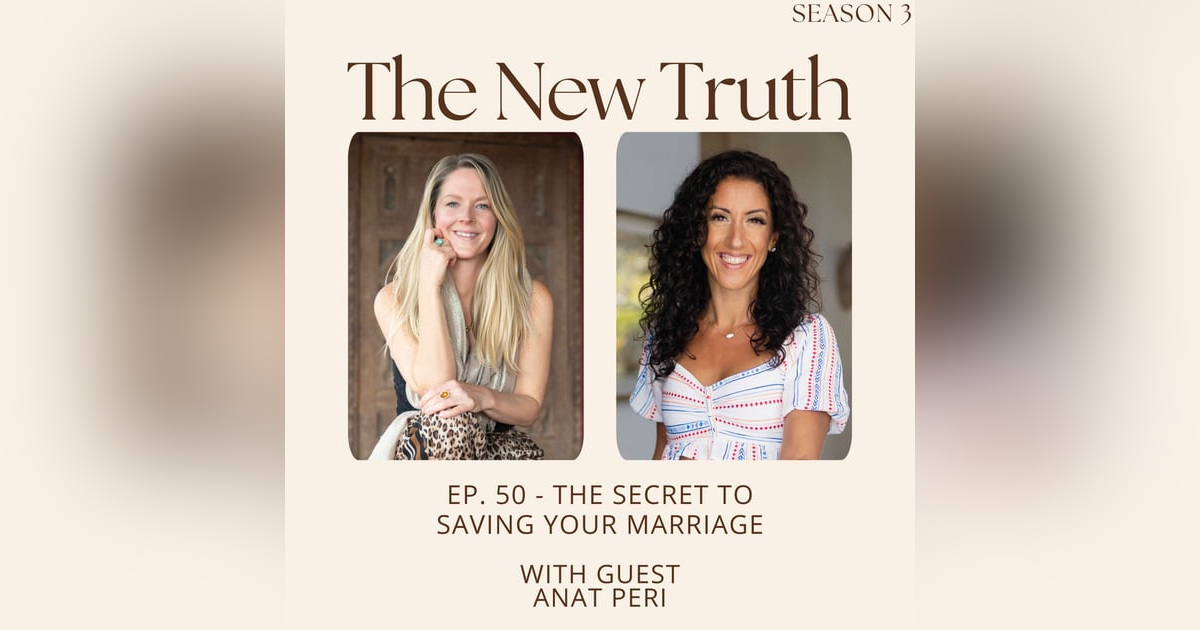


What if saving your marriage had very little to do with your partner - and everything to do with the relationship you have with yourself?
In this intimate conversation, Kate interviews her friend Anat Peri, founder of Training Camp for the Soul, to explore what actually transforms long-term relationships from the inside out.
This episode isn’t about communication hacks, compromise, or trying harder.
It’s about the profound inner shifts that change the entire emotional ecosystem of a marriage or relationship.
We talk about:
- Why most couples focus on the wrong place when things feel broken
- How self-abandonment quietly erodes intimacy over time
- The moment-to-moment choices that either close or reopen the heart
- Why personal responsibility is the most radical relationship medicine
- How shifting your inner world can completely change the dynamic - without forcing or controlling anything
This conversation is for married women…
And for women in long-term partnership…
And honestly, for any woman who wants to understand how expanded love is created and sustained.
Whether you’re feeling disconnected, resentful, numb, or simply longing for more depth and aliveness - this episode offers a powerful reframe that brings the focus back home to you.
Because the most meaningful change in any relationship doesn’t start with fixing what’s “wrong” out there.
It starts with remembering who you are - and choosing to meet love from that place.
Tune in if you're ready for more expanded love.
About the Guest:
Anat is an Inner Child Expert, Emotional Intelligence Coach, and the Founder of Training Camp for the Soul®, a transformational method that’s helped thousands of people heal the roots of their emotional wounds and create the kind of relationships and lives they truly desire.
With over twenty years in personal growth and leadership, she’s trained coaches, healers, and leaders all over the world through her Mastery Certification Program — guiding them to break free from old patterns, reconnect to their bodies, and lead from love instead of fear.
Anat’s work is all about helping people understand how their childhood shapes the way they love, communicate, and relate — and how to rewire those patterns to experience deeper safety, connection, and joy in relationships.
LINKS
Website - Training Camp for the Soul - https://trainingcampsoul.krtra.com/t/GMS8yhYn7bCp
Cultivating Safety Breathwork - https://trainingcampsoul.krtra.com/t/i5seHh3K1noQ
Hidden Defense Patterns Quiz - https://trainingcampsoul.krtra.com/t/87PYUofpTCCp
Rewrite Your Love Script - https://trainingcampsoul.krtra.com/t/AGH0o8ulrNlF
About the Host:
Kate Harlow is the founder of The Unscriptd Woman, the creator of The Expanded Love Coaching Method, and host of The New Truth podcast - ranked in the top 1.5% globally. With over 15 years of experience teaching, coaching and facilitating transformational retreats worldwide, Kate has helped hundreds of thousands of women break free from outdated relational patterns, old patriarchal ways of thinking and unspoken rules to live by.
Her infallible methods guide women to release the deeply ingrained scripts that keep them stuck- empowering women to step into their highest, most magnetic, and fully expressed selves. Through her coaching, retreats, podcast and upcoming book The Unscriptd Woman, Kate is redefining what it means to be an empowered woman in today's world, showing women how to stop waiting for permission and start creating a life and love that aligns with their deepest truth.
Known for her rare ability to see exactly where women are out of alignment with themselves, Kate offers a path back to unwavering self- trust, meaningful joy and true fulfillment. Her work is a revolution - one that liberates women from societal expectations and invites them into a life of radical authenticity, thriving relationships and unshakable self-worth.
Website: https://www.theunscriptdwoman.com/
The Immersion in Corfu, Greece April 26- May 3, 2026 https://www.theunscriptdwoman.com/the-immersion
Thanks for listening! It means so much to us that you listened to our podcast! If you would like to continue the conversation with us, head on over to our Facebook group, the New Truth Movement at https://www.facebook.com/groups/209821843509179/
With this podcast, we are building an international community of The New Truth Movement.
If you know someone who would benefit from this message or could be an awesome addition to our community, please share it using the social media buttons on this page.
Do you have some feedback or questions about this episode?
Leave a note in the comment section below!
Follow the podcast
If you would like to get automatic updates of new podcast episodes, you can follow the podcast app on your mobile device.
Leave us a review
We appreciate every bit of feedback to make this a value-adding part of your day. Ratings and reviews from our listeners not only help us improve, but also help others find us in their podcast app. If you have a minute, an honest review on Apple Podcasts goes a long way! Thank You!
Podcast Artwork Photo Credit: Photo by Tarja Ruuska https://www.instagram.com/tarjaruuska.photography
Royalty Free Music: Bensound.com Artist/: Benjamin Tissot License code: 2S4NM4X7FZVPZP1E
Be honest with yourself, what is your default
Anat Peri:rewind watch the scenes of the past few years, whether it's
Anat Peri:with your kids, your husband, your in laws, your family.
Anat Peri:Because I could definitely tell the truth about that and be
Anat Peri:like, Okay, that is definitely something I want to retire and
Anat Peri:then choose to create, like, how do I want to walk in there?
Anat Peri:We're already with the expectation. We are creating
Anat Peri:that simulation. We are visualizing that, which means
Anat Peri:we're strengthening that program. So when you walk in
Anat Peri:there, you're, I mean, your subconscious is running the
Anat Peri:show, whatever your default, whatever you programmed in
Anat Peri:there, is going to kick off.
Kate Harlow:Hello, my loves. Before getting into this week's
Kate Harlow:episode, I just wanted to share a little bit about this guest
Kate Harlow:who is a friend of mine. We go back quite a while. Probably
Kate Harlow:known Anat for over 10 years, and she, I've definitely known
Kate Harlow:her for over 10 years. She is an extraordinary inner child
Kate Harlow:expert, emotional intelligence coach, the founder of an
Kate Harlow:organization called training camp for the soul, which is a
Kate Harlow:transformational method that has helped 1000s of people heal the
Kate Harlow:roots of their emotional wounds and create the kind of
Kate Harlow:relationships and lives that they truly desire. So she's been
Kate Harlow:doing this for over 20 years in the personal growth and
Kate Harlow:leadership space. She has trained coaches, healers and
Kate Harlow:leaders all over the world with her mastery certification
Kate Harlow:program helping people break free from old patterns and
Kate Harlow:reconnect to their bodies and lead from love instead of fear.
Kate Harlow:So she is incredibly passionate about what she does. She's
Kate Harlow:really deeply embodied in the work that she teaches, and this
Kate Harlow:episode is packed full of actual, tangible practices,
Kate Harlow:tools and perspectives that you can take into your day to day
Kate Harlow:that will help you shift your relationship with your nervous
Kate Harlow:system and your patterns. So it's so supportive of the
Kate Harlow:journey that you are on here with me. Can't wait for you to
Kate Harlow:hear this episode. Share it with all of your friends and enjoy
Kate Harlow:you. Hello, beautiful. Welcome to the new truth Podcast. I'm
Kate Harlow:very excited about this week's guest. This has been a long time
Kate Harlow:coming. Yes, absolutely. I'm surprised you haven't been on
Kate Harlow:yet. I'm like, we're five years in, and here's our cameo. Hello,
Kate Harlow:Anat,
Anat Peri:Hey, Kate, yeah, we've, we've been together.
Anat Peri:We've known each other since the beginning 10 years ago, right?
Anat Peri:Totally.
Kate Harlow:I feel like so much. What I remember when you
Kate Harlow:were when you first started your business, and you were you, you
Kate Harlow:were specifically right before you came to Vancouver, we met in
Kate Harlow:San Diego, and you're coming to Vancouver, was it specifically
Kate Harlow:to see me after you had a client in Calgary?
Anat Peri:Yeah, yeah. I had a I had a few clients in Calgary,
Anat Peri:and I was I wanted to get my my global entry card. And they're
Anat Peri:like, Well, you know, you can do that at Vancouver, like you
Anat Peri:could interview there. And I'm like, Oh, perfect. I'll go to
Anat Peri:Vancouver. I'll add a couple of days see Kate get do my Global
Anat Peri:Entry interview and fly home to San Diego.
Kate Harlow:That is it, I remember. And we went to
Kate Harlow:AnnaLena, my my partner, Jeff, at the Times restaurant. And it
Kate Harlow:was, yeah, I just remember sitting in my living room with
Kate Harlow:you, and you're telling me what you were doing and that you were
Kate Harlow:like, flying on someone's private helicopter, and you were
Kate Harlow:like, going to these people's houses and doing private four
Kate Harlow:day retreats for them. And it was just like, and I feel like
Kate Harlow:you visiting me at that time was actually a massive, massive
Kate Harlow:spark in me starting my work, because I would have started my
Kate Harlow:work six months after you were there.
Anat Peri:Wow, yeah, yeah. I just realized it was my it was,
Anat Peri:like my first time of working with clients one on one. Like it
Anat Peri:was really this one gentleman that lived in Edmonton, yeah,
Anat Peri:Edmonton, yeah, yeah. That sparked, you know me. He was
Anat Peri:like, he was in my program, and he just wasn't doing the work
Anat Peri:one on one. And he's like, Can we do anything in person? And
Anat Peri:I'm like, Hmm, okay, Ask and you shall receive. So he was like,
Anat Peri:my first, like, private one on one client. And then while I was
Anat Peri:up in in Edmonton, working with him, I met his in laws, and
Anat Peri:they're like, What do you do? What's a coach? You know? They
Anat Peri:were like, What the heck is that? And then his mother in law
Anat Peri:reached out to me, and she was like, Can you come back up and
Anat Peri:work with me? And then her husband and so, yeah, it was, it
Anat Peri:was amazing to be up there. Flew in their helicopter to Banff.
Anat Peri:They have a retreat center in Banff, yeah, so it was, it was,
Anat Peri:it was a new spark for me. As well. You know, to go from only
Anat Peri:working with people virtually to doing private, one on one
Anat Peri:retreats. So I'm glad it was a spark for you, too, because look
Anat Peri:at us
Kate Harlow:now, I know it's so wild to think how far we've both
Kate Harlow:come, and we just spent Anat and I haven't even talked since
Kate Harlow:maybe then, or whenever Donald Trump was elected the first
Kate Harlow:time? Or yeah, elected. I was at your house that day. So we
Kate Harlow:haven't calculated which time was, but it's been like 10 years
Kate Harlow:since we've
Anat Peri:maybe we've caught up once or twice, virtually, yeah,
Anat Peri:oh yeah. It's definitely been a hot minute. And I must say, we
Anat Peri:don't look a day older than we did.
Kate Harlow:We're doing and no Botox. We're doing great. Yeah,
Kate Harlow:it's, it's, um, it's also, I guess. But social media just
Kate Harlow:feels like, I feel like so caught up with everything you're
Kate Harlow:doing. I'm always inspired by following all the beautiful work
Kate Harlow:that you're doing. So I'm so excited to have you here. We
Kate Harlow:were, as always, jamming out about what what was going to be
Kate Harlow:the topic this week. And I'm sure you can apply everything we
Kate Harlow:talk about to all areas of your life, but I thought that we
Kate Harlow:would do one directly for married women. It's not I often
Kate Harlow:talk to single women, divorced women, relationships, but I
Kate Harlow:don't often directly speak to married women. So this one's for
Kate Harlow:you, how to save your marriage with a nap Perry and yeah, I
Kate Harlow:just, let's just start with where, where would you start?
Kate Harlow:How to say I'm not married. I've never been married. Don't know
Kate Harlow:if I'll ever be married, but, that you are so so what's the
Kate Harlow:first thing you have to share?
Anat Peri:Oh, I will say this is applicable for any
Anat Peri:relationship. So stay tuned. Keep tuning in, even if you're
Anat Peri:single. Now, I've been with my husband now for eight years.
Kate Harlow:Eight years. Oh, because I haven't seen you in so
Kate Harlow:long. I'm like, I feel like your relationships do relationship is
Kate Harlow:still
Anat Peri:brand new. There you go. That's how long it's been.
Anat Peri:So you know, we've, we've spent seven holidays together,
Anat Peri:everything from spending it here at home, just the two of us, to
Anat Peri:a lot of times going back east to his family. Last year we went
Anat Peri:to Spain and just said, you know, we're just going to travel
Anat Peri:and and enjoy ourselves, which was very different way. But I'd
Anat Peri:say the most it is definitely one of the most stressful times.
Anat Peri:I think the reason for that is that there's a lot of
Anat Peri:expectations. We all have a lot of expectations of how we want
Anat Peri:it to go, you know. We have this vision of like, it's the
Anat Peri:holidays, you know, and maybe this year, it'll be great, and
Anat Peri:we'll actually enjoy each other and not fight or whatever, you
Anat Peri:know. And again, this is relevant to not only fighting
Anat Peri:with your partner, but going back and and it's your it's your
Anat Peri:parents, or it's your siblings, or it's the whole, it's, it's
Anat Peri:the energy of, it's usually not just you and your partner, maybe
Anat Peri:you have kids as well. So there's a lot of external
Anat Peri:expectations from others. There's a lot of past history,
Anat Peri:and expecting that to happen, like, Oh my God, my sister is
Anat Peri:definitely going to bring up the sting again, and blah, blah,
Anat Peri:blah. So it's like we're already going into it with defense, with
Anat Peri:guard up, and with like this underlying, like, deep desire
Anat Peri:that sometimes, for some people, is such a strong attachment that
Anat Peri:they can't relax. So either way, at the end of the day, you're
Anat Peri:just not relaxed, because you're either on guard or super
Anat Peri:attached to forcing some kind of way or outcome of how you want
Anat Peri:the holiday time to go.
Kate Harlow:This is so true. This is actually so perfect,
Kate Harlow:following the the episode last week about triggers, because I
Kate Harlow:don't know if I touched on expectations, but it that that
Kate Harlow:preconceived like, the pre scripted holiday that is so true
Kate Harlow:of like, this is how mom's gonna behave. This is how dad and
Kate Harlow:then, like, going into that and, and for those of you that are
Kate Harlow:American, just had, you know, American Thanksgiving, probably,
Kate Harlow:you know, you had examples of that. But just like, going in,
Kate Harlow:you know, I even do that with my brother sometimes, where I'm,
Kate Harlow:like, going in like, oh, god, okay, I gotta be so rooted. And,
Kate Harlow:you know, not project all the stories onto him and and
Kate Harlow:noticing the more I clean that stuff up, my own stuff walking
Kate Harlow:into it, the more it gives space for something new to occur.
Anat Peri:Yeah, exactly. Yeah. Yeah. And so part of it is,
Anat Peri:yeah, is doing that work on your own, of sitting down and maybe
Anat Peri:writing out how you think it's gonna go, and you can prepare
Anat Peri:for it. But how can you prepare for it differently, instead of
Anat Peri:being up and guarded, how can you Well, I want to show up as
Anat Peri:my highest self in that moment. And what is it going to take for
Anat Peri:that? Well, if mom is this way, or if my husband does react in
Anat Peri:this way, where can I just take a few moments excuse myself to
Anat Peri:the bathroom and go regulate myself. I found, for me in the
Anat Peri:past with family, that my pattern is to go into fixing.
Anat Peri:Can you relate, like fixing the other person telling them what
Anat Peri:they're doing wrong? I mean, you know, part of the, part of the
Anat Peri:gift of being a coach, but definitely not the place to do
Anat Peri:it. And and judging, even just judging like, I definitely walk
Anat Peri:into my mother's kitchen and I'm just like, Wait, why is this
Anat Peri:here? Wait, why? What are we doing with this? What are we
Anat Peri:doing that? It's just like, so a like, be honest with yourself.
Anat Peri:What is your default like? Look back, rewind, watch the scenes
Anat Peri:of the past few years, whether it's with your kids, your
Anat Peri:husband, your in laws, your family. Because I could
Anat Peri:definitely tell the truth about that and be like, Okay, that is
Anat Peri:definitely something I want to retire and and then choose to
Anat Peri:create, like, how do I want to walk in there? And because we're
Anat Peri:already with the expectation, we are creating that simulation. We
Anat Peri:are visualizing that, which means we're strengthening that
Anat Peri:program. So when you walk in there, you're, I mean, your
Anat Peri:subconscious is running the show like your your whatever your
Anat Peri:default, whatever you programmed in there, is going to kick off
Anat Peri:totally and so a lot of times it's going to be that same way.
Anat Peri:So we have to bring up the awareness of that, which to me,
Anat Peri:is like stage one of transformation, of healing, is
Anat Peri:bringing that awareness to the forefront of, oh, right, that's
Anat Peri:my default. And how do I want to walk in there this year and
Anat Peri:literally writing it out as if you're you're a director, you're
Anat Peri:a writer. This is the script, writing it out, and then running
Anat Peri:that vision of like, what would you see? What would you hear?
Anat Peri:How would you feel? How would you act? Closing your eyes and
Anat Peri:imagine watching that scene, of you showing up that way. And if
Anat Peri:you run that simulation every day for five minutes, so you
Anat Peri:could probably run through it like 1015 times, there's a
Anat Peri:higher likelihood that that's who's going to show up.
Kate Harlow:Totally. I love that so much, and I the clip
Kate Harlow:that was used on my social media last week of the episode of
Kate Harlow:triggers, it was like, own your side of the street. And this is
Kate Harlow:an exact, beautiful tool to do that, which is amazing. Like,
Kate Harlow:what is my role that I normally play when I walk in the door?
Kate Harlow:Because then, isn't it funny that that when we just trapped
Kate Harlow:in the mind, it's like, oh, my mom's like this, like, Oh, my
Kate Harlow:husband behaves like this around my parents. And it triggers me.
Kate Harlow:It's like the focus is on the other person's behavior, whereas
Kate Harlow:what you're saying is just what is the part I'm playing and what
Kate Harlow:is the part that I want to play, which, of course, is the only
Kate Harlow:thing we have any control over, any choice over. So how
Kate Harlow:beautiful.
Anat Peri:Yeah, not only is it all you have control over, but
Anat Peri:it's honestly, trust me in this test it out, it is all you need,
Anat Peri:like everything is occurring inside of your movie, your
Anat Peri:simulation, your nervous system, you don't need to try and fix
Anat Peri:and change the other person. The more you master yourself and
Anat Peri:your nervous system and regulating yourself in that
Anat Peri:moment, it's like a movie scene that when there's a villain,
Anat Peri:there has to be a victim like and and how much when you can
Anat Peri:walk into that scene, grounded, regulated, open, how it impacts
Anat Peri:the other person just because they're feeling that regulated
Anat Peri:system. And sometimes it's not immediate. So maybe mom is
Anat Peri:really frazzled, or, you know, your partner is really frazzled,
Anat Peri:and your practice is, how much can I be that anchor? How rooted
Anat Peri:and grounded and regulated Can I stay? Oh, shit, I can't. I'm
Anat Peri:getting hijacked here, okay? Indication to go excuse myself
Anat Peri:and tend to that, and I could get into those practices of what
Anat Peri:that looks like.
Kate Harlow:Yeah, can you share? So when you say regulate,
Kate Harlow:I imagine most women that listen to the new truth know, but in
Kate Harlow:case there's someone new here that doesn't know about the
Kate Harlow:nervous system regulation, maybe just talk a little bit about
Kate Harlow:that, and then a simple tool of practice that they can do it
Kate Harlow:when they're feeling activated to regulate themselves.
Anat Peri:Yeah, yeah. So what I want to share with you about the
Anat Peri:nervous system is that it responds 10 times faster than
Anat Peri:your mind does. So in point two seconds, your nervous system is
Anat Peri:responding. In two seconds, it reaches your conscious
Anat Peri:awareness. And so yes, we want to work with both the body and
Anat Peri:the mind working cohesively together. And I shared with you
Anat Peri:guys what to do for the mind, like run that simulation program
Anat Peri:that in as best as possible, but the nervous system is still
Anat Peri:going to take the lead. So without that, most likely you're
Anat Peri:going to fail many times if you just do the simulation. So thank
Anat Peri:God for this. First off, because, have you ever been in a
Anat Peri:car driving? And we all have but like, the person in front of you
Anat Peri:slams the brakes and thank God. Like, why do you think you're
Anat Peri:able to respond so quickly? Yeah, that's your nervous
Anat Peri:system. So grateful for it. And the challenge is that we have
Anat Peri:created so much dysregulation, disconnection, your nervous
Anat Peri:system is always working for you, meaning it's always
Anat Peri:listening for safety or threat. And when it senses safety, it
Anat Peri:will just metabolize whatever is there and move forward, and
Anat Peri:you'll be able to stay present and grounded. And when it senses
Anat Peri:threat, it's going to put you, it's going to protect you. It's
Anat Peri:going to put you into fight, flight, freeze, please. Going to
Anat Peri:put you into some pattern response that's not you, which
Anat Peri:means you're going to need to be in a heightened state, which
Anat Peri:means you're not showing up as you anymore. Your higher self
Anat Peri:isn't in the driver's seat anymore. And so the opportunity
Anat Peri:is to learn how to work with your nervous system, and that
Anat Peri:takes learning how to speak to it. How to cultivate more safety
Anat Peri:in your own system. And so how do we speak to it? Well, the
Anat Peri:language of your nervous system is sensations. So when you feel
Anat Peri:something, our tendency is to be like, I don't want to feel this
Anat Peri:anymore. Or, oh my god, I'm like, annoyed right now. Can
Anat Peri:this just go away? Like, or I'm annoyed right now. Let me go fix
Anat Peri:the other person. And so first off, just noticing, and this is
Anat Peri:not, it's going to take practice, not, I'm not giving
Anat Peri:this to you here, expecting you to ace it right away. Don't
Anat Peri:expect that of yourself. This definitely takes practice, and I
Anat Peri:do have a freebie around this called cultivating safety, but
Anat Peri:learning how to slow down and be with your breath our breath is
Anat Peri:such a way to reconnect us, and then naming and noticing
Anat Peri:temperatures is one of the ways to get back into your body,
Anat Peri:because you could take a breath and still be in your head. But
Anat Peri:like taking those deep breaths, is signaling already to your
Anat Peri:nervous system that you're safe, because when you're being chased
Anat Peri:by a lion in Kenya, right? You would not be taking deep
Anat Peri:breaths. You would be running for your life and shallow
Anat Peri:breathing into your chest, but like those deep, deep belly
Anat Peri:breaths, so taking a few of those deep belly breaths is
Anat Peri:already starting to signal to your nervous system, hey, we're
Anat Peri:safe. And then notice the temperature of your feet. And
Anat Peri:then. Put one hand on the other and notice the temperature
Anat Peri:between your hands, and then take a deep inhale through your
Anat Peri:nose and notice the temperature of the air as you breathe it in
Anat Peri:through your nostrils. And right there, all that took you out of
Anat Peri:your head and brought you deep to connecting with your body.
Anat Peri:And you could also start to just tap or massage yourself your
Anat Peri:leg, anything to just get yourself connected to being in
Anat Peri:your body. Because without being in our body, we cannot regulate
Anat Peri:you. Right? And then once you do that, and you could do that at
Anat Peri:the dinner table while someone's talking, you can listen to them
Anat Peri:called dual awareness, right? Listen to what they're saying,
Anat Peri:and at the same time, massage your leg, take some deep
Anat Peri:breaths, and then tune into what am I noticing? Oh, well, there's
Anat Peri:some tightness in my chest right now. And just starting to name
Anat Peri:the sensations. Ooh, it's my whole chest area, from shoulder
Anat Peri:to shoulder. It's tight, it's heavy, it's sharp, it's hot. And
Anat Peri:if you just name that and observe that, you're bringing
Anat Peri:curiosity, you're saying to your nervous system, hey, let's look
Anat Peri:behind door number one. I don't think there's a lion behind
Anat Peri:there and already. And then you're in partnership, working
Anat Peri:together, and what's going to happen is your nervous system
Anat Peri:will start to metabolize the energy that's there. I mean,
Anat Peri:I've had, I had a client the other day that just got
Anat Peri:Invisalign. And, you know, just like braces, those of us that
Anat Peri:had that are Invisalign, there was a lot of tightness and
Anat Peri:sharpness and pain in her jaw. And even this practice was
Anat Peri:something that should be creating unpleasant sensations
Anat Peri:because you're stretching your jaw and your mouth was able to
Anat Peri:dissipate because, again, your nervous system response in point
Anat Peri:two seconds, your My your conscious mind in two which
Anat Peri:means a lot of times when we're experiencing unpleasantness,
Anat Peri:discomfort, it's because it's reached our conscious awareness.
Anat Peri:So it's not to say that there isn't discomfort happening. It's
Anat Peri:that you've trained your nervous system that it's safe to feel
Anat Peri:these sensations in this area, and it metabolizes it so fast
Anat Peri:that you don't think you're in pain anymore.
Kate Harlow:You right?
Anat Peri:Because it's not reaching thought,
Kate Harlow:yes, yeah, rather than I'm because I'm just
Kate Harlow:thinking about in in marriages, like, how many people have
Kate Harlow:extreme conflict, and it's like the nervous system jolt, and
Kate Harlow:then the thought blame or attack, and then that just
Kate Harlow:starts the pattern up again.
Anat Peri:Yeah, exactly. And so same thing, you're in like, some
Anat Peri:disagreement with your partner, because whatever it is,
Kate Harlow:he didn't do what he said he was gonna do, and you
Kate Harlow:feel like you do everything
Anat Peri:or doing too much of something that you don't want
Anat Peri:him to do. And it's bringing that same practice of regulating
Anat Peri:yourself before you have the conversation. So it's not
Anat Peri:because this used to be me, Don't rock the boat. Make
Anat Peri:everything okay. It's fine, it's okay. It's no big deal. Like
Anat Peri:talk like that's what I learned. I learned to gaslight myself and
Anat Peri:please and appease and it's not do what my mom used to do, which
Anat Peri:is just yell and judge. That's the other end of the spectrum.
Anat Peri:So it's really about conscious communication. So let me go
Anat Peri:regulate myself first. Let me move through the emotions first,
Anat Peri:so that I can speak this out in a way that could actually be
Anat Peri:heard. And if someone's yelling at you, your nervous system does
Anat Peri:not want to hear that. Sorry, guys.
Kate Harlow:So, so in the instance that it's already
Kate Harlow:happened, like zero to 100 nervous system, you know, I just
Kate Harlow:think of all the women who are stressed out this season, who
Kate Harlow:have kids, who have 10 million things to do. Who are they're
Kate Harlow:over? Scheduled, overbooked, their marriage is already
Kate Harlow:struck. I mean, so this is like saving the marriage. Probably
Kate Harlow:they've been questioning it for a long time. There's all this
Kate Harlow:heightened energy, and they've gone from zero to 100 and
Kate Harlow:they're in the pattern of like, in the reactivity. What would
Kate Harlow:you say? What would you say to that to like to navigating the
Kate Harlow:the practice, of course, because it's always practice. And you
Kate Harlow:know, we we need to be gentle with ourselves as we learn to do
Kate Harlow:it differently. When you're in the zero to 100 and you're
Kate Harlow:already there, already reacting. What would you suggest?
Anat Peri:Perfect, great. So we'll pick up where I left off
Anat Peri:before, which is was just warming you up. It was just
Anat Peri:like, how do I connect to my nervous system? And before I get
Anat Peri:into the ocean, of my emotions, and you think about a surfer
Anat Peri:before, if you talk to any surfer before they get into the
Anat Peri:water, they put on their wetsuit, especially if they're
Anat Peri:on the Pacific coast, they put on their wetsuit. They do some
Anat Peri:stretches, they warm up their body, and then they get in. And
Anat Peri:so everything I shared with you up until this point of the
Anat Peri:breath, and tracking some sensations and connecting to
Anat Peri:what's there is that warm up, and so ideally, you want to take
Anat Peri:time for that. You're in the heat of it, you're in a fight.
Anat Peri:You go and you excuse yourself to the bathroom. I can't tell
Anat Peri:you how many times I've done that in the middle of, like, the
Anat Peri:heat of it, with my partner, I'm like, I'm gonna go back. And
Anat Peri:it's not that I need to pee. It's I need to regulate myself.
Anat Peri:I need to tend to myself. And ideally, in if it's that heated,
Anat Peri:you need privacy. And so this is where you're entering the ocean.
Anat Peri:Like, can you do the like, go to the bathroom. Okay, I'm just
Anat Peri:gonna breathe. And then you're in. You're in it, you're in your
Anat Peri:emotions. Now, emotions are not good or bad, they are pleasant
Anat Peri:and unpleasant, and we get to feel whatever actually
Anat Peri:happening, and we have forgotten how to feel. I did a TED talk on
Anat Peri:this. We think about our emotions. We question what we're
Anat Peri:feeling. Why am I feeling this way. We judge it. We want to
Anat Peri:stuff it down. We want to project it. We want to run from
Anat Peri:it. We want to do anything, but actually know how to hold it and
Anat Peri:feel it. So imagine being in that ocean and a wave comes and
Anat Peri:you're like, why is this wave coming? And then you get smacked
Anat Peri:with it, and we get trapped in it longer and longer and longer,
Anat Peri:when the truth is you can move through an emotion in 90 seconds
Anat Peri:when you're not judging it, running from it. They did A
Anat Peri:Harvard study on this, and you could see it one of you that
Anat Peri:have kids, little kids, they are fully self expressed, and when
Anat Peri:you allow them to express whatever emotion they're having,
Anat Peri:they'll move through it in about 90 seconds. And if it's longer
Anat Peri:than 90 seconds, it's because they're riding multiple waves,
Anat Peri:they're frustrated, and then underneath that, there's they're
Anat Peri:sad, and then they're tired, and you call it a tantrum. They're
Anat Peri:hungry, and they're hungry. You call it a tantrum? Like, oh my
Anat Peri:god, they're having a tantrum. Something's wrong. This is bad.
Anat Peri:No, they're in the ocean of their emotions, and there is
Anat Peri:multiple waves of emotions. Like, we have a lot to remember
Anat Peri:that we forgot as adults as to how to feel you want to remember
Anat Peri:watch a kid, watch watch a toddler, fully self expressed.
Anat Peri:And so what does it look like to feel an emotion? It is to bring
Anat Peri:your fullness to it. You watch a kid that you just told them
Anat Peri:we're going to Disney World. They're not just going to say,
Anat Peri:oh my god, I'm so happy and smile at you. They're gonna run
Anat Peri:around, they're gonna scream, they're gonna be like, they're
Anat Peri:gonna jump on the couch. They're gonna be like, yay. Same thing
Anat Peri:with big sister takes the toy away from Little Sister. Little
Anat Peri:sister's gonna come over to you. She's gonna cry. There's gonna
Anat Peri:be some hand movements, some facial expression. It's fully
Anat Peri:expressed, fully. Acted out. But then you look at us adults, and
Anat Peri:we suppress instead of Express. And so as you're in the bathroom
Anat Peri:having that moment, it's really asking yourself, What am I
Anat Peri:feeling right now? And you can all pull up something called the
Anat Peri:mood meter. If you Google mood meter image, this will come up,
Anat Peri:and it's a by Yale University, and it's a graph. It's a chart
Anat Peri:that has about 100 different moods on it, pleasant,
Anat Peri:unpleasant, low energy, high energy, and it's good to use
Anat Peri:this, because the other thing that we've been challenged with
Anat Peri:is our emotional vocabulary. I'm sad, I'm annoyed, I'm angry,
Anat Peri:that's about it. I'm horny, it's very I'm happy, it's very
Anat Peri:limited. Are you sad, or are you disappointed? Are you
Anat Peri:disheartened, or are you lonely? Each one feels slightly
Anat Peri:different. Each one would be expressed intentionally,
Anat Peri:slightly different. So I like using it because it expands my
Anat Peri:vocabulary, expands my connection to what I'm actually
Anat Peri:feeling. I'm not sad, I'm disheartened right now. And
Anat Peri:then, giving yourself 90 seconds to ride that wave, and riding
Anat Peri:that wave looks like acting it out, the body language, the
Anat Peri:facial expression, the sounds that you would emote, and the
Anat Peri:first half of it may feel forced, may feel fake, and then
Anat Peri:you really get it. It's kind of like when you first start riding
Anat Peri:that wave. Ooh, you're wobbly, you're not quite on the
Anat Peri:surfboard, and then there you are, making your way to shore.
Anat Peri:And so imagining that you're an actor wanting to get that role.
Anat Peri:You know, you see 10 actors audition for the same role, they
Anat Peri:all have the exact same script. What's different? Their ability
Anat Peri:to emote, it to act, it express, it, to use more than just the
Anat Peri:words on the paper that they were all handed the same. And so
Anat Peri:that's that's the opportunity, that's what it is to feel.
Anat Peri:That's what you see when you see a two year old. And so giving
Anat Peri:yourself permission to just go have that 90 seconds, I promise
Anat Peri:you, 90 seconds is a long time for us adults to actually
Anat Peri:validate and acknowledge what we're feeling. But when you do
Anat Peri:that, so much of it is going to discharge, and what you're doing
Anat Peri:go back, tie this back to the nervous system, is you're
Anat Peri:retraining your nervous system for this emotion. Because a lot
Anat Peri:of us have certain emotions in the bucket of good, certain
Anat Peri:emotions in the bucket of bad, certain ones as familiar,
Anat Peri:certain ones as uncomfortable. And by the way, it's not always
Anat Peri:the unpleasant ones that are uncomfortable. Some people are
Anat Peri:uncomfortable expressing joy. So what you're doing is you're
Anat Peri:retraining your nervous system for the full spectrum of
Anat Peri:emotions. Because in those 90 seconds, that's a lot of data
Anat Peri:that's like programming that back in, like, Oh, this is this
Anat Peri:is okay to express and feel. And your nervous system takes that
Anat Peri:in and says, All right. So a in those 90 seconds, it metabolize
Anat Peri:it, it, relearn it. And so it's not that you're never going to
Anat Peri:feel that again. It's that in future times, when you feel it,
Anat Peri:you're able to stay regulated and present, because your body
Anat Peri:just your nervous system just metabolizes and discharges it.
Anat Peri:And this is how you build that emotional resiliency, and this
Anat Peri:is how you stand in front of your partner who's having a
Anat Peri:moment, and you're able to stay present with them and loving
Anat Peri:with them and open with them. And so give it a try.
Kate Harlow:And isn't that everything? Isn't that
Kate Harlow:everything to be able to stay loving and present and open when
Kate Harlow:they're triggered, rather than both of you taking the bait and
Kate Harlow:jumping in the pit together? I love the 92nd thing, because it
Kate Harlow:gives, like, some banks to the river, and it doesn't mean you
Kate Harlow:can't keep going. Like, obviously, if you're if you're
Kate Harlow:crying your eyes out and you're punching the floor and you're
Kate Harlow:not done at 90 seconds, you can keep going. But that, it gives
Kate Harlow:you, maybe you have something else to say about that, but it
Kate Harlow:gives you a. Um, it gives you something that feels doable. And
Kate Harlow:you know, because we've been all taught to fear our emotions, and
Kate Harlow:I think that the power, the power of what's unlocked, you
Kate Harlow:know, if a woman's not connected, not allowing herself
Kate Harlow:to feel anger, you're going to be disassociated from power like
Kate Harlow:there's so many, yeah, there's so many aspects of our our
Kate Harlow:fullest expression of ourselves that we cannot access if we're
Kate Harlow:not accessing all of the feelings that you're talking
Kate Harlow:about,
Anat Peri:absolutely because, again, anytime you don't want to
Anat Peri:access it, your nervousness, your nervous system says, Okay,
Anat Peri:well, then I'll just protect you from it, no problem, except for
Anat Peri:that. Then to protect you from it, you have to be in a
Anat Peri:heightened state. You're dysregulated, and then that
Anat Peri:bleeds into other areas, how you how you handle your kids, how
Anat Peri:you go about the rest of your day. And then you're wondering
Anat Peri:why you are this stress ball of a mess. And then you beat
Anat Peri:yourself up about it in the evening, like, Oh my God, I'm
Anat Peri:such a horrible mother. I can't believe I yelled at my kid. Why
Anat Peri:did I do that? And then it's just it's never ending spiral.
Anat Peri:And so again, re framing how we view our emotions, and learning
Anat Peri:that the gift of allowing yourself to express it is that
Anat Peri:you're building that resiliency. You're training your nervous
Anat Peri:system, and so you'll have more capacity. You'll have more
Anat Peri:capacity with your kids. You'll have more capacity with your
Anat Peri:partner. And yeah, you won't and you'll stay as your higher self.
Anat Peri:You both won't be jumping in it. Now you said something before of
Anat Peri:what if it takes longer than 90 seconds? Yeah, because again, a
Anat Peri:lot of times there could be multiple emotions there. First
Anat Peri:I'm like, so sad, then it's like, maybe underneath that,
Anat Peri:there's frustration, so you just keep riding it until you're
Anat Peri:done. Just like, sometimes we go to the bathroom and it's a quick
Anat Peri:pee, and sometimes it's a little bit longer, so you just stay in
Anat Peri:there. No one ever questions like, why were you in the
Anat Peri:bathroom so long? Or maybe they say it and you're like, because
Anat Peri:that's what I needed. So same thing, you take as long as you
Anat Peri:need because it's going to serve you and it's going to serve
Anat Peri:them.
Kate Harlow:Yeah, I love that. How
Anat Peri:many times I've done this been like in the heat of
Anat Peri:the moment with my partner out in the restaurant, and I'm like,
Anat Peri:I'm gonna go to the bathroom, I come back and it and it shifts,
Anat Peri:shifts the whole dynamic, the whole conversation.
Kate Harlow:Yes, it's everything and so important.
Kate Harlow:Okay, now I'm thinking about the women who are like, okay, saving
Kate Harlow:your marriage, like the women who are so complacent, who are
Kate Harlow:already dreaming of some other guy, or their escape fantasy of
Kate Harlow:where they want to go, or why this isn't right. And there's
Kate Harlow:just like, because I hear this a lot, for sure. This like
Kate Harlow:deadness at the end, you know, where there's, I mean, that
Kate Harlow:there's when, when you're still in the fighting phase and you're
Kate Harlow:still in the heated phase, but then there's, there's the cool
Kate Harlow:phase, where it's like, almost, almost out the door. How do
Kate Harlow:those women like, What? What? What would you offer to those
Kate Harlow:women?
Anat Peri:A relationship is an entity that is built of two
Anat Peri:individuals. Think of it like a third garden. You have the
Anat Peri:garden of you. He has the garden him, and only you could enter
Anat Peri:yours, only he could enter his. And whatever is in there is what
Anat Peri:you bring that creates that relationship, that third garden.
Anat Peri:And so if you're feeling that way, part of it could be valid
Anat Peri:and take time to go back into your own garden. Get to Know
Anat Peri:thyself, because you don't, you may not realize how much of it
Anat Peri:is actually you're doing. I've worked with so many women and
Anat Peri:men that were like, Oh my God, If I only knew this during my
Anat Peri:first marriage, how much power I have, how much responsibility I
Anat Peri:have, how much of it was me that marriage could have, could have
Anat Peri:worked out. And so my question, if you're feeling like you're
Anat Peri:almost out the door, is, how much have you learned to know
Anat Peri:yourself, to love yourself? Part of that loving yourself is
Anat Peri:everything I just covered with you, is knowing how to validate
Anat Peri:and acknowledge what you're feeling and regulate yourself so
Anat Peri:that you're. Showing up. We all have two bodyguards that when
Anat Peri:you don't know how to tend to yourself, these bodyguards are
Anat Peri:what take take over. And this comes from Steven Kessler's book
Anat Peri:The Five personality patterns. Pretty dense book, but it's
Anat Peri:good. I have, I have my own version and quiz and stuff
Anat Peri:around that of identifying what two are yours, but mine used to
Anat Peri:be to either dissociate or to want to merge and please and
Anat Peri:come back to love and connection. And so if you don't
Anat Peri:know which, I imagine most these women don't, if you don't know
Anat Peri:who your bodyguards are and how much you're not even in the
Anat Peri:driver's seat of your relationship, your marriage,
Anat Peri:your life, then you don't you and your partners, what, what
Anat Peri:their patterns are, and how much, oh, my god, like this.
Anat Peri:Isn't my husband. He's just overwhelmed right now, these
Anat Peri:patterns show up when we're overwhelmed, when we're
Anat Peri:stressed, and we don't know how to regulate in the way that I
Anat Peri:just taught. And get back in the driver's seat. So many marriages
Anat Peri:are just bodyguards protecting the little child that it is
Anat Peri:intended to so you don't even know yourself or know your
Anat Peri:partner. And how much grace I can give my partner when I
Anat Peri:realize, Oh, he's just in his pattern. Okay, where can i Is
Anat Peri:there more room for me to regulate so that he feels that
Anat Peri:can co regulate with me or No, he just he needs space to tent
Anat Peri:himself. I'm gonna give him space. I want to be with him
Anat Peri:higher self, not his bodyguards. So there's so much to unpack and
Anat Peri:uncover that's available. Once you do that, if you still feel
Anat Peri:this relationship is not in alignment, you will have the
Anat Peri:courage to leave
Kate Harlow:that's funny, that that that's where you ended,
Kate Harlow:because I was, that was my next question is, is, what would you
Kate Harlow:give as a reference point for women who are really on the
Kate Harlow:Should I Stay or Should I Go train? And, yeah, that's it. Do
Kate Harlow:you want to say more about
Anat Peri:that? It will be. And I've had, I've had clients in my
Anat Peri:10 years of business. I've had clients leave their marriage
Anat Peri:break up. I've had many clients do that. It will be natural and
Anat Peri:easy, once you're in alignment with yourself, to clearly
Anat Peri:recognize if the other person is not in alignment. And a lot of
Anat Peri:times, like in my own experience of being in my marriage, which
Anat Peri:we've definitely had moments where we were like, you know,
Anat Peri:thinking like this it I'm done, and I just know my pattern, and
Anat Peri:I know his pattern, and I know how much of it is just like, No,
Anat Peri:we, like our higher selves, are deeply in love with each other.
Anat Peri:This is all just noise. This is all just the other ones.
Kate Harlow:I love that like knowing the different. Can you
Kate Harlow:Sorry? Carry on. I'll ask my question. Okay, I was just gonna
Kate Harlow:say, can you? Can you tell us a little bit about your patterns,
Kate Harlow:like, just describe what they are and like and how you guys
Kate Harlow:navigate them. But I love, I love that. I just want to
Kate Harlow:highlight the last thing you said, because that's so
Kate Harlow:important. Like, your higher selves are aligned. It is in
Kate Harlow:alignment. It when you're when you're both in alignment. It
Kate Harlow:feels like alignment, when you're both in your own when
Kate Harlow:your gardens are both tended to, and that's the clarity versus
Kate Harlow:like, I just think, how many people end relationships? I
Kate Harlow:support ending relationships. I think, you know, we're not
Kate Harlow:supposed to not all relationships are supposed to
Kate Harlow:lead to Rome. They're not all supposed to be forever. I think
Kate Harlow:that's, you know, a bunch of bullshit. But I just think of
Kate Harlow:how many relationships could have evolved if people knew, and
Kate Harlow:they could have deepened, and they could have grown, kept
Kate Harlow:growing together, if people knew how to not relate from their
Kate Harlow:patterns, but how to actually get into alignment with their
Kate Harlow:souls and who they really are and then, and then relate from
Kate Harlow:that place, and know what to do when the patterns arise, like
Kate Harlow:it's just, we're not equipped. We're all expected to be in just
Kate Harlow:one forever, and we're not even equipped for relationships. No
Kate Harlow:one taught
Anat Peri:us how, yeah, yeah. And then you get the women that
Anat Peri:say, Well, I feel like I'm so ahead of my partner, and it's
Anat Peri:like a double edged sword when we're the ones that are more
Anat Peri:advanced. Yeah, because you're like, Oh, I'm so much more ahead
Anat Peri:of him. Yep, exactly. So this is exactly where you get to
Anat Peri:practice compassion and being the regulated one and speaking
Anat Peri:your needs and modeling to them what's
Kate Harlow:possible, right? The most conscious person in the
Kate Harlow:relationship is responsible for holding down the consciousness
Kate Harlow:in the relationship.
Anat Peri:Yeah, and you still always have a choice. And if the
Anat Peri:if your partner is willing to grow and it may not look like
Anat Peri:what it looks like for you, they may not be interested in
Anat Peri:listening to podcasts or going to a retreat, it doesn't have to
Anat Peri:look that way. It can look like they're receptive, because
Anat Peri:relationships are a mirror, and if you're playing the role, like
Anat Peri:I used to, of everything's good, everything's great, like I'm not
Anat Peri:going to rock the boat, which, by the way, was me for two years
Anat Peri:in my marriage, as evolved as I was. And you know, I've been in
Anat Peri:this field for 21 years, and I came in because certain things
Anat Peri:only get healed, in love with your person. And for the first
Anat Peri:two years, was in my pattern, which I'll talk about in a
Anat Peri:second. But what you're robbing what I was robbing my partner of
Anat Peri:was that reflection, that mirror, because nobody
Anat Peri:intentionally, most people aren't intentionally wanting to
Anat Peri:be assholes to the person they're in a relationship with,
Anat Peri:and a lot of times they don't see it because it's so
Anat Peri:unconscious, and so you reflecting it to them. If
Anat Peri:they're receptive to it, they're open to growth, it's in that
Anat Peri:moment, they can be like, Oh my god, I never realized through
Anat Peri:that. Okay, all right, I'm gonna put that into practice, and
Anat Peri:maybe one day they're open to listening to a podcast, but they
Anat Peri:just find their own way. It doesn't always have to look like
Anat Peri:the way that you do it, and I've had to learn that, because
Anat Peri:that's been my partner, to let go of that it has to look a
Anat Peri:particular way, how we heal, how we grow. And so for them to be
Anat Peri:receptive to you, you have to know how to express it in the
Anat Peri:way that they could actually hear it, like I said before, if
Anat Peri:you're yelling at them and putting them down and judging
Anat Peri:them, that's only going to make them go more into pattern. If
Anat Peri:you're able to say it with an open, vulnerable heart, let them
Anat Peri:just let let it simmer for them. So things started. My partner
Anat Peri:started to grow when I started to be willing to rock the boat
Anat Peri:and speak up for myself, yeah, and we've had tremendous amount
Anat Peri:of growth, and still do and so I think it's easy to fall in love
Anat Peri:because you fall in love with with the illusion, with, like
Anat Peri:the best version that shows up the first three months the
Anat Peri:honeymoon phase. But to choose love over being right, to grow
Anat Peri:in love, to choose in the moment when you're both fighting, both
Anat Peri:heated, I get to choose, take a moment, regulate myself, come
Anat Peri:back and say, I'm sorry. I could see where that hurt you from
Anat Peri:your point of view. I could also see where I could be defensive
Anat Peri:and be like, but it's like, do I need that or just like, I'm
Anat Peri:choosing love in that moment. And so that's how we grow, is we
Anat Peri:keep choosing to be willing to be in the mess, the friction.
Anat Peri:How's the diamond made? A diamond is made through
Anat Peri:friction. So you want that great relationship. Cultivate that
Anat Peri:with yourself first, because love is not something to get
Anat Peri:self. Love is not is is is an inner thing. Love is something
Anat Peri:to come to relationship with. And that's the thing is, most
Anat Peri:people don't know how to love themselves. They don't know how
Anat Peri:to love certain parts of themselves. They're still
Anat Peri:judging some of their emotions. So many divorces could have
Anat Peri:worked out. So many marriages could have worked out if people
Anat Peri:learned how to love themselves, how to validate and acknowledge
Anat Peri:what they're feeling, how to get back in the driver's seat
Anat Peri:instead of their patterns. So speaking of patterns, because
Anat Peri:you asked, So there's five patterns, leaving, merging,
Anat Peri:enduring, aggressive, rigid, and they each get formed by time
Anat Peri:you're seven years old, out of a need of survival, like thank
Anat Peri:God. I. And for me, mine are my primary is merging, which is
Anat Peri:emerging has like merging, merging compensated. It kind of
Anat Peri:has like two different flavors. You can call them the damsel in
Anat Peri:the stress or the Savior. Both of them have the same wound. I'm
Anat Peri:not enough. There isn't enough. One feels like there isn't
Anat Peri:enough. So I need, I need from others. The other says there
Anat Peri:isn't enough, but I'll go save everyone else, and then I'll
Anat Peri:feel like I'm enough. And the wounding came from not getting
Anat Peri:the nurturance that you needed in those first two, three years
Anat Peri:from mom, whether it's emotional, physical nurturance,
Anat Peri:just not getting that, not training your nervous system for
Anat Peri:that. And so we learn so the feeling of it is a hollowness
Anat Peri:and emptiness in your chest a lot of times that can never be
Anat Peri:filled, that when you're alone or like, really just not knowing
Anat Peri:how to nurture yourself, that was me for so many years. And
Anat Peri:when you learn because you can to heal that to fill that
Anat Peri:emptiness by learning how to get what you didn't give yourself,
Anat Peri:what you didn't get, how to nurture yourself, then you're
Anat Peri:able to be more in the gifts of it. So all these bodyguards,
Anat Peri:they have gifts, but we want them in the backseat, where
Anat Peri:we're in control. And I wouldn't be here right now if it wouldn't
Anat Peri:be for moving through that, because I would never believe in
Anat Peri:myself to be able to do what I do today and hold others when I
Anat Peri:can't hold myself. But when you heal that, a lot of us that are
Anat Peri:in the coaching space, not all, but a lot of people run these
Anat Peri:have this pattern, because we're the lovers. We're the healers.
Anat Peri:We have so much capacity and compassion to hold because we
Anat Peri:have filled a big hole in ourselves. And what it's looked
Anat Peri:like in my relationship is in my early years, it was to it was
Anat Peri:being needy, clingy, codependent, and needing someone
Anat Peri:to love me, and people pleasing and not speaking up for myself,
Anat Peri:not having a voice, all that, and just not taking care of
Anat Peri:myself so constantly being dysregulated and then wanting
Anat Peri:somebody else to make me feel better, whether it was friends
Anat Peri:or a partner. And then was my primary.
Kate Harlow:What was his When? When you're in the beginning,
Kate Harlow:was it the opposite?
Anat Peri:So it's not necessarily the opposite his
Anat Peri:pattern. So mine is that or to leave. And leave doesn't mean
Anat Peri:leave the room. Leaving means like dissociating from my body.
Anat Peri:That's the youngest pattern. It gets formed because there was
Anat Peri:some lack of safety and even coming into this world, into
Anat Peri:this body, whether mom was stressed, or your birth was
Anat Peri:rough, and so I, those are mine. His are actually different,
Anat Peri:which is really nice, challenging at first, because
Anat Peri:you're like, gosh, this person's so different than me. Why are
Anat Peri:they doing that? Like we'd be in a fight, and I'd leave the room
Anat Peri:because his is rigid and aggressive, and I'd be like too
Anat Peri:much leaving the room, and he'd feel and then he'd feel so
Anat Peri:disrespected, because I'm touching on the exact wound of
Anat Peri:the aggressive pattern, which is feeling alone In the world,
Anat Peri:feeling misunderstood, feeling abandoned by others, but their
Anat Peri:bigness, their loudness, would be too much. So I literally
Anat Peri:leave the room in the middle of the fight without saying I need,
Anat Peri:like, Excuse me, right? But just like, walk out, and then he
Anat Peri:would just follow me around and want to be heard and out of
Anat Peri:that. So when you don't know this. Oh, my God. Relationships
Anat Peri:could feel so hard, so horrific, and so now it's like we're able
Anat Peri:to both regulate more quickly, or able to see and know, like,
Anat Peri:can I regulate with him, or do I need to give him space? Because
Anat Peri:his rigid pattern is just judging everything, everything's
Anat Peri:wrong, what this is wrong? This is wrong. What's wrong? This and
Anat Peri:then trying to create order and structure and clean everything
Anat Peri:up, or judging me where then I'm like, I feel attacked and I need
Anat Peri:to get defensive because I can't hear him. I. Yeah, so so much is
Anat Peri:available when you discover all this stuff.
Kate Harlow:Just saying, you're like, how many people just leave
Kate Harlow:their relationship from their pattern and it's just like, or
Kate Harlow:any friendship that blows up a job, like, how, you know, it's
Kate Harlow:just sad because it's like the, well, you're just going to
Kate Harlow:attract the same thing somewhere else in in all different
Kate Harlow:circumstances of your life, but it's like such an opportunity to
Kate Harlow:practice healing, and to heal that relationship with with
Kate Harlow:these younger parts of yourself that nobody else can heal for
Kate Harlow:us. And these are the gateways. Every time you're activated by
Kate Harlow:your partner, like that's the gateway.
Anat Peri:Yeah, yeah, exactly. And again, there could this
Anat Peri:could feel like a lot. And I, what I gave you guys today, if
Anat Peri:you just bring that into practice, it's going to support
Anat Peri:so much of that. So you may feel like, Oh my God. Now I need to
Anat Peri:get this book, and I need to understand exactly this pattern,
Anat Peri:blah, blah, and sure, if you want to deep dive in to all that
Anat Peri:stuff, you can and if you're just like, I just want to have a
Anat Peri:great holiday with my family. And I'm probably not going to
Anat Peri:master understanding my patterns or my partner's patterns in the
Anat Peri:next three weeks. So I'm just going to do the practice that
Anat Peri:even when I do understand that stuff, is still going to require
Anat Peri:me to do the same practice. So guys just jump into the
Anat Peri:practice. Because when you jump into the practice, you're just
Anat Peri:going to notice, wow, I'm more me, like, I'm more grounded,
Anat Peri:more centered. So the mind wants to know and understand all the
Anat Peri:things and that could come in time. But ultimately, you want
Anat Peri:to feel good, and you want to feel regulated, and you want to
Anat Peri:feel connected and love and safe with yourself and your partner.
Anat Peri:So if you just take time to even at the table, take those deep
Anat Peri:breaths, tap on yourself a bit, track some sensations, excuse
Anat Peri:yourself to the bathroom, pull up the mood meter, express
Anat Peri:whatever's there for 90 seconds, just let yourself have that
Anat Peri:tantrum. And then you know if, and lastly, if you feel stuck in
Anat Peri:your head, because some patterns are more heady, especially like
Anat Peri:the rigid pattern or the leaving pattern. We're in our head.
Anat Peri:We're not in our body a lot, and there's a lot of noise going on,
Anat Peri:and even after moving through all the emotions, you still feel
Anat Peri:all the loud noise and judgments in your head. Then grab your
Anat Peri:journal, dump it all out and listen for the emotions that are
Anat Peri:still there. I feel, dot, dot, dot. I am dot, dot, dot. That's
Anat Peri:your inner child speaking right there. Or I want, oh, that's
Anat Peri:actually what I want. I need. Okay, that's what I'm going to
Anat Peri:go and communicate to my partner later. So just decipher all the
Anat Peri:noise, the the inner critic, the judge, the ego, and just listen
Anat Peri:for the heart, which is the I want, I need, I wish, or the
Anat Peri:inner child, which is the party that's holding all your limiting
Anat Peri:beliefs and emotions. So he never listens to me, limiting
Anat Peri:belief. There others never listen to me. And of course,
Anat Peri:there's deeper work to do there. I mean, if only we could give
Anat Peri:this all in one session. Never need to work or come to a
Anat Peri:retreat. Never need to do it, but these are the things that
Anat Peri:will help you anytime and especially through the holiday,
Anat Peri:run that simulation, regulate yourself and then just be
Anat Peri:willing to, like, even bring some humor to it, like, if it's
Anat Peri:too late, like, oh shit, I've already started, and you notice
Anat Peri:it? Like, in the middle, there's a fun little practice, spin
Anat Peri:around, say, do over, redo, rewind. Like just pattern,
Anat Peri:interrupt it in that moment and just laugh at yourself, laugh at
Anat Peri:the moment. Bring more humor to the moments where it's like, oh
Anat Peri:shit, I got hijacked. I'm not in the driver's seat anymore.
Anat Peri:Normalize that. Normalize the imperfection, which is going to
Anat Peri:be hard for some of you, rigid pattern people needing to get it
Anat Peri:perfect. But again, this is if you run that pattern, I want you
Anat Peri:to imagine you're a dog and wiggle your tail and stick out
Anat Peri:your tongue, because we tend to be rigid and keep it all tight.
Anat Peri:It's. Rules, and this is the right way and the wrong way, and
Anat Peri:I fucked up and I was wrong, and we judge ourselves, and just
Kate Harlow:like, that's a great pattern interrupt. I love
Kate Harlow:it is,
Anat Peri:yeah, I have ones for all of them, but that's the one
Anat Peri:for that. That could be a whole new conversation.
Kate Harlow:So good. It's just Yeah. It's like, take
Kate Harlow:responsibility for your side, and, and, and I love the
Kate Harlow:bringing lightness to it. And even, like circling back to the
Kate Harlow:this, what did you call it, the sing simulation at the
Kate Harlow:beginning? Like the what version of yourself has been walking
Kate Harlow:into your marriage or walking into the party or walking into
Kate Harlow:work, and what's the version of yourself you want to be bring to
Kate Harlow:the room and, and, are you, you know, and, and, and all. I mean,
Kate Harlow:gosh, this episode is packed. This is a one you're going to
Kate Harlow:want to rewind and listen to over and over again. And there's
Kate Harlow:just so many nuggets and so many really practical, tangible
Kate Harlow:tools. And I know that your tool belt is massive, your biggest,
Kate Harlow:biggest part of your work now is Train the Trainer and you're,
Kate Harlow:you're, you're training men and women to to become facilitators
Kate Harlow:of your work and this incredible somatic, inner child healing
Kate Harlow:work that you do and embody so beautifully, tell us about. So
Kate Harlow:if I want to work with you, or want to know about how to follow
Kate Harlow:you, or how to how to get in your world. What does that look
Kate Harlow:like? Yeah.
Anat Peri:So that is my, you know, my, my, my biggest love
Anat Peri:right now is my certification program. But that only started
Anat Peri:five years ago, and I've been doing this 10 years. So if
Anat Peri:you're wanting to get in my world, I hang out on Instagram,
Anat Peri:try and put out my content, and if you follow me there, you will
Anat Peri:100% get a direct message for me within a week, because I love to
Anat Peri:get to know the human behind the follower, because I am a wealth
Anat Peri:of knowledge and resources and all kinds of stuff, whether it's
Anat Peri:free or paid, with me with someone else. And so yeah,
Anat Peri:that's really the best way if you want to engage with me. And
Anat Peri:yeah, I have my certification program. I have retreats coming
Anat Peri:up in January that I have a few spots in I have, I have a new
Anat Peri:rewrite your love script, mini course. So all that stuff, some
Anat Peri:of it is already up on my website. Some of it, if you're
Anat Peri:just like, hey, I want to know more about that, you can just,
Anat Peri:you know, hit me up on Instagram. But, yeah, my website
Anat Peri:is training camp for the soul calm. I have my cultivating
Anat Peri:safety, guided breath work. I don't want to call it
Anat Peri:meditation. You're not meditating, but you know, really
Anat Peri:guiding you through, you know, reconnecting back to your breath
Anat Peri:and your body and your sensations and riding those
Anat Peri:waves. So that's a freebie on there, as well as a few other
Anat Peri:freebies. So more coming, more coming. I have a great new cmo
Anat Peri:that's helping me build all the all the delicious stuff for you
Anat Peri:guys at every level. So follow me and you'll get all that
Anat Peri:amazing.
Kate Harlow:We'll link everything below so you have
Kate Harlow:access to it in the show notes, any final words for all the
Kate Harlow:women out there who are trying to save their marriage, or at
Kate Harlow:least clicked on this episode because some part of them
Kate Harlow:desires to save their marriage this holiday season. Yeah.
Anat Peri:Yeah. Couple things remember that the only way, the
Anat Peri:only way to feel better, is to get better at feeling. So that's
Anat Peri:your practice to validate and acknowledge yourself. And yeah,
Anat Peri:your first marriage, your first love is, is, is yourself. And
Anat Peri:when you master that, alignment is going to happen, whether it's
Anat Peri:with your current partner or your future person, amazing.
Kate Harlow:Yeah, beautiful. Thank you so much. My love. It's
Kate Harlow:so amazing hearing all your wisdom and yeah, just thank you
Kate Harlow:for such a power packed Golden Nugget episode that will be a
Kate Harlow:memorable one. Yeah, thank you guys, thanks for tuning in.
Kate Harlow:Thanks Kate for having me so fun. Love you. We'll see you
Kate Harlow:next week, and as always, share this episode with every woman
Kate Harlow:you know, who me and man men can listen to, and we need to hear
Kate Harlow:it, and we will see you soon.


