
El arte de la Felicidad

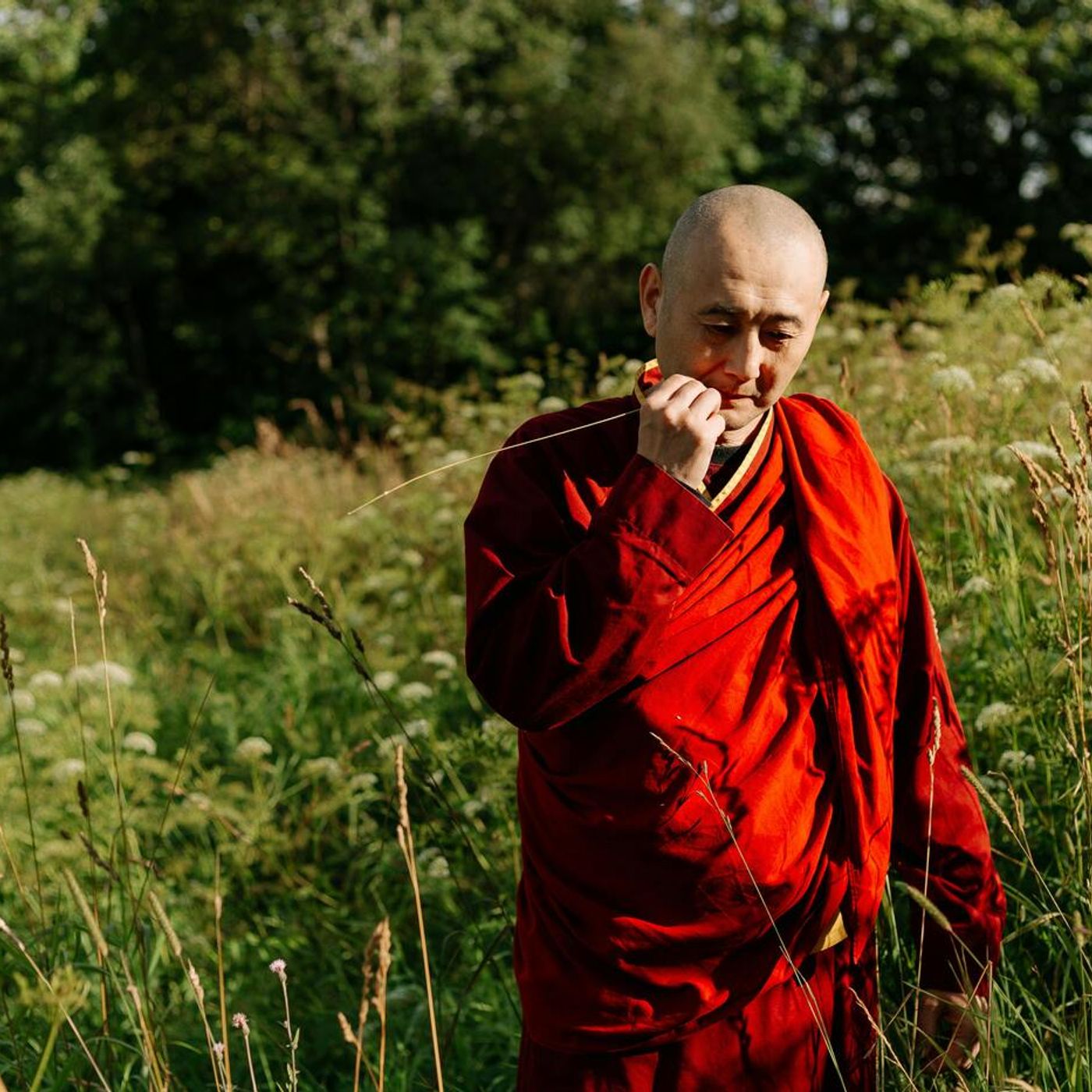
En El arte de la felicidad el Dalai Lama nos ofrece el mensaje sereno de un hombre que ha conquistado la paz interior y sabe que la felicidad no es un don, sino un arte que exige voluntad y práctica.
Si te ha gustado el episodio, también puedes...

 Apple Podcasts

 Spotify

 Castro

 RSS Feed
En El arte de la felicidad el Dalai Lama nos ofrece el mensaje sereno de un hombre que ha conquistado la paz interior y sabe que la felicidad no es un don, sino un arte que exige voluntad y práctica.
Si te ha gustado el episodio, también puedes encontrar mis libros en Amazon:
- Libro 1: Libre, saludable y feliz
- Libro 2: 31 días para mejorar tu vida
- Libro 3: Minimalismo para gente normal
- Libro 4: 7 pasos para una vida con propósito
Conviértete en un seguidor de este podcast: https://www.spreaker.com/podcast/ideas-para-vivir-mejor--5343176/support.
0:08 Hello everyone and welcome to ideas for a better life. I am Eugenio Palla, ruiz, reader, hard- working and lover of personal development. In today' s episode we' re going to talk about the book The Art of Happiness. Written. Nothing but Lalai Lama. Surely you agree that the purpose in life is the pursuit of happiness, the most important purpose. Then, each one has his own and, according to the Dalai Lama, to be happy one learns, but it is necessary to train our mind. The external events, the things that happen to us every day affect our happiness in the short term, for better or for worse. But our line of happiness tends to return to its usual level. Soon after each event. For example, when you buy a car, that gives you a peak of happiness that usually disappears relatively quickly. The same applies to people facing, for example, a loss. The normal thing is that they gradually recover their previous happiness level after a period we call mourning or grief. If you think about it, almost nothing forever affects our levels of happiness. But beyond external events, beyond what happens to us is our mind, our state of mind. It affects
1:38 very much the way we perceive the world when we are angry or when we are in a bad mood. Everyone bothers us, even the people closest to our family, the people we love the most. The main thesis presented to us by the Delai Lama in his book is that it is possible to train our mind to cultivate positive mental states and eliminate negative mental states. It' s a slow process, it' s a gradual process, but in the end you get the necessary calm to live happily, whatever the external situation you ' re facing, because external circumstances can' t generate happiness or lasting unhappiness.
2:27 But the proper or inadequate state of mind does, and that is a very important difference. And what is that proper state of mind to live happily ever after. The Dalai Lama calls it compassion. Compassion is a state of mind in which there is no aggression, in which we wish that no other living being should suffer. It is a state of mind in which you seek to help, in which you have affinity for all people, regardless of whether they are rich, poor, friends of unknown enemies, you don' t care. So the key to being compassionate is empathy, is being empathetic, trying to understand things from the perspective of others, understanding what their story is, and focusing only on those aspects that we have in common, those aspects that we share with those people, what unites us instead of what separates us.
3:32 Links with other people are, according to the Dalai Lama, fundamental to living a better life. So take advantage of every opportunity you have to connect with other people every day and connect with other people start by respecting them and valuing them. Another essential ingredient for happiness. According to the book, it is spirituality or spirituality neither is heritage nor depends on any religion. The Dalai Lama clearly states in the book that any religion gives us the opportunity to live a happier life. In fact, it also defends the existence of a type of spirituality that remains outside of religious beliefs, which is what it calls the basic spirituality, which is that spirituality that is formed by human qualities, such as goodness, for example, And those human qualities are accessible to both atheists and those who practice a religion, to defend or to practice those values.
4:42 You don' t need to go to church, you don' t need to pray you can practice them at any time throughout your day- to- day life or in the lama law. He also speaks a lot in this book of suffering and tells us that suffering is something natural in life. N h s S. N n h. We often increase it unnecessarily, simply because we do not understand that it is part of life and we strive to see ourselves as victims of a conspiracy, of a greater plan of someone. There is always some culprit to what happens to us and suffering is inevitable. It' s like death. Then trying to avoid or try to ignore something that is inevitable is completely absurd. It' s a waste of time.
5:32 What needs to be done is to develop the right mental attitude to cope with suffering. If you feel like a victim, if you start to spread blame among others, all you' re going to do is magnify that suffering, is voluntarily get into a state of distress, which is unnecessary. You shouldn ' t be there. Another mistake we often make, especially in the Western world, is to resist change, to cling to those things we possess, and the Dalai Lama tells us that change is also inevitable. It' s something constant in the world, it' s a universal force. Therefore, again, the same idea of resisting change will only cause us suffering. Another source of unnecessary suffering, which is also quite common, is clinging to the negative events that have happened to us. We cling to them and reproduce them mentally. Over and over we keep in a loop thinking about those negative events of the past, and that only lengthens our pain. Think, for example, of those people who divorce and continue to feel anger toward their ex- partners, even if they go on for years, even if decades go by after that divorce. What do they gain from that nothing. They' re
7:06 only hurting themselves. Negative mental states, such as anger or fear, are obstacles that prevent us from reaching happiness. They are poisons in the words of the Dalai Lama. Then, to end them, we must cultivate only positive thoughts and behaviors. You cannot focus your thoughts exclusively on negative things. You can' t overlook that you already have a lot of positive things in your life today, as you hear this think about everything positive, everything good you have in your life and if you can' t find it, don' t pretend to do it overnight. This is a process. That process of freeing oneself from negative thoughts and behavior takes time. It' s a gradual thing, it' s a sustained effort over time. In fact, the Dalai Lama, in a passage from the book, tells us that it has taken him forty years of practice to focus on good things and block those negative thoughts. We have to learn to change perspective. That' s the key, changing perspective. Normally, everything that we live, everything that happens to us or almost everything has negative aspects and also has positive aspects. Everything that happens to us. We can see it from different angles. Maybe that thing
8:39 that happened to you that you think is bad, maybe it' s a chance to make you stronger. So what he invites us to give the name, is to find the purpose in that suffering and move on. But that ' s why it' s so important to have a flexible mind, to have an adaptable mind, to be able to make precisely that change of perspective. Flexible- minded people are neither incoherent nor indecisive, even though they may sometimes seem so. They, like the Dalai Lama, have reduced their value system to a few basic principles and can apply them in a wide range of situations. What most people do is not that. What most do is have many very specific, very rigid rules and therefore suffer, because it is impossible for those rules to always work in all situations. But of all the negative mental states described in the book, the two that distance us the most from reality, from happiness are IRA and hatred. They are the ones that most destroy our peace of mind, they are the ones that nullify our judgment, they are the ones that will push us to r r ons things that will only worsen the situation. And not only that. IRA and hatred also have negative effects on our health. They increase, for example, the risk of
10:11 heart disease. IRA and hatred are fought with patience and tolerance, and these two attitudes are cultivated through meditation and silence, because meditation and silence help us create a space between the stimulus that has made us angry and our response. So the next time you see yourself in a situation of anger or hatred, try to pause and analyze the situation why you' re angry, what caused that anger. Try to analyze your anger from logic, try to rationalize your anger. And the book also tells us about fear, anxiety, worry, which are an epidemic in the 21st century. But we have to know that they are normal feelings that we all experience from time to time, they are natural responses to certain circumstances, to certain events. The problem is when they become obsessive, when they become constant. That' s when we' re at risk. Then it can lead to mental illness or even serious physical illness, so once again it changes your thoughts or thoughts that generate anxiety for positive thoughts. That excess anxiety is usually related to a lack of self- confidence.
11:46 And the best antidote to that, they tell us Danai Lama is to be honest with ourselves and others about what our capabilities are and what our limitations are. We have to feel comfortable with ourselves, we have to admit when we can' t or when we don' t know how to do something, without that implying losing our self- esteem. It' s okay, but there are people who have such low self- esteem, who hate themselves, who feel unworthy and the idea of the book. The idea that reinforces the book and that we have said 100 zero times in this podcast is that we all have unique talents, we are all very good at doing at least one thing, at least one All have, therefore, a potential that we can develop, that we can put at the service of others and that can be our purpose. So you know that we can only achieve happiness through our mental state, not through external circumstances. And that ideal state of mind consists in cultivating compassion towards others, spirituality, a flexible mind that helps you to cope with pain and fight is or suffering. When this happens, because it ' s going to happen, you' re going to suffer, but at the same time don' t increase it and necessarily ruminating what has happened to us, learn to change perspective, learn to find the good in each situation.
13:16 Rationalize anger, rationalize hatred and also, above all, combat your anxiety and fight your fear. If you do all of the above and I know it' s not easy and once again I repeat that it' s a gradual process. Like the Dalai Lama, you' ll be on the way to living a better life. And now, before I say goodbye, let me announce that you have at your disposal a compilation of the best ideas on personal development, told in a very practical way in my four own books. They are free, healthy and happy. Thirty- one days to improve your life, minimalism for normal people and seven steps to a purposeful life. You already know that you have them available on Amazon and that I leave you their link in the notes of the episode. And if you liked the episode, please subscribe to the channel share it on social networks or visit ideas to live better. You can download a copy of my last book for free and I ' ll just say goodbye. Thank you very much, as always and until the next