July 19, 2026
Spiritual Sunday: Our Conversation With A Professor Of Religion Who Addresses The “I’m Spiritual But Not Religious” Debate

 Apple Podcasts
 Spotify
 Castro
 RSS Feed
 Welcome to our new Sunday series where we will be talking to religious, faith and spiritual leaders to offer some perspective, insight and inspiration for the start of your week. We’re not married to the title just yet, but we’re working on it! Today we have a fascinating talk with Liz Bucar, a leading expert in religious ethics and a professor of religion at Northeastern University who has spent more than 25 years studying how religion shapes culture, etc, politics, health and every day life.
See omnystudio.com/listener for privacy information.
00:00:02
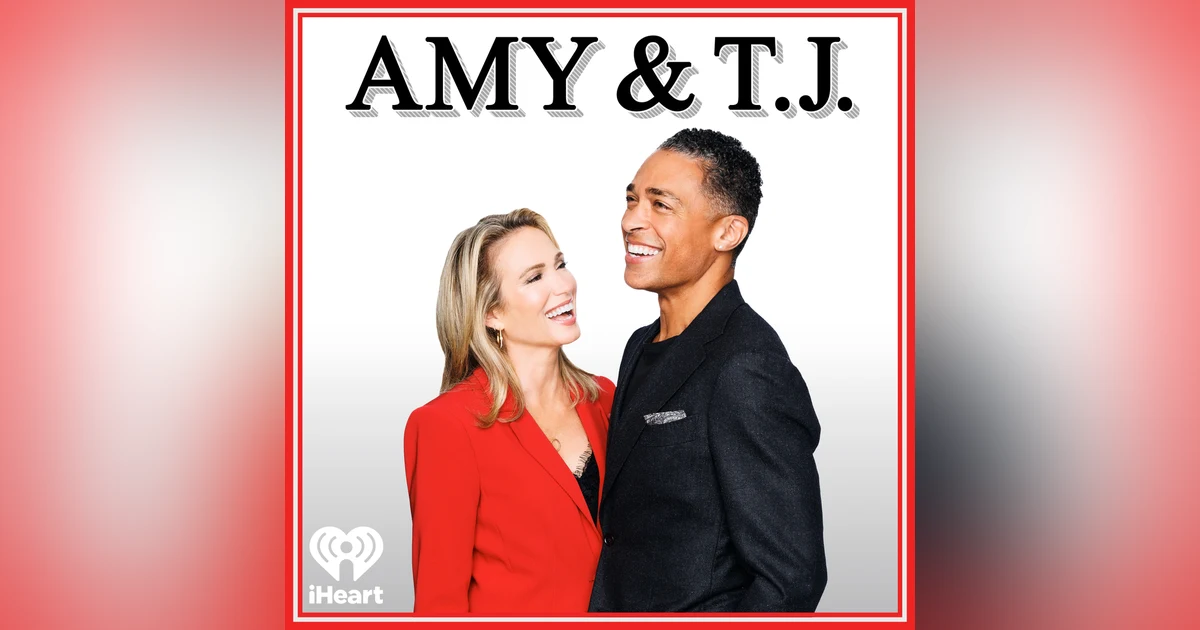
Speaker 1: Hey, there, everybody, and welcome to Amy and TJ. It is Sunday, July nineteenth, and we are starting something new and we hope you like it.
00:00:11
Speaker 2: We are starting a Sunday.
00:00:13
Speaker 1: Series, a spiritual Sunday series. How about that where we hope we can give you some insight, some inspiration, some time to reflect. But we're not the ones who are going to be guiding you know, We're going to actually have experts on hand to help us find some ways to deal with all the mayhem and chaos of our own lives. And then yes, it's all the headlines in the world. So to start things off, we have a faith leader, Liz Bukar. She is the author of five books and her latest one is called Beyond Wellness, How Restoring religious roots of spiritual practices can Heal Us.
00:00:51
Speaker 2: She's an expert in religious ethics. She's a professor of religion at Northeastern University.
00:00:56
Speaker 3: TJ.
00:00:57
Speaker 1: I know you're excited about this because this was a big part of what we used to do.
00:01:01
Speaker 2: We used to call it Faith Fridays back in the day.
00:01:03
Speaker 4: But yeah, we need it more than ever. And there's just it looks life is hard and ural TV life looks like it's harder, so we need some guidance. And Sunday is a good day for people to reflect and want to improve their lives. So there's only so much advice we can give them. We need somebody else to start doubling ounce advice.
00:01:22
Speaker 2: Yes, step in, Liz Buguard. Liz, thank you for being with us today.
00:01:26
Speaker 3: Oh, thanks very much for having me here. I have to say, I don't think I've been called a faith leader that much. So this is interesting for me because you know you're a leader then yeah, I mean because I am someone who doesn't have a religious affiliation, right, but I am sort of becoming this public theologian for people without religious afiliation. So I'll take it. I'll sit with it. I'll take you out there.
00:01:46
Speaker 4: Can we start there? What's the difference when you hear people say I'm religious others say I'm spiritual? What do people because sometimes people roll their eyes and go, oh god, here, what do you think people are meeting when they say that?
00:02:01
Speaker 3: I think so when I hear that from my students, for example, my college students that for them, there's a bucket which is religion, and they're like, those are institutions that's power. That's what I grew up in, That's what my grandparents did. That's maybe five major religious traditions that I know that you know, you can name them, and I don't want that. They think, right, that's like that's abuse, and that's doesn't line up on my core values. And then when they say spiritual, they mean the part of religion that they kind of like like, maybe it's a part that they personally curated. Maybe it's more about their individual quest, Maybe it's more internal, maybe it's more mystical. And I think that in their head, and I'm saying this all counts you a little bit, in their head, I think they think that avoids some of the pitfalls religion. Like in the religious studies point of view, we sort of see religion as a bigger bucket and that spirituality it's like a branding issue, right. Spirituality has branded itself as the good stuff, you know, the individually curated stuff, the devoid of or the power dynamics institutions, and religion has the big pr problem right now. But in my head, all that stuff is religion. But yeah, I think that usually that's what meet people mean. They like want to Sometimes they're deconstructing religion they grew up in or like a lot of my students, they didn't grow up with any religion. They're like, oh, religion, that's white Christian nationalism. That's not for me. So they only hear the loudest voices, the loudest religious voices, and they think that's all that religion sort of can offer them.
00:03:25
Speaker 4: I never thought of it that way. That spirituality it still comes from religion. But we're kind of just plucking the things we like most.
00:03:33
Speaker 1: And don't.
00:03:36
Speaker 2: You know.
00:03:37
Speaker 3: You know what scholars sometimes say is that it's not really an analytical factual distinction. It's a normative one, meaning like religion stuff we don't like, spirituality, stuff we do like for people who can say so. But it's all that being said, people like really much, very much like like these categories, right, and they feel comfortable saying I have a spiritual practice or I am looking for a spiritual path, and I just I can't the word religion. It's too loaded for me. It comes with too much baggage. I'm not interested. So I want to also name that is, like, you know, an appropriate response to what is going on right now?
00:04:10
Speaker 2: Yeah, I have to be fully transparent.
00:04:12
Speaker 1: I have absolutely said that I'm not religious, I'm spiritual.
00:04:16
Speaker 2: I was like, I was very nice.
00:04:21
Speaker 1: I was raised in a very Catholic family. My parents are still very much Catholic. My brother is very Christian. I am the black sheep of the family in the sense that I have taken a different path, but I still have and I still appreciate the moral compass I was given. Yeah, studying Catholicism, going to Catholic school. I had both my daughters go to Catholic schools. But I like what you said that religion has a PR.
00:04:47
Speaker 3: Problem the worst, Right, It's the worst.
00:04:50
Speaker 1: And I think I feel like when I was coming up, losing my religion, rim was like a popular song, and I feel like it's pretty much been lost by a lot of young folks.
00:05:01
Speaker 2: Why do they have APR problem? What is the issue?
00:05:03
Speaker 1: Why are people turned off by the idea of religion or going to church or having a specific faith.
00:05:10
Speaker 3: Yeah, I mean I think it's a lot of different reasons for a lot of different people.
00:05:13
Speaker 1: Right.
00:05:13
Speaker 3: Sometimes some people are deconstructing religious trauma. They grew up in a really high control religious environment and like so now they associate all religion with that backstory. For some people, I think it's that religious institutions have kind of failed us, and whether or not that's like leadership or whatever. And so again it's like that must have been the religion, not the institutions, not the people, must have been the religion. For young people. I actually did a series of interviews for Timbo a couple of years ago. For young people, the biggest reason that they leave religion is because of the misalignment they see with their core values and the religious tradition they grew up, and often around LGBT issues. Actually, they're like, I just can't like this church doesn't line up with my sense of sexuality and humanity and human rights, and so I just I am taking myself out of that entirely. I think it's for a lot of different reasons. Again, I think religion has a pr problem and it's sort of well deserved. But a lot of what I've been trying to do is, like I agree, I have no religious filiation myself, and I'm not trying to, like, you know, join anything right now or ever really, but there are some helpful things right now for me personally, and like you know, as you start TJ. Like the world is hard right now. It is. It is hard on so many levels, right, I mean, it's not just politics, it's the environment, It's like what the heck is going on with technology in AI, it's you know, it's all the things. And having some way to interpret what's going on and respond to it is hard to find. And I just find religion super helpful. Conversation and partners. They give me concepts, they give me ways of thinking, They make me realize what I'm missing maybe, And I just want to put it back in the conversation because if we don't, then those loud voices that my students don't like, the super concern of voices, they win and they get to own all that space of you know, theological imagination, hope, trust, faith, Like I want to take some of that back.
00:07:09
Speaker 4: I guess, as you said, for you personally, what religion does even though you don't have an affiliation, and what it means for you. Where do you see religion's value right now? Yeah, well, the grander society in terms of applying it to all of these things in the world that are so difficult right now.
00:07:29
Speaker 3: Yeah, Well, I mean a couple of like I mean there's some concrete things, right. So I feel like some of the bravest, most courageous pushback I'm seeing is from religious leaders. They're not maybe my religious leaders, but they're religious leaders. If I think about what happened in the Twin Cities, who were showing up where their bodies and linking arms and really resisting what was happening with ICE. If I think about the recent the Pope's recent and cyclical about AI, one of the very strongest, you know, sort of like this is why this is morally might be problematic, you know, really strong statement against the silicon value. So I think we do have some like voices in this, like you know, on their best day, like you know, prophetics sort of MLK sort of like vibe going on. So I think that's happening. But I also think that there are I am just finding that as I study religion for a long time. I have a PhD in it, I study it for decades's kind as an anthropologists someone else's religion, not for me. But as I went right, I sort of realized I was collecting these different concepts and buckets and ways of thinking about the world, sort of like philosophy on steroids. I say so. For me, religion really helps me think about the difference between optimism and hope. It makes me think about human flourishing beyond just like self optimization, you know, or individual. It really helps me think about community, helps me decenter humanity, like just humans in general. Like I find indigenous world views so helpful for like getting us away from this sort of narcissistic Like I'm just like trying to do good for me. I'm like, where am I like wearable track in my biomarkers. I'm like, but all that is like not enough, right, you're just shaking your head? Is tjing? You do a wear able TD?
00:09:12
Speaker 4: No, well, I'm completely agreeing with the direction you're going. That's what that means.
00:09:15
Speaker 3: You gotta bring on. Yeah, I think all that and that's actually wright. I wrote this book beyond Well now I think all that's important, right, Like I do that stuff. I track my microbes. I lived heavy, you know, I'm a midlife women. I do what I'm supposed to do. But that's not that's not it. That's not all of it. I think human flourishing is bigger. I think that's just the like the floor, right, And I think that religious traditions have really grappled with human flourishing, whether or not they're directed to. You know, again, a view of the world that's much more focused on like nature, like an indigenous one, or a focus maybe on divinity, or just a different kind of metaphysics that just gets me outside of my like head of like where I'm being. What I'm mean told is a full human life and me being like somebody's missing, what's missing. Oh, here's someone, here's a traditional that's thought about it. To talk to them about it. Let's see what they've got from me and how it can use this imply it to my own life.
00:10:04
Speaker 1: That is so interesting I hadn't thought about on this journey we're all on and we see it on social media and certainly in the technology that's been given to us to make our best selves. We're focused on self improvement, self help and self is in front of all of it, and I hadn't really thought about religion is collective.
00:10:25
Speaker 2: Religion.
00:10:26
Speaker 1: Religious groups are communities, and that's what's missing in all of this self help, all the books. It's all about you and finding yourself, and so the role of religion gets lost. That community aspect of it. So what is the key to the well being? How do you marry the individual needs and how your own personal growth should align with Yes, a community a larger perspective.
00:10:52
Speaker 3: Yeah, And I don't think you necessarily need like a religion or religious community to do that. I just think that there are some helpful like patterns there to like maybe draw on. Right, So I think you're right, Like wellness culture, for example, wants us to not only focus on ourself but optimize ourself right for longevity and peak performance, and that forgets that like human life is fragile and vulnerable and it ends right, Like what about preparing for a good death? Like I'm the Sandwich generation, right, so I'm already thinking about what it looks like to be you know, helping parents and and laws sort of that next great sort of life transition. So I think what religion? So for me, what religion does when I like, I mean what I did for the book was like basically like try on a bunch of stuff like, oh, okay, like sound baths. Well, what would a sound bath? What does sound look like? More embedded in a relich tradition? Like what do I get? Oh? Oh really? Okay? So sound bass are very popular forms of meditation right now. And then people love it because if they think of it as like quote unquote easy meditation, because you like lie on the ground someone plays like a metal bowl or crystal bowl, right, or gong and then like the vibrations like help you meditate and sort of like or take up depending on who you're talking to, take kind of our journey, right. And so I did a bunch and that's very popular now I'm being sold that a lot. And so I'm surprised you haven't been amy on your insta.
00:12:16
Speaker 2: I just got my you know what it was. I had no idea what it was.
00:12:19
Speaker 3: Yeah, it's become it used to be very like underground subculture. It's becoming very popular, right. It's an add on to yoga classes or people. It just kind of springing up everywhere. But you kind of just show up and like passively lay there often and like then you're done an hour later. So that's one like version of like sound for like wellness. But like religious traditions think about sound much deeper, right, They train you how to listen deeply. They if a sound bath is about just coming out calm. In the religious tradition, like the Sick tradition, which is a lot there's a lot of sound involved in music involved, sacred sound involved in the sick tradition. But there the music isn't that the sound isn't just about like feeling calm and chasing the good vibes. It's about all vibes, all the emotions, really leaning and fully into feeling everything, including anxiety and suffering that comes from being you know, away from a beloved And so that understand, like, how do you train yourself to be a deep listener? How do you develop this emotional intelligence? How do we become I mean I walk around with like headphones on and I sleep in ear plugs. I'm not a good listener. I've like, modern life doesn't teach me to listen carefully. So how do religions help us think about really training ourselves to listen better, to understand what's going on around us so we can respond better. I mean that's just like one little example, but I basically found that every time I took a very popular one less practice and then I went back and looked at it in a more religious container. I added back in community right away, like we said, but also ethics, like suddenly there were like ethical obligations put on me that people don't like that either, like my students for example, they don't want someone else's rules to follow, but like more like right action. Ethical living is also I think part of a good life and all that together the stuff have more meaning and purpose and I think just work better for people. I mean that sort of was my big takeaway.
00:14:06
Speaker 4: And who's currently doing the PR for religion and why are they so parle?
00:14:21
Speaker 3: Yeah, well I think I've been hired on as a scrappy, like you know, ringer, like maybe I can do a little PR for my slipstack is called religion reimagined And I'm like, I get a lot of people mad at me for that, but yeah, I mean, look, the people who are the loudest voices. We can talk about who's the loudest voices right now in America, right, And that's who's doing the PR for religion, and they're not it's not a good it's not a good face for religion, right, it's not. Yeah, I mean I think that's who's who's claiming the airwaves right now for religion. Are those loudest voices? If it's like a Doug Wilson or if it's a current version of what the administration is doing or what's happening. Uh, you know, at the highest sort of levels, I think that's who is. I think they've like taken over the communication and messaging about about it. That being said, there's I mean, it's certainly true that like there are prophetic, progressive, liberatory religious voices that are doing their work. That's always been true with the Black Church in the US. They've always been onto the right side of history and always been sort of leaders and pushing back and like naming what's happening, even when naming things was dangerous, right, and witnessing right. There's that thing too that, like religious traditions, when they're at their best, religious leaders, when they're at their most courageous, are able to articulate and witness and say, no, this is what's happening right now, and it's wrong and we shouldn't be doing it, and that is happening. It's just that we're hearing a lot of the noise too.
00:15:44
Speaker 1: And I'm curious in that there's always a debate about this. There's a debate about everything these days. I feel like, but is there an appropriate and actually advantageous role for religion and politics. I mean, we do need a moral compass. We're for ethics of any kind when it comes to our elected leaders. I know we have separation of church and state obviously, but is there a role for religion in politics?
00:16:11
Speaker 3: Yeah, I mean I think the first thing is, have we ever really had a separation of church and state like we said we did? But actually what happened was a version of like White prostantism just sort of seeped its way into the US and lots of different ways, right into Supreme Court decisions, and so all our legal stuff is very much seeped with like Christian norms and values before this current administration. Right, this is nothing new. So that's just one example. So we're supposed to have separation of church and state, we've never really done that successfully. I think it's tricky to figure out, and we've never We're trying to always work this out, right, like how to allow for real religious pluralism without privileging one and without making people who feel like they don't have any religious filiation feel like they're you know, outsiders too. I think part of it is religious institutions made aren't good at this, and so maybe we need different kinds of religious institutions or different types of like collectivity that can do this in ways that are not you know, politics is corrupting to religion, right, If religion is corrupting to politics, politics can be very corrupting to religion as well. And that's the big argument for keeping them separate from a religious point of view, is that once you start getting involved in politics, you know, your religion suffers.
00:17:25
Speaker 4: What would you advise me to people who want to find religion and how difficult they might be able to find it on your own because they're getting like you said, some of these spokespeople for religion right now might completely turn someone off to religion, but they're looking for a way to still enter into it in some way in order to advise that person. And just how difficult is it to find religion if you will on your own.
00:17:48
Speaker 3: Yeah, well, I think it is. I get this question a lot. I think it is really challenging. Right, So, I think, particularly since we're told we don't trust institutions, we don't trust leaders, we don't trust spiritual gurus even anymore. Right, we're in the era of the death of the spiritual gurus too. Many of them were in the Epstein files, like we've canceled them all. But you can't just trust your gut and your intuition on this. It's really helpful to have a community, to have a teacher in some way. So I think trying to find a community that will welcome you in. It's interesting. I was trying to think about this for me. I just came back. I have a cabin in northwest Connecticut and there's a local pastor out there that does a service at like a local pond like in the woods on Sunday, And I was like, huh, Like, there's stuff about that that actually jives with me because it's like a space. It's like a force that I care about. It's in nature, it's a community. It's a town that I feel very close to, Like the people there I feel very close to. Maybe that's the kind of community I could join. There are people and places, I mean, this is happening on places like Substack is happening virtually people who are like trying to grapple with what does their version of religion and belonging look like. But it's really it's really finding I think a group, not just a person that you're gonna like follow that can be dangerous and then making sure you like you're like, oh okay people in this group, like you know, is this the vibe for me? Like? Is this is this really? You know? What are their core values? Do they line up with mine? Whether they how are they politically engaged or not politically engaged? Because sometimes religious communities and so personally for me, I find religion more valuable when it can be engaged. I don't have a lot of patients for spiritual bypassing tapping out right now, too much is happening if we tap out, like then we give up our future too, you know, again those loudest voices. So is this community engaged in the community? Is it politically engage in a way that lines with me? You know? Are there things? Are there ways or their rituals or things that they do that line up with me? But I think I think you're right. I think it's hard. I think it does take a lot of research instead of searching. But I think you have to vet them a little bit, right, because you know, just because it's not a traditional religious community doesn't mean there couldn't be some you know, some sort of danger abuse happening there as well.
00:20:01
Speaker 1: Liz, do you have the numbers on how many people in this country identify as religious? Because the numbers obviously have been dwindling, so they have been.
00:20:11
Speaker 3: So the Pew Forum staty is this right, and the numbers it's interesting the numbers of what they basically track is how people are not religiously affiliated, right, And so that bucket has been increasing, and it's about twenty five percent now. There are some estimates that particularly young people, it's growing in that number particular, so that young people it may be like high thirties that are non really to affiliated thirty percent, thirty six percent. I think what's hard about those surveys is like what do they capture? So if you ask my student, like are you religious? And they're like no, no, no, And then you say, do you have a mindfulness practice, meditation practice, do you do taro cards? Do you do you do have a little I don't know, a little pagan Wicca thing going on, Like they might have a bunch of stuff that looks like religion, it just doesn't look like it's not. Christianity, Islam, Hindu is like one of the kind of big five buckets so I don't think that religion is dwindling. I think that religion is changing and shifting and religious affiliation is dwindling, probably because I think that. I mean, if I think about what is happening with what's going on in the world right now, I do think you could say it's a spiritual crisis, because I think we are looking for meaning and purpose and that just sounds like a spiritual crisis to me, and people will always go back to these sort of like tools of ritual and community and writes a passage looking for transformation and salvation. I just don't think it's going to look necessarily the same. As we consume religion and spirituality in different ways, right, people aren't going to go back. I mean, my students aren't like reading classic texts, right, They're consuming spirituality through Instagram or buying things from Etsy and stuff. So it's hard to know really what's happening. It seems to me that we were really puminating in terms of relatively and maybe it's sort of evened out, but I actually think it's that that's what stats will tell you, right, But I think what's actually happening if you had a more a wider view is that it's just shifting and changing.
00:22:21
Speaker 4: Shifting and changing because people are looking for something so to that, whether it's religion or you want to use spiritual take Can you take a moment here and however you want to answer, give people who are looking for a way to understand our gas persons are now going off while we're fighting politically all the time. Why this kid is getting killed in Mississippi and it starts a war. Why I've gotta deal with a damn bacteria that's causing explosive diary? I cy so applied for people who are looking for that and understanding in some way to be comforted, whether it's religion or beer as well. Can you give some guidance here for people who are looking for some meaning?
00:23:04
Speaker 3: So, I that's interesting. I was going to ask about this a couple of days ago, and I said, you know, about a year ago, I was in a real place of like what the you know? I like, I got I got nothing. I can't be hopeful right now. I'm just so upset all the time, like upset, like I'm worried about my kid is graduating from high school? Like what what is this world? Like I'm fine, great, I'm personally fine, but what is happening to everyone around me? What's happening to my community in my country, and what's the future that we were creating for my kid? And just felt really beaten down and you know, had to tap out the news for a while. I just couldn't consume it anymore. Right, It's just too much. It feels like too much. So I think that when I think about what religious ideas can offer me, it's partly the importance of witnessing and really paying attention to what is happening and not tapping out. And then it also gives me framework for hope, which is very different than optimism. I have trouble with hope because because I'm not religious, I don't have a belief system or trust in a higher power, say right, or some sort of metaphysical cosmology that like says it's all going to turn out okay. My mom has that. I don't have that. So for me being able to imagine a future that looks better than right now, even though right now looks pretty bad, that to me feels like a theological exercise. And that's where I'm getting That's where I'm getting my hope from So, hope is different than optimism, right. Optimism is like everything's going to turn out fine. It's the opposite of pessimism, Everything's not going to turn out fine. Hope is like, hopefully it's going to turn out fine, it might not, and what and what will change it is what I do today. So I'm thinking a lot about how do I motivate myself to act in the world right now? How do I start to imagine? I think we think like hope and imagination seem kind of like I don't know, wishy washy, but I think they're super important this political moment because if we don't look, the right is really good in imagining a future. They get a playbook. They like know where they're going. I'm not sure that like the left, you know, or even the middle has such a clear vision of where we're going. And the only reason I feel better now than I did a year ago, as I've sort of told myself, yeah, things are breaking. Everything is breaking, like the rule of law is breaking. I'm in higher ed breaking like these things are breaking apart things I thought that could depend on. But maybe they're breaking because we're gonna transform into something new and better, Like if the rule of law was so easy to break, maybe it wasn't that good to start with, Like maybe we just didn't have the right systems in place, so maybe we can build something better. If corruption was so easy, like there's so much corruption, people are like proud, they like they flaunt their corruption right and embezzlement. If that was so easy to do, maybe it's because we forgot right, don't you think. I mean, it's sort of like a badge of honor. No one's embarrassed that they're like in bezzling money right right now in terms of like this, you know, the oligarchy or whatever, the leadership in the US, So how do we like? That means that we just didn't have a sense of like our core values as a country. I mean I sort of post on substack about patriotism because of July fourth, Like patriotism not a word I love, but I need to like that because I have a kid who's growing up in America, is going to college in America, plans to be American. If I can't create some version of America that I can get behind and that I'm proud of, and I've given up America to people I don't agree with right, So all that stuff, and maybe that doesn't sound particularly spiritual or theological religious, but those are all things I've gotten from engaging religiotricians and taking them very seriously on their own terms.
00:26:45
Speaker 4: Well, I hope you're right, but I'm not optimistic.
00:26:50
Speaker 1: Well, oh my goodness, And one last question for you, And you mentioned your mom, and I think a lot of people might feel this way too. You mentioned you're in this and which genuation we But how do you have those conversations with your mom knowing that you all don't and a lot of families and a lot of people deal with this when you don't have or don't share the same faith, so to speak, but you still believe in hope and you still have a spiritual practice.
00:27:19
Speaker 2: How do you what advice would you.
00:27:21
Speaker 1: Give to people who I think always dealing with that back and forth.
00:27:26
Speaker 3: I think that's so important to name because I think sometimes we talk about like the left also talks about or the center talks about us versus them, and we forget that like usually the them as in our family, or often that them is our neighbor or a part of our family. So for you know, and I have members of my family that voted the other way in the last administration. For example, I have members of my family who consume much different media than I do, so they have a totally different narrative of like what went down, what went down the Twin Cities, for example. I think that the place to make the change is those harder personal connections starting there. I think those are hard conversations that have It's a lot harder than going to a note King's rally, but they can be the most impactful. I had, you know, after I think it was after the Alex Pretty murder. I wrote a substack post about how I'm afraid to call my mom right now because i just don't know. I'm so upset and I'm like crying a lot, and I like watched it all. I'm very online, right, so I watched it all happen live, and that made it so visceral of what was happening in that we're recording a week where we just had three more murders, right, and it was just so upset about it and grieving, just like grieving America, grieving and everything. And I'm afraid to call my mom right now because I don't know that she's seeing the world the same way. And that's my mom who gave me my core values, right. And I wrote a substack called I'm Afraid to Call my Mom. And you want to know who reads every one of my substacks? My mom, mom? Yeah, everyone. So she called me and we had a really hard conversation, which of which you know, she said, you're assuming some things about me that aren't true, and I said, that's fair. I'm sorry, here's a lot of eye statements. I feel this way. I'm worried about this. Here's what I'm concerned about. And then, you know, and she kind of did the same thing, and it was it was a rough and we had a number of conversations and they were exhausting. But a couple of things came out of that, right, Like we opened up this line of communication. She now has the New York Times app on her phone so she can get different kinds of news. I mean that that was a huge win for me, that she wasn't just getting her nude from the Epoch Times or whatever. Right, So yeah, I mean, that's a totally different version of what is happening. Right, So, but it was not I was not a conversation. I wanted to have a lot easier to write anonymously for a lot of people or talk to my students, But it's probably one of the most important conversations I had this year. So I think the idea of like really leading with humility and again a lot of eye statements. But I think it's starting with these conversations that are close to you, because those people the people that you care about you, Right, this is my mom. She cares about me. She doesn't want me to be grieving and unhappy, even if we disagree.
00:30:06
Speaker 4: So if you got her to get the New York Times app, what app does she get to you to.
00:30:11
Speaker 3: Get No, I guess I didn't get an app, so I requires a bunch of I mean, I think for her the win was me like listening like, you're right, Mom, I didn't know. I hadn't really thought about your point of view. You're right, your life is different. I get it. You're you know, You're you're also in a marriage that's different than my relationship, right, So you know, and there are there are pressures on you. You're also in a part of the world that's like she's in rural Pennsylvania. It's very different from them where I am. So I think that for her the win was that, like I listened to her, you know, I'm like her, her fancy professor like daughter. But then I listened to her and really like took you know, not just dismiss of what she said, right, and that really took on board what she and I think that was really important to her.
00:30:55
Speaker 1: That that is a win. And I think that's a wonderful way to end, because that is cool, and that gives me hope that we all just need to listen to each other and we can disagree, but we can be respectful and we can love each other without always necessarily.
00:31:10
Speaker 2: Being on the same page.
00:31:12
Speaker 3: That is a.
00:31:13
Speaker 2: Wonderful personal lesson that you shared with us. We appreciate it.
00:31:17
Speaker 3: I mean, there's a thing called Tylerrico's talking a lot about this politics of love, which sounds like OUI guy and suttimental, but really what it means is that sort of like respect to the person who would totally disagree with and really rebuilding this idea of common good and collectivity and not just like looking out for you and not being selfrightious to some principle that you can't hear the other person and is thinking and saying and their experience.
00:31:40
Speaker 2: Yeah, we need more of that in this world.
00:31:43
Speaker 1: But Liz Bukhar, thank you so much for being with us on the podcast.
00:31:47
Speaker 2: We appreciate it. We hope a lot of people got inspired and.
00:31:50
Speaker 1: Maybe opened their minds and their hearts a little bit to what you had to say, whether they're religious or spiritual or none of the above.
00:31:56
Speaker 2: But thank you for being on the podcast today.
00:31:58
Speaker 3: Thanks for having me. Guys. The catch
Speaker 1: Hey, there, everybody, and welcome to Amy and TJ. It is Sunday, July nineteenth, and we are starting something new and we hope you like it.
00:00:11
Speaker 2: We are starting a Sunday.
00:00:13
Speaker 1: Series, a spiritual Sunday series. How about that where we hope we can give you some insight, some inspiration, some time to reflect. But we're not the ones who are going to be guiding you know, We're going to actually have experts on hand to help us find some ways to deal with all the mayhem and chaos of our own lives. And then yes, it's all the headlines in the world. So to start things off, we have a faith leader, Liz Bukar. She is the author of five books and her latest one is called Beyond Wellness, How Restoring religious roots of spiritual practices can Heal Us.
00:00:51
Speaker 2: She's an expert in religious ethics. She's a professor of religion at Northeastern University.
00:00:56
Speaker 3: TJ.
00:00:57
Speaker 1: I know you're excited about this because this was a big part of what we used to do.
00:01:01
Speaker 2: We used to call it Faith Fridays back in the day.
00:01:03
Speaker 4: But yeah, we need it more than ever. And there's just it looks life is hard and ural TV life looks like it's harder, so we need some guidance. And Sunday is a good day for people to reflect and want to improve their lives. So there's only so much advice we can give them. We need somebody else to start doubling ounce advice.
00:01:22
Speaker 2: Yes, step in, Liz Buguard. Liz, thank you for being with us today.
00:01:26
Speaker 3: Oh, thanks very much for having me here. I have to say, I don't think I've been called a faith leader that much. So this is interesting for me because you know you're a leader then yeah, I mean because I am someone who doesn't have a religious affiliation, right, but I am sort of becoming this public theologian for people without religious afiliation. So I'll take it. I'll sit with it. I'll take you out there.
00:01:46
Speaker 4: Can we start there? What's the difference when you hear people say I'm religious others say I'm spiritual? What do people because sometimes people roll their eyes and go, oh god, here, what do you think people are meeting when they say that?
00:02:01
Speaker 3: I think so when I hear that from my students, for example, my college students that for them, there's a bucket which is religion, and they're like, those are institutions that's power. That's what I grew up in, That's what my grandparents did. That's maybe five major religious traditions that I know that you know, you can name them, and I don't want that. They think, right, that's like that's abuse, and that's doesn't line up on my core values. And then when they say spiritual, they mean the part of religion that they kind of like like, maybe it's a part that they personally curated. Maybe it's more about their individual quest, Maybe it's more internal, maybe it's more mystical. And I think that in their head, and I'm saying this all counts you a little bit, in their head, I think they think that avoids some of the pitfalls religion. Like in the religious studies point of view, we sort of see religion as a bigger bucket and that spirituality it's like a branding issue, right. Spirituality has branded itself as the good stuff, you know, the individually curated stuff, the devoid of or the power dynamics institutions, and religion has the big pr problem right now. But in my head, all that stuff is religion. But yeah, I think that usually that's what meet people mean. They like want to Sometimes they're deconstructing religion they grew up in or like a lot of my students, they didn't grow up with any religion. They're like, oh, religion, that's white Christian nationalism. That's not for me. So they only hear the loudest voices, the loudest religious voices, and they think that's all that religion sort of can offer them.
00:03:25
Speaker 4: I never thought of it that way. That spirituality it still comes from religion. But we're kind of just plucking the things we like most.
00:03:33
Speaker 1: And don't.
00:03:36
Speaker 2: You know.
00:03:37
Speaker 3: You know what scholars sometimes say is that it's not really an analytical factual distinction. It's a normative one, meaning like religion stuff we don't like, spirituality, stuff we do like for people who can say so. But it's all that being said, people like really much, very much like like these categories, right, and they feel comfortable saying I have a spiritual practice or I am looking for a spiritual path, and I just I can't the word religion. It's too loaded for me. It comes with too much baggage. I'm not interested. So I want to also name that is, like, you know, an appropriate response to what is going on right now?
00:04:10
Speaker 2: Yeah, I have to be fully transparent.
00:04:12
Speaker 1: I have absolutely said that I'm not religious, I'm spiritual.
00:04:16
Speaker 2: I was like, I was very nice.
00:04:21
Speaker 1: I was raised in a very Catholic family. My parents are still very much Catholic. My brother is very Christian. I am the black sheep of the family in the sense that I have taken a different path, but I still have and I still appreciate the moral compass I was given. Yeah, studying Catholicism, going to Catholic school. I had both my daughters go to Catholic schools. But I like what you said that religion has a PR.
00:04:47
Speaker 3: Problem the worst, Right, It's the worst.
00:04:50
Speaker 1: And I think I feel like when I was coming up, losing my religion, rim was like a popular song, and I feel like it's pretty much been lost by a lot of young folks.
00:05:01
Speaker 2: Why do they have APR problem? What is the issue?
00:05:03
Speaker 1: Why are people turned off by the idea of religion or going to church or having a specific faith.
00:05:10
Speaker 3: Yeah, I mean I think it's a lot of different reasons for a lot of different people.
00:05:13
Speaker 1: Right.
00:05:13
Speaker 3: Sometimes some people are deconstructing religious trauma. They grew up in a really high control religious environment and like so now they associate all religion with that backstory. For some people, I think it's that religious institutions have kind of failed us, and whether or not that's like leadership or whatever. And so again it's like that must have been the religion, not the institutions, not the people, must have been the religion. For young people. I actually did a series of interviews for Timbo a couple of years ago. For young people, the biggest reason that they leave religion is because of the misalignment they see with their core values and the religious tradition they grew up, and often around LGBT issues. Actually, they're like, I just can't like this church doesn't line up with my sense of sexuality and humanity and human rights, and so I just I am taking myself out of that entirely. I think it's for a lot of different reasons. Again, I think religion has a pr problem and it's sort of well deserved. But a lot of what I've been trying to do is, like I agree, I have no religious filiation myself, and I'm not trying to, like, you know, join anything right now or ever really, but there are some helpful things right now for me personally, and like you know, as you start TJ. Like the world is hard right now. It is. It is hard on so many levels, right, I mean, it's not just politics, it's the environment, It's like what the heck is going on with technology in AI, it's you know, it's all the things. And having some way to interpret what's going on and respond to it is hard to find. And I just find religion super helpful. Conversation and partners. They give me concepts, they give me ways of thinking, They make me realize what I'm missing maybe, And I just want to put it back in the conversation because if we don't, then those loud voices that my students don't like, the super concern of voices, they win and they get to own all that space of you know, theological imagination, hope, trust, faith, Like I want to take some of that back.
00:07:09
Speaker 4: I guess, as you said, for you personally, what religion does even though you don't have an affiliation, and what it means for you. Where do you see religion's value right now? Yeah, well, the grander society in terms of applying it to all of these things in the world that are so difficult right now.
00:07:29
Speaker 3: Yeah, Well, I mean a couple of like I mean there's some concrete things, right. So I feel like some of the bravest, most courageous pushback I'm seeing is from religious leaders. They're not maybe my religious leaders, but they're religious leaders. If I think about what happened in the Twin Cities, who were showing up where their bodies and linking arms and really resisting what was happening with ICE. If I think about the recent the Pope's recent and cyclical about AI, one of the very strongest, you know, sort of like this is why this is morally might be problematic, you know, really strong statement against the silicon value. So I think we do have some like voices in this, like you know, on their best day, like you know, prophetics sort of MLK sort of like vibe going on. So I think that's happening. But I also think that there are I am just finding that as I study religion for a long time. I have a PhD in it, I study it for decades's kind as an anthropologists someone else's religion, not for me. But as I went right, I sort of realized I was collecting these different concepts and buckets and ways of thinking about the world, sort of like philosophy on steroids. I say so. For me, religion really helps me think about the difference between optimism and hope. It makes me think about human flourishing beyond just like self optimization, you know, or individual. It really helps me think about community, helps me decenter humanity, like just humans in general. Like I find indigenous world views so helpful for like getting us away from this sort of narcissistic Like I'm just like trying to do good for me. I'm like, where am I like wearable track in my biomarkers. I'm like, but all that is like not enough, right, you're just shaking your head? Is tjing? You do a wear able TD?
00:09:12
Speaker 4: No, well, I'm completely agreeing with the direction you're going. That's what that means.
00:09:15
Speaker 3: You gotta bring on. Yeah, I think all that and that's actually wright. I wrote this book beyond Well now I think all that's important, right, Like I do that stuff. I track my microbes. I lived heavy, you know, I'm a midlife women. I do what I'm supposed to do. But that's not that's not it. That's not all of it. I think human flourishing is bigger. I think that's just the like the floor, right, And I think that religious traditions have really grappled with human flourishing, whether or not they're directed to. You know, again, a view of the world that's much more focused on like nature, like an indigenous one, or a focus maybe on divinity, or just a different kind of metaphysics that just gets me outside of my like head of like where I'm being. What I'm mean told is a full human life and me being like somebody's missing, what's missing. Oh, here's someone, here's a traditional that's thought about it. To talk to them about it. Let's see what they've got from me and how it can use this imply it to my own life.
00:10:04
Speaker 1: That is so interesting I hadn't thought about on this journey we're all on and we see it on social media and certainly in the technology that's been given to us to make our best selves. We're focused on self improvement, self help and self is in front of all of it, and I hadn't really thought about religion is collective.
00:10:25
Speaker 2: Religion.
00:10:26
Speaker 1: Religious groups are communities, and that's what's missing in all of this self help, all the books. It's all about you and finding yourself, and so the role of religion gets lost. That community aspect of it. So what is the key to the well being? How do you marry the individual needs and how your own personal growth should align with Yes, a community a larger perspective.
00:10:52
Speaker 3: Yeah, And I don't think you necessarily need like a religion or religious community to do that. I just think that there are some helpful like patterns there to like maybe draw on. Right, So I think you're right, Like wellness culture, for example, wants us to not only focus on ourself but optimize ourself right for longevity and peak performance, and that forgets that like human life is fragile and vulnerable and it ends right, Like what about preparing for a good death? Like I'm the Sandwich generation, right, so I'm already thinking about what it looks like to be you know, helping parents and and laws sort of that next great sort of life transition. So I think what religion? So for me, what religion does when I like, I mean what I did for the book was like basically like try on a bunch of stuff like, oh, okay, like sound baths. Well, what would a sound bath? What does sound look like? More embedded in a relich tradition? Like what do I get? Oh? Oh really? Okay? So sound bass are very popular forms of meditation right now. And then people love it because if they think of it as like quote unquote easy meditation, because you like lie on the ground someone plays like a metal bowl or crystal bowl, right, or gong and then like the vibrations like help you meditate and sort of like or take up depending on who you're talking to, take kind of our journey, right. And so I did a bunch and that's very popular now I'm being sold that a lot. And so I'm surprised you haven't been amy on your insta.
00:12:16
Speaker 2: I just got my you know what it was. I had no idea what it was.
00:12:19
Speaker 3: Yeah, it's become it used to be very like underground subculture. It's becoming very popular, right. It's an add on to yoga classes or people. It just kind of springing up everywhere. But you kind of just show up and like passively lay there often and like then you're done an hour later. So that's one like version of like sound for like wellness. But like religious traditions think about sound much deeper, right, They train you how to listen deeply. They if a sound bath is about just coming out calm. In the religious tradition, like the Sick tradition, which is a lot there's a lot of sound involved in music involved, sacred sound involved in the sick tradition. But there the music isn't that the sound isn't just about like feeling calm and chasing the good vibes. It's about all vibes, all the emotions, really leaning and fully into feeling everything, including anxiety and suffering that comes from being you know, away from a beloved And so that understand, like, how do you train yourself to be a deep listener? How do you develop this emotional intelligence? How do we become I mean I walk around with like headphones on and I sleep in ear plugs. I'm not a good listener. I've like, modern life doesn't teach me to listen carefully. So how do religions help us think about really training ourselves to listen better, to understand what's going on around us so we can respond better. I mean that's just like one little example, but I basically found that every time I took a very popular one less practice and then I went back and looked at it in a more religious container. I added back in community right away, like we said, but also ethics, like suddenly there were like ethical obligations put on me that people don't like that either, like my students for example, they don't want someone else's rules to follow, but like more like right action. Ethical living is also I think part of a good life and all that together the stuff have more meaning and purpose and I think just work better for people. I mean that sort of was my big takeaway.
00:14:06
Speaker 4: And who's currently doing the PR for religion and why are they so parle?
00:14:21
Speaker 3: Yeah, well I think I've been hired on as a scrappy, like you know, ringer, like maybe I can do a little PR for my slipstack is called religion reimagined And I'm like, I get a lot of people mad at me for that, but yeah, I mean, look, the people who are the loudest voices. We can talk about who's the loudest voices right now in America, right, And that's who's doing the PR for religion, and they're not it's not a good it's not a good face for religion, right, it's not. Yeah, I mean I think that's who's who's claiming the airwaves right now for religion. Are those loudest voices? If it's like a Doug Wilson or if it's a current version of what the administration is doing or what's happening. Uh, you know, at the highest sort of levels, I think that's who is. I think they've like taken over the communication and messaging about about it. That being said, there's I mean, it's certainly true that like there are prophetic, progressive, liberatory religious voices that are doing their work. That's always been true with the Black Church in the US. They've always been onto the right side of history and always been sort of leaders and pushing back and like naming what's happening, even when naming things was dangerous, right, and witnessing right. There's that thing too that, like religious traditions, when they're at their best, religious leaders, when they're at their most courageous, are able to articulate and witness and say, no, this is what's happening right now, and it's wrong and we shouldn't be doing it, and that is happening. It's just that we're hearing a lot of the noise too.
00:15:44
Speaker 1: And I'm curious in that there's always a debate about this. There's a debate about everything these days. I feel like, but is there an appropriate and actually advantageous role for religion and politics. I mean, we do need a moral compass. We're for ethics of any kind when it comes to our elected leaders. I know we have separation of church and state obviously, but is there a role for religion in politics?
00:16:11
Speaker 3: Yeah, I mean I think the first thing is, have we ever really had a separation of church and state like we said we did? But actually what happened was a version of like White prostantism just sort of seeped its way into the US and lots of different ways, right into Supreme Court decisions, and so all our legal stuff is very much seeped with like Christian norms and values before this current administration. Right, this is nothing new. So that's just one example. So we're supposed to have separation of church and state, we've never really done that successfully. I think it's tricky to figure out, and we've never We're trying to always work this out, right, like how to allow for real religious pluralism without privileging one and without making people who feel like they don't have any religious filiation feel like they're you know, outsiders too. I think part of it is religious institutions made aren't good at this, and so maybe we need different kinds of religious institutions or different types of like collectivity that can do this in ways that are not you know, politics is corrupting to religion, right, If religion is corrupting to politics, politics can be very corrupting to religion as well. And that's the big argument for keeping them separate from a religious point of view, is that once you start getting involved in politics, you know, your religion suffers.
00:17:25
Speaker 4: What would you advise me to people who want to find religion and how difficult they might be able to find it on your own because they're getting like you said, some of these spokespeople for religion right now might completely turn someone off to religion, but they're looking for a way to still enter into it in some way in order to advise that person. And just how difficult is it to find religion if you will on your own.
00:17:48
Speaker 3: Yeah, well, I think it is. I get this question a lot. I think it is really challenging. Right, So, I think, particularly since we're told we don't trust institutions, we don't trust leaders, we don't trust spiritual gurus even anymore. Right, we're in the era of the death of the spiritual gurus too. Many of them were in the Epstein files, like we've canceled them all. But you can't just trust your gut and your intuition on this. It's really helpful to have a community, to have a teacher in some way. So I think trying to find a community that will welcome you in. It's interesting. I was trying to think about this for me. I just came back. I have a cabin in northwest Connecticut and there's a local pastor out there that does a service at like a local pond like in the woods on Sunday, And I was like, huh, Like, there's stuff about that that actually jives with me because it's like a space. It's like a force that I care about. It's in nature, it's a community. It's a town that I feel very close to, Like the people there I feel very close to. Maybe that's the kind of community I could join. There are people and places, I mean, this is happening on places like Substack is happening virtually people who are like trying to grapple with what does their version of religion and belonging look like. But it's really it's really finding I think a group, not just a person that you're gonna like follow that can be dangerous and then making sure you like you're like, oh okay people in this group, like you know, is this the vibe for me? Like? Is this is this really? You know? What are their core values? Do they line up with mine? Whether they how are they politically engaged or not politically engaged? Because sometimes religious communities and so personally for me, I find religion more valuable when it can be engaged. I don't have a lot of patients for spiritual bypassing tapping out right now, too much is happening if we tap out, like then we give up our future too, you know, again those loudest voices. So is this community engaged in the community? Is it politically engage in a way that lines with me? You know? Are there things? Are there ways or their rituals or things that they do that line up with me? But I think I think you're right. I think it's hard. I think it does take a lot of research instead of searching. But I think you have to vet them a little bit, right, because you know, just because it's not a traditional religious community doesn't mean there couldn't be some you know, some sort of danger abuse happening there as well.
00:20:01
Speaker 1: Liz, do you have the numbers on how many people in this country identify as religious? Because the numbers obviously have been dwindling, so they have been.
00:20:11
Speaker 3: So the Pew Forum staty is this right, and the numbers it's interesting the numbers of what they basically track is how people are not religiously affiliated, right, And so that bucket has been increasing, and it's about twenty five percent now. There are some estimates that particularly young people, it's growing in that number particular, so that young people it may be like high thirties that are non really to affiliated thirty percent, thirty six percent. I think what's hard about those surveys is like what do they capture? So if you ask my student, like are you religious? And they're like no, no, no, And then you say, do you have a mindfulness practice, meditation practice, do you do taro cards? Do you do you do have a little I don't know, a little pagan Wicca thing going on, Like they might have a bunch of stuff that looks like religion, it just doesn't look like it's not. Christianity, Islam, Hindu is like one of the kind of big five buckets so I don't think that religion is dwindling. I think that religion is changing and shifting and religious affiliation is dwindling, probably because I think that. I mean, if I think about what is happening with what's going on in the world right now, I do think you could say it's a spiritual crisis, because I think we are looking for meaning and purpose and that just sounds like a spiritual crisis to me, and people will always go back to these sort of like tools of ritual and community and writes a passage looking for transformation and salvation. I just don't think it's going to look necessarily the same. As we consume religion and spirituality in different ways, right, people aren't going to go back. I mean, my students aren't like reading classic texts, right, They're consuming spirituality through Instagram or buying things from Etsy and stuff. So it's hard to know really what's happening. It seems to me that we were really puminating in terms of relatively and maybe it's sort of evened out, but I actually think it's that that's what stats will tell you, right, But I think what's actually happening if you had a more a wider view is that it's just shifting and changing.
00:22:21
Speaker 4: Shifting and changing because people are looking for something so to that, whether it's religion or you want to use spiritual take Can you take a moment here and however you want to answer, give people who are looking for a way to understand our gas persons are now going off while we're fighting politically all the time. Why this kid is getting killed in Mississippi and it starts a war. Why I've gotta deal with a damn bacteria that's causing explosive diary? I cy so applied for people who are looking for that and understanding in some way to be comforted, whether it's religion or beer as well. Can you give some guidance here for people who are looking for some meaning?
00:23:04
Speaker 3: So, I that's interesting. I was going to ask about this a couple of days ago, and I said, you know, about a year ago, I was in a real place of like what the you know? I like, I got I got nothing. I can't be hopeful right now. I'm just so upset all the time, like upset, like I'm worried about my kid is graduating from high school? Like what what is this world? Like I'm fine, great, I'm personally fine, but what is happening to everyone around me? What's happening to my community in my country, and what's the future that we were creating for my kid? And just felt really beaten down and you know, had to tap out the news for a while. I just couldn't consume it anymore. Right, It's just too much. It feels like too much. So I think that when I think about what religious ideas can offer me, it's partly the importance of witnessing and really paying attention to what is happening and not tapping out. And then it also gives me framework for hope, which is very different than optimism. I have trouble with hope because because I'm not religious, I don't have a belief system or trust in a higher power, say right, or some sort of metaphysical cosmology that like says it's all going to turn out okay. My mom has that. I don't have that. So for me being able to imagine a future that looks better than right now, even though right now looks pretty bad, that to me feels like a theological exercise. And that's where I'm getting That's where I'm getting my hope from So, hope is different than optimism, right. Optimism is like everything's going to turn out fine. It's the opposite of pessimism, Everything's not going to turn out fine. Hope is like, hopefully it's going to turn out fine, it might not, and what and what will change it is what I do today. So I'm thinking a lot about how do I motivate myself to act in the world right now? How do I start to imagine? I think we think like hope and imagination seem kind of like I don't know, wishy washy, but I think they're super important this political moment because if we don't look, the right is really good in imagining a future. They get a playbook. They like know where they're going. I'm not sure that like the left, you know, or even the middle has such a clear vision of where we're going. And the only reason I feel better now than I did a year ago, as I've sort of told myself, yeah, things are breaking. Everything is breaking, like the rule of law is breaking. I'm in higher ed breaking like these things are breaking apart things I thought that could depend on. But maybe they're breaking because we're gonna transform into something new and better, Like if the rule of law was so easy to break, maybe it wasn't that good to start with, Like maybe we just didn't have the right systems in place, so maybe we can build something better. If corruption was so easy, like there's so much corruption, people are like proud, they like they flaunt their corruption right and embezzlement. If that was so easy to do, maybe it's because we forgot right, don't you think. I mean, it's sort of like a badge of honor. No one's embarrassed that they're like in bezzling money right right now in terms of like this, you know, the oligarchy or whatever, the leadership in the US, So how do we like? That means that we just didn't have a sense of like our core values as a country. I mean I sort of post on substack about patriotism because of July fourth, Like patriotism not a word I love, but I need to like that because I have a kid who's growing up in America, is going to college in America, plans to be American. If I can't create some version of America that I can get behind and that I'm proud of, and I've given up America to people I don't agree with right, So all that stuff, and maybe that doesn't sound particularly spiritual or theological religious, but those are all things I've gotten from engaging religiotricians and taking them very seriously on their own terms.
00:26:45
Speaker 4: Well, I hope you're right, but I'm not optimistic.
00:26:50
Speaker 1: Well, oh my goodness, And one last question for you, And you mentioned your mom, and I think a lot of people might feel this way too. You mentioned you're in this and which genuation we But how do you have those conversations with your mom knowing that you all don't and a lot of families and a lot of people deal with this when you don't have or don't share the same faith, so to speak, but you still believe in hope and you still have a spiritual practice.
00:27:19
Speaker 2: How do you what advice would you.
00:27:21
Speaker 1: Give to people who I think always dealing with that back and forth.
00:27:26
Speaker 3: I think that's so important to name because I think sometimes we talk about like the left also talks about or the center talks about us versus them, and we forget that like usually the them as in our family, or often that them is our neighbor or a part of our family. So for you know, and I have members of my family that voted the other way in the last administration. For example, I have members of my family who consume much different media than I do, so they have a totally different narrative of like what went down, what went down the Twin Cities, for example. I think that the place to make the change is those harder personal connections starting there. I think those are hard conversations that have It's a lot harder than going to a note King's rally, but they can be the most impactful. I had, you know, after I think it was after the Alex Pretty murder. I wrote a substack post about how I'm afraid to call my mom right now because i just don't know. I'm so upset and I'm like crying a lot, and I like watched it all. I'm very online, right, so I watched it all happen live, and that made it so visceral of what was happening in that we're recording a week where we just had three more murders, right, and it was just so upset about it and grieving, just like grieving America, grieving and everything. And I'm afraid to call my mom right now because I don't know that she's seeing the world the same way. And that's my mom who gave me my core values, right. And I wrote a substack called I'm Afraid to Call my Mom. And you want to know who reads every one of my substacks? My mom, mom? Yeah, everyone. So she called me and we had a really hard conversation, which of which you know, she said, you're assuming some things about me that aren't true, and I said, that's fair. I'm sorry, here's a lot of eye statements. I feel this way. I'm worried about this. Here's what I'm concerned about. And then, you know, and she kind of did the same thing, and it was it was a rough and we had a number of conversations and they were exhausting. But a couple of things came out of that, right, Like we opened up this line of communication. She now has the New York Times app on her phone so she can get different kinds of news. I mean that that was a huge win for me, that she wasn't just getting her nude from the Epoch Times or whatever. Right, So yeah, I mean, that's a totally different version of what is happening. Right, So, but it was not I was not a conversation. I wanted to have a lot easier to write anonymously for a lot of people or talk to my students, But it's probably one of the most important conversations I had this year. So I think the idea of like really leading with humility and again a lot of eye statements. But I think it's starting with these conversations that are close to you, because those people the people that you care about you, Right, this is my mom. She cares about me. She doesn't want me to be grieving and unhappy, even if we disagree.
00:30:06
Speaker 4: So if you got her to get the New York Times app, what app does she get to you to.
00:30:11
Speaker 3: Get No, I guess I didn't get an app, so I requires a bunch of I mean, I think for her the win was me like listening like, you're right, Mom, I didn't know. I hadn't really thought about your point of view. You're right, your life is different. I get it. You're you know, You're you're also in a marriage that's different than my relationship, right, So you know, and there are there are pressures on you. You're also in a part of the world that's like she's in rural Pennsylvania. It's very different from them where I am. So I think that for her the win was that, like I listened to her, you know, I'm like her, her fancy professor like daughter. But then I listened to her and really like took you know, not just dismiss of what she said, right, and that really took on board what she and I think that was really important to her.
00:30:55
Speaker 1: That that is a win. And I think that's a wonderful way to end, because that is cool, and that gives me hope that we all just need to listen to each other and we can disagree, but we can be respectful and we can love each other without always necessarily.
00:31:10
Speaker 2: Being on the same page.
00:31:12
Speaker 3: That is a.
00:31:13
Speaker 2: Wonderful personal lesson that you shared with us. We appreciate it.
00:31:17
Speaker 3: I mean, there's a thing called Tylerrico's talking a lot about this politics of love, which sounds like OUI guy and suttimental, but really what it means is that sort of like respect to the person who would totally disagree with and really rebuilding this idea of common good and collectivity and not just like looking out for you and not being selfrightious to some principle that you can't hear the other person and is thinking and saying and their experience.
00:31:40
Speaker 2: Yeah, we need more of that in this world.
00:31:43
Speaker 1: But Liz Bukhar, thank you so much for being with us on the podcast.
00:31:47
Speaker 2: We appreciate it. We hope a lot of people got inspired and.
00:31:50
Speaker 1: Maybe opened their minds and their hearts a little bit to what you had to say, whether they're religious or spiritual or none of the above.
00:31:56
Speaker 2: But thank you for being on the podcast today.
00:31:58
Speaker 3: Thanks for having me. Guys. The catch