Feb. 24, 2026
He Yelled "N----er" At Two Black Oscar Nominees, No Apology Needed; We Beg To Differ

 Apple Podcasts
 Spotify
 Castro
 RSS Feed
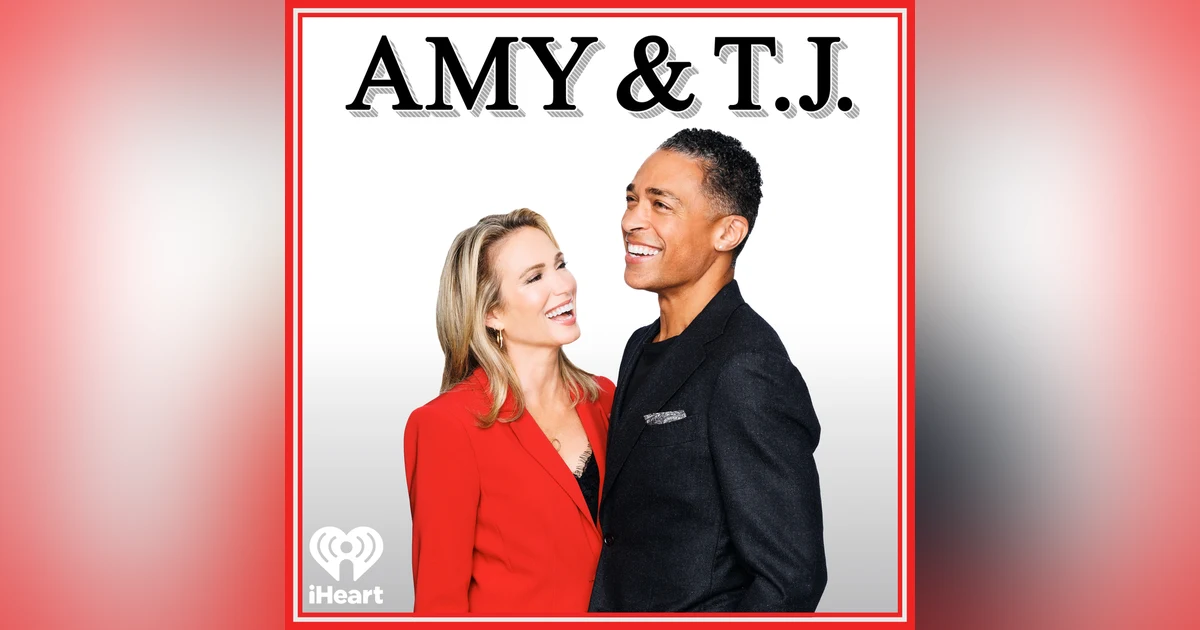
 Amy and T.J. discuss what wasn’t said in John Davidson’s statement after he shouted the N Word at acclaimed black actors Michael B. Jordan and Delroy Lindo at the BAFTA awards. While it’s true that Davidson - who suffers from Tourette Syndrome - could not control his outburst, it doesn’t mean it didn’t inflict harm. In his official statement, Davidson thanked the public for their support and said he’s spent his life teaching “empathy, kindness, and understanding from others, and I will continue to do so.” But what he didn’t say was “I’m sorry” or even acknowledge the names of Jordan and Lindo - to apologize for the painful humiliation they endured at his outburst.
See omnystudio.com/listener for privacy information.
00:00:02
Speaker 1: Hey, there're folks. It is Tuesday, February twenty fourth, and I cannot believe I'm saying this, but I'm starting to turn on the Tarret's guy with that. Welcome to this episode of Amy and TJ. Robes. This story has been doing Gangbuster's been talked about, debate about online for a while. We defended the Turet's guy here yesterday, and defended Turet's after the incident at the Baptist which everybody I'm sure is aware of now. But don't you think we were We actually felt good about educating people about Turets.
00:00:34
Speaker 2: Yes, and that was the hope, at least from the statements we initially received. There were yes, people were a gas that this happened. People were uncomfortable that this happened, and there were some apologies that were offered, but the point being, Okay, we're learning about this disorder and seeing it play out in real time and trying to understand somebody who doesn't have control over some of the very derogatory, offensive things they say.
00:01:02
Speaker 1: Okay, fine, he did this, Robes. I'm sitting here as a black man. I heard the inward hurled, and I was not immediately outraged at the person who did it. Once I understood I was not at all offended by a guy with turets yelling out the inward while Michael B. Jordan and Delroy Lindo were on stage. Because robes, we get and understand turets, and sometimes offensive and even awful racist language comes out in these tics. Don't we understand this at this point? So I think, generally, what did you see the reaction? I'm trying to make sure I'm putting it the right way, but I thought there was an outpouring for the most part of people trying to educate, and then some people seem to want to try to genuinely understand.
00:01:50
Speaker 2: Yes, And I think that the reason why we're hopping back on again now is that is all we saw.
00:01:57
Speaker 3: For the most part.
00:01:58
Speaker 2: We just saw folks coming to the defense of John Davidson. Oh yeahs in headlines and in articles.
00:02:06
Speaker 1: We got the headlines, we got the articles. We wouldn't I would not be hopping on right now if it was just about articles and whatnot. I'm hopping on, and we're hopping on now Rose because the guy who yelled out the word put out a statement a fairly lengthy one, and he never in any breath mentioned Delroy Lindo, He never mentioned Michael B. Jordan, He never apologized, He never even acknowledged that the in word is hurtful, no matter if it's involuntary or not. Robes he said something that was hurtful on a world stage. I don't know what to make of him giving thought and having time not at all even acknowledging those two men, or acknowledging the harm he possibly could have caused.
00:02:48
Speaker 2: Yes, because in the same way that many who view and see John Davidson as a victim of his disorder, which totally get, want him to be offered empathy, sympathy, compassion.
00:03:01
Speaker 3: And understanding, which he should one.
00:03:04
Speaker 2: Hundred percent, but to then completely deny those very things to the community, and specifically to the two men, but an entire Black community who he deeply hurt and offended by saying those words. The intention we get, the intention we accept, but it doesn't mean that it still doesn't require an acknowledgment of the hurt you caused, and yes, an apology for the pain that you absolutely inflicted, whether you meant to or not, whether you control it or not, it doesn't mean, it shouldn't be accompanied by an acknowledgment and an apology is the argument.
00:03:45
Speaker 1: That's so, that was an initial debate, Robes. That was raging with people just saying, oh, he's racist, that's in his head, that's in his heart, that's in his vocabulary. No way, it just comes out. That was an initial reaction and a debate was going on. And I think over a little time, folks, try to educate a little more and little more. Even if people out there who are living with Tourette syndrome were even chiming in, we all, Robes, he yelled out the N word, we understand it was involuntary, not calling him a racist. Okay, so we got past that. So this we could have gone on. If he never said another word and not put out a statement. I don't know if I would have batted another eye or thought about this story again. But Robes, we have now, and folks, we have his statement. This is now. Listen to the full statement that he put out. What just as morning we were getting it might have been late yet late late yesterday. This is the statement that he put out.
00:04:38
Speaker 2: I wanted to thank BAFTA and everyone involved in the awards last night for their support and understanding and inviting me to attend the broadcast. I appreciated the announcement to the auditorium in advance of the recording, warning everyone that my tics are involuntary and are not a reflection of my personal beliefs. I was heartened by the of applause that followed this announcement and felt welcomed and understood in an environment that would normally be impossible for me. In addition to the announcement by Alan Cumming, the BBC and BAFTA, I can only add that I am and always have been, deeply mortified if anyone considers my involuntary tics to be intentional or to carry any meaning meaning excuse me, would you like to interject or two?
00:05:29
Speaker 1: Robes felt welcomed and understood in an environment that would normally be impossible for me, Well, Delroy Michael B. Do they feel welcomed and understood in that environment? Do black people feel feel welcomed and safe and understood in an environment where someone where something like that can be shouted out and no consideration given to anyone other than the shouter. That's a problem, Robes. It is a problem for I was on this guy's side one hundred percent. Yesterday one hundred percent. This is intentional. I don't know this guy. Was this a mistake. I'm trying to still allow robes. But oh, it is never the crime, man, it's the aftermath and what you do afterwards. He is making a conscious choice here the last line. I have been deeply mortified. If anyone considers, if anyone considers my involuntary tickes to be intentional or to carry any meaning, this makes me think he put a lot of thought into it, because if anyone considers he didn't say, considered it offensive, if anyone considers my involuntary ticks to be intentional, So if you think I did it on purpose, or if you think it carries any meaning, I'm sorry. If you think this shit about me, I'm not sorry. If you're offended.
00:06:43
Speaker 3: He didn't even say he was sorry.
00:06:44
Speaker 2: He was mortified, which is a personal experience of shame about yourself. It's not about extending that to anyone else, or about apologizing to anyone else you may have mortified. It was about your own mortification. So I hear what you're saying, baby prying with this guy, I will say this, I understand this that people only see events, and especially when they're now on the defensive, through the lens of their own experience, and it takes a very enlightened person or a very a person who has a reason to want to step outside of their lens, outside of their bubble and actually actually see.
00:07:27
Speaker 3: Their actions through someone else's lens.
00:07:29
Speaker 2: It's such a It's a thing that I think ninety five percent of the world does not do and is not willing to do, and doesn't even consider that.
00:07:40
Speaker 1: Oh, okay, we shouldn't have done this. I'm getting pissed more pissed off based on your point. You're saying now that looking out side, how do you need to put yourself in somebody else's position to understand that two Oscar nominees who are black on stage getting nigga yelled at them might be offended, might be hurt, might be traumatized by that word. You don't have to go far roades to know that that coming out. I don't have to put myself in the position of a woman to understand that there are certain words she by finding defensive, Like it's understood if you're standing in if you're staying in a room for all Asian people, and you hear a particular word yelled out, you know, to go ooh, I know that's bad. You don't know the N word. Stop.
00:08:32
Speaker 3: I totally hear. I get exactly what you're saying.
00:08:34
Speaker 2: I'm just saying he I think thinks he's so marginalized and he has such a fight he can't even consider and will not.
00:08:41
Speaker 3: Consider someone else's fight.
00:08:42
Speaker 2: See, isn't That's what I'm But that's clear in what he's writing and how he's writing.
00:08:48
Speaker 1: It's marginalized black versus marginalized white. I am still number one here in terms of concern and what everybody should be right here, Ropes, I'm trying to give him and we got it. I'm trying. I'm trying. I'm trying to give this guy some kind of a rope here. We were completely on his side yesterday. Robes for folks, for any of the argument, please everybody, the argument is not about where. We're not asking him. Nobody's asking for him to apologize for his turets. We're wanting an acknowledgment of what your turets resulted in for somebody else in the room who also matters safety, dignity, humanity. Those men were treated as nothing. We can yell this at you and then say, eh, it's okay, he has turets. And for black people to hear that once again, we're always in this position where we have to just take it or you shouldn't be offended if you actually hear the explanation for it. Oh that was so many years ago. Why are you still worried about that? Oh you weren't affected, Your grandparents weren't affected by slavery. Oh you know, we hear this shit. Our whole lives and our best robes are our best are on stage. Oscar nominated Michael B. Jordan's beyond a superstar. At this point, he's a global dominator. And those two guys don't even get the grace or the dignity of a damn apology or an acknowledgment of their existence or how they could have been offended that people. Who's anybody jumping online and wanting to make an argument right now is that he shouldn't apologize for something that is involuntary. We are in agreement, but that involuntary thing resulted in harm and pain to two men in particular, but every person in that room. I've stepped on people's feet before. I didn't mean to do it, but I said, I'm sorry.
00:10:40
Speaker 2: That's such a Oh my gosh, babe, that's such a good analogy.
00:10:43
Speaker 1: It shouldn't be. It's that simple.
00:10:45
Speaker 3: It's that simple.
00:10:46
Speaker 2: That's like I hadn't even considered explaining it like that. You didn't mean to step on someone's foot, You didn't mean to cause them pain, but you did. And so you apologize, Babe, You just honestly, you just bring it, brought it home that moment.
00:11:00
Speaker 3: You just brought it home in that moment.
00:11:02
Speaker 2: I actually wanted to keep continuing on with his statement because it also, I'm sure will create a reaction. He went on to say, this again, is John Davidson. I was in attendance to celebrate the film of my life, I Swear, which more than any film or TV documentary, explains the origins, condition, traits, and manifestations of Touret syndrome. I have spent my life trying to support and empower the Touret's community and to teach empathy, kindness, and understanding from others, and I will continue to do so. I chose to leave the auditorium early into the ceremony as I was aware of the distress my tics were causing. That was the end of his statement, the point being he actually now is kind of creating a martyrdom of martyrdom of sorts for himself as someone who chose to voluntary leave after inflicting harm, which he fully acknowledges involuntary as it may have been, which again we're all in agreement of or with.
00:12:04
Speaker 3: But he still that was the opportunity to say, and I am so sorry to Michael B. Jordan.
00:12:11
Speaker 1: He can do what he wants, right, he can do what he wants. He can do what he wants. And I don't know this guy. Maybe this was a mistake. Maybe he'll come back and say, oops, I cannot believe I fail to mention. Maybe, or maybe you won't say a damn thing, but there is a reason. And what Look, we tried to take ropes and we said this is a moment to learn, to educate, to try to understand each other better. And that had everything to do with the Turet's community. This is an opportunity, folks, to understand your black neighbor a little better. We do this, We experience this all the time with trauma. We're expected to just take it. Those men handled it beautifully. But Ropes, You've seen things in your experience with me the past several years. You've seen things in your experience with me at a network to wear these things where we are disregarded, where our pain is disregarded, where what we go through is disregarded. I make jokes with you and talk about therapy and things like this, like nobody gives a damn about how a black man feels. There's truth to that. If this can happen, the guy who yells out the inward is the one who doesn't even acknowledge pain that the word caused. This is difficult and road I you you know, full disclosure. I didn't want to do this episode. Yes you you pushed it a little bit because you knew there was so much to be said, and I had a lot to say, and I have been this is me calm.
00:13:39
Speaker 3: This is you call. But there is value in what you're saying.
00:13:41
Speaker 2: And I understand, or at least I'm understanding, of the frustration within the black community for having to teach white people what causes pain, what what how you should look or view things differently. I understand that, and yet there is so much value here caring you when we weren't recording talk about this story. Yes, I asked if we could go on and talk about this.
00:14:07
Speaker 1: It's just another deal with this every single day in life and career, deal with it every day. There's something about it in seeing the best of us being treated that way, like what chance do I have? You do that to them? What chance does anybody else feel in trying to get an understanding? Or after all this time, you know what? Go ahead. I was starting to calm down. This will get me worked up again. I forgot about it. The headline. Read that headline for me.
00:14:33
Speaker 2: This was the headline from the Hollywood Reporter. And this kind of speaks exactly to your point. This is the headline after all of that. For the Tourette syndrome community, the bapt does brought on a familiar, dreadlike feeling. Wow, advocates say, the John Davidson moment casts a light on a condition too little understood and on the people who don't understand.
00:14:59
Speaker 1: Have a computer for a second. Oh yeah, same headline, all right, change a couple of lines. For the black community, the baftis brought on a familiar, dreadlike feeling advocates say the John Davidson moment cast a light on the black condition too little understood and on the people who don't understand. Damn, this is why I'm pissed. This is why a lot of black folks are pissed. We do this all the time, We're used to doing it. And Robes, this would not have been a story. He just would have shut up. Now he put the statement out. Now, now it digs boy, boy, Now it's ugh. I don't even have to look at me, me me. Tourette's to the Touret's Community, Touret's Association of America. We used your information in our episode yesterday, in particular about racial outbursts. We were trying to educate. We were on his side completely.
00:16:02
Speaker 2: Until his statement, because and look, his statement is perfectly fine, perfectly, but it has a glaring omission. And so if you're going to put out the statement and ask for empathy and understanding, you have to also extend it to the people who you inadvertently and I'll say inadvertently, because yes, it is a condition, completely and totally hurt.
00:16:27
Speaker 1: That's it.
00:16:27
Speaker 3: Robes, period.
00:16:29
Speaker 1: Everything I said you summarized in a four second sentence that's it. You're asking for all these things from everybody else. Deal with me offending you because I can't do anything about it. I'm telling you, Robes, there are so many black people that hear that statement and go that happened to me last Wednesday, that happened to me at this job, that happened to me here, Robes, we have and you have seen as one of the stories I've told playing. I won't tell it publicly, at least won't name folks, but you saw this play out at GMA with one of the anchors in front of everybody dismissing me completely because my experience about something was through the lens of Black America, and she refused to allow me to have my own opinion. You watched it, thirty people in this room watching it. Not just saying I disagree with you. TJ. No, no, no, TJ.
00:17:28
Speaker 3: You don't have a right to feel the way you feel.
00:17:31
Speaker 1: You got it all wrong. You got it all wrong. So I tried to and rows up and worked up and try to stay calm about it, at least on this episode. But it hurts. It does. The moment hurt, The aftermath hurt even worse. But there is something. Why robes is it? Does it feel like we're always expected to be and quite frankly, medically speaking, we are okay, even better than our white counterparts. Folks. If you haven't heard about it, you're about to hear about it. The black white mental health paradox. All right, I take deep breast. Took a bunch of deep breasts during the first break back here on Amy and TJ. It's all good, It's fine, And I'm trying to do this rogues without anger coming through because I'm trying to. I really I want people to hear this and know this and understand this a little better about what happened. Total sympathy. No one is criticizing him for what he did and what Turet's caused him to do. I'm giving him full benefit of the doubt that he's not racist until he put.
00:18:49
Speaker 3: Out the statement. Correct.
00:18:51
Speaker 2: And look, I want to say as someone, I'm.
00:18:54
Speaker 1: Sorry, I'm not calling him racist. Oh sorry, I said joking. I just need to make sure that's understood. I'm saying we were not labeling him a racist. The only reason we rethought things is because of this state.
00:19:04
Speaker 2: Yes, yes, no, that's important to point out and I confer, and I actually was going to say, watching you over the past twenty four hours react to the story with the different iterations, with the different headlines, and then with his ultimate statement, you have been incredibly measured. But I also want people to understand, I think you do get these eye rolls sometimes, or this complete lack of acknowledgment, that this is actually painful.
00:19:29
Speaker 3: I see tears in your eyes.
00:19:31
Speaker 2: There is a visceral, a visceral reaction to hearing someone use the N word and.
00:19:39
Speaker 3: Then not apologize for it.
00:19:41
Speaker 2: And yes, I say defendant, and I understand the defense being a clinical diagnosis, but to not acknowledge the pain it cause. And I just for anyone who thinks that this is somehow feigned outrage, this is real. There is no I don't think any white person can even begin to fathom the daily I say, it's like a it's a it's a death by a thousand cuts a day, all the little jabs and dismissiveness, like it's real. And so yes, when you hear someone say something that has so much history and invoke so much pain, it's real. Like you had tears in your eyes, that's how painful it was.
00:20:26
Speaker 1: It's just it's the statement, right, It's eh, God it is that is the word. And how here we are again? And and folks, please please I ask you to not get upset and not react and not challenge, but try to just for a second throughout this episode and what we're saying to just be curious about. Be curious about how you view things, how you viewed that incident, how you view the apology, and please be curious about why I can sit here as a black man not upset that this white guy yelled out the inward at the Baptist, but then can completely be upset by his lack of acknowledgment at all of another human being in the room that he calls pain for Robes. That's the exhausting part. And here we are, I have to hop on and we feel like we have to educate white people about what happened. And so when yeah, when shit goes down Rohobes, we get upset because we just lived it our whole lives. And then we see a Barack Obama or a Beyonce or Delroy Lindo or Michael B.
00:21:31
Speaker 3: Jordan.
00:21:32
Speaker 1: Wait, they're getting treated just like I got treated on the street. Wait a minute, what chance do I have that shit sucks?
00:21:39
Speaker 2: That shit sucks, because yes, and in addition to this happening, it was in the midst of a call for empathy and compassion. I think that was what was extra painful, Like, while you're asking for compassion and empathy, you are not giving any to the Black community who you just hurt.
00:21:57
Speaker 1: That's normal. We're always last who thinks about us. Let's make sure everybody just check boxes. The room is comfortable. You're all the good, Okay, you're good, all right, Terrette, Scotty, You're you're good. Everybody's okay, BBC air to damn thing. They could have cut the line, everybody's good, Alan coming, Oh my god, don't even get me. Look, I know they probably told you, they told him the line to say up there. But yes, we apologize if you are offended tonight, if someone you if you don't understand that, if you hear the inn word shouted at you by a white person in the room announcement, folks, PSA here, it's offensive to us.
00:22:34
Speaker 2: You don't ever put the word if or the phrase if you were in front of offended.
00:22:39
Speaker 3: It's never ever. There's no actual scenario.
00:22:42
Speaker 2: In which it's okay to say if you were just say I am sorry for my offensive or for the offensive word that was used.
00:22:50
Speaker 1: You know what I would take right now from him, Not even an apology, just an acknowledgement. Wow, that word is so painful. I am mortified it came out of my mouth. Knowing the impact it had on people in that room. It's awful. It should never be uttered. I'm sorry all kinds.
00:23:04
Speaker 2: No, he's mortified if you think he intended it. That's where his mortification is.
00:23:08
Speaker 1: Can he be blamed or held responsible? Robes and now the tick is involuntary, understood, But he put himself in the room, and so the argument is, why shouldn't he be able to enjoy that environment in safety? So his safety costs me? Mind, how do we handle that?
00:23:26
Speaker 3: That's such a good way to put it.
00:23:27
Speaker 1: But how do we do it? We have to find a compromise. And I think Delroy and Michael b would be willing to be in the room with him again if he had approached them or said anything in this international statement. Now that's simply acknowledged. Oops, I stepped on your foot and I didn't mean to, and I know it hurt like hell. And I did it in front of everybody, and there was a brand new Jordan's you were wearing.
00:23:49
Speaker 2: But I'm sorry. I'm sorry for the pain I cost. Period. You said you weren't winning in anything, but you are apparently winning in mental health.
00:24:00
Speaker 1: Yeah, black folks are behind, Yeah, we have stronger. Yes, the black white mental health paradox. I was trying to think of the name for it. I knew there was a name for it, but this really is. This has been studied for years and years and years. Black folks are obviously under more stress, if you will, in this country. We don't need to go through the numbers, health care disparities, financial disparities, all this stuff, correct, But why is it we have less numbers or percentages of folks with depression or anxiety in our community. They call it a black white mental health paradox that has been studied for years and years, and it seems to hold up. The argument is we are were quite frankly built different in terms of ore.
00:24:40
Speaker 3: You've been forced to we have to endure for survival.
00:24:44
Speaker 2: They say it's they believe, and they've been studying this, as you point out, But clearly I don't think anyone would disagree with the fact that the black community is under a significant a greater deal of stress than the white community or their counterparts. That's the they actually start these studies with that being a fact that's just established.
00:25:04
Speaker 3: Yes, that's the foundation to much of this study.
00:25:07
Speaker 2: But they say, because the black community experiences greater stress throughout their life, you have more opportunities. That's the word they use, not me, to develop resources to cope with those situations, among them community relationships and self esteem. They say, the blood, the relationship, the community, the black community actually is such an incredible resource for dealing with stress, for not letting it take over your mental health. They talk about church, they talk about community groups, and self esteem. Self esteem is the highest reported highest among all racist and genders in black women.
00:25:42
Speaker 3: Ain't that interesting?
00:25:44
Speaker 1: They have to be. We have whatever resilience that we talk about rogues, but it is exhausting to just be expected to deal They are on stage, expected to hear the inwork coming, and they handle them sells beautifully.
00:26:01
Speaker 2: They did handle themselves exceptionally well. I mean barely a flinch, I mean barely a facial expression. And you know what that speaks to. They've heard it before. Plenty.
00:26:12
Speaker 1: When they go low, we go highs Uh. What she said right, which talk about the mental health paradox. The I got this actually from the National Institute of Health. They need a study about this very thing. This line here at the bottom, I want to mention, sums this up in an interesting way. Although racial discrimination continues to put African American mental health at risk, self esteem appears to counteract racism's pernicious effects, such that African Americans are no more distressed or in physical pain than whites, whereas whites are more likely to have depression and anxiety. Nonetheless, the struggle among African Americans to protect their mental health in response to racism continues and should not be minimized.
00:26:56
Speaker 2: And that's an important point. It's not as if, oh, y'all got this, so you're good. No. The point is you've been forced to develop different muscles, so to speak, and have much higher levels of family social support. That is a beautiful thing than white people do in this country, and that is been proven time and time again. But yes, it doesn't mean that you don't require a certain level of respect. Wouldn't that be something to be seen and respected? Ah?
00:27:29
Speaker 1: All right, I'm smiling at least the thing we just dop now, okay, we just start now, folks, Really, I hope you are here I go apologizing to white people, right. I hope you're not offended by what you heard. I hope you're not offended by hearing this type of expression of a different experience than you're having. It's real, folks, and most black people when you're dismissive and say, oh, it's all about race with you, well, quite frankly, oftentimes is and a lack of acknowledgment of that is why we still have these incidents happening while we still have to to well rope this is the oscars be right, Yeah, and on this international stage this can happen. And the guy who yelled out the in word is getting more sympathy and understanding than the guys he yelled the in word at. We appreciate you listening, folks. There won't be a follow up to this, no matter what happens.
00:28:19
Speaker 3: You say that, but no, thank you for listening. And I want to thank you, babe, for even.
00:28:24
Speaker 2: For just before opening it up, oh, just to talk about it. This is because you know what I can see, You're just like never mind, it doesn't matter.
00:28:32
Speaker 3: It falls on deaf ears. I I understand that. So you just don't even want to bother I get that.
00:28:37
Speaker 2: So I just want to say thank you for being willing to have a conversation.
00:28:41
Speaker 1: I will you force me into this, know the white lady ordering us around, So you should have ended it when I said.
00:28:50
Speaker 2: Ended all right, all right and without everyone thank you so much for listening to us. I'm the aforementioned white lady, the pushy white lady, Amy Roboch alongside d J.
00:28:59
Speaker 3: Holmes. We will talk to you soon.
Speaker 1: Hey, there're folks. It is Tuesday, February twenty fourth, and I cannot believe I'm saying this, but I'm starting to turn on the Tarret's guy with that. Welcome to this episode of Amy and TJ. Robes. This story has been doing Gangbuster's been talked about, debate about online for a while. We defended the Turet's guy here yesterday, and defended Turet's after the incident at the Baptist which everybody I'm sure is aware of now. But don't you think we were We actually felt good about educating people about Turets.
00:00:34
Speaker 2: Yes, and that was the hope, at least from the statements we initially received. There were yes, people were a gas that this happened. People were uncomfortable that this happened, and there were some apologies that were offered, but the point being, Okay, we're learning about this disorder and seeing it play out in real time and trying to understand somebody who doesn't have control over some of the very derogatory, offensive things they say.
00:01:02
Speaker 1: Okay, fine, he did this, Robes. I'm sitting here as a black man. I heard the inward hurled, and I was not immediately outraged at the person who did it. Once I understood I was not at all offended by a guy with turets yelling out the inward while Michael B. Jordan and Delroy Lindo were on stage. Because robes, we get and understand turets, and sometimes offensive and even awful racist language comes out in these tics. Don't we understand this at this point? So I think, generally, what did you see the reaction? I'm trying to make sure I'm putting it the right way, but I thought there was an outpouring for the most part of people trying to educate, and then some people seem to want to try to genuinely understand.
00:01:50
Speaker 2: Yes, And I think that the reason why we're hopping back on again now is that is all we saw.
00:01:57
Speaker 3: For the most part.
00:01:58
Speaker 2: We just saw folks coming to the defense of John Davidson. Oh yeahs in headlines and in articles.
00:02:06
Speaker 1: We got the headlines, we got the articles. We wouldn't I would not be hopping on right now if it was just about articles and whatnot. I'm hopping on, and we're hopping on now Rose because the guy who yelled out the word put out a statement a fairly lengthy one, and he never in any breath mentioned Delroy Lindo, He never mentioned Michael B. Jordan, He never apologized, He never even acknowledged that the in word is hurtful, no matter if it's involuntary or not. Robes he said something that was hurtful on a world stage. I don't know what to make of him giving thought and having time not at all even acknowledging those two men, or acknowledging the harm he possibly could have caused.
00:02:48
Speaker 2: Yes, because in the same way that many who view and see John Davidson as a victim of his disorder, which totally get, want him to be offered empathy, sympathy, compassion.
00:03:01
Speaker 3: And understanding, which he should one.
00:03:04
Speaker 2: Hundred percent, but to then completely deny those very things to the community, and specifically to the two men, but an entire Black community who he deeply hurt and offended by saying those words. The intention we get, the intention we accept, but it doesn't mean that it still doesn't require an acknowledgment of the hurt you caused, and yes, an apology for the pain that you absolutely inflicted, whether you meant to or not, whether you control it or not, it doesn't mean, it shouldn't be accompanied by an acknowledgment and an apology is the argument.
00:03:45
Speaker 1: That's so, that was an initial debate, Robes. That was raging with people just saying, oh, he's racist, that's in his head, that's in his heart, that's in his vocabulary. No way, it just comes out. That was an initial reaction and a debate was going on. And I think over a little time, folks, try to educate a little more and little more. Even if people out there who are living with Tourette syndrome were even chiming in, we all, Robes, he yelled out the N word, we understand it was involuntary, not calling him a racist. Okay, so we got past that. So this we could have gone on. If he never said another word and not put out a statement. I don't know if I would have batted another eye or thought about this story again. But Robes, we have now, and folks, we have his statement. This is now. Listen to the full statement that he put out. What just as morning we were getting it might have been late yet late late yesterday. This is the statement that he put out.
00:04:38
Speaker 2: I wanted to thank BAFTA and everyone involved in the awards last night for their support and understanding and inviting me to attend the broadcast. I appreciated the announcement to the auditorium in advance of the recording, warning everyone that my tics are involuntary and are not a reflection of my personal beliefs. I was heartened by the of applause that followed this announcement and felt welcomed and understood in an environment that would normally be impossible for me. In addition to the announcement by Alan Cumming, the BBC and BAFTA, I can only add that I am and always have been, deeply mortified if anyone considers my involuntary tics to be intentional or to carry any meaning meaning excuse me, would you like to interject or two?
00:05:29
Speaker 1: Robes felt welcomed and understood in an environment that would normally be impossible for me, Well, Delroy Michael B. Do they feel welcomed and understood in that environment? Do black people feel feel welcomed and safe and understood in an environment where someone where something like that can be shouted out and no consideration given to anyone other than the shouter. That's a problem, Robes. It is a problem for I was on this guy's side one hundred percent. Yesterday one hundred percent. This is intentional. I don't know this guy. Was this a mistake. I'm trying to still allow robes. But oh, it is never the crime, man, it's the aftermath and what you do afterwards. He is making a conscious choice here the last line. I have been deeply mortified. If anyone considers, if anyone considers my involuntary tickes to be intentional or to carry any meaning, this makes me think he put a lot of thought into it, because if anyone considers he didn't say, considered it offensive, if anyone considers my involuntary ticks to be intentional, So if you think I did it on purpose, or if you think it carries any meaning, I'm sorry. If you think this shit about me, I'm not sorry. If you're offended.
00:06:43
Speaker 3: He didn't even say he was sorry.
00:06:44
Speaker 2: He was mortified, which is a personal experience of shame about yourself. It's not about extending that to anyone else, or about apologizing to anyone else you may have mortified. It was about your own mortification. So I hear what you're saying, baby prying with this guy, I will say this, I understand this that people only see events, and especially when they're now on the defensive, through the lens of their own experience, and it takes a very enlightened person or a very a person who has a reason to want to step outside of their lens, outside of their bubble and actually actually see.
00:07:27
Speaker 3: Their actions through someone else's lens.
00:07:29
Speaker 2: It's such a It's a thing that I think ninety five percent of the world does not do and is not willing to do, and doesn't even consider that.
00:07:40
Speaker 1: Oh, okay, we shouldn't have done this. I'm getting pissed more pissed off based on your point. You're saying now that looking out side, how do you need to put yourself in somebody else's position to understand that two Oscar nominees who are black on stage getting nigga yelled at them might be offended, might be hurt, might be traumatized by that word. You don't have to go far roades to know that that coming out. I don't have to put myself in the position of a woman to understand that there are certain words she by finding defensive, Like it's understood if you're standing in if you're staying in a room for all Asian people, and you hear a particular word yelled out, you know, to go ooh, I know that's bad. You don't know the N word. Stop.
00:08:32
Speaker 3: I totally hear. I get exactly what you're saying.
00:08:34
Speaker 2: I'm just saying he I think thinks he's so marginalized and he has such a fight he can't even consider and will not.
00:08:41
Speaker 3: Consider someone else's fight.
00:08:42
Speaker 2: See, isn't That's what I'm But that's clear in what he's writing and how he's writing.
00:08:48
Speaker 1: It's marginalized black versus marginalized white. I am still number one here in terms of concern and what everybody should be right here, Ropes, I'm trying to give him and we got it. I'm trying. I'm trying. I'm trying to give this guy some kind of a rope here. We were completely on his side yesterday. Robes for folks, for any of the argument, please everybody, the argument is not about where. We're not asking him. Nobody's asking for him to apologize for his turets. We're wanting an acknowledgment of what your turets resulted in for somebody else in the room who also matters safety, dignity, humanity. Those men were treated as nothing. We can yell this at you and then say, eh, it's okay, he has turets. And for black people to hear that once again, we're always in this position where we have to just take it or you shouldn't be offended if you actually hear the explanation for it. Oh that was so many years ago. Why are you still worried about that? Oh you weren't affected, Your grandparents weren't affected by slavery. Oh you know, we hear this shit. Our whole lives and our best robes are our best are on stage. Oscar nominated Michael B. Jordan's beyond a superstar. At this point, he's a global dominator. And those two guys don't even get the grace or the dignity of a damn apology or an acknowledgment of their existence or how they could have been offended that people. Who's anybody jumping online and wanting to make an argument right now is that he shouldn't apologize for something that is involuntary. We are in agreement, but that involuntary thing resulted in harm and pain to two men in particular, but every person in that room. I've stepped on people's feet before. I didn't mean to do it, but I said, I'm sorry.
00:10:40
Speaker 2: That's such a Oh my gosh, babe, that's such a good analogy.
00:10:43
Speaker 1: It shouldn't be. It's that simple.
00:10:45
Speaker 3: It's that simple.
00:10:46
Speaker 2: That's like I hadn't even considered explaining it like that. You didn't mean to step on someone's foot, You didn't mean to cause them pain, but you did. And so you apologize, Babe, You just honestly, you just bring it, brought it home that moment.
00:11:00
Speaker 3: You just brought it home in that moment.
00:11:02
Speaker 2: I actually wanted to keep continuing on with his statement because it also, I'm sure will create a reaction. He went on to say, this again, is John Davidson. I was in attendance to celebrate the film of my life, I Swear, which more than any film or TV documentary, explains the origins, condition, traits, and manifestations of Touret syndrome. I have spent my life trying to support and empower the Touret's community and to teach empathy, kindness, and understanding from others, and I will continue to do so. I chose to leave the auditorium early into the ceremony as I was aware of the distress my tics were causing. That was the end of his statement, the point being he actually now is kind of creating a martyrdom of martyrdom of sorts for himself as someone who chose to voluntary leave after inflicting harm, which he fully acknowledges involuntary as it may have been, which again we're all in agreement of or with.
00:12:04
Speaker 3: But he still that was the opportunity to say, and I am so sorry to Michael B. Jordan.
00:12:11
Speaker 1: He can do what he wants, right, he can do what he wants. He can do what he wants. And I don't know this guy. Maybe this was a mistake. Maybe he'll come back and say, oops, I cannot believe I fail to mention. Maybe, or maybe you won't say a damn thing, but there is a reason. And what Look, we tried to take ropes and we said this is a moment to learn, to educate, to try to understand each other better. And that had everything to do with the Turet's community. This is an opportunity, folks, to understand your black neighbor a little better. We do this, We experience this all the time with trauma. We're expected to just take it. Those men handled it beautifully. But Ropes, You've seen things in your experience with me the past several years. You've seen things in your experience with me at a network to wear these things where we are disregarded, where our pain is disregarded, where what we go through is disregarded. I make jokes with you and talk about therapy and things like this, like nobody gives a damn about how a black man feels. There's truth to that. If this can happen, the guy who yells out the inward is the one who doesn't even acknowledge pain that the word caused. This is difficult and road I you you know, full disclosure. I didn't want to do this episode. Yes you you pushed it a little bit because you knew there was so much to be said, and I had a lot to say, and I have been this is me calm.
00:13:39
Speaker 3: This is you call. But there is value in what you're saying.
00:13:41
Speaker 2: And I understand, or at least I'm understanding, of the frustration within the black community for having to teach white people what causes pain, what what how you should look or view things differently. I understand that, and yet there is so much value here caring you when we weren't recording talk about this story. Yes, I asked if we could go on and talk about this.
00:14:07
Speaker 1: It's just another deal with this every single day in life and career, deal with it every day. There's something about it in seeing the best of us being treated that way, like what chance do I have? You do that to them? What chance does anybody else feel in trying to get an understanding? Or after all this time, you know what? Go ahead. I was starting to calm down. This will get me worked up again. I forgot about it. The headline. Read that headline for me.
00:14:33
Speaker 2: This was the headline from the Hollywood Reporter. And this kind of speaks exactly to your point. This is the headline after all of that. For the Tourette syndrome community, the bapt does brought on a familiar, dreadlike feeling. Wow, advocates say, the John Davidson moment casts a light on a condition too little understood and on the people who don't understand.
00:14:59
Speaker 1: Have a computer for a second. Oh yeah, same headline, all right, change a couple of lines. For the black community, the baftis brought on a familiar, dreadlike feeling advocates say the John Davidson moment cast a light on the black condition too little understood and on the people who don't understand. Damn, this is why I'm pissed. This is why a lot of black folks are pissed. We do this all the time, We're used to doing it. And Robes, this would not have been a story. He just would have shut up. Now he put the statement out. Now, now it digs boy, boy, Now it's ugh. I don't even have to look at me, me me. Tourette's to the Touret's Community, Touret's Association of America. We used your information in our episode yesterday, in particular about racial outbursts. We were trying to educate. We were on his side completely.
00:16:02
Speaker 2: Until his statement, because and look, his statement is perfectly fine, perfectly, but it has a glaring omission. And so if you're going to put out the statement and ask for empathy and understanding, you have to also extend it to the people who you inadvertently and I'll say inadvertently, because yes, it is a condition, completely and totally hurt.
00:16:27
Speaker 1: That's it.
00:16:27
Speaker 3: Robes, period.
00:16:29
Speaker 1: Everything I said you summarized in a four second sentence that's it. You're asking for all these things from everybody else. Deal with me offending you because I can't do anything about it. I'm telling you, Robes, there are so many black people that hear that statement and go that happened to me last Wednesday, that happened to me at this job, that happened to me here, Robes, we have and you have seen as one of the stories I've told playing. I won't tell it publicly, at least won't name folks, but you saw this play out at GMA with one of the anchors in front of everybody dismissing me completely because my experience about something was through the lens of Black America, and she refused to allow me to have my own opinion. You watched it, thirty people in this room watching it. Not just saying I disagree with you. TJ. No, no, no, TJ.
00:17:28
Speaker 3: You don't have a right to feel the way you feel.
00:17:31
Speaker 1: You got it all wrong. You got it all wrong. So I tried to and rows up and worked up and try to stay calm about it, at least on this episode. But it hurts. It does. The moment hurt, The aftermath hurt even worse. But there is something. Why robes is it? Does it feel like we're always expected to be and quite frankly, medically speaking, we are okay, even better than our white counterparts. Folks. If you haven't heard about it, you're about to hear about it. The black white mental health paradox. All right, I take deep breast. Took a bunch of deep breasts during the first break back here on Amy and TJ. It's all good, It's fine, And I'm trying to do this rogues without anger coming through because I'm trying to. I really I want people to hear this and know this and understand this a little better about what happened. Total sympathy. No one is criticizing him for what he did and what Turet's caused him to do. I'm giving him full benefit of the doubt that he's not racist until he put.
00:18:49
Speaker 3: Out the statement. Correct.
00:18:51
Speaker 2: And look, I want to say as someone, I'm.
00:18:54
Speaker 1: Sorry, I'm not calling him racist. Oh sorry, I said joking. I just need to make sure that's understood. I'm saying we were not labeling him a racist. The only reason we rethought things is because of this state.
00:19:04
Speaker 2: Yes, yes, no, that's important to point out and I confer, and I actually was going to say, watching you over the past twenty four hours react to the story with the different iterations, with the different headlines, and then with his ultimate statement, you have been incredibly measured. But I also want people to understand, I think you do get these eye rolls sometimes, or this complete lack of acknowledgment, that this is actually painful.
00:19:29
Speaker 3: I see tears in your eyes.
00:19:31
Speaker 2: There is a visceral, a visceral reaction to hearing someone use the N word and.
00:19:39
Speaker 3: Then not apologize for it.
00:19:41
Speaker 2: And yes, I say defendant, and I understand the defense being a clinical diagnosis, but to not acknowledge the pain it cause. And I just for anyone who thinks that this is somehow feigned outrage, this is real. There is no I don't think any white person can even begin to fathom the daily I say, it's like a it's a it's a death by a thousand cuts a day, all the little jabs and dismissiveness, like it's real. And so yes, when you hear someone say something that has so much history and invoke so much pain, it's real. Like you had tears in your eyes, that's how painful it was.
00:20:26
Speaker 1: It's just it's the statement, right, It's eh, God it is that is the word. And how here we are again? And and folks, please please I ask you to not get upset and not react and not challenge, but try to just for a second throughout this episode and what we're saying to just be curious about. Be curious about how you view things, how you viewed that incident, how you view the apology, and please be curious about why I can sit here as a black man not upset that this white guy yelled out the inward at the Baptist, but then can completely be upset by his lack of acknowledgment at all of another human being in the room that he calls pain for Robes. That's the exhausting part. And here we are, I have to hop on and we feel like we have to educate white people about what happened. And so when yeah, when shit goes down Rohobes, we get upset because we just lived it our whole lives. And then we see a Barack Obama or a Beyonce or Delroy Lindo or Michael B.
00:21:31
Speaker 3: Jordan.
00:21:32
Speaker 1: Wait, they're getting treated just like I got treated on the street. Wait a minute, what chance do I have that shit sucks?
00:21:39
Speaker 2: That shit sucks, because yes, and in addition to this happening, it was in the midst of a call for empathy and compassion. I think that was what was extra painful, Like, while you're asking for compassion and empathy, you are not giving any to the Black community who you just hurt.
00:21:57
Speaker 1: That's normal. We're always last who thinks about us. Let's make sure everybody just check boxes. The room is comfortable. You're all the good, Okay, you're good, all right, Terrette, Scotty, You're you're good. Everybody's okay, BBC air to damn thing. They could have cut the line, everybody's good, Alan coming, Oh my god, don't even get me. Look, I know they probably told you, they told him the line to say up there. But yes, we apologize if you are offended tonight, if someone you if you don't understand that, if you hear the inn word shouted at you by a white person in the room announcement, folks, PSA here, it's offensive to us.
00:22:34
Speaker 2: You don't ever put the word if or the phrase if you were in front of offended.
00:22:39
Speaker 3: It's never ever. There's no actual scenario.
00:22:42
Speaker 2: In which it's okay to say if you were just say I am sorry for my offensive or for the offensive word that was used.
00:22:50
Speaker 1: You know what I would take right now from him, Not even an apology, just an acknowledgement. Wow, that word is so painful. I am mortified it came out of my mouth. Knowing the impact it had on people in that room. It's awful. It should never be uttered. I'm sorry all kinds.
00:23:04
Speaker 2: No, he's mortified if you think he intended it. That's where his mortification is.
00:23:08
Speaker 1: Can he be blamed or held responsible? Robes and now the tick is involuntary, understood, But he put himself in the room, and so the argument is, why shouldn't he be able to enjoy that environment in safety? So his safety costs me? Mind, how do we handle that?
00:23:26
Speaker 3: That's such a good way to put it.
00:23:27
Speaker 1: But how do we do it? We have to find a compromise. And I think Delroy and Michael b would be willing to be in the room with him again if he had approached them or said anything in this international statement. Now that's simply acknowledged. Oops, I stepped on your foot and I didn't mean to, and I know it hurt like hell. And I did it in front of everybody, and there was a brand new Jordan's you were wearing.
00:23:49
Speaker 2: But I'm sorry. I'm sorry for the pain I cost. Period. You said you weren't winning in anything, but you are apparently winning in mental health.
00:24:00
Speaker 1: Yeah, black folks are behind, Yeah, we have stronger. Yes, the black white mental health paradox. I was trying to think of the name for it. I knew there was a name for it, but this really is. This has been studied for years and years and years. Black folks are obviously under more stress, if you will, in this country. We don't need to go through the numbers, health care disparities, financial disparities, all this stuff, correct, But why is it we have less numbers or percentages of folks with depression or anxiety in our community. They call it a black white mental health paradox that has been studied for years and years, and it seems to hold up. The argument is we are were quite frankly built different in terms of ore.
00:24:40
Speaker 3: You've been forced to we have to endure for survival.
00:24:44
Speaker 2: They say it's they believe, and they've been studying this, as you point out, But clearly I don't think anyone would disagree with the fact that the black community is under a significant a greater deal of stress than the white community or their counterparts. That's the they actually start these studies with that being a fact that's just established.
00:25:04
Speaker 3: Yes, that's the foundation to much of this study.
00:25:07
Speaker 2: But they say, because the black community experiences greater stress throughout their life, you have more opportunities. That's the word they use, not me, to develop resources to cope with those situations, among them community relationships and self esteem. They say, the blood, the relationship, the community, the black community actually is such an incredible resource for dealing with stress, for not letting it take over your mental health. They talk about church, they talk about community groups, and self esteem. Self esteem is the highest reported highest among all racist and genders in black women.
00:25:42
Speaker 3: Ain't that interesting?
00:25:44
Speaker 1: They have to be. We have whatever resilience that we talk about rogues, but it is exhausting to just be expected to deal They are on stage, expected to hear the inwork coming, and they handle them sells beautifully.
00:26:01
Speaker 2: They did handle themselves exceptionally well. I mean barely a flinch, I mean barely a facial expression. And you know what that speaks to. They've heard it before. Plenty.
00:26:12
Speaker 1: When they go low, we go highs Uh. What she said right, which talk about the mental health paradox. The I got this actually from the National Institute of Health. They need a study about this very thing. This line here at the bottom, I want to mention, sums this up in an interesting way. Although racial discrimination continues to put African American mental health at risk, self esteem appears to counteract racism's pernicious effects, such that African Americans are no more distressed or in physical pain than whites, whereas whites are more likely to have depression and anxiety. Nonetheless, the struggle among African Americans to protect their mental health in response to racism continues and should not be minimized.
00:26:56
Speaker 2: And that's an important point. It's not as if, oh, y'all got this, so you're good. No. The point is you've been forced to develop different muscles, so to speak, and have much higher levels of family social support. That is a beautiful thing than white people do in this country, and that is been proven time and time again. But yes, it doesn't mean that you don't require a certain level of respect. Wouldn't that be something to be seen and respected? Ah?
00:27:29
Speaker 1: All right, I'm smiling at least the thing we just dop now, okay, we just start now, folks, Really, I hope you are here I go apologizing to white people, right. I hope you're not offended by what you heard. I hope you're not offended by hearing this type of expression of a different experience than you're having. It's real, folks, and most black people when you're dismissive and say, oh, it's all about race with you, well, quite frankly, oftentimes is and a lack of acknowledgment of that is why we still have these incidents happening while we still have to to well rope this is the oscars be right, Yeah, and on this international stage this can happen. And the guy who yelled out the in word is getting more sympathy and understanding than the guys he yelled the in word at. We appreciate you listening, folks. There won't be a follow up to this, no matter what happens.
00:28:19
Speaker 3: You say that, but no, thank you for listening. And I want to thank you, babe, for even.
00:28:24
Speaker 2: For just before opening it up, oh, just to talk about it. This is because you know what I can see, You're just like never mind, it doesn't matter.
00:28:32
Speaker 3: It falls on deaf ears. I I understand that. So you just don't even want to bother I get that.
00:28:37
Speaker 2: So I just want to say thank you for being willing to have a conversation.
00:28:41
Speaker 1: I will you force me into this, know the white lady ordering us around, So you should have ended it when I said.
00:28:50
Speaker 2: Ended all right, all right and without everyone thank you so much for listening to us. I'm the aforementioned white lady, the pushy white lady, Amy Roboch alongside d J.
00:28:59
Speaker 3: Holmes. We will talk to you soon.