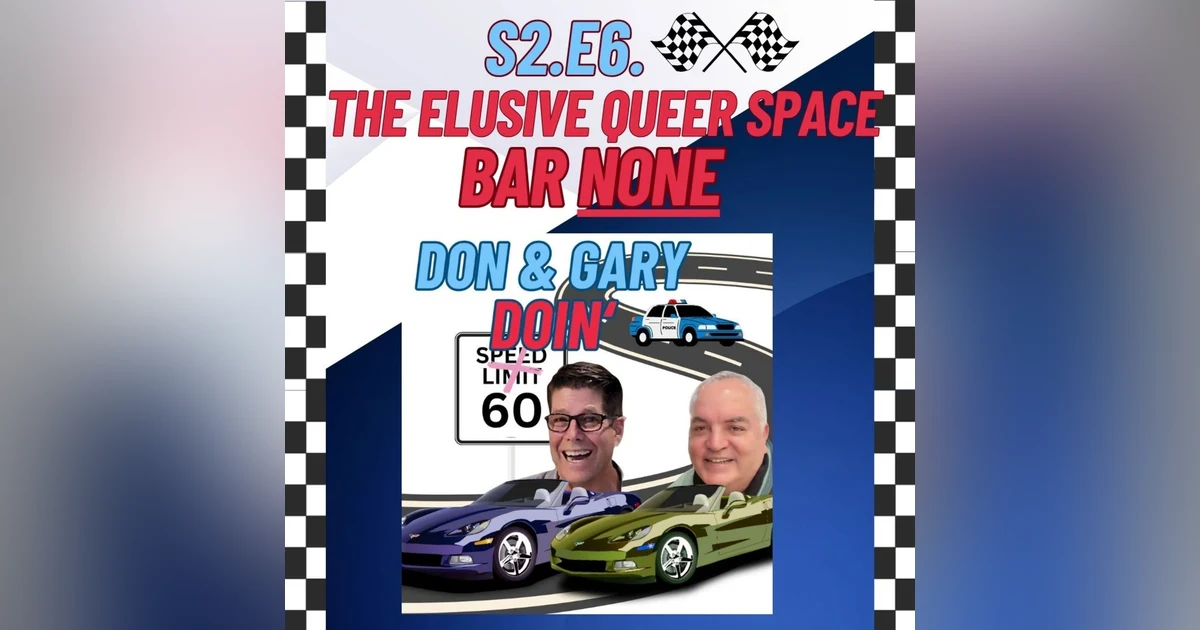
S2 E6 The Elusive Queer Space-Bar NONE


 RSS Feed
0:08 You calm down, No, you calm oh hi don. Well okay, yes, no, I'm sorry for being laid. Of course. I was trying to find some equipment. I lost some equipment. Well, we're not getting any younger and this happen. It's nothing to be ashamed about. Looking very short here. I'm going to do this. Let's see you fight. Yeah, that's good, that's good. Perfect or our heads are at the same level now. I don't know if you noticed, but I pivoted. I'm on the other side of the room. Pivot. I liked your pivot. But because the window is now instead of behind me, the windows to my right, there's still a little glare on my own. Is not as bad good? I kind of I'm kind of like this.
0:50 Let's just say, there's always a light on me. But you know, is it like being lit up or is that me? No? Like you know, I tend to be in the spotlight. Any way. Way, I'm gonna just just so you know, I'm gonna be doing a little bit of this. I'm gonna be doing a little bit of pointing when I'm mentioning things. But it's not like reprimanding me. No, it's gonna be pointing because I'm going to try you something. We're gonna try something a little different this week, and part of my pointing is going to be a little thing that we do in in in post post, in post production, in post, we're going to impose some things. So when I go like this, there's gonna be a little sound effect and a little something. So you know, with our little announcement which I haven't talked to you about.
1:39 Well, don if you want sound effects, I can give you sound effects. A little gass, see what's going on. I'm gonna keep doing this when we record going because sometimes we have some good stuff that I could use sometimes. Yeah, scary, you're the most talented. I don't know how we got through the show without it would be so poudy, patty, paty. So are we good? I'm gonna just stop it and then start again. And yeah, sure, I'm good. So and I don't know how this is going to go, so we'll edit it and post. That's what the kids are saying, Hi, Gary, Hey are you.
2:25 Well? Spring has sprung our sprockets have sprouted, and we're switching things up a little bit. To start with the intro, What do you think. I think that's very fresh and nice. I mean, we are we in spring? Yes, I'm in spring because it's beautiful here. What's it like this? Oh my god, it's gorgeous out to down about beautiful blue sky? Nice? Yeah? Good? So our sprockets have sprung. It's spring and sprunging and everything's springing. Yes. So okay, So this week our episode titled the Elusive Queer Space slash Bar None. We'll figure out what we want to really call it. We dive into what we used to call a bar, and in recent years there's been a strange thing happening with bars. Is that not just scay spaces, but bars in general are disappearing. Right, So, what we're going to discuss this week is the possible and probable reasons for the decline and closings. Gary, you're going to share an article from a lady called Anna di Ameda Amrale covered by the Bay Area KQED. Right, you're gonna share us that story.
3:24 That's correct, It's about a lesbian bar that's as old as you. I'm going to share an article from Eater magazine on what bars are thriving, What bars are actually thriving and why and then we're gonna have a little memorial to some of the bars that actually have left us and are no longer in existence in both San Francisco and LA and then a very special announcement at the end that you have to wait for. And it's gonna be something with this. So I'm going to be doing a lot of this and you'll see what that means. And for our listeners, this refers to Don pointing up in the air straight up, so see what you're missing when you're not watching us on YouTube, So you can listen, but watch, yes and learn.
4:10 And learn and then so we'll be right back. Thanks, you get out of my way, Don, Don. Don, welcome back. This is Don and Gary doing sixty.
4:50 That would make me Gary and you Don. What up? Point up? Where we unwrap an unpacked, navigating lie at this age. Yes, well done. And the hint is with the title Don and Gary doing sixty, it's over sixty. You can find us on various podcasts wherever you pod, including Apple and Spotify. You can find us on YouTube yay if you care to venture to one of the new platforms, blue Sky. I've not gone there yet. We're on Blue Sky. Also if you want to email us. It's Don and Gary doing sixty at gmail dot com and don you have a new something?
5:33 Yes, So I'm going to do this and I'm going to point to it because we actually have a great announcement at the end of the podcast that we want to share with you, but I've kind of given it away, probably with my graphics. So let you know that we're excited about what's coming at the end. So we're going to share with you some information about how you can actually participate more with the podcast. And I'll leave that to the very end of it. Yeah, I can't wait, I can't right. So yeah, So Gary, just how did we talk about this? So when we came in with this topic, actually you sent me something, so. I think you and I are both always looking for topics conversation starters, and on social media, I came across an article. There was a story that was covered by local PBS station KQD here in San Francisco, and it was covering a lesbian bar that is sixty two or sixty three years old.
6:30 Wow, you really weren't kidding And it's. Called the wild Side West. Yes, so quick history. This particular bar actually opened in Oakland, California, across the bay, but after a short time and it was called the wild Side. But then when they moved to San Francisco, they went to the North Beach District, which is the Italian district here in San Francisco, and because we are west of Oakland, we were then called the wild Side West. And then in the early seventies it moved to Bernal High another neighborhood here in San Francisco, and so they featured one of its longtime patrons. Her name is i Hope. I pronounced this right to motha doan. She's an eighty year old lesbian who's been a regular at the bar since she was twenty four. Wow Wow, So she's you know, been there a few times. So this is just a nice story of how this bar, even though moved a couple of times, is managed to survive, not without its challenges, of course, and folks who at the time were not very accepting of an lb Q.
7:39 It's either ware you see it fast. Right, I know, another bar or any establishment or any business. Right. But what's interesting is the article starts by saying that San Francisco has long been an epicenter for lesbian life and culture. Even back in the nineteen thirties. This says spots like Mona's four forty club were known as hubs from lesbians. But in the past thirty years the number of lesbian bars all over the country have seen us steep decline. And I did share with you previously in another podcast how it would have been in the late forties or early fifties. My father was born in San Francisco. When he go out with his friends and they'd have the girlfriends go with them, they go bars and hang out of course a lot of times in the mission.
8:23 But my dad was always a prankster, so he decided, hey, guys, wouldn't it be fun to take the girls to a new place, And he knew of a lesbian bar in North Beach, in the North Beach district, the Italian district. So they didn't tell the ladies. I don't know how many of the guys had dates, but they didn't tell the ladies. They just went to the bar, sat down, and then one of the ladies needed to go go to the restroom, and when she got back said she felt very uncomfortable because so she walked across the room. She felt all the women's eyes were on her, felt very uncomfortable. And my dad, who's the worst joke teller, worst prankster, by the time she got back, he could not contain himself. He has no poker face. Yeah, and he just started busting up laughing. He thought it was hysterical.
9:10 And they played this prank on their dates and took them to a lesbian bar. Yeah. So look at my dad hanging out a lesbian right, she's very progressive in the forties or fifties, right. But yeah, But and they don't really give a reason why the specifically the lesbian bars are having a steep decline. Well, it's interesting because this is why kind of where we wanted to go with this, right, because I think that input is of this whole segment or this whole episode, was that you sent me that. And I got really intrigued by it because I've heard this recently a great deal of places where of all the let's just call them queer spaces because that's what the kids are calling them right now, as a partly to a gay bar. Queer space is basically a bar, a gay bar. There's been a huge decline in the number of women's spaces available and it's now down to less than thirty in the entire country. Right. Yes, So that was an because I kind of the lead into that was this story, So thank you for sharing that too. But I kind of wanted to dig into it because you know, you and I have done our share of bar hopping and we you know, we've gotten at the bars. Yes, I know, so we went to a lot in the Bay Area when we both lived in San Francisco, when I lived in San Francisco, so we've been to a lot of places.
10:21 But I also was noticing how a lot of these bars have shut down. I wanted to dive into with you the reasons why. There's and there's many reasons why, but basically I also heard Trisie Mattel, who's a very famous drag queen on the internet in socials, had recently closed her bar that she purchased in Wisconsin. She's from Wisconsin, and this was one of the first bars that they ever went to, or she ever went to, and she met her first boyfriend there and all this stuff. But they recently within the last I would say month, had to also close down their bar. And you know, it was an institution in Wisconsin, a huge watering hole of what people had known for many, many years. I think it also been there for more than thirty years in itself, so it's kind of a trend that's coming up.
11:04 Did they give a reason why that's particular one. Yeah, there were a couple of reasons posted. One of them was that there was some huge amount of construction going on in the front of the building on the sidewalk, and that had detracted from the foot traffic. But of course COVID, which one of the main reasons for a lot of places, not just straight or gay or anything, but a lot of places. COVID had closed down a lot of restaurants and entertainment spots and they'd never bounced back from them. There's quite a few reasons about what we think probably the reasons that these places are closing down, not just gay spaces, but bars in general and going out. And one of the things is that we were seeing is like in the eighties and nineties, you know when we went out, there weren't cell phones right, right, so you know, now you just pick up your phone and life texting I'm going to be here, I'm gonna be there.
11:50 I texted you earlier saying, you know, I'm having a little trouble, I'll be late. You didn't have that lovely convenience. I know. Children, it's hard to believe that the world existed without a cell phone, but it did. Before cell phones and before apps. Yes, yes, so I mean part of a lot. I saw some of the very commonalities with the article that you sent me and the one that I wassourcing. A lot of things are shifted in generationally in the way people socialize and don't socialize. And one of the big things you mentioned apps. So with apps like you know, there's Grinder, there's Sniffies, they're like texting to private parties now. So part of one of the reasons that we went to go to bars was to you know, have a couple of notefuls of margaritas and then there were two for one margaritas or two for one drinks at where was it? Midnight Sun would always have like two for one, so of course you've ordered like four and cafe where we knew the bartender, we'd get free drinks.
12:45 Yes, and you or Lewis. Yes, I know you had a thing for Lewis at the time too, but you know, if you take a look at it, apps are actually one of the main reasons that are being accounted for the dwindling numbers of people going to bars right now, because people don't need to go to a bar to meet up or look up, right, So you know, one of the reasons, of course, you wanted to meet boys or girls when you went to the bars, and that was part of the social side of it. Absence definitely had an effect on it when it comes to being social because again, the kids just text each other or get on an app and find, you know, either the boy and boy or girl of their choice, and they don't even come to bother with a bar, right, So that was one thing.
13:25 What about age, because I'm thinking, as like, I'll just talk about me. As I got older, I started going less and less and I can tell you that, yeah, now, granted a lot of because a lot of my friends moved away. My social interaction has shifted in other areas. Right Whereas before we say, I guess Friday night, let's go meet at the bar, have a drink, and then maybe go grab dinner after that was kind of our thing, right, But I think about I had to think hard about the last time I actually went into a bar in the Contistro and it was September of last year, and it was because a friend was visiting and we went to one of our old haunts. Yeah, that is absolutely part of it, because I think, if you think about it, generation, you and I are of a certain age and we had those traditional locations that we'd go to in the Castro. We always went to bad Lands, we went to midnight Sun. We'd go to the Cafe, Cafe and the Lookout, all those places. Yeah, so I think, you know, these these kids don't have that since so many of them have closed. They don't have that traditional location like let's go meet up it because it was always midnight sun for us, like let's just go to be night signing, always that thing. The new generations don't really have that because a there's been a lot of closures, but also the apps are taking them out of that, so you know, they don't have to meet up necessarily at a bar.
14:41 And see the other thing related to age is that what I experienced rather as we got older, rather than all meet up at the bar, we would meet at someone's house and have dinner and that would be the evening so you might be drinking wine or cocktails at the house, but you're not in the bar scene. You're just in a smaller group, more intimate, and it's at someone's own over meal and cocktails, So you just shifted things. So that's another reason why you'd see less people I think going out. Right and also as a you know, an older citizen. Now, one of the things you could easily blame the decline of people attending bars is that kids don't know how to talk to each other anymore. Because if you think about the kids that were brought up in the East, Let's say, how many times do you see a parent handing a kid in an iPad? And how many people do you see buried in their phones all the time?
15:28 Now, oh yeah, wherever you go, who don't even you know? And then there's also the fact that social anxiety caused from not having that interaction or the ability to communicate easily. I'm not saying everybody, but there could be some social anxiety involved with going to bar because if you're going by yourself, you know, you hang out and you don't have anybody to talk to, or it's like, you know, I've done it before, You've done it before. We've all gone on our own before. But it's a lot easier when you go with a friend. Oh yeah, for sure. But I think also there might be a challenge with these new generational generations to actually be able to communicate with one another to because they're so busy. And I'm not saying that's the thing. I'm not trying to sound like an oldie moldy about this kind of thing, but I think it could be very much that. And also, if you think about it, a lot of these bars that are doing well, and I can talk about the couple that are thriving right now, actually have a lot of very live entertainment going on. So most times a drag show, a band, summer serving food. Well, you know, they used to be.
16:22 Like back in the eighties they would have Dynasty Night or whatever the show was popular at the time. They would feature that. I was there about a year ago, a year and a half ago, and we went in on a night where they were showing drag race. Okay, yeah, I remember. So if they have a popular show, that's one way to attract and it was it was pretty full. Sure, well it was probably a Thursday night, you know, it wasn't the weekend, but you know, they they're probably one of the few that still have a pretty decent crowd when you walk or drive. By because they have their running those all the time. And remember the ones we were seeing all the time were designing women and you know what was it in Living Color and all these things those shows from the night the eighties and nineties. So yeah, I think that's definitely something that's kind of missing, so that the kids need this huge draw to keep them entertained, which is basically and I'm not trying to be OLDI mouldy about it again, but it's like they need a lot of stimulation or a host by a of say a drag queen or someone hosting it that makes it very lively for them. So I think, you know, they need a lot of that to go because I mean, yes, you can go to Midnight Sun and you can have a drink and go by yourself and just watch some videos and not have to talk to anybody, but eventually you probably will, right because we always did. I mean, you still drink some people's faces. I remember that.
17:43 Story, well, spin up on someone, but it was an accident. It's more friends fall but we're not going to get into it. I did mention to you though, some of the names of the places here in San Francisco we mentioned that we went to back in our youth. A lot of them are still open, but I've noticed recently. Again I don't go to them very often. It's been a while, but if I a friend of mine lives in the area, So if I'm on my way home, driving through or walking past some of those places, you peek in, you just don't see the crowds that you used to. I was shocked one night. It was a Friday night and I I was walking back. I was parking nearby, so I didn't walk past one par that Norman was one that we went to that used to be popular with lines out the door. Yeah, and I mean you could actually see all the way to the back.
18:27 It was just I didn't know what's going on. Which place was that? It was bad Lands? Oh bad Oh my god, do you remember bad Lands Sundays? Oh my gosh. Right, that was crazy. So how they're managing to stay open. I know that bad Lands was hit hard during the pandemic, like many places are shut down, but that one took a lot longer. For it to reopen, and we didn't think it would ever reopen because it was closed way longer, way past all the others, and it finally did open. But now a few times I go by, it's like, you don't see the crowds. You don't see right a line out the door. Well, another thing that's come up that didn't happen to us when we were all going out was the legalization of marijuana and the popularity of edibles right And if you think about it, these a lot of these kids like to talk about being sober, which is a good thing, and I think for a lot of these kids, a lot of them don't appreciate or enjoy alcohol because a it's not good for you. There's a matter of health and mental health about using that edibles are so popular right now. And also if you think about tied into that is the cost of a drink. When we were going out two for ones, it costs like, I don't even remember what do you think it costs like ten bucks for two drinks or something, and you ordered like four at a time so you can balance them everywhere and taken. But now you could literally go and I'm sure you've seen this too, because we could talk about how this has spread to dining establishments. Is the cost of a cocktail, a decent martini, and I'm sure you've had one or two of those a leg It can
20:01 cost you a twenty five thirty bucks for a martini one if you go to the right place. Yeah, well, I guess I don't go to the right place. I've ever pay that much. I still like them dirty. Another thing, and this won't keep people away from the bars, but it's maybe a switch to try and get people back that don't want to have alcohol. Is they offer mocktails? True? True? That, so that could be one way of still trying to get people to come and like, look, you don't have to have a beer. You don't have to have hard liquor. Here is still a pretty drink with a flower and fruit in it. There's no alcohol, right, so they can still feel like they're, you know, being entertained and having good time and hanging out with the friends.
20:43 You could have an alcohol drink and I can have a non alcohol yep. Yeah. And I think you know what's also I think and I've been reading about this because looking at statistics and different editorial pieces on this whole phenomenon that's taking place is that drink is no longer a badge of maturity for people. It's like something where they think, you know, I don't have to I'm twenty one. I don't have to go get loaded when I turn twenty one and go drinking. So it's not as socially, I guess, a pressure on people to go and get drunk when they're twenty. One, because that when you're younger, right, yeah, I mean one you're out, you didn't walk, you ran.
21:26 Yeah. So I think there's a lot of people that are Actually we talked about, you know, the stigma of alcohol in general. Sometimes it's not a great thing. And a lot of these new generational kids don't really want to drink. They just don't like it. They don't like the after effects of it. They don't know, maybe they don't even like the taste of it. For people, you know, they don't like the taste of alcohol, and it's just not something for them. Another thing that I've been reading too is that and hearing and on social media and everything, is that the LGBTQ plus kids don't need to go to a gay or queer establishment. They like going to any place, and I think you know, and you know, recently we've had a few steps back, obviously with the new administration, but previously there's been a huge amount of acceptance for the gay and LGBTQ plus community out there.
22:13 You know, people can go wherever they want and not really feel the stigma or the pressure are being scrutinized for being that open. Spaces or you know, spaces have opened up. And now I'm generalizing by calling spaces bars because basically they're called spaces. Now it's not something where kids are feeling uncomfortable. We'll see hopefully that continues. I hope that there is no pressure put on the LGBTQ plus community to not feel comfortable. But I'm just noticing that in the last few years, prior to, as I said, this administration, we've been able to enjoy any places. I feel comfortable going anywhere. I'm sure you do too, right, right, So, it used to be, you know, there at a time, and even before we started back in the maybe seventies and eighties, there was a huge stigma on being gay or even going to a gay club or a queer space.
23:00 So now I think that's kind of that Bale's been lifted a lot with you know, so much visibility to the community in movies and television, social media everyone. You know, it's been very much accepted right for the time being, which I think is another good thing. The other thing, and we talked about cost and jump in here with me if you feel or if you want to. But the problem was with a lot of these places, and I guess even the Castro is a good example, as is West Hollywood, which we went a couple times. I know there's a bad story behind that, so we'll show that another time. We'll put it in the notes in the blog. One time Gary and I went out in West Hollywood and I forgot him and I went out and talked to somebody and I had left him alone in front of the apartment for three hours or something.
23:43 So yeah, well let's go. Yeah you don't remember that. Don't do you, Gary, Let's move on down. Okay. So you know, we talked about the Castro, and I can like talk a little bit about West Hollywood or Wejo as we call it over there. But it is a lot of these old institutions have paid rent and now the rents have gone through this through the roof. So keeping a business open is not easy, which is why you see the cost reflected in drinks and so costs have gone up exponentially as a result of landlords increasing the amount of money they want for these spaces to remain open. Right, No, I'm cost and you know, I know we keep going. I keep going back to the pandemic, but that took such some of the businesses took such a hit that they could recover. Just take a slight ride turn.
24:37 There's a restaurant that a Mexan restaurant in another part of the San Francisco that his family owned, has been there since the sixties called Tommy's. Not the one above your old apartment. Yes, oh no, no, no, there's still open but still family run. But I went there with some friends about a month ago and they said on that business ne ever really came back after the pandemic. So there used to be you know, lunch, dinner every day of the week, so you'd stay and have drinks and so on. It's all family that works there. So the owner who's the son of the original owner, has said that they are only open Wednesday to Saturday or Wednesday to Sunday, So only like four days a week and only at dinner from six to nine.
25:24 Okay, do we blame door dash and all the delivery services for this. Well, you know the delivery services. I mean, they're still gonna get sales out of that because people ording food to go from them. Okay, people just aren't physically sitting in the restaurant. But I don't know. I mean, when you live in a neighborhood and that's your go to spot, you know, that's that's where you go. The door dashes and all that make it easier. We can order from anywhere in the city, right, you don't have because they're going to bring it to you. So I maybe that is a slight possibility. But just going back to visional point, the pandemic hit a lot of people. I told your bad Lands took forever to reopen, and of course rents keep rising, so they have to force as you said, it's going to mean paying me either high wages or we have a health tax here, which they've been charging for years.
26:16 When you have to cover the cost of expenses, the health expenses for the workers that are there. Yes, so there's the food or drink, there's sales tax, there's tip, and there's a health tax, and it's all lined out on the receipt, but you know, so that adds to your bill, my bill, and whether it's in some cases maybe the quality's gone down, the original chef is left. Some places may close because the owners are retiring and there's no one to pass it down to, or if they go to sell it, no one really wants to buy it because they know how difficult it is. Here in San Francisco. They're with the new Marror, they're trying to get better. But the process of trying to open a new business, the paperwork, the red tape, the cost of it right, and then what's happening now with the terraffs is that the cost of labor is going up, materials is going up. So if you're going to buy a place and need to renovate it before you reopen it, you've got all those factors in place, and it's going to take longer than you expect it. It's going to cost a lot more than you expected, and you really have to have a lot of money to be able to do that. So that's that's maybe more than they can chew, or they can buy it off to try and do that. So the idea of trying to open a new business can be very daunting.
27:32 Yeah, And I think, like, for example, I know that you know, historically in the Castro and historically when you know I lived in when I lived in Weho a long time ago, a lot of these businesses that were around for a long time were owned and you know, like we said, they were institutions of local places to meet for anyone. And I think the people have aged out of owning these buildings anymore. And the other thing that's come out of this is the fact that when the LGBTQ plus community goes and embraces an area or a location like the Castro or like West Hollywood and Wiho, what happens is a lot of gentrification takes place and it becomes it improves because the nightlife is good, the restaurants do well, and it brings a lot of people in.
28:20 And now, with housing being an issue, people who are longtime owners of businesses who may be owned like you know, there was one guy that owned a number of places in the Castro. I believe they've been like a couple of bars like bad Lands Patio and all those things. What happens is they own it for thirty years, they don't want to be in the business anymore, so they sell it to a developer because it's such a desirable neighborhood. So when I lived in la and I you know, we had our instance back there, but that was back in got to be the nineties, right, I think all those places, there's a lot of them there gone. But also it became such a great place to live for the community. And as I said, all the businesses were doing well. Well. Now these business owners i'm sorry, building owners are selling to developers to create housing.
29:06 So they're tearing down what was a bar. Yes, yes, coos basically yes. So it's the urban sprawl that's taking place. And I'm sure because you know, when we were living in the Castro was a very different area and now it's very gentrified. There's a lot of families with kids, right, and the businesses have shifted, the demographic has shifted. I'm going to say it's still supported by the LGBTQ plus community, but I'm sure there was an exodus there because it got so expensive. Right back in the days, during the seventies and eighties, the Castro was inexpensive to live there, relatively for California. I mean, yeah, yeah, this is the thing. But the same thing happened in who So there was a number of bars that have you know, gone down. When I used to live there, there were a couple down the street from where I used to live on Havenhurst and Santa Monica, and I could literally walk down the street or walk over to Weiho in ten minutes. I'm going to bet you and I done the research, like about seven or eight of them are no longer there. Wow. Yeah, so they've closed up a great deal. So you know that that basically the gentrification and the housing industry has pushed a lot of these spaces out also, right, and it's aging out.
30:18 So it's one of these things. I wonder you know some places, there are a couple that are thriving. I even have in Redondo Beach. There's a place down the street that is a queer space that we've been to that's really cute. We don't honestly, I know, maybe you and I have aged out of going to bars really. I mean, I don't know. I would go visiting with each other. We might do it just for fun, yeah, yeah, but not like on a regular basis. Like I said last September, so now what six months ago was the last time I've said this out. A bar, right, So I mean it's something, it is generational. I'm just interested to see how it continues because this is a trend. This is a financial trend that you can see taking place. Who is no longer the mecca that it used to be. It's basically a lot of places for people to come in as tourists and enjoy and leave. But the housing you wouldn't I mean, you wouldn't believe what it looks like now because I was there a few weeks ago, just driving through to go for some worker thing, and most everything's gone or has changed hands. So even one of the biggest places, let me look it up, it was Rage. Rage was one of the biggest dance clubs you do there. It was purchased by Lance Bass about four years ago. It's one of the biggest dance club has been there forever closed, gone no longer open. It was renamed Heart by him, and they were trying to keep it open. But again the costs and the negotiations with the leasing. I'm sorry the landlord didn't go through so basically one of the biggest institutions has been closed.
31:49 Wow. Yeah. So the other places that have gone basically was Flaming Saddles, which is a country bar Gold Coast, which actually was down the street from me when I used to live there. Jim bar Oil Can Harry was over in the Valley, which was like a country western place, but that closed a number of years ago. Whiskey a Go Go a basically straight or you know, open place for anybody, which was an institution for live bands gone wow. So yeah, I mean I'm wondering where it's all going to go. There are some places in downtown LA that have made it. There's a place called Precinct which is downtown LA. So basically the community has kind of left we hoo for more desirable locations. I know Silver Lake is a huge location for.
32:33 Lake right Yeah. Yeah, I've heard that. It's quite a big Yeah. So would you say the cash is still the community it was or do you feel like it? I know, you just haven't been. There much, but yeah. I mean, I had a haircut appointment this morning and I got there early, so I walked around and you know, granted it was before ten o'clock. So sure, it's a morning on a weekday, so we're in traffic. That didn't make an impression on me, although I heard that traffic is down, and I'll tell you why. In a second I was thinking. I wrote down the names of the bars, many of which we went to and we used to hang out, like bad Lands and Midnight Sun, Moby Dick, the Cafe, Toadhall, look Out all there in the edge of the Twin Peaks, right there in the corner. They're all there, and so none of those have closed. I did mention that Harvey's, which was on the corner of eighteenth and Castro, I used to live.
33:22 Please yeah, because he had good food, as you can have a burger and sit at the. Window and your legs out of the window and have a hand and. Say right and Florida they've been going by. So that was one of our hangouts. I don't know the reason why I closed a few years ago, but there were about three gentlemen who were owners of other bars in the neighborhood who decided to join forces, like, hey, we're going to reopen Harvey's, maybe in a different name, I'm not sure, but they had to juj it up. And the news was that it was going to open by Pride. I want to say twenty twenty four. Okay, really, I think, And then you know delays is when I walk by today, it's papered over and there's no signage whatsoever about coming soon, opening in July. What it doesn't there's no activity, no movement.
34:09 So what happened? I don't know, huh. But and then with the others that are still around that we used to go to, as I mentioned that, it's just they don't have the crowds, and I don't know how they still open. Yeah, and I think, you know, back to the Oldie Moldy discussion, because you know, that was a place that you know, the traditional community felt safe. It was their haven. They would go to these places. I don't feel I don't feel. I'm sorry, I don't believe that the community feels that way anymore. It's like the world has opened up, and maybe that could be a good thing, that it's not all sequestered. But I know that people still would like to go to a place where they feel safe, excepted because not everybody's in the same place, you know.
34:49 I think when tourists come to in San Francisco and if they're queer or in the in the family as I say they and have never been, don't want to go check it out. You're still going to get the vibe. You know, there's the fun stores, and there's the different restaurants and bars. You're still going to get that feeling. It's just not what it used to be, right, and they're still going to find their fun. But I mentioned about foot traffic. There were two ice cream places, which ice cream are like you think they're always going to be popular because whether it's hot or not, people are gonna want ice cream. That one they were on the same street, just on one block away, and they closed one after the other. And when they interviewed one of the owners, he said, oh, because foot traffic has been down.
35:33 Hmmm. I'm like, if you can't make it as and I don't know how difficult it is, but it's like, it's not that could be where the rent was too much for them to sustain if they don't have people coming in. I think I think that's a huge factor for many of these buildings or these businesses or institutions, is that the rents have gone through the rock, through the roof because developers are willing to pay top dollar for real estate to develop into housing. And that's what I see, you know. I mean, obviously they're not going to put a target in the middle of Castro, but they are going to put a lot more franchises that are profitable and a lot less mom and pop businesses or independent businesses.
36:16 There's a few chains, like one of the I just can places closed was Double Rainbow, you know, so that's yeah, it was the same block of the Castro Theater. Yeah, next to Hot Cookie. He's still there, oh thank god. Yeah, but Double Rainbow next door is gone. And then a place we used to frequent a lot was Cafe Floor. Oh yeah, more of a. Cafe, yes, but that indoor and outdoor seating, so they had a bar, but it wasn't No, it was more of a restaurant cafe, but indoor and outdoor seating on a sit outside. It closed for many years and then it reopened as like a seafood restaurant because the word fish is somehow in the title. It looks nice. But again I'm just just like the bars, I just don't see the people hanging out, so it could pricing, you know, on the bright side. When I was walking around this morning after im a haircut, to remember the there was a very popular restaurant back in the day that the name of the restaurant was the street address, which was twenty two to twenty three. Yes, Market Street.
37:22 That was an amazing place when the first Yes, we went there all the time. Yes, fancy, great food, great service, great bar, many many many meals there. And why they closed many years ago, I don't know. But since then there's been I'm teen different restaurants going in and they just don't last. But today when I walk by, there's a sign that it's coming soon. It's called Ricky's r I kki Apostervs and on the window it says a lesbian sports bar. Huh. I thought that is so cool. That is great. And that's a big space, isn't it. It is a big space. Yes, So I'm sure they'll make the restal part more kind of lounge area like the bar as is. But the rest I'm just kind of a lounge area and maybe maybe they'll have you know, performances there or something. I don't know, but well, sports bars, I guess I'll put up you know, TVs and sure you know, games and and you know as a lot of bars, like a couple of doors down there's High Top, which is a sports bar. Yeah, where you're on a baseball team or soccer team and after the game, everyone goes and hangs out.
38:30 Wasn't it pretty popular though? Isn't it still popular? High Tops? I think it's still pretty popular. Yeah, Okay, good good, And that's been around for a while. Good. So there are some nuggets of good news out there. That being that we started on this episode about how lesbian bars are doing that, you said, it's only thirty. That's what I read in the Yes, So it's it's it's a kind of an alarming number. And I'm not sure why they're they're singling out that, but I think because of the statistic, that's why it came to the news or to the front of the news, because that's a very low number if you think about the country for sure. Yeah. So, I mean that's kind of like what the impetus for this discussion in this episode was when in the very beginning, when you sent me that article about the business that had been opened for so many years. So yeah, I mean that was kind of concerning, and that's kind of where we went down this rabbit hole of discussions with queer spaces and also like bar none.
39:24 That's why I kind of came up with that. It's like are there going to be social spaces? But again, to add to your good news nuggets, there is I took from an article on Eater magazine, which is basically an online subscription magazine. There was a gentleman who has interviewed. His name is Gregor Matson, and it's a book called Who Needs Gay Bars basically, and he was thinking, like, there are places where they're embracing community, embracing the LGBTQ plus queer space. And this is not just about that audience, just so you know, this is about any space, any bar, any restaurants. So we're talking about the challenges there. But what he was saying was that some of the bars down in downtown LA, like Precinct and Acbar, actually embrace the community and make a very strong stand for maintaining these spaces that have to stay open right support the community.
40:16 They have drag shows, they have open mic nights, they have different performance nights, but also definitely protected something that they're not ashamed of doing anymore is to ask for donations. So the bars who used to just you know, because if you think about it, we're talking about most bars obviously make all their money from the booze or they liquor or alcohol these cell So what's good is they've gotten past the point where it's okay to say, you know what, we need donations to keep open. So that's good. So it's good to hear that those places are thriving down in downtown LA. You've got your places that are doing well, and I'm excited. You have to keep us informed about the place that's opening where twenty two to twenty three used to be. Yeah, I mean, you know, I let the end, but you know, yeah, the well, of course it's inclusive.
41:00 That's what the community needs to do. And the place down the street that we have over here. When I went, it was amazing to see. I was. I was very encouraged to see because we went and met a couple of our friends over there and they were having a night for all of the local SpaceX it's actually down from us, and they had all of the people that were from SpaceX and from I forget what the other Northrop gummen and all these other people that do basically technology for space travel, and they all came to that bar and there was a huge representation of trans people, of all LGBTQ plus people plus diversity. There was that because again, I think that's important to make sure that the community is inclusive of everyone, no matter who you are, where you find your place on the flag, whatever color you're you're you know you're believing in or supporting. So that's actually another piece of good news. I think the world's not going to come to an end right away, but it's been a challenging time for career spaces.
41:57 Yeah right, Can I take a slight writer, absolutely, because we started talking about lesbian so I'm gonna lesbian, keep going lesbian. So in social media this came up, I think yesterday, and I thought it was just a little interesting because of the way the title of the article. So the story is about Billy Jean King, famous tennis star is retired. I'm sorry, do they know Billy jan King? They must be now. Granted, the publication is called Pink Times or Pink News, so it's you know, doing stories on the LGBTQ community, but it starts with lesbian tennis legend Billy Jean King.
42:46 The first thing I noticed, like, why do you need to start with that? Why can't it just be tennis legend Billy Jean King? Right right, but says the first woman to receive Hollywood Walk of Fame Star in star a new category. It's like Hollywood Walk of Fame. She's a tennis legend, she's a celebrity, right, Well, I look at I mean, I didn't read the article, but I just called the headline because it's it's the Hollywood Walk of Fame, which is Hollywood, so there were television and movies. I mean, for the tennis legends, there is a Sports Hall of Fame, there's a Tennis Hall of Fame where she can have her statue or her whatever. But I thought it was just interesting that, you know, lesbian tennis legend Billaging King is first woman to receive Hollywood Walk of Fame Star creating category. I just thought that was a little interesting.
43:45 Yeah, I mean, I'm sure she because at the Palm Springs Walk of Fame they have those stars all over there too. I think I've seen Martina and Abrachilova is there for sure. I bet you Billaging King is there too. I bet because they have the tennis matches out there too, But. Palm Springs, I mean, you know, it's very gay, so I can see that. I can see their names spitting in there, you know, yes, yes, but it just threw me. The Hollywood Walk of Fame part through me. Yeah, just only because I don't consider her Hollywood consider her sports. So anyway, so it's just a little something that caught my eye. I had a blabber about it. Okay, well that's really good news. So there is light at the tunnel, there's still there's still a strong let's see a strong presence of these queer spaces and communities and close. We did dive into the fact that it was not based just on LGBTQ plus bars, but the statistics were coming to us from those and we saw, as we said, we're going to have a like maybe a memorial right now as I scroll here with the bars that are no longer with us, but we love them and have fond memories of all those places. Is cafe still open?
44:58 The cafe? Yeah? Good, sure, but yes it's still so are we good? Do you think? Okay? Good, well, thank you for bringing that. I'll definitely put the liner notes of where you've got your sources from for that article, because I want people to be able to read that. Sure, I'm going to put the same sources for where I got my statistics in my information from that article on Eater magazine. So I thought that'd be a good way for us to roll in our big announcement. For the Yeah, I've been waiting, Okay, go ahead. So the good news everyone is that we are going to be dropping a brand new website from pod Page. So I just really wanted to shout how great they were, how great the platform is. So again we'll be launching information for our website. The good news about the website is that it's so accessible. All you need to do is go to the website itself and I will put the address right here and let people see that you can go to it. What I love about it is that you can. You can. We're going to have a blog on there. You can access all of our episodes.
45:59 Of course, you can also go in and leave us a review, which will go directly to either Spotify or to Apple Podcasts and will be posted there. You can also join our emailing list, and the best part is that you could leave voicemails. So we're going to be really pushing for all of you to actually leave us reviews. And also what I think would be really great is if we can get you to get on there and leave us voicemails, either with comments about the show, telling me how handsome I look and how young I am I mean, or you could leave some stuff for Gary too if you wanted to. Just yet. So what I'm looking forward to is the next episode, maybe we'll do a little a quick tutorial just to show you the website itself, how to access is. It's super easy, and we're going to really hold your feet to the fire to leave us comments and leave us voicemails. So I'm very excited about that.
46:52 But there's no pressure, no pressure, no pressure. So again, can I shut us down? Good? Yes? Okay, good? Well, thank you for joining don and Gary Doing sixty. Please join us next time as we navigate the deep waters of getting older and trying to remove the splendors from the windmills of our mind. Wow. Yeah, yeah, So I've got a bunch of these written down, so I'm excited. Don't forget. You can find us on Donn and Gary Doing sixty on Instagram. You can look at us on YouTube at the five for pod Don and Gary Doing Sixty. You can email us at Don and Gary Doing sixty at gmail dot com. The website's coming, so don't forget to like and subscribe. Thank you, Gary, that was fun that I learned a lot actually from what you were sharing with us too.
47:37 Yeah, I will do that. Good. So are we good? I think we're good? Okay, well you look great that there. I know. I gotta go take mine off and wash it and dishwasher in just a second. So it's good talking to you. I'll talk to you soon, all right. You take care. Bye bye,


