
Flywheel's Phil Camarota - Running a Jury at Cannes Lions
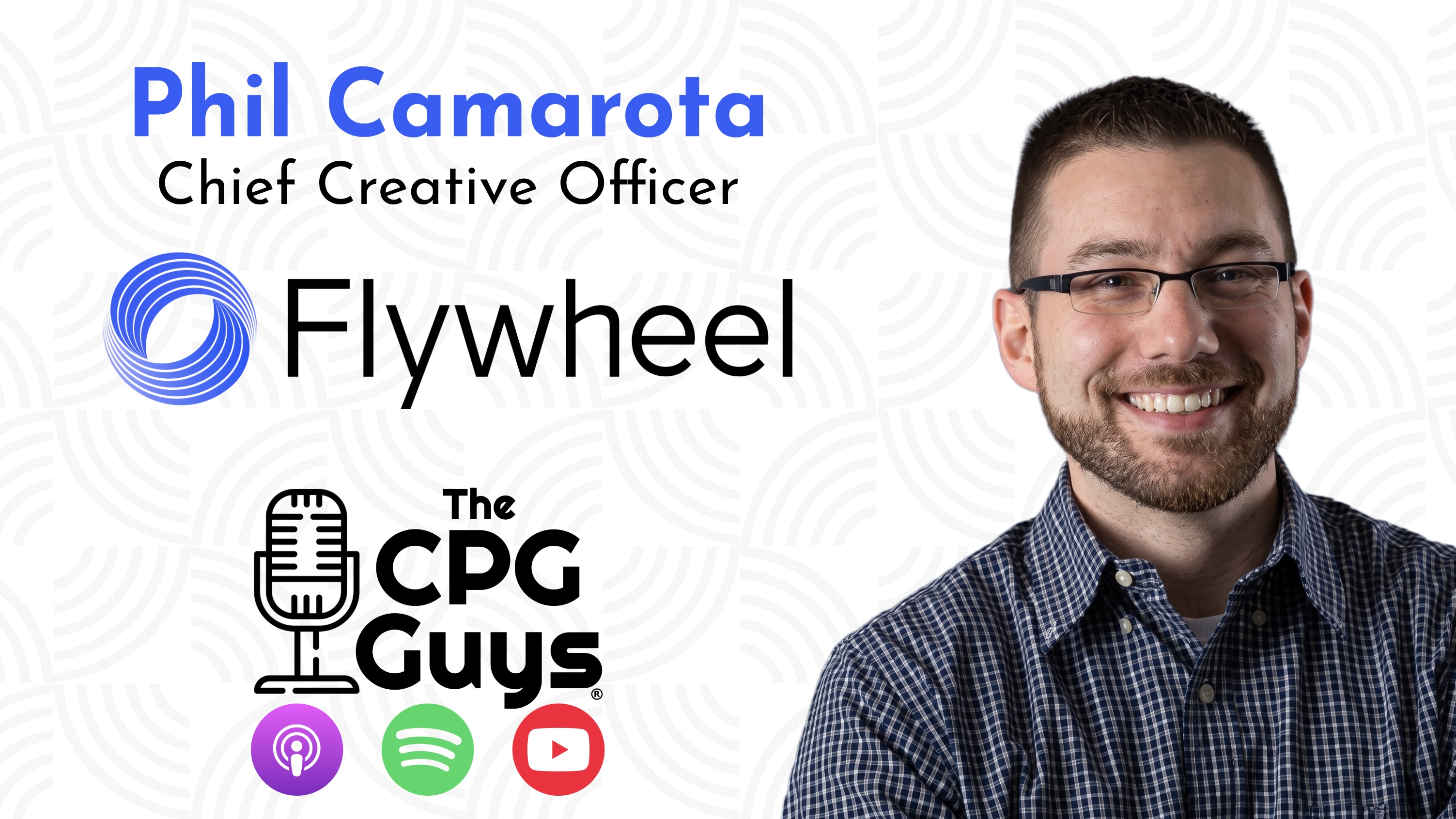


The CPG Guys are joined in this episode by Phil Camarota, Chief Creative Officer at Flywheel, the commerce acceleration division of Omnicom.
Follow Phil on LinkedIn at: https://www.linkedin.com/in/phil-camarota
Follow Flywheel online at: http://www.flywheeldigital.com
Phil answers these questions:
1. Walk us through what it actually means to be Jury President — how much of it is scoring work versus managing a room of strong personalities with different creative instincts?
2. Before you even got to Cannes, what did the prep work look like — building a "shared language" or judging framework with your jurors before deliberations began?
3. Creative Commerce is a relatively young category compared to Film or Print — did that shape how you approached defining what "great" looks like this year?
4. You've talked about expecting "AI tension" going into this year's judging — where did that show up in the room, and how did the jury navigate it?
5. With jurors from Singapore to South America to Europe, how do you reconcile genuinely different regional definitions of great commerce creativity into one Grand Prix?
6. Were there moments where you, personally, had a strong point of view on a piece of work but had to hold back because — as you put it — you're "not the arbiter of taste"?
7. Commerce creativity spans everything from in-store experience to retail media to end-to-end digital journeys — how do you judge fairly across such different formats and channels?
8. You're Global CCO at Flywheel, one of the biggest players in commerce creativity — how did you handle the optics and reality of judging a category so close to your day job?
9. Were there conflict-of-interest guardrails Cannes puts in place for Jury Presidents whose own agencies or clients might have submitted work?
10. Did anything from your Flywheel vantage point — pattern-spotting across retailers and brands — sharpen or distort your lens as a judge?
11. What did last year's Grand Prix winner, VML's "Preserved Promos" for Ziploc, teach you about what separates good commerce work from truly great work — and did that shape your criteria this year?
12. Now that it's behind you, what's one thing about the jury process that surprised you, and what would you tell next year's Creative Commerce Jury President to expect?
CPG Guys Website: http://CPGguys.com
FMCG Guys Website: http://FMCGguys.com
SheCOMMERCE Website: https://shecommercepodcast.com/
Rhea Raj’s Website: http://rhearaj.com
Lara Raj in Katseye: https://www.katseye.world/
DISCLAIMER: The content in this podcast episode is provided for general informational purposes only. By listening to our episode, you understand that no information contained in this episode should be construed as advice from CPGGUYS, LLC or the individual author, hosts, or guests, nor is it intended to be a substitute for research on any subject matter. Reference to any specific product or entity does not constitute an endorsement or recommendation by CPGGUYS, LLC. The views expressed by guests are their own and their appearance on the program does not imply an endorsement of them or any entity they represent.
CPGGUYS LLC expressly disclaims any and all liability or responsibility for any direct, indirect, incidental, special, consequential or other damages arising out of any individual’s use of, reference to, or inability to use this podcast or the information we presented in this podcast.
Phil Camarota (00:00)
Hi, I'm Phil Camarota. I'm Chief Creative Officer at Flywheel, and you're watching the CPG Guys podcast.
PVSB (00:07)
Hello and welcome again to the CPG Guys podcast. I'm your co-host, PVSB, who also moonlights as head of industry and client engagement at Flywheel, the Commerce Acceleration Division of Omnicom. My co-host, he's the co-founder of Think Blue Consulting, the father of pop stars Rhea Raj and Katseye's Lara Raj, their fans, of course, call him Papa Raj. But to me, he's my BFF Sri. Sri is actually on vacation in an undisclosed location with his family.
He can't join us for today's conversation. We hope he is enjoying some quiet time, but knowing the Raj family as well as I do, I doubt it's quiet. To our audience, if you are getting value from these conversations, we have three very simple, tiny little asks, right? First, subscribe to the CPG guys on whatever platform you're listening on right now. That's Spotify, Apple, Amazon Music, anywhere else you get your podcast. Hit that subscribe or follow button so you never miss an episode.
Second, leave us a rating. It only takes a couple of seconds and it makes an enormous difference in helping other CPG and retail media professionals find us. We've built this community one listener at a time, and a five-star rating is the single best way you can help us keep growing it. Smash the five. It's not four for fighting, it's not four guys. It's five for fighting. And if you want really good burgers and fries you go to five guys. So give us a five.
third, follow us on LinkedIn. Between episodes, we publish a lot of thought leadership, industry analysis, and content you're just not going to find anywhere else. All built for the CPG and retail communities you're already a part of. So search CPG Guys on LinkedIn and hit follow, or click the link in the digital show notes of this episode. Subscribe, rate, follow. Three simple actions that help us bring you more of the conversations that matter. Now on to our guest.
Phil Camarota is the chief creative officer at Flywheel. Where is that? That name is familiar. that's right. I I work at Flywheel, where he leads creative strategy across Total Commerce landscape, bringing together brand storytelling and retail performance for clients like ATT, PepsiCo, SC Johnson Hershey, and Lego. My daughter is in the middle of building the Hogwarts Castle Lego.
Device. And I gotta tell you, it's enormous. It's got like hundreds and hundreds of steps. It's got 30 bags, and she is methodically going through. And my friend Jeff he just posted a picture of his son who bought the Millennium Falcon with his first paycheck from his summer job. And I thought, my God, what a great investment. buy some Lego. But anyhow, over the last two decades in the industry, Phil has built a reputation for turning retail data and shopper insights into award-winning creative earning recognition.
From the Effie Awards and Cannes Lions, among others. Speaking of which, this year, that expertise earned him one of the industry's most prestigious honors. Phil served as president of the Creative Commerce jury at the Cannes Lions International Festival of Creativity, the global stage recognizing the best work bridging creative and commerce. It is a fitting perch for someone whose whole career thesis is that no shopper barrier is too tough
For creativity to crack. Today's episode will explore a behind the scenes look at what it takes to run a jury at Cannes Lions. Please join me in welcoming Phil to the podcast. Hey Phil, how are you doing?
Phil Camarota (03:33)
Hi Peter. Thanks for having me.
PVSB (03:35)
Now here we are remote. We were talking before the episode. You're literally in the next town over from me in Connecticut on the coast, as I like to call it. We're both on the Gulf of Connecticut. Apparently, you're able to rename bodies of water at your own will these days. So I some people call it Long Island. I call it the Gulf of Connecticut. But before we get to our conversation, Phil, why don't you let our audience know a little bit about what your role is at Flywheel?
Phil Camarota (03:41)
Probably ten minutes away.
Absolutely.
Love it.
Sure, so I oversee all the creative output across our flywheel clients. I work with my creative teams and our strategists and our media planners and and many others to just elevate the the quality, the efficiency, and the effectiveness of our work while aspiring to create a total commerce experience for shoppers.
PVSB (04:23)
Brilliant. Thank you for that. And the digital liner this episode, we're going to include links to Phil's LinkedIn profile on the Flywheel Company website so our audience can multitask as they are often liking to do as we go on with this conversation. So, all right, I'm really excited about this episode, Phil, because I go to Cannes and I'm focused on on probably the the what has become now equal to the creative side of things. I've been focused more on the kind of commerce kind of thing.
Things. And I haven't really understood kind of the inner workings of what Cannes Lyons is all about from a creative recognition standpoint. So that's what we're going to dig into today. So let's let's start at a very high level. I'd love for you to walk our audience through what it actually means to be jury president, how much of it is scoring work versus managing, you know, hurting stray cats, right? A room full of strong personalities with different creative instincts. What's it, what's kind of like
Phil Camarota (05:02)
Mm-hmm.
PVSB (05:22)
What's a day in the life, I guess?
Phil Camarota (05:25)
Sure. So you know, first I just wanted to spell the rumor. I think people hear Cannes, and I think sometimes people think boondoggle, right? You're going to the south of France, and you know, there's a lot of attractive things there. And that is all true. but the the jury president and and the jury and just a lot of the Lions content providers, like it is a lot of of work. and the work starts before you get there.
so for the Creative Commerce category, our judging started about six weeks before the festival even began. and there was sort of two phases. One where you're looking at a
kind of snippet, if you will, of all of the entries and doing like an initial pass. that's done on an individual basis, virtually. So you're not working as a jury. You're actually not supposed to be talking. you're supposed to be applying kind of your expertise and your perspective to the work. so there's about like six weeks between those those two rounds. and among that you're also like establishing criteria to
Try and help the jury, you know, have a similar lens to kind of view things. so that's definitely a lot. And then once you actually get to Cannes, from a president's perspective, a lot of it is orchestrating the judging process. Each category is different. Creative Commerce, we did two full days in the jury room. and when I say full days, I mean full days. Like, you know, you're talking about you know, 8 a.m. to you know, 10 a.m.
10 p.m., you know, midnight. It it can get late depending on the category, the amount of entries, the debate.
So you, you know, you have that. you also, as jury president, need to be encouraging debate, but also diffusing arguments and and keeping the progress going, right? We we have a very finite amount of time to make these decisions. so while we want to go through all the work very thoroughly, we we do have an award show in our case on Thursday, where we need to hand out some awards, so we need to make some decisions.
A big part of that is making sure that all the voices in the room are valued and heard. So a jury has 10 members, including the president. the president is mostly the facilitator. you know, I got to have an opinion in the room, but a huge part of it is you know, helping to pull out the other opinions and perspectives and and viewpoints.
So that's a big part. And then last but not least, as president, you become the representative of your category for the week. So you're doing press conferences, you're doing the award show, you're doing panels, and you're really representing in my case what creative commerce is all about in 2026.
PVSB (08:33)
Okay, there is so much to unpack there, Phil. And that fortunately we have a long form conversation where we're able to do that. So obviously, I'm one thing I will say is I'm not gonna try and and convince anyone listening to this podcast that going to Cannes for a week is anything more than a first-world problem. Yeah, it's a pain in the butt to get there. It's very expensive when you're there. It is brutally hot and humid. At least the last couple of years I've been there. I haven't had a moment to really actually I will say this.
Phil Camarota (08:50)
Yes.
PVSB (09:03)
The Friday this year was the first time in my four years that I've actually had a day to walk around and actually experience what Cannes was like. So that was very nice. But it is it is very much about work there. at least for people who are what I would classify us as, which are service providers in the ecosystem, right? it maybe it's a little bit better for some of the the brand people, but I know for us in particular it's a lot of work. But anyhow.
Phil Camarota (09:15)
Uh-huh.
PVSB (09:31)
All right, so creative commerce is a relatively young category. As I kind of mentioned, the traditional awards for creativity, if you walk the Quazette now, you see it is populated with businesses that are more focused on the commerce side of things. You see the big tents for all the retail media networks and a lot of the ecosystem providers in that space, right? So commerce.
Is now, I would argue, no longer just an undertone of the event. It is gaining equal status, which is probably why Cannes feels so much more crowded every year, because I know there they're it's a town of 69,000 people and 40,000 people come in for this event this year. That is just mind-blowing. I they're gonna have to do some major infrastructure updates on that town because I don't know how much bigger, how much bigger we can get, but
Phil Camarota (10:14)
Mm-hmm.
Yeah.
PVSB (10:29)
as I mentioned, Creative Commerce is relatively young category compared to film or print. how did that shape how you approach defining what great looks like?
Phil Camarota (10:40)
Yeah, I mean that's something that we talked a lot about. it's what made it kind of an exciting challenge was because it is such a young category that is still being defined and we
had the ability to, you know, shape that history and the future, you know, of the category. And Peter, just going back on on what you were just mentioning about I think commerce becoming increasingly important within Cannes itself, that's something that that has come up a lot with the Lions staff that I I spoke with. they don't want
Creativity for creativity's sake. They want the festival to be about effective creativity. And they real, they're really pushing all of the categories, not just creative commerce, to put a focus on highlighting creativity as a business driver. So for people like you and me, I think that that's music to our ears, right? Like that is what we are all about. So to see that gaining such momentum at the festival is is really inspiring and it makes
Me happy as somebody who has dedicated his career to commerce creativity. So for all those reasons, you know, it was an honor to help shape this young category. And that's why we were so diligent, you know, with coming up with criteria that really helped us lock in on what great creative commerce looks like.
PVSB (12:10)
Yeah, I think about the roots of Flywheel being in Amazon and mid to lower funnel activation, which was very closed loop, very direct, and very measurable. And so Cannes Lions trying to get all of the categories to think beyond that was a really cool looking ad to did it actually build business for the brand that
that was promoting it, I think that is music, as you said, music to our ears. so that's really great. You you've talked about expecting AI tension going into this year's judging. I remember l thinking last year was as as we were getting ready for Cannes there was there was a belief that there would be at least one winner where the entire creative was AI generated. And I and I don't know if that's necessarily
Phil Camarota (12:46)
Absolutely.
PVSB (13:07)
what people were thinking going into this year with just so much talk about particularly the Gen Alpha and their authenticity on on content. So that maybe it's maybe there's a little bit more tension. Where did that show up in the room and how did you help the jury navigate concerns around AI in the creative process?
Phil Camarota (13:33)
Yeah, so AI was of course top of mind for everyone still. I think last year is when it really exploded on the scene, but this year was the first year where I think consumers have become so much more familiar with it. So it was expected to see a lot more applications. And at the festival overall, I think what we saw was a
A a kind of pendulum swing back in the other direction, where AI was was so
Forward last year, we saw a little bit of a kind of recoil and reaction to that. And I think to your point, authenticity is what was really highlighted across the festival. you saw brands and people really clamoring for authenticity, trying to define what authenticity really is in today's world. And that definitely permeated the creative commerce category.
One argument that we had in in great depth was around the implementing of AI into the shopper experience. And there was different perspectives in the room on is AI an innovative solution, you know, implementing it in the shopping experience, or is it simply an inevitable one?
I think people feel like at this point it is inevitable. It is expected. Of course we should be adding this layer, you know, to the overall experience. And then some people felt like because it is an expected step, that means it's it's not creative, right? It's it's not new, which is sort of crazy to me, to be honest, because I think it is.
extremely innovative because it is hard for most people right now to point to who are the leaders in that space, who is incorporating AI very organically and and naturally you know into the shopping experience. And I think it's hard to point to
The people who are leading the way. And as the Creative Commerce jury, I thought it was our duty to highlight sort of the AI standard bearers, you know, in the commerce space. And ultimately we ended up awarding a few different cases that applied AI in in various different ways. And
That's something, you know, I think for years, you know, years away from now, I'm gonna be looking back on it and be very proud, you know, that we were able to recognize that and and award that this year.
PVSB (16:16)
two things. One, whenever anyone uses the term inevitable, I'm thrown back to the Avengers movies, notably with Thanos. So it's like I am inevitable. And I just want to say no, I am Iron Man. But that aside, you know, we talk about the authenticity as an aside. Shree and I are are heading up to Ithaca for the Cornell like Zach Ed program on omni omnicommerce leadership.
Phil Camarota (16:22)
Course.
PVSB (16:41)
And before we go, we're heading to Cooperstown. Shree's never been to the Hall of Fame. He's a big Yankees fan, so I'm taking him up there. I went on to Gemini and just created a little cartoon showing the CPG guys standing in front of the Hall of Fame. And then I put it on Instagram and I did a collab with him and with the CPG guys. Well, Shree's got all these fans, hundreds of thousands of fans that follow his daughters, that follow him. The minute they saw what was clearly a
AI generated cartoon, they just started piling on almost like virtue signaling and shaming him. How could the parents of pop stars use AI to generate an image? And and you know, I don't really appreciate it as much, but I what I do have to respect is that that is how consumers are reacting to it. So that authenticity element, it's serious. And if you're a if you're a marketer and you're not taking that into account.
Phil Camarota (17:16)
This is.
PVSB (17:38)
You're doing such a disservice to the brands that are trusting you with this creative.
Phil Camarota (17:42)
Yeah.
Yeah. And Peter, i if you don't mind, I would I'd love to just talk on that a little bit. because I I I find it fascinating. You use the term virtue signaling, which I I haven't heard, but I I love that and I'll steal that if you allow me. because I do think that there is a bit of virtue signaling because the way that people react to the idea of AI
PVSB (17:58)
By all means.
Phil Camarota (18:10)
versus the work that is created by it is is is different. And the other day I was just reviewing some posts from a gentleman who created some imagery around like tennis and and Wimbledon and the photography was was beautiful. And then you read the comments and people are like, I was so excited by this and I found it so inspiring until I found out it was AI. And to me, we need to
decouple those things. You know, especially creativity like
We've always used things to kind of manufacture a truth in some ways. I mean, what is the difference between photoshopping an image and generating an image in AI? I feel like there came a point where photoshopping something became socially acceptable and it didn't bother people when they encountered that work in the real world and there even became an appreciation for it. And I feel like the same thing is going to happen with AI, but there are obviously large
major existential threats that people are considering when they when they talk about AI. So it might take a little bit longer, but I think we'll get there eventually.
PVSB (19:23)
I hope so. Like j just this morning I got up early. I was creating little social media images for all the attendees of this program. And I would just go onto LinkedIn and I'd grab their their headshot. And in one case, I grabbed one where the actual headshot had been cropped into a circle. And so you know what? I just went into Gemini and said, Hey, can you take this headshot? It wasn't very sharp, sharpen it and and extrapolate what what would have been cropped out.
So that I can use it for my thing. And it did a really nice job. And it, you know, this this isn't, I'm not trying to fool anyone. I'm trying to give it to the person who's coming to the, to the, to the show, pardon me, to the to the program, for them to be able to promote the fact that they're going to it. And it and it's like, is that, you know, you this whole concept of virtue signaling and the sensitivity towards that? I understand if I'm
trying to enrage or convince people to do something that they wouldn't normally do. But you know, that there's there's such a there's such a line that we're all trying to find. And it's it's a it's a line that's always moving, I would argue. But back to back to our questions. with jurors coming from Singapore to South America to Europe, I'd love to understand how you and I I was just this morning, I I got up at 4 a.m to watch
Phil Camarota (20:29)
Mm-hmm.
Yeah.
PVSB (20:46)
the the H1 review in for Flywheel in the European market and they were talking about cultures and how you deal with different cultures and how they perceive different things. My question to you is how do you reconcile genuinely different regional definitions of great commerce creativity into one grand prix for this commerce creative award?
Phil Camarota (21:14)
It took a lot of work, honestly. I mean, you're talking about people from different regions, different backgrounds, language barriers, you know, are are definitely a a thing.
We had jurors from yeah, UK, you know, New Zealand, Singapore, Colombia, Taiwan, Romania, Brazil, Ivory Coast, Vietnam. I think that that is is everyone. And it was an amazing group. I I was so lucky to have the the group that I did. they came together, you know, as as one team and were
Extremely respectful of each other and and and wanting to understand different perspectives. It's also helpful to have people with different backgrounds in the room when you're reviewing work from different markets. So many times, you know, one juror would kind of have to step up and help explain a case, you know, for the larger jury because there was context that we just, you know, didn't understand. but a lot can still get lost in translation.
Translation. So it's something that we had to continuously sort of work at. But the Grand Prix, honestly, was quite easy. That work, which was Lucky Fan Index, it rose to the top just round after round after round. And I think what was really interesting about that case is it was around football, or as Americans say, soccer. And
What we saw at Cannes as a whole was sport like really kind of popping up in every single category. And I think that that's because sport has a way of kind of breaking down those cultural barriers and it provides a common cut touchstone for for people.
So maybe that's why it's so easy for all of these different audiences and and and people to gravitate, you know, towards these sport related concepts, because they were definitely winning more than their fair share at Cannes this year.
PVSB (23:31)
to the by the way, the the focus on sports as evidenced by the hot one of the hottest tickets next to the Spotify late night concert was probably getting onto the sports beach. I've been denied four years in a row, even though I've applied for it. But I don't know. I think the CPG guys are getting so big we're they're gonna be wanting to come to our residence next year. And I'm gonna keep ev everyone at Stagwell, forget it. You're you're out next year. The CPG guys was the hottest ticket this year.
Phil Camarota (23:46)
Yeah.
That's the attitude.
PVSB (24:00)
And I'm sorry, your your your time is your time has passed. But in any event, I would love to know, were there moments when you personally had a very strong point of view on a piece of work, but you kinda had to, you know, you're not the arbiter of taste and you kinda had to step back and let the jury, the jury's will kind of kind of take take center stage.
Phil Camarota (24:25)
Absolutely. you know, I think when you reach
you know, a a a level like chief creative officer that that I've been lucky enough to reach, you have to have a strong point of view. That's just part of the job. So to be able to or or have to rather kind of pull back on that was was challenging at at times. And I really tried to be Switzerland. And I don't know if I was successful every single time. there were a few cases
that were highly creative. And again, the creative in me loved them and appreciated them, but
In my opinion, they they weren't actually commerce. So I had a real struggle where I just felt like we couldn't recognize this work in this category because it doesn't meet, you know, our our definition and our criteria. So there were definitely some spirited debates. at one juncture, I was very proud because things were getting, you know.
heated a little, you know, a little bit. Like I said, everybody was friends and everybody was great, but there was a lot of passion. And one of the jurors just pulled us back to, you know, the the the category criteria and had us go kind of case by case, point by point, and just help kind of re-ground us in in why we were there. So
very proud moment as a as a president when, you know, other jurors in the room are kind of helping to to facilitate you know all those different conversations and and points of view. So that was that was really great.
PVSB (26:00)
Is there a mechanism? So you I love that you mentioned there were some submissions that you really made the determine they weren't about commerce. Is there a mechanism to get that back to the submitting entities to say, guys, we really like this, but this really didn't fit the criteria? Because I know from our side, you you want to nominate as many of your campaigns as possible because you want to walk away with a lot of lines. But if it doesn't really fit.
Phil Camarota (26:30)
Is it?
PVSB (26:30)
How do
you tell the people that submitted, guys, really great campaign? Probably belonged to another category, didn't belong here. What is, what's the way you do that?
Phil Camarota (26:40)
So that was a literal question that we asked in the room because there were cases that we just we loved and we felt like they should win, but not in our category. And the Lions process is very thorough and and they they have people in the room that
Help us with with any questions, right? If we have questions on on results for you know a piece of work or any sort of background, like they help us kind of track it down. We also pose that question to them about can we essentially change the category that this is entered in? And the short answer is no. they do a great job.
At Lions vetting all of the work and all of the results and making sure that there is integrity in every case that kind of makes it through. But they are very respectful of the choices that the entrants make. They choose their categories, their subcategories, and we judge them within that context. So, you know, in all honesty, there was definitely some heartbreak around some cases, but ultimately we could not, we could not change that category decision.
PVSB (27:50)
Yeah, I guess given that this was the first year that the category existed, them being in the room and hearing how you debated will probably position the people at Cannes Lions for next year to do a better job in the filtering and vetting and structurally what actually gets to the jury for evaluation. Let me remind our audience that today I am speaking with my colleague, Phil Camarota. He's the chief creative officer at
Flywheel, the Commerce Acceleration Division of Omnicom. So, Phil, commerce creativity spans everything from the in-store experience to retail media to end-to-end digital journeys. How did you judge fairly across such different formats and channels, particularly considering, you know, the development in one market is fundamentally different than in another market? How did you bring that together from a cohesive judging standpoint?
Phil Camarota (28:47)
So, Peter, you're a master of segues because to me, this is all about categories and subcategories that we were just talking about. the subcategories helped us navigate a lot of the nuances, you know, between different pieces of work. what it allowed us to do was judge.
Each case on its own merits based on subcategories. So, for example, within Creative Commerce, there are subcategories like customer acquisition and retention, cultural engagement, social and influencer. And these things are definitely to your point, like they're apples, oranges, and and bananas. But we kept asking: is this case the best example of this subcategory? And I
like to think of things in, you know, different sorts of fun examples. And I like to think of it sort of like as a as a dog show, right? Like when when you're judging best in show, you can't judge, you know, a French bulldog versus a cocker spaniel. Like what you do is you judge each one by the merits of that breed. And again, is it the best example of that breed? And if it is, then it sort of rises to the top. so that was sort of the mentality. If this was something that we would hold up
as the best example of social, then perhaps it's better than something that is maybe a a mid example of, you know, cultural engagement, if you will.
PVSB (30:19)
I have a beef with the Westminster Kennel Club. I have never seen a Norwegian Elkhound win best in show. Until that happens, I am highly suspect of there. It always seems to be some little super cute little designer breed that fits inside of a bag that goes under your seat on an airplane. I'd rather real pro or it's a great dame. Never a Norwegian elk hound. You might guess which breed my family tends to gravitate towards, but that's let's just leave that for another story. We'll park.
Park that over there, I have a bias.
Phil Camarota (30:51)
Pro protest
it, I will stand with you in solidarity.
PVSB (30:53)
Thank you. Thank you. so in your role as global chief creative officer at Flywheel, one of the biggest players obviously in in commerce creativity, how do you handle the optics and reality of judging a category that is so close to your day job and and some of the stuff that's submitted you may well have have played a role in bringing to life?
Phil Camarota (31:14)
Yes, luckily it was a bit of a non-issue for me because everyone has a conflict while you're there. So it is it is out in the open and and everyone understands that there are a lot of dynamics at play and sensitivities around those. And again, the Lions people are amazing at helping everyone recognize those biases.
and and kind of get them out in the open and how to kind of combat them. and I would say my experience was I think really helpful. And I I think the jury appreciated having someone who was so close to the category and the work be able to provide
the perspective that I did. I don't think we would have aligned, you know, at the criteria that we got and ultimately the winners that we arrived at without you know, that expertise that is provided to me, you know, being at a company like Flywheel.
PVSB (32:16)
Can you give us an idea of what kind of guardrails they're putting in place for you as the jury president and some of the jury members to really address that that issue?
Phil Camarota (32:28)
Yeah, so you get spoken to a lot. you know, again, weeks out before the festival. there are meetings on
Biases and integrity before each round of judging, there are videos that the jury watches together that outline kind of do's and don'ts and how you could recognize your own personal bias before scoring work. then once you are in the room itself and you are judging work, if you if you or your
company or network have a a role in that piece. You are excused from the room. You are not a part of any conversation. So people can kind of speak freely and you know really give their their true opinions on something. And I would say last is a lot of talk around kind of quid pro quo that seems like maybe in the past was a a bigger
a bigger deal where, you know, as a jury you're you're you're trying to align on, you know, certain categories of winners, right? Shortlist, bronze, silver, gold, grand prix.
And there was a little bit of horse trading, you know, if you will, you know, back in the day where people would say, Hey, you know, will you vote for mine if I vote for yours type of of thing? And lions will have none of it. that is not the type of environ of environment that they want to put forth. like I've mentioned, they are very hot on integrity and making sure that everything passes,
you know, the th that test. so they take it very, very seriously and they are, you know, with you all along the way to ensure that that integrity is upheld.
PVSB (34:17)
I can think of quite a number of global governing bodies, FIFA, that could probably benefit from these kinds of very strict and it integrity-filled guidelines for for judging who gets awards and what have you. But in any event, did anything from your flywheel vantage point pattern spotting across retailers and brands really sharpen or distort your lens as a judge?
Phil Camarota (34:21)
Sure.
I certainly felt sharpened. I think that the total commerce perspective allows me to sort of appreciate commerce in in all of its forms. Like you mentioned, there's so many disparate types of work that you're looking at, from physical to digital to everything in between, you know, really big ideas to really smart, strategic, small changes. And I think understanding the impact.
That seemingly small changes can have on like the path to purchase. I think that that just gives me a a different perspective. And I think folks outside of commerce might underestimate some of those smaller things, like a
coupon code or a recategorizing or a retitling of a product, like these things can have major impacts on on the success of a campaign or a product. And I get to see the power of these things. And I think I was able to help open some eyes on the jury to things that they might not have, you know, realized prior to to coming to Cannes.
PVSB (35:54)
Looking back at at see even last year's Grand Prix winner, how does that shape your criteria for this year or help you separate good from really great work? What what goes into what happened in the past that can actually affect what you were doing in that jury room?
Phil Camarota (36:16)
So the past work is incredibly important. That's how I think we refine our our taste level and criteria. So there was a lot of cases that we looked at and reviewed. And being transparent, again, because it is a young category still being defined, there were some
winners from years past that maybe I didn't really agree with, to be honest. You know, maybe I didn't think it fit my criteria for for what Creative Commerce is. And I sort of used those cases as examples, both both positive and negative, right? To kind of help steer the jury in into what we needed to to look for. But Preserve Promos was definitely one of the good ones. obviously I'm a grand prix winner.
the strategic depth of that idea, both in the idea and the execution, I I really admire. I think it's a a very rare combination.
You know, so often good work has like one aspect that you can appreciate, but great work has has multiple. And I think few kind of bring it together as good as Preserve Promos does. Like the the timely insight of coupon culture, the timeless product benefit of Ziploc, it was a brilliant connection. But then the way that they actually executed across the diverse range of retailer partners, I think that that's what ultimately elevated Preserve Promos to like that elite status.
Switch.
PVSB (37:52)
So now that it's behind you, I I know it's reported that in many cases when the CEO transitions, that they leave a note for the person who's taking over for them. So you you've got your little pen and paper, maybe you're just doing it on Slack, but now that it's behind you, what would you share with the person that follows you about
Anything in the process that surprised you or what what they should think about as they go into taking the role that you had this year at next year's event?
Phil Camarota (38:31)
So for me, I think the most surprising thing was both the incredible support that I received from Lions, but also the surprising autonomy that they gave me, and and the jury as a whole. I mean, the festival is huge, it's complex, it is a well-oiled machine. They have traditions and and processes that
Have been working for many, many years. But when it comes to that jury room, it really is down to those 10 people to hash it out together. I think each jury experience is unique. And I was so lucky to have the amazing, diverse, and talented group that I had.
I didn't expect to feel such a connection with that group. I mean, we we arrived as as kind of strangers and I think we left as as friends. and I I wasn't expecting this experience to kind of bring that group together, you know, quite like that. but if I was to, you know, give a note to the next jury president, I think I would just tell them, you know, it's gonna be long days, late nights.
and the most inspiring week of your professional career. Right. It's it's it's a lot of work, but so worth it. I came back incredibly inspired and ready to share insights with my fellow flywheelers and our clients. And the experience has has truly been a gift.
PVSB (40:07)
Right. So I know our colleague Emma Irwin, when she hosts her podcast, The Commerce Collective always ends with asking people, what's that one item in your basket that you haven't bought? It's the big aspirational one. I'm not gonna ask you that, but I'm gonna ask you like, what beyond like your work computer and your cell phone, you're going to Cannes next year. What can you not forget? What what has to be in your bag when when you go? Like for me,
you know, I'm gonna have a you what I you know what I bring that no one really thinks about, but we as spoiled Americans take for granted. I always bring a couple of ice trays, plastic ice trays that I pay two bucks for at or a dollar at dollar at Dollar General. And I put them in, you know what? Because no fridges at any hotel. Well, first of all, they're typically aren't fridges and rooms, but if you're an Airbnb, even the fridge, the the ice maker, they don't have any ice in the in the freezer.
And so I bring trays to make make my own ice. And it makes a world of difference for me. What for you is like I gotta I always have to bring this to Cannes because it's like if you if I can't have it, I'm not having as great an experience.
Phil Camarota (41:12)
Absolutely.
Yes. well I I don't think an air conditioner would fit in the bag, but
PVSB (41:25)
No, that's the other thing.
You need you if you're doing an Airbnb, you have to understand as as a spoiled American, when you do the filter on on Airbnb, make sure you check off air conditioning because most of the places there don't have it. And when you get there, if you don't have it, you're gonna feel the pain.
Phil Camarota (41:42)
Yeah.
I totally agree. I'll I'll tell you what, I will be I will be very honest and very vulnerable on your on your podcast. And I will tell you that if it's just us, if I'm going, I need to bring Nature Valley peanut butter granola bars.
PVSB (41:49)
Yeah. Yeah. It's nobody's listening. It's just us. It's just us. Don't we? Yeah.
There you go. You you've got your go-to snacks. You're not gonna find them over there. I, you know, like I w I was interviewing while we were there over there, Shree and I were interviewing Ben Wavater as the chief media officer at Liquid Death. And I wanted to bring some Liquid Death for the conversation. They don't sell it Europe. And I figured I'd pick it up at the airport. Nope, not carried at airports. Like I, you know.
Phil Camarota (42:03)
Yes.
PVSB (42:25)
It's just not that easy to get certain things that you want to bring over there. So if you've got something that you like the Nature Valley Granola Sign, if you know you need it and that's going to make your life better, pack it. Don't forget it. That is essential to living. So absolutely. Well, if today's conversation sparks something for you, maybe a new idea, fresh perspective, or just a reminder of why this industry is worth showing up for every day, just share it.
Phil Camarota (42:41)
Absolutely.
PVSB (42:52)
Tag us, tell a colleague, the more voices we bring in this community, the sharper all of us get. to the over 46,000 followers on LinkedIn that trust us to inform, educate, and entertain you about this industry. Thank you, thank you, thank you. Sri and I are so grateful. We love meeting you at industry conferences. just come up to us. You see us on an airplane, say hi. You're walking by. We love to talk. That's who we are. So we're we're grateful.
And we wouldn't have this without you. Phil, thank you for joining us today for a really interesting con conversation perspective on behind the scenes at Cannes. I really enjoyed our conversation.
Phil Camarota (43:33)
Yeah, me too. Thank you so much. And next time let's do it over pancakes at Christie's.
PVSB (43:39)
God, I like the raspberry crunch ones. That's my favorite one. I I you like the banana crunch? Okay, okay. But my my daughter, she wants, she's she always has to have a double order of crispy bacon. That's that's her go-to. And I love they have pink lemonade. That's another thing I like. until next time, keep pushing the conversation forward. I am PVSB on behalf of my co-host Papa Raj. This has been the CPG Guys Podcast. Goodbye.


