Your Checkbook Never Lies: Calling, Money & the Life You're Really Living | Scott Maderer

 Apple Podcasts
 Castro
 RSS Feed
 What if your money problems have nothing to do with money?
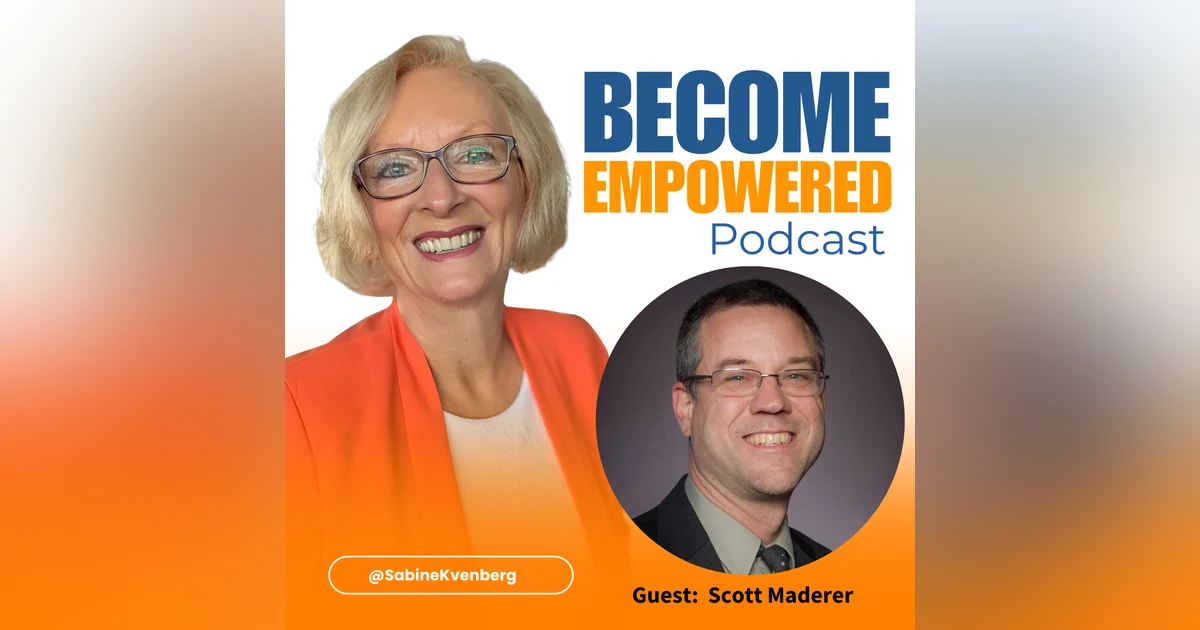
In this episode of Become Empowered, Sabine sits down with Scott Maderer — host of the Inspired Stewardship podcast with over 1,800 episodes — to unpack a truth most people avoid: financial stress is a symptom, not the source. The real problem is alignment.
Scott opens up about his raw personal story: $60,000 in debt on a $40,000 teacher's salary, suicidal thoughts he kept hidden from his wife, and the radical turning point that changed everything. From the classroom to a corporate executive suite to launching a full-time coaching business after a stranger said, "You and your wife are weird — can you help us be weird?"
In this conversation you'll discover:
• Why your checkbook and calendar reveal what you actually value (not what you say you do)
• The little-known difference between career and vocation — and why it changes how you live
• How to master your time, talent, and treasure intentionally
• The one question we stop asking adults that could unlock everything
Scott shares insights from his book Inspired Living and has a free resource page exclusively for Become Empowered listeners at inspiredstewardship.com/becomeempowered.
If you've ever felt stuck, out of alignment, or like your life doesn't match what you say matters most — this episode is for you.
CONNECT WITH SCOTT
Website: inspiredstewardship.com
Podcast: Inspired Stewardship
CONNECT WITH SABINE
Register for free webinar:
https://sabinekvenberg.com/be-seen-live-masterclass
Website: sabinekvenberg.com/resources
Book a call: talktosabine.com
Instagram/LinkedIn: @sabinekvenberg
TOPICS COVERED
[0:01] Welcome — Introducing Scott Maderer
[0:56] Scott's three words: Curious, Knowledgeable, Giving
[3:40] From science teacher to corporate executive — Scott's path
[4:47] $60K in debt on a $40K salary — and suicidal thoughts he kept secret from his wife
[6:35] "You and your wife are weird" — how a stranger accidentally launched a coaching business
[9:43] Money is the symptom — here's the real problem
[12:28] "Show me your checkbook and calendar — I'll tell you if you're lying"
[17:09] Scott's book: Inspired Living — assembling the puzzle of your calling
[18:06] The "blood of the covenant" quote that reframes legacy
[21:00] Can you — and should you — get paid for your calling?
[21:51] Career vs. vocation: the word roots that will change how you think about purpose
[24:09] What "calling" actually means and why it shows up in everything
[29:35] Scott's final message: stop asking "what do you want to do?" — ask who you want to BE
speaker-0: I can earn my way out of this. I can make more money and it'll solve the problem. You know, I only make $70,000 a year. If I made $80,000 a year, everything would be better. Well, if I made $90,000 a year, everything would be better. And the problem is that because you're treating the symptom, you're not actually getting to the root problem, which is alignment and intentionality. It's how you relate to money. So what happens is a lot of times we say things are important to us. People will saw all the time, you know, my family is very important to me. And I'm like, Great. Give me your checkbook and your calendar and I'll tell you if you're lying.
speaker-1: Every great story has a moment, the one Where everything shifts. Welcome to the Become Empowered Podcast, where real leaders pull back the curtain and show you exactly how they did it. I'm Sabine Kwenberg, performance communication coach, keynote speaker, author, and your host. I have spent my career on stages, real ones and invisible ones, and I know this the most powerful transformations don't happen in the spotlight. in the quiet moments of decisions, resilience, and radical courage. Before we dive in, if this podcast moves you, challenges you, or gives you that one thing you needed to hear today, please follow, like and share it with someone who needs it too. That's how we grow this community together. Some episodes I'm sitting down with entrepreneurs, authors, speakers, coaches, and bold leaders who have faced the hard stuff and kept going. Other times, it's just you and me going deep into the mindset, strategies, and the gumpchant it takes to become who you were always meant to be. Either way, we talk confidence, leadership, resilience, and the real story behind the growth. This is Become. Empowered. Let's get into it. Hello, hello, and welcome to the Become Empowered Podcast. And today my guest, Scott Mader, he is talking about inspired stewardship. Learn to master your time, talent, and treasure, and live out your calling. Welcome, Scott! I am so excited about that topic because this is my
speaker-0: Thanks so much for having me.
speaker-1: believe from the bottom of my heart that we all have been given gifts and talents and living that out is our highest purpose. Scott, if you could describe yourself in three words, what would they be and why?
speaker-0: So three words. Okay, give me a second. Curious, knowledgeable, and giving. I think those are the three words that I would pick. Obviously other people might pick different words for me.
speaker-1: That doesn't matter.
speaker-0: Yeah. I try to all three of those are just things that I try to live out in all of the things that I do. I try to have a curious mindset where I don't go into situations assuming things about people or about the situation or about what they meant or what they said. That served me well as a coach because I I think curiosity is a superpower for coaches, where instead of just somebody says something and you immediately My thought is, okay, what question can I ask? You know, what what can I do? Somebody shares their belief and I immediately begin asking questions. And I've actually been told, I'm, you know, â that's confrontational. I'm like, no, it's not. I'm curious. I just I want to know where it came from. You know, it's not I'm not saying you're wrong. I'm just saying, tell me more, you know. And then the giving, I I try to live my life with kind of an open hand where I I let things flow into my life, but I also let things flow out of my life. And that's not just money, that's, you know, experience, time, other things. And, you know, knowledgeable is when I was a school teacher, the kids always used to say, you know, â you know everything. And I'm like, no, but I'm working on it. â because you know, I I just love learning. I I like to learn something new. I like I'm always and I guess that goes along with the curiosity of I always want to be if somebody tells me something and it's like, â I don't know that, okay. I'm interested. Now you let's talk more because there's always something new to learn, there's always something new to do. You know, it t people talk about being a lifelong learner, you know, I think of it more as being lifelong curiosity, â but it leads to learning. If
speaker-1: Right. And it works together. Curiosity and learning works together. And that's also what I describe in my book Gumpchin. The growth aspect is super important for us human beings to grow. Because if we don't grow, we stagnate or even we reverse, right? So I totally get it. I'm right there with you and I'm always curious. So What inspired you? So you said you were a school teacher. What inspired you to start your podcast and to start that inspired stewardship?
speaker-0: So the the business was actually came out of my wife and I going through our own personal journey. And I'll share some of that in a moment. But you know, from a career perspective, I was a school teacher for sixteen years, but I always had a very Socratic kind of coaching style of teaching. I was a science teacher, so it lends itself well to that. I went into corporate for eleven years. I did that. Again, I was a leader. I w worked myself up to kind of a a management, you know, executive position. And again kind of led the team through that that same kind of coaching mindset. And in between that transition is when my wife and I went through a period. So while I was still still a school teacher, we'd actually run up a a bunch of debt, â about $60,000 worth of debt. I made at the time about $40,000 a year. Because of that, I felt like a bad husband, I felt like a bad father, I felt like a bad provider. I was actually suicidal â because of finances. I was gonna protect my wife, so I wasn't talking to her about it. And she didn't wanna stress me out, so she's not talking to me about it. You know, which, you know, great, great way to have a good marriage. Don't talk to each other. That sarcasm for anyone who's worried. â you know, that it it and so we were probably headed towards divorce. And eventually some some new messaging came into my life and her life kind of at the same time, separately, but at the same time, you know, coincidentally. really isn't a coincidence, but it felt like one at the time. And we I kind of came clean and explained the situation. Of course, she's a smart lady. She already knew what was going on. But she was protecting me. I was protecting her. She was surprised that I was suicidal by it, but but it made sense, you know, when I shared it. And she had felt it. She just didn't know, she wasn't able to put it into words. So we turned things around and decided, hey, we're going to live our life radically differently. We began to pay off the debt. We began to change how we had a relationship with money, how our relationship with each other. In in my case, I kind of returned to a spiritual relationship with God and got re-involved in the church and those sorts of things. I drifted away over the years. And all of that just kind of radically changed how we were living our life. The career change kind of came in the midst of that. It's connected to it, but it wasn't like, â I need a new job so I can pay off the debt. It was just more of it grew. out of all the other changes. And eventually what happened is somebody literally walked up to me after church and said, You and your wife are weird. Do you think you could help us be weird? It was literally what they said. And I went, Yeah, sure. We could we could sit down and talk about it. And we sat down and it ended up turning into a coaching relationship. We started it as a ministry and eventually got paid by somebody. They were like, you know, I want to pay you. And we're like, okay. â it was $135. I can actually tell you the the amount of the check. And so the coaching business almost kind of came out of an accident of our own life and people noticing it. As that happened, I leaned into it because so much more of my calling, my gifting, the way I was wired came alive in that experience. And so I do think it so it kind of reinforced to me that, hey, this is the right direction. Because career and calling are connected, but they're not the same thing. And and I I try to clarify that for people because I think a lot of times we think of our calling as what we get paid to do. And it's like that's actually completely different. We can talk about that if you'd like. But All of this kind of came about. And so that's the business start. Eventually, that was back in 2011. And eventually in 2017, I kind of worked my way back down the corporate ladder after climbing up to an executive position. I climbed back down. Took me over a year to leave the company because, you know, I kind of was in a key position, trained my replacement, and did all of that. Didn't want to leave them in the lurch. And so eventually I I left and launched my own business full-time. That's where the podcast came from because Everyone said, â you need to start a blog. And I'm like, I hate writing, but I like to talk. Well, there's this podcast thing. I'll start a podcast. And so I I literally started a pod. The joke is I started a podcast, â I committed to doing it for six months. â that was back in two thousand and seventeen. I haven't figured out whether I like it yet or not, so I'm still doing it. I've got I've got eighteen hundred episodes, so I I I guess I'm doing okay. But
speaker-1: Yeah. That is a very interesting story and so many things to to unpack that I would like to do. The first thing is you talked about the stressor and that money was really the the the root of everything. And and I know that money problems is the n one of the number one stressors for people in their lives. That's how People become criminals, even, right? Or thinking of suicide. So if you can kind of guide us through your process, how you got out of, in this case, was your su suicidal thinking, â and got clean with your wife and started talking. Because if someone goes through that same thing and has money problems or feels that stress. And what is a way they can get through that easier and faster?
speaker-0: I think the biggest trick is to realize that it's actually not the money. And here's what I mean by that: money is the symptom, but it's not actually the problem. And the reason I point that out is because a lot of times what we feel like is: well, if I just made $5,000 more dollars, everything would be taking. â if I just made $10,000 more dollars, everything would be taken. â if I just made $20,000, you know, I can earn my way out of this. I can make more money and it'll solve the problem. You know, I I only make $70,000 a year. If I made $80,000 a year, everything would be better. Well, if I made $90,000 a year, everything would be better. And the problem is that because you're treating the symptom, you're not actually getting to the root problem, which is alignment and intentionality. It it's how you relate to money. So what happens is a lot of times we say things are important to us. People will saw it all the time, you know, my family is very important to me. And I'm like, Great. Give me your checkbook and your calendar and I'll tell you if you're lying. And they're like, I don't want to show you my checkbook and my calendar. I'm like, yeah, that's because you're lying, you know, and you know it. Deep down, you're you know you're out of alignment, you know that something's wrong, and you're trying to solve that alignment problem by making more money, you're never gonna solve it. Okay, because guess what? To go make more money, usually it leads to the stress that's causing that family stress in the first place. So the the f root problems are usually around alignment, around intentionality, around communication, around be you know, we talk about being on the same page as a couple. And that's all true for my wife and I. You know, I thought the solution was, well, I need to make more money. But what happens a lot of times is people make more money and what do they do? They also spend more money and they still don't feel happy. They still don't feel connected. They don't still don't feel in alignment. They still feel like things aren't, â I could do better. That's because you're treating the symptom, not the root problem. And so once I realized that, once my wife and I realized, hey, wait a minute, it's really about sitting down and communicating and learning how to talk to each other, not argue with each other, but actually talk to each other. It's it's about deciding what's important and what's not important and then drawing a line and sticking to it and following through. You know, it's about accountability. It's about and that means holding each other accountable, but also holding ourselves accountable. It's about coming up with a system and a process that works on the good days, but also works when everything's going wrong, you know? And that's what I do now as a coach is I try to step in with people's lives and say, okay, let's not just they think the problem is money. That's what they come for help with. And I I jokingly say I help with time, talent, and treasures, but really and truly all I help with is talent. Because you don't ever manage time and you don't actually manage money. What you manage is yourself, and it shows up in your time and your money. So if you're not managing yourself well, your time and your money are out of control, you know? And it shows that's the symptom, not the problem. And so the system is to get into the talent part and dig into what's really important to you, what really matters, what are you willing to say yes to, and by even more important? What does that mean you need to say no to? You know, what am I going to cut out of my life and say no to so that I can say yes to the things that are most important? Because all too often what we end up doing is we fill our time or calendar and we fill our checkbook or money. And I'm sorry, I'm old enough that I'm still talking about a checkbook. We we fill our automated payment system, whatever it is, the stuff that shows up on the ledger at the end of the month on our time and our Money isn't really the stuff that we would put there if I said, Hey, you've only got you're gonna not be here next month. What's the most important thing to you? What would you say yes to first? And usually that's the very thing that's missing. Yeah. You know? And it's like, well then no wonder you feel frustrated. That's not about making more money. That's about making a different decision.
speaker-1: Right, right. And what you said is so true. When we are faced with, â my gosh, if I would hypothetically speaking, only have one month left, what would I do? Probably something totally different. Now, with that said, there there is like a balance, you know, don't want to get crazy
speaker-0: About YOLO and don't worry about tomorrow and just spend everything you make. Because honestly, by the way, if most people, that's not actually what they would do with their last month if they knew it was their last month. Most people would actually be thinking about legacy and what am I going to leave behind? What are my kids going to think about me? What are my friends, my coworkers? What is the impression and the impact I'm going to live on the world?
speaker-1: Before we get back to today's episode, I want to invite you to something. If you have been wondering why the right people are not finding you yet, I have one answer visibility. Not more hustle, not a bigger following, a system. I am hosting a free live visibility masterclass where I share my visibility triangle. A three-part framework that shows you exactly how to go from invisible to in-demand using AI in your own voice. It's free, it's live, and it will change how you show up online. The link is in the show notes. I would love to see you there. Now let's get back to the episode.
speaker-0: Yeah. That's really what most people would be trying to do is how can I maximize that and leave behind something bigger? Cause let's face it, if you leave a million dollars to somebody in the will, you know, does that change their life? Kinda, but also not really, you know. But if you leave behind that impression where, you know, 10 years from now, they're still talking about, boy, what would What would Scott say? You know, what would what would Scott do in this situation? Man, that changes their life in a much bigger way.
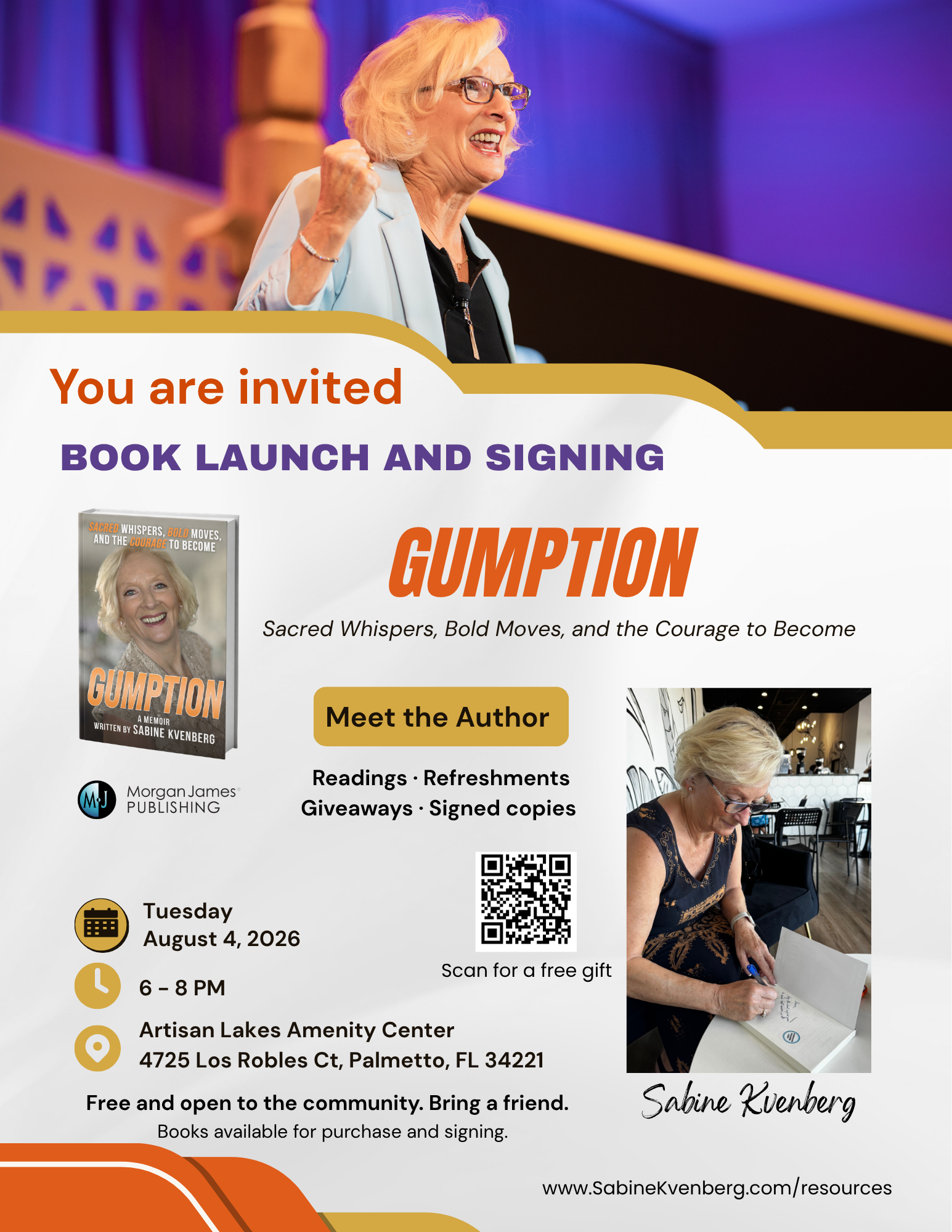
speaker-1: Yeah. And I'm glad that you pointed that out because that is another point, leaving that legacy, making a difference. And and obviously this is what you are doing, also that giving. And interestingly enough, my husband and I, we don't have children of our own. We have our nieces and nephews, but we are pretty much kind of on our own. Sometimes I'm thinking, okay, well, what can I leave behind? Now I have been doing something that I love doing, giving, teaching, and I wrote a couple books. But the last one that is about to be released in August is really the legacy piece that I wanted to leave behind. And this is the memoir that I wrote, Gumpchin. And with that, interestingly enough, it was not on my radar last year when I started writing it. Someone Else nudged me. And then the universe gave another nudge. And I was like, okay, I'm doing it. And that was the best decision. I felt so good about it. And I know that this is what I want to bring out into the world now, leaving something behind. So I do have legacy and it makes me feel good. And now I just want to share it. So that leads me to your book because you have a new book out. inspired living. So tell us about that.
speaker-0: Yeah, that so it came out in two thousand and twenty-four. And the Inspired Living, the subtitle is A Symbol, the Puzzle of Your Calling by Mastering Your Time, Your Talent, and Your Treasures. And so what I wanted to do, you again as a coach, this is what I work with people on, but I can only coach so many people, you know. And I wanted to put together the frameworks that I use, the way I think about things. It has some of my personal story and my personal journey. And I also interview a whole bunch of other people and share Nuggets from them, but it really kind of walks through those components of time, talent, and treasures and takes some frameworks and applies them to those areas of your life so that you could go through the book and do the exercises and actually kind of evaluate: hey, am I actually living my life in alignment? Am I living my life intentionally? And if not, what do I do about it? And if I am, what do I do to do it even more? Because, like you were talking about with legacy, it it isn't just about your family. There's a a quote that people usually quote, which is blood blood is thicker than water. And there is a version, if you go back in time, of that quote that is used the way we use that. You know, family's more important than people that we're not related to. There's actually a different version of that quote historically that is blood of the covenant is stronger than the water of the womb, which literally means the exact opposite. It means the people that you choose to have in your life are more important than the people that you just were born related to, you know? And I actually think both of those are valid in different ways. Meaning, yes, you want to look at your family and and taking care of them and leaving a legacy for them. But I also think it's important to leave a legacy that's broader and bigger than that. And that's that's part of what shows up in the book as well is. Because one of the frameworks is about invest in yourself, invest in others, develop your influence, and impact the world. And and the reason the impact the world is in there is that's the legacy piece. What, what's different about the world because you've been in it. Yeah. And notice I didn't say what's better, I said what's different. Because sometimes we show up in a way that, yeah, the world's different, but it's not necessarily better.
speaker-1: Yeah. Different. Yes. That's true.
speaker-0: And it's like, â do we really want to leave that as our legacy? Because no matter what, you leave a legacy, whether you want to or not. And so what I'm trying to point out in the book and in and other things is kind of like you're talking about is, yeah, but why don't we do that on purpose with intentionality, so that when we leave that legacy behind, actually you know, it aligns with what we want.
speaker-1: Yes.
speaker-0: way back in the beginning you asked me what are three words that I would use and I said, Yeah, other people might choose different words, but these are the words I would choose. So am I living my life in a way where the people that really know me would basically be able to s choose those three same words or words that mean very much the same thing. You know, regardless of the people total stranger, totally different thing. But you know, if they read my book, would they get that impression from it? If they listened to my podcast, would they get that impression from it? If they knew me, would they get that impression from it? And and if I'm doing that, then it's it's intentional on the line.
speaker-1: Yeah. You talked about another thing. And I want to unpack that a little bit because â I think this is an issue where a lot of people are getting uncomfortable. We talked about calling and getting paid for your calling or not. Because of course you can have a calling, â a â Animal activist and you're helping them and that's your spare time and you're not getting paid for it. You volunteer for it, but this is your calling. But then what I want to talk about too is if your calling is coaching, if your calling is doing something in particular, and but you ought to get paid for that. And I would like to get your point of view because I went through the same thing at the beginning when I started my business. I had a performing arts school and I I I felt uncomfortable asking for money because I loved what I'm doing. I would teach the kids for free, right? But you cannot sustain that. So if you can give us your perspective on that calling pay getting paid relationship.
speaker-0: So I'm a big proponent of language. I think the words we use are really important and the meaning of those words is important. And I honestly think sometimes we lose track of what the words mean. And so I want to highlight a couple of differences. So, first off, the word career and the word vocation, we use those words in the Western, you know, European and US kind of thing. We use them interchangeably. We we talk about our career, we talk about our vocation, we we treat â like they mean the same thing. You know, sometimes vocation may mean something like I use my hands more, like I'm mechanic, and a career might be more of a an office job. But but really they both mean what you get paid to do, right? You know, the plumber, that's their vocation, that's their career. Office worker, that's their vocation, that's their career. Here's the thing, those words actually don't mean the same thing at all. So, career, the root word for career is the same as the root word for cart. It literally means a mode of transportation, something that gets you from point A to point B. That's what you get paid to do. Okay. Your career is what you get paid to do. It's the thing that provides the fuel that drives the rest of your life. Because let's face it, money does touch all of the components of our life. Money shows up in our spiritual life, money can get in the way of our spiritual life. Money shows up in our relationships, money shows up in everything that we do. So it's it touches those areas. That doesn't mean it's the most important thing, and we got to get it, you know, get it our relationship with it straight. But our career kind of provides that that engine. Okay, so I said vocation is a different word. Well, think about it. The word vocation, what does that sound like? Vocalization, vocal. The root word is actually vocalis, which means to be called. Well, first off, I'm a person of faith. I believe by definition, to be called means there's a caller. I don't care what name you want to give it, God, the universe, your wiring, whatever. The point is that there is something bigger than you that you feel connected to that's saying, this is kind of your your purpose. So to me, your purpose is that internal recognition of that external call. It's your insides going, â yeah, that's how I'm wired. You know, I I would do this for free. I love it because it's separate. It has nothing to do with whether you get paid to do it. That's your career. And for some of us, your career and your calling has a really strong overlap. You know, I love, I'm called to perform and I get paid to perform. For others of us, it may have no direct overlap at all, you know, or very little, because your Calling should show up in everything, not just your career. Your calling shows up. How do you get out of bed in the morning? Your purpose shows up in that. You know, how do you relate to other people? What is your spiritual life like? What is your financial life like? What are your relationships like? In my opinion, the calling weaves through all of that because it is bigger than just the career, the thing you get paid to do. And again, different people live it out in different ways. Sometimes their career and their calling. Incredibly intertwined. And other times you look at it and you're like, I'm not even sure those are connected. They are, because the way the person is showing up in their career is still driven by their calling, by their purpose, by their wiring, by their what their creator has made them to do, whatever name you want to give it, it's still there, but you may not be able to see it. And honestly, if they can't see it either. That's where people get that feeling of stuckness and that feeling of unintentionality. And again, the book and what my coaching does and the podcast, it's talking about, yeah, but how do you recognize what your calling is and actually begin to have that show up? And if it's not an alignment, how do you make different decisions and different choices? Again, in your relationships, in your career, in your whatever it is, whatever component of your life it is that you start feeling out of alignment. If you can get it more in alignment, I think we feel we feel more fulfilled, we have a a a better life and we have a bigger impact on the world.
speaker-1: Yeah. It's so true. And thank you for explaining that so in detail because yeah, it's true. We have a calling in life, period. And so it's it's great that we put it into perspective. Also, yeah, you can definitely can get paid and make a career out of it. Which which which
speaker-0: You also don't have to, you know, because that's there's some people that are like, â I'm so frustrated because I I don't think my career, you know, the animal activist that you use. But if they're funding, if they're using something else to give them the freedom and the flexibility and the time to go live out something that they can't get paid to do. You know, nobody will pay them to be an animal activist. Well then that's still living out your calling. You know, you're making a deliberate choice to say, I'm gonna do this thing over here that's not completely connected, so that I can spend this time and energy and money over here in a way that is even more connected, that I wouldn't be able to do if I went over here and did something different. You know, it it's it's really that intentionality and that deliberate and the examining it part that I think we lose track of. Cause so many of us just end up doing something almost by accident, or because somebody else told us, hey, you should be a doctor. Yeah. And we went, okay, you know, or Even worse, doctors make lots of money. Go be a doctor. Yeah, no, that that's not the way to choose a career. I don't want to go to that doctor, by the way. I don't want to go to the doctor that's only a doctor because somebody told them the way to make lots of money was to be a doctor. I don't know about you. That scares me.
speaker-1: And I I I know because I experienced it myself. I was listening to just a good advice from my from my dad who said, Sabina, you know, find a good job so you can pay your bills and have benefits and have something left over to pursue your hobbies. And by that he meant my acting. And of course, I started something, but I was so unhappy and I knew I could not do this for 40 years. And and I loved performing. So eventually I made that decision. Like, you know, again, talking about the universe, God, the guardian angels, they send you the right people at the right time. But what I did, I asked the question. Ask and ye shall receive, right? So â and and and that is fascinating to me, which I also shared, of course, in my book, how this all works together. So I'm so glad that we had this conversation because there's so many things that are just so aligned with with what we teach and what we bring out into this world. So and I'm looking forward to be a guest on your podcast â coming up in the next â few months. But in the meantime, if there is one thing you could leave our listeners with, what would that be?
speaker-0: I think the most important thing is to get started. You know, I I talked about the framework earlier, invest in yourself, invest in others. And notice it starts with invest in yourself. Because I think again, so many of us just never take the time and create the white space. Today is so noisy. The world is so noisy. We're all so busy. Everything's about do, do, do, do, do. And we've lost track of being. You know, we've lost track of creating quiet space to go. What am I supposed to be when I grow up? Notice that question, by the way. We ask kids that. What do you want to be when you grow up? We don't ask them what do you want to do when you grow up? Right? But that turns into what do you want to do? What career do you want to have? It's like, no, no, no, no, no, no, no. That's that's not the right question. What do you want to be? What kind of person do you want to be? How do you want to show up in the world? And somehow or another, as an adult, we We stop asking that. And I'm sorry, I don't care if you're eight or eighty, still ask that question. What do I want to be next? What what is this next little part of my life gonna look like? What's the next month? What's the next week? What's the next year? What's the next decade? What do I want it to be? And start asking those questions. Again, the book has exercises about that. I actually put together a resource page for your listeners that they can go and they can get some free tools, free resources. â it has information about my book and all of that. And they can find that at inspired stewardship.com and then just forward slash become empowered, but all one word. Don't no space or anything. And it has some of those free exercises. So if if that resonates with you, that idea of getting started. I I would encourage you to go over there and take a look and and download the exercises and just start working through it because once you know what you want to be, then what you do becomes easier.
speaker-1: Absolutely. And thank you so much for your generous offer for our listeners. And I of course will have all the links in the show notes. Scott, thank you so much for being here and taking the time and sharing your wisdom.
speaker-0: Absolutely. Thank you for having me.
speaker-1: That was my interview. And if you enjoyed it, give us a five-star review. Leave a comment and share it with your friends. Thanks for listening. Until I see you again, always remember, serve from the heart, follow your passion and live the life you imagine.

