From the Savanna to the MJ Stage: Courage, Reinvention & the Invisible Stage — with Dorina Malcheva

 Apple Podcasts
 Castro
 RSS Feed
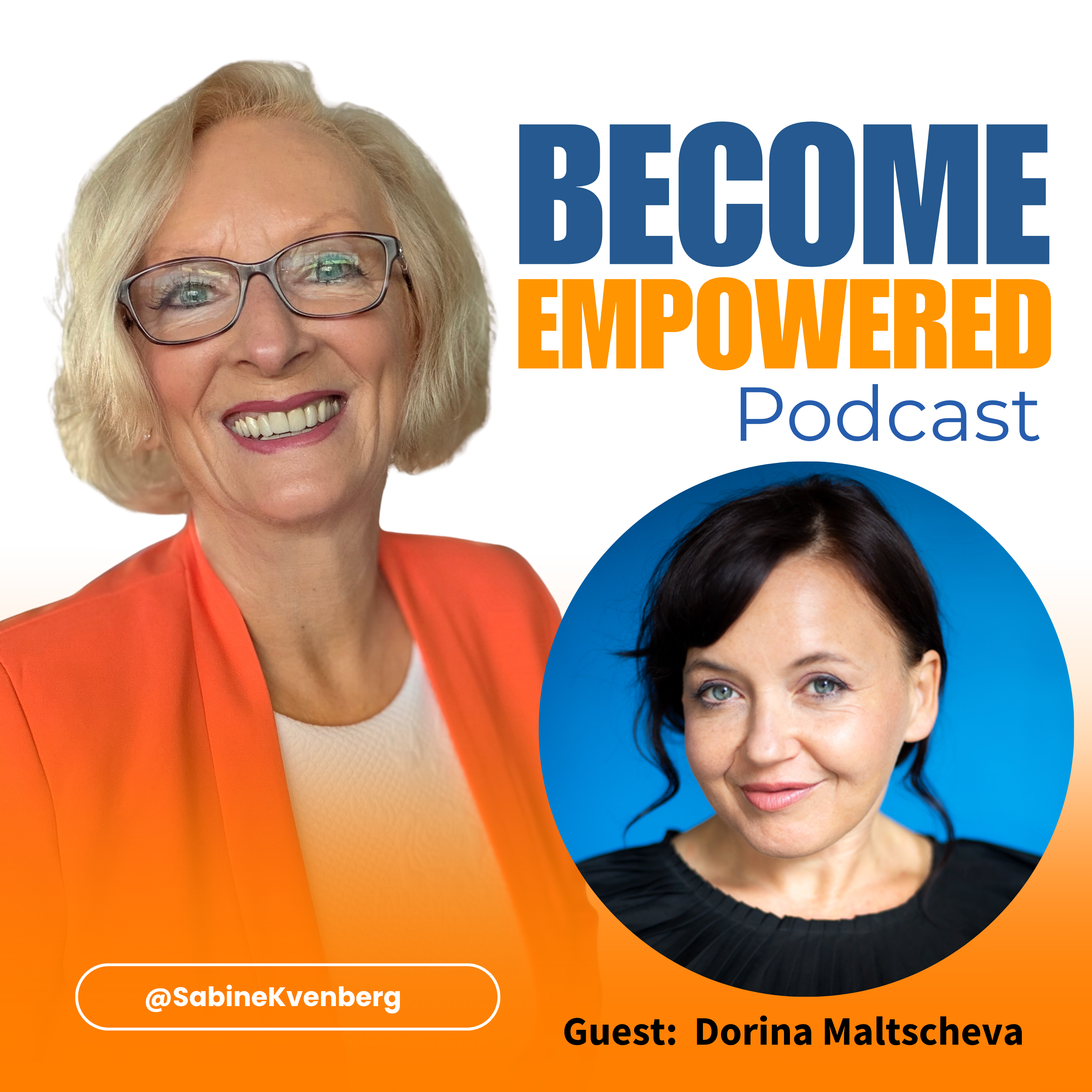
 Thirty-five years ago, Sabine met an 18-year-old dancer in West Africa — talented, a little naïve, and not yet sure she belonged anywhere but the stage. In this episode, that young woman returns as Sabine's guest: Dorina Malcheva, now Artistic Director of MJ – The Michael Jackson Musical in Hamburg, Germany, leading a team of 34.
It's a conversation that moves like a memory: the smell of the airport air, the fires along a dark road, the first show they ever built together in an African club. But underneath the nostalgia is a masterclass in becoming. Dorina and Sabine unpack the sacred whisper — that small voice that says "why not?" — and what it costs to actually answer it. They talk honestly about rejection (Vienna said no to both of them, years apart), about the Invisible Stage™ of unseen practice that makes the visible moment possible, and about the goodwill you quietly bank over a career until, one day, someone trusts you with the whole show.
And in a world racing toward AI, they land on the one thing no algorithm can replicate: your story, told in your voice, on your stage.
Whether you're a performer, an author, a speaker, or an entrepreneur ready to step into your spotlight, this episode is your reminder — try it on, keep going, and connect, connect, connect.
Connect with Dorina on Instagram: https://www.instagram.com/dorinamaltschewa/
Connect with Sabine:
https://sabinekvenberg.com/resources
YouTube: https://www.youtube.com/SabineKvenberg
IG: https://www.instagram.com/sabinekvenberg/
LinkedIn: https://www.linkedin.com/in/sabine-kvenberg/
Facebook: https://www.facebook.com/sabine.kvenberg.2025/
⏱️ Timestamps / Chapters
0:00 – Introduction
2:45 – Reconnecting after 35 years
5:30 – Inside MJ: The Michael Jackson Musical
7:50 – The lifespan of an artist's career
8:45 – Dorina's origins: raised among artists
11:25 – "It's a shame if you waste it" — Sabine's turning point
12:50 – The sacred whisper: trying life on like a dress
14:55 – Rejection, resilience, and refusing to quit
16:40 – Becoming a triple threat (and a triple threat entrepreneur)
19:30 – The Invisible Stage: the power of unseen practice
22:10 – Reinvention: stepping into artistic director
25:35 – Good vs. perfect and the goodwill bank account
27:45 – Into Africa: first impressions and open arms
31:15 – AI, connection, and the story only you can tell
36:00 – From the stage to the keynote stage
38:45 – Dorina's parting wisdom: connect, connect, connect
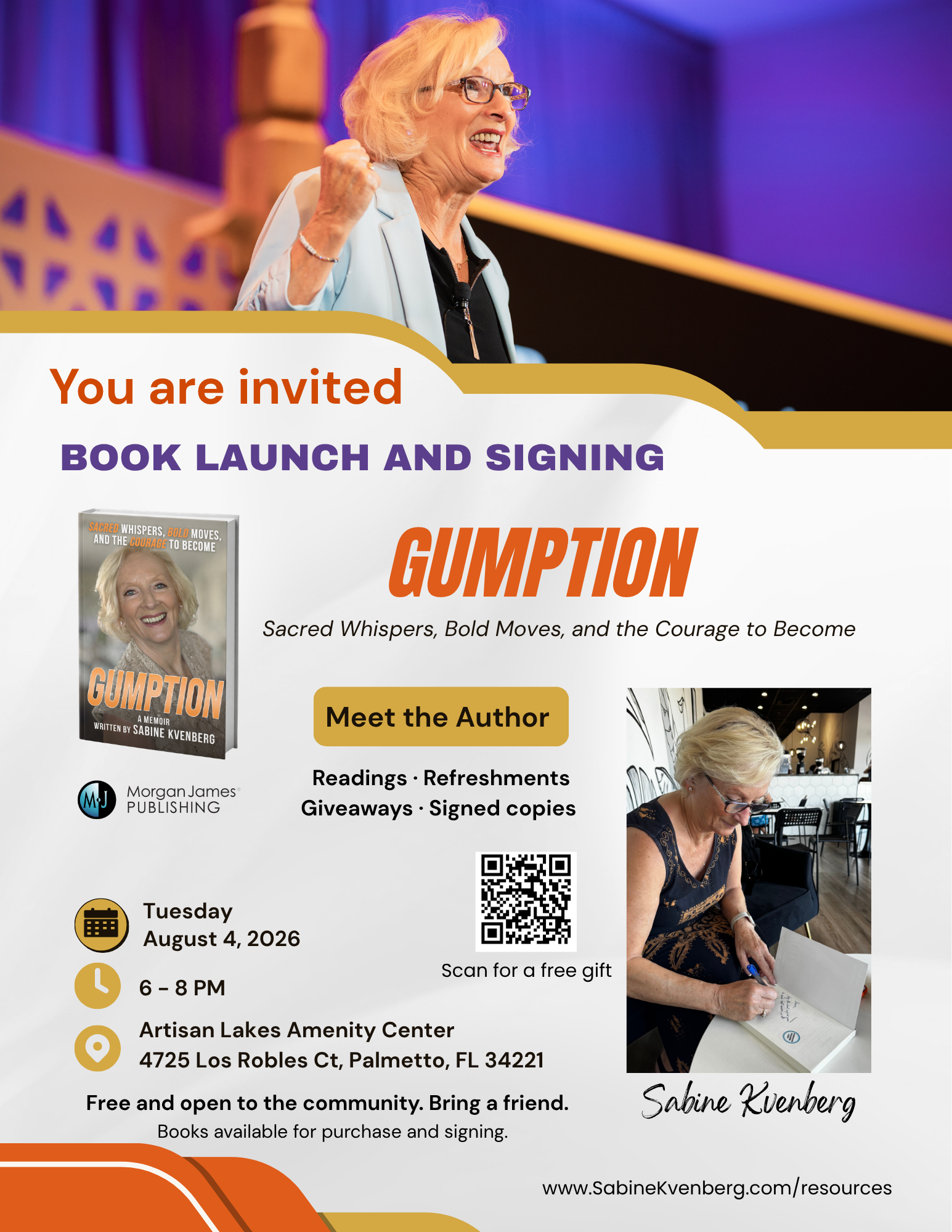
speaker-0: My new book, Gumpchen, is now available worldwide at your favorite bookstore. Gumpchen, Sacred Whispers, Bold Moves, and the Courage to Become is blending memoir, reflection, and timeless wisdom. Gumpchen shows that a meaningful life isn't reserved for the fearless or famous. It's available to anyone willing to listen deeply, trust boldly, and take one small brave step. Toward becoming who they were meant to be. Whether you are longing for clarity, healing, creative inspiration, or the courage to rise, Gamchen will meet you where you are and work with you as you discover the music of your own becoming. And if you ordered your copy, let me know. I want to give you a free download. Off my bold move kit. I have the link in the show notes. So go ahead, grab your copy, and let me know how you liked it. Every great story has a moment, the one where everything shifts. Welcome to the Become Empowered podcast, where real leaders pull back the curtain and show you exactly how they did it. I'm Sabine Kwenberg, performance communication coach, keynote speaker, author, and your host. I have spent my career on stages, real ones and invisible ones, and I know this: the most powerful transformations don't happen in the spotlight. They happen in the quiet moments of decisions, resilience, and radical courage. Before we dive in, if this podcast moves you, challenges you, or gives you that One thing you needed to hear today, please follow, like, and share it with someone who needs it too. That's how we grow this community together. Some episodes I'm sitting down with entrepreneurs, authors, speakers, coaches, and bold leaders who have faced the hard stuff and kept going. Other times, it's just you and me going deep into the mindset, strategies, and the gumpchant it takes to become Who you were always meant to be. Either way, we talk confidence, leadership, resilience, and the real story behind the growth. This is Become Empowered. Let's get into it. Hello and welcome. Today's guest is acclaimed German actress and musical theater performer Dorina Marcheva, with a career-spanning film, television, and the international stage. She has brought to life powerful roles in award-winning productions while also shaping stories from behind the scenes as a director and artistic leader. Dorina's journey from early training in dance and music to working on major musical hits and critical credited screen projects has made her true multi hyphenate artist career. Today she holds the position of the artistic director in Hamburg, Germany. For MJ, the Michael Jackson musical. Welcome Dorina!
speaker-1: What a nice introduction. Thank you for having me.
speaker-0: Yes, you're so very welcome. You know, it's so I I'm just so happy that you are here because we go back so many, so many years. And did you know that this year in November we will know each other for thirty-five years?
speaker-1: No, I'm speechless. Is it thirty?
speaker-0: Thirty-five years and you know why I know that? Be because thirty five years ago this ma next month Michael and I got married and then in November we met you in Africa. Yes. Hard to believe, right?
speaker-1: No. really. But yeah, here we are.
speaker-0: Here we are. Okay. And so what I would like to do today is just going down memory lane a little bit. And of course, we talk about Gumchen. And you are part of the journey in this book. It's more of â the time in Africa where Michael and I went and the experiences we had. And so today I would love to go a little bit more behind the scenes. And talk with you about also your experiences and maybe we're gonna share a couple of stories that are not in the book. And that is the beauty if people join us here, right? And watch this â live or even the replay one once it's up. So but before we go there, so tell us about MJ, Michael Jackson, the musical.
speaker-1: Michael Jackson musical is it's not a tribute show or like a pop concert or something like that. It's not that. It's really a nice piece of his of two days of Michael Jackson's life before he went to the dangerous tour. And basically it is an invitation to everybody, even though you like Michael Jackson or you don't like or you don't know much about it. It's an invitation to experience what he was like. Because he was the two artists. artist and he was very creative and he also has of course we know all the story he ha there was shadows in his life also when he was young because he started when he was very young and the discipline and the hard life and what they ha him and the brothers had to go through wasn't easy. So we showed A little bit of that and then we come back to the nowadays and then you know we go back to another period in his life's it's really a nice combination of bringing his life to the stage and people can experience what what he was like, you know, w the things he had to deal with, the things he was creatively doing and what was important to them.
speaker-0: Yeah. And I have seen the musical last time I was in Germany, that was in December of last year. That was even before Michael Jackson or Michael the musical â the the movie came out. And it's it's very interesting to see the difference here. And obviously â there is a hint that there will be part two of the musical that goes more into the challenging times that â that you also describe in in the musical. So â that's that's very fascinating. But there's another thing I want to talk about. And that is a lifespan of the things you do for a career. Like you mentioned Michael, he started very young. This was his life. He was a true artist, as we know. But you also started very young. Because when we met, I mean you were like In your early twenties, right?
speaker-1: Eighteen eighteen, yeah.
speaker-0: Yeah, not even twenty. â Spring chicken. So yeah, eighteen. And you were I loved you from the minute â we met, obviously. And I saw the talent within you. I saw that there was that spark, that there was something special. And and I know when our time there came to an end. That's when things change. But I would like to hear it from your perspective. So what was your feeling of your future? Did you even think about becoming an artist? Did you have any ideas? And how did it develop from there?
speaker-1: go back a little bit before we met, my father was a musician and my uncle was a painter, my aunt was a dan was a dancer all from my father's side. So of course there was a lot of things I was familiar with, the industry a little bit. And I was also, you know, pushed at that time to go to the ballet school and to play the piano. You know, when you're a child, you're like, no, I don't want to do this actually. My father always gave me â a perspective of like this is a beautiful life. You can express yourself. Just try. So my father always said, If you if you try and you don't like it, you try another thing. But first you try. So I did that and then yeah, I landed up in a ballet school and I landed landed in in acting classes and my father teached me how to play the piano, which I forgot after a while because I wasn't interested in that anymore. That was always nice. My mother supported it even though she had nothing to do with any of this, but she liked it. And then when I was eighteen, I really didn't know what to do. And then suddenly I ended up in Africa and was trying to find my way as an adult also. Right. So when I came there, â you weren't there at that time. I was there a couple of months before and it was all new and I had to do things I've never done in my life before, being on this continent. Now I love Africa to pieces. But it was quite something. And everybody was also holding their hands over me and making sure Dorina's just 18. We need to protect her a little bit. And for me, the moment when you too, Michael and you, when you arrived, that was sh such a blessing because I felt like, â my God, these are not just, you know colleagues I have to work with, they can actually teach me something which my family couldn't teach me. And you opened up a side in me, because I felt, yeah, I want to be a singer. I know that I can dance, but you know, I also want to act. So it was not quite clear when I was there, but with all the stuff we did there, the shows we put on, I got more experienced. And then you basically and I think also Michael, but I think it was more you like said to me, You need to do go to a musical theater school or something. And then I just did that because it felt right to me. And then yeah.
speaker-0: Yeah, and the the rest is history as they say. And it's it's interesting because in my book I also share a chapter that was very, very instrumental for my life. And that was a meeting with my former drama and music teacher, â Mr. Herbst. And I always loved to sing and and act, and I was in his acting and drama club and his folk group, but I didn't know that you could do this as a career. And I was not trained. None of my family members were anywhere near in music, acting, or anything in that â direction. So I had no idea. But that chance meeting came from me asking that question. There must be something more for for me in life. And When I had that chance meeting with Mr. Herbst and he asked me if I was still active in my acting and singing. And when I answered no, he said one thing that was very impactful because he saw something in me that I did not. And he said, Sabina, you are so talented. It's a shame if you wasted. That for me was the catalyst. And then of course we have to take action. you know, addition for an acting school and so forth, which then you had to do yourself as well. But the the point that I want to make here is in anybody who is listening, there's always that s that sacred whisper, that small voice within us that says, Okay, why not giving this a shot? Why not going this route? Why not trying it out? And I I like what your father said. Try it out. If you don't like it, try something different. Right? Is is we're trying something on, like a dress or something we're trying on. Either it fits or it doesn't. Either we like it or we don't. And that is the same thing. So and and I encourage everyone who's listening to to take that route and try something on. Because and here's one other thing that I said to myself and to my family who said, Sabina, don't do this. It's a scandalous profession, right? And you know you don't make any money. And but then my answer to that was I don't want to sit back 40 years from now saying, Why didn't you give it a try? Here you have it, right? So what what is your take on it? And what did you do with that the with that nudge that you got from from me to To go for it. Was it easy? So tell us just a little bit about that. We don't have to go into all the deep ends because we can get lost in only that story. Take us back to the time that you went back.
speaker-1: It was it seemed to be easy, right? I remember that we you and me, we we like practiced a song for the musical theater school in Vienna and I went there and I did everything, but it didn't take me. So I was like, okay, what what's now? That didn't take me, so maybe I'm not that talented, you know? But I was surrounded by people already in that time who came from that industry and like you said, you saw something in me. So I thought, okay, that's part of it. And keep going. Keep trying, keep going. And I think I was also in a position I didn't know any other thing. I didn't want to be a lawyer. I didn't want to be a businesswoman or something like that. And that just didn't never appear to me to to become. For me it was the okay, then I try the next school. So I was very open to it and a little bit naive, I think, also. So I just went for it. And then the next school here in Hamburg, I got in. And from there, yeah, it's hard. It's a hard industry. It's a hard business. You have to train hard and you have to train and be disciplined to get somewhere. And luckily that happened. I was very disciplined. I did my things. I studied for three years full on and when I left the school, even before I left the school, I got offered a job and from there it just it just went. But still, every audition you go to, it's work. It's personal work. It's you know, it's personal work and if they deny you for a job you think like I'm not good enough. So that's it's always like that. But also from that you grow.
speaker-0: Yes, absolutely. And it's so interesting that you that you mentioned Vienna, Austria, and you were rejected. The f when I started my musical career, I was not trained as a dancer. Okay, now we can call ourselves a triple threat. Meaning we are â we can do all three acting, dance and singing. So you are an actor, you are singer, you are dancer. And interestingly enough, Today I am teaching that to become a triple threat entrepreneur. And basically I say the more you know and the more visible you are, the better for you. And I said, Hey, if you're an author, you're visible in that. If you're a podcaster, you're visible. If you're a speaker, and if you have more to show. In the showbiz, actor, singer, dancer. And so when I started my career, I never danced in my life. I started dancing when I was Older than you were when you first started. I was 19 and took my first dance class in acting school, right? Because I was part of it. And then later on, when I was, you know, in my twenties, I went to ballet school and I worked with the little ones, right? So but I still remember the first German musical that came that was basically produced in German was Katz back in the day. And that was in Vienna, Austria. So I still remember going to my teacher, jazz teacher at that time, Tom, right? â in r the red shoes. And hey Tom, you have to teach me a double pirouette right now. And of course, you you understand what I'm talking about. You cannot just Okay, this is how it goes. He showed me everything, but you still have to practice. It's the same thing when you lift weight. You cannot lift big weight, you have to start slow. So but The the point that I was making is of course I auditioned there and cats is one of the hardest one of the hardest shows because all dance and pretty intense. Of course, I didn't make the cut, but I was rejected. But later on, believe it or not, when I was in America, the first â once it was released, we had it in our city. Michael directed it and I â and I play Jenny Enidar, the tap dancing to cat. So it came to full cycle, but it took time. And this is what you said. You have to practice. And it it's another chapter I sh â share in my book, I call the invisible stage. And that is the moments and months of unseen practice. So when you come to the audition, or whatever it t takes for someone to be seen, or even if you're in a business setting, right? It's not just for performers. There's always that important meeting or you you speak on stage and share your message. You have to prepare in a way. So when it counts, you got it. And that's when I got my my role as Madame Thénadier that I wanted to play in Vienna, Austria. So it it's it it's really that
speaker-1: Yeah, I was rejected many times. You know, also you go to auditions because not only you wanna perform, you also need money to pay your life, you know, to pay your bills and all that. And rejection doesn't mean that you are bad, you know, there's so many â things, you know, come in place, like how you look, how the consolation of people are, all that. But I say always rejection is important in in in our industry, you know. That somebody says no, not now, keep on going, you know, we give your feedback, keep on going, and then you s you do it again. And luckily I â I never gave up 'cause I know a lot of people who who said then, No, you know, I cannot do this anymore. So or I don't want to do this. I don't want to put myself out there and be rejected. But it helped me. Every time I got rejected, I was like, Okay, then this is not the show for me. There is plenty of other things in this industry I can do.
speaker-0: And that is the attitude. That is the attitude that you have to have. No matter what, attitude is everything. How you see it and what you take. And sometimes we are not showing up as our best self in that moment. And we are rejected for that reason. But you know it too, right? When that when that happens. But it's it's so true what you said. And the interesting part
speaker-1: â yeah. Yeah.
speaker-0: What you just mentioned, a lot of people gave up or when they come to a certain age, especially musical theater, so y you you cannot dance the roles that you did with twenty if you are forty, fifty, sixty, right? So you have to adapt. But the thing is there are so many possibility and opportunities. So in my case, I started a performing art school. And I couldn't have done it if I didn't have all the experiences as actors and director. And in your case, you also transitioned to now being, â my gosh, the artistic director for MJ the Music in Hamburg, Germany, at one of the biggest musical theater production companies in Germany. So tell us how that transition appeared and worked for you. Yeah.
speaker-1: When you say it now, I'm thinking like, â my god, yes, that's so amazing. I was, you know, I've been in T V series and and did movies and all that. And then there was one time when I â taunt my meniscus. It's been like fifteen years ago now, but that was the first break like like moment in my in my career where I was thinking, Ooh, I like you said, I cannot dance for so much longer. So I kept going and did other things and Also did a lot of yoga and became a yoga instructor for for different yoga styles. But I always felt, I don't know, I don't belong there completely. I belong in the theater. So I also again, no one was waiting for me to be the resident or the artistic director of this production. So I reached out to the theater at that time. There was another production, Frozen, and I reached out to the theater actually for some kind of some job. Not as not being on stage, because I made my decision. I want to try different things. And then they offered me the position as the artistic director for Frozen in that theater. And I was like, Are you sure? Me. Yes, we're pretty much sure. Because there, you know, the companies here in Germany is you know, Germany is big, but also people know each other and they're like, watched what I've have, you know, accomplished so far. And I worked as a also as a assistant, director and smaller productions and but not in this in a big house like this or a big company like this. So they offered me that and from the moment I stepped in the theater, my attitude changed. I was like, great, I'm not part of the artists on stage anymore, but I can do so much backstage and help because I have so much experience. And also they gave me full trust. They give me full trust. I was in a training for two months and and that worked well. And then they asked me also, are you still want to do it? Yeah. Because this job comes with a lot of responsibilities and not only for the production itself or for the product on stage, just a lot behind the scenes going on, which I have to manage. Because basically I have thirty-four people now working for me. And yeah, so the the trust they gave me And you know, it took me, you know, it goes like this sometimes. I doubt myself 'cause I wanna be perfect. But then once a teacher said to me, Dorina, you wanna be good or you wanna be perfect? And I said, I think I wanna do this good. Yes, you cannot be perfect. No one is perfect.
speaker-0: No one is perfect. And with that said, yes, you took action and that is another super important part in the journey we call life. If we want something, we have to be proactive. And you were proactive. You made a decision. Okay, there is a shift. Now what's next? And then now here's another thing, what you mentioned too. You didn't get called into the theater. Even though it was a new path for you, but people knew you from all the years of you being on stage. And listen, for all the years, how you acted not only on stage but backstage. The attitude, how you show up as a human being. And oftentimes people don't see that or they don't see it as important, but how you show up as a human being, all of that, it's an accumulation. You already built up on the unseen, the invisible stages, right? Over the years, you you built up your your bank account, so to speak, not with money, but with goodwill and all the attitude and the work ethics and what you can do. And that now paid off when you saw them. Because they trusted you, because they know you are already, because you had your resume. Yeah.
speaker-1: Yeah, totally and work ethics are everything, you know. I'm also trying to not teach, but trying to also encourage the cast I'm I'm with now to look at that. You know, work ethics are important, you know, we and we cannot do it on our own. I cannot do it on my own. I have a little team and the cast is the bigger team and then there's a company manager, you know. So we cannot do it alone, but we have to have these work ethics and and act. for them or with them. Otherwise we don't have to do it.
speaker-0: Right, exactly. So I said at the beginning, I wanted to talk with you about our time in Africa, to maybe get a little bit behind the scene outside of what I shared in my chapter. â and I called the chapter Into Africa. Of course it's a player work from from the very very famous â movie Out of Africa, right? With the Meryl Streep. And so I remember And I shared that when when we first arrived at the airport. I I and I I ex I share this in my book, so I'm not gonna share it now, but I would like to hear your first impression when you arrived in Africa.
speaker-1: My f first expression because I've never been there before. I am remember I stepped out of the airplane and there was no buses or like a gangway or something. It was just like a little leather on the airplane, so you have to crawl down. And it was so hot that I was like, where did I go to? And then what I remember is the smell, you know, especially West Africa where we were, it has such a significant smell and I I fell in love with this air, so to say. And then of course people welcomed me, which I've never seen before, and they were very friendly, you know, they touched my hand and took my luggage and I was like, okay, so this is how it goes. So it was it was not like in Germany where everything is like separate and people keep more distance to you. They were full on in my face, basically. And the smell, the air In the colours when I woke up then the next morning 'cause I arrived in the evening 'cause I didn't really see much were just mind blowing. And I felt home is maybe a big word, but I felt a little bit like, â this is a a cool new home and I will love it there and I did.
speaker-0: Yeah, I had the same impression and even even the bus ride where we was an an hour and a half to to the club, we both worked at for a a German club and I saw the fire the dark streets and the fires on the side. I said I I turned to to Mike, I said, What did we sign up for? Right. Yeah. But when of course when we got into the club it was more familiarity because we had German speaking â people there and it was more of the Western culture, but beautiful, all in the little African hat hats and then where our bungalows were. And so over the times we also went to it took a ride through the savannah. And I know the last time we were in I was in Hamburg, I wanted to give you my book, but as it is in theater sometimes stuff comes up. It we were obviously you couldn't see it But you will have it very soon because we're going to see each other. But I wanted to show you and see if you remember. Do you remember that?
speaker-1: Yes.
speaker-0: The first show we did together, right?
speaker-1: Yes. Yeah, it was wonderful, you know, because you too, you came with great ideas, new ideas and and different things, more modern things, you know. And and I think all the people in the club, even though it was the the African people or like the international people, they embraced that. And that was and that's and and that's also something I experience every time I go to Africa. They're just embracing you. They have open arms, they're But don't ask for much and it's it's really cool. It was a great time.
speaker-0: And then we also did some trips through this through the savannah and visited villages. Yeah. You remember that? Uh-huh. And talking about talking about â the the people. One thing was so amazing to me. The children, they didn't have much, but they were just so happy. They played with sticks or whatever they could find. And all the people were friendly and grateful. And yeah, it's a different culture. And yes, are there bad people around the world? There are always people that miss the mark, how I say that, right? But in in general, that fear that you sometimes have when you go to the to a different culture, like what is this? Totally fell away and â we f we f we fell in love with. With the people as well.
speaker-1: Yeah, I experienced more of a me coming from a different culture. They were interested in knowing what from where I came. And then I remember we had we had one person, what was his name? Usman or something. He studied German. And he was at the university and he knew all these poems from Goethe, you know, and Schiller. I was like, W I don't even know that. Why do you know this? He was so curious about about different cultures. So he said, I'm studying this. I don't know what to do with this, but I I'm studying this. And this is what I what I remember most that people just were open to where I come from. They were not like, â it's a stranger or like a rich person who brings money. They w they wanted to connect. And this is something which I miss sometimes nowadays, that people don't really want to connect anymore or keep it on a surface or on a social media s and and stuff like that. So
speaker-0: Yeah, well that's another whole nother can of worms talking about social media, how we think we are more connected, but we are more disconnected than ever. And especially now with AI coming into the equation, what I see too now I of course â what I do today, I'm a communication and confidence coach. I help authors and entrepreneurs to get on stages and and teach them how to speak authentically. And this is one thing AI cannot take away from us. Us in person telling our story. Because AI can come up with whatever story, but your story, your experiences, your skills, and your authentic you, how you show up and how you speak and talk on stage, no AI can take that ever away from you. And when you learn that today. And embrace that fully, you will be the one standing out from the crowd and be recognized and seen versus the others who just take AI as it is and will disappear in the in the sea of AI produced materials. So Yeah.
speaker-1: Yeah, that's why I'm also proud that I work for a company â where there is live theater still. So th that's also different. The cast has to perform every night and be the person who they are in that moment. And you know, they also have not so good days and very good days. So am I and and it shows on stage the connection with the audience. I see it every night or I hear it every night. And it's amazing. That's that's so beautiful. And I really hope that that this will be forever part of everybody's life.
speaker-0: Yeah, I hear you, Dorina. And talking about being on stage and having that connection with the audience, that's what I loved most. And now for me it also shifted. So I'm not performing on stage as an actress saying other people's lines, but I'm performing on stage as me, as a keynote speaker, sharing my message, sharing my stories. sharing the wisdom with others and passing that on and that lights me up when I feel that connection. It always is one of the most beautiful experiences.
speaker-1: And are people actually coming to you and after you have the speech, are they coming to you? Do you s connect with them?
speaker-0: Yes, yes. And that is the that is the beauty. They're coming up to me thanking me for what I presented that day. And even other speakers. I you know, when you're in the green room, when you're at a convention where there are multiple speakers, so you're in the green room and then you make the connections. And now I I just recently I was in I speaking I was speaking at a media event in Ohio and I met Wonderful people. But there was one person we started talking and then we realized, â my gosh, we are practically neighbors. He lives in Tampa and I just live south of Tampa. And now he was on on my â podcast. I will be on his podcast. And we're working together and it's such a beautiful experience when you make those connections.
speaker-1: Right.
speaker-0: Yeah, yeah. Wow, this was such a beautiful conversation and I'm so so happy that from being the protege that you were in in those days in Africa, in in in Hamburg, Germany, to now being a lifelong friend and colleague and still being in our lives, Michael's and my lives. And you're coming to visit us here in the US. I'm so excited about that. And I can't wait to share some of the The the pictures on social media. â it's of course social media still there, right? To share those those live moments. So if anybody is is listening and still want to see it, you just make sure you follow both of us on Instagram and I will make sure to put your contact information in the show notes. So is there any last thing you want to say or share? Maybe something I didn't ask or something that you want to share with my listeners or myself.
speaker-1: I think we talked about really important â topics and when it comes to to you and Michael, I really I really feel it's such a yeah, it's really such a pleasure to â be in your lives. I know for myself that I think without you, Sabina, I would never be in this business. I would I don't know what have I what have I done. Maybe I would still be in Africa. I don't know. And so what I mean with that, you know. Find somebody who helps you or ask people, connect, act, act to to to go further in your life to make your your dreams come true. And maybe sometimes you don't know that this is actually a dream of yours and then it becomes a dream and becomes your life. And but you need people, you need other people to do that for and stay connected with them because we all get older and life is is is tough sometimes and then you need people. And this is this this is my thing. I I'm also I like social media as well, but I also like people and I like people more than social media. So â no and this is important. Connect connect, connect, connect.
speaker-0: Thank you so much, Dorina, for your kind words and thank you for being here on the show.
speaker-1: My pleasure. Thank you for having me.
speaker-0: Thank you for spending this time with me on Become Empowered. If this message spoke to your heart, make sure you follow, subscribe, and share it with someone who needs to hear it. Until next time, let your voice rise, let your light shine and keep becoming empowered.

