From the Ghetto to the Globe: How One Man's Courage Changed Everything

 Apple Podcasts
 Castro
 RSS Feed
 He grew up in East New York, surrounded by violence, and believed he wouldn't live to see 25. Today he's sailed every inhabited continent, coached leaders around the world, and built a media company helping others find their own way. This is Josh Valentine — and this episode will stay with you.
Connect with Josh:
https://www.youtube.com/@UCK-1WRXSdXRTnZKqUAzAP2g
Connect with Sabine:
https://sabinekvenberg.com/resources
Follow her on:
IG: https://www.instagram.com/sabinekvenberg/
LinkedIn: https://www.linkedin.com/in/sabine-kvenberg/
Facebook: https://www.facebook.com/sabine.kvenberg.2025/
Timestamped Show Notes
00:00
Introduction — meet Josh Valentine
00:42
Three words that define him: courageous, resourceful, in service
02:26
Growing up in East New York — violence, survival, and the fear of not reaching 25
04:33
Travel as transformation and open-mindedness
05:40
"Turn your mess into a message" — and why the past doesn't dictate the future
07:22
The pivotal moment at Ground Zero — the decision that changed everything
10:27
The barbed wire metaphor: climbing from darkness into possibility
13:19
Arriving at college with everything he owned in two bags
14:32
How resourcefulness paid for college — running a barber shop from his dorm
16:25
Resources vs. resourcefulness — Tony Robbins, priorities, and paying forward
18:14
The Journey Podcast and Dream Nation Media — filming on farms, gyms, and golf courses
20:46
Sabine's journey — and GUMPTION coming in 3 months
22:10
Josh's coaching programs — holistic life, work-life harmony, certified coaches
24:35
AI as a human amplifier — the visibility triangle and standing out in the noise
29:10
Final message: your story is your greatest asset — and take care of the planet
speaker-0: was a period of time in my life because of all the violence that I was around and I had witnessed a lot of things like murder and tons of crime during that time, for some reason I had this feeling that I would not even live to see 25 years old. And when I finally got out of living in the ghetto and I went off to college, there was just this part of me that wanted to explore, that wanted to see the world, that wanted to just... make the most of my life. And I had everything that I owned in two big military bags. And I'm just there walking with all of my possessions. And I knew in that moment, this was it. Like there was no turning back for me. was sink or swim in that moment.
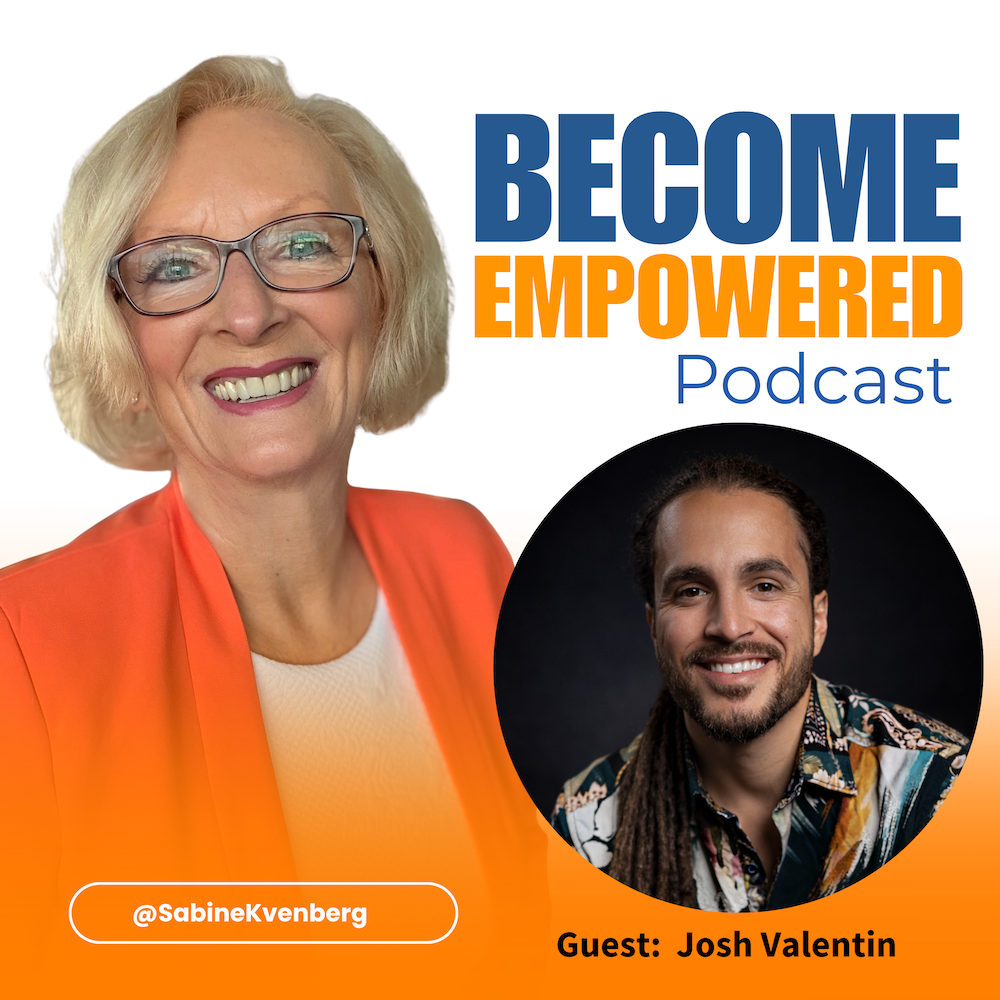
speaker-1: Every great story has a moment, the one where everything shifts. Welcome to the Become Empowered podcast, where real leaders pull back the curtain and show you exactly how they did it. I'm Sabine Kvenberg, performance communication coach, keynote speaker, author, and your host. I have spent my career on stages, real ones and invisible ones. And I know this, the most powerful transformations don't happen in the spotlight. They happen in the quiet moments of decisions, resilience and radical courage. Before we dive in, if this podcast moves you, challenges you or gives you that one thing you needed to hear today, please follow, like and share it with someone who needs it too. That's how we grow this community together. Some episodes I'm sitting down with entrepreneurs, authors, speakers, coaches and bold leaders who have faced the hard stuff and going. Other times it's just you and me going deep into the mindset, strategies and the gumption it takes to become who you were always meant to be. Either way we talk confidence, leadership, resilience and the real story behind the growth. This is Become Empowered. Let's get into it! My guest today, Josh Valentin. He is an entrepreneur, life and business coach, speaker and host of the Journey podcast. He is the founder of Dream Nation Media, where he helps individuals and brands grow through personal development, business strategy and digital media. And I can tell you right now, you are in for a treat. And if you enjoy this episode, We appreciate if you can give us a 5 star rating and leave a review. But without any further ado, let's go into the interview and here we are with Josh Valentin. Welcome Josh!
speaker-0: Thank you so much for having me. It's great being here.
speaker-1: Well, you are a world traveler, serial entrepreneur, podcaster, YouTuber. So tell me if you could describe yourself in three words, what would they be?
speaker-0: Wow, three words. It's interesting you asked that question. I was just watching a movie recently and that same exact question came up. â They were asking these students, these at-risk youth the same thing and I actually thought about it. So the three words that probably would describe me would be courageous. There's been tons of moments where I've had to be super, super courageous. I would say the second word that comes to mind is resourceful. think as an entrepreneur, I've had to be quite resourceful over the years and just navigating through so many different aspects of life. And I would say service, service is a big part of my life with the work that I do with coaching, consulting and everything in between.
speaker-1: I love it. Both met at the Podfest Expo. We both spoke there. We were speakers at the Podfest Expo earlier this year. And then we met up and had a conversation one-on-one in person. And that's when we decided, well, we have to have each other on each other's podcast because of so many things that connected us. And one of them are the world to travels. Before we go into some of the things that you do, of course, this podcast is all about, we have to become the person we are meant to be, to live the life we are destined to live. And I'm sure you can share quite a bit of journey with our audience. So tell us about your world travel. How did that get started?
speaker-0: Yeah, it's interesting. I grew up in a very difficult environment in East New York, Brooklyn, at the height of all kinds of epidemics that swept through New York City when I was a child. And one thing that I was very adamant about was just leaving, you know, leaving the environment that I was â basically growing up in. And I just had this passion to just see the world. I wanted to see the world. There was a period of time in my life because of all the violence that I was around. And I had you know, witnessed a lot of things like murder and tons of crime during that time. â I, for some reason, I had this, this feeling that I would not even live to see 25 years old. And when I finally got out of living in the ghetto and I went off to college, there was just this part of me that wanted to explore, that wanted to see the world, that wanted to just make the most of my life. So. During that time, I went to a military college. got recruited to play football at a military college and they had a program where in order to get licensed by the Coast Guard, you would have to sail on a training ship. And this is where I met my wife. And my wife is from the Bahamas and she went to study naval architecture. I was studying international business. And the cool thing about this college experience was we got to sail around the world and visit many, many really cool countries. also, during that time, I did a study abroad in countries like Turkey, Greece, Romania, Poland to learn international business. And after that, I was very fortunate to â land a career as a merchant marine captain. And I retired from that career into entrepreneurship and I was specifically in the travel industry. So it just kind of worked itself out over the years. And I think it was a manifestation of my passion for travel that I ended up attracting a business in my life that was centered around tourism and travel. So over the years I had traveled to all the wonders of the world, â all of the inhabited continents. did tons of humanitarian projects around the world and till this day I'm still in the industry and I absolutely love it.
speaker-1: Yeah. And what we also discussed, it is so super important to understand when you are traveling and seeing other cultures, you are much more open-minded and you can see that we have so many things in common as a human being. Now, you mentioned two things that I wanted to point out. Number one, your upbringing in the ghetto and Even your understanding back then or the fear or the vision you might have had that time, you may not see your 25th birthday. And that is empowering to see you now and everything that you achieved. And I hope that also would give our audience the understanding and the hope that no matter where you start, really counts is where you end up and you are such a example of it.
speaker-0: Yeah, it's so true. I believe that your past doesn't necessarily have to dictate your future and you can always turn a mess into an inspiring message. And there's always treasure in that trash. No matter what you've gone through in your life, you could extract something good out of it. And I just chose to do it by living my very best life. And even even for me, like today, I have three young children, three boys. They're actually upstairs right now homeschooling. And it's important for me to be a really good father. I didn't grow up with my biological father. And, you know, for me, it was an opportunity to just really do right by them and be the very best father that I could possibly be. But I would not have approached fatherhood with that mentality if I hadn't gone through what I had gone through. So, yeah, I definitely believe in that idea that no matter what you've gone through, you could always turn it for the good.
speaker-1: Yes. And I listened to one of your â podcasts, episodes, and the one that was â titled, The War Between Who You Are and Who You Are Becoming. And this is so true because it doesn't matter where we start. And that's what this podcast is all about. Become empowered. Because when you start your personal development journey, you can achieve anything that you want in life. And you are certainly a great example. What would you say was one of the pivotal moments in your life that you decided, I want to get out of here. I want to live differently than my parents and my peers.
speaker-0: Yeah. Yeah. It's a really good question. It actually happened at a time where I used to work on a dinner charter boat in Manhattan. And this dinner charter boat was at the North Cove dock right by ground zero. So the World Trade Center had already collapsed at that time and there were like two big holes in the ground. And as a young teenager, when I was in high school, I would walk past ground zero off to the dock that was right near the World Financial Center. where there were a lot of corporate people. They'd be with their briefcases and their expensive salads and their Blackberry phones. And I remember there was a day where I was lugging some groceries on a wheelbarrow and I was very like dirty and grimy. And I just, I felt very, very low. Like I felt like I had low self-worth in that moment because here I am. by the World Financial Center, all of these corporate people, they just look so happy, so vibrant. They're eating their expensive salads. They're smiling on their blackberries. And here I am just lugging groceries to serve these affluent people on this dinner charter boat. These were multimillionaires. These were politicians. This was high society who was booking this dinner charter boat. And I'm working as a bus boy. I'm working in the kitchen, helping the chef and I remember in that moment, I made a decision that I was going to go off to college because I associated success at the time with going off to college and getting the corporate job. Of course, you learn years later that they're also, many of them are unhappy as well, but I would have rather been in their situation as opposed to my situation where I was at the bottom of the totem pole. Yeah, it was specifically in that moment where I said, yeah, I'm done with this. I felt just very, very low and I knew that I had more to give. knew that life was not done with me and I had great things in store for me. And yeah, I made a decision right there in that moment that I would at least go off to college and pursue a career for myself.
speaker-1: And this is one of the golden nuggets for everyone to listen. It all starts with a decision. And oftentimes those decisions come in the darkest hour to say, never again, I'm not going to stay here. I'm going to do this. And the interesting part is you don't have to figure out the how yet. Just make a decision and then it's, it's kind of you give the universe a command, a question or something that, â okay, that's what he wanna do. He wants to go to college. Well, let him help get there, right? And everything else will show up. from that point on, did something change? Did you feel a change?
speaker-0: Yeah, it's a really good question. I would say that I felt the change when I finally went off to college. I always give the analogy of it felt as if I was climbing up a very tall gate, a very tall fence with barbed wire at the very top. And as I'm climbing up this fence, on one side was this environment of just chaos, this environment of darkness, this environment in the ghetto, and on the other side, was potential, it was my dreams, it was a life of abundance. And in order for me to get to the other side, I had to go through barbed wire. And at that point in my life, was willing, I didn't care what it took, I was willing to get ravaged going through that barbed wire because I had enough. It was that moment where I just said, you know what, I have to change my life, have to change my circumstances and I'm never coming back. And the good thing about the barbed wire is there was no turning back once I was on the other side. So it almost felt like that. was like I'm looking at the past at the environment that I came from. And I said, yeah, I'm done with that. And I did what I had to do to get to the other side. And once I got to the other side, that's when I genuinely saw possibility. saw myself with a future. saw myself living past 25 for the very first time I saw. just what was possible for my life. And that was definitely the moment. Going off to college, I remember getting off the BX 40 bus in the Bronx, and it was the very last stop in Throgsnek where the school was. And I had everything that I owned in two big military bags, and I'm just there walking with all of my possessions. And I knew in that moment, this was it. Like there was no turning back for me. It was sink or swim in that moment. And it was powerful because here I am seeing all of these parents driving their children to school. And my parents didn't have a vehicle. They had split up my stepfather and my mom. And it was just a very chaotic environment. But there was a sense of empowerment that I was there and I had so much to lose. And I had to just really look at the end of my wrist if I wanted a helping hand. had to participate in my own rescue. So there was something powerful about that moment, just even though it was a little sad not having parents to kind of help you set up your dorm room or anything like that, but there was also a sense of dignity and pride and knowing where I came from and how far I had came. it was just a very defining moment for me just to walk on that campus with everything I owned and just start a fresh new life.
speaker-1: That is such an empowering story. Plus me being known as the storytelling Dame from Germany, I love the story that you tell and the metaphor of the barbed wire because it is so true. Most of the time, if we want to get onto the other side, there is some pain involved one way or another. Sometimes physical pain, you know, if you run a marathon, I was talking about that in my book, to finish that, but also mentally, everything that you want requires some kind of sacrifice or pain. And it's a great example or a great metaphor that you shared there. â Now you made that decision, you got there, you went to college. how from like from the financial point, because you felt you were in the ghetto, how did you even get into college? Was it something that you â got help with because you were now by yourself?
speaker-0: It's a really great question. So during that time, the government had programs for just inner city kids who were, you know, grew up impoverished and they had programs where they would fund a portion of the college. And because I had played football, my college had really pushed to get me approved and get all of my paperwork and everything like that. So half of the education was covered, fortunately, by the government. And the other half I had to come out of pocket and I took out a bunch of school loans and everything like that. the way that I provided for myself while I was in school was I didn't want to sell drugs or anything like that, do anything that wasn't legitimate. I wanted to just leave that life behind. And I had taught myself how to cut hair as a barber. And that's actually how I met my wife. My wife was one of my very first customers on the campus. She had a short haircut at the time. And I had actually messed up her haircut â because I was so new to it. And that was our very first time meeting. But all in all, I had ran a barber shop out of my dorm room. I had about three jobs on campus. I did everything in my power to be able to afford. I was a resident advisor. So as a resident advisor, you had free housing. So that was one of the things that helped also. And I was in student government, so I got a little stipend. to be able to just make some extra money. So whatever I had to do to just make some extra money, whether it was jobs on or off campus, I tutored off campus at one point in time. yeah, just doing that and my barbering is really what got me through. Even when I was on the training ship sailing around the world, I would be cutting these cadets hair from port to port just to provide for myself. And I never struggled financially throughout my college journey.
speaker-1: And you know, goes right back to what you said, resourcefulness. You were resourceful in this time. And I love what Tony Robbins says. It's never about resources, all about resourcefulness. And sometimes â I see people or when somebody comes to me and maybe wants to work with me, then there's always that, you know, of course, money is all, most of the time, always the
speaker-0: Resourcefulness, yeah.
speaker-1: The factor that's, oh, I don't have the money. I don't have that. And I don't believe that. you, what really happens, you don't want it bad enough. Because if you want to, then, and you see the value to it, of course, it's a two way street. Then you will find a way. You will come up with something. And it's all about allocation. because we all have a certain amount of money, but people allocated differently. said, well, I rather want to buy that TV or I want to go out for ladies, I'll get my nails done or whatever it may be. Nothing wrong with that. It's about priorities, the priorities that you set. If you want to be successful, that's what we have to do. So I love it. I absolutely love it. yes, and you, when you do this and you are at service, you are providing a service and it doesn't matter what it is, cutting hair, coaching, no matter what, this is when the exchange starts to happen. I love it. Thank you. Thank you so much for sharing. I think you can relate to it. now fast forward, you have a podcast called the Journey Podcast. So what is the premise of that podcast?
speaker-0: Yeah. So the journey podcast was originally an extension of my work that I was doing with my dream nation breakfast club community. So this community I was nurturing in person. would do these mentors, these mentorship sessions in person. And it was Monday through Saturday, every single morning I'd be dedicating time to just training them. had an amazing community that was centered on entrepreneurship, philanthropy. culture and travel and all of these amazing things. And I would meet with them at a coffee shop. And then it got so big, we would meet at a food court. And every single morning before people would go off to work, and that was my way of just serving the community. And that naturally led to doing events in person, but also during the pandemic, it was an opportunity to transition this in-person gathering to online. So I started just getting the community together online and it became very, very popular during that time on zoom. The zoom room would shut down after like a hundred people would tune in and literally within the first minute it would close out because there were just a hundred people waiting and anticipating to jump on this weekly breakfast club call. And I knew at some point in time, it was going to lead to an actual podcast where I interviewed some of the most successful people that I know. And I didn't want to just do any typical podcasts. I wanted to have a traveling show where I interview people on â really different production sets. So I've done farms, I've done gyms with national champion bodybuilders. I've done golf courses with pro golfers and so many different backdrops. And I love to capture these stories in the environment of the person that I'm interviewing. We've had a lot of fun with that. built a production team to support that. And it's been an amazing journey so far. Since we started doing the interviews a little over, right around three years ago, it's been phenomenal. We've had Super Bowl champions, we've had Emmy nominated actresses on the show and so many phenomenal people. And we can't wait to have you. I'm looking forward to interviewing you because I know you have such an extensive. background, but the premise of the show is really capturing the stories of these amazing people and the life lessons that came along the way. So it is centered a lot on inspiration, but also education.
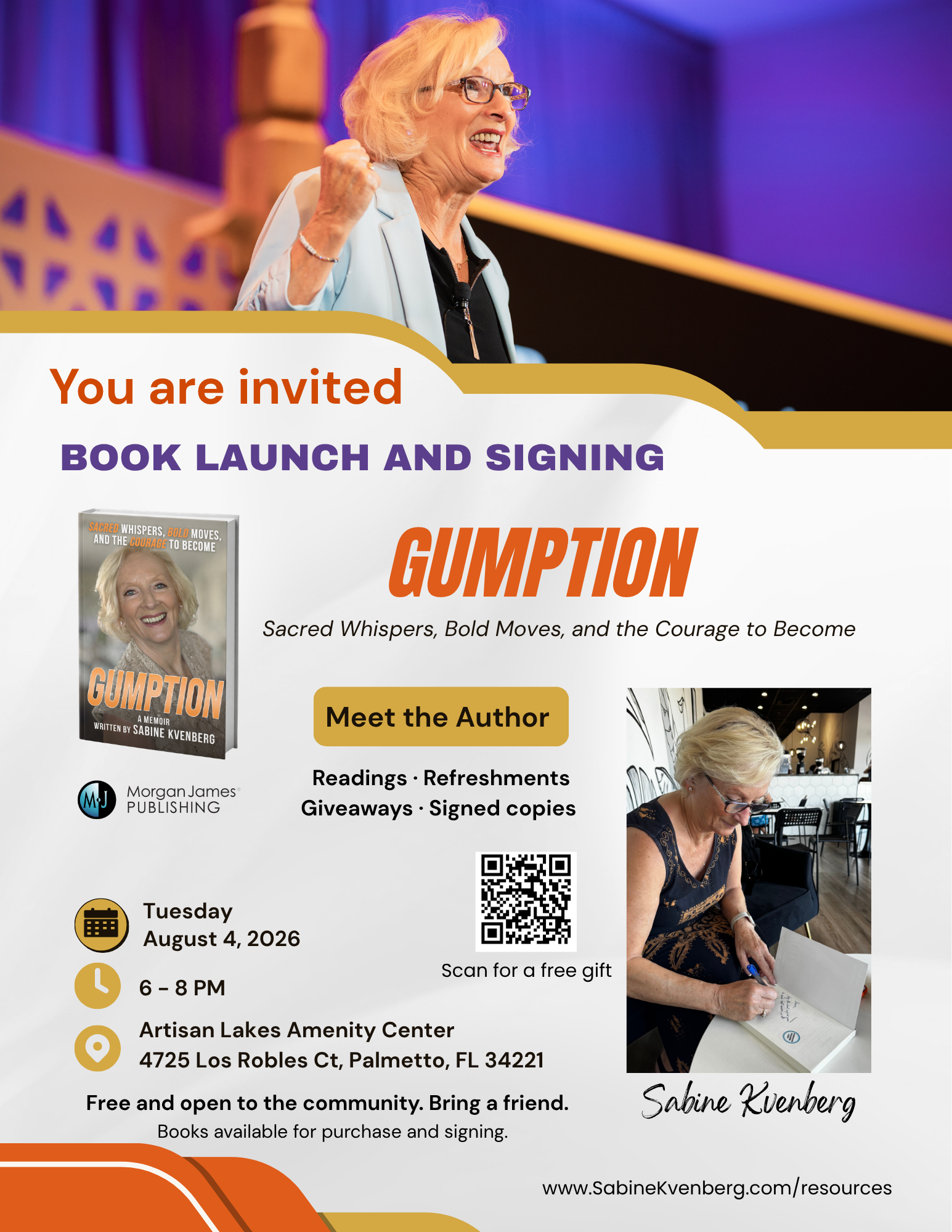
speaker-1: Yes. And this is exactly along the line, what my life looked like the entire time. And it started with a decision to not stay where my family was and doing the same thing over and over again and changing careers from being a claim adjuster to becoming an actress. Again, I had no idea. I had no financial support. had to provide, I had to work to pay for the schooling. But everything pays off. when you do something that you are passionate about, then everything will fall into place. And I'll share that in my book, â Gamchen, that is being released in three months. And you have an advanced copy. I gave you one.
speaker-0: Absolutely. I'm so looking, I'm finishing up two other books, but I'm so excited to just give my time and energy to just reading yours. I know it's going to be amazing.
speaker-1: Yes, yes. â yeah, but it's not just the stories. Of course, there a lot of â interesting stories in there, â ups and downs, but also what I've learned and hopefully giving that information, somebody reading this book can apply to their lives. And I know that is exactly what you are doing with your coaching right now, right?
speaker-0: Absolutely. Yeah. So I have all different types of ways that I coach people. Most of the people that I coach is they're not in my city, which I live in. reside in Tampa and a lot of the people that I coach, you know, just over the years, they've, they've been in different parts of the world. So nine out of 10 times I'm doing sessions via zoom. And I do have clients that I work with who are business owners, local leaders and organizations locally where I do in-house coaching and consulting, which is always fun. It's nice to change up the environment. And yeah, my programs range from three months, six months to one year is like a typical client that I'm bringing on and that I'm working with. I also certified my own coaches. So I have an entire network of coaches that I've certified over the years who speak at my events. Sometimes they're servicing my clients. And when I'm working with people, really it's just seeing how I can create a holistic approach to integrating work life harmony. in their lives. So I'm a firm believer that what's the point of gaining the whole world if you lose your soul in the process. So when I'm coaching people, I'm looking at it from a holistic standpoint. And the work that I do as a holistic life coach is actually what I speak on today on television. I'm a contributor at the local NBC network out here. And I speak on different ways that people can really thrive in their lives, in their personal lives, but also in their professional lives. And a lot of the times when I'm giving this advice, I'm not just giving the advice from something that I read from a book. I'm giving advice from something that I've lived through as a parent, as a husband, as a community builder, as an entrepreneur. So it is a great way to get coaching from someone who's not only learned about it, but someone who's actually lived through it. And I've had â a great, I would say, extensive background and â the good thing about that is because I've had so many different things that I've done throughout the course of my life, I can lead people from a place of deep empathy. I know what it's like to struggle. I know what it's like to go through bankruptcies. I know what it's like to go through just the inner me that you battle with on a consistent basis. So whenever I do coach people, I love to just go deep and speak from a place of empathy.
speaker-1: â yes. It is so needed, especially now. had a â short conversation before we started this recording and I shared with you that as a communication coach and speaking coach, I also am very much in tune with what's happening right now with AI. Because when you take something that is available to everybody in the world and they're all using it, the same way, it is diluting your own message if you're just using AI as a chatbot and just asking for answers. I created a program, I call it my visibility triangle of how to be seen and heard and get out and basically step into the spotlight. Of course, I take a lot of the metaphors from the entertainment industry. And it's so interesting. This Christmas I was in Germany and we got stuck there in the snowstorm. There was this big, big snowstorm and we couldn't get out. And we arrived that morning, it started to snow, we were supposed to be out, but by the late afternoon we're still there and then they canceled all the flights. So we got stuck for four days. before we actually were able to leave. And this is a metaphor for me what's happening right now. Because AI will replace so many jobs and more people will flood into the coaching space because we have all the skills and it's great. However, you got to make sure that you set yourself apart. It's like... Think about it as the fog or the snowstorm. If you can take off before that, you're okay. You're in the air. You're fine. People will see you can do all the things. But once you get trapped there, then you have a hard time to get out. And this is what I'm passionate about right now, to educate my clients and the coaches and authors and speakers and entrepreneurs of the world, how you can set yourself apart with your uniqueness. and of course using AI the proper way.
speaker-0: Yeah, I love AI. A lot of people are fearful of it, but I genuinely believe that it's going to enhance our lives in so many ways for those who learn how to use it and apply it. And I believe in the saying that AI is not here to necessarily replace us. We'll be replaced by the people who know how to work with the AI. And it's just going to enhance every aspect of our lives, even with a lot of my content that I structured today, a lot of my content creation. and the distribution process, my business processes, everything has been really enhanced with AI. Even as a coach and consultant, there are times where I'm navigating through certain things that I need to create a strategy for and the AI genuinely helps. So I believe in it. I love it. And I believe that it's definitely going to help us in a major way. And this is just exciting for the world to have these new things. I was listening to Jim Barone. a video earlier today and it just dawned on me that it's crazy how he did not even probably anticipate that AI would be a part of our lives here today as speakers and coaches and it is a major, major enhancement.
speaker-1: Yes, it certainly is. And everybody listening and not jumping on that train will have a hard time to catch up. The thing is, as you know, changes that are happening right now, they're happening in a speed that we cannot even fathom. What, just this year with all the agents that came out that you can now use, a game changer. a year ago, everything was wide open. Now, you got to be, you're not too late yet, but you have to start now.
speaker-0: That's right, absolutely.
speaker-1: Yeah. Wow. This is such a great conversation. And I always love talking with you and, and, you know, hearing your insights and your stories. Your stories are powerful. So if there's one thing that I may have not asked you, what would that be? If you want to say anything else.
speaker-0: Perhaps, I don't know. That's a really good question. For me, I think the biggest takeaway that I always want people to walk away with is the fact that you can do this. No matter where you come from, no matter what you've gone through, there's always a way that you can, again, turn that mess into an inspiring message. And I always love the coaching tool of reframing because, for example, think about everything that you've gone through, that may very well be your greatest asset. The fact that you've gone through those things, you have a story to tell, especially if you aspire to be a speaker at some point in time. People don't want to hear from people who have it all together, who've just had nothing but wins their entire lives. If you come off too perfect, in fact, people are probably not gonna really resonate with you or like you as a speaker. But if you are someone that has... completely messed up your life or you've gone through some very difficult situations, that is a gift. And you have to understand this, like, are you more valuable or less valuable because of what you've gone through? What you've gone through actually makes you more valuable in the marketplace. So I just wanna leave the audience with, which is knowing that. Again, no matter what you've gone through, you could always turn it around in your favor and really pay it forward to the world in a major way. And the biggest thing also is just, you know, we have to care for our planet. I'm a huge humanitarian. Like I love to just talk about the urgency of what's happening in the world, especially when it comes to our planet. And I think that we have to raise more consciousness around taking care of our planet, because what's the point of having a successful career or building businesses or companies or organizations if we don't even have a planet to live on. So, you know, get more involved in different ways that you can be a blessing to this planet, whatever that looks like, whether it's through your voice, your resources, activism. And I believe that if we all rally behind that, as well as our own personal missions, we can create a beautiful world together.
speaker-1: That was a beautiful ending. Thank you, Josh. Thank you for being here, sharing your insights and your experiences in life and giving us all these wonderful, wonderful tips. And thank you and the best to you. And we're gonna...
speaker-0: Absolutely. Thank you so much for having me.
speaker-1: That was my interview and if you enjoyed it give us a five-star review, leave a comment and share it with your friends. Thanks for listening. Until I see you again, always remember, serve from the heart, follow your passion and live the life you imagine.

