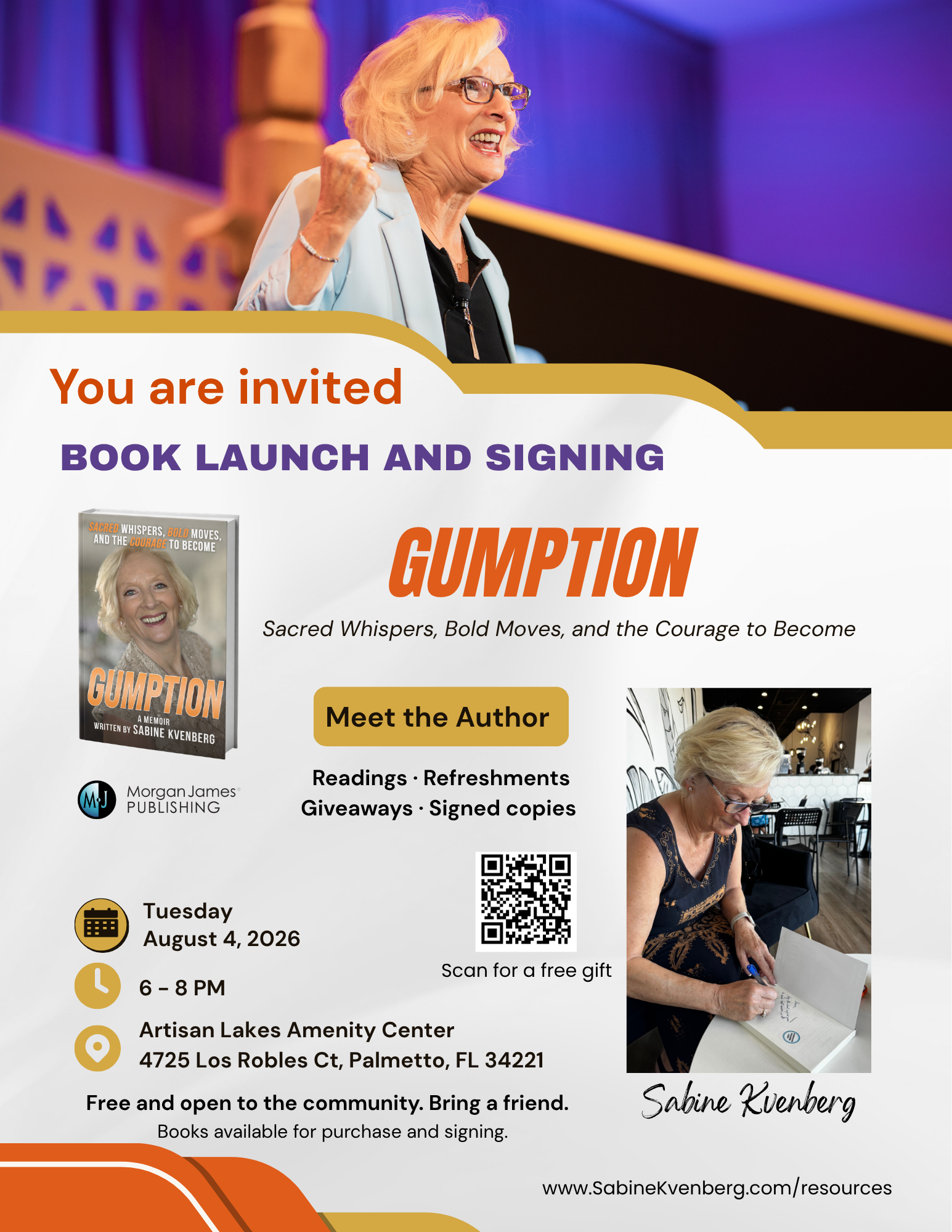
At 85, She's Still Rewriting the Ending: Nancy Jasin on Courage, Recovery & Story

 Apple Podcasts
 Castro
 RSS Feed
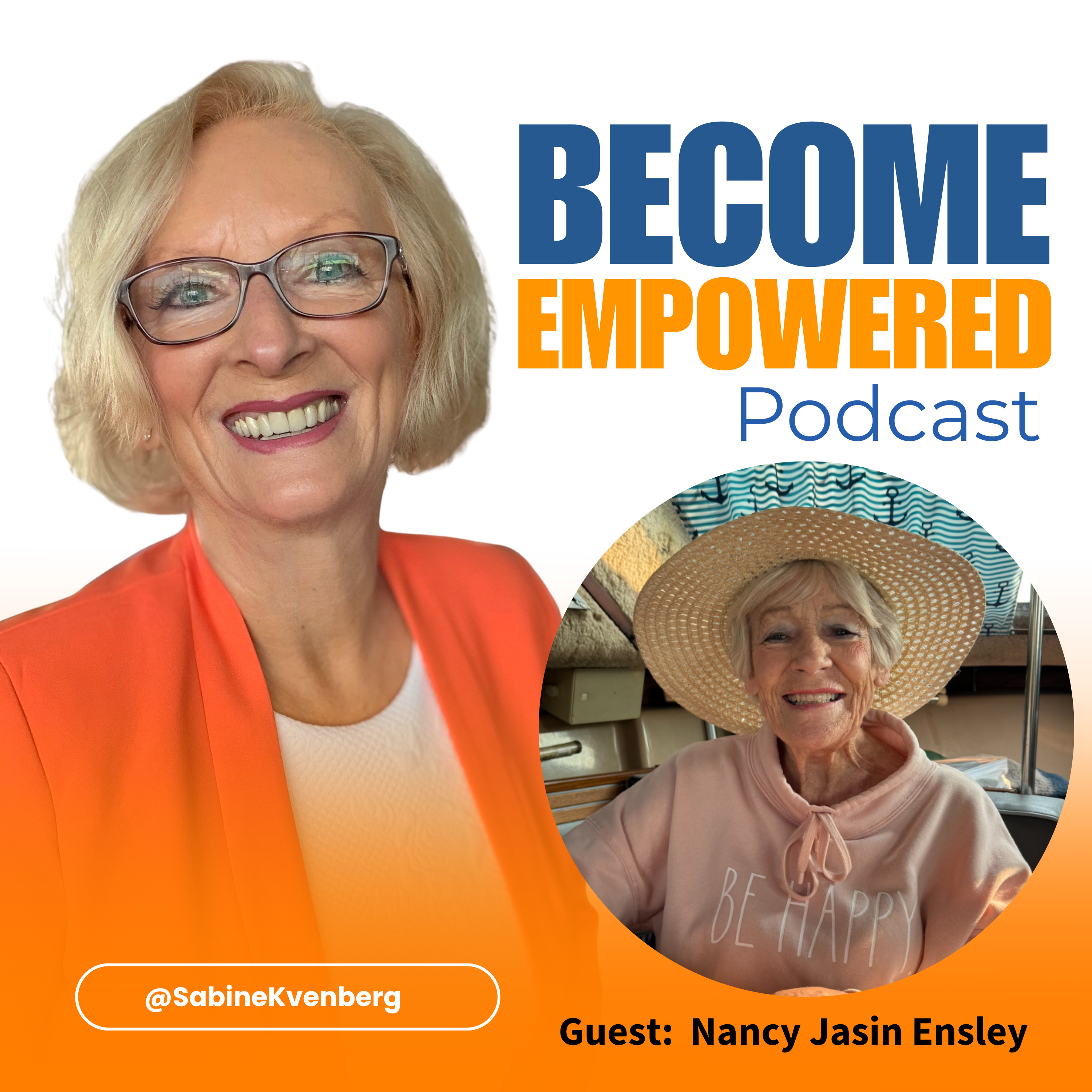
 At almost 85 years young, Nancy Jasin is proof that the ending is never written until you write it. A retired nurse who "never really retires," Nancy joins Sabine to share a life shaped by resilience — from a violent childhood spent hiding in a closet, to 42 years of sobriety, to building three businesses and becoming an author who now sends out two poems a week.
Nancy opens the doors most people keep closed. She talks candidly about PTSD, addiction, and the night on her bathroom floor when she heard a voice tell her no — the moment that gave her back her faith, her family, and her purpose. She shares hard-won wisdom on forgiveness ("throw away the albatross"), on death as a natural part of life witnessed through hospice work, and on why growth, journaling, and guided imagery keep her sharp and at peace.
Sabine and Nancy also dig into using AI as a partner — not a replacement — for creativity and communication, and why writing by hand still matters more than ever. Whether you're facing your own dark closet or simply want to feel braver about the next chapter, Nancy's tire swing will beckon you: sometimes we soar, sometimes we fall — but all in all, we have the choice to ride.
Sabine Kvenberg: Welcome, welcome to today's episode. And I'm very excited for my guest today, Nancy Jason â Ensley. So I hope I pronounce it right. Welcome, Nancy. Perfect. â Thank you so much for having me, Sabine. And hello, everyone. You listened to some of the episodes prior. Yes. â I see some of â some of your guests were very open â to kind of show the bumps and the mountains and valleys in their lives. And I think that connects with people so much. Being a nurse, â I totally understand that when you're willing to listen, rather than just hear, listen is different. â where you're actually involved in the conversation and you allow that person to open the doors that perhaps are partially closed. So I I love that I love that. There there are a few other c podcasts I've been on where I was hesitant maybe to â to kind of open those doors and then all of a sudden I just I just had a feeling that I needed to do that. Either a question someone asked the look on your face, whatever it is. Yeah. So it's thank you that you that you shared this because that also Tells us that yes, we are here for a reason. Podcasts exist for a reason. And even if it makes â a different in one person's lives, or maybe open a door. You said sometimes it can be a phrase or anything that can make somebody's life better, right? Yes, for sure. So tell our audience who is Nancy? Who is Nancy? Nancy is an almost eighty-five year old, â retired nurse, but nurses never really retire because you become an if you open your door, people will say, â my goodness, I've my back hurts. What should I do? Okay, so so being a registered nurse has been amazing to me. I started out to be a doctor and I've always wanted to be a doctor and I've challenged doctors, so they know me very well. â I I'm also a grandmother, a great grandmother. I love I love being young with my with my little grand great grandkids. They laugh at me. â they sometimes ask me questions and I I just love it because they want an answer. Yes. â I also am an author. I started writing. â I started reading when I was four and a half. â that â I'll tell you that story later. â but I also my first writing was a poem for my mother on Mother's Day, and I was seven years old, and I knew how sounds rhymed, so I wanted to rhyme. And it made me think about how the kind of love I had for a wonderful woman. â also I have been I've traveled all over the country and spoken at seminars, et cetera. I have had three businesses of my own with a with a partner. I also â I've been a compliance officer, a legal nurse consultant, etc., etc. I've been so blessed to have that. I have a wonderful husband. He's my third one. I had to practice â before I know that. I have to say something to you. Because for those who do not watch this on video and on my YouTube channel, just listen. You mentioned you are almost 85 years young. And let me tell you, I would have not guessed it. And you look so fabulous. And then you mentioned something that you love playing young with your grandchildren, great grandchildren. And this is, in my humble opinion, what really keeps us young. To stay with the young and be silly like the young and and be that internal kid forever. That I think is one of the secrets of having a young and fulfilled life and being active. Wouldn't you agree? â yes, Sabine You never know what you're gonna learn from this. Right. After I wrote my memoir, â and then I I I had a bad time in the middle of my life for about five years. â I lost contact with my my faith. I lost contact with my family. I gave in to a terrible addiction. â I God saved my life three times. He kept saying, I'm not done with you. I have something for you to do and I want you to write. So bring us back to that time. Okay, I will. â outside of being a PTSD and feeling â abandoned as a child, I got professional help for that. â I had been to a psychiatrist and he found out that I had a a very, very difficult life with my father. I never felt that I could please him. I always knew that I was going to and I tried to rescue my mother when he would be aggressive to her. I was a rescuer. Okay. So I had to come out of that closet that was dark. I went to school. I went to be a doctor. I came home. My mother was very ill. â I took on nursing temporarily so that when I could become a doctor I would be nice to the nurses, but I loved it so much, Sabine. I just I loved every part of nursing from ICU ER to the floor to nursing homes, everything. And that helped in my teaching as well. So â yes, the I think I heard my God that I believe in everyone you you believe in something, a force, something that gets you through things. Sometimes you can't even identify it. And it doesn't have a have to have a name. And I think I heard God say to me so many times, no, you aren't giving up. â I just had some â some things happen with my sister and we we had a long family meeting and I wrote down, I write down my feelings because all of a sudden there's a difference. Between what I'm thinking and what I actually need to do. And so I wrote this little phrase. I said, How many things can come into my life â until my recovery is spent? And then I looked at it and I thought, that isn't me. I am not like that. I have too much to live for. So I said, How many good things can come into my life until My recovery is renewed. So my recovery from alcoholism and addiction has led me to be able to counsel women, young women, older women who have addiction problems. And there that is a scientific addiction, a change in your brain when you introduce it to those chemicals that doesn't happen to everyone else. Forty two years of sobriety. God said. No, again. I remember I was in renal failure. I was very sick. I had a hundred pounds. And my kids, we had lost our home. â I had lost the love of my kids. I my two daughters were with me. My son left and went to his father. I I remember I had my job, believe it or not, as head nurse on neural. And â I don't know how I got through that. He said, â you're going to be able to do this because I have something for you to do with it later. And so many times he said no to me. This time I'll remember forever. You asked me what that moment was. I was in the bathroom, I was on my knees, I was begging him to let me drink. I wanted to die. And I heard this voice say no. No. No. From that moment on I met someone who was in a program that has been an open door to my life in so many ways. I got my faith back. Thank God. I I believe that I was able to forgive my father because God said, You're not gonna carry this albatross, hanging on to resentments and anger. does nothing to change the things that happened. So get rid of that albatross, throw it away and forgive. That doesn't mean you condone what happened and that you don't have absolutely don't have to have help for it. Right. Just forgive just say, write a letter. You don't have to send it. Just write. It's so true. It's so true. â the the forgiveness is it's not so much for them we forgive them But rather than releasing that for us. We are forgiving ourselves for holding on to it. So you you mentioned you were on your knees. So what got you to that point? Because sometimes we see something or the darkest point in our lives, we have an ep epiphany in in this case. What got you to that point that you became an alcoholic, that you were you know, losing children or they didn't want to be with you? So what what happened to that point to that nurse that ha is doing the job that she loves to do? â the morning before that occurred, that occurred in the evening when I was on my knees. â I thought I had lost my faith. I thought God was not looking at me. He thought I was so bad. And what I remember was â on on the on the I had a frame something in the frame and it was it was a serenity prayer in the frame. And and I looked up, that's when I thought I heard that noise. I looked up and I saw God grant me the serenity to accept the things I cannot change and the courage to change the things I can and the wisdom to know the difference. And I don't know whether I surmise that I heard him say, Listen, you'll never be perfect. You can't be perfect. â you have a job but you're going to lose it, and you have a life that you're gonna lose. And somehow I got up and I made a call to someone I trusted. we all need people that we trust. As you get older, sometimes you have to â be very careful on who you trust with very, very personal things. â I I write down forgive, accept, accept what you are. what you're doing, what you can do about it, and get the people or the the professionals that you need to get help and then listen to them. Of times people do get counseling and get help for their â failures, but don't listen for the process that you have to continue with in order to keep that way. You had three businesses. What Did you do or made you decide to start your own business from being being a nurse at at the hospital? Uh-huh. I I had a neighbor. She had a â survival â process where people â got â that had mastectomies get â measured for â bras and all of those things, all kinds of survival, and she asked me to come and volunteer there. I w I had one of my re I retired three times. I I never give up. So I kept going back. I wasn't I was seventy-three when I actually officially retired. But anyhow she said, Can you come and volunteer and help with the people here? So I said, â yeah, I'd love to do that. So I did. I did. â and I volunteered with her. She was losing her business. It was very hard to get the insurance companies to pay. for the materials that are needed. And I was going for my master's in health administration trying to make sure that someday we fixed the healthcare system. Good luck. Okay, good luck on that one. Yes. And my whole family is in healthcare somehow. And we're trying to fix it. It almost got fixed in the sixties, you know? It almost did. Well anyhow, so I did that and I helped her with her ability to â not be bankrupt. â somehow I had a little b enough business sense taught in my masters that would help. And so we got through that. She says, let's start a business for compression stockings because lymphedema is a very, very big â condition that people can have. I said, â okay, I don't know. I I had learned how to measure for the stocking. So we started a compression stocking business when we were in it for about five years trying to get Medicare to cover those things. We could not do that. So we had to leave that. Okay. We are still friends. And â the next business I I I had a friend who worked I had was in a urology practice for a while, and she was a consultant, the only female consultant in a big consulting business. Very, very strong woman, very, very â just amazing, brilliant with business. â so she said, Let's start let's start a business to help physicians start their practice, get them certified, all of those things. She said, We can go to hospitals and do audits and you know all that. I said, Okay, why not? Okay, let's do that. So we learned how to do that. We had that for about eight years. We went all over the country, we Well physicians do not get business courses in their residency. They are so exhausted. And a lot of times it's very hard for them to run their business and they can't afford to hire someone who has that expertise in their practices. So that's a difficulty in healthcare. We were in that for about eight years. I got a call from hospice. And they said we need a compliance officer to come and do audits in order for us to keep our contract. And I said, Well, I have that certificate. â we can do that for you. â my â partner, she was going through something, so we dissolved that business. It was exciting. And I went as a consultant to hospice of Northwest Ohio, a big one here, a wonderful one. And I I knew about hospice but I didn't really Get that amazing part of our life. â dying is part of our life. We are all gonna do it. We got a whole bunch of people that are gonna go through it in many iterations of it. I I came in as the compliance officer to do audits and they said, â don't don't say anything to her. Don't â and I thought, no, no, I want them to know that I want to know about hospice. So I volunteered at night to be an aide, unpaid. To take care of patients and to see what I could see. And I, Sabine, I saw miracles. Miracles. I saw people inviting someone in the room when they're in a coma, saying their name, reaching out for someone, people hanging on to life for so long that you think, â my goodness, how can someone die that long until they get a phone call from their granddaughter? And take two breaths and go to sleep. There's a transition point in dying. There is a pulling from this life and a pulling from whatever that energy is going to go. Energy doesn't die. So we're a bunch of chemicals, positive and negative. That doesn't die. And so I looked at death as part of life. Yeah, I love that. I love that you that you we we all are going to be faced at one point or another â with with that part of life. â yes. So so t tell tell us one of the miracles you already shared. Was there something else that was like an aha moment for you or something that was like, wow, I did not expect that? Yes. â There are several, but this one, this one. The gen â there was a gentleman, he was in the â armed services when we had â a blizzard in the seventy six. It it destroy it just it it took our whole life and changed it. â he was running that. He ran that. He was now in hospice and he had two daughters. â he had a third daughter, but she didn't come. â there was a balloon that they hung on his on his bed and I said, He can hear you. You hearing is still there. He may not respond, but till the very, very end he can hear you. And the two sisters were always fighting, fighting, fighting, fighting. They were Dad stay, Dad, you've got to stay. You're you're a c corporal. You have to stay. And arguing about whether he should stay in hospice or take him home or what we're going to okay do with him. There was a balloon up there that said I love you and that was supposed to be represent their mother who had passed away for a long time. All right. They're arguing and I said, He can hear you arguing. And he was restless in that stage. I said, Let's calm down. And so â they said, Okay, Dad, okay, and they're crying. They said, If you have to go, I guess you can go. The balloon, my goodness, His his wife, their mother, the balloon went down like this. No nothing in the room would blow that down. And up like this. And the daughter said, Dad, they're having corned beef on â corn be shit on a shingle is what they called it back then. They're having that tomorrow. You've got to stay till tomorrow. Mom wants you to stay. They thought that's what that meant. As soon as they said that, he took two breaths, opened his eyes, looked at the balloon, smiled and died. They had never at this facility, the extended care facility, had corned beef on bread before. Guess what they had for lunch? That next day. They came to me, I was busy with other clients and And they came to me, Nancy, Nancy, they had Sharada Shango for lunch for dad. And I said, I bet they did. There's â huh. If we aren't quiet and take a quiet moment to reflect, meditate, whatever we do, take a drive, go get some coffee, take a walk, run. Call somebody. If we don't take that moment, we won't hear the whispers that are there for us to hear. Yes, so true. Yeah. Being still and just listening. And as you said, oftentimes I go just for a walk, being out in nature and just having your mind not occupied with so many other things that come our ways every day. single moment in our lives or d daily lives. So yeah, I I hear you. Wow, that's quite something. So if you could give someone who's listening, maybe is going through a stage right now that a loved one is in hospice or is about to go to hospice, w what piece of advice could you give them? Yeah. I would say take a memory that identifies that person. â I'll tell you, my mother was a concert pianist. She graduated from â from J Juilliard School and she was fifteen, the youngest. And she played the piano so wonderful. So I she was dying. We were all around. This was at a home. She was in hospice. They had given her some medication. And I said, Where where can I play it it was Claire Deluna, it was a beautiful concerto by By bronze, â by Mozart. And â that was her favorite. And I had it on my phone, so I played it. And she was restless, and all of a sudden, I think take a memory and talk about that as if your mother or who whoever it is, it might be something that she survived, something silly that she did. My mom would get put us in a car and just go. She loved, she had wonderlust. And she would just go. And I said, Okay, mom, where are we going? Where are we going? Played the music. She put her arm up like she took a hand, probably her mother's, and smiled and went to sleep. So take a memory, take a memory with you, as if that person is there to have the conversation with you. And you have the conversation with them. And you will never forget it. And sometimes that's a way. It's very hard for someone to say, okay, mom, to go, just go. So instead of that, take that memory and let it in it just grow in that moment. And perhaps that's your way of giving, you know, getting through that. Even through a problem when you when you're talking to someone, find a memory. My mi my sister has dementia. We are going through a horrible time with that. I'm losing someone I love so much. We've all been through it together. I instead of being the nurse, they want me to be the sister. So I go and I'm â I'm goofy and we're goofy together and we laugh together. And we can for a moment just put that disease aside. And look at the person you love just the way you did when they didn't have that problem. I know what you're going through. My mother-in-law, she had dementia. And in retrospect, â I now know that it started way, way earlier that we didn't even realize it then. And we just think, â this person, why is she so so Crazy all of a sudden. Why why is she reacting this way? This was not hers. She was the most compassionate and loving and warm person. Then all of a sudden, there's like a withdrawal, and it's like but you don't realize it. Yes, yes. Their brain is amazing. Recently, my husband bought me a book, he knows I read constantly and say for a dollar. And it's the neuroscience book. It's very technical. I did not know even after all the years of study and collaboration and watching patients â that there are hypocampus, there's a part of your brain below your brain that has all of the electrical impulses. It constantly fires. The rest of your brain has to know when where to take it, which one to take it, what to do with it, make a decision, let it go, all of that. And we only know about forty seven percent of what this amazing dynamic how it works. And so yes, my sister gets very paranoid. She thought someone was coming in the house stealing from an empty envelope. I said, Honey, honey, you went to the bank. The the envelope is with your daughter in law. It's okay. Who who came in your house that you did not know? And she said, Well, just Janet Paul, you and I'm out she was saying who was there. And I said, Anyone come in your house that you did not know? Did you leave the garage door open? Did you leave your door open? Did you go in the backyard when someone could come in? I said, Let's write down what we need to do when we can't watch our house. Not â you're wrong. It's for I didn't want to do that. You ca it's so hard to do that. And then she apologized all day long. Yeah. By no means am a â physician or neuroscience whatsoever. I mean, I it's in it interests me from a perspective of how we can improve our lives, living our lives. And also how we can grow older and be still â smart and alert. And one of the things that I know for sure, and I I'm sharing it in my book, â in my memoir called Gumpchin, which is going to be released in in August, August 4th. â I love it. Yes, yes. So it's it's now available for pre-order. But what I am sharing in in my book is how we can stay alert. How we can live the best life. And one factor, which is the first letter of Gumchen, the G, is growth. If we stop growing, we stagnate, or in some cases, even reverse. We're going back. And so when growing means keep reading, keep doing things with your hands, because hands also connect to our brain. Writing things down, penmanship. â my gosh, our new generation does not know how to write anymore. No and this is super important to have that connection when you write something down to your brain rather than just typing. â d I so agree. â write down your thoughts. I have journals everywhere. â and we have to take effort to do something. Like w the exercise in the morning. I have a morning routine. I and I mix it up a little bit, but I always do some sort of movement. And even if it's just five minutes, if we move and listen maybe to a short meditation or podcast or anything that is other than looking at emails or your phone or whatnot, right? So yeah, I totally get it. Totally get it. Yeah. A I AI is taking over our brain. Didn't we all know phone numbers and addresses in our brain? Every once in a while when I'm in the store, I add up in my brain the â the the prices. Yeah. I don't have a clicker thing to do it for me. I don't do it on my phone. I have to add in my head s six figures sometimes to just because I need to. Exercise your brain. Right. Right. Do you sing? I sing. No, they d they tell me not to sing. I do not have a good voice. I go ahead and sing louder. I sing when I work, when I vacuum, when I'm I sing Rudolph the Red Nose Reindeer. For some reason, it just comes. And so that's an exercise. I hope we don't lose that. Yes, we do. AI is amazing. I have a program and I I teach entrepreneurs to to work with their AI and create their quote unquote communication clone. So I'm a communication and confidence coach. That's what I teach how we communicate better our message, our service and whatnot. And yes, I use AI, but it's all it's data driven. So you can use it in a way to save time. And money in this case, because you don't have to pace a physical person. But you have to enter the right data. So in in my communication clone, I I edit, so we create your your voice profile. And you have to enter the data, like recordings, anything you've done, my book is all there, all private, right? It's I'm not sharing that. But now my AI. Knows how I speak, the the warmth of my voice, and everything that it needs to write something for me. Now, when I write a newsletter, for example, I still tell my clone, hey, so this is what I would like to say in the newsletter. This is the experience that I have, because no AI can have your personal experience. Yeah. And this is what I want to talk about. And here is the connections I want to make to maybe a product or something, a call to action. So I give my AI all of that. Then he goes through all the data that I you have to do it once, only once. So goes through my book, through my talks, through my courses. through my voice profile, through everything. So it's it's me multiplied or copied. And then the fantastic things and I already have an outline. This is always how I do my newsletter. And then puts it together. Now I am the one who reads through it. I'm the one who corrects anything. Say, no, this time I don't want to say this. I'm going to th â throw this out. Or Hey, let's do this a little bit different. I would like that to be this. That's it. But it would have taken me hours. Hours to write this. Hours to do then social media posts from it or a blog post from it. That's how we can use AI, but never ever let it take over your brain. Yeah. No. I so â my goodness. That's amazing. That that everyone should hear that. Everyone should. Because I â say I all of a sudden rainbow in December, somebody it there was a rainbow in December. So all of a sudden I knew the ending. I a lot of times I know the ending and then I enter the characters into the room and talk to them. And I have grammarcy and I have several â iterations that will take my ending beginning, my title and Process give me a process how that story should go. How long should I get the backstory for my characters? How long this this okay, then I get this glop to look at and edit. And you can go through many â you know how many edits that you go through. Put it away for a while. Maybe it was a not a good day to to review that. You had other things on your mind. Look at that. â I I teach gu guided imagery. â before this bot podcast and during the podcast, you do not know that I'm at the beach, my favorite place. I'm walking in the sand, I'm hearing the birds, I'm hearing what you're saying, 'cause I need that peaceful moment. Yeah. And so I'm there so easily to do that. You have to train yourself to do that. Yes, yes, yes. The peace. The peace emptying your mind so that you can Look at things. Yes, and it should AI should never, if you're a partner with someone else or something else, your partners have to be able to check on you, to give you advice, to change things, to maybe hold you in place. And and you can't do that if you give that up for the technology. All of a sudden you aren't there anymore. You're not the partner anymore. They've taken over. And â I I worry, I worry now, especially for the kids. I said it's not a bad idea to put away your technology, take a walk, or write something. Everyone has a story. Everyone does. Just write how you feel. It's amazing. I tell my granddaughters it and one of them has anxiety. And I said, Write down how you feel and look at that. That's part of your story. And I said, You don't have to publish it. You don't you can hide it. You can do whatever you want. But it's amazing. You need to keep practicing. Yes. That's how I started to writing my â was my my my first diary was in my â in my twenties where I felt so alone and I was such a mess in my life. And I just and someone gave me that diary for my birthday. I still remember that. And I never wrote anything in it. But then f I picked it up and then I started writing. And ever since I have written in my diary. Sometimes especially at the beginning, a long time, nothing and then something. But Since that year I have a whole box full of diaries. Isn't that amazing? â writing poetry helps me. All of a sudden, when I have to â make it rhyme or make it make sense, â like the tire swing, â they they say, Why do you why do you have that? And the tire swing has has a little poem that I all of a sudden came to me. This says, and it's very short. The tire swing hung from a tree, it beckoned them, come ride with me. The rubber seat would bruise your thigh, but no one cared when soaring high above the ground, then touch the sky. If you pull and push, â my, you may be brave enough to try to fly. Thus is life, the tire swing. It beckons us to do great things. Sometimes we soar, sometimes we fall. It makes us dizzy when we twirl out of control and But all in all, we have the choice to ride. And I said that that saved my life as a little girl 'cause I could go as high and I'd look to see if mom and dad were coming home. And when I was disappointed that low, I always tried to push again 'cause maybe I missed that moment. And you don't don't miss any moments in your life. This could not be a better ending for this podcast episode. Thank you so much, Nancy. Sharing your wisdom and and â being here today with our audience. Thank you, Sabine. I I I loved it this podcast. Love meeting you. Thank you so much.

