Who Will Care for My Autistic Child When I'm Gone? with Debra Caudy
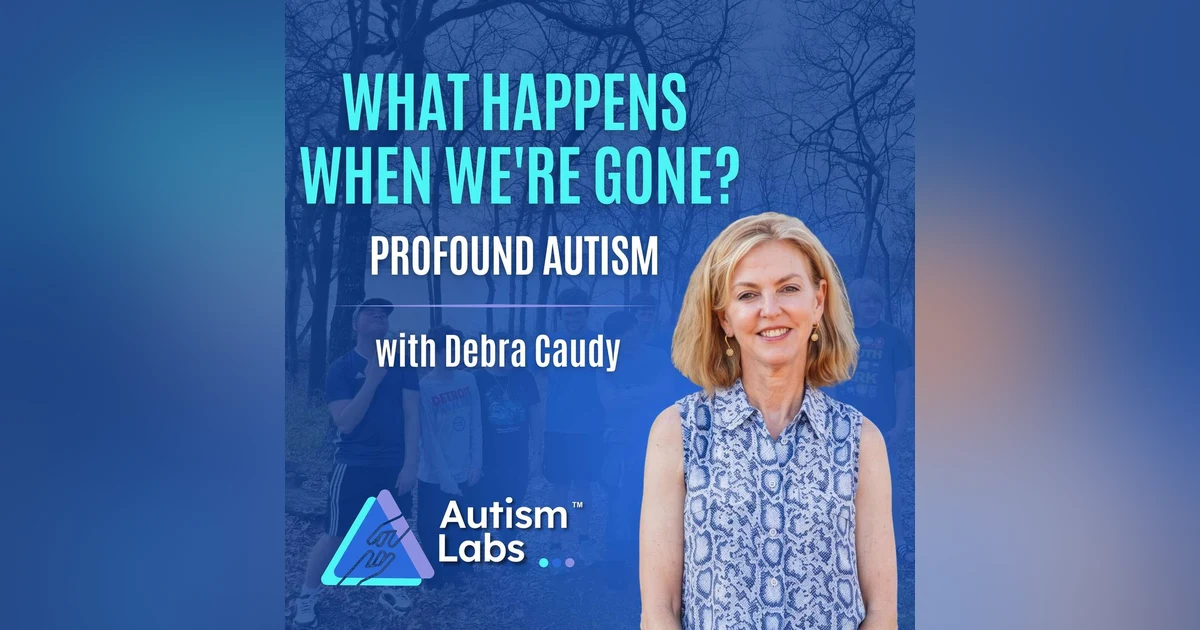


Key Takeaways
- Debra Caudy emphasizes that building physical brick-and-mortar housing is the easy part, while developing consistent, specialized support services for adults with profound autism remains the true challenge.
- Quality residential care and specialized staffing for profoundly autistic adults are expensive, often costing upwards of $100,000 annually per individual, highlighting the need for increased state Medicaid funding.
- Nonprofit organizations like 29 Acres utilize applied behavior analysis (ABA) principles in natural adult environments to successfully track data and reduce challenging behaviors over time.
- Partnering with local universities and allied health programs provides a steady pipeline of committed student interns for speech, occupational therapy, and recreation programs.
- Creating internal revenue streams, such as mission-based business partnerships like Howdy Homemade Ice Cream, can help offset fundraising costs and provide meaningful, carved-out job positions for autistic adults.
What does it take to create safe, sustainable residential care for adults with profound autism? For many families, the transition out of the school system brings difficult questions about housing, lifelong support, funding, and what the future will look like when parents can no longer provide care.
In this episode of Autism Labs, host Mike Carr continues his conversation with Debra Caudy of 29 Acres, a Texas nonprofit providing residential services and transition programs for autistic adults and adults with intellectual and developmental disabilities (IDD).
Drawing on her experience building 29 Acres and supporting her own son with profound autism, Debra shares an honest look at the challenges of developing adult services, including the limitations of Medicaid funding, the shortage of appropriate residential placements, and the importance of finding staff who understand complex support needs.
Frequently Asked Questions
Who is Debra Caudy?
Debra Caudy is the co-founder of 29 Acres, a Texas-based nonprofit organization providing residential services, transition programs, and employment opportunities for autistic adults and individuals with intellectual and developmental disabilities.
What is 29 Acres?
29 Acres is a residential living and transition community in Texas designed to support adults with autism and intellectual disabilities by promoting community engagement, independent living skills, and quality of life.
How much does residential care for a profoundly autistic adult cost?
Quality residential care and proper support services for individuals with profound autism can easily exceed $100,000 per year, heavily straining the limits of current state Medicaid reimbursement rates.
What are the biggest challenges in building residential care for adults with autism?
The primary challenges include severe funding limitations from state Medicaid programs, a shortage of appropriate residential placements, long waiting lists, and the difficulty of recruiting and retaining staff trained in complex support needs.
00:00 - Introduction: Planning for Residential Care
01:59 - Setting Realistic Expectations for Autism Housing
04:03 - ABA and Behavior Tracking for Autistic Adults
08:33 - Expanding Residential and Independent Living
10:31 - Why Profound Autism Requires More Funding
12:13 - How Much Does Lifelong Autism Care Cost?
14:26 - Waiting Lists and Residential Placement
16:17 - Employment Opportunities for Autistic Adults
18:10 - Jobs for Adults With Profound Autism
20:44 - Advice for Parents Planning Future Care
24:16 - Why Support Services Matter More Than Buildings
26:09 - Building Reliable 24/7 Autism Care
27:14 - How to Connect With 29 Acres
Mike Carr (00:05):
Well, welcome back everybody. Last week we started a conversation with Debra up at Denton, Texas in 29 acres, which just listening to her talk, I'm super excited about. We're going to continue that conversation about residential and some of the challenges, especially with funding and limitations that the state puts on how that money can be spent, but also some reason for optimism and hope and some suggestions that Debra has on what you guys should do next if you're thinking about this journey. So here we go. Can we talk about your intake process again? Because one of the things that we've discovered is in going to the home and going to the school or wherever they're at and talking to their parents, to us, the parents in some cases are even more important because we want the parents' expectations to be realistic. So it's where they are on this journey.
(00:51):
The parents that we simply cannot accommodate yet are the ones that are too much of a perfectionist or the ones that feel like their son or daughter is always number one priority for everything. And we're very honest about it. We say, look, we are going to make mistakes. There will be times where you might come in and your child's place isn't quite as clean or their hair's messed up or they're not as happy because they had to go do a group activity out in the community that they really didn't want to do, but that's part of life. And so we want parents to understand and actually they're very excited about the fact that, yeah, we understand you guys aren't going to be perfect. We understand you're going to make mistakes. You're not going to hide those mistakes from us. They're always learning experiences. We don't expect perfection.
(01:34):
We don't expect our child to always be the number one priority. What we want them to have though is an environment of love and care and opportunities and enough structure so they're not stressed and anxious and just as good a life seven days a week if they're living there so that we don't have to worry. How do you address that? Is that philosophy similar or have you learned some things that we haven't learned yet that you want to share with us and other parents watching? I think
Debra Caudy (01:59):
It's similar. I mean, I think setting expectations. Well, first of all, we can't be all things to all people. We can't. And there are individuals who have applied here and we don't think we can meet their needs. Or if we put them in a room, it's not going to be a good fit for the other three in the room and we have to say no. And I just think you got to be clear about that and you just have to say no when it's the right thing to do. And I think setting expectations, I think you guys have done a better job than I did initially. I probably set two high expectations with our parents initially. And boy, oh boy, did I learn fast how hard it was. I mean, I was great at supporting my one profoundly affected kid with autism, but now all of a sudden I have 12 or 13.
(02:46):
Whoa. So that has been a painful lesson is that we can't do everything that we want to do. We can't, it's just impossible. So we do the same thing. Let's focus on some growth. We want everybody to continue to be stimulated and grow. We do want to work on intentional goals. We do want to do that, but we also want to work on what leisure activities make you happy? Try this. If you don't like it, don't do it. Which of these guys in the community do you like to be close to or hang by or weave in and out of? So it all comes down obviously to quality of life. And I guess that looks a little bit different for everyone, but I think a big part of quality of life is being engaged and feeling like you belong and that you have a place and maybe you can't put your belt on independently, but if you can go play miniature golf with three or four other people and enjoy that, let's do that instead.
(03:49):
So yeah, you've probably done a better job at setting expectations than I have. I always tend to shoot for the stars and my buzzword needs to remain attainable. Do what's attainable and just do it well.
Mike Carr (04:03):
I Mean, I don't think we've done a better job necessarily than what you've done. We always like to have goals. We always like to, as you say, shoot for the stars. One of the statistics that you had in one of your reports on your website, which I really liked was success in reducing problem behaviors for 93% over time. How do you guys track data? So we've tried to use the Motivity app and some other apps. Do you have any mechanism because you know when there's a meltdown or a potential meltdown, the staff is not going to worry necessarily in that moment to start collecting data. They're going to have to intervene and make sure everybody's safe and change the environment or whatever. How do you guys keep track of enough statistics, hard numbers so that you can show parents or show prospective donors, hey, we really are making progress?
Debra Caudy (04:46):
Well, everything we do here is founded in the principles of applied behavioral analysis. It just is. And I'm not talking about sitting at a desk and touching a cat and a dog and getting... I'm talking about the application of behavioral therapy in the adult space in the natural environment, but it is still the science that's our backbone. And so everybody that has problem behavior, maladaptive behavior, they all have a behavior plan and we take data on those plans and whatever their goals are, whether it be putting a belt on independently or whatever, our behaviorists write that task analysis out and we have goals on that. Previously, believe it or not, up to just recently, we have been doing it on Google Sheets, paper and grafting from there, which was taking forever. And we just invested in Passage Health, an EHR opportunity, and we're super, super excited about that because the data will be entered.
(05:48):
And of course it needs to be entered correctly and that's training. Then you push a button and the graph comes out. So we're just transitioning to that now. It's not cheap, but it's going to save our BCBA so much time because previously they've been doing it all by hand and then sharing that information with the parents. But that's how I know, that's how we track those numbers. But now it's going to be all electronically, both onsite and in the community.
Mike Carr (06:15):
You mentioned some partnerships that you guys had with some of the local schools and colleges and universities, and I don't know if University of North Texas is one of those, but regardless, we found that at least in Austin, the University of Texas and some other schools, they'll have students that are looking for an internship or they'll have a professor that likes what we're doing, especially if it's a special ed professor or perhaps speech or one of the other therapies that might overlap with our population. And so they'll vet students and they'll send us the best of the best and say, maybe we'll give them course credit or maybe they'll just come in and earn a little bit of extra money. What is that relationship like for you? Or do you have some other great sources of talent, whether it's the church community or some other community that you say, "Hey, this is where we've really found some of our best talent or where we've been able to keep pushing the limits in terms of what best practices are and how to sort of step up to the next level."
Debra Caudy (07:10):
That work for us is still in progress. Our two-year transition program, we officially have a partnership with Texas Women University. They have been wonderful to work with because they have all the allied health fields like OT speech, adaptive PE, and we have interns that come over and do projects there, and that's really wonderful because it's a commitment. A lot of times we hire students, they come and go. It's not much of a commitment, but when you can get an internship going, there is a commitment. UNT, we have more work to do there. There's a professor that we just met with that my chief of clinical programs knows, and we had a beautiful meeting with her and she's going to help 29 Acres be an internship site. We already are, but she's going to help promote us a little bit more. We want those student partnerships, but we want some amount of longevity to them.
(08:04):
We don't want people coming for three months, their schedule changes and they leave. So yeah, we just actually hired somebody that's going to be in charge of community engagement and volunteer, and I think she's going to be working on a lot of those opportunities is how can we partner together? You need volunteer hours, you need service hours, these are the things that we can partner on. So we really need to grow that further for us. We need to grow that further.
Mike Carr (08:33):
You've got some new property now, so you're no longer 29 acres. You've got 16 more acres. What are you going to do with those 16 acres and what's your timeline? Or is there anything you can share with us just in general about how you're growing the program and adding either more homes, that kind of stuff, or whatever else you're doing?
Debra Caudy (08:49):
There's two things that we're working on primarily. Well, three things, Howdy, but the ice cream. So we're officially 29 plus now. We actually just redid our logo. We're 29 plus and we actually have another couple of acres. So I think we're like 41, 42. I don't know what we're at, but we're 29 plus and staying there. With our two housing initiatives, and they're very different, we support low support needs people in apartments here. Many of them are graduates of our two-year transition academy program, but they pay their own rent. They take care of all of that. And we just offer very small, inexpensive amounts of drop-in to support to make sure that they're staying engaged, the job's going okay, they're not sitting in their rooms all day. We're doing that in Denton now. We are going to be doing it next year in the Plano area.
(09:39):
We'll select an apartment down there that'll work with us, but these will be only for individuals who have low support needs, they work, they just need some facilitated social opportunities and a little bit of supervision. So that's something that we'll be doing next year. The property next door, we are going to build more houses and it'll all be based on lessons learned over the last six years. I think we have learned that we need more one and two bedroom opportunities for individuals who have moderate to low support needs. It doesn't really work with a higher needs person and overnight support. We have to economize that. I think we'll look in terms of the HCS, I think we'll look at a supervised living model in those future homes, which means the staff lives in the house but sleeps and then three other people are in there with that staff member.
(10:31):
The reason we're doing it is because we can keep the lights on in those houses, the reimbursement rates work. So probably in terms of our Medicaid funding, the new property will be more of supervised living that's easier to do and you break even on those and then we'll design some one and two bedroom opportunities. Then our current four bedroom, four bath homes will stay dedicated to individuals with higher support needs like my son, perhaps your son, where we're the HCS provider, we have awake staff in those houses. We feel like we understand that model, but we can't have too many more of those opportunities because we have to fundraise with every single one of those opportunities unless the state turns around and begins to recognize the cost of supporting someone with profound autism. Again, you and I both know that they don't. I was just going to say as an example, my son really pretty much needs 24 supervision.
(11:29):
I have somebody with one-to-one, nine to five, maybe one staff at two or three kids in the evenings and one overnight. And then versus someone who lives in another house that just, he works a lot, he has maybe three or four hours a day of small group support. Nobody's in the house overnight. He gets this much support from us. My son gets that much beyond the screen. And literally the difference in the reimbursement rate is like 15, 20, 25 bucks a day. Now that will never work and that just has me understand that the state will not recognize profoundly affected people.
Mike Carr (12:13):
So what would you tell parents, because we have a lot of parents, not just in Austin, but that have inquired about programs around Texas and their kiddos are profoundly autistic, but they're still in school, right? So they may be in high school, they may be 18, 19 in the transition program, but they haven't hit that 22 yet where they fall off the cliff. And the question always comes up, well, how much should I plan for realistically that it's going to take for my profoundly autistic son to live at 29 acres and I'm providing enough financial support so that you guys don't have to just sort of bend over backwards to fundraise? Is there a number or is there a range that comes in mind? And right now, how do you guys handle that?You could say, "Well, we know for a minimum you're going to have to ante up so many thousands of dollars a month if you have a profoundly autistic son and he's going to live with us.
(13:06):
That's sort of the base. And then ideally you could contribute or donate more and that would really help us out." I mean, how do you handle that and what are some numbers that you would recommend parents start thinking about?
Debra Caudy (13:15):
Well, honestly, when I started, my husband and I started planning all these second to die policies and all these things that we put money in for so many years for our son. 10 years ago, we were planning for 100,000 a year. And it's every bit of that, Mike, and probably more than that. And that's not what it costs. It costs a lot more than that in our experience. But if you do get the Medicaid funding and my son has that, that's about $75,000 a year that they're paying towards my son. And that's at yucky rates, right? Those are at Texas rates. So that leaves me with a lot less to have to throw into the kitty to keep 29 acres lights on. But no matter how you skin the cat and no matter how you do it, quality support with profoundly affected people is expensive.
(14:11):
It just is. And I think a hundred thousand a year, quite honestly, is probably not enough. It just is what it is, and that's why we have to get the state to step in because nobody can afford that.
Mike Carr (14:26):
Right. Right now, if we had a parent watching this or listening to you and they're willing to move to Denton, they don't have an opportunity in their current community in Texas and they maybe have some waiver dollars, is there a waiting list? You mentioned that there's an intake process that you're going to want to, maybe before they make a commitment and before they move their whole family up there, you're going to want them to fill out a questionnaire. I mean, is there a waiting list? What's the path forward to get into your program? What should they plan for in terms of the amount of time it might take, the supports they would have to provide you in terms of funding so that people can see what they're currently doing with their kiddo? How does that sort of work?
Debra Caudy (15:03):
We don't have any openings. Mike, there's just so much need. I mean, our HCS wait list is probably a hundred people long. It's just so sad. Texas, as you probably know, even people that have the funding, they cannot find a place to go to because providers will not accept them because the reimbursement rates are so low that they lose money and they're not nonprofits or they're small nonprofits and can't go out and fundraise like we can. I think one of the biggest things that parents... So we don't have any openings. I mean, I think people that are interested should come and tour and look and talk to me and talk to our recruiter and learn more about what's worked for us and what hasn't worked for us. And I hate to say this, but I think parents need to drive these efforts and nobody's going to do it for us.
(15:53):
And I think one of the most important things is for those of us that do have profoundly affected people is to educate legislators and really continue with this buzz that's going around and we just have to get Texas to pay better. At least then there'll be more providers that will accept clients with higher needs because they can actually get paid for what they do.
Mike Carr (16:17):
Understood. Howdy Homemade and Tom and the whole ice cream thing and what you guys are doing there with them as a partner.
Debra Caudy (16:23):
A lot of what we do, and I think there's a lot of data on employment and quality of life, people that are employed are engaged. They have earned income. They feel good about themselves as long as it's a good fit. It's really great for employers, it's great for the community. So employment's good. Employment's good no matter how you look at it, if it's a good fit. And that's part of our mission at 29 Acres, and Howdy is a mission-based homemade ice cream, delicious. I've known Tom Landis for probably 15 years.
Mike Carr (16:52):
Oh, wow.
Debra Caudy (16:53):
And ever since he opened the Howdy in Dallas. I was just too busy with 29 Acres and my son and this and that, but I have a new CEO now and a new chief program officer. So my time has freed up a little bit. And so I just got together with Tom and said, "I want to create more jobs because too, I've learned over 10 years that jobs are hard to find for our guys and gals, and the majority of them, to be honest, need to be carved out positions. We need more carved out positions. Create something. Our folks can do so much, so create something, carve it out, create it. We need so many more of those." And that's what Howdy does. So jobs are hard, and I know that. We wanted to create more jobs, and if we're successful in our location, hopefully we'll make some money and that can go back into the nonprofit to help with the fundraising costs.
(17:51):
So that's why we did it threefold. The timing was right. I want to create more jobs, and I realize how hard it is to do that. And I'm always looking for ways to generate revenue, internal revenue for 29 Acres to offset our fundraising needs.
Mike Carr (18:10):
So I want a specific example because when I talked to Tom and I was trying to figure out, okay, what could our son do inside a store? And he likes to clean, so he could easily sweep and mop and clean off the tables. But there's no way, if we put him behind the ice cream counter, he would just start eating ice cream. I mean, there's no way we could prevent him. What opportunities, if any, do you see for your son at a Howdy Homemade or that you maybe have already carved out for someone that's profoundly autistic where they're not necessarily greeting customers as they come in because they're nonverbal or serving them ice cream, but there are other activities for them?
Debra Caudy (18:46):
We've already started to think about this because our shell has been delivered and we hope to open by the end of the year. So where we're going to start is no, my son can't scoop ice cream. He can't greet customers. Maybe he can take the money, but he's not going to be good behind the counter. Making ice cream is difficult and needs to be done very carefully, so he can't do that either, but he can go in before the store opens and get the place ready. So we're coming up with a list of opening tasks and we're going to have our higher needs individuals go in and do those kinds of things, practice that way, and then they get good at it, then we need to pay them. We need to pay them.
(19:29):
So that's what we're going to do. And then some of the packaging opportunities our higher needs guys can do, the stickers, getting the stickers on the cups, the boxes that the party packs go in. So they can also do that. Some of the stocking, they can do that. When a big box comes in, they can help unload that, get it in the right place on the shelf. So there's actually a lot that they can do behind the scenes that doesn't involve scooping the ice cream. They can probably help make the waffle cones, frankly, that's where we're going to start. But my son probably wouldn't use just the right sanitation measures in serving ice cream, right?
Mike Carr (20:11):
I understand
Debra Caudy (20:11):
That. He can't do that. Not yet anyway, not now, but there's other things he can do there and others like him at the community. So we're going to have them do that if they want to, if it's something that is fun for them.
Mike Carr (20:26):
So you've been great, Debra, and you've given us all kinds of examples of what you guys have done and the fact that you've got, I believe you said you have 10 homes right now, is that right?
Debra Caudy (20:35):
At the living community, yes. We have 10 homes at the living community, and then we have about 30 residents in our transition academy and our apartments in that other program. Yeah.
Mike Carr (20:44):
So in leaving parents that are watching this, that are thinking about, "Hey, I need to get on this journey," what words of wisdom or hope or optimism or just, "Hey, if you haven't done this yet, or if you haven't started planning this way, is there any advice that if you are able to accommodate at some point in the future, a few more higher support need individuals, here's what you should do to get ready for that, or here's what your intake might be facilitated with if you could bring to the table?" Is there anything like that that you would want to throw out right now?
Debra Caudy (21:15):
Well, I think any efforts at highlighting profound autism and the state's responsibility for properly paying what it costs to support someone like that, I think that just has to happen in Texas or the options are going to stay small because providers won't do it. Your only options are a place like 29 acres, the state supported living center, or if you do it your own in a house. And that's actually what I tell parents, but it's not cheap. Let's say you buy a house, then you've got to hire people, or maybe you buy a house and two people live in there and share the expenses there, and then you almost have to hire somebody to manage the staff. So there's just a couple of layers to that, but if I didn't have 20 acres, that's what I would do for my son is I would buy a condominium or something like that around his family, probably get him a roommate, and then I would probably hire somebody to find the staff, but that's going to be expensive and you can't fully use those residential HCBS funds that way either because you have to partner with a provider.
(22:28):
I just think just stay engaged and look for others who are looking to do things in the community and work with them. I mean, nobody is going to do it for you. They're just not. And right now, there's so few places that we need more parents who have the means to do it and the timing is right, get together and make something happen. I know that they're looking at doing something in Houston. I don't know about Austin, but you know what, Mike, there's plenty of money in Austin. There's parents in Austin that could do this.
Mike Carr (23:00):
Yeah, I think what you're saying, and I mirror this too, we have seen other couples that we're familiar with try to do the, I'll do it myself or I'll join forces with one other couple or maybe even two other couples will have the condo or we'll have the town home or the duplex. But the staffing is almost an insurmountable task because you need a career path, right? You need a large enough cadre of parents and community members so that the staff sees a career path so there's backup when somebody wants to take a vacation or they get sick. In our opinion, you can't do that with less than a dozen parents and community members because you just don't have the critical mass that's needed. So not to say that's impossible, we do have some friends that are parents that have done it remarkably well in that duplex, just a couple guys living together, but long term, there's always that nervousness that, well, if the key house manager leaves or the key staffer leaves, who am I going to get to replace them?
(23:52):
And that's the beauty of what you've done at 29 Acres. You've built a large enough community that I think for most people that look at what you've done, they understand that, hey, there's some longevity here, right? We can trust what 29 plus acres is doing because you clearly have been successful so far and you've got a path forward with the additional acreage you've acquired. That to me would be very comforting to anybody that comes and looks at you guys.
Debra Caudy (24:16):
I think here's another thing is the brick and mortar is the easy part. It's the support services that are the hard part. I would probably put my effort and my money towards finding or creating the support services that really understood profound autism. I think once you get that, then you can, I think, more easily pair together two or three or four houses together and get that support service to go in and layer on top of it. But it's the support services. That's the hardest part.
Mike Carr (24:50):
Oh, you bet.
Debra Caudy (24:50):
And we had to create it here because it wasn't existing. We had to create it. But I don't know, maybe in Austin there are providers, maybe what you're doing, daytime support services, you've got the support services and parents can get together and identify the real estate, kind of group together so it works for the provider to go in and support altogether. You have to have the support services and they have to be from providers that understand what it takes to do profound autism. That's what I think, and I would probably put my effort there. I would design that first and get that going and then move it into a residential space. The brick and mortar is relatively easy. It's just brick and mortar. It doesn't have to be fancy. It needs to be safe and in a safe neighborhood for our guys, but the hard part is the support services.
Mike Carr (25:54):
When you say support services, what would you put specifically in that definition? Is it therapies? Is it the staffing? Is it the one-on-one care from the time they wake up to the time they go to bed? Is it the overnight staff? What all is included in that?
Debra Caudy (26:09):
Well, I would say we have nine to five support services in Dallas for people that still live in their family homes, and it's led by a BCBA who used to work for me in my home, and it's almost all profoundly affected people. So for me, if a couple of those parents, we already have that going on in Dallas, if a couple of those, three or four of those families said, "Hey, we're going to go together and we're going to buy these two condos. Can you take what you do nine to five and inch towards twenty four seven? We got the house, we got that." But that of course includes staffing for it, but they understand the nine to five model and they just have to pull it to the evening and the overnight. And I think that that wouldn't be too hard to do, but you have to have that provider that understands profound autism and almost certainly as a behaviorist to support, you have to have that, in my opinion.
(27:08):
That may not be a bad way to do it because the support service is the most important part, right?
Mike Carr (27:14):
Oh yeah. So to wrap up, if people want to find out more information about 29 Acres and you, how is the best way for them to check you guys out or get ahold of you or anybody else on your team?
Debra Caudy (27:25):
Yeah, just go to our websites, 29acres.org. Most of the incoming calls is just connect at 29acres.org. I'm debra@29acres.org. Any of those ways is fine, but the most fun thing is to actually tour.
Mike Carr (27:40):
Yes.
Debra Caudy (27:40):
It's to come up and see. There's just nothing like putting your hand on the pulse, right?
Mike Carr (27:45):
And do you have a day a month or a couple days a month that you sort of have organized tours? How does that work?
Debra Caudy (27:51):
I don't know exactly what our tour person does. We do a lot. She probably does. She does have some days where she tries to do most of the tours, but we also do a lot of one-off tours. If somebody's out of town coming in, I'm not going to make them come on a Tuesday or a Friday once a month. We're going to work with people. They're stressed. I'm a parent too. It's hard. I know. We're stressed.
Mike Carr (28:13):
I know. Thank you so much for your time. I really appreciate it. I think you've given everyone great information, great insights, and a sense of what this journey's going to look like for them. So thank you again for a wonderful session.
Debra Caudy (28:25):
You're very welcome, Mike, and I'm always open to emails or calls.
Mike Carr (28:29):
Alright. And for everyone that's watching, please come on back next week for another episode of Autism Labs. See you guys.


