

Discoverability vs. Visibility: Podcast Search Optimization (PSO) & Grants for Creators with Danielle Desir Corbett

 Apple Podcasts Apple Podcasts
  YouTube YouTube
  Spotify Spotify
  iHeartRadio iHeartRadio
  Amazon Music Amazon Music
  Overcast Overcast
  Castro Castro
  RSS Feed RSS Feed
  Deezer Deezer
  Gaana Gaana
  PlayerFM PlayerFM
  JioSaavn JioSaavn
  TuneIn TuneIn
  RadioPublic RadioPublic
  Audible Audible
  Castbox Castbox
  Pandora Pandora
  Podcast Addict Podcast Addict
  Spreaker Spreaker
  Podchaser Podchaser
 What happens when a creator stops waiting to be discovered and starts architecting her own visibility? In this episode of Women of Color Live, host Deneen L. Garrett chats with her longtime podcast coach and mentor, Danielle Desir Corbett — Founder & CEO, 6x grant-funded and award-winning travel creator, host of The Thought Card, and podcast marketing coach. Danielle was the single voice Deneen locked into back in 2020 when she launched her show, and six-plus years later, this conversation goes deep on the strategy behind that guidance: discoverability, Podcast Search Optimization (PSO), and how creators can build a searchable, self-sustaining presence instead of chasing visibility day after day.
Danielle breaks down the real difference between being visible and being discoverable, shares the exact experiment that revealed how podcast search algorithms work, and explains why grant funding — no credit checks, no repayment — is one of the most overlooked income streams available to independent creators. This is the episode for the creator who is ready to stop being a best-kept secret and start being undeniable.
Topics covered in this episode: discoverability vs. visibility, podcast search optimization (PSO), podcast title and keyword strategy, content repurposing workflows, grants for creators, building a discoverable content ecosystem, LinkedIn newsletters as a growth hack.
🔑 Key Takeaways
- Discoverability beats visibility for sustainable growth. Visibility — stages, guest appearances, PR — trades time for reach. Discoverability means showing up when someone searches for the exact problem you solve, at 3am if needed, working for you continuously rather than requiring you to keep showing up.
- Your podcast title is a keyword, not just a name. Danielle diagnosed this by searching "travel" in Apple Podcasts and not finding her own travel show. Deneen saw the same effect firsthand: renaming her show to lead with "Women of Color" moved it to the #1 search result on Apple Podcasts for that term — and it's held that position for years.
- One long-form recording can become three content assets. Strip the video into an audio podcast episode, then pull the transcript's best moments into a listicle-style blog post — before ever touching short-form clips or social media.
❓ FAQ
Q: What's the difference between discoverability and visibility?
A: Visibility is being seen through stages, PR, or guest appearances — time-intensive and not always repeatable. Discoverability is being found through search, so your content keeps working for you in the background without requiring constant re-appearance.
Q: How big of an opportunity is podcast search, really?
A: Research shows 40% of podcast listeners use the in-app search bar to find new shows — meaning if you're not optimized for the keywords your audience searches, you're missing out on a huge share of potential discovery.
Q: Is grant funding realistic for independent creators?
A: Yes. Danielle has secured six grants as a solopreneur and was recently recognized by Zoom as one of the top 50 solopreneurs in the country. Unlike loans, grants require no credit check and never need to be repaid — funders simply want to connect with someone they can champion.
Connect with Danielle Desir Corbett
- Guest Name: Danielle Desir Corbett
- Title / Role: Founder & CEO | Podcast Marketing Coach
- Platforms: The Thought Card | Grants For Creators
- Guest Profile: womenofcoloranintimateconversation.com/guests/danielle-desir-corbe/
- Website: danielledesir.com
- Podcast: thoughtcard.com/podcast/
- Instagram: @thedaniellecorbett
- LinkedIn: linkedin.com/in/danielledesir
Join the Movement: Are you a Black woman 50+ ready for your next chapter? Join the Dream Lifestyle™️ Collective — the newsletter built for strategy, sisterhood, and your next bold move.
Visit: dream-lifestyle-collective.beehiiv.com
Women of Color: An Intimate Conversation is a Top 20 Women's Empowerment Podcast · YouTube U.S. Top 1% · Global Top 8.5% · Top 5% of podcasts worldwide. New episodes every Thursday.
Subscribe · Leave a Review · Share with a woman who needs this today.
Host: Deneen L. Garrett, Cultural Alchemist & Media Architect, Creator & Host, Women of Color: An Intimate Conversation
Official Website → deneenlgarrett.com
Live every Thursday at 1PM ET on YouTube → @DeneenLGarrett
WOC Live | July 2026 — The Presence Series: Command the Room, Own the Narrative
📅 7/2 — Demarra West | From Trauma to Authority: Building a Business on Your Own Terms
📅 7/9 — Danielle Desir Corbett
📅 7/16 — Princess Cullum, PhD, Managing Principal
📅 7/23 — Nicole Seabrooks
📅 7/30 — Dominica McBride
Deneen L. Garrett: 00:00 02:04
What happens when a creator stops waiting to be discovered and starts architecting her own visibility? Today, we find out. Let's go. Welcome to Women of Color Live, the live version of Women of Color in Intimate Conversation, a top 20 women's empowerment podcast. We center and empower women of color. We also have a newsletter for Black women 50 plus, the Dream Lifestyle Collective Weekly Rhythm. Shout out to the production team at the Leon Thomas Group, and especially to Orin on the ones and twos. So I'm very excited about today's guest. If you've listened to any of the past episodes, you've shown up for the lives. On occasion, you've heard me mention my podcast guru. Her, whatever she had to say about podcasting was gospel for me. It was the Bible. Today's guest is Danielle DeSere Corbett. She is the founder and CEO six-time grant-funded and award-winning travel creator, podcast host of the Thought Card, and a podcast marketing coach. Danielle helps independent creators grow their audiences through discovery-based marketing strategies, including SEO and PSO, podcast search optimization. She also curates funding opportunities for creators through grants for creators, one of the fastest growing grant discovery platforms in the US and Canada. And this month, July, we're continuing our series, The Present Series, Command the Room, Own the Narrative. Danielle, welcome to Women of Color Live.
Danielle Desir Corbett: 02:05 02:19 Denine is so great to reconnect with you. I mean, I'm so, I'm so honored and also so proud of you, of all that you're building and continuing to build. So yeah, I'm so excited to be here.
Deneen L. Garrett: 02:19 03:01 Yes. Thank you so much for that. And that really means a lot because as I said, you were the one, like I've said it, you know, this, um, back in 2020 when I launched So much noise in the podcast space, right? Everybody has input. Everybody has do this, do that. And it definitely can be overwhelming, which it was for me. But then I landed on you, women of color podcasters. And I'm like, oh, she's the only voice I am listening to. If it doesn't come from through her, I'm not listening. So I shut all the other noise down and I just locked into you. And I am so forever grateful. It's been six plus years and I'm in the seat today largely because of you. So thank you.
Danielle Desir Corbett: 03:02 03:21 Wow. I appreciate that. A lot of my coaching clients say the same thing that they just like lock into one person because the podcasting industry and many industries, to be honest, are very loud and noisy and you can get lost and you can get confused and not focused. So I love, I really love to hear that.
Deneen L. Garrett: 03:22 03:58 Yes. And I like that you mentioned in different industries and many industries, because absolutely, right? You know, this podcast, as I stated, is for women of color, is to empower us, is to give us tangible things to, you know, to make pivots in our lives. And knowing that, right, that sometimes we can get lost in a noise, regardless if it's in a podcast space, corporate America, volunteering, wherever, nonprofit, wherever you are, you can get lost And so find someone or a couple of voices that you trust and lock in on those voices. Yes, absolutely.
Danielle Desir Corbett: 03:59 04:13 And something else that I'm always like very aware of, it's like a lot of times what the industry says, I'm like, I'm just going to do the opposite of that. So, yeah, we can get into it for sure.
Deneen L. Garrett: 04:13 04:40 Yes, yes, absolutely. I love that. OK, so you build multiple platforms, a travel finance podcast, a podcast marketing coaching practice, which I I am a past client, a grant discovery platform and rooted in helping people amplify their voices. When did you realize that your own voice was the asset and that discoverability was the strategy?
Danielle Desir Corbett: 04:42 07:37 Wow. Okay. A couple of things. So my husband came to me a couple of months ago and he's like, did you notice that every couple of years you build a new business and you plant a seed and that seed sprouts and grows? And I'm just like, Yes, but what is my next business? So in that next, what's the next thing to do? So serial entrepreneur here. But one of the big moments when it comes to podcasting that I realized, you know what, something is afoot, something's missing here, is when I would, within the podcast players, like Apple Podcasts, for example, I would type in travel. And I wanted to see my face come up with my show and my face wasn't coming up. My show wasn't coming up. And I was confused because I'm like, all my episodes are geared towards travel and money. It's very, I mean, if you go on my feed, you could see, okay, this is a travel podcast, but why was I not being found. And I spent weeks and months laboring and testing and trying and literally studying what other people in my niche was doing. And I figured it out. I was like, Ooh, there is an algorithm that these podcast players have. And It may not be as robust as like a YouTube or robust as like a Netflix or anything like that, right? But there is something, an engine behind the scenes that is sorting, filtering, and sharing things so that listeners can find what they need when they need it, right? So once I discovered and I figured out, oh, there is something, and a lot of times people will still, in this current day and age, people will still tell you, oh, there's no algorithm. I'm like, that's a lie. Because how would you be able to find anything on the podcast players if there was nothing, no tech built around that, right? So once I acknowledge that there is an algorithm, and I studied, okay, here's what the algorithm favors, I started to make pivots and changes, small pivots and changes, so that I can get discovered and found. From that experiment, I found a lot of data, I found a lot of Little things that people may not know that number one there is an algorithm number two is that your show likely ranks for dozens of Keywords or words people are typing in the search bar. It's not just one word It's dozens of words and this we were I was talking about podcast SEO Now it's coined podcast search optimization, but I was talking about this like back in back when we were working together, which was 2020, like 2020, 2022, all of that. So it's, it's really, really shifted. The industry has shifted to talk about this, but we've been talking about this for a really, really long time.
Deneen L. Garrett: 07:38 10:48 Absolutely. And so several things that I want to pull out about, you know, what you just said, and I also want to stress this. So those that are watching, engage with us, drop something in the comments, ask questions, comments, WLC, Dreamer, all the things. What I want to stress is we are really going to focus on around podcasting during this conversation. again, what we're talking about applies in other industries as well. But I don't want to lose the rhythm of what we're talking about. And so when Danielle said about how she did the research, like she's excellent at that. She's that one that's going to go and figure it out, pull it back, dissect it, all the things, right? And I'm saying that because when you're working with people Coaches, for example, a lot of people are like, oh, my God, you charge that. Yes, I charge that because I did all these things to be able to help you. So you don't have to do those things. Like you said, you're pulling back. You spent the time. You're like, oh, there has to be some tech behind it. Figured it out and came up with a blueprint for yourself that you were able to test and see the success in that and then share it with other people. So that's something I want you all to definitely hear is that, and even for yourselves as coaches, whatever you charge, that's your price. You know, whatever it is that you're coming up with, be fine with that price. Don't think about, oh, my God, well, maybe that person can't afford it, et cetera. That's not your concern. You've built up your practice. You've gotten to where you are based on the work that you did so that it's easier for the next person. So I just wanted to stress that again, whether you're seeking a coach or whether you're a coach yourself around the framing of the pricing. And the other thing is what Danielle was doing years ago. is what now these tools are doing. We were talking beforehand about PodPage. I use PodPage. I love PodPage. It's very easy. PodPage now, they're testing this in beta. They're now doing these show notes. And they're doing the show notes pretty much styled the same way that Danielle had coached us like three years ago to do. And we were doing it all on our own and going into the keyword search and the here and the there to put that together to where it is now. We have AI embedded in these platforms that we're using that's doing it for us. So again, another reason why the price is what the price is. The person's fee is what the person's fee is, right? So yes, I definitely wanted to stress that. All right, so with this podcast search optimization, it's a term that I hadn't heard until I read your bio. So that's definitely new for me. I'm sure it's new for a lot of people. But what exactly are you building a practice around? Like break it down for us. What is PSO? Why does it matter? And what does it have to do with commanding your narrative online? Like you gave us a little bit already, but let's kind of really focus a little bit deeper on that.
Danielle Desir Corbett: 10:49 16:06 Yes. Okay. So I want to take a step back because a lot of folks focus on visibility. Like they want to be seen and they want to be heard. And I feel like when you're starting out. especially like if sometimes it could take years to get to this point, but it's not, I think the most efficient way to position yourself as you're starting out and you're growing is to be discoverable. Meaning that when someone is typing in the search bar, in their AI tool at 3 a.m. in the morning and they are stressed out and they have this burning question and they are struggling with the challenge that you solve, When they type that thing in, we want your content, your sales page, your offer to show up. To me, this is the best and the most efficient strategic way to position yourself as a business owner in today's day and age. Visibility, on the other hand, examples look like speaking on stages. This could look like podcast guest appearances. This could look like PR that you get. This is kind of like when people are just scrolling or they're just at an event, they stumble upon you and now they're tuned in. That is different. And a lot of times visibility tactics are more time consuming. It's kind of like trading time for money. However, if you focus on discoverability, again, being that solution, that 3 a.m. solution, that means that people are gonna continuously find you on a repeat day after day after day, because that problem is universal for your ideal client. So for me, I focus on discoverability. If you type right now, podcast marketing coach, into the search bar, you will find me, number one, okay? And that's intentional because I'm that solution for you if you are struggling with your podcast marketing and your podcast growth. So podcast search optimization is one discoverability strategy that you can lean into and leverage. And this is exclusively for the podcast players. We know, like I just talked about, that they have an algorithm, that they have a way that they categorize and filter and search and and rank things. So we are positioning our podcast in ways that when people type in certain search terms related to our shows, We pop up at the top. Here's an example. I had a friend who had a cruising podcast all about cruises. And we did an experiment when I'm like, hey, I'm going to type in small river cruise or river cruise. And they were not, I couldn't find them in that search, okay? And here's the data behind it. There's research studies that show that 40% of podcast players, or excuse me, 40% of podcast listeners go to the search bar in the podcast players to find new shows. So if you're not being found in a search for the keywords that you've identified for your show, you are missing out on 40% or more of opportunity to grow. So I told them, I was like, listen, all right, I can't find you. And you told me your show is a river, river cruising show or a small ship cruising show. I cannot find you. You should be at the top one, two, three spot. Okay. And I was like, do these essential pieces. Okay. Do these things, fix this up, get clear, come back. And won't you, won't you know it within 48 hours, I checked back, they're ranking, right? They're ranking, they're showing up in the search bar and that is, it's not only good for the listener or good for the algorithm, it's also good for the listener, right? Like you are already creating content, you're already providing solutions. People need to find it, people need to discover it. So that's really like the, that's really the essence of podcast search optimization. And podcast search optimization, we call PSO, is slightly and significantly different than AI search, than Google searches, right? All of these are, and even like, you know, social media searches that we do too, because people use TikTok and Instagram. So they all have algorithms behind them and they all have ways that you as a creator, as a business owner, could leverage discoverability, we need to lock in on the podcast search optimization. Now, what does that really mean for me as a creator? It means that I don't necessarily have to be dancing all day and all night on TikTok. I don't necessarily have to be creating videos unless I want to create videos, you know? So this gives you the freedom, the time freedom to be able to really focus on the things that you really enjoy about podcasting and leave the rest because you know that you are going to be searchable and you're going to be found.
Deneen L. Garrett: 16:07 17:12 And that's, you know, again, why I was listening to your voice, right? Because all over the place, there are so many places that you can be, so many things to focus on. that you overlook the seemingly small things that are actually huge things and make a difference. Now, how do you feel about the name? So my podcast is now Women of Color, an Intimate Conversation. But when I launched it, it was an intimate conversation with women of color. And the reason why I changed it is because I was at, I think it was podcast movement, and someone from Lipson said that the title should be it starts out what your podcast is about. And so when I shifted that, and then just like you said, when I went and searched it, like even later that day, the next day, whatever, I started ranking differently. And now on Apple, I just checked it. My podcast is the first to show up when you search women of color. So do you agree with that as far as the name or what's your thoughts around that?
Danielle Desir Corbett: 17:12 18:50 I think it depends. I think it depends. Because for example, I started my show in 2018 when this conversation of discoverability and search wasn't even a blip on our radar. Yeah. So for me, I positioned my show based off of the blog and website that I already had. So it's called the thought card. But we don't really know what the thought card is or can mean. It could be calligraphy. It could be a journaling podcast. It can be there's so many things when you hear the word thought, the thought card. What I've done strategically is now provide additional information in my title. So we call that keywords. I've inserted strategically some keywords so that people know what the show is. So for example, now you will see some variation of the thought card, travel tips and travel hacks for financially savvy travelers, for example. So off of the rip, when someone just pops on my show, they don't have to guess what this show is about. It's already right then and there in the podcast title. So in your situation, Dineen, I do think that even though it's a small, seemingly small shift, but I do think having your keyword, women of color, WC at the beginning, it's not just any intimate conversation. It's a woman of color led conversation. So I do feel like it makes sense that small shift now you're ranking number one and that's been number one for years. Okay. It's been, it was back when we were working together. I remember that.
Deneen L. Garrett: 18:51 18:51 Um,
Danielle Desir Corbett: 18:51 19:33 So it's been ranking for years. So can you imagine how that can amplify you as a thought leader when you were number one in that search, or how it can help grow your business throughout 24 hours a day? It's working for you in the background, right? So yes, I do think that everyone should be taking a look at their podcast titles. to act strategically. Listen, is this clear to a human? Okay, is it clear to a human? And also, am I optimizing it for the bot so that they can figure this out and help me find my people?
Deneen L. Garrett: 19:33 20:03 Yeah, it's an and, right? It's not just one thing that's going to work. It's like this and this. And this, right. But again, getting that information and knowing to, okay, let me tap into all these things. And like you said, you set yourself up to, whereas you don't have to be physically visible, like every day to show up, you're showing up because you put in the work, you know, you, you optimize so that your stuff is doing its thing when you're traveling.
Danielle Desir Corbett: 20:04 22:13 Which I do, right? Exactly, exactly, exactly. And I think the important thing that we should all be thinking about is how can we make discoverability a part of our workflow? So it doesn't feel like something I gotta do outside of the production of my podcast or my YouTube channel, right? I'm talking about we need to create discoverability. Think about those pieces as we're producing that piece of content. So it starts for me as soon as I think of a guest that I want to have on. So, for example, I am trying to convince my husband that we need to go on a Disney cruise. ASAP, okay? And I was like, I want to talk to a Disney Cruise expert, someone who has been on a lot of cruises, right? So I already thought, okay, I want to talk to this person about this particular topic that I know people have questions about, that people have questions about Disney Cruises. So that's when the seed of, OK, I got to think of discoverability. I got to think of what keywords I need to be thinking about. And boom, now when I'm sitting down and thinking about the questions I want to ask, I might hop on Google and say, what What are people asking about Disney Cruises, right? What are the top questions people may have? And then I'm like, okay, I'm going to make sure that it's part of the questions I ask. So it's part of the production of my show. Once the episode is recorded and I'm editing it and about to publish it, I'm looking at my title. I'm saying, okay, is this title clear? Is it compelling? Is it going to make somebody want to click? Okay. Do they have a burning question about this that I could answer? Yes. Great. In my episode description, that's another key piece of this puzzle. Am I providing enough information and a little bit of keywords in there so that people understand what we're doing and what we're here to accomplish? Right. So it's all embedded in my production workflow. So I'm not spending hours later after the fact. It's all built into how my episodes get made.
Deneen L. Garrett: 22:14 23:30 Yeah, yeah. And, you know, and so a shift that I've made as well, which is kind of came from my work is I do series now. So, yep. So each month, like I said, you know, July, what we're talking about presence. And so that's like a focus. Let's, let's focus around that for this particular month. And then next month will be a different series. And then letting people know ahead of time, what to expect, what's coming up. Um, and then, you know, putting it out there. So there's still more that I can do, like just listening to you right now. Like, so y'all that are watching, we getting coaching right now. So I hope y'all paying attention, taking those notes, shout out to mighty man. Um, and O S S R three 21 for, um, for commenting. And again, drop questions, drop comments. This is the time because she's dropping knowledge. So tap into it. And one of my past guests, alumni, she actually is going to start a podcast. So this is definitely an episode that I want her to tap into. So she'll definitely benefit from this conversation. So I also want to point out that several years ago, you quit your job and became full-time doing what you do.
Danielle Desir Corbett: 23:32 26:45 We're approaching year four, year five, one of the, I think it's year four. Um, blessed blessings. I'm so, um, yes, it had to happen. It had to happen. I wanted it to happen. Um, and part of me building this solopreneur business has been people tapping me slash people speaking about me in rooms that I have no idea. I don't even know. I don't even know this room is happening or this event is happening or is happening for me in the background. And I think, again, that is the importance of the visibility to discoverability play is because It's really hard as a solopreneur for you to create every single opportunity in your business on your own. However, if you are connected, if you are searchable, if you're discoverable, people will have a an event, an opportunity in their mind that they have, they want to they're creating and they're going to want to be like, you know what? I do need a lifestyle coach or I do need, you know, a podcast coach or I do need an author to speak on this or an author to do this. Right. So I feel like a big part of being able to leave my corporate career, which was I was doing so well. All right. Promotions, team, you know, team supervisor that sort of thing. But in order for me to leave, I had to build out the business that it's growing for me in the right places. Another thing for me that I love, I love passive income. And it's something that I love to be traveling, we literally were in Italy a couple of weeks ago, and ka-ching, ka-ching, ka-ching was coming in from, again, all the work that I've been doing over the years, it's paying off, right? And those payoffs sometimes is small drips and drives, or sometimes it's really, really, really big opportunities. So overall, You know, I think and something also I say a lot is I feel like every year I stick with podcasting, no matter how hard it gets, I unlock a new level of success. Yeah. What I'm doing this year is because of the eight years of prior work that if I didn't get to this summit, this this mountain summit, I would not be able to reap the rewards. One of the really things I'm really proud of for this year. is you mentioned grants very, very, very briefly. But I do lean into grant funding a lot in my work. And we were recognized, one of the work, the projects I do is recognized by Zoom, you know, the Zoom that we know all know of for like, you know, recording and web conferences and stuff as one of the top solopreneur 50, top 50 in the country. So to get that recognition is like, yeah, there's been a lot of work to get to that point. But it's so worth it. It's so worth it to design and you talk about this all the time, designing the life that you truly want to live. It's a blessing to be able to live that life.
Deneen L. Garrett: 26:46 29:43 Absolutely. Absolutely. And we'll talk a little bit more about the grants for creators. But Danielle, for the podcaster or creator who has been showing up consistently, putting out content, building their brand, but still feels invisible online, what is the one thing they're most likely missing? And hold that thought. We'll be right back. I've been doing this work for a while, building credentialing, showing up week after week, for women of color, and more recently, for Black women, 50 plus, who deserve a seat at every table in every room. And I want you to know the rooms are getting bigger. This year, I walked into the Black Enterprise Women of Power Summit as credentialed press. I was accepted as press in the room at the Milliken Institute Global Conference, one of the most prestigious gatherings of global leaders on the planet. I was also honored as a Leadership in Action honoree at Career Master. And I finished in the top five in my category in the National Entrepreneur of Impact competition. And I'm not waiting for permission to be in the room. I'm building my way into every one of them. And the credential press at the marquee cultural events of 2026, bringing those conversations directly back to you, across my social channels. And if you're a Black woman over 50 who was done settling for the life you thought you were supposed to have, who was ready to dream boldly, decide intentionally, and drive your vision, there's a community built specifically for you. The Dream Lifestyle Collective, where we don't just talk about the dream, we live it. All right, so here's how you can be part of what's building. Watch and subscribe on YouTube. where we have new conversations every Thursday. Listen and subscribe to the top 20 women's empowerment podcast, Women of Color, an intimate conversation. And if you're ready to join our community, come inside the Dream Lifestyle Collective. And if you're a brand and you're ready to be in a room where women of color conversations happen, and more specifically where black women 50 plus gather, Become a sponsor. The vision is already moving. Catch up to it. narrative online with Danielle Desir Corbett. And before the break, I asked Danielle, what is the one thing a creator who feels invisible is most likely missing? Now we've been talking about discoverability. So is there something else that that creator should focus on?
Danielle Desir Corbett: 29:44 35:22 Yeah, great question. There's a couple of ideas that has come to mind for me. One of the things I think that's really important is to look at what you are producing and creating right now in your business. Let's say, for example, that's content, whether you have a podcast, a blog or YouTube channel, whatever the case may be. I want you to sit down and put on paper and recommit to who is exactly that person that you want to make a connection with slash solve their problems and pain points. The reason I say this is because a lot of times when you have been in business for a while or even when you're just starting out, we kind of forget or we kind of like lose the vision or we kind of are just like in this consistency of just like creating, creating, creating, producing, producing, producing without really dialing in. on what am I doing here, and how do I best set myself up for success? So for me, what that looks like, maybe two years ago, I already knew that I had a travel and money podcast. But I was talking about investing in the stock market, and owning a home, and all of these things. for so long. At this point, it was like six years in. And then I woke up one day and I did this exercise and I realized, you know what? What I really, really, really want to lean into is talking about the money side of travel, how to save for travel, how to afford more luxurious experiences, points and miles. So there's money attached to travel. It's just not two separate topics. So having that new clarity, that has changed the entirety of my show, even though I'm still in the same playing arena. I'm still talking a lot about the same things, but I now have bumper rails as to the kind of content I am creating. And you know what, to me, a success metric has been is that now I'm getting tapped on the shoulder by big travel brands to be a guest on my podcast. So I know that this is working, right? People are going to tell you downloads is a metric of success, that this, a metric of success is how many high quality pitches that you receive. They're taking their time studying you, pitching you. I got my pen out. Come on. I'm coaching here now. But To me, that's a metric of success because I'm so dialed in that when people see my show or they're looking for a show like mine, they want to be attached to me. They want to work with me. They want to partner with me. So that clarity, recommit to who it is that you are serving. That's number one. Number two, I want you to look at your body of work. all the pieces, your socials, your blog, your website, your speaking engagements, all the pieces, all the assets that you create. And I want you to, with fresh eyes, poke holes. Or circle gaps, meaning that, you know what, maybe I've never talked about this topic, and this is a topic that I know for a fact people struggle with. An easy way for you to figure this out is your industry might have like a annual report, right? Like in a travel space, they'll give you an annual report that tells you these are the top travel trends in 2020, blah, blah, blah, right? So I will go and look at those reports, and I will come back to my headquarters, I'm recording my classical, I'll come back to my recording studio in my closet and I will circle, I never talked about this. I should definitely talk about this. And I start creating these like pretty much like these Venn diagram circles of like, I need these sections, these gaps to connect to the archive that I'm building. Once you start plugging these holes, you know what happens? You become the comprehensive resource for your topic. For me, my goal is if you're thinking about wanting to save for travel, it's like you cannot escape how big my footprint will be in this space. And to do that, we need to only come up with great ideas, but piggyback on the great ideas we already have had. You could use analytics like your YouTube dashboard, your podcast dashboard to look at what are the things that are performing the best And how can I continue to drill down, and drill down, and drill down? And make sure those topics align where you want to position yourself as a thought leader. So all of these things, I think, are really, really important. And the last thing I'll say when it comes to visibility is you got to put yourself out there. You know, something that we've talked about when we were coaching together is like, oh, hey, all right. Is it speaking? If so, let's get you pitching to be a speaker. OK, if it is also speaking, maybe you know what? Let's get you building authority by creating your own virtual summit, for example. You know, so it's like, yes, it's great to have good positioning, but you also sometimes you have to, you know, be a go getter and like go after opportunities that are there as well. So all these things, I think, will help us end the year really, really strong by making these small pivots that recommitment start, that recommitment start is really key.
Deneen L. Garrett: 35:23 38:00 Yeah, all of those are definitely key and what I want to kind of like stress about what you said is that we have to get clear, right? When we were working together, like, I'm doing all the things. When you're doing all the things, you can do them, you can do them Okay, all right, you can, you know, be have some level of success doing all the things. But when you start to focus and narrow down and then really find out like what is most important and then hone in on that, that's where you get the big success. That's where you, you know, like you said, now you're building authority. Now people are coming to you. And you're getting those opportunities. And as far as in the rooms, at the tables, people speaking, you're that person. You've been that person for me. Again, I want to give you your flowers on that because I did have received a lot of opportunities after we were doing and after we were working together. So that's that part about that community. Don't go it alone. Find that person or persons that you trust, you like what they're doing, follow what they're doing, connect with them, learn from them, lean into what they're doing, and then build from there. But you do need to get clear. And you need to take that time to analyze, all right, so I'm doing these seven things. Do they align? Mm-hmm, mm-hmm. Right on a line that you're just all over the place, and you're stretching yourself out. So you need to look at it. And then when you look at it, it's like, well, really, those seven, it's really only three, right? And so now, like, oh, you're shifting, you're pivoting. And like, oh, OK, so it's not as overwhelming. It's not as wide as I thought it was. It's more narrow. So yes to all these things. And again, y'all, I hope you have your pen. However, you take notes, whatever, cause this is some real good stuff that you're getting for free. Okay. Let me tell you, boo boo Bay is not, uh, she ain't cheap. Okay. Just so you know that she didn't tell me y'all how long she's been doing this, what she does. Right. Uh, and yeah, so, Her, you know, what did it say? Time is money and all those things or whatever. Her expertise, she is definitely an expertise in this space. So now you mentioned grants for creators, which, you know, I get those emails, I'm seeing it, all these opportunities, these different ways to get money. Why is funding so often the missing piece in a creator's visibility strategy? And how does knowing about grants change the game?
Danielle Desir Corbett: 38:01 41:28 Yes, you know, I feel like grants is such a slept on income stream because a lot of times we think it's for health care and libraries and scientists and nonprofits. So grants doesn't even come up in the conversation. But again, for me, I love a hidden money. I love pockets of money just sitting there. And what I love about grants is that grants is money on the table right now. A lot of income streams Yes, there's a potential with grants too, but sometimes it's like, oh, I don't know if I'm going to get that client. It's like they may or may not. It's true. Grants, you may win or you may not win. But to me, I love them because this is real money on the table. Who's going to come and snatch this money up? OK. And the last thing you want to do is have this money go back to their bank account, the funders bank account. Right. Especially when times are hard and the economy is really difficult. I love tapping into grants because, like I said, it's money on the table right now. How can I bring my communication skills, my passion, my grit, my determination to the table to secure and win this back? When it comes to the visibility play for creators, oftentimes the next level, the next thing that you want to do in your creator business or in just your regular business, if you're just an entrepreneur, is we're attached to dollars. Maybe you really want to work with a coach. Maybe you want to, you know, glow up your YouTube home studio. Maybe you want to go to that conference and that event, right? There's typically a dollar attached to leveling up. So tapping into grant funding can be a way to help you level up slash boost your visibility overall. I also love grants because there's no credit checks, there's no paying back, right? This is fundamentals, this is like Grants 101, no paying it back, right? What's required of you is the ability for you to clearly communicate what you are doing, the value that you're bringing to your people, your community, your environment, and have that clarity of how are you going to use the money, right? Think about if you had $20,000 extra in your bank account and you're like, I want to do some good today. I want to give this to an entrepreneur or creator who's doing good in the world. What would you want to know? You want to know that this person is legit, that you can trust this person, that they know how they're going to use the money, right? So if you can think of a funder, you're already halfway through the battle of your grant application already, you know? So I also think of a grant application like a pitch, right? Like if I'm pitching a brand or pitching a potential client or something like that, I'm making it ask. And that's really what a grant application is. It's like, hey, I'm making an ask to be considered for this opportunity. So, yeah, that's how I've been thinking about it. And six grants under my belt as a solopreneur. And again, like I said, mentioned, recognized by Zoom recently. So there is there's a method to the madness. There's a method to the madness.
Deneen L. Garrett: 41:28 42:54 Yeah, absolutely. And then there's you know what? There's so many different ways to generate income. We talked about earlier about YouTube and being monetized on YouTube. And so there are certain things you have to hit in order for that to happen. But that's not the only one way to make money, to get money, have money coming through. And so we have to like tap into all the different ways. You talked about passive, you know, there's, what is it, the affiliates? Yeah, you know, we're talking about grants right now, there's sponsorship, there's different ways. Bottom line is ask, like you said, don't be afraid, like, go ask. And that ask may be a yes, it may be a no, it could be, well, let me connect you with somebody else. Either way, you're going to grow from it and just continue to practice it and continue to ask for what it is that you want. We talked about how now I've pivoted into, you know, having press credentials at events like I hadn't thought about that before, but now it's like, oh, yeah, I want to go to that event. So let me reach out. How do I get press credentials? And I shared this last week, but There was a event that I had applied for. It came back with no. And then I'm like, you know what? I'm about to email the CEO and did and now approved. Right. So don't be afraid to ask for what it is you want. Right. You want it. So get out there and get it.
Danielle Desir Corbett: 42:55 43:59 Everything, you know, one of the things I think people struggle with when it comes to grants or monetizing their podcasts in general is like, well, I don't know how to do it, so I'm gonna just freeze and not do anything. And it's like, you know, there's so much resources out right now. Like this YouTube channel is a resource in itself, right? There's books, there's your network, All these things, you can figure it out. You can figure it out. And when it comes to grants, another thing that I really love is that funders are not looking for you to be perfect. They just want to connect with you. They want to find the organization, the business, the person that they can champion. That's it. That is really it. Above and beyond all the strategy you hear, it's a real human behind that screen who is overwhelmed, reading a bunch of applications and they're looking for that, you know, that, that, that, that golden light. Um, so that, that's really it. That's really it.
Deneen L. Garrett: 44:00 44:30 I want to circle back to, you know, again, what we were talking about before and you're seeing how you're, you tap into the optimization because so that you don't have to physically show up every day doing the things right. And I'm, you know, and I'm thinking about how, you know, like, yeah, I don't see Danielle on LinkedIn like every day. I don't see her, you know, across the channels every day because you don't have to be there. So can we kind of go back to that? Like, again, like, what are you doing so that you're not having to post, you know, three, five, seven days a week?
Danielle Desir Corbett: 44:30 47:41 Yeah, yes, absolutely. OK, so I say, what's your long form content? is that, for example, for Denine, it's this YouTube video, for example, right? We are spending an hour together live doing this video. Now this video is an asset, right? OK. So you take your one long form and you think about, OK, what's the content type? This is video. If you would like, you can now take this podcast, this video podcast, and put it into the audio version. Strip, strip the video, strip the audio. Boom, it's now on the podcast feed. So people are finding you through the apps, right? Then you can, you know what, take the transcripts and create a blog post from this episode, right? And when I say blog posts, I love to, I love like a listicle style, meaning like, Give me the top five gems from this episode for a particular person, right? So let's say this is for podcasters. So we're gonna say, hey, here are the five top marketing tips for podcasters. And you take the gems from the live stream that you just finished, right? So now you have a YouTube video, you have a podcast episode, and you have a full-blown article on your website. That is three forms of content just right then and there. Now, it's like, okay, second layer, second ring is, what's my short-form platform? Do I want a short-form platform? Is that a TikTok? Is that YouTube Shorts? Is that Instagram? Like, what is that? Do I want to create graphics, maybe have quotes from the episode that I pull from the transcripts, create the graphics? Do I want to slice up videos and put them, like, you get to decide, or you could say, you know what, I don't want to do any of that. I could just, I'm just happy with my three pieces of long-form content. But I also do believe it's really important to build on your email list, for example. So maybe you might say, you know what? Forget the social. I'm going to have my email list. Right. So you can reach out to your email list and say, hey, listen, here's the thought for the week and here's why it relates. So the conversation we're just having on the podcast. Go check that out. So that way, now it's funneling to your content that you created and funneling to your products and services, right? Keeping that ecosystem. The thing a lot of people ask me about is like, Danielle, how are you creating this ecosystem? This like kind of circle, this inner circle of all, it's like my world, right? I've created a world around my content and it's simply just that. Long form, creating it into as many pieces as I can. That's humanly possible and calling it a day and calling it a day. Like for example, right now I am experimenting with YouTube experimenting. I'm having fun. It's I don't, I don't expect it to lead to real results at this point, but the other three, the blog posts, you know, the blog posts, the newsletter, the podcast, these are things that are been tried and true and it's going to continue working for me because I know it has.
Deneen L. Garrett: 47:42 48:06 Yes, I love that. I love that. And so I'm glad that you mentioned your email, right? Your distribution. So that's, that's money, right? That's, that's gold. That's platinum. It's untapped. Something that we all should be building, like, because when the different platforms decide, you know, to turn their backs, whatever, you know, you had an old school email that you can tap into. So that is very, very key.
Danielle Desir Corbett: 48:09 48:51 And then another thing I wanted to just quickly mention is that, for example, LinkedIn has a newsletter platform right now. So you could create a newsletter for anything that you have going on. And what I love about the LinkedIn newsletter is that it gets sent to their inbox. It is branded by LinkedIn. Obviously, it's branded by LinkedIn. But as people join your newsletter, they follow you at the same time. So that's how I've hacked growth over the last year or two is because as people are following my newsletter, they automatically follow me as the creator of the newsletter. So and again, that newsletter on LinkedIn is pretty much a repurpose of my actual newsletter.
Deneen L. Garrett: 48:51 48:58 Yes, question. Yeah, I was going to say, are you just pretty much copy and pasting your newsletter and putting it there?
Danielle Desir Corbett: 48:59 49:40 I think that could be the easiest way to do it. Because again, all of these places, a lot of times these people are not people on LinkedIn are hanging out on LinkedIn. They may not be hanging out on YouTube, or they might be hanging out on Instagram, or even on your main email list. But I think that LinkedIn newsletters is a way for you to kind of herd people into a specific corner on LinkedIn and be like, y'all are all here for the same thing. So here's how to hear from me consistently. So you're not it's not going to be clouded a bunch of posts. They're going to get that email from that LinkedIn newsletter. So that's another little hack. But repurpose as much as you can repurpose.
Deneen L. Garrett: 49:40 50:18 OK, so I think that's something new I'm going to start to add. putting it on there. Okay, so I'm going to ask this other question, which we've kind of been talking around it, but I think this is a little bit more nuanced. And I want you to pull from when you did shift from corporate to solo premiere, as well as when you shifted from your community, women of color, WOC podcasters to not. So what's one move a creator can make today to stop waiting to be discovered and start architecting her own visibility on her own terms? And you did both of those things on your own terms.
Danielle Desir Corbett: 50:19 51:19 What a great question. I think I think it's really knowing the big picture vision of what you want to do next. When we operate out of auto, we are not likely going to be fulfilled in the long term. For me, when I decided to step away from a community that I had built up that was very special and important to me, It took me a long time to make that decision, but it was decision that I needed to make at the time. So I think being decisive, it's like not just again, not running on autopilot, not waiting for permission, but deciding that I'm going to do this next and then all gas to getting that thing done. I think that's the biggest thing that I've like, no matter what project or new business I create, there's always a decision to do something and a commitment and follow through to do it.
Deneen L. Garrett: 51:19 51:52 Yeah. And I'm over here cheesing, right? I'm just smiling because I'm like, that's my framework. That's my three plus D. So my three plus D's is dream, is decide, design, and then drive to making it happen. And then you mentioned permission. Like we talk about this every week, but you don't wait for permission. You become it. And when you become it, everything rises to meet you. That's the dream lifestyle. standards. So last question, what is one step a creator can take today to move from invisible to undeniable?
Danielle Desir Corbett: 51:54 53:11 I'm gonna say tap into discoverability. Really lean into learning the craft and all the things we talked about today, implementing at least one thing. Is that taking another look at your podcast title? Is that making a Venn diagram and looking at all the gaps that you need to fulfill, that you need to fill in your content, right? There's just so many things that you can do to to not be invisible anymore, but it needs to start with that one step. Just pick one thing that you're going to focus and lean on and understand that the results can be fast, but it needs to be compound. You need to be consistent. Build this into your workflow so you can consistently see the result of everything we talked about today. And then the last thing I want to say is that when it comes to discoverability, is the beauty of it is that you can improve your podcast at any time. You can go into your settings and change anything, your cover art, your title, your description, your podcast titles. You can change any of these things at any time. And I think that is the power that's powerful. You don't, again, don't need permission. You can just make the changes that need to get taken care of now.
Deneen L. Garrett: 53:12 54:10 Absolutely. So these, oh my God, you have dropped so many nuggets. Like y'all make sure that you, um, come back, you know, watch the video again, listen to it, um, on audio only whatever, however, get your pin out, take those notes so you can get your, get together, right. You know, kind of bring things together. Cause you could be all over the place. Um, or not, um, you could be together. Um, and this is just leveling up as we've been talking about. So share this with a creator who is ready to stop being a best kept secret. Many, many, many thanks to Danielle to see her Corbett, who again has been my podcast guru, uh, for six plus years. Thank you so much for being a guest today and shout out again to the Leon Thomas group. We'll be back next Thursday at 1 PM Eastern with princess. column, PhD, Managing Principle. See you next time.
Founder & CEO
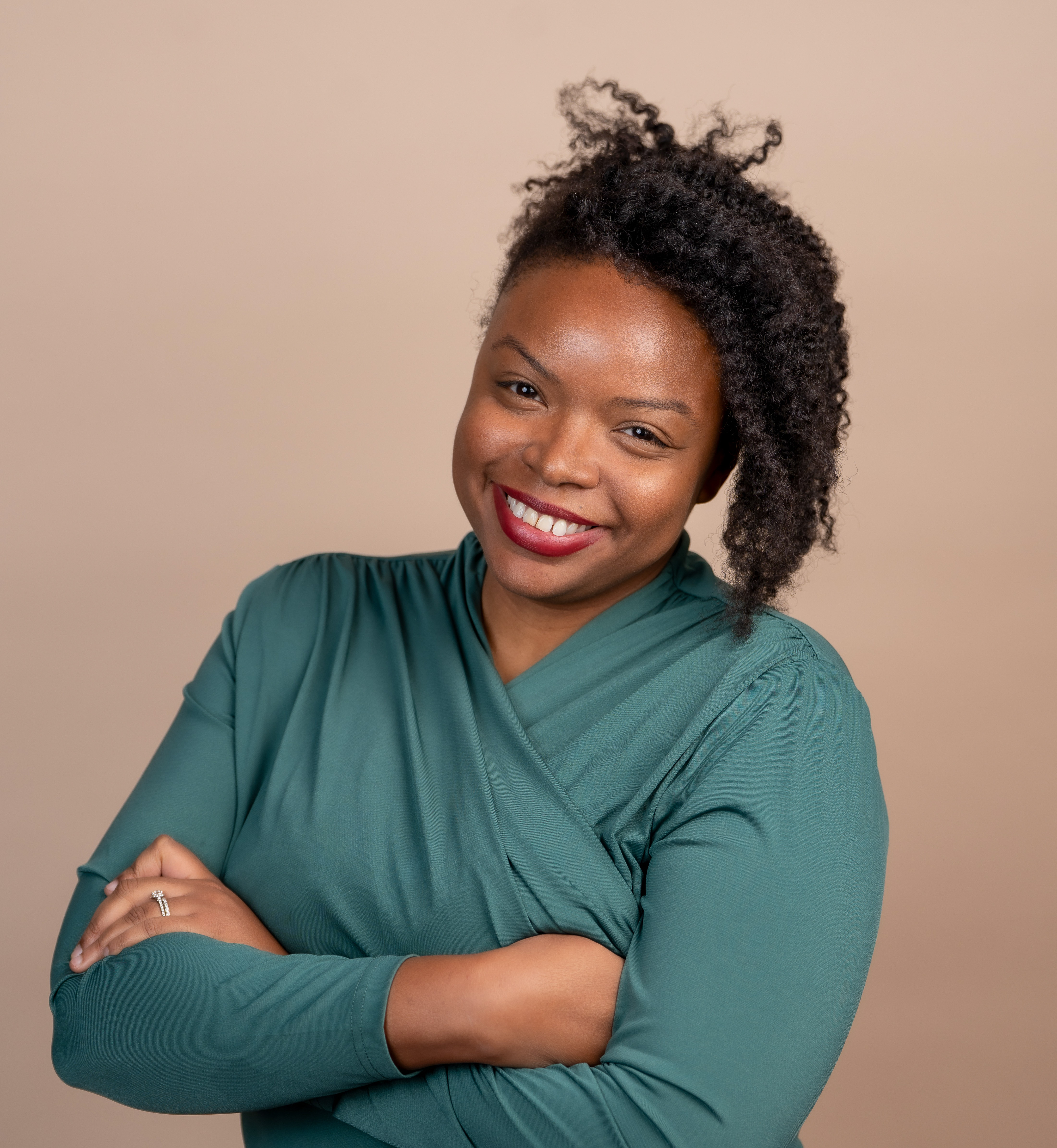
Danielle Desir Corbett is a 6x grant-funded and award-winning travel creator, podcast host, and podcast marketing coach. She is the host of The Thought Card, a travel finance podcast. Danielle helps independent creators grow their audiences through discovery-based marketing strategies like SEO (search engine optimization) and PSO (podcast search optimization). Through her coaching and resources, she empowers podcasters to build stronger personal brands, improve discoverability, and sustainably grow their shows. Danielle also curates funding opportunities, including grants, paid fellowships, and residencies, on Grants For Creators, one of the fastest-growing grant discovery platforms supporting U.S. and Canadian creators and small business owners.