


Alcohol as a Coping Mechanism: Grief, High-Functioning Binge Drinking & Life Beyond the Binge

 Apple Podcasts Apple Podcasts
 YouTube YouTube
 Spotify Spotify
 iHeartRadio iHeartRadio
 Amazon Music Amazon Music
 Overcast Overcast
 Castro Castro
 RSS Feed RSS Feed
 Deezer Deezer
 Gaana Gaana
 PlayerFM PlayerFM
 JioSaavn JioSaavn
 TuneIn TuneIn
 RadioPublic RadioPublic
 Audible Audible
 Castbox Castbox
 Pandora Pandora
 Podcast Addict Podcast Addict
 Spreaker Spreaker
 Podchaser Podchaser
EPISODE 192 — Alcohol as a Coping Mechanism: Grief, High-Functioning Binge Drinking & Life Beyond the Binge
Full episode notes:
https://www.womenofcoloranintimateconversation.com/high-functioning/
High-functioning doesn’t always mean okay. Sometimes it’s a mask for grief, binge drinking, and survival.
In this episode of Women of Color: An Intimate Conversation (a 100 Best Women’s Empowerment podcast), host Deneen L. Garrett sits down with Colleen Clifford — author, speaker, coach, and commercial fisherwoman — for a deeply grounded conversation on alcohol as a coping mechanism, emotional resilience, and the hidden patterns many of us use to get through high-stress seasons.
As a former binge drinker and suicide survivor, Colleen shares what it took to name her own patterns — and how losing her husband to alcohol-related suicide became a turning point that changed the questions she began asking about healing, truth, and finding steadier ground.
In this conversation, we explore:
• How “high-functioning” can hide real pain in plain sight
• When alcohol becomes a coping strategy for grief and stress
• What suicide survival teaches us about support, shame, and staying
• The quiet ways women deny themselves while still showing up for everyone else
• How to find your north star — and return to steadiness after loss
Colleen also introduces the heart of her forthcoming book, Life Beyond the Binge, and invites listeners to consider one honest first step: naming what’s real.
If you’ve ever looked fine on the outside but felt unsteady within, this conversation is for you.
Crisis support (U.S.): Call or text 988 (Suicide & Crisis Lifeline), available 24/7.
GUEST: COLLEEN CLIFFORD
Colleen Clifford is an author, speaker, coach, and commercial fisherwoman. As a former binge drinker and suicide survivor, she explores the intersection of grief, resilience, and the hidden patterns we often use to cope. After losing her husband to alcohol-related suicide and acknowledging her own binge drinking habit, she began asking deeper questions about healing and finding solutions. She is the author of the forthcoming book, Life Beyond the Binge.
Connect with Colleen:
Website: https://lifebeyondthebinge.com/
Instagram: https://www.instagram.com/purepotential.health/
Facebook: https://www.facebook.com/people/Pure-Potential-Health/61567862578775/
LinkedIn: https://www.linkedin.com/in/pure-potential-llc-c-936735245/
About the Podcast
Women of Color: An Intimate Conversation is a 100 Best Women’s Empowerment Podcast hosted by Deneen L. Garrett, featuring honest, soul-centered conversations that empower women to choose themselves, heal deeply, and live boldly.
All episodes: https://www.womenofcoloranintimateconversation.com/
Dream Lifestyle™ Collective: https://www.skool.com/dream-lifestyle-skool-1061/about
Connect with Deneen L. Garrett LLC: https://deneenlgarrett.com/
Business inquiries: Deneen@deneenlgarrett.com
LIKE COMMENT SHARE SUBSCRIBE FOLLOW
0:02 Hello, everyone, and welcome back to Women of Color, an Intimate Conversation. We are excited for today's guest, and there's something interesting going on with her. So we'll kind of chat about that in a moment. But today's conversation really is about resilience, grief, and the hidden patterns we use to survive. So our guest is Colleen Clifford. She is an author, speaker, coach, And commercial fisher woman and I had responded to her email and she got back with me saying hey I just came back from you know off the waters and whatever and I'm like well what is that about so that's the interesting thing that I'm mentioning so a little bit more. As a former binge drinker and suicide survivor, she explores the intersection of grief, high stress environments, and the quiet ways we can deny ourselves.
1:01 After losing her husband to alcohol-related suicide and confronting her own relationship with binge drinking, she began asking deeper questions about healing, coping, and what it really means to find steady ground. Her forthcoming book is Life Beyond the Bench. Colleen, welcome. Thank you, Deneen. So great to meet you. I'm so honored to have this opportunity. So thank you. You're absolutely welcome. So before we get into really what we're here to talk about, tell us just a little bit about this Fisherwoman thing. I love that. Um, it's very unique occupation and it is available for women who might, you know, want a different job. I've had a different life. I've been doing it 36 years, but I fell into it because I was a college dropout due to drinking, which at the time I didn't do together. And my friend was fishing and she said, Hey, call, you want a job? And this was back in 1988, which, you know, told you my age a bit, but yeah, so I just thought I'm an adventurous girl and I was like, I'm in and here I am. Almost ready to retire from fishing actually. I only have two more years.
2:14 Well, how long were you out? Like you said, oh, I've been gone for a while. So how long were you gone? And how long are you typically gone? Yeah, so I'm towards the end of my career, so they're still fishing. So our A season, we call it, is our winter season and it begins in January. So we take off from, I'm in Seattle, Washington, we take off from the dock on around the 10th or 11th, and they will fish until the end of March. My contract this time, because like I said, I'm phasing out, I only worked a month. So I flew home, they're still fishing. The next season starts in May, and people who are working the entire thing like I did when I was younger, they'll work May 15th, probably into October 15th.
2:58 And so they don't get off the boat. So my schedule will be shorter. I think I'm working two months out of that this year. But I used to work the whole thing. And I've estimated I've probably spent over 20 years, and that's probably underestimating, of living inside a boat my entire adult life. Yeah, it's a long time. Go ahead, sorry. I said they're doing it too, my crew members. Well, what I love about this is I've never talked to any Fisherman, let alone Fisherwoman. So I love that you're bringing that perspective to this conversation. And it's something for those who are listening or watching to think about. You mentioned as far as a career.
3:45 You even talked about when you started, around the time you were starting college. And so that really falls into the age group that one of my endeavors focuses on. So I have built a community for Black women 50 and up, women who are ready to live their dream lives, whatever that may be, and some of them are looking for their next act. And so, who knows, becoming a Fisherwoman could be that. Right. Or for your kid or your niece or your nephew. If anyone's interested, please reach out. I mean, no strings attached. And I have my connections. I've been doing it for years. So it's sometimes we have all different nationalities. It's very international crew. It's a ship.
4:28 It's very as comfortable as boats go. It's one of the top boats to be on that I'm on you might not necessarily get on my boat, but the company's great. They have HR policies. There's no drinking on board. Yeah, everyone treats everyone with respect. That's it's required. It's demanded. Love that. And so you all will have an opportunity to reach out to Colleen. Her information will be in the show notes. And so what she just mentioned, you know, again, bringing us back to our conversation. So I do want to center that on this platform. We talk a lot about strength, centering women of color. We carry families, careers, communities, expectations, and sometimes that strength becomes silence. And this is where I want to begin. So Colleen, when did you first realize the binge drinking wasn't just a habit, but a coping mechanism?
5:25 Okay, so I probably always knew I had a problem because when you, so what is a binge drinking? Let me backtrack just a little bit. So a binge drinking, according to the National, I always have to look this acronym so long, National Institute on Alcohol Abuse and Alcoholism. You can Google that and there's all this information on drinking. And so a binge drink is four or more drinks for a woman. And they're the standard drinks, not what we might consider a drink. Five or more for a male. And it's in one incident. So my thing was, I didn't always drink every day, so I didn't think I was an alcoholic. So it kept me stuck for a long time. The only time I'd question it is when I would binge drink, and then I'd wake up the next day with a hangover and go, oh my god, do I have a problem? And then I, as I'm not an alcoholic per se, I didn't drink for a while. And I thought, Oh, I don't have a problem. I'm not drinking every day.
6:22 So it kept me stuck for years, uh, was, and then also commercial fishing. I, I could be removed from alcohol because we don't have it on the boat. And so for months, you're not drinking and it's, it's something our brains do where we convince ourselves because we're away from it. We're okay. We don't have a problem. And then as soon as we, I would hit land. The thing about fishing, which is also great, just a plug for anyone interested in fishing, is long periods of time off when you are done working. So, you know, like I'm off until May. I just did my thing. So if I were drinking, there's a lot of opportunity because I've made money. I can go travel. You can drink. I don't have to wake up and do anything. I don't have kids. So, I mean, maybe if I had a family, of course it would be different. But because I don't have children, I never really had responsibility for anyone but myself. or my family when I'm with my family or watching those children, which I did quite a bit.
7:20 So I was always responsible. So then when my husband died, I think what really helped me figure out that it was a problem and for me in my life, it was time to just drop it. I had to do a lot of, I promised him that I would help. And once I decided I was gonna write a book, I looked back at my life And I started really evaluating my drinking, honestly, without excuses. And I did it, tried to do it without judgment, because I've made some things, choices in life that I'm not proud of. But, you know, just understanding how did I stay stuck. And so it's, it's, it's kind of sneaky, because what I've come to find is that like, for me, I could deny I had a problem because 95% of the time when I drank, it wasn't a problem, right? I like to call it, I'm calling it the 95-5 because it's what kept me stuck because I didn't always drink too much when I drank. I didn't always do something stupid. And even if I did, it might just be mild, like maybe I cried with my girlfriends at the bar. And the next day, you're like, Oh, my God, why was I crying? Or, you know, those, we've all done it, if we're doing right. And you wake up the next day, and you apologize, you text your your friends, you go, Oh, my God, I'm sorry. And they, they excuse you, and it's over. But it's not until you know, you do something major, like you wake up with someone you don't know, or you drive
8:50 home drunk, or maybe you trip over a step and you break your front tooth, you know, or even worse, right? There's a lot of things that can go wrong when we're drunk, really drunk. And that's what I'm, that's what I'm focusing on. And I'm kind of swaying away from the question you asked. But so I guess there was a lot to uncover. And I realized I've been coping with me with drinking my entire drinking life, so. OK. And so I do want to kind of, so you mentioned the definition and five drinks. And so five drinks, how often?
9:31 Yeah, that's for a man, for a male. Four drinks. Yeah, it's in any incident. Like if you're drinking, this is the definition from the national blah, blah, blah, blah, blah. you know, you're at a party or maybe you're watching a ball game all day or football and you're drinking all day, even if you don't get trashed, that's still considered binge drinking because our bodies really can't process alcohol. It really is a poison as much as we may not want to admit it. You know, the way I try to relate to alcohol being a poison is, you know, when we eat food and we throw up because it's got, you know, a bacteria that's not good for us and we call that food poisoning. when we wake up or we're drinking and we throw up, that's our body saying you've poisoned it, right?
10:19 Alcohol can be a poison. It is a poison really for our systems. So it's four and it's just, we call it fun, we call it partying. And I'm not saying for anyone to quit, I'm just saying caution, right? Like if you were someone like me, so the last time I drank and binge drank, when I wasn't planning on it, I was afternoon party, I drove home drunk. And that's the next day is when I decided, you know, I needed to stop completely. If I never wanted to do that again. Right. So what I'm understanding is we're kind of talking about two different things.
11:00 So the binge drinking is just a definition you're having as a woman, four or more drinks, you're binging. Right. And there's not necessarily any additional behavior associated with that. What we're also talking about is in your case, you were having a four plus drinks and then you were having the behavior that you were not happy with behavior that, you know, a lot of people would probably say is negative behavior. But most importantly, you were not happy with what happened when you did have those four or more drinks a day, binge drinking at the time that you were having it.
11:41 But and yes, I mean, that's absolutely right. But the thing is, the way we can stay stuck is we don't do it all the time. Like it's not like every time I partied, I was driving home drunk. It's the, it's the fact that when you are partying and, and, you know, people that party, I would have to guess that most of us have done something when we're trash that we're not proud of. So, um, you know, that's what I'm talking about and everyone relate that has drank a lot, you know, um, making a choice that you might regret or that could disrupt your life forever. For instance, my late husband dying by alcohol related suicide. He was completely trashed when he died. Rest in peace, Scott. And like for me, I could have killed someone or myself driving drunk. And so that was the, I said a prayer, God, get me home. I swear I'll quit and I woke up and I'm proud of myself.
12:43 I've done it for almost five years, so. Congratulations. Thank you. Thank you. Thank you. You're very welcome. And so you did kind of mention, you know, you just mentioned Scott and you had mentioned a little bit earlier that that's kind of like when the shift happens and shifts started to happen when your husband's with his passing. So what would you say that grief has taught you about your own patterns? Yeah. So for my experience, after he died, that was 14 years ago when he passed. I would say that I wasn't drinking at that time. I actually quit once before for three years.
13:25 So I was sober throughout that grief process. But because the suicide is a whole kind of different type of scenario of grief, there's no planning. It's a shock. all of a sudden, there's so much going on. A lot of times there's anger or whatever people are feeling. For me, I was a bit angry. So I had to work through my stages of grief. And one of them was depression. After I got everything, it took about a year to get all our personal things in line. When someone dies, your spouse, you have to close accounts and all this kind of stuff that happens after death. And so once I was just sitting with me and my grief, I got very depressed. And I think what my experience taught me is once I was able to move through my depression, I enveloped a compassion for what I can only imagine was his depression. Because I never thought of dying by suicide, and he did. So his pain must have been so hopeless or I don't know what he was feeling. I just know what I felt in my depression. And I, so that's the point I made a shift and, and turned my, just turned toward compassion to anyone who, who has thoughts of suicide or who's going through depression, that it can happen to any of us, that whole fallacy of, you know, I had
14:57 so many people said, oh, he copped out. And now I try to re-educate people that, you know, nobody really wants to die by suicide, right? If you're considering suicide, you're in a really tough place. And let's have compassion and start talking about it as not being, you're a defected person because you're in this mental state. it's that you just really need a support system. And can I just plug in that there is a support system nationally, the 988 hotline, it's a, I don't know if you're aware of it, but anyone can text or call it anytime, 24 seven, and there's a trained counselor waiting to help. And it doesn't have to be suicidal, it can be a crisis of any sort. It can be if you're having a crisis with your family member, it's available.
15:51 It's a national hotline. And so I always like to share that because a lot of people don't know about that, because it has saved lives. I've talked to so many people who have thought of dying by suicide, because I'm a real advocate of bringing this to awareness. That's one of my that's why I'm here. Honestly, I when I quit drinking, I didn't think I was going to write a book. And it's just all happened in my effort to keep my promise to keep Scott's life alive and to help maybe someone who is suffering that can find some hope somewhere? Yeah, absolutely. And I definitely believe that a lot of times we have experiences so that we can help other people. I have, you know, many conversations on this podcast and we're in people have gone through different things. And, you know, and ask, like, what do you think about that? Do you feel that possibly you went through what you went through so that you could help others to not go down that same path. And even if you didn't necessarily go through it for that, but, or, and, what's your perspective on using that, as they say, as a testimony, the conversations that we have. So would you give us that phone number again, what they can text?
17:12 Yes, it's 988. Got it. Yeah, try not to confuse it with 911. We all know that one for emergencies, right? Like someone's trying to rob you or whatever. It's 988. Text it, you can call it. Just dial 988. And anytime, anytime. Thank you for that. So quiet denial. I think that's something that you may talk about, write about. First, what is it and what does it look like in everyday life? I only speak from my experience. So, um, I can say that I knew I had a problem and I call that quiet denial because women were very intuitive. We know what's going on, right? Really? I think we do. And, um, you know, we have that sixth sense often. And with me internally, um, I just didn't want to deal with it. I didn't want to admit it.
18:15 So I was not willing to face it. And oftentimes I think for others and myself included, it's not until something forces us to look at it straight in the face, right? A door might get slammed in front of us that, you know, we're trying to go this direction and a door gets shut, which forces us to move another way. So I think sometimes it's human nature. It's easy to take the easy route. And so sometimes we have to be jolted. And so I think my quiet denial was dormant for a long time, because nothing really jolted me strong enough to say, okay, I'm done. And thank God it wasn't killing someone. Because it could have been now for my late husband.
19:01 I appreciate your question. I do believe everyone's life has, you know, we're all such beautiful, unique human beings. And I think part of our problem in our culture is comparison. But if we can all just look at our own beauty, and find our nugget of what we can give to the world. And it doesn't even have to be huge. It can just be being a kind person or whatever we offer to the world. I know I sway a lot on questions, so I'm sorry. But I just like to throw that nugget in too, because I think I, I don't know, back to the quiet denial. Yes, it was strong for a long time. And I think it was, for me, it was that I got lucky. It wasn't catastrophic, but it was strong enough to make me shift and finally start looking at it and facing it head on.
19:58 Yeah. And so what you said is, I mean, and that's what this podcast is about. It's really about helping women of color to have tools to live better lives. And so during the time when you were dealing with the loss of your husband and before your depression, tell us a little bit about your layer of grief, right? You went from the anger, you went to the depression, but what was the hardest part of that season? I, there was a lot to his death, I'd asked for divorce, okay, the day he died. And so it some of it was processing, releasing my guilt, because even people will say it's not your fault. But you know, if you haven't lived it, it's you don't know what it feels like, right? Yeah. So I think the I'm a doer, my job forces me to be a doer too. So I was immediately forced into action. And I'm independent, so I didn't really seek out a lot of help.
21:17 And that's one thing I would say, because I didn't seek out help, I was trying to do it all on my own. I think I made my grief more challenging than it needed to be. If I would have been more open to to getting some help, some community help. And that's one thing that I've learned. It's okay to ask for help. It's courageous and it's empowering. No, absolutely. It definitely is. And I am an advocate of asking for help. I am an advocate of not doing it all yourself on your own.
22:02 Definitely reach out to others. And I'm talking to myself, right, because I'm definitely one of those ones as well. who's used to, you know, getting things done, doing things and just moving through life and not necessarily slowing down to allow other people in. And now knowing that that is so vital that I definitely want that. And so you just said something that was very, very important. How people, you know, said to you, well, it wasn't your fault. And then you had your own feelings and thoughts. What would you have preferred that they said or did? Yeah, suicides really, it's people don't know what to say. And I understand that.
22:42 So even if people say something that's completely, you just go, wow. It's coming from a place of like, they don't know what to say. And it's awkward. And that's what I'd love to shift is like, it doesn't need to be awkward. Sometimes you don't even have to say anything except I'm here for you. Because it's really, everyone's, we all are going to experience it different. Even suicide survivors, I'm considered a suicide survivor because I have a loved one or friend or anyone who knows someone that died by suicide, you're considered a suicide survivor. So it's, yeah, I think that's all you need. I'm here for you. you know, call me, and some of it, honestly, you know, someone might say, call me if you need me. Well, I wouldn't have done that, really, because I wasn't able to ask for help back then. So what I've come to learn, and my best friend is very good at this, and she taught me, is that you don't wait for the person grieving to come to you, you go to them. And you almost, yeah. almost get obnoxious with it. Yeah, I'm doing with my father right now, because he's going through some grief. And so, yeah, so those are ways we can help. And for me, when I have someone
24:14 I love, I know they're suffering or going through grief, I just keep checking in. Because people forget, here's another thing, and your viewers or listeners who have experienced grief will know this too, is that people kind of forget you had a major loss after the month is over, like, you know, the funeral's over, and then six months later, they forget that you're still grieving, because it doesn't just go away. And that's when it's like, put it on your calendar, check on so-and-so, check on so-and-so, and keep checking on them every, so often, more than so often, if you can, just to make sure and they will really I know, I really appreciated the few who, who were aware of that and made sure it made me feel very loved that they haven't forgotten me. And, and so I tried to remember that for others, like pass it on.
25:12 Absolutely, and actually I had that conversation recently because what we're talking about right now, we are talking about you being a survivor of suicide. What we're also talking about applies in other situations as well, because I'm Two friends, family members are going through cancer and one, you know, I would check on both, but one in particular, I would check on her. And then I had reached out one time, didn't hear back. And then I kind of let it pass and reached out another time, hadn't heard back. And then a few months later, she happened to pop back up and say, hey, Thank you so much for reaching out. I appreciate you. You just don't know how much I actually was going through depression.
25:55 I was very depressed and angry, right? The emotions that you've talked about and what you've gone through in your healing process. And that's what she was going through, but she did appreciate me reaching out. And that's it. The person that you're reaching out to, even if they don't, respond, still do it because they need it, right? Because what she said is, she was like, you know what? You all were praying for me when I just couldn't, because I was angry and angry at God. And so you all stood in the gap. And then with the other individual, I told someone else, because they were saying how, oh my God, she won't let us help. She won't let us in. I'm like, you know what? Show up. Just show up, just go to the door and exactly what you said, be obnoxious if that's what you have to be. So in many communities, we don't talk about addiction openly. We don't talk about suicide openly, and we don't talk about mental health openly either. What would you say to the women listening who are silently carrying something heavy?
27:10 You're not alone. I know that can be cliche-ish, but it's very true. It's amazing how many people are suffering or holding something heavy. The word suffering is kind of, but holding a heaviness that can be just debilitating. And if at all possible, just take one baby step of reaching out to get some connection and support. Yeah. So I want to pivot a little bit. You use the phrase, find your North Star. What does that mean?
27:53 Well, it's a nautical thing, right? I mean, North Star was a navigational star that sailors use for years. And it just goes with my vibes with me. But the whole metaphorical meaning behind it is like, you know, for sailors finding their way home, they use the North Star for navigation. And so for me in my journey of maturing and realizing, you know, who I am as a human being, not this body, but my soul. It's like the journey I've gone through to find me returning home to the, the me that God brought to this earth as a child, like we're all beautiful souls that get jaded with life and our experiences and, but yet we all have a beauty within us. And so my North Star is my godlike reference to of just finding the peace within.
29:01 Yeah, that's absolutely beautiful. And a lot of us, you know, we need a North Star. So thank you for that reflection. What has the water taught you about emotional resilience? That's a great question. Oh, they all are a great question. I love your questions. You really make me think. You're really making me think. So the ocean can be rough. There's lots of, and actually I just got home and the last two days we got our asses kicked by bad weather, right? And we still have to work through it. I cook on the boat. My job is to cook. And so imagine you're still trying to cook in rough weather. And until you experience it, I don't know that you can really imagine it, but try. And so it just makes you realize, that, you know, nature life is going to throw you things you think you're in control, but you're really not.
29:59 And you still have to push through when you're getting thrown something that you didn't ask for. And a lot of what we do on the boat, we're a team, my galley department is a team, we work together, we help each other through our rough days. And, you know, if our my if our dishwashers Dishes all flew on the floor. We all run over there and help them pick it up. It's not like, you know, we all help each other. And so I think working on the boats just really taught me, and it doesn't matter what race you are, but we all are a team surviving the job and then ultimately surviving being on the water because, you know, that can be a deadly, you just realize that life is temporary because, you know, we could die out there. So I think often about just, death and appreciating life when I'm home. And just, you know, on those days, we're like, Okay, this can end now. Like, we've got our butt kicks. You can stop the storm, you know, Poseidon or whoever God whatever. Yeah, so we just work through it.
31:10 And it's I guess it's just taught me the strength of pushing through and then You know, you see the light at the end of the tunnel and then you forget the storm. That's why we go back fishing. I mean, if I had weather every day, I would never return. So let's kind of, you know, go back to the book in our last few minutes. So what does life beyond the binge look like? Practically, not poetically. You mean as far as me and my journey? Yeah, beyond the binge what you know the book. Okay, so it's been a thank you again. It's been a lot of fun to as a woman, my age, and I'm exiting the fishing industry to read that read invent me as a healthy, whole woman.
31:57 And so by sharing the book, it's geared toward the readers. I try not to make it, you know, I don't want it all about me. That is boring. Nobody knows me. It's more for the reader. Like how can you self reflect? And then I try to throw in some interesting fishing stories and things like that. But where I really want to take it and part of this all ties in with Scott's death and my whole metamorphosis is taking on stage Helping, I'd love to get in touch with Mothers Against Drunk Drivers. I just really want to give back at this point in my life. It's about, you know, death is coming near. I just really want to be the best version of me. And if I can help anyone in any way and keep Scott's, my promise to Scott alive, my promise to myself. The book is really a basis for a platform to speak from. And so I'm working on trying to get speaking engagements, motivational speaking and things like that. So it's exciting. We'll see where it goes. We're, you know, just The saying is, if you keep showing up, the universe will reward you. Absolutely. Absolutely.
33:15 Let the universe know. Yeah, I definitely believe that. Let the universe know and it conspires to make it happen for you. So two quick questions. I forgive myself for... For choices I made without knowing better. And the version of me today knows. I'm doing the best I can in life. And I'm kind and grateful. Love it. So Kylene, thank you for your vulnerability. Conversations like this matter, right? Because again, we're talking about a couple of things.
33:58 We're talking about your relationship with alcohol, being a survivor of suicide. So it matters. And again, crosses, right? It's universal. So to our listeners, if today's conversation resonated, share it with a sister or friend, someone who might need language for what they're carrying. Remember that if you know someone that's going through something, don't wait for them to reach out to you to ask. As Colleen has said, you reach out to them. And Colleen's forthcoming book is Life Beyond the Bench. We'll include links so that you can stay connected to Colleen. And everyone, as always, this is Women of Color, an intimate conversation where we choose ourselves boldly. Thank you so much and see you next time.
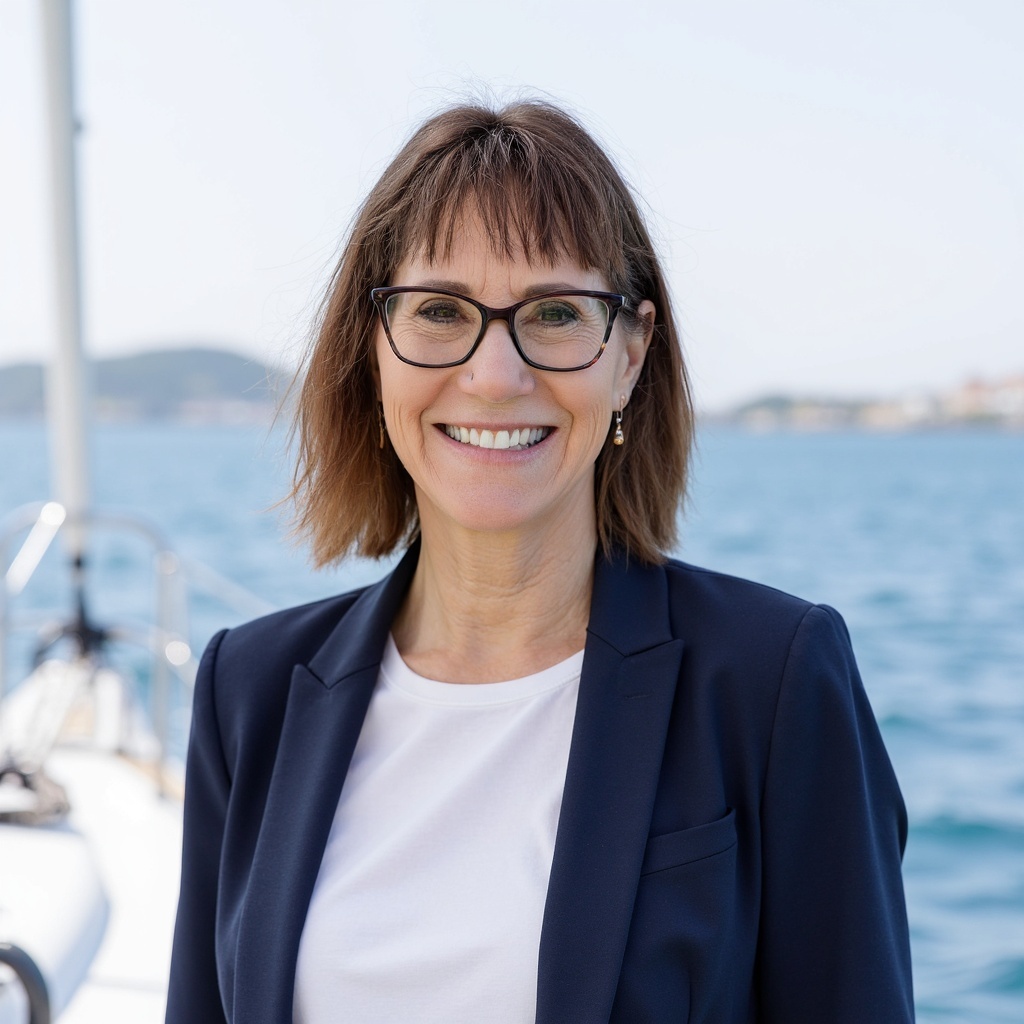
author, speaker, coach, and commercial fisherwoman
Colleen Clifford is an author, speaker, coach, and commercial fisherwoman. As a former binge drinker and suicide survivor, she explores the intersection of grief, resilience, and the hidden patterns we often use to cope. She understands high-stress environments and the quiet ways we can deny ourselves. After losing her husband to alcohol-related suicide and acknowledging her own binge drinking habit, she began asking deeper questions about healing and finding solutions. She is the author of the forthcoming book, Life Beyond the Binge. Known for her warmth, down-to-earth energy, and sea-forged perspective, Colleen invites audiences to find their north star and discover a steadier ground within themselves.