GiGi’s Playhouse Sacramento Builds Independence for People With Down Syndrome

I would love to hear your thoughts on this episode. Please send me a text... An omelet might seem like a simple breakfast. At GiGi’s Playhouse Sacramento, it can also be a lesson in reading, communication, independence, and leadership. And Jasmine, one of my guests in this episode, knows a thing or two about making them. I’m joined by Missy Okelberry, Site Manager and Nicole Harrigan, Board President, along with Jasmine and her mother, Misha, to explore this Down syndrome achievement center i...


I would love to hear your thoughts on this episode. Please send me a text...
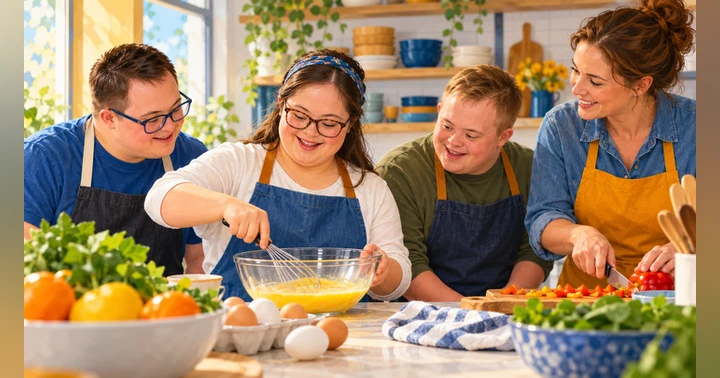
An omelet might seem like a simple breakfast. At GiGi’s Playhouse Sacramento, it can also be a lesson in reading, communication, independence, and leadership. And Jasmine, one of my guests in this episode, knows a thing or two about making them.
I’m joined by Missy Okelberry, Site Manager and Nicole Harrigan, Board President, along with Jasmine and her mother, Misha, to explore this Down syndrome achievement center in Roseville. GiGi’s offers free programs for individuals with Down syndrome from infancy through adulthood, creating opportunities to build skills and friendships throughout their lives.
We talk about literacy and math tutoring, fitness, cooking, and the importance of having a community where people feel welcomed and accepted. Misha shares how Jasmine’s confidence and social connections have grown, while Jasmine brings her own perspective as both a participant and a volunteer.
We also discuss what it takes to keep every program free, why restoring speech therapy is a priority, and the need for more opportunities for adults after they leave the school system.
Whether you’re looking for resources for your family or a meaningful way to volunteer and give back, there’s plenty to discover at GiGi’s Playhouse.
Learn more, explore programs, volunteer, or donate:
https://gigisplayhouse.org/sacramento/
1701 Santa Clara Drive
Suite 170
Roseville, CA 95661
21400001:0xd280a95de6466dd5!8m2!3d38.745104!4d-121.2629049!16s%2Fg%2F11q1s396x0?hl=en-US&entry=ttu">Get directions
21400001:0xd280a95de6466dd5!8m2!3d38.745104!4d-121.2629049!16s%2Fg%2F11q1s396x0?hl=en-US&entry=ttu">(opens in new tab)
Call: (916) 771-0199
Text: (847) 652-9689
CHAPTERS:
00:00 Meet GiGi’s Playhouse Sacramento
03:00 How GiGi’s Playhouse Came to Sacramento
05:00 Free Programs: Tutoring, Cooking & Friendship
08:00 Supporting Development and Communication
12:00 Finding GiGi’s and Getting Started
16:00 Misha & Jasmine: Learning, Cooking & Giving Back
23:00 How Donations Keep Programs Free
27:00 The Vision: Restoring Speech Therapy & Expanding Programs
34:00 Friendship, Belonging & Life After High School
38:00 Beyond the Mission, Getting Involved & Closing Thoughts
Thank you so much for listening to this nonprofit story! We appreciate you. Please visit the website to sign up for our email updates and newsletter. https://www.nonprofpod.com/ And if you like, leave me a voicemail to comment on the program, leave a question for us to ask in the future or a message for me, Jeff Holden. I may even use your voice mail message in a future episode of one of our incredible local nonprofit organizations. https://www.nonprofpod.com/voicemail. Thanks again for your support in listening, commenting and sharing the great work our local nonprofits are accomplishing.
Nicole Harrigan: [00:00:00] Something that people underestimate is how much individuals with Down syndrome understand. Their receptive language abilities are fantastic, but if you don't have the expressive language, if you can't respond to where somebody understands what you're saying, a lot of people will just write you off. So speech therapy, having the clarity of speech really opens doors.
Our individuals with Down syndrome who have more speech clarity are able to go out in the community and have jobs without as many barriers
Jeff Holden: Welcome to the Nonprofit Podcast Network. Our purpose and passion are simple: to highlight the incredible nonprofits that make our communities stronger. Each episode is a chance for these organizations to tell their story in their words, sharing not just what they do, but why it [00:01:00] matters to the people they serve, to their supporters, and to all of us who believe in the power of community.
Through podcasting, we hope to amplify their voices, inspire connection, and give them one more tool to impact the hearts of donors, partners, and neighbors alike. This work is made possible through the generous support of our incredible partners, CapTrust, offering fiduciary advice for endowments and foundations.
Western Health Advantage, a local not-for-profit health plan that believes healthcare is more than coverage, it's about caring. CoreC, executive leadership and comprehensive support services. They work in it so you can work on it. And Five Star Bank, a local trusted advisor to community nonprofits for over 25 years.
What can making an omelet possibly teach us about independence, confidence, and belonging? [00:02:00] At GiGi's Playhouse, quite a bit. Cooking is just one of the ways individuals with Down syndrome build skills, develop friendships, and discover what they're capable of, with every program offered free of charge. In this episode, I'm introducing you to GiGi's Playhouse Sacramento, a Down Syndrome Achievement Center in Roseville serving individuals and families from infancy through adulthood.
From literacy and math tutoring to fitness, cooking, and social activities, this volunteer-powered organization is working to change the way the world views Down syndrome. Joining me are Missy Ockelberry and Nicole Harrigan from the Playhouse, along with Misha and her daughter Jasmine, a participant and volunteer who brings that mission to life.
We'll explore what this community means to families, why opportunities to learn and connect remain essential beyond the school years, and how you can help open more doors. And [00:03:00] Jasmine just might inspire you to step into the kitchen.
Missy Ockelberry, Nicole Harrigan,
Jasmine, and Misha, welcome to the Nonprofit Podcast Network.
Misha: Hello. Thank you for having us. Thanks for having us.
Jeff Holden: I'm excited to speak with you today because the topic that we're talking about is, in so many cases, familiar, but people don't really know much about it, and we've seen, you know, individuals in a variety of different situations with Down syndrome, and we've seen a variety of different participants in different programs and the way that they interface.
But we really don't know an organization like yours, and I'm excited to talk to you about it because we have a little bit of everything in the room. We have a parent, we have a participant, and we have two people who are involved with the organization called GiGi's Playhouse. So for someone hearing about GiGi's Playhouse the first [00:04:00] time, you, you might have a you know, what is this?
It's... Is this a jump house, or is this one of these blow-up things in the backyard? What, what is GiGi's Playhouse- ... and who is it you serve? Tell us a little bit about the organization.
Missy Okelberry: We are a Down Syndrome Achievement Center, and we provide free programs for individuals with Down syndrome of all ages. So it does sound a little bit kiddish, but we do support a person with Down syndrome for their lifespan.
Nicole Harrigan: And we do get the question e- especially in the early years, we got a lot of calls about whether we were a bouncy house place. Yes. As we become better known, we don't get that as much, but early years we got that a lot.
Jeff Holden: I... A- and I can't imagine, but you, you do have engaging elements. You, you have performance, and, and dance, and a lot of different things that You could kind of misinterpret, but specifically for those with Down syndrome Tell us a little bit about [00:05:00] the, the mission of the organization.
Nicole Harrigan: So the GiGi's Playhouse mission is to change the wor- the way the world views Down syndrome and to send a global message of acceptance for all.
Jeff Holden: And you are an affiliate of sorts, right? This is a, a national program, maybe even international?
Nicole Harrigan: Yes. Yeah. It's, it's an international organization. There are approximately 64 playhouses across the US and in Mexico.
There's two of them in Mexico now. Oh, very neat. So that's the international part. There's also a virtual playhouse, and we're reaching individuals in 90 different countries at this point.
Jeff Holden: Oh, that's fan- Yeah ... just fantastic, especially for those areas where maybe they're, they're, you know, just a desert of everything.
They don't have access. They can now go online. And all of this is free of charge to the participant?
Nicole Harrigan: Yes.
Jeff Holden: Wow. That, that is amazing. Give us a little history. How did the playhouse come [00:06:00] to be?
Nicole Harrigan: Our local playhouse, or-
Jeff Holden: No, the, the- ... the organization? ... the organization to start, and then we'll get to here because you're relatively new in the grand scheme of things, right?
Nicole Harrigan: Yes. So GiGi's Playhouse was founded by Nancy Gianni about 22 years ago after her daughter GiGi was, was born. She, she didn't know that GiGi would be born with Down syndrome, and once she got the diagnosis, she was looking around and saying like, "There's, there's not much out here for my child." And so she decided she was gonna build it, and she decided that she was gonna give everything away for free.
And all of her friends and investors and everybody said she was bananas for thinking that that was a business model that could work, and here we are 22 years later with 64 locations across the country and in Mexico. And, and we're still giving it all away for free.
Jeff Holden: So not so crazy after all.
Nicole Harrigan: Turns out people like to give money to [00:07:00] organizations that are doing very good things.
Jeff Holden: And in Sacramento now since 2020?
Nicole Harrigan: 2021 is when we opened our doors. Okay. We started the startup process in early 2018.
Jeff Holden: Okay. And you are one of the founding partners who are responsible for bringing GiGi's Playhouse to the Sacramento area, right?
Nicole Harrigan: Yes. I'm part of the original startup team that was pulled together.
We've got a little connection with the Sacramento Kings. Justin Jackson, who's a former player, he and his fiance, when he got traded to the King- or when he got recruited by the Kings, his, his fiance, Brooke, grew up with an aunt with Down syndrome and had spent her college years volunteering at a playhouse in Florida.
And so she was like, "Okay, we're moving to Sacramento. I'll just, I'll go and I'll volunteer at the Sacramento Playhouse." And then she found out that there was no Sacramento Playhouse. And so she reached out to two local moms that have a big Instagram following and said, "Hey, can you guys help me pull together a group?"
group of parents that would be [00:08:00] interested in helping bring this to life. And so that's kind of how the little startup team was, was born. And then we just gave it our blood, sweat, and tears for three years until we were able to open our doors.
Jeff Holden: That's amazing. And to think that the majority of the organization today is volunteer, and we'll get to the fact that there are a few, you know, administrative people involved, but To survive that long, uh, uh, back to the point that's crazy, right?
And if I'm not mistaken, all the programs are supported by volunteers.
Missy Okelberry: Yes, that's correct. Yes, we rely heavily on our volunteers. They're the heart of our Playhouse.
Jeff Holden: In the pro- in, in the, the organization itself, what programs do you find maybe the greatest demand? People say, "I, this, this is really important."
This-
Missy Okelberry: Yeah ...
Jeff Holden: a- and you can see it on, on the influence with where you have to send the volunteers.
Missy Okelberry: I would say one-on-one tutoring is in high demand. [00:09:00] We offer literacy and math tutoring, so we generally have a wait list for that, and it's hard to turn people away, so that's a big demand. Our kitchen program is very popular.
I'm looking at Misha 'cause she's one of our leads for our kitchen program.
Jeff Holden: Ah, okay. So wait, does that mean that Jasmine's a good cook?
Misha: Well, I think she's a great cook, actually. Um, it kind of helped build skills from home to going into GiGi's, so I think she's a good cook. What do you think?
Jasmine: I am very, um, honored-
to cook meals- ... above GiGi's.
Jeff Holden: Ah. And what's, uh, what's your favorite dish?
Jasmine: I would say omelets.
Jeff Holden: Okay. You like cracking the eggs?
Jasmine: I do.
Misha: She actually taught with me on omelet-making. Correct? Correct. She makes omelets every morning at home, so she brought that skill to her friends and her peers for the kitchen-
Jeff Holden: Oh, wonderful
Misha: and the adults, so-
Jasmine: Mm-hmm ...
Misha: I trusted she could do it, and she did it.
Jasmine: I [00:10:00] sure did.
Misha: And that's just one of the amazing things about it because you got all that support there, and letting them do and show, it, it's some, it's amazing.
Jeff Holden: Yeah. So, so the one-on-one tutoring, kitchen programs.
Missy Okelberry: Yeah. Um, we also have a, a big demand for our teenagers.
They, they love to get together and socialize. We have a program called Teentastic. It's another one that there's often a waiting list. Um, our adult programs, uh, Fantastic Friends, is very popular. Jasmine attends that as well. Uh, that one often has a waiting list. Um, we, we used to offer one-to-one speech therapy.
We don't anymore. We ran out of funding for that, but, um, that is something that parents ask me about generally very often.
Jeff Holden: What are some of the challenges that children and/or adults and families are faced with when [00:11:00] they have Down syndrome?
Nicole Harrigan: So there can be, there's a whole spectrum of different health, health issues that can present along with Down syndrome.
About 50% of babies with Down syndrome are born with a congenital heart defect. Almost all of the, the kiddos have what's called hypotonia, which is low muscle tone, and that actually plays into their development across the board. So that affects their ability to, to form words because it affects all of the muscles in the face.
It affects every muscle in the body. So they have to be taught step by step how to roll over, how to sit up, all of the things that you take for granted in a baby, like they just kinda figure it out as they go along. Mm-hmm. Everything has to be broken down to the most basic steps and then built on with physical therapy, occupational therapy.
You've got the fine and gross motor skills where the vast majority of, of children with Down syndrome do need a lot of help in those areas. And [00:12:00] speech, I would say, is probably the number one therapy that every single individual with Down syndrome can benefit from throughout their lifetime.
Jeff Holden: And I would imagine 'cause it gives them the ability to convey what they're experiencing.
Nicole Harrigan: Absolutely. Yeah. I think something that, that people underestimate is how much individuals with Down syndrome understand. I mean, their, their receptive language abilities are fantastic, but if you don't have the expressive language, if you can't respond to where somebody understands what you're saying, a lot of people will just write you off.
So speech therapy, having, having the clarity of speech really opens doors. Mm. Our individuals with Down syndrome who have more speech clarity are able to go out in the community and have jobs and without as many barriers, right? Because they can actually, they can go to their job interview, and then maybe they're breaking down barriers there with people who had no idea [00:13:00] what to expect from a person with Down syndrome.
They're like, "Oh, wow, look at how they answered all these questions. Like, maybe they're not so different." Mm-hmm. And they're really not, but it's more difficult to convey that when you can't express yourself verbally.
Jeff Holden: And through GiGi's Playhouse, because of the platform of experiences that you have, you're giving them that skill set- You know, whether it be dance, which is movement and strength, I can, I can imagine, and cooking.
I'm sure cooking skill is one for self-sustainability, and you can do these things on your own and demonstrate to them that they are capable. What other programs are there?
Missy Okelberry: We offer a LMNOP program, which is for our zero to three-year-olds. It's, it's my favorite. It's so fun. It's the babies. And And just as Nicole was saying, that early intervention is, is critical for, for them.
So we do offer in that program, there's sign language that they learn. It stands for Language Music In Our [00:14:00] Peeps. Mm-hmm. And so- Oh. It's, it's so cute. So yeah, that's... We're, we're building on... Or every program that we offer is progressive, so we start- Hmm ... with the newborn all the way up to adulthood. So we, we offer a program for each age group.
Jeff Holden: And all of this is free to the participating families.
Missy Okelberry: Yes.
Nicole Harrigan: Yes. When Nancy founded GiGi's Playhouse, she decided that she didn't want cost to ever be a barrier for any individual with Down syndrome to be able to access the programs, and so that is why she built it that way, and that's the lifetime commitment that we make.
Jeff Holden: Yeah, that's amazing. That, that truly is... I mean, certainly it's a challenge. We'll get into the funding in, in just a second. How does a family with a child with Down's find you? How do you hear most of the people- Come to GiGi's Playhouse?
Missy Okelberry: So, um, sometimes they're referred to us by a doctor, [00:15:00] sometimes they've heard about us in school, a friend, and sometimes we've had people just walk in off the street and they see our pictures on our windows and they're, they're like, "What is this?
What is this place? I need to know more." So yeah, that's, that's something that we're always trying to do, is to, to get the, the word out. Mm-hmm. Get, get our name out there. We know that we're not hitting everybody, and we would like to be able to, for any individual with Down syndrome to, to know about us.
Jeff Holden: From a discoverability standpoint, you, you're in Roseville, yes?
Missy Okelberry: Yes,
Jeff Holden: we are. Yes. Okay. Is there a geography, a particular geography that you serve?
Nicole Harrigan: No. There's... If you can get to us, you can attend our programs.
Jeff Holden: Okay.
Nicole Harrigan: Yeah.
Jeff Holden: We don't- So somebody could come from Sonoma, you know, Tahoe. Yeah.
Nicole Harrigan: Absolutely. We do have participants, in our first couple of years there was a family that was driving up every Saturday for LMNOP from San Jose.
We've got a couple of families coming from Fresno. I, we s- we're the only [00:16:00] playhouse in northern California, so we, we serve a pretty large footprint. I mean, obviously the vast majority of our participants are from the greater Sacramento area- Right, right ... just because of con, you know, convenience and being able to get to us on, on a school day or whatever.
But we do have families that, that drive really far to access our programs.
Jeff Holden: What a statement. Yeah. What a test- test- testament to the program, right?
Nicole Harrigan: Yeah. That is. That is.
Jeff Holden: In terms of the, the actual families that come- Give me like an onboarding. We find you, now we wanna know what the next steps are. What does it look like to get engaged?
Missy Okelberry: Oftentimes I'll, I'll invite them to come in, into the playhouse for a tour, and that's where I can kind of talk to them about what we offer, and I can show them our playhouse. And when you walk in, it's just, it's, it's colorful and inviting, and it's a place where you wanna be, and right away people notice that, the colors, and [00:17:00] then they're impressed by our programs and what we offer.
So generally after that I'll invite them to, to attend a program that's appropriate for them. Sometimes I connect them with other families. I also... There, there's a, a process where they just log on into the My GiGi's login, and they can... That's, that's how they get started. That's how they can- Mm-hmm ... join a program.
Jeff Holden: So it's really quite simple if you're looking. Once they've found you, it's, it's easy to- Yes ... engage.
Nicole Harrigan: It is. It's very easy. Creating the My GiGi's account is as easy as it is to sign up for, you know, like the Nordstrom rewards or whatever. Any- Yeah. Yeah ... any given... You know, you put in a little bit of information, your email name, phone number, and then you can go to our calendar, and now you're ready to sign up for programs.
And you just click the calendar, and you, you sign up for the next session of, of whatever program you're interested in attending. And
Jeff Holden: that, that's a great transition too because you said session, and we were talking about this- ... a [00:18:00] little earlier. You don't just show up and, and walk in and start with a program.
There are three sessions throughout the year. Tell us a little bit about how that works.
Missy Okelberry: Yeah. So we have fall session, a winter session, and a summer session. They're generally about 12 to, to 15 weeks. Summer's usually a, a little less. So that's when our programs start. So our programs just started a couple weeks ago.
Depending on the volunteer lead who's leading the program, that's how often the program will be. So some programs are weekly, some are bi-weekly, some are monthly. Um, so that's, that's how it works. Yeah.
Jeff Holden: Okay. And then Misha, how long have you been- engaged with GiGi's Playhouse here?
Misha: Oh my goodness. Let's see.
We came to the first grand opening in 2021, and I believe we kind of took a hiatus for about a year. We know the COVID was going through .
Jeff Holden: Right, right.
Misha: It w- [00:19:00] it was going through, and it just dawned on me, I am, by nature I love helping people anyway, so I would say by '22, now that I think about it, maybe even '23, I started just saying, "I could volunteer and I can do something other than, other than just sitting at home with her on Zoom."
And they offered cooking with her programs, but then GiGi's had their virtual, and so I just kinda took on this whole, I think I really cook. I like to eat. I like to teach eating. I like to teach cooking and just expand from there. And so I would say it's been about several years now, and it's a blast. It is.
Jeff Holden: And Jasmine, how, how long has Jasmine been involved in the programs?
Jasmine: Uh, depends when I was how long been to programs. Maybe, maybe-ish, maybe, uh, longer than that.
Misha: Mm-hmm. So about three, four years.
Jeff Holden: Maybe three years or
Misha: so? Yeah, three years. So kind of by my side also. Yes. And then as I kind of expanded on [00:20:00] volunteering from their GiGi Fit, which Jasmine has one of their T-shirts.
Jeff Holden: Which I love the color. Yeah.
Misha: Yes. It's a really great color. That was, I think, our very first year when we started participating. They will tell you there's so many more a- activities outside of that as well in the community. And I know she definitely started doing GiGi Fit along with a lot of her peers, and then I decided let's bring some cardio drumming in, so that was another volunteer opportunity.
Ah. And that turned out to be a lot of fun. I don't always get all the time to do it. I have to work as well. But as much as I can, I will get in there and volunteer as- as long as they have me and need me.
Nicole Harrigan: That's such a fun program. We'll always have you. Yeah.
Misha: Thank you. Thank you. It- it's a blast, like I said.
It's my second home. It's our second home.
Jeff Holden: A- and Jasmine, do you have a favorite program?
Jasmine: Well, yes, I do have m- um, my favorite program. The one of, you know, in class, like GiGi Kitchen. And I've apparently loved volunteer doing it as our friends [00:21:00] do with or our parents do. The most thing about cooking has some- so many kinds of food you can do- Uh-huh
the most. The kind of meals we can make, like omelets perhaps.
Jeff Holden: Your favorite, we know that. We know that.
Jasmine: And also those muffins we made. Oh, yeah. That was really good. Then all of a sudden I was so intended forward to doing GiGi Playhouse, and I love doing it so much, and also the most thing about GiGi's, GiGi's workouts.
Jeff Holden: That's GiGi's Fit, right?
Jasmine: Yes.
Misha: Yeah.
Jasmine: But I love doing it and coming as my mommy and I, like our skills with drumming. But so do our friends, like [00:22:00] Doing good apparently as let's keep up and moving on, just keep drumming as usually. But that's how it supposed to be, yeah.
Jeff Holden: That's, that's great. So sweet. That's great.
So fo- spoken from the words of a participant.
Jasmine: Yes.
Nicole Harrigan: She's also one of our volunteers, though. She, she does- I, I
Jeff Holden: gathered. She said that with her mom. She loves volunteering.
Nicole Harrigan: She does outreach events with us- Oh ... um, from time to time, and she- Good for you. You're busy ... helps us spread the word. Yes. Yeah, Jasmine and Misha have been fantastic participants, volunteers- Yeah
community members.
Misha: It's, it's really fun. Like I said, it's a second home for us, so I mean, I wish they were around when Jasmine was younger, so I am an adult and I get to see the little ones come in and see- Yeah ... the parents that have to go what, what we went through, except it's there in front of them, and the staff has offered so much to the community with it, so they're in good hands.
Jeff Holden: A- and another good segue, you mentioned community. Who are the organizations that [00:23:00] you find yourself, you know, aligning with, collaborating with, partnering with, you know, in the, the greater region?
Missy Okelberry: So we partner with NCL, the National Charity League, YMSL, Young Men's Service League of Roseville. They also come in and help.
Uh-
Nicole Harrigan: We've got
Missy Okelberry: BTC ... BTC, yeah. The
Nicole Harrigan: Boys' Team Charity.
Missy Okelberry: Boys'
Nicole Harrigan: Team Charity. That's kind of the, the sister organization to NCL. Okay. So the boys volunteer through BTC. But there's also-- We also have, like, other partners. There's the Down Syndrome Information Alliance, um, which is the other big Down syndrome organization in the Sacramento area.
They provide very different services than we do. They do outreach to hospitals and do more education to the community about Down syndrome. They also have, like, a parent mentoring program where they'll match up a seasoned parent with a brand-new parent- Sure ... and so that you have, like, your little hotline to somebody that knows what you're going through.
Help me,
Jeff Holden: please. I don't know what to do with this situation, right?
Nicole Harrigan: [00:24:00] And then there's UCP, there's-
Jeff Holden: UCP, United Cerebral Palsy.
Nicole Harrigan: Yes. Yes. Yes. There's, there's several other just general disability organizations that, that we sometimes partner with for different events.
Jeff Holden: Is there some cross-pollination between some of your participants into workforce development with some of those organizations?
Does that happen?
Missy Okelberry: Yeah, it does. Yeah.
Nicole Harrigan: I would say that that's something that we would love to develop. There is, there is a program through GiGi's. We- all of our signature programs are developed at the corporate level in Chicago, and one of the programs, we really need more programming for adults. So one of those programs is there's GiGi University and GiGi Professional, which are these adult education programs that teach soft skills for- Mm-hmm
for jobs. And then once they get their certificate, they're each... It's 12-week certificate programs. [00:25:00] Once they get their certificates, then we look for internship opportunities for them, and the hope is that we would develop partnerships with places where they could actually just go and work and have real jobs.
Mm-hmm. But that's not something that we have funding for at the, at this moment, so that's kind of pie in the sky.
Jeff Holden: Well, good, good, good news to know. And we're gonna get, we're gonna... We're, we're almost there. We're almost there because the next question really is, with a program that is free to the constituents, free to the participants, to the families that use the services- Yeah
how are you funded?
Nicole Harrigan: So we don't get any state or federal funding. We, we fundraise for every single dollar that comes in and, and is used for the programs. So we have a lot of individual donors. We are constantly applying for grant opportunities. We've got two big events that we do each year. So we do a 5K in the spring, usually the first weekend in May.
Jeff Holden: Okay.
Nicole Harrigan: And we just had our golf tournament this past Monday. So those are our two big fundraisers.
Jeff Holden: And [00:26:00] as we're, as we're speaking, it is October 2nd.
Nicole Harrigan: Ah. So it was September 28th.
Jeff Holden: Okay, so, so ty- so typically in- Yeah ... in September is when you have your golf tournament.
Nicole Harrigan: Yes.
Jeff Holden: Okay.
Nicole Harrigan: Yeah. Okay, good. Mid to late September is when we do the golf tournament.
Good. So those are our two big fundraiser events, and then we have other community fundraisers. We'll do, you know, like Old Town Pizza will do like a, a dine and donate night and that kind of thing. Right. So we've got different income streams or donation streams, but we, the board especially, we pretty much hustle all year long.
Jeff Holden: Yeah, this is a working board, I can tell already.
Nicole Harrigan: We are very much a working board- Yes ... at this point, yes.
Jeff Holden: And I was surprised to see you have a good, a good size board.
Nicole Harrigan: We do.
Jeff Holden: You know, relatively speaking. For an organization that's as, we'll say, small from an administrative perspective- Mm-hmm ... and as much as you're doing with the families That, that was a good size board.
It's nice to see that. How many families... Let's see. You've been actually engaged in the community since 2021 or so. How many families have you impacted, let's say, or, or [00:27:00] are engaged continuously? 'Cause you are f- for as long as they want to participate, yes?
Missy Okelberry: Yes. Yeah. So we have over 550 families in our, in our system, and any given session, we're servicing about 125.
So this session it's about 125 families that we're, that are coming in.
Jeff Holden: Okay. And on the actual funding side, the application, I would imagine, for the funds is really just for the administrative to get the actual work done in some cases where you can't use volunteers, and you, you are very lean. There's, there's one full-time employee, and that's, that's you, Missy.
Nicole Harrigan: Yeah.
Jeff Holden: With, with an expectation that at some point you hope to get to, you know, another level where you have an executive director and, and grow from there.
Nicole Harrigan: Yes. Yes.
Jeff Holden: Okay. Any, any ideas on what that would take, what it needs to, to be like for you to get to that next level? [00:28:00]
Nicole Harrigan: In order to be able to hire an executive director, at this point, we are looking for a grant to fund at least the first year of their salary because we do run very, very lean- Mm-hmm
very tight margins. So we don't necessarily have the ability to double or more our, our payroll budget- Mm-hmm ... you know, from one year to the next. Sure. Unless and until we get somebody in that's doing more fund development for us and can kind of fund themselves, so to speak.
Jeff Holden: Mm-hmm.
Nicole Harrigan: So that is... It, it's actually a conversation I was having with my treasurer a couple days ago.
And, and I mean, ideally she would like to see a three-year grant. I say one and let's go, but
Jeff Holden: Well, we're here talking. May- let's, let's get a five-year grant, okay? So we don't have to-
Nicole Harrigan: Hey, Nick ...
Jeff Holden: right?
Nicole Harrigan: Let's get an endowment fund while we're at it, right?
Jeff Holden: And, and you mentioned, you know, w- what it might look like.
Let's [00:29:00] broach that question. W- what is the vision? If somebody did come in and say, "Hey, I've, I've got a blank check for you because I love seeing what you're doing with families like, you know, Misha and Jasmine, and, you know, I, I love this, this concept and I wanna support it," what, what would it look like?
Nicole Harrigan: I mean, it really depends on where we are.
I mean, I think first thing that I would wanna bring back, and I don't know if Missy agrees with this, um, she's the one that fields all the phone calls-
Jeff Holden: I, I see where you're heading 'cause I know where you're gonna go with it- I know where she's going with
Nicole Harrigan: it ... 'cause we had this conversation. Yes. Yeah, yeah, so I think the first thing that I would wanna bring back is speech therapy.
Part of it is selfish, like that little guy right there is mine, and he could really use some more speech therapy, aside
Jeff Holden: from- And for those of you just listening, she's pointing to the website on the screen behind us.
Nicole Harrigan: Yes, so my son Nick is 13, and he gets a couple of sessions of speech therapy a week in school, so having some supplemental speech therapy outside of school is [00:30:00] huge.
Mm-hmm. He made gigantic strides when for the three years that we did have speech therapy, he leveled up and hit a lot of goals in those years.
Jeff Holden: And that was a three-year grant-
Nicole Harrigan: Yes, we- ...
Jeff Holden: that you got for, for speech therapy if I'm not mistaken, yes?
Nicole Harrigan: Yes. We had a, a three-year grant from, from Sutter, which was fantastic.
Jeff Holden: Missy, you wanna add to that? Because I think this is, this is significant. This is, it's, it's half an ask, but it's half a dream- ... to, to where we're saying y- the, the greatest need we've got is where we see w- a demand that we can't service.
Missy Okelberry: Yeah.
Jeff Holden: And for those three years it was really productive and helpful and beneficial to the families and to the individuals that were participating, and here we are today, it just, the grant ran out.
Missy Okelberry: Yeah. It's, it's hard on my end to not be able to give families what they want or need. Yeah, I would love to bring speech back. That is something that I hear often- Mm-hmm ... from families. "When, when are you bringing it back? Why did it leave?" And yeah.
Nicole Harrigan: Yeah, so speech therapy is definitely our, our most expensive [00:31:00] program to run, followed by, by Gigi's Kitchen because of all of the consumables, you know.
They go through a lot of groceries.
Jeff Holden: And I know they're going through a lot of eggs making all the omelets. A lot of eggs. Exactly. Jeff likes to make, right? Very true.
Nicole Harrigan: Very true. And we do run that program for three age groups, so it costs us about $10,000 per session to run Gigi's Kitchen.
Jeff Holden: Okay.
Nicole Harrigan: So but in terms of a wishlist, it would be bring back speech, followed probably by hiring an executive director.
Mm-hmm. And then after that, my next thing would be- My next thing would be a adult education- Oh ... coordinator.
Misha: Mm-hmm. Yeah.
Nicole Harrigan: So. Yeah. The, the adult programs run Monday through Friday, so it's a lot more difficult to run them with volunteers. So most of the playhouses that already- People are working ... run- Yeah
Gigi University and Gigi Professional have an employee that's dedicated- Mm-hmm ... to that program. So that would be the next big expense, I would
Jeff Holden: say. Yeah, an investment in individual who can... It is a job, so they don't have- Exactly ... to worry about [00:32:00] leaving a job to go through the support.
Missy Okelberry: Yeah.
Jeff Holden: Yeah, that makes- And,
Missy Okelberry: yeah, and another thing I can think of that I think Mish- Misha will appreciate is I would love to get an oven and a stove top for our kitchen- Yeah
program. So right now Um,
Nicole Harrigan: that one's probably not gonna happen. Just because of code stuff. There, there was a- Oh ... there was a, a- Oh ... decision that was made- Shoot ... during construction, and yeah, the, the permitting and the things that we would've had to do to that building in order to be able to get that- Oh
are prohibitive.
Misha: Wow, that's great.
Jeff Holden: Okay, so then we just need- So- ... one of these, these pop-up kitchens that they have, you know, where they- Yes ... do multiple restaurants. We make it happen that way. Yes. There you go. That would be
Misha: amazing.
Jeff Holden: Wouldn't that be- We've
Misha: had- ...
Jeff Holden: fabulous ...
Misha: donations. We've- Yeah ... along with myself, donated smaller little French door ovens.
So it gets the job done, and it's not that we're cooking a whole Thanksgiving meal. Yeah. Yeah. Of course, we're gonna have Friendsgiving coming up in November this year, and that's always a blast, where they're learning in class, and they go home, and they bring what they bl- you [00:33:00] know, was taught in the class.
So when we do have the ability to use a small oven, toaster, grill, we work on it, and we work around it. So we stay in code-
Jeff Holden: Yeah,
Misha: yeah ... which is most important. And, and they love it. So we kind of make it like a kitchen at home.
Jeff Holden: And I'm, I'm actually thinking beyond that. I'm thinking they literally have...
They're called ghost kitchens, where different restaurants will go, and they get... They should invite, you know, Gigi's Play House to say, "Hey, we have an opportunity here-
Misha: Yeah. Yeah ...
Jeff Holden: to do class once a week," whatever it is that, that you need. I think that would be fabulous, right?
Nicole Harrigan: I
Misha: think that would be-
Nicole Harrigan: That would be fantastic
phenomenal. Right? That would be
Jeff Holden: amazing. It has to be out there.
Misha: Fantastic opportunity,
Jeff Holden: yeah. It has to be out there someplace.
Misha: We just gotta get the word out. I
Nicole Harrigan: love that. Yeah.
Jeff Holden: And I, I hear Jasmine, "Yes, that would be so good."
Misha: That would
Jeff Holden: be so good. Yeah. Yes.
Misha: We see food, yeah. We, we see food, we love it.
Jeff Holden: Well, you can make those muffins a whole lot easier, right?
Misha: Yeah, yeah. And we can bake the
Nicole Harrigan: other- More than one at a time. Yeah.
Jeff Holden: Yes, yes, yes, yes.
Misha: Very true.
Jeff Holden: When you guys- Take the organization to the community, and I'm imagining that, you know, probably more [00:34:00] you, Missy, 'cause you are fully employed and busy with a real job- ... not your volunteer stuff. If I go to the community, the, the Kiwanis, the rotary clubs, and speaking and sharing the organization, how do you share the impact?
What, what's that story like?
Missy Okelberry: Well, first of all, Nicole does a lot of outreach for us. I'm amazed at how much our board- Yeah ... does do for us, but yes, often when we go out into the community, we do talk about GiGi's. Usually I am- I invite them for a tour because once I can get you into GiGi's, then, then you see the magic, and then that's when people are often hooked.
So I try to, when I'm speaking at one of these functions, I try to invite people to come in, like, all the time. So that's... A lotta time we have presentations where we show kind of what, what we're doing and where money is spent. We're actually doing a town hall meeting soon [00:35:00] for our families so that they can know a little bit more about how we're running GiGi's and, and also provide an opportunity for them to give us feedback as well.
Um-
Jeff Holden: And, and we have a great example of GiGi's Playhouse sitting, you know, right here across from me, who is engaged. T- tell us a little bit about the, the friends, the, the... Do you know Nick?
Jasmine: Well, yes, I know Nick.
Misha: Yeah, I know Nick. She has a lot of peers
Jasmine: there. Yes, definitely. Like Mia. She's really cool. A very nice girl.
Sean, he's a funny boy. He is so cute. But I have, uh, other friends from GiGi's. EB, Shannon And so many friends are very nice, very nice people begin with.
Jeff Holden: Mm-hmm.
Jasmine: Yeah, [00:36:00] like most.
Jeff Holden: Well, and if it wasn't for GiGi's, that set of friends, really, Meisha, where would she find friends that she can relate to?
Misha: Exactly.
Once she graduated out of high school, there was only other programs outside of that that you could go to, such as ILS, and she gets her, I guess she gets her socialization there. But I think when she came to GZ- GiGi's Playhouse, excuse me, it just kind of honed in, you know, "There's others like me. They're just like me."
Jasmine: Mm-hmm.
Misha: And we c- we learn the same. It's a little different than high school because, you know, that's your education, of course, but GiGi's is a playhouse in the name. It's a playhouse. It's fun. And I think her social skills have just grown enormously. Um- She- She did get speech during high school, except once she got to GiGi, she's got to talk to other young ladies and young men that are her age, and they have something in common.
Mm-hmm. And they learn about one another, and so I think that's [00:37:00] where, you know, it really helped her in a sense. It really did.
Nicole Harrigan: Misha, actually you touched on something. Once our kids graduate, and, and our kids can stay in the school system until they're 22, but once they hit that point, there's- You're
Jeff Holden: meaning the public school system?
Nicole Harrigan: Public school system. Yes. Yes, okay. Yes. So there's very little out there. Very little out there. So our adult programs are very much in demand. Um, our very first program that we ran was our Fantastic Friends adult social program, and that one still have the same two leads as day one. Yep. And that one is just hopping.
Mm. It's constantly full with a wait list, but that's part of the reason that we wanna bring GiGi's University, GiGi's Professional. Um, there's also an ambassador program where there's some of our participants are more interested in doing some more outward facing outreach and, I mean, there's, there's public speakers out there with Down syndrome.
Mm-hmm. And, and some of our participants are interested- Yeah ... in doing something like that. So the ambassador [00:38:00] program helps with that. But yeah, and like you said, it's different, but it's still an education, right? Yeah. It is. Like all of our programs are designed to kind of fold that educational component into it, but they're so much fun that sometimes, you know- You know
they, they don't know they're learning. Yeah. I mean, even GiGi's Kitchen, there's speech wrapped into it. Exactly. There's social skills wrapped into it because not only do they cook the meal, but they, they sit and eat it together after they're done cooking. And so you learn the social niceties of sharing a meal with somebody, and you're talking to people, and you're...
They're reading the recipes. And so there's just so much built into it that just seems like a fun time making an omelet, right? And
Misha: it's not just an omelet.
Nicole Harrigan: Right. Well,
Missy Okelberry: and a lot of times I hear parents say, "Wow, my kid ate eggs?" Yeah. Like they won't eat them at home, but there's something different- Yep
when you're preparing it yourself- Exactly ... and yeah, sitting down with your peers to eat. And we, I hear that all the time.
Misha: Mm-hmm. And [00:39:00] it's, it's so much fun because when you're introducing new foods to a group that typically might have tactile issues, they don't care for certain textures, and you're teaching them, you know- Yeah
like I tell her, "Try it before you kinda turn it away." And before you know it, they're eating it, and they're wanting it as well, so.
Jeff Holden: And you get to eat with your friends.
Nicole Harrigan: Yes.
Jeff Holden: All right, so do they like your omelets?
Nicole Harrigan: Yes. Everybody else loves those omelets.
Jeff Holden: Okay, good.
Nicole Harrigan: I, I'm gonna need to get one of these omelets.
So
Jeff Holden: are you. I
Nicole Harrigan: think it was my
Misha: grandma.
Jeff Holden: Yeah, next time you're doing a kitchen, we're all
Misha: gonna come over and, and, and eat. Yeah, there we go. There we go. We'll put it on the menu again.
Jeff Holden: We'll be back with more from GiGi's Playhouse and their kitchen right after we hear from those who make the program possible
James Beckwith: I'm James Beckwith, president and CEO of Five Star Bank. We're dedicated to supporting nonprofit organizations who advocate for the strength, resilience, and vitality of those they serve.
When [00:40:00] nonprofit organizations thrive, our community does too. By supporting the Nonprofit Podcast Network, Five Star Bank is amplifying the voices and meaningful impact of our nonprofit community. We're Five Star Bank, a trusted nonprofit partner. How can we help you?
Darrell Teat: Hi, I'm Derrell Tete, CEO of Core. Every organization needs strong support behind the scenes, but building out finance, HR, technology, and administrative functions internally can be expensive and time-consuming.
At Core, we provide back office support that helps organizations operate more efficiently without having to build every function from scratch. That means your leadership team can spend more time focusing on growth, mission, and the people you serve. You get to work on the business, not in the business. If your back office could use more support, let's have a conversation.
Visit [00:41:00] C-X-O-R-E.com. That's core.com.
Scott Thomas: Hello, this is Scott Thomas with CapTrust in our Sacramento office. I specialize in working with local nonprofits and associations. Annually, we survey private and public nonprofit organizations across the country to better understand challenges they see in today's environment.
In our more recent survey, we heard concerns about proper board governance, mission-aligned investment, and how to implement alternate investments. If you would like a copy of the survey or to discuss your organization, look me up, scottthomas@captrust.com.
Western Health Advantage: Healthcare can feel complicated, sometimes even a little impersonal.
At Western Health Advantage, we believe it should feel different. We're local, built for Northern California, and guided by doctors. As a nonprofit health plan, we share your commitment to giving back. We support organizations like the American Heart Association, Sacramento Ballet, and the Crocker [00:42:00] Art Museum, helping strengthen the communities we call home.
You make a difference every day. Your team deserves a health plan that understands the purpose behind your work, with flexible coverage options and local support that put members first. Because healthcare isn't just about plans and paperwork, it's about people, and when your health plan understands that, you can feel the difference.
Discover Western Health Advantage. Visit westernhealth.com.
Jeff Holden: Let's take a break for a second and go to a, a segment of the show that's Beyond The Mission, and this is where we have an opportunity to get to know a little bit, a- and we're gonna do you, Nicole, because you are one of the founding partners. And as people look to engage in certain organizations, they wanna know a little bit more about the individual that's, you know, really responsible, and that, that is you.
You know? So, so I'm gonna have some fun with you right now, okay?
Nicole Harrigan: Okay.
Jeff Holden: All right.
Nicole Harrigan: Let's go. [00:43:00]
Jeff Holden: So are you an early bird or a night owl?
Nicole Harrigan: I would say a night owl.
Jeff Holden: Okay. An attorney by trade as well, so that doesn't surprise me. How about favorite color?
Nicole Harrigan: Pink.
Jeff Holden: Pink?
Jasmine: Okay.
Jeff Holden: Let me think. Is yours yellow?
Jasmine: Mine's pink or purple.
Jeff Holden: Oh, there we go. I saw you had purple shoes on. Yeah.
Jasmine: Yes, that's right.
Jeff Holden: Go Kings, right?
Jasmine: Yes, go Kings.
Jeff Holden: All right. Go-to comfort co- uh, go-to comfort food.
Nicole Harrigan: Sushi.
Jeff Holden: Oh, yes.
Nicole Harrigan: Oh. I thought of
Jasmine: you. I thought it was omelets.
Nicole Harrigan: Followed closely by omelets. It will be
Missy Okelberry: Jasmine's omelet.
Jeff Holden: Right? How about favorite city you've visited?
Nicole Harrigan: Oh, I would say... Actually, it's, it's an island. It's, it's Mykonos.
Jeff Holden: Okay.
Nicole Harrigan: Yeah.
Jeff Holden: Greek island.
Nicole Harrigan: Greek island,
Jeff Holden: yes. Yes. Guilty pleasure.
Nicole Harrigan: True crime.
Jeff Holden: Oh, there we go. And we were having that conversation just a little bit earlier about podcasts and, and [00:44:00] popularity. True crime. One of the things people would be surprised to learn about you, Nicole.
Nicole Harrigan: I speak five languages.
Jeff Holden: Oh, my goodness. Yay. And they are?
Nicole Harrigan: Spanish, French, German, Italian, and English.
Jeff Holden: Well, at least you kept it all in the Latin roots, right?
Nicole Harrigan: That's why it was so easy to pick up- Yeah. ...
Jeff Holden: additional ones. No, still not easy. I, I, I hear you, but that's not easy. Who do you admire?
Nicole Harrigan: Ah, my son Nicholas.
Jeff Holden: Wonderful. And for those who don't know, your son Nicholas has Down syndrome. He does. And you mentioned it, but I wanna make sure that they understand.
Nicole Harrigan: Yes, he's my, my youngest.
Jeff Holden: Yes. 13 you said?
Nicole Harrigan: 13, yes.
Jeff Holden: Oof. I, I had two boys, too. I had to go through 13 with them, and that doesn't change regardless, right? What do you hope people feel after spending some time with GiGi's Playhouse?
Nicole Harrigan: I hope they feel happy and welcomed and included and accepted for who they are.
Jeff Holden: And then lastly, [00:45:00] what are you grateful for today?
Nicole Harrigan: Today I am grateful for Missy.
Jeff Holden: Thank you. All right. Now, if somebody has an interest in supporting the organization, learning more about it, how to get involved, family with Down's, somebody who just knows a family with Down's that maybe doesn't know you exist, what's the best way to learn more about the organization?
Nicole Harrigan: Well, we're on social media.
We're on Facebook, Instagram, and LinkedIn, but also our website. Our website has all of the information that you need to kind of get started with us and to see what we offer. But they can also call. They can call the playhouse and talk to, usually Missy. She's there Monday through Friday all day long.
Jeff Holden: Yes, Missy, do you get many calls?
Nicole Harrigan: Yeah.
Missy Okelberry: Yeah,
Jeff Holden: we do. You do? Okay.
Missy Okelberry: We do. Uh, people ask, "What, what are you? How can you help?" Like, we get a few help calls. Yeah, and I'm happy to talk to [00:46:00] anyone.
Jeff Holden: Okay.
Missy Okelberry: Yeah.
Jeff Holden: So I'll make sure I put the phone number in the show notes as well, so- Please
Missy Okelberry: do. That would be
Jeff Holden: great, yeah ... i- it's gigisplayhousesacramento.com or .org?
Missy Okelberry: It's gigisplayhouse.org/sacramento.
Jeff Holden: Sacramento. Yeah. Okay. All right. So- And, and we'll put that in the show notes too, so if you're driving and you're listening, you don't have to worry about pulling over to scratch it down. Uh, and, and we'll also put the phone number in there
Missy Okelberry: as- And people can just walk in too.
Yeah. Put the address down. I'm happy to... We're usually open 10:00 to 5:00, Monday through Friday.
Jeff Holden: Okay, so walk-ins welcome.
Nicole Harrigan: Absolutely. Absolutely. Absolutely.
Jeff Holden: And the programs take place there as well, yes?
Missy Okelberry: Yes.
Jeff Holden: I believe the majority of us know or have somebody or an acquaintance with Downs, and while we don't understand the significance of all of that and the capabilities and the capacity of a child or an adult with Down syndrome, I think you're exemplifying what it's like, and you're giving the families the opportunity to really engage [00:47:00] their children and the adults in programs that allow them to be sustained in the community, to do the things that, that every other child does if they're starting with the LMNOP program, you know, all the way up to the university, which is really amazing because, again, who knew?
You know, we, we just don't know. So for what you guys do, what GiGi's Playhouse is for our region, certainly nationally and internationally, but, but really what we care about is right here for the families who are here who need that support, thank you. And, and to your amazing team of volunteers, that is... I, I mean, that really is something to think that all of this is supported by volunteers.
All the programs are supported by volunteer work. That's... Wow. It's
Nicole Harrigan: incredible. It is pretty amazing. You know, I mean, obviously I got involved because I have a son with Down syndrome. Right. And our, all of our original startup team had, you know, all, they were all parents.
Jeff Holden: Direct, yeah.
Nicole Harrigan: And it wasn't until we opened that I [00:48:00] realized what an impact we were gonna make on people who didn't have that direct connection.
You see volunteers walk through the door, and you kind of see, like, the stress of the day and just, you see it all, like, roll off of them. Their shoulders relax, and they just kind of... Like, their faces light up, and you can tell that it's their happy place. You know, they can come- Mm-hmm ... and spend time with people who gener- genuinely appreciate them just for spending time with them and just be accepted for who they are.
They don't have to put on a show. Nobody's judging them. Yeah. We've seen so many teenagers that come in and, you know, teenage volunteers, typical teens, and they'll be kind of little shrinking violets in the beginning, and then all of a sudden you have a, a, a dance party with young teenage boys all holding hands, doing, like, a ring around the rosy with some of our participants.
They would never do that at school. No, no, no. Like, that would be so uncool. But you can [00:49:00] do that at GiGi's and, and you just kind of have that license to be yourself, and it- it's, it's really amazing.
Jeff Holden: Well, and when you have people like Jasmine-
Jasmine: Yes ...
Jeff Holden: right?
Jasmine: That's true.
Jeff Holden: I'm sure all those boys from high school who are volunteers can't wait to dance with you, right?
And hope that they get a muffin.
Jasmine: Yeah. Oh, no way.
Jeff Holden: Yeah. Well, thank, thank you so much. Misha, Jasmine, thank you so much for coming. You're welcome. Thank you for having us. You know, what a pleasure to have you in the studio.
Misha: Honored.
Jeff Holden: Yes.
Misha: Honored. Honored.
Jeff Holden: Well- We're just
Misha: paying it forward. Yes.
Jeff Holden: And now let's go make something better.
Scott Thomas: Thank you for listening to the Nonprofit Podcast Network. We hope today's episode inspired
Jeff Holden: you and gave you a deeper look into the work of our local nonprofits. If you believe in our mission to amplify their voices, please take a moment to leave us a positive review and share this episode with a friend.
It helps more people discover the incredible work happening in our community. [00:50:00] And don't miss future episodes. Subscribe to our weekly updates and monthly newsletter at nonprofitpod.com. And if you're part of a nonprofit that would like to be featured, we'd love to hear from you. Just visit the guests tab on our website.
The Nonprofit Podcast Network is recorded and produced at Hear Me Now Studio with generous support from our outstanding partners, CapTrust, fiduciary advice for endowments and foundations. Online at captrust.com. Western Health Advantage, local care with community impact. Find the plan that fits at westernhealth.com.
Core, executive leadership and comprehensive support services. Visit c-x-o-r-e.com. And Five Star Bank, a local trusted advisor to community nonprofits for over 25 years. [00:51:00] Fivestarbank.com.