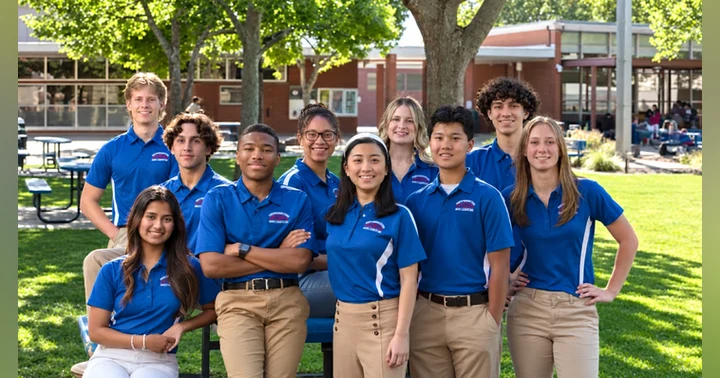
Enter to Learn, Leave to Serve. Christian Brothers High School's First 150 Years.

I would love to hear your thoughts on this episode. Please send me a text... What does a school give back to a community over 150 years? At Christian Brothers High School, the answer reaches well beyond its graduates. In this episode, I welcome President David Perry for a conversation about the Sacramento school’s history, its Lasallian mission, and the commitment to access that continues to shape its future. David explains how $3.4 million in financial assistance supports nearly 500 families...


I would love to hear your thoughts on this episode. Please send me a text...
What does a school give back to a community over 150 years? At Christian Brothers High School, the answer reaches well beyond its graduates.
In this episode, I welcome President David Perry for a conversation about the Sacramento school’s history, its Lasallian mission, and the commitment to access that continues to shape its future.
David explains how $3.4 million in financial assistance supports nearly 500 families, and how the Brother David program removes barriers beyond tuition by covering uniforms, meals, technology, and participation in school activities. His goal is to expand that program to serve 100 students.
We also explore the school’s decision to remain in Oak Park, its vision for career pathways, and the community partnerships that help students put service into practice. From preparing meals for Wellspring Women’s Center to returning as teachers and donors, Christian Brothers students and graduates demonstrate how an education can keep giving back.
And in Beyond the Mission, we meet the person behind the presidency, including David’s unexpected journey from corporate finance to the classroom.
Learn about Christian Brothers High School:
https://www.cbhs-sacramento.org/
Explore admissions:
https://www.cbhs-sacramento.org/admissions/
Support the school:
https://www.cbhs-sacramento.org/support/
CHAPTERS:
00:00 Meet David Perry and Christian Brothers High School
05:00 Alumni connections to Sacramento’s educational history
10:00 College readiness and future career pathways
18:00 Why Christian Brothers stayed in Oak Park
27:00 Community partnerships and student service
37:00 Financial assistance and the Brother David program
44:00 The blank-check vision for educational access
55:00 Measuring impact through alumni who give back
1:02:00 Beyond the Mission: Getting to know David Perry
1:09:00 How families, donors, and nonprofits can connect
Thank you so much for listening to this nonprofit story! We appreciate you. Please visit the website to sign up for our email updates and newsletter. https://www.nonprofpod.com/ And if you like, leave me a voicemail to comment on the program, leave a question for us to ask in the future or a message for me, Jeff Holden. I may even use your voice mail message in a future episode of one of our incredible local nonprofit organizations. https://www.nonprofpod.com/voicemail. Thanks again for your support in listening, commenting and sharing the great work our local nonprofits are accomplishing.
David Perry: [00:00:00] I think what's important to know is that every kid that graduates from Christian Brothers High School is college-ready. So they have been put through the rigors of a, of a tough high school academic program that has prepared them, so they're all what we call A to G eligible, right? So they're eligible to apply for a four-year college when they graduate.
Our graduation standards actually exceed that minimum, so everybody's ready
Jeff Holden: Welcome to the Nonprofit Podcast Network. Our purpose and passion are simple, to highlight the incredible nonprofits that make our communities stronger. Each episode is a chance for these organizations to tell their story in their words, sharing not just what they do, but why it matters to the people they serve, to their supporters, and to all of us who believe in the power of community.
Through podcasting, we [00:01:00] hope to amplify their voices, inspire connection, and give them one more tool to impact the hearts of donors, partners, and neighbors alike. This work is made possible through the generous support of our incredible partners, Cap Trust, offering fiduciary advice for endowments and foundations, Western Health Advantage, a local not-for-profit health plan that believes healthcare is more than coverage, it's about caring, Core, executive leadership and comprehensive support services.
They work in it so you can work on it, and Five Star Bank, a local trusted advisor to community nonprofits for over twenty-five years. A school's impact doesn't end at graduation. Sometimes that's where its influence on a community is just beginning. For one hundred and fifty years, Christian Brothers High School has helped shape Sacramento through generations of graduates who have [00:02:00] gone on to build businesses, strengthen nonprofits, advance education, and serve others.
But what interests me just as much is how the school continues to open those opportunities to the next generation. In this episode, I'm joined by President David Perry to explore a mission rooted in access, inclusion, and the belief that education creates opportunity. We talk about the school's three point four million dollar commitment to financial assistance and its Brother David program, which covers everything from tuition and uniforms to lunches and student activities, helping students fully belong and participate.
We'll also discuss preparing young people for college, careers, and a lifetime of service, and why the school's model, enter to learn, leave to serve, carries meaning far beyond the campus. David Perry, welcome to the Nonprofit Podcast Network.
David Perry: Oh, thank you, Jeff. I'm really, uh, pleased to be here today.
Jeff Holden: This is [00:03:00] actually a, sort of a second appearance, although the first appearance wasn't really an appearance 'cause it was virtual because we weren't doing episodes in a studio because there wasn't a studio that existed when we did it back in, oh my gosh, five years ago or so?
Yeah, three or f- at
David Perry: least.
Jeff Holden: Yeah. It was prefacing even our cadence, our regular cadence before we formally structured the Nonprofit Podcast Network, and- I
David Perry: was a pioneer. I was trailblazing with
Jeff Holden: you. Y- yes, well, and you were twice because it was for Cristo Rey High School, too- That's
David Perry: right ...
Jeff Holden: which is a pioneer in our community.
David Perry: Absolutely.
Jeff Holden: And, uh, you've now made the transition over to Christian Brothers High School. Let, let's talk a little bit about that because I think people in the community know of Christian Brothers. Mm-hmm. They're aware of it. It's been around a long time. But for somebody who's hearing it for the first time And isn't really sure, "Oh yeah, we've heard of that, but what is that?"
You know, what, what is it about the school? Who do you serve? And, you know, what is your primary mission?
David Perry: Sure. So I mean, it's interesting, right? We've been in, around [00:04:00] Sacramento for 150 years. The brothers showed up in 1876 at the request of some parents saying, "We need a Catholic school, uh, in this gold rush booming town."
And they opened up on 12th and K, just a block or two away from the capital. And according to my memory or what the research I've done, the, the cathedral hadn't even been built yet, and the cathedral was built basically in the backyard of the school. And, uh, yeah, they opened up, uh, in 1876, and it was kind of a serving everybody.
If you had money, great, we'll take your money. If you don't have money, that's fine, we're gonna educate your, your child as well. And we've just rolled since then. We're the longest continuously operating high school in all of Sacramento. Um, and we live today in Oak Park, and we serve over 1,100 students, uh, in a co-ed format.
We're in the Lasallian tradition, so the Christian Brothers, uh, who were founded by Saint John Baptist de La Salle 300-plus years ago in France is, is our order that sponsors us, and they're really, uh, they, they inspire us, and it's the charism that we follow. And it's really about inclusivity. It's about access.
[00:05:00] So when you ask who do we serve, again, over 1,100 students coming from close to 70 zip codes, and it's a very socioeconomic, racially diverse, uh, and even faith diverse. I mean, probably 50% to 60% of our students identify as Catholic, so 40%—
Jeff Holden: Don't ...
David Perry: aren't Catholic, uh, most probably Christian, but we, we educate students who come from non-Christian traditions and students with no faith tradition.
And we serve... Again, the socioeconomic diversity is, uh, is really mirrored, uh, in th- against the Sacramento community. So we, we pride ourselves on access, uh, and affordability and, uh, providing the education to as many people as possible, which I think is why we're the largest Catholic high school in town.
Jeff Holden: And you also said something else that, that struck me. First of all, 12th and K would've been some really nice property to have held onto, wouldn't it?
David Perry: Yeah. Uh- The Weinstocks bought it from us- Oh my goodness. The- ... uh, years ago to build a department store- Former
Jeff Holden: department store ...
David Perry: for a lot of money. Yes. And, uh, we moved to 21st, and what was 21st, I think, and X, which is today 21st and Broadway-
Jeff Holden: [00:06:00] Okay
David Perry: um, before we moved to Oak Park.
Jeff Holden: Well, and there was probably some sort of an endowment for the school because of that purchase, I'm sure.
David Perry: Yeah. I think, uh, the brothers were wise with their investments and, uh, built, have built two schools since then with that money, so.
Jeff Holden: Yeah, and you mentioned, too, the Lasallian community, a little over 300-some years old.
The school's been around half the time that the organization, that the charism has been around-
David Perry: Yeah ...
Jeff Holden: which is amazing.
David Perry: To think about from France to Sacramento-
Jeff Holden: Right ...
David Perry: in just 150 years. And when you read the story of St. John Baptist de La Salle, the early years in the founding of the order was not easy, as you can imagine.
You know, he was a pioneer in education. He was the first person to teach in the native language. He- a lot of the traditions that we experience in a classroom today came because of de La Salle's design when he built his first schools. So multi students in one classroom taught in the same language, and really, he was teaching the, the, the peasants of France when only the most elite could hire the tutors from the guilds.
And [00:07:00] so from day one, it's been about education for the, for the most marginalized in the community, and that still rings true today.
Jeff Holden: Mm-hmm. The school with 150-year history in Sacramento, which is a very provincial community, a lot of names we're all familiar with. Mm-hmm. I purposely want to ask this question- Yeah
because so many people we recognize in the community or, or have been founders of things in our community came from Christian Brothers.
David Perry: Yeah.
Jeff Holden: So I'm gonna give that opportunity to, uh, to share that a little bit- Sure ... with everybody to say, "Hey, look at this, this school," because so many others, "Oh, well, we so and so and so."
Well, wait a minute. We have 150-year history. We're going back to 1876. Yeah. Now, that's, that, that is, you're right, gold rush days and so many things took place and transpired since then. Shoot.
David Perry: Sure. So I think, uh, probably the two most prominent stories I really like to tell, um, one, three years after we opened, Peter J.
Shields graduated from Christian Brothers High School. So if there's any UC Davis alum, uh, [00:08:00] listen- listening today, Peter J. Shields, who is credited as the founder of UC Davis, he was the one that wrote the bill to get the funding to buy and create the university farm. He graduated in 1879 from Christian Brothers High School.
Um, fast-forward a few years, uh, uh, Senator Earl Desmond, he was, I think, class of 1914, and he is long- he's credited with being the senator who basically held up the legislature until they got the funding approved to build Sac State. And if you've gone to Sac State, if you lived on campus at Sac State, you may have lived in Desmond Hall.
And so again, that's another family. The Desmond family is multi-year, uh, multi-generational connection to Christian Brothers. So those are probably two of the most prominent. Anybody listening who knows anything about the region, you know, UC Davis and Sac State can tie their origins and their founding back to CB alum.
Jeff Holden: Well, there's a certain credit to the education value of what was instilled in people who were coming out of the school to say, [00:09:00] "We need a university." And of course, if there's a, a UC system, there's gonna have to be a state system- Yeah ... which obviously existed, and I'm sure that was a really competitive, you know, discussion amongst the powers to be.
Say, "Wait a minute, we already have one. We don't need another." "No, no, we do need another one." Yeah. "Yes, we do."
David Perry: Yeah, I mean, the research that I did shows that basically Earl Desmond held up funding for the UC until they wrote in the funding for Sac State. So it was like, "We'll give you your money, but you gotta give me an appropriation to build Sac State."
Jeff Holden: Boy, and when you look at where we are today with both of those universities, what significance that was back in the day, and how important they are not only to our academic side of things in the community- Sure ... but to our entire ecosystem.
Scott Thomas: Yeah.
Jeff Holden: You know, whether it be, you know, the diversity that the campuses bring, the, you know, the education and the, the novelty of what we're doing, you know, both at UC Davis and at Sac State.
And then, you know, lastly, the economic [00:10:00] value that the universities bring as, as some of our biggest employers.
David Perry: Yeah, I say it's the economic driver is huge. Um, accessibility, research. I mean, you think about Sacramento being farm-to-fork capital, I mean, UC Davis is the leader in all of that, right, with their ag background.
Everything
Jeff Holden: agricultural,
David Perry: right. Right? And then, you know, Sac State is really kind of continuing to grow, um, and do wonderful things for our community. And, and, and I, I do. I mean, you mentioned it. Um, I became a teacher. I did not have intentions of becoming a teacher, but the impact that brothers had on me at St.
Mary's College is what really drove me to education. And so I think heavily the brothers influenced Peter Shields, definitely influenced, uh, Earl Desmond to say education matters, accessibility matters, and we're gonna be pioneers, and we're gonna fight for that. And so you can tie it all back to our founder.
And then even today, I mean, like, we still... That's what drives us today, um, 150 years later is how do we really help [00:11:00] students think about college, career, life, also within the scope of service. You know, it's, it's never just about education for excellence, for personal gain, or for personal, you know, successes.
It's also how do you share what you've learned, how do you share what you were given to make the world better for the next group behind you. And, and I think you can trace that back to that first, that first class in 1876.
Jeff Holden: Yeah. Yeah. So, so it started in 1876. So four years, 1880- 80 ... would be the first graduating class.
Yeah, well, and I- If we were on that structure. I don't
David Perry: even know what it looked like. Yeah, no, the structure was different back then. Okay. I mean, even one of the things I learned, we were a direct feeder school for St. Mary's College, which is my alma mater. We still do feed into St. Mary's College. But at one point, we were, uh, uh, a collegiate high school, basically.
And so you w- if you did three years of the baccalaureate track at, at Christian Brothers High School in Sacramento, then you went to St. Mary's in the Bay Area, we were in probably San Francisco or Oakland at the time. You only had to complete one more year of study and get your bachelor's degree. Mm-hmm.
[00:12:00] So things have changed significantly, obviously. But even in those early days, we were, we ran a commercial school, and we ran a baccalaureate program, and so we were not only educating for college then, we were educating for career and life then, and that's something that we're still always- Innovating around and thinking about, um, how we move the school forward.
Jeff Holden: And more so today than it was even in the past decade, two, three, four, where it was always college, college, college. Today we're- Yeah ... looking at that going, maybe every student isn't necessarily college bound.
David Perry: Yeah.
Jeff Holden: And there's now academic programs in the high school system that are saying, "Hey, we recognize that, and we know we need that."
David Perry: Yeah.
Jeff Holden: I mean- "And so, so let's focus on the student."
David Perry: I think what's important to know is that every kid that graduates from Christopher Columbus High School is college ready. So they have been put through the rigors of a, of a tough high school academic program that has prepared them so they're all what we call A to G eligible, right?
So they're eligible to apply for a four-year college when they graduate. But that, the, our [00:13:00] graduation standards actually exceed that minimum. Mm-hmm. So everybody's ready. A- and I think for a long time we talked about there was a period of time where schools weren't preparing kids. Now it's more about choice.
I- and so how do we help inform students to what their options are? So the next innovation that we're working towards, we have-- we're not there yet, but the next innovation we're working towards are career pathways within our curriculum. So how do we maintain an A to G, what we call an A to G curriculum, right, which means they're ready to apply to a four-year college when they graduate.
But kind of what I like to frame it is like a mini major, right? So give them something to focus on. We have some amazing programs at CB that we're gonna be able to build around, um, that we're well known for in the region, and kinda give students a focus. And you know, you, you mentioned Cristo Rey earlier.
One of, I mean, there are many gifts, uh, and blessings from my time at Cristo Rey, but one of the things I learned was watching students in that work study program really go off to college which a mu- with a much clearer mind about what they wanted to do or what they wanted to study, way more [00:14:00] than most 18-year-olds graduating from a typical high school.
And so I wanna kind of bring some of that back into CB where kids like, "I think I wanna be a doctor." Well, let's show you what that looks like, and let's, let's put you in our sports med program, and let's have you take anatomy and physiology and advanced kinesiology, and let's get you into some type of a, a capstone project in your senior year, uh, so that you know.
And then also, like, maybe you don't go straight to four-year college. Maybe you get a, a, a 12-month certification to be a, a certified medical assistant, and you go out in the workforce and you get real-world experience. And then you say, "You know what? I do wanna become a nurse," or, "I do wanna become a doctor," and then you make that jump.
I think we need to show students Everything, right? This is what you can do when you graduate. This is what it- after two years of school, four years of school, six, eight years of school, here's all the pathways that open up. Here's how you get there. All along the way saying you are absolutely capable of doing this when the time's right for you.
Jeff Holden: A- and it's your choice.
David Perry: Choice.
Jeff Holden: I, I, I think that benefit of having been at Cristo Rey, and, [00:15:00] and full transparency, I was a long-term board member there and board member emeritus for the school. Mm-hmm. You know, I have a passion for education because education is the pathway-
David Perry: Right ...
Jeff Holden: out of, I, I don't wanna say just poverty.
No. It's so many things.
David Perry: It's-
Jeff Holden: You know? ...
David Perry: it's opportunity.
Jeff Holden: It's opportunity, yes. If, if you're
David Perry: educated you have more opportunity. That's what de La Salle did in France 300-plus years ago.
Jeff Holden: Yeah.
David Perry: Gave people an opportunity to take control of their lives rather than be subjected to life happening to them.
Jeff Holden: Right.
And recognizing, as you did from one school to the other, the value of that work study. Yeah. They get to see and experience, "Maybe I don't wanna do this." That's right. "Boy, as I thought I wanted to do this, I don't." But now transitioning out of high school to say, "Hey, it's not r- it's not a rush." Right. Go ahead and, and experience a year's worth or two years worth of what life in that career you chose, think you chose, wanna go down the path of, and a- all the while you're earning an income as well.
David Perry: Right.
Jeff Holden: Which, you know, also is helpful. Doesn't hurt. Right?
David Perry: Doesn't hurt. '
Jeff Holden: Cause it's a bit of a plus.
David Perry: Yeah.
Jeff Holden: [00:16:00] So a- any other m- m- you know, I have to ask 'cause you mentioned Desmond. Do we know if that's a relationship, distant relationship to the Desmond we have today in-
David Perry: Yes ...
Jeff Holden: in, in College of DuPage? So that's all
David Perry: the same family tree.
Jeff Holden: Wonderful.
David Perry: Yeah.
Jeff Holden: Okay. That's, that's pretty cool- Yeah ... to think that that lineage started all the way back then- Yeah ... and continued.
David Perry: And service.
Jeff Holden: Yes.
David Perry: Right? I mean, really committed public service-
Jeff Holden: Yeah ...
David Perry: um, as well in that family tree, um, which you could tie back to Earl in 1914- Yeah ... I think, at CB.
Jeff Holden: Starting sex ed.
David Perry: Yeah.
Jeff Holden: Any other names that you can, you can share-
David Perry: I think those are the two- ... or are comfortable with? I think those two, like, big, like, when you think about us in the context of history. I mean, there are certainly more recent students that we're, you know, we're really proud of that have really gone out and made a difference, you know, or are prepping to make a difference, you know.
I mean, I think about, you know, Amber Ramos from the class of '96, who's now in HR with NVIDIA, right? Mm-hmm. And we kinda joked, you know, she's doing all right if she's at NVIDIA today. Yes. Um, but her story [00:17:00] is really amazing because she started off at a high school in her neighborhood, and, you know, from her own accounts and mom's accounts, wasn't making the best choices, wasn't around, had the best influences, and they came knocking on the door of CB second semester of her freshman year, and the school found a way to help her start at CB and made it accessible from a financial perspective.
It was way outside of their, what we've been told, her- their comfort zone. Mm-hmm. And so the financial assistance paved the path. She went on to UOP, Golden Gate University with a master's degree and has been working in HR and tech for a long time. And she wrote a couple years ago a letter to our donor family saying, "Don't think that you're making a difference if you give to financial assistance.
Know that you are making the difference." So for her, access was the difference. That took her from a path that wasn't great to one that she's very proud of. Mm-hmm. And now she gives back annually to [00:18:00] our tuition assistance program to support that next generation kid. A student, kids she'll never know, just like people gave to st- to who she was, and they didn't know who she was.
Right. But it was the difference. It was the difference. And- So I think-
Jeff Holden: You also mentioned shout-out to NVIDIA. They have a matching program, so whatever her gift is, they matched it- They matched ... so it doubled.
David Perry: Yes.
Jeff Holden: So, uh, I'm thrilled to hear that because so many of those went away- Yeah ... over the course of many, many years, and, and here our tech companies are stepping up and, and supporting.
David Perry: Yeah. Yeah, the other one I think that's, uh, was compelling is, um, Oscar Villegas, who was a county supervisor in, in Yolo County. Um, he was just... He wa- attended an event we had and shared his story about, again, would not have been able to come to CB without financial assistance, and because of that, launched his whole life into a career of service, and he continues to give back to CB.
He's a great ambassador for us, and he's doing wonderful things, uh, in his elected position as a county supervisor. [00:19:00] I mean, you could just... If we had time, I could go through the Rolodex, you know. And then I'm, I'm excited, like, today there's a family... So where we're located in Oak Park, uh, is it's, it's a neighborhood that's going through a rebirth, right?
It was the original suburb of Sacramento, which is a funny stat too to talk about, and it's going through a little bit of a rebirth. But there are still a lot of students that we want to serve, why we state, that we wanna serve from Oak Park. And there's a family of three boys right now, a senior, uh, and he's got twin sophomore brothers that are with us- Because exclusively of financial assistance.
Father passed away, single mom, you know, sh- really, uh, on the margins, and these boys are thriving. And we know, like, it's only a matter of time before they come back and write the letter just like Amber wrote for us. Amber did, yeah. You know, I mean, we know that's in the cards. We know that that's what our mission tells us to do.
And everybody serves, so kids are getting [00:20:00] help, but every kid serves throughout their time at Christian Brothers. They're ... We are, we're em- embedding in them this idea you have to give back. Uh, no matter what, you give back. And I think that really plays out to 150 years. I mean, there's plenty of times- Yeah
where the school probably should have closed, right? And somebody somewhere made a gift, made a difference, invested, and, and I mean, that, that's what we are, a legacy too.
Jeff Holden: And you touched on where I wanna go with the next question. Okay. The school had opportunities to relocate-
David Perry: Yeah ...
Jeff Holden: but chose not to. That's right.
Intentionally chose not to because?
David Perry: Yeah, because it's ... We believe that the heart of our mission is served best, uh, in a central location, central suburb to the city. Uh, and Oak Park, like I said, has gone through some significant changes over the years. Uh, but yeah, in the early '90s, we had the opportunity to, uh, take an offer for some land out in Natomas and build a new school.
And the brothers ... So thank- I mean, I think even [00:21:00] if the brothers weren't still on campus, but brothers were still on campus at the time, and the brothers got together from a leadership perspective and, like, looked at and weighed the options, and they said, "You know, you know what? We belong right here, Martin Luther King Jr.
Boulevard in the heart of Oak Park. This is where we belong. This is our home, uh, and this is where we wanna be." So, you know, they made that brave decision and turned down at the time what people would have thought was crazy. I mean, you'd have all new buildings, all new facilities. New
Jeff Holden: school, a new, new opening area.
It's, it's
David Perry: completely- A growing- ... developing area ... a booming area. Right. And they said, "No," like, "Our mission calls us to be right here." And I think because we are where we are, that's why we can still serve 67 zip codes. I mean, we're probably the most accessible school from a geography perspective, Catholic high school or private high school in the, in the area, because of our location right off of, right at the intersection- Freeways
of where all the freeways come together. And, uh, you know, so I think that has ... I mean, we have certainly ... You couldn't [00:22:00] have foretold the growth of Elk Grove, but I mean, we have certainly benefited. When I look, we have a map in my office, and we have red dots.
Jeff Holden: Pins all over.
David Perry: Yeah, of- Yes ... of the number of kids from each zip code that we serve.
And, uh, when you go where we are and kind of into the pocket and in Elk Grove, uh, those, that set of zip codes probably represents a third of our population. Had we moved into that north, northern part of Sacramento- I, I don't know that Elk Grove families and Pocket families would've been able to make that drive.
I certainly don't think the families closest to us would've had the capacity to get to where they, you know, to get out to a new roma- remote location. So- Mm-hmm ... you know, uh, not to get too, like, religious on this, but one of the key elements, uh, of the Brothers and the way that we're taught and formed is to rely on the divine providence of God.
And so we don't always know, but if we listen intently, there's a reason, and, and I think it was providential that we ended up where we did in the, in the early [00:23:00] '50s, and that we decided to stay, uh, in the late '90s, early 2000s.
Jeff Holden: And I, I wanna just scratch, scratch the surface of this. Most people today don't realize it was an all-boys school-
David Perry: Yeah
Jeff Holden: until the '90s.
David Perry: Yeah.
Jeff Holden: I mean, something changed, and- Yeah ... it, it became coed, so it's not unfamiliar to our academic private school system to see a school transition from, you know, one gender to both.
David Perry: Sure.
Jeff Holden: And so that's, that's, uh, just for the benefit of those who don't realize that, you know? Yeah. They only see CB as the, you know, the private school.
Today that's... it's, that's the coed one. The
David Perry: coed school, yeah.
Jeff Holden: And-
David Perry: No ...
Jeff Holden: now soon to be another.
David Perry: Yeah, no, in 1990, the '90, '91 school year, we went coed at the request of the bishop. Um, they were closing Bishop Minogue High School, which was actually on the plot of land where the second version of CB was- Oh ... at 21st and Broadway.
So we moved out, and they built another school, but then the diocesan offices, the chancery office, are now [00:24:00] built on that, on that plot of land, and they needed the dirt. And enrollment had dropped. I mean, there were at one time probably five to seven single-gender Catholic high schools in the Sacramento region.
They, they were just kind of cannibalizing each other for... You know, it's probably not the best term, but I mean- Yes ... you know, there were... The baby boom had ended, and so, you know, the number of Catholic families looking for a place for their, for their kids to go had shrunk. And, and so we went coed in 1991 at the request of the bishop.
And, you know, you... I said you talk to some of the folks in those, those years, uh, they weren't necessarily happy about it. You know, the boys who'd graduated five, 10 years before, you know, it was breaking tradition. But our admissions director today, Brendan Hogan, was in the class of '95, and he tells a story about he only knew the school was coed because he started the year that girls started.
And he said, "My trajectory at CB was 100% landing me as student body president." And I lost to the first ever female ASB president at Christchurch Miller's High School. He goes, "And that wouldn't have happened if [00:25:00] we hadn't welcomed girls when I came as a freshman." And, um- Well,
Jeff Holden: that's why he's there today.
He's gonna say, "I'll be darned."
David Perry: Yeah. "
Jeff Holden: I'm gonna show you. I'm here now." But
David Perry: it's a great story. I don't, I r- I don't remember her name. He knows her name. But it tells the impact, right? And, and then, you know, unfortunately Loretto closed, I think, in about 2009-ish. The School Sisters of Loretto had to close their campus, and because we were already co-ed, we were able to immediately open up our doors to every girl from Loretto.
And so if you go back to our history, CB was hanging in there as a co-ed school, but our enrollment was probably in the 6 or 700 range. Loretto closes unfortunately, but in true Lasallian style of hospitality, of welcome, of inclusivity, we threw open the doors. Anybody from Loretto who wants to come to CB, you are welcome, and we'll find a way.
We end up hiring a bunch of teachers who had lost their jobs, Loretto teachers. They're still teaching for us [00:26:00] today. And when you look at our, if you look at our enrollment tracker, that second decision, when Loretto closed and the girls, so many of those families chose to come to CB, gave us a huge spike, and we really haven't backed down since then.
Jeff Holden: Um- Hey, you mentioned 1,100 students, right? So you, you doubled at that point and have held-
David Perry: I mean, just about. I mean, we probably, probably brought ... We probably had a 50% increase in a year. Went from probably 600 kids to 900 kids- Mm-hmm ... like that, and then that put us on the map, right? And then also one less school to compete with now, right?
You have a boys school, a girls school, and a ti- And a co-ed ... and then and a co-ed school. And so families can make a choice. But it really stabilized CB and, and put us on another level of prominence, uh, in the community, and, and we've been able to build on that now ever since.
Jeff Holden: Well, I can attest to that loss.
My high school back in Illinois-
David Perry: Mm-hmm ...
Jeff Holden: suburb of Illinois, was, it was, uh, a faith-based private high school, is gone. They tore it down, built a subdivision. You know, and you s- some of [00:27:00] the streets are familiar names that were something associated to the high school. Sure. And it's sad. You know, you go back, you have nothing.
And, and we didn't get reabsorbed in any way, shape, or form. The community changed. There was just no room for it, and, you know, some of the bigger schools in the greater Chicagoland area still exist, but not ours. Yeah. And so the group of us feel abandoned.
David Perry: Yeah.
Jeff Holden: For anybody that's lost their high school, they're probably sitting here going, "Yeah, I know what that feels like."
Yeah. It's ... And, and we're gonna see more of that. Yeah. And, and we're gonna see colleges as, as the, just the overall population of our cities changes- Yeah ... and the dynamic changes, so it's gonna be that give and take and see what it looks like going forward. Uh, outside of faith-based relationships- Mm-hmm
which are, are the obvious ones- Right ... collaboration is really important, more so today than ever before with what we're gonna call nonprofits. Yeah. Uh, you are certainly in that space. Who do you collaborate with? Who are some of the organizations that you work with that you see the students getting involved with or that you are supporting in some way, shape, or form?
What's that look like?
David Perry: Sure. I [00:28:00] think, I mean, we do work with, uh, Williams Church next door, uh, Pastor Meek's, uh, uh, Baptist Church right next to us. We do work with them. Oak Ridge Elementary is the public elementary school that we share a fence with, so we have students that go over there and provide after-school tutoring services.
Ah. We are heavily involved. We have, we have a club called the Wellspring Club. So the Wellspring Women's Center in Oak Park has been around for a long time. Yeah, just right
Jeff Holden: down the street.
David Perry: Just down the street from us, and, uh, we have a late start on Tuesday mornings, so students don't have to be in class till 9:50, and that's when we do our faculty meetings and things like that.
But there is a group of probably 20 to 30 every Tuesday that show up into the Bertram Hall kitchen. Bertram's one of our buildings where our administrative offices are. We've got an old... It's the, it was the kitchen for the brothers when they lived there, and they make pancakes, yogurt parfaits, they make sandwiches, and they, they collect the funds.
They raise all the money. They do all the food prep, and every Tuesday, this group of kids prepares meals and then drives down Martin Luther King [00:29:00] Junior Bl- Boulevard into Oak Park, and they go to the Wellspring Women's Center, and they deliver food for the women and the children that are there. That's probably one of our longest-standing collaborators where it's just an entrenched thing, and, like, kids look forward to being the seniors in Wellspring who get to kinda take the lead, um, in that service project.
You know, so I think those are some of the... And we're integrating now To like, to go back to that conversation about service. So we have now integrated across, this will be our final year of it, across the curriculum where students, as part of their normal study, will in- be involved in a service project that's tied to the curriculum.
So their freshman year, there's a particular service project that they participate in. So with that one, it's dealing a lot with the unhoused population, and so we go... The cathedral does a brown bag lunch food service. So every ninth grade student at one point in the fall semester goes and prepares the meals and serves the meals outside of the cathedral.
In their second year, I think in world history, as they study historical patterns of migration, [00:30:00] they participate with a nonprofit that, that serves particularly, I think, uh, Afghani immigrants. Mm-hmm. And so every sophomore is involved in a service project that provides direct service through this nonprofit.
I think it's based in the Citrus Heights or Antelope, kind of in that part of town. Junior year, they read a novel that's the Native American experience, and they provide an educational opportunity where they do research on the Native American experience. And then the fourth grade students at Oak Ridge who are studying about Native Americans in their fourth grade curriculum, they come over for the d- for an afternoon and, and they teach and play and share stories with the fourth grade students.
And then our goal this year is we're gonna am- we're, we're planning what's called the Leave to Serve project. So the motto at the school is "Enter to learn, leave to serve." And so Leave to Serve is a project that I, I helped brainstorm in my first year as principal with some other folks on campus. And the idea is they do three planned service projects [00:31:00] as a minimum.
So every freshman, every sophomore, every junior does at, at a minimum that service experience tied to curriculum. Senior year, we want them to find a nonprofit or a service organization that they are connected to or that they feel called to, design their own service project, complete the service, and then write a reflection on it.
So it's the Leave to Serve. And so the idea is to really ingrain in them that they can live a life of service. They don't just have to be handheld, right? "Here, let me show you this one. Let me show you this one. Now go find what means something to you and go do service." And we think that's what's gonna build that, that lifetime of service and really embed it in their hearts.
Jeff Holden: Let's ring the bell for a short recess, and we'll be right back with more from David Perry of Christian Brothers High School right after a few words from those who give us the privilege of sharing these stories
James Beckwith: I'm James Beckwith, president and CEO of Five Star Bank. We're dedicated to supporting nonprofit organizations [00:32:00] who advocate for the strength, resilience, and vitality of those they serve.
When nonprofit organizations thrive, our community does too. By supporting the Nonprofit Podcast Network, Five Star Bank is amplifying the voices and meaningful impact of our nonprofit community. We're Five Star Bank, a trusted nonprofit partner. How can we help you?
Darrel Teat: Hi, I'm Derrell Teat, CEO of Core. Every organization needs strong support behind the scenes, but building out finance, HR, technology, and administrative functions internally can be expensive and time-consuming.
At Core, we provide back office support that helps organizations operate more efficiently without having to build every function from scratch. That means your leadership team can spend more time focusing on growth, mission, and the people you serve. You get to work on the business, not in the business. [00:33:00] If your back office could use more support, let's have a conversation.
Visit C-X-O-R-E.com. That's core.com.
Scott Thomas: Hello, this is Scott Thomas with CapTrust in our Sacramento office. I specialize in working with local nonprofits and associations. Annually, we survey private and public nonprofit organizations across the country to better understand challenges they see in today's environment.
In our more recent survey, we heard concerns about proper board governance, mission-aligned investment, and how to implement alternate investments. If you would like a copy of the survey or to discuss your organization, look me up, scottthomas@captrust.com.
Western Health Advantage: Health care can feel complicated, sometimes even a little impersonal.
At Western Health Advantage, we believe it should feel different. We're local, built for Northern California, and guided by doctors. As a nonprofit health plan, we share your commitment to [00:34:00] giving back. We support organizations like the American Heart Association, Sacramento Ballet, and the Crocker Art Museum, helping strengthen the communities we call home.
You make a difference every day. Your team deserves a health plan that understands the purpose behind your work, with flexible coverage options and local support that put members first, because healthcare isn't just about plans and paperwork, it's about people. And when your health plan understands that, you can feel the difference.
Discover Western Health Advantage. Visit westernhealth.com.
Jeff Holden: I love what you're saying because we have obviously a lot of nonprofit leadership listening to the program. Mm-hmm. And if you are listening intently, this may be an opportunity to reach out- Yeah ... to Christian Brothers and say, "Hey, we would love to have your students be aware of us.
Is there an opportunity to share what we do, what, what our, our mission and, and how we impact the community is?" So those students can say, "Maybe that's one that I want to engage with."
David Perry: I'll just say, uh, for [00:35:00] the folks listening, we have a, a full-time assistant director in what we call our Lasallian Student Life Office, so it's kinda like the student activity hub of the campus.
Mm-hmm. Her full-time job is to manage service, and so if you reach out to the school and you ask to speak to the assistant director for service, uh, you'll get connected. Right now it's Erin Hanschu. You'll get connected, and she gets calls all the time from local nonprofits, and so ... And she emails out every week, "Here are opportunities.
Go, you know, serve food at this church, or go down to The Alchemist's Garden down the street at-" Yep ... uh, you know, f- six blocks down the road and help prep the beds for the next planting that needs to happen. And so we get constantly, "Go down and help clean up the American River." But you know, I, I would encourage nonprofit leaders if they have serve, uh, service opportunities that they think would be appropriate for students to work in, yeah, reach out to the school.
We, we love to match up. And every year at graduation, we don't have a service requirement. Some schools say you must do 25 hours a year. We don't do that. We invite [00:36:00] students to service. We, we bring them to opportunities. We support them. We encourage them. But we recognize at the end, and so we have our top service award for graduates at the end is students who have completed 500 or more hours of service in their time at CB.
And I'm shocked every year at the number of students who are wearing that cord, and that's because they just find particular things. Maybe it's the SPCA. Maybe it's the Sacramento Food Bank. The Sacramento Food Bank, which was started by Father Madigan and Chuck Silva, who is a graduate of our school, they're the ones that founded the food bank.
Uh, so I mean, like, another CB name I should've thrown in when you asked me earlier, uh, Chuck Silva. 60... I'll probably get it wrong. I think 64-ish. But he will not take the credit. He puts all the credit on Father Dan Madigan, but Chuck Silva took a year off at the most critical time of his commercial real estate career Basically retired for a year and spent that year with Father [00:37:00] Madigan, and they built the food bank.
Amazing. And they raised all the money to get it started, and today-
Jeff Holden: It's the food distribution center for the- The region ... all, all the food banks.
David Perry: Anyways, that's a ... It's funny, when you, when you get my mer- when you get my brain going, all these other stories kick in. But, uh, I, you know, so I just scratched the surface on who do we partner with.
But, you know, our, our students are looking to provide service. We're looking to connecting them with service, and so we're always open to new partnerships.
Jeff Holden: And, and I'm so certain that as they get involved in the community, they start to trip on names of other graduates, whether they're recent or if they're tenured.
Mm-hmm. You know, or, or retired because, you know, retirement community, once you reach that, whatever that age is that you choose, you tend to give back and- Yeah ... work with a nonprofit.
David Perry: I was at a SVP event recently.
Jeff Holden: Sacramento Venture Philanthropy,
David Perry: yes. Thank you, yep. And I introduced myself to the group. This happens every time I introduce myself.
"My name's Dave Perry. I'm the president of Christian Brothers High School." And then when the time is right At least one person, [00:38:00] uh, I think at this event two people, came up to me and said, "So you're at Christian Brothers High School?" One was a parent, a current parent. Another one was like, "You know, I went to Ari- I went to, uh, Kennedy and, uh, I remember, you know, a bunch of my friends and competing and..."
But you mention Christian Brothers High School, um, in a room and, you know, and so the students are learning the value of that network- Yeah ... um, when they go out too, which is a great skill. Uh-
Jeff Holden: Well, and those sports programs, as variable as they are in success- ... yours has been successful-
David Perry: We've been pretty good
over the course of time, yeah? I mean, I, you know, it's funny. The one thing, talking about going coed, two years in a row our women have won the Commissioner's Cup, which means the, we have had the best schoolwide women's athletic program in the entire section, Southern Rock League section, so the best women's athletic program top to bottom in the entire section, so two years in a row Commissioner's Cup.
And we own something like nine of the 13 academic team [00:39:00] awards from last year. I mean, so not only are our kids winning on the court or the field or, you know, fill in the blank where they play, but we are mentioned in almost every sport in the top three for academics, and we were the top nine. It, it's amazing.
Our kids... I don't know how kids do it today. They're in multiple AP classes. Some of them have part-time jobs, and they're elite athletes, and they're giving 500 hours of service, and y- like, and they're social. Right. Like, it, it boggles my mind how proficient and amazing our students
Jeff Holden: are. And it's just the acceleration of everything.
As we're seeing today, we're gonna say the same thing 10 years from now. How, how are these kids... It's AI. Yeah. You know, that, that's, and today we would say it's the internet.
David Perry: Yeah.
Jeff Holden: You know, and for us back when we were doing it, it was video. Right. You know, that was, "Wow, we're getting to learn by video. We're learning so much faster than our parents did."
And, you know, maybe before that I'm sure it was books. And- Right. Yeah ... you, you just keep going all the way through. Yeah, the encyclopedia, right? Calculators. Yeah. Calculator. Okay, that math used to take me this long, now I got a calculator. I can get this- Yeah ... this [00:40:00] done.
David Perry: You're cheating with a
Jeff Holden: calculator, right.
That, that's right. Yeah. Now it's cheating, you're cheating with AI.
Scott Thomas: Yeah.
Jeff Holden: There's a, a common misnomer about private schools being for the wealthy only. I think you did a really good job of, of touching on that. But we're about to go into funding, but before we get there I wanna preface it with tell us a little bit about what that looks like because it, that's really not the case at all, you know?
Right. Yes, there are wealthy who are the base, let's say, of the economy inside a private school. But- What about the rest of those students? Yeah. What about those underserved and underprivileged kids that you take in, and those families where, like you said, you had three boys, you know- Yeah ... in, in the school.
What does that look like?
David Perry: Yeah. So I'm gonna ... I'll tell you kind of the global number or the global program, then I'll tell you about a very specific program within that global. So we lead the region in need-based financial assistance. This year we gave $3.4 million in financial assistance to almost 500 families, which means [00:41:00] 40
between 40 and 45% of our families are receiving some type of financial assistance. So the math, the reverse math is 60% or less are f- what we call full pay families, families who just, you know-
Jeff Holden: Write the check ...
David Perry: write the check for, for tuition. We lead the region, and that's part of why we're the largest school in town.
If we cut that back, there's a group of kids that we wouldn't be able to serve, and that just is not in our mission. And so that's why we work so hard to raise the funds to provide access. We are all about inclusivity, not exclusivity, right? I mean, some schools are exclusive, and they're ... That's part of their brand.
Um, that's what families are looking for and paying for. Families who are choosing CB, they're not looking for that. They're looking for inclusive. They're looking for a place where their kid belongs, where they learn side by side with a student who doesn't live in their zip code, who-
Jeff Holden: Same socioeconomic-
David Perry: Yeah, right
Jeff Holden: different.
David Perry: Right? But the diversity is the education.
Jeff Holden: Yes.
David Perry: Right? I mean, learning side by side, and we've proven that over 150 years, right? I mean, [00:42:00] day one, if you couldn't pay, you didn't pay. That hasn't changed. So today, so again, $3.4 million this year, almost 500 families. I think the average award works out to almost $7,000 against an $18,000 tuition payment.
So the first thing I say to families, if you're listening and, and you have a child and you're thinking, "There's no way I could send my kid to this school, but man, it sounds amazing," is don't let finances be the barrier, right? If there's some other barrier that we can't help with, I understand. But if, if you're merely looking at it from a financial perspective, I say try, 'cause we work our hardest to get as many kids as possible into CB 'cause we believe so much in our, in our brand of education.
We believe so much in Lasallian education, and we believe in the diversity and, and how the diversity is our strength and how that ... I mean, I have three, three of my own children who are all CB alum. They're all in college right now. God help me. Lucky you. Uh, yeah. But I say often that, one, they were clearly prepared.
I mean- They have [00:43:00] met struggles in college, but that has nothing has been insurmountable. And one's at probably the largest public institution in the country is at Arizona State. One's at my alma mater. She's there at St. Mary's College, one of the smaller private liberal arts colleges in the region. And then my youngest is down at Cal Poly, San Luis Obispo.
And so kind of three different flavors. But they have all been well-prepared, but most importantly, nothing feels out of place for them. When they're sitting in class, they can talk to the student from the wealthiest suburb, you know, the family who's p- you know, paying the full price at St. Mary's College or, or the family who's there not paying anything- Mm-hmm
or only the Pell Grants that they get. They know how to, they know how to exist in that environment, and not just exist, like, they thrive. They're comfortable. They know how to build friendships, and that's just me as a bragging dad. But I mean, that's what we, that's what we do. We believe in that. So, so I think globally that's what we're striving for because that's the best preparation, right?
Mm-hmm. And we, we kinda [00:44:00] joke. We, we do, uh, at our open house, we talk about being the co-ed school in town, and we say 'cause college and life is co-ed, right? I mean, like, that's what you're gonna go into. And so it, you know, it sounds kinda funny, but it's the reality. So then I wanna, if I could shrink it down just for a minute, we run a program called the Brother David Program, which is a full tuition program for the most financially marginalized students in our community, and that means it's everything is paid for for the family.
They don't pay a penny to come to Christchurch Middle High School. Now we're limited. We- I was
Jeff Holden: gonna say there can only be so many of those
David Perry: We currently serve 30 students across four grades, 30 or 32 students. My dream, I say it any, any room I go into where I can talk about fundraising, my goal is that's 100 kids.
I want there to be 25 kids a year on full Brother David program. And when I say full, I mean they don't pay for tuition. They don't pay registration fees. We're an iPad-based school. They're provided with an iPad on the first day of school They get a voucher to go [00:45:00] to our student store to buy all their uni- to buy all the uniform needs that they need.
They're provided a lunch account, so they can go through the lunch line just like every other kid. They have their own number, and that's funded for them so they can have a meal every day at school, so they don't have to worry about where are they gonna eat. Mm-hmm. If they play a sport, we cover the a- the participation fee.
If they go on a retreat, we cover the participation fee. If they go to a dance, we cover the fee. We pay ... We, our donors, give us the ability to provide this opportunity for students. And so that's at the heart of our mission. I mean, that is ... That's going all the way back to France when De La Salle opened the first school, and people looked at him like he had two heads.
Mm-hmm. That, and so that program will never go away, and my mission and my goal is to grow that program. And like I said, I want that to be 25 kids a year, which would be 8%. Yeah, about 8% of our- Mm-hmm ... of our incoming class every year. We try to get 300 kids in the every incoming freshman class. I'd love for that to be [00:46:00] that populated.
We'd have the resources to do that.
Jeff Holden: Post that wonderful description of the necessity of, of why funding is a little bit different, a- and that comes from fundraisers and events that you do- Mm-hmm ... and, and donors, I'm sure generous donors or, or alum, whoever wants to contribute into those programs. Yep.
Let's take a minute just for some fun, 'cause it's gonna allow you to even go beyond the Brother David program. Sure. What would it look like if somebody was to say, "You know what, David? We really love what you're doing. Here's Basically a blank check.
David Perry: Yeah.
Jeff Holden: What would it look like?
David Perry: It would look like a full school, for sure.
I mean, so we're- our capacity, we're 1150 is I think technically. I think we could probably get the county to give us room for more. But I think it would be, uh... A blank check would be absolutely a full school, and absolutely reflecting the full diversity of the community, right? And so it wouldn't only be full with just students who couldn't afford to be there, because that, I don't believe, ultimately prepares anybody for life either, right?
And I think... So I think [00:47:00] you still need to... You still... We would still have to find a way to strike that balance of diversity. But we'd be saying no to less kids every year. And then I, I mean, I think blank check would also be find a way to build some type of a feeder program below us, right? So we open up a school or a series of schools that prepares those students- Mm-hmm
for the rigors of Christian Brothers High School so that, that they are firing all cylinders when they come to us. Uh, right now we serve a growing population of students who have come in not fully prepared, not at grade level, and that trend is across the board. It's not just us. Um, it's across the board in all of our schools.
COVID really exasperated some of that. But I would love to build a series of schools that are serving all populations in the Sacramento region, kind of building up. And then I would love to build some post-secondary options, right? I'm... We don't build a college, right? I mean, like, there are plenty of... I mean, we talked about UC Davis, Sac State, great opportunities.
St. Mary's College. We have great college and university systems. I wouldn't want to build and compete with that. But I would love to [00:48:00] build some type of a post-high school option that becomes a bridge for kids, um, who graduate, who maybe aren't thinking a four-year degree is necessary, or what they wanna do to get to where they wanna be successfully.
But then also, I think we benefit from supporting adults, right? I think, I think Lasallian education isn't just for 9th through 12th graders. I mean, we are a global institution, 80 countries, over a million students a year are being educated in the Lasallian tradition globally, and it's not all 9th through 12th graders.
It's not all K to 12. We educate adults. You know, we educate children through adults. I mean, I get ex- You can hear it in my voice. Yeah. Oh, I know. I'm excited about it. I'm looking
Jeff Holden: at your face.
David Perry: It's like- I mean, I think- ... this is
Jeff Holden: fun to see.
David Perry: You know, I think we could, we could really bring that, that Lasallian education to so many more people.
And then when it's rooted in service, then you just think about how different would Sacramento be If you had all of these people educated in that Lasallian tradition, I mean, we're making our mark. Our, our graduates are making our mark every day- Mm-hmm ... in this [00:49:00] city and all across the world, right? I mean-
Jeff Holden: To your point of bringing that service back into the community- Yes
that's, you know, we're, we're sorely lacking in many cases 'cause students don't know. They, they aren't educated that way. Yeah. And m- many of our other institutions don't- Yeah ... don't provide it. They don't encourage it. And that, that's a challenge because the economic driver of a healthy community is its nonprofit ecosystem.
Right. The better that system is, clearly the better the, the economic for-profit system is, and everybody benefits. So- Yeah ... back to, back to your dream. I didn't
David Perry: mean to- Yeah. No, no. I think it just ... So anyways, that's kinda where my mind, like, when I have time to sit back and dream about things, um, those are the types of things that come to mind.
Love it. Like a full school really representing the diversity, um, with all the ... I mean, the other thing is with all the resources our students need. Now our, our students, I wouldn't say our kids go without. We're blessed with a very supportive donor community that our, [00:50:00] our teachers ... Rarely does a teacher come to us and say, "Hey, I really need this thing to enhance the experience for students," that we would say, "No, we can't do it."
We might have to work on it, may take a little bit of time. Um- A little
Jeff Holden: fundraising
David Perry: every once in a while. Right. You know, I mean, but we rarely would say no if it's gonna speak directly to student experience. But I would love for t- for that to not even be a question. Mm-hmm. Right? The best ... Access to the best resources for our teachers to serve our kids.
So anyways, those things.
Jeff Holden: So coming off of that dream of what it could look like-
David Perry: Yeah ...
Jeff Holden: today, what's the greatest need?
David Perry: Still today, the greatest need is 100% financial assistance. Got it. I mean, every dollar we raise, if the donor doesn't designate it to something specific, is invested in financial assistance.
So I mean, to put it in perspective, we'll probably raise two and a half million dollars this year, but we give almost three and a half million. I tell my board- Is that
Jeff Holden: coming from an endowment?
David Perry: The gap? Some is from an endowment, and then some [00:51:00] of it's what we call tuition discounting.
Jeff Holden: Okay.
David Perry: Right? Which is what a lot of colleges and universities do today.
Jeff Holden: Yeah.
David Perry: So kind of in the old Catholic tradition, right, those who can help those who can't. Mm-hmm. And so, um, so there's a little bit of that. So again, 100 kids in Brother David, and 100% fully funded every year financial assistance. There is a Jesuit school in the Bay Area with a massive endowment, and last time I had looked, 100% of their earnings from that endowment funded all their financial assistance.
Wow. Which meant that every dollar that came in for tuition went directly into programming to support kids. So for me, right, we wanna raise every dollar we can. I wanna bridge that gap fully. I wanna, I wanna in- I wanna be able to include more kids who we can't say yes... We can't say yes to every kid. And often the ones that we're, we're not saying no to them.
What we're saying is we can't provide enough assistance to fill the gap. So it's not really a no, it's just a if I had another $50,000, [00:52:00] that would be 10, 15, 20 more kids- Mm-hmm ... that I could probably get into the school every year. And so, but my mind goes, like if we raise $4 million a year straight for financial assistance, and then every dollar that comes in the door for tuition goes directly into programming, the impact of that just grows, right?
I mean, in terms of services for kids, experiences for kids.
Jeff Holden: And capacity for the school.
David Perry: And right, all of it. Mm-hmm. So, I mean, I think that's, that's how I get excited. But that, that is the greatest need. I mean, you know, building the endowment is, is always, um, on top of mind because that's, that's the clearest path to long-term sustainability.
You know, an endowment of- Sure ... you know, a blank check, I'd almost say, "Can I just write a quarter of a billion dollars into the endowment?"
Jeff Holden: Right.
David Perry: Give me $250 million, put it in the endowment, and we can probably take care of the rest for a very long time.
Jeff Holden: Right. We've touched on a variety of different familial situations or student situations.
Uh, what a success story looks like. You know, when, when somebody comes through the school, a- and I mean it [00:53:00] in, in a, in a real human sense, not-
Western Health Advantage: Yeah ...
Jeff Holden: you know, here, if, this, that. Uh, you've seen them. Right. You, you know what they look like, obviously names aside.
Western Health Advantage: Yeah.
Jeff Holden: Or, or, you know, maybe the name does m- does match- Right
and we did talk about Amber, that's, that's great.
Western Health Advantage: Yeah.
Jeff Holden: But let, let's say somebody from a, you know, an underserved community or an underserved familial situation- Mm-hmm ... the student comes in, they go through the process. You know, what does that... Like, 'cause everybody's gonna say, "Well, what's your impact?"
Right. Yours is a little different 'cause you have a long-term history. We've seen the impact in the community- Right ... with the individual business owners today that we might know in the community. But for somebody who today is considering what that looks like- Yeah ... and they're evaluating situations for either their student and/or somebody in the family, y- how do you gauge that impact?
David Perry: Sure.
Jeff Holden: How do you say, "Hey, I know we're doing great work"?
David Perry: Yeah. I mean, I might cheat a little on this answer and say, if you come onto our campus and you see our faculty name tags, there's a lot of people with an apostrophe and two digits after their name.
Jeff Holden: The year they graduated and they came back.
David Perry: [00:54:00] Right. I mean, I think, I don't think there's a better testament, uh, to the impact of the work that Christian Brothers does than to have those folks come back and say, "The thing I wanna do most with my life is serve students at the school that prepared me."
I get emotional thinking about that. I mean, our new director of philanthropy is from the class of '06, and Sal would tell you that-
Jeff Holden: And we, we have to a- address, I can't turn the camera to show you, but he's sitting in the room too. Yes,
Scott Thomas: Sal is
David Perry: here.
Scott Thomas: And he,
David Perry: he's
Scott Thomas: not
Jeff Holden: getting
Scott Thomas: any money
David Perry: for this.
Jeff Holden: Um- And I'm gonna say, we, we, we do wanna mention Sal Ramirez 'cause he's very, very involved in the community, in the philanthropic community, and, uh, visible.
So, you know, shout out to you, Sal.
David Perry: Yeah. Yes. Um, but I, I mean, listening to Sal, he's only been with us since July, but listening to him tell a story about how CB impacted him, how it inspired him to go into the Peace Corps, to come back and get a master's degree in public policy to really have a direct impact on, on people's experience, uh, here in the United States, and then the work he did [00:55:00] in food insecurity and all of that prior to coming to us to lead our philanthropy division.
I mean, I, to me- There's no better testimony to the impact of Christian Brothers High School than the, a number, the sheer amount of alumni who come back to serve, and then the ones who send their kids to us-
Darrel Teat: Mm-hmm ...
David Perry: who say, "There's no doubt in my mind, the only place they were going was CB." That's impactful.
So is folks like Amber who write the check and get their company on the hook to do the match. I mean, a- and not for a particular kid, but for just a kid to make the difference. I mean, I think, you know, I, I think that's it. We could list off names of kids, students. I, I shouldn't call them kids. I mean, they're adults.
Correct. Yeah. Um, you know what I mean? But you could go through- They're all kids to me at this point. Right. I mean, even I was y- I used to be the youngest guy in the room when I first became a principal and the president, but I've, I've passed that up.
Jeff Holden: It's so difficult sometimes to get the impact gauged.
A lot of money going someplace, but-
David Perry: Right ...
Jeff Holden: boy, can you tell us, [00:56:00] show us? Can we feel it? And I think maybe the most impactful, for lack of a better word, are the ones that continue to recycle.
David Perry: Yeah.
Jeff Holden: In other words, the, you know, one family or that student or that student's family gives back to where the next generation comes back and does it again and again and again.
Yeah. That's, that's impact.
David Perry: You know, you talk about a multi-generational family that gives. Last year, we recognized the Pearson family, Helen Pearson from Medic Ambulance, Jimmy Pearson, and, uh, and his two sisters, Cindy and Sandy. Anyways, Jimmy went to our school. Jimmy's a CB alum. His dad went to CB, and Helen went to St.
Francis. I think she was the Falcon. She was our, our, uh, mascot when she was a student. But, you know, Jimmy and Helen have been long-term supporters of Christian Brothers High School. And they pass that tradition down now to their kids. And so Helen still gives generously. She's a dear friend of mine. I met her actually in Vallejo because Medic Ambulance is [00:57:00] actually based in Vallejo.
Mm. And they were giving significantly to St. Patrick-St. Vincent, which is where I used to work down in Vallejo. And I met them there, and then when I came to CB years later-
Jeff Holden: There they were ...
David Perry: here we are. And, um, they continue to show generosity and, and with w- for nothing in return other than the sense that they have made a difference, uh, in somebody else's life.
Jeff Holden: And they so significantly have.
David Perry: They, I mean, it-
Jeff Holden: Absolutely ...
David Perry: I mean, and that's, they're the ones, right? When you start talking about these, these students who have graduated in the last 10, 15, 20 years, they've had that experience in, in part because of families like the Pearson family, and I mean, the Ingoglia family.
I mean, I could go on- Yeah, the
Jeff Holden: list goes on
David Perry: and on and
Jeff Holden: on ...
David Perry: and on and on. Um-
Jeff Holden: Let's take a minute and, and transition now. It's called Beyond the Mission.
David Perry: Okay.
Jeff Holden: And it's to learn a little bit about you. Now, we know you're married, three kids.
David Perry: Yeah.
Jeff Holden: But a lot of people who are interested, e- especially in the scholastic environment where they're talking about sending their kids, not just giving, they wanna know who's leading this thing- Sure
and what's this person like as a [00:58:00] person. So we're gonna ask you some quick questions, and I'm gonna fire 'em at you, and you just fire 'em back.
David Perry: Okay.
Jeff Holden: Okay. So beach, mountain, city, or a road trip?
David Perry: My wife would kill me if I didn't say beach.
Jeff Holden: Good. You're there. Uh, so yeah. Done. Stop while you're ahead.
David Perry: But she knows it's not my favorite, but...
Jeff Holden: Okay. Uh, early bird or night owl?
David Perry: I force myself up, but I would prefer to be at a night owl.
Jeff Holden: Okay. Go-to comfort food?
David Perry: Mexican.
Jeff Holden: Okay. Favorite movie?
David Perry: Elf.
Jeff Holden: Elf? I love it. I have not, I have not heard that.
David Perry: It came to my mind today on my walk.
Jeff Holden: What did you wanna be when you were a kid?
David Perry: So it's a long-winded story.
My dad was a dentist, went to St. Mary's College, so I was gonna be a dentist when I went to St. Mary's College. Started a bio major, bombed freshman chemistry, switched to a financial services major, got a degree in finance, got my MBA, was working in corporate finance, and then became a teacher. [00:59:00] So then I went back-
got my teaching creden- So I finished my MBA, then I went b- And that's all at St. Mary's, so I have the most degrees ever conferred on one graduate from St. Mary's College, California. So my undergraduate degree, my MBA.
Jeff Holden: Are you saying you just couldn't make up your mind on what you wanted to do?
David Perry: There's two stories to it.
Yeah, I couldn't. I couldn't, but it was that brother's influence I talked about earlier.
Jeff Holden: Yeah.
David Perry: So finished my MBA, started teaching, went back, teaching credential, went back, got my master's degree in ed leadership with my administrative credential, and then went back, got my doctorate in educational leadership.
And so part the brother's influence in it took me a little while on the uptake. I was 25 year- It was my 25th birthday. Matter of fact, tomorrow is my birthday. I'm not supposed to say that. It was my 25th birthday the first day I stood in a classroom.
Jeff Holden: As we record this-
David Perry: Yes ...
Jeff Holden: today is the 15th of October, so we now know- Yes
October 16th. We're gonna leave this in. I'm not gonna take
David Perry: it out. Okay. So on my 25th birthday, I stood in front of my very first high school class, and I finally was like, "Oh, this is what I was meant to do." [01:00:00] So the other story about why I have all those degrees is my parents, my parents are both first-generation college kids, and education obviously impacted their life significantly, and they said, "We'll pay for you guys to go to school as long as you want."
They paid for all of our school the entire time. We went to Catholic elementary school, public high school. We all went to St. Mary's College, and my parents paid for every penny of it, and they s- as long as you wanna go. Well, my sister and brother never went back to grad school, so I got their two grad degrees plus my degree.
So that's how I- Perfect ... that's how I, that's how I say I made it work. Um-
Jeff Holden: Thanks, guys. I'll take care of it for you.
David Perry: I, yeah. So and thanks to Mom and Dad, uh, uh, for believing in me and believing in education.
Jeff Holden: This next question's perfect then.
David Perry: Okay.
Jeff Holden: For you, what does a perfect day off look like?
David Perry: Yeah. A perfect day off, uh, is a round of golf and then time with my family.
Jeff Holden: And then best piece of advice you've ever received.
David Perry: I mean, there's, there's so many.
Jeff Holden: But the- I can imagine the influence with all those degrees too was e- each one was-
David Perry: Yeah. But I think, you [01:01:00] know, my high school principal, I went back and met with him years later when I became a principal for the first time.
He and I met up, and he told me Um, listen, 10% of the people, five to 10% of the people will never approve of the work that you've done as a school leader. No matter what you do, you will not be able to please them. And he said, "Y- it's so even so far as they could say, 'We want you to do X,' you could do X, and they would find a way to complain."
And he said, "Another five or 10% will basically hold you up. You could do no wrong in their eyes. No matter what you do, you will never have done wrong in their eyes. Don't pay attention to either of those groups." That's what he told me. "Pay attention to that 80, 90% in the middle. Don't let the, the naysayers get you down."
Darrel Teat: Mm-hmm. "[01:02:00]
David Perry: And don't rest on that group." It's kinda like your mom and dad, right?
Jeff Holden: Right. "
David Perry: You could do no wrong. Don't r- don't, don't focus on either one of those. Focus on that big chunk in the middle." Um, that was Ray Lamphere. Get a little emotional thinking about that.
Jeff Holden: I can see when you're trying to say it, it's...
But what great advice.
David Perry: Yeah.
Jeff Holden: Stay away from the periphery, the extremes.
David Perry: Yep.
Jeff Holden: You know, work in the middle- Yeah ... because that's where all the activity's taking place. What do you hope people feel after spending some time with you about the organization, about the school?
David Perry: I hope they get a sense that we truly are the pl- We...
Our tagline is, "The place to be," right? I mean, I hope people get some sense of that, that it really is a place where we encounter kids where they are and partner with parents to provide them with a great education to develop into the people that God created them to be. And I say that, you know, you probably can't get that by...
I mean, I could be a car salesman or whatever, right? I mean, I could be selling you anything, but the way to really feel it is to come and visit. Mm. I mean, come and stand on our campus. And [01:03:00] I can't tell you the number of times that people have come on campus and said, "I didn't really... I'd heard, but I didn't really understand."
And they'll say things like, "Your kids seem so happy. Your staff, your e- the educators seem so happy. They seem to love what they're doing. Parents seem so happy." And it's not a fake sense of happy. It's like nothing's perfect. We are clearly not perfect, but there's a sense embedded in who we are as Lasallian educators, in our inclusivity, in our respect for all people, in our commitment to social justice, that just permeates.
That's what drove me. It... The brothers that I worked with at St. Mary's College, there was only a few of them when I was an undergrad, but that's what-- A- and the educators that they had trained, my professors. That's what drove me into education. And I'm not saying everybody who walks on my campus is gonna become a teacher.
Darrel Teat: Mm.
David Perry: But you walk on my campus, you let me give you a tour, you'll come to know and feel [01:04:00] what we're talking about. That's what I want. And I, I mean, I get up every year and introduce myself to families and say the best investment e- my wife and I ever made was sending our kids to Christian Brothers High School.
And I get, I get emotional thinking about it today. It's an
Jeff Holden: investment.
David Perry: Um-
Jeff Holden: It is truly an investment- And, uh- ... beyond a cash investment. It's not a return with an ROI that- No ... comes in a bank account.
David Perry: No.
Jeff Holden: It's, that is a human capital investment.
David Perry: They come out better people, and our world is a better place because of it.
Mm-hmm. And you will feel that if you come and walk on my campus with me.
Jeff Holden: If somebody's interested in supporting the school-
David Perry: Mm-hmm ...
Jeff Holden: who wants to learn about it, maybe more from a perspective of either contribution, donation, and/or student, what's the best way to learn?
David Perry: The website is, you know, it's good, it's not great, but you can get some good information there.
But again, I invite you to reach out. Call me, call Sal, Brendan Hogan, our director of admissions. Like, reach out to us. We'll spend some time on the phone with you. We'll v- we'll invite you onto campus. We'll give you a tour. We'll talk to you about it. A- and if it's somebody [01:05:00] who wants to support the school, I wanna get to know you first.
I wanna know what, what you're interested in. You know, is it academics? Is it career pathways? Is it athletics? Is it financial assistance? Is it just purely accessibility? I mean, I want to get to know you because that's the greatest part about my job when it comes to philanthropy is matching, right?
Finding what a donor is excited about and matching them with an opportunity at Christian Brothers High School. I'm not gonna drive you into something, right? I wanna know what, what are you excited about, right? Where, where do you wanna make an impact in a kid's life? And if I can't do that for you, I'll tell you that too.
But I think after 30 minutes or an hour, we're gonna know that there's a place at CB where you could really make an impact.
Jeff Holden: Mm-hmm. We'll put that information... We'll share your contact information- Yeah. Thank you ... in the show notes so it's a little bit easier for everybody. They don't have to worry about, "Well, I'm driving.
I wanna-" Yeah, yeah. "Shoot, where do I get this stuff? I have to find it someplace." Yeah, the listeners, I think, through the conversation here, they, they got a, a history lesson- Mm ... a little bit of [01:06:00] catechism, an understanding of what it takes to make a private school work today, which is very different than it was 10, 12, 30, 100, 150- Yeah
years ago, and, and what it all looks like and where we're headed. You gave a great perspective, a great vision of what it looks like as we continue to inch our way forward into what that future's going to look like. So, you know, what was started, what, some 150 years ago is still as relevant as it's ever been.
Yeah. And it's being nurtured now into the next century, the next 150, to see what it's going to be. Uh, so thank you. And, and we also, as I mentioned, we have Sal. Sal, thank you- Yeah ... uh, for, for being there and for being here. Mm-hmm. And continued success, and continued success to you, the team, and everybody else at the school because obviously it's not just a couple of people, it's everybody's in- Yeah
investment in those students, and we appreciate everything that all of you do. Mm-hmm. So now let's go make something different.
David Perry: Yeah. Thank you, Jeff. It's always a... It's been a pleasure.
Jeff Holden: Thank you for [01:07:00] listening to the Nonprofit Podcast Network. We hope today's episode inspired you and gave you a deeper look into the work of our local nonprofits.
If you believe in our mission to amplify their voices, please take a moment to leave us a positive review and share this episode with a friend. It helps more people discover the incredible work happening in our community. And don't miss future episodes. Subscribe to our weekly updates and monthly newsletter at nonprofitpod.com.
And if you're part of a nonprofit that would like to be featured, we'd love to hear from you. Just visit the guests tab on our website. The Nonprofit Podcast Network is recorded and produced at Hear Me Now Studio with generous support from our outstanding partners, CapTrust, fiduciary advice for endowments and foundations, online at captrust.com, Western Health Advantage, local care with community impact.
Find the plan that fits at westernhealth.com. [01:08:00] Core, executive leadership and comprehensive support services. Visit C-X-O-R-E.com. And Five Star Bank, a local trusted advisor to community nonprofits for over 25 years. FiveStarBank.com.