

 Apple Podcasts

 Spotify

 Youtube Music
#11 - Responsibility, Energy Efficiency & Purpose with Clare Conroy
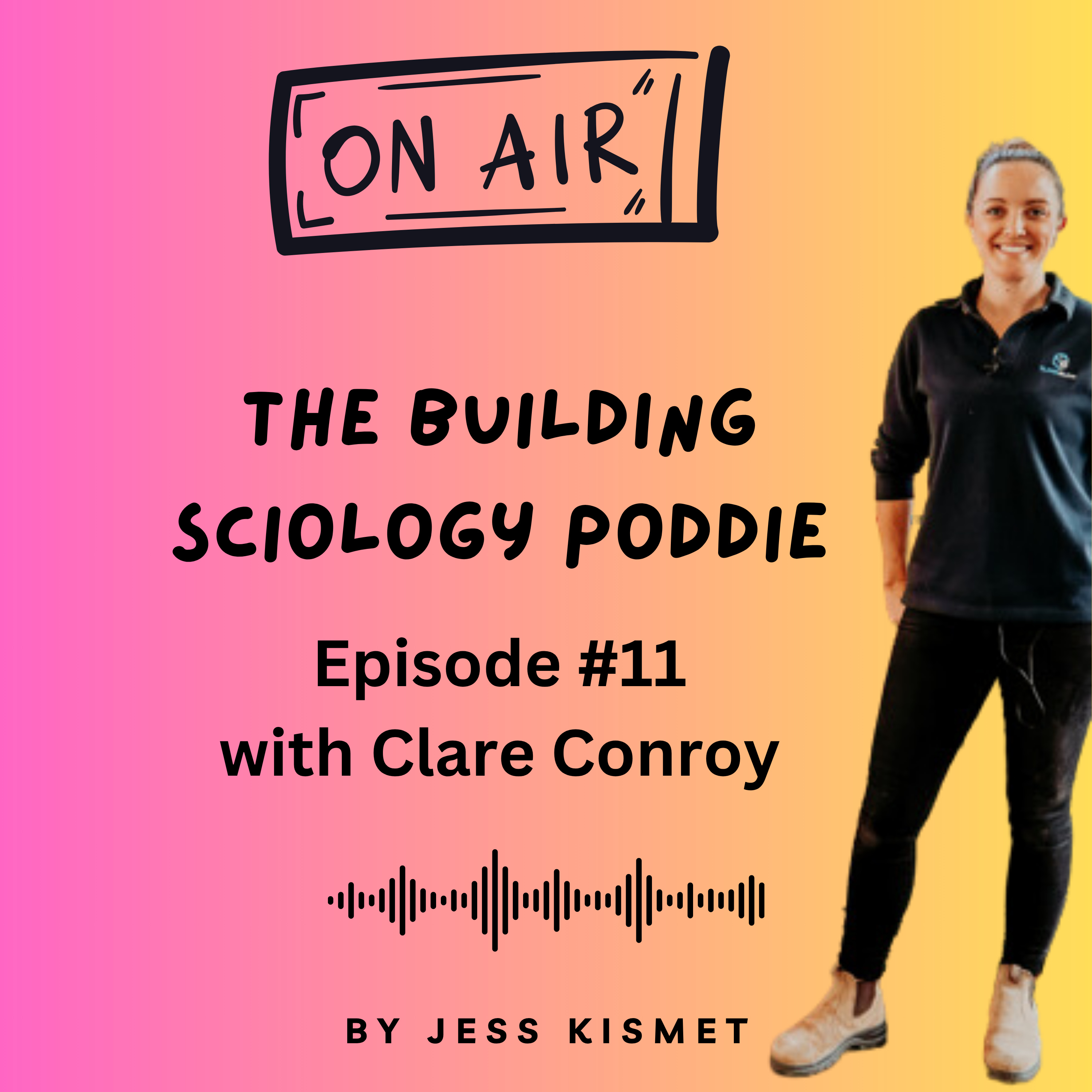
In this episode of The Building Sciology Poddie, I chat with Clare Conroy, who shares her unique journey from homeowner to project manager at 35 South Building Co. Clare opens up about entering the construction industry, overcoming imposter syndrome, and the importance of relationships and trust in building. The conversation explores the responsibility that comes with creating homes, the misconceptions around energy efficiency, and how building smaller can still mean building better.
Clare also introduces her inspiring new project aimed at making building science accessible to children through storytelling - teaching concepts like insulation and orientation in fun, engaging ways. We highlight the urgent need for better education around building performance for both professionals and the public, and the power of knowledge sharing to create meaningful change in the industry.
Show notes can be found here
Thanks for listening. Happy healthy building!
0:00 Hello and welcome to the Building Psychology Potty where we talk about better buildings to live and breathe in. Today my guest is Claire Conroy. Claire works for 35 S down in Victor Harbour, down on the Flurio Peninsula. Down in the Flurio Peninsula. Try saying that three times really fast in SA. I met Claire last year at the Proclaimer Australia study launch and then we followed that up with a presentation to 35 S and some other local builders last year as well. So thank you, Claire for coming on to the show to have a chat about your your experience in the industry. Thank you for having me. No worries. So first question, how did you get into the construction industry?
0:44 Well I guess I'm I'm fairly new to the construction industry. I've been working in the construction industry for less than 12 months, but my entry was as a homeowner. So I built a home in 2223 with 35 S building code and learnt an enormous amount through that experience. As most people who are going through that building process too and just formed such a good relationship with the guys from 35 S and at Handover, I was showing them some nerdy spreadsheets that I've been using throughout the construction process. And, you know, we had a little bit of a joke about, Oh, well, you know, maybe one day you should come and work for us. And then about, I must have been about four or five months later, I actually got this call saying, oh, you know how we used to joke about that.
1:32 Would you actually like to come over? And it's been such a great move. So I, it's not like anything that I've ever done before, but there's like been a lot of transferable skills that I've been able to bring and just really enjoying learning in this new environment. That's so cool. So you've had a complete career flip, a complete career change. Absolutely. Yeah, that's so cool. That's some of that's something that, you know, most of us only dream of being able to go into a career that we really love, you know, just by chance. Yeah, that's so cool. Yeah. And to be able to do it without any, I don't have any construction qualifications or design qualifications.
2:16 And so to be able to make that move, you know, later in Korea without that that kind of experience is, is really rare. So I'm really grateful for this opportunity to to do that without having to, you know, retrain and, and start, you know, right from the bottom and work your way up. So yeah, it's been a lot of fun. It's going well so far. So what role are you? What role have you filled at 35 S Building Co? I've got a lot of roles. I'm, I'm not on nothing to do on the tools. So it's a, it's a kind of a project management, contract management role, kind of a business system improvement role. And I think that as a lot of people would appreciate in the, the building industry, it's one thing to be able to build really great houses.
2:59 It's another thing to be able to run a really great building business. And so the team at 35 S are fantastic builders, but where I guess I've come in is to support them in in, you know, managing a great business and also delivering a really fantastic client experience as well. I think we really believe that building a house is like a real journey, a real investment of time and effort. It's one of the most significant decisions that's going to influence your life and your family's life in big ways. And so we really want to make that a really positive experience. Yeah, that's so cool. Good on you. Thank you. What? What did you find like when you rocked up? Brand new industry?
3:42 Brand new job? What was what? What have you found to be your biggest challenges so far? Probably a fair bit of imposter syndrome coming into the industry brand new, but I think that that was probably a like a bigger fear than actually the reality. I think that I've been able to pick things up pretty quickly. But certainly there are challenges, just like in any industry with the acronyms and terminology that you don't know and having to get across these different ways of working. But I think I've been, yeah, pleasantly surprised for the most part about how quickly I've been able to do that and the like, the strength of relationships that I've been able to build. So it's actually been relatively smooth so far. Good.
4:36 I'm glad to hear it. I'm really glad to hear it. So you decided to move into this industry after building your house. So yeah, that that process, was it construction that you liked or was it the way that company did their construction? Like what? What was it that actually sparked your interest in this? I guess a few things. So I was previously living in Canberra for about 20 years and so I had gotten to see the work of Jenny Edwards Lighthouse Architecture and Science and really admire the work that they did, went along to Sustainable House Day and seen their open homes, et cetera. And so it was really influenced and, you know, thought that would be a really positive goal was to, I would love to build a house and build a house come up with that intention and with those values at the core. So I was lucky enough to do that in 2223. And so I guess I enjoyed like lots of aspects of the process, the the design, the construction, but also I think building is such a relationship business and so really enjoyed forming that relationship with the team. And I love the blend in construction design and construction of like creativity and problem solving, like creativity and science is this real nice, nice blend. So I think that I don't know tick the boxes for me intellectually to be able to play and and learn in those in those ways.
6:03 Yeah, yeah. And 35 S they build high performing homes, do they? Yeah. I mean we've done a range of range of homes, but certainly have an interest in in high performance homes. And so that was one of the things that attracted me to working with them was that they had had some experience using, you know, high performance products and and doing that kind of work. Yeah, yeah, yeah. That's awesome. And this all inspired you to start your mailing list. So you're sharing the, yeah, sharing the education, which has been so great because I am learning so much from, from your huge letters, honestly. Thank you. And getting some really cool resources. So tell us a bit about the Learning and Sharing mailing list.
6:47 Yeah, so it's, it's called like the the build notebook. And it's this idea about kind of, yeah, just sharing a a fortnightly capture of what I'm learning along the way. And I guess there are you were a significant inspiration for this in in sharing your learning as you embarked on your new study. And what I really liked about that is that he like you clearly have a lot of expertise in industry, but you're doing something new. And so you're not claiming to be an expert in this area. And it's just this, this practice of kind of learning in public. And I think that that idea of learning in public is a value that I hold really. Yeah, like it's really kind of central to, to how I like to show up.
7:29 My, my previous background was in kind of HR and leadership development. And I, I just think that that that learning is such a great practice to do. And, you know, I, I think about the work that I want to do ensure that it's like we're 35 S and the impact I want to make there. But like, like you, I want to have a bigger impact beyond the direct kind of work that I'm doing today, today. And I think just if, if, what I learn along the way, if I can share that with others and, and makes a little bit of a impact on their project, then that's great. I think that it's, yeah, we all have a kind of a responsibility to, to think about how we can uplift the the industry as a whole because I don't know, Australia dates better houses. It sure does.
8:19 It sure does. And the more I learn, the more I learn, the more I realise I don't know. And the more I learn I realise that. Holy. Smokes Australian houses have got so far to go. Yeah. I think and what I'm seeing like, and obviously you've been in the industry much longer than I have, but I just think there's just this massive acceleration happening in terms of learning around, you know, high performance and healthy homes. Like, you know, to think where we were two years, five years ago, like it's just worlds apart. And, and what I'm really liking is how the learning seems to be coming from all parts of the industry. It's not like there's some kind of innovation lab in some institution and it's kind of filtering down.
9:02 I'm learning so much from just what other builders are figuring out on site and there's innovation happening there. And I from what I say, I reckon there's more innovation in kind of performance detail in happening from builders than it is from designers. And it's feeding back that way. And then new products are coming on the market and then you have kind of some research happening as well. And so it, it, it's, it's definitely not a kind of a linear flow of, you know, like innovation. It's, it's really coming and from, from all sectors. And so that's why I think the sharing is so important because you can like it, it goes all over the place that and I think we're going to get better outcomes when everyone is is taking that kind of expansive view and and thinking about all, all of the things that they can learn in all of the places.
9:48 Yeah, IA 100% agree. I think that if we waited for policy and, you know, the the upper levels of, you know, the the powers that be, if we wait for them, we'll be waiting forever. So the innovation that is coming from homeowners and from builders, yeah, you know, differentiating builders, differentiating themselves from other builders to, you know, just deliver a, a higher level of product in this highly price competitive industry. Yeah, there are steel builders who are. They're differentiating themselves based on those sorts of performance details and attentions to detail. Mm, hmm. Yeah, absolutely. And minus yeah. And I just think that there's, I mean, maybe it's like a little bit woo woo, but I think there's so much that more that goes into a house than just the, you know, construction methodology. There's a real kind of energy and intention that comes into a house.
10:40 And I think that you're working with builders and with a team that I guess has that care and intention and commitment to quality that's gonna infuse the the house in like a a range of both tangible and intangible ways. So yeah, totally on board. Yeah, Yeah. Couldn't agree more. So you're a woman, I'm a woman. What has been your experience as a woman in this construction industry? It's quite topical at the moment. In particular, this women in industry is ramping up at the moment. There's more women going into trades and more and more women being found on construction sites.
11:22 So particularly as you came in without any construction experience, what's your experience been like? Well, I was pretty nervous about building my house and doing it as a single woman and embarking on that journey because you see these stories I like this was AI was kind of doing this by 2122 when there was that whole COVID, you know, storm happening and it was almost every day you'd hop on a news website and there's another builder collapsing. There's just like these stories like the TikTok site inspector guy, you know, with all of these, like all of these kind of conflict in the construction industry. And so I was quite nervous about how it might go, both because I didn't have any, you know, experience and as a woman as well.
12:10 But I think that's something that I was pleasantly surprised by working with 35 S is that that was like never an issue. And that's kind of carried through to all the trades they work through. I think that just having those values of just like being decent humans, actually it is it's really important and really central to to their business. And then like the other thing is 35 S are part of the live life field, elevate community as well. So I've gotten to see and hear from a lot of builders in through that platform. And again, was really pleasantly surprised by like, oh, there are some really good guys and, and women in this industry and I have found it nothing but welcoming in, in that respect. So I think it's probably for me, it's about just kind of like finding good people and like they are there and, and making connections too.
13:08 And I think that there are, there are some women who are doing fantastic stuff in the industry and women that I really look to like you and Amelia Lee and Jenny Edwards and Sarah Lebner and like all of these people who have really influenced me in building my own home. And I think are just really positive role models for the way that I kind of, I guess women can kind of show up and contribute and add value in this industry. So I, yeah, so far I've found it really positive today. And I know that that's not the experience and probably the onsite experience is can be quite different for women, I imagine. But I think I definitely feel like there's a shift happening and I would love to see more women in construction and women connecting with other women in the in the sector to make it a really positive industry for for all. Yeah, yeah, I'm the same.
14:07 I have not had a single negative experience with any professionals in this industry or any any anyone on site either. So I am so happy about that. And yeah, I just, I feel nothing but sort of positive towards the industry as a whole. I have no, no resentment, which is really good. Absolutely, yeah. Diversity definitely brings strength, right? And I think in, in all organizations, not just in construction. So I think that, yeah, different kind of skill sets and mindsets, perspectives, values can only enhance the, the industry. And I think one of the things that Amelia talks about, which is, is really interesting that when it comes to design and decisions around home building, there's often women who are making a lot of those decisions.
15:09 So I think having in, in, in construction, if you've got women on your team who, who are kind of, yeah, like bringing a different perspective, perhaps a different way of relating to clients, like I, I think that's only going to to a belly. Yeah, yeah, 100% agree. So as someone who is always learning in this industry, what do you think the knowledge gaps are? Or misconceptions around construction and energy efficiency that you think that anyone listening might might should be aware of? Oh wow, where to start that more expensive equals better? I think that that's probably a big, you know, misconception.
15:50 The more I spend on my house, the better it's going to be the yeah, I think that there's probably, or like that it has to be complicated, or that it's, yeah, that it's expensive or that it's inaccessible or that it's unnecessary. Like it's very necessary to give some thought. And so if you ask people like if they care about energy efficiency, like some would say like, no, not really. You know, I'm just going to have my house in solar panels and it'll be fine. But if you said to people like do you care about having a house that it feels comfortable or that it is healthy to live in or is not going to make you or your family sick, I think might as well say, yeah, actually I, I, I want that very much. So where am I going with this?
16:34 I think it's just the, the, the, some of the, the misconceptions are that it's this like extra luxurious add on. But really it's, it's something that can be integrated and integrated in fairly simple ways. So certainly there's a lot of complexity in the science, but there's also some really simple principles that I think are are worth understanding. Yeah. Yeah, I think that I know in my previous job, we, we did energy efficiency assessments and I actually had people call me up and say to me, this house is not comfortable. Why isn't it comfortable when they've gone through the building code energy efficiency compliance process?
17:17 And I think that I think 1 the from my perspective, one misconception is that the building code means that you'll have an energy efficient house. Doesn't mean yeah. And secondly, the other misconception or not misconception, but mistake, I guess that I think people make is not thinking about how they're going to feel once they're in the house. They're thinking about how it's going to look and entertaining their friends on a Saturday afternoon in the outdoor area. And that's that's a massive priority because that affects how you feel in your house is how you move in. But in as far as the Peace of Mind that comes along with comfort and health, I don't think that that is integrated into people's thought process as much as it should be or needs to be at the start.
18:05 Totally agree. I think that's a big learning for me that I, I probably over kind of indexed on the, on the energy efficient thing, energy efficiency thing because it's, it's the thing that's most prevalent in public and there's a star rating and there's a, you know, the, so that's what that was certainly my, my focus when, when you're thinking about like a high performance building that the energy efficiency was front of mine. But one of the things I don't think I quite, quite right in my build is that you've got all of these levers to pull around like energy efficiency and like an air tightness and you know, and like condensation management, etcetera. Like there, you can't kind of just do 1 without the other. There's a real kind of system that needs to be. And I know that you've posted and spoken about this a lot that you, you need to kind of consider that, that, that system holistically.
18:54 So I think that's probably one of the misconceptions that, like you said that, you know, I, I get a decent energy rating and everything will be fine. No, actually, there are a whole range of things that you need to consider both in design and in construction. And they really need to work together. And that's why having like a good team is so important. And, and, and just really taking the time to, to learn about how all of those things work in conjunction. And because if you overemphasize 1, you could be unintentionally causing compromises somewhere else. It's time for a quick sponsor shout out. Today's episode of the Building Psychology Potty is proudly brought to you by our amazing sponsors, Enduro Builders and Climbersure.
19:39 A huge thank you to these incredible businesses for supporting the podcast and helping us spread the word about better buildings to live and breathe in. Your support makes this podcast possible. Please head over to their websites and follow their social pages 100%. I actually went into a house that I, I did the energy assessment for this house and then I met, I actually got to go inside it just by pure chance and I remembered it and I tell the story a lot because this is one of the things that spurred me on during my like earlier years in this industry to go into this high performance space. So I've done this energy assessment. And we'd use an alternative solution because another massive misconception that people have in building a house is that the only way to get through the building, the building code, energy efficiency requirements is using a star rating. There are, there are in the particularly in the older building codes, There are, there are alternative solutions that do not equal star rating performance. So we use an alternative solution on this house. And I remembered this particular space in the house where there was a window overlooking the pool and there was a bench. And in the plans that I had assessed, the window was above the bench level.
20:56 It stopped at the bench level and you could just see over into the pool. And then when I went into the house, the window had been taken all the way to the ground. So it had been extended down about 900 millimeters to the ground because the homeowners decided they wanted floor to ceiling blazing and and that looked fantastic. But the knock on effect of that is a massive amount more heat loss, massive amount more heat gain and probably a lot less comfort in that in that space. And that was leading on to like the main living space as well. So just, yeah, just all of those, all of those little things that get changed on site.
21:37 And I don't even think when I mentioned it to the builder, he didn't even know. I said, did you get an amendment on on your energy assessment for this? And it looked at me like, no, how did I do that? Yeah. And you know, that may have made the difference between passing and not passing the building code, because that was a big change. Yeah, that's huge. And I think that this is where good design can really come into play, especially around glazing and natural light. I think that when it comes to like optimizing your your home and getting best performance and best outcome generally, like glazing is such an important one to consider and it has a massive impact on the feel of the house and the natural light, but also obviously on the, the energy efficiency and cross ventilation.
22:22 And so I think that like that's something that's really worth working closely with because it doesn't like sometimes you don't need more glazing in order to get, you know, better natural light or a great view. You can really transform the the feel of the space and the function by like putting windows in good spots and, and making them operate in in ways that that work well. So yeah, that's yeah, I think that's overglazing is a massive problem and it probably doesn't need to be so bad if people just thought more intentionally about where their windows go. 100% because windows are expensive and bigger the windows, you know, the better performance they need to be to keep the energy efficiency of that house in check and more expensive they get something that my old boss used to say was it costs, it costs the same to put a window in the right place as it does to put it in the wrong place.
23:19 So this is all just about playing with with orientation, with speed, you know, just working with your sights, working with the sun and just making sure that those openings are in optimal places. And knowing that that even matters. Knowing even knowing that the sun moving across the sky makes a difference to the heat that comes into your house. Like, I don't actually think that occurs to some people. Yeah. And it's hard to get a handle on. Yeah, it's hard, really hard to get a handle on like with a like when you're not in the house, like how the sun moves. And something that I've really noticed here and that that actually on a lot of my like even like my Southwestern windows, like in summer when you're actually getting quite a bit of gain through through those.
24:08 So I think that's the other thing that in a, in a climate that's changing, we're gonna want a lot more flexibility in the homes that we're designing. So it's, it's about having like flexible shading solutions and all of these ways so that that we can I guess like use our house and really respond like we're getting heat waves in late March. So if you've designed your house with, you know, overhangs that are great in January, in in March, you're going to be getting a whole heap of solar again that you don't want. And yeah, so having that like that kind of flexibility in in design, I think is, is really important as well. Yeah, for sure. And another thing that I don't know is, is super well understood is that you need to, you need to sail a house the way you sail a ship.
24:53 You need to actually open it up, have adjustable shading based on the time of year, you know, have windows that are openable based on when you know the prevailing winds. You know, you actually have to interact with your house in order to keep it comfortable. It's not a set and forget situation unless you build a certified passive house, but even then there's there are certain things you need to do to keep it comfortable throughout the, you know, the whole way through the year. So yeah, having, having adjustable shading and things like that are really, really important. Yeah. So in your let's move to the next step. Let's move on to the next question.
25:35 The perception around balancing energy efficiency and affordability can be tricky. So in your experience, what would your advice be for anyone out there, whether it's homeowner, builder, architect, anyone who's looking to achieve both of those things, what would your advice be? Build smaller, absolutely, and that's your biggest lever that you've got to pull when you're wanting to reduce costs but maintain quality and performance. Build smaller and, and, and you can you like that is very doable with good design. And so that yeah, that that would be my, my number one thing.
26:16 And then to think about like, what are the three things? Like you said, you know, it costs as much, but the window in the right spot as the the wrong spot in terms of like the orientation of your your home. That doesn't cost any different. Like you can have the same house and just, you know, twist it and, and that can have a big impact on the the performance of your home. So yeah, build smaller and get the orientation right. And I, I think that those two things will carry you a significant way in, in getting a great and affordable outcome. Great answer. So your career construction, your career construction, your construction career, where, where do you want to take that?
27:02 That's such a good question and I feel like I'm so new in it at the moment. So I'm still learning lots. But I think that like my previous work has been as a kind of a coach and a trainer and facilitator. So it might be nice to to see how I might be able to bring more of that to the work that I'm doing. So I don't have a defined idea yet, but I think that I want to continue to support good people to do great work. And they're a great builders and designers and homeowners and people in the industry. And yeah, finding ways that I might be able to help elevate or shine a light on or, you know, contribute my, my activities in some way to, to facilitate and kind of amplify that work would be great.
27:51 I mean, I'm also keen to just build some more houses too, right? So maybe even doing some my, you know, certain development down the track would be right. I'd love to be involved in designing and building another home. Yeah, nice. That's exciting. I've never built a house before. I've only ever lived in in crappy houses that other people have built, and they've all been crappy. Yeah, it's, I mean, it's a bit of a wild ride, but it's it's, it's pretty fun, yeah. Yeah, yeah, I would love to do it one day. Yeah, I feel like it might be like tattoos like that you once you get one, then like you get addicted to it and just want to keep.
28:34 Doing Oh, there was something else I had in my mind. I wanted to I wanted to ask you and it's gone. What were you talking about? You were saying about, Oh, I think I was just going to say about the learning what we were talking earlier about information sharing and your newsletter and everything. I think like Injury Builders who I work for, Justin Digny is an extremely generous person with his knowledge. So he will go and he'll go into any building site and talk to any builder about how to how to do what he does. And he was the first builder I saw do that. And since I joined Injury Builders or Climber Shore three, 3 1/2 years ago, I cannot believe it's been that long. But since I joined Enduro Builders, I have seen this absolute groundswell.
29:25 There's been new podcasts, there's been industry bodies started up. There's just been like Instagram accounts going absolutely bananas. There is so much industry sharing going on. And I am just, I'm so encouraged by it all. And it's like we're all, we're all in businesses, we're all out to make profit and build, build a good product, but we're also out to help each other. And I I'm really, really happy to be part of it. Yeah, I, I agree. And I think that the idea that holding onto knowledge and expertise is important because you need to like from a competitive advantage point of view, I think that that like that that ship has sailed a long, long time ago.
30:13 I think that what we're seeing now is that there's a real competitive advantage by by sharing and being very public. And I mean, I assume, like Jackson probably wouldn't do all of that stuff unless it actually was good for his business as well. And yeah, it attracts people. And the podcast that we've seen is that I think builders and designers who are doing this learning and sharing are being really clear in their values that like they, it's an opportunity for them to state what they care about, to demonstrate their expertise. But probably more important than demonstrating their expertise is demonstrating a, a willingness to learn and collaborate and share.
30:56 And I think like they're the kind of values that people want in, in their builder. And so it's such a great way to yeah, to, to, to see that and kind of to get to know people because when you're building a house, like, like you're in a long term relationship with this builder, like the, the, the building part might be, you know, 12 to 18 months, but then you've got a builder's warranty for several years and decades afterwards. It's like you want to have a, you want to trust this person, you want to be able to communicate with these people and have that really, really strong foundation. So I think all of this, this sharing is a really important part, I guess of the build a dating process, right? Or the, you know, the industry professional dating process in that like you, you want to know who these people are before you give them so much money and enter into this this relationship that's going to have a significant impact on your wallet, your health.
31:52 Yeah, yeah, like psychology, like a whole range of things. So I'm I'm really encouraged by it, but too. Yeah, for sure that old saying rising tide floats or boats. And as we said earlier that we can't wait for the the legislation to push us. It's all self driven. All of this learning that we're all of us are doing is all self driven. And yeah, it's, it's the outcomes are, are really good for Australian homes. So Claire, you've got a little idea, a little project in the works. What's that about? Well, this is just kind of a little seed of an idea, but I've, one of the things that's been actually really helpful for me is in, in kind of getting into construction and understanding new terminology and how the systems work is actually using ChatGPT to explain things in, in metaphor for me. So, you know, explaining how a house wears a raincoat and, you know, tries to keep warm.
32:45 And these kind of visual imagery and, and metaphors are actually really helpful for me for understanding systems and it, and it made me think about how might we be able to, to use story and really simple story to, to help make these kind of concepts more accessible. And so I've got two young kids. And so this idea about, you know, writing about things like orientation and insulation and condensation in an accessible, fun way for kids, I thought could be, yeah, a fun idea to help both children and adults really understand these concepts at a basic level. So that it becomes just like so second nature for my kids when they're thinking about buying or building house or even, you know, looking at rentals just to understand, oh, like how this is oriented and which side the window's on, it's going to make sense.
33:46 And asking questions about how is it insulated and what does insulation actually do? So that's my little project is to think about writing some drafts this year of some children's books to explain, you know, a handful of those core building science principles. That's a really good idea because training for people, not just builders and architects, but people just general public, there's no, there's not really much information out there, but specifically for builders and architects, there's no like TAFE doesn't teach carpenters or plumbers about airtightness or about correct, like about about moisture management and architects.
34:33 Architecture school doesn't have much focus on on building performance either. So somewhere along the line, someone's got to point out to to people who are gonna build houses and design houses that or live in houses that these things matter. And that's all of us. And this whole journey of understanding all of these, as we have mentioned already today, it's all self driven. But I think that most people do have an experience of living or being in different spaces, right? You'd be go, Oh yeah, that share house that we lived in in like here, it wasn't the sun in the lounge room. Amazing. Or remember that, you know, that holiday house that we went to is all covered in mold in the bathrooms. Like people have experience of of, you know, spaces that function and feel good and and healthy and those that don't. And I guess it's about helping them to kind of understand why. And usually it's like it's pretty basic and simple to understand why it is most of the time. So I think if we can kind of tap into the experience that people do have and the feel and not make it kind of too technical and sciency, then yeah, I hope that the general. Understanding.
35:47 Improves. Yeah, they do teach it. My kids have both had assignments at school about sustainable building. You know, they've had to do models and they've had to do designs and they've had to say what they're going to do to make this, this sort of project sustainable. But mostly it's been focusing on vegetable patches and solar panels. It hasn't necessarily been focusing on on the actual house itself. Yeah. And so, yeah, the schools are trying. They are introducing these concepts to kids in their healthcare, science lessons or whatever. Yeah. But I think that they're they're they're still more more. There's further to go in just introducing the concepts to kids and getting them to ask, sort of think more critically about the houses they're living in and why the sun is, you know, beautiful in this room or why that bathroom is so moldy or why that bedroom is so hot.
36:45 Yeah, and I think if you often like to explain it to people using the metaphor of like clothing layers, you know, like woolen jumper and, you know, a raincoat and stuff. And if you said to most people like, like, imagine wrapping yourself in plastic and they would care. Oh yeah, like I'd be toasty warm, but it kind of get pretty gross pretty quickly. And then you go, oh, so like, why would be a good idea to wrap a house in plastic then? And people, Oh yeah, like, that makes sense. And so kind of knowing, you know, that you're going to be more comfortable when you're wearing a woolen jumper and a Gore Tex jacket. So why wouldn't you? You're going to be dry and warm. So why wouldn't you try and kind of emulate that that same build up in a in a house as well?
37:33 Very good question. If there is one thing you want listeners to take away from your journey today and your experience, will that be Claire? I think the key thing is that building is such a huge privilege. It's a massive privilege for a home owner to be able to build their own home, but also I think for designers and for builders, like what an enormous privilege that we have to help people realize their dreams and create lifestyles and homes that kind of nourish them and their families. So it's an incredible privilege to do that work. And I think like to paraphrase that Spider Man quote, with great privilege comes great responsibility.
38:18 And so I think that we've got to, like, do it with intention and like and take that privilege and responsibility seriously. Maybe you were wanting a really practical tidbit. That's my, that's my philosophy, yeah. Yeah, there's, there's a vast range of a vast range of quality and finding a builder that takes that responsibility seriously is key to key to the outcomes that are going to live, you know, be with you for a very long time after the house is finished. Yeah, absolutely. And like the, the construction industry uses so many resources like environmental, like physical resources, but in terms of financial resources and energetic resources, like the labor that goes into building, I just think it's really important to think about like how we deploy those resources in the in, in the best way.
39:20 And like you know, you're reducing the amount of wastage and and I guess investing those resources in a way that's going to yield, yield benefits both kind of financial and non financial down the track. Yeah, yeah. Well, thank you, Claire. That's all. You're welcome. We have time for today, but that's we'll just we'll wrap up our conversation there. I appreciate you taking the time out to have a chat to me. Yeah, no worries. Thank you so much for having me. All right, that is all for today. Thanks so much for tuning in. There'll be another episode on a fortnight. So if you would like to listen into the types of conversations that I have all the time, please subscribe on your chosen platform.
40:02 Write the show, leave a comment, whatever you like, share with your friends and family. I'd love. For you to spread the word about the building's clerology potty, there's a link in the episode description where you can head to a landing page and there are some show notes there with relevant links and a full transcript of the show as well. And also links to my socials. So if you're not already, I'd love for you to follow along there too as I share lots of building science and building biology tips. There's also a contact page where you can send me an e-mail or even a voice message. So if you've got questions or suggestions or guest ideas, I'd love to hear from you. I want to know what you want to know, so please get in touch with me. Thanks again. I'll be back in two weeks, so until then, happy healthy building.
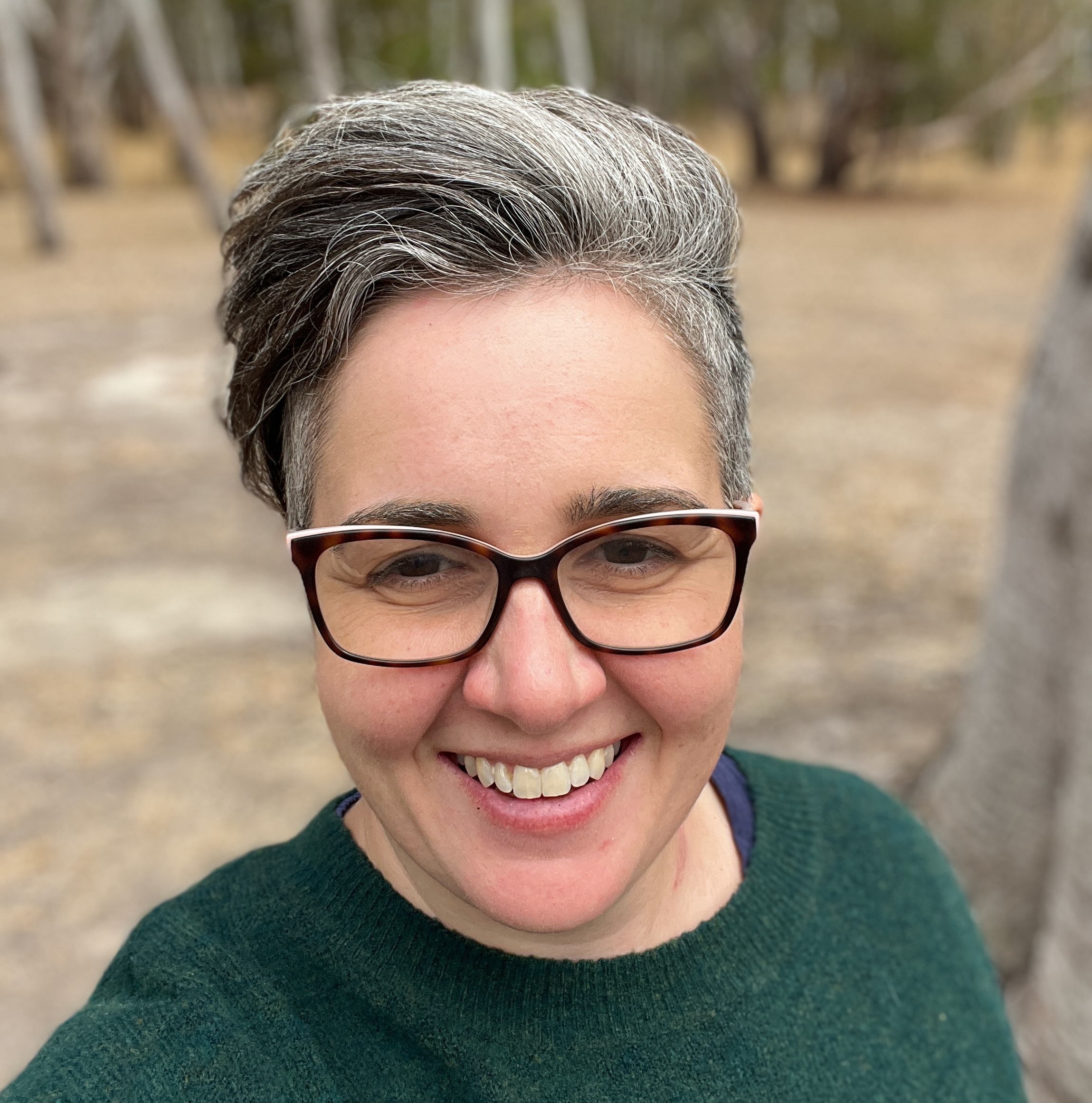
Clare's interest in building a home started way back in Year 9 when she designed a house for a science project - complete with off-grid electricity and composting toilets!
A move from Canberra to the Fleurieu Peninsula at the end of 2019 gave her the chance to turn that dream into reality. In 2021, she commenced a project to design and build a new home, working collaboratively with a local designer and 35 South Building Co.
The relationship Clare built with 35 South during her own build led to a natural next chapter - she has since joined the team, focusing on business processes, project management, and client engagement. Passionate about supporting others to build intentional, values-aligned homes, she regularly shares what's she's learning about the residential construction sector in her email newsletter, The Build Notebook. Clare is now also about to commence a Certificate IV in Building and Construction, deepening her technical knowledge to complement her hands-on experience in the industry.