Apple Podcasts

 Spotify

 Youtube Music

 Amazon Music

 iHeartRadio

 Podcast Addict

 PocketCasts

Heather Bacchus is a Minnesota mother, author, and advocate whose life changed forever when her son Randy died by suicide at 21 after cannabis‑induced psychosis. Randy began using marijuana at 15, believing it was safe and creative. By 17 he was diagnosed with cannabis use disorder, and despite therapy and treatment, his condition worsened. At 21, he experienced psychosis and paranoia, leaving behind journal entries and videos documenting his decline.
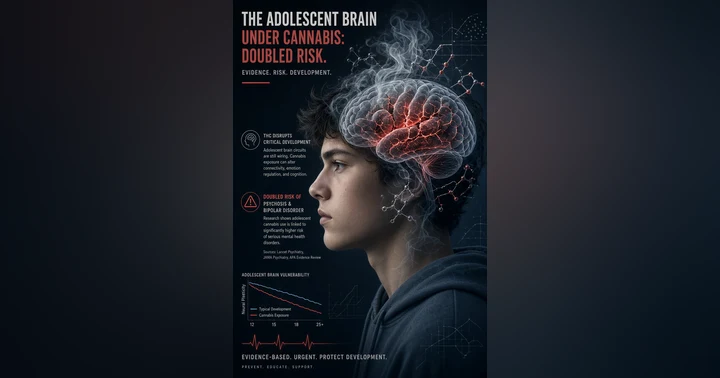
Heather and her husband Randy founded Be Extraordinary. Be You., a nonprofit dedicated to educating parents, youth, and communities about the dangers of high‑potency THC. They present Randy’s video in schools, showing students the real impact of marijuana on a developing brain. Heather emphasizes that today’s cannabis is far stronger than in past decades, with THC levels reaching 80–99%, and that psychosis is a real risk.
She is also the author of A Higher Love: A Journey Through Addiction, Cannabis‑Induced Psychosis, Suicide and Redemption, which blends her family’s story with scientific evidence and a call to action. Heather speaks nationally, testifies before lawmakers, and partners with organizations like Smart Approaches to Marijuana (SAM) to push for safeguards and awareness.
Her message to parents: do your research, learn the science, and approach your children with love, not anger. Addiction is powerful, but prevention and education can save lives.
Resources:
- Website: Be Extraordinary. Be You
- Book: A Higher Love (Amazon, IngramSpark)
- Advocacy: Smart Approaches to Marijuana (SAM), Parent Action Network
Voiceover
The addiction podcast Point of no return.
Joanie Sigal
Heather Bacchus. Am I saying your name correctly?
Heather Bacchus
Yes, you are.
Joanie Sigal
Thank you for joining us today. As I said before we started, I'm so very, so sorry for the loss of your son. Would you share with us what happened?
Heather Bacchus
Sure. Our son started using marijuana right at around the age of 15, and it was with kids that we knew, love and trusted, that were his friends.And my son quickly became a fan of it. He believed all the talking points, that it was medicinal, that it made him more creative. He bought into it pretty quickly, hook, line, and sinker.And within the first two years after he started using, by the time he was 17, he was diagnosed with cannabis use disorder. And we sought help and tried to do what we could. We sent him to wilderness therapy.We noticed a drastic change in Randy's personality, and by the time he was about 18, he moved to Colorado, a legal use state. He had 19. He had his medical card, and it wasn't for medicinal purposes.It was because he knew, and he was smart, that he could have easy access to a legal product and what he determined was a safe product, although it wasn't for him. And by the time he was 21, sadly, he had undergone psychosis and he died by suicide. And we're coming up.We're just nine days away from the fifth year anniversary of our loss.
Joanie Sigal
I can't even begin to imagine being a mom. Yeah, I'm really sorry.
Heather Bacchus
Thank you. Thank you.
Joanie Sigal
You know, there is, there are so many misconceptions out there about the quote, unquote, new marijuana.And I feel like we could talk about it for every week for the next three years, and there would still be parents who don't know, who haven't educated themselves and who think it's okay.
Heather Bacchus
Yeah, it is.And I think the, the problem is people really, like, if you go to Google marijuana, you find all the positives, you find all of the industry, you find dispensaries that are selling and they present it in this manner like it's safe, it's okay to use. And the, the reality is it isn't. It is a much stronger product than what was around in the 80s and 90s.And that's where we need to get our parents caught and up to speed and grandparents too, that today's drug is just a whole different drug than what it used to be.
Joanie Sigal
Right. And when we spoke to Dr. Ken Finn and he talked about having discussed it with psychiatrists in Europe, they know that it causes psychosis.They know it. And it's. It does it causes psychosis? And so anything that causes psychosis to me would not be considered safe, in my view.And I think that that's something that parents need to know. It can cause psychosis. Will it cause psychosis in your child? Maybe not. Do you want them to take that risk? I certainly wouldn't.
Heather Bacchus
Right. It's just not worth it.And you know, you look at all the drugs that are advertised on TV and they have a long list of side effects and yet we're touting this as medicine and there is no list of side effects. And truly, psychosis could be a side effect.
Joanie Sigal
Yep. And like I've said many times, it's Russian roulette.
Heather Bacchus
Yes.
Joanie Sigal
And would you give your child a loaded gun and ask them to spin the cylinder? Of course not. You would never do something like that. And I'm not. I don't mean you particularly. I mean just the listener. You wouldn't do that.So why let them do marijuana and hope for the best? It, you know, anyway, makes no sense. It doesn't. It doesn't. And since the loss of your son, what have you learned?
Heather Bacchus
Oh, we've learned so much. One, I didn't know nearly enough about addiction. I truly didn't understand that addiction is more powerful than anyone can imagine.I didn't know how to handle my son while he was in addiction.Although we sought the help from therapists and licensed drug and alcohol counselors, I think people were for the most part well intentioned in trying to help us. But we didn't know what we didn't know. Our hindsight would tell us that addiction is a journey. It doesn't have an end.People can get better and they can be in recovery. Relapse is part of recovery. And then regarding the substance use part with Randy, I guess I wish I would have known how strong today's product was.Of course, people told us it was stronger, but we had no context. We didn't know that it used to be 3% and now it can range up to 99%.THC had no idea of the different types of marijuana that was out there and nor did I understand how available it was, even though at the time we were in a legal or an illegal state. It's now legal here, but even when it was illegal, it was easily accessible.And in asking the kids, I think parents need to know that their kids can get their hands on this, be it illegal or legal product. And yeah, I guess. And then helping our son, we did what we thought we could to help our son. We tried to love him and support him.But I guess there are legal actions we could have taken had we known he was in a state of psychosis and had we lived in other states like Florida, you can actually have your loved one committed if they're a danger to themselves or others. And we had no idea that even though he was in treatment in Florida and.And he only lasted like an hour in treatment, if we would have just kept him there, started that legal process, then maybe we could have had him in treatment even though it was against his will. There's just so many things that we didn't know that we know today.
Joanie Sigal
Right.Just out of curiosity, when you approached therapists or you went to get help for him, did you run into any viewpoint that, oh, marijuana is not addictive?
Heather Bacchus
Yes. And also that it was no big deal? 75.I actually had a therapist tell me in front of my son and my daughter, who we were kind of working on integrating him back into our household, and said, what's the big deal? 75% Of the kids smoke marijuana. It's no big deal. And I about lost it with her. Yeah. Because it's just.It is a big deal, and it is not the same product. And their brains are these beautiful powerhouses that are developing, and it can just disrupt that development.
Joanie Sigal
Yep. And. And that's the key thing that they. They. Their brains haven't developed yet. And.
Heather Bacchus
Yes.
Joanie Sigal
And to do marijuana to any large degree affects that development. And anyway. Yes, exactly. So what are you doing now in terms. Besides being on our podcast today?And thank you for being on the podcast, but what are you doing other than that? To educate parents.
Heather Bacchus
Well, with our son, interestingly enough, you know, when he passed, I had this inner voice that told me something was, you know, we knew something was wrong with him, and oftentimes professionals blamed it on him rather than actually an external factor. In fact, no one ever blamed it on the marijuana that he was using on a daily basis.And so, you know, once we got into his phone and his computer, we were really lucky because we had journal entries of him showing his paranoia. He thought he was going to become a famous rap artist as part of his delusion.And he started taking video of himself the last nine months of his life where he talked about his use, his need to use for social anxiety, depression. He talked about how he thought it made him creative. He.He talked about how he thought people were tracking his phone and his computer and how he needed protection. So he. He was showing us that he was very paranoid. And we have record of this.And so what we do now is once we dug in and saw the science behind what happened after we lost him, we thought, gosh, we just have too much here. That if we didn't share this information, it would be. We wouldn't be doing the right thing.We're blessed in that we know exactly what happened with him. And if we can prevent another person's life from being lost to this, that would be wonderful if we can be there as a resource for families.So we go out to schools and we educate the kids. We do about an hour long presentation and we share our son's video.It's a 13 minute video with son snippets mostly, a lot of it, him talking in his own words. So it sort of serves as peer to peer education. And the kids can really see this decline that happens with him from the beginning until the end.And it makes it very real.And these kids will come up after our presentation and they'll say, gosh, you know, you can tell me every statistic, but when I watch your son, I can see it. And so it's very. We found it's very powerful. And our goal is not to scare people or say, this will happen to everyone.Our goal is to inform these kids and to help them understand that you only get one brain.It is growing and developing till at least the age of 25 to 28 years old, and that they need to make choices that will benefit their brain and help them so that they can have a successful future. And so that's our goal and our guidance. Our son sent us a message before he died. He used to send me songs.And one was he didn't want to die an ordinary man. And he wasn't ordinary. He was creative, he was handsome, he was entrepreneurial, he was hard working, he had so much potential.And sadly, he started using the marijuana. It changed the way his brain thought. He developed anxiety, depression, ptsd, psychosis.And you know, his last text was, you know, I love you, mom, and I'm sorry, please tell dad the same. I wish I would have been a better person. My son was a good person. It just that his brain was hijacked by this really potent drug.And that's where we want the kids to know that they can make different choices and have a beautiful life.
Joanie Sigal
I think that what you're doing is extremely powerful.And I have said for as many years as we've been podcasting that to just tell children in a dogmatic way that drugs are bad or marijuana is bad and they shouldn't do it is not going to work.But if you educate them and it sounds like the video of your son is a harsh reality and harsh education, I firmly believe that the majority of young people will make the right decision if we just give them the right information. So I think what you're doing is very powerful. Is your son's. I found a website. Be Extraordinary. Bu.
Heather Bacchus
Org. Yes, that's our website.
Joanie Sigal
Okay. Is your son's video on that website?
Heather Bacchus
Yeah, there's two different versions on the website. So we have. And the reason the video came to be is because at the time in 2023, they were talking about legalization in our state.And so we were meeting with lawmakers and we thought, gosh, let's put his video snippets together and send it to our lawmakers. And we did that. Unfortunately, it didn't have the impact that we had hoped and legalization passed in our state.But we then decided that this video, after we were talking to kids and we were sharing the statistics and things, we. But gosh, to this group of seniors, let's show this video and see how it goes. And the feedback from the kids was. It was really well, well taken.So we have two versions, a 13 minute and a 22 minute video on our website so people can access it there to see that. That's part of our presentation.
Joanie Sigal
Got it. What state do you live in, Heather?
Heather Bacchus
We're in Minnesota.
Joanie Sigal
Oh, okay. Yeah, we. We live in Florida, so we fight this battle every time. There's.I have a friend who is very active against the legalization of marijuana in Florida and I'm going to send her the link to your website and the link to the video and she can share that with the people she speaks to.
Heather Bacchus
That would be great. And hopefully they'll listen.
Joanie Sigal
Yep, hopefully.
Heather Bacchus
Yeah.
Joanie Sigal
I appreciate you what you do. I. As I said, I'm so sorry why you have to do it and what you had to go through.But I think that your message and how you're sharing it is extremely important. If you had a message for parents who maybe know their kid is using marijuana or suspect they might be.If you had a message for them, what would you tell them? How would you tell them to address it with their child?
Heather Bacchus
I would ask them to do their research and learn the science behind the drug and they can find out information on our website. There are good websites out there. If you put in the right keywords like marijuana induced psychosis, you will get studies that will show that impact.So be armed with information, but sit down and have an open ended dialogue with their child, say hey, what do you know about this?And then see what their response is and then maybe say, well here's some things that I have learned and share that information and come from it from a background of love. If I can emphasize anything, anger cannot be in this space.
Joanie Sigal
Worry,.
Heather Bacchus
Impatience, none of that can be in this space.But everything has to act out of an act of love and hopefully reach their child before they become addicted because once the addiction sets in, it is really an uphill battle.
Joanie Sigal
Agreed. Thank you. Heather, thank you for talking to us today. Is there anything we didn't cover that you want to add?
Heather Bacchus
No, but thank you Joni for talking with me and listening and giving me this opportunity to to share.
Joanie Sigal
Absolutely.
Voiceover
You have been listening to the Addiction Podcast Point of no return. For more information, reach out to us on Facebook or go to www.the addictionpodcast.com. Our email is the addiction podcastahoo.com.