Building Retail Technology With a Ceiling That Moves With You
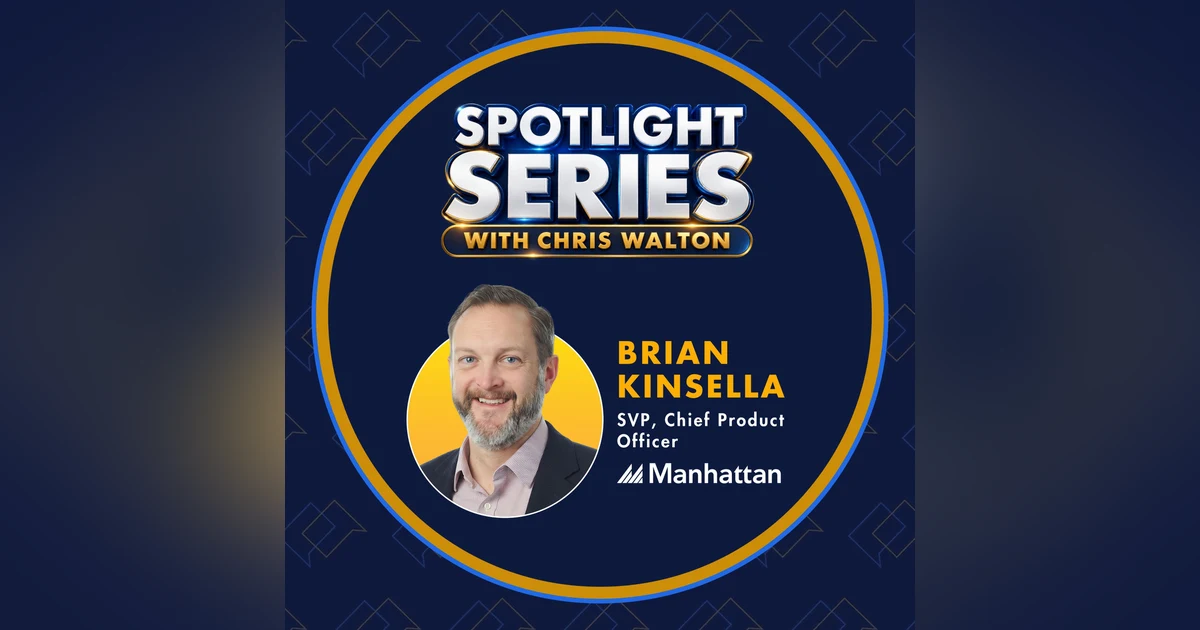


In this Retail Technology Spotlight Series, Chris Walton sits down with Brian Kinsella, Chief Product Officer at Manhattan Associates, to explore one of the biggest technology dilemmas facing growing retailers and brands: Do you start small and risk outgrowing your systems, or invest in enterprise technology before you have the size, resources, or complexity to justify it?
Brian breaks down why that tradeoff may finally be changing. As customer expectations rise and growing brands take on marketplaces, stores as fulfillment nodes, wholesale, DTC, and increasingly complex supply chains, the technology decisions companies make early on can quickly become their ceiling. And when they outgrow those systems, the real cost isn't always the software itself. It's the migration, retraining, change management, operational disruption, and time spent rebuilding instead of growing.
Brian takes Chris inside Manhattan Associates' new Editions offering, where AI can simplify implementation, and what buyers should look for when evaluating long-term technology partners. From avoiding rip-and-replace to building a foundation where "the ceiling moves with you," they break down how growing retailers can move fast today without creating a technology problem for tomorrow.
Key Topics Covered:
- 00:02:05 - Why growing retailers feel like they're constantly behind on technology
- 00:03:31 - Why customer expectations don't change based on company size
- 00:06:51 - What actually breaks when companies outgrow their systems
- 00:13:08 - How retailers can start smaller without sacrificing their long-term technology foundation
- 00:17:52 - Inside Manhattan Associates' new Editions offering
- 00:23:15 - Where AI can simplify implementations and software configuration
- 00:28:24 - The questions every CIO and COO should ask before choosing a platform
Over 8 years and nearly 200 episodes, the Retail Technology Spotlight Series has featured some of the biggest names and boldest thinkers in retail. Explore the full archive here: https://omnitalk.blog/category/spotlight-series-podcast/
Sponsored Content
00:00 - Untitled
00:06 - Do Growing Retailers Start Fast or Build the Right Foundation?
01:44 - Starting with the Problem: What Keeps Retailers Up at Night?
08:47 - Change Management: the Often-Underestimated Challenge
23:05 - AI Integration: Where It Helps and How It Speeds Implementation
27:50 - Questions to Ask Vendors Before Signing a Platform Contract
This Retail Technology Spotlight series podcast is brought to you by the Omnitalk retail Podcast Network.
Speaker AHello, everyone.
Speaker AI am Chris Walton, your host for today's interview, an interview in which we are going to explore the question of do growing retailers and brands still have to choose between starting fast or going slow and building atop the right foundation?
Speaker BYou're not just buying for today.
Speaker BYou're buying for some foreseeable time in the future if you want different outcomes.
Speaker BIt's not just the technology that has to change.
Speaker BIt's the way you.
Speaker BYou operate as a business, you know,.
Speaker AThat takes a massive toll on the organization.
Speaker BNobody really wants to hear that they're signing up for a project that large.
Speaker AThe industry as a whole is trying to build systems where the ceiling moves.
Speaker BWith you, everybody's going to have AI and everybody's going to have features.
Speaker AYeah.
Speaker AI can actually feel the passion in your voice as I'm talking to you on this podcast.
Speaker AIt's so great, Brian.
Speaker AI love it.
Speaker AIf you've ever sat on the buying side of a supply chain technology decision, you know the dilemma.
Speaker ABuy something small and simple, and you'll likely outgrow it in three years.
Speaker ABuy the enterprise platform and you might drown in the cost, the complexity, and the implementation before you ever see any value.
Speaker AAnd the worst part, the pain usually doesn't show up on day one.
Speaker AIt shows up on the day you have to rip it all out and start over.
Speaker ASo is that trade off finally going away?
Speaker AAre we at the point where technology is changing the game?
Speaker APossibly.
Speaker APossibly, yes.
Speaker AAnd to help us answer that very question, I am pleased to welcome back to the show Brian Kinsella, the chief Product officer at Manhattan Associates.
Speaker ABrian, welcome to omnitalk.
Speaker BThank you.
Speaker BGlad to be back.
Speaker AWell, Brian, let's start with the problem.
Speaker ABefore we try to get to any solutions here, let's make sure we're aligned on what we mean by the problem in terms of how we're talking about it.
Speaker AWhen you talk to the growing retailers and brands out there about their supply chain and commerce technologies, what are the decisions that keep them up at night?
Speaker AAnd did I get it right in the opening, or is the real pain actually somewhere else?
Speaker BWell, no.
Speaker BI mean, I think at the highest of levels, the.
Speaker BThe issue is everybody always feels like they're behind.
Speaker BI hear that so much from customers.
Speaker BYou know, we're starting late.
Speaker BWe're not where we want to be.
Speaker BWe know everybody's so much more advanced than we are, and in most cases, it's not true.
Speaker BI mean, you know, Things are moving so quickly and there's so much to get right.
Speaker BThat feeling like that you're on top of every aspect of it is nearly impossible.
Speaker BSo I think that's the natural feeling people have.
Speaker BAnd so, you know, I think what a lot of times they're wanting to make sure happens is whatever path they're choosing, they're, you know, they got a path forward that doesn't require them to take three steps back and go in another direction, you know, three or four years from now.
Speaker BYou know, sometimes we hear the phrase, you know, don't let's not fill any holes with cement.
Speaker BYou know, let's leave our options open.
Speaker BLet's make sure that we, we can keep moving forward.
Speaker BSo I think overall, the technology industry has responded to that, albeit in some ways slowly, but nonetheless, you know, the, the notion of building more agile software that customers can adopt as they go on and as they get to that point is the general direction of travel here.
Speaker BAnd I think that's how we've oriented our company over the course of the last couple years.
Speaker ABrian, from an industry perspective, if we zoom out and look at the industry, what, what are some of the factors that are, that are impacting the industry, that are forcing the complexity?
Speaker BWell, you know, I think what's interesting is regardless of the size of company or to some degree where that company operates, I would say that there's a core set of expectations.
Speaker BCertainly this is true within direct to consumer and retail.
Speaker BI would say that there are on an increasing basis, this is spilling over into B B2B as well, because after all, B2B customers are really just direct to consumer customers who are at work, you know, for eight hours a day.
Speaker ARight.
Speaker BSo.
Speaker BSo they have some of those same expectations.
Speaker BBut when you think about things like how easy is it for me to find the product, can I get a date promised to me that's accurate, that comes back quickly, can I check out quickly, can I get visibility on my order throughout the life cycle?
Speaker BCan I change it late in the process?
Speaker BDo I have confidence in this brand that's going to, they're going to deliver on time.
Speaker BIt doesn't matter if you're a $5 million cycling socks vendor or whether you're Amazon, a of those things hold true, those sort of core capabilities.
Speaker BAnd so that set of expectations, because frankly, of people like Amazon and, you know, Walmart and some of the things that they're doing and others, that bar continues to raise, and I'll say fortunately for us as consumers and a little bit unfortunately, for supply chain practitioners, that means that that bar that they have to live up to just continues to go up.
Speaker AThat's a really good point, Brad.
Speaker AI've never thought about just how much more complex the job is than it was when I first started in retail 20 years ago.
Speaker AYou know, especially from a merchandising perspective and having been in merch planning quite a number of times in my career, like, yeah, before I used to just be in charge of sending products to the store.
Speaker ABut now you've got marketplaces, you've got stores as fulfillment nodes for pickup and store.
Speaker AYou've got ship from store, all those different things complicating the merchandise planner's job.
Speaker AAbsolutely.
Speaker BAbsolutely.
Speaker BAnd look, I mean, every company is ever chased with the growth challenge, right?
Speaker BHow are we going to make our growth number?
Speaker BIn a lot of ways, frankly.
Speaker BJust like for us, it comes down to how do we reach new markets.
Speaker BWell, we, of course, as a software vendor, have to do that, but our customers have to do it, too.
Speaker BSo to your point, they've got to go take their wares and sell them through marketplaces.
Speaker BThey've got to sell them through partners, they've got to sell them through brick and mortar.
Speaker BThey got to sell them direct.
Speaker BThey got to find wholesale partners.
Speaker BAnd that adds more and more complexity to the core supply chain in terms of taking orders and delivering orders.
Speaker BAnd by the way, the expectations for the execution, what operational excellence means is getting harder to meet, not easier, as the overall scope of complexity gets wider.
Speaker BSo I think back to the.
Speaker BWhat keeps people up at night?
Speaker BI mean, I'm a good sleeper, so nothing really does keep me up at night.
Speaker BBut in the spirit of the question, I think that's really the things that people are struggling with.
Speaker AYeah, yeah, but your point is great.
Speaker ALike, if you're a. Yeah.
Speaker AIf you're a growing brand, like, it doesn't matter what, it doesn't matter the size you are, because the expectations of the consumer are going to be the same because the big guys have trained us to expect things from you regardless of your size.
Speaker BSo.
Speaker AAll right, so let's dig into the other side of the equation.
Speaker ASo I want to talk about, you know, the replatforming side of the equation, the replatforming pain.
Speaker AYou've seen a lot of replatforming projects up close.
Speaker AWhen a company outgrows its systems, what actually breaks?
Speaker AAnd is there a part that people consistently underestimate as they're going through a replatforming.
Speaker BOkay, yeah, so let's take those.
Speaker BThose Two parts of the question sequentially.
Speaker BSo what typically breaks?
Speaker BWell, number one, and I think this could be a little bit surprising, but we see this a lot.
Speaker BSometimes the pure scale breaks.
Speaker BAnd especially for fast growing businesses, a system that can handle 10,000 units a day, oftentimes in a four walls of a warehouse asking it to handle 50,000 or 100,000 is a genuine problem.
Speaker BThe same thing is true of something like core order when you're processing a certain number of orders.
Speaker BAnd remember, back to complexity, increasing order management.
Speaker BNow it's not just about taking and fulfilling orders, it's about promising them in the first place.
Speaker BAnd that means you have to handle about 100 times the number of requests that you do when you're just processing orders because so many carts go unfulfilled.
Speaker BBut we still have to service those carts and say, if you buy it today, here's when it's going to be delivered and do all of the same magic math in the background.
Speaker BBut so when you put all that complexity together and put that scale together, a lot of times customers will come to us and say, what I have now, I just don't have confidence that it's going to make it through the holiday season.
Speaker BAnd, and we've all been in and around, you know, retail for a very long time.
Speaker BYou know, that's a, that's a death knell, right?
Speaker BYou fall over during, you know, a few key days.
Speaker BThat's a real problem.
Speaker BAnd I'll say a lot of times when we're having conversations like this, people might naturally think, oh, we're thinking about smaller vendors or vendors who maybe aren't investing as much anymore.
Speaker BWe hear this from customers of very large tech vendors, but maybe it's for their products that they're not traditionally known as transact vendors.
Speaker BMaybe they're a little bit more back office.
Speaker BMaybe it's a product that they haven't been investing in so recently.
Speaker BSo any of these paths can wind up being to some degree a dead end that customers have to back up and say, okay, where do I want to go from here?
Speaker AGot it, got it.
Speaker AAnd so is.
Speaker ASo back to the second question.
Speaker AIs there a consistent point of underestimation when they're, when they're trying to do this type of project?
Speaker BWell, you know, the one, the one that you hear a lot is I underestimated the change management component of it.
Speaker AReally?
Speaker AThat's what they're, that's the, that's what they don't expect.
Speaker AHuh?
Speaker BOkay, Well, I mean, yeah, especially if now I would say as a software provider, we need to take that as a challenge as well, because we should be.
Speaker BOne of the things that we should really be focused on is creating as little of a training requirement as possible.
Speaker BSo I would say that's a shared challenge between us and our customers.
Speaker BBut I will tell you, like for example, with our latest generation point of sale system, our customers don't really train their associates on it for the same reason that no one trained you how to use, you know, a Shopify website or a Salesforce website or something.
Speaker BIt's supposed to be intuitive, you just know how to do it.
Speaker BSo like the industry is getting there.
Speaker BNow when you start to get into a bit more, I'll use the word, complex pieces of software like transportation optimization, demand forecasting, that again, you know, we should try to make it as simple as possible.
Speaker BThere is going to be a little bit of training involved, but that's where some of that change management can come in.
Speaker BIt's not just the technology, it's.
Speaker BI've done the job a certain way for all of these years.
Speaker BAnd look, this is another part of the conversation.
Speaker BIf you want different outcomes, it's not just the technology that has to change, it's the way you operate as a business.
Speaker BAnd if I change you as the way you're operating as a business, that's going to feel a little bit painful for some of the associates if I haven't taken them by the hand and said, well, we used to plan the shipments manually, but now we have an optimization engine that does it.
Speaker BSo now what you're going to do is you're going to review the results and approve them.
Speaker BYou're not going to drag and drop them all together by hand every day.
Speaker BWell, if you don't lay the groundwork for that conversationally, that's going to feel pretty painful for the people that's been that have been building those shipments a certain way for 15 years.
Speaker AYeah, that's a great point.
Speaker AIt's always a good call out too to remind people like, yes, you're going to implement technology, but the people and the processes around what they do all have to adapt as well.
Speaker AThat's what you're saying, Brian?
Speaker BAbsolutely.
Speaker BBecause, you know, the other, you know, the old expression is you don't want to just, you know, pave the cow path, right?
Speaker BOr pave the horse path, meaning you're just going to put it in industrial strength scalable way to do the same thing.
Speaker BI mean, you can and you'll do more of it.
Speaker BBut if you want to improve your KPI, your throughput metrics, your cost per unit, your cost per order, your click to deliver times.
Speaker BSomething has to be done differently and usually a technology project is sort of the vehicle for how that change happens.
Speaker ARight, That's a great analogy.
Speaker AI've never actually heard that.
Speaker AI've never heard that.
Speaker AIs there an organizational tool that, that a big replatforming takes?
Speaker AI always, you know, I always hear the big replatforming things like they're going to take years and efforts.
Speaker AAnd I got to think that's just a massive, you know, that takes a massive toll on the organization because you've got, most of the time your best people are focused on making sure that thing works.
Speaker ARight?
Speaker BYeah, well, I will say that again in terms of the direction of travel or the vibes, if you will.
Speaker BYou know, 18 to 24 month projects, these things are really out of vogue.
Speaker BYou know this nobody really wants to hear that they're signing up for a project that large.
Speaker BPerhaps there are still elements of ERP migrations that take that long or longer.
Speaker BIt's not really our world.
Speaker BSo I don't know as much.
Speaker BBut I will say for, you know, vendors like us who are focusing on supply chain execution or commerce or something, there's a certainly the pendulum has swung to how fast can you get me live?
Speaker BHow fast can you generate value?
Speaker BAnd I will say the most, you know, reasonable customers are willing to say, and in exchange for that, don't have to have every feature turned on on day one.
Speaker BI'm willing to grow into more capability in the coming months and quarters after that.
Speaker BGo live, but don't wait.
Speaker BDon't make me wait nine months or 14 months to turn on that site or to turn on that channel.
Speaker BI want to turn it on in three months or four months and then iterate from there.
Speaker ARight.
Speaker ASo Brian, to that point, then, like what is, what is the right path that we're ultimately talking about here?
Speaker ABecause like for years, you know, the path has been start with point solutions, then graduate to an enterprise platform when you get big enough.
Speaker AIs that path still a reasonable path or is there a different way?
Speaker BWell, you know, I think if you were to look at what some of the leading SaaS providers, you know, have done, what they've tried to do is to say you can kind of have your cake and eat it too.
Speaker BWe understand that for many companies they will feel like the most sophisticated set of capabilities.
Speaker BThe superset of what a vendor can do looks intimidating, is too much.
Speaker BIt's probably too expensive, it's probably going to take too long to turn on.
Speaker BAnd in many cases they're correct about that.
Speaker BBut what I think we're trying to do, and there are others who have done this too, is to say, well, we're going to give you that kind of kernel, that core set of best practices.
Speaker BAnd by the way, like for us in the case of Warehouse, that would be built on the back of 30 years of doing these projects.
Speaker BSo you're not going to turn on every feature, in fact you're not even going to have access in your subscription to every feature to start off with.
Speaker BBut we're going to give you best in class operating capabilities that you can build on and we're going to do it for a fraction of what somebody 10x your size is paying and we're going to do it quickly and we're going to do it with managed complexity.
Speaker BAnd then you decide when you want to come back and activate more capability, add a module, turn something else on.
Speaker BThose are, you know, flipping of switches versus migrating data, retraining users, building new integrations.
Speaker BThose kinds of taxes on the path to growth I think is what really slows companies down.
Speaker BAnd if you can say this is, you know, use the term future proofed, you're going to be on this platform and you know, not only can you add more capability but also, let's call it those horizontal features, you know, because a best in class platform is going to give you things like full extensibility, meaning you can go develop your own capabilities on top of this thing.
Speaker BIt will give you, you know, an ever evolving AI set of capabilities.
Speaker BWell, you know, if you, if you go with that point, solution one, the things that can happen is they may not be able to invest in those sort of horizontal type capabilities the same way vendors that have a little bit more, you know, resource pool to spread across the overall platform can.
Speaker BSo that's the way that, you know, we're looking at it and you know, some of the investments that we're making.
Speaker ABrian, I'm curious like, so if I say back to you what you just said to me, the way I interpret that is you're saying that the industry as a whole is trying to build systems where the ceiling moves with you.
Speaker AAnd that makes, I think that makes sense.
Speaker AWhat has changed is IT philosophy, is IT technology?
Speaker AWhat has changed that that's now that that approach can now actually even be taken?
Speaker BWell, I think it, you know, I think number one, the, the advent of cloud native technology is fundamental to this conversation.
Speaker BNumber one, getting away from versions and, you know, seven year upgrades and that whole cycle, which is largely a solved problem, like that's foundational and fundament.
Speaker BBut the other thing that a properly architected cloud native solution can do is modularize itself and it can offer smaller bits of capability that can be turned on incrementally over time.
Speaker BIf you were to go back 10, 15, 20 years at some of the monolithic solutions, there was really no way to offer something smaller than everything, something smaller than the whole.
Speaker BBut now it's actually quite easy because with everything exposed as an API, we can kind of go through the catalog and say, okay, okay, well if what you want is that core operating model and here's what your budget is, then I'm going to turn these switches on and turn these switches off.
Speaker BAnd here you go and you tell us when you want three more switches turned on.
Speaker BAnd I think again, architecturally you've got to be on a reasonably quite native modern architecture to be able to pull that off.
Speaker BWe're by means, not the only ones who can do it, but if you were to look at it on a percentage basis, it's still, I would say by far the exception and not the rule.
Speaker BSo I think that's the enabling tech that allows this model to change.
Speaker AYeah, well, this is a great conversation.
Speaker AIt's a great primer for anyone in retail too, that doesn't have the extensive supply chain background too, to get the rationales of why we're even here talking about this.
Speaker ASo to that last point, you guys are trying to eat what you cook.
Speaker AEssentially, to borrow another analogy, you guys are eating what you cook because you just recently launched your new product called Additions, which take us through that.
Speaker ALike how, how is that molded in what we've been discussing and what's actually different about editions from, you know, other ventures in the past, Brian?
Speaker BYeah, well, I mean, first of all, to, to say it one way, you know, sometimes we get the question is like, is this really new or is this just, you know, repackaging?
Speaker BWell, yeah, guilty is charged.
Speaker BIt's repackaging.
Speaker BAnd, and that was the point.
Speaker BWe didn't want to create a separate product.
Speaker BWe didn't want to create a new product.
Speaker BWe wanted to take what is batt, what the biggest, most successful supply chains in the world use every day to run their business.
Speaker BAnd we wanted to package it up in different ways and give access to more customers, different types of customers, different markets, different geographies, without trying to reinvent the wheel.
Speaker BI mean, that's the Last thing that we'd want to do.
Speaker BSo we put our effort into the packaging, into clean packaging and we put a ton of thought and effort into which features should we put together for this market and what's the right price and, and all of those types of things.
Speaker BSo it was really focused on customers, market price point, how fast it can be implemented, how can customers grow from there versus rolling up our sleeves and writing a whole new set of code.
Speaker BSo additions is really just a way to take the platform that for us has been very successful over the course of the last decade plus and offer it to more customers in different ways.
Speaker BAnd that's what it's all about.
Speaker ASo like modularize it basically Brian, is that what you're saying?
Speaker BYeah, modularizing it is part of it.
Speaker BBut if you were to think about, you know, from a.
Speaker BLet's, let's think about the old Russian doll analogy, right.
Speaker BSo if on the, on the outermost one, maybe that's what you know, a multi billion dollar multinational supply chain is going to use because they have dozens of DCs of different sizes of scale, they've got transportation that's going throughout the world.
Speaker BBut what if we could go, you know, know three dowels in and say okay, well we don't need all of this other stuff around the edges.
Speaker BBut the core way that an order gets taken and it gets allocated and tasks get created and orders get shipped, or how we promise orders to potential buying customers or to how we interact with carriers to get the best rate and to get shipments planned and executed, all of that, all those core fundamentals, they all stay the same.
Speaker BEven if you're not using every bell and whistle and every feature and sort of those, those outer one and you can go all the way down.
Speaker BSo we've got sort of these three levels, we call them essentials, hopefully appropriately enough enterprise for that little bigger customer, then Enterprise Premier for those customers who really feel like, you know what, we are large, we are complex, we're going to win or lose based upon having the latest and greatest innovation and feature set at our users fingertips to put into practice every day.
Speaker BAnd so that's the right choice for us.
Speaker AUs.
Speaker BBut we, number one as a company, we need to understand that not every company is going to look at the world that way.
Speaker BWe are going to have companies that look at things a bit differently and fall in those different categories.
Speaker BAnd that's how we've tried to organize the packaging.
Speaker ARight, Right.
Speaker AOkay.
Speaker ASo I want to put your feet to the fire a little bit because as I'm listening to you, the skeptic is saying.
Speaker AThe skeptic in me is saying, and based on my background too, I've heard a lot about promises, you know, around how the upgrades can happen and how simple they can be if you work with the right providers and everything.
Speaker ASo, you know, at the end of the day, they're kind of a dime a dozen, you know, in our industry.
Speaker ASo.
Speaker ASo I want to put you, put your feet to the fire here.
Speaker ASo, like, if I'm a buyer and I'm evaluating you, Manhattan, how can I tell the.
Speaker AThat what you're saying is going to make a real difference here?
Speaker BWell, I mean, I think what I would say is, is past is prologue, meaning we've had this platform for the better part of the last decade.
Speaker BEvery quarter there's new features.
Speaker BEvery one of our customers is always on the same code version.
Speaker BEverybody has access to those features.
Speaker BCustomers turn those things on as they go all the time.
Speaker BWe've got stories and stories and stories of customers who have activated large new features which just magically appeared in their environment quarter over quarter.
Speaker BAnd you know, the same principle applies with addition.
Speaker BSo you can start with that, that core set of features and when you want to move up, you can.
Speaker BThe other thing I would offer is that we've had so many customers as part of our unification story, start as an order management customer and come back around and later add a point of sale.
Speaker BAnd guess what?
Speaker BThey didn't have to change anything.
Speaker BWhen it comes to payment and tax and customer and inventory data, that all stayed the same.
Speaker BIt was a matter of just putting the in store tech in place and, and those types of things.
Speaker BSame thing with respect to warehouse and transportation.
Speaker BWe've got dozens and dozens of customers who started with one, added the other, and again from a core tech standpoint, we didn't change anything.
Speaker BAll of that tech was there sitting there idling, waiting for them to come to us and say, yeah, we think we'd like to start with transportation now.
Speaker BSo that I think has been fundamental to how We've operated since 2017 when we launched the platform.
Speaker BAnd editions is really just the next step and next evolution of how we take advantage of that.
Speaker AYeah, right.
Speaker AYeah.
Speaker AI can actually feel the passion in your voice as I'm talking to you on this podcast.
Speaker AIt's so great, Brian.
Speaker AI love it, I love it, I love it.
Speaker AOkay, so before I let you go, where is AI making these implementations?
Speaker AWhere is AI actually helping here and where are they making the implementations faster?
Speaker BYeah, so That's a good way to put it.
Speaker BSo we'll attack it from two angles.
Speaker BLet's start with what it means every day for our users.
Speaker BSo you know, we've got a philosophy on AI, which is everything that we build, that is AI or agentic tech, has to have a measurable outcome benefit for our users.
Speaker BMeaning.
Speaker BSo we create an agent that goes and solves specific problems that we've identified in terms of warehouse operations, transportation planning, customer service, order promising, order routing and allocation.
Speaker BWe see where our customers struggle.
Speaker BWe ask ourselves, if we were to put agentic tech on this, you know, what would it look like?
Speaker BAnd then essentially what we've done is we said, hey, we're going to make it really easy for you to try this in your production environment, see the benefit, and then decide whether it's generating monetary value, measurable monetary value for you before we talk about any sort of add on subscription or those types of things.
Speaker BSo in other words, we're willing to prove it.
Speaker BAnd the way we do that is we say, look, who are the practitioners, what are they doing and how can we build the AI right in line within their experiences?
Speaker BWe don't want them to go out to some other platform.
Speaker BBecause look, if you think about a store user, if you think about a warehouse user, for lack of a better way to put it, they're a captive audience.
Speaker BThey're in our system eight hours a day and they're not in any other system for the most part.
Speaker BSo if they're going to get access to AI, it has to be within the app that they're using all day.
Speaker BSo that's how we've built it, is sort of interleaved into the flows and into the experience.
Speaker BOkay, so that's how it works in production.
Speaker BNow to the second part of your question.
Speaker BHow can you implement faster?
Speaker BOne of the things that is a little bit challenging for a vendor like us, who's been around for a while and, and does serve, you know, the most complex supply chains and commerce operations out there is we've had to build a lot of complexity into the software.
Speaker BAnd with complexity comes complexity of configuration and management.
Speaker BWell, what AI can do is actually take us back the other way in terms of simplification.
Speaker BRather than going into four different screens and flipping, you know, 12 different, you know, flags and, and dials and so forth to get the behavior you want, you can go in and you can describe it in natural language and the AI will go and call the APIs in the background to set all those flags and switches.
Speaker BAnd that's really what we're moving towards in terms of how we want our customers to be able to manage the software.
Speaker BIf you want to change a return policy, if you want to change the way of what you do in an exception situation in the warehouse, you describe it in natural language in what we call a playbook, and the agents will look at that playbook throughout the course of the day to figure out how to handle certain situations operationally or how to configure the system in the first place.
Speaker BSo that's kind of how we're looking at it.
Speaker BAnd back to the additions thing, you know, any customer of any size on any edition can get access to that.
Speaker BWhereas in the past, if you have people on different platforms, how do you do that?
Speaker BRight.
Speaker BYou got to keep everybody, at least on that same core to be able to deliver that experience across the board.
Speaker ARight.
Speaker AIt's probably a good value add when you think about it in the long run.
Speaker AI mean, how do you think about it?
Speaker ADo you think the agent capabilities of a software solution, like what you're providing, is it going to be a differentiator in the marketplace here, Brian, how do you think about that?
Speaker AHow's that going to unfold?
Speaker BI think it's going to be a differentiator in the same way that features are differentiators for software vendors over time.
Speaker BWhat I mean is everybody's going to have AI and everybody's going to have features and it's going to be about who's our design the best, who's our most useful, who's are the most clever and who's deliver the most value.
Speaker BSo the notion that it's a differentiator because of its presence or absence, I don't think so.
Speaker BBecause what software provider in their right mind would not have a way to do this?
Speaker BBut the proof is going to be in the.
Speaker BBecause look, I mean, custom.
Speaker BAll of this work well, right?
Speaker BExactly.
Speaker BYou know, this is.
Speaker BAll of this moves so fast.
Speaker BOf course, that's the cliche.
Speaker BThe other thing that's moved fast is customer cynicism, which is understandable, right, because it's like they're getting barraged with all these messages and it's going to do this and it's going to do that and you look at the track record on a bunch of the pilots and you know, a lot of them have under delivered and so forth.
Speaker BSo customers are already at the point that says, look, if you can't show me a return on this investment, I don't want to have the conversation.
Speaker BSo.
Speaker BAnd that's where I say, that's like any other feature in software that's.
Speaker BCustomers have always asked for that.
Speaker BWe've always had to prove value, and AI is no different.
Speaker ARight, Right.
Speaker AHey.
Speaker AAnd I'm nothing if not cynical, too, Brian.
Speaker ASo.
Speaker AAll right, so the one question I want to ask to that point, the one question I want to ask you, that's kind of my reputation.
Speaker AOne question I want to ask you then.
Speaker AAnd I want you to put.
Speaker AAgain, I want you to put your Manhattan hat aside here for a minute, okay?
Speaker AIf you're the CIO or the COO of an organization, it could be anybody in the C suite, honestly, that's that you're interacting with, you know, on a daily basis.
Speaker AAnd, and they were going to make the decision to, you know, choose their platform tomorrow for what we're talking about.
Speaker AWhat questions should they be asking the vendors before they sign the contract?
Speaker BWell, I think, you know, back to this notion of, of you're not just buying for today, you're buying for some foreseeable, you know, time in the future.
Speaker BI mean, you just.
Speaker BNo company is going to be successful if they have to replatform core systems every couple of years.
Speaker BSo they need to be asking themselves, is this the right decision for the next five years?
Speaker BNow, how do they ask the vendor to substantiate the fact that they'll be in a good place five years from now, now versus, you know, where they are today?
Speaker BA couple of things.
Speaker BNumber one, the natural thing is you ask them about their roadmap and so forth.
Speaker BAnd of course, we present that like other vendors do, which is fine, but guess what?
Speaker BI mean, there's no guarantee.
Speaker BNobody.
Speaker BYou can't hold their feet to the fall.
Speaker BLike, who knows what's going to happen there, right?
Speaker BBut what you can do is you can look backward and you can say, tell me what you've put into the solution.
Speaker BTell me what new enhancements have gone in to somebody who subscribed five years ago, and what additional things do they have now that they didn't have five years ago?
Speaker BAnd then you say, okay, well, if Manhattan or whomever, whatever vendor was able to do that over the last five years, barring some sort of catastrophic change, there's probably a pretty good chance that they're going to be able to keep moving forward over the course of the next five years.
Speaker BThe other thing I would say is, of course, you should always have your core technologists interrogate, navigate the platform to an extent.
Speaker BNow, you are not running it anymore as a, as a retailer or somebody that's using the software.
Speaker BSo you might say, well, it's not my problem.
Speaker BI don't care what it's written on.
Speaker BHowever, if it's on too dated of technology, if the architecture is too old, what will happen is the vendors in all likelihood may not be able to execute on future tech trends.
Speaker BSo, for example, we've been able to move pretty fast on AI because we had the library of API, everything exposed as API, and that was just a core principle that we built on.
Speaker BDid we do that because we thought I was coming?
Speaker BHell no.
Speaker BWe had no idea what was going to happen, and we got lucky.
Speaker BBut the point is, if you stay with pretty modern architecture, chances are you're going to be adaptive to things that happen over time.
Speaker BSo those are maybe two things that I would suggest somebody interrogate before they make a pretty consequential decision.
Speaker AYeah, right.
Speaker AThe other point about this that I want to bring up to close is like, as I step back from this and I think, like, what are the implications of this conversation if the technology plays out the way that we've been discussing?
Speaker AIt's actually very powerful for the growing companies because the growing companies are able to adapt much quicker and much faster than they were before.
Speaker AAnd the problem was it always took so much more resources before, but now if they're able to just kind of check a box and say, I want these functions, that gives them a lot more power.
Speaker ASo I'm curious, what are the implications for the industry if that hypothesis turns out to be true?
Speaker ABrian, like, what's going to change for the overall industry?
Speaker BWell, I mean, I think you should see a bit of a flattening of the experience in terms of companies of different sizes being able to all kind of deliver at a reasonably high level.
Speaker BI was chatting with one of our friends at Georgia Tech yesterday, a guy who runs the lab down there there who used to work at Coke, and he was sharing the story that, hey, for their biggest bottlers, they got, you know, they were all in the same tech and it was most advanced and latest and greatest and so forth.
Speaker BBut then for the other 70% of the bottlers, the smaller ones, they were on a completely different set of tech.
Speaker BGuess what?
Speaker BThey're all shipping to the same customers.
Speaker BSo now you know what, One set of vendors has got their hand tied behind their back or some bottlers and the other one doesn't.
Speaker BI think if, if things move in the direction that we've been talking about in terms of get on the Right.
Speaker BPlatform and grow with it.
Speaker BOver time, your, you as a company of any size, give or take, are going to be able to execute as well as the biggest, most well funded companies out there because the core tech that you're operating on is the same.
Speaker BYou still have the ability to differentiate your brand, of course, because you could build on it and around it, but what you're spending your money on are those things versus, versus the core capabilities that really, you know, you've got to start with foundationally.
Speaker AYeah.
Speaker AAnd the call out for me too is if you're starting a new brand, you want to keep your tech stack as modern as possible.
Speaker ALike, you don't want to, you don't want to, you don't want to cut corners, so to speak.
Speaker ABrian too.
Speaker AThat's the other point I'm hearing you say, like, yeah, the guy keep the tech stack modern because that's what's going to enable you to go, to grow and succeed as quickly as possible.
Speaker ASo wow, this is great.
Speaker AI always love when you, when, when, when we get the chance to talk to you and all the folks in Manhattan because you guys always, always do such a great job of laying out the, the, all the elements of the overall conversation that I always want to have on this podcast.
Speaker ASo if people, if people are listening and they're like, hey Brian, I want to get in touch with you, I want to pick your brain even more.
Speaker AI want to learn more, I want to talk to you about this.
Speaker AI want to assess how what we just discussed could impact my company.
Speaker AWhat's the best way for them to do that?
Speaker BI live right at Foster and Damon in Chicago.
Speaker BJust swimming behind.
Speaker BNo, I think probably, you know, LinkedIn is probably the way to go.
Speaker BThat's probably the fastest.
Speaker BAnd be happy to set up a subsequent conversation from there.
Speaker BSo.
Speaker AAwesome.
Speaker AAwesome.
Speaker AWell, thank you, Brian.
Speaker AThank you so much for joining us today.
Speaker AFor everyone.
Speaker AThis podcast was also produced with the help and support of our great producer, Ella, Ella Sirjord.
Speaker AAnd as always, on behalf of all of us here at Omnitalk Retail, be careful out there.


