While I Breathe, I Hope: Leading With Purpose Through Life’s Darkest Moments with Mr. Whiskey
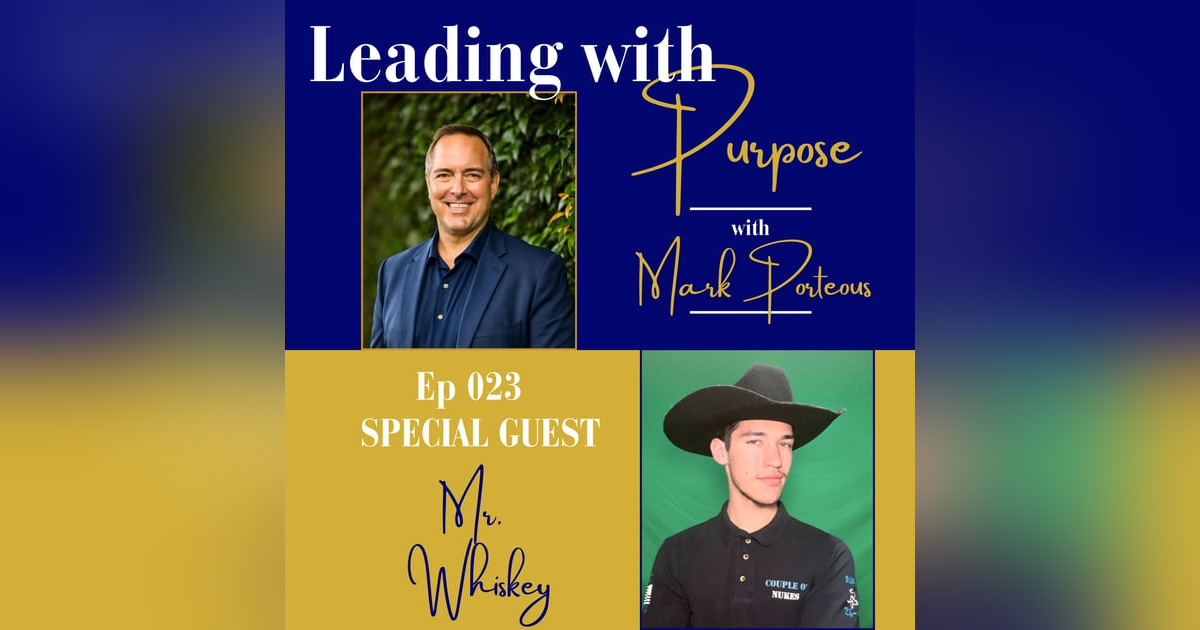


Some conversations don’t entertain—they save lives. In this episode, Mr. Whiskey, Navy veteran, podcaster, speaker, and advocate for mental health, to face the conversations most people avoid. From suicide prevention and addiction to faith, science, leadership, and purpose, this dialogue explores why avoiding the dark doesn’t heal us—but meeting it with courage, curiosity, and compassion does.
Blending lived experience, humor, and deep honesty, this episode reveals how leadership begins with listening, how hope still exists while you’re breathing, and why serving others is the truest form of purpose.
Key Takeaways
- Leadership starts with communication—many people struggle not because they won’t speak, but because they don’t know how.
- Avoidance is not coping; facing hard conversations is where healing and growth begin.
- As long as you are breathing, you still have options—and hope is never gone.
- Faith and science don’t compete; together, they help people make sense of pain and purpose.
- Humor creates safety, making even the heaviest topics easier to hear and receive.
- You don’t need a title to be a leader—showing up consistently already makes you one.
About Mr. Whiskey:
U.S Navy Veteran, Author, Speaker, Preacher, Comedian, and Podcaster. Founder of Couple O' Nukes. Focuses: Suicide Prevention, Addiction Recovery, Military Matters, Mental Health, Pregnancy Support, Faith, & Mentorship. Dedicated to helping and serving others.
Website: https://www.coupleonukes.com/
About Me:
Hi, I’m Mark Porteous; the Soul Connector.
My stand is for ALL people to recognize themselves as Divine Beings who have chosen the human experience for a reason and to live in alignment with that knowing, so they can THRIVE in their purpose of transforming lives.
I help mission driven entrepreneurs to make their Soul Connections so that they can impact and change the world, scale their businesses to six and seven figures, and enjoy thrilling Soul Success in every arena of their lives.
Connect with me at:
https://www.linkedin.com/in/markcporteous
https://www.instagram.com/mark.porteous1/
https://www.facebook.com/markcporteous/
Take the Soulful Leadership Assessment here: https://markporteous.com/#tve-jump-184964db927
Leading with Purpose is proud to be on the Visionary Leaders Media Network.
Share the Love
If this episode lit something up in you… tag us on Instagram @VisionaryLeadersMedia and let us know your biggest takeaway!
Don’t forget to follow, rate & review. It helps us reach more conscious thought leaders like you.
Check out More Shows from the Network at https://the-visionary-leaders-media.beam.ly/
Thanks for listening!
Thanks so much for listening to our podcast! If you enjoyed this episode and think that others could benefit from listening, please share it using the social media buttons on this page.
Do you have some feedback or questions about this episode? Leave a comment in the section below!
Subscribe to the podcast
If you would like to get automatic updates of new podcast episodes, you can subscribe to the podcast on Apple Podcasts or Stitcher. You can also subscribe in your favorite podcast app.
Leave us an Apple Podcasts review
Ratings and reviews from our listeners are extremely valuable to us and greatly appreciated. They help our podcast rank higher on Apple Podcasts, which exposes our show to more awesome listeners like you. If you have a minute, please leave an honest review on Apple Podcasts.
Hello. Today's guest is Mr. Whiskey, a voice that meets life's darkest moments with honesty, depth and unexpected humor. I first met him on the podcast as cruise last year, and we had the chance to spend even more time together this year on the newly named New Media cruise. Mr. Whiskey is a host of is the host of a couple of nukes, a show that dives head first into the hard conversations to extract real life lessons build community and help people leave better than they arrived. A US, Navy veteran, author, preacher, comedian and speaker. He blends lived experience, faith, science and comedy to make a space for healing, growth and hope, from mental health, suicide prevention to addiction recovery, relationships, mentorship and purpose, one of my most important conversations, Mr. Whiskey creates a room for quiet voices to be heard for real change to begin. Mr. Whiskey, well, welcome to leading with purpose.
Mark Porteous:Mr. Whiskey: Thank you so much for having me. Mr. Porteous, as you mentioned, we met from from our time together diving off the side of catamarans to having spiritual encounters at the taco bar together, we have definitely had our fair share of time together in person, and now we get to meet digitally. And I think that is just so amazing that you know, I always say podcasting allows global impact from such a small space, whether you're someone No matter your financial range, no matter your age, your gender, your race, whatever it is, podcasting is an independent, open platform that allows so many people to be heard and to connect. So I really love that, and I love what
Mark Porteous:you do. Well, same here. It is really fun that we got to meet on a podcaster's cruise. That's what first brought us together, and ever since then, I've been wanting to have you on and actually, when I first met you, I didn't even have a podcast. We created it after that, and I'm really excited to dive into yours, but before we get into that, I'm curious, because you've won worn so many different hats, as I mentioned, a Navy veteran, preacher, comedian, author and now podcaster, how do those experiences shape your calling to have the kinds of conversations that you host on your show. Couple of nukes
Mark Porteous:Mr. Whiskey: For sure. You know, I say that life, and especially wants to become a podcaster as a listener or a host, you know, you are like a walking library where every experience is another book on the shelf that you have, you know, access to and knowledge of. I think that life is about being a lifelong learner. We are always learning, you know. And I think every day you should try to learn something new. And doesn't have to be a huge, you know, world changing thing. It could be just as little bit as the latest scientific discoveries to new AI, technology, or just human culture and society. I think we should constantly be learning. And so the same thing, with all our experiences built upon one another, and I like to say we recover loudly so others don't die quietly. And most importantly, our look back is someone else's look forward. So I like to look back at all I've been through how it has all lined up and shaped me to then, you know, provide that for other people to look forward. And as we get into leadership and parenting, you know, unfortunately, you can try to provide your look back for someone, and they don't always receive it well, or they just ignore it. I think we've all been in a position where, as a child or teenager, we heard advice and we said, No, that's you, not me, and then later on, we come back around and have to give an apology, tail between our legs. But you know, I think the best thing we can do is always provide information, minimum, right? We can't be a bystander. Provide the information. And ultimately, if they make the choice or not, you have done your part. I think it's so important that we do our part. You know, we can't always control everything, but doing our part. And so to do our part, we need to first have ourselves not fully put together, but have enough things lined up where we can look back and say, like for me, the military was not a good time, you know. To summarize it briefly, we had a lot of suicides, a
Mark Porteous:lot of mental health issues, a lot of addiction issues, not just drugs, but to sex, to sleeping, to video games, to any mind numbing coping device, you know. And it was not a coping skill, it was a coping device. And those are two different things, and that's the whole conversation on its own. But going through that is kind of what inspired me to help others and work in that field. I didn't choose to go out of my way initially and say, Hey, are you okay, sailor, it was people would come to me and they would say, Mr. Whiskey, we're gonna tell you how we feel because you are respectful and you listen. And we don't know who else to go to, and that kind of developed into, okay, people are reaching out to me, but how many people out there aren't reaching out who need me to reach out? I think that goes for everyone, whether you're in the military or civilian, do your part to reach out, because not everyone is comfortable reaching out, and some people don't even know how to reach out. I've. Come to learn that one of the most important things about leadership is communication and understanding communication is knowing that people don't know how to verbalize. And you could look at studies, children who grow up with less vocabulary education have a harder time with emotional regulation and expression because they don't have the scaling if a kid only knows you know, undying hatred and rage, and doesn't know about frustration, annoyance and anger and this scaling, then they don't know how to express and you can take that into adulthood. And I think looking at the political landscape nowadays, we see a lot of people who aren't verbalizing communicating. It's just if we disagree, it's dead to me. And we need to get back to communication and verbalization, and that's why having podcast platforms like your show and mine are so important.
Mark Porteous:Well, it brings up a really interesting, deeper dive for me into your podcast, which tackles a lot of heavy topics that a lot of people try to avoid. You just mentioned suicide addiction. Why do you believe that facing the dark directly is essential for real growth and healing.
Mark Porteous:Mr. Whiskey: You know, it was never even like a doubt or second thought for me. And so it's so strange, I had a gentleman come to me pitch an idea to be on my show talking about school shooting prevention and safety security and reanalyzing how we tackle that subject. And I said, of course, come on the show. He said, really? He said, Mr. Whiskey, you were one of the first hosts to accept me. Everyone else said, This subject is too taboo. We're not going to talk about it. And for me, I never thought for a second like, Oh, this is bad, because in my mind, I said, we're not promoting school shooting, right? We're talking about, how can we stop this? So why is that a bad subject? But unfortunately, some people just there's a lot of avoidance in our world, in our in our personal lives, as well in our relationships. A lot of us deal with avoidance, with that goes back into the coping right? A lot of us, I think social media is a great, you know, tool to use to have conversations like you and I are having, but a lot of people are using it as a coping device. People are just scrolling for hours, and they're not scrolling on educational content. They are scroll. They call it brain rot. I mean, how can you indulge in that and be like, Wow, Doom. Scrolling. Right, right? Exactly such a negative connotation. But it's all about glamorization, right? So that's why people avoid that. They say, Oh, I'm just going on social media. It's my self care, right? People glamorize it, right? Imagine we called smoking lung destroying. Hey, I'm gonna go get a lung destroyer today, right? You were like, hold on a second. That doesn't make sense, right? So I think, but people have gotten so used to brain around that they've taken a negative connotation away from it and made it like a people call it self care. I think it's important to treat yourself and to relax, right? Even some of the most hardcore people on the planet talk about resting, and if you want to go in a biblical direction,
Mark Porteous:even God talks about resting, right? So it's super important, but how you rest is even more important than when and why you rest. And so to bring it back to you know about talking about dark subjects, I think avoidance has become so common for me, like I said, I've talked about women's menstruation on my show, which a lot of guys don't talk about. They're not comfortable talking about that. I've talked about male sexual assault, awareness, molestation and all kinds of stuff. And for me, it's never been like a why should we talk about this? Is this too controversial? Too taboo? For me, it's like people are suffering from this, like, who cares about our personal like, pride or, yeah, I'm sure there are people who call me gay or feminize me, or say, Oh, Mr. Whiskey, is this or that because he's doing women's work and support, but their opinions are so much, are so not important, compared to the people who are suffering who need the information. So for me, it's always about the bigger picture. Who are we helping? But so many people get caught up on the small things. And to give you a really terrible real life example, a lot of the nuclear operators who end up committing suicide or staying in the program until they just can't anymore. It's all about personal pride and shame, because people the military in general. Now I'm using nuclear operator fields as my personal experience. But this goes for anything, Navy SEALs, Special Forces, or even if you're just aviation mechanics, whatever it is, there's so much shame around leaving the military the I guess you were weak, you weren't strong enough, or this and that, especially from your parents and people closest to you, that people rather stay in the military until they commit suicide or just completely destroy their mental health than to go home and people see it, I like this view of it's not quitting, it's you chose in an educated decision that you in the military were not a good fit for one another, and you
Mark Porteous:made the educated and most beneficial decision to walk away for both your benefit and the military's benefit, because at the end of the day, if people are committing suicide or not performing well due to mental health, you are not benefiting the military. And this goes for any job, really, I have seen people at Seville. Alien jobs push themselves to the brink of suicide, self harm, or, in worst cases, homicide, right? We've seen people kind of snap, and then their their boss and their employees become part of a hit list that goes back to other people's opinions over the bigger picture. So I think it's all about prioritization. So dark subjects like listen I've talked about so I have to have guests on my show give stories that brought me to tears or just a chill down the spine. And you know, for me, is all about Who are we serving, the absolute beautiful.
Mark Porteous:And I'm looking for those who are watching or listening on the podcast and can't see it, your background has a cross and then the nuclear symbol for an atom, and then below that, a microphone for podcasting. I am curious because you've mentioned the military and you mentioned being in the news, tell us a little bit about the background from a couple of nukes as the name of your podcast,
Mark Porteous:Mr. Whiskey: For sure. And just to go over to symbology, you know, I like to have those three elements, because it's about so many people have pitted faith in science against one another when they work in great unison. And if you look at all the science that is backed by the Bible, or the Bible that's backed by science, like it is so beautiful, and a lot of stuff agrees. And then the microphone, of course, as a podcaster, but it's also about giving a voice to those who are unheard. I've had so many Vietnam veterans on my show who they told me stuff that you've never seen in any history book, that you've never seen in any program, right? And that's a thing too. So many people focus on the popular stories to celebrities, there are so many regular people. I call them regular compared to celebrities, right? These people who live what some might call mundane lives, who have been through things you couldn't imagine, and some of these war stories. And, you know, I feel bad because a lot of the Vietnam veterans have this again. People care so much about the political side of it that they forget, like these were humans, a lot of whom were forced to fight and went through things that we couldn't even imagine. I've heard them tell their stories, and it sounds like a move. It sounds like a fictional plot. Some of the stuff they went through. I think providing that platform is so important, and to bring it back, couple of nukes was originally going to be just a comedy podcast a couple of nuclear operators, and they call this nukes for short. So a couple of nukes just kind of BS ing talking about life. And really it was based on such a small percentage of the American population can actually become a nuclear operator, because you have only about 1% of all the people who qualify to join the military go to the nuke school in the new nuke school is a three part funnel system where from beginning to end there are less and less and less people due to,
Mark Porteous:unfortunately, suicide, mental health issues, academic struggles. And so if you start with 90 people, maybe five make it out to the fleet like it is, as they describe it, drinking water from a fire hose. I don't recommend you ever try to do that, but if you have done that, then you understand it's difficult, right? It is about, you know, five years of college within a year and a half, maybe two years, depending on how your program is tracked, but it's a lot, and so because of that, the people who make it to the fleet these nuclear operators are such a small percentage of the population. And what I've noticed, and I'm not going to name names, but I'm sure you all can think of someone that the smarter you are, the stranger you are. And we've definitely seen some people in public who are really smart but really strange, you know. And historically, we've seen that as well with a lot of the great minds in history. And so the nuclear operators were a strange community, I don't say strange in a derogatory way, you know, they just their minds work differently. And so to people who don't have that same, you know, working in workflow in their head, it's kind of comical, because nukes are super, super technical. They will argue the most minute points. They are overthinkers. They lack common sense, but they're academically brilliant. And so every conversation with a nuclear operator is like, you're in court, but it's so humorous to watch. And so I wanted to capture that, because it was so unique, you know, I was looking at, there's a lot of podcasts out there. I never saw, just a couple of nuclear operators, you know, hashing it out. And with that, I wanted to incorporate life advice and talk about the mental health struggles intertwined with the comedy, because, as you mentioned, a lot of people don't want to talk about this stuff. A lot of people think that it is too dark. There's a lot of different opinions as well. If I do men's health work, I've got on
Mark Porteous:one side, feminists who think that I am, you know, perpetuating toxic masculinity. And then if you have the other side, you have toxic masculinity, people who think I am feminizing men. It's like there's such a balance to everything, that no matter what, you're going to have opposition from both sides in whatever you do. And so I thought to myself, well, we intertwine comedy with this. It kind. Of eases that tension, right? And you I wanted it to be balanced so people on this side are laughing, people on that side are laughing, and then they can kind of still get the message, right? I mean, you look at fictional writing, movies, radio, whatever you listen to, it all has a message in it. Every every song you've ever listened to on the radio, there's a purpose and message behind it, some good, some bad, same with TV shows, news programs, even podcasts. And so I wanted to make the message still deliverable, but to a wider audience. Unfortunately, it was one of those things. And I'm sure anyone listening who has had an idea, you realize our ideas are great to us, but not everyone's on board. Some people just can't see the picture, they just don't want to invest in it, even if it's free, right? I wasn't asking nuclear operators to pay me to be on the show, but I was asking them for their time. And in the nuke world, your time is so limited that is worth it's like gold bars. And so unfortunately, ended up being, as I jokingly called, a show, just a nuke. It's just me, and it's been that way ever since. And so I went in such a more serious direction by myself. You know, I kind of just got more and more into the serious side of it, because the comedy was, it was, The comedy was built off of multiple nuclear operators connecting. So without that part, you know, it's just me. I'm still a funny enough guy. But for me, it was like, you don't have that group camaraderie, let's just focus on the message. And so the message became more and more serious, and that's kind of
Mark Porteous:what led me to where I am today. I love
Mark Porteous:that, because, again, you take on very serious issues, very sometimes dark issues, things that, as you mentioned, are often polarizing. But I really appreciate the way that you blend faith. You got the cross there the science, and you keep mentioning comedy, because bringing comedy even into faith, I think it's really, really important. And science, yeah, I think bringing humor into science and bringing all these things together to help address these dark issues. But I'm curious, how do you see those elements work together to help people open up and actually hear what matters.
Mark Porteous:Mr. Whiskey: For sure, I just want everyone who is a follower of the show to know that Mr. Porteus is also a comedian. Don't let him trick you. He's done his fair share of comedy as well. So I just want everyone to know that I'm all serious, man, yeah, and I know that. You know, I think a lot of times, if you mention faith, you lose everyone else. If you mentioned your science, you lose everyone else. If you mention whatever, right? So I like to blend it together, because you get people from both sides, especially a lot of people. I feel like a lot of people aren't atheists or believers. They're kind of in between. I feel like our world is in such a back and forth when it comes to faith. A lot of people, most people that I talk to, they believe in God or Jesus Christ, but they were hurt by the church, and they don't believe in the faith community. Or a lot of people, they believe in something, but they're not sure what. A lot of people, you know, they believe in science, but they distrust the government, so they don't know if how much science is true, right? There is just so much confusion and chaos in the world right now. And so I like to blend both, to reach everyone. And I always say, you know, at least for me personally, you know, I will never argue, if an atheist who has never read the Bible beginning to end, you know, and I will never argue, you know, against someone who is science based without me reading all the scientific reports. First, I believe that education and evidence is so important, and I don't, and I know the word evidence scares some people who are believers, saying, yo, evidence destroys faith. They can work hand in hand together, you know, as long as the evidence is supportive of your faith and not the basis for it, that's a key difference. But for me, you know, it's all about education, and I believe that educating believers on science and, you know, atheists on faith, you can cover all those subjects in a way that brings
Mark Porteous:more unity, you know, because ultimately my goal is, and everyone's goal should be, human unification for peace across, you know, all the nations. And it's, it's hard and very difficult to do, especially, I mentioned the very beginning, the polarization. People have described it as, especially in American politics. Right now, we have a huge Dead Man's Land, you know, no man's land, whatever you want to call it, right between one side and the other, where people aren't communicating. And that's why, when I go go back to communication and leadership, the most important thing you can do as a parent, a leader, a mentor, is ask questions. Questions lead to answers. Answers lead to education, right? So it's always not instant punishment or instant praise. It's why did you do this, or why I'm curious. Why do you feel that way? You know, so many people just state their opinion, especially online, on, you know, social media platforms, and people just argue against it. Instead of saying, I'm curious. Why do you feel that way about XYZ or ABC? It's all about the questions. And I. Think having going back to faith in science. When you propose some science stuff, people are going to ask questions, or you propose some face stuff, people are going to ask questions. And Questions and Answers are the basis for communication, and this is really important for even if you're not a leader, just your relationships, for arguments with your spouse, or when your kids are closed off from you and acting different. It's so important to ask questions.
Mark Porteous:We're coming out of the holidays, and you know, for a lot of people, going back to family brings up a lot of triggers and wounding and different pieces. And for me, my theme for this year, you kept talking about curiosity, and my theme this year was around courageous curiosity, about exactly what you're saying about asking more questions, especially the people I love and disagreed with, and if you can understand why they're coming from there, instead of just automatically judging them, none of us like to be judged, and one of the ways to do that is to stop judging people and start asking those questions. So I really love that you brought that up and hearing you talk about your show a couple of nukes actually feels less like a show and more like a gathering, really building community. So I'm curious. This is the leading with purpose show. What does leading with purpose mean to you, and how do you intentionally create that space for your listeners?
Mark Porteous:Mr. Whiskey: For me, my purpose, as I've always put it, is to serve others, right, I think. And when everyone makes that that purpose, you know, then we're all serving one another. But unfortunately, it's hard to maintain that, because there are some people who their purpose is to, you know, serve themselves. And so it really topples down this whole system. But I think it's so important that we stay true to our purpose in our self alignment. One of the issues, especially with each new generation, is that our purpose isn't coming from within or what we're aligned with is coming from social media is coming from mainstream media is coming from whatever we're listening and absorbing to. You've got two year olds who are coming out of the womb and grabbing onto an iPad that is playing a message for them. And again, we talked about messaging earlier. It could be good or bad, but good or bad aside, here's the real question. Is that message in alignment with what that person wants? And at two years old, they don't know what they want, so their alignment is going to be okay. This is what makes sense. This is what I'm being told. For me, I am so glad that you know what has sustained me in life is what you and I just talked about. I always called it intellectual curiosity, right? So for my journey of faith, for a personal example, I had a religiously abusive childhood, and you know, most people who went through what I went through, as I've talked to them, came out atheist or non believing, a lot of church or a lot of familial religious hurt, right? A lot of people have used religion, unfortunately, for weaponization and shame. But my intellectual curiosity saved me, because I said all these people are saying this, or all this or all this online is saying this. What does the Bible itself actually say? I went to the source and did that research, and then I went beyond that source to more historical documents and other stuff. Right? A lot of us, when we're faced with
Mark Porteous:hurt or situations, or when it comes to our purpose, we don't go back to the source. We just look at all these things that are upfront and flashy in our face. And so I think it's so important to go back to the source. And when it comes to purpose, you have to truly think about your self alignment and what you want. And maybe for me personally, my self alignment is with the Bible and what it says. For other people, it might be, you know, what is being a good human look like to me, or, you know, what can I do in my time to establish a legacy? And then it's like, what does that legacy look like? Is my purpose to lead the best life for my children, for their generation, for my community? You know, am I serving just Florida, or do I want to serve all of America? Do I want to go have a global impact somewhere? So I think it's so important to focus in on that and to brush aside all this other stuff that we're bombarded with. And for me, I've always just had serve others, because I think that there, I mean, as the Bible says, there is greater love, no greater love than this, that you lay down your life for others. And it doesn't just have to be in the physical martyrdom sense. It can be you and I, right now hosting these podcasts. We're putting aside our time, time that we could be doing other stuff, right? So that is a sacrifice on its own, and in fact, it's one of the sacrifices that we can't get back. But for me personally, I get it back in a sense that I had someone write into the show and say this episode changed my life, and that is what it's all about. And even if that was the only life ever changed by my show, that is one person I've truly served, and for some of us, that's more people served than some people, you know, some of us never I've thought about, what if I quit podcasting and writing, and I. Guys sat home and played video games all day. And to me, that feels purposeless. Like, sure, it could be entertaining to me, but how so what you
Mark Porteous:came here, did nothing and left, I mean, it just it. To me, it's just mind boggling how anyone could just ride away unless they have some kind of, you know, trauma that they're numbing. But if you if you felt like your purpose was just to have a good time. I don't know. I just I had. I can't even wrap my mind around that for me, like my joy comes from serving others and all of us having a good time.
Mark Porteous:I love that, and I love you, know, seeing you in your leadership and the way that that you show up as a leader, so hearing you talk about what's important to you, and being able to be open to everybody else. It's just beautiful, and I think it's really helpful again for all of us as aspiring leaders, and whether it's our community or family, there's lots of different ways to do that. I love the way that you shine your light, and I'm curious on the other side, for somebody that might be listening for your leadership, and not just so much as them as aspiring leader, but somebody who might be struggling silently. You talked a lot about being the voice for those that aren't heard, whether it's with a mental illness, addiction, struggling with finding their purpose or their identity. What's one message that you most want them to hear today?
Mark Porteous:Mr. Whiskey: The message I've been putting forward lately that's been on my heart has been in Latin is Doom, Spiro Sparrow, which is actually very popularized in South Carolina. So if you look at their license plates or their merchandise, it'll say, it says, While I breathe, I hope. And one of the most powerful things ever said on my podcast was Doug Lewis Brinker, two time suicide survivor, and he works in the veteran community for that kind of work. He said that suicide is a permanent solution to a temporary problem, and that really stuck with me. It was like an anchor just fell down on my chest. I was like, wow, that is so true. And in the moment you're not thinking about that. You know, I've definitely been there before. I've also worked in suicide prevention for a while, to a personal level, where I had suicidal people show up at my room, and I had have those conversations with them. And you know, when I partnered it up with while I breathe, I hope, and I thought about, as long as you're breathing, that means you're here. You haven't made that permanent. And I don't even like the word solution, right? Because you haven't solved anything. It is just a permanent option, right? But while you while I breathe, I hope what that means is, as long as you're alive, there are going to be other options, more options, and what I have to say is I'm in touch with the reality of it is, while you're breathing, and you have those options, they might not be the best options, they might not be the options you want, they might not be the options you need at the time, or at the time you need them, but you're still alive and have options that can slowly line up towards what you need or want, and you take all those options away when you commit suicide. So I think it's so important to say, as long as I'm breathing, I'm still alive, you know. And people say, Well, Mr. Whiskey, what if I end up homeless or on the streets? You're still alive, and there are still options
Mark Porteous:and opportunities for you to rebuild a life. And again, it might not be everything you initially imagined, but the subtitle of my show is, you know, rebuilding our lives, rebranding our lives, and rebuilding her dreams. And because, you know, I've had plenty of dreams and, you know, images for my life that didn't work out. I was left at the altar twice when I was supposed to get married. I moved to a state that was supposed to build a life, and then it wasn't here. You know, I never thought I was going to go into the military. Then I got out. I never planned to be a podcaster, but everything has always worked out towards something, and the more in alignment with myself and my purpose, the more I've led with my purpose, the more everything has lined up towards that. I've been on the brink of homelessness before, of wondering where I'm going to live, and I've slept in my car before. It's not fun, but I'm still alive, and I've gotten to go on cruises, I've gotten to travel the world, and I've gotten to, most importantly, serve others, to the point that people have, you know, emailed me saying You changed my life. And that's one of the things I want to talk about, you know, for anyone who is aspiring to be a leader, looking for leadership, one of the best ways to learn is to teach, right? And I have found that, like Mr. Poriz, he called me a leader. And, you know, I've never thought of myself as that way. But how did I do it? I just established it. I took this step saying I'm going to be a leader, right? Like I said, I started my podcast when I was 20 years old. I was just leaving the military. I didn't know where I was going to live, what I was going to do, and I just started a podcast not to be a leader, but just to have conversations. And then that led to now speaking on stage, to hosting this platform, and to. Having that impact. And I believe now, more than ever before, anyone has the power to be a leader. It has such a greater impact. And it starts
Mark Porteous:with going to a local charity event. Just just showing up is step one. You know you're not going to be head honcho day one, but by showing up and making your presence known, that's the first step. And then you most importantly, with podcasting, with entrepreneurs and with anything you're doing for leadership, consistency is so important, showing up again and again and again. And you might not always get the big opportunities to be a leader that you want, but leading in all the small ways. Because here's the thing, everyone is a mentor, whether you want to be a leader or not, you are a mentor because people are watching you. They're observing you, and they are learning from you, and they may be people who are watching you and you change your life and you never even knew it. And I'll wrap this all up with this quote, we are always planting the seeds of a tree whose shade we will never sit under. Right? So many people are focused on the fame and the credit in the benefits, and what I do with serving others is I like to say we are planting the seeds of a tree whose shade we will never sit under. So yes, I didn't get to sit under the tree. But guess what? Maybe generations and generations will this a conversation I'm having with you right now, Mr. Porters, this might be one that changes a life 200 years from now, you and I may be bioengineered, is still alive, or we may be dead, but it is that impact is priceless, and so you never know what you're doing as a involuntary leader or as a voluntary leader, the impact it can have on people who never tell you that you impacted them.
Mark Porteous:I'm absolutely amazing beautiful. I'm sure that people will want to respond, and I encourage everybody that's listening, if you have comments that you want to share about what Mr. Whiskey has shared with us today, again, I am in awe of the way that you lead. I just really appreciate the integrity and just you being fully yourself. And think that's one of the really great lessons that that you teach by example, is to really know yourself and to really honestly love yourself so you can love others the way that you do.
Mark Porteous:Mr. Whiskey: Yes, sir, I agree. And, you know, everything I do, I always lead from the heart, you know. And so many people, I think, especially nowadays with social media, they are so focused on setting the scene, making the script, or having, you know, AI assisted tools, write it for them, or photoshopping this or that. And I think authenticity is so important as a leader. And I think there's a difference between authenticity and vulnerability that inspires and relates to doing it to the point that you belittle yourself. You know there is a balance to be had, where you are an authentic and vulnerable leader, but you still curate that respect and that you aren't making for yourself or of others. And I think that relatability is so important. And I think we're seeing a shift in culture, at least on the side of the industry that you and I work on where people are getting sick of all these picture perfect photos, you know, of seeing these picture perfect highlight reels of life like we want to see the real we want to relate. You know, when it comes to comedy, just because, uh, you know, I work in comedy a bit, we always say relatability is the number one step in breaking that tension and having that humorous connection. It's about making that's why comedians will make fun of themselves or talk about things that we can all relate to, to a degree, because it's about relatability. People want to know that you're a real person, right? Because a real person, we could look up to a leader that is this perfect robot, but we want that humanity aspect, and so much of that is being lost in this tech world. And I don't say that to be anti AI or anti improving your photos, but there's a balance to be had as well.
Mark Porteous:Well, speaking of relatability, I'll let the cat of the bag here at the last minute of the show, you do have a first name. We call you Mr. Whiskey, but we share the name mark, and that's another thing that I appreciate us sharing in common, and I do respect you as Mr. Whiskey. Thank you so much for being here, being part of the show, and thank you so much for the work that you do on your show and being able to be a voice for the unheard. I'm honored and grateful to be your friend.
Mark Porteous:Mr. Whiskey: Thank you so much, and I return all of that to you as well as a fellow podcaster, as you know, an author and a speaker, and I appreciate what you do. I think I always say so many people who come into the podcasting industry say, Why would Mr. Whiskey, you know, Mr. Porteus collaborate. They're kind of fighting for the same audience. You know what? It's about. The more platforms we have, the more people we can reach. And for me, again, it's not about did I reach someone? If someone listens to this and says, Forget Mr. Whiskey. I just like Mr. Porteous, by all means, as long as he's the voice for you. You know, it's a. About again, not the credit. It's about what happens afterwards. So anyone who leaves, you know, anytime people listen to my show and they say, we're leaving you for one of your guests, great if, because we are all unique people, and we all need to hear things in a different way and listen to things in a different way. I think the more platforms we have, the more people we reach. So I appreciate your platform and all that you do as well.
Mark Porteous:Well. Thank you so much. I appreciate you being here, and look forward to connecting again, real soon again. For you listening, we appreciate you showing up. We appreciate you listening. And if you want to share below, ask questions, I will put comments I did forget to ask you. For people who want to reach out to you directly. Where would they find you?
Mark Porteous:Mr. Whiskey: Couple O, nukes.com, so that's couple O, and then nukes, n, u, k, e, s.com, that has all of my contact information every episode of my show categorized for you to easily navigate the different topics every guest who's ever been on my show, you know, and then just a bunch of information, free resources galore for you to take a look through. And again, the idea with my show and my website is that you go there and you leave improved, or you leave with the knowledge to help someone else. You know, again, it's not always about ourselves. Sometimes we hear a message and we're like, oh, it's not for me, but it could be for someone you're going to meet or cross paths with. So always be sharing
Mark Porteous:knowledge, and I love that the way that you organize it. If you are also aspiring to get your voice out there as a podcaster, you definitely want to check out a couple of nukes.com just to see the way that you have it structured. There's so many different ways to do it, but again, you've put everything into this as a form of service, and I appreciate you for that.
Mark Porteous:Mr. Whiskey: Yes, sir. And everyone listening, come join Mr. Porteus and I on the new media cruise this upcoming fall, where you can podcast and party with us as well.
Mark Porteous:Absolutely, if you're a podcaster, drop podcast in the comments. We'll talk to y'all soon. Bye. Now.