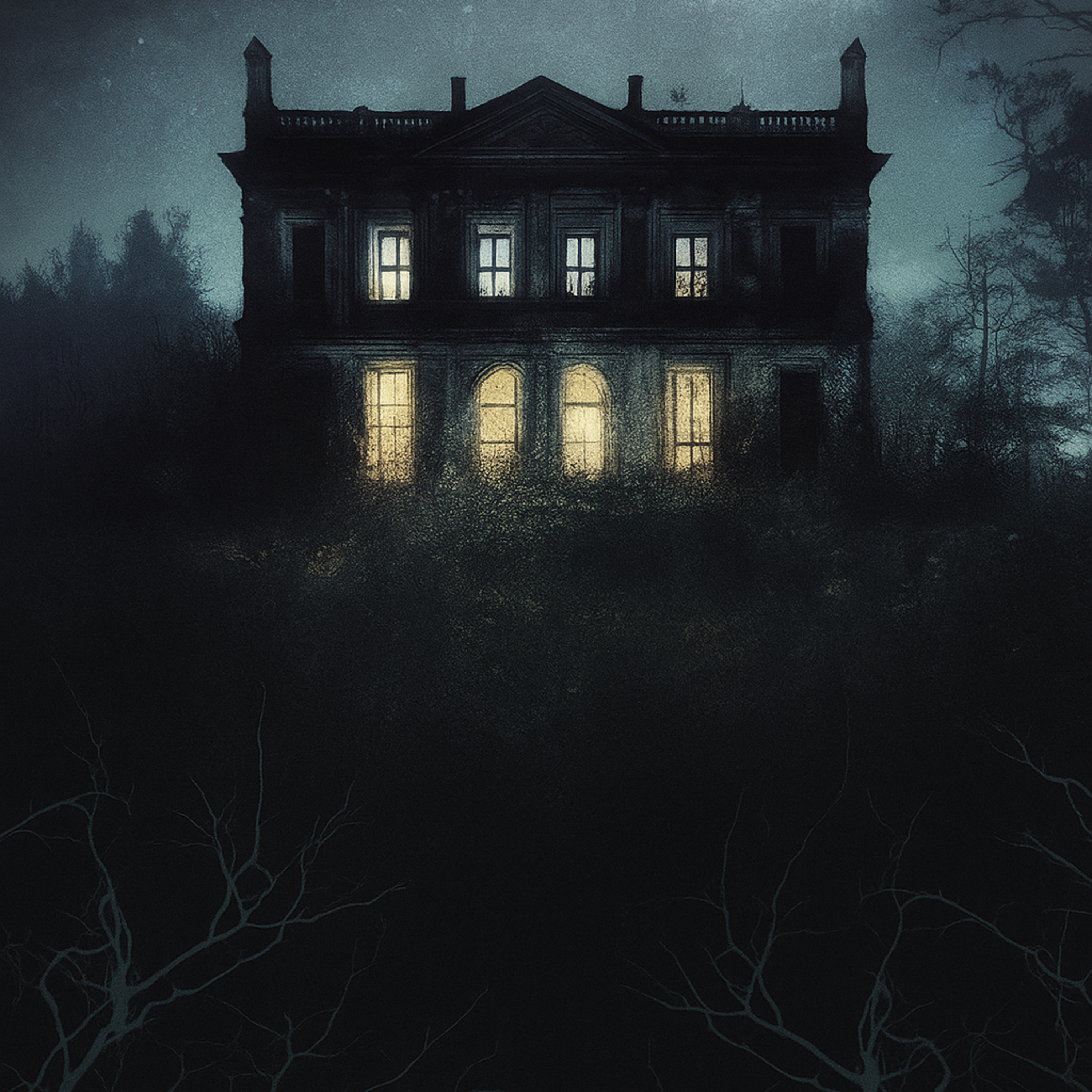
All houses in which men have lived and died, or haunted houses.
Through the open door, the harmless phantoms on their errands glide with feet that make no sound upon the floor.
There are places where history lingers, where time slips, if only for a moment, where echoes of the past whisper in darkened halls and forgotten corridors.
0:39
Old buildings hold more than just bricks and mortar.
They carry the weight of those who came before.
Laughter, sorrow, love, loss.
And sometimes, just sometimes, the veil lifts, revealing something beyond.
1:00
From spectral figures glimpsed in candlelight to stories carved into the very walls themselves, Haunted History Chronicles delves into the history, the hauntings, and the echoes of the past that refuse to fade.
But the journey for the podcast doesn't stop there.
1:20
We explore the strange and the supernatural, from folklore that has shaped beliefs for centuries to unexplained encounters that defy reason, tales of restless spirits, omens, cryptic legends, and mysteries that have endured through time.
1:40
Join me as we unravel the haunted, the historical, and the hidden.
So dim the lights settle in and step beyond the veil.
You can follow Haunted History Chronicles on all major podcast platforms as well as find us on social media to share in these stories.
2:04
Because history, folklore, and the paranormal are never truly silent.
Some doors, once opened, can never be.
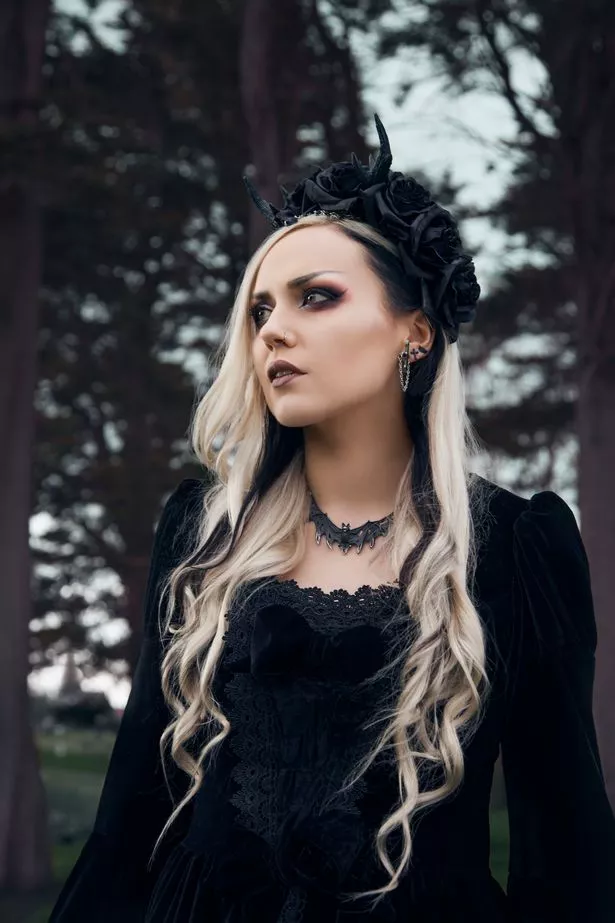
Closed today, we step into the shadowed parlours and fog drenched corridors in Victorian England with a very special guest, Doctor Kate Sherrill, paranormal historian, death culture expert and the mind behind the gloriously gothic debut novel Begotten.
2:38
Set in the decaying county of Duncan, Begotten invites us into a world where mourning is more than a ritual.
It's a gateway where seance circles crackle with secrets and family homes breathe with something ancient and unspeakable.
2:57
Doctor Cheryl draws on her years of researching spiritualism and 19th century death culture to weave a tale rich in dread, repression, and unspoken histories.
In this episode, we'll delve into the inspirations behind Begotten, a story where ghosts may not be spectres but echoes of trauma.
3:20
We'll explore the chilling reality of Victorian seances, the ways the Gothic still speaks to us today, and just what a paranormal historian really does.
We'll ask, why were the Victorians so obsessed with spirits?
What happens when grief becomes a portal?
3:39
And in a world dominated by ghost hunting TV shows, how does historical context shape our understanding of the supernatural?
To light a candle, draw the curtains tight, and prepare for a conversation that dances on the edge of the scene and unseen.
3:59
Because in Duncan and in this podcast, nothing ever stays buried for long.
Begotten by Doctor Kate Cheryl is out now, and trust me, you'll want to read it before the nights start drawing in.
4:24
Kate, welcome.
It's been a while since you've been on the podcast for for listeners maybe new to your work, do you want to maybe just explain how you first found yourself drawn into the world of the paranormal and and what exactly a paranormal historian does right?
4:43
Well, I always say that it's fated.
I was never going to hold down a normal job and my interests were going to always be a little bit more, there's a bit more left field, I suppose.
So, yeah, the, the paranormal, strange, strange happenings, the unexplained, what sort of thing, It's been a childhood interest.
5:04
And I think a lot of that was, was fanned by 90s TV entertainment and kids books that are around UFOs and ghosts back in the day.
And, and certainly programs like Strange But True left such an enormous impact on my viewing habits, my reading habits.
5:27
And then I was, was certainly influenced by my granddad, who also had quite some strange, let's say, spectral experiences in the, in the 40s and 50s with a, with a, a Ouija board and then some, some happenings with spirits, but that he claimed were happenings with spirits.
5:48
And he gave me my arguably my first adult books that were on Roswell and the part and this paranormal encyclopedia that I, I hold like a baby whenever I move out.
It's one of the most precious things to me.
6:03
It's a tatty old hardback thing with the, you know, those glossy photos of charred legs in the middle of it.
So it's no great intellectual to tone, but it's, it's very precious to me.
But As for what I do now as a paranormal historian, well, I spent a fair bit of time working in strange, strange locations.
6:28
I worked for a in a cemetery for a while.
I worked with bats for a while.
So I was just collecting all that goth cred.
Did quite a few years in academia, getting more certificates than anyone really needs to.
It was weird little obsession for a while, but I write and research solidly so that's pretty much my my day job.
6:52
I write for magazines, publishers, I write for other authors, I do consultancy for productions that might need research or expertise or guidance in certain fields.
This is usually relating to the paranormal, but when I'm writing for my own projects, some of which have come out already and some of which are coming out over the next few years, I don't investigate these cases like a paranormal investigator or a psychologist would.
7:22
But broadly, I look at stories of supernatural encounters, folk tales, spiritualist history within the context of the environment at the time.
So the, the writer's status, that the player's status where it fits into, in our, in our social history.
7:43
And I, I wish I could say that, you know, I'm, I'm hiding in attics and communing with spirits every day, but in reality, I'm sat in front of my laptop as much as anyone else's.
I'm just, I, I don't know how you keep up with all the things that you do because, you know, you work so incredibly hard and, you know, it also now includes the fact that you've you've ventured into fiction writing and it's such a wonderful book that recently has come out with begotten.
8:15
I mean, it's just dripping with Gothic atmosphere, which is my total kind of love affair.
You know, it's the type of book that you find yourself wanting to read at any time of the day or night when you just want to kind of bathe in that wonderful world of Gothic fiction writing.
8:35
And I don't know if you want to, again, just for those that maybe haven't come across it yet, just give us a quick overview of what readers can expect from this amazing story.
Oh, well, thank you so much.
I'm really, I'm really, really pleased you enjoy it.
I suppose the the snappy version is that begotten is the story of money, lies and seance.
8:59
I really should have led with that back when I was back when I was pitching it about, but begotten is is kind of my baby.
It's a papery baby in that fact.
It's a slow burning gothic semi body horror that serves as pretty much a love letter to the genre of the gothic.
9:20
And it has themes of of whether you can ever actually trust your senses and the very nature of of ghosts itself.
So it's the tale of a young woman returning home to this grand gothic pile in the middle of Northern Ireland, only to find that a house has been overrun by some very charismatic spiritualists.
9:41
And what unfolds is a strange tale of of ghosts and deceit and and madness.
And yeah, it's gone.
It's gone really, really well.
Obviously I didn't pushed this through like an enormous publisher and it's been a real passion project from someone who's so immersed in in spiritualist history.
10:06
But it's been so rewarding and and heartwarming, I suppose, to receive so many lovely messages from from readers saying that, oh, I'm not normally a big reader or I'm not normally reading this sort of genre, but they'd really connected with Begotten.
10:22
A few people have said they've read it multiple times, which is quite amazing levels of, of devotion to a narrative.
And people saying that they were so taken with this character or they were so angry with this character, they just needed to reach out and tell someone.
10:39
And so, yeah, there's some really lovely stories about how people have have interacted with forgotten.
So yeah, All in all, it's it's a modern gothic tale with some hellish ghostly twists in it.
And yeah, I think it appeals to a very broad Church of people.
11:00
But maybe some bits shouldn't be read before you have your dinner.
But I think it's this this wonderful world of, you know, all the things that I would kind of expect from you in terms of the passion and the knowledge that you have around spiritualism and that kind of world.
11:17
But it almost then collides with what we expect with, you know, like I said, this gothic fictional style writing and it's just this wonderful immersive blend of those two worlds that adds some real authenticity to it as well.
I think that again, I just think for various people who, who are interested in spiritualism more, who have a real love of Gothic style writing, it is kind of something that I agree with you.
11:45
I think it appeals to so many people on so many different levels, but for me personally, who who already loves this style of writing, that that level of authenticity and passion, like I said, that comes from you because of your background and your love of spiritualism and your interest in it.
12:02
Again, it just adds that other dynamic in that other layer that for me, just I honestly, Kate, I loved it.
I thought it was wonderful.
Oh thank you, that's so lovely.
And I think one of the other fascinating aspects of the the story is the the place itself and, and kind of the feel that that has and what that brings to this to the story.
12:24
What inspired you in kind of the, the setting of Duncan?
And you know that it's deep sense of the haunting, if you like.
I suppose a lot of begotten when I say it's my love letter to genre, I think a lot of people, certainly people that consume a lot of horror media, think of the gothic as being this a blood drenched, fast-paced genre.
12:49
Whereas in in reality, it's far more atmospheric.
It's far more that slow creeping sort of things are decaying, things are uncanny, things are inverted.
And within gothic tradition, there's this this thread of the idea of place being a character itself.
13:09
So you have your human characters, but wherever they are is is an equally important player within that.
So I suppose there's there's a Gothic tradition of, of crumbling domestic spaces and these great Gothic piles where the domestic, let's say like a place that's inhabited by people is inverted and it becomes threatening.
13:31
So within Begotten, I wanted all of that grandeur of the Gothic and these places that are so familiar but somehow compromised.
And I wanted to put that with this swampy fear that comes with existing within a very desolate, rotting landscape.
13:52
And I suppose it would have been unfair to place that within a pre-existing county because it's a pretty bad review.
So that's where the the county of Duncan came into things.
It is an inherently Gothic county that that effects anything that sets foot within it.
14:10
The people are rotten, the buildings are rotten, the environments are rotten.
So there's no way of of entering that and having a perfectly reasonable jolly old time back at home.
But the house itself within, within the story was really important to me because I'm not sure about you, but I, I have so many obsessions through life that I, I get into to a a quite concerning degree and then try and talk to friends and family about them and I get the strangest looks.
14:43
But it's part of the joy of learning, I suppose.
But I, I've always been a great admirer of the Anglo Irish literary tradition of the big house novel.
And a big house sounds quite cheerful.
It sounds like, well, it sounds lovely, like an Upstairs, Downstairs type thing, but it really refers to the large houses that were owned by the landed classes in in Ireland, namely sort of prominent Anglo Irish families that gained their power and these grand estates throughout the Protestant ascendancy.
15:18
And that basically saw one religious class ruling over Ireland for for hundreds of years.
So it sounds like quite a grand existence, but in reality, these houses were inhabited by very what land rich or, or wealthy people who were socially, religiously, culturally and physically isolated from both their neighbors and, and those that they ruled over.
15:44
So even though they should be sitting in these great privileged positions, they're a very authored class, They're quite a monstrous class.
And so understandably in, in reality, outside of, of literary tradition, these big houses became prime targets during the revolutionary period.
And I think that that historical background and the Gothic traditions of isolated existences and and corruptive landscapes just naturally came together for me.
16:12
And it seemed like the perfect environment in which to to situate an even stranger, more isolated family where you could wrestle with these concepts of death, eternity, and hauntings.
Really.
It's like the the shadow that hangs over everything in the story.
16:30
I think it's just there.
It's that constant presence which again just enriches the story so incredibly well, like you would expect from again, a really good gothic fiction story.
It's just their ever present in the background, just lurking with that, like you said, that slow creep effect that is just something that gets under your skin.
16:56
That's the that's the way that this, the setting just hooked me from the start to the very end.
It was just, it was incredible.
Just thinking about it and talking about it now I've got goosebumps.
It, you know, it's so well written.
It's incredible.
Oh, thank you, thank you very, very much appreciate that.
17:14
And it's quite, it's quite strange to hear someone say, Oh no, this, this environment you wrote about, it was horrible.
It really got under my skin.
But it's like, yes, yes, good.
I did my job well.
And, you know, one of the the other fascinating, you know, contrast that I think Begotten brings is this contrast between the the modern ghost hunter and of course, the Victorians who essentially lived with their ghosts.
17:44
Why did you want to explore that tension in the story?
I feel that if you, if you signpost A haunting or a ghost in the conventional sense in in writing, it really inhibits your creativity and what directions and what layers you can, you can add on to it.
18:05
So you'd say, right, OK, so there's a ghost story, there's a ghost there.
All right.
Now, now what you know, whereas I think if you frame that haunting in a historical, in a Victorian context especially, there are so many interesting avenues that you can explore there.
18:24
So certainly setting it within a Victorian era, you've immediately got that Victorian relationship with the supernatural and the Victorian interpretations of, of ghosts and the nature of ghosts.
Because the, the 19th century was, was really the age of the ghost story, but it was also the age of spiritualism and it was the age of scientific development as well.
18:48
So you've got new religions and you've got massive scientific leaps being made.
And all of them were rather unhappy bedfellows, I suppose, with very differing ideas on the nature of ghosts and the nature of, of sanity and the human condition.
19:08
And I think that's there are very few eras and there are very few traditions that can offer that much inherent conflict just from the start, because ghosts really weren't as as black and white as we may see them today.
19:23
Because certainly in the literary tradition and in the Victorian literary tradition, ghosts are tools that people can manipulate and they can signal so many different things depending on what situations you place them in, the circumstances in which they're spoken about, the, the genders that they're associated with.
19:45
Ghosts in the Victorian sense are so much more malleable and richer, I would argue, than they are today.
And certainly as someone who's been immersed in in a deep, deep, arguably unhinged appreciation of the 19th century for for many, many years, I don't think I would.
20:08
Ever have been able to not write a a Victorian ghost story?
It's it's in my blood, I think.
And, and you mentioned earlier, I think some of the, the key themes, you know, themes like madness and repression that come through in the story.
20:24
And and again, I think it's one of the masterful things that you do with forgotten the fact that it just does, it doesn't just deal with hauntings, but it goes into some of those other elements.
Like I just mentioned, madness, repression, you know, the silence about women's voices.
Were you intentionally, you know, subverting gothic tropes like the, the idea of the the fainting, the fainting heroine, the damsel type thing with, with what you were trying to put together here?
20:53
Oh, absolutely, absolutely.
My, my obsession for the Gothic and certainly writing Gothic began with that, that straightforward line of I, I want a real gothic heroine.
I don't, I want a subverted 1.
21:10
So it was really important to me that I made a point of, like I said, subverting that fainting heroine trope because as much as I I adore the Victorian traditions and the the early 18th century traditions, I love Ann Radcliffe.
21:27
I feel like when you're writing a neo gothic novel, when you're writing it for an audience of hopefully empowered women, very few people would have the the patience and the tolerance for me to follow entirely in that Gothic tradition of, of a weak woman.
21:49
And within certainly Victorian ghost stories, the framework always is that Gothic heroines are brought back down to earth and back to their good feminine senses through a marriage to a good man or back under the control of a father, all of which is wrapped up in this explained supernatural.
22:09
So the ghosts aren't real, and thankfully the men come in to save the day.
And I certainly didn't want that as part of my narrative.
I wanted all of that to be completely inverted and like I said, not not least because modern readers would really be unlikely to want to follow a very weak woman who's just fainting at shadows all the time.
22:30
But saying that the the protagonist, Alice, her naivety, her foolishness, and her love for her family are really all qualities that we've inhabited at one time in our lives.
So while her environment and her circumstances might not exactly be relatable, I think we've all wanted to puff our chests out in the right circumstances, and we've wanted to be far grander than we are.
22:54
And we wanted to be that Gothic heroine running through corridors holding a Candelabra, but we want to do it on our terms.
And I think that certainly highlighting what an authentic woman's voice would be like within the Gothic was was also incredibly important to me, but allowed for a lot more conflict.
23:14
Because if you put a modern woman in an environment where her voice is being repeatedly dismissed and repeatedly diminished, they get very frustrated very, very quickly.
And I think Alice certainly operated as a very satisfying catalyst when when exploring that.
23:33
And I think he just said something that just gave me that aha moment because I've just recognized why I love this style of writing so much.
I mean, and for me, it goes back all the way back to my university days because my dissertation was on the gothic, the Gothic novel.
23:50
And so it was a year long research project.
So it was a real passion project.
And I think that idea of wanting to be the the character in the story with the Candelabra and the wonderful attire is absolutely one of the reasons why I love the the style of writing so much.
24:08
Because they are exactly my type of locations that I would love to be exploring and and inhabiting.
And I think the fact that you have given this modern lens through which you can explore the the characters and bring something new and refreshing to that I think is one of the reasons why I love this even more, because it feels more authentic to who I am instead of the the, the fainting damsel.
24:37
So it really has kind of brought to brought those things to those two things together.
And I think, yeah, I just think I had that aha moment as to yeah, that's why I like those.
And that's why I love this so much, because it just flips that, that little part of it on its head, which means infinitely more satisfying, which is incredible.
24:58
Yeah.
Oh, good.
Oh, really?
I've never thought of it like that.
Honestly.
I just had that moment where I was thinking, yeah, that's why you literally took it out of my head.
I think, Kate.
I see I've got powers.
After all, and just kind of coming back to, to begotten, I think one of the, the lines that, you know, really come through in terms of the, the questions that come through is whether this whether ghosts really are just the spectres.
25:25
You know, that's something that follows through the, the, the threat, the, the threads of the story, if you like, whether they are just spectres or if there's something that reflect our own fears.
How do you personally view the the nature of a ghost with regards to that Kate?
25:43
Well, I think, I think, how Long's a piece of string?
You know, I've been having quite a lot of discussions recently about my own changing belief systems.
But overall, well, I, I do believe in ghosts.
25:59
I think I'd certainly be in the wrong line of work if I didn't.
But I do think that ghosts can be, there can be many things.
They can be projections from our own subconscious.
So they can be sort of a secondary part of ourselves.
26:16
They can be quite often just the misinterpretation of a natural phenomena, which doesn't make that experience any less real.
But I think if you interpret a natural occurrence as a ghost and it's a ghost in your mind, I think that can still be recognized as as a version of of a haunting, a version of a form.
26:40
But I also believe that that ghosts can take the form of, of residual energies, like when you walk into, if you walk into a building and just think, I don't, this doesn't feel very welcoming or something's not right here.
That weird little 6th sense that we all have when you just feel something's wrong.
26:59
That's before we even get into, you know, believing that the objects or materials or crystals or anything like that can can hold energies or hold memories.
But I do believe that there are sort of these, these echoes that the cycle in certain places and sometimes you can tap into them in some way and sometimes you can't.
27:22
And then of course, you know, as, as I believe there, there are occasional ghosts that are sort of intelligent humans, albeit intangible ones.
But throughout all of that, I think literary ghosts are the most, the most powerful of all.
27:45
I think you can, you can be told a tale of all so and so experienced this poltergeist and they experienced these these very intense happenings.
And it's you're taking it at someone else's pace.
You're listening, it's going in, it's abridged, it's very quick, it's on someone else's terms, That's it.
28:02
But if you read about one of these cases, you get that secondary haunting in your own head.
You get those lasting memories.
Like I for one, when I first watched, let's say, Paranormal Activity, that that film, the friends I was with laughed it off and thought, oh, that was a bit bit daft.
28:17
Why do we go and see that at the cinema?
I thought about that film for weeks afterwards.
So arguably I would say that that also feeds into the nature of a ghost.
Nature of the ghost can be a a memory of someone else's haunting or memory of someone else's experience.
28:34
Ghosts aren't just creatures in sheets going woo in darkness.
There's so much more than that, and they're so much more powerful as a result of that.
They're, they're malleable, they're intangible.
They're the, the sum of all fears, I suppose they're, they're amazing things.
28:52
Whether or not you believe they're real is kind of inconsequential as to a ghost's power, because a ghost can be whatever you want it to be, or exactly what you don't want to admit.
Yeah.
And I think you, you said that so eloquently.
I, I, I agree with you.
I think it almost does become like a second haunting.
29:09
And I was only thinking about that just in the last few weeks where I actually came across a really interesting ghost tale from from Ireland around a horrific event where a large number of people were massacred as part of an uprising.
29:26
And in the wake of this very real event, there were sightings of of a woman literally standing as a solitary figure by the water in a place where, you know, the assumption was her children had been slain.
29:44
And this ghost story became so embedded in this community that for the next century, 2 centuries, it was being told, you know, either through pamphlets and sermons spoken about annually in church services to the point where now it's so well known that it's the the most common, commonly recognized ghost ghost story within this area of County Armagh.
30:12
And I think that kind of very much sums up what you were just talking about there.
Here is this story that resonated so much that it almost became this, this haunting that affected future generations as a reminder of this all full past and the, the conflict between groups and, you know, different religious groups and and so on, the divide that existed.
30:38
It becomes a haunting, a living haunting of that and a reminder of that massacre.
And, and when you kind of think, think about ghosts, it is something really just that gets under your skin again, isn't it?
It can be whatever it needs it to be.
30:54
And again, I think it's what's so fascinating about it when you can see it from the different lens through which we take in and absorb these stories and why we're so fascinated by them.
Yeah, yeah, absolutely.
I think you're right that a cultural experience and folkloric traditions aren't simply just oral histories or, or collective cultural trauma.
31:19
They they run so deep that that haunting becomes part of the very fabric of a community and and in turn part of someone's identity.
Like there are, there are so many communities that are that are associated with very prominent hauntings or folk tales.
31:38
And they're, they're very protective over that because they've assimilated it into part of their being.
So they're, they're sort of haunted by a haunting, I suppose.
I doubt there's very few people in Bali, for example, who wouldn't be aware or wouldn't have some form of pseudo warmth, I suppose, towards the the infamous rectory haunting.
32:01
But yeah, no, I think that's, that's a very interesting point that yeah, communities can take hauntings to to their heart.
And then yeah, generationally it just becomes more and more embedded until the two are completely indivisible.
And, and obviously, having studied the the Victorian obsession with ghosts yourself, why do you think they were so captivated by the supernatural?
32:28
I, I wish I could say that it was because of some, some great spectral happening when loads of people suddenly started seeing ghosts.
But I, I arguably think that the Victorians were so obsessed with not just ghosts, but the supernatural broadly and because of industry and because of the periodical presses.
32:51
So ghost stories as we know them, they've always had a deep and entrenched oral tradition where tales were told just between between people or between communities.
But when the new magazine presses and magazine culture occurred, it allowed for this very quick and cheap production of short form sensationalist stories.
33:16
And it's it's weird to think that one day magazines existed because they're just such a normal part of everyday life.
But industry brought us in.
The Industrial Revolution brought us these periodical presses and these cheaply made periodicals, these newspapers, magazines.
33:33
They needed a lot of content very quickly.
And ghost stories or sensationalist supernatural stories were brilliant.
They were the perfect genre because they could be written to order.
They could be spun out over weeks or months, or they could be cut down to size.
33:53
They could be replicated.
They became a template for themselves.
So ghosts became sort of the the darling of the periodical presses.
And this is just talking about genre fiction because outside of that, of course, you've got the different spiritualist and occult movements that had their own separate periodicals.
34:11
But broadly these these periodical ghost stories, some became immense successes.
Like A Christmas Carol was never initially published as one solid story.
It was a serialized story in 1843.
And these sort of tales become these ghostly tales rather they are the ghost aspect becomes this base layer, a bit like a, this is going to be a terrible analogy, a bit like a plain Victoria sponge, you know?
34:45
And then on top of that, you decorate it.
You decorate it with romance, horror, or in in the case of A Christmas Carol, you decorate it with Christian morals or adventure.
And, and so it just became this very, very useful base that genre fiction just bloomed over.
35:07
But with outside of of periodical presses and outside of ghost fiction, I think broadly, looking at the impact of industrialization, you've got the birth of new cities and you've got this mass movement of populations from rural communities to these newly and hastily constructed, very cramped urban areas.
35:32
And so you've got this this scary and unfamiliar wave of urbanization.
You've got these new environments that were very dark and they were towering and quite often damp and unappealing, but also those who went from rural communities or smaller towns into into service.
35:52
So working as servants for for the new middle classes.
These were generally young people who had meager wages that meant that they could participate in in periodical culture, they could buy these magazines, and they were experiencing these new unfamiliar big houses with strange people, strange noises, strange darknesses.
36:17
And so the ghost story, and certainly the environments of the ghost story and the Gothic mimicked their new unfamiliar experiences.
So everything kind of coalesced at the right time.
And then certainly when the spiritualist movement began in 1848, that added another thread to periodical culture and arguably started to mold aspects of the ghost story as well as these new experiences with with new religions and seance began to sort of blur the lines between fiction and reality.
36:54
With the ghost story, it wasn't just something safe and trapped away in an old Abbey anymore.
Sometimes it was, it was real and they they're all just fanned the flames of the supernatural that it was just, it was a perfect storm.
37:10
It was an absolute perfect storm in the 19th century.
And there was never really going to be any other genre fiction that thrived, like the ghost story in the Gothic.
I I think.
It just reflected the the sum of what you just talked about there, the the radical changes that were happening in the movement of people.
37:28
And again, when, when you have large groups of people and, and societies going through those kinds of shifts just from, you know, if we think about the birth of technology and, and how this, this is that kind of cutting edge moment of looking back on the past and these old superstitions and beliefs and thoughts.
37:47
And then this ever changing world in front of you, you know, just this, this is something that fills that gap, doesn't it?
It kind of carries you through that transition period of, of uncertainty and unknown and the fears that come along with all of those changes in society as well.
38:04
I.
Suppose if you're working very long days as well, you know, you don't have radio, you don't have TV.
The, the levels of literacy in in the country were, were gradually starting to increase.
And people, people really haven't changed.
38:20
They really haven't changed over the centuries.
We've always wanted a thrill and we've always wanted a fright.
And that's just one of the great experiences of being human.
And yeah, I, I think the Victorians got that very purely.
And I think we do, we do quite well to to return to that.
38:39
I'd certainly buy periodicals today if they were filled with sewing patterns and ghosts.
I mean, that sounds pretty marvellous as far as I'm concerned.
Me too.
And and I think you only have to look at this the successive of shows, things like Penny Dreadful that was kind of inspired by that, you know, the success that that had and how long it ran for.
39:00
I mean, there are so many shows that we can talk about that kind of have a nod to, you know, particularly this style because it's still something that I think endures.
And I think you're right.
We, we still like that, that thrill, that bit of excitement that comes from from this type of world.
39:20
Yeah, I think as well, if you, if you wrap it up in a bustle and, you know, put a couple of horse drawn carts in it, the the Victorian era becomes, although it becomes very oldie worldie and it becomes sort of untouchable, but it's not so far back that it's unrecognizable culturally.
39:41
And I think that's quite important because if it had been any further back, we're getting into like Pride and Prejudice territory and you know, Regency and Georgian and so forth.
But Victorian era, while the clothes are infinitely better and it is all about aesthetics, the the aesthetics are better, the buildings are better, the clothes are better.
39:58
And I know this is personal preference, but I will die on this hill.
That everything was far, far more aesthetically pleasing in the 19th century.
But the people and how they speak and their concerns and their loves are very, very recognizable to our modern selves.
40:18
And I think having that relatability to the Victorian era and certainly the Victorians rather more death based cultures is, is really what what feeds adoration and how we can still make that connection to the 19th century because it's familiar, but it's a little bit off.
40:39
And I think that's why, you know, shows like Penny Dreadful and so forth, they scratch that itch of we want something dramatic, we want ghosts, we want gothic, you know, we want ectoplasm, but we don't want it to be completely suspended in fantasy.
We want that recognizable aspect.
40:54
And I think the Victorian era can always facilitate that, regardless of the the historical background or the genre background of the of the Sherwell book.
Did you hear that?
41:13
Sounds like the spirits are reminding you that you can support Haunted History Chronicles.
If you love delving into the eerie and the unexplained, why not help keep the lanterns burning?
Head over to Patreon.
Tea public or Kofi?
41:30
All the links are waiting for you in the description notes and on our website.
Get exclusive content, haunted merch and more.
Now let's step back into the shadows for more haunted history chronicles and, you know, just coming back to.
41:55
Something that we've touched on briefly.
I mean, again, very much part of this society in terms of that, that kind of thrilled the, the kind of the aesthetic of it all, the, the glamour of it all, the excitement of it all.
I mean, we have to talk about seances themselves and, you know, just that sensory world that people are able to step in and experience in the 19th century.
42:21
Do you want to just help paint a picture of what the Victorian seance might have felt like?
Because again, it's such a big part of the Victorian story.
And also, of course, begotten itself.
Yeah, well, I'm, I'm obsessed with seance reports from the 19th century.
42:40
And not to go on about how brilliant periodicals were, but you get the finest, most descriptive and often rambling but profound seance reports in periodicals because people could go to a seance and then quickly write up what happened, get it published the next day.
43:00
It was this amazing, very fast-paced by comparison, fast-paced news network for spiritualists.
But As for As for seance, I think there were so many different kinds of seance formats that Victorians endured, endured and enjoyed in equal measure, as certainly some of the reports were rather more enduring.
43:26
And I think one of the issues I'd say that crops up a lot in discussions, contemporary discussions of Victorian seance is that we have this idea that everything was all penny dreadful.
It was all gloom and weeping and screaming darkened rooms.
43:42
Whereas in reality this was a new religion and it was half treated as a new religion, a new belief system.
But also it was a form of of entertainment.
So there were arguably seances that were rather more light hearted in in topic.
44:01
A lot of them were very light hearted, but certainly ones that were less complicated in terms of setup.
So there were many instances of high society ladies having their friends over for tea and then afterwards the table was cleared and they'd have a fun little bit of table tipping after tea.
44:17
There was nothing solemn about it.
There was no one talking about the nature of eternity.
It was just a bit of a bit of fun, a bit of a thrill.
But on the other side of things, you do have this, this religion in action, this belief system being being built and new frameworks being built in real time.
44:39
So there were seances that were very darkened rooms.
They were regimented.
A lot of early spiritualist guides recommend that you have sitters split equally by gender with a medium in the middle as well.
Of course you're you're low lighting and the appropriate hymns being being sung.
45:02
So a typical Victorian seance, as I would as I would say, is not one that you ever see replicated today by paranormal events companies that say they're holding Victorian seances.
It's very much a hodgepodge of everything, but generally spiritual seances would open with a hymn in darkened rooms.
45:22
People don't really like singing hymns together today sadly, as I've tried very many times to get people to sing a a couple of of spiritualist hymnals, but it ain't happening.
Yeah, they they'd open with a hymn, genders would be split and and spirit would be contacted in theory by a medium generally in in a trance.
45:45
I suppose trance mediumship is the most common of all, but also different methods like slate mediumship, trumpet mediumship, automatic writing, all these things that we see as just little components of a, of a seance or an investigation.
46:06
They would be the entire focus of a, of a particular seance.
And certainly the seances that I found very interesting in begotten with a very heavy sensory ones.
So we don't, what we consider Victorian sales is we don't think about, we think about sight.
46:24
I suppose if it's darkened in a room, we don't see a lot.
So our senses are heightened.
They play havoc with us.
What we hear is really important.
If you hear a voice and your senses are dulled, you're you can attribute so many different personality traits to that voice.
46:41
And that played into the hands of a lot of fraudulent mediums very successfully.
But also these were wholly sensory experiences.
Spirits could touch you, objects could touch you on.
On several occasions a sort of spirit perfume was reported as having dropped onto the heads of sitters.
47:02
And and so scent was an enormous part of the seance experience as well.
It wasn't necessarily all perfume and and pleasant things like that, but a lot of spirits were said to have announced their arrival in certain seance rooms by producing very pleasant floral smells to get a lot of lilies and violets and so forth.
47:22
But also then when things get a little more extreme, when we start getting into the age of the of the materialization medium and you start experiencing the wondrous world of ectoplasm and all manner of regurgitated stuff that seance rooms must have smelled quite badly.
47:42
So you would have had the smell of stomach bile and you would have had the smell of, of luminous paints that were ingested by by certain mediums.
So they were wholly all-encompassing sensory experiences.
47:58
And some mediums that I find particularly interesting are ones that whose work I tried to reflect in begotten as well.
Because there was a, a thread of mediumship where apports or gifts from the ether, gifts from the spirit realm were produced onto literally onto seance tables, which was kind of a, a novelty for for many mediums.
48:22
But it was also quite a terrifying reality of a lot of Victorian and early 20th century spiritualists.
And I find that so compelling that you could go to a seance and a medium would say that I am so powerful.
By the end of this sitting in darkness, the lights will go on and you will see the seance table completely covered in, let's say, gemstones or fresh flowers or fresh vegetables or trees.
48:49
There are so many accounts of all manner of just mad stuff being dumped by spectral intervention onto a seance table.
Even on one instance, a woman, a medium herself, was said to be spiritually grabbed and transported across London and plopped onto a seance table where she then rejoined the seance that was in action.
49:13
So I find this this apport element to Victorian seances to be one of the more one of the more frightening because it it's the immaterial becoming material.
And so having instances like that in Begotten where seances were shown to be both fun and perhaps fraudulent, perhaps real, we have to ask ourselves that.
49:37
And then having instances of quite extreme seance activity was a way of showing the two, the two extremes of the spiritualist experience and of the seance experience.
But certainly the Victorian seance was far more dramatic and far more intense at its peak than anything that we'd see in seance rooms today.
50:00
Certainly in terms of manifestation and materialisation mediumship or physical mediumship where spirit guides are said to enter seance rooms, many people still believe in in physical mediumship.
And you know, I've, I've heard a lot of accounts of, of people that are very much entrenched in that tradition.
50:23
But certainly with the Victorian tradition and also with the advent of, of photography, we get to have these little glimpses into the, into the reality of what these spirit guides were.
And very few people try and replicate that today in, in spiritual assailants or in any kind of paranormal investigative context that you don't see people very often sat alongside their, a physical version of their spirit guide covered in ectoplasm.
50:53
So yeah, there are there are great, great differences.
But also the, the, the Victorian seance was so extreme and so physical and so tangible that to try and reconstruct that today would take so much effort and so much pre planning and control of that arena of the seance arena that I doubt anyone really would attempt to even cabinet mediumship today.
51:21
And and things like that, they're generally conducted not within cabinets as as we knew it, but they're not behind fitted curtain rails.
They're in like pop up tents.
So some some threads have continued today, but generally the Victorian seance was a sensory dream and a sensory nightmare in equal measure.
51:44
And I don't think people really fully understand precisely that dualism that comes from them.
You know, I don't think it's something that we can ever really fully understand unless we've experienced it.
And again, I think this is the beauty of begotten is it allows you that small sense of that world.
52:01
And again, with your knowledge and your your passion for it, you can bring that to to someone to just begin to kind of deepen that understanding of what this complex world was like.
And again, that the levels that it's kind of had in terms of just how encompassing the seance could be, and it's to experience that.
52:26
And I think it allows people to explore it in a way that maybe doesn't, isn't necessarily something that they were aware of or as fully informed about.
But the, the the novel is such a great way to to again, bring that world into the story itself and allow people that that glimpse into this world because it's so fascinating, the Victorian seance and so misunderstood at the same time.
52:51
And there's so many layers and complexities to it that, you know, I think it's, it's a subject that the more you look, the more you peel back more layers of understanding.
And it's just such a rich world in terms of the experiences.
So yeah, it's, it's a fascinating aspect to explore within the story itself.
53:10
It's masterfully done.
Oh, thank you, thank you.
Yeah, I think it was.
It was very important to me to show different aspects of Victorian spiritualism, that it wasn't all holding hands and singing hymns, that it was also extremes where a real suspension of belief and a real suspension of of skepticism was.
53:32
Was necessary.
So if we could maybe just touch on some of your other things, other projects on the on the go then Kate, because again, we talked about at the beginning how you are such a busy person and you know, obviously you've been working so hard on on so many different projects, including being part of different paranormal TV shows and everything.
53:55
What's it like for for you being part of that world?
What's it like behind the camera exploring again the wonderful world of the paranormal?
It is enjoyable.
It is enjoyable.
I think for anyone that's self-employed, some days can be very, very full on.
54:13
It can be very, very intense, but certainly a lot of the experiences that I've had over the last few months, like you say, I've had a book published.
I'm just about to hand in my manuscript for my next one.
I've done so many live lectures, I've Co hosted a festival, I've done a handful of TV shows.
54:33
It's fantastic.
It's very intense and you need to be you need to be ready to go at the drop of a hat.
And that's quite a an intense position and quite a quite an anxious position to to put yourself into if you're if you're straddling so many different types of work and and media outlets and and so forth.
54:57
But certainly in terms of paranormal TVI don't think I've ever experienced anything, anything like it.
I've I've done TV where I've been interviewed and I've been interviewed on my on my research on a certain topic.
But when you're recording a actual ghost hunting show, a paranormal investigation show, it's, it's a format unlike anything else because well, for starters, for those of us that do paranormal investigations, as I always say as a hobby, and I always get told off for it.
55:32
But for those of us that do it for enjoyment and for personal reasons, you know that an investigation can take several hours.
Let me tell you, some people do days on the run and you might not get much, you might not get anything.
55:51
Now you need to fit all of those experiences into an hour or less than and you need to make it worthwhile.
You need to find something.
And so you need to have a lot of kits ready to go.
If you know, if you don't like kit, it's not for you.
56:08
It's really not because you need to.
You really need to think on your feet and you just need to throw everything at the wall.
And it becomes a very, very intense experience and everything's heightened.
And yeah, you, you have the environment.
56:27
You just have to throw everything you've got at it.
And I suppose from that there's a certain element of frustration when you when you leave somewhere and you go, oh, because I threw everything at it.
This, this device did this, I want to pursue that.
56:42
I want to spend a few more hours seeing if, if I can debunk that or if there's anything on it.
But everything's so cut to, to, to time that it can be very exciting and very reward rewarding and very, very intense.
But a lot of the time you're left thinking, well, can you just leave me here overnight so so I can have a closer look at things.
57:04
And simultaneously after, after things are broadcast, the amount of people who contact me saying, well, why didn't you mention this or why didn't you suggest doing this?
Why don't you try this?
And the short answer is always I did and it got caught.
So ultimately, whatever the experience it is, it has to be cut to meet a certain narrative or meet an entertainment framework.
57:30
And that doesn't necessarily mean that it's any more legitimate than any or less legitimate than and any other type of investigation.
It's just a very, very intense one with a lot of expectation on you.
And you can't suddenly slouch and go out for a cup of tea and a regroup you are on, you know, so the the sort of more media focused things are, especially when they're the investigative shows are are very, very full on experiences.
58:02
And that's quite hard to to convey unless, unless you've done it yourself.
I think a lot of people think that we must be sat there on our backsides, twiddling our thumbs, going right.
Do you want me to scream at something now?
Whereas in reality, you're under so much pressure, you're so anxious that, yeah, you will have heightened experiences and heightened emotions because your anxiety levels are through the roof.
58:26
And if there is something there, you know that you've got 20 minutes to try and make contact with it.
So you are going frantic.
So it's it's a wonderful experience and it's an experience like nothing other.
And I love the format of paranormal TV, as someone who was raised on, like I said, strange but true and 40 and TV and all this sort of ghost hunting shows as well that I'm, I feel very, I'm very excited to be an occasional part of that tradition.
58:57
But also when I appear as a paranormal historian and I get to showcase my, my research, that's incredibly fulfilling.
And that's a very exciting element of, of my work as well.
But I'm, I'm always on my feet.
I think I'm one of those people that I would love to switch their brain off for a few minutes because I'm surrounded by lists of things to do, things to write, people to contact.
59:24
It's, it's never ending, but I'm, I'm very grateful for it.
And the I'm never bored.
I'm never bored.
I never think, Oh God, this again.
Because if it's not a talk, it's a paper.
If it's not a paper, it's an article.
If it's not an article, it's a book pitch.
If it's, you know, if it's not that, then it's an interview.
59:41
If it's a podcast, it's there's, there's always something.
And yeah, it's a, it's a nice place to be, but it's a very intense place to be.
And I very much would like a holiday.
To Duncan.
Well, no in my.
Luck at blooming would be, wouldn't it?
59:58
That would be my idea of a good holiday.
I'd rather have that than somewhere by the beach and being crisp, you know, burnt to a crisp somewhere so.
Yeah, no chance of that happening and.
OK, I'm afraid no.
So kind of again, just kind of thinking about the the obsession that I think still exists today with obviously ghosts and ghost stories and the paranormal.
1:00:26
Why do you think, again, we're just still so obsessed with exploring this through science and through technology and through storytelling.
You know, why does it still exist in the same way that it did for the Victorians?
I think fundamentally ghosts or a fear of the paranormal or the supernatural.
1:00:46
And it appeals to that basic fear in all of us that that fear of death and fear of each other and fear of the unknown.
So because of that, I think we'll, we'll always, we'll always have ghosts and we'll always be frightened of ghosts.
1:01:02
And Victorians weren't credulous for believing in such things.
And I think we're we're often guilty of tarring them with a stupid brush.
We always reach for ghosts as an explanation when we're faced with something frightening and and unfamiliar.
1:01:19
And I think really the the best example of that in recent years is during during COVID, during lockdown.
The amount of reports of paranormal activity and people having strange occurrences in their homes skyrocketed during COVID.
And I think that's also why we had this secondary wave of interest in the paranormal, because people who would ordinarily go out of the house to work, we're now suddenly spending all of their time in this environment.
1:01:47
And it was hours where they weren't used to being at home and they were having these new interactions with buildings and space and the sounds that those spaces make and, and the creeks and the unfamiliar shadows, all while we were constantly being surrounded by media about death tolls and this, this unseen evil that was in the air around all of us.
1:02:11
And so I, I think that's kind of the, the, the perfect representation of where ghosts can never die because, you know, during, during COVID, we were terrified of disease, but we reaped for ghosts.
1:02:27
People were absolutely terrified of supernatural happenings, but when there was a real intangible fear outside of us.
So I think we're always going to have ghosts for entertainment.
We're always going to have ghosts in any type of media we consume, but also whenever an environment faces us that is unfamiliar or appeals to any of those gothic or supernatural tropes that we consume in media.
1:02:51
Even if it's just visually.
Like if you, if you stay in a very old hotel, chances are of you getting in your head about there being something spooky going on are far greater than if you were staying in like a Travelodge or, you know, a Premier Inn or something.
So ghosts are omnipresent.
1:03:09
And as always, it doesn't matter whether or not you believe that ghosts are real because culturally and socially they are so powerful and they have the ability to move entire communities and entire mindsets.
1:03:27
So I, I think, yeah, ghost stories appeal to those fears in all of us that demonstrably are still very, very present and very, very powerful.
And much like the Victorians, we still like a good thrill.
We still like a good fright, and ghosts tick all of our boxes.
1:03:45
You can keep your zombies, you can keep your vampires as lovely as they are.
But the most powerful of all of those is is ghosts.
Because it's the familiar.
It's the familiar and it's the the transported.
What advice would you give to people maybe listening then that are curious about the paranormal or want to kind of pursue it more seriously if you like, Where would you suggest they start?
1:04:09
What would your advice to them be?
I suppose if if you're looking at, oh, encountering the paranormal outside of just like a casual hobbyist, this isn't just my, my personal approach to things.
I would always say read and read everything, read widely, read contemporary stuff, but get your backside onto the onto the older basic materials.
1:04:34
So just to, yeah, increase your own understanding of the paranormal and of just the human existence, I always think the best thing that you can do is read the experiences of others.
And in reading the experiences of others, you can find commonalities.
1:04:49
You can see methodologies, you can see familiar threads linking people that have experienced strange things across centuries.
And I think having a broader understanding, a broader social and a broader cultural understanding of the paranormal can only help you in your own investigations, in your own interest, in your own creativity.
1:05:09
So I think that's that's a very, very important thread.
But also in in terms of of paranormal investigation, if you want to take that more seriously, again, read what investigators have been doing for centuries.
And don't dismiss Victorians because they just wore silly clothes.
1:05:27
They often have very, very sound ideas behind a lot of theories.
And we're fortunate to be living in a digital age where so many archives are completely free online, you know, like archived org and periodical archives are amazing resources to, to find spooky histories, to find further stories about previous investigators, mediums and occurrences.
1:05:54
So I think as much as it's good to go into spaces and have no idea of what's happening, what's going on, a good Bank of, of knowledge will help any, any situation within the paranormal.
But then more broadly, if, if you want to make the paranormal or an aspect of the paranormal, your, your job, first of all, be very, very clear in what you want to get out of it, because it's, it's a hard profession.
1:06:24
And this isn't to say like this isn't me talking to coal miners, you know, anything like, oh, it's so hard being a paranormal historian in the great scheme of things, you know, I'm not, I'm not down a pit, you know, I'm not on a oil rig.
1:06:41
But just in terms of, of the dedication of time, there are a lot of compromises that have to be made because it's a lot of long hours and a lot of unpaid work.
And certainly the, the people I know who work in the paranormal full time are generally content creators.
1:07:00
So they're, they're people that are full time investigators on social media or media platforms.
And even there it's, it's good to, to diversify, to always have a couple of plates spinning because you're ultimately at the mercy of a service provider.
But yeah, if you're wanting to get into paranormal history, paranormal writing exposure doesn't keep your electric on, but it is worthwhile in moderate amounts doing work for free.
1:07:31
But always just keep, keep an eye, keep an eye on, on them, on how much of yourself you're, you're giving away for nothing.
But at the same time, never ever feel entitled for work.
You know, we're incredibly privileged to work in this field.
And yeah, I, I try and make sure that my work is of a very high quality because I'm so fortunate to be here.
1:07:52
So with that in mind, work hard.
You know, being self-employed is hard enough, but in this field you really need to lay the groundwork before taking that leap and and losing the day job.
I mean, unless you're incredibly lucky, of course, but then ultimately your employment will be at the whims of the media moguls and the whims of society.
1:08:12
But paranormal is, although it's fun and it's community based, I'll tell you what, there's some brilliant stuff that lies in books and brilliant stuff that lies in in archives.
And you can enroute enrich your experience and your understanding of the paranormal so much by just reading, just reading old books and spending far less time on social media looking at other people's investigative live streams.
1:08:40
Pick up a book and yeah, spend more time.
That's a more gothic pursuit anyway.
Yeah, pick up a book, light a candle not too near your bookcase, and yeah, and entrench yourself in the paranormal in that sense.
And of course read some high quality Victorian ghost stories as well.
1:08:58
They they weren't masters of the form for a reason.
So just kind of finally, Kate, do you want to just let the people listening know where maybe the best places are to pick up Begotten and maybe some of the best places for which people can follow you and where to do so in, in order to see what products you know you're working on and what you're up to next and so on.
1:09:20
So that people can keep informed where's the the best place to to follow you and.
Like I said, pick up a copy of Begotten.
Right.
Well, you can get Begotten pretty much everywhere you can get it on.
The easiest places are Amazon and Waterstones, so they can come directly from there.
1:09:39
I'm just opening up a big cartel for signed copies, so you can find that on katecheryl.com, but my blog is at burialsandbeyond.com and you can always find my social media everywhere under Burials and beyond.
I've got a couple of series of my my podcast Loopholes, which has been on hiatus for a while now, but there's a few solid series of that that I Co host with Ian Bolsworth, who is a hilarious and very, very cutting opponent.
1:10:11
Yeah, there's two series of that that you can find find on Spotify, Apple podcast, wherever you want.
And aside from that, I have a Patreon that I post to multiple times a week.
It is so full of daft podcasts of visits to cemeteries, folklore.
1:10:32
It's one of the most dense and rewarding things I've I've ever done.
It's dirt cheap to get to get on it and you get tons of content and a massive massive archive of videos, podcasts, articles.
My deepest, darkest thoughts and quite a brilliant, weird little community.
1:10:50
A roll on there and it's patreon.com/burials and beyond, so you can find me on all of those things.
And hopefully I'll be talking about my next literary project over the next few months on my Patreon.
So that's very, very exciting.
1:11:06
It's a good place to be.
Honestly, Kate, it's it's been such a wonderful opportunity to talk to you about begotten.
Like I said, it's, it's a book.
I just loved and so it's one I highly recommend and I'm so excited to see what else you you write next, to see what your other projects are.
1:11:26
So honestly, thank you so much for coming along and chatting to me about it.
It's been so much fun and so enjoyable.
And like I said, just having this conversation, there's been moments where I've had some real aha moments.
It's really been quite enlightening and eyeening.
1:11:42
So thank you so much for your time.
Oh, no, thank you so much for for having me on again.
It's, it's been lovely.
I'm so glad you enjoyed the book.
I'm so glad.
I loved it.
I'm fully intending on giving it as gift come Christmas time to a few people because I know, I just know they're going to want it.
1:12:01
And it's it's the perfect time to read a gothic story as well, isn't it?
Everyone wants a ghost story for Christmas.
They don't want Lego sets, they want me.
So without kind of spoiling people's birthdays and Christmases, there's some people I know that are going to be getting a copy.
1:12:17
So I just, I just loved it.
I think it's really masterfully done.
And it's.
Yeah, I just, it's, it has been my real guilty pleasure in the last several weeks because I am one of those people that have dipped my toe in and out of it again and again and again and again and again.
1:12:35
And not even necessarily to reread the whole set, you know, the whole book again, but just to go to some of my favorite passages, favorite sections that just evoke and bring all those feelings that I had whilst I was reading it the first time.
You know, it just comes flush, flooding back, just dipping your toe into a particular section.
1:12:55
So yeah, I just loved it.
I, I think anybody, anybody should pick it up and have a read.
I think it's really surprising and enlightening and fascinating and just dripped with all those things that I love.
So yeah, I, I hope people go away and pick up a book and grab their copy and just find somewhere quiet to read and meet the world for a little while and just step into Duncan and, and experience that, that shadow creeping feeling coming up on them, you know?
1:13:27
Yeah, better than that, for goodness sake.
Exactly, exactly.
Buy my book, wear a bustle and get spooked.
It sounds wonderful.
Like I said, Kate, thank you so much for your time.
It's honestly it's been so much fun and I'll say goodbye to everybody listening.
1:13:43
Bye everybody.
Thank you for joining us on this journey into the unknown.
If you enjoyed today's episode, please subscribe, rate, and leave a review on your favorite podcast platform.
You can follow us on social media for updates and more intriguing stories.
1:14:03
Until next time, keep your eyes open and your mind curious.