0:11
All houses in which men have lived and died, or haunted houses.
Through the open door, the harmless phantoms on their errands glide with feet that make no sound upon the floor.
There are places where history lingers, where time slips, if only for a moment, where echoes of the past whisper in darkened halls and forgotten corridors.
0:39
Old buildings hold more than just bricks and mortar.
They carry the weight of those who came before.
Laughter, sorrow, love, loss.
And sometimes, just sometimes, the veil lifts, revealing something beyond.
1:00
From spectral figures glimpsed in candlelight to stories carved into the very walls themselves, Haunted History Chronicles delves into the history, the hauntings, and the echoes of the past that refuse to fade.
But the journey for the podcast doesn't stop there.
1:20
We explore the strange and the supernatural, from folklore that has shaped beliefs for centuries to unexplained encounters that defy reason, tales of restless spirits, omens, cryptic legends, and mysteries that have endured through time.
1:40
Join me as we unravel the haunted, the historical, and the hidden.
So dim the lights settle in and step beyond the veil.
You can follow Haunted History Chronicles on all major podcast platforms as well as finders on social media to share in these stories.
2:04
Because history, folklore, and the paranormal are never truly silent, some doors, once opened, can never be closed.
Welcome to Haunted History Chronicles, the podcast where the past refuses to stay buried, and sometimes neither do its spirits.
2:29
In this episode, I'm joined by the brilliant Naomi Ryan, criminal barrister, legal historian and connoisseur of the macabre.
Naomi knows the law like the back of her gavel wielding hand, but today she's stepping beyond the rational and into the realm where property law meets the paranormal.
2:50
Recently, headlines have buzzed with whispers about Adele's former rental, a sprawling Sussex estate, but some say refuse to let go of its otherworldly tenants.
It's haunted reputation a reason why some have suggested it's struggle to sell.
3:08
Naomi Ryan is here to take us on a tour through some of the most unsettling legal conundrums ever argued.
From centuries old courtroom battles over haunted homes to present day disputes where buyers didn't just inherit deeds, but disturbed spirits are hauntings and material defect.
3:29
Can a ghost effect to market value?
Can silence about a home's dark past constitute fraud?
All rise in the courtroom because this episode is calling the supernatural to the stand.
4:16
Hi Naomi, thank you so much for joining me this evening.
It's a pleasure to be back and discussing such a an interesting and surprisingly up to date and modern topic.
Yeah, absolutely fascinating, especially given, you know, we've had some intriguing recent stories about celebrity haunted houses with, you know, Adele, for instance, and her former rental home being just difficult to sell because of its supposed supernatural reputation.
4:44
And then, of course, you know, looking into it even further, there are just so many cases and examples of historical reports of haunted homes where, you know, questions of the supernatural have been played out in the courts.
And I guess I suppose the the most logical place to start is just why you think these stories just grip the public imagination the way that they do.
5:09
Well, I must admit, I saw the Adele story and immediately thought of you, actually.
And I was thinking about this for a long time.
And I think that the answer lies in our love of ghosts.
And in particular our ghosts or our love of ghosts tend to be associated with quite traditional places.
5:28
So if you think about where ghost stories tend to be set, they're in places that are removed from us.
You have haunted churches and castles and Gothic ruins.
I'm sure we can all think of those sort of expansive, expensive luxury country houses that allegedly have a Grey Lady or a black monk.
5:46
But I think the reason we like these stories so much is that they bring the supernatural into our homes and into our front room.
And we're suddenly not safe or protected from ghosts because they're not just hiding in these great towers and turrets, but but in normal family homes.
6:03
And then of course, on top of that, the courts having to consider hauntings always fascinates people because it's essentially a chance to have your ideas tested, even if you're team believer.
And I have to confess, I'm not.
I am, to use the classic phrase, I'm team skeptic.
6:19
I think even Team Believer really enjoys the opportunity to see the existence of ghosts examined in a courtroom where you know the examination of evidence is especially subject to everyone involved.
So do you have a favorite haunted house story?
I very much do have a favorite haunted house story and it won't surprise.
6:39
As you know, it's associated with a judge and some lawyers and it's the house, it's called Little Cot House.
It's in Wiltshire.
And it was once home to a man called Wild William Darrell, who was an MP but also just a horrible man.
6:56
And legend has it in 1577, he committed one of the most gruesome crimes.
He found out that his mistress was pregnant.
The mistress went into labour and he fetched A midwife and the midwife was blindfolded and escorted to Littlecott House and she helped deliver the baby wearing the blindfold, so the legend says.
7:15
And then what she heard was the violent screams as she was quickly taken away and she realized that William Darrell had taken the baby, the newborn, and had thrown it onto a fire to get rid of the evidence of his infidelity, that he was going to be prosecuted for this case.
7:32
Again, I'll say it as the legend says, but the Lord Chief Justice, the most senior judge in the country, Sir John Popham, interceded and stopped the prosecution from going ahead in exchange for little cothouse itself.
Now, while William Darrell did make meet a rather tragic end, he was thrown from his horse and it was said that his horse was spooked by the sight of the ghost of the baby that he had killed.
7:58
And while William Darrell is said to haunt little cots, his ghost is said to arrive on the back of a horse to warn of deaths in the family.
And you can actually go to this place, I would add it's a luxury hotel.
And they've set aside the room in which the alleged murder happened as the haunted room.
8:14
You can go and see it.
Now none of that story is true, but Sir John Popper, Well, none of the ghost story is true.
William Wild William Darrell is a real man, but there's no suggestion that he killed anyone and there's certainly no suggestion that he bribed the Lord Chief Justice in exchange for the house.
8:32
But he was related to Sir John Popham and Sir John Popham did eventually take ownership of the house.
Now he died in 1607 and he died in his bed, but rather delightfully, another ghost story arose around him as well.
Legend has it that he didn't actually die in his bed, but he was thrown from his horse whilst riding and because of his involvement with Wild William Darrell, his ghost was cursed so that he couldn't return his He was trapped at the place where he had died, but on the anniversary of his death he was permitted to walk precisely 1 cockerels step closer to his home each year.
9:07
And there's a wonderful news story in the 1900s of the village nearby.
Who said the house was haunted?
One of the houses was haunted and they told the reporters, oh, it'll be Sir John Popham's ghost.
It's getting nearer to his home finally.
And so I've always liked that.
9:23
It's a nice combination of gruesomeness and lawyers.
And it's a really familiar place to me because the the village that you mention is somewhere I grew up in.
So I lived in a in a haunted pub in that location.
9:39
So Little Kit House is so familiar.
Have you?
Been to it.
Many times, many times.
And the the law around it is so fascinating and it kind of tends to seep outwards as well.
So there are kind of local accounts of various ghosts of, you know, tributed to the house itself that kind of then feature in village tales and, you know, local legends and stories.
10:02
But there are just a whole plethora of stories around Little Cat house surrounding this, this one reported event of this alleged murder, you know, involving the ghost of the, the, the nanny, the midwife of who came to attend the scene, the the mother itself, the child who was disposed of.
10:24
You know, there are so many characters who then prop up in accounts of, you know, someone returning in a live auction and someone being seen on a on a local Rd. nearby and just so many different stories over and over and over again.
Just about this one incident, really.
10:40
Seeped into the imagination, I think not just of the area, but I think there's very few ghost fans who won't be aware of the house.
It really is just one that's stuck in the minds of so many people.
Absolutely, absolutely.
So kind of thinking about that story and then other accounts of, you know, haunted houses, do you have a particular favorite theory that, you know, reports to explain why we have these haunted houses and the stories that exist?
11:09
I sort, I sort of do, I am, as I say, team skeptic, but I've always had, I like the poetic nature of the stone tape theory.
So that's obviously, I'm sure you're, you're well aware of the stone tape theory, but it's the hypothesis that inanimate objects such as houses or stones can store energy when it's given away in terrible events and then it can replay the events to unsuspecting or sensitive or psychic audiences.
11:39
It's inspired by the it's it's, it's was made famous by the television show, the sort of the television film the Stone tapes.
It's an incredible piece of TVI watched it again recently and it's it's a phenomenal piece of TV, but it actually predates that.
It's sometimes suggested the Stone Tape theory came from the show, but actually it goes by far to the late 1800s.
11:58
And the reason I like the theory so much is because when you look at it in context, it makes so much sense because of the myriad new recording technologies that were coming out at the same time.
So in 1837 you have the first photographic process, the Dagaro type being invented. 1857 you have the the phonautograph, which is the first device capable of recording sound. 1888 you have the first recording camera.
12:25
So you have all of this technology coming out which shows that you can store information in an object and replay it at a later date.
And so I do appreciate where the logical next step might be that you can, maybe you can store a person's soul or their energy from their final moments into an object in the same way you can store information on a camera film and then trigger it to replay.
12:49
I just think it's a really poetic solution to what a ghost is.
I just think it's been disproved.
And I think just to kind of touch on that, I think it makes sense as well when you think of other ideas that were also being formulated around this same time.
13:05
You know, the idea that the final moments of someone's life might be imprinted on, you know, the, you know, seeing their murderer, for example, being imprinted on the the lens of the eye.
And somehow that being something that could be used as evidence.
You know, there were all these kinds of ideas around these similar kind of similar notions, aren't there, of capturing something in some way in an, in an object like an eye or a physical device that we're all kind of being shaped and formulated as possible theories and ideas around this time.
13:36
Absolutely.
It's it's science at its earliest.
You know, you, it's people making logical deductions.
And as you say, people would try and inspect eyeballs of murder victims to do exactly not, not crackpots.
That would be scientists.
We would consider forensic investigators would do that because they thought that might be possible.
13:55
It it must have been such an exciting period to live where all of this was possible and not yet disproved.
But alas, as I say, Stone Tapes.
I certainly don't subscribe to it.
I just think it's a very elegant, if not correct solution.
So one of the, you know, the first skeptics recorded cases of haunted houses in the legal system.
14:17
Is that right?
Yeah, I really like this.
So the one of the first skeptics, he's sort of been forgotten now, but I think, I think your audience will probably know who I'm talking about is Charles Mackay.
He was a Scottish journalist and he wrote a really famous book called The Extraordinary Popular Delusions and the Madness of Crowds and it came out in 1841 and it was really his attempt to go through and critically analyse historic moments of madness.
14:44
And it's an enormous book and it covers everything he goes through things like the South Sea Bubble, the witch craze, the explosion in fortune telling.
He was a real polymath.
And he tried to break down all of the the reasons that crowds and popular delusions come about.
15:03
Side note, he he also, and I, I only found this out while I was preparing this podcast for you.
He wrote a poem called No Enemies, which was Margaret Thatcher's favorite poem.
And it's I, I, when I found out it was Thatcher's favorite poem, I did sort of cinch a bit, but it's a really beautiful one.
15:20
I recommend people go to read it.
It's the one that starts.
You have no enemies, you say.
Alas, my friend, the boast is poor.
He who is mingled in the fray of duty, that the brave and jaw must have made foes.
And it goes on.
It's a very lovely poem, and as I said, it was a delight to find out that that he wrote it so I can.
15:39
I can be fond of him for two reasons.
In that particular book that you mentioned then he, he devotes the whole chapter, doesn't he, to haunted houses, you know, which included two tales involving the legal system.
Do you want to, you know, tell us a little bit more about those two accounts?
15:57
Yeah, it's, it's a great chapter.
It covers the sort of Tedworth drummer.
It's got all the it's it really does go and see each other with some great haunted houses.
But buried in that he tells these two tales and they're both from France.
And the first is dated to 1580.
16:12
And it involves a guy called Giles Blacker, who takes out a lease on a house, and he appears to have instantly regretted it.
And he tries to get the lease cancelled, but the landlord, who's identified as Peter Piquet, refuses.
16:28
And it's after the refusal.
And this might be the moment you start getting suspicious.
It's after the refusal that he claims that the house is haunted.
And he manages to create quite a fuss about this house in his town because it will go on to be known as the general rendezvous point of all witches and evil spirits.
16:48
And there's descriptions that it the banging in the windows is so loud that people can't sleep, that if you go in it, you hear knockings on the walls and bricks flying off.
And it becomes such a huge deal in in tours in the village that it's that it occurs in that crowds will gather to watch it and claim to see falling bricks.
17:10
And once he's conjured up this huge, huge attention grabbing haunted house, Charles Blacker decides I'm going to lodge a complaint with the local civil court and he's going to complain that his lease should be annulled because the flat has been misadvertised.
17:26
It was advertised as being perfectly safe, but in fact it has these awful demons and ghosts in it that are throwing bricks at people.
And what I find fascinating, although I think it might be tied to the date, we have to remember this is 1580.
Is that the court bafflingly agreed to annul the lease.
17:44
They agree that it has been misadvertised because it's haunted.
Now there is a side note to this.
The landlord, Peter Piquet, sensibly appeals the case and the court goes to the court of the case, goes to the Court of Appeal.
And what's really delightful in this case is the Court of Appeal allow Peter Piquet's appeal.
18:03
They reverse the finding and they conclude that you can't terminate the lease, but not because they do believe or disagree about the ghost, but simply they conclude that the proceedings had been conducted too informally, that they could allow this, they couldn't allow the decision to stand.
18:20
So what was the the second case then that was shared in this book?
So the second case, there's less detail and it builds upon the earlier case, but it's the same sort of time.
So it's 159515 years later and this time it's in Bordeaux.
And what we hear is that the courts or the parliament as it was described, which is rather confusing because it is essentially the courts a point.
18:44
They hear that a house is allegedly haunted.
The tenant attempts to get the the least annulled and says I don't want to have to pay for this house, it's haunted.
And what they do the, the courts decide they need to investigate this allegation.
So they appoint priests, Catholic priests, to go and decide whether or not the house is haunted, and they report back that it is.
19:04
It definitely is haunted.
And off the back of the advice of the priests, the lease is annulled and the tenant was effectively absolved from having to pay any any of his rent or taxes on the property.
So in the the Bordeaux case then the second case that you just referenced, obviously you mentioned that priests were used as investigators.
19:27
Did the involvement of religious figures then LED lend credibility to claims of hauntings in the eyes of the law?
So I think I have to concede it is rare.
These cases are very rare, so it's difficult to deduce whether there is a pattern with how courts dealt with religious evidence or religious figures giving authoritative evidence.
19:50
However, I think it is worth noting that at the same time as these cases, the supernatural is cropping up in a far darker type of criminal case.
This is the peak of the European witchcraft trials.
Now, they tended to peek around the end of the 1500s.
20:06
They vary slightly depending on what country you're in.
But what is invest?
What is interesting is that in these cases, religious figures would act as the judge, They would act as the prosecutor, they would act as the investigator.
There was an inquisitorial system, so a priest would be sent to investigate.
20:24
Then they would rule on whether or not someone is a witch.
And the reason I'm sort of drawing parallels between the a case that you've asked about and which cases is that they didn't actually tend to give evidence.
What you didn't get was priests coming and authoritatively saying these people are witches.
20:44
What you actually got were witnesses like their neighbors saying, oh, I've just seen my my neighbor speak to a cat, or I've just seen my neighbor neighbor commune with the devil.
So in all of these cases, witchcraft cases and also these property cases, it's it's more that they're asking normal people to give evidence rather than the priests themselves, which is why I was slightly surprised to see the priests be allowed to give evidence like they did.
21:12
The cases were all focused on the same thing.
Can you get an actual witness to come along and say what they saw?
Normally, that's the neighbor who lives next door.
So what then?
Do you think these tellers about how seriously courts treated allegations of the supernatural at the time?
21:28
Oh, well, I think I'd tell you one thing really clearly and that's the for the courts at the time.
Ghosts, the supernatural, they were real things.
They were real things that could happen and could be used to validate contracts or hold someone guilty of an offence.
21:45
It's it's a time within the legal system in which ghosts were an accepted part of it.
So would modern law then allow a lease to be broken on similar grounds today?
Well, we, we do have a sort of case that gives you an answer to that question.
22:05
And it's, it's astonishingly recent.
It's in 2012.
It's not in Europe.
It's in Toms River, NJ, And a couple, Jose Tinchilla and his partner, Michelle Callan, had moved into the flat that they were renting.
And they immediately started claiming that the property was haunted.
22:26
And they described some, you know, the classic haunted house lights would flicker on and off.
Doors would slam.
I think really disconcertingly.
They described hearing voices around them sort of in their peripheral, not their peripheral vision, but, you know, they could hear voices around them very close to them, which I find really sinister.
22:44
And after this went on for a little while, they decided to take their landlord to court to do exactly what you've just asked, cancel the lease, return the security deposit.
And they didn't get a priest involved, but they did invite some ghost hunters to their property who managed to film.
23:01
They set up bowling ball pins around the flat to see if they would topple over by a spiritual influence.
And they managed to catch that happening.
And you can you can watch the footage if you if you Google Toms River Jose and chill out, you can see the footage that they do seem to fall over out of nowhere.
23:20
So what then did the the judge or I mean the arbitrator in this case then conclude?
Well, you've, you've hit upon the interesting thing.
Does this go to a judge?
Well, they do lodge the files.
They do go to court and say we want this to be dealt with in a court.
But in an even weirder turn of events, the couple and the landlord both agreed to appear on a show called the People's Court.
23:46
Now, that's not just an entertainment show.
As you said, the judge isn't just a celebrity.
They're what's called an arbitrator.
So they will hear both sides on television and they will make a ruling and the parties have to agree to accept that ruling.
And so you can go and watch this case.
24:02
I think it might be the only supernatural case that you can go and Google on YouTube and watch the arguments be made on television.
And the judge, I thought Judge Marilyn Milian, who as I say, she's not just ATV personality, she is a she is a lawyer, concluded that there were no legal grounds to cancel the lease.
24:23
And she was very sympathetic.
She did say that, you know, I appreciate the couple.
May you may be genuinely scared of what is happening in your house.
You may think there is something in your house.
But in order to cancel the lease, you need a provable objective reason to show that the flat was faulty or damaged.
24:40
They simply couldn't show that the video wasn't enough.
And for that reason, they could not in their lease.
So what about England then, at this time?
Yeah, unfortunately at the same sort of time these cases are ticking over.
We're quite and this is when we talk about the 15116 hundreds, we don't have ghosts cropping up in the same way in our courts.
25:04
I think one of the first times that that ghosts crop up is in is in the 1760s in a, in a case we've already talked about talked about.
And this is of course, the the famous Cock Lane in London that you you mentioned that you talked about previously.
Yes.
25:20
So this is, I think, one of the first cases in which you see English, the English legal system having to grapple with allegations of ghosts in particular haunting houses.
Just for a refresh in case people don't want to go back and listen to the previous episode, July 1762, we are in London and a man called John Parsons is on trial for a very unusual charge and he's charged with conspiring to bring about the death of his ex tenant, William Kent, by having him wrongly convicted of murder.
25:50
That is a weird charge.
Now the background to this is simple.
Parsons and Kent had lived together.
They'd fallen out and in revenge, Parsons had pretended that his house was haunted by William Kent's ex partner Fanny Lyons.
26:07
And he said that if you come into my house, which was on the famous delightfully named Cock Lane, and you ask questions, Fanny will knock or scratch back at the walls in answer one for yes, 2 for no.
And if you asked her questions about how she died, she would say that she was murdered by William Kent.
26:26
Now all of this was made-up.
It was shown that Parsons daughter was making the sounds, but the press didn't care about that.
It's very unimportant, those facts.
They decided to spend a year making scratching Fanny of Cock Lane a celebrity.
Now the case was rather strangely discovered.
26:42
The the the hoax was discovered when the writer and academic Samuel Johnson basically opened the investigation and revealed that Parsons daughter was making the knocking noises.
And that's what led to Parsons being charged with that strange charge.
It was suggested that he wanted his ex tenant to be convicted of murder.
27:01
Because he was convicted of murder, he was going to be hanged, and that amounted to conspiracy to murder.
And at the trial itself, which lasted, I think, about a day and a half, the prosecution case is pretty obvious.
We've caught your daughter in the act making the noises.
But poor old Parsons didn't really have an option.
27:18
So he tried to argue there really was a ghost in his house, but the jury rejected it, and he was convicted and sent to prison.
But that's one of the first cases in which you see haunted houses getting into the legal system.
So after after this case you know that you just mentioned with cock lane, then are there any other cases in which properties then are seen to be affected by ghosts?
27:42
So what you do see throughout the 1800s isn't so much properties as in bricks and mortar being affected by ghosts, but property as in things you own.
Because what started happening in the 1800s is ghosts and ghouls seemed very keen on influencing the disposal of wealthy estates.
28:05
Now I'm being a bit generous there because what actually seemed to happen is that ghosts would tell mediums to tell rich people how to deal with their property and their estate.
And that would lead I've, I've picked out two cases.
28:21
There's quite a few of them actually, strangely from this period of history.
So in 1860, there's a very famous case called Nottage and Prince.
And this is a really fascinating case.
Miss Nottage was a very wealthy woman, but she was quite vulnerable and she was taken in by what can only be described as a very charismatic cult leader called Henry Prince.
28:46
He ran a a sort of somewhere between a sort of Scientology esque Christian religious cult and he exuded an enormous amount of influence over her.
It was, it was really rather striking.
29:03
And he managed to persuade her essentially to give all of his her fortune over to him because he was a psychic powerful being who was in touch with he could, he claimed he could channel the universe's power to make people immortal and he could communicate and crossover and discuss matters with the other side.
29:25
The courts rather sweetly describe him as someone who had a sustained supernatural character and her family weren't impressed by this.
So her family tried to cancel all of her donations to him on the basis that he had been manipulating her.
29:41
And on the back of that case, essentially a principle emerges that if someone is exercising religious influence over you, then they cannot then benefit by getting gifts from you.
It's this idea that they're not allowed to exert undue influence to manipulate you out of your fortune.
30:02
And all of the donations made by Miss Nottage would go on to be returned and taken from Henry Prince for that reason.
And there's another case, which is slightly, I would say, even more on point here.
It's a couple of years later and it involves a lady called Miss Jane Leon, again exorbitantly rich, and she was a strange old lady.
30:21
She'd had a very wealthy husband, a very wealthy family.
She received £5000 a year in old money since 1868.
Five, £1000 a year is a probably closer to half a million, if not more, of which she was recorded in the court papers as spending £500 a year.
30:40
So she was really frugal, but she fell in love essentially with a psychic called Daniel Douglas Home.
Douglas Home claimed that he was in contact with her dead husband and that the dead husband was very keen on Daniel Douglas Home being made her son and benefactor in her will and she followed his advice.
31:01
She said Oh my dead husband wants to give you me to give you all of my things, so I will.
She gave him 24,000 lbs of stock.
That's the old money figure.
And she changed her will to leave everything to this man.
Then it all starts to unravel and I rather like how it starts to unravel.
31:18
She starts visiting a different psychic and that psychic says I have spoken to your dead husband and he wants you to know that Mister Holm is a fraud.
So one psychic uncovers the fraudulent activity of another psychic.
31:35
And so she goes to court and she changes her will.
She keeps all of it.
She she keeps her money where it is.
She decides not to give all of her money to Daniel Douglas Home, but she goes to court to try and get that £24,000 back that she'd lent him.
And she says I've been unduly influenced, this man manipulated me.
31:51
And in court, Douglas Home argues that he was a real medium, he wasn't doing anything wrong, he was simply passing on a message about how this woman's dead husband wanted her to dispose of her assets and spend her money.
And I don't think it will surprise you to know the High Court were hugely unimpressed and they forced him to give all that money back to Mrs. Leon.
32:14
So in cases like you just mentioned, like the nottage versus Prince, obviously we're seeing really supernatural this, you know, the supernatural here being used to justify financial manipulation.
How common was that type of exploitation then?
32:30
So I think it's safe to say it's it's difficult for us to appreciate just how famous and how common this sort of exploitation was.
Louisa Nottage was a really interesting character.
She she wasn't a very wealthy family she became very famous in at her time mainly because her family repeatedly sought to have her sectioned because of her membership in a cult and her giving away of money.
32:57
And there are two interpretations of this.
Either the family were trying to protect her or they were trying to keep her wealth for themselves.
They didn't like her giving it away.
And I think it's probably safe to say that when you look at how the family behaved, they were just concerned about her spending all of her wealth on people that weren't them.
33:18
And so people like Charles Dickens, Wilkie Collins, took a real interest.
This exploitation was really common, and it led to books like The Woman in White being written.
So Wilkie Collins writes the famous detective novel The Woman in White, which features an eponymous woman escaping from mental asylum.
33:35
And these cases, they're not so much concerned about the supernatural.
What they're focused on is religious freedoms.
You had people here subscribing to new belief systems, be it unusual, I've called them cults, but unusual organisations or psychics and people trying to intervene when they try and give away their money in support of those religions.
34:00
So yeah, I think it's probably safe to say that these were these were common enough to inspire writers and common enough to lead to a whole strand in English law about how do you draw the line between religious freedom and manipulation.
34:17
There are endless cases, I should add, that are slightly less interesting in which priests and other religious figures like that essentially manipulated money out of their flock.
So the courts were constantly looking at this topic throughout the 1800s and deciding at what stage are you allowed to give someone a gift if they have had a significant spiritual relationship with you previously.
34:37
And broadly speaking, the courts conclude very rarely because it's such a sacred bond, there shouldn't be money involved.
And you know, the second case that you mentioned with Leon versus home is just, I mean, it's so strange.
It's it's almost stranger than something you can read in a book.
34:53
I mean, it's, it's so bizarre.
How typical was it for, you know, something like that where you see people changing their wills based on messages from the dead?
So what you tend to see is unreasonable spiritual influence by mediums, by psychics, and by other people who subscribe to unusual religious beliefs.
35:17
But this isn't the only case of someone changing their will based on a message from the dead.
There's an even stranger case.
And what if I'm baffling about this one is it's not.
It's not a Victorian one.
We're now fast forwarding to 1955.
We're in Danbury, CT and a very, very wealthy woman.
35:35
You'll notice a bit of a pattern here.
Very, very wealthy woman called Helen Dow Peck had died and her family have gathered around to read her will and they are shocked to discover that she has left $178,000 to a man called John Gale Forbes.
35:50
Now no one in her family know who's who's that is knows who that is.
They keep reading the will and they make the strangest discovery.
Helen didn't know anyone called John Gale Forbes either.
She had been a huge fan of the Ouija board and 10 years earlier in 1940, she'd been using a Ouija board with some friends.
36:11
She'd been part of a an organization or a religious group that that used Ouija boards quite routinely.
And the Ouija board spelled out to her that she needed to find a man called John Gale Forbes and leave him all of her money.
And she spent the rest of her life trying to find this man who she never found.
36:29
He never existed at the titles.
She never existed to the best of her knowledge when she died, but in order to satisfied the request of the Ouija board, she put in her will that she wanted to leave all of her money to him.
I mean, the family is shocked, as you can probably imagine, and they challenge the will on the basis that she was, I mean, basically just clearly mad and that she lacked capacity to make the will in such strange terms.
36:54
So did the family win?
I won't pause for too much dramatic events and I won't.
I won't ask.
Yeah, they do win.
It's a really strange case.
And the court ruled essentially that when you make a will, you must be of sound mind.
37:10
And that when you're making that will, if you're not of sound mind, you you need to have sufficient capacity to at least understand what you're doing with your money and who you're giving it to.
And the court concluded that Miss Dale Peck created this character while suffering from a mental delusion, and that this mental delusion clearly invalidated her will.
37:33
That essentially she put in a clause so absurd that she couldn't have possibly been sane when she added it in.
And so they they set the will aside and the a previous will that had given the money to the family is then used to disseminate her her estate.
37:49
So how then do these ghost stories in these haunted houses shift in the in the 20th century compared to earlier centuries?
So I think this is my favorite period when it comes to ghost houses, haunted houses and ghosts because what you see is what I sort of call the democratisation of ghosts.
38:08
Especially after World War One, you start seeing normal people experiencing ghosts in normal places.
Just some examples.
You have the Alma Fielding Poltergeist haunting and that's 1938.
38:25
I don't think I need to give too much more detail to your listeners when I say the Battersea Poltergeist 1966 to 68.
That's not the only case by the way of poltergeist being a ghost being associated with council houses.
You have the Frankham House which is in southeast London.
38:43
I used to near, live near it, which is an estate that was built on a bombed out site from World War 2 that had a period of poltergeist hauntings in 1973.
Enfield, you know, the famous hauntings of 1977 to 79.
You have this period in which haunted houses stop looking like castles and start looking like your house.
39:05
And I, I, I think it's my, as I say, my favorite period of, of history really, when it comes to ghosts.
So does this then lead to cases in the courts?
It does.
Perhaps most famously 1969, so very, very late, you have a case called McGee against the London Borough of Hackney.
39:26
That means it's a civil case.
Mr. McGee had moved into his house in 1963 as a tenant.
By 1967 he was paying 6 lbs a week, and that's the equivalent of £250 a week these days.
And he had begun hearing that the house, the flat was haunted.
39:46
He said that furniture would get thrown around.
Noises were heard at night.
Ghosts were even seen.
And we know this because these are in the court records that I'll come on to.
On one, a child who lived in the house said that he she saw a beautiful woman appear in a wardrobe.
40:05
Another ghost that was described was a hunchback cobbler who lived in the house 90 years before Mr. McGee.
And Mr. McGee became really convinced that this house was haunted, so much so that he started sleeping away from it.
He was too terrified to stay there overnight, and between October and November 1967, there were 4 fires in that house, and the last fire rendered the house uninhabitable.
40:32
Now Mr. McGee was convinced that the fires were caused by the ghosts from what he had seen, and he was stuck paying £250 a week for this flat.
So he tries to challenge it.
He tries to get the rent reduced on the basis that the flat is uninhabitable.
40:48
He shouldn't have to pay 5, he shouldn't have to pay £6 a week.
She can't live in it now.
The landlord initially objected, saying the damage was caused by him.
He was negligent.
It's his fault that house burned down.
But the rental officer disagreed and he said no, no, I think we should drop the fee to five shillings a week.
41:06
It was a nominal amount and the landlord got really irritated and appealed the decision.
And this is how we get to the court.
This is when it goes to the High Court is what I love.
Because the High Court had to decide basically, was it right to drop that fee to five shillings?
41:26
And I really like this case because I think it's quite sympathetic.
They hear the evidence, they make a record in the court transcripts that Mister McGee was absolutely convinced the house was haunted.
They make a reference in it.
They completely accept that he believed he had seen things.
41:43
And the case itself comes before Lord Chief Justice Lord Parker, so the most senior judge in the land at the time.
And he makes all of these findings.
And then he just simply says, how can this man be negligent?
He simply left his house and a fire is broken out.
41:59
You can't say what caused the fires.
There's no evidence that he caused the fire.
There's no evidence that he left a stove on.
These fires are a mystery.
We don't know how they happened.
They can't be blamed on Mr. McGee.
Therefore you can't hold him responsible.
And the courts hold the most senior judge in the land holds he deserves nominal rent of five shillings.
42:20
So then, does the the court actually say that ghosts exist?
No, this is where they do it.
Delightful.
This is what you see a lot with their courts, especially the senior courts and I, I think they deal with it really, really well.
They don't, they acknowledge Mr. McGee has his beliefs and they acknowledge that Mister McGee believes the house is haunted.
42:41
But they, they conclude they don't really need to decide whether as a matter of law it's haunted.
They realise the whole issue here is whether or not he's negligent.
Now, Mr. Mcgee's case was actually pretty clear.
He says he was definitely not negligent.
The house fire was caused by a ghost.
42:57
But the court just say, well, we don't really.
It's not, It's not for you to prove what caused the fire.
We just simply need to be satisfied.
You didn't 'cause it and you didn't and you weren't negligent to leave your house.
I mean, if the case had gone the other way, essentially, how would people be allowed to leave their houses?
43:14
Yeah, absolutely.
I mean makes complete sense.
It's AI think it's a really kind judgement.
Yeah, very sympathetic.
So then conversely to that, do you, are there kind of cases where the courts aren't always so understanding then about people having to leave their home, their homes?
43:32
Do you have any examples where it's gone the other way?
Yeah, So there's a later case.
We're now in 1989 and we're not in, we're not in London anymore.
We've moved to Nottingham and the case is called Costello and Nottingham City Council.
Mr. and Mrs. Costello had moved into a lovely house in Nottingham.
43:47
It had been redesigned to accommodate their daughter's health needs.
But despite being redesigned, they left their home and claimed to the council that they were homeless.
And what you do when you go to some the council and you say you're homeless is as long as you're not intentionally homeless, the council is obliged to find you a home.
44:06
And so the council say, well, why are you homeless?
And they say because our house is haunted by a violent poltergeist.
Now the council initially hear that and they refused to home him on the basis that essentially you've made yourself homeless, There's no ghosts.
44:23
And Mr. Costello becomes really angry and he writes the council and says, God, maybe it's his wife that's caused that.
Maybe this poltergeist is putting them in danger.
Maybe this this poltergeist is so dangerous and so aggressive, it might hurt his family.
44:41
And then he speaks later.
And this is where the case gets interesting to a social worker.
And he says to social worker, I actually think my wife might be the reason that we've got a poltergeist.
I think this poltergeist is following her.
So he comes up with all these theories about the poltergeists.
44:58
And at the same time, he challenges the council's decision that he made himself intentionally homeless.
And the big issue is how much of an investigation do the council need to take when deciding whether or not he is intentionally homeless?
Because what they do is they read his letters and they say, OK, we see that you think that there's a poltergeist here.
45:17
They hear what he said to the social workers that he thinks the poltergeist might be caused by his wife.
But they don't ever ask him anything about the ghost.
They don't ask him, do you actually think that your wife has a poltergeist attached to her?
They didn't ask any experts about whether or not the the flat could actually be haunted or whether or not the ghost could just be following the family around.
45:41
And this again goes to this goes to the court, this goes to the High Court who have to decide what did they do enough to satisfy themselves that this house is haunted at this how they made themselves intentionally homeless or did they have to satisfy themselves?
This house is definitely not haunted.
And I suspect it won't be a huge surprise that the court think the council didn't have to do anything more.
46:03
They found that the council simply had to decide whether or not he'd made himself homeless, and they find quite conclusively that no council needs to investigate the allegations to such a deep level that Mister Costello wanted.
There is no need for a council to be a Ghostbuster once they're satisfied on reasonable grounds at the house that he has made himself intentionally homeless by basically saying we don't think the ghost is a good enough reason, they don't have to go much further.
46:32
So you can see a far harsher line with those with that case.
So then do do you see the cases continue like this where you know, there's this focus on council houses?
No, it's a it's a strange sort of quirk of the late post war era, this sort of 1950s to 1980s when you have the the council house ghosts that we know about.
46:57
And in recent years I would have to say that it's become far more capitalist actually, when when ghosts do appear in courts, when it's connected to houses, it tends to be around allegations that the house has become stigmatised and that the value is therefore in question.
47:15
So, you know, thinking about what you just said there, what is a a stigmatised property then?
So a stigmatised property has quite a broad definition.
It's a property that is structurally and physically sound, but potentially undesirable to buyers for reasons unrelated to it's physical condition.
47:35
Now this is not just haunted houses.
They can be stigmatized for a whole array of reasons, and it might be that they were once used for drug dealing or houses were once brothels can be really unpopular.
Perhaps most famously and obviously a historic event can render a house stigmatized, most obviously a murder.
47:55
I think some of the most famous ones I can think of just off the top of my head.
The Jon Benet Ramsey murder house, I don't think has ever sold Dennis Nilsson's home in Muswell Hill.
The serial killer Dennis Nilsson went on the market in 2015 with an ominous warning on the on the estate agents website saying you should research the history of this property.
48:18
So all of these properties what we call stigmatised because they're perfectly fine physically, but something happened there that means people are uncomfortable about living there and that undermines their value.
And that's probably, you know, Adele's Ghost House is a good example.
48:33
She's struggling to sell it because there's something associated with it that isn't.
It's bricks and mortar.
So what then does the the law say?
It depends on the jurisdiction actually.
There is a general principle called caveat emptor, which just translates to buyers beware.
48:53
And in short, traditionally sellers don't have to tell you proactively anything about house, but buyers need to ask questions and if they ask questions, the seller can't lie.
In short, what that means with ghosts is that you don't have to tell someone your house is haunted unless they ask about it and then you can't lie.
49:13
But actually that principle has evolved in different jurisdictions.
So there are some places, I think the state of California, where you must declare specific things even if you're not asked.
So you have to declare that if a death has happened in the house in the last three years in New Jersey, we've talked about New Jersey a moment ago, you need to admit explicitly if your house is haunted if a buyer asks.
49:37
So the general rule, caveat emptor accepts where certain legislation has been brought in that tells you explicitly what you need to declare.
So what about then in England?
So I think it's safe to say it's caveat emptor with exemptions or exceptions in general.
49:55
You're under no obligation to voluntarily disclose hidden defects, but you must tell the truth if you are asked, and you cannot actively mislead anyone when selling.
So, I mean, it seems obvious, but you can't put your house on the market and say it's perfectly safe if you know it's got, you know, dodgy, dodgy foundations, let's say.
50:20
So you cannot actively mislead.
And if anyone asks you a question, you have to tell the truth.
And as anyone will know, like if you've bought or sold a house, that means filling in that TA-6 form as fully and as honestly as you possibly can.
Now that form surprise surprises and ask about ghosts or gruesome murders.
50:37
But should someone ask about it through their estate agent, you're going to need to tell them.
So I I can't hide A gruesome murder then?
No, no.
And there's an old case that deals with this actually.
It's slightly out of date now, but this actually cropped up in a in a rather sort of horrific and tragic way.
50:55
And it involved a couple called James and Alison Taylor Rose.
And they bought a lovely 3 bedroomed house in September of 1998 in Wakefield.
And the following year they received a note, a mysterious anonymous note that was accompanied by newspaper clinic clipping.
51:15
And it revealed that their home had been previously owned by a man called Doctor Sampson Pereira, and he had lived there with his wife and a 13 year old girl called Nlanthi, who wasn't his daughter.
And in 1985 S these are the previous owners, Nlanthi had gone missing and a police investigation discovered that she had been murdered and dismembered in the property and parts of her body had been hidden in the house throughout the grotesque.
51:41
And Dr. Pereira was convicted of murder and his wife was convicted of helping cover up the crime.
And like, whilst this in this revelation was deeply disturbing, Mr. and Missus Taylor Rose weren't actually prompted to immediately sell the house.
51:58
What they did, they had 18 months there.
They were uneventful.
And then for reasons unrelated to the murder, they decided to move.
So they put the house up for sale.
The advert made no reference to what had happened to Nilanthi and it was soon snapped up by another couple called Alan and Susan Sykes and they paid the grand total.
52:18
This will age the story a little bit of £83,000.
Did Mr. and Missus Rose tell the Sykes about the murder?
So they were never directly asked.
I mean, who is going to ask that question?
But they accept the Sykes offer and Mr. and Missus Taylor Rose complete that form I mentioned at the time.
52:38
It's called the Property Information Form and at the end of that form it had a rather open-ended catch all question which is no longer on it, I should add, which is, is there any other information which you think the buyer might have a right to know?
52:58
Bit of a mouthful, but Mr. and Missus Taylor Rose simply wrote no.
So what would you have said to that question?
I really, I really don't know.
It's so open-ended.
53:14
I'm, I'm, I'm a team skeptic.
It's such an abstract thing, like there is a rational part of my brain that says, what does it matter what happened in this house?
The bricks and mortar are fine.
It's safe.
It's, it's a beautiful house.
I, I, I truly don't know what I would have said to that question, but I think I would tend towards Mr. and Mrs. Taylor Rose and I would have probably thought quirk of the history of the house.
53:43
What would you have done?
I mean, again, I think it's a really interesting predicament to find yourself in because it is so open-ended that, you know, you could quickly get into a situation where you are pretty much laying out every single time and minor fault.
53:58
You know, the the sound of the neighbors next door is a is a reason to say no.
You know, to to kind of elicit a response instead of saying no rather or you know something about the the street or the, you know, whatever it could be anything at that point that you might you might feel a necessity to disclose.
54:17
And what if the?
Murder is before, like, it's, what's the difference?
Like what, what somehow the time that the temporal element does something.
But when you think about it, what does it do?
What if the murder was 100 years before?
Like it's I, I, I?
It's a really, really bad question.
54:34
Absolutely.
And I, and I think you highlight the subjectivity of it.
What one person finds distasteful, someone else would not.
You know, the timing of the event being one factor maybe.
How relevant and up to date does this crime have to occur?
54:52
Would someone find that more distasteful compared to something in the far distant past, something that's not more historically recent?
And of course, then you have other aspects, you know, the, the gruesome nature of the crime.
55:08
That's going to be open to interpretation.
Certain types of crime, you know, crimes involving children, for example, does that make it more or less distasteful and therefore something that should be reported or not?
The fact that it's so vague and leaves it so open to interpretation just means you're going to get a whole variety of responses, aren't you really?
55:31
Which isn't what you want in law.
The law is meant to be clear and finite.
So it's, as I say, from a legal perspective, it was not a great question.
And as I say it, it no longer is there.
So how then do?
How they?
How do they then go on and find out as the as you mentioned the the answer was no.
55:49
So how do they find out that?
They find out in a really bad way.
This is in the court that you, we've got the, this goes to the Court of Appeal.
So we know how they found out.
About 6 months after moving in July 2001, they relaxed to watch a Channel 5 documentary called Arrest and Trial and they were confronted with their house and the tragic tale of the murder of the little girl Luzanolanthe.
56:15
And the documentary really goes into detail.
It reveals that she was essentially a slave to the Pereira family.
Following her murder, she was buried and dismembered in the back garden.
56:31
Body parts were found around the house and I think the thing that really tips them over the edge is it is implied that parts of her body may have been in the house that she wasn't fully recovered.
So they do not find out in a in a nice polite way.
56:49
Yeah, that's, yeah, that.
Wow, that's just horrifying, isn't it?
It's just truly your worst nightmare.
What was their response then when they discovered all of this?
So Mr. and Misses Sykes do what the Taylor Roses didn't do, they put the house up the market immediately and they make it very clear the history of the murder to any potential buyers.
57:12
And after six months the house does sell and it sells for £75,000, so actually 7000 lbs less than they had paid for it.
And the estimates in their papers is that it's about £25,000 less than its market value.
And they're really upset about this.
57:30
And they institute a claim against Mr. and Mrs. Taylor Rose for damages.
And they're very clear.
They say we should have been told about Lanthi's murder.
It materially affected the value of the house.
And you know, I sympathize with both sides in this.
It's a really harsh question.
57:46
Mr. and Mrs. Taylor Rose, their position is equally simple.
They answered truthfully the question on the form.
They truthfully didn't think it was that big of a deal that they had to know about it.
It's not something they had a right to know.
It is deeply disturbing, but it doesn't impact on your ability to enjoy the house.
58:04
So they didn't declare it.
That's what they honestly believed.
So what does the judge say?
So not only does this case go to the county court, but it's appealed and it goes to the Court of Appeal.
And at both levels, the the court concluded that the sellers didn't have to mention the murder.
58:22
And it all comes down to what we were just discussing, that that question, it was essentially too subjective.
Mr. and Missus Taylor Roast answered it honestly.
They honestly believe they didn't need to disclose it.
It wasn't something they needed to know it.
58:39
And for that reason, there'd been no deception, there'd been no fraud, there'd been no lying.
They'd answered everything truthfully, and if Mr. and Mrs. Sykes truly wanted to know whether their house was the site of a gory murder, should just ask in very explicit terms.
And it wasn't enough to rely on that very vague question.
59:02
Did you hear that?
Sounds like the spirits are reminding you that you can support Haunted History Chronicles.
If you love delving into the eerie and the unexplained, why not help keep the lanterns burning?
Head over to Patreon, T Public or Kofi.
59:21
All the links are waiting for you in the description notes and on our website.
Get exclusive content, haunted merch, and more.
Now let's step back into the shadows for more haunted history chronicles.
59:44
So the example we were just examining was about stigmatised property related to murder.
What about haunted houses that become stigmatised?
Well, we surprisingly at about the same time as this case was being dealt with.
1:00:00
So in 1994, ten years earlier, you you do have a very similar case cropping up actually, and it involves a rather famous haunted cottage.
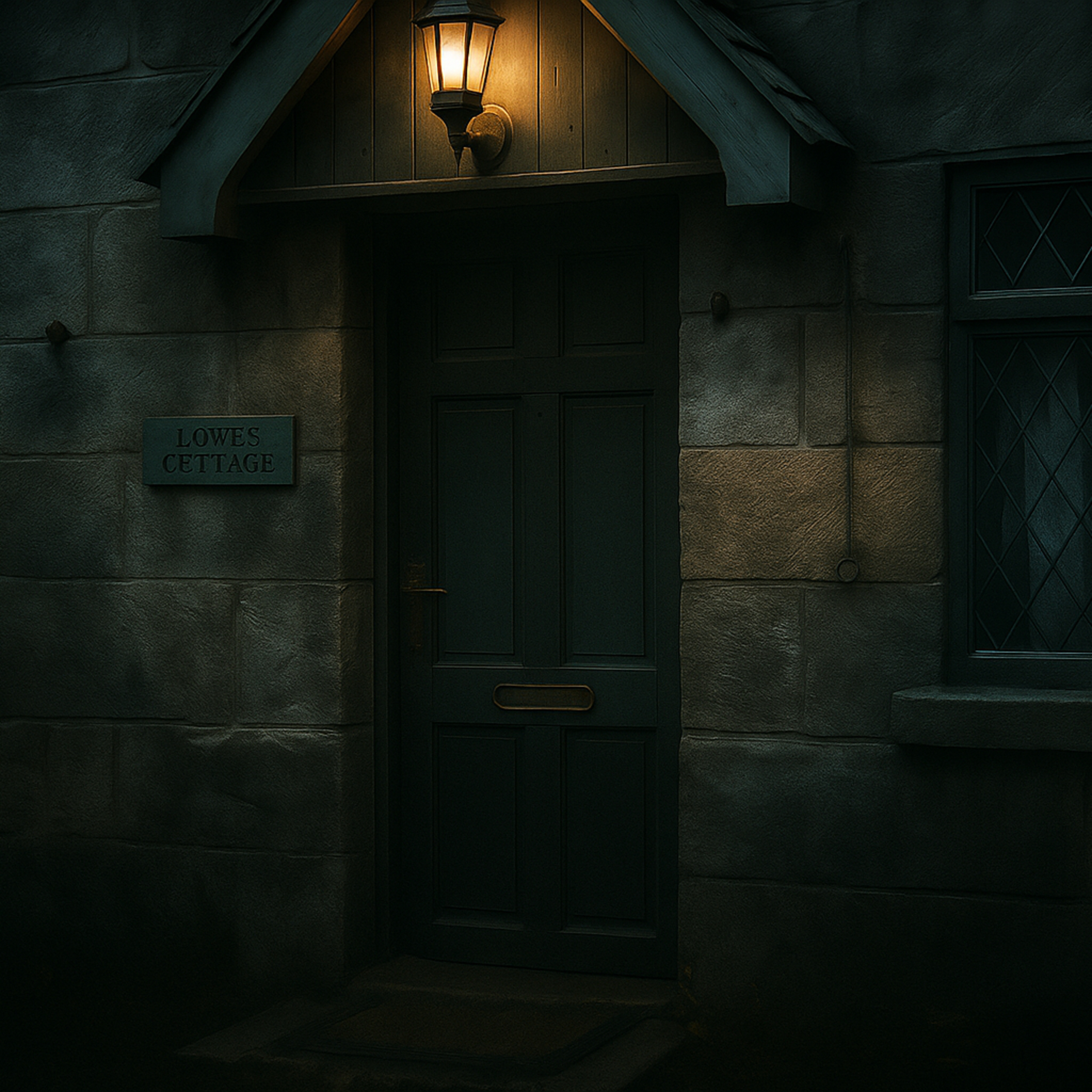
It's called Lowe's Cottage.
In the Derbyshire Peak District.
It's 300 years old.
1:00:16
It's made out of stone, it is very, very beautiful.
It's a very famous haunted house now, so you can go and Google it and see what it looks like.
And in 1994, Andrew and Josie Smith purchased it and it was in, it was in a lot of it was in need of repair, it's probably fair to say.
1:00:34
And so they managed to secure it for a very reasonable price of £44,000.
And they thought they'd found their future home.
Except when they moved in, they said they were immediately uncomfortable.
So what kinds of things did they begin to experience?
1:00:53
So their recounts are they're, they're really rather unpresent haunted house experience.
If what they say happened, and they said when they started, when they first moved in, they could sense a presence in the rooms and a horrible smell would follow them around the house.
1:01:13
Rather jarringly.
Josie described being pinned down to the bed, and it was sufficiently scary for them that they went to a friend in a spiritualist church and asked them to conduct a blessing.
But according to them, the blessings seemed to make them angrier, made the spirit angrier, and the the sort of spookiness continued.
1:01:34
They said objects would move around, strange sounds would be heard in the house, cold spots would occur.
So very, very familiar haunted house territory.
So did they uncover any answers then about the the apparent haunting?
Well, they spoke to neighbors and they said that the neighbors told them that the house sort of, you know, had long standing rumours about it being haunted and it had an array of of legends attached to it.
1:02:00
So there was a suggestion that a milk maid might have been merged on the property or there might have been a young man in the village who had hanged himself in the rafts of the house.
So very vague legends were associated with the house.
And so The Smiths contacted their local church who sent a guy called Reverend Peter Mockford who was responsible in the area.
1:02:20
He was quite fond of it.
He essentially really enjoyed investigating ghosts and stories like that and he said that when he attended the property he was really rather struck by the overwhelming stench of rotten flesh that he felt you could smell when you moved around and he was convinced that the house was property was haunted.
1:02:40
So that's the sort of haunting of the house.
And The Smiths become so convinced that the house is haunted in their evidence that they decide they don't want to pay the final £3000 that they owed the sellers.
1:02:56
And they said the house isn't worth what they bought and that they'd been misled about the haunting.
They dev the haunting devalued the house essentially and they weren't going to make their final payment of £3000.
And you know, you can probably predict what happens next.
1:03:12
The the people that sold them the house, it was a pair of sisters called Miss Melbourne and Miss Podmore.
They sue for the 3000 lbs.
They demand the money that is owed to them and in response Mr. and Mrs. Smith do something called lodging A counterclaim.
They say we want £41,000 because you lied about this haunt, this house being haunted and we paid essentially 41,000 lbs too much.
1:03:38
The house was overvalued because you failed to mention the ghosts.
So then did the the case go to trial from there?
It did went to Derby Crown Court, it was heard before a judge called Judge Peter Stratton QC, as he would have been then, it would now be KC.
1:03:55
So Queen's Counsel, now King's Counsel and the sister's case is quite simple.
They said the house is never haunted.
The Smiths are simply trying to avoid paying the final, final amount that they owe us.
Safe to say The Smiths had a harder time in front of them.
1:04:10
They had to persuade the judge Peter Stratton that they had bought a haunted house.
It was, as a matter of law, haunted and that the Podmore sisters had known about that fact and concealed it, so that's what they had to try and prove.
So if this case went to trial, as you mentioned, how did they try and prove their case?
1:04:34
Well, this case became a bit of A cause celeb, so thankfully we have quite a few newspaper reports and records of the of the hearing.
It clearly caught the attention of a lot of members of the press and according to those reports, they relied on the evidence of the Reverend Mockford and some ghost hunters who claimed that they had detected evidence of a ghost.
1:04:59
They both gave evidence as well.
They said that they had seen a rather unpleasant description of a ghost of a boy with bright red pig like eyes and they basically gave evidence and said the house is haunted.
Unfortunately, that description of the boy with the bright red pig head eyes, I'm not sure how many of your audience are suddenly going.
1:05:21
I've heard that story before.
That would be the downfall I think of The Smiths case because they would be cross examined about whether or not they had read the novel The Amityville Horror.
And I think if anyone knows The Amityville Horror, they know that one of the ghosts that was allegedly seen was a pig eyed demon that would appear at the windows.
1:05:42
Now they admit reading the book, but they deny that it's ever inspired any of the ghosts.
And the ghosts they saw were real.
So ultimately then what was the the ruling in this case?
I think the Amateurville bit didn't help.
1:05:58
The judge was clearly unimpressed by the whole case and he described their evidence as extraordinary and and he concluded that there was no evidence that the house was haunted and ordered them to pay the to pay the 4000 the outstanding 4 thousand 3000 lbs paid your problem.
1:06:15
And there was no evidence for ghosts.
He also criticized the evidence of the priest as well.
He said it's just speculation and you're just describing what what The Smiths had told you.
So he was very cynical about it.
So what are the cottage now?
Well, I think it's safe to say that the judge didn't think the property was haunted, but an awful lot of ghost hunters do.
1:06:38
The next owner, Tim Chilton, wrote a really interesting article in which he expressed sympathy with The Smiths.
He said he had experienced some very strange things when he moved in.
Lights would switch on and off, sudden change of temperature.
And so it's still there.
And I think the haunted reputation hasn't gone anywhere.
1:06:56
So in England at least, the the judges are unlikely to be sympathetic to any argument that a ghost can devalue a property.
Is that true everywhere?
No, I think there's one case.
It's a, it's a great one to end on because it's, it's a, it's a lovely example of of how ghosts don't have to be scary and also a lovely example of how how the law can deal with these things.
1:07:23
And it revolves around a case from New York.
It's very, it's, it's often called the Ghostbusting case.
And it concerns a very beautiful house that's on the banks of the Hudson River about an hour outside of Manhattan.
And it was owned by a couple called Helen and George Ackley.
1:07:39
And they lived there very happily.
And they were very open about how they believed the house was full of benevolent spirits.
And they wrote articles in Reader's Digest about how they had seen disembodied moccasin clad feet just walking through the hallways.
1:07:58
And Helen Ackley once said she saw a man wearing a Revolutionary War attire, war attire.
She was there painting the walls.
And I think one of the loveliest stories is they acclaim to see a pair of ghosts just quietly waltzing together in the their daughter's bedroom.
1:08:15
So lots of stories that they publicized a lot about their beautiful haunted house.
So the Ackleys weren't afraid.
No, they weren't afraid at all.
They, they, they lived very happily with whatever ghosts they believed were in that house.
They wrote stories for their local, their local newspaper.
1:08:33
They wrote, as I say in Reader's Digest and that they cultivated a, a reputation that resulted in the house even being part of like a haunted walking tour of the area.
They lived there very happily.
And then in 1989, as people do, they've been there for 25 years, they decide they want to move.
1:08:52
They put the house up to sale, £800,000, and it is quickly bought by Jeffrey and Patricia Stambovsky.
They sign the contract to sale, they pay the down payment of £325,000.
And at that point, the deal turns sour because they say you didn't tell us about the ghosts.
1:09:15
We've heard about the ghosts.
We've heard about this wanted reputation from a contractor, and we don't want to buy this house.
Now, interestingly, they've got quite a nuanced argument.
They say we personally don't necessarily believe in ghosts, but these stories are real enough that other people think it's haunted, and that materially effects its value.
1:09:38
You've created a reputation around this house and it's full of ghosts and it's not worth how much you said it is.
How far then did they get with their claim?
Well, astonishingly, they make it all the way to the New York Supreme Court.
So within states, you've obviously got in America states courts and then federal law.
1:09:59
This was a state case.
So it went all the way up to the very, very top of New York's state judicial system, the Supreme Court.
And it would go down in history, I think, as the Ghostbuster case.
And it's it's a surprisingly complex case because it deals with the distinction between two types of law, property law and equity.
1:10:23
Now property law focuses really closely on the language of a contract of sale and it's really strict.
And under under the law, as we said, Estella must truthfully answer the buyers questions, but doesn't have to give any more information.
So it's caveat emptor.
1:10:39
Now under that strand of law, the Stambovski's had no chance of winning.
They'd never asked about ghosts.
They'd never asked about haunted houses, and the Actes were therefore never obliged to tell them anything about the reputation associated with the house.
But what of equity?
I mean, it sounds like it has something to do with fairness.
1:10:57
Well, yeah, that's the interesting bit.
The law of equity is a separate strand of law that gives judges, and this is a very simple way of putting it, very special powers in certain circumstances.
So in the world of contract in particular, it allows judges to cancel a contract if they consider that it would be fair and equitable to do so.
1:11:18
And the judges in the Supreme Court really carefully think about whether or not, as a matter of fairness, this contract of sales should be cancelled.
And they conclude it should because as a matter of law, and this is the famous lines in the judgement, as a matter of law, the house was haunted.
1:11:37
The athletes had told so many people about the ghosts, they had essentially created it as a matter of folklore.
They had made their house haunted by giving it this reputation.
So irrespective of whether or not there were actual ghosts in the property, it was haunted.
1:11:55
When it came to assessing its value, when it came to considering its saleability, you had to take into account the ghosts that had been attributed to it.
And also, moreover, the only way that any buyer could know about this, if they were told about it, and this is what the courts say they're like, no reasonable buyer would know to ask, is this house haunted?
1:12:19
So the court said, well, how are they ever meant to know about it unless you told them?
So for that reason, under the law of equity, they conclude that in this particular case, the owners should have told them about the ghosts.
You created this.
1:12:35
It does affect the value.
You should have said something and because they didn't, it gave the courts the right to cancel the contract of sale and return the deposit.
That does indeed sound highly technical.
I know it's, it's, it's almost whenever I start explaining this case, I always think people who love the supernatural announced that having to have a lecture on on equity law.
1:12:58
But if it does make you feel better, the judge in the case, bear in mind it's a state Supreme Court judge, clearly has a lot of fun.
And if you read it, he keeps talking about how normally the buyers wouldn't have a ghost of a chance and then comments sort of later in it that he's going to exercise this principle from the body of legal precedent.
1:13:17
So he clearly has a bit of fun, which is nice.
It makes it a little less dry.
I know people hear about the ghostbusting case and they want it to be really, really sort of fun and juicy.
But in fact, it comes down to surprisingly complex analysis of law.
And as I say, it's, it's actually, it's, it's got a status.
1:13:35
Everyone knows it's Ghostbuster case, but it's quite novel.
And the facts of it, people always say, oh, it means that you have to say your house is haunted.
It doesn't actually say that What it says in certain circumstances, if you create a legend, you may have to declare it.
1:13:51
And actually the house has sold loads of times.
No one's ever talked about any other ghostly encounters.
And it's, it's now worth a fortune.
I think it might have just broke 2,000,000 on its last sale.
So it's not been harmed.
Do you think English law would ever evolve to a point where reputational stigma in relation to a haunting, even without physical defect, could undo a house sale then?
1:14:14
I think as it stands, it's highly unlikely.
You can never say never, and one of the brilliant things about the cases we've looked at is they're always so unusual.
You can't predict these cases.
And I think if there was one scenario that the courts may be sympathetic to, it might be 1, like the Atkins Damboski case.
1:14:36
You can imagine a case in which the seller has actively advertised and marketed that house is haunted.
They've created a local buzz so that, I don't know, people might come and go up through your windows or knock on your door or ask to conduct ghost hunters.
And then if the buyer says is this house haunted and the seller says no, I think the seller, the buyer probably could.
1:15:00
I mean, it's, it's so hard to speculate, but I think that's probably your best case is if the seller has made their house haunted and then disguises or refuses to tell you the truth about it.
They might, they might be quite sympathetic, but it's very difficult to judge.
1:15:16
These are sadly fairly few and far between.
Was that the the last haunted house to appear in the courts?
No, actually, I know I said they're few and far between, but quite quite comfortingly for me who always gets very excited when these cases crop up, one crop up in 2013.
1:15:34
It's, you know, Ontario in Canada and it's a corporate case.
It involves commercial property, which is what I really like about this.
So you have a company called Ontario Inc or Incorporated, they bought a commercial property from kW Labour.
1:15:49
So it all sounds really dry right now.
But the following month, the director of kW Labour makes a comment in an interview and he says that, Oh yeah, that place is haunted.
I've heard it from a couple of people.
And he says specifically, up on the 3rd floor, there is an office up there.
1:16:06
And some days we sometimes joke that you can see someone moving around inside and then there's nobody there.
And we used to make jokes that Jimmy Hoffa might be buried in the basement.
So that's what the seller says in an interview.
That's it.
And off the back of it, the buyers sue and try and get the count, the contract cancelled on the basis that the ghost he described amounted to a latent defect.
1:16:32
It amounted to a hidden defect.
And they're saying, you knew about this.
You should have told us that the ghost was haunted, the house was haunted and that Jimmy Hoffa might be kicking around.
You disclose this.
Why didn't you tell us?
We would like to cancel the contract.
1:16:48
And this went to trial.
Sort of so in Ontario, the witness who made The Who made the interview, he gave a statement and was then cross examined and he said obviously this is just a joke.
1:17:07
It's just me.
It's just me telling you about, you know, the jokes about ghosts of a strange building.
And he, he thought it was mad.
And the seller, the company that had sold it, it didn't go to full trial.
They tried to get, they essentially said this case should be kicked out immediately.
1:17:25
You've heard this is the evidence.
Like we don't need to get witnesses to all come along.
We want this case, The phrase is struck out before the full hearing.
We just want you to decide on the law right now that it's not possible that you could ever find in favour of the buyer.
It's such a silly case.
What did the what did the judge think?
1:17:43
Well, as often happens in these cases, you know, I describe a series of strange facts and then I I get to describe a judge or the legal system treating it very fairly, and the judge accepts properties can become stigmatized.
You know, you can have reputations around properties that can make them stigmatized, but in this case, absolutely no proof of any haunting of any ghosts.
1:18:07
At most it was what we would call double hearsay.
It's someone telling someone else, oh, here's a bit of gossip I heard.
And so from that he concluded that whilst yes, properties can be stigmatized, there is no point in this case moving forward to a full hearing because there's no possible way in which the claimant could ever prove the existence of a ghost affecting the value of the price.
1:18:33
So he just kicked it out.
He struck it out as they'd asked.
So what advice would you have for people buying a haunted house?
Oh, if you if, if you can prove to the so we've talked a lot about the threshold, the level of proof you need to show that a house is haunted.
1:18:50
If you can prove the house that you have just bought is haunted, I would spite the person's arm off to buy it because you will be rich.
Being able to demonstrate that you have a legally haunted house.
I I would absolutely buy it as quickly as possible.
1:19:10
If you personally found out after moving in that your new home was a famous haunted house, would you stay or would you sell immediately?
I might be team skeptic but I would 100% stay.
1:19:27
I couldn't imagine anything more wonderful than living in a famously haunted house.
And I know I sound team skeptic.
I grew up in an old farmhouse and it had a priest hole and a buried well.
It was a really strange old building.
So a priest hole, for those who don't know, is during the Elizabethan period in particular, Catholic families who wanted to hold masses would build secret hiding places for Catholic priests so that if there was, when they were having Mass, if the soldiers came through the door, you could hide the priest.
1:19:58
And we had a priest hole in our basement and.
And I spent most of my childhood desperately sat outside either the priest hole or the buried well, waiting for these ghosts that I was convinced must haunt these places.
I seem to think I was convinced that a woman had drowned in the well and that's why they covered it up.
1:20:17
They just covered it up because it's a sensible thing to do with a well and a toddler.
But all I wanted to do was see a ghost.
And I still feel that way now.
So if there's a haunted house, they should add it to the sale, the sales description of houses.
Because personally I would be more persuaded to buy it if that was tagged onto the bottom.
1:20:35
What about you?
Oh, I'm with you.
I would be 100% all in.
I think there would be something really valuable in trying to protect the the property and preserve the stories and the accounts that are associated with them.
So, yeah, I would be, I would be all in if for all kinds of reasons, the, the ghosts law, the the atmosphere of those buildings and those properties.
1:21:01
But of course, as I mentioned, trying to preserve and protect the heritage in terms of what they have to offer and share about belief systems and, and the people who who've lived in those areas and so on.
Naomi, it's always such a privilege to be able to chat with you.
1:21:20
I always come away with such insight because of your passion and your knowledge.
So thank you so much for coming along and, and sharing these accounts, these historical accounts of properties and the supernatural and the law and how they kind of intermingle.
1:21:39
I do hope we get to do this again really soon because as I said, it's, it's always such a, a joy to be able to chat with you.
So thank you so much for your time and for anybody listening, I will make sure to include in the description notes all of Naomi's links so that you can follow more of what she does.
1:21:57
And I will say goodbye to everybody listening.
Bye for now.
Thank you for joining us on this journey into the unknown.
If you enjoyed today's episode, please subscribe, rate, and leave a review on your favorite podcast platform.
1:22:16
You can follow us on social media for updates and more intriguing stories.
Until next time, keep your eyes open and your mind curious.