Ghosts in the Headlines: Paul Weatherhead on Ghosts, Hoaxes, and Public Fear


At a time when science claims to explain almost everything, ghost stories still refuse to fade. In this episode of Haunted History Chronicles, I’m joined by author Paul Weatherhead to explore the strange cases that gripped Britain in the late nineteenth and early twentieth centuries — from violent apparitions and riotous ghost hunts to poltergeists, hoaxes, and even a royal spectre. Drawing on contemporary newspaper reports, Paul reveals how these hauntings reflect not just fear of the supernatural, but the social psychology of the people who reported, chased, and believed in them. Were these ghosts something more — or do they tell us more about ourselves than the dead?
My Special Guest Paul Weatherhead
Paul Weatherhead is a native of the Calder Valley in West Yorkshire and was brought up in Hebden Bridge. After several years teaching in Greece, Moscow and Northern Siberia, he returned to the Valley in the late 1990s.
He has a longstanding obsession with the weird history of the area leading to the first edition of Weird Calderdale in 2003 which went on to become a local best-seller. His research into Alan Godfrey’s alien encounter led to a deeper investigation into the phenomenon, which formed his Master of Arts dissertation about the philosophy of alien abduction.
Paul’s writing has been published in various magazines and journals, including Psychology Today, The Skeptic, Northern Life and Psychedelic Scene Magazine.
Paul's fascination with the Halifax Slasher and other phantom attacker panics led to him working with renowned expert on mass hysteria Dr Robert Bartholomew on Social Panics and Phantom Attackers: A Study of Imaginary Assailants, published by Palgrave Macmillan.
Paul's latest book is Phantoms of Christmas Past: Festive Ghost Hoaxes, Ghost Hunts and Ghost Panics, a unique approach to true Christmas ghost stories, combining the author's fascination with weird history and hysterical panics.
In this conversation, expect insights into:
Chilling cases drawn from real newspaper reports, including hoaxes and notorious public scares
Insight into what these accounts reveal about belief, fear, and society at the turn of the twentieth century
If you value this podcast and want to enjoy more episodes please come and find us on https://www.patreon.com/Haunted_History_Chronicles to support the podcast, gain a wealth of additional exclusive podcasts, writing and other content.
Links to all Haunted History Chronicles Social Media Pages, Published Materials and more: https://linktr.ee/hauntedhistorychronicles?fbclid=IwAR15rJF2m9nJ0HTXm27HZ3QQ2Llz46E0UpdWv-zePVn9Oj9Q8rdYaZsR74I
NEW
Podcast Shop: https://www.teepublic.com/user/haunted-history-chronicles
Buy Me A Coffee https://ko-fi.com/hauntedhistorychronicles
Guest Links
Website: https://paulweatherhead.com/
Podcast Link: https://weirdcalderdale.podbean.com/
Book Link: https://www.amazon.co.uk/Phantoms-Christmas-Past-Festive-Hoaxes/dp/1803418400
Michelle : This week on Haunted History Chronicles, we're unwrapping a most unusual kind of Christmas tale. Not one of cosy firesides and goodwill, but of ghosts, hoaxes and mass panics. My guest is author and historian Paul Weatherhead, here to discuss his brand new book, Phantoms of Christmas Past. Festive ghost hoaxes, ghost hunts and ghost panics in the 19th and early 20th centuries. Playing the ghost was more than a prank. It was a pastime that could spark, spiral into chaos. Imagine Christmas gatherings that turned into ghost flash mobs, vigilantes chasing spectral figures through graveyards and rumors so wild they sparked riots in city streets. From the tragic tale of the Hammersmith ghost to the bizarre luminous hat of the Dundee Phantom. From Richard III's ghostly green new Year's Eve return to the riotous scenes in Islington churchyard, Paul's book uncovers 12 extraordinary episodes where festive cheer collided with mass hysteria. We'll explore how these ghost scares reflect society's anxieties, why Christmas was such fertile ground for hoaxes and the strange costumes, from rattling pig bladders to glowing devil masks that brought these spectral characters to life. And of course, we'll hear how communities, sometimes numbering in the thousands, came together in search of spirits, only to end up in riot, revelry or tragedy. So join me as we dive into a Christmas history unlike any you've ever heard before. One of ghost hunters, hoaxes and the darker side of festive folklore.
Michelle : Hi, Paul, thank you so much for joining me this evening. Do you want to just start by maybe saying a little bit about your work and sharing a little bit about yourself and your background and how you first became interested in researching unusual and weird history?
Paul Weatherhead : Well, thanks for having me, Michelle. Yes, like a lot of people my age, I became interested in this kind of thing as a child, you know, watching Arthur C Clarke's Mysterious World and collecting the Unexplained magazine in the 14 times. So, you know, and then going to the local weird section of the library and looking up books on the paranormal and the unexplained and all that kind of thing. So I've long had an interest in it since childhood, really. And growing up in an area of fairly high weirdness, which is the Calder Valley, that's located in West Yorkshire, about halfway between Leeds and Manchester, where, you know, as a teenager, there was the. The UK's first supposed alien abduction happened near where I lived in Todmorden and in Hebdenbridge, where I live, there was a sort of a media sensation about a witch who tried to buy A chapel to convert it into a coven. And Cliff Richard put up the money to stop her and she turned into a black panther and haunted the moors. And so there are all these sort of really interesting quirky stories that I grew up, you know, fascinated by. So that sort of led me to writing Weird Calderdale where I sort of went through these ledger. There hadn't been a book written about all of these sort of legends and strange episodes. So that's what sort of led to my interest really and led to the writing of my first book, Weird Calderdell.
Michelle : And some of your earlier work also explored phantom attackers and mass panics, you know, particularly the Halifax Slasher. What drew you to that subject and how did it then go on to lead to your collaboration with Dr. Robert Bartholomew on social panics and phantom attackers?
Paul Weatherhead : Yes, one of the chapters, one of the key chapters in Weird Calderdale was the story of the Halifax Slasher. And if your listeners aren't familiar with this, it very briefly, in 1938 in Halifax in West Yorkshire, there were fears that there was a maniac, a razor blade wielding maniac roaming the streets. And there were loads of reports of people being slashed on the arm or wherever by this, this razor blade wielding maniac. And it led to a huge panic with patrols roaming the streets and vigilante mobs. And then there were more and more victims that suddenly there were three or four attacks every night. And then it spread to other towns around the UK and as police investigated, it turned out that all, all of the victims had cut themselves and made up the story of this attacker. And that's what we mean by a phantom attacker, one that doesn't really exist. The Halifax Slasher was a complete myth. It was made up by the supposed victims. And that's what sort of led me to look for more of these kind of cases because they're very, they happen very regular throughout history. And when we started to have this epidemic of needle spiking just after the lockdowns, where young women in nightclubs would be attacked by syringe wielding maniacs. And this suddenly spread from Nottingham to all around the country, to all around Europe, it suddenly struck me that this was very similar to the Halifax Slasher in the way the pattern escalated. And of course when I looked into it, it turns out it's not possible to inject someone with a drug, you know, in a nightclub through their clothes without them looking. And all the tox toxicological reports came back negative. So the so called needle spikers didn't exist. And that's what led me to contact Robert Bartholomew. I knew he was the expert, the world expert on mass hysteria and social panic. So that led to his writing an article for Psychology Today on the needle spiking myth and then for the Skeptic, and finally on the book that we worked on together, Social Panics and Phantom Attackers, which is a sort of an academic look at how these strange panics erupt and spread and what causes them and all that kind of thing.
Michelle : Do you see your latest book, then, you know, Phantoms of Christmas Past as a kind of a natural progression of some of those earlier interests? I mean, you know, thinking in particular about these social panics and phantom attackers, do you kind of see it as a natural progression from that?
Paul Weatherhead : I do see it as a natural development of that because the new book, Phantoms of Christmas Past looks at cases where there's been this. This kind of social panic, but related to a ghost or someone dressing as a ghost and how that sort of ripples through society. And that, I suppose it does have elements of Weird Calderdale in that it looks at weird history and the legends behind it and how they develop and how people react to them. But there is an element of the sort of the social panic. Funnily enough, I had actually started working on the Christmas book before the other one, because when I was working on Weird Calderdale, as I was going through newspaper archives, I just noticed that there were loads of little ghost stories from all around the country, but there were people pretending to be ghosts, you know, wearing ghost costumes. And they were so regular that I thought, I wonder if anyone's really written about these. And so I started to collect them. And so I've always had a. I've had a fascination for a long time. And I was going to write a book about them because I thought no one had done it. And then I thought, then I found that someone had done it. There's an academic book. I took another turn and started thinking about Christmas books, Christmas ghost books. But then, you know, there's a glut in the market in those as well. But then it occurred to me that a lot of these ghost hoaxes and ghost panics were occurring between Halloween and Christmas. And so that all those ideas came together and that's what led to the idea of Phantoms of Christmas Past.
Michelle : And it fascinates me how many of these, these ghost hoaxes, especially around Christmas and New Year, that kind of period, like you said, post Halloween in the lead up to Christmas, and then just after that, it's. It's not also Unique to the United Kingdom. It's something that you see around the world in Canada and Australia and, you know, so many other places where you have these. These accounts of ghost hoaxing that kind of crop up across the Australian Gold coast that appear in so many different parts of the world and lead to some really quite wild results, very similar to some of the accounts that we have here in the United Kingdom. It's fascinating that it does seem to be a global type of storytelling and experience that's shared by so many different countries.
Paul Weatherhead : It is indeed. And, you know, it's hard to say why that everybody, so many people feel the need to do this kind of thing, to sort of fake these. These strange ghosts. But you're right there. There have been similar kind of accounts all around the country. And, you know, and. And it certainly happens all the year round. It wasn't just at Christmas, although it seems to be clumped around Christmas and New Year, you know, and I wondered partly if that's because Christmas. People often see Christmas as a liminal time, a place where worlds meet, you know, the old year and the new year. So it is a time when people traditionally tell ghost stories. So that might make people more aware of the idea of ghosts. But also, especially in our hemisphere, anyway, you've got evenings getting darker, which, you know, that affords more opportunity for dressing up as a ghost and scaring people. And so that's another thing. And also, with it being Christmas time, people are more likely to have been out to the pub celebrating. And that might be another motivation for either going on a ghost hunt or indeed pretending to be a ghost.
Michelle : So just kind of diving into your book specifically. I mean, it's a. It's a very unique approach to Christmas ghost stories. How would you describe it to someone picking it up for the. For the, you know, for the very first time?
Paul Weatherhead : Well, there are lots of books about, you know, arguing that ghosts exist and going through the evidence or looking at specific famous examples of ghosts. And there are a few books that do the opposite and argue they don't exist and try and debunk these cases. But I've taken a different approach and looked at ghost legends and how people react to them and how people play them out. Sometimes by pretending to be the ghost, sometimes by trying to catch the ghost, sometimes by pretending that you've seen a ghost when you haven't. And I'm putting all these things together. And because once when you start looking at some of these ghost hoaxes, really interesting and unusual stories develop and they're Stories that connect local folklore with strange events, with media sensationalism, and occasionally with mass hysteria and mass panics.
Michelle : And you know, briefly, earlier you touched upon some of the reasons why you think that these types of accounts of ghost hoaxing and ghosts, these ghost hunts and these panics seem to happen around the timeframe that we've been thinking about that lead up to Christmas. Are there any other reasons that you kind of think that this is kind of a time that seems very apt for these types of stories and accounts to occur? Are there any other reasons that maybe you haven't already shared with the listeners?
Paul Weatherhead : Yes, one other thing that occurred to me, and it's quite a prosaic reason really, is that Christmas time or as Christmas approaches, newspapers are looking for fun stories with ghosts in. And so I think, although these panics happened all the time, I think especially at Christmas, newspapers are much more likely to devote time to it, maybe devote a second story to it, maybe send a reporter to investigate it to see what's going on. And so I think maybe we know more about them just because the newspapers are more interested in a fun Christmas ghost story. So that as well as it being dark and as well as, you know, Christmas being the time of ghost stories, I think those together would be. Seem to be the main reasons why these tend to cluster around. Because between Halloween and New Year, let's say.
Michelle : So do you want to maybe explain the concept then of playing the ghost and why it became such a popular pastime in 19th century and the early 20th century?
Paul Weatherhead : Yes, playing the ghost is an activity that was rife throughout this time. And at its most basic, someone would throw a white sheet over their head, hang around at night in a scary place, maybe a graveyard or a quiet lane, and then jump out at someone who was passing by and then, you know, make scary ghost shapes and try and scare them. Occasionally the costumes would be more elaborate. There might be luminous paint or whatever, but this was so common and often it would lead to people being scared to go out there. Would. There would always be reports that some, some an old lady was scared to death or a pregnant woman was scared to death. There'd always be those reports. People would be scared into insanity, supposedly. And then, you know, these, these stories would lead to gangs forming and patrols trying to catch the ghost. And, you know, although it sounds quite strange, but if you imagine if you're walking alone at night past a graveyard, and then suddenly someone jumps out dressed in a sort of a cartoon ghost costume, it's going to be clear that you're not seeing a real ghost, that you're seeing a ghost hoaxer. But on the other hand, you don't know who this is or why they're doing this strange behavior or what they're going to do to you. So you're going to feel very vulnerable and scared. And that's how a lot of people felt. So although on the one hand it's sort of quite comic and seemingly harmless, on the other hand it did cause real outrage in the community and rumors would often spread that it was aristocrats on a dare who were doing it. That would be one. Sometimes it might be people trying to get revenge or pranking their mates. And quite often what would happen is when rumors of a ghost or a ghost hoax are started, there might be copycat hoaxes where another person would think, oh, that sounds like fun, I'll do that. And then you get copycat victims who read about people who've been scared half to death in the newspapers and think, well, I'll do that and I'll get a bit of attention and I might get a day off work as well. So you get all these things that sort of work together to create these strange ghost episodes that the press called playing the ghost.
Michelle : And some of the accounts sound almost theatrical. You know, you mentioned some of these more elaborate costumes consisting of maybe wearing luminous paint. But there were devil masks, you know, rattling pig bladders were used. Do you have a particular favorite or bizarre example of a type of costume that was adorned as part of this ghost hope thing?
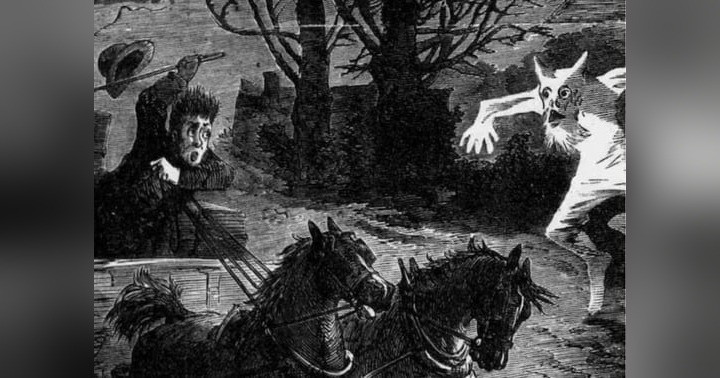
Paul Weatherhead : Yes. So as well as, as you said, you know, the simple white sheets, you might get luminous paint which would be. Make it even more eerie at night sometimes animal skins and that kind of thing. I think one of my favorites was the one that you mentioned, the pig bladder episode. This was happened at Christmas Day in 1804 in Hammersmith in London. And this was quite a rural fruit growing area at the time. And there was a coachman driving his horse past a field when he saw this white figure emerge. And he could hear this strange, eerie rattling sound. And as this white ghostly figure approached, he could see that it was covered from head to foot in these pig bladders that were filled with dried peas that were rattling away in this very eerie way. Now the, the coach driver jumped off his horse and ran for it. And you should, we should say, by the way, that pig's bladders filled with dried peas were a common childhood toy at that time. So I think that's one of my favorites. Another one that I always thought was rather amusing. Was happened in 1844 in a village in the West Midlands where a ghost or a man dressed as a ghost was supposedly haunting a local churchyard and terrifying people who were walking past it on the way to the pub. And an actor who heard about this decided to check out this ghost and he went dressed as a theatrical demon. So he went dressed in these different coloured tin foils with a lamp that made it look like he was smouldering from hell dressed as this demon. Maybe a costume left over from a production of Dr. Faustus. But he went, waited for the ghost to appear and then jumped out and pranked the ghost and said he was a demon waiting to escort the ghost back to hell. And in the end, the ghost hopes I had to pay for drinks behind the bar to escape a severe beating.
Michelle : And obviously you just mentioned there how sometimes the ghost hunters themselves dressed up. And I understand that alongside that there are examples sometimes of the ghost hunters themselves dressing up and getting creative by dressing up in drag to try and lure out the ghost hoaxes. Do you want to tell us more about that?
Paul Weatherhead : That seems to have been relatively common. It happened. I came across several examples of this and see if you imagine that quite often it might be women who've been approached by these ghost hoaxes. So the gallant youths might form these committees to walk the streets at night looking for the ghost. And one thing that they would do would sometimes they would try and honey trap the ghost hoaxer by dressing as women. Now, you know, you can imagine if you've seen modern ghost hunts on TV where everyone's whispering and it's infrared cameras and it's all quiet and there's all this electric equipment. This was nothing like that. This would have been more like a drunken stag party. So you can imagine they'd be joking and laughing and, and drinking. And so it would have been almost a carnival esque kind of experience.
Michelle : And these ghost panics weren't obviously just private jokes. They, they often sparked, as you kind of mentioned briefly earlier, these mass gatherings. Do you want to just describe what you mean by a ghost flash mob?
Paul Weatherhead : Yes, I've used the term ghost flash mob because it sort of captures this strange phenomenon where when rumors of ghosts emerged, people would gather to share gossip about it. So if there were rumors that a house was haunted, crowds would gather around it the next day. They'd share their own experiences or what they knew about this case. And then more would come the next day and more and more. And so you get these almost spontaneous gatherings of onlookers Curiosity seekers. Sometimes these would turn into ghost hunts with people trying to spot the ghost. I mean, one of my favorite examples comes from just down the road from where I live in Hebden Bridge, a town called Todmorden, where in 1899, a rumor spread that the station master had been on the train station at midnight and seen this red eyed white ghost coming towards him. And then both the ghost and the station master vanished into thin air and weren't seen again. So the next day there was a huge crowd outside the train station trying to find what happened and sharing their gossip. And. And then, you know, there was astonishment when the station master turned up to work to find this huge crowd here, thinking that he'd been dragged down to hell by a ghost. And the station master said that, well, he had seen something, he'd been on the platform, he saw this white figure with red eyes, and when he raised his lantern, he realized it was an escaped ferret. And then, so you get this, you can imagine how he told his friends about this escaped ferret and his friend told their friends. And as the story spread, the little bit at the end about it being an escaped ferret was cut off because it makes a better story if they vanish. And so you can see how quickly these rumors spread, that the corners are rounded off and the story becomes much more interesting and scary. And that makes it even more likely to spread, you know. And then in those days, the only way to get news quickly would be to go to the scene and see what gossip was going around.
Michelle : So did these events spiral out of control? Were there examples of, you know, violence or something else erupting as a result of these kind of mass gatherings?
Paul Weatherhead : They would frequently spiral out of control because happening late at night, the. They might, the people there might sort of fortify themselves with a few drinks. They'd be in the mood for fun. There might be property damage, people might break into the house, for example, looking for ghosts. That happened a couple of times in the book where people broke into the house at night, sat there in the kitchen, eating the food, waiting for the ghost to appear. There was another case in, it was in South Yorkshire where some butchers went, broke into a house, sat there with towels wrapped around their head, pretending to be mystics, got drunk, waited for the ghost to show up. Instead the police showed up, of course, but they frequently, you might get pickpockets, fights breaking out. There'd be property damage because it would be like a riotous outdoor party with a little bit of ghost hunting thrown in.
Michelle : So one of the most famous cases is the Hammersmith Ghost case of 1803-1804. Do you want to just maybe walk us through what happened there and why it turns so tragic?
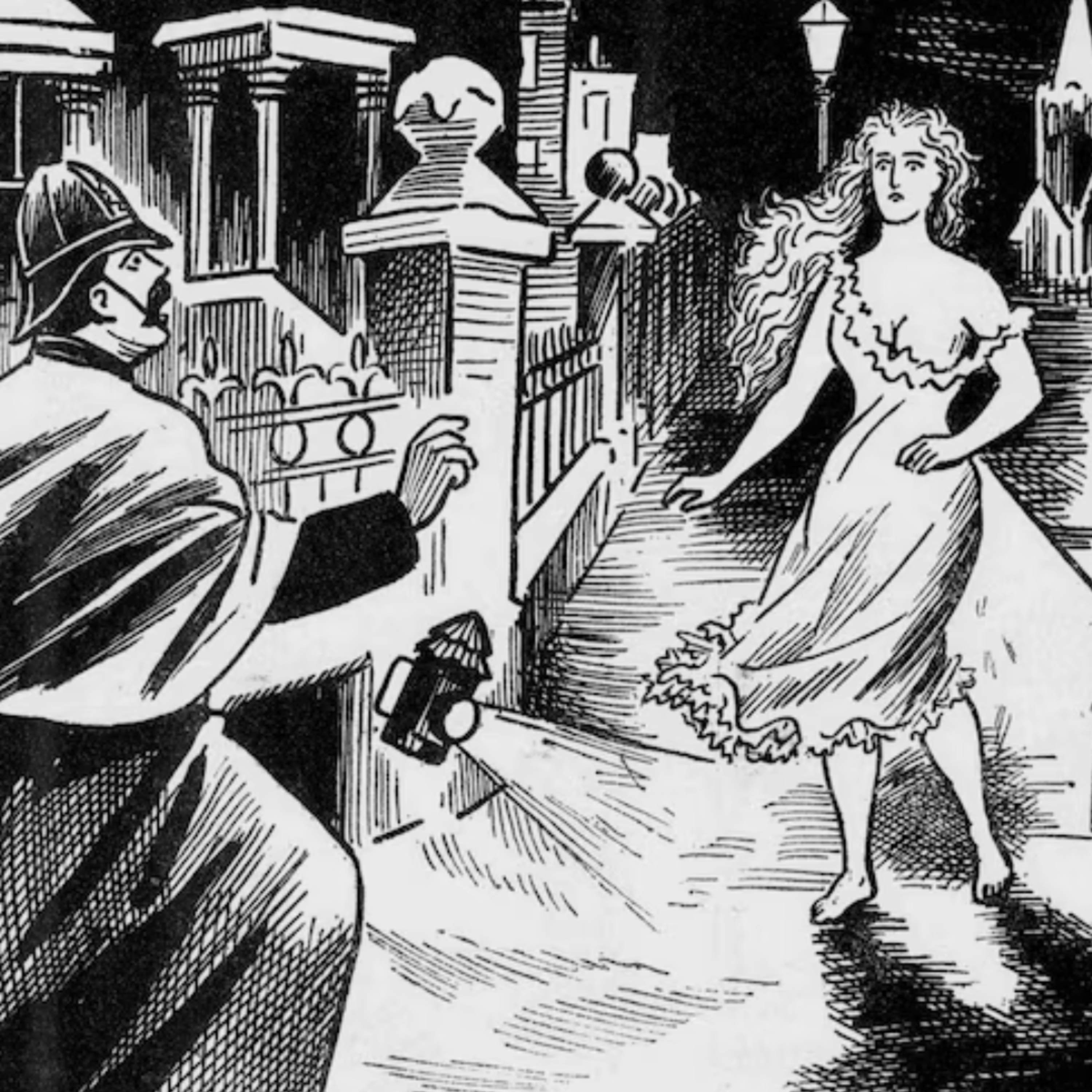
Paul Weatherhead : Yes, this is probably the most famous one, as you say, and in some ways it sort of sets the scene for how many similar panics would pan out. And the thing that seemed to start this was the suicide of an Irishman called Thomas Flynn, who'd attempted to kill his wife and then cut his own throat. And because he'd taken his own life, he was buried at a crossroads. And that was often happened to people who'd taken their own lives at the time, sometimes with a stake through their heart. And this caused a huge amount of upset in the Irish community. And, of course, if you're buried in an unmarked grave like this, it's the sort of event that might lead to ghost rumors and stories of ghosts. So that was in the minds of people in Hammersmith at that time, which, again, was quite, as I said earlier, was quite a rural area with London sort of just growing on the outskirts and starting to gobble it up. After that, there were reports of strange white figures seen in various parts of Hammersmith, and a panic developed. People were scared to go out. Patrols were formed to try and catch this strange figure in white that was haunting people. There were rumors that it had scared a pregnant woman to death. This turned out later not to be true, but it led to a huge panic and patrols were walking the street. Now, one man called Francis Smith decided to take the law in his own hands, and he went out waiting in one of the ghost haunts with a gun. And when a figure in white approached him, he challenged this figure. The figure ignored him, so he took out his gun and he shot him. And the person he'd killed was called Thomas Millwood, and he was a plasterer, and that's why he was dressed in white. The plasterer's traditional working costume was in all white. And so, again, this caused another sensation with huge crowds trying to get into the church to see the body of the unfortunate man who was killed. Now, often these kinds of ghost panics will dissipate if some kind of scapegoat is found. And in this case, there was a shoemaker called John Graham, and he was caught dressed up as a ghost, you know, with a white sheet on his head. And he said, you know, he'd only done it once, and he did it because he wanted to get revenge on his apprentice, because his apprentice had been telling his children scary stories. Now, they couldn't Sleep. And so he was a scapegoat and the panic dissipated. So although he had dressed as a ghost, it's clear that he couldn't have been the ghost in all the many, many reports. But sometimes a scapegoat's what's needed to burst a kind of panic like that.
Michelle : Yeah, you see it escalate and escalate and escalate, don't you? And then just something like a pin bursting it, like you said, just bringing it back down. I mean, in kind of research, I came across a very similar account to the Hammersmith ghost case, which happened in Canada around the New Year period, where similar sets of circumstances happening and then basically what transpired was someone being shot in the middle of a, you know, quite crowded square on New Year's Eve. But what's so fascinating about that, about that particular case, is how it then goes on to spark further ghost stories of the man who was subsequently shot accidentally. Believing this, you know, he was believed to have been a. A real ghostly figure. Instead he was just a simple man in a costume on his way to a New Year's party. But his death then subsequently, as I said, just brought about this kind of wave of other ghost stories linked to, sadly, his demise. So it's such a well known example, like I said, it's probably the most famous. But it's so interesting how, like we said at the beginning, how there are similarities with other accounts elsewhere around the world.
Paul Weatherhead : Yes, that's true. And one thing about many of these panics is that the bubble bursts and then a few years later it happens all over again, maybe a little bit further down the road or in the next town or whatever. But these panics always come back and a similar thing happens again, hopefully without the tragedy. But yeah, these, they were so common in the 19th and early 20th century, you know, it was, it was a struggle to pick out, to find ones to focus on.
Michelle : And I think that comes back to something that you mentioned earlier with, you know, the press as it was back then, with things like penny dreadfuls. You know, these stories were so commonplace. If we think about the popularity of Charles Dickens stories, story A Christmas Carol, which obviously was originally just something intended to be published over multiple publications, you know, you've got the press again drawing attention back to these stories repeatedly, particularly around this time of year. That just means that interest again is focused back on these types of accounts and stories, which I think naturally starts to bring it back to the, to the attention. And of course, then as people start talking about it, you get other Similar experiences and accounts cropping up again, maybe in that same region or elsewhere.
Paul Weatherhead : Yes, that's right. And as well as Dickens and the press, you start to get things like the Illustrated Police News, which was often called Britain's worst newspaper, which often had lurid images of the fake ghosts and the mobs trying to catch them and so on. So all these added to these strange episodes.
Michelle : And another kind of well known case that you talk about in, in the book is the Islington graveyard riot of 1899, which sounds extraordinary. How did a simple ghost rumor there escalate into the chaos that was obviously seen?
Paul Weatherhead : It all seems to have started with a letter to a newspaper. The letter was signed Mr. J. Chant, and it said that on Christmas Day 1899, he'd been walking past St. Mary's Church and he'd seen a strange figure in white there. From the letter, it's clear that he thought this was somebody, probably somebody pretending to be a ghost. And so he said, the next night, I'm going to go and look for him again. And of course, the next night he was joined by hundreds of other people who'd read this letter. So suddenly you get hundreds of people congregating at night around this churchyard. And so the press called it a vulgar riot because you'd get people running around among the graves, shouting, screaming, making ghost noises, jumping out on their friends, trying to scare them. This was Christmas time, many of them had been at the pub and they were drunk. So you had a huge crowd inside a very small area. The police came and they tried to get people out of the graveyard and away, but as soon as they pushed them out of one entrance, they just went round and got into another entrance. And as the crowd grew bigger, more and more people turned up. And because the police were trying to keep them out, they thought, well, it must be something that it's worth seeing. And of course, a few people seem to have lost belongings in there. There were a few minor assaults and things being stolen as well. But I mean, strangely enough, there'd be a number of these similar riots. There's one in Hackney in 1895, which was even bigger, where it led to rumors with over 1000 people running around in this graveyard at night, with the police completely losing control over a number of nights. But, yeah, these are fascinating. It's strange. It's almost like a drunken ghost hunt in a graveyard with this kind of riotous bad behavior.
Michelle : It's this kind of weird fascination, isn't it? Because you can see how it would attract so many people's interest to, to take part, you know, the fact that you've, I mean, it's got everything really, hasn't it, to pique people's interest. And of course, when you have gatherings grow to those kinds of sizes, then you know, we, we only have to think back to things recently on the news, you know, how quickly then things can escalate and tip over and you've got a group of, you know, group of people here completely and utterly primed for precisely what we see happening in some of these accounts where they're already worked up. And of course, when you have more gathering, they're only going to continue to wind wind each other up even further. And of course, if you know, you've got other things there that help set the stage with the low lighting in the graveyard and the sounds. And it's a very sensory experience and we've got to think back to the times as well of poorer lighting, it's more dimly lit again. The season plays into it and of course just the sense of isolation, the less busy streets, no cars and things like that, polluting and making sound again. It's a disaster waiting to happen really, isn't it?
Paul Weatherhead : Yeah. All those things you said achieve, especially about the sensory experience. The Hackney ghost riot from 1895, that happened in the summer and it was in the middle of a thunder and lightning storm, so you can imagine how that would have added to the atmosphere and the fun of people running around scaring each other in the graveyard. But you're right, these sort of things do spiral out of control quite often and as we saw with the Hammersmith ghost can have quite disastrous consequences.
Michelle : And another amazing account that you talk about in the book is the Clanking Ghost of East Barnet, which is another fascinating case, drawing Christmas crowds for decades. What made that haunting so enduring, do you think?
Paul Weatherhead : I think one reason is that in the area there was an older ghost legend and maybe that's what gave it the staying power. So there was, you know, stories that the ghost of Jeffrey de Mandeville, who was a medieval baron who rebelled against King Stephen, he died in battle in 1144 and there were rumors that his ghost haunted that area. And you'd know his ghost was there because you'd hear the clanking of his armor. But I think what happened in 1926 was that after a few sort of low key reports, newspapers reported that a night watchman had been guarding some building materials in the run up to Christmas and he saw this strange figure in this military costume that was. But he was a Complete skeleton. So he saw this ghostly military skeleton. And this led to great deal of interest. People started walking the streets of East Barnet looking for. Trying to find Sir Geoffrey. As Christmas came, the council even got involved and started to debate whether night watchmen who were guarding haunted locations should be paid extra. So that gave the newspaper some extra bit of fun to talk about. But, yeah, then suddenly it got bigger and bigger. More and more crowds came. As New Year rolled around, the newspapers started reporting that the ghost of Geoffrey Demander Bill had a girlfriend. She was a gray lady with dimples. And, you know, the newspapers were saying that she's so attractive that men come from all over the country just to see her ghostly dimples. But, you know, the. The empty roads were getting clogged with people all looking for the ghost. And every year a similar thing happened. It happened every year. It became an annual event with hordes of ghost. Ghost hunters, or ghost tourists, you might call them. Along with that, though, you'd have spiritualists coming, you might have serious psychic investigators coming. And so you had a kind of a tug of war between these three groups because the psychic investigators were trying to be serious, they were trying to be scientific. They might have cameras set up, but they'd be disturbed by these crowds of drunken ghost hunters. Now, the spiritualists, they'd nearly always claimed that they'd seen a ghost, so the psychic investigators were often quite jealous of them. And there's a bit of resentment about these spiritualists coming up from London and speaking to our ghost when we're still struggling to try and find it. But, yeah, it escalated. And every year, this sort of panic, not really a panic, this sort of exuberant, festive drunken ghost hunt got bigger and bigger with roads getting crowded and police being brought in and, you know, traffic being unable to move. It got to such a. Such a state that a lot of the investigators, the serious investigators, were saying that rather than the ghost scaring people, the people were scaring the ghost away. That, you know, there were too many lights and cameras and TV crews. And anyway, these panics were regular Christmas events from the 1920s right up to the mid-40s.
Michelle : And I think you kind of touched upon something really important there, which is, is this kind of connection that it has with the local community and how, you know, that makes such a kind of an. It has such an impact on the local community in the way that it does, that it becomes so embedded in, you know, the local culture and the local understanding and. And that's why partly becomes something that endures so so much. And, you know, it's something that we see so well, don't we, with. With folklore up and down the country of how this connection with the. The land and the stories of our communities just becomes something that is so well known and is then repeated down through generations. I mean, I can think of an example of this which is from my own family history, which, I mean, you would never be able to tell this, Paul, from my own accent, but my family hail from Yorkshire, and it's only because my dad joined the military, that meant that we moved around a lot that I lost my accent, as did, you know, my parents and my siblings, if you like. But my great grandmother was, you know, of a. Of an age, shall we say, that she remembers the stories of Spring Spring Hill Jack, which obviously, hugely popular up and down the country in the United Kingdom and in Yorkshire. It's. It's sparked its own stories with the Park Ghost, which was nearby to where my great grandmother lived and grew up as a young child. And obviously that's a site that's very much kind of linked with pretty awful history whereby there was a huge mass burial after an epidemic, so there was a mass grave basically in that area. So you've got this local tragedy that somehow becomes associated with the Park Ghost, which is an alias of Spring Hill Jack. And my great grandmother would share these stories with her children and my dad. And so this is something that became part of our storytelling within our family as well as obviously something that was known really, really well in this area and obviously sparked people regularly gathering on this site at various times, almost like an annual thing at some points, because of the popularity of this. This legend that somehow became so much embedded in the landscape. And, you know, I think we see that similarly here with this. With this account that you just shared, you've got something that becomes ingrained in the. In the minds of the people that have experienced it to the point where they share it. And it goes down through the generations then. So it keeps renewing this interest in people who weren't even there at the time, who experienced it firsthand.
Paul Weatherhead : Yes, that's sort of informed the way that I've presented the book because I've organized some of the chapters in it as tales of individuals who experience, you know, who met the ghost or were scared of the ghost or who were the ghost. Because it's all these little patchwork of tales, individual stories that sort of come together to make up these strange events. And like you said, it sort of also becomes a social event because I think when people were gathering to try and see the clanking ghost of East Barna or any of other of these ghosts, they were not really expecting to see the ghost. What they were expecting was to have some fun with their friends, do some drinking, do some messing around, larks in the dark, you know, and just to have fun and let themselves go away from the rigors of their working life and the, the drudgery of the daylight hours.
Michelle : And I think you're absolutely right. It becomes almost like you said, a social event, a social affair, doesn't it? Um, which again, just keeps renewing that interest. It's a, it's an escape route, isn't it, from the, the drudgery of life and the, the hardships of life. And, and, and again, it just makes it such fascinating reading about these, these accounts because you can understand why they endured in the way that they did. Um, and it reveals so much about the people and the, the time frame and the social history of that local community.
Paul Weatherhead : It does. It is what makes these stories so fascinating. And it's also, I think, tells us a lot more than taking a more black and white do the exist or not approach to ghost stories. Because by taking this approach you get to explore both the background and the legends as well as the way people react and behave with these legends and the kind of behavior that it, it's that they do as a consequence and how people react to it and how society reacts and then how these things sort of evolve and change and then come keep on coming back and keep.
Michelle : On recurring and again, just coming back to the, to the book and the. Some of the many accounts that you obviously share in there. One of the, one of the others that was just really fascinating was this account that came from Dundee where you have a phantom with a luminous hat which eventually gets caught thanks to a. To a dog. Do you want to tell us some more about that amazing story? Because it is unbelievable. It's so intriguing.
Paul Weatherhead : Yes. This is often called in the, in the press it was called the Lockheed ghost. So Lockheed was a part of Dundee and at the time it was. This is in 1900, it was inhabited by a lot of Irish settlers. So it was called Little Tipperary at the time. And interestingly, as we said before, that often these ghost hoaxes would sort of spring up around places where there were spooky legends. And in Lockheed there was a building known as the Cradle of Logi. And the legend was something that a real man whose name was Fletcher Reid, had married an Indian princess and promised to her father that he would look after her as if she were a baby in a cradle. But then when they moved to Scotland, he threw her in this building and locked her in there. And she eventually died. And she supposedly became this ghost that they called the Dark lady of Logi. Fletcher Reed, by the way, got his comeuppance. He was lured to India and then tortured to death by the princess's family. But against that background of this spooky legend, you had rumors of these strange figure being seen with this luminous hat haunting this strongly Irish area of this Scottish town. And that, of course, led to patrols being formed with their, you know, armed with clubs, roaming the streets, trying to find the ghost. Occasionally, people would give chase to a figure they saw, but the ghost would always escape. And eventually, a man took a dog out, I think it was a wee terrier called Nettle, and they gave chase to the ghost on a number of occasions. And finally, Nettle managed to sink his teeth into the ghost's calf and pulled off the sheet that was covering his head, and he was revealed. And so it's almost like a kind of a real life ****** Doo where if it wasn't for that pesky dog, you know, the ghost would have got away with it.
Michelle : And you stole the words right out of my mouth, because that's exactly what I was thinking. It is almost like a ****** Doo cartoon. It's so incredibly fascinating and unique and intriguing the way that it played out. But it's an incredible example of precisely what we were talking about. But in this case, we've got a dog thrown in to boot, which, again, just makes it so compelling to find out more about it. It's a great addition, I think, to the book because it's a wonderful story. It's a fascinating story.
Paul Weatherhead : Yes. And it says a lot about the way that people react because people were so scared of the ghost of Loki that there were rumors that the number of weddings was falling because young couples were too scared to go out and court in case they saw the ghost. You know, there were lots of cases of mistaken identity where, you know, long distance runners or whatever were mistaken for the ghost. So it became a true panic in that it sort of consumed the area.
Michelle : And of course, you know, obviously, one of the other really good examples that you touch upon in the book is a really colorful tale. It's obviously the account of the luminous green ghost of King Richard III, which is spotted sometimes on New Year's Eve in 1921. Do you want to tell us what happened there and how the press responded to that particular report of a ghost.
Paul Weatherhead : Yes. So, of course, King Richard III died. The Battle of Bosworth in 1485. And this happened at a place called Ambion Hill near Leicester. And a local newspaper published a story, New Year's Eve, like you said, in 1921, where they described the experience of a farmer coming home from the pub after a New Year's drink. And he walked past Ambion Hill and he saw this strange green mist and he went to investigate and he saw that there was a figure with a crown on its head wearing this plum velvet cloak. Really ugly, humpbacked figure. He said it wasn't it. Eventually it spoke to him and he scribed its voice as being like a rusty key in a lock. And the ghost said that, you know, he was the ghost of King Richard iii. And every New Year's Eve for six hours, he haunts this area where he had his final battle. But on this occasion, he decided to speak to someone for the first time. So he told this farmer that his message to the world was to stop chopping down trees on Ambion Hill. And so this account was printed in the newspapers. It was clear by the way it was written that it was meant as a joke. It was a very tongue in cheek style. The ghost is very cartoonish. In the article, the farmer is referred to as a bluff farmer, almost giving the game away. But when that story was reprinted in other newspapers, they cut all the ironic, humorous stuff out and just said, king Richard's ghost is haunting this area and is green and he wants to stop the trees being chopped down. And so that led to other newspapers just printing copies of this story. And then, of course, people started coming to investigate it. And then, of course, people started saying in the local area where there hadn't been any ghost rumors, oh, yes, we've seen the ghost of King Richard III as well. So, yes, this is another interesting aspect of what I looked at as. As well as ghost hoaxes that is playing the ghost and ghost hunts, as in the case of the clanking ghost of East Barnard. There are also press jokes that sort of get out of hand or spill over. And, you know, for the local newspaper, the Nuneaton Chronicle, I think it was, this was great. It got its story all over the country and had a good laugh at everyone's expense when they fell for the joke.
Michelle : And it kind of has everything again, doesn't it? Because it. It falls into that fascination that we have of royal ghosts and sightings of kings and queens again, sometimes Particularly around Christmas and New Year where we have this prevalence of these types of stories. But like you said, it's. It's something that grew and grew and grew because you've got this fantastic account that just again, sparks that interest, doesn't it? And of course you've got the press there, monopolizing, taking advantage of that situation. I think you have.
Paul Weatherhead : And you know, a lot of the times the press would use it just to fill up some space, you know, as a fun story in the approach to Christmas. And you know, in the original account it was clear that it was a joke, but, you know, as newspapers wanted to just print the story, they just got rid of all the edges and just printed the spooky bits, you know, in a really dead pan fashion. And it shows how easy these stories can emerge.
Michelle : So when we kind of look at the different examples and further examples, obviously that you've detailed in the book, when we look at these stories, what do you think they tell us about the society and the culture at the time that these were happening? What can we learn from them?
Paul Weatherhead : They tell us that, that we've always had a fascination with ghosts, with spooky legends. So that's clear. But I think another thing that these stories illustrate is there's a very kind of elite misunderstanding of what's going on because the newspaper accounts tend to either be very condemning of these riotous parties or, or talking about how can people be so stupid as to believe in ghosts in the 19th century, you know, or the 20th century. So very dismissive in that way. But a lot of the people who turned up to these ghost hunts and ghost parties, you know, they were more, they weren't really superstitious, they were open minded, they were curious. But the main thing they were looking for was a bit of ghostly fun. That's what they were looking at and that's how they approached it. And I think that was something that, you know, the more educated people who wrote the newspaper columns couldn't quite get their heads round.
Michelle : And you, you mentioned there how, you know, they were oftentimes just harmless seasonal fun, you know, people coming together in the way that we've talked about. Do you think they reflected some of the, the deeper, maybe societal anxieties at points in some of the accounts that come through?
Paul Weatherhead : Yes, they did. I mean, at times there were fears that these ghost hoaxers were aristocrats who were. Had some kind of bet that they had to scare a certain number of people to death. So there was that kind of fear there. But I think there Was also the fear that, you know, that the lower classes were infected with superstition, that they would lose control at the drop of a hat, you know, and turn to rioting and so on. So I think there's a lot of that, and I think there's a lot of, you know, elite disdain for the perceived superstitiousness of. Of the lower orders.
Michelle : So when we kind of look back on. On these accounts in these episodes today, is there anything that we can maybe learn from them in terms of how the belief in the supernatural and about the way that rumors spread and hysteria spread is. Is there anything that we can learn about that for us in today's society? I mean, we're not. I mean, we're not kind of unique in the sense that we. We aren't so far removed from these. From these accounts that they aren't pos. You know, they aren't impossible. We see modern accounts of similar types of ghost hoaxings and so on and so forth. Is that. Is there anything that we can learn from them then? Did you. That you think?
Paul Weatherhead : Yeah, well, I think one thing is that, you know, now that we have social media as well as the print media, that gossip and rumors will be printed and uncritically and without skepticism, and that, you know, will. Is a perfect recipe for these kind of panics to emerge. So that. That's one thing. And we also learned that populations can be swept up with a panic. I mean, that was the focus of my book, Phantom attackers and social panics and phantom attackers. Because that happens quite a lot as well, as we saw recently with needle spiking now with. With ghosts, for example. I think a modern. There are some modern examples. About 20 years ago, there was a spate of killer clowns, People dressing up as scary clowns, standing in strange places to freak people out. And there are plenty of photographs of these. Now, some of these, I suspect, were people taking photos of their friends and dressed as a clown and then posting them on social media. And there were some accounts of clowns attacking people, and I think they were more likely cases where the victim just invented the story after reading about these killer clowns in the newspapers. And even more recently, there was the Somerset gimp man who dressed in this sort of leather bonded gimp costume and scared people in Somerset. So I think that is a similar kind of thing, Dressing in a weird, scary costume. I think maybe a sheet over the head just doesn't cut it anymore, but people are still engaging in this kind of behavior. But I think that the main thing that I learned from looking at these stories is that people love a ghost story, no matter what the background is, whether it's a hoax, whether it's a legend, whether it's a panic. And not only do people love a ghost story, people love the idea of creating mischief of mayhem. And Christmas is a time for sort of unleashing that mischief.
Michelle : Oh, absolutely. I mean, I think it goes back, doesn't it, to the many of the origins, doesn't it, of Christmas and how you, you know, some of the traditions and how people celebrated Christmas, you know, very much like Halloween with trick or treat, where it was about mischief. It wasn't always just about the gathering around the Christmas tree. So, you know, I think you're absolutely right. There's that element of the mischief making of the holiday and like you said, the atmosphere of the holiday. And again, it's a time, I think, particularly, although it's not unique for Christmas, but it's that time, I think, where people, no matter what their belief system in terms of whether they believe in ghosts or not, they love stories, they love ghost stories and they love these types of legends, which again, just makes it such a, a kind of a melting pot, I think, for these types of things to, to take, to take hold and still do today, which is fascinating.
Paul Weatherhead : That's true. It was a really interesting book. Book to work on it. I'm pretty sure there isn't another one out there like it. So. And it was just really interesting to see how these stories developed. And then each story had its own little rabbit holes that you could go down that, that sort of pulled out ghost rumors or weird history or strange facts. And so, and it's just really good to see how all these tapestries sort of wove together in these hoaxes, these hunts and these panics.
Michelle : So, Paul, where's the best place for people listening to maybe follow your work and keep up with other things that you're researching and working on for the future.
Paul Weatherhead : So my website is paulweatherhead.com so I've got a blog on there and there are links to where you can buy my books. Phantoms of Christmas Past is available at all bookshops or you can get it online or from the publisher's six books. So those will be the best place. I do have my own podcast called Monsters, Myths and Manias, which looks at, well, monsters, myths and manias and phantom attackers and that kind of thing.
Michelle : And of course, I'm going to make sure to include links to copies of the book. You know, I highly recommend it. I Think it's a fantastic book to pick up. There's some really, truly intriguing accounts in there. And like I said earlier, I think, you know, you can be of so many different beliefs on this topic, but you're going to find something interesting in these accounts. They are really intriguing that they're very unique. And like you said, they, they all seem to have their unique little rabbit hole that you can start wandering down. There's something very special about each of the stories. I think that again, has, has meant that these are accounts that have, you know, endured. You know, they, they've, they've become the, the accounts that we, we know of today. You know, the Hammersmith Ghost story, for example. You know, we know of some of these for a reason. But what's so great about this book is that you, you highlight some of these maybe hidden gems that maybe people wouldn't be aware of that are equally as intriguing and equally as fascinating that I think will be of real interest to people. So it's one I very much, highly recommend around Christmas or any time of the year. I don't think it's specific to the holidays. So I'll make sure to include all of those links, Paul, in the podcast description notes as well as on the website.
Paul Weatherhead : Great. Thank you very much.
Michelle : And honestly, Paul, it's been such a brilliant opportunity for me to talk to you because I love this topic. It's one that is particularly interesting and it just seems coincidental that in the last few months I've been looking at some of these more global accounts as well, across Australia and Canada and so on that I mentioned earlier. So it's been brilliant to be able to talk to you about these in more depth and to kind of find out more based on your research and your passion and your knowledge for the weird and the wonderful history that we all have around us. So thank you so much for coming along and giving up your time to talk through the book and obviously the research that went into it. Thank you. Thank you so much for your time, Paul.
Paul Weatherhead : Thank you, Michelle. Thanks for having me. I really enjoyed it.
Michelle : And I'll say goodbye to everybody listening. Bye, everybody.
Michelle : If you enjoyed today's episode, please subscribe, rate and leave a review on your favorite podcast platform. You can follow us on social media for updates and more intriguing stories. Until next time, keep your eyes open and your mind curious.
Author
Paul Weatherhead is a native of the Calder Valley in West Yorkshire and was brought up in Hebden Bridge. After several years teaching in Greece, Moscow and Northern Siberia, he returned to the Valley in the late 1990s.
He has a longstanding obsession with the weird history of the area leading to the first edition of Weird Calderdale in 2003 which went on to become a local best-seller. His research into Alan Godfrey’s alien encounter led to a deeper investigation into the phenomenon, which formed his Master of Arts dissertation about the philosophy of alien abduction.
Paul’s writing has been published in various magazines and journals, including Psychology Today, The Skeptic, Northern Life and Psychedelic Scene Magazine.
Paul's fascination with the Halifax Slasher and other phantom attacker panics led to him working with renowned expert on mass hysteria Dr Robert Bartholomew on Social Panics and Phantom Attackers: A Study of Imaginary Assailants, published by Palgrave Macmillan.
Paul's latest book is Phantoms of Christmas Past: Festive Ghost Hoaxes, Ghost Hunts and Ghost Panics, a unique approach to true Christmas ghost stories, combining the author's fascination with weird history and hysterical panics.
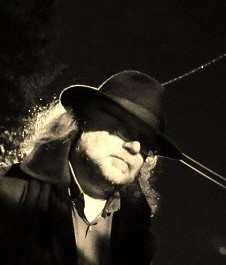
As well as his research interests, Paul is a musician and songwriter, who played electric mandolin with a cult folk rock band for many years as well as composing his solo work of comic folk horror songs inspired by 60s psychedelia, 80s video nasties and the Hebden Bridge Times.
He lives on the hills above Hebden…