The Silent Lady of the Tower
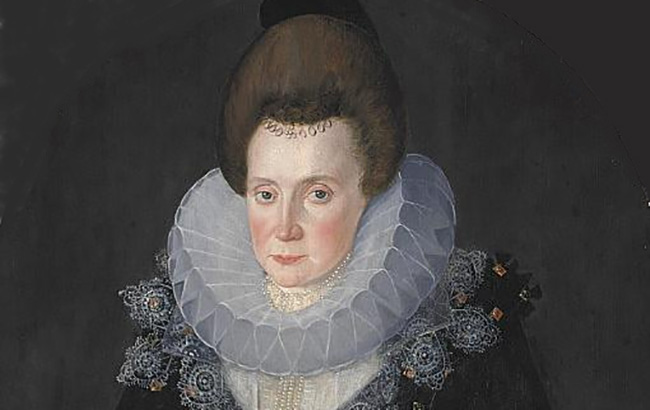
In the long, shadowed history of the Tower of London, there are many ghosts who have refused to fade into obscurity. But few are as quietly tragic as that of Arabella Stuart. She was once a woman of great promise—royal by blood, favoured by some as a possible heir to the English throne, and admired for her beauty and intelligence. Yet her life was marked not by triumph, but by heartbreak, paranoia, and ultimately confinement. And it is within the dark timbers of the Queen’s House in the Tower, where she died, that her ghost is said to remain—grieving, restless, and unseen but for the echoes of her sorrow.
Arabella was born in 1575 into a web of ambition and danger. Her lineage was impeccable. As the great-granddaughter of Margaret Tudor—sister to Henry VIII—Arabella was firmly in the line of succession to both the English and Scottish thrones. Her father, Charles Stuart, Earl of Lennox, was a cousin to Mary, Queen of Scots. Her mother, Elizabeth Cavendish, came from one of the most powerful noble families in the land. The union between her parents had been arranged without the express permission of Queen Elizabeth I, which already cast a long shadow over Arabella’s fate. It was a warning sign: marriage among royals was never a private matter—it was politics incarnate.
Arabella grew up at Hardwick Hall, surrounded by her formidable grandmother, Bess of Hardwick, one of the richest and most shrewd women in England. From a young age, Arabella was raised with the knowledge of her royal blood and the dangers that came with it. She was always a potential threat in the eyes of the Queen—too close to the throne, too desirable a figure for foreign suitors, and too easily used as a pawn in plots she never orchestrated. Arabella’s existence alone was enough to attract suspicion.
Throughout Elizabeth I’s reign, Arabella was kept under watch, her marriage prospects strictly controlled. More than once, there were rumours of schemes to marry her to a powerful Catholic or a foreign prince. The Queen refused to entertain the idea. Arabella, though royal, was to remain unwed and neutral—an ornament of the dynasty, not an active player. But like so many women of her era, Arabella found that obedience only bought her time, not safety.
When James VI of Scotland became James I of England in 1603, there was hope her fortunes might improve. He was her cousin, after all, and now sat on the throne that some had once whispered might have been hers. At first, James treated Arabella with kindness. She was welcomed at court and granted a pension. But the political suspicions never fully disappeared. Arabella, no matter how discreet, remained a figure of danger—especially to a king newly settled on a throne, wary of plots and rivals both real and imagined.
In 1610, Arabella defied her fate. She fell in love and married William Seymour, himself of royal blood and a potential heir to the throne. Crucially, they did so without the King’s permission—a grave offence. For James, this secret marriage between two people with claims to succession was not merely romantic rebellion; it was political insubordination. It could be interpreted, perhaps conveniently, as a threat to his reign.
The response was swift and severe. Arabella was placed under house arrest, then transferred to the custody of the Bishop of Durham. Her husband was imprisoned in the Tower. Though kept apart, the couple conspired to escape and reunite. In June 1611, Arabella disguised herself as a man and attempted to flee by boat to the Continent. Her husband managed to escape from the Tower, but the two were tragically separated. Arabella’s ship was intercepted in the English Channel. She was brought back to England, alone.
This time, there was no pretence of leniency. Arabella was committed to the Tower of London, the very place that had claimed so many royal souls before her. She was imprisoned in the Queen’s House, a timber-framed building tucked within the fortress’s inner walls. It was there that her spirit was slowly broken. Separated from the man she loved, denied freedom, and watched constantly, Arabella’s mental and physical health deteriorated. Over the next four years, she wasted away in quiet despair.
Arabella Stuart died in 1615 at the age of 39. Some said it was from melancholy; others hinted at starvation, illness, or even poison. Whatever the cause, her death went mostly unremarked upon by the court that had once viewed her with such suspicion. She was buried in Westminster Abbey, in a grave so modest that it took years before it was properly marked. But her story was not so easily laid to rest.
It is said that Arabella never truly left the Queen’s House in the Tower. Over the centuries, countless reports have surfaced of strange disturbances in the room once thought to be hers. Doors that open and close by themselves. Soft footsteps pacing the wooden floors. Whispers when no one is near. And, occasionally, a sudden sense of sadness so profound that it drives visitors to tears for reasons they cannot explain.
A former governor of the Tower was so convinced by the stories that he refused to allow female guests to sleep alone in the chamber associated with Arabella. Too many had reported similar experiences—unexplained cold spots, shadowy figures at the foot of the bed, and dreams that felt more like memories. One guest claimed she woke in the night to find her bedclothes pulled tight against her, as though an unseen presence had gripped them. Another said she heard a woman’s voice sobbing faintly near the fireplace, though the room was otherwise empty.
The ghost of Arabella is not one of rage or vengeance. Hers is a quieter haunting—the ghost of a woman who never intended to defy a king but was punished as though she had tried to steal the crown. She loved unwisely, perhaps, but not treasonously. Her punishment was exile in plain sight, a royal prisoner slowly broken by solitude. And it is that grief which seems to have taken root in the walls of her prison.
Those who believe in her ghost say she appears most often when the room is undisturbed for long stretches, as if she prefers silence and solitude. She is never seen clearly, always just at the edge of vision—a soft form in a long gown, hair loose around her shoulders, gliding across the floor as though still seeking something lost. Some say it is her husband she searches for, others that she seeks freedom she was never granted in life. But always, the feeling she leaves behind is one of gentle, unbearable sorrow.
The Tower of London is full of louder ghosts. There is Anne Boleyn, said to walk with her head tucked beneath her arm. There is Lady Jane Grey, sometimes seen on the battlements at dawn. But Arabella’s haunting is not like theirs. It is soft-footed, sorrowful, and still. She was never executed, but she died a prisoner just the same. And perhaps that is why her spirit lingers—not to terrify, but simply to remain, as she once was: overlooked, unheard, and quietly broken.
As the centuries pass, Arabella’s story continues to fascinate. She is remembered not as a rebel, but as a woman caught in the machinery of monarchy. Her ghost, if it indeed walks the Tower still, serves as a quiet reminder of how unforgiving that world could be, even to its own blood. She was a queen that never was, a bride denied her husband, a prisoner whose only crime was love. Her life ended in silence. Her legacy lives on in whispers.
So if you ever find yourself walking the stone paths of the Tower, and you feel a chill near the Queen’s House, spare a thought for Arabella Stuart. Listen closely, and you may hear the faint rustle of skirts, or the creak of floorboards where no one walks. Look carefully at the upper windows, where a pale figure might watch the river, waiting still for a ship that never came.
For more accounts like this then make sure to head over to the podcast patreon page for more exclusive content:

Host, author and producer
Hi I’m Michelle.
Teacher, podcaster, history and paranormal enthusiast and woman who wears many hats and spins many plates including dog whisperer- as you will often find Archie my dog- joining me during podcast recordings where he promptly falls asleep clearly not as enthusiastic about the subject as I am. It does mean his dulcet snoring can often be heard gently in the background- his contribution as occasional co- host needs a little work.
I live in Oxford in the United Kingdom and I love travelling and exploring historical sites throughout the UK for its history and haunted activity. One of the best gifts I ever received was English Heritage vouchers to use to explore various different historical sites. I had the best summer that year. (For friends and family possibly reading this please note that hint for future gift ideas!)
I started this podcast as an adventure through some of my passions. It has been immensely exciting getting to know lots of other people around the world who have these same common interests. I’ve been humbled by the encouragement and support from strangers and people who have become new friends! I truly could not do this without you.
This isn’t something I have done before and I’m learning everything as I go along - from equipment, to editing, to even creating this website. I’m loving it though- it’s a lot of work - but worth every second. Thank you for being patient as I learn and improve along the way. I have big dreams of where to take this podcast and community I hope we build here. If you wish to support that dream and this c…Read More

Sale!