Ghosts on the Battlefield
Haunting Grounds of History
Battlefields are charged places. Where hundreds or thousands perish in the span of hours, the air seems to thicken with memory, pain, and mystery. The dead lie beneath the soil, the living move on, and yet, across cultures and time periods, stories abound of ghosts that linger—soldiers seen long after their last breath, phantom sounds of marching boots, and spectral re-enactments of battles lost. Among such accounts, one from the Gallipoli campaign during the First World War stands out not merely for its emotional resonance, but for the unsettling concurrence of vision between a dying soldier and a second witness.
This report explores the intersection of history, trauma, and the supernatural through the lens of the Gallipoli apparition recorded by war correspondent Sydney A. Moseley in The Truth About the Dardanelles. It also contextualizes this account within the wider phenomenon of ghost sightings tied to battlefields. Why do such places birth such stories? And what, if anything, do they signify?
The Gallipoli Campaign: Blood in the Sand
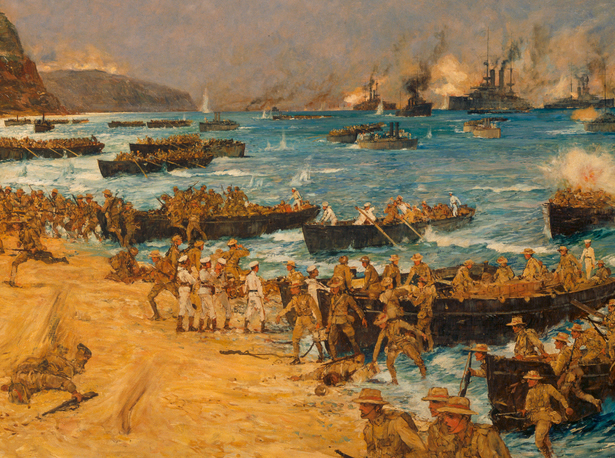
The Gallipoli campaign of 1915–1916 was a brutal and ill-fated Allied attempt to open a sea route to Russia by capturing the Ottoman capital of Constantinople (modern-day Istanbul). From April 25, 1915, when the first troops landed, until the final evacuation in January 1916, over 130,000 soldiers died, with casualties nearly evenly divided between the Allied and Ottoman forces.
Gallipoli was more than just a military disaster—it was a theatre of prolonged suffering. The terrain was inhospitable: steep ridges, tangled undergrowth, and treacherous cliffs. The troops endured poor rations, dysentery, lice, searing heat by day and bitter cold by night. Corpses often lay unburied for days, decomposing in the sun and fouling the air with disease and dread.
This campaign, seared into the national consciousness of Australia, New Zealand, and Turkey, was also a crucible of human endurance. And, some say, of the supernatural.
Sydney A. Moseley and the Witnessed Apparition
Sydney A. Moseley, a British war correspondent, was among those present on the Gallipoli peninsula. His 1916 book The Truth About the Dardanelles is largely a sober account of military operations, weather conditions, and morale. It is precisely this tone of pragmatism that makes one episode stand out like a bolt of lightning on a calm sea.
On the second day of the Suvla Bay fighting, as French and British artillery battered the Turkish lines, Moseley found a quiet spot to observe. There, near the River Clyde, he stumbled upon a khaki-clad soldier lying in the sand, apparently wounded or exhausted. Their conversation, initially mundane, soon turned strange. The man, whose mind seemed to drift between lucidity and delirium, claimed his sister was nearby. He pointed to a cluster of bushes and asked, "You see her?"
Moseley, half-skeptical but willing to humour the dying man, looked—and saw it too: a white mist that slowly formed into the shape of a graceful girl. Then the soldier exclaimed, “See, she’s smiled at me,” and died.
Moseley reports no further elaboration. The figure vanished. There was no attempt to track down the sister, no coincidental telegram announcing her death, no embellishment. The restraint with which he tells the story lends it a troubling credibility.
Apparitions at the Edge of Death
Apparitions seen by the dying are an age-old phenomenon. From Victorian deathbeds to modern hospitals, there are thousands of documented cases of people reporting visits from deceased loved ones just before death. Psychologists often attribute these to hypoxia (lack of oxygen to the brain), neurological decay, or comforting hallucinations.
But what distinguishes Moseley’s account is the shared vision: he saw the apparition too.
In psychical research, these are called “veridical apparitions”—apparitions that occur to multiple people or reveal unknown information. If the vision had occurred solely to the soldier, it would have aligned with thousands of such experiences. But Moseley’s confirmation introduces a troubling question: was it real?
In an age saturated with war and death, when battlefield trauma was only beginning to be understood, could grief, guilt, or suggestion produce hallucinations that are shared? Or was this something else—some raw force unaccounted for in either psychological or spiritual theory?
Ghosts of Gallipoli: More than One Story
The Gallipoli campaign has its fair share of ghost lore, especially among the ANZAC (Australian and New Zealand Army Corps) troops. One of the most enduring legends is the mysterious disappearance of the 1/5th Battalion of the Norfolk Regiment.
On August 12, 1915, during an advance at Suvla, the Norfolks were reportedly seen marching into a thick fog. They never emerged. Witnesses claimed the fog lifted shortly afterward and the battalion was gone. Over 250 men vanished. Only years later were some remains discovered, but the myth of their sudden disappearance has persisted, often embellished with spectral overtones.
Turkish guides and local villagers have, over the years, spoken of “restless spirits” and voices on the wind. Several modern-day visitors to Gallipoli report uncanny feelings, sightings of shadowy figures at dawn, or even inexplicable equipment malfunctions at known hotspots of combat.
Battlefields as Haunted Landscapes
Ghost stories are not exclusive to Gallipoli. From the fields of Gettysburg to the poppy-dotted plains of Flanders, battlefields frequently incubate stories of hauntings. There are recurring motifs:
- Soldiers seen marching in spectral silence.
- Campsites where voices are heard at night though no one is there.
- Apparitions re-enacting their final charge, endlessly looped in time.
Why do battlefields seem to foster these tales more than other locations of mass death, such as hospitals or prisons?
There are several theories:
1. Psychic Imprint Theory
This posits that intense emotional or physical energy, particularly fear, pain, or rage, can leave a residue on the environment. Such “recordings” are not conscious spirits but psychic replays triggered by certain conditions.
2. Collective Memory and Trauma
Battlefields often carry the weight of national mourning and mythologizing. In such charged contexts, stories of ghosts may function as symbolic representations of unresolved trauma—both individual and collective.
3. Witnesses in Heightened States
Soldiers and war correspondents often experience extreme physical and psychological stress, sensory overload, and sleep deprivation. These are known to induce hallucinations. Yet, even here, the nature of some shared or predictive visions resists easy explanation.
Debunking and Belief: Moseley in Context
Sydney Moseley was no fantasist. Despite some criticism from military brass (likely more class-based than content-based), he was a clear-eyed observer. His dispatches were blunt, sometimes critical, and rarely laced with romanticism. The ghost account in The Truth About the Dardanelles is the only supernatural reference in his book.
This very singularity is what makes it so puzzling. If he were the kind of man to indulge in ghost tales, why did he include only one? Why not dozens? Why not add a dramatic denouement linking the ghost to a confirmed death back home?
Some historians argue the vision was metaphorical—a symbol of death arriving in the form most comforting to the soldier. Perhaps Moseley inserted it for emotional effect, or out of a sense of guilt for the man’s lonely passing.
But if it was fiction, it was a departure for him. And that deviation makes it notable.
Ghosts of War: Other Notable Cases
The Gallipoli apparition is not alone. A few other battlefield ghost encounters have also earned notoriety:
The Angels of Mons (WWI)
In the early weeks of WWI, British soldiers retreating from Mons claimed to see angelic figures protecting them from advancing Germans. Though likely a myth spread by morale-boosting newspapers, it speaks to a deep desire for cosmic intervention amidst mechanized slaughter.
Gettysburg (American Civil War)
The town and battlefield are rife with ghost sightings: phantom soldiers marching at dusk, unexplainable cannon fire, and sudden cold spots in summer. Park rangers and visitors alike report consistent experiences.
The Phantom Piper of the Somme
A Highland regiment fighting in the Battle of the Somme reportedly saw a spectral piper leading a charge through No Man’s Land. No such piper existed in the ranks. Some believe it was the spirit of a fallen clansman guiding them forward.
Ghosts as Grief: The Psychological Dimension
Perhaps the ghost at Gallipoli was not a supernatural being but a projection of profound grief. The dying soldier may have summoned the image of his sister as a final comfort. Moseley, moved by the scene, could have mirrored the image in his own mind.
Alternatively, if the figure was real—an actual person moving briefly through the brush—both men could have misread her presence through the prism of stress, emotion, and suggestion. But this doesn’t fully account for the “cloud of white” that “assumed a human shape.”
Carl Jung believed in the concept of the “collective unconscious”—a shared psychic substrate through which symbols and archetypes flow. In moments of death, these archetypes may rise into consciousness, appearing as the departed or divine.
Between Sand and Shadow
War compresses time, distorts memory, and brings human beings to the brink—of sanity, of existence, of reality itself. In such crucibles, strange things happen. Whether the ghostly figure Moseley saw was the soul of a sister reaching across space to a dying brother, or a psychic mirage conjured by trauma and heat, its impact is undeniable.
What makes battlefield ghosts different from ordinary hauntings is not just their context, but their emotional power. They are not merely echoes of the dead—they are unresolved stories, open wounds, flickers of life in places overrun by death. Ghosts remain—not just as spirits, but as reminders. That war, no matter how justified or glorified, leaves behind traces. In the land. In memory. And sometimes, in the shape of a sister’s smile on the edge of a soldier’s last breath.
You can listen to further accounts here: https://www.podpage.com/haunted-history-chronicles/haunted-britain-spiritualism-psychical-research-and-the-great-war-with-kyle-falcon/
You can follow for more daily posts and support the podcast here:

Host, author and producer
Hi I’m Michelle.
Teacher, podcaster, history and paranormal enthusiast and woman who wears many hats and spins many plates including dog whisperer- as you will often find Archie my dog- joining me during podcast recordings where he promptly falls asleep clearly not as enthusiastic about the subject as I am. It does mean his dulcet snoring can often be heard gently in the background- his contribution as occasional co- host needs a little work.
I live in Oxford in the United Kingdom and I love travelling and exploring historical sites throughout the UK for its history and haunted activity. One of the best gifts I ever received was English Heritage vouchers to use to explore various different historical sites. I had the best summer that year. (For friends and family possibly reading this please note that hint for future gift ideas!)
I started this podcast as an adventure through some of my passions. It has been immensely exciting getting to know lots of other people around the world who have these same common interests. I’ve been humbled by the encouragement and support from strangers and people who have become new friends! I truly could not do this without you.
This isn’t something I have done before and I’m learning everything as I go along - from equipment, to editing, to even creating this website. I’m loving it though- it’s a lot of work - but worth every second. Thank you for being patient as I learn and improve along the way. I have big dreams of where to take this podcast and community I hope we build here. If you wish to support that dream and this c…Read More
Sale!