Mondelēz’s Andrew Lederman on Digital Grocery Growth Search Discovery and Agentic Commerce | Groceryshop 2026
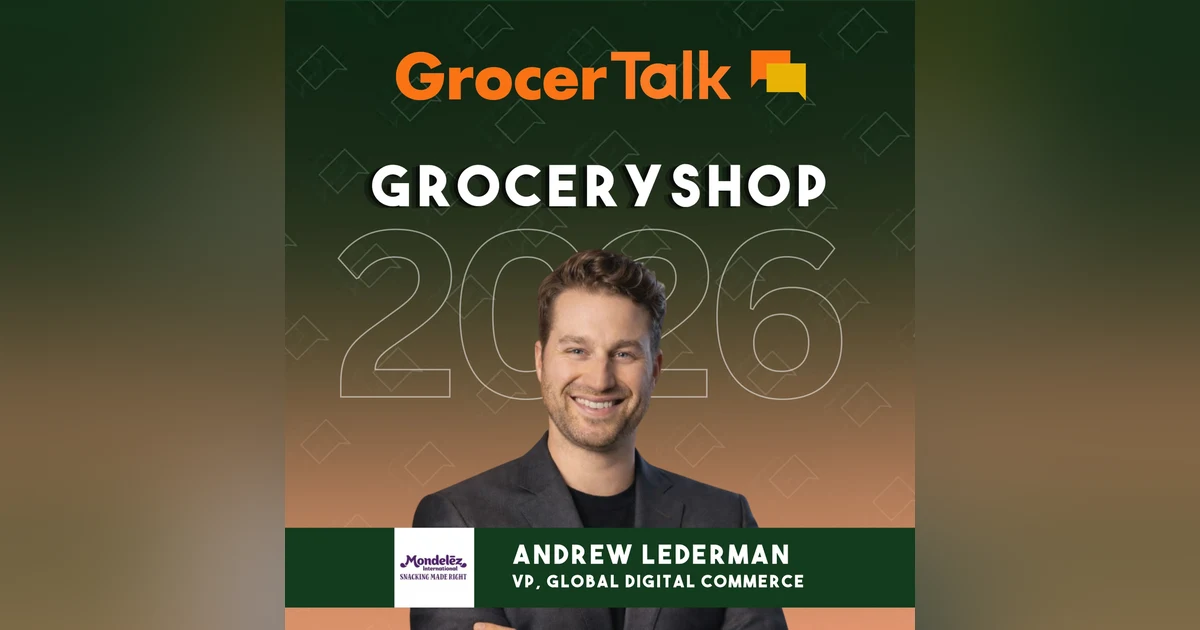

Live from the Vusion podcast studio at Groceryshop 2026 in Las Vegas, Ben Miller welcomes Andrew Lederman, VP of Global Digital Commerce at Mondelēz International, to explore how grocery shopping is evolving online and what that means for one of the world’s major consumer packaged goods companies.
Andrew discusses the global shift toward digital grocery, changing shopping behaviors and the growing expectation for speed across markets. He also looks at the challenge of bringing impulse products into digital environments, how search and discovery are changing and what brands need to do to remain discoverable as algorithms, LLMs and agentic commerce reshape the path to purchase.
In this episode:
• How digital grocery is evolving across global markets
• What’s driving consumers toward online grocery shopping
• The growing expectation for speed and convenience
• How a CPG company approaches impulse products online
• How search and digital discovery are changing
• Building discoverability across algorithms and LLMs
• What agentic commerce could mean for CPG brands
• Strategies for converting digital demand
🎧 Subscribe to Omni Talk for more conversations with the leaders shaping grocery and retail.
00:00 - Untitled
00:12 - Guest Introduction — Andrew Lederman, VP Global Digital Commerce (Mondelez)
00:25 - Defining Global Digital Commerce: Remit and Responsibilities
02:36 - India's quick-commerce surge
05:03 - The Need for Speed: Sub-Day Delivery and Global Trends
07:13 - Search and Discovery — Algorithmic Demand Generation
10:57 - Recap: Learnings and Measurement Across Markets
Hello, everyone.
Speaker AThis is Omnitalk Retail.
Speaker AI'm Ben Miller, host of Grossertalk, and I am coming to you live from Las Vegas from the Vuzion Podcast Studio booth 913 at Grocery Shop 2026.
Speaker AJoining me now is Andrew Lederman.
Speaker AAndrew is VP Global Digital Commerce at Mondelez International.
Speaker AWelcome, Andrew.
Speaker BGood to see you again.
Speaker BBen.
Speaker BThanks for having me.
Speaker ASo good for you to pop by.
Speaker AThank you.
Speaker ALook, so tell everyone, what's your remit?
Speaker AWhat does global digital commerce, what does it cover globally?
Speaker BWhere we sell stuff online, so we spend a lot of time.
Speaker BYou know, we have billions and billions of dollars that we spent that we sell through digital commerce.
Speaker BB2C, DC, B2B, lots of different places.
Speaker BMy job is to spend some time making sure that we do it right and make sure that we build the capabilities across the globe.
Speaker AOkay, that's really different.
Speaker APeople will cut a similar role to what you do differently.
Speaker ASome people it's selling, Some people it's capability.
Speaker ASome people it's marketing, which.
Speaker AWhich are the bits are in your remit versus what's in the business units or the individual countries?
Speaker BLook, I think ultimately it's all my responsibility.
Speaker BLike, at the end of the day, I'm responsible for the number that I need to bring on a quarterly basis back to the, you know, my leadership.
Speaker ALove that.
Speaker BYeah.
Speaker BAnd I take it that way.
Speaker BSo I treat it as a GM type role.
Speaker BBut you're right.
Speaker BAt the end of the day, this is a large company.
Speaker BIt takes a lot of folks to get all the work done.
Speaker BAnd there are BU teams that are responsible for this, some larger than others that do roll in directly into the bull.
Speaker BAnd then my group will be responsible for making sure that we're kind of setting the strategy properly, building out the capabilities that we need to be able to do, setting the focus and making sure that we're kind of giving the direction on where we need to spend our time, energy, and efforts in the markets.
Speaker AOkay.
Speaker APrioritization of resources.
Speaker ASo look, one of the big themes of the conference so far has been a real uptick in E Com penetration in grocery.
Speaker AIs that something you're seeing?
Speaker AAnd with a global hat on?
Speaker AWe've had a lot of US conversations.
Speaker AIs it a common theme?
Speaker ATell me what the trends are.
Speaker BLook, I think that digital is growing everywhere, globally.
Speaker BThis is the direction.
Speaker BSome faster than others, some different places, some sub channels faster than others, depending on the market.
Speaker BBut at the end of the day, digital is growing fast.
Speaker BIt is what is causing a lot of the growth For Mondelez.
Speaker BAnd it's where we're spending our time, energy and effort to make sure that we're investing.
Speaker BSo it's definitely what we're seeing is grocery is going digital.
Speaker BYeah.
Speaker ASo let's dive into some of the detail then.
Speaker AYou talked about different channels, different speeds.
Speaker AGive me some examples.
Speaker AWhere are you seeing faster growth?
Speaker AWhere you've seen slower growth?
Speaker BSure.
Speaker BSo look, I think the places that come to mind first are India.
Speaker BIndia with quick commerce is incredible.
Speaker BGrowing triple digit percentage year over year.
Speaker BIncredible to see what they can do there.
Speaker BThey have within 10 minute delivery from companies like Zepto, Blanket, many others.
Speaker BAmazon now is now spending some time in India as well.
Speaker BBut ultimately I was there this year, I checked it out.
Speaker BIt's pretty incredible.
Speaker BThey have these dark store models set up and you're getting chocolate Cadbury coming to your door within 10 minutes.
Speaker BBy the time a family has finished washing their dishes from dinner, they've got chocolate on their door.
Speaker BIt's a pretty incredible stuff.
Speaker BSystem to see and AI is basically integrated into the whole system, into the dark store and everything.
Speaker BIt's pretty fantastic.
Speaker AOkay, just explain a bit more because that might not be an operation that many of our listeners are familiar with.
Speaker ASo how are they doing 10 minutes?
Speaker AAnd what are people buying?
Speaker AIs this kind of item level?
Speaker AAre they buying baskets?
Speaker AIs it just in the biggest cities where you've got huge density?
Speaker ADescribe it more.
Speaker BSo it's definitely more popular in the biggest cities.
Speaker BCities.
Speaker BBut they are continuing to grow out into tier 2, tier 3 cities.
Speaker BI think this is something we're gonna have to watch and see how it works as we go.
Speaker BBut India's got a 1.5 billion people.
Speaker BThere's plenty of folks, there's a lot of cities.
Speaker BTier 2 cities are quite the size of New York.
Speaker BSo there's plenty of space.
Speaker BBasically what they do is they own operate dark stores from these guys directly.
Speaker BThey build out like a hexagon around where they're able to serve within 10 minutes.
Speaker BAnd then they use couriers which are kind of like W9, you know, external, you know, think doordash, think Uber Eats for the kind of American and European audience.
Speaker BAnd ultimately those folks are delivering within the 10 minute window.
Speaker ARight, right.
Speaker BThe pick and pack is happening within just a couple minutes.
Speaker BThey're running around the store.
Speaker BThere's a clock on the wall.
Speaker BThey're trying to do it as fast as possible.
Speaker BIt's all about ideal efficiency in terms of basket size.
Speaker BQuite small still, so it's not full grocery I think US grocery baskets are pretty rare in most of the world.
Speaker BPeople tend to do smaller, more frequent orders in Latin America, Asia, Africa.
Speaker BSo these are places that, you know, you wouldn't expect this.
Speaker BSo again, people can go with something as small as, you know, some chocolate, get dark chocolate delivered right to their door.
Speaker BAnd the economics do work, which is pretty incredible.
Speaker AYeah.
Speaker AOkay.
Speaker AWe talk quite a lot about this need for speed.
Speaker AThere's been a lot of conversation here about the US the increasing need for speed, the sub day delivery, that's a great example from India, Brazil.
Speaker AYou must have a big business in Brazil.
Speaker AWhat are you seeing there?
Speaker BBrazil is an incredible market.
Speaker BThere is such a fast pace of change.
Speaker BWhat we're seeing there again there is Last Milers, totally different model, the aggregator model, more like a doordash or renewable kind of feel.
Speaker BSocial commerce is on the rise and TikTok shop is starting to grow there similar to how it has in Southeast Asia, China and now the US as well.
Speaker BSo quite an interesting market.
Speaker BAnd the other thing that's really interesting about Brazil is the cash and carries.
Speaker BSo they have these big businesses that are effectively think somewhere between like a of kind Costco and like a Food Depot kind of area where Ataca dough is one of them that does incredibly well and folks are getting a ton of products going in that direction.
Speaker BAnd those guys, which are now kind of the Omni players if you will, of Brazil are digitalizing very quickly.
Speaker ARight.
Speaker AReally interesting, really interesting.
Speaker ASo that's the landscape, need for speed globally.
Speaker AAs a manufacturer of predominantly impulse products, how are you evolving your kind of digital strategy to align with this?
Speaker BWell, we've got both impulse and planned.
Speaker BSo if you think about in the US things like Oreo or Ritz, a lot of times people are pre planning and purchasing as part of these regular everyday grocery orders.
Speaker BSo we're looking at both sides of the spectrum.
Speaker BWe look at as planned and unplanned is typically the way we refer to it.
Speaker AOkay.
Speaker BAnd we're thinking, you know, for something like Amazon, if you're buying, you know, bags of mini Oreos, a multi unit pack, something like this that you're going to be putting in your kids lunch, that's a specific occasion that we want to focus on and pay attention to.
Speaker BOn the flip side, somebody who wants some Cadbury wants some Milka and they want it now and that's more of an impulse type purchase, we're happy to serve that need as well.
Speaker BSo we're thinking about it from a PPA perspective.
Speaker BWe're Thinking about it from a content perspective and making sure that we're serving different needs around specific occasions, especially the ones that are more incremental to our business.
Speaker AOkay, so when we starting to build up into kind of a another theme, which is search and discovery.
Speaker ASo how are you seeing that evolving?
Speaker AWhat are you seeing your shoppers doing differently in that space?
Speaker BLook, I think search is always important, and there's no doubt or change there.
Speaker BBut I think discovery is fundamentally changing.
Speaker BAnd when you think about what's happening, I see basically algorithmic demand generation.
Speaker BAnd this happens in three fronts.
Speaker BThis might be retailers for search.
Speaker BThis might be, you know, agentic shopping coming from the LLMs and social media.
Speaker BThese are all algorithms that are effectively driving how our brands are getting to consumers.
Speaker BAnd that's a place where we do have to spend a lot of our time and make sure that we understand the algorithms.
Speaker BWe're marketing to agents, we're marketing in these platforms properly to make sure we get to consumers the right way, whether they're looking for us or the platforms are bringing our products to them.
Speaker AOkay, so somebody I spoke to recently who did a similar role to you said, ben, digital commerce is simple.
Speaker AIt's just a game of understanding algorithms.
Speaker ASo you just hinted towards that.
Speaker AI don't think it's simple at all.
Speaker AAnd these algorithms are changing all the time.
Speaker AHow are you going about doing that, Amanda?
Speaker BI would certainly not say it's simple.
Speaker BI would just say that I think a lot of these things build on top of each other.
Speaker BAnd it's why it's very important to not get behind the curve, because we are creating many different shelves for ourselves to optimize and deal with.
Speaker BSo if you think about retail media, search is an incredibly important place to win, especially if you're trying to drive volume for what you're doing.
Speaker BWe've worked very hard on that system over the last couple of years, and now we're building in new systems like Agentix Shopping that we hadn't had before.
Speaker BSo making sure we're putting in the right measurement, we're building out the right content.
Speaker BWe're focusing on the occasions, we're putting training programs in for our brands to make sure our brand teams to learn what they need to know so that they're actually marketing to these agents, not just consumers.
Speaker BAnd that's a thought process that we all need to take.
Speaker ANow, what do you find?
Speaker ACan you share some examples, Andrew, of what has been successful for you in being discovered on these platforms?
Speaker ABecause we keep hearing really mixed things about this whole idea of GEO or AEO and what it can do or can't do, what have you found is working?
Speaker BLook, I think again back to this occasions piece.
Speaker BI think the way people are searching and using these platforms, they're not jumping onto ChatGPT and saying cookies.
Speaker BThat's not happening.
Speaker BThat may happen on a walmart.com, but when it comes to the LLMs, they're very contextual.
Speaker BMy son has soccer games on Thursday afternoons.
Speaker BI'm responsible to bring the snacks.
Speaker BWhat are some good snacks I can bring?
Speaker BThese are really contextual things that we have to think about.
Speaker BSo it starts there of what are the occasions that you want to go and win?
Speaker BAnd this is something you need to partner with your brand teams to make sure you understand.
Speaker AOkay.
Speaker BThen from there you have to make sure that you know, where are the citation sources coming from in order to activate against that occasion.
Speaker BSo for us, what are we seeing?
Speaker BWhat are we thinking about?
Speaker BWe're seeing PDPs, of course, is a big piece of that puzzle.
Speaker BEarned Media is a big piece as well, but nothing's coming out at 50%.
Speaker BEverything's coming out at 1% citation source.
Speaker BYou have to have a very diverse.
Speaker AStructure, a very broad.
Speaker AOkay, interesting.
Speaker BAnd then of course, the Reddit and the YouTube that I'm sure everybody's already talked about is still up there, but it's not like it once was, where it was all predominantly coming from there.
Speaker BAnd then what we're seeing is starting to grow.
Speaker BStill small, but starting to grow is brand authority.
Speaker BThings like our sites, our websites.
Speaker AOkay.
Speaker BBecause ultimately, at the end of the day for these LLMs, trust is a huge factor.
Speaker BSo making sure that you get the right information from authority sources is going to become progressively more important.
Speaker BSo just a quick splash of some of the things we've learned as we've gone, but we still have a long ways to go.
Speaker BBut we're putting a measurement in.
Speaker BWe're looking at this across all of our top eight markets.
Speaker AFantastic, Andrew.
Speaker AI think we're going to have to call it that, but thank you so much for joining us.
Speaker AThanks to the team at Vuzion and the Grocery Shop for making the coverage of this conference possible.
Speaker AAnd stay tuned for more.