

 Podverse
 Fountain
 Spotify
 YouTube
 Apple Podcasts
 Castro
 RSS Feed
 EP #169: Can Putting Other People First Help You Win in Concrete Construction?

JOIN THE ACADEMY! VISIT CONCRETESCHOOL.CO TO START LEARNING TODAY.
ON THIS EPISODE OF THE CONCRETE LOGIC PODCAST
What if the fastest way to get ahead in concrete construction is to stop focusing so much on what you get?
Construction is competitive. Margins are tight, schedules matter, and when problems show up, everyone starts protecting their number. Seth is joined by Steve Eames, a licensed Go-Giver coach, to ask whether putting other people first can actually make you more successful.
Using the Five Laws of Stratospheric Success from The Go-Giver, Steve explains why value, trust, authenticity, influence, and receptivity can change the way customers and partners see you.
The lesson is not to work for free or ignore profit. It is to create so much value that price becomes only one part of the decision.
WHAT YOU’LL LEARN
· Why creating value is different from simply lowering your price
· What customers may value beyond the product listed on an invoice
· Why Steve believes income grows by serving more people without sacrificing quality
· How trust and relationships can reduce the importance of being the cheapest option
· Why becoming a useful connector can create value outside your normal scope of work
· The difference between a go-giver, a go-getter, and a go-taker
· Why authenticity becomes most visible when a project is under pressure
· How keeping score can turn generosity into a transaction
· Why receiving payment, recognition, and help is part of effective giving
· What Steve calls the “law of left field” and how referrals can emerge years later
· One question you can ask before a meeting, project, or customer conversation to begin practicing these ideas
CHAPTERS
(00:00) Concrete Logic Academy and introduction
(01:05) Can putting other people first work in construction?
(04:20) Steve Eanes and the Five Laws of Stratospheric Success
(05:55) The story behind The Go-Giver
(07:06) Law of Value: creating more than what appears on the invoice
(10:38) Law of Compensation: serving more people without losing quality
(12:31) Law of Influence: putting other people’s interests first
(16:53) Law of Authenticity under pressure
(20:04) Law of Receptivity: learning to receive
(25:07) The law of left field and unexpected referrals
(27:56) How to start practicing the Go-Giver principles
(28:31) Steve’s master class, journal, and final takeaway
GUEST INFO
Steve Eanes
Licensed Go-Giver Coach
Profile:
https://www.concretelogicpodcast.com/guests/steve-eanes/
Website:
https://www.steveeanes.com
The Go-Giver Way Free Masterclass:
https://www.gogivermasterclass.com
Walk in Your Value Journal based on The Go-Giver:
https://mybook.to/walkinyourvalue
The Go-Giver Book:
https://www.amazon.com/dp/B0168Y6UO6
CONCRETE LOGIC ACADEMY
The people who understand how to create value are often the people others want involved when a project gets difficult.
That applies to concrete knowledge too.
The person who understands the “why” behind the concrete, asks better questions, and helps the rest of the project team make better decisions can bring value far beyond the material itself.
That is what Concrete Logic Academy is built for.
You get practical concrete education, professional-development courses, and real-world lessons connected to the topics covered on the Concrete Logic Podcast.
Start learning here:
https://concreteschool.co
SUPPORT THE PODCAST
If the Concrete Logic Podcast gives you value, send a little value back.
You can support the show here:
https://www.concretelogicpodcast.com/support/
You can also support the show through the KUIU affiliate link:
https://www.concretelogicpodcast.com/kuiu
Interested in sponsoring the podcast or working with Concrete Logic Media?
Email Seth:
seth@concretelogicpodcast.com
CREDITS
Producers: Tony Thomas, Jodi Tandett and Concrete Logic Media
Music by: Mike Dunton
Instagram: @mduntonmusic
WHERE TO FIND SETH
Concrete Logic Podcast:
https://www.concretelogicpodcast.com/
YouTube:
https://www.youtube.com/@concretelogicpodcast
LinkedIn:
https://www.linkedin.com/in/seth-tandett/
Concrete Logic Academy:
https://www.concretelogicacademy.com/
Until next time, let’s keep it concrete.
00:38 - Concrete Logic Academy and introduction
01:43 - Can putting other people first work in construction?
04:58 - Steve Eanes and the Five Laws of Stratospheric Success
06:33 - The story behind The Go-Giver
07:44 - Law of Value: creating more than what appears on the invoice
11:16 - Law of Compensation: serving more people without losing quality
13:09 - Law of Influence: putting other people’s interests first
17:31 - Law of Authenticity under pressure
20:42 - Law of Receptivity: learning to receive
25:45 - The law of left field and unexpected referrals
28:34 - How to start practicing the Go-Giver principles
29:09 - Steve’s master class, journal, and final takeaway GUEST INFO Steve Eanes Licensed Go-Giver…
Seth(01:05.385)And welcome to another episode of the Concrete Logic Podcast. And today I have Steve Eanes, a licensed go giver coach. And he's what he's gonna help us with today is can you actually get ahead in construction by putting other people first? We know this is not a soft business, margins are thin, schedules are tight, contracts matter.And everybody's protecting their number. And when something goes wrong, people start figuring out who owns the problem. Steve has spent decades in sales and business development and his work today center around the ideas of the go giver, this book right here, and the five laws of stratospheric success. What if the best way to become more successful is to focus less on what you get and more on value you create for everyone around you? That is what we're going to find out today. So before we get started, just toshare with you like I do on every episode how you can support the show. The first thing and the easiest thing you can do is share the podcast with a coworker, colleague, or somebody who you you think would enjoy the show. So that's one the next thing you can do is if you go to the concrete logicpodcast dot com website, there are two ways to get a hold of me. The first way is up at the top in the navigation bar, there's a option there. It says ask Seth. If you click on that,A email form pops up and what I'm looking for from you is a topic or guest suggestions. So tell me what you wanna learn about, who you want to hear from, and we'll get them on the show. A lot of people have been doing that. I appreciate that. I got got a list to go through. But the the next way you can get a hold of me is on the same home page on the concrete logic podcast dot com home page. Is there's a microphone on the bottom right hand side. You click on that and that'll record a message likeright o over your computer or your phone, whatever you're using to listen to the show or visit the website, sorry. And then the next way you can help us out is on the same home page. There's a donation button. It says donate, big blue button on the upper right hand side. You click on that and and a a page pops up, PayPal page, and you can put any amount in there and I can't tell you what that amount is. It's what whatever value the show gives you and a di it's the show's, you know, worthSeth(03:24.226)Different amounts for different people. So, but today I want to thank Tony Thomas, who is a sales manager for commercial ready mix products. Tony, thank you. no, I've known Tony for a while. I appreciate you supporting the show. And then the next way you can support the show is if if you want to extend your knowledge in the concrete industry, we also have the Concrete Logic Academy. If you visit concrete school dot co, you can join right now for free. That's concrete school.co.All right, Steve. let's get into the topic today. Like I shared, Steve has spent decades in sales and business development and a big part of his work now centers around the ideas and the g the go giver and what we what is called the five laws of stratospheric success. Those five laws are the the law of value, the law of compensation, the law of influence, the law of authenticity, and the law of re recep I can't say the last one. What's the last one, Steve? ReceSteve Eanes(04:19.63)ReceptivitySeth(04:20.524)Receptivity. There you go. So I guess to get us started, Steve, how were you introduced to this book and the and the five laws?Steve Eanes(04:28.206)Okay, so first of all, Seth, I want to say thank you for the opportunity to be here on your podcast today and share on the podcast. And The Go Giver, as you shared, you know, you showed the book, The Go Giver. I would say it's probably been one of the most influential books that I've ever read in my life. I first read it in 2009, came out in 2008. And when I read it, I realized that it was something that I was doing some of the things already, but it's what filled in the gaps in my sales career.Because I had great sales training and I still have great sales training. But what about the human side of selling? What about the intangibles? What about the things you can't teach that help you build relationships, that help you connect better with other people? And when you walk into a room, more people are coming your way than walking in a different direction. So for me, it was a lifesaver as far as filling in those gaps. And I knew right away that I wanted to share this message. So I actuallyDid some investigating and found Bob Berg, who's one of the co-author's phone numbers, called him up and said, I'm called to share this message. And it just went on from there and I would basically became one of Bob's first go giver speaker coaches.Seth(05:37.102)So the first one, the fur so there's these can you c let's ex give some background to this. I like I said, I've read this book a few times, so I it it's I I know all the background to it and everything, so I feel like we need to give a little background to the book. So c maybe you could explain where the the five laws come from. Okay.Steve Eanes(05:55.854)Okay, so if you've read the book, then you may be familiar with the story of Joe, who's sort of our hero of the book. If you haven't read the book, you can find it on Amazon. It's a red book. Like you said, there's this red book, very easy read. I think you most people can read it in just a couple of hours at tops. But the story is really about a guy named Joe who is a sales professional who has not made his quota all year. And he's very frustrated, but he's driven to succeed. So he's trying to do what a lot of sales professionals do.Which is work some angles so we can make things happen. And he ends up learning these five laws of strategic success that you mentioned from someone who's very influential in the community. And these laws, as Joe begins to implement them, they not only take his business to greater heights, but also take his personal life to greater heights as well, because it's a way that you live your life, not a tactic that you use in your business. It just becomes the way that you operate your life full time.And the laws basically build on each other. So it's not pick a law and live it. It's really start with law number one and then add on the layers of the four other laws after that.Seth(07:06.252)Right. So let's let's take one by one. The first one th the is value. So k explain the law and then we'll try to cover a s a scenario that's related to the concrete construction industry.Steve Eanes(07:20.974)Okay. So this is really where everything starts. So if you ask yourself in the concrete industry, because some people may be listening to this asking this question, you know, my product might be viewed as a commodity. So how can I create greater value in this industry because of what the product is? So the law of value is basically saying that your true worth is determined by how much more you give in value than you take in payment.So how much more value than you take in payment? And it doesn't mean that you charge less. It just means that you focus on providing that entire experience and benefits that the people receive that maybe are around the product itself. Because the product, you know, you might have a defined price for the product, right? Price is what the dollar amount is. Value is what the person that is doing business with you determines from the experience of doing business with you.So you might show up when you said you would show up. You might identify an issue that could come up before it became a very expensive problem to fix. You might have some knowledge that helps them make a better decision. You know, what do you bring to the table that differentiates you? So you're focusing in on what value can I bring that sets me apart? And it's usually something related to you, not the features and benefits of your product or service. So if you ask yourself, what can I provide?Or what do I provide that my client doesn't find on my invoice? You're on the right track.Seth(08:50.638)Yeah. So you we wanna get to a get to a point where say you s you sell you know, you sell concrete, ready mix concrete, and your your price point is exact but this never happens, but it's exactly the same as your competitor and you want the person you're selling to to be like, Well, if I go with if I go with Steve, I'm gonna get this and if I go with Seth, I'm gonna get this. So you wanna wanna make it easier for them to make that decision based onWhat value you bring beyond just that that price point?Steve Eanes(09:22.402)Could actually be the more expensive option. Or even they view the experience with you as being very valuable. Most go givers offer a more expensive option. But think about things like reliability, knowledge, responsiveness, problem solving, encouragement. That's where value can come from. And when the person that you're doing business with or wanting to do business with believes that you are going to provide that value and they put some value to it.They're often willing to pay more because of that value. And so really it's it's really more of a more of an opportunity of my focus is how can I serve? How can I provide great value? Not how can I sell this product. The hero of the story where Joe learns the lesson started with a hot dog stand. And the hot dog stand was voted on as the best dining experience in the city. Not the best hot dog stand, but the best dining experience.And there were intangibles that he brought to the experience, remembering kids' names, what they liked, their birthdays, you know, the little things that sometimes people don't think matters, but they can matter a lot to certain people that make all the difference that might not cost you anything in actual dollars spent. All right.Seth(10:38.75)Right. Well I yeah, that was perfect. I think we'll move on to law number two compensation. You can you explain that one? Okay.Steve Eanes(10:47.096)Okay, so once you have your value that you bring, the law of compensation is your income is determined by how many people you serve and how well you serve them. So it's all about the number of people you serve and expanding that number of people into the law of compensation. Value comes first, and then you want to increase the amount of people you serve. You make more money, obviously, because you have more customers. So when you're providing that great value, serving more contractors if you're a subcontractor.Working on more projects, going into new markets, finding ways for your knowledge and expertise to benefit more people is what you're focused on in the law of compensation, but not by sacrificing the value that you provide. Cause if you serve twice as many people and you have half the quality, you're not living completely the laws of being a go-giver. So you just want to serve people very well. And in a relationship-based industry, like contractors.People can open the door for you to serve many others because a great experience, while it may not travel as fast as a bad experience, because everybody talks about bad experiences, you get to the point where eventually it does spread. And when somebody has a project that they view as critical, they're going to call you if they know about you because they know that you provide that great value. And then here's the key money is an echo of value. It's the thunder to values lightning.So if you know you see lightning and then you might count 1001, thousand two, thousand three and hear the thunder, the closer that you can get those together, to me, that means you're serving a lot more people with that exceptional value and you're making a lot more money. So start with value and then let's see how we can expand that value to serve more people.Seth(12:31.094)All right. That's perfect. And then law number three is influence. W w what's that one? SoSteve Eanes(12:37.39)So the law of influence says that your influence, and there's a statement with each law, that's what I'm covering first. Your influence is determined by how abundantly you place other people's interests first. Doesn't mean you're a doormat. Doesn't mean you're ignoring your own interests. It means understanding that people do things for their reasons and not ours. So think about who's most influential in your life. Did you think they were a doormat? Most likely not. You're helping them get what they want.Zig Ziglar said, if you help enough people get what they want, you'll get what you want. So when you're focused on that, supplier may be thinking about production and delivery, contractor may be thinking about the schedule, the labor and cost. Engineer may be thinking about specifications, performance. Owner may be thinking about risk and the finished result. When you're focused on providing that value and putting their interests first, that's when the magic starts happening.And an army of personal, what we call personal walking ambassadors results where even if somebody doesn't do business with you, they may talk really good about you to other people because they know that you're not sitting there just looking out for yourself. And here's where I'll mention something else. Sometimes people ask me if a go-getter is the opposite of a go giver, and that's not the case. A go getter is a go giver is somebody that is a go-getter who has shifted their focus.To provide value. The opposite of a go giver is a go taker. And that's the person that when you see them coming, you're like, okay, what are they gonna ask me now? What are they gonna ask me to do? They wear people out. They might not be bad people, but they wear people out. So when people know you as the person who is really focused on helping other people win and providing great value, they might look at you suspicious at first, wondering what angle you're working.But once they realize, I'm gonna show my age here, as the great poet slash rapper MC Hammer used to say, you're too legit to quit. Once they realize that, as long as you don't start believing your own press, also known as getting arrogant, much less writing the articles, you're in great shape. You just keep focusing on providing great value, serving as many people with the that value as you can, and your business will be in great shape and you most likely will not be the cheapest option.Seth(14:53.132)Right. And that that value and influence can be beyond what you do w what you sell, right? Exactly. Yeah. So kind of keeping a eye and a ear out for the the folks that you want to work with, you know, what challenges they're having and it can be beyond concrete. You know, it doesn't have to be a concrete problem. Maybe you have a a connection or something that you can make for someone that needs something like for instance in my area we have a lot of people moving into thethe Richmond, Virginia area because of number of data centers being built around here. And they're new to the area and if you can connect them to say, you know, hey, this is this is what we found out about the area's schools. These are the places we hang out. This is what we do on our weekends and and things like that. That that brings value to folks too, right?Steve Eanes(15:41.858)Right. I mean, you ever heard the term, and I'll use this word guy generically. Somebody says, I know a guy. If you're that person that they call to say, What about this? Nothing to do with concrete. Could be, do you know a good realtor? Do you know a good drywall person? Do you know about the schools? You're the connector that can bring all people together. Now, there's a golden rule of business that Bob Berg has that I want to mention here in the in law number three. And that is all things being equal.People will do business with and refer business to those people they know, like, and trust. You can't control things being equal, but what you can control is doing your best to intentionally become the person they know, like, and trust. And that trust grows when people know and can tell you're not looking out for yourself. You're providing great value to people, whatever it is. You're the go-to person. And then your business, why wouldn't they come to you? Why wouldn't they refer people to you?when they need what you offer. And it doesn't become about price. It becomes about the whole experience. So you're able to make a very healthy profit while at the same time they believe I received a lot more value than I paid for it.Seth(16:53.11)Yeah, and they trust you. Exactly. All right. Law number four, authenticity.Steve Eanes(16:58.616)All right, so the law of authenticity says the most valuable gift you have to offer is yourself. Most valuable gift you have to offer is yourself. So let's use an example of authenticity becoming really important when a project is under pressure or something goes wrong. Anybody can be dependable when everything's going right. Your authenticity becomes visible when there's a delay, a disagreement, or a major problem. Do you accept responsibility? Do you communicate honestly?Do you treat people with respect when pressure rises? Do you stay present or do you start looking for somebody else to blame? So authenticity is acting in congruency with your values. That's how Bob Berg describes it. In congruency with your values. And so what you're going to do is be that kind of person that when somebody sees you in the good times or the bad times, you're the same. You're the steady rock. When they see you at one business networking event or another business networking event,You don't treat people one way at the first event and act like you don't know them at the second event. You're very, very dependable and they know that what they see is what they get. Now we're not talking about being transparent because transparent is a cousin of authenticity. It's not the same. Transparency is somebody says, How are you feeling? And you say, Well, my back's hurting, my head's hurting, my dog peed on the floor this morning. Authenticity is acting in congruency with your values.Some people may not want to hear all those details, but you're being who you are and constantly working on your own personal development to become a better person to serve other people. So you're authentic and people know you're authentic.Seth(18:34.968)Yeah.Seth(18:38.616)Yeah. 'Cause everyone knows a a salesperson that doesn't follow that and they sound fake and sound like they're they're making too much effort to to to be there, you know? You know what I'm talking about? Yep.Steve Eanes(18:51.288)And that's what really brings it together. Because if you're not authentic, then value, compensation, and influence are affected by that. Because, like you said, people can read right through that and see the fakeness. But when you are authentic and you're focused on providing value and serving people with that value and putting other people's interests first, that's probably the most stress-free way to live because you're just focused on serving and helping other people win, knowing.And here's a key part as well that I haven't mentioned yet. You're not attached to the results of the people of coming from the people you're serving. You expect great things to happen, but you're not tying it to, I did this for you. I need you to do this for me. You know you're going to win. You just may not know if it's coming from who you're serving or from somebody you don't even know yet.Seth(19:43.03)Yeah. Like keeping I think the the the example in the book was like keeping track of the credit or how you know, you you did this for someone so you're ex you're except or expecting them to return the favor kind of thing. Is thatSteve Eanes(19:58.198)When you're doing that, you're a creditor. You're not a friend. You're keeping score. Don't keep score. Just serve.Seth(20:04.406)Yep. All right. The last law, law five, receptivity. What is that one?Steve Eanes(20:09.91)right. So the best way, well, I'll say the statement with the law of receptivity first. The key to effective giving is to stay open to receiving. The key to effective giving is to stay open to receiving. This is often the most difficult law for people who naturally live all or some of the first four laws to embrace. So I asked this in an illustration and say, how many of you enjoy doing things for other people? And when I'm when I'm speaking to a group of people, everybody's like, Yeah, yeah, I love giving to other people.And then I say, keep your hand up if you enjoy when somebody does something good for you. Most hands go down because people become embarrassed because they feel like you can either give or receive and not both. When in reality, giving and receiving are two different sides of the same coin. So when I was in eighth grade, I had a science teacher named Miss Thelning.And we told Miss Sterning we would never use science. And you're a mean teacher, Miss Sterning. And we realized later she was a great teacher, but she was kind of mean while and she was basically holding us accountable in eighth grade. But one of the things she taught us is humans breathe in oxygen and breathe out carbon dioxide. Plants absorb carbon dioxide and give off oxygen. So that's a great example of giving and receiving.So if you were in the concrete industry and you're volunteering with 7 by 24, one of the trade organizations and you're recognized as volunteer of the year, instead of going up there and saying, Well, you shouldn't have done that, why not just go up there and say, Thank you. I'm so grateful. It's their opportunity to give. And remember, there's five laws and stratosphere success. Value outward, compensation outward, authentic influence outward, authenticity outward, receiving inward.So only one law that's about you receiving and that completes the circle of life because you can't serve out of an empty cup. So we're just conduits to keep just flowing blessings flowing through to other people, serving other people. Yeah.Seth(22:10.614)And w wh why is that important to do that for the person that's giving to you? Why is it important to receive?Steve Eanes(22:17.634)Well, it's very important to receive because as I just said a minute ago, it's their opportunity to give. If you're always giving, you can't just continually breathe out. You have to breathe in sometime. So if you don't breathe in, eventually you're not going to be breathing at all. If you're sitting there serving people and then you refuse to accept payment, for example, and you're like, no, don't worry about it. It's on the house. Hey, if they receive great value and they feel like they receive more value than they take than they made in payment, take the payment.It enables you to serve more people. Right. It's really what is your focus? And Ernesto in law number one told Joe the first question is, does it add value? The second question can be, does what I'm doing make money? Unfortunately, most people are focused on does it make money? And then does it add value? We want to reverse that. We're focused on providing great value. I'll give you a quick example.You hire an accountant to do your taxes. They charge you $1,000. They save you $5,000 in deductions. They give you peace of mind knowing it's done correctly. They save you a lot of time from having to do it yourself. You received a lot more in value than the $1,000 you paid. You're happy. They're happy. They made a healthy profit. You received great value. So when we're focused on serving other people first, starting with the law of value, it's perfectly fine.For us to be blessed and make a great healthy profit. Cause where people get this wrong is by saying, I'm serving and I'm not expecting anything in return. We are expecting. We're just not holding who we're serving accountable for what we receive. We're not attached to the outcome coming from them because that's the creditor scenario you just mentioned.Seth(24:04.606)Right. I think it's yeah. I d just going back to being receptive is is you d you your example when you ask people do they like giving and then when you say do they like receiving, they put their hands down. But they everybody likes to help other people out. So you're making them feel good. I mean, that's the most logical way I kinda look at it is you're you're d shouldn't look at it as they're giving you something, you're making them feel good, maybe. At least that's how I kinda think of it.Makes them feel good. So you're doing something forSteve Eanes(24:34.774)It's their opportunity to give. Yeah. But remember, that's law number five. We're not starting with that. It's just a natural result. So if you think of the laws of stratospheric success as being a cake, bottom base layer, value, add-on compensation, add on influence, add on authenticity. And what's on the top of the cake? The icing, receptivity, you're receiving. It all works together. It's not one law by itself. It's all laws working in harmony.Seth(25:02.478)So what is a the I guess a good way to start practicing these five laws?Steve Eanes(25:07.31)Okay, well, there's one more law I want to cover that's mentioned actually in the book, Go Gibbers Sell More. Because remember, I said you're not attached to the result coming from who you're serving. And it's called the law of left field. So if you had some something happen for you that was good, unexpected, and you said, you know, something like, wow, that came out of left field, there's no such thing as left field. The proverbial left field is really your harvest coming from the seeds that you're planting all the time.Seth(25:10.87)Yeah, I forgot. Sorry. Okay.Steve Eanes(25:36.182)And so when you help somebody on a difficult project without expecting anything in return, and then a couple of years later, maybe somebody calls you that you've never met because that person told them how you handled that situation. That could be an example of how something came out of left field. Maybe you had a difficult situation with an engineer, you did the right thing and helped them win, and they told somebody about you. You know, there's there's an example that I use as a true story of a financial advisor whoI met him because he was giving away copies of the Go Giver book. And somebody said, You need to go meet him. So I met him and he told me the story of how he had read the Go Giver. Somebody had somebody called him and said they were going to leave him as his client. And he was a really big client. He did everything he could, but they were like, they're going to charge me less and whatever. He tried to share the value and all this stuff, but the guy just left anyway. And he spent months helping the guy leave, which was painful for him and no money.And then after that happened, I don't know if it was a month or six months. I can't remember because it was 10 plus years ago when he told me the story. He got a call out of left field, seemingly, of someone who wanted to do business with him. And that client's account dwarfed the account that he had lost. Another, I just feel inspired to tell this story because this might relate more to the concrete industry. There was a guy that put a post on LinkedIn that talked about how a client had called him.And it was a six-figure deal. So over a hundred thousand dollar deal for some for some supplies or for a part, you know what he sold. And he could not find the quantity of that part to sell to the client. He knew a competitor had it in inventory. So he referred that client to the competitor. And he said, Well, at least I did the right thing. At least I'm trying to do my best to live as a go-giver. I hated to lose that deal. And I told him, I said,Number one, you can't lose what you don't have. And number two, what did you doing that say to that client and say to your competitor? You were truly focused on helping the client win. If that client has another project or needs some more supplies in the future, do you think that you're gonna be the first one they're going to call because of what you did, showing you were focused on them and not just saying it? So the law of left field is very, very important because things happen as a result.Steve Eanes(27:56.874)Of you focusing on doing the right thing and not keeping score. So to answer your question, what can be can you do right now to immediately start becoming more of a go-giver and walking in your value? Just ask yourself this one question before your next conversation, your next meeting, or your next project. How can I create more value for this person? And then listen, ask good questions. And what value can I provide beyond what I'm being paid to deliver? Then you're on your way.And everything just builds on from there. Start today.Seth(28:28.93)Sounds easy enough. You wanna give the details on that? Okay.Steve Eanes(28:31.914)Yeah, so one of the things that I do is a free Go Giver Way masterclass. People it's free, it's on Zoom. So if somebody wants to go to www.gogivermasterclass.com, you'll see the times that it's offered. I have one in the evening and one in the early morning Eastern time. So I'm able to cover all time zones. So hopefully somebody can find one of those two times works for their schedule.You know, because some I sometimes people in Europe don't want to join in the middle of the night. Sometimes people in the US don't want to join at six o'clock in the morning. So go giver masterclass dot com is that. I'd also recommend go to go to Amazon and purchase the Go Giver. Buy yourself a copy of the Go Giver. You can get on Audible and listen to it.Seth(29:15.392)Yeah. Well it's a it's like I was saying, it's such an easy read. I mean, it's a hundred and twenty what, five or s or so pages.Steve Eanes(29:23.014)Pages. Yeah. It's a business parable, so it's a story. It's very easy to listen to. And then the last thing I'll mention is I put together a walk in your value, go give her journal that's on Amazon. You can just type in Go Give her journal. And what this is designed to do, it's not designed for you to write in it every single day of the year because there's enough of those type of journals. Just at the beginning of every quarter or beginning of any 12 week period, you just answer three questions, five, seven minutes a day for the first week.The first day is a law of value. You just you're just getting refocused and back on track if you strayed a little bit from living as a go-giver. This helps you get back on track. So the journal basically is four quarters or a full year's worth of being able to answer those questions to make sure you're on track if you kind of faded away from it during the previous 12 weeks.Seth(30:13.226)Yeah. I was I also shared with you when we connected that on my phone I took a picture of the five laws and have it on my reminders to look at each day. Honestly, I don't look at each day, but I know it's on my ch it's on my list, so I'd remind myself to look at each day. So I th that's another g way I'd kind of keep track of it. Yep. SoSteve Eanes(30:33.254)So my background, just to share just to share briefly on this, because you mentioned when you said decades, I was starting to feel old, but I guess it's almost 30 years now. Yeah. But I've been blessed to be in sales for 29 years and really super blessed to be overquoted 26 of the 29 years. I'm not anything special. I say that I'm blessed, but I do my part and which is make sure that I'm learning great sales training, which I don't offer, but there's different types of sales training people go through. But more importantly.Being that kind of person by living as a go-giver that people hopefully know, like, trust, and refer to other people because they know I'm focused on helping them win. I'm doing my best to live it, not just talk about it.Seth(31:18.902)I think that's a perfect way to pause today. Steve, I appreciate you coming on the show today. We'll have the link to those to your master class and that book, journal book that you were sharing. We'll get that all in the in the show notes when we release the podcast. And then we'll have Steve his contact information, how to reach out to Steve. So thank you, Steve, for coming on the show today. Appreciate it. Yep, thank you. And folks, until next time, let's keep it concrete.
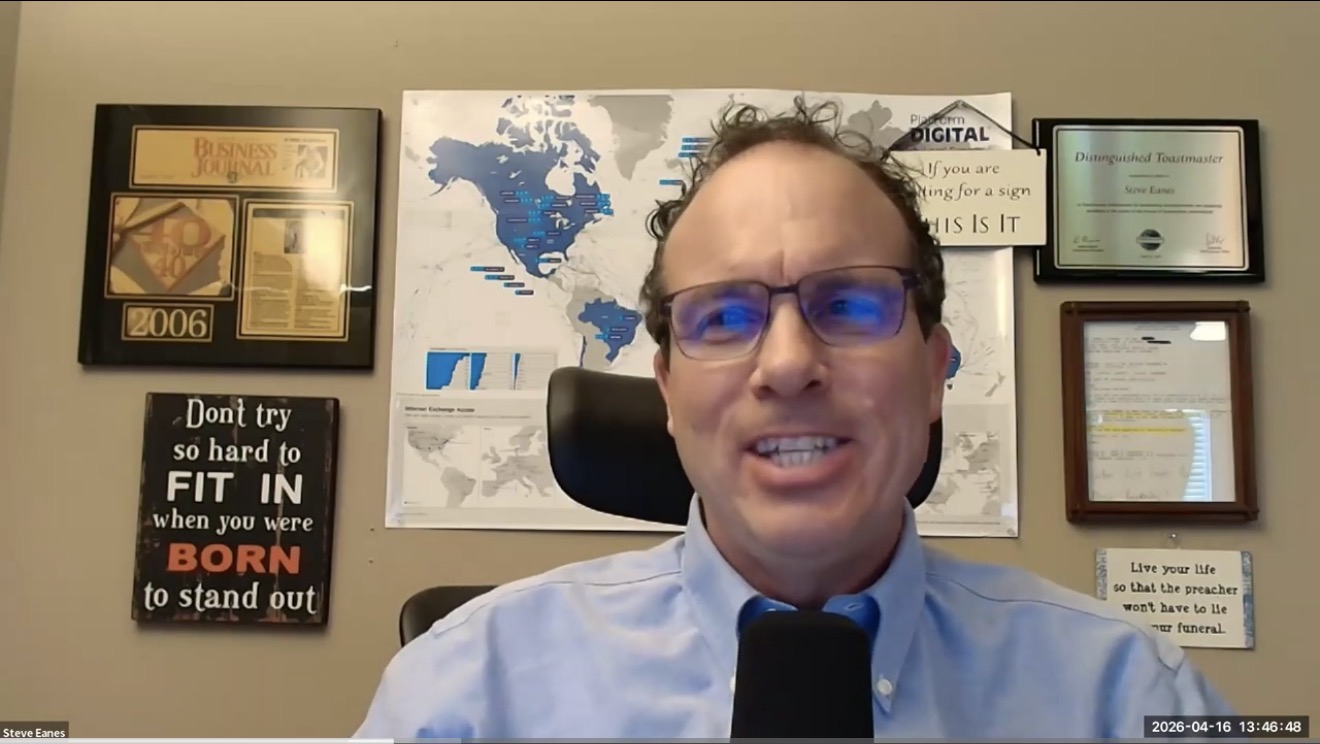
Founder - Eanes Communications
Steve Eanes started his first business at age 11 and has spent the past 29 years building a very strong and successful career in technology sales, finishing more than 26 years above quota and earning multiple President’s Club awards.
After surviving stage 3 melanoma, Steve gained an even deeper commitment to serving others. In 2026, he celebrates 25 years cancer-free.
Steve's mission is to encourage, educate, and inspire sales professionals to live and conduct business the Go-Giver Way, and to realize they are capable of much more than they think.
Steve is the author of the “Walk In Your Value” Quarterly 7-Day Private Reflection Journal as well as The “Intentional Networking Shortcut” and the "Networking Event Quickstart" (A 1-Page Checklist).
Learn more about Steve at steveeanes.com.