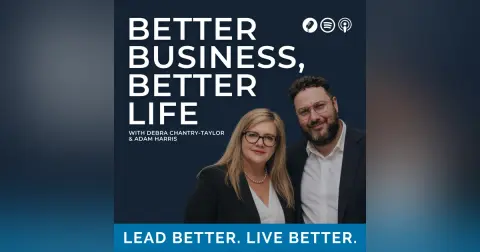
Sonya Jury: The Secret to Making EOS Work for Your Business
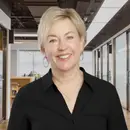
In this episode of Better Business, Better Life, Debra Chantry-Taylor is joined by Sonya, a retired architect & experienced EOS Implementer®, to explore what it really takes to make EOS® work & create lasting change within an organisation.

 Spotify
 YouTube
 Amazon Music
 Apple Podcasts
 RSS Feed
 iHeartRadio
 PocketCasts
 RadioPublic
 In this episode of Better Business, Better Life, Debra Chantry-Taylor is joined by Sonya, a retired architect & experienced EOS Implementer, to explore what it really takes to make EOS® work & create lasting change within an organisation.
Sonya shares her journey from a 46-year career in architecture to becoming an EOS Implementer. After being dismissed from a leadership role, she realised she was ready for a new direction. Discovering Traction & Get a Grip introduced her to EOS, & after attending boot camp, she went on to spend eight & a half years implementing EOS with more than 50 clients.
With her architectural background, Sonya has a particular passion for working with architects, engineers & contractors. She explains why these professionals can be excellent at delivering work for clients, but often struggle to step back & work on the business itself. EOS provides the structure & clarity needed to make that transition.
A major focus of the conversation is The Accountability Chart, which Sonya describes as her favourite EOS tool. She explains how it clarifies roles, responsibilities, expectations, hand-offs & cultural guardrails, while helping leadership teams make better decisions about people & structure. Debra & Sonya also explore how The Accountability Chart works alongside the V/TO, Core Values, People Analyzer, IDS & Rocks to create deeper organisational change.
This episode is a valuable listen for business owners & leadership teams who want to understand what it really takes to make EOS work. It is not simply about completing the tools. It is about mastering the system, changing behaviours, strengthening the culture & creating an organisation that can continue to grow with clarity & confidence.
CONNECT WITH DEBRA:
___________________________________________
►Debra Chantry-Taylor is a Certified EOS Implementer® | Entrepreneurial Leadership & Business Coach | Business Owner
►Connect with Debra: debra.chantry-taylor@eosworldwide.com
►EOS Worldwide Website: Debra Chantry-Taylor | EOS Implementer | EOS Worldwide
___________________________________________
GUEST’S DETAILS:
► Sonya Jury – LinkedIn: https://www.linkedin.com/in/sonyajury
► Website – EOS® Implementer – https://implementer.eosworldwide.com/sonya-jury/
Ep 293 Chapters:
00:00 – Introduction
03:03 – Challenges of Business Ownership
06:07 – The Power of EOS Tools
11:37 – Navigating Implementation Growth
14:55 – Achieving Transformational Change
19:54 – Leadership Development and Culture
23:45 – Mental Fitness and Positivity
28:22 – Final Takeaways for Success
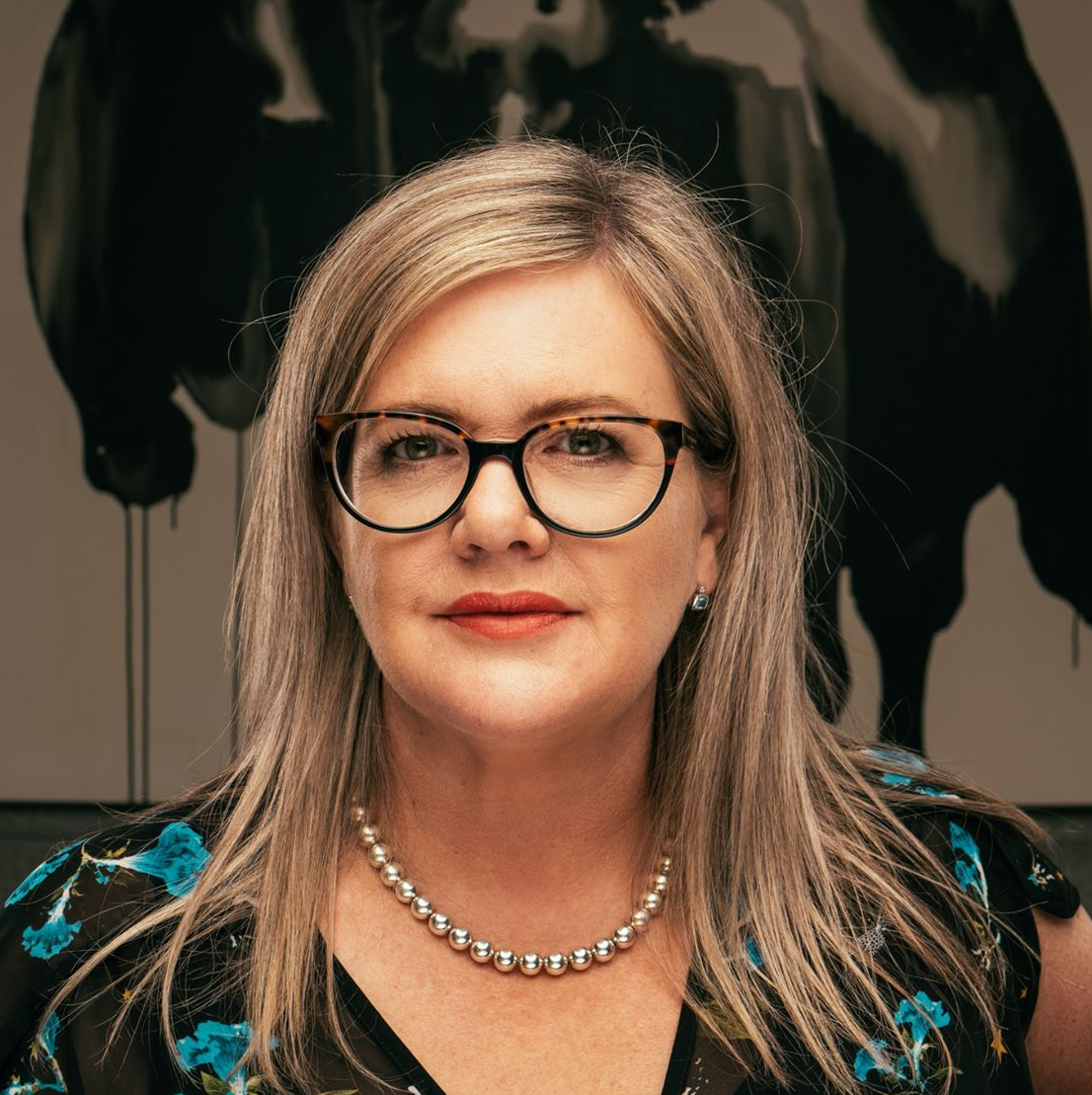
She is based in New Zealand but works with companies around the world.
Her passion is helping Entrepreneurs live their ideal lives & she works with entrepreneurial business owners & their leadership teams to implement EOS (The Entrepreneurial Operating System), helping them strengthen their businesses so that they can live the EOS Life:
- Doing what you love
- With people you love
- Making a huge difference in the world
- Bing compensated appropriately
- With time for other passions
She works with businesses that have 20-250 staff that are privately owned, are looking for growth & may feel that they have hit the ceiling.
Her speciality is uncovering issues & dealing with the elephants in the room in family businesses & professional services (Lawyers, Advertising Agencies, Wealth Managers, Architects, Accountants, Consultants, engineers, Logistics, IT, MSPs etc) - any business that has multiple shareholders & interests & therefore a potentially higher level of complexity.
Let’s work together to solve root problems, lead more effectively & gain Traction® in your business through a simple, proven operating system.
Find out more here - https://www.eosworldwide.com/debra-chantry-taylor
Sonya Jury 00:00
Thank you, Debra. It is super. I'm super happy to be here. I I have watched you and witnessed you for many years through LinkedIn. So I'm just really happy to be invited. Thank you.
Debra Chantry-Taylor 00:12
That's my absolute pleasure. I'm looking forward to hearing your story and hearing about you know what you love about EOS and how it helps your your teams. So the people listening in, Sonia is going to share with you her story about how she came to be an EOS implementer and her background. So, please.
Sonya Jury 00:28
Well, I got fired. That's the. So, I am a retired architect and 46 years in the business, and one of the last companies that I worked with, you know, using the language of EOS, I'm I'm still not sure if it was the wrong person, right seat, right seat, wrong person. There just were it it just wasn't a fit, and I I knew it and they knew it, and but what I was really proud of is that they made a decision. If that makes sense, you and I both know what it's like. How painful it can be when a leadership team-they know something's wrong, yet they don't have the confidence yet to make a decision, especially if it's a person. And so that's what I told them. I said, "Listen, you all made a decision, and I'm just really proud of you for making a decision because they actually had a a few other people that were also in the in their in their sights, if you will. But they they chose me, and I was totally good with that. I just remember walking out, and I went to my car, and I came home, and my husband came home, and he said, "How are you? And I said, "Why don't you go grab a cocktail, come sit with me on the sofa, and let's have a little chat. And he's like, "Okay. And so he sat down. He's like, "What's up? And I said, "The boys fired me. He goes, "Yay! And I'm like, "I know. And then he said, "Are you ready to go do EOS? And I said, "I really am ready to go do EOS. So my girlfriend, Debra Teschner, who lives in Kansas City, she had introduced me to the book, both Traction and Get a Grip. And I just remember after I read both of them, I just said to myself, "Where was this when I had my own business? I could have used this, and so I called EOS the next day. Said, "Hey, can I get in the the next boot camp, which would have been November, and it was already full, so I had to wait until February to do it, and that was fine. I went ahead and signed up for boot camp, started listening, reading, you know, immersing myself into EOS, and I haven't looked back eight and a half years in. I've worked with over 50 clients, and it's been really, Debra. It's just really remarkable that we get to help others live a better, you know, run a better business and live a better life. What we talk about,
Debra Chantry-Taylor 03:03
yeah, no, it's my it's my passion for sure. So let's go back a few steps. So when you had your own business, what was your own business?
Sonya Jury 03:10
I had, well, I'm on my third. So my first two were architecture, and the second one was a full blown architectural business. I had I had clients, I had staff, I had interns, and it was I was wearing all the hats, just what we talk about. I was, you know, I'd wake up at two a.m. I something would pop in my head, I couldn't think about it. I'd go. It was a home office, so I would just go to my office and I'd sit and work for about an hour and a half and get everything done, get it out of my head, you know, and then I go back to sleep, wake up, and just start it all over again. And it was successful. I was winning work. I had really great clients, but I just didn't feel like I was growing. I, I, there was something that was missing, and I wasn't sure what it was, and now knowing the EOS language, it was I was stuck in the business, and I didn't have time working on the business, and yeah, so that was it. The
Debra Chantry-Taylor 04:14
book is interesting, is it? Because the traction and the get a grip book, I've shared this many, many times, but I actually tried to read the traction book first, and really struggled with it because I'm not a great fact finder. I'm a bit of a visionary. It's like, oh, this is a bit boring, really. I always say it's boring as batshit. I don't mean that literally, but at that time it was. And then I, but then I thought. Then I picked up Get a Grip. I got given both of the books by by Fran and Dan, and I picked up Get a Grip, and I I remember consuming it in two hours. I just read it from cover to cover, and I was like, "What is this? This is amazing! And then I sort of went, "Okay, now I'll have a look at the traction book because that's the how-to book, and so it made more sense. But it is funny, isn't it? It's like when you do do that, you suddenly go, "Where has this been my entire life? I wish I'd found it 20 years ago. Yeah,
Sonya Jury 04:56
yeah, and you know that's one of the reasons I really want to do. Dive into becoming an EOS implementer and work with architects, engineers, and contractors. They're great at doing the work, designing, building. Yet sometimes they they don't separate that from the on the business side, the the strategic planning, and you know strategy is one of my top strengths from StrengthsFinders, and with my 6473 Colby, I have this uncanny ability to see the bigger picture. And I, you know, I'm yes, I can live in the here and now, but I'm also thinking two weeks, three weeks, three months, six months down the road, and I think that's what I was getting frustrated and definitely bored about in architecture because I didn't really have anybody that was forward thinking in the in the business side, and I realised how much I really enjoyed the strategy in the business side and setting a plan and following through on that plan and hitting your goals. So, I just that's what I do love about EOS is how simple it makes it. And if you've had your own business, Debra, how many business books did you read or look at looking to find a you know a simplified strategic planning document, and and yet we've got one in EOS called the Vision Traction Organiser. I mean, how many you know corporate meetings did you set through strategy strategy sessions, and then whatever got printed just sat on a on a shelf, and nothing ever happened to it. And that's what I love is that that doesn't happen in EOS, or it it shouldn't happen in EOS? Is a better way to put it.
Debra Chantry-Taylor 06:46
Yeah, no, it was one of the things that I love because I was actually coach. I've been coaching for actually my business turns 21 this year, so I'd been doing. Yeah, I know, but I've been doing marketing, and then I went into coaching, and I've been doing coaching for a long, long time. And we used to do these strategy sessions through the ice house where we get together as a whole team and we do it, you know, eight hours and we cut this amazing plan. But then, of course, they go back into the business and nothing had changed in the business, so they're back to fighting fires, back to working in the weeds, and nothing changed. And it was like so. When I read, that's what I say when I read the book and I saw that the the process was actually to do a focus day where you learn tools first that fundamentally change the way you do the business, and then, and only then, do you kind of put together a plan on on how you're going to achieve it. That was for me was just like, wow, this is this is a game changer,
Sonya Jury 07:32
right? And and you see it, and you understand. You've been doing it long enough. You understand that the process does work, and you just have to follow it. Then you gotta trust the tools, right? Oh, I don't want to use that tool, but I want to use this tool.
Debra Chantry-Taylor 07:47
Yes, we see a bit of that. Okay, so you've been doing it for eight and a half years now, and tell me, do you have a favourite tool? Because you know, I know that you know we shouldn't pick and choose, but is the one that you just kind of go. That for me is the thing that really makes the difference.
Sonya Jury 08:03
I love the accountability chart.
Debra Chantry-Taylor 08:05
No, me too. The
Sonya Jury 08:07
yet I believe it. It's the my favourite one, and it's also the linchpin in my mind, the way that my mind works. Because if we do not have the accountability chart designed, and we do not, and we're not specific with the roles and responsibilities. And if we have not rolled it out and shared it with everyone, and you know, physically sat down with a direct report and said, "Okay, this is the seat you sit in. Here are your roles and responsibilities. Do you understand these? Is there anything we need to, you know, you're unclear about? And that's one of the things that I love about it is because it's starting to build the guardrails of understanding. If I am an employee and I step foot into company X Y Z. Here are the guardrails that we, as a company, have created. Here is the culture we are creating, and we have this expectation that you will align when you work with us in this culture. And here's the seat we're asking you to be accountable for. And I mean, how many times you know if you've been in corporate world and you've taken a position, you know, there's a job description, but I don't know if anyone in my lifetime that I worked with or even I did it, I sat down with someone and said, okay, let's just make sure we're all clear on the job description, because really that's what the accountability chart is. That seat is a simplified version of a job description, right? And I just find it fascinating when you can share that with your team, and they start understanding it. And then they understand I don't have to worry about X. Debra's taking care of that because that's her role and responsibility. Yet I need to communicate with her because I align with this process, and so I've got to pass the baton to her so she can take it and run with it, and then she gives it back to me when she's done. So I just find it fascinating if you can dissect your business and your company, and using the accountability chart to help you with that.
Debra Chantry-Taylor 10:31
And for those who maybe aren't really familiar with it, the accountability chart is like an organisational chart on steroids, right? So an organisational chart says this is the role, this is the person who's got it. It tells you nothing about what they do or what they're accountable for, which is where the the confusion starts to come in. Because if you haven't got the clarity around what what person looks after, which part of the process, what they're being measured on, and so it defines you you call them guardrails. I call it the rules of the game. It's like you know we love playing sport because we know how to win, and this tells you how you win. It tells you how you lose. It tells you what you're going to be held accountable for. It's just a, it's it's the backbone of everything really in the organisation. Yeah, and I believe it or not, I have had teams that I've been working with them for a year and a half, and I'll say something about accountability in the accountability chart. I'm like, what are you talking about? I said, wait a minute, didn't that get rolled out during your EOS rollout. Oh no, we've never shared that. I'm like, what? Like, where did I miss that one? Okay, well, let's re let's revisit this, shall we? And look, it's it's tough. And we talked a little bit about this before we came on the podcast. It's like you know, in the beginning, I just did a focus day yesterday, and in the beginning, even though the tools are simple, there's still a lot to take on board. And so, in that focus day, like that, all the team at the end said they felt excited, but they felt a bit overwhelmed, and they weren't thinking they were going to be because it was like, "Well, this is really simple. Like we'd gone through the 90-minute meeting, they knew what all the tools were, but when we went into sort of yeah, did the accountability, I went in depth, it is quite overwhelming at first, and you're trying to learn all these new things that you've never actually done before, and that it it can't happen overnight. Like you don't get the results by just doing one day, and suddenly everything's great. It's it's it starts to, what's the right word? It's almost like you're marinating in it. It's like over time, it really starts to marinate through the organisation and get deeper and deeper the longer you've been in it,
Sonya Jury 12:21
what? Yeah, absolutely. And I, I don't know. We both have our how we open our focus day, right? And I just remind them. I just want you to be a sponge and absorb as much knowledge of what I'm teaching you today, because ultimately you are going to teach the next group down at some point, not right now, and but it's going to take time. And this is not you just can't go over and flip a light switch. And you're an EOS run company; it has to go through the process, right? And it's just reminding them. And Debra, you get it. We've got to give them grace because everybody learns at their own speed, and it's their journey, not my journey. And that is one thing I I really have had to remind myself: it's their journey, not mine.
Debra Chantry-Taylor 13:10
And also, I think I see this in myself as an EOS implement, and I can see how it also happens in leadership teams as well. I've been doing this for six and a half years. You've been doing it for eight and a half years. For us, it's sort of second nature, and so there's some things that we don't realise that are just inherent in us because we've been practising this muscle for a long time that nobody else knows. And you say this for leadership teams; it's like sometimes they. But I've already explained that to you. It's like, but you you haven't given them the context. You've got all this background knowledge and stuff behind it that you haven't really shared with people. So that you know, it's not there to expect them to just get it like that. It's going to take some time for that to actually be absorbed.
Sonya Jury 13:47
Absolutely, and we just were there to coach them. We're there to coach, teach, facilitate, and be their cheerleader at times.
Debra Chantry-Taylor 13:57
And I think we, you know, you you gave a really good language to use. We talk in the beginning. It is very transactional, right? It's very much around we're learning the tools, we're learning how to use the tools, we're learning how to teach the tools to other people. It is very, very transactional. Over time, as that becomes more second nature, because we've done it a lot, we practice a lot. That's when the real magic happens. And you use the term transformational change. Tell me a little bit about that.
Sonya Jury 14:24
Yeah, so I've been kind of on a quest for the last year of evolving. We talk about revolution and evolution, and so I myself am in that process of evolution and revolution, and leaning more into the tools, not going wider, going deeper, as our dear friend Jill Young likes to say. And when I started researching and kind of understanding the difference between transactional and transformational, I found this really great definition, and it's simply trans. Information is fundamental system-wide shifts in views, structures, and practices. So I'm just going to pause with that simple sentence. And when I went back and reread that, and I started breaking it down and dissecting it, and I'm like, okay, if we talk about views, we're looking at your business as a board of directors, you know, working on the business, looking down into the business. We talk about the structures. Well, that's your accountability chart, and we talk about the practices. Well, that's EOS, and then it goes on to say going beyond incremental improvements to address root causes of deep-seated problems, often requiring inner awareness, new vision, and cultural shifts to create deep, lasting change in individuals and organisations. And so, when I reread that, I'm like, deep-seated problems. Well, that's what we're talking about with IDS, getting to the root cause, right? And we're also talking about rocks and setting goals, and then the new vision is the VTO, making sure that our vision is out of our head and onto a piece of paper, and then we talk about cultural shifts. Well, cultural shifts really mean your core values. Really, you know, creating those core values, making sure that they're tangible and sticky, and that you are using them, like we talk about and teach, hire, fire, review, and reward. And then when they get comfortable with that, and they're you know everything is gelling inside of their company, then it's okay. Well, we're also going to start using our core values for our vendors and even the people that we, you know, our clients are they aligned with our core values? Because if they're not, I'm going to go talk to them. You know, we're going to go have a conversation. I'm going to people analyse their company, kind of thing. And I just love it because it creates such an amazing opportunity for language and communication and it cuts out any of the grey matter that may exist so yeah so I just find transformation really that's a that's you know that's a goal that's a that's a that's a core target that every company can grow to achieve,
Debra Chantry-Taylor 17:22
and like you said, I mean the EOS tools facilitate that, and they just give us such clarity, don't they? And and Adam and I, we always talk about clarity creates confidence, and that's what it's all about. Is if you know what the rules of the game are, you know how we operate around here. You know, once you've got that clarity, then that's you can confidently execute, which is where you get the transformation.
Sonya Jury 17:43
I love that, Curie. Yeah, I, I, I don't, I don't use those exact words, but I, I do believe in that. Clarity creates confidence. Absolutely, it does.
Debra Chantry-Taylor 17:57
Okay, so in in your eight and a half years of doing this, what has been the biggest change you've seen within a within a client? Without giving away specifics and secret source, but you know, can you give us an example of a client that went from here to here, and what that looked like?
Sonya Jury 18:11
So it is a it's actually a current client of mine. I started them in 2020, COVID, and we're you know, we're all sitting in a room wearing masks, whatever we were doing, and they, they were with me for about a year and a half, and then they graduated and they happily went on their way, and we would keep in touch and and so on and so forth. They had merged with another two, with another company, and so now it's a. I don't want to say it's a holding company, but it's they have an overall company structure, and then there's the three divisions, if you will, inside of this group, and so the new group. We are now re. We are now doing EOS with the two new groups, and the old the older group is still in the room. the The leaderships are still in the room, and the my first group that I started in 2020, they will hit their core target this year, and they set it for 2030, and they're going to hit it four years sooner. And they, yeah, and they tell me all the time, it's EOS. It gave us the clarity of focus and the clarity of confidence to put our goals out there, and just they're very goal oriented, rock oriented people, and it just gave them that little nudge they they needed, and it's been really fun not only for that group but then the new group, and and we're almost a year into their journey and just watching how they've come together as a leadership. Team, the vulnerability-based trust that they have in the room-they can say what needs to be said, and nobody takes it personally. They know that they're there working on the business, and it's not personal. And you know, like, hey, I'm making up a name. It's like, hey, Frank, you're not doing your job. You're not. You're not aligned with your seat, and it's becoming a big problem. So just you know, so things like that. It's just kind of funny. It's just amazing to me. And they've got all the right people in the right seat. When we first created the core values, the first company they thought, "Oh my God, I got six people. I'm going to have to go do. You know, we're going to have to maybe get rid of. And when they sat down with those six people and explained the core values, every one of them turned around. This is what you expected me. That was just so beautiful. Yeah, yeah, and it was just beautiful. And you know yourself when it's not a right person in the right seat, and maybe a team has to ask somebody to go seek excellence elsewhere, and they do. And then if that's ever happened to you, that person that has left has reached back out and said, "Sanya, thank you, because it gave me the context of what I was looking for, and I found it someplace else. But now I have the context to know how to have that conversation with somebody.
Debra Chantry-Taylor 21:30
So that I love that aspect of it. Yeah, and I think it's funny, isn't it? Because we we're always so nervous about letting people go, and it's like actually there's never ever been a team that said we wish we kept the person longer. But on the other side, that other person gets to be happier too because they go find the right place where they are happy, and so it's yeah that's right. Got fired, yay! It's true though, and I think we forget that it's like if if you're not happy with the person, there's a really really high chance they're not happy either, which means when they do go somewhere else, there's a chance that they're going to find their happiness, and that's that's really important for both parties. It
Sonya Jury 22:10
really is, and and you see it, Debra, also in this journey when the leadership team members they become different people, they become better. They do the work to become better, and you know what that looks like. And I mean, you know how fantastic it is when the visionary sits quietly in our sessions to listen and observe, and not dominate the conversation to allow their people to, you know, step up to the plate, and that I really love as well. How EOS can-I don't want to know if the words infiltrate or you know nudge for them to become a better person, and yeah, yeah, I love that aspect of
Debra Chantry-Taylor 23:04
it. Yeah, that's the the core, the 10 year target, the core target. I mean, hitting that four years early that's got to be a you know a huge chance for celebration. It's one of the things I have a little bit of a bee in my bonnet about at the moment. Is is sometimes I also think that teams don't celebrate success enough in terms of I don't know what I don't know what Americans are like, so I can't speak for the American market. But I know in New Zealand and Australia, we're very, very good at being hypercritical. And when it comes to the scorecard, we're great at sort of you know the the stuff that's not working. But we don't often do the whole yay, haven't we done amazing? So what is it like in in the US? Is it similar?
Sonya Jury 23:39
Same. Yeah. Okay. Yeah, Debra. It is exactly the same, and it's it's a human thing. I I think it's just a human thing that well we you know we can't celebrate. No, you can and you should celebrate, and please do. Yeah, it it is a really hard thing to get some high functioning teams to stop and celebrate. And I encourage them. I've even suggested to some teams to place celebration on their weekly scorecard. Of you know, if I'm a leadership team member, what have I done this week to celebrate? Who have I celebrated on my team? Have I pointed something out that they've done above and beyond? You know their their job description, if you will. Yeah, it's a hard thing.
Debra Chantry-Taylor 24:38
Yeah, I describe it as a it's it is a human nature thing, right? Whenever there is a vacuum or a gap, we tend to fill it with negative stuff, and I don't think we do it deliberately. But let's just say you and I are are best friends, and all of a sudden I don't hear from you for in a couple of weeks. I immediately think, oh, I wonder what I've done to upset Sonya. I wonder if she's found a new friend. I wonder if she's no, you know, she's got an issue with me, as opposed to. Maybe Sonia was just having a bloody fantastic time with her her husband and off doing things that she loves doing, and she's she's just hasn't had hasn't had time for me. But as humans, we fill gaps with negative stuff.
Sonya Jury 25:10
Yeah, and I'm gonna I'm gonna segue to one of my favourite books that I have read is called Positive Intelligence. I don't know if you know that one. I
Debra Chantry-Taylor 25:20
have it. No, yeah. Who wrote that?
Sonya Jury 25:21
So it's a, it's a, it's a positive intelligence is a operating system for your mind. Uh huh. So you got EOS for your business, and you got positive intelligence for your mind. My girlfriend Sandy Mitchell in Dallas, Texas, she introduced me to positive intelligence, and I am a PQ coach, and it's a mental fitness programme. Is really what it is, and it is amazing how we make up our own stories in our heads. And positive intelligence helps you to-you're never going to get rid of the negativity, but you can lessen it, and you can. There are techniques to that you can control it, or as you and I say, if we can name it, we know it's there. We can have the awareness, and then we can say, "Oh, like my loud judge, her name is Aunt Patsy, and when Aunt Patsy is in my head, I will say, "Aunt Patsy, I need you to go sit in the corner, and you're not showing your your negativity to me today. And so it helps me to have the awareness of what's happening not only in my body and my mind, but even with my teams, Debra, I can see it. You know yourself when we're in session, and somebody says something negative, and then when somebody else jumps on that negativity bandwagon. And so, as a leader, it takes three times positive energy to quelch negativity. So imagine having people that are negative around you eight to five. You know, in the working environment, there are reasons why leaders, when they go home at night, they're so tired because they're working triple time to keep the positivity level up and not allow the negativity. One of the things that I say to my teams: positive gossip only, and positive gossip only. And what story am
Debra Chantry-Taylor 27:30
I making up in my head right now about this situation? Because you see it when we, you know, IDS and you know get to the root cause of something. Sometimes, well, people will just add on things and compound the issue even more. No, let's simplify the issue and let's talk about what we know is true, and not worry about what isn't true. So yeah, but that negativity-it's a thing. It is facts and data, though. Let's have a look and see what the what the facts and the data actually really tell us. Yeah. Okay. Brilliant. So, when you first started doing your EOS implementation, what was the biggest aha moment for you?
Sonya Jury 28:11
That it works, right? That that first client, when you see that, oh my God, it works, and trusting the tool, and just staying forward. Just keep going on the process. Keep getting curious, asking the questions. That even even a failed business shows that EOS works, and I I have had one of those. The the own. made some bad hires, didn't use the right people, right seats, didn't use the people analyzer, didn't pivot quick enough, made a few bad decisions monetarily, and their business didn't stick together, and the two partners ended up separating because they realised they both wanted different things. So it was worked. It just wasn't the outcome that either one of them had hoped.
Debra Chantry-Taylor 29:17
Yeah, yeah, but it highlighted those things. I always think that a failure is never a failure unless you take nothing from it, anyway. So as long as you learn from those things, it's a great it's a great tool. Yeah. Hey, I wanted to go back a couple of secs. There's something I just made a note of, and you talked about your clients that had graduated. Again, for those who maybe don't understand, as EOS implementers, we don't want to be with teams forever. Our role is to actually help them get to a certain point, and we want to have them graduate. But what is what is graduation about, and what does that look like for you? Can you share your experience?
Sonya Jury 29:48
Interesting. I just had this asked last week in a session with a client, and I said, "Well, I held up the toolbox, and the you know the what is it 25." 30 tools that are on there, and I said, for you to sit and go through each tool and have mastery. You know the tool, you're using the tool, and you can explain it to somebody else. So when you reach that point, you you can do it. I also say that you need to be 80% or better on the organisational checkup that we use, which is you know that the free assessment that they can do online with their with their teams, and I also clarify it with that you believe and know you have all the right people in the right seats, that you have made the decision to let people go that are toxic, and you're not just tolerating bad behaviour. That you've made the switch where I'm not going to tolerate bad behaviour anymore, because I believe you know just like we have on the EOS model, it talks about the six key components, and then at the centre of that model is the words your business. Well, what's your business made up of? Your business is made up of people. You've got to have the right people in the right seats for your business to move forward. And so, those are just some of the things that I share with the team. That are you ready? You know, are are do you believe? And and they've got to have someone on the leadership team, whether it's the integrator or the ops person or whoever that really is the EOS person that's going to replace me in the room. That they are ready to facilitate. That they're ready to have the tough conversations, you know they're ready, as you and I say, to talk about the elephant that's in the room. So it's a lot of things, and I could be transactional and just say, "Well, you check the box. I've taught you all the tools. You're good. Yet I want to make sure that the transformation has happened with the leadership team, and then that next level down. To because if that next level down they don't get it, if they just are being transactional themselves, then it's really hard to get that whole buy-in for the entire company. So, and I don't know, Debra. What's your longest client you've had with that's been with you?
Debra Chantry-Taylor 32:27
I mean, I've had one that's been around for three or four years now, and I've had a couple that have gone, graduated, gone away, and come back again because they've wanted some extra help. And and sometimes, as you know, I've got clients now who I just do the annual sessions with, and so we don't do all the quarterly, but we do do the annual sessions together. I've got one client who we still do all five sessions every single year because they appreciate the external person coming in. They see the value in it because I always say it's it's really really hard to be the facilitator, be part of the team, be running the meeting, keeping track of everything. It's just it's too much. You can't play all those roles really effectively. And some people just say, "Hey, look, we know that we don't need to use you anymore, but we we get value out of using you.
Sonya Jury 33:10
And I say, you know, I'm not meant to be an extension of the team. That's not why I'm here, but I will always help you because I want you to have the success. Best thing, you know, the best compliment. I've got a a company here in town, and they said, "Hey, can we just have? Can we take you to lunch for a couple of hours? And we just want to pick your brain, big ideation on some stuff that we think could be opportunity for us growing the business. And because you've been an architect, you know our language, you speak our language, and we just want to we just want to bounce some ideas off of you. I'm like, I'm happy just to do that with you, you know. So it's just kind of fun. Yeah, you don't you just want the success for each of your teams?
Debra Chantry-Taylor 33:59
Yes, absolutely. And in fact, I just so I talk about celebrating success. I actually promise any of my clients who get an A grade quarter or an A grade year. So an A grade means they hit all their measurables and they got 80% their rocks done. That's an A. That we get champagne, proper champagne. And so I've just literally stocked up my cupboard downstairs. I've got bottles of Verve ready to go because I know a couple are coming up for their callings, I know that they've nailed it, and so for me, it's like absolutely. I have great joy. Yay! Yeah, I've got several of those in my in my session room with the different places that I work around the world. But yes, but to me that that's that's why I do this. You know, for me to see those aha moments, to see those A's, to see people. I just had a team the other yesterday, not yesterday, early on last week, I should say, who have grown 40% year on year this year. Now we're told that we're in a global recession, that the economy is terrible, that things aren't working. They've just grown 40% So I mean, that is that is the power of focus, and I don't think there was a. Excited as I was, I was like super excited.
Sonya Jury 35:04
And and Debra, I just had a team this week. It was their first quarterly, so you know they set the rocks on Focus Day. They were 100% on their company rocks.
Debra Chantry-Taylor 35:16
Yeah, gosh, and I like that's almost never happens. I know,
Sonya Jury 35:22
and I'm like, you all need to be. And they, I was, I was this cheerleader jumping up and down, and they're like, okay, come on.
Debra Chantry-Taylor 35:30
Oh, I'm gonna have to change my my model. I've got to tell my clients over here. I always say that the Americans are super good at celebrating, and we need to better better at it as Kiwis and Aussies. But now it looks like everybody is not so good at it. So, what is it? I mean, I think I think also we we do have a true advantage. We're not there day in day out in the weeds, and so we only go back every 90 days, or maybe we catch up with them between occasionally. But we go back every 90 days. We're seeing it from a different perspective because we see them go from here to here, whereas they're just incrementally getting better all the time, and maybe don't see it quite as well.
Sonya Jury 36:04
I couldn't agree more. And you're familiar with the Dan Selvin book, The Gap and the Gain, and reminding them: remember a year ago, remember where you were a year ago. We have a leadership team member that is no longer here, and so yeah. So I don't know about you, but one of the things that I have really leaned into also in the last couple of years, and I know it's because I have the confidence. I I've done it long enough. I'm still learning. I'm still mastering EOS. But I am. If I see something now that I'm nervous about, I will definitely have a conversation with the visionary or the integrator about it, because I I'm like, listen, I'm the tea leaves of EOS are saying this is probably not the right person in the right seat. They don't belong in the leadership team. It's your business. I'm just letting you know that it's the tea leaves are pointing it out. They don't GWC the seed. They're not aligned with your core values, and you you are going to need to make a decision. And I am hoping that you will make it sooner than later because it's costing you in ways you can't see. And at the beginning, I would never have said that in my EOS journey. Now I feel confident in saying that because I've witnessed it. So,
Debra Chantry-Taylor 37:27
and and we're wanting the best for them, right? So if it means that we get to the greater good of the company, the best result for the company, that's what it's all about. Hey, look, um, gosh, we could talk for hours as I can with all of my other fellow EOS implementers, lock them to pieces, but we're going to have to wrap it up. So I'd love for you to share with me three kind of top tips or tools people listening in could kind of take away and and do something with it.
Sonya Jury 37:47
So I, so for me, I wondered what
Debra Chantry-Taylor 37:51
that was when it came in. So for the people who can't see the video, I'm assuming it was your husband walked in and brought an orange ball and put it on your lap, and it was like I don't know if I should say something or not. No,
Sonya Jury 38:01
yeah, yeah. So, so Debra, one of the things that has happened with me is I realise that my mind works like Willy Wonka and Queen's Gambit. If you've seen the movie, okay, yep. And so I took a soccer ball and I thought, can all of the EOS tools fit on this soccer ball, and they do, and they did. And what I would like, you know, one takeaway is for anyone running on EOS, if you can think of the EOS model, the two-dimensional model that we show on the board, think of it as a 3d element, and think of it with all of the EOS tools as satellites, you know, floating and and and living around that that 3d model of the EOS model, and asking yourself, getting in the habit of asking yourself, okay, I am frustrated with X, so then you say, is it a people issue? So you pull out the people analyzer in your brain. You go through core values. It's not that. You go through GWC. It's not that. Then you ask yourself, well, what is it? It's a process. We do not have a process about that. So now I can go and speak to that person, and we create a process so it fixes it. So for me, it would be if all of my leaders can get really comfortable and understanding the tools and asking myself what tool can fix this situation. Okay, so you're being discerning. You're simplifying, and you're getting to the root cause. Finding a way to celebrate. What does that look like? You know, for every leadership team, what does celebration look like? Even for your people, how do they celebrate? And and then the other one that I really. Love talking about is we know the company why okay we've got the core focus why we exist what we do and then who we are with the core values those three things those three elements are your DNA of your culture right it's all wrapped up in it to the extent that you as a leader, can help connect the company why to the individual why. What's in it for them, the with them? What's in it for me? When you can make that connection to your direct reports back to the company, that really makes transformation happen quicker because you understand why they come to work, and you know I've had a lot of people say, "Well, they're just here to collect a paycheck. Well, they may or may not be, but if they're here to collect a paycheck, what is that paycheck doing for them? Do they like to travel with their family? Do they like going to soccer games, World Cup games. So it's understanding their why they come to work. Do they have a loved one that they're caregiving for? You know, there's so many things that spend the time to get to know your people. I guess would be that takeaway. So
Debra Chantry-Taylor 41:18
fantastic. Was just talking about that with one of the other EO symptoms about the quarterly conversations really help to facilitate that as well as really understanding the the person behind the person. Yeah, it it
Sonya Jury 41:28
makes a difference. Yeah, I mean we spend 40 hours a week at work, right? Yep. Shouldn't people enjoy what they do and what they're there for, and their purpose and their why. So I just I think that that's an opportunity. As and I we could go down the rabbit hole and talk about technology, but the more technology comes into our world, the more we have to interact as humans. That's never going to go away.
Debra Chantry-Taylor 42:01
Yeah, I think companies that really recognise that because I mean I don't know about you, but every single company I work with at the moment has AI on its issues list or AI is an opportunity, and it's like that's great. And and I'm a big proponent of using AI and using tools and workflow automations and things. But I think the businesses that can combine that with the human element are the ones that will really succeed.
Sonya Jury 42:21
Absolutely, you're so right.
Debra Chantry-Taylor 42:24
Okay, well, look, thank you. That is awesome. So yeah, do make sure that your company, why, your what, and your who it connects with the individuals, the individualise what they're doing. Celebrate success. I'm so pleased we're on the same page about that. It's so important. It's like you know, it's great that we can look at what's not working. We need to do that, but we also need to look at what's what's working, and I make them do high fives, and I give them bottles of champagne. So I think we've got to do more of that. And then think of the EOS. It's not a flat model; it's a 3d model that is supported by so many things. And I think the the the longer you do EOS, see, I think think of the the orange soccer ball that we can see there, football from my part of the world. But the more we we can do that. We can start to see. It's like the Matrix. Like all of these things actually, they all work together.
Sonya Jury 43:05
Yes, I see that all the time. I mean, and my aha is when they start seeing the EOS Matrix.
Sonya Jury 43:15
when they can connect the dots of how it comes together. That is, that's just so amazing, right?
Debra Chantry-Taylor 43:22
Gold, pure gold, absolute gold. Pure gold, yeah. Hey, Sonny, look! Thank you so so much for your time. It's been a pleasure to have a chat to you. Really good to sort of pick your brains and and congrats on all that you're doing. Please keep up the good work.
Sonya Jury 43:34
Thanks so much for having me. This was delightful, and you're right. We could have kept going for another couple hours.
Debra Chantry-Taylor 43:40
We might we we might get you back again. We'll see how it goes. Thank you. Thank you.
EOS Implementer | Entrepreneurial Leadership Coach | Workshop Facilitator | Keynote Speaker | Author | Business Coach
Debra Chantry-Taylor is a Professional EOS Implementer & licence holder for EOS Worldwide.
As a speaker Debra brings a room to life with her unique energy and experience from a management & leadership career spanning over 25 years. As a podcast guest she brings an infectious energy and desire to share her knowledge and experience.
Someone that has both lived the high life, finding huge success with large privately owned companies, and the low life – having lost it all, not once but twice, in what she describes as some spectacular business train wrecks. And having had to put one of her businesses into receivership, she knows what it is like to constantly be awake at 2am, worrying about finances & staff.
Debra now uses these experiences, along with her formal qualifications in leadership, business administration & EOS, to help Entrepreneurial Business Owners lead their best lives. She’s been there and done that and now it’s time to help people do what they love, with people they love, while making a huge difference, being compensated appropriately & with time to pursue other passions.
Debra can truly transform an organisation, and that’s what gets leaders excited about when they’re in the same room as her. Her engaging keynotes and workshops help entrepreneurial business owners, and their leadership teams focus on solving the issues that keep them down, hold them back and tick them off.
As an EOS implementer, Debra is committed to helping leaders to get what they want and live a better life through creating a bet… Read More