Why Fun Matters in Profound Autism Care? with Mike Carr
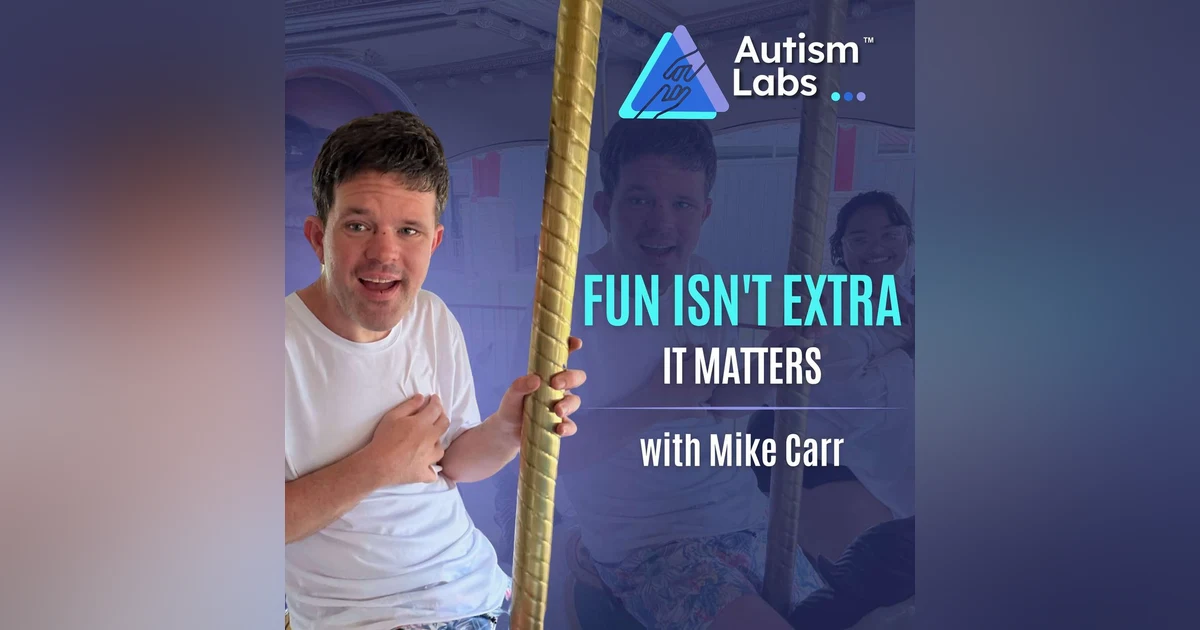

What role does fun play in the life of someone with profound autism? In this episode of Autism Labs, Mike Carr explores why meaningful, enjoyable experiences should be an intentional part of autism care, especially for people with profound or severe autism and significant support needs. Mike shares a personal story about his son Michael and his love of being on the water. What may look like a simple boat outing actually requires extensive preparation, physical assistance, supervision, and saf...


What role does fun play in the life of someone with profound autism?
In this episode of Autism Labs, Mike Carr explores why meaningful, enjoyable experiences should be an intentional part of autism care, especially for people with profound or severe autism and significant support needs.
Mike shares a personal story about his son Michael and his love of being on the water. What may look like a simple boat outing actually requires extensive preparation, physical assistance, supervision, and safety planning.
But the effort creates something valuable: genuine joy, friendship, connection, and an opportunity for Michael to experience something he loves.
Mike also discusses the realities that families and caregivers may face during enjoyable activities, including challenging behavior when a preferred activity has to end. Rather than overlooking those challenges, he explains why planning for them can help families create more meaningful opportunities.
In this episode, you'll hear about:
• Why fun matters in profound autism care
• Creating meaningful activities for autistic adults
• Michael's experience boating and tubing with friends
• Safety considerations when supporting autistic individuals around water
• Planning activities for people with significant support needs
• Friendship and connection through shared experiences
• Behavior that may occur when preferred activities end
• Why quality of life includes opportunities for joy and recreation
For parents of autistic children and adults, caregivers, family members, and professionals working in autism services, this episode offers a reminder that meaningful support isn't only about managing challenges. It's also about helping people experience connection, enjoyment, and a life filled with moments that matter.
🎙️ ABOUT AUTISM LABS
Autism Labs provides practical information, lived experiences, and conversations for parents, caregivers, and families navigating autism across childhood and adulthood.
Learn more: https://www.autismlabs.com/
Newsletter: https://www.autismlabs.com/add-a-post/blog/
Mike Carr (00:05):
Welcome back this week to an episode in autism Labs about the importance of fun, about making it fun. And you may feel that sounds a bit trivial there. Lots of other more important things that have to do with funding and procedures and appropriate therapies. But folks, I believe that you need to put fun at the top of the list. And we learned this many years ago when we were trying to find activities for our son, Michael, and we discovered how much he loved being on the water in a boat. And it took a lot of effort, right? We had to put a life jacket on him. We had to make sure he went to the bathroom before he got on the boat. We had to put a diaper on him. He still would tend to wet his swimsuit. We had to make sure he didn't jump in the water.
(00:52):
But he loved the sound of the motor. He loved the motion of the waves. And there were instances where he would just lie down on the bench seat and let his hand rest in the water as the boat was moving along with a smile on his face. And you could just sense that he was having a blast. And more recently, just last weekend, he got to go out on a boat again with some of his buddies. And just getting him on the tube was quite the experience. So here's that video clip that sort of shows how much effort's involved and just getting him on the tube. Okay, one more step I got to face. I think we got to face this way. Pull. Yeah, pull it.
(01:42):
All right. You ready? Got to look just like you're climbing into bed, buddy. Come on. Stand on this. Ready? Stand up. So excited. Okay. Are you just going to talk in there the best? Come on. I got you, buddy. Michael, come on. Stand up. There you go. Come on. Whoa. Okay. Come on. Okay, you got to get on your tummy. Turn around. Okay, turn around. So yeah, move your leg. Not this way. Go the other way. Oh my gosh. Smiling the whole time. Just happy as can be on your tummy, on your belly, your tummy belly. You can't ride like that.
(02:43):
I get you some. One of you guys in the population. Come on. Okay. You want to stay on that side? Okay. Hey, good job. A big smile. Now as you just saw, he's giggling, he's laughing, he's having fun. But it ain't easy, right? And we know as parents of severely autistic kiddos, a lot of effort has to go into planning an event that truly makes it exciting and fun. But last Saturday, he and three of his buddies had a glorious, a marvelous time on a boat, on the water, enjoying nature with the fresh air, the sunshine, the motion of the boat, riding the inner tubes with somebody right there next to him to make sure that if they fell off, the colleague would fall off with them. And even though everybody had a life jacket on, we know how dangerous water can be, especially for this population.
(04:06):
And we had to make sure that Michael didn't drink too much water, which of course he ended up doing because he loves drinking water. He doesn't care whether it's lake water or not. But the whole point is it was a great day and there was a bonding that takes place amongst guys, amongst anyone. When you go out on a boat with friends and you share that experience, whether you're verbal or not, there's something that happens that's a bit magical, that magic is important, sustaining any program anyone's life. And so we have tried through our nonprofit, John 13, and through our R to R program, which is respite to residential, which I've talked about before, and trying to imbue it with as many chances planned, opportunities, scenarios, situations, environments, to make it joyful and fun and exciting. Now, that doesn't mean there aren't problems, right? There's still going to be behavior.
(05:02):
Why don't we get off the boat? I'm having too much time. Well, you got to get off the boat. Well, then the aggression appears, right? And we anticipate that, and some of that happens. But overall, what you end up and what we feel can be created for you as a mom or a dad with the right supports is something that you feel good about. Because you know your son or daughter, even though they're severely autistic, even though they're nonverbal, even though they might have seizures while our son doesn't, all this other stuff, it's just something that they love doing and it puts a smile on their face. And maybe afterwards they come and give you a big hug, and you just know that they had a great, great day. So don't underestimate the importance of having fun. Talk to you again next week. See you.


