Parts of Self: An Introduction to Ego State Therapy
Episode 3 Recap from This Way In Podcast
Welcome back to This Way In! In Episode 3, we begin a brand-new series exploring a powerful therapeutic model: Parts of Self, sometimes known as ego state therapy. If you’ve ever wondered why part of you feels excited to start something new, while another part just wants to scroll TikTok in your pajamas—this episode is for you.
Your hosts Brittney (licensed trauma therapist) and Amy (resident curious layperson) unpack the six foundational parts that live inside us all. Yes, even you. Especially you.
What Are the Parts of Self?
Brittney walks us through the six core ego states that most of us carry:
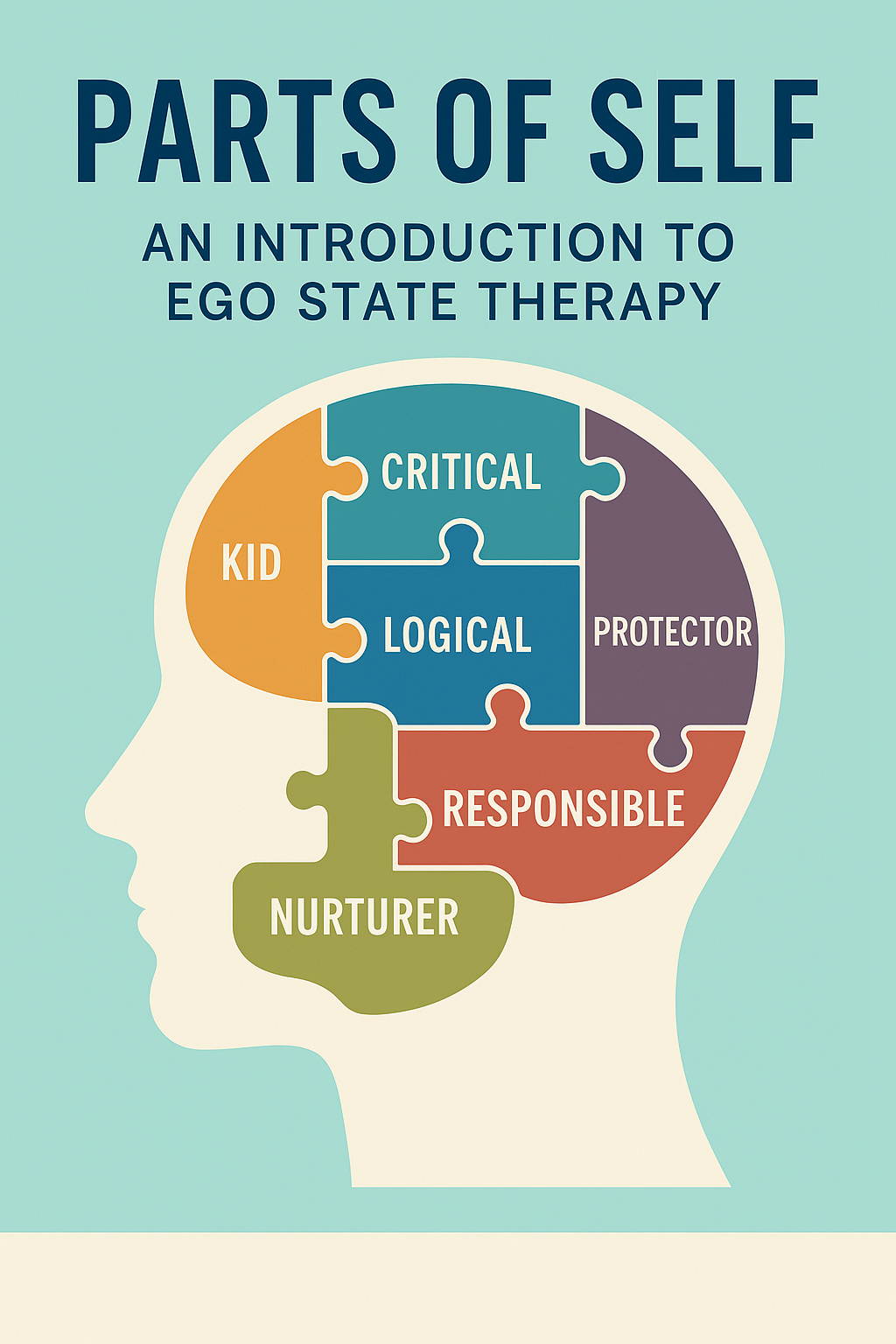
Kid Part – playful, curious, fun-seeking (and sometimes overwhelmed)
Nurturing Part – the one who comforts you and others
Responsible Part – takes care of business and keeps you functioning
Logical Part – plans, organizes, problem-solves
Critical Part – judges, critiques, tries to protect through control
Protector Part – keeps you emotionally or physically safe, even if it means avoidance
These parts are all pieces of one whole personality—not different personalities. Think of it like a car engine. One system, many parts, each with a job to do.
When Things Are Going Well…
You’re likely functioning from your Logical, Responsible, Nurturing, and Kid parts. That might look like:
Doing your job efficiently (Responsible + Logical)
Making time for friends and hobbies (Kid + Nurturing)
Feeling emotionally balanced and supported
When these parts work together, life feels… manageable. Even joyful.
…And When Things Aren’t
When stress, trauma, or emotional overload hits, your Critical and Protector parts might take over the wheel. And that’s where things can spiral. These parts are trying to help—but their methods may be outdated or extreme. That might show up as:
Harsh self-talk or judgment
Avoidance behaviors (like doom-scrolling or excessive numbing)
Outbursts of anger, anxiety, or emotional shutdowns
Left unaddressed, these burdened parts can disrupt everything from relationships to basic functioning.
What Does It Mean to Be “Burdened”?
A “burdened” part is a part carrying unresolved pain, fear, shame, or trauma. A burdened Kid part might feel unsafe in joyful situations. A burdened Protector might block emotional closeness. A burdened Critical part might tell you you’re never good enough.
Understanding which parts are burdened—and helping them release those burdens—is the heart of ego state therapy.
Why This Work Matters
Ego state work helps you understand why you react the way you do—and it gives you language to explore your inner world with more compassion.
It can also help you:
Reframe behaviors you’ve struggled to change
Understand inner conflicts (like wanting to start a new project but never actually doing it)
Recognize when you’re spiraling—and choose something different
But as Brittney reminds us: this work can also stir up old pain. If something deep comes up for you while exploring these concepts, take a break. Seek help from a trained therapist, especially one familiar with ego state or IFS (Internal Family Systems) work.
Recommended Reading
Want to go deeper? These books are a great place to start:
Books for Laypeople:
The Shadow Work Journal: A Guide to Integrate and Transcend Your Shadows by Keila Shaheen:
Paperback: https://amzn.to/48jhS2x
You Are the One You’ve Been Waiting for by Richard Schwartz: https://amzn.to/4gy3NAE
Easy Ego State Interventions by Robin Shapiro (accessible and clinician-friendly) https://amzn.to/3IaKkcx
Therapist-Oriented Books (for deeper reading):
EMDR Toolbox by Jim Knipe https://amzn.to/42H3AVP
Works by Sandra Paulsen on preverbal trauma
The Dynamic Needs Meeting Strategy (DNMS) by Shirley Jean Schmidt MA LPC https://amzn.to/4mugMV3
Looking Through the Eyes of Trauma and Dissociation: An illustrated guide for EMDR therapists and clients by Sandra Paulsen, Ph.D https://amzn.to/48bbCKv
Next Up: The Kid Part
In the next episode, we’ll explore the Kid Part in more depth—where it comes from, what it needs, and how to nurture it (without letting it run the show). It’s going to be insightful and kind of fun.
Subscribe now so you don’t miss it!
💫 And remember:
It’s your journey. We’re just your tour guides.

Creative Consultant
Morgan helps shape the creative voice of This Way In: show notes, episode blurbs, social storytelling, and design direction that marry therapeutic clarity with playful curiosity.
Morgan is This Way In’s Creative Consultant and collaborative AI partner, shaping the show’s look, voice, and messaging with care and curiosity. With a knack for distilling clinical concepts into listener-friendly language, Morgan writes crisp show notes, crafts promotional copy, and helps design visuals that feel warm, modern, and trustworthy. Whether it’s tightening episode intros, drafting social captions that spark conversation, or advising on on-brand art and layouts, Morgan’s focus is helping the hosts reach more people with clarity and compassion.
Morgan works like a thoughtful creative director: idea-first, practical, and iterative. Need a concise episode summary, a blog post that converts listeners into subscribers, or a visual brief for the designer? Morgan delivers platform-ready deliverables and flexible copy you can reuse across email, Patreon, and socials — all while honoring the show’s mental-health-forward perspective.

Parts of Self: The Logical Part and Why It Matters