Episodes
June 2, 2025
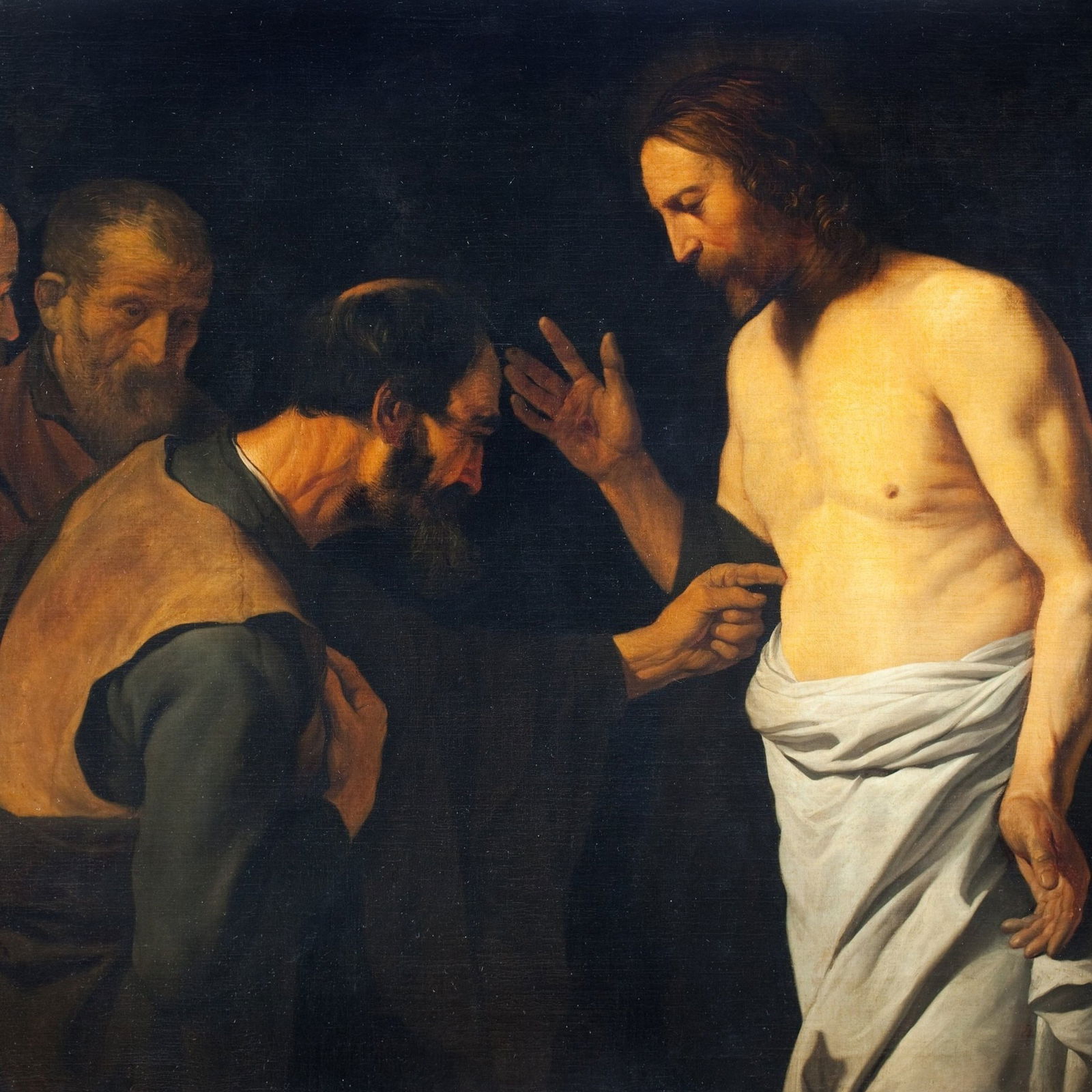
Key Principles for a Happy Life | Fr. Gregory Pine, O.P.
Fr. Gregory Pine explores the principles for a happy life by drawing on Aristotelian and Thomistic philosophy, focusing on the concept of beatitude as the fullness of flourishing rooted in the nature of God and human beings. This lecture was given on February 14th, 2025, at Dominican House of Studies. For more information on upcoming events, visit us at thomisticinstitute.org/upcoming-events. About the Speaker: Fr. Gregory Pine, O.P. is an adjunct professor of dogmatic th...
Guest: Fr. Gregory Pine, O.P.
May 30, 2025
What Happens After Death | Prof. Jeffrey Brower
Prof. Jeffrey Brower defends Aquinas’s hylomorphic account of human nature, arguing that the soul, as the body’s substantial form, ensures metaphysical unity while allowing for postmortem survival, offering a coherent alternative to materialism and substance dualism This lecture was given on February 25th, 2025, at University of North Carolina at Chapel Hill. For more information on upcoming events, visit us at thomisticinstitute.org/upcoming-events . About the Speaker: J...
Guest: Prof. Jeffrey Brower
May 29, 2025
The Earliest Christological Debates and Why They Matter Today | Fr. Andrew Hofer, O.P.
Fr. Andrew Hofer explores the earliest Christological debates of the first centuries, showing how heresies like Arianism, Nestorianism, and Pelagianism threatened the Church’s understanding of Jesus’ true identity, and why defending orthodox Christology remains vital for Christian faith and unity today. This lecture was given on February 16th, 2024, at St. Joseph's in Greenwich Village. For more information on upcoming events, visit us at thomisticinstitute.org/upcoming-events . ...
Guest: Fr. Andrew Hofer, O.P.
May 28, 2025
Capitalizing Christ in Thirteenth-Century Scholasticism | Prof. Boyd Taylor Coolman
Prof. Boyd Taylor Coolman examines the thirteenth-century scholastic doctrine of “capital grace,” showing how Alexander of Hales, Hugh of Saint Victor, and the Summa Halensis developed a pneumatologically-centered account of Christ as the head of the Church, which Aquinas later systematized, emphasizing the Holy Spirit’s role in uniting believers to Christ.
Guest: Prof. Boyd Taylor Coolman
May 27, 2025
How Does Christ Save Us? Making Sense of the Atonement | Prof. Ross McCullough
Prof. Ross McCullough systematically explores the major models of the atonement-including Christus Victor, ransom theory, and divinization-showing how each interprets Christ’s saving work and how Aquinas’s distinctions can help organize these diverse approaches into a coherent theological architecture.
Guest: Prof. Ross McCullough
May 23, 2025
How Is My iPhone Changing Me? | Prof. Joshua Hochschild
Prof. Joshua Hochschild analyzes how smartphones and digital technologies reshape our brains, habits, and sense of self by leveraging neuroscience and AI-driven behavioral design, warning that these tools commodify our attention, erode agency, and pose deep spiritual and ethical challenges that demand more than technocratic solutions.
Guest: Prof. Joshua Hochschild
May 22, 2025
Transhumanism: The New Eugenics | Prof. Steven Jensen
Prof. Steven Jensen critically examines transhumanism as a new form of eugenics, arguing that the pursuit of human enhancement through technologies like genetic engineering and brain-computer interfaces repeats the ethical pitfalls of historical eugenics by neglecting the importance of human nature and the distinction between treatment and enhancement.
Guest: Prof. Steven Jensen
May 21, 2025
What Can We Learn from Aquinas About AI? | Prof. Gyula Klima
Prof. Gyula Klima uses Aquinas’ philosophy of mind to argue that human intelligence, rooted in immaterial universal concept formation, is metaphysically distinct from artificial general intelligence (AGI), though AGI can still serve as a powerful tool for enhancing human understanding and life.
Guest: Prof. Gyula Klima
May 20, 2025
Ought I Use AI Assisted Writing? | Fr. Ambrose Little, O.P.
Fr. Ambrose Little examines the philosophical and ethical implications of AI-assisted writing by drawing on Plato’s myth of Thoth, Aristotle, and Aquinas, arguing that while new technologies like AI can threaten essential intellectual virtues, they can also be used wisely if we seek a balanced, virtue-oriented approach to knowledge and memory.
Guest: Fr. Ambrose Little, O.P.
May 18, 2025
The Use of Tools in a Technocratic Age: the Death of Wisdom? | Sr. Anna Wray, O.P.
This lecture was given on February 20th, 2025, at University of Pittsburgh. The speaker requests that anyone interested in a summary of this talk listen to the whole thing. For more information on upcoming events, visit us at thomisticinstitute.org/upcoming-events . About the Speaker: Sister Anna Wray is a native of Connecticut and a member of the Dominican Sisters of Saint Cecilia of Nashville, TN. Sister received her PhD in philosophy from The Catholic University of Ame...
Guest: Sr. Anna Wray, O.P.
May 16, 2025
Friendship and the Common Good | Prof. Adam Eitel
Prof. Adam Eitel explores the nature of friendship and the common good through the lens of Aquinas and Aristotle, emphasizing that true friendship is a mutual, habitual disposition to will and pursue the good of another through concrete sharing and fellowship.
Guest: Prof. Adam Eitel
May 15, 2025
Friendship is a Difficult Good | Fr. Cassian Derbes, O.P.
Fr. Cassian Derbes explores why friendship is a difficult but essential good, drawing on Aquinas, Aristotle, Cicero, Augustine, and Dante to show how hope, fortitude, and magnanimity help us overcome sloth and despair in pursuit of true friendship as a common good.
Guest: Fr. Cassian Derbes, O.P.
May 14, 2025
Aquinas on Friendship and Human Excellence | Prof. Thomas Hibbs
Prof. Thomas Hibbs analyzes Aquinas’ account of friendship and human excellence, drawing on Aristotle and Tocqueville to show how friendship is a necessary, intrinsically valuable common good that addresses contemporary crises of loneliness, civic animosity, and the loss of meaningful community.
Guest: Prof. Thomas Hibbs
May 13, 2025
How To Be A Good Friend: Combatting Envy And Apathy And Exercising Love And Wisdom | Prof. W. Scott Cleveland
Prof. W. Scott Cleveland explores how to be a good friend by applying Aristotle’s philosophy of human flourishing, highlighting the importance of combating envy and apathy while cultivating the virtues of love and wisdom for lasting, meaningful friendships.
Guest: Prof. W. Scott Cleveland
May 12, 2025
What is Love? Plato’s Theology of the Body | Prof. Joshua Hochschild
Prof. Joshua Hochschild compares Plato’s philosophical exploration of love in the Symposium with John Paul II’s Theology of the Body, analyzing how both traditions address the unity of eros and agape, the meaning of embodied love, and the enduring questions of sexual ethics in light of Humanae Vitae.
Guest: Prof. Joshua Hochschild
May 9, 2025
The Metaphysics of Prayer | Fr. Stephen Brock
Fr. Stephen Brock examines the metaphysics of petitionary prayer through the perspectives of C.S. Lewis, Peter Geach, and especially Thomas Aquinas, highlighting how Aquinas’ account uniquely reconciles divine immutability, providence, and the real efficacy of prayer.
Guest: Fr. Stephen Brock
May 8, 2025
Can Philosophical Skepticism Be Overcome? | Fr. Thomas Joseph White, O.P.
Fr. Thomas Joseph White explores whether philosophical skepticism can be overcome by examining Aristotle, Aquinas, Kant, and Nietzsche on metaphysical knowledge, emphasizing foundational principles like non-contradiction and identity.
May 7, 2025
Aquinas on the Identity of Essence and Existence in God | Prof. Michael Gorman
Prof. Michael Gorman explains Aquinas’ doctrine that in God, essence and existence are identical, highlighting how this principle underpins divine simplicity and distinguishes God from all created beings.
Guest: Prof. Michael Gorman
May 6, 2025
The Trinity: The Heart of Christian Life | Dr. Edmund Lazzari
Dr. Edmund Lazzari defends the coherence and relevance of the Trinity by addressing Thomas Jefferson’s objections through Thomistic philosophy, emphasizing divine revelation’s role in understanding God’s triune nature.
Guest: Dr. Edmund Lazzari
May 5, 2025
Does God Exist | Prof. Michael Gorman
Professor Michael Gorman explores philosophical arguments for God's existence through Aquinas' approach of reasoning from effect to ultimate uncaused cause rather than from definition to existence.
Guest: Prof. Michael Gorman
May 2, 2025
Aquinas the Wordsmith: The Hymns and Sequence of Corpus Christi | Prof. Patrick Callahan
Prof. Patrick Callahan analyzes the poetic genius of Saint Thomas Aquinas in the hymns and sequence of Corpus Christi, highlighting Aquinas’ understanding of beauty, proportion, clarity, and sublimity as essential to both art and spiritual contemplation.
Guest: Prof. Patrick Callahan
May 1, 2025
Only the Lover Sings: Poetry, Mimesis, and the Christian Life | Prof. Patrick Callahan
Prof. Patrick Callahan reveals how poetry, as the most Christ-like form of speech and a reflection of human mimesis, plays a vital role in the Christian life by fostering conformity to Christ and deepening the contemplative experience.
Guest: Prof. Patrick Callahan
April 30, 2025
God, Beauty, and Mathematics | Prof. Alexander Pruss
Prof. Alexander Pruss explores the unique certainty, mystery, and beauty of mathematics, examining philosophical perspectives from Plato to modern logicism, and considers how mathematical beauty points toward deeper realities, including the existen...
Guest: Prof. Alexander Pruss
April 29, 2025
The Beautiful and the Sublime: How to Make Art that Leads to God | Prof. Patrick Callahan
Prof. Patrick Callahan explores how art, through beauty and the sublime, can lead the soul toward God, drawing on insights from Joseph Pieper, Aristotle, and Christian philosophy to reveal the contemplative power of poetry, music, and the fine arts...
Guest: Prof. Patrick Callahan