
Episodes
76
Jan. 18, 2017
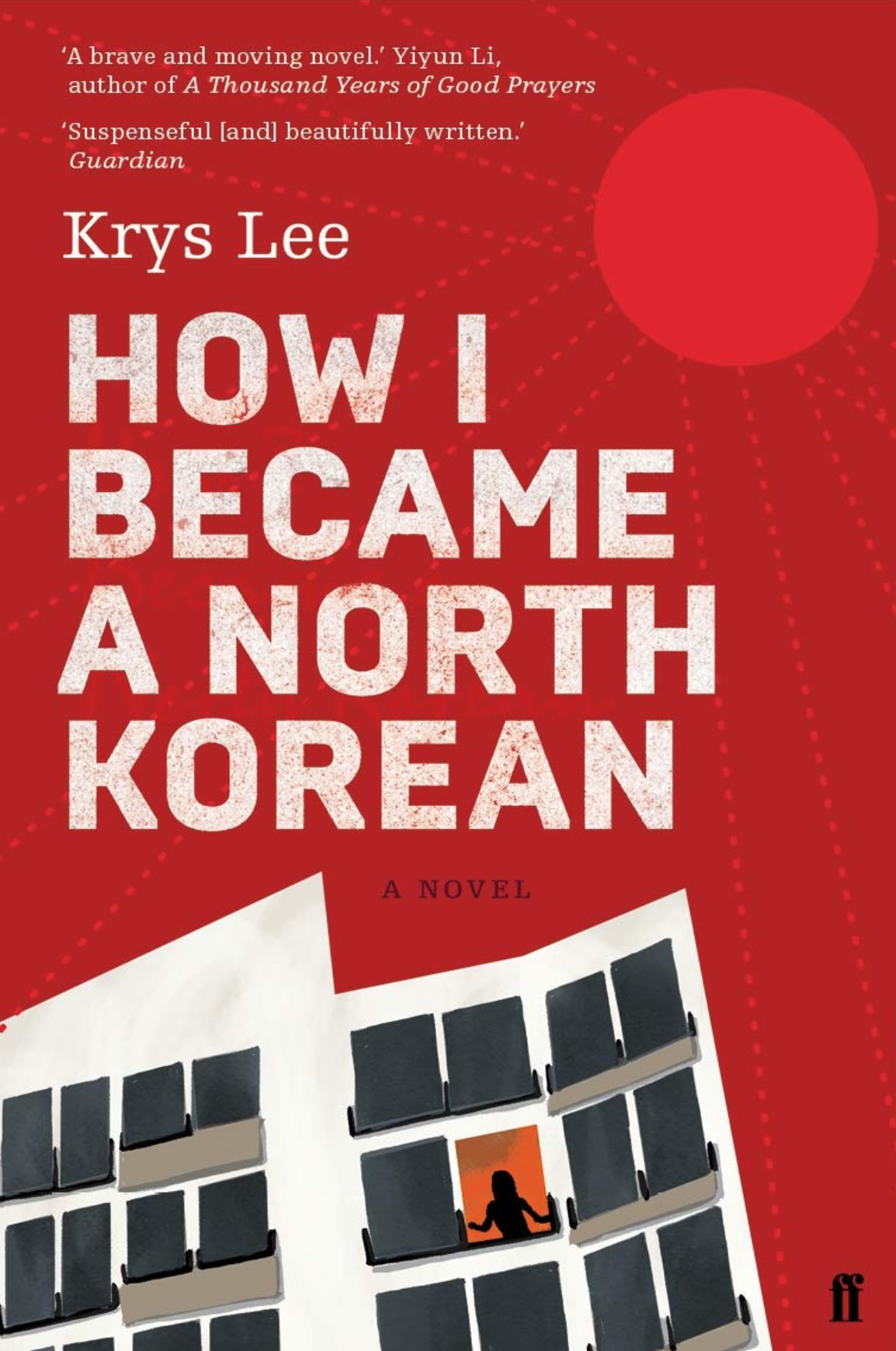
76 Darkness and the Power of Literature – The Forbidden Stories of North Korea (with Terry Hong)
For 70 years, the people of North Korea have lived through a totalitarian nightmare – and those of us in the outside world have had little access to their experience. How have generations of oppression and terror affected the psychology of everyday peo...

75
Jan. 11, 2017
75 The Tale of Genji by Lady Murasaki
With a strong claim to be the first novel in history, the Japanese classic The Tale of Genji (ca. 1001-1012), by Murasaki Shikibu, or Lady Murasaki, is one of the world’s greatest literary masterpieces. But who was Lady Murasaki,

74
Jan. 1, 2017
74 Great First Chapters (with Vu Tran)
It’s a new year! A time for fresh beginnings! And on the History of Literature Podcast, it’s a time to celebrate beginnings. Vu Tran, author of the novel Dragonfish and a professor of creative writing at the University of Chicago,

73
Dec. 27, 2016
73 Javier Marias and the Philosophical Novel
The Spanish novelist Javier Marías (b. 1951) has led a fascinating life, from his childhood as the son of a philosopher to his role as the king of a Caribbean island that has been ruled by a succession of writers.

72
Dec. 19, 2016
72 The Best Christmas Stories in Literature
Sure, we all know the story of Frosty and Rudolph… but what about literary Christmas stories? How have great authors treated (or mistreated) this celebrated holiday? Mike Palindrome, President of the Literature Supporters Club,

70
Dec. 5, 2016
70 Shakespeare’s Julius Caesar
Just after World War II, the poet and critic W.H. Auden said that Shakespeare’s Julius Caesar (ca. 1959) is “of great relevance to our time, though it is gloomier, because it is about a society that is doomed. We are not doomed,

69
Nov. 28, 2016
69 Virginia Woolf and Her Enemies (with Professor Andrea Zemgulys) / Children’s Books
Early in her career, novelist Virginia Woolf (1882-1941) wrote a critical essay in which she set forth her views of what fiction can and should do. The essay was called “Modern Fiction” (1919), and it has served critics and readers as a guide to Modern...

68
Nov. 23, 2016
68 Listener Feedback and Thanksgiving Thoughts
It’s the Thanksgiving episode! Jacke and Mike respond to listener feedback and discuss some literary things to thankful for. Authors discussed include Edith Wharton, John Fowles, Ernest Hemingway, Vu Tran, Lydia Davis, Gary Snyder, Walt Whitman,

67
Nov. 18, 2016
67 Pascal’s Wager and an American Election
Jacke digs into his origins in rural Wisconsin and offers some thoughts on race, literature, and the recent election. Also featured: René Descartes, Blaise Pascal, Friedrich Nietzsche, Ayn Rand, and Simone de Beauvoir.

66
Nov. 4, 2016
66 James Baldwin, Wallace Stegner, GB Tran, Lois Duncan (with author Shawna Yang Ryan)
What can we do to unlock the past? How do family secrets affect us? Author Shawna Yang Ryan has spent a lot of time thinking about these issues – and in this episode, she joins Jacke for a discussion of some of her favorite books,

65
Oct. 28, 2016
65 Mary Shelley’s Frankenstein (with Professor James Chandler)
By any measure, Mary Shelley (1797-1851) lived a radical life. As the daughter of William Godwin and Mary Wollstonecraft, two philosophers devoted to principles of freedom and equality, she grew up in a tumultuous world of exciting new ideas and strong...

64
Oct. 24, 2016
64 Dorothy Parker
“She was a combination of Little Nell and Lady Macbeth,” said Alexander Woolcott. Dorothy Parker (1893-1967) wrote short stories, poems, reviews, screenplays, and more. Perhaps most famously, she was part of the group of New Yorkers known as the Algonq...

63
Oct. 14, 2016
63 Chekhov, Bellow, Wright, and Fox (with Charles Baxter)
In this special episode, the revered American author Charles Baxter joins Jacke to discuss some of his favorite books, including works by Anton Chekhov, Saul Bellow, James Wright, and Paula Fox. “Charles Baxter’s stories have reminded me of how broad a...

62
Oct. 7, 2016
62 Bad Poetry
Everyone loves and admires a good poem…but what about the bad ones? After discussing his own experience writing terrible poetry, Jacke analyzes the 10 things that make a poem go wrong, assesses the curious role of Scotland and Michigan in developing ba...

61
Sept. 30, 2016
61 In the Mood for a Good Book – Wharton, Murakami, Chandler, and Fowles (with Vu Tran)
What do Edith Wharton, Haruki Murakami, Raymond Chandler, John Fowles, Alfred Hitchcock, and Wong Kar-wai have in common? All are known for their ability to generate a particular mood and atmosphere – and all were selected by our guest,

60
Sept. 23, 2016
60 Great Literary Endings
Everyone always talks about the greatest openings in the history of literature – I’m looking at you, Call me Ishmael – but what about endings? Aren’t those just as important? What are the different ways to end short stories and novels?

59
Sept. 16, 2016
59 Flannery O’Connor
Flannery O’Connor (1925-1964) lived a life that, in retrospect, looks almost like one of her short stories: sudden, impactful, and lastingly powerful. Deeply Catholic, O’Connor portrayed the American South as a place full of complex characters seeking ...

58
Sept. 9, 2016
58 Wyndham Lewis and the Vorticists (with Professor Paul Peppis)
Embattled and arrogant, the novelist and painter Wyndham Lewis (1882-1957) was deeply immersed in Modernism even as he sought to blast it apart. He was the type of person who would rather hate a club than join it – and while his taste for the attack le...

57
Sept. 2, 2016
57 Borges, Munro, Davis, Barthelme – All About Short Stories (And Long Ones Too)
What makes a short story a short story? What can a short story do that a novel can’t? Can a story ever be TOO short? The President of the Literature Supporters Club stops by to discuss the length of fiction, with some help from Lydia Davis,

56
Aug. 26, 2016
56 Shelley, HD, Yeats, Frost, Stevens – The Poetry of Ruins (with Professor Bill Hogan)
In 1818, the Romantic poet Percy Bysshe Shelley published his classic poem “Ozymandias,” depicting the fallen statue of a once-powerful king whose inscription “Look on my works, ye mighty, and despair!” has long since crumbled into the desert.

55
Aug. 19, 2016
55 James Joyce (with Vincent O’Neill)
Vincent O’Neill hails from Sandycove, Dublin, where he grew up in the shadow of the tower made famous by the opening chapter of James Joyce’s Ulysses. After a childhood spent tracing the steps of Joyce’s characters,

54
Aug. 12, 2016
54 The Greatest Books Ever (Part 2)
What books are essential? Who has the authority to choose them, and what is their selection process? First, Jacke and Mike continue their look at the College Board’s 101 Books Recommended for College-Bound Readers.

53
Aug. 5, 2016
53 Romeo and Juliet
In 1964, the Oxford professor John Barrington Wain wrote: “…Romeo and Juliet is as perfectly achieved as anything in Shakespeare’s work. It is a flawless little jewel of a play. It has the clear, bright colours, the blend of freshness and formality,

52
July 29, 2016
52 Recommend This! The Best 101 Books for College-Bound Readers
What works of literature are essential? When we start reading literature, where do we begin? The College Board, an organization that prepares standardized tests for millions of American young people, has published list of 101 recommended books for coll...