The Mirror We Built | Dr. Léa Steinacker on Presence, Attention & What AI Reveals About Us


At a glance
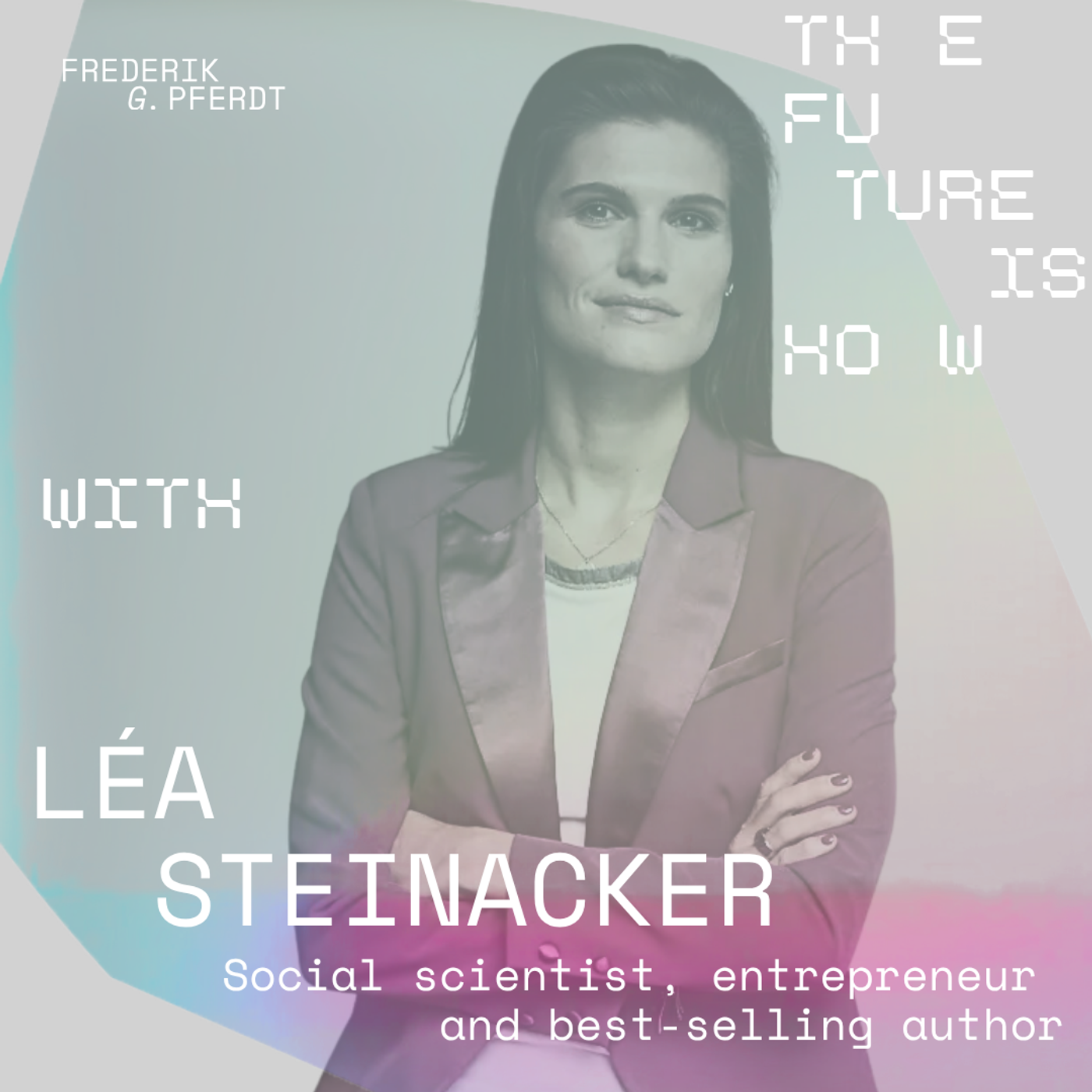
In this episode of The Future Is HOW, I sit down with Dr. Léa Steinacker — social scientist, bestselling author, and co-founder of ada Learning. Léa opens with a surprising observation: the moments technology makes her feel most human are not the moments of wonder — they are the moments of frustration. And from there, the conversation goes somewhere unexpected. We talk about running along Lake Zurich at sunrise, listening to birds instead of podcasts, and why she once spent an entire hour eating a single raisin.
We explore AI as a mirror — not just for our thinking, but for our deepest tendencies: our hunger for confirmation, our preference for frictionless relationships, and what Esther Perel calls "artificial intimacy."
And we talk about centaur skills — the rare ability to know when to let the machine run and when to bring the human back in. Not as a technical skill. As a way of living.
The future Léa imagines is more inefficient, on purpose. More alive. A conversation about what it means to dare to pay attention — to another person, to yourself.
Chapters
00:00 Welcome, Léa Steinacker!
01:37 A moment when technology made me feel deeply human
05:08 Morning rituals: How my connection to nature brings me to myself
11:49 AI as a mirror: Reflecting human behavior
16:59 The future of relationships with AI
17:55 Why Esther Perel called Frederik a non-futurist
21:27 Imagining humanoid robots and emotional connections
32:06 The power of eye contact
36:09 Centaur skills for the future
43:10 What I'd do while my AI is working for me
46:34 Why I ever wanted to be inefficient
50:03 I was eating a raisin for one hour.
53:44 Fast Future Round — final questions and answers
Where to Find Frederik G. Pferdt
NextLetter: https://www.nextletter.frederikgpferdt.com Book: whatsnextisnowthebook.com LinkedIn: https://www.linkedin.com/in/fgpferdt YouTube: https://www.youtube.com/c/frederikgpferdt Instagram: https://www.instagram.com/frederikgpferdt Website: https://www.frederikgpferdt.com Make the test: https://awareness.frederikgpferdt.com
Where to Find Léa Steinacker
Website: https://www.leasteinacker.com LinkedIn: https://www.linkedin.com/in/dr... ada Learning: https://www.ada-learning.com
Books – Alles überall auf einmal (co-authored with Prof. Dr. Miriam Meckel, 2024): https://www.amazon.de/Alles-üb...
Music: Andreas Horchler
Producer: Florian Dietrich
Frederik G. Pferdt: For decades we about machines becoming more intelligent. But maybe the more important question today is something else. â What does it to stay human in a world of intelligent machines? â And maybe even importantly, what kind of humans â do we want become in that world? Welcome â to The Future How. This podcast is really about one simple idea. The future is not something we wait for, it is something we learn to create. And the question that matters most is not what the future will be, it is how we show up to shape it. And today I'm joined by someone very special. She lives right at the intersection of technology, humanity and possibility. My good friend, Léa Steiner. Léa is an entrepreneur, bestselling author, AI expert, social scientist, and co-founder of Ada Learning. But what I admire most about Léa is her curiosity. we just, â before that podcast, talked a lot about that. â And her curiosity is about really that important question â I think is most important in these times and that is what does it mean to be human in an age of intelligent machines. Léa, I'm so happy that you're here. Welcome to the Future is How.
Léa: Thank you for inviting me, Frederik. Very, very nice to be here.
Frederik G. Pferdt: All right, before we talk about the future, let's start somewhere maybe a little unexpected. Tell me about a recent moment when technology made you feel deeply human. You know, that human feeling of wonder, awe, or even maybe discomfort.
Léa: Well, the first thing that actually came to my mind was maybe not what you were getting at, which is that when technology doesn't work, I feel so very human in being frustrated at my tools, right? At the things that we now call intelligent. And when it appears that they do not even execute a ostensibly simple task, I can feel myself get very human and sometimes unfortunately very impatient. But I find it interesting that you when you elaborated on the question, you actually asked about awe, right? Did I ever, or have I recently, had a moment where I felt awe at technology? And the first thing that comes to mind is actually a study, I don't know if you've heard of this, by a researcher who is one of the foremost experts on awe. And he basically did a huge survey â on people's experiences of awe. His name is Dacher Keltner. And interestingly, there are many insights what people are awed by. Lots of it has to do with nature or emotional experiences or even mystic experiences, oftentimes when they're confronted with death or something really stark. But interestingly, almost no one mentioned an interaction with technology, at least not in front of a screen, which I find so fascinating when you consider how much time we spent with technology. But now I have to admit maybe there have been recent moments when my interactions with technology at least gave me a sense of awe because it made me realize what we can do. So it really actually reflected back to me the sort of wonder of what goes on that's saying my entire body when I have just come up with an idea, right? It is not just a pattern recognition. It is this entire process between my nervous system, my gut instinct, yes, also my thoughts and my cognitive infrastructure. So working with a lot of these recent AI tools, especially with some of the agentic frameworks, when you see how they get to the end of something, you realize the immensity of actually what we are doing every single day. So you could call that a sense of awe at technology.
Frederik G. Pferdt: Absolutely, yeah. And he wrote a wonderful book, actually, I highly recommend, where he really goes into those moments where we are just deeply, not just surprised, but in this moment where our body just feels different. And so his research out of Berkeley is something I highly recommend and just a beautiful book to dive into.
Léa: Mm-hmm.
Frederik G. Pferdt: Which brings me to a follow up question maybe, because we talked about your mornings recently, right? And you shared that you really like to go for an extensive run in the morning, right? Go out into nature, kind of like just be in that different mind state. So tell me more about like how you start your day usually.
Léa: perfect day for me or even just in, you know, a very nice day definitely starts with some form of exercise and ideally it's outside. So let's say this morning, for example, I ran along the shores of Lake Zurich and I was actually running towards the sun. I was literally having a sort of sun greeting moment, you know, and the beautiful part about this â you know, this location here right by the lake is that on the left you have these, you know, you have a forest and you have these lawns and you have a lot of green. And then on the right, you see obviously the lake, this great body of water that to me always seems like this great organism. It seems very much alive whenever I wake up in the morning and I feel like I'm checking in with the lake. And then in the far distance, you actually also see the mountains, the Swiss mountains. And I'm just... That is all to me for sure. Every morning when I see this combination, this vista, and then I can move my body, move it towards the sun, move it towards all of these â features of nature. What I really love, and I've only figured this out recently because I've definitely been a podcast listener or even a music listener, but recently I've really tried to tune into nature sounds. And maybe some people have, you known about this little secret all along, but just figuring out the level of, you know, bird activity already, or even frankly, you know, realizing the level of traffic that is around me, although truth be told, in my little part of Switzerland, it is rather calm in the mornings. It just gives me a sense of connection and a sense of connection before I then go online and connect with others or obviously connect with people in real life as well. But for me, that is an amazing start into my day, nature and movement.
Frederik G. Pferdt: Amazing, â I think it's so powerful listening to you and how you start your day, right? Because I think we all struggle, right? We all struggle getting out of bed and just owning that morning to really be passionate, be motivated, be excited about what's ahead, right? â I use a simple trick with my kids every morning. So... Every morning around 6 a.m. I go to their rooms or if they came into our beds, I tell them three things. And I've done this since probably seven months now. I tell them, it's a beautiful day. It's your day. Let's make it the best one yet. And you can imagine like every, every single morning they roll their eyes, you know, put the blankets over their head again, and they're like, â daddy, come on. just give me a couple of more minutes before I want to start my day. And then I repeat it actually. It's a beautiful day, it's your day, let's make it the best day yet. And I found it fascinating because just not all also connecting with nature, but connecting with yourself to really realize that this is a beautiful day, right? It's a gift that you have. And secondly, that it's your day. owning that day and making it yours is also something very important. And then thirdly, having an ambition for that day, right? Let's make it the best one yet. â And those three things â I share with my kids, but honestly, I do it because I want to be inspired myself, right? By just sharing these words out loud, it helps me to really â start the day in a very different way. And whenever I catch myself going on the phone,
Léa: Mm-hmm.
Frederik G. Pferdt: first thing in the morning, right? I know the whole day will be totally different, right? It will be driven by anxiety, by kind of like this sense of not having ownership of your day, you're distracted, you're always running behind and all of those things. So I highly recommend doing the things you just shared, kind of like connect with nature, listening to...
Léa: Yes.
Frederik G. Pferdt: those sounds that really speak for nature like birds or whatever it is, look into the sun for a very short moment and then just tell yourself like it's a beautiful day, right? It's your day and let's make it the best one yet. So thanks for sharing that, Léa. Yes.
Léa: That's a beautiful ritual. Can I ask, what about the evenings? Do you ever check in with that mantra and sort of ask yourself, you know, so how have you lived and experienced this beautiful day? Do you ever come back full circle?
Frederik G. Pferdt: Yes, I use my kids for that as well because for me it's really hard to do. So what I â literally require of my children is that they write me actually a text message, mostly when I'm traveling, highlight those three things in the evening. What has been those three moments throughout the day that really made you happy, that made you smile or whatever it is. And funnily, my 10-year-old Josefina, she really does it every evening. I'm not getting the 16-year-old Jonathan to do it yet. So I'm still working on how I can convince him that this is something really important, right? That gratitude in the evening, because it really helps you to put an end to the day that is on a maybe high note or like an optimistic note as well.
Léa: Hmm. I'm waiting for you to get your first text from Jonathan at like 3 a.m. in the morning, right after he has left a dance floor somewhere and just really felt, you know, just how amazing this day has been. Interesting. Yeah, that's. It's a nice ritual.
Frederik G. Pferdt: Exactly. Yes, yes, yes, I'll definitely let you know. Yeah. Perfect. Talking about rituals, think one of the questions that I have related to that is how can AI actually help us doing those rituals, right? As we hear more and more that people are going to using their AI companions, right? And that's Gemini, JetGPT, Claude, or you name it, to really not help them to do task, but also help them to think differently, right? and imagine differently, maybe decide differently. And you've done incredible research on AI as well. So what have you learned about AI and how it's literally a mirror for us humans?
Léa: Yeah, I think it is in so many ways and it's one of the aspects I find most interesting about it, especially if we're ready to look deeply into that mirror. So what I mean by that is on the one hand side, let's look at some of the things that you could really use it for to get you thinking in a more thorough way or in a more, maybe even in a more heterogeneous way. I have often used these models to point out things I've overlooked, right? Or to give them an argument I'm about to make and I'm looking for counter arguments. Give me 10 things I'm really not seeing here. Give me other voices, right? Before I write something or even before I give a speech with a very strong argument, I really like to push myself like that. And of course, I'm fully aware that even what I'm getting there is simply just the sort of statistical mean of other people who have had those counter arguments, right? But it is... we have to admit a way to use them as an actual challenger and maybe as a deepener of our thinking process, rather than just something which I think a lot of people are using it for, than something that is basically just confirming everything that you're believing already. And not just in the typical sort of confirmation bias kind of way, but even with the style of the conversation that we saw in the last year or two, right, being... â let's say rather polite and very sycophantic in the way that they â are amazed at every single prompt that you're giving them. Obviously they've slightly adapted this by now, but the beginning was just a very interesting psychological experience to see that apparently some users really enjoy being just constantly congratulated on their prompts and questions. Now, but let's also look at what that means when we get too used to it. What I'm really interested in is what does it mean for individuals, but also teams and organizations when we start working so much with AI that we are getting very familiar with the sort of frictionless workflow, right? So we know that we have a tendency to prefer convenience. That also means that we have a tendency to prefer frictionless relationships. So I'm really â concerned, I have to say, about the early findings that we're seeing now. There was a study called the cybernetic teammate study on collaborating with AI. And it had what I would consider three sort of main results. Two of them are interesting and maybe not as surprising, but the third one I think should make everybody think quite a lot. Number one, it should have sort of showed that, an individual collaborating with AI basically performed as well as a whole human team. Number two, and this is interesting, this is basically what I was just referring to, the individual with AI was actually able to break through silos a lot more because it was able to trigger the machine to cross disciplinary boundaries, even more than a potentially diverse human team was able to. So that's just an interesting fact. But the third result was about the level of bonding that these individual participants had with their AI systems versus with human teammates. And basically the study showed that the humans tended to prefer working with AI because they had higher motivation. They likely felt like they could take all the credit, right? They didn't have to work with any friction. I think life is all about friction and about actual resonance that we have with each other, right? This is where things get really interesting. So this is something that I would like us all to be quite aware of that while Some of this is incredibly helpful all the way up to inspiring, even inspiring new thoughts. It can also certainly take us down a route of being quite numb to actual human interactions and the difficult layers that come with it. So that's something that I would want us to be aware of in terms of it being a mirror of our tendency to go down the easy route, right? Maybe just as a round that up by referencing â someone I really appreciate and she's a friend and obviously a beloved expert Esther Perel. She's a psychologist and has been talking about human relationships for a very, very long time, has been a therapist for decades and has beautiful books. And Esther recently, I think it was two years ago at South by Southwest, came up with this term that she calls the other AI, which is artificial intimacy, which is kind of along the lines that I just described, which she basically said, we are also getting used in a sort of partner, not only romantic, even a friendship kind of way to this, well, artificial intimacy that is also incredibly frictionless. So again, I'm very much for, you know, diving deeper into the potential of AI, but I think it is already showing us that we really do have this huge preference for an easy relational route.
Frederik G. Pferdt: Fascinating, yes. And I can definitely share that admiration for Esther and her work. â I was sitting on a podcast with her on a stage last year at South by Southwest â with Amy Webb. â And Esther was kind of like giving us a therapist session because she... â
Léa: â
Frederik G. Pferdt: mentioned that Amy Webb is the futurist and she called me a non-futurist. And so she was giving us a therapy session in front of, I think it was like 800 people, which was probably one of the most fascinating experiences I ever had, â being in a therapist session â in front of so many people. But she mentioned something.
Léa: May I ask how you felt about the non-futurist part? Why did she call you a non-futurist?
Frederik G. Pferdt: Yes, we talked intensively about that, what she means by that. And she just said, because â she called me a non-futurist because she said, I'm not into predictions. I'm not someone who shares predictions on how the future will look like in five, 10, or 15 years, or even 50 years. And â that was really refreshing to her because she felt that
Léa: Mm-hmm.
Frederik G. Pferdt: predictions are really â scaring a lot of people, right? Because the best predictions are those that â put people into, not the best predictions, that's the wrong way of saying it, but the predictions that are usually shared are the ones that activate our negativity bias, right? That put us into like anxiety, put us into a state of being out of control and all of those things, right? And you see those in headlines, right? The news work like that, right? Because they want to sell their news stories and all of that. And so we had an interesting discussion around like, what does it actually mean to shape the future, to create the future that you want to see happening? And we moved towards that â term of â imagination, right? To really imagine the future instead of predicting it. And I think that's a human...
Léa: Hmm.
Frederik G. Pferdt: a human skill, a human capacity that we haven't really developed over the past years, right? As we are confronted with mostly like these scenarios that might or might not happen instead of like trying to imagine like, what do we actually want to see in the future, right? But let me come back to that really interesting notion that you shared that we might actually fall in love with our technology, right? because it's confirming our ideas, it's confirming our ways of thinking, right, most of the time. And you mentioned that in a beautiful example where you said, like, you know, if we typed something into Gemini or JetGPT or Claude, right, it was the first answer was like, â that's a beautiful idea. That's a great approach. That's a, you name it, right. And which is fascinating because it does something to us humans where we feel like, â great. somebody likes what we're doing. Somebody likes our way of thinking. it's â confirmation bias. Probably that is triggered too. â when we play this scenario into the future and we're going to have our humanoid robots, right? And let's imagine that they're going to be amongst us, right? So Léa is going to bring her humanoid robot â with her to our next conversation, maybe in three, four years. And I'm going to bring mine. â And if those don't work as intended, if those have a â glitch, they haven't received the latest update, they are not responding in the way that we want them to respond, we're going to get frustrated. We're going to maybe treat them in ways that we wouldn't treat others. Can you go with me into the future and imagine a scenario where we're going to fall in love with our robots? And what does that actually mean for us humans?
Léa: First of all, always am very curious about why we are so obsessed with humanoid robots. I would love more robots down the road of, you know, really interesting animals. Can you imagine? So my robot would be an octopus. I'll tell you that. I would love a little octopus. I would love to learn from her why she can, you know, actually extend her brain into all of our tentacles and all of that anyway. But, you know, this is maybe a different tangent, but I'm fascinated by animal intelligence.
Frederik G. Pferdt: Hmm Love that.
Léa: And I've been looking more into it just how much animal intelligence has actually inspired parts of artificial intelligence, part of the internet actually, and how the internet's servers are being pinged was â inspired by the honeybee algorithm, the honeybee dance, which is fascinating. So this is why I'm asking, you know, how about some animal robots, but let's pretend they're humanoid. Although this is actually just an interesting starting point to ask.
Frederik G. Pferdt: Love that.
Léa: again, are we building machines that necessarily must look like us? Because we're so, I wonder, are we so enamored with the human form that we think this is the highest species, right? We wanted to have two legs and two arms, even though we know that some animals are, again, I'm back to animals, are able to do these incredible things, right? Jump in other ways, â basically climb up almost vertically, which we tend not to do. Anyhow, â I think there's lots to be explored in the realm of why we even want them to look like us. Perhaps it's a matter of control. We would love the idea. We've loved this throughout human history, right? The evolution of artificial intelligence is something I find so interesting because many now tend to think it's rather young. mean, if you're not very involved in it, you might think it's five years old, maybe 20. But the fact that, yes, the 1956 conference where they came up with the term some people still know, but then if you go hundreds of years back or thousands, the fact that we have long thought about building something like this, even quite frankly in a humanoid form, if you look into the Iliad by Homer, thousands of years old, and there were already golden statues imagined that were manufactured, right, fabricated. And one translation actually says they had intelligence infused into them. So again, it was basically this vision of a humanoid robot. Now, this is a This is my little brain working in tangential ways, but since you asked about us potentially falling in love and what that might look like, I think there is, at least up to now, an underappreciation maybe of the â processes in human relationships that are part of our lived experience right now that we... might lose out on in this sort of robot relationship scenario, or we might discover entirely new ways. So for me, would never venture to make a prediction about this. I'm rather curious about this. do think partly we will realize that, for example, our hormonal systems are quite different than a cognitive neural network, right? We're not just thinking we're in love. Feelings are a very specific layer of consciousness, you know, that is â distinct and I actually think is a sort of wondrous system. You know, lots of our newer transmitters and hormones start in the gut, not in the brain, and yet we've been trying to copy the brain much more than the gut. I would love to hear somebody who is basically copying the gut as a form of artificial intelligence because it's so incredibly intelligent. So I do think this is not even in the future. I know that Even now, are people who are certainly having romantic relationships, conversational relationships with chatbots or even physical relationships with, you know, versions of robots for sure. This also has been going on for quite some time with the sort of more simple robotic versions and humanoid robotic versions. What is interesting is, of course, how much we apparently attribute language and conversation when we think of a relationship. So. let's be very specific, the people now who are, know, quote unquote, in a relationship with these chatbots. And we've seen so many media stories about them. Some of them have been, you know, with, let's say a version of chat GPT for two years now. And what they mean by that is they have been in a text conversation, right? Now you're asking about the humanoid thing side of things, right? If it does get physical, I think it'll be very interesting to see just how much. we will actually feel that difference. What about touching a machine? What about the underlying pheromones? We know that we can actually also sort of smell our favorite partner, right? Is that possible? Will we smell our favorite machine? Is that how we will have a connection with someone, i.e. a machine? I'm just so interested in the gap that we might still not know about that is between an actual human resonance that we feel when someone's in the room. Even now, right, we're virtual. I'm looking at your, I'm trying to look you in the eye and I can see you a little bit, but we both know this would be different if we were in the same room, right? There's something about that energetic exchange. And I just really, truly wonder how much of it we'll miss in a relationship with the machine. Now, having said that, I, you know, used to have a dog as a member. of my family for a very long time and I considered him fully, know, fully part of the family. We were devastated when he passed. And of course, there were times where we certainly did not include animals in that circle of empathy, as Peter Singer would say. So do I believe that there is room for us to to open up and consider these new relationships with robots as a form of of relationship? Yes, absolutely. I think we will expand in probably in our consciousness in the next couple of years, which is something I'm really fascinated by. We will expand in our consciousness, hopefully also, this is my deep hope, our own sort of human consciousness and how that is connected to the larger realm of living, but probably also expanding in terms of letting more forms in. It will be different. I guess it's a little like... when a new technology innovated a genre. Let's say when the photo camera came along and everybody said, you can't do this, this is insane, know, an image must be painted and you need to sit for hours and it has to involve some oil and a canvas. And now, of course, we know, no, this technology, all it did was invent a new category, a new genre. And that's probably, I think, where we're headed with this new genre of companion as well.
Frederik G. Pferdt: I love that. I love everything about that, I have to say. First of all, that we should not think about a humanoid robot as a perfect â replica of a human body, right? Like, why just having two arms, â If the animal world shows us that the octopus has more arms â more intelligence built into arms as well, right? And it's â a fascinating thought. â Thanks for sharing that, that we should look for the next generation â of bodies, right? Inspired by nature, inspired by animals, inspired by humans. And a combination of that could be even more powerful, right? And â that really excites me because that's putting really some creativity into that equation too, right? And I think that's a very human thing to be creative about that.
Léa: Mm-hmm. Mm-hmm.
Frederik G. Pferdt: The second thing I love is that you are bringing it down to the body, like into our senses, right? And what those senses actually â miss out if we just interact virtually interact â in forms of written or text with our AIs, right? We miss so much, right? We miss out on our gut feeling. We miss out on how does... â a relationship actually smell, right? And in my last podcast, I actually had a perfume maker, â scent expert on the show, and I asked him the question, how does the future actually smell? And do we want to develop some sort of scent that we literally put onto someone that we are living with, right? It might be the robot, the â machine and
Léa: Mmm.
Frederik G. Pferdt: how do we want that machine to smell, right? Because we all smell as human beings. have a sense of, we have an adore or kind of like a very distinct â smell. And if we connect with each other, right, we have this immediate reaction because the â smell sense is one of the most developed as human beings actually have. And so if we enter a restaurant or if we connect with someone, right, we immediately have this this sense of this is something I like or this is something I dislike. And we don't have that with our technology yet. So I think this is a very, important question to ask ourselves. How do we want to have those robots actually smell like?
Léa: I love that. And if we can bring it back to something similarly body related, while you were speaking, I was just remembering this beautiful piece by Marina AbramoviÄ, The Artist is Present, right? Remember it all that your listeners, I'm sure, â heard about it at the time when she spent hours every day for several days at the MoMA in New York, just sitting there being present and looking people in the eye, right? Just being present with someone. And actually I was just teaching last week at the University of St. Gallen, we are teaching a course on communication technology and from the analog age to AI and how that changes us. And we actually did that exercise with the students. We asked them to pair up and look into each other's eyes for five minutes. And I think you can imagine they felt incredibly uncomfortable. just said, one really said, I found this so intimate. This was really, I'd never.
Frederik G. Pferdt: Love that.
Léa: you know, would have thought this and that this was really almost felt like a boundary â being crossed. And one said, and I thought this was so beautiful at the beginning was uncomfortable. And then I felt like more and more I was feeling what he was feeling. I really could feel my mirror neurons turn on. And so given that we know that eye contact and mirror neurons, you know, exist and play a role in this, what does it feel like to look a humanoid robot in the eye?
Frederik G. Pferdt: Amazing.
Léa: for five minutes. I really truly wonder, maybe it's incredible, maybe it can change its eye color, maybe there's something else that we've not yet experienced, but will it be that feeling of I see you, I recognize you, I feel your lived experience in this moment? I just, I'm curious about that.
Frederik G. Pferdt: I love that. I love that. And that's why I love the conversations with you because you pushed it to five minutes. And last week I was at the former Bundestag in Germany in Bonn and I had a group of 350 leaders and we managed to do this exercise, look someone in the eye for three minutes. And I had, I looked into the audience, right? While we were doing that. And I realized probably like,
Léa: Hmm. Mm-hmm.
Frederik G. Pferdt: 40 or 50 % of the people actually looked away. So they were not able to engage in this exercise, which for me is just an exercise to check in how open are you as a human being towards seeing someone and seeing yourself, right? And so I asked them in the beginning, like, do you think you're an open person, right? In general.
Léa: Yes.
Frederik G. Pferdt: open to new ideas, to new perspectives, to open to the future, whatever it is. And everybody raised their hand. And then I tested them and said, like, okay, let's get up. Let's do one of the most human radically act, most, most human acts in the world, which is just seeing someone, right? And being present with someone. And after three minutes I stopped. Yeah. Because I felt some had tears in their eyes. You know, there was laughter. There was a lot of talking.
Léa: Mm-hmm. Mm-hmm.
Frederik G. Pferdt: because that's always a good distraction, right? If you can't handle the silence that comes with it. So it's a beautiful exercise. â I appreciate that you're doing that with students because I think that's really showing them what it actually means to be deeply human and seeing someone and seeing yourself.
Léa: for sure. And I really like that you brought the self into it, if I may say that, because I actually now also remember one student, she said she could feel herself get more authentic in those five minutes. She said at the beginning, I was trying to have a polite face and, you know, like a listening face and everything. And she could physically feel her facial features drop to a very natural organic state. And she said, towards the end, I really felt like I was... kind of myself and I don't even know him, know, she was, I mean, it was a very sort of, â of course it was a provocative moment in class because they also had just, you know, met each other. This was the very first day. But I really love that you said it's not just about seeing the other one. It is being very present, yes, with someone else and with yourself. It's also about the self, yes.
Frederik G. Pferdt: Exactly. Speaking about these â human characteristics or skills, and you've done a lot of research, you actually founded a company called Ada Learning that really teaches people â the AI literacy, what you actually need to not just survive in a world that is dominated by AI, but really thrive in it. What would you say are the most important skills or literacies when we think about the future?
Léa: I would say that they are well described by a term that the researchers who wrote the kind of famous Jagged Frontier study that came out early in 2023 called Centaur skills. So they defined these as obviously being related to the Centaur, a sort of mystical figure, right? For fantasy readers out there. So you have the horse's body and then the human torso. And the idea being that you, as a centaur can use both the strength and the speed of the horse, but also the heart and the mind of the human torso. And they defined these centaur skills as being able to distinguish between the two and then being able to use both wisely. And I really like that as an image and also as, as a starting point, right? First of all, we need to understand deeply understand that this point in time is not just about learning some technical skill. We are definitely not talking about like prompting techniques here. That is, yes, part of it down the line, but this is such a sort of technical solution to this, I would call adaptive problem that we have right now. We need to deeply understand that it is about both grasping the technology and really grasping ourselves. I actually believe that the biggest part of this change, this transformation, is a complete rethinking, reimagining what work is like. What does work actually mean? When technology can suddenly do large swaths of it, basically. What is value creation? What is human contribution? What are the things that truly make a difference when they come from a person, a person with accountability, with responsibility, right? With moral standing. So first step. as a skill, ask for those future ready skills. First step is to understand that it is actually the ability to distinguish between the human strengths and the technology strength. And then we like to, in our program, the ADA fellowship that you mentioned, and we've worked with over 80 companies for the last eight years. have hundreds of people every year who go through our program, and we really also like to focus on the human skills. Because to do what I just described, right, to rethink, reimagine, completely rearrange the way that you work and collaborate and learn, we promote, you know, learning organizations. I mean, that â is a skill that presupposes that you, for example, have even understood what your own role in work has been up to now. Many people look at us and say, what do mean my workflows, my processes? I just do my job. I've been doing it for, you know, 25 years. It is stunning to me and understandable just how many people are not what I would call aware of the way and the processes they use to work at all. They just sort of execute, right? Understandably, because for decades now, if you obviously there have been large technological revolutions, even the computer being one of them, you know, the internet, the mobile phone, but still generally we still always thought, well, the work will be done by the human. It was always tools we got right on top to do that work. But the fact that now large parts of the task sets will be actually taken over by AI to the point where potentially we will have lots of fields where an AI system is actually potentially better positioned to make a decision. And we will have to rethink what it means to take responsibility for that decision. Right. We were never really in that â position before, unless we're considering like recommending a movie, you know, as a tiny decision. But now we're really talking, you know, big complex problems and decisions. So the second part I would say is then to become very aware of your current work structures of your actual. And if you want to extend this to your daily life, of course, your your processes, your structures, your infrastructure, how are you set up? How do you design your days? And I often have people actually run through this and I teach an executive course â at the university. And we do this in the program as well, to really ask people to actually write down their tasks. And oftentimes they realize, â I've, I've always thought of myself as let's say like an accountant or a managing director, right? But what are my actual tasks and responsibilities? what do I do all day? â What do I do all week? How do I spend my life? Right. So to become aware of these things, because then you're starting to really see these patterns of where automation might truly help, where augmentation might truly help, right? Challenge me in my thinking, really get me to â innovate outside of the box, all of those things that AI can do beautifully when it's used well. But then I think we also see the corners of the work world that will hopefully remain human driven and with, you know, humans as the main source of inspiration. So really, you might have been expecting a list of sort of like, you've got a prompt, you've to do this, got to build this. I actually think it is a, I would say like a cognitive, emotional, social exercise in thinking way more about the meta level of work and living together as humans.
Frederik G. Pferdt: Wow, fascinating. Thanks for sharing that. What you're describing reminds me a little bit of a world of abundance, right? Where most of the tasks, as you described it, most of the work is done by machines. So what will Lea do in this world? Because that's the question most people ask me is like, Frederick, if we have this world that you're describing, right, that you're imagining, where most things are actually done by machines, right? What is left for us humans to do, right? And so I'm always a little bit worried that most people can't even imagine what they would do, right? My list is very long. What I want to do if I have more time, you know, if I have more human time to spend with, you know... friends and family and all of those things, because the research from, for example, Robert Waldinger, who wrote the book, The Good Life, shows exactly that way, that you should invest in your relationships to live a happy, fulfilled and long life. And so the quality and quantity of your relationship really matters. And I think that's something we humans can do better or better job at when we have more time in our... at our â disposal. So what would Lea do in this world where machines are doing most of your tasks?
Léa: Léa would definitely have lots of ideas for all that time. I thought you were going to ask about, you know, what then is my role in value creation, but I heard your ideas â were much more along the lines of what would you love to do with that time, which I really appreciate, because my associations with that question would also definitely go down the route of, well, I would love to feel more, sense more, experience even more. put myself in new contexts even more. And I do that quite regularly. You know, I've moved around a lot of my life. I've spent a lot of time internationally, but I would do that even more. It is fascinating to basically see how my intelligence system will adapt to new learning environments. So I would learn a lot. I would love to learn a lot. I would most certainly spend a lot more time with people because again, I think that is where we will have likely the most interesting friction, which again, I think is always a source of growth. I think that's where we learn a lot about ourselves. I mean, you're a parent, right? I have a lot of friends who are parents who often say to me, I expected a lot of things. I expected the sleepless nights. I expected, you know, to worry and all of that. I did not expect them to be such a mirror for myself, not because they're like me, not at all, right? That's often something parents need to come to terms with that children are in fact not just a reproduction of them. They are their own beings. But what I often hear is that it's almost like a re-parenting of themselves. it is, know, spending time with humans, I think is one of the most beautiful ways to basically also learn about ourselves because of our, because of the contradictions, because of the things that we do latch onto, because of all the things that happen in the in-between, all the things that happen in the room â of resonance. And again, I... I'm not yet familiar, at least, with machines that do that to me. I can say that. That do that level of sort of triggering growth in me. So I would spend a lot more time with people in nature. Goodness, I would spend a lot of very inefficient time in nature, I believe. Ideally with people I love. Yeah, and I would just, I would learn. And truth be told, I think I would probably dive even more into this fascinating realm of consciousness. I would probably spend a lot of time in â expanded states of consciousness, hopefully, although maybe they would even come. I mean, if you come more regularly and more naturally, if you think about time spent in meditation, time spent in nature, these are often â related to these heightened states, right? I would even say time spent with a human being in a focused way, like you are a very, very present person. And even that can feel like a heightened state of consciousness. And while with machines, I certainly have flow, right? I certainly find myself getting lost in another â stream, but I'm not sure if I would ever say that I was incredibly conscious in those moments. I'm present with the task and with what's coming up, but not really conscious of many things â occurring or that I can sense in that moment. I would really spend that time being incredibly human.
Frederik G. Pferdt: Fascinating. Yes. I think you're an inspiration for so many, right? To spend time in nature, spend time with each other, spending time also with yourself. These heightened state of consciousness, â Really understanding yourself, understanding your emotions, understanding your nervous system, understanding your thoughts and how they appear and disappear, right? I think it's fascinating questions. But you mentioned an interesting word and that was inefficient. You said â this might be considered inefficient, right? Spending time in nature, spending time â with each other and so forth. Why is that? And I think a lot of people have that thought too, right? Whether here you speak and say like, okay, yeah, I just can wander around, go into a meditation, go into a deeply human experience, right? And that might feel like non-productive, inefficient, really a waste of time. Why is that? And how can we see that differently?
Léa: Well, I would even say, I don't want it to be efficient. I don't want it to be productive. I hear where you're coming from, right? Because it sounds to many people and maybe to some of your listeners, it sounds like a, yeah, almost a negative connotation, right? To say, Ooh, that's inefficient for me. I want it to be inefficient because let's think about what efficiency and productivity mean. Efficiency means getting things done as much as possible in as little time as possible. So getting things done in a economic way, right? Most economic way, sort of. And I don't want my time in nature to be economic or again, efficient, or even being productive, producing things out of it, generating. It doesn't need to do that for me. So I would say, â while I actually totally believe that a lot of people... â still consider that kind of time spent in these ways to be unproductive, inefficient. I would invite everyone to revel in that and to lean into that. If you don't have any kind of inefficient, unproductive time in your day, I, I don't want to say, you know, I have compassion for you. I, I wish, I wish you would. I really wish that for everyone to just feel like you are doing things for the sake of this moment of this thing of.
Frederik G. Pferdt: you
Léa: just experiencing it. â Yeah, I'm so aware of the times in my days and in my life that I am being asked to be efficient or to be productive, right? To create something, to generate something out of a moment that it often feels like a luxury to just decide to not be that for a certain large amount of time if possible.
Frederik G. Pferdt: Wonderful. So the podcast is called The Future is How. And so I always like to ask my guests this question. If somebody wants to start shaping their future, not someday, but today, right in this moment, what is one, maybe how practice they can engage in? So how can they start really shaping a better future? What is one thing that you recommend them doing?
Léa: I would like to encourage everyone to notice a little more. So I'm going to take us back to nature one more time. Everyone who's not in nature right now might be annoyed at this point or not. Maybe they take it as an inspiration. Take this podcast outside. I really love when something captures my attention so much that I dive into it. Looking at a leaf and realizing the incredible structure.
Frederik G. Pferdt: Please.
Léa: and wondering how nature came up with that and how she's able to basically, you know, copy that and have it be individual and for that to be in so many different colors. And what even is that color? Do we have an actual name for that level of green? And why is there that hole? And look at this animal on top of it. I mean, really go deeply into it. And the reason why I think it is related to shaping your future is that it changes your lens and your focus quite a bit because A lot of the things that we do in our daily lives, especially with technology, scatter us more, right? It's about getting lots of things done at the same time and be broader. You know, you don't have that skill yet. Well, now with AI, you can do it too. You have a capability jump. I mean, it seems to be stretching us in so many ways that ask you to be scattered and not be focused on something infinitesimally small. So I would invite everyone. to, and I know you do this beautifully on stage because you have some beautiful methods of having people literally change their frame and their reference and their perspective. I would invite them to do it in their daily lives, right now, wherever you're listening to this. Find something, even just a point. can be like a point in a textile in your curtains. It could be something you see outside or maybe you are actually walking. Look to the ground and find something. and be curious about it. I'll share one last anecdote about this. once, when I was an undergrad â in the US, I once did a lunch meditation that was supposed to, well, it was a food meditation. And we spent an hour eating one raisin. And it was the most incredible cuisine and culinary experience that I had, because maybe you've done this before as well. I know you do meditate regularly, but for me it was an incredible deep dive into a tiny organism in terms of every level of texture, taste and the sensation of my body taking it in. It was just kind of stunning. And guess what? I was no longer hungry after that hour. This is not an exaggeration. It was fascinating, but my body was basically satiated with the level of depth. So I would encourage people to notice because then they have a different lens for their own future and they're able to zoom in, zoom out whenever it's needed.
Frederik G. Pferdt: I love that. I'll take this tonight into our dinner and â I might challenge my family to maybe pick something they want to eat, right? But use a tiny bit of it, right? It could be like a piece of chocolate. It could be a gummy bear. It could be like â a raisin. It could be a piece of an apple, â like just a slice of a banana.
Léa: you Mm-hmm.
Frederik G. Pferdt: and take one hour to eat it. I love that.
Léa: They will probably not invite me over for dinner anytime soon, but I really appreciate that you're bringing it to them.
Frederik G. Pferdt: So I want to a fast future round, where I ask kind of like a couple quick questions â and give you a very short amount of time to answer them. So let's start with technology because I think that's an easy one for you. So one technology that will surprise us in the next 10 years.
Léa: quantum computing.
Frederik G. Pferdt: one human skill that will become more valuable.
Léa: curiosity for sure.
Frederik G. Pferdt: What's one of the biggest compliments that you have received recently?
Léa: that I can hold a room of different emotions quite well.
Frederik G. Pferdt: What's one of the biggest regrets in your life?
Léa: not listening to my heart and gut at one point in my life.
Frederik G. Pferdt: what's one ritual people should start today to stay future ready
Léa: checking in with themselves before they check onto any technology in the morning in whatever way feels true to them.
Frederik G. Pferdt: and one thing you hope never changes.
Léa: My ability to feel strongly in all kinds of directions. I adore that human skill.
Frederik G. Pferdt: Wonderful. Let's hope that this will never change. So, Léa, before we close, I want you to complete the sentence.
Léa: Hmm.
Frederik G. Pferdt: The future will be better if more
Léa: Dare to pay attention.
Frederik G. Pferdt: Love that. Thank you so much, Léa, for all your inspiration, your insights, your emotions that you shared, how we can feel better, how we can notice more, and how we can be deeply curious with ourselves and with each other. The future is not something that happens to us. It is something we participate in. And conversations like this â remind us that technology alone will never shape tomorrow. People will. Léa, thank you for exploring the future with us today. And if you enjoyed this episode of The Future Is How, share it with someone who is thinking about their future too. Because the future is not somewhere ahead. It begins with how we live today. And wherever you are listening right now, take a moment to follow the podcast like this episode. and leave us a five-star review if you want. It truly helps more people discover these conversations and join us on this journey. And if you're watching on YouTube, you can also support the show by clicking the hype button below this video. And if you want to help a friend or colleague, share this episode with them or post it in your status. Thank you for being part of this community and for helping to shape what comes next. Thank you so much, Léa And if you want to find out more about Léa's incredible work she's doing, we'll put that into the show notes. Also her recent book, her bestselling book that is all about the future and technology. And thank you so much for your time, your presence everything you do, Léa.
Léa: Thank you. Thank you, Frederik, for paying attention. Thanks.
Frederik G. Pferdt: Thank you.


