The Future Has a Scent | Christophe Laudamiel on Memory, Emotion & Designing the Invisible


At a glance
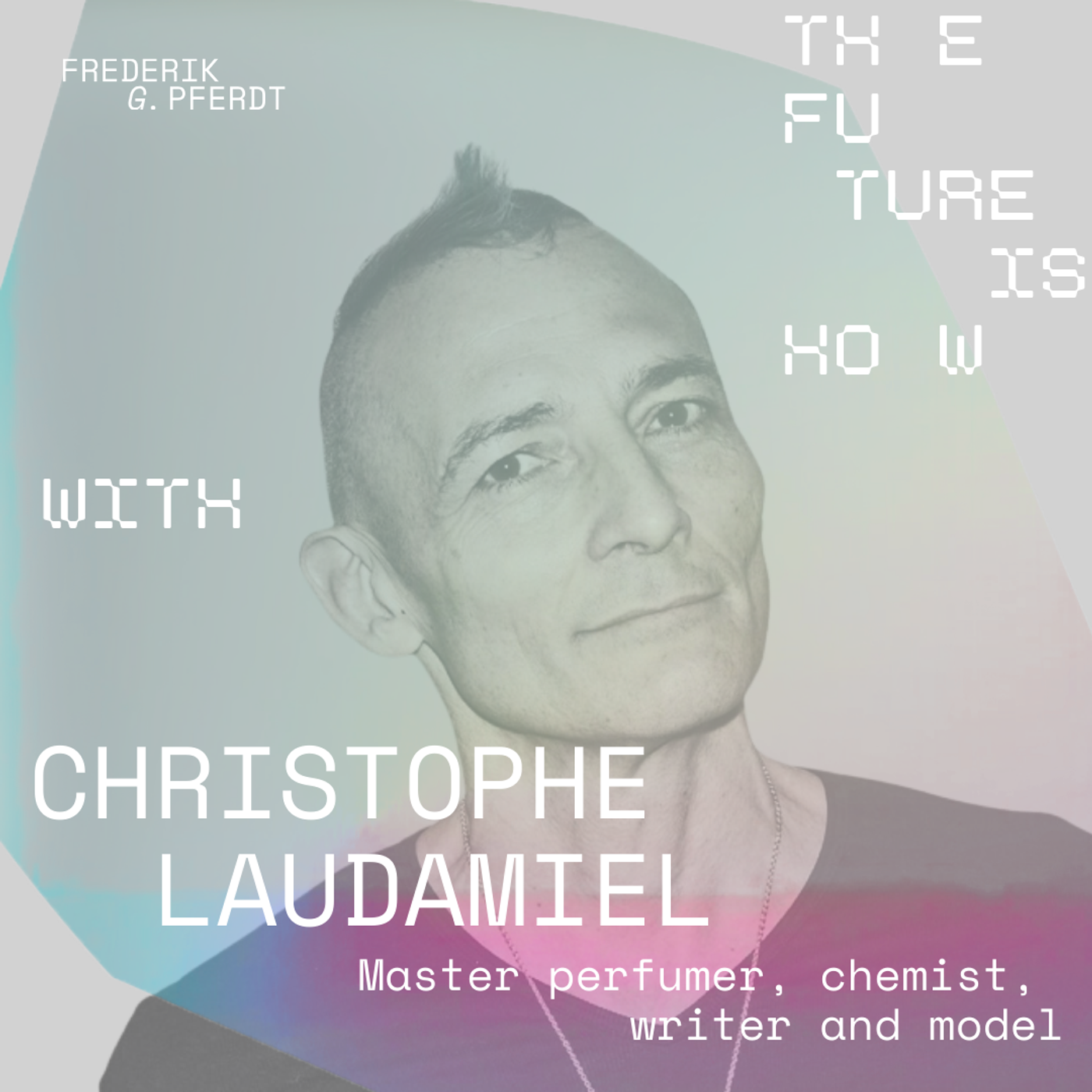
In this episode of The Future Is HOW, I sit down with world-renowned master perfumer Christophe Laudamiel to explore one of the most powerful yet overlooked senses shaping our future: smell.
Christophe shares how his journey into perfumery began, what mentors in the fragrance world taught him, and why scent is far more complex than we usually imagine. Together we explore the deep connection between smell and memory, why no scent ever represents just one thing, and how fragrance can be designed to evoke emotions, experiences, and even entire stories.
The conversation moves from the personal to the future: How would you design the scent of a humanoid robot? Why do we crave certain smells, like fruit, yet rarely experience them authentically in fragrance? And what happens when scent becomes personalized, expressive, and deeply human?
From creativity and diversity to memory and imagination, Christophe reminds us that scent is not just chemistry. It is language. It is emotion. It is a way of experiencing the world.
A conversation about the invisible forces that shape how we remember, feel, and imagine what comes next.
Chapters
00:00 The Power of Scent and Memory
02:54 The Journey into Perfumery
03:24 How Christophe discovered smell and entered the industry of parfumery
06:04 I love the variety - you should see my shower!
07:19 What mentors in the parfume industry teach you
08:24 For those who have no mentor and want to create parfumes
09:23 When Frederik's daughter could smell a picture
13:00 There is not one smell, that smells of only one thing
18:16 How Christophe would create the scent of humanoid robots
23:19 Why don't we have more fruit smells though so many people likes fruits
26:05 Designing Scents for Emotions
29:40 Personalized Fragrance Creation
32:05 The Future of Scent and Memory
33:10 Fast Future Questions
34:10 Diversity in Fragrance and Humanity
35:15 Creative Expression Through Scent
Where to Find Frederik G. Pferdt
NextLetter: https://www.nextletter.frederikgpferdt.com
Book: whatsnextisnowthebook.com
LinkedIn: https://www.linkedin.com/in/fgpferdt
YouTube: https://www.youtube.com/c/frederikgpferdt
Instagram: https://www.instagram.com/frederikgpferdt
Website: https://www.frederikgpferdt.com
Make the test: https://awareness.frederikgpferdt.com
Music: Andreas Horchler
Producer: Florian Dietrich
Frederik G. Pferdt: Close your eyes for a moment. Not to escape the world, but to enter it differently. Think of a smell that instantly takes you somewhere. You didn't choose it. It chose you. That's the power of the invisible. And today's guest doesn't design objects. He designs memory, emotion, atmosphere. And if the future had a scent, he might be the one composing it. Welcome to The Future is How. Not about predicting tomorrow, but practicing how to create it. I'm Frederik Pferd. And today I'm joined by someone who works with molecules, the way composers work with sound. Christophe Laudamiel is one of the world's most innovative perfumers. He has created scents for global brands, public spaces, museums, and even immersive experiences. And he treats scent not as a decoration, but as architecture. So Christophe. Welcome to the show. I'm super excited to dive into your world, to get a sense of â you think, how you feel. â before we talk about your world and the present, I'd love to jump ahead. So imagine it's the year 2035 and the museum installs permanent exhibit about the pioneers who reshaped how humans experience reality. â And your is there. What does it say?
Christophe: Wow. Well, hi everyone and thank you, Frédéric, for organizing this. And first of all, it's a pleasure to be there and to talk about the future, which is always exciting, especially for me. So what would the little paragraph say? Christophe Damien, master perfumer. And think people would write, you asked me to sell myself. It's a bit strange. So I think people would write visionary. â people would write one of the â biggest pioneer in the France industry for the styles of smells that he brought to the market or that he brought the public to enjoy, whether it's in some art exhibitions, et cetera. And perhaps they would have as an example, one or two fragrances are created specifically for that, not for that exhibition to be, but â making people think about the future. And yes, it's not always the same about, you know, old stuff and what I have my memory. No, we can also create for things that is not digging into the past, but for the future. And I like to challenge people with that. But also I want the industry to open up with this kind of thinking too.
Frederik G. Pferdt: Wonderful. And I think we'll definitely get towards that question, how would the future smell? But I want to start somewhere else. I want to start with â as of the senses that is most developed in us humans. So when we enter a space, when we meet a new person, we first smell, right? And that creates an emotion in us. â So one of the most developed senses that we humans have. How did you come about discovering that?
Christophe: Short question, encyclopedic answer. How I discovered the sense of smell or how did I get into the industry? It's a pure serendipity. My last internship in perfumery, I was still a student, but my last internship was with the flavorists for actually healthcare products. And people might not know, but even if you go for a cough syrup, a mouthwash, a toothpaste, et cetera, you actually have a flavor formula. So it's not a perfume because it gets into your mouth. It's a flavor formula with tons of ingredients as well. And there I saw how it was fascinating and linking some aspects of chemistry, a bit like music has aspects of physics and electronics, but you don't have to know a lot or you may know a lot. And then your music can be influenced by it or not. It's your choice. So it's the same in perfumery with chemistry, but for me, was fascinating. And so I went into the perfumery school at Procter & Gamble. They have an internal perfumery school, which I did in the UK, in Belgium, and in the United States. And I also did some internships in France. And that's how I got into perfumery. And then I went up a pub, and then I jumped. Pardon to find fragrances in New York, working for IFF. And there I learned also with some very world famous mentors. And in perfumery, find it's luck. you have to try to get to one or two or three of those mentors, because it's still the best way to learn perfumery. Otherwise, â you learn it too, but it's very, very hard. One characteristic I would say of how I was trained and how I trained myself and I was trained by different styles of mentors, but also for different styles of categories. And to this day, I love creating for large variety of categories. So mostly skin, but also ambient sensing, for instance, for exhibits, but also for the consumers. I don't know the term consumers is a bit industrial, but â people know for the public. â people don't realize how ambient sensing should be as developed, as refined, as elegant, as talkative, or as surprising, as terrible, as kitsch, or as great as a fan fragrance for skin. It's still not in the minds of â public, of celebrities, and of brands, actually. We can talk about that for the future. There are reasons for that. But I love doing this, but I also love doing a nice shampoo and, â you should see the shower. I try stuff crazy. I, even when I buy shampoo, can dope it with more scent. I think it's fascinating. Yeah, well, so that's what I like to do. yeah. A lot of curiosity. I think people should know it's first is a lot of curiosity because the music comes to you. It's on your computer everywhere. Perfumes.
Frederik G. Pferdt: Amazing. Thanks for sharing that. â
Christophe: or smells you have to go or you have to understand. So I want to tell everyone, smell, smell, smell and compare. People, they smell, then they read on the internet. Half of it is totally, it's not even crazy. Half of it is wrong, purely wrong, dare say. And then the other half â cannot tell because you have to compare. So â much more than colors. But you know how you learn colors? You compare. You look at the painting, you look how they match, don't match or it's your decision. Same with smells. You have to smell different things together.
Frederik G. Pferdt: You talked a little bit about mentors that were quite influential for you. â is something that some of these mentors taught you? Like, what can someone learn from such a mentor in the perfume industry?
Christophe: Amen. So first you learn to smell ingredients. The way they smell, you see how they react to ingredients. So this you don't learn at school. it's fascinating to see because first of all, it allows you vocabulary. And when they are good mentors, they allow you to your own vocabulary. So I had the luck. â I guess it's like at school, know, some people have really bad chemistry teachers and what is a bad chemistry teacher? So I don't know if it's like, but also I think I would meet anybody. would find something super interesting and, um, well, they were nice with me, have to say. So this is good, but meaning they were polite and they were never rude. And also they allowed me to describe the way I want it. And they were doing it the same way for themselves. And this is very important. People. You hear too many times. is the same vocabulary and then the phrase has to answer to some rules. I just watched a video two days ago about a big, big, perfumer saying that I'm going to take that piece and I'm going to bring it to Instagram or TikTok and comment on that. No, there are no rules. Maybe I add for the people that are listening to us. that may not have the chance or the possibility at all to be close to a mentor, can also learn by yourself. I would suggest you limit yourself to you decide what you want to specialize in at first. Don't say you want to create music for all kinds of stuff, for movies, for ads, for rock and roll and Metallica and ballroom dancing â you know, â and techno and classical. So because it's very hard and it's a jungle, you can, but you have to go by step if you don't have mentors to guide you or if you don't have good classes. take a certain, some people they do only masculine or feminine phrases. Some people they love flowers and woods. Some people they only like to work with three to 400 ingredients. That's fine. Some painters, they work with one color or two colors. â you understand. and then focus on that. And then you really have to learn and you have to be curious, curious, curious.
Frederik G. Pferdt: â â first time I â dove into that world of was when I was visiting a museum in Mexico City with my daughter. She â is 10 old. And we were to that museum of lots of modern art and really interesting exhibits. But some stage, she said, â this is very boring. And so continued in â museum and we stopped at â of the exhibits, which was a picture of a forest. And â was interesting is that â was a little wooden ball next to it. â â was a little plaque which said like, â this wooden ball and smell it, because then you can actually smell the forest. So what they did in the museum is they had you kind of like look at the forest and at the same time you could smell kind of like this earthy wood moss type of scent, right? And my daughter was blown away literally because now it was getting interesting, right? Because two senses were connected, right? You see something, but you also can smell it, which makes a totally different experience of museum and that exhibit. And so... we were wondering how the future would actually smell. So my daughter and myself, created various scents and just explored and experimented. And we were following our curiosity, as you said, to just feel like, what could be a good scent that creates a different emotion for us? Because we want to feel excited about the future. We want to smell optimism. We want to smell excitement. We want to smell curiosity in all of those things. So when you say kind of like, we should compare, right? That's something you said, we should compare different smells. What do mean by that? So is it like similar to comparing like a future? Like, you know, I compare my future to your future or â to someone future that I admire. Like, what do mean by comparing different â smells?
Christophe: So in comparing, there are actually two dimensions from listening to you, was like, actually, there is compare and compare. So the way I was mentioning in here was to take ingredients or to take whatever or it can be different saffron, different whatever. So here you really compare to try to describe them objectively and to try to see, okay, which one is... you will see when you compare things, it just doesn't smell just of tea. All of a sudden you see the floral note in that tea and this one is much more smoky. By comparing you see the differences much better. â know very well in science, you have to first see something then to be able to observe it in other places. If put you, if you've heard each instrument one one and I put you in a â classical hall. you listen to the music, you won't be able to identify maybe one instrument, but you won't be able to identify maybe the 20 different instruments that you have in there. And someone that knows the instruments one by one by heart, they're right away, â you see there's a clarinet here that just did that. And â you see, blah. Well, yeah, I cannot do that. But in perfumes, yes. So that's what I mean. By comparing also, you see the units, if you wish, or you see certain patterns. that then when I smell a tea by itself, I don't have to have all the teas to compare, but when I smell a tea, I'm used to that person. that's more like, â would say, it's quantitative, but some people want to say, it's more a descriptive thing to see units. Then the one thing in â smells people don't realize is that I don't know one smell that smells of only one thing. And we were discussing that with the... â scientists at Osmo, what are the primary odors? So unlike colors where you can teach your daughter, this is red, this is blue, this is yellow, and then some people say it's yellow, orange, and yeah, but we know there's a yellow thing. And we know since we read our primary colors anyway, so, and they have names. There is no such thing in perfumery. So when people say, the smell of cut grass, and they tell you that molecule, well, guess what? You re-smell it. It smells of grass, it smells of petrol, it smells of mushroom, it smells of dirt, just take it. smell it. So that we don't know, so we cannot separate. So it's only by comparing that you compare different elements that you see, â yeah, this cut grass thing I see here, here, This, we have a thing â that's called, for instance, a green pineapple. You don't smell it by just smelling a pineapple like that. You have to smell different molecules. I smell of that notion, the smell of that smell, which is pineapple, but not pineapple as a very specific thing. Same, funnily enough, with celery, if you just smell celery, but then you see the different molecules. And then when you smell those molecules, you say, we have a lot of molecules, even florals that are actually, or coconut, that have a celery top note. And then when you use it with some other ingredients, then your celery comes up instead of the Well, just to say, you have to see these different things. Now, comparing, there is also when you want to compare the quality of things. So that would be more like critiquing. Or so critiquing and criticizing yourself, which first of all, you have to be doing very well if you want to become a very good artist in anything. So perfumery is the same. You have to be very lucid. But also when you want to critique, which I think we don't do enough in perfumery at a certain quality, critiquing pieces of art or fragrances or voila. And â that also you have to compare. You compare two different paintings, you compare two different choreographies, two different styles of dancing. And by comparing, you elevate the debate or the vocabulary or the things, you see? If I just show you one choreography, you've never seen any choreography in your life, what are you going to say about it? â yeah, I people running and some people are not. But the vocabulary come when you see what's common among things and what is not common, what is original and not original. And then you have another debate. Once you see that and you know in what you're swimming, there's another debate about quality, I like it, I don't like it, this is a piece of crap, this is a copy from 1920. And then you can debate also among perfumers, no, this is original, look, Christophe, da, da, da. I say, â yeah, okay, okay, well, that's true, but why did they put that sea of duty freestyle in there? just to, and et cetera. But then you can joke, you can have fun. And then you can enjoy it. You know you enjoy ballet very differently or piano. If you know a little bit more about piano, then nothing. you have to know the piano to enjoy the piano. I know that too. But imagine only people that don't know the piano at all, the pianist would â be So the perfumers, â have a it's not a notion of people that know perfumery, but we have a few thanks to some popularization of perfumery. So it's internet, it's books, it's voila. When I started studying perfumery, we had five books. I had literally five books on my desk. And only one about creation. The rest was like, you know, the history and blah, blah, blah. So now people can learn and we have a little community and then we have a lot of fluff, but still it's very... for perfumers, think one of my biggest despair is that our public is ignorant by and large. Even celebrities. And even when you create a France for a celebrity, most of them, they talk about their grandmother and their vacation, the past and the boring past. Once in a while, there's something extra, but they don't, they're singing because in perfumery everything is polished. We saw if you sing, we can have a little bit of, know, like, oh, I this white night and he or she was smelling like that or. see what mean? It's all filtered. You don't have the... So we need this education. And you see your daughter was telling you, dad, I need to learn more about that. And we know children, some are very visual. Some children are very motor, like dancing style. Some children are much more auditory style. And I'm really sure, I'm pretty sure some children are probably much more smelly type. So I like to crack jokes with vocabulary. So I would say... or factory type or just many types. But you see what I mean? And so, â well.
Frederik G. Pferdt: Yes. Wonderful. So if we would create the scent of the future, so how the future would actually smell, right? Imagine in a couple of years, we'll have everywhere, right? We have it in actually bodies, right? In â right? They will be with us and they will walk around with us. We have AI now in cars. We have now AI in our phones.
Christophe: Yep.
Frederik G. Pferdt: So if we would create a scent, let's imagine that scenario when we have our robots in our house, right? And, you know, those robots will have a smell, right? I we would not like to have it very â industrial smelling that's kind of like very annoying, right? We want to have it also not smell kind of like just a fabric, like linen or something like that. So would you go about creating that smell, let's say, for a robot in the future?
Christophe: â well, the smell of the future and the smell of the robot, I don't know if it would be the same, but how would I create the smell of a robot? I would certainly create a few for people to pick because would say people are much more precise or or picky on smell on colors and shapes, even by including.
Frederik G. Pferdt: Okay, what's the difference?
Christophe: So you buy a pair of trousers, you buy a dress, it might be red or it might be black, might not be the right black, might not be the right red. But in perfumery, if the red goes from â strawberry to it reminds you of a or something else, you know what I mean? it's really, so â will say, yeah, I like it, but, and then they drop it. So I would have several. Some I would just have, â no, would have it human. See, I would not put the smell of the future on the robot. Maybe one, I would do the smell of the future more abstract where it doesn't remind you of anything. And some I would make them comfortable. So here's almost a reverse exercise, but not old fashioned. I mean, I'm sure some people want the robot's name or the barbershop or but for future. â Yeah, yeah, abstract and abstract, but not weird. And I agree with you, I would not make industrial for the mainstream, but even for me, you know, and not electric, because I think if you put some little electric note or, you know, these oceanic, ozonic notes that we call it perfumery or metallic notes on the robot because of the look, if you dress the robot in a, because know, it's a robot, it's what you know, what you see. that influences the smell very, very much. So something a little bit fizzy, you put on the robot and people are going to think, oh, it's very electric. So you have to balance that too. The balancing on the robot will be different than the balancing on the human, just because you know it's a robot or just because you would see, even worse, you would see it's a robot. And so I would say have the fresh fragrances. People would say, â but this smells like the hospital. You put the same fresh fragrance on you and on the robot. I guarantee you the robot gets 50 % more. too, the metallic, the hot metal, the, we call it ozone-y. People would say electricity in the air, this kind of thing. Yeah. So do I answer the question? No, but it's like, it's asking a painter, what would be the painting of the future? â But we'll have also new molecules. So this I can tell you. So some effects, I can make the robot much more lovable, but without being sweet. So this, I believe in that. We call it the soulful family at Osmo. And now this taxonomy, this wheel of orders is actually public, I want to say here, and it's free and it's open source. So you can even modify, you do your own everything. Because we would like to just act for colors and for music, we like to have a common vocabulary. which is not to sell more violin and more piano in the stores, it's just for people to be able to talk about things. in perfumery, we don't even have that, not even between fragrance houses. We have a main vocabulary of perfumery, but then what's interesting when you say the smell of the future, when I say artistry, is the fringe. So how do you describe the smells that are not vanilla, but still white comforting, white rice, chestnut flower. pumpkin puree without the fruitiness or the woodiness of the pumpkin. All these, all these smells, they have a, there's smell there and all the inside of a bread â or white bread. So we created a family called Soulful. We created the comfort â that in there you have the comfort of a chicken soup. which is a bit also the comfort of mushroom without the earthiness for the mushroom or without the effect of the chicken, â story is that there is something there, that yumminess. And it's not sweet, it doesn't belong to a vanilla style. Okay, so we created this we have also certain milky note in there that are not sweet, but it's milky creamy, but it's not, we have other families, et cetera. But I think some of these smells are going to develop. We are developing molecules. Some other companies are developing molecules. And we've just had 20 years of not some new molecules came out, but to reproduce smells that we know very well and for which we already had molecules. like the Muge notes and some woody notes and some hot woody notes, which we call smoldering. But there some smells like as I described, are also some smells in the fruit family. Why we have strawberries so much developed everywhere? Why? Because we don't have strawberry molecules that smells like a fresh, nicely done strawberry. Why we don't have melon everywhere? We have watermelon. And when you have your watermelon chewing gum, it's kind of plastic-y, rubbery, because they all use these one or two molecules. Now I know, it's actually official, we have a molecule that smells of fresh melon. We don't have, in perfumery, one molecule that smells of fresh melon by itself. So, not too expensive and not skin sensitizing. So I guarantee you some are going to develop that way too. Now, is melon the smell of the future? â No, all of a sudden we haven't had melon. At the forefront, we have melonee notes, yes. but a big juicy melon, we don't have so many. And, but all of a sudden it's going to appear. So the future is going to be also known things that are now possible. New effects, brighter notes maybe, and then abstract notes. So yes, things that smell. What is the smell of a galaxy in your mind? You see, what is the music of a galaxy? The same as you would say, what is the music of the future? Also good luck. I don't know what I would say, but. What is the smell of the future? I think we have what music already has and pictures and abstract Hollywood effects, they have that already in visual and in sound. We're going to have that in smells because this is already possible, but the public has to be educated and the brands a lot of big brands that the public know. they want immediate pleasure. So immediate pleasure doesn't go with high artistry, which starts by a certain limited public. And usually this public is not downtown in Paris. And so a lot of brands are based in Paris for their perfumer development. Although the fashion is so much in the world, the perfumer development is a lot Paris geared and whatever. So anyway, some considerations.
Frederik G. Pferdt: Wonderful. Thanks for sharing that. maybe make it more concrete. If I see the future as a feeling, right? If I want to feel in the future more courageous, more connected, more loved, more free, that feeling might be, could we design or create a scent for that, right? So can we create a scent that me to feel more connected? more loved, more free, courageous. And would those feelings then
Christophe: So this, especially for the future that is maybe less â personal, we are going to be using a lot of these notes that we know already that we've been using for many, years. And so like skin notes, but like soft woody notes, we have so many notes, soft leathery notes, white floral notes. And even in masculine, I want to say so-called man-screen inferences, we use floral notes all the time since. â to say they want to perfume it. So when I say that, the public say, yeah, but I don't want a floral robot. No. But what is mixed with yumminess in a very fragrance, it's some floral notes. What's make the yumminess? So of course we have the masks and we have, so each time is when we say, it's made so sexy, people cannot describe where we have to, â we have an ingredient on the shelf that says sexy. And then you put that and everything is sexy. â So like,
Frederik G. Pferdt: Okay, it's not working that way.
Christophe: Make me a sexy picture. yes, we will have more and more â some made, all made fragrances or all made pieces. So some these smell sexy, but after five times, we just boring now. I know I can get it from the image bank â I get from the smell bank. So those will be known. And so you see the artist to create the next. sexiness that is not the same as before. It really works the same way. you mentioned that like been 10 years from now, we're going to have a lot of smells. I don't remember how you mentioned it. I want to say it's public information. Osmo is going to open a website. They had for March. I don't think it'd be March. Well, I work at Osmo. So there is no official date right now, but probably it's going to be delayed a little bit. But they had announced for March. open to the entire world, you go and you send a prompt. So you can put a picture, you can put one word, you can put an entire text, you put whatever you want, a PowerPoint presentation, other stuff. â get Chars-GBT to create your concept and then you plug it in the other OI, or Factual Intelligence, or Osmo, and then they create a scent. So you can do as futuristic as you want. And, uh, or as someone can possibly weigh or a robot can weigh it, then the first would be three formulas are created and, and we'll be weighed. And so you receive three samples and then you even have opportunities to rework automatically with the software. So that invasion or that I don't see invasion, but that popularization of smells and different styles, because of course people are not just going to put the marketing spiel that you see in advertising. They're going to put their own personal. inspiration so it's going to go in all kinds of directions and by the way I had to create a catalog to go in all these kind of directions so the catalog and also more of ingredients is not just to make the next pretty fragrance for say for our maces you know and we want to be able to recreate all smells possible so that is going to happen very fast I'd say by the end of the year and we have a very very fast robot that can wait I mean it was mentioned I don't know like what fragrance seconds or minutes. several the same time or whatever. I'm not the technical person for all these characteristics. And so it means â we do a lot of science. So this new way of creating these new smells, these new areas where public can go, it's going to be possible this year. â So this not something in 10 years. The public should be prepared for that. Celebrities should be prepared for that. Brand managers should be prepared for that. Your daughter should be prepared for that. They're to be able to, and, so.
Frederik G. Pferdt: Amazing. That's very exciting. Yes. Because it makes the future very personal, right? Because I, you know, can use a word, as you said, a picture, an image, or I can use a prompt to really create a sense that maybe represents that, right? That word, that picture, that image, or that text, is, I think, very, very exciting because then you're starting to create your own future, right? Literally through
Christophe: Bye bye.
Frederik G. Pferdt: â through sense.
Christophe: That's why I had written my notes. said, for me, the future might not be the smell of galaxies. It is exactly what you're saying. We are going to see sense in much more diverse ways in terms of smell, in terms of concept. Totally. So this is going to happen.
Frederik G. Pferdt: And so I was wondering that when we look at, you know, the perfume industry in general, like people want to put specific perfumes on themselves to express themselves in a very specific way, right? â If use a specific scent and I spray that on me in the morning, right? I want to â maybe other people smell me â in certain way, right? You talked about that. maybe fruity, like citrusy, fresh, earthy, whatever â that is. Do think in the future, when we have that scenario where we have our robots with us, we can also make other things smell like we want them to smell, to evoke a specific emotion?
Christophe: Have you sprayed flowers already? Like you go to the florist and then you come home and then you spray the flowers. But I don't do that regularly. I like to buy flowers that smell. But have you tried that? Yes, we can transform the smell. Or you buy a shampoo, you love the shampoo. you, it's, you say, why don't they have that? Yes, you take the shampoo. So yes, you will create your own smell And some will love that. â
Frederik G. Pferdt: â I'll see.
Christophe: You know, like some people, have to saw everything, every piece of fabric in their house and everything. And so we will have to paint everything in the house redo everything. â some have to remix the music this way because otherwise it doesn't, it's not their style. It's not what they like. And so people will be super picky with their smell or just super fun. And you come and then you're like, â my God, I took these things. But I thought that was that, but actually it's this, but the smell, â the was wrong. mean, what's wrong or like, you â we talking. Yes, yes, yes, yes, yes, yes.
Frederik G. Pferdt: Love it. I love it. Yes. So let's try something with our listeners for a moment. I want to create a mind state moment. so wherever you are listening this show, I want you to notice the air around you, not what you see, not what you hear, just the air. And now imagine the scent of a place where you felt completely alive. Don't analyze it, just let it return. and notice what happens in your body. For me, the future isn't always about adding something new. Sometimes it's about remembering what makes you feel alive and recreating that atmosphere intentionally. So thanks for joining me on that very short journey into your body. So I have a couple of what I call fast future questions, which are very short questions and I want you to respond to very brief, also just trust your gut. So. When we think about innovation, we would even that word innovation into a search engine, there would be specific images popping up. But I want to ask you, what scent represents innovation?
Christophe: Soral ozone.
Frederik G. Pferdt: one human quality technology replicate? So what's one human quality that technology cannot replicate?
Christophe: Quality.
Frederik G. Pferdt: Perfect. What's one thing humanity needs more of?
Christophe: humanity and quality. and diversity.
Frederik G. Pferdt: Yes.
Christophe: I'll mention one thing about diversity. You know that if we go, talking as a physicist, I'm not a physicist, but as a physicist, nature bring us to boredom, boring states. â Mountains are leveled up planets going to stars, you know what I mean. So if we don't do something consciously, if we don't do something spending money for something so-called useless or... maintaining diversity, whether it's species or people or whatever, is natural to go to a euphoramity of things and â has it's a political or economic or geographical or whatever. I just want to say it is the debate should be â diversity sounds no, it's more if we let everything go and if we are lazy also.
Frederik G. Pferdt: Wonderful. How does your home smell today?
Christophe: mishmash of the lab downstairs the I'm preparing. â
Frederik G. Pferdt: What's thing we need less of? We humans. What do we need less of?
Christophe: Uniformity. â boredom and letting ourselves led by people without some checks.
Frederik G. Pferdt: Right. What's a compliment that you receive often?
Christophe: that what I do is very creative and what I do brings people to places they didn't know they could experience again or places they don't know at all. And they can represent, they think they can represent and what we want. They can represent themselves to be somewhere or to feel something.
Frederik G. Pferdt: Wonderful. Thank you, Christoph, for taking us today to this place and allowing us to dive into your world. I think it's fascinating what you do. And thank you for allowing us to explore that the future might not be a specific scent or smell, right? It might be very personal. It might be not defined at all, right? And it's something can explore and be curious about. So thank you for taking us there. Christoph Lodermiel. And yes, I hope that we can each other in the future so that we can explore this topic â even So thank you so much for joining on The Future is How.
Christophe: Thank you. Thank you so much for organizing all this. Thank you. Bye everyone.
Frederik G. Pferdt: Thank you.


