Luck Is a Skill - Here's How to Build It | Dr. Tina Seelig




Intro
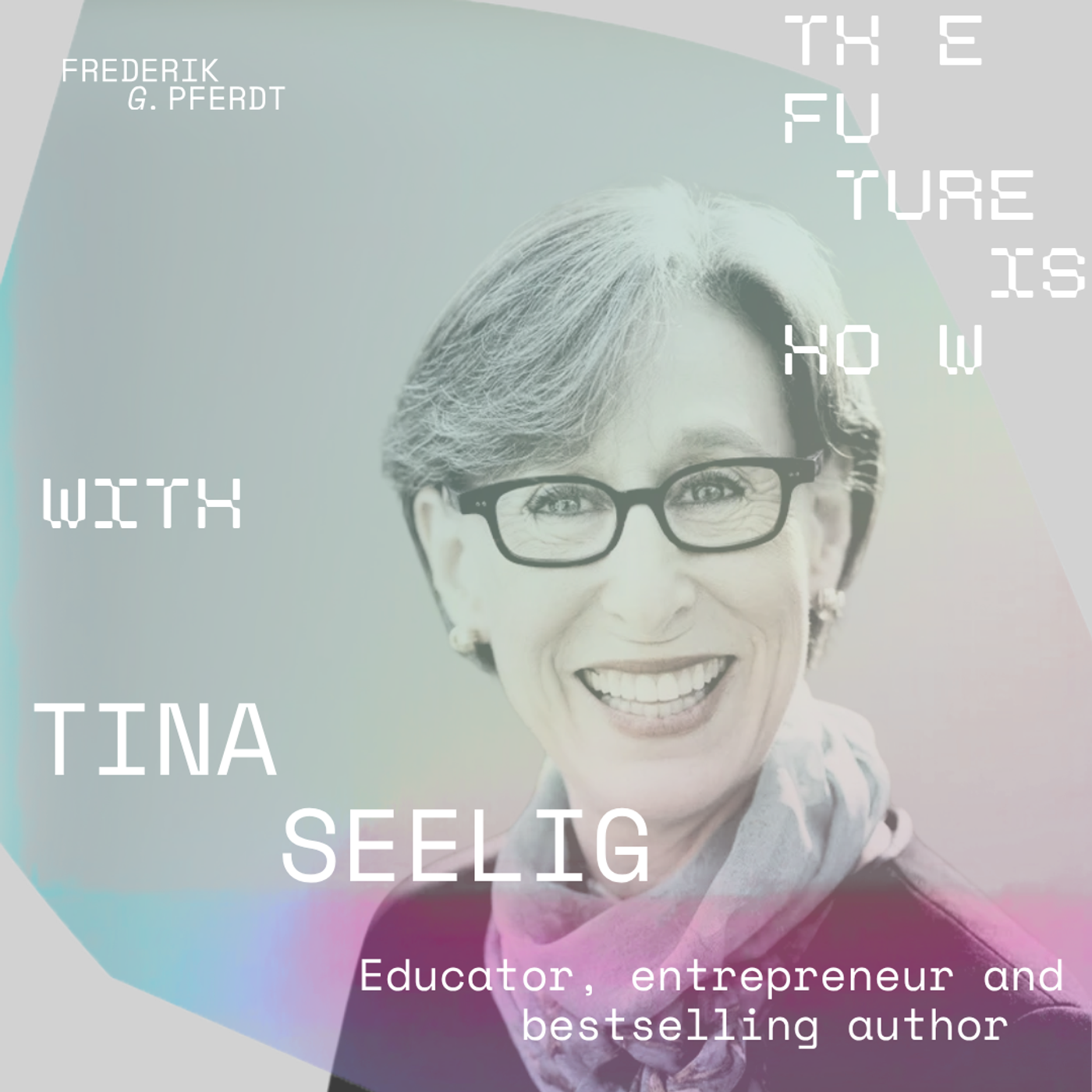
What if the luckiest people you know aren't lucky at all - but simply better at a skill most of us were never taught? In this episode, I sit down with Dr. Tina Seelig, Stanford professor, author of 18 books, and one of the most influential voices on creativity, innovation, and entrepreneurship. Tina's brand new book "What I Wish I Knew About Luck" (HarperCollins) reframes everything we think we know about luck - it's not a gift, it's a practice. We explore how to build your inner ship, recruit your crew, and hoist your sail to catch the winds of opportunity. This isn't just an interview - Tina and I taught together at Stanford, traveled together, and built ideas side by side. This is a reunion. And I think you'll feel that.
Chapters
00:00 Welcome to the show, Tina Seelig
02:18 Teaching Creativity: Come up with the most disgusting restaurant idea ever!
05:22 How my science book got into the cooking section of the book store
07:44 Why it is really important to distinguish fortune from luck
10:26 Between stimulus and response
11:27 Building Your Luck: The Three Pillars
14:10 Understanding Core Values and Skills
14:55 They backed me in the corner and said, are you a spy?
17:25 What is the no. 1 skill we need to grow as humans?
20:25 How to assess your risk profile
22:53 Recruiting Your Crew for Luck
26:01 The Power of Appreciation and Relationships
26:51 Cultivating Gratitude and Relationships
28:58 Resolving Conflicts and Building Trust
30:24 The Long Game of Luck
33:44 The Impact of Choices on Future Opportunities
36:15 What ANTs are and why grace and curiosity help
38:45 Curiosity and Understanding in Relationships
40:10 What I find is the best thing of working with students
41:54 What everyone can do to start building luck right away
43:24 Fast Future with Tina
45:41 Hoisting Your Sail: Daily Practices for Luck
Links
What I Wish I Knew About Luck (Tina Seelig)
https://www.amazon.com/What-Wish-Knew-About-Luck/dp/0063471361
You'll find everything concerning my person here:
https://frederikgpferdt.com
Frederik G. Pferdt: I want to start with a question. What if the lucky people in your life, the ones who seem to always be in the right place at the right time, who things just seem to work out for, who end up with the opportunities, what if they weren't lucky at all? What if they were just better at a skill that most of us never learned? That question sits at the heart of today's conversation. And honestly, It's a question I've been thinking about ever since I met my guest. Dr. Tina Seelig has spent more than 25 years at Stanford University teaching people something that most of us were told couldn't be taught. Creativity, innovation, entrepreneurship, the ability to look at the future and not feel like a passenger in it. She has written 18 books. She leads Night. Hennessy scholars the largest fully endowed fellowship program in the world, where she works with hundreds of the most gifted graduate students on earth, preparing them to tackle the defining problems of our time. Her TED talk on luck has been watched more than 3.4 million times. And her brand new book, just out from HarperCollins, is called What I Wish I Knew About Luck. It's about how luck is not a gift. It's a practice. So here's what makes this conversation different from probably any interview Tina does on a book tour. I had a privilege and really do mean a privilege of teaching alongside Tina at Stanford. We stood in front of students together. We traveled together on the entrepreneurship to the end of the world. We talked about ideas a that you only talk when you're building something with someone in real time. So today is not an interview, it's a reunion. And I think you will feel that. On this podcast, I really believe deeply that the future is not something that happens to us. It's something we built with the right mind state, the right people around us. And Tina has been proving that in a classroom for 25 years. And now she's proving it on the page. This is The Future is How, and I'm Frederik. This is Tina. Welcome, Tina.
Tina Seelig: Wow, that was such a beautiful introduction. Thank you so much for all the thought that you put into that. I really appreciate it.
Frederik G. Pferdt: Yeah, thanks for being on the show. want to actually take us back into the classroom again. And one of those memories that â literally about the time I read about creativity, when think about creativity, or even when I teach creativity is â when we were standing front of students and you gave students an assignment that I found really surprising. You asked everyone â in the room to up with the worst restaurant idea they possibly could. The most disgusting, the most doomed, the most unopened restaurant anyone had ever imagined. And the room just lit up. People were laughing, they were creating, they were sharing. And then you turn it around. You said, now make it work. Turn those ideas, those really bad ideas into great ones. And within minutes, those terrible ideas had become some of the most creative concepts in the room. So I've thought about this moment a lot since. And I wanted to ask you, has anything changed in the way you teach creativity now?
Tina Seelig: Yeah, so I love that exercise because it is so powerful. Though, first of all, I want to back up because this is an example where all learning is emotional in some way, right? You're giving people an experience and then you unpack it. So I think that's sort of the meta situation that was set up there. But when you ask people to come up with really good ideas, like for new restaurant, you're going to get things that are incremental. because they're supposed to be good, right? A restaurant on the top of a mountain with a beautiful view, a restaurant with gourmet food. Okay, kind of a bore, right? And it's very expected. But when you ask people to come up with some crazy idea for a new business, for a restaurant, for a family vacation, and I switch out every time I do this exercise something else to come up with a really horrible idea for, people generate all these totally, totally crazy, horrible ideas, but there's usually a seed of brilliance in it. And when you ask them to turn it around and make it something great, what I do is I'll give it to a different group, right? So I'll take an idea that your team thought was horrid, and then I'll hand it to another group and say, okay, now make it brilliant. And within 20 seconds, they've come up with a way to make this brilliant. And some of the ideas don't really make sense, but many of them are actually the seed of something that really could be successful. And that's because we've taken off the boundaries and imagined something that actually has never existed before.
Frederik G. Pferdt: Love that. â You said something interesting. You said, give people an experience and then unpack it. And you started as a neuroscientist studying neuroplasticity. And most people don't make that leap to creative education or creativity education. What was the bridge for you?
Tina Seelig: Well, okay, Frederik, I could tell the story as if is completely preordained and it makes complete sense. I also tell the story as a random walk, you know, like that I was just sort of throwing everything up in the air and we sort of saw what happened next. â It's combination because I think this is one of the reasons that I am so lucky. And I think this is one of the reasons I'm so interested in luck is that I'm very aware of what I do. to create these opportunities. A lot of it has to do with opening the aperture and being willing to explore things that are not the obvious next step. And so let me give you, let me just think about my whole history and think about what's an example. Well, so after I wrote my first book, my first book I wrote on the chemistry of cooking. Now, why did I write a book on the chemistry of cooking? Because when I was in my lab, As a PhD student, understood in great depth what was happening in my lab, but not in my kitchen. And I was just very curious. Like, gee, what's happening? How come most liquids turn to gas when you boil them? And eggs are liquid, and they turn to a solid when you boil them. Like, what's going on there? What's happening? Why do onions make you cry? Why does popcorn pop? I made a list of all the questions I had. And I couldn't at that time. It was a long time ago, and I couldn't find the answers to these questions. And so I thought, well, gee, maybe I'll write a book about this. And so I wrote a book about it. I followed my curiosity. But then after that book came out, and the book ended up being put in the cooking section of the bookstore. This is well before online bookstores got put in the cooking section, but it was really a science book, or really it was both. It should have been in both places. I said, well, there's got to be a better way to match books with buyers. People who would like it were never going to find it. And so I started a company, started my first company called Book Browser, which was a kiosk system for bookstores where people could find books of interest by looking by subject, by author, listen to audio samples, et cetera, et cetera. And that opened then more doors. And then every single thing I did set the stage for the next thing. And I could never have imagined that next thing unless that other step was there.
Frederik G. Pferdt: So going from your first book, maybe to your most recent book, â your new book draws that distinction between fortune, things that happen to you, and luck, which you argue is something you actively built. Can you walk me through that? Because obviously, I think everybody wants to feel more lucky, right? It's even like a slogan we used at Google, right? I'm feeling lucky when you're
Tina Seelig: Mm-hmm, exactly.
Frederik G. Pferdt: entering something into the search engine and you want to feel lucky. So walk me through that.
Tina Seelig: Yeah, it's really, really, really important to distinguish between the two. And because we conflate these terms, fortune and luck, and the concepts, we miss the chance to see where our agency is. So fortune is the things that happen to you. I don't control the weather, but I control whether I bring an umbrella with me. I don't control if someone cuts me off on the freeway, but I control how I respond to that. I don't control who's standing next to me in line or sitting next to me on an airplane, but I control whether I say hello to them. And we're in a constant dance with the world. This is very, very important. We're in a constant dance where we're shifting off which is leading and which is following. And so it's not just, okay, something happens and I respond. Well, then something else happens and then I respond. And then something else happens and then I respond. And so we're in this dance and you have a tremendous amount of agency there and control about where you take this dance.
Frederik G. Pferdt: So help me to understand that a little bit more because I like the weather example, right? Most are concerned about the tomorrow, you know, the next day or in the next few days, especially if they have planned something important, like the birthday party outside or they want to go on a trip or a vacation, whatever it is. And we are obsessed with our predictions, the weather predictions, But you tell us like, you know, don't worry, like what the weather will be because you can't influence it. You don't have any control over it. Just bring your umbrella or your sunglasses so you're ready for it. Right. You have that agency. So walk me through a little bit why we're still obsessed with those predictions and why we, you know, sometimes even stop, start complaining about the people who sit next to us or if they're you know, speaking loudly on the phone or if they have a loud conversation, whatever it is, while don't have any control over that.
Tina Seelig: Yeah, it's just really important to take the time to think about what things you can do and what you can't do. And I think a lot of people get very frustrated about the things they can't control. You know, you can't control who your parents are, but you can control how you engage with them. You can't control, listen, you're a parent. You can't control all the things your kids do, but you can, exactly, but you can respond, figure out how you're going to respond. I mean, there's the famous quote,
Frederik G. Pferdt: Definitely not.
Tina Seelig: by Viktor Frankl, between stimulus and response is a space. And that's a critical, critical point. You have the agency to think in that space and to give yourself the time to think about how you're going to respond.
Frederik G. Pferdt: So if luck is a skill, right, that we can practice, what are the concrete habits that build it? And what do lucky people do on a maybe Tuesday or like today on a Thursday?
Tina Seelig: Great, so many things. So the thesis, my thesis or the framework that I present in my recent work is that luck is like the wind. Luck is ubiquitous, but it's invisible, right? You can't see the wind. You need to build a sail to catch it. And so the reason that I've been so passionate about this is I see so many people leaving opportunities on the table. and responding in a way that is not gonna get them to their goals. And so how do you build a sail to catch the winds of luck? There are three major things you have to do, big things, and then we're gonna dive into the specifics. One is you need to build your ship, right? You need the ship with the sail. That's all the internal work you need to do to prepare. Then you need to recruit your crew. You need to get other people on your team. luck comes â other people, through other relationships. And third, you want to hoist the sail. And there are so many things you can do at each of these stages. So for example, building your ship, you need to know what your core values are. Because if you do not have your core values, which is like the ballast at the bottom of the ship, you're going to get knocked over. You're going to get involved in situations where you get asked to do something that might be unethical or against the law and you're going to capsize. So understanding your core values, understanding your risk profile, knowing where you want to go, and also thinking about the story you tell about who you are in the world. The story we tell about who we are so shapes the type of opportunities that we see. And of course, the final thing in building your ship is your skills, right? You need to actually develop specific skills that allow you to then take advantage of the things that happen in the world. So those are things building your ship. And then, yeah, sure, of course.
Frederik G. Pferdt: Can I just ask a question there because I'm super curious. You know, we are sailor family, so this metaphor really resonates â and hits home. Building my ship. If I'm not sure what my values are, how can I find out what my core values are that really help me to build a steady ship, even when the weather is... or when the weather is kind â rough. how can I find out what my core values are? â And a follow-up question related to the skills that I need to build. â Is one skill that you would double down on? What's the one skill that I probably need to continue to develop to really focus on?
Tina Seelig: So let's talk about values first. One of your jobs, I'm sure, as a parent is to help your children think about their values and learn what's right and wrong. do this in school. We are doing people or in religious organizations. â have lots of ways to learn and to experience the world through other people, whether it's through literature or even reading the newspaper. â You know, can look at, I'm watching the documentary about Bernie Madoff and it's like, â my gosh, you where were the values that shaped the decisions that were being made that took advantage of so many people? And then all the other people who got involved, like where were their values? And you start seeing some people who are like really wrestling with this. And can tell you a story about what happened to me when I was younger, when I didn't, when I had not. taking the time to think about what my core values were. â I was just after I graduated from â with my PhD, I was asked to go to a conference. I went to a startup company and they asked me to go to a conference being held by one of their competing companies. But they asked me not to tell them that I was representing the company. They asked me to go as a Stanford graduate student. Say I was a PhD student at Stanford. And so they asked me to misrepresent myself. And because I had not taken the time to think about it, I said, sure, right? The president of the company was someone who was my superior. He had a lot of authority, made it sound like this was something everybody did. So I went to this meeting. And because I was familiar with the product and more familiar than a lot of other people in the room, I was asking a lot of questions, which made them very suspicious. And so they called up the company I worked for and they said, is Tina Seelig there? And the receptionist said, well, sure, no, she works here, but she's at a conference. And so they quickly knew that I had misrepresented myself. And they came into the elevator with me, hit the stop button, backed me in the corner and said, are you a spy? And I, at that moment, it's like, you I didn't realize that what I was doing was spying. You know, I didn't realize what I was doing was not ethical and was dishonest. And, I burst into tears and I left with my tail between my legs, but it really forced me to think about the choices I made. And I think oftentimes it's not until you're put in a situation where you're tested that you realize, what am I doing here? And we do a lot, use a lot of cases our classes where we help the students sort of test this out in the safe environment of a classroom, learning about slippery slopes. know, once you make that first decision to do something dishonest, it's much easier to do the second one if you take the bait. And so how do you inoculate yourself against taking the bait? â
Frederik G. Pferdt: When it comes to skills and how we can grow them, two questions come up for me. The first one is, what is â the one skill that you think we need to continue to develop and grow â as beings? â And secondly, how do we grow it? How do we invest in that skill?
Tina Seelig: I think that's different for every person because every person is going to have a different constellation of natural talents and interests. And so what really foundational would be curiosity. The more curious you are, the more you're going to get exposed to new things. I always tell my students before something's your passion, it's something you know nothing about. And that is really, really important. You're not going to sit by yourself in your room and say, OK, I have to figure out what I'm passionate about. of a silly thing because you didn't know about anything until you got exposed to it. And so I encourage people to try lots of different things and see where their passions and their interests seem to collide and go, okay, that's where I'm going to double down and triple down. And then you build a constellation of other in your life who have complementary skills and complementary interests that allow you â go further together.
Frederik G. Pferdt: I don't know if you can see that, but behind me I have a calligraphy that I just practiced with a calligraphy teacher who taught calligraphy for over 50 years. And Steve Jobs was one of his students as well. And so we wrote Curiosity â and actually consists of these three pieces. â The one is it's a woman â or a with a child, which stands for caring.
Tina Seelig: Hmm
Frederik G. Pferdt: The second piece is Surprise. And the third one is love. So it's care, surprise, and love, which basically makes up the word curiosity. And so I find this fascinating because you can have a love for like surprising things or things that you want to know more of and so forth. So I just wanted to share that because I think curiosity, yes, absolutely. Like to just tap into your curiosity, right? And see where it leads to. Even... â
Tina Seelig: I love that. I'm trying to figure out, if somebody looked at that calligraphy and didn't know that it was the word curiosity, would they be able to intuit it by looking at the symbols?
Frederik G. Pferdt: Absolutely, I think that's when â dive deeper into calligraphy how the words are actually made up. For example, is made up of a woman and a child. And that represents I think it's just fascinating how those characters really explain different concepts or terminology or words that we are using. â So let's go back into our ship. We now firm on our values. â We know skills to focus on and how to grow them. What's the next thing we can do?
Tina Seelig: One of the most important things you can do is to understand your risk profile. Now, so let me ask you, are you a risk taker?
Frederik G. Pferdt: If I would ask probably my family and my friends, they would definitely say 100%.
Tina Seelig: Okay, the thing is it's a trick question I just asked you because risk is not binary. It's not just you're a risk taker or you're not, but most people answer yes or no. But there's so many different types of risks, right? There are emotional risks, physical risks, social risks, financial risks, intellectual risks, ethical risks, I don't know, fashion risks, whatever, you know, all different types of risks. And we each have a profile about the types of risks we feel comfortable taking and those we don't. And so understanding that allows us to see where are the places where we feel comfortable stretching, where are the places we might want to get more comfortable stretching. So I might say, gosh, I'm a really, â I'm very comfortable with social risk. I'll get up and give a talk to a thousand people, no problem. But I'm not a financial risk taker at all, or not a physical risk taker. Maybe I want... to become a little bit more of a physical risk taker. Maybe I want to stretch myself in that area and try a new sport and get stronger because I know that's gonna make, allow me to be healthier. And so I'm gonna start lifting some weights. I'm gonna get a coach. I'm gonna do some things that stretch me in that direction where someone else is like an incredible physical risk taker. They're gonna jump out of a perfectly good airplane. To them, That's no big deal. For me, that would just be something I would never consider doing. And so it's very important to understand your own risk profile to help you think about where you might want to go that leverages your comfort with taking risks.
Frederik G. Pferdt: Thanks for sharing that. Wow, fascinating.
Tina Seelig: Yeah. So what is it? How would your wrist profile look? What would it look like? How many...
Frederik G. Pferdt: â Maybe physical, absolutely. Even like mental risk, right? Going like on a 10-day silent meditation retreat, right? That would be, that was very risky, I felt. â Jumping one of the highest bridges in South Africa with a bungee jump and being scared of heights. That a big physical risk, I guess. â In terms of social risks, â
Tina Seelig: Physical res. What would you say? Mmm.
Frederik G. Pferdt: I would not be the person who confidently would get up first and stand in front of a thousand people. It might seem like it, but for me, like extraversion or that social risk is something that I've learned and built over time.
Tina Seelig: Okay, but this is a good point. You had to stretch, right? It did not come naturally to you. What about emotional risk? Like telling someone how you feel.
Frederik G. Pferdt: Absolutely, yeah. Thanks. I think I feel very comfortable about that. Yes.
Tina Seelig: Right, and intellectual risk. I have to guess that you're pretty comfortable with intellectual risk, taking on a problem that might seem really difficult.
Frederik G. Pferdt: I would put myself maybe into like an 80%, 90%. Yeah. Yeah.
Tina Seelig: Okay, great. And understanding this about yourself is really, really helpful because it sort of helps you think about where you might want to go.
Frederik G. Pferdt: amazing. And I'll take that to my kids as well, if I may, because I think it's a fascinating way of thinking about your own risk profile.
Tina Seelig: Great, great, of course. What I... Exactly. So what I do is I create this riskometer, which is a, we developed it in the creativity class I taught a few years ago and â with a number of other colleagues and it's a spider chart. So it looks like a spider web and each line from the center is a different risk. And so you can map out and compare your risk profile with other people.
Frederik G. Pferdt: Amazing. Thanks for sharing that. So now we've built our ship, right, to use your metaphor. What's the next step?
Tina Seelig: You need to recruit your crew. â So a tagline here would be luck seldom sales so low. Luck usually comes through your relationships with other people. So one is asking for what you want, knowing what you want, asking for it, and knowing how to ask for what you want. So many people either don't ask for what they want,
Frederik G. Pferdt: What does that mean?
Tina Seelig: or they do it in a way that it's unlikely that they're going to get a response. Another thing would be to help other people. The more you help other people, I mean, the more other people are likely to help you. again, it's bit of a dance. This might seem simple, but it's really fascinating to see the number of people who don't do it. And in fact, one of the most overlooked things is showing appreciation. you know, writing thank you notes, saying thank you to people. Whenever someone does something for you, they are not doing something for someone else. They're not doing something for themselves. It is an opportunity cost for them. And not expressing appreciation appropriately is a real missed opportunity. So those are just a few things that you can do, but there are, you it's very important to understand the relationships that you're building in the world because those relationships end up resulting in future opportunities.
Frederik G. Pferdt: And even research backs that, right? Like writing thank you notes doesn't just make the person who receives the thank you note happier, it makes the person who sends the thank you note even more happy.
Tina Seelig: Well, I think that there's a distinction, just like we distinguish between fortune and luck, there's a difference between gratitude and appreciation. Gratitude is how you feel. if I keep a gratitude journal and at the end of every day I write down all the things I'm grateful for, I've missed the opportunity to thank everybody else, right? I feel, Frederik, know, I'm so appreciative of the opportunity to talk on this, you know, to share these ideas on your podcast. Well, if I don't send you a note saying that was so great, I really appreciated our conversation, I've dropped the ball.
Frederik G. Pferdt: fascinating. So help me understand then a ritual I do with my 10 year old, Josefina, I ask her to send me three things every evening â on the phone when I'm traveling, three things that she's grateful for throughout the day, things that she found funny that made her happy that she felt good about, right? Would that be like...
Tina Seelig: Mm-hmm. I love that. Mm-hmm.
Frederik G. Pferdt: something that I should respond to then in a way to say like, thank you for sending me those every evening, right?
Tina Seelig: Well, I love that question. I think she's showing gratitude and that was a great practice. But she should send thank you notes to the people who helped her. Right? mean, if somebody, if she said, I'm so grateful that my teacher helped me with my homework, she should say to the teacher, you know, it doesn't have to be a formal thank you note. I just want to let you know I really appreciated the help you gave me with that project. You you have to go back to the person who helped you.
Frederik G. Pferdt: amazing. That's what we're to do tonight. We're going to expand that â to not just have a gratitude journal or kind of like a practice that you use, but also send those thank you notes to the people and appreciate them.
Tina Seelig: Okay. Exactly, it's really important.
Frederik G. Pferdt: So when we build our ship, we invest in our relationships and make them better in terms of quality and quantity and also increase our relationships. What are other things we need to do?
Tina Seelig: Great. So there are other really important things in â building trust. One is resolving conflicts. When you have a conflict with someone, not only is it like a â knot in your stomach, you know, or a knot in your brain that you just can't untie, it's very distracting. And you never, it's just getting in the way. And those people who can kind of clear the deck. And to say, listen, I know we had a really rough conversation. Do I owe you an apology? Or I'd love to apologize for saying something that might have been uncomfortable. Or can we talk about this? We often walk around with a number of unfinished conversations and distractions in our mind. And it is a barrier to building luck in your life. What do you think about that?
Frederik G. Pferdt: Fascinating, yes. It triggers an emotion in me, which is â impatience. â And I'm actually in one of my coachings, â I work with â an incredible human being and we are working both ways on our patience and â trying to, you know, build a practice of â just whenever we feel impatient to â acknowledge that, to be aware of that, but also then finding ways of practicing patience. So we're living in a low patience culture, I think, right? Everything needs to happen quickly, right? â Where does patience fit into that? And can you still build luck quickly?
Tina Seelig: Mm-hmm. you know what? I think luck is a long game. You can get some quick wins, but it plays out over time. I was thinking this morning that luck is like a ladder, and each thing you do is another step in the ladder. you might have a destination that's way far away, but each one of these steps gets you closer, and you need to just trust the process. Trust the process. â Here's an example. About, let's see, 18 years ago, I was on a trip, a Stanford trip to Costa Rica with our family. And the trip, we were so looking forward to this trip over the holiday break in December, and it was something we were just so excited about. And we got there and the trip was a disaster. It was a disaster. They had scoped out the hotel during the off season and it seemed fine. But when we got there, it was a party hotel. All these young people had gone down to Costa Rica for this holiday break. There was a bar in the pool. There all these people running around in their bikinis. There was, you know, alcohol flowing freely. The drinking age was very low and not monitored. So many of the parents on this trip that we were on were just fit to be tied. Many of them picked up and left. Some of them, many of them complained very, very loudly to the people who running the trip who had not been at all involved in planning the trip. And I tried to be understanding, even though I was certainly not happy. I tried to be understanding and to support the team who was running the trip. To be honest, I forgot about the whole thing. You know, at some point, know, tragedy, because time equals comedy, you know, there was like the trip that went south literally and theoretically came back. many years later, 15 years later, I was interviewing for my current job. And the person who was one of the people who was on the team who was evaluating me was the trip leader. Now, I did not remember her. at all. was 15 years earlier. You know, I didn't remember her at all, but she surely remembered me. And she didn't tell me until after many months after I was hired, she didn't remind me of it. But I know and she knows that if I had behaved badly 15 years earlier, I would not have gotten the job. And this happens all the time is that the seeds that get planted. You know, I got a phone call yesterday from My cousin who said, hey, you who lives on the other side of the country, hey, I'm talking to someone who's a former student of yours about doing a project together. What do you think? And I could have said anything, right? That person's amazing or stay away. And the fact is, I'm sure this happens to you all the time as well. And so we can get cut off at the knees without even knowing it if we behave badly. Because the choices you make today determine the choices you will have tomorrow. so this long luck plays out over a long period of time. And the effort, the time, the relationships that you invest in get paid back. over the rest of your life.
Frederik G. Pferdt: Such a great reminder. Thanks for sharing that, Tina. â It is truly remarkable the choices you make today determine the choices you will have tomorrow. â Such a wonderful reminder, which should be, you know, one of those quotes that is above your bed or like in the kitchen or like in your car and everywhere because, you know, a choice that you make when you're in the car and like somebody honks. the horn at you or somebody cuts the line, you know, in a coffee shop or somebody â is disrespectful or whatever it is, you have the choice in how you respond to that person.
Tina Seelig: Exactly, exactly. And you know, sometimes, know, our tank is empty and we don't behave in the way that we wish we could. But then you can go back, you know, if you can and say, I didn't behave in a way that I'm proud of. And you can. And then that's one of the reasons that that really unraveling those conflicts. I know I think about it a lot these days. You know, do I wake up in the morning like, do I have anything I need to resolve with anyone? And it's the most amazing thing. You know, it's funny. The other day I was at a dinner and one of my colleagues was there and there were a lot of people and I didn't get a chance to talk to him. And I just in the back of my mind, like, I'm always thinking somebody hates me. Somebody doesn't like me. Did I do something wrong? So I was thinking it was like in my brain, like, â my gosh, did I do something wrong? Did I say something or do something? Because I, we had sort of surprising interaction and I didn't understand it. So I just shot off an email yesterday and said, are you mad at me? Did I do anything? And he wrote back in and said, no, not at all. No, I'm sorry. And I was like, OK. And instantly, my blood pressure went down. I was like, OK, fine. Who knows what was going on, but it certainly wasn't about me. And I was able to just feel lighter throughout the whole day. It wasn't something I was perseverating on.
Frederik G. Pferdt: Yes, it's what they call, I think, ants, automatic negative thoughts, right? That come up all the time in our mind, right? We think about these stories where how might other people think about us and like, what's their opinion about us and all of those things, And our mind is really good at doing that, The ants are like all over, all over our...
Tina Seelig: No. Exactly,
Frederik G. Pferdt: head and checking in, right? Sending that email and saying like, just tell me, like, did I do something wrong? Or like, â what you think about me? Or all of those things will resolve some of these stories that are just made up in our mind, And â the ants will away. â
Tina Seelig: Yeah, exactly. Yes, exactly. Exactly. Well, oftentimes, you have to think about, like, who do I want to be in the world? Who do I want to be? How am going to engage? And asking questions, like, help me understand what happened here. If somebody's behavior is surprising to you, like, help me understand what happened. What am I not understanding? Or what was going on? I mean, you probably have had this situation as well, like, when teaching. we'll have a student that's late. And I used to be, when I was a very new teacher, be very frustrated and maybe feel like there was gonna be some consequence. But I've started I got older thinking, I don't know what's going on with them. Why are they late? So I would go up and say, help, what's going on? Are you okay? Start with, are you okay? Because it might've been that they had a bike accident on the way to class, which certainly can happen. â Or I got a phone call from my parents this morning and you know something's going on with my family. there been so times, there was once I was in a meeting many years ago â and one of â former students and was in the room and he kept checking his phone and I was very annoyed. I was like you know why is he being so distracted? This seems very rude â and you know my was telling a story of him being you know inappropriate. And afterwards he came up to me and he said, I just want to let you know my new baby was in the hospital last night and my wife was letting me know what was going on. And I'm like, oh my gosh, I can't even believe you're here. You know, like the story shifted instantly once I understood. And I think we have to be more gracious and curious. Again, it goes back to curiosity, curious about what's happening because often it has nothing to do with you. It then allows you to let go of those feelings which free you up to create more positive experiences and more luck in your life.
Frederik G. Pferdt: Absolutely. And that's what brings us back to like our earlier point where you said like, you can't control what they're doing, right? But you can control â you're responding to them, And I remember like one of our students, she came always late and she had wet hair. So, you know, we were making up stories around like, â she might just, you know, got up late and like take the shower last minute and then come late into our class. And then we checked in with her and she said â I'm on the water polo team, water polo team for the So I have to practice and it's just an overlap that I have in my schedule. And we're like, â of course. Like take your time and like, please, dry your hair and like take as much time as you need because the Olympics are up and, you want to compete, right. And you want to win. â absolutely. Yeah, absolutely.
Tina Seelig: The swim. Yeah. Okay, so we want to support you in that. We want to support you in that. Exactly, exactly. So yes, I think being open-minded and curious helps us in so many ways.
Frederik G. Pferdt: So maybe let's stay with for a minute. You've taught remarkable students from around the world. And when you look at that group, what gives you the most hope about the future when you teach students, when you work with students and engage with students?
Tina Seelig: Well, that's a great question. I feel beyond fortunate. Maybe I'm lucky. don't know. I think I set the stage to be lucky. But every single day, I feel so fortunate to work with these amazing students and to learn so much. I kind of joke they don't make me graduate. So I could be a gradual student. And I am so optimistic because I see students become such amazing problem solvers. And also I taught a course with Lisa Solomon, I know, â on called Inventing the Future. And in this class, we were both motivated. We didn't know each other before. When we both realized we were interested, we taught the class together on how do you imagine the future and then how do you about the consequences of the future that we're creating, and then how do we inoculate ourselves against the negative consequences? So this was inspired by, me, when I saw our students going out and creating all of this amazing technology, but not necessarily thinking about the potential downside and baking in the solutions early on, as opposed to having to mitigate them once toothpaste is out of the toothpaste tube. And so â so â about the future because the students feel much more agency to create the future they want â are amazing at solving problems in a way that hopefully is going to get us to a much more positive future.
Frederik G. Pferdt: So for someone who â is listening right who feels stuck, anxious about the future, unsure where to start, â what's the first, or most concrete thing they can do today to start building their luck?
Tina Seelig: So one of the things that I started doing just recently is asking people to make a fortune and luck resume. So imagine taking a piece of paper, you could do this with your kids too, and draw a line down the middle on the top of the left side, put fortune on the right side, put luck, and write down all the things that you were fortunate, all the things that happened to you, and then look all the things that you've created. as a result of it, all the things that happened as a result. I got a great math class and I worked really hard in math and did well. I was able to get on the sports team and I made a goal in soccer. things that happen to you â then the things that you do with it and to start â unpacking â you have control and where you don't. to start really understanding where your agency lies.
Frederik G. Pferdt: Amazing. Just done. And I will do that tonight with my kids. Yes, thanks for the experiment. Yes, absolutely. So let's into something that I'm quite excited about to do with my guests. â I it the fast future. So it's short questions, â fast â and first things that comes to mind.
Tina Seelig: You did it. You got it right there. Okay, I think it'll be fun. Let me know how it goes.
Frederik G. Pferdt: Obviously no wrong answers. Are you ready, Tina?
Tina Seelig: I'm ready. Shoot.
Frederik G. Pferdt: The one habit that has made you luckier than anything else.
Tina Seelig: talking to people when I'm in line or sitting next to them on a plane, just introducing myself to people. You never know what doors are going to open.
Frederik G. Pferdt: best question a student has ever asked you.
Tina Seelig: someone asked me a really provocative question. You know, I wrote a book, What I Wish I Knew When I Was 20, and someone asked me, what do you wish you didn't know when you were 20?
Frederik G. Pferdt: something you do every day that most people would find surprising.
Tina Seelig: I write thank you notes every day. I don't end any day without looking at my calendar, seeing who did something that was meaningful to me, and sending them a note.
Frederik G. Pferdt: something you're terrible at that surprises people.
Tina Seelig: â my gosh, that surprises people. â Okay, people think I'm very competitive. I am so not competitive. I am very driven. And so I don't like competitive sports. I don't like competitive games. I'm not competitive at all. And some people are really surprised by that.
Frederik G. Pferdt: a compliment you received recently.
Tina Seelig: I get so excited when and so touched when I get letters from people who have read my books or listened to a talk. The idea that you can touch people and influence them from afar is one of the most powerful things and to realize that we can really influence other people in so many different ways. And so that just warms my heart. when I hear from people who have that my words have touched them in some way.
Frederik G. Pferdt: future belongs to people who...
Tina Seelig: know how to solve problems, who are think in really divergent ways and can break free from old patterns.
Frederik G. Pferdt: Thanks for diving into this fast future round. So we've built our inner ship. We recruited our crew. What else can we do? â
Tina Seelig: We can hoist our sail. And there are so many things you do to hoist your sail. I mean, I can, do you want me to do like a fast round of things you can do every single day? Okay, great. Stir the pot. Do something you haven't done before. Go somewhere you haven't gone before. You know, take a class on something you've never thought about. know, stir the pot. Add more data. Add more ingredients to your soup. Take some risks.
Frederik G. Pferdt: Please, yes.
Tina Seelig: Get out of your comfort zone. We talked about your risk profile. How do you take some risks that get you out of your comfort zone? â Build on tiny victories. This is â my secret sauce of personal â luck is that whenever there's a little tiny bit of a little spark of opportunity, I pour more fuel on it. if you â and I do this podcast, we'll all follow up and invite you to lunch. And then we'll invite you, like something will happen. I will say, okay, how do we build on this? how do you build on little successes that try lots of things, but the things that work add more fuel to that fire. Ask lots of questions, being curious. The more questions you ask, you never know what you're gonna learn. Being resilient, learning how to bounce back. And we can talk about this because one of the things I do with my students is I really... probe their mental model of what failure looks like. And it's fascinating because if you have a mental model that if you fail, basically you're going to die. You you're going to end up in a black hole. Why would you ever try something? But if you can foster a mental model that failure is part of the learning process and that learn how to bounce back, you're much more willing to take some risks. You also, you know, we talked about creative problem solving. That's another really important tool in your toolbox. Also prioritizing, learning how and when to say no, when to say I live in a world of abundance, not a world of scarcity, and I need to be able to say no to focus on the things that matter. And finally, how do you tackle imposter syndrome and sort of reframe it as improvement syndrome so you don't feel as though, you know, you're in a situation where, you know, we're always in a situation where we haven't done something before and to embrace the uncertainty of trying things that are new. So that's sort of a flash set of things.
Frederik G. Pferdt: Amazing. Amazing. Tina, thank you for saying yes to today. Thank you for being here, for showing up, for helping us to more lucky maybe and to the future that we want to see happening. â And want to say something before we close. â There are conversations you have on a show like this that feel like an exchange. And then there are conversations that feel like a gift. This was the second kind. The idea that luck is not something that happens to you, that it's something you built, practice, tend like a garden. I think that's going to land differently for a lot of people listening, because it doesn't let you off the hook. but it also doesn't leave you helpless. And that tension is where everything interesting lives. Thank you. Thank you, Tina, for 25 years of proving that the most important things are learnable. And thank you for being here.
Tina Seelig: I'd love this.
Frederik G. Pferdt: If this conversation meant something to you, and I hope it did, it meant a lot to me, two small things. Subscribe to The Future Is How, wherever you're listening right now. It means this show reaches more people and it means we can keep bringing you conversations like this one. And secondly, think of one person in your life who feels a little unlucky right now. Someone who's been saying things like, nothing works out for me, or... that kind of thing doesn't happen to people like me. Send them this episode, not with a lecture, just with a quiet note that says, I thought of you. Because what Tina showed us today is that the moment someone starts to believe their luck can change, it already has. Thank you, Tina.
Tina Seelig: Wow, that was so beautiful. Thank you so much. I'm going to take with me the metaphor of tending luck like a garden and carry that with me for the rest of the day. Thank you so, much.
Frederik G. Pferdt: Thank you, Tina.




