Connect Before You Convert: A Recruiter’s Guide to Building Your LinkedIn Brand
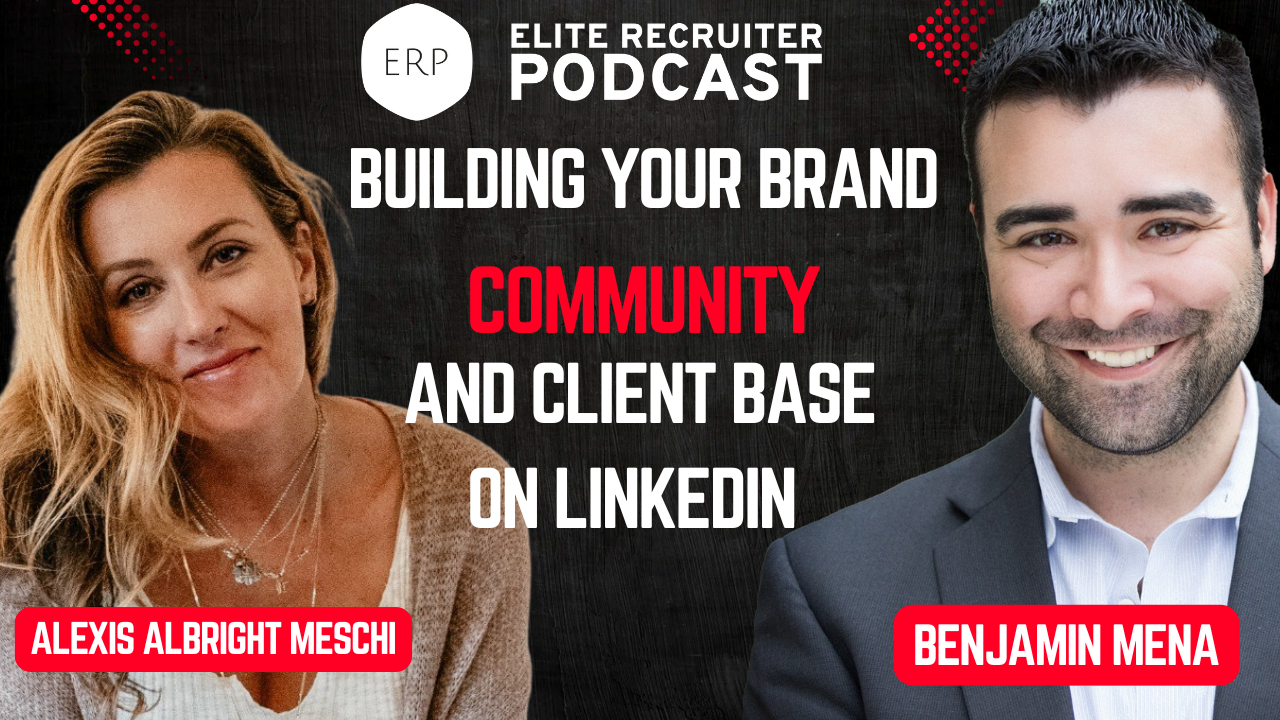
Are you broadcasting on LinkedIn, or are you building real relationships? In the recruiting world, the difference isn't just semantics – it's the divide between being a run-of-the-mill recruiter and becoming the go-to authority in your niche. Marketing expert Alexis Albright Meschi has a clear message for recruiters: building your personal brand on LinkedIn is no longer optional. In her words, “There is not an option of whether or not you should be building your brand on LinkedIn. You will not survive this industry unless you build your brand.”
Why such urgency? Because the rules of engagement have changed. Clients and candidates alike trust individuals more than faceless companies. If you want inbound leads and long-term success, you need to put yourself out there – authentically and consistently. “If you have a deeper mission and purpose in your life, one of the best ways to fulfill it and feel a sense of passion is to build your brand,” Alexis says. By sharing your voice and value on LinkedIn, you’re not just marketing – you’re creating a community, demonstrating credibility, and living your purpose.
In this article, we’ll cover how to leverage LinkedIn the way Alexis advocates on The Elite Recruiter Podcast Recruiter Podcast:
Connect before you convert, serve before you sell: Build trust and rapport before pitching business.
Lead, connect, and serve with your content (Alexis’s three-part framework) while staying authentic (no lazy AI-generated slop).
Optimize your profile for trust and conversion, speaking directly to your ideal clients and candidates.
Grow a community, not just an audience: engage and nurture your network so that your content becomes a conversation, not a one-way broadcast.
Play the long game with consistency: focus on building trust over going viral.
Ready to become an in-demand recruiter that attracts clients and candidates through value-led content? Let’s break down the blueprint.
Connect Before You Convert, Serve Before You Sell
Too many recruiters jump straight into sales mode on LinkedIn – blasting cold pitches or self-promotional posts – and wonder why no one bites. Alexis’s philosophy is simple: earn trust and build relationship capital first, and the business will follow. Connect before you convert, serve before you sell.
That means shifting from a transactional mindset to a service mindset. Offer advice, insights, and help without immediately asking for something in return. As Alexis emphasizes, “if we put goodness out and serve and educate and connect, that is the goal of authentic relationships.” Your primary job on LinkedIn is to give value – share knowledge, spark conversations, support others – not just to take. Every piece of content or outreach should feel like a helpful handshake, not a sales billboard. “Your content is a handshake, not a billboard,” Alexis often says, meaning it should initiate dialogue and connection, not just advertise at people.
This approach builds trust over time. People come to see you as a resource and ally in your niche. Then, when the time is right, it’s absolutely okay to make the ask – to turn a friendly connection into a client. You’ve earned the right by providing value first. Alexis notes that some recruiters get “friend-zoned” by being afraid to ever ask for business. Don’t let relationship-building turn into endless wheel-spinning: when you’ve nurtured a connection and identified a hiring need, be bold and invite the conversation about working together. You’re not on LinkedIn as a charity – you’re there to grow your business – but the key is serve first, sell second.
Build a Community, Not Just an Audience
It’s easy to collect followers, but are you building a community or just a passive audience? The goal for inbound success is a network that knows you, engages with you, and trusts you – not just a vanity metric follower count. “Your connections on LinkedIn can turn into a community,” Benjamin Mena (host of the Elite Recruiter Podcast) reminds us. Alexis agrees, stressing that community-building must be a daily, non-negotiable task for recruiters.
What does that look like in practice? A few tactics:
Proactively grow your network with the right people. Identify your ICP (Ideal Client Profile) – the clients or candidates you most want to work with – and send connection requests. Don’t just add for vanity; be intentional. As Alexis puts it, research and add the people you’d put on your “dream client” list, and then create genuine connections with them. Aim to add a few ideal prospects or industry contacts every day.
Engage meaningfully with others’ content. Don’t post and ghost. Like, comment on, and share others’ posts, especially those of people in your target community. Show interest in their world. Ask questions, congratulate successes, offer thoughtful comments. This is how you nurture relationships instead of just broadcasting to bystanders.
Foster interaction on your posts. When someone comments on your content, respond! Treat it like the start of a conversation. Ask a follow-up question or thank them with a personal insight. Encourage discussion in your posts by writing in a conversational tone and perhaps ending with a question to invite responses.
Remember, building community is a two-way street. “What are you giving to the community? What are you doing to engage with them?” Alexis asks. If you want people to care about your content, you must show that you care about them. In practical terms: invest time every day to nurture your network – just as you would water a garden. Over time, those connections turn into conversations, and those conversations lead to opportunities.
Leading, Connecting, Serving: The Content Framework
Posting on LinkedIn isn’t just about promoting jobs or sharing generic motivational quotes. Alexis advocates a three-part content framework to give your audience a well-rounded experience of who you are and how you can help. The three content pillars are Lead, Serve, and Connect:
Lead: Share content that demonstrates your authority and thought leadership. These posts position you as a leader in your recruiting niche. For example, you might discuss industry trends, market insights, hiring strategies, or success stories. The idea is to express your expertise and point of view – to show you know your stuff. Many recruiters are relatively comfortable with this type of content (it’s often the default), but remember to frame your insights around what your ideal clients or candidates care about, not just your own ego. Show that you understand the market and can solve the problems in it.
Serve: Create posts that educate, inform, or otherwise deliver value to your audience. This could be how-to tips, answers to common hiring questions, tools and resources, or lessons learned. The key is generosity: give a bit of your “secret sauce” away. Don’t hold back all your knowledge – “You can’t build a community by only broadcasting… you have to build a community by giving.” When you consistently help your audience solve small problems or learn something new, you build serious goodwill. (And no, sharing value won’t make you obsolete – it will make people trust your expertise even more.)
Connect: Post content that humanizes you and creates personal connection points. People want to do business with those they feel they know. So show a bit of the person behind the professional. Share a personal story or experience that taught you something (related to your work or even a life lesson). Talk about your values and why you care about what you do. Alexis gave a great example: instead of simply listing a business value like “integrity” on your profile, tell a story about how you learned that value through a life experience. This kind of content might involve your journey, challenges you’ve overcome, or even passions outside of work. The goal is to find authentic common ground with your audience. When readers see the real human behind the posts, it builds trust and likability.
By rotating these three types of posts, you lead your audience with authority, serve them with value, and connect with them on a human level. Over time, this mix positions you as not only an expert, but also a trusted ally and a relatable person. And as Alexis notes, make sure whatever you share is true to you – design your content in a way that’s comfortable and genuine. You don’t have to overshare or be someone you’re not; just let people peek into your world enough to say, “I like this person. I feel like I know them.”
Optimize Your Profile for Trust and Conversion
Think of your LinkedIn profile as your personal landing page. When someone clicks on your name – often after seeing a piece of content – that profile should immediately signal, “This person can help me. I’m in the right place.” Alexis urges recruiters to optimize their profiles to function like a sales page for their ideal clients. In other words, your profile isn’t just a resume or biography – it’s a marketing asset geared to win over your target audience.
Follow these steps to turn your profile into a trust-building, client-converting machine:
Polish your profile picture and banner: Use a high-quality, friendly profile photo (you want to appear approachable and professional). Then, make the banner image count. “Your prime real estate is that banner,” Alexis says – don’t waste it on a generic skyline or just your logo. Use that space to speak to your niche’s pain point or goal. For instance, your banner could include a tagline like “Helping [target audience] achieve [desired result]” or a bold statement of the problem you solve. Make it instantly clear who you serve and how you help.
Write a headline that attracts your ideal client/candidate: Your headline (the line under your name) should be more than just your job title. Consider phrasing it as a value proposition. For example, “Helping SaaS startups scale their sales teams through top-tier talent acquisition” is far more compelling to a prospective client than “Recruiter at XYZ Agency.” Use keywords your audience cares about (their industry or role, the service you provide, outcomes you deliver).
Craft an “About” section that’s about them, not you: This is huge. Despite LinkedIn literally calling it “About,” Alexis is emphatic: “It’s not an ‘about me’ section… this is your money maker.” Treat it like the opening pitch of a sales page. The first few lines are critical – they should immediately hook your ideal client by speaking to their challenges or goals. Ask a question or make a bold statement that resonates with their situation. (E.g., “Hiring top engineers in today’s market is tough. If you’re a tech founder struggling to build your dream team, you’re not alone…”) By addressing your reader’s pain points right away, you signal that your profile is worth their time. As Alexis advises, don’t spend those first lines talking about yourself at all – make it 100% about the client. Only after you’ve grabbed their attention do you introduce who you are and how you solve their problems. Share a concise story or proof of results (“After a decade in tech recruitment, I’ve helped 50+ startups hire the talent that fueled 3 IPOs…”). You can even sprinkle in one or two quick testimonials or credibility markers (“clients call me their ‘secret weapon’ in hiring”). Finally, end your About section with a clear call to action – tell the reader exactly how to reach you or what to do next if they’re interested (e.g., “Message me to schedule a free 15-minute hiring strategy chat”).
Feature content that proves your value: Utilize the Featured section on your profile to showcase prime examples of your expertise. Think of it as your storefront window – the highlights you want every visitor to see. You might feature a popular LinkedIn post you wrote that got great engagement, a link to a case study or client success story, a video clip of you giving hiring advice, or a free resource/lead magnet (“Download my 5-step interview guide”). Diversify the content types here (mix posts, articles, PDFs, videos) to cater to different people’s preferences. And update your Featured items periodically to keep it fresh and relevant to what you’re currently focused on.
Show experience + recommendations for credibility: Make sure your Experience section isn’t just a list of duties – frame your roles in terms of accomplishments and value delivered. But even more impactful on LinkedIn are Recommendations. Don’t be shy about asking happy clients or placed candidates to write you a recommendation on LinkedIn. These act as public endorsements and offer social proof to anyone checking you out. It’s surprising how often recruiters overlook this, considering a strong recommendation can directly answer the question “What’s it like to work with you?” in a way you yourself can’t. Alexis suggests building the ask into your process – for example, after you close a placement or finish an engagement, send a quick request for a recommendation. A profile rich with genuine recommendations will immediately set you apart as trustworthy.
By optimizing each element of your profile in this way, a curious prospect who lands on your page can quickly see that you specialize in their needs, you have a track record of success, and you’re someone they might actually enjoy working with. Your profile becomes a conversion tool, turning lurkers into leads.
Speak to Your Ideal Clients (and Candidates) in All You Do
A common thread through all these strategies is the laser focus on your ideal audience. Whether it’s your content or your profile copy, everything should be crafted with a deep understanding of who you’re trying to reach. As Alexis explains, the first step is to “fully understand your ICP… their gaps, their pain points… Who are they? What frustrates them?”. If you haven’t clearly defined the key attributes and challenges of your target client or candidate, your LinkedIn efforts will lack punch.
Take time to outline the persona(s) you serve: What industry or niche are they in? What roles or titles do they have? What goals are they pursuing? What problems keep them up at night (that you can help solve)? The more detailed you get, the better. This will inform the language you use and the topics you cover. In fact, Alexis recommends literally writing down these insights and even using tools (yes, even ChatGPT) to brainstorm deeper questions about your target audience. The payoff is content that makes your reader think, “Wow, this person really gets me.”
When creating content, address the reader’s problems first. One of Alexis’s tips: don’t lead by touting your solution; lead by proving you understand the problem. For example, instead of a post that says “I can place accounting professionals 2x faster than competitors,” flip the perspective: “Many finance teams struggle with unfilled roles for months. Closing those talent gaps quickly can mean hitting your quarterly goals – here are three strategies to accelerate your hiring process…”. See the difference? The second approach speaks to a pain the client recognizes, delivering value up front. You can then naturally mention how you help solve it as part of your insight.
Speaking to your ideal client also means using their vocabulary and context. If you recruit in, say, the cybersecurity field, your content might reference relevant trends (like the latest cloud security talent shortage) and use terminology industry folks use. This signals “I’m one of you” and builds rapport.
Bottom line: always be asking “Is this relevant to what my ideal client or candidate cares about right now?” If not, rethink it. When you consistently hit that bullseye, you’ll start attracting inbound interest from exactly the people you want – because you’re consistently talking to them, not just into the void.
Stay Authentic and Avoid the Lazy “AI Slop”
By now you might be thinking, “This is a lot of content to create – can’t I just use AI or find some trending posts to copy?” It’s true that tools like ChatGPT can help with ideas or drafting, but Alexis issues a stern warning against churning out cookie-cutter, automated content. In the age of AI, authenticity is your superpower. The LinkedIn landscape is currently flooded with what Alexis bluntly calls “AI slop” – posts that might check the boxes algorithmically but have zero human soul.
People can tell. “I can spot a ChatGPT post from a mile away – it’s very formulaic,” Alexis says. Those posts all have the same polished template: a clickbait hook, three generic tips, a recycled quote, etc. They might generate impressions, but they don’t generate trust. As Alexis puts it, when everything looks the same, people stop digesting it. The content might get a quick skim (or an eye-roll), then it’s forgotten. It doesn’t actually move the needle for your brand or business.
Instead of blasting people in the face with a fire hose of robotic content, take the garden hose approach – more targeted, refreshingly human. Use AI as an assistant for brainstorming or editing, sure, but always inject your human touch. Share a personal anecdote or an original opinion. Show vulnerability or humor if it’s true to you. If a post could have been written by anyone, go back and add your perspective or experience until it couldn’t have been. Remember Alexis’s advice: use the tools, but “you can’t lose the human part of it.” The goal is to make people feel something genuine when they read your content – whether it’s inspiration, trust, or an “aha” moment learning something new.
Most importantly, don’t chase virality for virality’s sake. A post that gets 100 likes but zero business results is a vanity victory. Far better is a post that maybe gets 10 likes – but one of those is a decision-maker client who messages you, “Loved your insights, let’s talk.” Quality over quantity; impact over hype. Or as Alexis wisely says, “Stop thinking about going viral – think about building trust.” Consistency and sincerity beat one-hit-wonders every time.
Consistency > Virality: Play the Long Game
Building a brand and community on LinkedIn is a marathon, not a sprint. You won’t become a thought leader overnight or from one viral post – and you don’t need to. What you need is consistent, sustained presence. Post by post, interaction by interaction, you are planting seeds that will eventually bear fruit in the form of inbound leads, referrals, and a standout reputation.
Alexis cannot stress this enough: “You have to be consistent… It is daily, consistent effort.” Showing up regularly – even if it’s just a few times a week – keeps you on your network’s radar. Consistency builds familiarity, and familiarity builds trust. Over time, your connections will see you as a constant in their feed providing value, rather than a fair-weather poster who appears once in a blue moon. It’s just like staying in shape: you won’t see results from one intense workout; it’s the cumulative effect of many small efforts.
Treat LinkedIn content and engagement as part of your daily workflow, not an occasional extra. Alexis even equates it to an administrative task of running your business – something as fundamental as checking email or making calls. When you integrate brand-building activities into your routine, it stops being a chore and starts being a habit.
Keep in mind, consistency isn’t only about posting. It’s also about the message and value you consistently deliver. If one week you’re sharing thoughtful industry insights, and the next week you’re posting sloppy clickbait because you got busy, you dilute your brand. Strive for a steady drumbeat of high-quality, on-brand content. That doesn’t mean you can’t experiment or have fun – just ensure it aligns with the reputation you’re trying to build (e.g. “helpful expert in X niche”).
And yes, there will be days when you feel like your content is echoing into a void. Don’t be discouraged. Even when people aren’t visibly engaging, they’re watching. Many lurkers have become clients after months of quietly consuming a recruiter’s posts. Trust the process and stick with it. As your content library grows and your relationships compound, the momentum will kick in. Consistency creates an aura of reliability around you – and reliability is gold in the recruiting business.
Conclusion: Lead with Value, and the Rest Follows
The blueprint is clear: if you lead with value, authenticity, and consistency on LinkedIn, you will attract exactly the kind of clients and candidates you want to work with. Instead of grinding through 100 cold calls, you could have warm prospects coming to you because your content and profile already convinced them that you’re the recruiter to trust. Building your brand and community is about playing the long game – but it’s a game where every honest effort pays dividends.
Start today. Optimize your profile to speak to your ideal audience. Share a post this week that educates or inspires your network. Comment on a few target connections’ updates with genuine interest. Over time, these actions compound into something powerful: a personal brand that generates inbound leads, referrals, and opportunities while you sleep.
Most importantly, remember why you’re doing this. It’s not just for more placements (though that will happen); it’s about creating a career that aligns with your purpose. As you consistently connect, serve, and lead on LinkedIn, you’re also building a legacy and making an impact on the community around you.
So, take Alexis’s advice and embrace LinkedIn as the platform to amplify your mission. Your content is a handshake, not a billboard – extend that handshake every day and welcome people into your world. The clients, candidates, and success you seek will start coming to you.
To dive deeper into these strategies and hear Alexis Albright Meschi’s advice firsthand, check out the full conversation on The Elite Recruiter Podcast. It’s a masterclass in building a magnetic LinkedIn presence. And if you’re hungry for even more growth, don’t miss the upcoming Sales & Business Development Summit – a free virtual event where top-producing recruiters will share their playbooks to help you level up. Register now to secure your spot and take a step toward your seven-figure future!
🚀 Sponsorship: Atlas - the Recruitment Platform Tired of clunky, inflexible recruiting software that’s stuck in 2015? Atlas is here to change that. Built by recruiters for recruiters, Atlas is the all-in-one operating system that’s fast, modern, and beautifully designed to help you place more talent with less friction.
Whether you’re a solo recruiter or scaling a team, Atlas helps you:
Track every touchpoint without the bloat
Run faster searches with intuitive AI
Manage pipeline with less clicking, more doing
It’s everything you need, nothing you don’t. See it in action here → https://recruitwithatlas.com/
Elite Recruiter Awards