

 Apple Podcasts
 Spotify
 Youtube Music
 #50 | Outdoor Air Isn't Fresh Air: AIRAH IAQ 2026 Wrap Up with Sean Maxwell

Fresh off the AIRAH Indoor Air Quality Conference in Cairns, host Jess Kismet sits down with building science expert Sean Maxwell to unpack essential insights on ventilation, enclosure physics, and moisture control. Together, they discuss wisdom from industry legend Joe Lstiburek, why immediate regulatory action on continuous apartment ventilation beats waiting for perfection, and the necessity of external continuous insulation to protect building envelopes. The conversation challenges traditional HVAC design habits by demonstrating why outdoor air isn't always clean air and advocating for mechanical systems engineered around dew point targets rather than temperature alone.
Thank you to our sponsors Enduro Builders and Climasure
In this episode:
-
Action Beats Perfection in Apartment Ventilation: Rapidly increasing airtightness in modern apartments makes continuous mechanical ventilation urgent; experts agree that implementing simpler continuous exhaust solutions immediately is far better than delaying progress for "perfect" balanced heat recovery systems.
-
Outdoor Air Does Not Equal Clean Air: Uncontrolled makeup air drawn into a building often originates from traffic-polluted streets or contaminated internal spaces like parking garages and corridors, proving that air must be intentionally supplied and filtered rather than drawn through random envelope gaps.
-
External Continuous Insulation protects Enclosures: Wrapping structural framing—especially highly conductive steel—with continuous exterior insulation keeps the primary control layers warm, drastically reduces condensation risks, and ensures long-term building durability regardless of the climate.
-
HVAC Systems Must Design for Dew Point: In humid and tropical climates, modern energy-efficient envelopes reduce thermal cooling loads, requiring mechanical systems to be engineered around precise dew point targets (e.g., 15°C) to manage humidity effectively.
Useful Links
Australian ventilation: the next chapter - Ecolibrium article by Sean Maxwell
Thanks for listening. Happy healthy building!
| Jess Kismet (00:00) Hello and welcome to the Building Sciology Poddie where we talk about better buildings to live and breathe in. So today my guest is Sean Maxwell. He and I are fresh off an incredible week up in Cairns at the AIRAH Indoor Air Quality Conference. We spent five days deep diving into everything from building enclosure physics and strict dew point targets to Australian standards and what fresh air actually means. So Sean is here to unpack it all with me for you dear listener. Welcome Sean. Sean Maxwell (00:25) Thanks, Jess. good to see you, old friend. Known each other for a long time now, Jess Kismet (00:30) Good to see you too bud Sean Maxwell (00:31) a long time. Jess Kismet (00:32) We have. I know we keep doing the count back. We keep doing the count Sean Maxwell (00:35) Yeah. Jess Kismet (00:35) back to when it first was. been a decade Sean Maxwell (00:37) Jess Jess Kismet (00:38) I reckon. Sean Maxwell (00:39) just you said a little tired today 'cause you just came from a blower door test, right? Jess Kismet (00:44) I yes, yes I did. I'm a bit... Yes, so Sean Maxwell (00:46) Living the dream. Living the dream. I love it. It's awesome. Jess Kismet (00:51) forgive me if I'm a little bit off the planet. It was a long drive, hour and a half drive out to a place called Kersbrook and then an hour and a half drive back. So it was out into the whoop whoops Sean Maxwell (01:04) Anything anything interesting about the test? Jess Kismet (01:07) Yes, actually, actually. It was a insulated concrete form house, an ICF place. massive three story beautiful view. Yeah, incredible, incredible project. And they got a very low score. They got a 0.86 air changes per hour. And I Sean Maxwell (01:31) Nice. Jess Kismet (01:32) think this was the builders first blower door test. So yeah, Sean Maxwell (01:35) Cool. It's possible to do well first time. Jess Kismet (01:40) Yeah, yeah, absolutely. Especially with ICF and they had Intello on the ceiling and DoubleGlaze, they had Greenlife windows, bunch of expanding foam, good attention to detail to the installs as well. So they did extremely well. yeah, it's Sean Maxwell (01:57) Awesome. Jess Kismet (01:58) different. It's different to see ICF in South Australia. You don't see that much of that. So yeah, Sean Maxwell (02:02) Hm, yeah, for sure. Jess Kismet (02:04) So that was Anthony from AHC Homes. So shout out to you, Bud. Well done. Sean Maxwell (02:09) Cool, nice. Jess Kismet (02:11) Yeah. So we're here to talk about AIRAH IAQ Sean Maxwell (02:15) Mm. Jess Kismet (02:16) We were there, both of us primarily to catch up with Joe Lstiburek which was fun, but also to get all the goods on the indoor air quality space from the mechanical engineering people. First question would be for me, what was your biggest takeaway from the conference overall? Sean Maxwell (02:37) so like you said, I was there mostly to see Joe and I was also there for the IAQ conversation, but mostly I also want to know what Joe thought of the things that I think about when I think about IAQ and ventilation, 'cause he's he's like I don't know, he's the docent, the the the leader, the teacher, the the grandmaster, final boss so Jess Kismet (03:06) You Sean Maxwell (03:07) he's so I basically I just wanna say like Joe, what do you think of that? Am I am I thinking about this right? Yes. Jess Kismet (03:13) Mm. Sean Maxwell (03:14) so yeah he I I wanted Jess Kismet (03:16) You Sean Maxwell (03:17) to know what what he thought about stuff. So my main takeaway was Joe was pretty encouraging about the stuff we're thinking about here. and so I I think his so many questions. I had I had a a whole like Three pages of questions for for Joe. And what this is a topic. And I just sat down with every chance I got. I went to say, like, all right, Joe, next question on my list, what do think about about this? And and he'd say, Yeah, yeah, no, yes, you you have it, have it right, go, do it, do it. Yes, this this makes sense. So it was really reassuring. Jess Kismet (03:58) Pfft. Sean Maxwell (04:00) that I guess that it's sort of like graduating from school and and the teachers like come on already go get a job and yes you know this stuff you've you've passed all your quizzes yes just go just go do it so it was good Jess Kismet (04:15) Believe in yourself. Sean Maxwell (04:17) yeah and so that was the main takeaway it was like you know what we got this honestly I I really Jess Kismet (04:25) Mm-hmm. Sean Maxwell (04:26) think like we have people in this country yourself included who really are who really are passionate about this and who have the right ideas to to get us on the right path. So I think it was a good boost of encouragement. So my my main takeaway was yes, go do this. You you go disciple. You you have this. Jess Kismet (04:52) And what kinds of questions did you have for him? You said you had three pages. What were a couple of examples? What are we doing right that he said yes? Sean Maxwell (05:01) Well, I mean I tried not to bore him with some of the technicalities of code approaches to regulation with of airtightness and things like that, but these ideas we had about so, you know, we're talking about like voluntary paths versus mandatory paths and things like that, which are really boring. Jess Kismet (05:21) yeah. Mm. Sean Maxwell (05:24) boring topics of conversation. He said, Yes, yes, these these all make sense. Whatever one you choose It will work. Some will be faster than others, but one of them's gotta work. So just just go do it, yes. So, Jess Kismet (05:36) Mm-hmm. Sean Maxwell (05:38) approaches to regulation of airtightness and eventually to ventilation. those were all is all had good support from Joe. I mean, I don't know, I just feel like whatever I I feel like the things that were checking that I'm checking with him on, they all seem to He all seemed to agree with with all of them. So it was good. yeah. Jess Kismet (06:04) Mm-hmm. Mm-hmm. So did you ask him about apartment airtightness and ventilation? Because that's one of your babies. Sean Maxwell (06:17) Yeah, yeah. So that came back from so yeah, I did ask him about airtightness and apartments Jess Kismet (06:26) Mm-hmm. Sean Maxwell (06:26) in Australia because yeah, I I showed him some some graphs of the results we get from a study we did for CSIRO and yeah, apartments Jess Kismet (06:33) Mm. Sean Maxwell (06:34) are pretty airtight in in general and in some some buildings there it's almost I would say concerningly airtight. But only because we haven't also paired that with continuous ventilation. So he the when I when my c my question was, what do you think about this proposal for change for ventilation? he actually was actually more surprised that he wasn't more cautionary that when I was asking him about what should we suggest as a proposal for change. He was more saying like, yes, basically similar to Max Sherman, who have asked about ventilation many times over the years, basically you gotta start somewhere. Just main thing is just to start. So it's it it's not gonna be perfect. It doesn't have to be perfect, but you gotta start. So Jess Kismet (07:38) Mm-hmm. Sean Maxwell (07:39) I think that was that was a good good thing. So One of the reasons I wanted to go up to the IAQ conference was I wanted to speak with people like Brett Fairweather and Sonia Holzheimer about this proposal for change that we wanna put together. because we we know we have a big problem with apartments that are being built very airtight and with they're underventilated. So we Jess Kismet (08:06) Mm-hmm. Sean Maxwell (08:07) I wanted to hear catch up with them about ideas and how we might move forward. So that was that was good. Jess Kismet (08:12) Mm-hmm. Mm-hmm. And by proposal for change with apartment ventilation, are you referring to having continuous ventilation in all apartments? Sean Maxwell (08:22) Yes. So Jess Kismet (08:23) Yep. And is that continuous heat recovery or is that just continuous supply or? Sean Maxwell (08:29) Yes. So basically Joe's Joe's idea was, yes, you should have ventilation. And what are the specifics? Well, we can argue about that, we can fret about that, we can both he and Max Sherman over the years have said, yeah, just yes, just do something. Because clearly what we're doing now of sort of th Jess Kismet (08:52) Yeah. Sean Maxwell (08:56) just thinking it through and is it gonna be perfect? No, and are there unintended Jess Kismet (09:02) Mm. Sean Maxwell (09:02) consequences? Yes, but there are also unintended consequences of not doing anything. the cost of inaction Jess Kismet (09:07) Mm. Sean Maxwell (09:08) is is high. So yeah, both of them thought you gotta start somewhere, just just just do it. So there's some standards which are quite cautious. From some of the research I think that we did in New York, I th think many years ago I presented to the SRA sixty two two committee about we were getting apartment results in New York that were reasonably airtight apartments in New York and also they do have continuous exhaust there and our argument way back then was well if you have continuous exhaust in a heating dominated climate like New York or say Melbourne where if you have attached corridors or enclosed corridors, it's possible and often probable that the majority of makeup air you get for that continuous exhaust is gonna come from places you don't want it to come from, like the hallway or the other, you know, semi conditioned spaces or unconditioned spaces like parking garages, Jess Kismet (10:20) Lift. Sean Maxwell (10:24) trash chutes, things like that. That happens. Jess Kismet (10:27) Mm-hmm. Sean Maxwell (10:29) yeah, for sure. So Jess Kismet (10:28) Lift shafts. Sean Maxwell (10:32) this that is gonna happen and so ASHRAE sixty two two said well in apartments with enclosed corridors, buildings with enclosed corridors, exhaust only is not allowed because we demonstrated that yeah, you're getting a lot of the makeup air for this. Every litre you pull out gets replaced by a litre from somewhere, and often that somewhere comes from places you don't like, you don't want to think of as fresh air. Jess Kismet (10:58) Mm. Mm. Sean Maxwell (11:01) So yeah, it's he would say though, yes, that's true, but where you're at right now, look where you're at right now. You have not enough makeup air and not enough air movement in total, just in general. Jess Kismet (11:17) Mm-hmm. Sean Maxwell (11:17) So you're not It's not clearly not working the way it is. So whether the makeup Jess Kismet (11:22) Yeah. Sean Maxwell (11:23) hair comes from you know it the perfect place, whether you do balanced ventilation. Joe's right. Joe says balanced is better. He's he and I agree with him. And heat recovery is better? Yes. Yes. Distributed is better to individual living zones? Absolutely. We all agree. It's better. But Jess Kismet (11:41) Mm-hmm. Mm-hmm. Sean Maxwell (11:44) if that's perfect, then Don't let that mean we can't do anything until we're at perfect. I think that was a big big takeaway from Jess Kismet (11:52) Mm. Sean Maxwell (11:54) from my conversations. Jess Kismet (11:56) Yeah, along those lines, I remember thinking, you know, he would just get up there and say things like, don't, excuse the swearing. He would put, he would say, don't put bad shit where you're going to breathe the bad shit. He would just say very simple things like that. You know, along the lines of don't do dumb stuff. Sean Maxwell (12:19) Mm-hmm. Jess Kismet (12:20) And I think that that was one of my takeaways was it's actually like in Australia we've become is because it's been put in the code and people are scared about doing the wrong thing, unintended consequences, condensation, bad indirect quality, getting sued. They freeze because they don't know what to do rather than just, like you say, doing something Sean Maxwell (12:44) Mm-hmm. Jess Kismet (12:46) and not over complicating it in their heads. I get a lot of calls from builders who are so scared of doing the wrong thing simply because they're changing their wrap am I gonna make my house too airtight and am I gonna create a problem? Sean Maxwell (12:59) Mm. Jess Kismet (13:00) And then they don't do anything or they go on this big rabbit hole, which is great, like we love the rabbit hole. But I think the fear gets some people and they don't start. Sean Maxwell (13:15) Yeah, for sure. So I think his advice was I I asked him, Is it okay to do exhaust only? I mean like going against what ASHRAE sixty two two says right now. is it okay to do exhaust only in apartments apartment buildings with enclosed corridors? And he said, Yes. Is it perfect? No. But it's better Jess Kismet (13:37) Mm-hmm. Mm-hmm. Sean Maxwell (13:39) than where you're at right now. So I Jess Kismet (13:41) Hmm. Sean Maxwell (13:41) think Similar to conversation with Max Sherman, who was a guest for the IAQ conference a couple years ago, and he said Jess Kismet (13:47) Mm-hmm. Sean Maxwell (13:48) the same thing. Like, no, it's not perfect, but you gotta start somewhere, and that's an okay Jess Kismet (13:52) Mm. Sean Maxwell (13:52) place to start. You'll you'll work on it, it you'll improve it. Jess Kismet (13:55) Mm. Sean Maxwell (13:56) And best would be if everyone had heat recovery ventilation in an airtight apartment with as many liters coming out as going in. That would be best. Jess Kismet (14:06) Mm-hmm. Mm-hmm. Sean Maxwell (14:08) Until then, let's start somewhere. Jess Kismet (14:12) Do something. Yep. And for the listeners who might not know what ASHRAE is, could you explain that? Please. Sean Maxwell (14:17) Yeah, that's American Society of Heating, Refrigeration and Air Conditioning Engineers. similar to AIRAH Jess Kismet (14:25) Yeah, the American version. Sean Maxwell (14:27) Yeah, the American version. Actually they have formal fraternal relationships, I guess you could say, or just r reciprocal relationships. so we share a lot of ideas and a lot of members of AIRAH are also members of ASHRAE. Jess Kismet (14:46) Mm-hmm. Sean Maxwell (14:46) so and they we cross collaborate in many ways. So AIRAH DA07 is basically a rewording of ASHRAE one sixty, which is the moisture analysis standard for Australia. So Jess Kismet (15:02) Mm-hmm. Mm-hmm. Sean Maxwell (15:04) yeah, we trade ideas all the time. Jess Kismet (15:07) Yep, and DA07 for those of you who don't know is the standard that we use to model WUFI hygrothermal simulations. That's what we use. And I guess talking about continuous extraction, continuous exhaust and heat recovery ventilation, balance ventilation, part of that conversation, which was a fairly big part of the conversation, was that outdoor air does not equal fresh air. Because in Australia, we like to open up our windows and things and have this indoor outdoor environment, particularly up in Queensland, which is where we were. Sean Maxwell (15:44) Mm-hmm. Jess Kismet (15:45) And in tropical North Queensland, they have louvered doors everywhere. They have their doors open constantly. They have fans circulating air constantly. It's a very, you know, entrenched part of their culture and lifestyle up there to have everything open, which causes a lot of mould issues in the wet season when they have a lot of... a lot of humidity in the air and even in the shoulder seasons when the air is cooling down but the humidity is still high and there's cold surfaces and high humidity it gets worse or at least that's what I was led to believe by some of the people I was talking to up there. And you know we have a similar issue in the colder states but one of the big messages that was pushed was that outdoor air does not equal fresh air. What are your comments Sean Maxwell (16:37) Hm. Jess Kismet (16:38) on that? Sean Maxwell (16:39) Yeah, absolutely. And and I think that relates to the conversation and s these several conversations in parallel. so yeah, actually a lot of the ventilation standards and codes talk about outdoor air must be provided and that And the but the way you provide outdoor air was exhaust only systems. Which so we we spend a long time saying, well, that's pretty w wishful thinking, really, that you know that the air is gonna come from outside when it's more likely actually to come from the much weaker pressure boundary, which is the separation between apartments or between apartments in the corridor. That's the more likely Jess Kismet (17:23) Mm. Sean Maxwell (17:24) path for it. So exhaust air is not outdoor air and even if it were outdoor air, it's not necessarily fresh air. So I did some I published an article in Equilibrium a couple of years ago where I monitored pressure in my apartment in Rosebury in in Sydney, New South Wales, and monitored pressure over a long weekend. We went away and so it's just reading channels on several channels of pressure and seeing where is the air actually coming from 'cause you can tell by where the pressure drops are. And the degrees. Jess Kismet (17:59) Mm-hmm. Sean Maxwell (17:59) And so most of the air was coming from the corridor, and you can see from the dust traces that it was coming from the corridor, and most of the air for the corridor was coming from the parking garage. So you can see the dirt on the doors that tell the story. So that's not fresh air, but even the outdoor air. Jess Kismet (18:16) Thank Sean Maxwell (18:16) It was near the M1 highway in Sydney. So Jess Kismet (18:19) Mm-hmm. Sean Maxwell (18:20) just wiping some paper towel on the screen. this was outdoor air, but it's not clean. Jess Kismet (18:29) Mm. Sean Maxwell (18:29) It's being some of the the soot from the highway is being caught by the screen on the on the window. That's not clean air. Just just because it's outdoor air doesn't mean it's clean at all. And Jess Kismet (18:39) Yuck. Sean Maxwell (18:42) and that's not even to say this was bushfire season, it wasn't. This is just traffic. So we Jess Kismet (18:46) Yuck. Sean Maxwell (18:47) we have this this idea that more quote fresh air is gonna solve the problem, or that outdoor air is fresh air when it's definitely not that simple. Jess Kismet (18:59) And when you say exhaust air is fresh air, do you mean you're extracting stale air from your wet areas and your kitchen area and then drawing in air? So that works because you extract air out, produces a negative pressure and then it draws air in through Sean Maxwell (19:15) Mm-hmm. Jess Kismet (19:15) all the gaps and cracks in your home that either intentionally open like a door or window that's open or via gaps and cracks that shouldn't be there which is what we try and find during a blower door test. So extraction only is providing fresh air but through absolutely willy-nilly means, to use a technical Sean Maxwell (19:35) Sure. Jess Kismet (19:36) term. Sean Maxwell (19:37) yeah, so I I often say it's make up air from who knows where. Jess Kismet (19:43) I like that. Sean Maxwell (19:44) So and because 'cause we we don't yeah, it's it's true. It's and there's this often often this quip of well would you stick your head in the wall and take a breath of fresh air, is that where you want to be breathing your air from? No, when you put it like that, no. but much research shows that just a simple even a simple exhaust only system in a bath fan or a laundry, running continuously does dilute many of the pollutants, particulates, VOCs, CO2, humidity that gather in a home constantly and through many events. And so no it's not perfect, but it does a pretty good job pretty it's a lot better than nothing is the Jess Kismet (20:36) Mm-hmm. Sean Maxwell (20:37) the whole point. So often when we have this conversation about what's good air quality There's a another acronym for us AIAQ, which is adequate indoor air quality. So and that's what Jess Kismet (20:49) Mm-hmm. Sean Maxwell (20:49) we should strive for regulation for a minimum standard. We we always love Jess Kismet (20:53) Mm-hmm. Sean Maxwell (20:54) to say that building code is the worst building you can legally build. And the same should be for ventilation. If exhaust only is the worst system you could legally build, well it's definitely better than no system at all. And I th I think that's where we're we Jess Kismet (21:09) Yeah, yeah, couldn't agree more. Sean Maxwell (21:11) we where we have to start. So W I will not argue that balanced ventilation with heat recovery and filtered it make up air and deducted to individual living spaces. Of course that's better. I do not argue Jess Kismet (21:26) Mm-hmm. Sean Maxwell (21:26) with you. But are we gonna mandate that everyone has that? Good luck. Jess Kismet (21:32) Yeah. Sean Maxwell (21:35) So yeah, I mean, this was good good to hear Joe was encouraging in that same respect, like, you know what, it's not gonna be perfect, but you gotta start somewhere. So just go for it, go for it. And Jess Kismet (21:45) Mm-hmm. Mm-hmm. Mm-hmm. Sean Maxwell (21:47) this a lot of the things when I was talking to Joe about like all sorts of things. So that's ventilation and then make up air and where do we start with his proposal for change? he was like very supportive, but then almost all the other questions I asked him was like, Yes, yes, you know this stuff, you know this. that Jess Kismet (22:05) Mm. Sean Maxwell (22:06) we we we study the building science, yes. And so we I I think our challenge is that we know this stuff but we need to communicate it to the greater industry in Australia, right? 'Cause Jess Kismet (22:22) Mm. Sean Maxwell (22:23) I mean if if I feel like if I if I go to Joe Lstiburek and I say, Joe, this is what I'm thinking of this, am I am I on the right track? And he says, Yes, yes, of course you are, yes. That Clearly I'm I'm just talking to myself most of the time and we just need to do a better job Jess Kismet (22:38) Hahaha! Sean Maxwell (22:39) at we already know this stuff and we need to do a better job just communicating it to the masses. 'Cause I think we know. Yeah. Jess Kismet (22:46) Yeah, that's the big challenge. I think one of the biggest takeaways for me from Joe specifically was his insistence on controlling the dew point of the external, like outside the structure. So what he talked a lot about was external insulation. He showed us pictures of his house that's literally got five layers of foam insulation on the outside. Now he lives in a place in Boston where it gets very, very cold. So that's why he's got five layers. But regardless of how thick the insulation is, idea that having that insulation layer on the outside of the structure for him is kind of a no-brainer. It's non-negotiable regardless of climate. And I think that was one of my, I mean, knew that I knew he, I knew he promoted this. But to hear it delivered in person and see his sort of full narrative and explanation around it was a bit different to just hearing about the perfect wall and yeah, that's not what we do in Australia. Sean Maxwell (24:01) Mm-hmm. Yeah, yeah, absolutely. And and so one of Joe's messages about that control layer at the outside and keeping it warm was it doesn't actually matter which control layer you use or which even which insulation you use. He said, climate this climate client would say they like this insulation or they don't like They don't like spray foam, so can we use this kind of insulation? Can we use that kind of insulation? You say, Yes, yes, whatever you like. It will all work as long as you do it in the right order. Jess Kismet (24:33) Mm. Mm. Sean Maxwell (24:36) I I I can't remember he cited someone, maybe you can take this out, but he said someone's someone's Jess Kismet (24:43) Yeah. Sean Maxwell (24:45) quote, order matters. So you pick your nose first and then you pick your ear, and then you pick your butt. Order matters. Jess Kismet (24:56) Yeah, yeah, what it matters. yeah, Sean Maxwell (24:58) Yeah. Jess Kismet (25:00) absolutely. And that's what the perfect wall is, is kind of based on. It's external insulation first. Keep everything warm. Sean Maxwell (25:08) Yep. yeah. Or Jess Kismet (25:09) Yep. Sean Maxwell (25:10) maybe yeah, so that was that was cool. And so actually following up from that, I said, Joe, here's what we were doing with these houses in APY in Outback, Australia, and taking these steel framed houses which were very, very cold, like amazing thermal bridging pictures with the steel framing Jess Kismet (25:29) Mm-hmm. Sean Maxwell (25:30) in infrared. And we they they put two or fifty mm of Foam insulation on the outside and taped all the all the joints and says, yes, yes, do that, do that, yes, do that. And Jess Kismet (25:43) Mm-hmm. I approve. Sean Maxwell (25:46) so and that's what they're doing. So I think Jess Kismet (25:48) Mm. Sean Maxwell (25:49) yeah, I think a lot of his lessons, which those absolutely were learnings from from Joe over the many years. So Jess Kismet (25:58) Mm-hmm. Mm. Sean Maxwell (26:00) he he would say, actually, whether that's vapor permeable insulation, whether it's some sort of rock. mineral wool insulation Jess Kismet (26:09) Mm. Sean Maxwell (26:09) or glass fiber insulation, whatever. It actually matters a whole lot less than keeping those control layers warm and protected. I think that was a a Jess Kismet (26:18) Mm-hmm. Protected. Sean Maxwell (26:20) key takeaway. So Jess Kismet (26:22) Yep. Sean Maxwell (26:23) yeah. Yeah, really cool. Jess Kismet (26:26) External insulation, one day. One day we might see it here in Australia. Sean Maxwell (26:30) Yeah. Jess Kismet (26:31) Increase in popularity one day. Sean Maxwell (26:33) And and J Joe would say that's just the way they they're they're doing it. A lot of builders now in Northeast America, for example, they're using Jess Kismet (26:41) Mmm. Sean Maxwell (26:42) two by four walls with a couple Jess Kismet (26:44) Mm. Sean Maxwell (26:45) inches of foam insulation on the outside. It's not that hard Jess Kismet (26:47) Mm. Sean Maxwell (26:48) once you learn how to do it. You have Jess Kismet (26:50) Mm. Sean Maxwell (26:51) to change your flashing details, and but yes, you can do it. So Jess Kismet (26:57) Mm. Yep. Sean Maxwell (27:01) It's basically what's required by building code in a lot of North America. And you absolutely cannot build with bare steel. It's like, well duh. So of course if you if you use yeah, well if you use steel Jess Kismet (27:13) Duh! He said that a lot too. Sean Maxwell (27:17) framing, you should be using continuous insulation. And it's Jess Kismet (27:20) Mm. Sean Maxwell (27:21) he's to say, look, there's nothing wrong with steel framing. In a lot of buildings like high rise residential, you have to use steel. You can't do use anything else. Jess Kismet (27:29) Mm, mm. Sean Maxwell (27:30) You can't just build a high rise concrete building with with timber frame walls. No. You have to use Jess Kismet (27:34) Yeah, no. Sean Maxwell (27:34) steel. So because you have to use steel, you have to use the right insulation with it. So continuous rigid insulation or continuous spray foam insulation, again, he would say, Whatever. Continuous insulation on the outside has to be the norm. Jess Kismet (27:49) Mm-hmm. Yeah, and he said that external insulation is the thermal layer and that means that the in-frame insulation becomes the acoustic layer. Because Sean Maxwell (27:57) Mm. Jess Kismet (27:58) I think I asked him, do you do both or you just do one? And he said, no, you don't have to do that in the frame, but if you do, that becomes your acoustic layer Sean Maxwell (28:08) Mm. Jess Kismet (28:08) rather than your thermal layer, rather than an interrupted thermal layer. Mm. Sean Maxwell (28:12) Sure. And that's just the simple math that what, steel is like a thousand times more conductive than Jess Kismet (28:19) Mm. Sean Maxwell (28:19) insulation. So Jess Kismet (28:21) Yeah. Sean Maxwell (28:22) the the penalty for just a a standard framed wall, it's like fifty percent hit on performance to the insulation for the nominal R value of the Jess Kismet (28:31) Yeah. Sean Maxwell (28:32) insulation. It's just insane to use steel framing without a a an actual not just thermal break but continuous insulation. Jess Kismet (28:42) Yep, I just did a quick sum and steel is approximately 1200 times more thermally conductive than insulation batts a basic insulation bat. Sean Maxwell (28:50) Yeah. It's nuts. Jess Kismet (28:53) It's 385 times more thermally conductive than timber and 1200 times more thermally conductive than insulation. So the numbers are huge. Yeah, yeah, yeah. Sean Maxwell (29:00) Yeah, it's crazy. Yeah. Yeah. So and and it's also cool that we actually have we could talk about waterproofing and improvements and Joe I'm sure would have a lot to say about how to do and not to do stucco or render. But it's a very Jess Kismet (29:15) Mm-hmm. Mm. Mm. Sean Maxwell (29:17) common building material already. We're using foam all over Jess Kismet (29:19) Mm-hmm. Sean Maxwell (29:20) the place in this country. Like the house right across the street that's being being built is using foam insulation to receive render. So we can be Doing this, it's just if we just said, this is for energy efficiency, we'd no, it's this a giant problem here. But if we said this is for condensation and building control building quality control and to reduce ghosting on the on the interior surfaces, which happens with steel framing, if you said you Jess Kismet (29:48) Mm, mm. Sean Maxwell (29:49) have to use some foam insulation, They wouldn't have a problem with that. So it's about how we frame it. We all n we know all Jess Kismet (29:56) Hmm. Hmm. Sean Maxwell (29:57) this science. We just need frame it in the right way. Jess Kismet (30:01) Yep. Yep. I'm going to move away from Joe for a second here because I'd Sean Maxwell (30:09) All right, fine. Jess Kismet (30:13) like to move on to something from the IAQ part of the conference that was one of my big takeaways was Sonja Holzheimer's proposal for HVAC systems to be designed to a dew point rather than for temperature, particularly Sean Maxwell (30:25) Mm. Jess Kismet (30:26) in the tropics. guess this was specifically in the tropics, but it could apply everywhere. Sean Maxwell (30:30) Mm. Jess Kismet (30:31) And she proposed a 15 degree dew point. So what that tackles is making sure that, and I think from my perspective and probably your perspective as well. The HVAC systems being designed to a dew point has to be done in conjunction with the envelope because the envelope is where the surface temperatures are that are going to create the dew point. But from a HVAC perspective, she got out the psychrometric chart and talking about all these different numbers. I'll put a picture of it on the screen. For those of you who don't know what a psychrometric chart is, it's very confusing. It's how HVAC mechanical engineers design their systems. It's a huge part of it. And when she made this proposal about a 15 degree dew point, it made a lot of sense to me because in passive house, there's no surface gets below 12.6 degrees in a certified passive house and that's why we do all the thermal bridging calculations. Sean Maxwell (31:29) Mm-hmm. Jess Kismet (31:31) So that made a lot of sense to me rather than designing to temperature, design to a dew point. What do you think about that? Sean Maxwell (31:41) makes a lot of sense and I think gets to the point of what she was she was talking about. that and sorry to to circle back to Joe again, but Joe said this as well, that that sometimes he says people look at like look look at you like you're an alien to say if you do energy efficiency you reduce sensible loads like the the heating and cooling aspects of of thermal envelope that now you're getting no your your heating and cooling system runs less than it used to, or your your cooling system specifically runs less than it used to, and so because the loads are lower, then it actually the runtime is lower and the dehumidification that goes on is lower and lower. Jess Kismet (32:23) Mm-hmm. Mm-hmm. Sean Maxwell (32:26) And so it doesn't work like it used to, which was your AC Jess Kismet (32:29) Mm-hmm. Sean Maxwell (32:30) would run for hours to try to remove remove to remove the heat, but by doing that they would also end up removing the humidity, which is really the the Jess Kismet (32:39) Mm-hmm. Sean Maxwell (32:40) way that it worked. was removing the humidity. So I think Jess Kismet (32:42) Mm-hmm. Sean Maxwell (32:43) designing to a dew point makes a lot of sense because now we're not talking about thermal loads anymore, which the better the building is, will get less and less. Now we're talking about removing humidity and designing the systems with airflows and runtimes to to make that the design parameter. And I think that makes so much sense. I think I mean you you said Jess Kismet (33:02) Mm-hmm. Mm. Mm. Sean Maxwell (33:06) that makes sense for tropics and for other climates, I think the reason that it works for other climates is it it just doesn't matter that much, say in Melbourne. Jess Kismet (33:14) Yeah. Sean Maxwell (33:15) Like you'd be you could design for a fifteen degree dew point and but it it's basically a given anyway, 'cause it Jess Kismet (33:23) Mm-hmm. Sean Maxwell (33:24) so it's not not very hard to do down here. But up there Jess Kismet (33:27) Mmm. Sean Maxwell (33:27) it matters a lot. So it was a great, Jess Kismet (33:30) Yeah. Sean Maxwell (33:30) great takeaway. Jess Kismet (33:31) I was actually surprised that that wasn't being done up until now, up in the tropics. Like I was really surprised how little they seem to design for humidity up there. And I guess that was the whole point of the conference, but it is such a massive feature of their air. It seems to me a massive surprise that they don't design more for that specifically in their Sean Maxwell (33:55) Absolutely. Jess Kismet (33:56) HVAC systems and in their building envelopes as well. Sean Maxwell (34:00) Yeah, so I thought so I thought the the mix of I really enjoyed the humidity workshop. I thought that was a great way of great format having one specific topic for the conference. I thought having the Jess Kismet (34:16) Mm-hmm. Sean Maxwell (34:16) the Associated Building Science training along with Joe on a couple days was great addition to the conference as well. And then the IAQ Jess Kismet (34:24) Mm-hmm. Mm-hmm. Sean Maxwell (34:25) conference is always really full of very passionate and intelligent people. So I thought it was great. So all Jess Kismet (34:33) Mm. Sean Maxwell (34:33) all around I thought it was an awesome awesome conference. Jess Kismet (34:36) Yeah, I thought it was really well rounded with lots Sean Maxwell (34:38) Mm. Jess Kismet (34:39) of, like you say, passionate people, lots of very knowledgeable people, very willing to share information. These conferences are always full of those sorts of people. But this one in particular, you know, think people said to me, how can you fill five days talking about indoor air quality? And I was like, that's easy. That was easy. Sean Maxwell (34:56) yeah, yeah. There's it. Yep. Jess Kismet (35:00) And the committee did an amazing job filling five days with with great speakers and great content. Sean Maxwell (35:08) Hm. Yeah, awesome. Jess Kismet (35:13) Well, Sean, the last question I ask everybody on this podcast, as you are probably aware, is what is the one most important thing that you've learned in your career that you want the listener to know? Now, I've asked you this question before. I don't know if you remember your answer, but maybe it's changed. Sean Maxwell (35:26) boy, I don't I do not recall. wow. The most important thing I've learned in my whole career of Jess Kismet (35:34) Yep. Sean Maxwell (35:35) energy efficiency and building performance. in my life, my gosh. Jess Kismet (35:38) in your life, your career, know, I'm after, I'm after, I'm after, I'm after, you know, I'm after, you know, like, what's one thing that plays on your mind that you're like, people really need to know this. Sean Maxwell (35:53) Mm. Jess Kismet (35:54) Ahem. Sean Maxwell (35:57) if there was one sort of central concept very early on that made things make sense, it was the control layers and the order of the control layers and the integrity of the control layers. That was a very simple concept that was essential to get right early on. and that that way of thinking and then all the other stuff that came after that, like designing for drainage, drain the site, drain the building, drain the enclosure, those all those things just follow on from that. It i it seems Jess Kismet (36:37) Yeah. Sean Maxwell (36:37) like everything sort of follows from that simple concept and all the attached and then the the things that follow from that really make sense for building durability For comfort, for pest control, for fire acoustics, like all this stuff. It's all related to Jess Kismet (36:58) Mm-hmm. Sean Maxwell (36:58) some pretty core and simple concepts. So I think that was probably a very early and very essential lesson. It was like two months in, I went to a the efficiency Vermont conference and I saw Joe Lstiburek and John Straube, who is my other idol. Mr. John Straube, I'd love to see him in Australia someday. they had a lot of those messages that were just like, Yes, this is the gospel. It's not gospel as in something you just have to believe because someone told it to you and you just have to have faith. It's more like, no, no, let's use reason and let's we don't I don't believe in science. I use science, which is Jess Kismet (37:44) Mm-hmm. Sean Maxwell (37:44) just a w a process of thinking, of asking questions, holding them up to scrutiny Evaluating the answers you get from it and then if the answers don't make sense, come up with a new hypothesis. So it that's just the way it is. So building science really is that that way and I think it's an awesome way of thinking. About life. Jess Kismet (38:04) Mm-hmm. Thank you, Sean, for wrapping Sean Maxwell (38:10) Awesome. Jess Kismet (38:10) up AIRAH IAQ 2026 with me today. Sean Maxwell (38:14) it's so much fun to talk to you. I I love any time I get to catch up with you, Jess. Jess Kismet (38:20) Same, thanks Sean. See ya, Sean Maxwell (38:21) All right. Okay. Bye bye. Jess Kismet (38:23) bye. |
C


Director
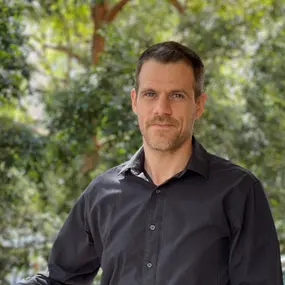
Sean Maxwell is the Australia & New Zealand Managing Director for the Air Tightness Testing & Measurement Association (ATTMA), with more than two decades of experience in building-science, airtightness, and ventilation. Originally working in the U.S. on building-envelope testing and commissioning, he moved to Australia and has since become a leading advocate for higher performance standards, better quality-control, and healthier, well-ventilated buildings. He trains industry professionals, contributes to standards committees, and advocates for seeking the cost cost-effective improvements for design outcomes.