Apple Podcasts

 Spotify

 Youtube Music
#29 - Reimagining Buildings: Passive House, Craftsmanship & the Future of Construction
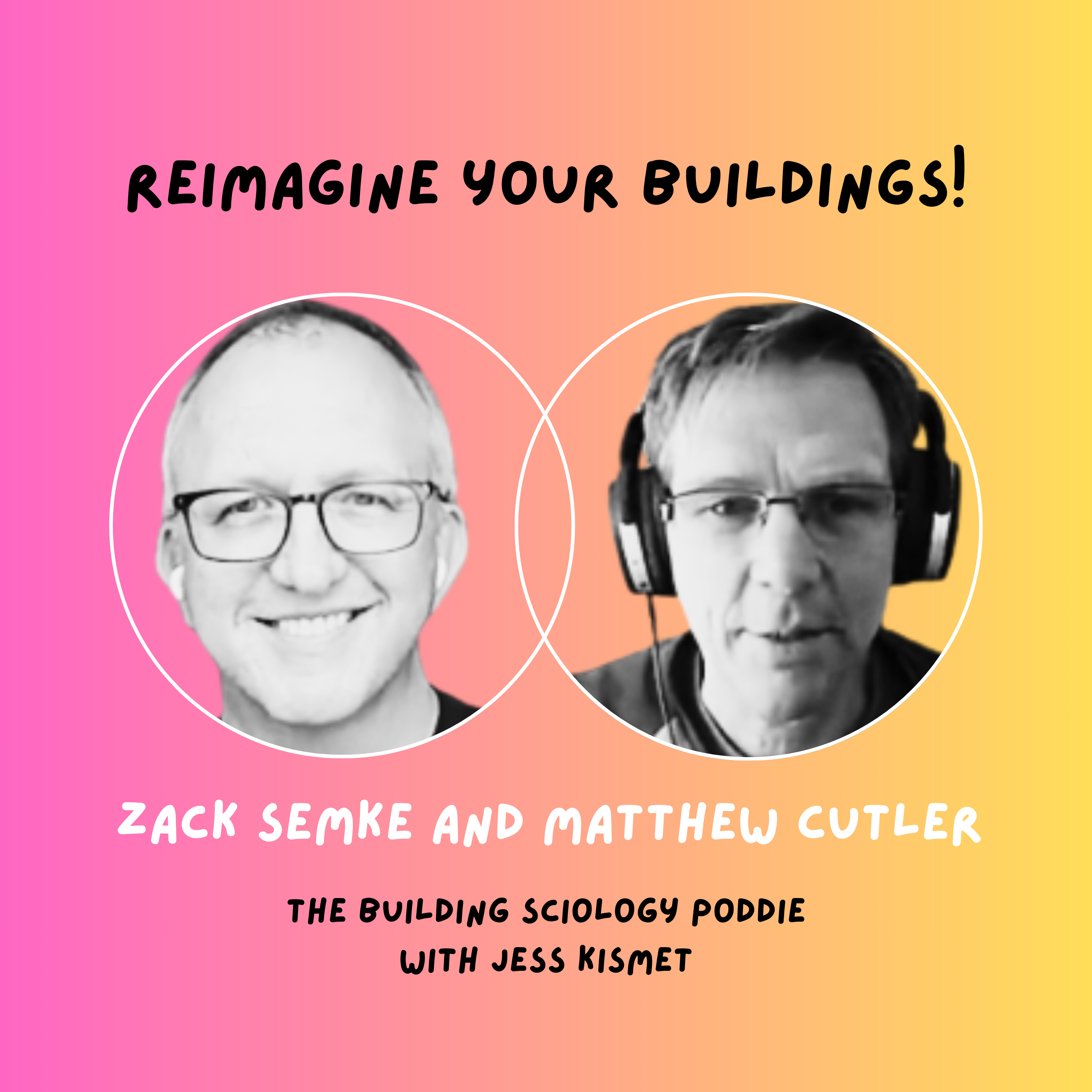
Join me as I chat with Matthew Cutler and Zach Semke about Passive House, high-performance buildings, and why building health matters more than ever. We explore the connection between design and wellbeing, the role of community in driving industry change, and the untapped opportunities within construction to deliver healthier, more resilient buildings.
From craftsmanship and air quality to education, collaboration, and climate resilience, this episode offers practical insights for anyone shaping the future of the built environment.
See show notes for more info
Thanks for listening. Happy healthy building!
0:00 Hello and welcome to the building Psychology party where we talk about better buildings to live and breathe in. Today on the show, I'm joined by two voices you may already know if you're into high performance buildings and Passive House. Matthew Cutler and Zach Semke are the Co hosts of the Passive House podcast where they share insights from experts all over the world who are pushing the boundaries of building performance. Zach is also the driving force behind Reimagined Buildings, a YouTube channel and movement dedicated to making better buildings the norm, not the exception. Between the two of them, they have been amplifying stories, ideas, and the technical know how that are reshaping how we think about comfort, health, and sustainability in the built environment. Today, we'll dive into what motivates their work, the lessons they've learned from talking to so many change makers, and what the future of buildings could look like if we dare to reimagine them. Welcome to the show gents.
0:51 Thank you. Great to have you. Good. To be here. So could you both? We'll start with you, Matthew. Share a little bit about your career and your journey into high performance buildings. Sure. Well, I got into buildings after doing an engineering degree. It was a sort of second attempt at university for me, and it was a sort of environmental engineering. I really wanted to do something around energy because I thought energy was sexy as opposed to water and just, you know, sustainability, environmental management in general. And of course we we have a bit of a connection with Adelaide Jess, which is. We do. We do. You are now where I.
1:31 Grew up. Adelaide being or SA being the driest state in Australia, which is the driest continents. So waters was was top of mind, but I I just didn't think it was that sexy. I still think it is and I think water and ecology and general environmental sustainability as it as it's, I think it's still the valid term was was appealing. But because I was interested in energy, I eventually found myself working in the space of trying to make existing buildings more energy efficient. But what I've learned and what we might get on to is the fact that it's more and more about health and comfort is kind of tends to be where where we're at.
2:14 So that's kind of yeah, my, the built environment. And if you hang around that space long enough and they're interested in trying to work out how to do buildings better, particularly homes, I think you eventually end up at Passive House. Yeah, eventually, I think you probably do ultimately and you know, you kind of pick your point somewhere along that, along that line as to where you're going to land. But eventually you do get there. All roads lead to passive House. Zach, how about yourself? So you're joining us from the US today. Yes, I'm based in Seattle, WA and then beautiful Pacific Northwest. And my story about my introduction to Passive House actually echoes the story of a lot of people that we've interviewed, which is that the Great Recession kind of forced a big, you know, shift and, and upheaval in my career. And that's when I found Passive House that I've studied human ecology back in in college many years ago and was involved in my first work, was involved in policy advocacy around progressive regional planning.
3:28 So working toward more urban, more density and urban spaces and having transportation options like light rail and buses and bikes and and green spaces and affordable housing and all these kinds of things. And I was doing that in Portland, OR, which at the time was in the 90s at the time was a real Mecca for urban planning geeks around the country. And so that's, that was my first work. But then I, I kind of took a, a detour. My wife and I started a Japanese drumming group in Portland and that took over. So it was Port Portland Taiko was my life for like 11 years, which is which is very fun and crazy and and awesome and and all consuming.
4:11 But I went back to school in 2005 to study and I wanted to do landscape architecture, landscape design and build, create public spaces where people could come together. So it's a little bit of a combination of the, my, my interest in performing arts and bringing audiences together and then my interest in urban planning. And so I did that and started and was working for an architecture firm in Portland when the Great Recession happened. And I was like, and I, you know, I love school, but I also was very, I loved Graduate School and, and landscape design, but it's also very clear that I was a brand new player and all this and there were tons of landscape architects out of work. And I felt like, you know, I'm just going to look for any work right now because maybe this is a Great Depression, I don't know.
4:56 And so that's when I landed at Hammer and Hand, which is a building company in Portland and now in Seattle that at the time was building some of the very first Passive House projects in the Northwest. And in short order, I got to Start learning about Passive House as well as home performance, which is kind of on the other end of the continuum of building science and, and building practice and write about it and start documenting projects with video. And kind of, we had this, the firm had this very long view of marketing. So I'm, I'm, I'm going way too far into this, but that was my entree. It was the right recession kind of shook things up. And so I needed to kind of reinvent myself.
5:37 And like many people in this community, in different ways, that's how Passive House became part of my life. Yeah, right. And so how did you guys actually meet? And then the Passivhaus podcast was born. Take us there because you're in the US and Matt, you're in Australia. Oh, no, sorry. New Zealand fill in some. It's all Matthew. It was. It was the IT is the whole the the IT was completely his brainchild. I I got. Yeah, but does not surprise me. They, well, the, the Passivhaus live started, I think just as COVID was hitting and. So basically, like these global crises is what's propelled your careers forward. Yeah.
6:21 Exactly. Yeah, yeah, yeah. Yeah, yeah. So I'd, I'd been to a few pesos conferences and spoken to people like Elrond's Braille and played around with a bit of podcasting myself looking at the sort of Better Homes and I, I realized that nobody was doing it a specialized passive house podcast at the time. And then I was wasn't quite stuck in the office, but a lot of stuff was going online. Passive House Live started up, which was amazing because we this suddenly have this community of people, great presentations, really good format of having a presentation for 20 minutes or so.
7:04 But then people would stick around sometimes for, I don't know, Zach well, sometimes it was over an hour, sometimes that people would just be chatting because in your time. Early days, yeah, When it started, Couple hours. You guys, you guys were drinking beer and I was drinking coffee and so people were just hanging out. Eventually I'd have to leave because it was during my work day and I'd have to go and do some work, but these guys were just carrying on. I thought there's such a great community. So I reached out to Zach and say how I've been thinking about doing a dedicated passive House podcast. How about, you know, is there an opportunity to combine it with all the great stuff that was starting to happen with with with Michael and we kicking off passive House live and Zach and the whole team, the whole cast that we're doing that and that's it kind of just grew.
7:50 Zach said yes and and we started. Excellent. That's right. Yeah. Yeah. It was when when Matthew, when Matthew approached me, I was like, of course, I have no idea how to do a podcast, but let's do a podcast. There's definitely in that moment. I mean, yeah, that's kind of yeah, yeah, yeah, exactly. No idea what I'm doing. Yeah, awesome, awesome. Well, you know, all of this information sharing happening online is brilliant. So you know, it's, it's only serving to, to, to keep propelling, propelling the industry forward. So thank you gentlemen, for your, for your contribution. I follow the podcast. I have been on the podcast. So yeah, thank you for coming online.
8:31 Absolutely. It's great to be here. So you've interviewed so many industry leaders. Do you have one conversation that's stuck with you and why? Who wants to go first? Zach, you can go first this time. Yeah, you go first, Zach. Good luck looked I was just looking I was just looking at the the podcast and I think we have when we have all the bonus episodes as well. We have like 400 something episodes. So it's a lot. There's a lot to drop from. So it's really hard to choose. But Sarah Lewis of a pass post trust was and I actually didn't conduct the interview that it was an interview that Mary James and Jay Fox, who are Co hosts conducted. But I am just, well, first of all, I'm just so impressed by the pass post trust and really compelled by Sarah's work and the impact that she's having among, you know, a team of people on policy making in Scotland and that whole that whole progress process. I also was struck by her kind of clear eyed view about the challenge of doing full on the past interfit retrofits and the recognition that those are really important and kind of lighthouse projects.
9:45 And we also need to be thinking about what what can we scale in in retrofits. So that's like, I just think that's a really interesting question that all of us are grappling with. And yeah, she's, I mean, she's brilliant. So that was that was a highlight for me. So your your question, your one of your sort of main questions is how to scale the the improvement of the existing housing stock. That's right. That's right. And and you know, and understanding that that an interfit retrofit is hard. So and it's it's So what can we do with the buildings that don't do interfit? That would be one way to phrase that, yeah.
10:26 Yeah, Yep, Yep. How about you, Matthew? Yeah, so many very hard to choose, but I've gone back into the archives and Nikita reads was episodes was in the 80s episode 80, so a few years ago now. But one of the things that I've been really impressed and and shout out to our other Co hosts, Mary James and and Orca Cassidy, who have sought out over the three or four years these amazing women, particularly who are doing just incredible stuff out in the industry. And we've, we've had the opportunity to talk to people, not necessarily from a technical passive house origin, but finding ways to influence the built environment and having all these amazing other impacts in society. And Nikita is also another fellow podcaster, so she definitely check her out on line. She runs a podcast called Tangible Remnants and she's all about.
11:31 The show notes. Yeah, she focuses a lot on on the one of the biggest challenges is, is how do we adapt what already exists. So fixing up existing buildings. But has she's done some really good work on historic preservation that includes sustainability, bringing now carbon into that equation as well. But on top of all that, looking at in her case, in particular American history and and particularly the African American experience and and how that influences the built environment and have a good environment can have positive outcomes for so much more than just someone's power bill. So yeah, just one example others, but it's it's a privilege I think to talk to to amazing people like Nikita.
12:15 OK. All right. I'll definitely go back and have a listen to that one and I will link it in the show notes for anyone who, pardon me, who is interested. Funnily enough, you've both, you've both touched on existing building stock. I think when I first, first got into air tightness testing and, and all of that building performance stuff, it was actually around existing building stock as well. Like so you know, you can blow it or test an existing home and improve it pretty easily. So that's kind of where my head was at as well when I started on this journey way back when. Very cool. So Co hosting this podcast means that you've both got a front row seat. You said you've got 400 interviews in the bank. That's the phenomenal, phenomenal number of conversations. You've got a front row seat to what's going on in the industry and global building innovation.
12:59 Where do you see the untapped opportunities that we're not talking about enough yet? For me, I mean, there are so many and there's lots of emerging stuff, particularly around carbon. I think money is what makes the world go round and figuring out how to finance buildings better and better building I think is one of the big issues but also a big opportunity. And we've also talked to sort of people who have come from a a property development side and they see the, the economics of Passive House. And there's also people like Emma Edmondson, who's who's managed to convince local councils in around the UK of the, the wider societal economic benefits.
13:46 So I think tapping into the whole financing side, whatever that looks like in, in people's particular jurisdiction, wherever they're with it, wherever they're designing and building. And sometimes that can be grant funding. Look, I mean, there have been, and I think still are some, some pretty amazing funding opportunities available in, in the States, but it is also just making a really good business case. And the more we can do that and in our space, we we tend to get a bit idealistic, but we need to realize that we're playing in a very capitalist environment of property. So we need to try and craft that message as much as we can that it makes financial sense because in a lot of cases it really does. But a lot of people just focus on cost without necessarily looking at the value side.
14:27 And that value side of the equation really does often make passive House a bit of a no brainer. Yeah, for sure, for sure. Zach, what's your take on that? What's your untapped opportunity? The untapped opportunity. So I feel like there is a lot of value to taking the systems thinking of Passive House like at at the building level that I think a lot of us are probably familiar with and applying that to the bigger picture. And so when I mean the bigger picture, I mean essentially resilience and decarbonization and the relationship between buildings and the clean energy transition between, between efficiency and a body carbon man.
15:10 I think that there are right now the untapped potential is has to do with the fact that I think there are kind of misperceptions about in body carbon and energy efficiency somehow being it at rather than actually lowering a body carbon and and improving energy efficiency. Can be can can go hand in hand and also that say, you know, if you have a clean energy grid passive house isn't important that the reality that we're seeing, at least in in North America is that the better energy performance and kind of the building as a thermal battery is something that really supports the clean energy transition. So I think that that speaks to just sort of a larger issue or opportunity and that is 1 where I think we can really do be doing a better job of working outside of our silos. So working outside of the Paso silo and and connecting, connecting with all the people who really care about buildings and climate and resilience, who are really focused on materials and on antibody carbon or who are really focused on on clean energy.
16:18 I really see a lot of ways that all of those different components of building a better future are truly self or mutually reinforcing, and I think that I'm eager to see that kind of awareness increase. It's definitely of interest. But I think Matthew, what you say about the, the dollar being being the bottom line is, is definitely the case. And there are some big banks in Australia who are giving lower interest rates, for example, for better star ratings and things like that. But Passive House is still very much on the fringes of what people are willing to do and, and look at, which is the untapped opportunity for me. And I don't know where, where this quite lands for society in terms of like what, you know, it, it baffles my mind that there's not a stronger connection between the the health industry and the building industry.
17:07 So there needs like in terms of working in our silos, Zach, you know, the connection between those two parts of the world, those in all countries and in the world needs to be a lot stronger. And Passive House is definitely a connecting force for that, for that conversation, Because for me, capacity pass is much more about building health than it is about energy costs. You know, because if you've got a, an unhealthy building or a, or a moldy building, or you know, a building that's not supporting your family, family's well-being, then really the cost of your electricity is neither here nor there. Right. I think resilient building resilience is also something that's really coming to the fore for us, especially on the West, in the West, and I imagine, I imagine in Australia as well, right. And with the wildfires that we've been experiencing and the smoke, we, we actually had a pretty good summer this summer, but we did just get hit by a, a few days of fairly bad smoke It, it can get really bad.
18:09 And those, you know, having a Passivhaus really helps maintain a comfortable, healthy interior environment, especially if you have the, you know, a little extra filtration on your, on your HRV or erv. And so I think that there are more, more and more people are, are becoming aware of bad air outside and figuring out how to protect themselves from that bad air outside. And our current, you know, existing building stock doesn't really do that. So I think there's an opening there for some progress in buildings. For sure Passive House conference, not this year, but last year I think it was there was a presentation by a lady who built a certified Passive House childcare centre. And that was in Melbourne.
18:55 Maybe some there was, it was in a location where they had a lot of Bush fires in the previous Bush fire season. And that childcare centre was used as a, as a safe place for everyone to go because you could breathe in the in the inside. Yeah. So that, that, that spoke volumes, that anecdotes spoke volumes to me. And at the same time, I had a friend who was living in Canberra and they had to had a newborn baby and there was bushfires. And the bushfires were quite some distance away, but the smoke was travelling a long way. And they had to tape up their windows and doors because the smoke was coming inside from kilometers and kilometers away. And they had this newborn baby that was, you know, vulnerable. So these two anecdotes happening at the same time, you know it, it really did illuminate the issue.
19:42 We've done, we've done a whole series, Zach on the air, infiltrate the air filtration boxes. Which which you had to find out, yeah. Yeah. Yeah. Say more. Yeah, it's a well, do you want to explain it, Matthew? I can't remember the name. What? What are they? What are they? Yeah, Court Corsi. I think there are a couple of names. They're named out for the people who helped develop them, but courtesy Rosenthal, Boxes is one name where. You search, if you search up, yeah, if you search up those, those boxes, you get lots of recipes online because people have basically created these plans of how to make your own filtration box because it got so bad, particularly in your in your region. I had looked at some of the the outdoor air quality maps, Zack, and you've told the story about how you were basically choosing between do I have high CO2 internally because I've got everything closed or do I breathe but breathe in essentially toxic air from outside? And that that was the choice people were having to make. That's often the choice, yeah.
20:49 Yeah. I'll have to link whatever those boxes are in the show notes. I'll find out more afterwards as well so we can look into that. Anyone who's interested in DIY air air air filtration? An unfortunate requirement of fixing a symptom, whereas, you know, the, the, the benefits of being in a passive houses that you don't need that because it, that the house has got its own built in filtration system and fresh air supply. And this is becoming particularly relevant in a lot of areas around Australia where that wildfire and bushfires are a real, real concern. And it's not just about survivability, it's also about livability during those events because it, you know, the smoke can spread a long way. It's also relevant to people.
21:30 If you're just near a main motorway, Hwy., big big road, industrial area, whatever, you know, outdoor area is not always as clean and healthy as we think it is. And I and I have. To say house can can help with that and and protect people on on the inside. It's not something that occurred to me. You know it doesn't. It doesn't. It's invisible. Yeah. Air tightness is invisible. CO2 is invisible. Particular matter is invisible. It's all invisible until you start measuring it. Well, you. Don't have your filters on your ventilation system and see yeah. Yeah. Crap that you would otherwise. Exactly. Yeah, yeah. Or your or your or your sorry. Or your indoor air quality monitor with numbers on it. You know, So how do you balance the technical depth of the Passive House podcast with making the content accessible and inspiring to your audience and to a broad audience to not just the Passive House audience?
22:24 I'm not. I was thinking about this. I'm not sure that we always do. I hope we're accessible and inspiring. Yeah. I mean, one of the things that I, I, when I'm talking to particularly architects and people kind of in the Passive House tent, I often talk to them either openly or, or the way I talk, try talking to them is, is thinking about how can I help them to communicate to their clients and to that, that wide audience. Because I think a lot of our audience is in sort of the passive House space and, and it's, it's sort of people within our network.
23:05 But I, I, I try and encourage those people to, to think about better ways to communicate to their audience, which is sort of the next degree of communication. And this is something that I know Zach has thought a lot about. And in fact, that was the genesis behind creating a whole bunch of resources early on that were Creative Commons licenses. So some visual aids for helping people to talk about what Passive House is. Because a lot of the, we just saw a lot of the same old videos that were popping up whenever someone decided to talk about Passive House, it was always the same video that people showing. So, you know, Pacifast Accelerator's got some great resources that are freely available that really help with that communication process. So before we move on, tell us what Pacifast Accelerator is different to That's the supporting entity for the podcast.
23:56 What's the relationship? Yes, yes. So, yeah. So Pacifast Accelerator is a media company essentially, yeah. So we we do original articles every week published through the website and distributed through the mailing list. We have Passivhaus Accelerator live that Matthew was referring to. So it was that that grew out of straight out of the second week of COVID at that time known as the global Passivhaus Happy hour. So that is a that's a kind of a mainstay or really at the heart of who the accelerator is, is, is that, you know, weekly live program. And we have the podcast and then we have a couple of YouTube channels. One is the reimagine buildings channel, which is more like explainers and documentary style, you know, pieces about projects and then the the past fast accelerator. The channel is where we have the the archive in the library of all of the different presentations that have happened in our live program view.
24:55 So many hundreds of videos there. Yep. With a bunch of stuff. So. So that's the accelerators, all of those things. Yeah. And then the reimagined Buildings Collective is an outgrowth of the Pass Pass Accelerator. And that's our membership community for OK builders and designers and change makers. Yeah, yeah. All right, again, information will all be LinkedIn the show notes. So if you want to get involved with the passive pass accelerator, the reimagined buildings, the podcast, and what was the other one? The the pass fuzz accelerator live maybe? The that doesn't. Reimaginable this collective the community. Collective, the collective one. Yeah, collective. Yeah, yeah, yeah, yeah, yeah, yeah. All of that will be linked. So check it out and, and get involved because you've got a lot to learn with these gentlemen.
25:39 So yeah, Zach, your your take on balancing the content and making it accessible. Yeah, well, I mean, I, I agree with Matthew. I think that there's a it's hard to do that. I but on the other hand, like Matthew's an engineer. I'm I'm not, I don't, I don't have a technical background, so it's hard for me to go all that technical on my own. So I think I think, you know, maybe I geek out when I started. Yo, no, it's great. It's. Great. Definitely. That is, there's a yeah, there's a place. There's a place for, for those of us. Right, right, right. Yeah, maybe a little. Yeah, we're may be able to talk about it differently. Yeah.
26:20 So, but I mean, I think it is. I mean, our main, our main audience are practitioners. So, so I think it's OK that it gets a little bit technical. And I agree with Matthew that I think it's important for us as a community to figure out how to to speak plainly about the benefits of a Passive House in a in a way that it is compelling and speaks to people's needs and wants. Absolutely. Because honestly, people don't care about 15 kilowatt hours per, you know, square meter. They don't care. That means nothing to most people. What they care about is how it feels a family, how it feels mentally and and and how it feels to their health.
27:02 It's time for a quick sponsor shout out. Today's episode of the Building Psychology Potty is proudly brought to you by our amazing sponsors in Euro Builders and Climate Shore. A huge thank you to these incredible businesses for supporting the podcast and helping us spread the word about better buildings to live and breathe in. Your support makes this podcast possible. Please head over to their websites and follow their social pages. Yeah, yeah. And their and their back pocket, of course. The bank balance, yeah. All right. Zach, Speaking of reimagined buildings, could you talk us through the vision behind that and what you are hoping to achieve with it? Yeah. So reimagined buildings is a, is a term that we started using with the that podcast channel partly as a way to start to reach beyond Passive House.
27:53 And I think passive house, I think is beginning to, to get some name recognition of people are starting to understand it as a brand and respected as a brand. But it wouldn't be your first choice if you were going to go to like a marketing agency and say, Hey, I have this really amazing approach to buildings that could like change the world. What should I call it? Passive House is probably not the greatest term and oh, it's, it's not just for houses and it's actually not entirely passive. And I know passive like is sort of a has this negative pot, you know, like it's just, it's, it's not a great day label. So, so reimagine buildings, I think that was the first time that we used it was for that YouTube channel. And then we, we started using it at the reimagine buildings 24. So we did it a year ago.
28:36 We did a, an online 24 hour around the world conference called reimagine buildings 24. But that that's when it, we also started thinking, hey, you know, we want to have this sense of community continuing between these episodic online conferences that we're doing. So that's when we created the, the online community called the Reimagine Buildings Collective. Got it. So, so it's about being, again, being inclusive of things like upfront carbon and a body carbon people, people who really care about natural materials or really care about electrification. It's recognizing and that passive house is one element to what we need to work toward for clean and resilient building.
29:19 So there's passive house, there's a body carve and there's electrification, there's clean energy, there's, you know, making sure you're, you're retrofitting, you're not using too much stuff. I mean, there's a lot of things. And so reimagine buildings is, is kind of embraces all of that in it in its name, and it's very flexible in its name. And so we get to do things like next week on on September 19th, we're doing the reimagine buildings massive impact conference, this program by Kim Davis. Kim Davis is our programming manager. She's and she just does an amazing job with with this. So that bunch of heavy hitters who are, you know, these are people who have who are moving beyond this notion of incremental change and saying, Hey, we need to be taking some leaps in our work to really make a difference and really make an impact. And there are, you know, one of the shining stories of that kind of sensibility and what that can do in terms of impact in the world is what what happened in Massachusetts, where as several years ago, there was just one like, I don't know, it's 2530 unit multifamily building, the passive US building that provided a proof of concept that then other organizers and passive US advocates and people who are worried about climate and buildings started to organize around. And that has resulted in building code change in Massachusetts that is mandating Passivhaus for buildings of multifamily buildings of 12,000 square feet or larger. So this one building that early
30:50 movers who took the risk to make that building and have helped set off in motion this pathway that's that's resulted in this really incredible thing going on in Massachusetts. And like they have now 22 and a half million square feet of multi family passive house proposed. And if that all got built, that would triple the built passive house buildings in the United States. So it's like it's just a total. Step up in. The United States, the whole United States, that's just what's proposed right now in one state. So so there's this opportunity to make a massive impact. And so that's one story. There are lots of other different stories. And so it's the story.
31:31 These are examples that range from big high rises to that, you know, past fells retrofit, but they're basically celebrating the fact that when we make these moves and they can be uncomfortable and challenging and, and taxing on us, but when we make these moves, we can make an outsized impact on on the world and move move things in the right direction. So that's they're going to be a bunch of really cool case studies about that at that conference and we're really looking forward. To it. Yeah, that sounds awesome. So it's sort of like a little bit like, let's start mucking around people. Let's get this done, yeah? Yeah, yeah, yeah, yeah, definitely, definitely stop talking and let's not do it.
32:13 You may yeah. And we're in a somewhat challenging moment here in the United States that we don't need to go into. But the, but the, the, the fact remains that that we have a lot. We actually do have a lot because because state, state policy, governance buildings and not federal policy, We have agency. We, you know, we can, we members of the architectural and engineering construction industry can, can really make an impact. And so let's let's do it. And you've been asking for people to send in questions or proposals or ideas. Are they? Are they flooding in? They are, they are. And they're, they're great questions and they're, they're challenging, you know, so, so I mean, that's yeah, I think it's, it's, it's fair to it's fair to recognize that this isn't isn't always easy to do this work. But but I think that that's what is so amazing to see that you when we see examples like what what's going on in Massachusetts or New York or Vancouver, BC.
33:15 I mean, a lot of this got set off and what happened was going on in Brussels, you know, then then I think is kombu, yes. And recognize OK, but I know that this isn't always easy. But I need to work. Work toward, even if it's a small move, a small change. Make that happen. Yeah. So this is happening on the 19th of September, which is 9 days from now, which is probably going to be before. So this podcast episode will probably be aired after your event has happened. Is there a way that people can access that event if they want to after after the fact? Yes, absolutely. So it will be recorded and it is, it is part of the Reimagine Buildings Collective. So I would, it would be amazing if we had people join the collective.
34:00 This there's no, this is an online forum is, has people from all over the world. So that one of the benefits of being a collective member is you have access to all the recordings of all of the Reimagine Buildings conferences. We do. And we, we're starting to do quite a few. We just did. Yeah. We this is #4 this year. Fantastic. Well, I will put that information in the show notes again for anyone who is interested. It sounds amazing. It sounds really cool. And the whole reimagined buildings notion is terms of accessibility. Talking about the the notion of accessibility. I do like the terminology. I do like it. It's sort of like let's let's let's rethink this. Let's you know, let's let's think outside the box and let's get to let's get together and and see if we can come up with something a little bit different.
34:44 I like it. So you know, Zach, earlier you mentioned that Passive House is it can be a problematic term just in its in on its own, but it's it's it can be problematic for society for a broader adoption point of view. What do you guys think the biggest barriers are to that? So I, I think one of the, one of the biggest barriers to passive houses, people knowing that it exists or, or then believing that it works. There are very few people that we talked to who have designed Passivhaus or builders who have built Passivhaus, people who have been in one, lived in one, worked in one, whoever want to go back.
35:27 So it does work. And people who have experienced it in some form, whether professionally or, or living in or experiencing one first hand, they get that belief. So it, it's a, it's a sort of a slow ripple, ripple effect. And I guess so that the biggest barrier is speed and getting more people to experience it and truly believe what a better way of being inside a building feels like. Because like I say, once you have experienced that, it's very hard to go back to something that's not that. We hear so many anecdotal stories of people, you know, the most heart wrenching ones tend to be people with sick children who have battled for years and years with respiratory disease suddenly move into a home that's good, good ventilation, reasonable insulation and just works.
36:17 And a lot of these symptoms disappear. And going back to what you said about linking buildings with with health, Jess, we know that link is there. Quantifying it can be a little bit challenging, but it's definitely there. And the more that we can get people to to really experience and feel that I think is is the way forward. Zach, would you like to add anything? Just just that I think that the challenge is that change is, is hard, you know, and people are, are adverse to change. So the challenge is 1 of figuring out how to, to move, move others, you know, move ourselves to move others. And that comes down to understanding people and communicating, you know, in a way that speaks to what they care about.
37:01 Yeah. See, I don't quite understand that aversion to change. I like change. I'm excited by change. I'm excited by what's new and exciting and what's next. So the idea of not. Sorry, I'm interrupting, but I, yeah, I mean, I, so I think that that is true for a lot of us in the community. I think it's one of and I and maybe it's one of the occupational hazards of when we try to communicate about this stuff, it's like I. Think so. I mean, it's not just that that we're a bunch of technical geeks. It's also that we really like new, new, new stuff. I mean, it's interesting. Like some of the early adopters of the first Passive House, single family homes are often, you know, geeky engineer people.
37:42 Yeah, who are into gadgets. So anyway, yeah, yeah, I can. I get it. And it's going back to the communication piece that we talked about before. I've reflected on the fact that from the first time that I heard the words Passive House and also heard someone say air tightness to when I was not quite an evangelist, but you know, encouraging other people about how great these things are. There's probably at least a two year gap between those events and I often fall into the trap that I think I can convince someone how great passive House inside 20 minutes. And I think it's very, it's very easy.
38:22 It's very easy to forget where we've personally come from and that the how long it's taken to change in that, you know, having to constantly talk people through the subversion to airtightness because who wants to live in an airtight box? But that's a conversation we just need to keep having about, you know, the benefits of air tightness and maybe reframing it as I've heard people talk about it as maybe talking about energy tightness instead of air tightness and having constant supply for a share. So, you know, thinking about how how to talk about some of these terms in a bit of a way. But also the underlying thing is having empathy and realizing that for some people, particularly us engineers who like things, you know, very, we don't like surprises.
39:04 It can take a little time to change, particularly if we've grown up around this idea of indoor outdoor flow and having lots of connection to the outside. There's a lot of things that are potential barriers. If you're just, bang, hearing about passive House and air tightness and, you know, highly insulated envelopes, it can be quite strange. And I think, yeah, I feel this is something that I talked to architects a little bit about who are in the tent, that sometimes we just have to be a little a little bit empathetic and and realize that it might take a few conversations for someone to come around to the idea that passive houses may be a good thing.
39:44 Yeah, yeah, it's a slow burn. It's a slow. Burn, I hope it doesn't always take two years. I'm a slow learner, so and that's part of the great work that Zach and the team at the accelerator doing are literally to accelerate that process because we don't have that long, we can't spend 2 years convincing everyone. So a lot of what we're about is how do we condense that process down so that we can get people on board as you know, and faster. So it doesn't take people as long as it took me. Yeah, I mean, as soon as I found out about bloat testing, I jumped on it. As soon as I found out every single step along the way, I've jumped on, you know, building an earthship and building a tiny house and finding out about ballad or testing and going to that conference. Yeah, You know, it's been a real, you know, I didn't waste any time.
40:31 Blow bloat or tests are like experiencing passive houses that it's really hard to convince someone to do the first Test, but when when they've had a test, they just want more. I've had that experience with builders so many times that you offer them a free test and like, Oh no, it's going to disrupt our worksite. What is this? You know what, what if I fail? But as soon as you do 1:00, what if I fail? When can you come back? That's a big one. Can you do another one? Can you test all those buildings over? There, I love it when I yeah, you do a bloater test for a builder for the first time and they're like, whoa, yeah, I never thought about that. Yeah. Or you show them the, the, the thermal imaging camera and they're like, what? You know, it's just exposure.
41:12 The first step. Maybe I should start giving away blowout or tests. OK, so let's, let's look, let's turn to the future. You guys are quite future focused, chaps. What is, from your vantage point, what emerging ideas, technologies or trends excite you the most when it comes to transforming how we design and construct buildings? I would say that what it is exciting me right now is the growth in the use of natural materials in the construction and and figuring out how to move that from sort of what might be seen as a hippie dippie space to like a standardized, this works in standard construction methods kind of way. So I think about the straw panels that are becoming more common here in North America and the potential for it. So that that has a lot of different benefits, including obviously lower toxicity, but also going back to carbon. Straw is a great way to sequester and store carbon in buildings.
42:20 Yes, so moving away from foams and toward its straws is a cool, cool move forward. I've been learning from the folks at the Healthy Materials Lab about natural paints and moving away from acrylic paint. I just, I just heard today from Ben Bogey, who was a guest on our he's a builder and he was a guest within the collective for an interview with with Michael Anguy, the founder of Passivos Accelerator. So Ben was talking about how our move away from VOC's went to I think it was SVO CS. And what is SSS is not slow, but essentially, essentially it's away from one product that that has these volatile organic compounds that are that released a bunch of bad crap right away and are really bad for the people who are applying the paint to a different kind of paint where it kind of it slowly releases the bad crap.
43:14 And so instead of killing the people who are painting, it kills the people who are inside the building. That's the way that was Ben's terminology. Just kicking the kicking the can down the road a bit. Right, right, right, exactly. So so move moving to the natural paints that they actually kind of calcify as well over time. Like that's that's another another. I I think that why I've been excited over the last several years to see this shift. And you know, like when I was first writing about and writing blogs and, you know, showing photos and stuff of, of projects, One of the first projects that we, that hammering hand did in Oregon, you know, it just was using a massive amount of amount of foam and it was building a building on top of a bunch of Geo foam.
43:59 And you know, foam has its place. I'm not saying that it, that it's it, you know, that it's always a bad idea, but it was something that we celebrated. Like I celebrated. It was like, look, there's this truckload of foam that just arrived on the construction site. And now I'm like so much. Insulation. Yeah, right, right. It's so much insulation is this is, this is super cool. It's exciting. And now I think about like, you know, all the, you know, there's a lot of upfront carbon involved in that and chemicals and stuff. Chemicals so. It burns. It's been, yeah, yeah, right. And it burns, right. So there's this, I think this transition going on and you know we're, I think we're just really dialing in on of what products can be durable and healthy and easily usable in standard practice.
44:46 And I think that's a great move. Yep, Yep. Even in SA we've had, I did some work recently on a straw bare house and on a hemp crate house. So we're having some alternative technologies appearing here a bit more, which is great. Awesome. How about you, Matthew? At the other end of the spectrum, I I'm excited about some of the emerging technology, particularly around software, which is enabling designers to do really iterative design early on. Because the the trick with making any building perform better cost effectively is getting that stuff included into the design as early as possible. And in my, my day job, I'm doing a lot of encouraging designers to do energy modelling. And that's at the core of Passive House is using the Passive House money package or whatever flavour of energy model that you're doing.
45:37 And sometimes that gets left till the end as a sort of a check instead of an actual iterative design process. And I remember we've talked to people way back starting to think about, well, how can, because a lot of that's just number crunching and it's fairly manual work putting in geometry. So I'm excited and I expect to see ways of dramatically speeding that process up so that we're getting lots of parametric design and parametric analysis using software to figure out the best building for a particular location for a particular use case with some other parameters around, you know, linking in quantity surveying. So you're looking at the pricing materials and products and also incorporating things like carbon and other environmental impacts into that design and just running a whole bunch of simulations to figure out what the best outcome is. And I don't see that being very far away. That is really going to put some powerful tools in designers hands to be able to, to get these answers. The, the most exciting thing about that is, is going back to the finance.
46:37 It's all about optimizing design, including upfront cost and then also projecting out operating cost and, and benefits. So, you know, I'm, I'm excited about the potential of, of software to speed up that process and also to get better outcomes. So you're, you're thinking along the lines of, because I've already got energy software we've got in Australia, we've got the, the star rating software that we use for and building code compliance. We've got, you know, carbon calculation tools. We've already, we've got survey quantity surveying software. Are you thinking along the lines of something that incorporates all of those things into one?
47:17 Yeah. And, and the use of, of machine learning and AI and, and, you know, incorporating some of the things that is just changing so rapidly now in terms of language models. I don't see it being far away that using some of that similar technology to get computers to do some of that hard work of running lots of analysis on, on early stage concept plans to do that modeling, because the model, the modeling calculations are there. PHPP is so robust as a, as a model, but there's still quite a lot of manual input required. So yeah, I think that there's definitely, it's going to be some pretty exciting changes coming from using AI to have better design outcomes.
47:59 For sure, for sure. And if you're an architect or designer out there who is not already doing energy modelling iteratively through your design process, then I recommend that you learn something about that or or get your energy assessor involved in your in your project at concept stage. Absolutely to avoid nasty surprises down the track with the building code changes that are happening here in Australia. And despite the fact that it's now paused for a while, that you are still much better off getting your energy iterations started off at concept stage. So if you have any questions about that, please feel free to reach out and ask me. But that is definitely a good idea. So if you could Fast forward 20 years, what does a reimagined building industry look like to you?
48:39 Well, following on from what I was saying about software, I think, you know, we're seeing a pretty rapid escalation of what's what's possible with, with AI Don't really love that term, but I think that the, the computing power is, has got to be of, of benefit. I'm seeing a lot of convergence around the place and we, it's interesting talking to people in California, then also talking to people in Australia. We've got some very similar risks there about things like fires, like overheating analysis. Eventually we all come to the realization that that physics works everywhere in the same way. So I don't know. I know that there's people like to do their own thing in their own space, but I see that there's a lot of scope for not reinventing the wheel and sharing as much as we can and making them the best of being able to connect with each other and share ideas and not having to reinvent the wheel. I'm hoping that happens.
49:38 I'm not. You're hoping that humans get out of their silos, is that? Well, yeah, I just, we had this, this this weird thing about repeating the same mistakes. There's multiple examples of that in the building industry, but I hope we can sort of break out of that. And that's one of the great things about having a global community like Reimagined Buildings. Did you see that Matt Risinger was in Australia earlier this year? I did, Yep. He did a video. Did you see his video? Well, I saw him. Working. Around with with Dan Jacobs and, you know, playing with tapes. Yeah, well, Matt did a video after his visit to Australia talking about the abysmal state of construction in Australia, talking about how we are building here the same way they were building in the US in the 1970s.
50:25 So talk about repeating the same mistakes. You know, there's lessons out there from overseas. Yeah. So I would hope that our vision for construction in New Zealand and Australia would be better than present day North America. Yeah, yeah. And your massive impact ideas, Zach, you know, let's, how do we, how do we accelerate to use another one of the terms from you guys, how do we accelerate the industry here to Fast forward past all of the crap that we are currently walking straight into and get to something better. And, and move past all of the fear and the, the fear of change that we're facing here. And the, the lack of knowledge. You know, this is if I had to, if I had to put my $0.02 worth in for the biggest challenge that the industry faces, it's, it's just education of the, of the industry itself.
51:16 Yeah, definitely. I mean, I think I think unfortunately there at least at least there are now that's somewhat counterbalanced by the fact that there are good examples elsewhere, at least, you know, like and I think, yeah, I witnessed that that whole, you know, Brussels adopted pass process code in 2015. And and before that it had a bunch of policies that that led up to that the Icebox challenge was part of actually if people who know the Icebox challenge, that was the mark a marketing campaign part, partly as part of that whole deal. And that there was a pilgrimage of people from North America who went to to the Brussels region and and saw that they brought back their learning. And one of the first, that first multifamily building built in Portland, OR was by a developer who was on that trip. But also importantly, the code progress that happened in the city of Vancouver that then inspired the British Columbia that all was like it from from that experience and that rippled over to Massachusetts and to New York and I and the Buildings of Excellence program and I sort of so so there's a there's the possibility now to to say look at that. This is where we can leap to that, I think didn't it didn't exist in the 70s because we were just like come, you know, like they were figuring it out somewhere in northern, like in Canada and.
52:41 But it wasn't it. Yeah, it wasn't our. Exactly, but we don't have. To do that, at least that's some good news, right? Right, we don't have to do that, but we still are. Yeah. Anyway, reimagined industry for you Zach. What does that look like? Yeah. Well, I mean, one of the things that really struck me when I was first learning about Passive House at Hammer at Hand, which is a, you know, it's a company where they took fine craft really seriously, was this idea that Passive House was really about building better and about returning to getting serious about craft. And that's something that really resonates with craftspeople. So I think that there's an element of, so my, my hope that in 20 years is that there is, that's there is a celebration of craft and the connection between craft and building science and also a move toward natural materials. We've been, you know, fine craft has been part of it has been drawing on natural materials forever. That there's that and that there's also a reinvigoration of the crafts of crafts of the trades, which is that's a challenge.
53:52 I don't know if that's the same kind of challenge in Australia and New Zealand, but here it's there are fewer and fewer trades and more and more need for skilled trades. So I think that they're reimagined building industry is one that is proud of craft and celebrated as a really like really attractive industry to get into and, and just elevate, you know, a little bit elevated compare. I think there's a, you know, we have this and I, you know, I, I as a parent, I'm guilty of this, this tendency to really, you know, put on a pedestal the four year college degree and we need to be also putting on a pedestal great builders and electricians and plumbers and all the people who make these buildings happen.
54:49 I work with a bunch of excellent builders who take, you know, their career extremely seriously. And a trade is a an excellent career. And if you go into a trade, then you then you should get very, very good at that trade. You know, it's not something that you do because you can't think of anything else to do. I mean, maybe maybe that is the case. Maybe you fall into it and and you end up with a brilliant career, but I think that if you're going to be a Carpenter then be a really, really good one. Absolutely. Or if you're going to be a builder, be a really, really good one, you know, excel at that. Throw your life and soul into it just like you would if you were an architect or a doctoral or any other career. It's just like any other career.
55:37 And not not only that, you're messing with the contributing to people's lives, you know, their entire lives. So it's not something to, it's not something to take lightly. I suspect with with the the AI thing that we're all going to be facing and living through that, that the trades, the trades may be feeling pretty good about their choices in, in careers. Yeah, yeah, at least until at least until the wrote until, until the AI goes into to really agile robots. But anyway, that's a different podcast. I think we're starting to see that trend. I have heard of a renewed interest in, in vocational qualifications because people are, you know, 18 years old saying why would I, why would I become a lawyer when, you know, a lot of that work is going to be going to be done, you know, by chapter BT fairly quickly, if not already.
56:34 So yeah, I'm definitely encouraging my kids to to look at plumbing and and carpentry and becoming an electrician. Yeah, smart. If I could go back, if I had to redo my career, I reckon I would do a carpentry apprenticeship. Absolutely. I think if I could go back to being a kid, that's what I would do because I just love, I always loved, you know, making things. I always did the woodwork at school. I love being out on site now. Yeah, I think it's AI, think it's a fantastic career choice. Some of the best conference presentations, I the most memorable presentations I find are from builders who are very nervous about speaking because it's not their natural space. They'd rather be out on a, on a building site. But they just give these really authentic presentations about being a little bit skeptical at 1st and then getting into it and then at the end being really, really proud of, of what they've built. And I also, there's been a couple of interactions I've had with, with more senior builders who started building, did it for a few years, started to get a little bit worn down by the industry.
57:35 And then for whatever reason, they, they got the opportunity to work on a passive house project. Often that comes from an educated client. And you see that they're suddenly reinvigorated and they sort of remember why they started building in the 1st place. And they're talking about this project that they've just done with that pride. I think there's a lot to that of of. That's a really interesting point. Yeah, Matthew. And it's, I've had that a couple of times and I find it really inspiring to see these builders that would otherwise have just kind of retired and been a bit dark about the the whole experience. And they get. They do. This new lease of life and, and, and I think they suddenly realized just how impactful they can be in a positive way and really literally change people's lives.
58:21 And it's very, very cool to see that. Yeah, I completely agree with that message. And I think a lot of the builders I'm talking about that are getting really good at their jobs are the ones that are in this space because there's something to be really good at, whereas you've just building building code level houses. So is everyone that you know, How do you really differentiate yourself from others in in that area? And I know it's, it's a big, it's a big leap for an architect or, or a builder to, to put a line in the sand and say, this is, this is what I'm going to do going forward. I'm not going to build stocks and I'm not going to design just a code. I'm now pitching myself as a passive house designer or a passive house builder, more or less exclusively. That can be a scary thing to do particularly, you know, we're finding ourselves again in a time when there's not a lot of building activity going on.
59:17 But those that have done that, it's, it's, it's really encouraging to see that people making a business and being very clear about who they will work for and what they will build as much as what they won't stand for anymore. And it's a viable business for so many people. When I was first getting exposed to pass pass at at hammer in hand, the late co-owner and Co founder of Sam Hagerman, who is a lifelong builder. I describe pass pass as the unified field theory of of construction. Like he just felt like it brought together all these different disparate elements for him and combined it with his focus on really precision craft that that it just speaks to exactly what you're you're talking about Matthew the.
1:00:02 That sense of reinvigoration and excitement about the work. I think we've got an industry that's kind of going into different directions. We've got one part of the industry that's that is excelling and going down that rabbit hole and learning all of these things about healthy homes and passive house. And then you've got another part of the industry where, you know, you've got fresh apprentice carpentry apprentices who are now working on steel frame buildings because you know that that's where the industry is going. Steel is cheaper, it's quicker. It's, you know, all these are the benefits to it as apparently in the industry. So you've got this separation happening, I guess in in certain parts of the industry that is kind of going in two different directions.
1:00:49 Yeah, going to try and bring everyone over, bring everyone over to the to the bright side, not the dark side. So for people who want to be part of your movement, your this whole gamut of things you've got going on the podcast, the reimagined buildings events and then the collective, how do they, how do they get involved? Oh yeah, do they get that right, by the way? Yeah, yeah, yeah. Definitely get that right. There's a lot there. There's a lot there. Well, the come to a pass bus accelerator live on a Wednesday. That what is that's Thursday for you in Australia and New Zealand.
1:01:29 Yeah, what time is that here in Australia? Yeah, it's not. Is it like 3:00 AM? Because that's often the barrier. It used to be, yeah, yeah. That it's that it is a barrier. Yeah. So I mean, I engage with pass pass Australia, you know, you know where where you are and then also connect. Yeah. I mean, that's why we build built a resource that reimagine buildings collectives to help people to connect. I think that the three line here is that, you know, everybody listening probably has some thing in their mind about the next step they could be taking. You know, I think it's really that what exactly that is, is, is different for everyone. But there's maybe this, this, this leap or this stretch that they could be taking. And I think what's important to recognize is that probably there are a lot of people who have taken that step already. And it's really important for us to seek community so that we can learn from the from those that have done this already so that we don't have to be repeating the mistakes. I mean, kind of at that micro level of the Mac, you know, we were talking at the macro level about the entire industries from repeating mistakes.
1:02:34 But I think that that that's true for people as well. And I think that that one of the kind of theories of change or organizing principles behind the work that we're doing at the accelerator and, and the collective is that when people share knowledge, it makes it easier for us to do this work. And it needs to become easier and cheaper and faster for us to do, to do the work and we do. And that happens because we're sharing information with one another. So I think, I think that it's like, you know, identify those things that the those couple of things that you could be doing that next steps you could be taking to, you know, where there there and then find community to help you take those steps.
1:03:15 We're happy to be that community for you at the Reimagine Buildings Collective, for sure. Yeah. Yeah, yeah, yeah, there's, there's plenty of communities around and yours is definitely, definitely a really strong, inspiring one. I. Think. It's all right, gentlemen. I think that brings us to the end of our conversation today. But there is one question I ask everybody at the end of my at the end of our conversations, and that is out of everything that you've learnt in your career, what is the one thing you want the listener to know? Even if it's not what we've covered today, what's one thing you want them to know? For me, I often tell architects and builders, people in the industry about how impactful they are because we, we spend around 90% of our time inside buildings.
1:04:04 You know, I firmly believe that builders and architects have more impact on people's health than doctors and nurses. And that can be both positive and negative. It's their choice, but it's an incredibly impactful industry to be in and that can be very, very empowering. Right on. You're here. So I would say that what I have learned is that the climate crisis is daunting and scary and dangerous, and we have really important, powerful solutions to the crisis and that when we scale those solutions up some, you know, some astonishing things could happen. So I take again again back to this notion of people learning from one another that the whole story of the solar industry and that and that, you know, mind blowing decrease in solar, other cost of solar power that's been going on and continues to go on that is leading to uptake of a solar deployment around the world.
1:05:11 That is absolutely exponential. In fact, in the last two years, we doubled the solar capacity around the world. So all of the solar panels, what have they started that like in the run up to the space space age, right? That whole time until two years ago, we just built as much in the last two years, right? So it's nuts what's going on. And that's happening because of innovation, people figuring out then learning curves. It's called the experience curves. It's like there's a, there's a Swanson's Law, Wright's Law, different names for it, but essentially every time we double the deployment of, of solar panels, the cost of those panels goes down by a certain percentage. Maybe it's like 25%.
1:05:53 It depends on, on, on how you look at it. And that, you know, drives more uptake. We can apply those lessons. I mean, buildings are different from solar panels, but we can apply those lessons to our work in buildings as well. So kind of following up on what Matthew is saying, we have agency and power to make a real difference in buildings and let's recognize it and and do what we can in the time that we have to, to make a difference. Excellent. Thank you guys both for joining me today and for contributing your expensive knowledge and enthusiasm to to my podcast and to the industry. Really appreciate your time. Pleasure. Thank you. Thank you.
1:06:35 How good was that? Those two guys, Matt and Zach, are huge voices in the Passive House and better building space. So I encourage you to sign up to the Reimagine Buildings Collective, follow the Passive House podcast, and go and learn from these two incredible people. That is all from me for now. If you are enjoying the content so far, I'd love it if you throw the podcast to follow. If you're not already, leave a review and I will see you again in two weeks. Until then, happy healthy building.