

 Apple Podcasts
 Spotify
 Youtube Music
 #26 - From Materials to Mindset: How Architecture Shapes Human Health with Pippa Lee
In this final episode of the Building Sciology Poddie for 2025, I had a great chat with architect and healthy home expert Pippa Lee of Haven Designed Healthy Homes.
We discussed the importance of designing homes that support health and wellbeing, the impact of indoor environments on health, and practical tips for builders to create healthier spaces.
Pippa shares her journey in architecture, her experiences in New York, and the significance of using non-toxic materials. We also explore the WELL Building Standard and the importance of water quality and filtration in homes.
I hopoe you enjoy and please leave a 5 star review and follow along if you enjoyed the content. Cheers!
Useful Links
Zara D’Cotta - Healthy Materials Master Mind
Purchase an ERMI test - $459 - $500
Understanding the WELL Building Standard
Natural v Synthetic furniture - how fast they burn
Social Media Links
Show notes can be found here
Thanks for listening. Happy healthy building!
Jess Kismet (00:00)
Hello and welcome to the Building Sciology Poddie where we talk about better buildings to live and breathe in. Today on the podcast, we're joined by Pippa Lee. Pippa is an architect, healthy home expert, student of building biology and founder of Haven Design. Pippa creates homes that are beautiful and also genuinely support the health and wellbeing of the people who live in them. With a background in high-end residential design and a passion for non-toxic living, Pippa helps families create homes that support wellbeing from the ground up.
After establishing the architectural studio in 2016 and nearly a decade working in New York, she returned to Australia in 2019 to focus on designing healthier spaces with a specific focus on nurseries. In this episode, we're going to explore how architects and builders can work together to create healthier homes, what to watch for when selecting materials, and why occupant health needs to be part of every build conversation. Hey people.
Pip (00:51)
Hi, thanks for having me Jess.
Jess Kismet (00:53)
No worries, welcome.
Pip (00:55)
Thank you, nice to be here.
Jess Kismet (00:56)
Awesome. So let's start with a bit of your history. Tell us a bit about your career path and how you got to where you are today.
Pip (01:04)
Okay, well I am an architect first. I graduated with a Masters of Architecture in 2008 from the University of Adelaide, shout out to Adelaide, and then registered as an architect in 2009. So it's a separate process. Once you graduate, then you go through a registration process, involves exams and all that kind of stuff. Worked in Adelaide for a couple of years and then moved overseas, my husband, boyfriend at the time.
was went to study. went over to the US to complete an LLM in law, which is a Masters of Law. And he subsequently found a job in New York City. And I was still in Adelaide at the time doing my registration process. And I wanted to get that all complete before moving. And he said, do you want to come over? Of course, Adelaide to New York, like not the hard choice. So off I trot went off to New York. This was 2011. So
the global financial crisis had just happened. construction industry had really taken a huge hit. It's like the canary in the mine, right? For economic shifts like that. I wasn't too sure how I would go with an Australian architectural degree and registration, but I looked ⁓ for a job there just as a, you you can get a 90 day visa, found a job over there working for a rather large ⁓ residential commercial ⁓
architecture firm. They're very well known in the US. I'd never heard of them. They're very traditional. So they do very old school style houses, ⁓ houses that look like they've been there 100 years. So this was their style. So something I had absolutely no concept in coming from Australia, we'd be very, we're designing a lot of very modern homes in the architecture studio I'd come from. So I worked there, learned a lot. It was the very traditional New York
fast pace, everything you hear about working for an architecture firm or sorry, a US, New York, you you see it in the movies, late nights, really ridiculous, self-imposed deadlines, all of that kind of stuff. ⁓ So I learned a lot. I was in the multi-residential studio there. So working on high rises ⁓ internationally. So Singapore, Hong Kong, Peru was a big ⁓ client of ours was in Peru. So doing all that kind of stuff, apartments really.
⁓ And I coming from a residential background, that was great, but it's also very repetitive apartment design. So I wanted to go back to working for a smaller firm, more boutique residential firm, which there are many of in New York. So I moved to a smaller firm in 2016, where I was kind of managing my own projects, working one on one with clients and the builders, which is where I like to be. I like to be on the job site. I like to be having those conversations.
I think you learn a lot more, you're more hands-on, and you see things actually get built. know, working in a really large firm, you can work on projects for three, four, five, six years and never see them to completion, which is what actually happened in the first firm. I never saw any of my projects completed. So after moving to the smaller firm, I started to get ⁓ very close ⁓ back into hands-on experience, which is what I liked. And then I started just...
getting good relationships with builders, with clients, and in New York, you need an architect to basically do anything. You can't move just because it's so highly regulated. Those high-rise buildings, they've got sprinkler systems throughout, so they're all under water pressure. So you can't even move taps in New York without needing architectural sign-off. So a lot of projects, I starting to get all the builders that I built networks with coming to me saying, hey, can you do this project? Can you do this project? I've got a client, got a client. So I started working for myself.
just doing these smaller projects. This was around 2016. through that process is ⁓ what I began to realize is a lot of those projects, people in New York don't really want to move unless you really, really have to. It's a pain in the ass. So most people generally only really came to me when they were reconfiguring their existing spaces. And usually that came about was when they were having a baby.
So a lot of the projects I was working on were nurseries or kids spaces, know, people trying to figure out how to put kids into a room together or create a play space or these types of things. And through that was when I started to think, ⁓ just a side note, when after moving to the US, I was eating the same food as I was in Australia, but feeling very different. So I kind of had this little side tangent of starting to research food ingredients. And as part of that reading labels, I was always health conscious, but
even more so over there. And after, you know, doing these nurseries, I started to apply the same logic to building materials. I was like, we're painting these rooms. There's not a lot of natural ventilation in New York high rise apartments. There's by law, your windows have to be fixed at a certain, they can only open three and a half inches for safety reasons. ⁓ And they're forced mechanically ventilated. So there's not a lot of fresh air. There's not a lot of ventilation. So we would paint these nurseries. And I remember one client where it really clicked, we would paint
we painting this nursery and she said, great little Jimmy, can't remember the baby's name now, ⁓ is gonna sleep in this nursery tonight. And I was like, there's no f**king way, can I swear? There's no way that we're putting a baby in here tonight. This room stinks, there's no ventilation. And that's when I was like, we need to just check what's in this paint. I don't think this is safe. And that's really where it started to snowball from there. I started going out on my own because word of mouth spread, people would say, hey, you need to help my friend with her nursery.
⁓ And that's where I really, you know, I have a really specific niche in nursery design from a healthy home perspective because it's so important. I'll get into that later. But ⁓ that's kind of where it led. I was there for another three years. We left in 2019. So for three, four years, I was working kind of on my own, doing mainly nurseries, kids spaces, ⁓ and then had my eldest over there. And when we moved back to Australia, kind of
slowed down, had my second child and that's where I am today more acting more as a consultant. My role as an architect, obviously it's a very time consuming role being an architect and running a job from soup to nuts. So it's something that I have stepped back from a little bit ⁓ and act now as a healthy home consultant for people going through the process, either with an architect or a builder or on their own.
Jess Kismet (07:39)
What a fantastic way to start your career in New York.
Pip (07:40)
hehe
Yeah, was the time of my life. It was excellent.
Jess Kismet (07:48)
Holy smokes. Yeah, what an opportunity. That's amazing. And you applied those healthy home principles to your own nursery, didn't you?
Pip (07:57)
That's right. So exactly right. So I luckily had already been doing it for a couple of years. So the WELL Building standard is another standard that came out around 2014, which was starting to focus on indoor air quality and it had kind of been on my radar. So I knew I was heading in the right direction. If this big certification process was circling the same things I was, I knew that this was not going to go away. So when I had my own son in 2018, got fell pregnant in 2018, I was like, this is excellent. I can apply all of the things that I've learned.
to my own space and through that journey, I learned so much more than I even realised Like it wasn't just about building materials at that stage. We weren't renovating. We were just decorating. So bringing in a lot of furniture. Nurseries are one of the most polluted rooms in the home because often, especially for a first child, you're bringing in so much stuff for the first time, like rugs and carpets and furniture and rockers and clothing and mattresses and curtains and all of that stuff. Like you've got to really consider all of those things, which is...
what I did and that's when I started compiling a database of products and companies and manufacturers who were supplying with full transparency ⁓ ingredients in their products and things that I knew that were safe. So that's how I kind of got the ball rolling on putting all that information together, which I now have in an ebook.
Jess Kismet (09:15)
It's actually a really funny thing, isn't it? Where we put all these tiny little new precious creatures into rooms full of chemicals without even realising what we're
Pip (09:25)
Yeah,
well, and it's especially important because babies are more susceptible to the dangers and chemical exposures. Their bodies are just ⁓ unable to detox the same way adults are. So it's super important that they have the best start to life and be in the cleanest indoor environments that they can be.
Jess Kismet (09:33)
you
Yeah, absolutely. We do so much in pregnancy to make sure that we don't eat this or breathe that or, know,
Pip (09:47)
Mm-hmm.
Jess Kismet (09:50)
So that time in New York obviously influenced your approach to to your job quite significantly. Were there any other ways that your that that experience influenced your approach to wellness architecture?
Pip (10:03)
Yeah, well, I mean, as I mentioned earlier, it's, I became a lot more aware of, you know, our indoor environments are part of like a holistic approach to health, right? We, it's what we put in on and around our bodies that impact our health. So as I mentioned, I kind of got really interested in the food that I was eating there because I was noticing I would eat, take for example, a Mars bar, a Mars bar in Australia and a Mars bar in the U S have different ingredients.
And so you feel different after eating them. was eating the food I would normally eat, but I was feeling horrible. And that led me down the path. I actually did a health coaching course over there. wanted to learn more about just a holistic approach to health. I became vegan for about four years. ⁓ So I was really into ingredients, product labels, and understanding what goes into my body. And that then led me to what goes on my body and then what goes around my body. So it was like a journey.
Often when clients get to me, that's the journey they've been on. But it was a lot because a lot of the work in New York was renovation. It was indoor centric and it was small, fast, quick jobs. So I got exposure to a lot of clients, a lot of families, a lot of people with health, not health complications, but would notice health impacts from an indoor centric lifestyle. We spend a lot of time indoors. We've all heard that statistic 90 % of our time's indoors. And I think it's actually more.
in a place like New York, especially because of the weather. So how you feel, I really noticed an impact on just personally on myself being indoors a lot, having the cold season, was especially more difficult. think, you know, there's seasonal, it's called sad Seasonal Affective Disorder I think is it, eh?
Jess Kismet (11:48)
depression syndrome was, yeah, I've heard of it too. Yep.
Pip (11:51)
Yeah,
so it really, I had never had that before coming from Australia, have we add doors and windows are always open. My parents house where I grew up before I moved to New York is 120 years old. You can see through the walls. There's natural ventilation there in spades. You move to a high rise apartment in New York, your windows don't open. As I mentioned, you've got like not a lot of fresh air. I had such a dramatic impact on how I felt. And so I really, that's when I really, really started nutting into the ingredient list and
what makes up building materials. As part of my experience in New York, also worked for, I mentioned the world building standard, but that's the, which was created by the international world building Institute. They had a sister company called Delos and I worked for them for the last few years. I was part-time in New York. And the reason I bring this up is they, when I first started with them, we were in this tiny little, we were like a startup in this tiny little office in the West Village. And as part of
as that company grew, wanted to build out and fit out an office, ⁓ showcasing all of the wellness technologies that we were insisting were making indoor environments healthier. So we fit out this two full floors of office space in the meatpacking district, right next to the standard hotel, fabulous space, heaps of natural light. put in circadian lighting, we put in air filtration, water filtration, we ticked off all the boxes. And I gotta tell you, working in that office made such
difference to me. I would have all thought it was just pie in the sky stuff until I experienced it myself. That three o'clock slump you would normally get in the office, just the way the lighting was designed and the fresh air, I've never worked in such a fabulous office space. It was just excellent. So I have truly experienced what ⁓ these technologies can do for indoor spaces, both from a commercial and a residential sense. without living over there, I would have never got to ⁓
to experience that. And I think you honestly have to experience something yourself before you can then sell it. You don't want to come across as a shyster or someone that's just trying to, you know, snake or salesman because you haven't had it. You don't know if it's true or not, but I can tell definitively that these technologies definitely helped make a difference in that commercial space for sure.
Jess Kismet (14:06)
Yeah, daylight makes such a difference to how a person feels and functions. yeah, it's funny you talk about food. I've been to America a couple of times and distinctly remember going over there and the bread was like eating cake. Yeah, we had to buy like sourdough because we could not stand eating the bread. It's just, yeah, so totally different. And the architecture as well, going overseas a couple of times this year.
Pip (14:10)
Absolutely.
Yeah, sugar.
Yeah, that's right.
Jess Kismet (14:35)
It is starkly different overseas to what it's like in Australia. And when people say, oh, Australia is 20 years behind the rest of the world, then you actually go overseas and you see it for yourself. all just fits together and it makes it much more real.
Pip (14:57)
Yeah, any student of architecture should travel a lot everywhere, right? You've just got to experience different and how these buildings make you feel as well. Just we all get feelings when we walk into a space like what is that? What's creating that? As you mentioned, natural light, air, the sound is a big one. We don't pay a lot of attention to how noisy a place is, how it smells, all of these factors like beyond just visually have an impact on our experience of an indoor space.
Jess Kismet (15:01)
Definitely. Yes.
Absolutely. Have you ever been to Italy?
Pip (15:30)
Yes.
Jess Kismet (15:31)
We went, I was there earlier this year and we went into, the architecture over there is just so different. Old architecture, new architecture. It's so different, but we went into some of their cathedrals. We walked into the Pantheon I'm not religious, but that place brought me to tears. I was sobbing in the middle of the pantheon.
Pip (15:55)
I'm getting
tingles as you talk about it, because I remember the emotional shift being in that space. It's incredible what a building can make you feel.
Jess Kismet (15:57)
I'm done.
my
goodness, it was overwhelming.
Pip (16:07)
It is. It's beautiful.
Jess Kismet (16:09)
Yeah, getting tingles ⁓
Pip (16:12)
Yeah, but
that shows you the power of architecture, right? It can have an experience beyond just a visual.
Jess Kismet (16:16)
Absolutely.
Oh, 100%. Okay, so let's talk about some practical advice. So we discussed healthy materials in, on and around the body, how that can make a difference. What would be some practical tips that you could give to builders on those topics?
Pip (16:30)
Mm-hmm.
Mm-hmm.
In terms of how they can like provide that information to their clients or become educated on themselves or all the above.
Jess Kismet (16:50)
how they can
incorporate it into their building practices and their knowledge.
Pip (16:52)
All right. Okay.
Well, they need to get you need to get educated first. And ⁓ because there's so much greenwashing like there is in food, right? There is I think there's so many buzzwords in ⁓ construction these days, like sustainability, high performance, green, all of these things. But with that comes a lot of third party verification and certification. So the good news is there are ways ⁓ to actually make sure a product or a material does what it says it does.
And if you know, one of the things I tell a lot of my clients, especially if you're looking for it comes more to furniture, but if you ⁓ ask a company for some information and they don't disclose it to you or they won't tell you what's in their secret ⁓ proprietary special sauce, just leave it. Just don't go there.
And because any company that cares about trying to do the right thing will be absolutely want to be honest with you. So from a builder's perspective, ⁓ it can be super frustrating because you want first you need a client that wants you to do this, unfortunately, because otherwise you're going to have to spend a lot of your own time. And if you have that time, that's wonderful. But in the building is very fast paced, want to get people want things done. So it might be something you need to educate yourself on as a separate. ⁓
tangent, which is kind of what I did in the US. I was learning this stuff for myself as I went and then educating like just kind of if a substitution is adequate or suitable, say ⁓ I'd specified a certain type of paint and there was a low VOC alternative for the exact same price per litre, suggest this one and then maybe say this is why to the client and then going forward, the builder and the client would know that I would prefer that paint. So
It really is education and there's so many great resources. mean, there's like, ⁓ Zara D'Cotta does a great one for builders, ⁓ about really getting into the material data sheets and the safety data sheets and understanding what they mean and knowing not so much as just, you don't just have to know yourself, but know how to ask the right questions. You know, ⁓ a product rep is going to come to you and he's going to be like, look at our or she look at this wonderful product that I have. they've got, of course they're going to want their salesman salespeople. ⁓ but.
Knowing specifically has this been verified? Has this been third party certified? Has this been tested as a building? ⁓ Science expert of course that's where testing comes in and that's where my interest in building biology comes in because it's all well and good to say something does something but I need to see the proof of that now so ⁓ That just have to have this and it's a slow burn. You're not gonna have someone come to you and want a ⁓ spec healthy home probably the first cup, you know until you
get you yourself become educated. I feel like those kind of the right things come at the right times. So just keep at it, I guess.
Jess Kismet (19:46)
Yeah, yeah.
So you think that your advice would be to just keep looking outside the box and keep asking questions and sometimes maybe even try and lead your client down the better path, even if they're not asking you for that.
Pip (20:02)
That's right, always offer an alternative healthier option if you know of one or you have the time to research one. And then you've got courses like the Passive Health course, you've got the Networks like the Sustainable Builders Alliance, you've got all of these kind of networks that are now starting to grow out with people who are trying to do better ⁓ through building. So there are ways to just sort of maybe just learn this information just on the side through Instagram.
through having conversations, through attending these events. And then, that can feed on into into real world practice, as you say, maybe it's just offering a substitution here, researching a better product, instead of buying one thing off the shelf, maybe finding out if there's always something better, there will always be a better option. So just trying not to do things the way you've always done them. ⁓ And if you're someone that's already asking these questions, you're already halfway there. My biggest battle is with builders who have always done it this way.
and aren't interested, they don't care that there's a better way, because it means they're going to have to become educated on it. So if you're already asking these questions, that means you're already in the top percentage of builders who want to do better.
Jess Kismet (21:13)
I don't understand people who are happy to rest on their laurels. I live my life on a constantly upward trajectory as much as I possibly can to learn and grow and improve and expand and to just be happy with doing things the way we've always done them makes no sense to my brain when you know there are other ways of doing things.
Pip (21:32)
Yeah, I agree. I agree.
I also think position yourself like I find a lot of builders follow me and when I look at that Instagram, for example, like if you want to do healthy home, say you do them say that like, you know, I have to dig sometimes for this information to find out if a builder really does it. Put it loud and proud of make it part of your bio, tell people what areas you service what you do and have it pinned to your page like make it clear.
because people don't spend a lot of time on your page and there's a lot of builders out there. So really make it your selling point and just, just really start to that will pick through that. That'll flow.
Jess Kismet (22:10)
Yeah, yeah. And aligning yourself with that, you the tribe we were talking about before we pressed record, you know, align yourself with this growing group of people in Australia who are promoting this stuff, educating on this stuff, talking about this stuff and yeah, strengthen your relationships as well. So do most of your inquiries come from homeowners or builders?
Pip (22:23)
That's right.
homeowners.
Jess Kismet (22:32)
Yep, yep. And what is their main inquiry?
Pip (22:37)
They're usually, there's two different types. There's people who are immunocompromised, have CIRS ⁓ are really, sick and are trying to figure out what home to buy, what's wrong with their current home, how to fix their home. Or people who are in the construction process already might have an architect, might have a designer, might just have a builder and want to know, ⁓
how to make better product selections. So kind of like the two camps.
Jess Kismet (23:10)
Yeah. And how do you advise people? It's not a question on my list, but how do you advise people on what kind of home to buy? Because if they do have CIRS and they're moving out of a moldy home, the risk of jumping out of the pan and into the fire is quite high. So how do you advise clients on that?
Pip (23:25)
Hmm.
Yeah.
CIRS is such a tricky one. I mean, I have a client at the moment who is so sick she can't leave her bedroom, let alone move house. But I mean, unfortunately, if you're really, really sick, ⁓ as you mentioned, think you've probably moving out, you've got to move location generally, think, given that so many homes in Australia have mould you need to move to a really, you first want to be looking at location of where you need to move to somewhere super dry. Adelaide is a great place to actually for someone with mould sensitivities or Greece ⁓
So it's always not that easy, right? To say, just got to move, stay. And as you mentioned, so many homes have mould. I think it's something like 40 to 50%, is it? Or maybe that's over 60%. I ⁓ would absolutely agree. I would agree. And with the rain in Sydney the last few weeks, the amount of inquiries I get about mould, I've been helping people look at homes they're looking to buy. I've been...
Looking at photographs of homes that people want to buy the problem with mould is as you know You can't really always see it some of the worst homes affected. You can't see or smell anything So without if you have CIRS and you are hunting for a home I would be looking for an apartment in a you know, not on a ground floor not on a first a top floor in an apartment complex that's like precast concrete because really Everything else can can have the potential for water damage and and mould ⁓ but
Obviously, again, it's like that's if you got a family, you got pets, whatever, you don't want to have to live in a high rise. So you would want to bring I would be suggesting it's very hard again ⁓ with a visual inspection to just eyeball mould. I've seen people eyeball mould and it's and you just can't do it. You can't. need to test the home. So it becomes expensive. Right. Like if you really ⁓ were serious about a home, I would and it's
depending where you live, like Sydney is a super competitive place. You don't have months and months to make a decision on buying a home. If you found a home, you want to buy it. But if you are immunocompromised, have children with asthma allergies, you do need to take the precautions because spending $5,000 on a building biologist to take air and surface samples can save you horrendous amounts of money, both from a health perspective and a remediation perspective down the track.
⁓ So yeah, I would suggest the building biologist or an environmental scientist or someone to test the indoor environmental quality of that space and take those air samples and surface samples and get into the roof. The amount of building inspection reports I get people who send me saying, can you check this? know, the areas that are excluded are the roof, the attic, the subfloor, the places you want checked, right? Like, great, they've just walked through and eyeballed the place the same as you can.
You need someone to get into those spaces if you're serious about a purchase and you have these sort of sensitivities.
Jess Kismet (26:31)
I wonder how easy it is to get real estate agents to cooperate with that sort of request.
Pip (26:36)
⁓ Depends how badly they want to the property around here. Not really. It's not easy because like it is a supply demand issue here. Like they don't care. They don't you know, the amount of times I ask them questions and you know, they do have to disclose information if you ask ⁓ like about lead and asbestos and termites and drug, drug labs and deaths and all of that kind of stuff. But of course, they're not just going to offer that information. You've to know what to ask. ⁓
Jess Kismet (26:38)
Yeah. Yeah.
So the
key there is to ask questions, know what to ask.
Pip (27:06)
Yes. Yeah. And, but
again, they don't always know. They can play dumb. They don't know they haven't taken it. They're just churning through these sales. Like they're not going to sit there and give you the health history of the previous occupants and the maintenance history, which is what you do want, but you're not going to get it. ⁓ So I often advise people if you can, or if you're that way, if you're an extrovert, you go and knock on the neighbor's door. You ask them who's lived there. What's, know, do you know anything about them? How long have they lived there? Do people move in and then move out? Do
Jess Kismet (27:14)
Yeah.
Pip (27:36)
know, what can you gather? You know, has the roof leaked before? Are they always having repairmen at this place? You know, I live in a terrace. So it's, you know, a lot of the we share roof space, we share bloody sewer lines with our neighbors, like, you know, that business. So if you can ask questions and find out that way, it's one way to get get a little bit more information that you might not get from an agent. But yeah, it really is a little bit of like, your fingers and hope for the best. If you haven't done any testing.
Jess Kismet (28:06)
Hmm. I think it's a really good idea to ask the neighbors. And one other thing that you could do is actually do a Google search on water events or flooding events in the area. Over the past many years, you know, if it's near a river or the ocean or I don't know, some, you know, anywhere that could be water prone, you could do a Google search. ⁓ And something else I've heard people recommend is those ERMI, ERMI tests. You can get quick inspection of a rental or a property to buy. They're always clean. So you're not going to like test
Pip (28:14)
Yeah, that's right.
Yeah.
Yes.
Jess Kismet (28:36)
the countertops or the bookshelf, but you could find the top of the door or the top of the fridge or somewhere where it's not going to be cleaned, likely, and swipe with an ERMI glove and send that off to be tested. That could be one way of quickly testing. It's expensive. They're a few hundred dollars each, I think.
Pip (28:57)
Yeah, no, that's right. That's a good, that's a really good suggestion. Actually, that's like the stop gap between the building biologist and, and nothing, right. Good, good suggestion.
Jess Kismet (29:01)
Go.
Yeah, and you can do it while
you're inspecting so you don't have to impose on anyone.
Pip (29:11)
Hehehe.
Jess Kismet (29:12)
What are the biggest misconceptions that people have when they come to you about indoor environments and the impact on their health?
Pip (29:20)
but it doesn't affect them. ⁓ What I should say is I often have a client come to me or someone reach out to me who is affected, but their partner doesn't believe them or their family doesn't believe them. ⁓ Because as we all know, we're not all affected the same by the same things affect people differently as same goes for indoor environments. So I ⁓ think the general consensus is
Jess Kismet (29:22)
Ha
yes. ⁓
Pip (29:48)
has evolved in the last 10 years to say that we now have enough data and studies, scientific research that does show that indoor environmental quality, the health of our indoors does affect us. We spend so much time that 90 % numbers get thrown around a lot indoors, whether it's our home, we wake up, we get in our car, we catch the bus, we go to our office and...
rewind. We're indoors a lot. The last three weeks with the rain here in Sydney, I did not go outside. So we know that being indoors in a polluted environment is not good for our health. I mean, there's studies now by the WHO and the Harvard's Healthy Building on the effects of indoor air and our indoor environment on health outcomes. And it's something between 30 to 40 % of the indoor environment that we spend our time in.
impacts us. So genetics, diet, exercise, indoor environment. So it's a huge percentage. And we know, I mean, we've probably all spent time in spaces that didn't make us feel good. So I think personally, a lot of people realize this. So it's just getting, you know, the more sensitive people, I have a lot of clients who are very, very sick, and they are to sound to smell to mould. So it's
getting their partners often on board because they can live in the home completely unaffected and their partner is debilitated. ⁓ So it's teaching and educating people that that illness or whatever the problem with that person is a direct result of the indoor environment that they are in.
Jess Kismet (31:36)
It's like what we were talking about earlier about architecture and the feeling it can give you and only knowing it once you felt it. I think ⁓ environmental illness or CIRS, has ⁓ susceptibility to chemicals in the environment, even EMFs, which we haven't covered today. ⁓
You only know once you've experienced it. So if your partner or family member or your friend doesn't experience it, it's very easy for them to poo poo it. ⁓ I myself, I don't think I'm affected by any of those things, but I have read enough and seen enough and talked to enough people to know that it's serious. ⁓ But not everyone is on board.
Pip (32:02)
Mm-hmm.
Yeah, it takes it, as you
mentioned, it takes someone either themselves or seeing someone very close to them go through these things and be diagnosed. As we know, CIRS it's not commonly diagnosed, it's misdiagnosed as chronic fatigue or other types of illnesses. I think that's slowly changing. You know, when you go to the doctor, how often do they ask you about your home environment? You know, a naturopath may or an alternative medicine doctor, but
Jess Kismet (32:19)
Yeah.
Pip (32:40)
That will change and it has slowly started to change because more and more people are experiencing effects or noticing certain ways of feeling when they're at home. The biggest, most obvious way to know is when you leave your house and go on holiday, do you feel a whole lot better? That's obviously one way to just know your home probably isn't the best for you if you don't feel very good when you're in it.
Jess Kismet (33:04)
I was in an apartment over the weekend. I walked in and the place was stank like musty. Like, and I was like, man, if I had CIRS I couldn't stay here. I bet you I'd have to just walk straight out.
Pip (33:11)
though.
Yeah, I've
stayed in an Airbnb that had so much plug-in fragrance that it was, we couldn't use a whole floor of the house. when I took them all out and took them out into the backyard, but then I noticed the dead animal smell, which was obviously masking. I have a guide all for Airbnb hosts. I think I replied to your story about this because I would love, I would love, love, love Airbnb and hotels. And these booking sites do have an option to filter by
Jess Kismet (33:23)
Yes.
Really clever,
Pip (33:48)
healthy homes, passive homes, like non-toxic cleaning products. It'll happen. It's just going to take another 10 years. But how good it would be for people who are debilitated by these things to know that they can travel safely to accommodation and not get sick.
Jess Kismet (33:53)
Yeah.
Yeah, yeah, absolutely. That would be amazing. That would be really amazing. I'm surprised that that hasn't been the case already. But as you say, it will happen. It just hasn't happened yet. ⁓ So let's get into the WELL Building standard. I know you've had some personal experience with this in New York as well, and you brought that work to Australia. So could you tell us a little bit about that work and the benefits of that framework?
Pip (34:04)
Yeah.
Yeah.
Mm-hmm.
Sure.
So the World Building Standard was the first standard of its kind. It came out in 2014, around about the same time I was starting to get an interest in healthier building materials. And it's kind of the first certification focused on indoor occupant health. So, you know, we've got Green Star, the US has LEED, we've got all these sustainability conditions and certifications for how a building impacts its surroundings.
you know, how far up the materials travel, carbon offsets, all of these things, but no one was really focused on actually, but what about the people inside the building? And how does this building affect those people, especially office workers or people that are indoors in those spaces for a long period of time? So ⁓ they spent about 10 years, the International World Building Institute researching, ⁓ again, back to science, science backed research on how do things like air and water quality affect us?
And that's what led to the first iteration volume one or version one, sorry, of the world building standard 2014. And it covered seven concepts of air, nourishment, like the food on offering light, light quality, fitness, was called fitness at the time, it's now called movement.
fitness, comfort, which covered things like thermal comfort and mind, like mind well-being. And in 2018, they added three more concepts, are materials, material safety, community and sound. Sound got broken out because the way sound affects us, especially in the workplace is super important. So...
Jess Kismet (36:03)
Oh my god, I
am like super. I'm like, if you're tapping next to me, or if you're like, I don't know if there's like a tapping, a dripping tap or something. I have, I'm not as sensitive to mould, but I am sensitive to sound.
Pip (36:20)
the rage I feel when I'm cooking and my exhaust fan is on and the kids are playing the piano and the TV is on and my husband's trying to like... And I don't know if I think this, could also correlate this with becoming a parent, like this rage at noise, but there is actually a condition for people who, can't remember, it starts with an can't remember, been hearing about it lately, but there is a name for this and it's not mum, it's not mum, it's a technical term.
Jess Kismet (36:29)
Yes.
I just don't have it. Whatever it is. Oh my god.
Pip (36:49)
⁓ but Jesus, yeah. ⁓ when it first came out, I was like, fucking excellent. There's a standard for indoor environments. This is exactly what I'm on about. I'm not crazy. And then I looked at it and it's all for resident, sorry, it's not for residential. It's all for retail commercial, all these corn shell, all these other spaces. And I was like, dang it. Like I, what about me? I'm doing homes. So
Jess Kismet (37:07)
Yes. ⁓
Pip (37:11)
I kind of took it and applied what was relevant. let go of things like nourishment. Like that's your home. I'm not going to predict, you know, tell you how to do that. But I took ⁓ air, water, lighting, sound, thermal comfort. ⁓ I added EMF. I added building materials because at the time in the volume one that wasn't in there and I kind of just made my own well building standard just that I applied for myself. ⁓ And then in 2016, I sat the WELL You can become an accredited professional of
Jess Kismet (37:33)
Don't ask.
Pip (37:40)
It's called a well AP. So it's someone that understands the concepts very intimately. The exam was fucking ridiculous. I studied my ass off for this thing. I had posted notes all over my apartment, but you that it was very, you would have loved it. Science nerdy, like parts per million of this, parts per billion of that, like lighting levels. was all like, you know, geeking out on all this stuff, but you had to know it to pass this exam at the time. I don't know what it's like anymore. ⁓ and I wasn't really working, you know, the well APs,
the idea behind WellIP is to then help ⁓ businesses, developers, companies who want to become certified. So it's by showing, because the pathway can be complicated, it's simplified now, but it was to help assist those businesses on that pathway. ⁓ I wasn't doing that obviously in a residential sense, but I still felt it was important to just become knowledgeable and certified and qualified in that. So ⁓ interestingly though, I did email them the
IWBI, the people that started it, who I ended up working for at the sister company back in like 2015 telling them you need a residential standard, like how, you know, and they just kind of LOLd at me and were like, no, it's not relevant. We don't need it. We have a, we have a mixed use certification for if there's, you know, a mixed use building. And then fast forward to this year where one of the, of my friends who works there told me that they will in fact be doing a residential certification now from 2025 onwards. So
Jess Kismet (38:48)
Thank you.
Pip (39:09)
I suspect that will apply mainly to a multi-residential apartment complex ⁓ because things again like nourishment, can't put those preconditions in for a homeowner, but it's fabulous to know that it's going in that direction. And I know in September, coming up in September in LA, they're going to have a healthy home summit. So the focus now for them is in homes because again, with COVID and the way that the work from home has evolved.
we are spending a lot more time in those spaces and not just in the office buildings. can be as healthy as you want at the office, but what happens when these people go home? So it needs to cover all indoor spaces.
Jess Kismet (39:48)
Yep, absolutely. Green Star, I've got a Green Star Homes ⁓ framework as well. I don't know if it's been super well adopted. I haven't really heard of any, one Green Star Home, ⁓ but it hasn't really been promoted either.
Pip (39:51)
Yes, that's right.
Yeah, when I was working for the sister company to the IWBI, they're called Delos. So I worked for them in New York and then I worked for them in Australia. We were working with the GBCA on some of the preconditions around the air and water filtration for those, the guidelines that they were writing up. ⁓ The good thing about the WELL building standards is it overlaps with a lot of these other standards. So if you are earning credentials or points, it's a points based system. If you're earning points in...
Jess Kismet (40:16)
Thank
Pip (40:29)
you know, in a WELL rating system, they overlap with the GBCA. So it all they're all they work hand in hand now, definitely. That I was just at the WELL building summit last week, and the GBCA representatives are there, the CEO is there. So it's very much a symbiotic relationship now, and as it should be, because as you mentioned, it's you can't have 12 different certifications for a house that's too confusing for a homeowner or a builder. I mean, the National Construction Code is confusing enough.
So they need to simplify it that's what they've kind of focused on. it all kind of leads to the golden, the gold pot at the end of the rainbow.
Jess Kismet (41:02)
Mm-hmm.
The outcome. Yeah, I will link websites and things to the Green Star standard, the Well standard, if anyone is interested in reading some more about that or even becoming a Well AP, if that is your jam. ⁓ So head to the show notes if you are interested in that. ⁓ Water quality. So you, company that you worked for in New York, sold water filtration systems. Could you tell us a bit about that and why this matters and how it does?
Pip (41:15)
Mm-hmm.
Mm-hmm.
Yes, and I'm sorry to anyone that follows me on Instagram because I don't shut up about water. I do not because to me it is fundamental for a healthy home and it can seem scary because it's like, science tech technology. I don't understand how to filter water. It's very, very simple. ⁓ In New York, the projects I was working on were like really big luxury homes in LA and we would custom design with a plumber these huge water filtration systems. I'm talking huge.
they would take up these whole walls in their basements, but these were like mega mansions. So when I came to Australia, the company that I, same company, but the Australian version, we weren't working on such giant homes. was more like, ⁓ you Simmons homes, like what are those like copy paste homes, but trying to get wellness tech into them, which meant having a plug and play air filtration, water filtration and lighting, a circadian lighting solution for them.
Jess Kismet (42:18)
Yep.
I guess you.
Pip (42:29)
As part of that, company Delos had ⁓ engineered a water filtration system, a whole home, three stage water filtration system, developed it with Pentair, had it tested. It's a fantastic system. But when the Australian office got shut down, there was a warehouse of water filtration systems left over in Australia. They subsequently being purchased by the guy we used. So the company that I worked for, they were super serious on testing.
every single product, we would never use a product unless it was tested. We had a labs team in New York, we called them the lab team and they were like NASA scientists, like I could not have a conversation with these guys, they're too smart. But ⁓ we were so on to like, if we say it does something, we have to test that and verify that. So the guy that had done all the testing for our water filtration technology in Australia, his name is Indy. He when he heard about these this warehouse full of filters, he was like, let me at 'em
So off he trots, he brought up all these water filters. I tried to get as many as I could. was like, give them to me. I was buying them for like cents on a dollar. Give me these things, give me these things. I want to get these into as many homes as I can. Cause I just knew like, and it's so funny because I used to bang on about air filtration and then COVID hit and the bushfires hit Australia. And then I bang on about water filtration and then the PFAS in the water in New South Wales hits the news. And suddenly everyone's like, ⁓ people who've never heard of the term water filtration. saw Beck Judd doing a bloody post about.
water filtration other day. Like what business do you have being sponsored by a water filtration company? Zero. But it's good because it means people are like, okay, well, if she's talking about it, it's important. So whole home water filtration is not scary. It's very simple. You tap it into your mains water line. You chop the get a plumber, chop, chop, connect, done. When you want to move house, you chop, chop, take it away. People always think it's this permanent structure that you have to install. just a box.
Jess Kismet (43:56)
You
Pip (44:20)
You're watering water out, it's not complicated. runs through and all water filtration companies sell different variations of filtration media. It's what's in those stages that makes a difference. You're generally going to have a pre filter. You want to get one that's a very fine one that catches the dirt and the rust and the clay. That's that dirty brown one that looks really good for content, right? You pull it out, it's gross. The second stage, depending on again, who you're going through, the one I have is an activated granulated coconut.
carbon, don't even know what it is. It catches like the heavy metals, the bacteria, all of that kind of stuff. Like it's getting into pharmaceuticals, trace heavy metals, ⁓ that kind we call it GAC, granulated activated carbon, coconut granulated activated carbon. There we go. Getting myself confused. You could, let me start again. Do want me to say that all again? Okay.
Jess Kismet (45:08)
I was saying that quickly four times.
That was great. love that.
Pip (45:16)
So that does all your inorganic impurities. and mercury,
heavy metals, pharmaceuticals, people flush a lot of pharmaceuticals, big problem in America. And then stage three in the one that I have at least, if you want something like, we use a KDF 55 medium and a catalytic carbon, that's again, geeking out, but that really does fluoride, chlorine, chloramine, iron, heavy metals, again, like algae, all that kind of stuff. So really you want to hit.
Not one filter can't do it all, which is why when someone has a Brita, you're like, you just drink from the tap. You're just changing the smell. hold your nose when you drink like I do in Adelaide. But what you need is the different stages tackle different things. So that's where it can get complicated, but it doesn't need to be. And people don't need to be afraid of these things. My whole home water filter, which I have installed, I changed my filters once 14 to 16 months once. And those filter replacements are $200 for all three.
So in terms of economy, it's a much more sensible way to go because you just bang for your buck. I know that every tap is filtered. My kids in the bath, shower, everything. I think we forget about the importance of showering in clean water as well, especially because when the water's hot, you're heating up, all your pores are open, you're absorbing everything that's coming through that shower head. So you wanna really knock that out. Now, my solution for obviously buying a whole home water filtration system can be prohibitive.
Jess Kismet (46:15)
Yeah, right.
Pip (46:44)
to lot of people can't be installed, don't have access to mains costs, whatever accessibility. ⁓ You live in an apartment, you want to go for at minimum a jug, ⁓ a good one, ⁓ like a good one, not a Brita. pardon. I like the Waters Co. Ace Bio jug. It's, you can link that if you want. That's the one I generally suggest.
Jess Kismet (46:57)
What's one? ⁓
Okay.
Pip (47:09)
And you want to go a shower filter. These are all much of a muchness in terms of they're just like a KDF filtration medium. They're focusing on chlorine. You want to get the chlorine out of your shower. I use a well vertie. I travel with mine. I don't have it at home because my home is filtered. But when I travel, it is so easy. I've got a reel on it. It literally takes 30 seconds. just can you twist on a lid to a water bottle. You can twist on your shower filter. It takes two seconds. So they're the two things that I travel with. And I suggest for people that
Jess Kismet (47:18)
Okay.
Just plug it on. Yep. Yep.
Pip (47:38)
don't have access to a whole home or a counter like a gravity fed ceramic filter is also a good option. you've got that counter space, they're just slow to fill up and whatever and to filter, but that a filter is slow. Unless you've got a whole home that doesn't change your water pressure. Sorry, I am obsessed with water. I could talk about water filtration all day.
Jess Kismet (47:55)
Mm-hmm. Excellent.
No, these are great tips and I have to admit to not being super concerned about water. ⁓ I have become increasingly aware of water quality in the last couple of years ⁓ and I'm gonna take what you're saying on board and apply them in my life. So thank you for that.
Pip (48:17)
Especially in Adelaide, you've got hard water too. So places with hard water, it also ruins your appliances and your fixtures. So water filtration also helps with that and gives you adds longer life. My sister in the Adelaide Hills is replacing her appliance a f**cked from ⁓ hard water. So she's since put in a water filter, which I forced her to and she's yeah, no problems.
Jess Kismet (48:37)
Bye.
Yeah, given that I have grown up in Adelaide, spent the majority of my life in Adelaide, it's kind of embarrassing that I have not paid attention to water quality before now. Well, yeah, yep, yep. Yeah. all right, well, I'll let you know how that goes anyway. All right. Pardon.
Pip (48:48)
You get used to it. You get used to drinking the chlorinated pool water and having silky hair. The good thing about hard water is it's good for your hair. Damn it.
Talk to me after, can sort you out.
Talk to me after, I'll sort you out with a water filter.
Jess Kismet (49:09)
All
right, ⁓ Last question, Pippa what is the one thing that you would like the listener to know from everything that you've learned in your career?
Pip (49:18)
⁓ Consider the ingredients of everything you bring into your home. Not just food, not just cleaning products, not beauty products, everything. The mattress you sleep on, the bedding you put on that mattress, the clothing you wear, the rugs, the carpets, the paint, all the way up to the building materials if you're building, but all the way down to, yeah, something as simple as your pillow. The amount of time, yeah, I'm gonna cut it there, just there.
Just if the ingredients, consider them, please. Read labels, read labels.
Jess Kismet (49:49)
Okay. Yeah.
Yeah. Good tip. I was at a conference last week and they were talking about fire and they had two videos side by side of a an apartment or a lounge room with natural
⁓ like furniture made out of natural materials and curtains made out of natural materials. And then next to that was a video of a lounge room with ⁓ furniture made out of synthetic materials and how quickly they would both burn. And the synthetic materials went up like that. I will put it, yeah, I will link it. I'll put it on the screen. I'll do something with it to show you. I was shocked at how, what the massive difference between the two was and then.
Pip (50:20)
Yeah, it's horrible. I need to see this.
Jess Kismet (50:34)
a term in fire ⁓ where it gets to like, ⁓ what's the term they use? Flash. I think the term they use is flash. ⁓ When it gets to like the point where it's overwhelmed and it's out of control. ⁓ Yeah, and it was so much quicker with the synthetic material. So that is something, again, that I had not considered ⁓ and will be considering.
Pip (50:52)
Jesus.
next.
Well, just a quick backstory.
Jess Kismet (51:01)
when I buy couches and curtains and carpets or rugs or yeah.
Pip (51:04)
Yes. Yes. And
don't fall for the marketing of flame retardant because that shit's terrible. And this is kind of how it started because mattresses are sprayed with flame retardants. Not so much anymore this regulation, but in the US and it came about because too many people were falling asleep back in the day when people used to smoke cigarettes were falling asleep on their couches and in their bed with a cigarette in the hand. would fall onto their mattress. It will catch on fire. And so they were going to do this big campaign about
Jess Kismet (51:10)
Thank you.
Pip (51:33)
don't smoke in bed. But the tobacco industry thought that's terrible for sales. Don't do that. What if we could spray something on the mattresses to stop it catching a light so quickly? Hence flame retardants were invented, which are highly toxic. this is where instead of just telling people not to smoke in bed, we ended up with really toxic mattresses. yeah, yeah, much better for you.
Jess Kismet (51:46)
Perfect. Perfect.
just in how chemicals for eight hours a night.
How great, awesome. ⁓ All right, well that brings us to the end of our conversation. So people, thank you so much for joining me. I have learned a lot myself and I hope the listener has too.
Pip (52:09)
Absolutely pleasure. Anytime, Jess.
Jess Kismet (52:11)
Cool, thank you, bye.
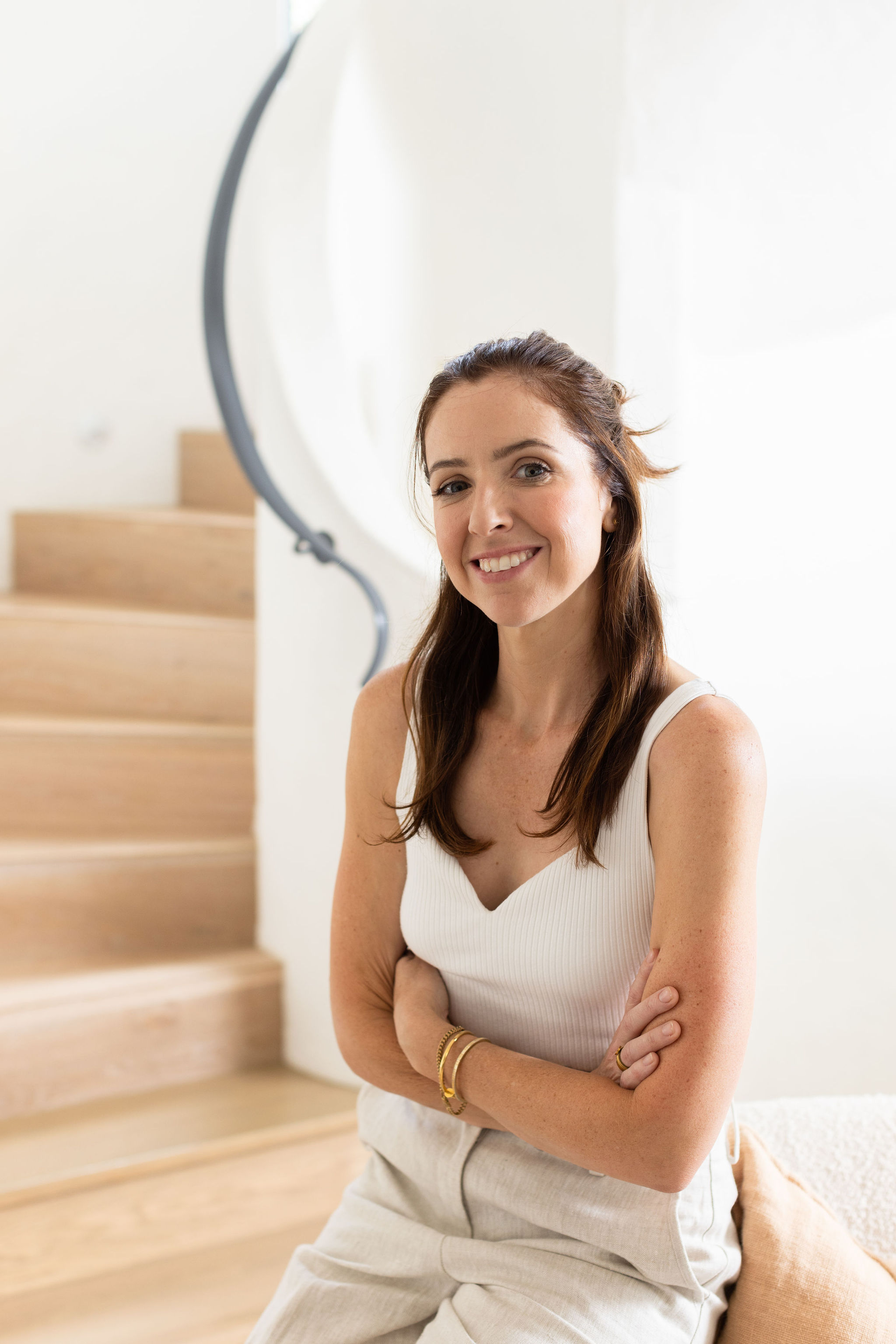
Pippa Lee is a Sydney-based architect, WELL AP and healthy home consultant, and the founder of Haven Designed. With 20 years of architectural experience across residential and large-scale international projects, she now focuses her practice on designing and advising on homes that genuinely support human health.
Pippa's work sits at the intersection of architecture and building biology, covering everything from indoor air quality, material toxicity and mould risk, to ventilation, light and the invisible forces that shape how we feel in the spaces we inhabit every day.
She works with homeowners, architects and developers to make healthier material and design choices, and has built Haven Designed as a platform for education, consulting and curation, including a growing library of guides, ebooks and a curated healthy home directory.
Her philosophy is simple: health starts at home, and small, considered choices in how we build and renovate can make a meaningful difference to how we liv