Apple Podcasts

 Spotify

 Youtube Music

 Amazon Music

 iHeartRadio

 Podcast Addict

 PocketCasts
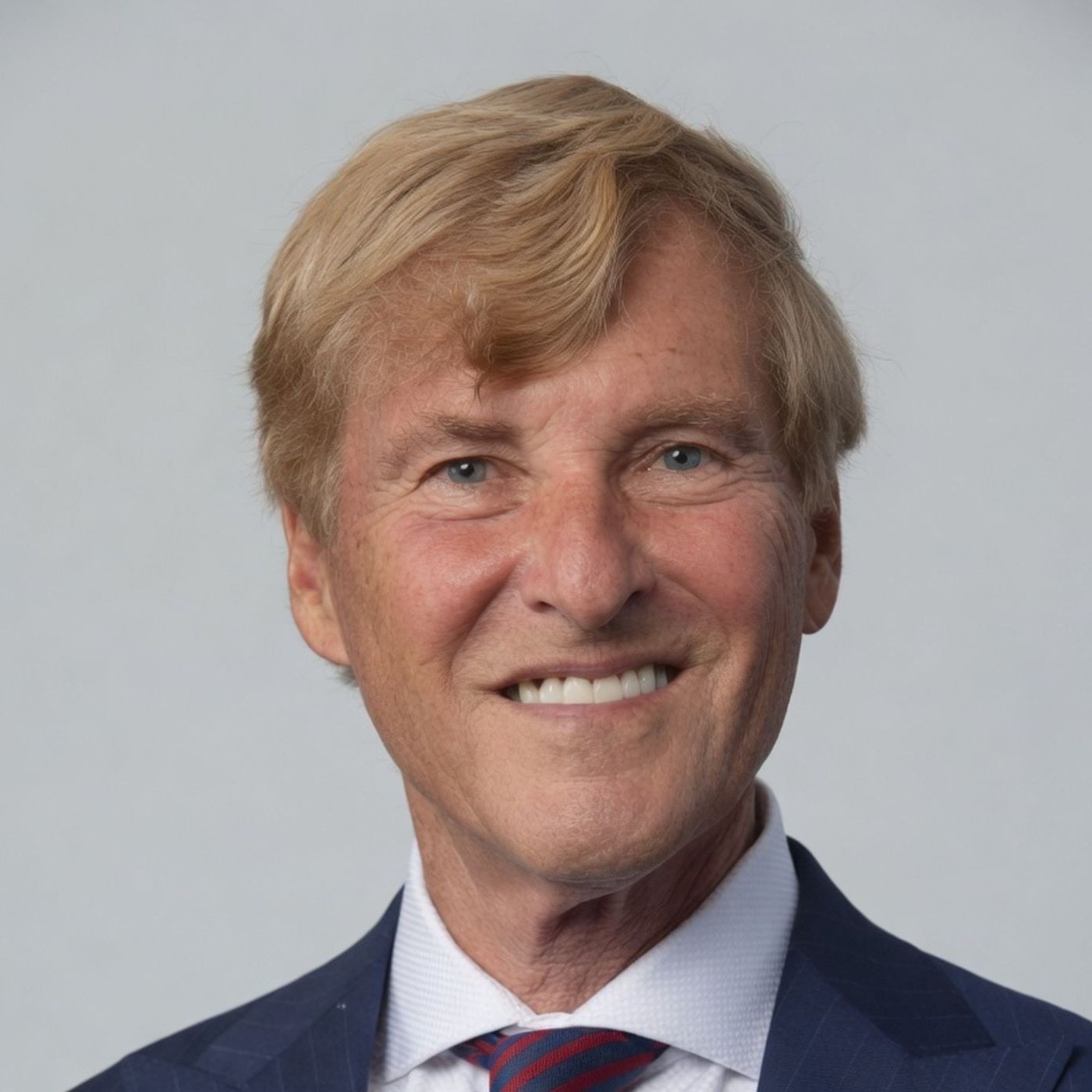
Leigh Steinberg — the legendary sports agent who inspired Jerry Maguire — shares the deeply personal story behind his rise, fall, and ultimate comeback. Known for representing more than 300 professional athletes, including eight No. 1 NFL draft picks, Steinberg built one of the most influential careers in sports. But behind the success was a private battle with alcoholism that nearly destroyed everything he had built.
In this powerful conversation, Leigh opens up about the collapse of his agency, the moment he hit rock bottom, and the long road to rebuilding his life and reputation. He discusses the lessons behind his new book The Comeback, where he details the emotional, professional, and spiritual work required to rise again after losing it all.
Leigh also reflects on the pressures of the sports industry, the importance of honesty and accountability in recovery, and the mindset shifts that helped him rebuild his purpose. Today, he is more than a legendary agent — he is a mentor, advocate, and example of resilience for anyone facing addiction or adversity.
This episode offers rare insight into the human side of success, the cost of addiction, and the hope that comes with choosing to rebuild.
KeyWords: Leigh Steinberg, Jerry Maguire real agent, The Comeback book, sports agent recovery, alcoholism recovery story, NFL agent collapse, addiction and resilience, rebuilding after addiction
Joanie Sigal: The Addiction Podcast, point of no return. Lee Steinberg, thank you for being on the podcast today. â You have quite the story. Why don't you start off by telling us a little bit about your background and what you would like to share with our people about your own history of addiction. No, â I grew up in Los Angeles. The father who push two core values. One is treasure relationships, especially family. â You'd be judged by were you a good son, a good father, a good friend, were you there for your friends in times of crisis. And then, can you heal pain and make a positive difference in the world and address a problem? And you would say when you're looking for someone to make a change, to fix a problem, tendency is to wait for the amorphous they or them to fix older people, political figures. And he would say, son, wait for them, you might wait forever. The they is you son, you're the they. So it imparted a sense of responsibility about trying to be a force for positive change in the world. And I went up. I did a year at UCLA and then I went up to Cal where I was there for law school and undergrad. And while I was in law school, I was a dorm counselor putting Making sure one wall was left standing in that dorm by the end of the year. They moved the freshman football team into the dorm and one of the students was the quarterback Steve Bartkowski, who in 1975 was the very first pick overall in the NFL draft. And he asked me to represent him, so there I was brimming with legal experience, never having practiced law. But there was a rival football league and we ended up getting the largest rookie contract in NFL history. And as we flew back to Atlanta, there were fleet lights in the sky. A huge crowd was pressed up against the police line. And the first thing we heard was we interrupt the Johnny Carson show to bring a special news bulletin. Clark Haskins and Tony have just arrived at the Atlanta airport. What I saw was the high profile and level of idol worship and veneration that athletes were held in. And so I thought if they would be role models and go back and retrace their roots to the high school community that helped shape them, set up a scholarship fund to work with the Boys and Girls Club or a church, they can put down roots. And the same thing at the college level where players like Troy Eichmann went back and then made the million dollars in LA. At the pro level charitable foundations with some cause with the leading political figures, business leaders, and community leaders on an advisory board to execute a program. That would be work done putting 200 parents and their children into the first homes of our own. I make them down pain or Patrick the home. That led to four first round graphics in the NFL that I represented. â The first pick overall. the players in the Hall of Fame had a big baseball practice, a big basketball practice, represented boxers by Lennox Lewis. Land of Charm Life, raising a lot of money for charity and awareness about issues. So I had the heavyweight champion Lennox Lewis, had a public service announcement that said, real men don't hook women. And that could do more to reshape the blindness of adolescents and how they view domestic violence and the thousand authority figures ever good. â As I got into my career, film director named Cameron Crow called me and asked him to follow me around for a couple years for a film that would center on Portrait. But he didn't know where I went. I felt draft, everything else, and it... I told him stories, lots and lots of stories. So we incorporated those into the script. That film became Gary Maguire. Wow. Technical advisor. So I had to, to vet the script to make sure the only suspension of disbelief that a movie in the motion picture didn't get broken. And thought the dialogue was correct. â He actually signed me after the site. was getting junior on an Oscar for his role. And maybe pretending wide receiver client. Super Bowl for a week. He hang out with our room wide receivers. Wow. Actually had to show the quarterback Jerry O'Connell have a throw spiral because he had gone to NYU and they didn't have anything there. â in terms of a football program and it's been 30 years now and I rarely walk through an airport or go out to dinner or someone will run up and say four words or ask me to say him. Let's start with go me the money. So at any rate, and I worked on a couple more films, wrote a series of books, one on the art of. of negotiation and one which is not by one on concussion athletic concussion. And currently I have the comeback. So I got to a point in the 2000s where a series of events happened that I wasn't able to cope with. was the death of my father from esophageal cancer. He had been a real rock, a central character in my life and security and security. And it was a long, arduous â track. And then my two boys were diagnosed with retinitis pigmentosa, which is an eye disease. It that it's teenagers that became totally blind. â my. And then... We lost the house in, we were beat from infestation of mold that came from moisture in the house. We had to knock it down and the house of my dreams. I felt powerless. didn't have the power to help my two boys. I couldn't save my father. I couldn't provide a house. And I turned to the wrong thing to want the. Hey, Alcohol. Now I didn't grow. As there was no alcohol in our house when I was growing up. Matter of fact, I didn't have my first drink until. College and when I did, I can still remember feeling a little positive from the beer back. â named one beer Steinberg. â the way it was for a long time, but when this, when the first advanced OLS, it had, it roomy thrilling. And I shouldn't have the coping skills to be able to deal with that. One of the things I've learned in recovery is that people can walk through anything, illness, of someone, and you don't have to drink over it. But I didn't get that connection. And I didn't understand the whole thing about alcoholism. So I caught up in a hurry and â started drinking late at night. â And then my marriage split up. And for the first time in my adult life, I was living alone. Wow. found out you can do a very strange thing. It's legal. can drink during the light of day. I drink mostly by myself, mostly ice. So I was able to build up a high alcohol content and I had a drug driving arrest, I had a drug and public arrest and I stopped going into the office every day. didn't drink any of the office, and I stopped going. And I had a group of enablers around me that was highly productive in the workplace. And our clients weren't sensing anything. But there started to be days when I didn't show up. It, they say you have to a bottom and the hard work necessary. So every time I hit a bottom and every time there was versus I hit another bottom below that and I kept spiraling down. realized at one point this was not working and I â Gave the practice to the younger agents, down my bow, spent the stay at my parents' house in West Los Angeles. And my father was in speed and my mother had got a stroke and she didn't capacity. And the only thought in my mind was where I find more vodka. So I drank vodka as a lot of us knew because I knew it colorless and odorless. And of course that was an amazing thing. Is it really odorless? I'm not sure, but okay. except any woman around me immediately understood I'd been drinking. Right. I'm sitting on a park bench in Rancho Far and drinking the wheat expensive vodka there was. I sort of descended from very good and then part. I take my money and put it together. And I realized â that I was in trouble. And my father had those two core values, and I wasn't living up to either of them. wasn't a good and consistent father, and I certainly was not making a positive move. And at one point, I had an epiphany. And I thought, from the standpoint of proportionality, I'm I'm far off base. I'm not a starving peasant in Smalley or Garford. I don't have the last name Steinberg in Nazi Poland. I'm not sick in any fundamental way except I'm very. And what it's, it's dry enough to not try again. So â I went to Silver Living. had been through a variety of different rehabs. And one of them was like $50,000 a day, From sleep studies, did hormone studies, know, chief psychiatrists, and everybody else. I just couldn't stop drinking. Rehabs, I was their best student. I would do these assignments. I would maybe assign something that I'd go up My room come down and bring it back to my son. Nobody does it that fast. Great people. understood the alcoholic brain. I understood the alcoholic family. I understood all of that. I just couldn't stop, right? Right. So I went off. to indigent rehabs, think all Charlie's three, first step recovery in Orange County post-tumor. But my ignominious story is that they didn't have a bed to sleep there. You can get into a bad. So I went off and lived in sober living. â I was there from March of 2010 till December of 2010. I most critical thing for me was the ship of the 12th sense. Okay. It was breaking denial and realizing that I was truly not alone. Right. So I could do that and it took years to be able to do that. Because again, I was the best woman in world, hard to see and, and, and denial made me expensive. But I was, once I embraced that first step, realized that I was powerless over alcohol and my life had been unenviable. And I just threw myself into recovery. â one of the things I did was. I found a home and I listened to the people who had long been subscribed. It was just like I was back up. These people, the school does even that. You name that, they want you to able to accomplish that. And it was really simple. It was breaking denial. realizing I had a problem, finding a sponsor who also had a sponsor. It was working the 12 steps in order. It was finding higher power I could relate to. And that wasn't easy because I'm Jewish and I'm sponsor for God who would allow me to go through diaspora and imposition. and the holy cross and battle against images. That was not a God I was particularly proud of. So to get started, I made a group my background. Okay. I'd like to enter the family, push forward heavily, light it in. So when you're in there, And that's to be able to recover by seeing why the chance is in itself. Exactly. And even though I've given away my practice on financial problems, I've got all of this, there's hope there. Luckily, you know, it's brought up by a hyperoptimistic father and mother. I love it. We're the people that think if you go into a barn filled with only defecation, there must be a pony in there somewhere. I love that. Noxious pile. â So I did 90 meetings, 90 days. Okay. And Orange County men's dinners that I went to. I had an Orange County convention that I went to, the Desert Cow Wow, which I went to. And I even went to San Antonio, the International Convention. Okay. Read every book, did everything. And I listened. I listened. Now alcohol. is a substance that will make you lie to other people. And every time you tell them, I've got it this time, this time I'm going to be sober, I can handle this. You don't meanfully lie. Your denial takes you into situations. So I figured that everybody around me sick of hearing what our is going to Right. It mattered stacking up day after day after day. And then there came a point where the cravings that meant all I was thinking about was vodka. Right. â So they went away. Wow. So how anybody bare knuckles it through the cravings, but somehow you got to get through it. Yep. Just keep sober long enough until the cravings go away. Yep. And there's a program, you know, for action. Yep. And I had a great sponsor who we saw, who was an expert on the big bull and He would say things like, brain is not a reliable source of information. I like that. The time I got to a certain point in sobriety, he would say, Lee, this is the most dangerous part. Ah, okay. Oh, it was like when I hit my first year, I sat down, my sponsor says, okay, you got a year, let's see you get two. There was no, â you know, exhilaration. Good. You've made it. You don't have to do anything anymore. Yeah. No, now where's your second year? I got it. â So â instead of telling anybody anything about how I was doing, all I said was I have 15 days, 30 days, six months, and that was it. No one wanted to hear guaranteed. or pledges out of my mouth. See the work. â I just went day after day after day. â Great thing about recovery is being surrounded by other people who have your same problem. They understand at a deep, full, full, intuitive level what you're going through. Now again, the thing I learned by watching how people acted in those weeks was that I saw people who lost kids, people who had the most horrific problems, and â they didn't drink over it. Interesting. They found other ways to cope. And so I learned from that. â I waited about three years because I figured it was not, I needed enough sobriety. I needed enough background in sobriety because A, I had tools to deal with the challenges. Right. Four of the sports is dizzy, land and drinking. Yep. Like I was going to be able to avoid alcohol. Right. internal, my spiritual level had to be fit enough that it was not on my mind. so I started to rebuild and I got a group of Texas Oil Millionaires to fund an agency in 2013. And then I knew I'd have to prepare myself for doubt in the mind, aren't they drafted themselves? And I'm right to represent that. I need to be able to answer the question, how can you guarantee you'll stay sober? And all you can see, I'm doing steps with the day by day, might be from, from, from. The second thing is, you you didn't do a good job managing your own money. are you going to manage that? Yep. And then I forgot to be asked a question because there are 1,800 people in 300 square. Yep. And I was able to sign a portaband in 2016 in Jackson, right? And he went in the first round. Okay. But the model, what I had done, â there were weekends in the EEC where I had half the starting quarter back. That was signal to people that are back. then the next year we signed a plan, passed it to Paul. And he probably believed it best square. And I wrote a book, autobiography. in 2014 when he was in I talked about that. And I had to say, how transparent do I want to be? Because you know, because of high profile, when he got a registered for DUI, ran all around the world. Why not use the I've been through to try to help other people. I started to my day, â years, and I would own stuff. Like this after 16 years on the sunny side of the street. There you go. â God. And I ended up around the country of people before I went to Australia. And hopefully, But that's really, but hopefully some inspiration from In the same way that I needed inspiration from wise old times. Right. Right. So I can't really talk any, know, in the grad and basic, the A's old times. Okay. groups everywhere. â â And this last part, I turned huge since the October. My kids came back. My daughter, would be the whole parent, like, so the son that didn't talk to me the whole time I was at SC, â finally had a meeting to graduate. â Both were way too... Exactly. I had a stunning woman who I had gone out with before. So from 2007 to 2010, this woman and I were perfect match. Oh, good. That was in change. I asked that she could sport and I thought I was destined to be there. Well, broke up with me in 2010. In retrospect, I'm just gypsy. Good to hear. All right. jump start the shock music. So traumatic that it pushed me into. We went our separate ways about 10 years and then she came back. â wow. I love that. congratulations. So â life is happy now but I still go my second home group 16 weeks later. And I plan my schedule around never missing it. Yep. If I have to buy from back East to get back, I have to reschedule everything. That thing never gets... Wow. I love that. The Comeback by Lee Steinberg. Okay, good. It was a forward by Troy Aikman. I love it. Awesome. Awesome. of Rue Lyon is a playbook for turning life's setbacks into victory. I love that. And so I've been out on book tour speaking at colleges, speaking at old libraries, speaking to different groups. And again, the whole purpose of this book, and it's not just my story, it's got stories of talent. â Concept, Joni, is that life will inevitably stretch back. Yep. Now, notwithstanding your most pristine planning and care. Yep. What happened? It could be financial, but it could be marital or relationship. could be. Health. It could be health or it could be addiction. Yep. is when that comes along. How can you find the strength and resilience and purpose in bringing back? My life is very happy by now. â And I am out trying to solve fighting using the athletes to fight sex trafficking and bullying. the environment and climate. Yeah. But your life is happily because you worked for it. And I think that that's an important point. know, anybody that's listening that suffers from addiction or in recovery, you know, it takes work. It's going to take work. It's not. And you have to. And I think what you said, you didn't say it this way, but you approached your recovery probably the same way you did your addiction with full focus and intention. you know, like waking up every day and needing a drink, well, you change it to every day waking up and staying sober. And I think that that's important. I appreciate that. the, â so I was always the expert on all you can do in any topic telling clients on how to live by the. And I found an area in which I was ignorant, protecting myself from. And so I needed to learn from people who had been through it. Again, I read everything I could read. went to every convention, meeting, taking your smart speakers. I threw myself in and I vowed I might never have a career again, but I will be a father and most importantly, the killer of everything. This is long as I do enough work and focus on a daily basis, meet me basis, maintain my stride, rest of it will all come, but the killer of everything for me is 18 years to bride. I can be that. No, somebody said an interesting thing. Nick makes an hour recovery activity. Give me 23 hours of freedom. And what happened is, I'm free. Right. Roll off the yoke of what this is doing. And everything open. back up again. I had a fatty liver when I was in 2010. Perfect now. â To a doctor named Dr. Amen. And he did a brain spectrum. They blow your brain. â On a screen. â And you could see white spots, which are called something like that, where there's no blood flow because of the alcohol. That brain scan is perfect. â The point is I knew I had to do some work on my health. I went out and found things like stem cells, hyperbaricocs. â you know, had to be helped. So at any rate, â fact that I'm 77 years old, I'm still rocking and rolling. It's amazing. It's amazing. Lee, thank you for talking to us today. I really, really appreciate you telling your story. And I will put up the link to the book on the show notes. And keep on rockin', Lee. Thanks, Johnny. You have been listening to The Addiction Podcast, point of no return. For more information, reach out to us on Facebook or go to www.theaddictionpodcast.com. Our email is theaddictionpodcast.yahoo.com.