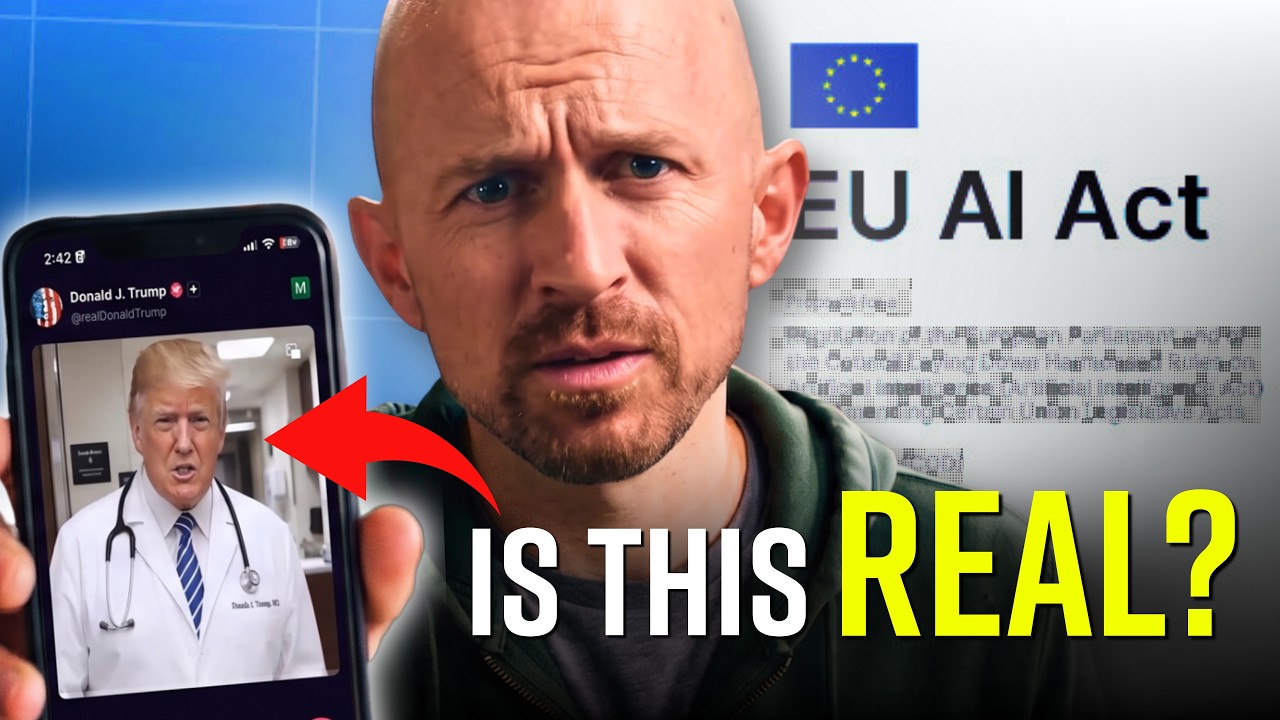
Why EU AI Act Watermarks Fail: Screenshots, Compression, and Rewrites Explained
When the EU AI Act introduced mandatory machine-generated watermarking, lawmakers envisioned a bulletproof way to track synthetic media online. However, fundamental flaws in how digital files are compressed, screenshotted, and edited mean that basic user actions can completely strip these cryptographic markers, rendering compliance measures fragile in the wild.
Key Takeaways
- Mandatory AI watermarks under the EU AI Act are easily destroyed by basic everyday actions like taking a screenshot.
- Image and video compression algorithms frequently strip out subtle pixel-level modifications used for tracking.
- Text-based watermarks relying on subtle token probabilities can be completely neutralized by simple human rewrites or paraphrasing tools.
- Enforcement penalties up to 15 million euros put massive pressure on tech companies, despite the technical fragility of the solution.
- Understanding these limitations is essential for creators and developers navigating the shifting regulatory landscape.
The Illusion of Digital Permanence
Regulatory bodies love the idea of a digital signature. To a policymaker sitting in Brussels, embedding a hidden code into an image or a block of text feels akin to a physical hallmark on gold. It provides a neat legal mechanism to pin accountability on platform operators and enterprise developers. Yet, the physical reality of the modern internet is hostile to delicate metadata and subtle steganography.
When an artificial intelligence model generates an asset, that asset begins its life in a pristine state. The underlying algorithms weave statistical anomalies into word choices, insert imperceptible high-frequency noise into audio waveforms, or tweak microscopic pixel values to spell out a binary or cryptographic signature. But the moment that asset enters the wild, it faces a gauntlet of compression codecs, cropping tools, and redistribution pipelines designed specifically to strip away non-essential data to save bandwidth.
How Compression Kills Signals
Every time a platform like WhatsApp, Twitter, or Discord processes an uploaded image or video, it compresses the file. This compression is lossy by design. It looks at the image and throws away data that the human eye is unlikely to notice. Unfortunately, the imperceptible alterations that constitute an AI watermark look precisely like high-frequency noise or redundant data to a compression algorithm.
By the time an image makes its rounds through social media group chats, the cryptographic signature embedded by the frontier lab has been thoroughly scrubbed away by standard JPEG or MP4 compression routines. Lawmakers drafted regulations assuming a static digital ecosystem, but the internet is fluid, aggressive, and constantly processing files to make them smaller and faster to load.
The Screenshot Loophole for Images
Perhaps the most glaring vulnerability in the current watermarking mandate is the humble screenshot. You do not need to understand advanced cryptography or reverse-engineer a neural network to bypass an image watermark. You simply need to press Command-Shift-4 on a Mac or the equivalent shortcut on Windows or mobile.
When a user takes a screenshot of an AI-generated graphic, the rendering engine displays the pixels natively on the screen. The screenshot utility captures those displayed pixels fresh, creating an entirely new image file. This new file has no historical ties to the original generation event. It possesses none of the hidden steganographic tags that the original model applied.
This creates a massive enforcement headache. A bad actor can generate synthetic media using a compliant model, take a screenshot of the output, and instantly publish an un-watermarked version. To the end consumer, the content looks identical, but the legal trail established by Article 50 vanishes the second the capture tool engages.
Why Text Watermarks Shatter Under Paraphrasing
While images and audio rely on perceptual manipulation, text watermarks take a completely different approach. Large language models generate text token by token, favoring certain words over others based on probability distributions. Text watermarking algorithms systematically bias these probabilities, encouraging the model to select a specific, mathematically verifiable sequence of synonyms without altering the human readability of the output.
This sounds clever on paper, but it operates on an extremely fragile premise: that the text will remain completely untouched. The moment a human editor swaps out a few adjectives, feeds the text into a basic paraphrasing tool, or runs it through a grammar checker, the statistical fingerprint gets completely scrambled.
The Paraphrase Defense
Bad actors have zero incentive to keep AI-generated text in its raw, pristine state. In malicious campaigns, automated spinning software or low-cost freelance editors routinely rewrite machine-generated copy to bypass basic detectors anyway. Because these standard editing practices naturally disrupt the underlying token probability patterns, the text watermark is destroyed almost effortlessly.
This leaves compliance officers in an awkward position. They are legally required to implement expensive, complex watermarking infrastructures to satisfy regional laws, while anyone motivated enough to evade detection can do so with a free online paraphrasing tool in less than five seconds.
What This Means for Compliance and Creators
Despite these technical vulnerabilities, ignoring the regulations is not an option. With penalties scaling up to 15 million euros or 3 percent of global annual turnover, frontier labs and platform operators must check the regulatory boxes. They are deploying these systems because the law demands it, not necessarily because it creates an unshakeable chain of custody.
For independent developers, creators, and operators building on top of frontier models, the reality is a game of cat-and-mouse. Relying solely on platform-level watermarks to prove authenticity or provenance is a strategic mistake. True authenticity in the age of synthetic media will likely require decentralized ledgers, cryptographic signing at the hardware level, or entirely new verification frameworks that go far beyond fragile pixel and token tweaks.
To hear a deeper breakdown of how these enforcement mechanisms play out behind closed doors and what tech founders are doing to adapt, check out Listen to the full episode. Tune in to catch the complete conversation and stay ahead of the regulatory curves shaping the future of artificial intelligence.
Frequently Asked Questions
Can a simple screenshot really remove an AI image watermark?
Yes. Taking a screenshot captures the rendered pixels as an entirely new image file, stripping away any underlying steganographic metadata or high-frequency pixel patterns embedded by the original generative model.
Why do text watermarks fail so easily compared to other methods?
Text watermarks rely on subtle statistical patterns in word choice. Standard human editing, grammar correction tools, or automated paraphrasing naturally disrupt these patterns, completely destroying the hidden signature.
How do video and image compression algorithms destroy watermarks?
Compression codecs are designed to strip out data that human senses cannot easily perceive. Because AI watermarks often mimic imperceptible noise or subtle variations, compression algorithms treat them as redundant data and delete them.
Are AI companies still required to use watermarks if they are easy to break?
Yes. Regardless of their technical fragility, regulations like the EU AI Act mandate watermarking for major AI providers, with severe financial penalties for non-compliance.